Govt to offer 30 million people Bt7,000 each in new round of Covid relief
EconJan 27. 2021Finance Minister Arkhom Termpittayapaisith
By The Nation
The Cabinet on Tuesday approved a new round of Covid-19 relief for low-income groups. The new package will offer Bt7,000 in credit for shopping necessities and cover around 30 million people.
Eligible for the new scheme are state welfare card holders, recipients of the shopping and travel co-payment schemes, and other groups.
The government will transfer the e-payment to recipients, but it cannot be withdrawn as cash. Welfare cards holders will receive money automatically on February 5. Co-payment recipients will be automatically screened for eligibility and do not have to re-register for the new scheme. Others have to register at http://www.เราชนะ.com/ between January 29 and February 12.
Key conditions of eligibility are taxable income of not more than Bt300,000 in 2019 and total bank deposits of not more than Bt500,000 as of December 31 last year. Recipients can use the e-payment to pay for goods, but not alcoholic drinks or cigarettes.
The e-payments can also be used for public transport, and taxis, tuk-tuks and motorcycle taxis, said Finance Minister Arkhom Termpittayapaisith.
The Finance Ministry estimates the package will cover 30.1 million mostly self-employed people.
The government is also considering aid measures for low-ranking state officials, Arkhom said.
Vietnam launched a push to lure Thai investors on Tuesday, touting its status as one of the few economies that grew in 2020.
The Vietnamese Embassy in Bangkok showcased a “Golden Opportunity for Thai Investors in Vietnam”, hosted by the Thai-Vietnam Business Council and Vietnam’s Amata VN Plc.
Vietnam’s Ambassador to Thailand Phan Chi Thanh affirmed that his country’s economy had expanded 2.91 per cent last year in the teeth of Covid-19, thanks to its early control measures.
Vietnam’s GDP growth from 2016-2020 averaged 5.9 per cent, among the highest growth in the world. Its outlook for 2021 is also bright, with GDP of 6.5 to 7 per cent expected by the World Bank, International Monetary Fund and Asian Development Bank.
“Factors contributing to large investment in Vietnam were high political stability, abundant labour, a big market size of up to 100 million people, and strategic connectivity to Asean, China and the world markets,” said the ambassador.
These factors had made Vietnam a target destination for investors from more than 132 countries. Thailand currently ranks ninth for foreign direct investment in Vietnam with 603 FDI projects totalling about US$13 billion (Bt390 billion).
Tuesday’s showcase heard the investment climate in Vietnam for the next five years is expected to get even brighter as the country embarks on a new Social and Economic Development Strategy for 2021-2030 and Five Year Plan (2021-2025).
“Vietnam is still a destination for foreign investment, including Thailand, because it is a large and growing market,” noted Thai Foreign Ministry spokesman Tanee Sangrat.
However, he said the success of Thai investments in Vietnam over the next few years depended on continuation of the current investment policy and support by the Vietnamese government, as well as Vietnam’s economic growth. The ability of Thai businesses and investors in Vietnam to collaborate and unify with each other will be the key to future growth and survival, he added.
Sanan Angubolkul, chairman of the Thai-Vietnam Business Council, said the Vietnamese market has high purchasing power thanks to its large working-age population and low level of household debt.
Also, its export volume has grown rapidly. Last year, Vietnam recorded $281.5 billion in exports with a positive trade balance of $19.1 billion thanks to its 17 trade agreements.
At the same time, Vietnam offers tax incentives and other benefits to ease business, promote investments, construct public infrastructures, he said.
Said Somhatai Panichewa, director and CEO of industrial estate developer Amata VN (AMATAV): “We believe in the growth of Vietnam, which is why we have been in Vietnam for more than 26 years [running] six projects totalling 2,500 hectares [15,625 rai] with investment capital of about $840 million or about Bt27.2 billion.”
The Stock Exchange of Thailand (SET) Index closed at 1,512.83 on Tuesday, up 11.21 points or 0.75 per cent. Total transactions amounted to Bt87.82 billion with an index high of 1,514.82 and a low of 1,490.37.
In the morning session, an analyst at Krungsri Securities forecast the SET would fall to between 1,490 and 1,495 after the $1.9-billion US stimulus package hit trouble in Congress, and lockdowns around the world continue to slow economic recovery.
He added that the decline in foreign fund inflows and the rising Covid-19 case count in Thailand would affect investment direction.
The 10 stocks with the highest trade value today were EA, SCGP, KTC, KBANK, CBG, PTT, GPSC, SCB, CPALL and DELTA.
As of 4.30pm, the price of oil dropped by US$0.02 or 0.04 per cent to $52.75 per barrel, while gold dropped by $2.70 or 0.15 per cent to $1,852.50 per ounce.
Other Asian indices were on the fall:
Japan’s Nikkei Index closed at 28,546.18, down 276.11 points or 0.96 per cent.
China’s Shang Hai SE Composite Index closed at 3,569.43, down 54.81 points or 1.51 per cent, while Shenzhen SE Component Index closed at 15,352.42, down 357.77 points or 2.28 per cent.
Hong Kong’s Hang Seng Index closed at 29,391.26, down 767.75 points or 2.55 per cent.
South Korea’s KOSPI Index closed at 3,140.31, down 68.68 points or 2.14 per cent.
Taiwan’s TAIEX Index closed at 15,658.85, down 287.69 points or 1.80 per cent.
EconJan 26. 2021Finance Minister Arkhom Termpittayapaisith
By The Nation
The Cabinet has approved a package of tax relief to support people and businesses affected by the Covid-19 crisis.
The government has extended the 90-per-cent cut on land and building tax for another year, Finance Minister Arkhom Termpittayapaisith reported after Tuesday’s Cabinet meeting.
Payments of the 0.02 per cent tax on homes have been reduced by 90 per cent (first homes worth less than Bt50 million are exempted tax). Farmers pay no tax on their land, though the tax cut also applies to the 0.01 per cent rate on the value of agricultural land use. Vacant land, subject to a rate of 0.3 per cent, is also covered.
To support homebuyers and the property sector, the home transaction fee was cut from 2 per cent to 0.01 per cent and the mortgage registration fee from 1 per cent to 0.01 per cent. The cuts cover this year’s transactions on residential units worth up to Bt3 million.
The cuts will cost local governments about Bt40.6 billion in lost revenue, to be compensated by central government next fiscal year, said Arkhom. The tax relief would ease financial burdens during economic hardship, he added.
The government also extended the e-filing deadline for annual personal income tax from March 31 to June 30.
E-filing of withholding tax and value-added tax is also extended by 15 days, he added.
The government’s relief measures have blunted the impact of Covid-19 on Thailand’s banks, but financial resilience will be tested in 2021 as loan moratoriums are set to progressively expire, the S&P Global Ratings said on Tuesday.
It expects banks’ asset quality to deteriorate in the next 12-24 months and the non-performing loan (NPL) ratio to increase up to 6 per cent of total loans.
“Reported NPLs have remained benign in 2020, averaging 3.3 per cent for the banks we rate, only modestly higher than 2019’s systemwide average of 3 per cent. This resilience comes despite a second wave of Covid-19 infections late last year,” S&P said.
The proportion of the loan book under moratorium has reduced to an average of about 20 per cent for major rated Thai banks, compared with systemwide average of 31 per cent in the initial phase of the moratorium in mid-2020.
S&P, however, opined that temporary relief measures are unlikely to eliminate risks for weaker and more vulnerable debtors, although they may lessen the strain and delay recognition of problem loans.
The central bank extended debt moratoriums for the more vulnerable retail and small to medium-sized enterprise (SME) borrowers until June 2021.
Credit risk is already heightened in Thailand, given the very high household debt. Another vulnerability is the tough environment for export-oriented SMEs, some of which are getting priced out by more cost-efficient manufacturers in neighbouring Vietnam and Cambodia, S&P said.
The rating agency expects credit losses for the banking sector to remain elevated at 1.9 per cent of outstanding loans this year, from 1.2 per cent in 2019. Credit costs have increased across the board, which has dragged down the return on assets of rated banks to 0.7 per cent in 2020, versus the systemwide average of 1.4 per cent in 2019.
S&P believes proactive provisioning coupled with good capital levels will continue to provide a cushion to downside credit risks. Rated Thai banks have beefed up already high provision coverage ratios to about 155 per cent as of end 2020.
S&P expects banks will continue to build buffers in 2021 to defend against higher delinquencies as loan moratorium and relief measures are phased out. Even though large domestic banks maintained healthy Tier-1 capital adequacy ratios of over 15 per cent, the regulator has instructed banks to limit 2020 dividends to 50 per cent of profits and not to exceed 2019’s payout ratio.
S&P is forecasting a U-shaped recovery in 2021 with GDP growth of 5 per cent for Thailand. This revival is needed to stabilise credit conditions. A prolonged delay in the country’s economic recovery would deepen the downside scenario for domestic banks, given high household leverage and the weakness in the SME sector, S&P warned.
Thai banks’ non-performing loans (NPLs) will rise significantly this year as Covid-19 continues to take a toll on the economy, experts say.
Siam Commercial Bank (SCB) president Apiphan Charoenanusorn forecasts her bank’s bad debt will increase due to the pandemic’s impact on debtors.
“However, we believe the bank will be able to deal with NPLs as most debtors have received the bank’s assistance so far.”
She added that SCB would have to set up more reserves to cope with future uncertainty.
Naris Sathapholdeja, head of TMB Analytics, forecasts commercial banks’ NPLs this year will rise by up to 15 per cent to Bt604 billion compared to Bt525 billion last year, with an NPL ratio of 3.6 per cent, up 12 per cent compared to 3.2 per cent last year.
“However, commercial banks’ NPLs will not increase sharply because they have methods to manage NPLs, such as selling debts and debt restructuring,” he said.
Kitichan Sirisukarcha, senior president of research at CGS CIMB Securities, expects net profit at seven Thai banking giants – Kasikornbank, Bangkok Bank, Kiatnakin Phatra Bank, Siam Commercial Bank, Krungthai Bank, TMB Bank and Tisco Bank – to grow 5 per cent on last year to Bt118 billion this year.
He forecasts that figure will rise 22 per cent in 2022 to Bt143 billion as Covid-19 recedes and the economy improves.
“The seven banks’ NPLs this year will stand at 4.9 per cent compared to 4.2 per cent last year, while their reserves will increase to Bt209 billion compared to Bt199 billion last year,” he predicted.
He advised investors to buy Bangkok Bank (BBL) shares at a target price of Bt146, Kasikornbank (KBANK) at Bt156 and SCB at Bt109, forecasting they would be traded at a price-to-book-value (P/BV) ratio of between 0.75 and 0.8 compared to 0.45 last year.
Foreign Investment Funds (FIFs) are likely to grow this year if there is no significant change in Thai stocks, senior analyst from Morningstar Research Chayanee Juengmanon said on Tuesday.
She said money that flowed into FIFs over the past three weeks were investments in Chinese and tech shares.
“At the end of 2020, the net value of FIFs was Bt840 billion, up 27.5 per cent year on year. Based on this, FIFs account for 21 per cent of the Thai mutual funds market, up from about 10 per cent in 2016,” she said.
Meanwhile, she said, Chinese equity funds had the highest asset value of Bt120 billion, up 185 per cent year on year from its high returns of nearly 19 per cent.
However, she said investors should be careful when investing in FIFs as their returns will not be the same as the previous year.
“At the end of last year, returns on mutual funds led by tech shares stood at 48.97 per cent, global shares at 23.73 per cent, Asian shares 18.98 per cent, healthcare shares 22.63 per cent, Chinese shares 18.89 per cent and emerging market shares at 9.36 per cent,” she said.
She said the returns in Thai equity funds this year would rise in line with the recovery in the Thai stock market once the government is able to control the new round of Covid-19 infections.
“The returns of large Thai equity funds at the end of last year dropped by 10.41 per cent, but its 10-year average return was 4.77 per cent, higher than China, Japan and emerging markets,” she said.
“However, the returns of Thai shares may depend on the economic conditions and whether the growth of innovative business models can keep pace with the changing world,” she said.
Poly brings speakerphones for professional-quality audio to your home and office
Jan 25. 2021
By THE NATION
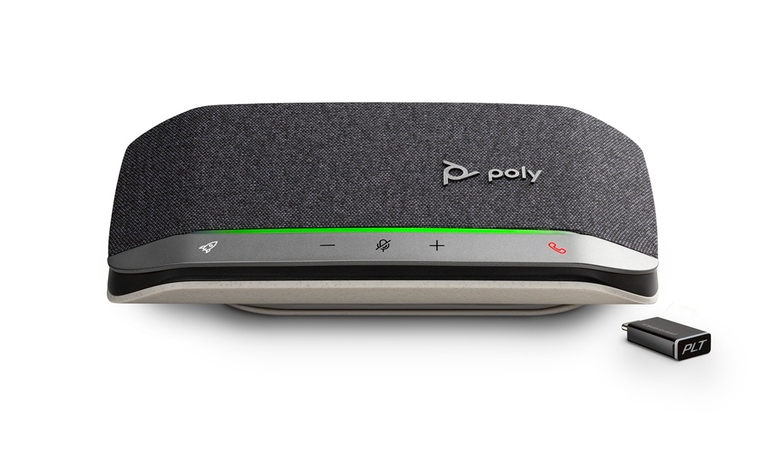
Premium audio and video products-maker Poly (formerly Plantronics and Polycom), on Monday unveiled the Poly Sync family, a new line of smart, USB and Bluetooth speakerphones. These Poly devices use proprietary microphone technology to track the talker, not the noise.
The Poly Sync 20, Poly Sync 40 and Poly Sync 60 speakerphones are designed to enable today’s need to work from anywhere – whether that’s a remote work location at home or a conference room in the office, the company said.
Poly Sync speakerphone’s USB and Bluetooth® connectivity options offer flexibility, while its intelligent microphones can easily detect voices throughout the room to enable crisp audio quality for both work and entertainment. For seamless voice integration, connect Poly Sync speakerphones to your Siri or Google voice assistant and check even more off your to-do list without lifting a finger.
“More workers in Thailand are adopting a hybrid working model – splitting their time working from the office and from home,” said Samir Sayed, Poly’s managing director, Asean and Korea.
“The Poly Sync family offers flexibility and caters to the needs of this growing hybrid workforce no matter where they work from, delivering an enterprise-grade experience that enhances productivity for every work style.”
Poly Sync 20 is certified for Microsoft Teams. The Microsoft Teams version of the Poly Sync 20 incorporates a dedicated Teams button so the Teams app can be launched with a tap. This further adds to Poly’s broad portfolio of Teams-enabled headsets and devices.
Poly also has one of the largest product portfolios for the Zoom platform, and Poly Sync 20 is among the first to receive Zoom’s Personal USB Speakerphone certification.
Poly Sync 20 & Poly Sync 20+
With best-in-class audio and a three-microphone array, Poly Sync 20 and Poly Sync 20+ speakerphones are ideal portable solutions for today’s hybrid work environments, the company said. A remarkable sounding three-in-one device, it’s a personal speakerphone, a portable music speaker and a smartphone charger all in one. Its compact, sleek design and carrying case make it perfect for users on the go. Advanced digital signal processing algorithms ensure both sides of the call can be heard clearly, simultaneously, and a programmable button allows users to personalise their Poly Sync 20 with their favourite functions like music pause/play or voice assistant – all with a single touch, the company said.
The Poly Sync 20+ includes a BT600 USB adapter for seamless Bluetooth connectivity options.
Poly Sync 40
The Poly Sync 40 speakerphone features even bigger sound than the Poly Sync 20, with microphones that allow for greater pickup range as well as the convenient smartphone-charging capabilities to support today’s hybrid work environments. IT or the user can choose to wirelessly daisy chain two units to adapt and expand the reach within varied conference room sizes. Poly Sync 40 features a long-lasting battery with up to 20 hours of talk time and the automatic Bluetooth unpairing option allows users to quickly disconnect Bluetooth devices after a meeting.
Poly Sync 60
The Poly Sync 60, the largest speakerphone in the Poly Sync family, incorporates all of the spectacular features in the Poly Sync 20 and Poly Sync 40, but is designed for larger meeting spaces and conference rooms, the company said.
With a six-microphone array and intelligent LED features, the device can automatically track voices within the meeting room and adapt to make sure the other end of the call has a great audio experience. With its two large built-in speakers, the Poly Sync 60 easily fills the room with rich, crystal clear audio. Connect a USB video camera to the device for complete AV connectivity.
While the Poly Sync family offers solutions for workers in any location, they also help IT managers who can oversee and improve workforce fleet deployment and allow remote management of Poly Sync devices, the company said. This service is sold separately.
Poly Sync 20 is available now in Thailand, while Sync 40 and Sync 60 will be available later in 2021
The Finance Ministry sold 71.89 million shares in SET-listed Bangchak Corporation (BCP) to the state-owned Vayupak Fund 1 on January 19, according to the Securities and Exchange Commission (SEC) on Monday.
The sale was made to fund the ministry’s purchase of 153.34 million shares in PTT Oil and Retail Business (PTTOR)’s upcoming initial public offering.
The sale accounted for 5.30 per cent of BCP’s total issued and paid-up shares.
Following the sale, the Finance Ministry’s stake in BCP amounts to 65.54 million shares, accounting for 4.82 per cent of the company’s total shares.
As of January 22, the Finance Ministry’s shareholdings totalled Bt1.22 trillion, with stakes in Airports of Thailand (AOT), PTT, TMB Bank (TMB), Thailand Future Fund (TFFIF), Thai Airways International (THAI), BCP, MCOT, MFC Asset Management (MFC), Padaeng Industry (PDI), Ratchaphruek Hospital (RPH) and NEP Realty and Industry (NEP).
The Stock Exchange of Thailand (SET) Index fell by 5.00 points, or 0.33 per cent, to 1,496.62 in the morning session on Tuesday.
The SET is expected to fall to between 1,490 and 1,495 due to uncertainty over the delay in the rollout of the US economic stimulus package after trouble in the Senate, and slowdown in economic recovery amid several countries’ lockdowns, said Krungsri Securities’ analyst.
He added that the decline in foreign funds flow and rising number of Covid-19 cases in Thailand would affect investment direction.
He recommended that investors buy:
▪︎ PTTGC, TOP, IVL, EPG, VNT, SCGP, CBG, ROJNA, TVO, STGT, CPF, RCL, PSL, SYNEX, COM7, XO, WICE, JMT, MTC, SAWAD and KCE, whose fourth-quarter turnover is expected to improve.
▪︎ CBG, ICHI, OSP and RBF, which benefit from news about hemp.
The SET Index closed at 1,501.62 on Monday, up 3.74 points or 0.25 per cent. Total transactions amounted to Bt82.77 billion with an index high of 1,505.47 and a low of 1,491.63.

 Finance Minister Arkhom Termpittayapaisith

 Finance Minister Arkhom Termpittayapaisith