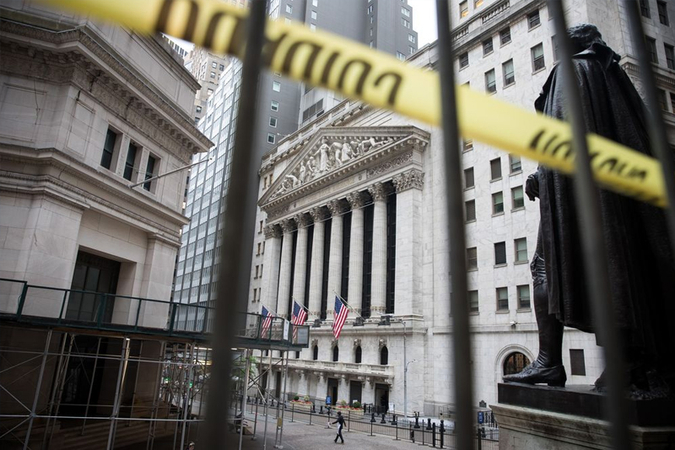
The Stock Exchange of Thailand (SET) Index closed at 1,468.24 on Monday, up 18.89 points or 1.30 per cent. Total transactions amounted to Bt89.20 billion with an index high of 1,468.27 and a low of 1,425.48.
In the morning session, an analyst at Krungsri Securities predicted the day’s index would fall to between 1,420 and 1,435 after the government imposed maximum controls in 28 provinces to curb the Covid-19 outbreak.
“The index will also be under pressure from its tight valuation,” he said.
He advised investors to follow the government’s virus-control measures, December’s Purchasing Manager’s Index for China, Europe and the US, and the US Senate election in Georgia, which will decide whether Democrats gain a majority in Congress.
The 10 stocks with the highest trade value today were GPSC, DELTA, EA, IVL, PTT, STGT, CPF, KBANK, CPALL and AOT.
As of 4.30pm, the price of oil rose by US$0.95 or 1.96 per cent to $49.47 per barrel, while gold rose by $40.20 or 2.12 per cent, to $1,935.30 per ounce.
Other Asian indices were mixed:
Japan’s Nikkei Index closed at 27,258.38, down 185.79 points or 0.68 per cent.
China’s Shang Hai SE Composite Index closed at 3,502.96, up 29.89 points or 0.86 per cent, while Shenzhen SE Component Index closed at 14,827.47, up 356.79 points or 2.47 per cent.
Hong Kong’s Hang Seng Index closed at 27,472.81, up 241.68 points or 0.89 per cent.
South Korea’s KOSPI Index closed at 2,944.45, up 70.98 points or 2.47 per cent.
Taiwan’s TAIEX Index closed at 14,902.03, up 169.50 points or 1.15 per cent.
The price of gold surged by Bt200 per baht weight in morning trade on Monday, the Gold Traders Association reported.
As of 9.28am, the buying price of a gold bar was Bt27,050 per baht weight and selling price Bt27,150 while gold ornaments were priced at Bt26,560.32 and Bt27,650, respectively.
At close on Saturday, the buying price of a gold bar was Bt26,850 per baht weight and selling price Bt26,950 while gold ornaments were Bt26,363.24 and Bt27,450, respectively.
Spot gold price moved to US$1,918 (Bt57,363) per ounce in the morning in line with the weakening dollar.
Meanwhile, the Hong Kong gold price surged by HK$180 to $17,680 (Bt68,206) per tael, the Chinese Gold and Silver Exchange Society reported.
The baht strengthened to 29.90 to the US dollar due to mass sell-offs of the dollar on Monday.
Kasikorn Research Centre’s research executive Kanchana Chokpaisansilp said the baht is moving in line with other regional currencies, adding that the dollar was pressured by the US Federal Reserve’s move to ease its monetary policy.
She expected the Thai currency to move between 29.90 and 30.10, advising investors to follow the global Covid-19 situation and the manufacturing purchasing manager’s index for December of China, Europe and the US.
Meanwhile, senior director of the chief investment office at SCB Securities, Jitipol Puksamatanan, said the dollar was pressured by the financial market’s risk-on state as the UK pound sterling and Australian dollar were strengthened.
He added that the US 10-year treasury yield stood at 0.91 per cent, but gold price rose over US$1,900 per ounce.
“However, we expect investors to be cautious during the first week of this year in response to the economic slowdown and several countries’ lockdowns to curb Covid-19,” he said, adding that the Dollar Index was expected to move between 89.4 and 90.4 points this week.
He advised investors to follow the US dollar inflation in December, the Senate election in Georgia and labour market data in December.
The Stock Exchange of Thailand (SET) Index fell by 20.47 points, or 1.41 per cent, to 1,428.88 in the morning session on Monday.
An analyst at Krungsri Securities expected the day’s index to fall to between 1,420 and 1,435 due to uncertainty over the Covid-19 situation in Thailand as the government had imposed an emergency in 28 provinces to curb the virus, causing an impact on economic activities and investor confidence.
“Besides, the index would be under pressure from its tight valuation,” he said.
He advised investors to follow the government’s move to deal with the Covid-19 outbreak, the Manufacturing Purchasing Manager’s Index in December of China, Europe and US and the US Senate election in Georgia, which will decide whether Democrats will gain a majority in the Congress or not.
He recommended that investors buy:
▪︎ PTTEP, PTTGC, TOP and IVL, which benefit from rising oil price and improved fourth-quarter performance.
▪︎ PSL, TTA and RCL, which would benefit from the rise in Baltic Dry Index.
▪︎ TQM, BLA, STGT, AJ, PTL, SYNEX and COM7, which benefit from the Covid-19 outbreak.
The SET Index closed at 1,449.35 on December 30, 2020, down 12.60 points or 0.86 per cent. Transactions, meanwhile, totalled Bt87.54 billion with an index high of 1,479.04 and a low of 1,445.36.
World’s richest men added billions to their fortunes last year as others struggled
CorporateJan 04. 2021Elon Musk of Tesla and SpaceX fame/file photo
By The Washington Post · Christopher Ingraham · BUSINESS, TECHNOLOGY
The pandemic has forced untold hardships onto many Americans, with tens of millions of families now reporting that they don’t have enough to eat and millions more out of work on account of layoffs and lockdowns.
America’s wealthiest, on the other hand, had a very different kind of year: Billionaires as a class have added about $1 trillion to their total net worth since the pandemic began. And roughly one-fifth of that haul flowed into the pockets of just two men: Jeff Bezos, chief executive of Amazon (and owner of The Washington Post), and Elon Musk of Tesla and SpaceX fame.
Musk has quintupled his net worth since January, according to estimates put together by Bloomberg, adding $132 billion to his wealth and vaulting him to the No. 2 spot among the world’s richest with a fortune of about $159 billion. Bezos’s wealth has grown by roughly $70 billion over the same period, putting his net worth estimate at roughly $186 billion as the year came to an end.
The fortunes of both men owe largely to the stock gains posted by the companies they run, Tesla in Musk’s case and Amazon in Bezos’s. Shares of Tesla are up roughly 800 percent this year after a five-to-one stock split in August. The meteoric rise is driven by a number of factors: its massive factory in Shanghai started churning out vehicles this year, the company began posting consistent quarterly profits and demand for electric vehicles in general is expected to surge in 2021.
Amazon’s stock, on the other hand, has risen around 70 percent this year, a figure that is modest only in comparison to Tesla’s gains. Much of Amazon’s performance is due to homebound Americans turning to the e-commerce giant to order products they would have otherwise purchased at retail outlets shut down by the pandemic. Amazon Web Services, a big profit generator for the company, has also experienced increased demand during the pandemic.
All told, the two men increased their net worth by a staggering $200 billion last year, a sum greater than the gross domestic products of 139 countries. A billion dollars – a radically life-changing sum in nearly any other context – becomes just “an entry in a database,” as Musk recently characterized his Tesla assets.
Such a rapid accumulation of individual wealth hasn’t happened in the United States since the time of the Rockefellers and Carnegies a century ago, and we as a society are only just beginning to grapple with the ethical implications.
What does it mean, for instance, that two men amassed enough wealth this year to end all hunger in America (with a price tag of $25 billion, according to one estimate) eight times over? Or that the $200 billion accumulated by Bezos and Musk is greater than the amount of coronavirus relief allocated to state and local governments in the Cares Act?
Of course, the wealth of Bezos and Musk exists largely on paper, as it’s mostly tied up in the company stock they own. In order to convert that stock to tangible assets, they would have to sell it, which could potentially crater the stock’s value on top of incurring tax obligations.
Beyond that, the task of ending hunger or plugging state budget holes is a lot more complicated than simply writing a check. If you have the money on hand, the challenge is delivering it in a useful form to the myriad places that need it. It’s a lot harder to spend billions in practice than it is in theory, or at least billionaires often say it is.
In 2018, for instance, the 10 wealthiest people donated an average of less than 1 percent of their net worth to charitable causes, according to an analysis by economist Gabriel Zucman.
Bezos last year announced he would give $10 billion to fight climate change, and in November he announced the recipients of the first $800 million in spending on Instagram. A Washington Post analysis in June of charitable spending by the wealthiest Americans – when Bezos’s fortune totaled $143 billion – showed he gave $100 million to Feeding America and up to $25 million for All in WA, a statewide relief effort in Washington state. For the median American, Bezos’s giving was the equivalent of donating $85 at that time.
Musk has given at least $257 million to his own charitable foundation, or less than one-fifth of 1 percent of his estimated wealth since founding it in 2002, according to an analysis by Quartz.
Representatives from Amazon declined to comment, while representatives from Tesla did not respond to a request for comment.
The evident difficulty of getting billionaire wealth to trickle down to everyone else is a challenge for policymakers in our new gilded era. The runaway accumulation of riches at a time of widespread deprivation and hardship is one of the widely recognized drivers of democratic decline. Most political scientists believe the erosion has already started.
Our ability to reverse that erosion will depend, in part, on whether the staggering amounts of money flowing to the top of society can be put to work to improve the lives of those at the bottom.
By The Washington Post · Joe Heim · NATIONAL, BUSINESS, PERSONAL-FINANCE
Basic-income/WASHINGTON – The $5,500 arrived in the middle of August with no strings attached. For Zabria Proctor, it was a godsend. The rent was due. The car loan and insurance needed paying. Bills were piling up. The fridge was often close to bare.
The pandemic had cost Proctor her job as a bus driver for special-needs children in Prince George’s County. Her husband’s work as a car detailer dried up quickly. What little money they had saved soon evaporated as well.
Like millions of low-income American families, the couple were brought to the brink by the economic devastation wrought by the coronavirus. Unlike most of those families, Proctor received at least a temporary lifeline with the cash infusion.
“Psychologically, it was a huge burden off my shoulders,” said Proctor, 30, who lives in a one-bedroom apartment in District of Columbia with her husband and two children. “It was a huge sigh of relief to pay down some debt and to not have to say to my son that he can’t have a snack because we have to save food for dinner.”
The money was not a random act of kindness delivered by a good Samaritan. It was part of an organized effort by four nonprofit groups in the District to create a short-term guaranteed basic income for some of the neediest families in the city. Each household would receive $1,100 a month for five months or a $5,500 lump payment to help with bills, pay for rent and food, or use however they saw fit.
As the pandemic pushed many already struggling families into poverty, the cash payment to the 353 families participating in the Thrive East of the River program was an effort to stabilize them and their community. Now, five months after the money was provided, the organizations involved with the program are beginning to assess its effects.
“We’ve been really pleased with the results,” said Scott Kratz, director of 11th Street Bridge Park, which has coordinated with Martha’s Table, Bread for the City and the Far Southeast Family Strengthening Collaborative to raise $3.6 million so far from foundations, individuals and corporations for the project. There will be an additional 47 households enrolled by the end of January, and organizers hope to raise an additional $500,000 to assist more families. According to the Urban Institute, the project appears to be the largest payment of short-term private emergency cash relief ever offered in the United States.
“The immediate impact of putting cash, nonconditional cash, directly in the hands of families that need it has really served its purpose, and that’s because the families are going to be in the best position to figure out how to spend the money,” Kratz said.
The organizations also administer the program and work with recipients to help them with groceries and accessing benefits such as tax credit applications and health care, including mental health resources. A key component of the project is that recipients are also provided financial counseling and advice on how to make the best use of the funds they’ve been given.
While some of the recipients have used the money to pay off pressing bills, others are making down payments on a home purchase or starting their own small business, Kratz said. And many have used it to help other community members in need. One woman who received the cash used some of it to regularly make and deliver meals to senior citizens.
“What I find really interesting is that there is a common thread where, yes, the participants are using it for themselves and the immediate needs of their families. But they’re also giving back to their broader community,” Kratz said. “It’s just sort of this remarkable generosity, particularly for folks that don’t have a lot.”
Andrea Richardson, 31, has not had an easy go of it the past few years. She spent half of 2019 living in a shelter with her daughter, who was 6 at the time. Richardson says she tried to shield her daughter from the reality of their desperate situation.
“She’s very resilient and just goes with the flow,” Richardson said. “As far as I know, she didn’t really see the scope of everything because I just told her we were going to mommy’s school at night.”
Richardson and her daughter moved into their apartment in December 2019, but before she could find work the virus struck, schools closed and Richardson needed to stay home full time. She received food stamps and Medicaid, and her apartment was partially subsidized. She also worked some odd jobs during the summer, but without a regular income there was no money to pay for any extras.
The $5,500 allowed her to pay off some debt and improve her credit rating. She bought clothes and school supplies for her daughter. Some she has saved. The money gave her something else as well.
“It’s been very encouraging during the time when I just felt very down and depressed and not really knowing where to turn to next,” Richardson said. “OK, all the world’s not crazy. There’s still some togetherness. There’s still support. There’s still people that think about, you know, people like me.”
Mary Bogle, principal research associate at the Urban Institute, has been working with Thrive to assess the project’s effectiveness.
“The goals have always been to alleviate crisis, stabilize people through the pandemic, and then move folks to economic mobility, which is what the mission of these organizations is in the first place,” Bogle said.
As the pandemic has stretched on and worsened in ways that exceeded most expectations, Bogle wonders what long-term effect the $5,500 cash disbursement could have.
“The Great Recession wiped out a lot of the gains we had made in closing the wealth gap between Black and White Americans. And so I think the pandemic story on that issue has yet to be told,” she said. “Will there be gains that could last in helping people out of poverty, just from stimulus, et cetera, with something like the $5,500 that Thrive has added? Will we see people actually moving into mobility?”
The answers to those questions remain unknown, but organizers are encouraged by preliminary results and anecdotal data. And a cash transfer without a byzantine list of rules and regulations for how it must be used is a promising approach, its supporters say.
“They did the right thing by letting people make their own choices because people will move themselves out of poverty if you give them a chance to,” Bogle said. “I mean, you take away all these gates that we’ve built into our system to provide so-called help, people find their own way out of poverty.”
The Finance Ministry this year will have three areas of focus to revive Thailand’s economy from the Covid-19 pandemic fallout, ministry spokesperson Kulaya Tantitemit said.
First, the ministry will urgently push for economic revival through speeding up budget disbursement and state spending. The ministry also would streamline the tax structure to fit well with the economic and social change, added Kulaya, who also serves as acting director-general of the Fiscal Policy Office.
Second, the ministry will adjust the country’s economic structure by seeking ways to promote investment in new technologies, such as the next generation automotive, digital business and comprehensive medical business. This will enable Thailand to move to offer products and services with high economic value.
The ministry will also push for the revision of rules to increase its own performance in providing services to the public.
She added that one challenge this year would be how to restore Thailand’s economic growth to the pre-Covid-19 era. The management of macroeconomic policy in the next step would have to take into account the prevention of a second wave of the outbreak and the equitable distribution of the anti-virus vaccine.
Securities companies on Sunday picked their top shares for investment in 2021.
Finansia Syrus Securities expected the Stock Exchange of Thailand (SET) to hit 1,600 points based on its price/earnings growth (PEG) at 0.73 times, price to earnings ratio of 20.7 times and price to book value at 1.76 times.
The securities company advised investors to buy shares that would benefit from the Covid-19 outbreak, consumption recovery and positive news of a Covid-19 vaccine, such as BEM, BDMS, KBANK, JWD, JR, M, MTC and SYNEX.
Globlex Securities expected the SET to fluctuate between 1,470 and 1,650, advising investors to buy defensive stocks (ADVANC, DIF, GPSC and GULF) and stocks that benefit from the news of a Covid-19 vaccine (MINT, CENTEL, ERW, BH and BDMS).
The securities company also advised investors to follow the Fiscal Policy Office’s indices related to Thai industry, and the Bank of Thailand’s economic data.
Tisco Securities expected the new round of Covid-19 outbreak to affect the SET in the short term, adding that this was an opportunity to buy shares, as listed companies’ first-quarter performance was likely to see an improvement.
The securities company also expected the SET to hit 1,500 points at the beginning of this year from the economic recovery and the weakening dollar.
“We recommend investors to buy BAM, BBL, BDMS, PTTGC, AEONTS, TWPC, WHA, INTUCH, KKP, LH, NYT, PROSPECT and TVO,” the securities company said.
Capital Nomura Securities expected the SET to hit 1,650 points, advising investors to buy stocks that would benefit from the global economic recovery, such as SCC, SCGP, PTT, TOP, GULF KCE, SAWAD, CPALL, CENTEL, VNT, GFPT and SNC.
DBS Vickers Securities advised investors to buy AMATA, which would benefit from the progress of the Eastern Economic Corridor, at Bt18 per share; AP, which pays dividends regularly, at Bt8.1 per share; BTSGIF, which would benefit from positive news of a Covid-19 vaccine, at Bt7.2 per share; PTT, which would benefit from the rising oil price, at Bt43 per share; and TSR at Bt5.1 per share.
The New York Stock Exchange (NYSE). Photographer: Michael Nagle/Bloomberg
By Syndication Washington Post, Bloomberg · Max Zimmerman, Gregor Stuart Hunter
The New York Stock Exchange said it will delist three Chinese corporations to comply with a U.S. executive order that imposed restrictions on companies identified as affiliated with the Chinese military.
China Mobile Ltd., China Telecom Corp Ltd., China Unicom Hong Kong Ltd. will be suspended from trading between Jan. 7 and Jan. 11, and proceedings to delist them have started, according to a statement by the exchange.
In response, China’s Ministry of Commerce said on Jan. 2 that the country will adopt necessary actions to protect the rights of Chinese companies and hopes the two countries can work together to create a fair, predicable environment for businesses and investors.
Quantitative hedge fund managers including Renaissance Technologies, Dimensional Fund Advisors and Two Sigma Investments were among the largest holders in these U.S. listings but the stakes they held at the end of September were small, 13F filings show.
The three Chinese companies have separate listings in Hong Kong. All generate the entirety of their revenue in China and have no meaningful presence in the U.S. except for their listings there. Their shares are also thinly traded on the New York Stock Exchange compared to their primary listings in Hong Kong, making this NYSE delisting more of a symbolic blow amid heightened geopolitical friction between the U.S. and China.
President Donald Trump signed an order in November barring American investments in Chinese firms owned or controlled by the military, in a bid to pressure Beijing over what it views as abusive business practices. The order prohibited U.S. investors from buying and selling shares in a list of Chinese companies designated by the Pentagon as having military ties.
The Chinese Foreign Ministry later accused the U.S. of “viciously slandering” its military-civilian integration policies and vowed to protect the country’s companies. Chinese officials have also threatened to respond to previous Trump administration actions with their own blacklist of U.S. companies.
The executive order has resulted in a series of companies being removed from indexes compiled by MSCI Inc., S&P Dow Jones Global Indices and FTSE Russell.
The U.S. Federal Communications Commission in May barred China Mobile from operating in the U.S. In December, it ordered carriers to remove equipment made by Huawei Technologies Co., and begun looking into whether China Telecom should be allowed to operate in the country. China Telecom’s U.S. unit told the FCC in a June 8 filing that it’s an independent business based in the U.S. and not subject to Chinese government control.
Global exchanges, including NYSE and Nasdaq Inc., courted Chinese companies during the past decade as they attempted to expand their IPO business, particularly in the internet sector. In response, Hong Kong Exchanges & Clearing Ltd. changed its rules in recent years to lure back listings, including allowing share sales by companies with weighted voting rights — strengthening the power of company founders at the expense of weaker protections for minority investors.
Companies including e-commerce giants Alibaba Group Holding and JD.Com, which already had listings in New York, conducted secondary listings in Hong Kong in the past two years as tensions between the U.S. and China intensified on a range of issues including trade and the novel coronavirus.
By Syndication Washington Post, Bloomberg · Kurt Schussler
More time at home, reduced mobility and billionaire Masayoshi Son helped drive stocks in Japan in 2020, as the coronavirus pandemic became the dominating force separating winners from losers.
While the stay-at-home trend boosted game makers and online retailers including Nexon Co. and Mercari Inc., heightened health concerns saw drugmakers and medical-care innovators such as M3 Inc. also feature among the biggest gainers. At the other end of this teeter-totter were companies that thrive on domestic movement and foreign tourism: stocks tied to oil and autos, railways and airlines, as well as brick-and-mortar retailers.
Looking ahead, Naoya Oshikubo, senior economist at Sumitomo Mitsui Trust Asset Management Co., expects “further polarization” among companies as Japan makes a strong recovery in 2021. Demand for games, e-commerce, online medical care and work-from-home technology is unlikely to fade even after the pandemic is under control, he wrote in a note this month.
SMBC Nikko Securities Inc. expects a rotation following earnings reports in February, with value “taking the upper hand” from growth as restrictions on activity are eased and the economic recovery broadens. The broker sees de-carbonization, digitization and business consolidation as the key themes.
“Export sectors, led by manufacturing, are already seeing a clear cyclical recovery, and there are many names with high-quality environmental technologies,” Masashi Akutsu, chief equity strategist at SMBC Nikko, wrote in a Dec. 16 report. He sees exporters remaining better positioned in the first half of 2021, with domestic-focused sectors lagging.
Here’s a look at some of the most significant Japanese stock moves in 2020.
Winners:
– M3 Inc. (+195%). The top performer on the Nikkei 225 this year, M3 rode a wave of investor interest in online heath services, such as the company’s virtual drug-marketing platform and telemedicine tie-up with Line Corp. The same theme drove gains of more than 500% in Carenet Inc., making it the sixth biggest gainer on the Mothers index of startups, as well as a jump of over 340% in Medpeer Inc., which ranked No. 3 on Topix.
– Nexon Co. (+119%). Demand for videogames among people stuck at home helped shares of Nexon, Koei Tecmo Holdings Co. and Capcom Co. more than double this year. Among the console makers, Nintendo Co. jumped 50% and Sony Corp. climbed 39%. Nexon benefited from particularly strong growth in South Korea and high expectations for its Dungeon & Fighter game in China, as well as its surprise addition to the Nikkei 225.
– Mercari Inc. (+105%). Virtual flea-market operator Mercari is the largest stock on the Mothers Index and its surge accounted for about 20% of this year’s gain in the startup gauge. The e-commerce boom lifted a broad spectrum of players, from SoftBank affiliate Z Holdings Corp. (+35%) to online shop creation and payments firm Base Inc. (+456%) and food delivery website operator Demae-Can Co. (+179%).
– CyberAgent Inc. (+86%). CyberAgent was another beneficiary of the stay-at-home trend, with the market impressed by subscriber and revenue growth at its Abema video-streaming service, even though it has yet to contribute to earnings. The company also has a profitable game operation, and its internet advertising business is recovering from the Covid-19 hit earlier in the year.
– SoftBank Group Corp. (+69%).
Masayoshi Son’s tech conglomerate surged on a plan to sell about $43 billion in assets to buy back shares and pay down debt, with the company unloading chipmaker Arm and paring its stakes in Alibaba Group Holding Ltd., T-Mobile US Inc. and its domestic telecom unit SoftBank Corp. In addition to ongoing share repurchases, which have spurred speculation over whether Son is looking to take the company private, continued valuation gains and IPOs from the SoftBank Vision Fund portfolio may continue to drive the stock.
Chugai, a unit of Swiss drug giant Roche Holding, has received attention for testing of its Actemra arthritis remedy as a treatment for Covid-19, as well as growth in sales of its hemophilia drug Hemlibra. Daiichi Sankyo forged its second big cancer drug deal with AstraZeneca this year and was also selected as a Japanese supplier for the British drugmaker’s coronavirus vaccine.
– Tokyo Electron Ltd. (+61%).
Even coronavirus-sparked supply disruptions and ongoing trade tensions between the U.S. and China couldn’t damp the rally in semiconductor stocks this year. Chip-making equipment suppliers like Tokyo Electron benefited directly from increased spending on next-generation technology by the semiconductor giants, as well as indirectly from elevated demand for computers and smart devices.
The dent in demand for oil due to the coronavirus was the culprit behind the huge losses in three of the Nikkei 225’s worst performers of 2020. The more than 20% decline in oil prices hurt profits at energy explorer Inpex, while Mitsui E&S and JGC suffered from delays in energy-related projects due to the virus.
– Mitsubishi Motors Corp. (-53%).
While covid-19 hurt car sales all over, no Japanese automaker saw its stock slide more than Mitsubishi Motors. The company has been struggling with losses amid high costs and slumping sales. A report that Nissan Motor Co. was considering selling some or all of its 34% stake was the latest blow to a firm already reeling from trouble in the companies’ three-way alliance with Renault SA since the arrest of Carlos Ghosn.
– Nikon Corp. (-52%).
The dent to tourism and travel plans as well as cancellations of sporting and other events crushed demand for cameras, and Nikon tumbled the most among the big Japan brands. Delayed deliveries of flat-panel display equipment due to Covid-19 dragged on the company’s other major business.
– Citizen Watch Co. (-51%).
Citizen Watch dropped as lockdowns halted duty-free and other travel-related sales in addition to shuttering retail stores in North America, a key market for its timepieces. A similar slide was seen in smaller rival Seiko Holdings Corp. (-55%), while Casio Computer Co. (-14%) was less scathed as sales of G-Shock watches climbed in China.
– J Front Retailing Co. (-47%), West Japan Railway Co. (-43%), Japan Airlines Co. (-41%).
With inbound tourism ground to a halt, and domestic travel restricted for much of the year despite the government’s “Go To Travel” promotional campaign, shares of Japan Railway companies and both major airlines all fell 30% or more. Department-store operators were also negatively impacted, with J Front sliding the most, while smaller retailers such as suit shop Aoyama Trading Co. (-65%) and pub operator Chimney Co. (-50%) were hit even harder.
– Konica Minolta Inc. (-45%).
Konica Minolta posted its sixth-straight annual decline, the worst performer in Japan’s office-equipment space. The multiyear shift toward paperless offices was given an extra push in 2020 by the increasing work-from-home trend.



 Elon Musk of Tesla and SpaceX fame/file photo