Dtac boosts network in Samut Sakhon for medical workers, quarantined people
Jan 01. 2021
By The Nation
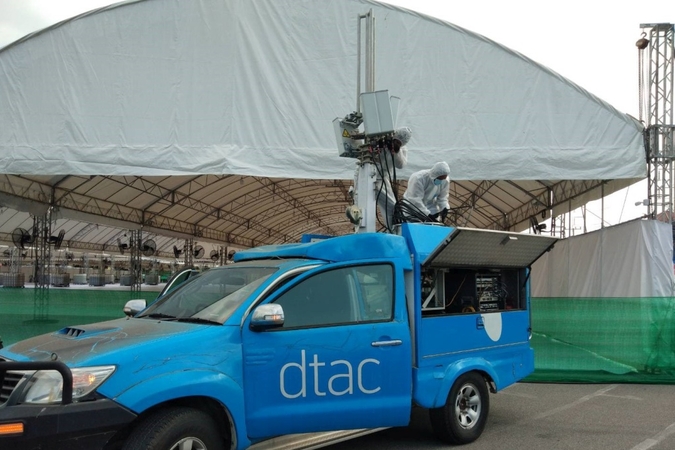
Total Access Communication (Dtac) is boosting its network to support frontline workers and hospitals in the fight against Covid-19 in four key areas of Samut Sakhon.
Samut Sakhon province has been declared a red zone, where the tightest Covid-19 control measures are in place and some 2,800 people have been put under quarantine. Two field hospitals have been set up to quarantine and treat patients with mild symptoms.
Dtac chief technology officer Prathet Tankuranun said: “Connectivity plays a critical role in this challenging time and Dtac’s team of engineers has rushed to help medical staff at the frontline.
“Mobile cell sites with Massive MIMO [multiple input, multiple output] technology have been deployed around crucial facilities, boosting network capacity by up to three times. The move is expected to provide better connectivity for medical personnel and those in quarantine to help them connect with their loved ones in these challenging times.”
The four areas where mobile cell sites have been installed include field hospital at Samui Sakhon’s stadium, field hospital at the Krok Krak temple, Samut Sakhon’s provincial public health office and workers’ camp at the central shrimp market.
The network service team is also keeping a close eye on the impact of the outbreak so the network can be adapted to provide a reliable, secure network for healthcare workers.
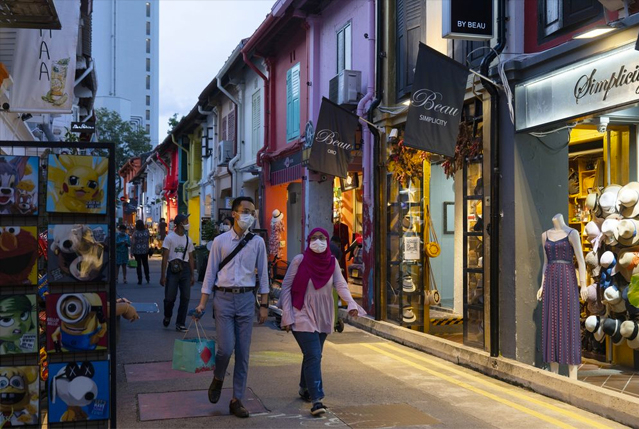
Shoppers in the Arab Street area of Singapore. Photographer: Wei Leng Tay/Bloomberg
By Syndication The Washington Post, Bloomberg · Krystal Chia, Michael S. Arnold
After suffering its worst economic downturn since its independence in 1965, Singapore is expecting to see a rebound in 2021, Prime Minister Lee Hsien Loong said Thursday, echoing other top officials to caution that the recovery will be uneven.
“Economically, we are not yet out of the woods either, but we are beginning to see signs of stabilization,” with employment picking up and multinational firms making new investments, Lee said in a New Year’s address. “We look forward to a rebound in 2021, although the recovery will be uneven, and activity is likely to remain below pre-covid-19 levels for some time.”
Singapore’s economy has been hammered by the global pandemic, which has slammed mainstays such as tourism and trade. Gross domestic product is expected to contract 6% to 6.5% this year, the Ministry of Trade and Industry said in November, before growing 4% to 6% in 2021.
Fourth-quarter and full-year GDP data due Monday will likely show that a recovery that began in the third quarter continued in the final three months of the year, according to economists surveyed by Bloomberg. Despite that, the full-year contraction is likely to be the most severe since the country’s independence in 1965.
Singapore officials have said there’s still scope to provide more fiscal stimulus after pledging about S$100 billion ($75.6 billion) in aid this year. Lee has said he sees the government running a budget deficit at least through early 2021, and perhaps longer, to support consumers and businesses. The next budget will be released Feb. 16.
This week, Singapore became one of the first countries in Asia to administer a coronavirus vaccine. The country has moved quickly since securing and approving Pfizer Inc. and BioNTech SE’s vaccine and will start giving shots to health-care workers, with those age 70 and older set to be vaccinated from February. Singapore also eased some social restrictions this week.
“We can now see light at the end of the tunnel,” Lee said in the speech. “But it will still take some time for enough people to be vaccinated before we are safe from another major uncontrolled outbreak.”
By Syndication The Washington Post, Bloomberg · Anna Shiryaevskaya, Stephen Stapczynski, Sergio Chapa
Liquefied natural gas traders anticipate a swift demand recovery in 2021 after a year in which the coronavirus pandemic prompted dramatic price swings.
Colder weather in key importing nations, outages at major production hubs and congestion along global shipping routes already have combined to push spot prices in Asia to the highest level since 2014. That’s a more than sixfold jump from a record low in April, making Asian LNG the best performer among major commodities in 2020.
Demand for the fuel used in heating and power generation is growing faster than for any other fossil fuel as nations look for a cheap, reliable and cleaner alternative to coal. The pandemic derailed that growth for 2020, but China and India are emerging as major sources of demand.
“A lot of countries are looking to import LNG,” Tom Holmberg, a partner at law firm Baker Botts LLP in Washington D.C., said by phone. “I still think we are going to see growth in the LNG market.”
Below are the key areas likely to shape the market in 2021:
– Uneven Demand Recovery
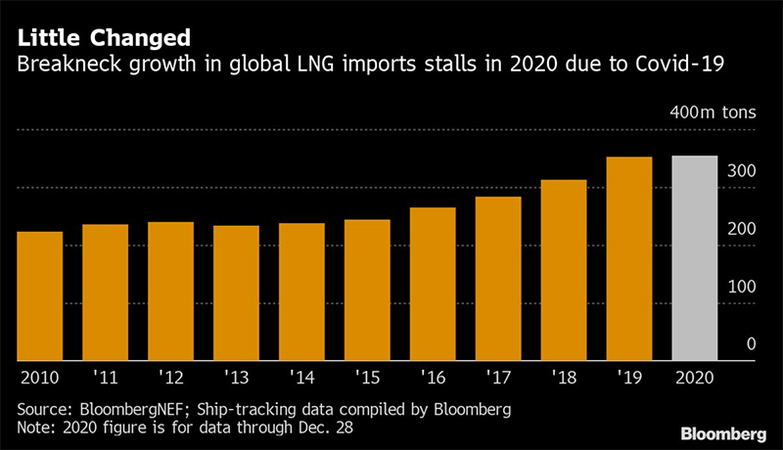
Global LNG imports in 2020 were roughly equal to the previous year, according to ship-tracking data compiled by Bloomberg. That was a big disappointment for an industry that has enjoyed 10% annual growth rate since 2016.
However, global gas demand is expected to resume growth next year. LNG demand, which makes up roughly 10% of the total, may rebound even faster, depending on how Pakistan, India and Bangladesh perform, said Manas Satapathy, a managing director in Accenture’s Energy business.
Shipments of the fuel into Asia have mostly recovered since the height of the pandemic, and the region’s LNG demand will rebound sharply next year, according to S&P Global Platts.
On the last day of 2020, spot Asian LNG price – the Japan-Korea Marker benchmark – rallied above $15 per million British thermal units for the first time since April 2014.
“It has been interesting to see how quickly Asian demand seems to have ramped up,” Holmberg said.
The picture in Europe is very different as countries grapple with a new surge of infections and lockdowns that sap energy demand. The continent is headed for a “very neutral recovery” in 2021, according to Satapathy.
Europe mainly relies on storage and pipeline gas shipments, which may be boosted with flows from a new link from Azerbaijan and the controversial Nord Stream 2 project that’s nearing completion.
– Supply Woes
Unplanned maintenance at LNG export facilities from Australia to Qatar to Malaysia has led to a tighter than expected market in the second half of the year. And delays in navigating the Panama Canal curbed supplies to Asia. If these disruptions persist well into the year, then prices could remain elevated well above current levels.
The Gas Exporting Countries Forum, which represents 60% of global LNG exports, expects supply to climb by 6% to 7% next year, up from 2% to 2.5% in 2020. LNG trade was much more resilient to this year’s challenges than imports in the fuel’s gaseous form, the group said in its short-term outlook.
The market will likely remain oversupplied next year, according to Vitol and Trafigura Group, two of the biggest trading houses active in LNG. Beyond that they expect the market to tighten.
– More Cancellations?
Traders will be watching to see if buyers of U.S. LNG scrap any cargoes next year. About 200 cargoes were canceled in the summer after the pandemic hit spot prices in Europe and Asia. While there’s unlikely to be a repeat of that in 2021, traders do expect some cancellations to help balance the market.
American gas exports are rising to fresh records every month as new facilities come online. But any dip in demand could force suppliers to shut-in cargoes. The nation has become a swing supplier because its contracts allow for scrapping deliveries, which enables exports to quickly respond to volatile markets.
– China-U.S. Relations
Trade relations between the U.S. and China will be a key focus. China is the fastest-growing LNG importer, and the U.S. is ramping up exports. There’s few long-term supply deals between the two nations even though LNG was a focus of President Donald Trump.
Joe Biden takes over as president on Jan. 20. A number of proposed U.S. LNG projects are hoping for more normal relations to help them sign deals with Chinese buyers.
“This certainly affects the LNG markets, particularly the LNG coming from the U.S.,” Holmberg said.
And with Chinese economy roaring back and offices open, Jack Fusco, chief executive officer of Cheniere Energy, anticipates that “deal making environment looks good for 2021.”
– Green Ambition
Environmentalists are increasingly looking at natural gas as a major polluter. After years of focusing on coal and oil, they’re turning their attention to how to zero out emissions from all fossil fuels. That shift has suppliers, buyers and shippers thinking green initiatives to clean up activities linked to methane and greenhouse gas emissions.
Half of the carbon footprint in the life cycle of an LNG cargo comes from upstream, Fusco said. The LNG producer is pushing for more transparency on carbon emissions for the fuel.
“Our customers are going to want to be sure that they can validate and audit what we’re telling them our carbon signature is,” he said.
The world’s first supply contract that required a declaration of emissions was signed this year while so-called carbon-neutral cargoes started flowing to China and Japan as nations outline ambitious targets to effectively zero out emissions.
All quiet in Dover: The calm before Brexit’s border storm
EconDec 31. 2020An empty terminal at the Port of Dover in Dover, England, on Dec. 23, 2020. MUST CREDIT: Bloomberg photo by Chris Ratcliffe. Photo by: Chris Ratcliffe — Bloomberg Location: Dover, United Kingdom
By Syndication The Washington Post, Bloomberg · Lizzy Burden, Richard Weiss
On the day the U.K. makes its final break with the European Union, the ports are clear of truck backups, goods are moving smoothly and grocery-store shelves are well stocked.
Even so, U.K. businesses that rely on some 1.2 billion pounds ($1.6 billion) worth of products crossing the border each day are taking no chances. At 11 p.m. Thursday, Brexit gets real.
Companies were already stockpiling and exploring alternatives to the crowded truck-ferry route across the English Channel when France unexpectedly closed its border for two days last week, citing a fast-moving Covid-19 outbreak in the U.K. The disruption produced miles-long backups at the Port of Dover — a warning shot for potential chaos as the Brexit transition period ends.
In response, logistics firms have redoubled efforts to relieve pressure on truck traffic, stepping up air freight, container ferry and air-cargo shipments. With the New Year arriving on a long weekend, concerns of an immediate repeat of last week’s spectacle have diminished. The port and its users will have the chance to ease into the new reality of a customs regime at the formerly open border.
“It should be quiet for at least the first few days,” said Richard Ballantyne, who heads the British Ports Association. “If there are blips of people turning up without the correct documentation, if it’s going to happen at any time, it’s better to be then.”
Dover remains the U.K.’s most important link with the EU, the country’s biggest trade partner. Still, the amount of tonnage has declined steadily since the year of the Brexit vote — down 14% from 2016 to 2019, Department for Transport data show. Other ports have meanwhile gained business: Liverpool’s traffic grew 7.6% and London Medway surged 43%.
The unanswered question is what happens in the coming weeks and months. With Britain’s departure from the single market come a host of regulations and customs paperwork that threaten to gum up the free flow of trade and add costs for importers and exporters on both sides of the split.
The trend toward other ports and unaccompanied freight moving by train or ferry, along with supplemental air-cargo shipments of vital goods, is expected to continue into the new year, according to port officials and logistics firms.
Container volumes traveling between the port of Tilbury, on the River Thames east of London, and Zeebrugge, Belgium, have increased by a fifth in December as firms sought alternatives to the short straits. P&O Ferries Ltd. has added an additional ship to the route to cope with demand.
Charles Hammond, chief executive officer of Tilbury owner Forth Ports Ltd., credits the coronavirus pandemic with changing the logistics industry’s dynamics. Unaccompanied freight is “the answer to a number of the questions of our time,” he said.
Kuehne + Nagel International, one of Europe’s biggest freight-forwarding firms, has switched some goods from trucks to container ferries. It drops off and picks up the goods by truck on either side, something some smaller firms aren’t able to do.
The company is still moving goods across the English Channel via roll-on roll-off truck ferries, after implementing software that’ll make it easier to clear customs. The amount of paperwork has increased five-fold because of the new procedures, Kuehne + Nagel spokesman Dominique Nadelhofer said.
Firms that rely on frictionless movement of parts are opting to maintain their stockpiles for now.
Jet-engine maker Rolls-Royce Holdings Plc is holding onto 100 million pounds worth of additional inventory as it monitors the flow of goods over coming weeks, according to a spokesman. It’s not clear when it’ll return to normal levels.
Products that can’t be stockpiled for long remain a concern, with aircraft being called in to clear up the remnants of last week’s shutdown. The cargo unit of Deutsche Lufthansa was scheduled to fly another Boeing 777F full of urgently needed goods — fruit, vegetables, clothing, oil-field equipment, medical equipment and jet-engine parts — from Frankfurt to Doncaster Sheffield Airport in England on Thursday.
That will be followed by a 100-ton load of fruit and vegetables on Jan. 2 meant for supermarkets such as J Sainsburyc, Tesco, Co-op Food and Aldi Stores Ltd.
Lufthansa Cargo is exploring ways to send freight from France to Ireland via ferry instead of trucking it through the U.K., which “currently makes little sense,” spokeswoman Jacqueline Casini said.
A potential shortage of truckers is a lingering concern from last week’s disruption, which stranded fresh seafood in trucks headed for Europe and sent fish prices haywire. Some drivers may “wait and see” before returning to the U.K. and others will demand more money, said Shane Brennan, CEO of the Cold Chain Federation, which represents movers of frozen and chilled goods.
The U.K. government on Wednesday extended an trade-credit insurance program that protects sellers against non-payment, a measure that will provide added support to the supply chain.
The acid test for British infrastructure will come next week, when traffic returns to normal levels, said Jimmy Buchan, Chief Executive Officer of the Scottish Seafood Association. “At that point buyers will be buying to export and replenish empty shelves,” he said. “Demand will be quite high.”
Ireland, which relies on truck traffic from the U.K. and through it from continental Europe, has hired 1,500 extra staff to deal with issues like tax and customs, as well as animal checks.
Irish officials warned of potential significant disruption to come as Brexit becomes reality, though delays may not take hold until next week. Two new ferries will start service from Rosslare to Dunkirk, France, on Saturday, augmenting one that’s already been added.
At Rotterdam, officials have set aside triple the parking area the port expects to need for trucks that show up with the wrong paperwork. Ninety percent of ferry users have signed up to its digital system, they said.
Despite the planning, some disruption is inevitable, said Tim Morris, CEO of the U.K. Major Ports Group.
“The ports and shipping companies are as prepared as they can be,” Morris said. “Outside of our control is how prepared British businesses are and how pragmatic European nations will be about border arrangements.”
Gold heads for best year in a decade with dollar on the ropes
EconDec 31. 2020A casting mold filled with molten gold in Semey, Kazakhstan, on June 7, 2016. MUST CREDIT: Bloomberg photo by Andrey Rudakov. Photo by: Andrey Rudakov — Bloomberg Location: Semey, Kazakhstan
By Syndication The Washington Post, Bloomberg · Eddie Spence Gold is set for the biggest annual advance in a decade after a tumultuous year, with gains this month aided by the dollar’s decline to the lowest level since April 2018.
Bullion hit a record in August as investors feared an unprecedented wave of stimulus by central banks and governments would lead to currency debasement and inflation. Holdings in bullion-backed exchange-traded funds set an all-time high in October.
While prices ebbed as the roll out of vaccines injected optimism into financial markets, the dollar’s continued weakness has helped support gold into the year-end.
Looking ahead, there’s little consensus from Wall Street’s biggest names on bullion’s direction. Morgan Stanley sees gold and other precious metals coming under pressure as financial markets normalize and longer maturity bonds yields rise. Meanwhile, HSBC Holdings sees gold climbing higher on continued uncertainty.
Much of gold’s performance next year will depend on whether the eventual return to normality is outweighed by ongoing stimulative policies. Led by Chair Jerome Powell, the U.S. Federal Reserve has signaled that its ultra-easy monetary conditions will last throughout 2021. Efforts to pass further fiscal stimulus through the Senate have hit another roadblock.
“Gold’s main drivers — weaker U.S. dollar and low real interest rates — are likely to provide support” even as vaccines are distributed around the world, said Vasu Menon, executive director, investment strategy, at Singapore-based Oversea-Chinese Banking Corp. With the lower-for-longer Fed, “it is too early to throw in the towel on gold,” he said in an email.
Gold was little changed at $1,894.95 an ounce at 10:04 a.m. in London. That’s up 6.6% this month, and 25% higher over 2020, poised for the biggest full-year advance since 2010. The Bloomberg Dollar Spot Index is heading for a third straight quarterly loss.
Spot silver traded at $26.4661 an ounce, up 48% this year. Palladium is on course for a fifth consecutive annual gain, with a rise of more than 20% in 2020. Platinum has climbed 11%.
CP supplies food, masks to people affected by new wave of Covid-19 infections
Dec 31. 2020
By THE NATION
In a bid to tackle the new wave of infections, Charoen Pokphand Group (CP Group) and Charoen Pokphand Foods (CP Foods) have joined forces to provide food and masks to people under quarantine, as well as to vulnerable groups especially those living in high-risk areas in Samut Sakhon.
The companies delivered 200,000 masks and food to migrant workers and vulnerable people in different parts of the country on Thursday. This included 30,000 masks directly distributed among workers and at risk people in Rayong and Samut Sakhon.
CP Foods is also collaborating with the Labour Protection Network (LPN) to distribute 30,800 packed meals and 10,000 eggs among migrants, especially those from Myanmar, who are being quarantined in the Mahachai area of Samut Sakhon.
The “CPF Food from Heart against Covid-19” project aims to ensure migrant workers in quarantine have enough food supplies during lockdown.
CP Foods CEO Prasit Boondoungprasert had said recently that the company aims to reach out to people without discrimination, and ensure they are safe and well fed.
“We are using our expertise as a leading food producer to deliver highly nutritious food to both Thais and migrants. During this time of crisis, we believe social responsibility and collaboration with all parties are of the utmost importance. We have to help each other through this pandemic,” Prasit said.
Meanwhile, Sompong Srakaew, director and founder of LPN, said there are some 4,000 people living in the vicinity of the Mahachai shrimp market, including migrant workers who mostly hail from Myanmar. These people are suffering badly from the lockdown as they cannot work or leave the quarantine area. Therefore, getting food supplies from CP Foods has been a god-send.
“This reflects the friendship and goodwill of Thai people toward the migrant communities. They can be confident that Thai people will not leave them behind during hard times,” he said
Since the outbreak began in early 2020, CP Group has launched several relief activities to help different groups of people ranging from frontline medical staff to vulnerable groups and returnees.
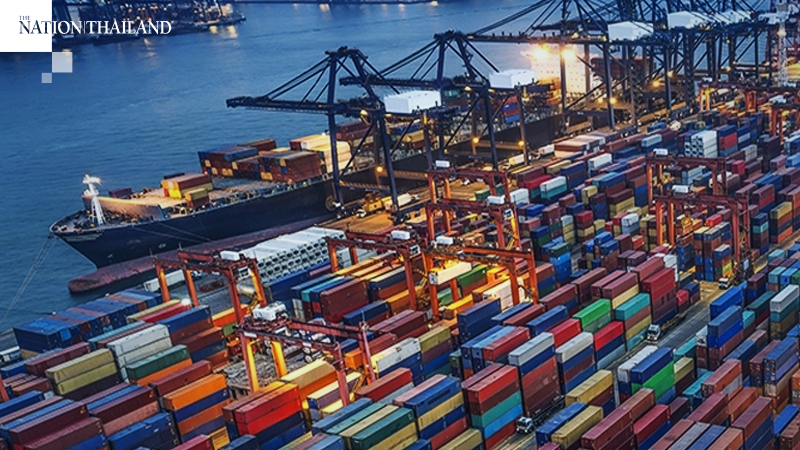
The export of farm, fishery and livestock products to 18 countries that Thailand has free-trade agreement (FTA)s with inched up 1 per cent year on year in the first 11 months of 2020 to US$13.52 billion, Department of Trade Negotiations director-general Auramon Supthaweethum said.
In November alone, the export of farm goods to these countries grew 12 per cent month on month to $1.23 billion. Though exports to all countries increased, shipments to China surged 18 per cent, Japan 9 per cent, Asean region 11 per cent, South Korea 5 per cent, India 16 per cent, Peru 223 per cent and Chile 344 per cent.
Auramon said the export of Thai farm, fishery and livestock products has grown continuously this year despite the Covid-19 pandemic.
She called on exporters to reap the benefit of FTAs by carrying out stringent quality control to ensure the products are safe from the virus or contamination.
She added that six countries that Thailand has an FTA with, namely Australia, New Zealand, Hong Kong, Singapore, Brunei and Cambodia, have cancelled import tariff for Thai rice.
Meanwhile, 15 FTA countries comprising nine Asean nations, China, Australia, New Zealand, Chile, Peru and Hong Kong have lifted import tariff for Thai cassava, while 16 countries (Asean plus Japan, South Korea, Hong Kong, Australia, New Zealand, Chile and Peru) have removed tariff for all rubber products from Thailand.
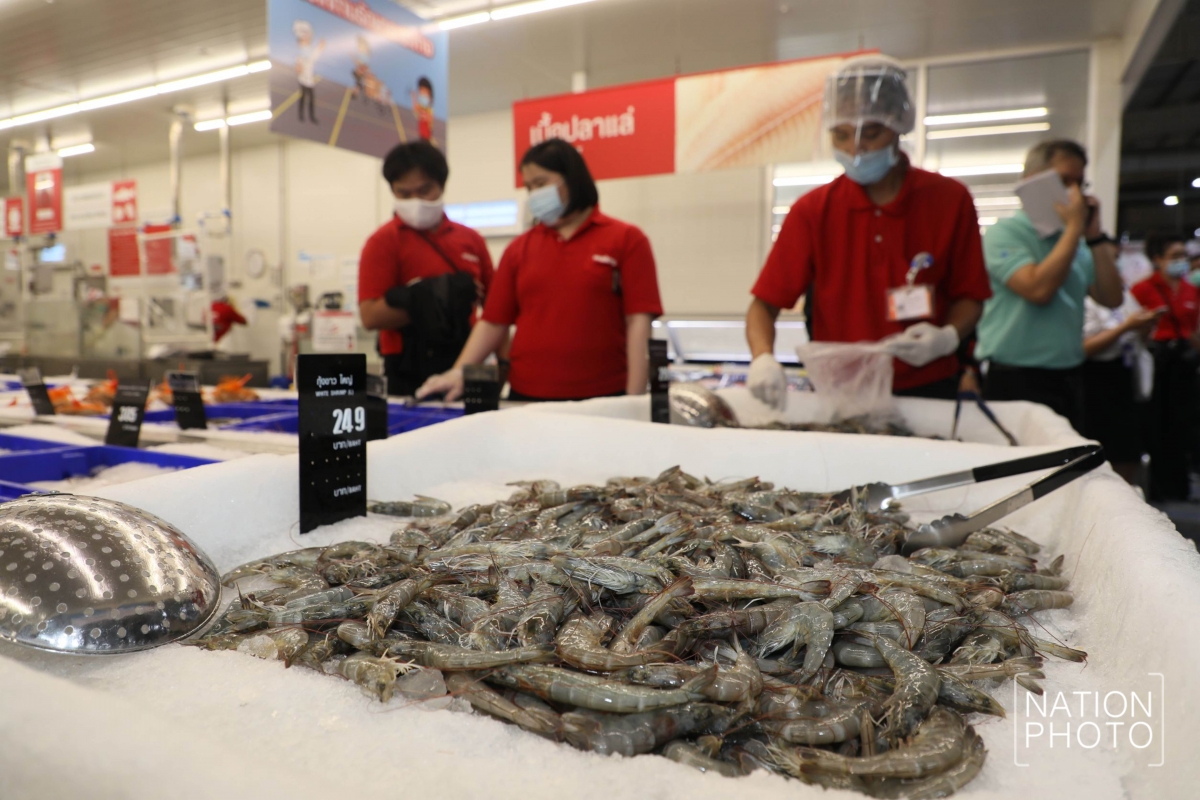
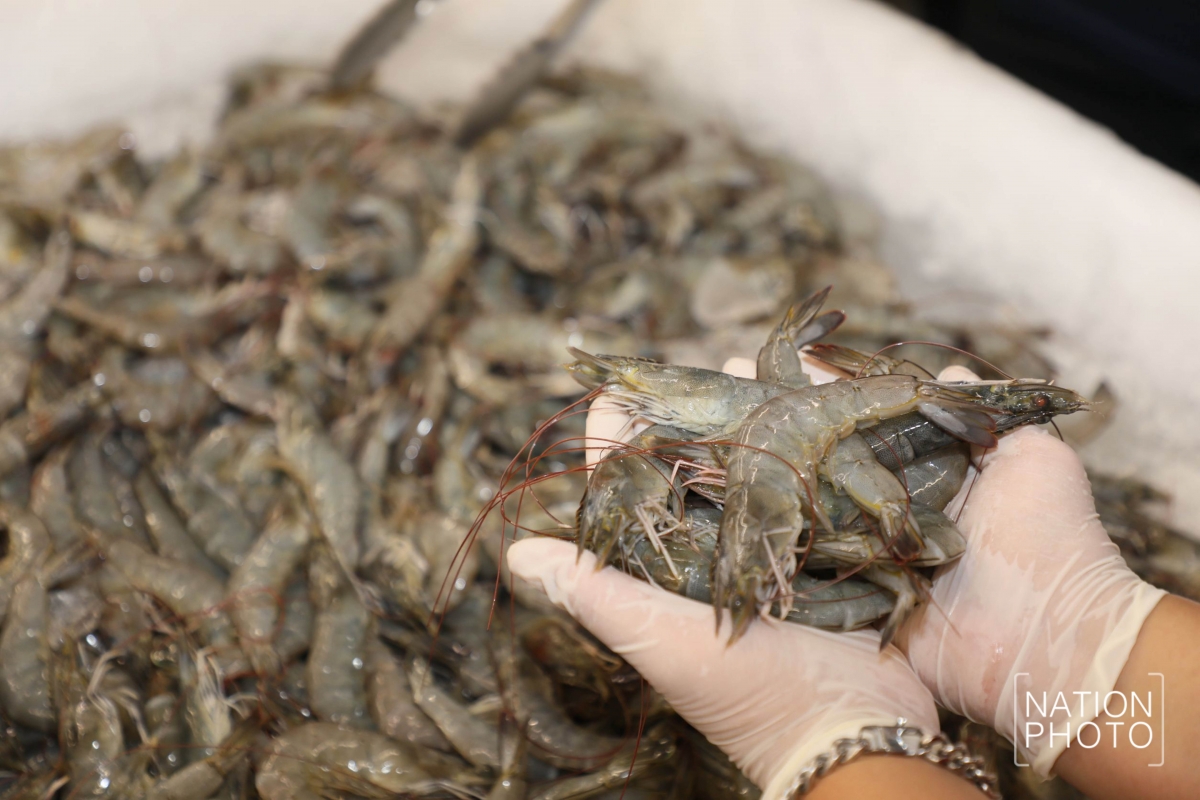
Siam Makro is joining forces with the Commerce and Agriculture ministries to purchase 200 tonnes of shrimp in an effort to help farmers affected by the new wave of Covid-19 infections, as well assure consumers that cooked shrimp is safe for consumption.
People have been wary about consuming shrimp after a new cluster of infections broke out in Samut Sakhon’s central shrimp market recently.
“The new Covid-19 wave has severely impacted shrimp farmers across the country. The last week of the year is supposed to be their opportunity to rack up sales, but the loss of confidence and concern have left them devastated. Therefore, Makro, in association with the Commerce and Agriculture and Cooperatives ministries, has started purchasing shrimp directly from farmers to help move their products in time for the ‘new normal’ New Year celebrations,” said Siriporn Dechsingha, Siam Makro’s chief corporate communications officer.
“This collaboration is an urgent initiative that will be carried out continuously to help shrimp farmers affected by Covid-19. Apart from buying an additional 200 tonnes of shrimp per week directly from farmers and promotions nationwide, Makro has also been certified by the Department of Fisheries to have hygienic, Covid-19-free inspection and storage processes, further boosting public confidence.”
The promotions kicked off with a celebration at Makro Nakhon-In, which was attended by Commerce Minister Jurin Laksanawisit, Agriculture and Cooperatives Minister Chalermchai Sreeon, Department of Internal Trade director-general Wattanasak Sur-iam and Department of Fisheries director-general Mesak Pakdeekong.
The event featured booths selling cooked shrimp served up by members of shrimp farmer networks and the Thai Restaurant Association.
“In the ‘new normal’ festive season, when people will be celebrating by cooking at home, shrimp products from Thai farmers should see better reception, especially after government agencies and network members have joined hands to regain confidence in the safety of shrimp consumption. We are not just looking at short-term solutions but are also aiming for development towards sustainability, in line with our mission to stand by Thai farmers and become the leader of fresh food safety,” Siriporn said.
The shrimp is divided into three sizes, with the smallest going at Bt189 per kilo, medium at Bt199 per kg and large at Bt239 per kg. The promotion will continue until January 31.
Gulf Energy Development informed the Stock Exchange of Thailand on Wednesday that the company’s board of directors had approved a Bt8.92 billion budget to boost its Intouch Holdings (Intuch) shareholding by up to 5 per cent.
The move by Thailand’s top private power producer is part of an expansion that also saw Gulf take a 40 per cent stake in PTT Natural Gas Co at a cost of Bt2.7 billion earlier this month.
Gulf executive director and CFO Yupapin Wangviwat said that as of December 28, Gulf held 14.39 per cent of Intuch shares, up 4.39 per cent from the 10 per cent it held previously.
“We have confidence that this investment will generate returns to the company in the long term,” she said.
An analyst at Asia Plus Securities said Gulf’s additional investment in Intuch will help increase the company’s revenue by around Bt324.1 million to Bt1.1 billion annually, at earning-per-share of Bt2.3.
“The company has maintained the fundamental value of Gulf shares at Bt38.5 per share, while the share price is likely to increase,” said the analyst, advising investors to buy Gulf shares.
Thai central bank worried at larger economic impact after virus surge
EconDec 31. 2020Chayawadee Chai-Anant, senior director of the BOT’s economic and policy department
By The Nation
The Bank of Thailand (BOT) has listed three concerns for economic recovery now that Thailand and other countries have been hit by a new surge of Covid-19 cases.
The fresh outbreak may disrupt the recovery more than calculated in the central bank’s December 20 assessment, Chayawadee Chai-Anant, senior director of the BOT’s economic and policy department, warned on Wednesday.
The central bank is watching closely to see whether the government can contain the outbreak, she said.
The second concern is that Thai exports may be hit hard by fresh lockdown restrictions imposed abroad, she warned.
The third concern is the Thai labour market. The job market’s recovery remains very fragile, with unemployment still high and compensation payments not dropping, she pointed out.
Jobless workers in the social security system accounted for 7.8 per cent of total unemployment in November, compared to 8.1 per cent in October. Those receiving compensation payments accounted for 4.7 per cent, little change from 4.9 per cent in the month before. Those working less than 20 hours per week both in farm and non-farm sectors dropped slightly to 2.2 million last month from 2.5 million in October. The weak labour market indicates the economic recovery does not have a broad base, said Chayawadee.
Partial economic recovery in November was driven by government stimulus while contraction of exports decelerated to 2.3 per cent. The baht appreciated sharply in November after Joe Biden won the US presidential election and vaccine development advanced – good news that fuelled capital inflows into Thai stock and bond markets. The baht’s appreciation decelerated in December as the US dollar rebound, she added.

 An empty terminal at the Port of Dover in Dover, England, on Dec. 23, 2020. MUST CREDIT: Bloomberg photo by Chris Ratcliffe. Photo by: Chris Ratcliffe — Bloomberg Location: Dover, United Kingdom
 A casting mold filled with molten gold in Semey, Kazakhstan, on June 7, 2016. MUST CREDIT: Bloomberg photo by Andrey Rudakov. Photo by: Andrey Rudakov — Bloomberg Location: Semey, Kazakhstan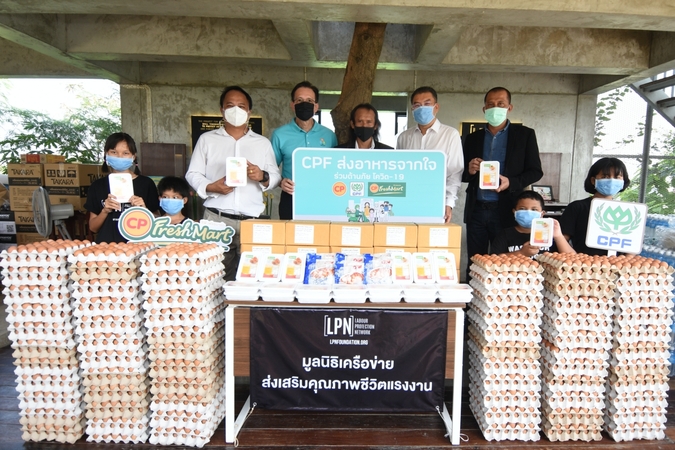
 Photos by Tatchadon Panyaphanitkul
 Chayawadee Chai-Anant, senior director of the BOT’s economic and policy department
