The State Railway of Thailand (SRT) plans to launch an asset-management subsidiary next year in line with a Cabinet resolution last month, SRT governor Nirut Maneephan said.
The SRT will register the subsidiary as a state enterprise this year with registered capital of Bt200 million. It will also appoint the subsidiary’s board and begin the selection process for its chief executive officer.
The subsidiary will initially be run by SRT personnel before recruiting its own staff of about 100 employees within three years. It will be tasked with managing the SRT’s off-track landholdings of 38,469 rai, worth a total Bt300 billion.
The subsidiary’s main revenue will come from the 15,270 existing land rental contracts and from leasing land where rental contracts have expired.
Destination Capital launches DESCAP1 to invest in hotels in Thailand
CorporateOct 16. 2020From left: Destination Capital CEO James A Kaplan, senior vice-president Supakit Eimsamank, and Thitiphat Thaveesin.
By The Nation
Destination Capital, a Bangkok-based private equity real estate investment and asset management company, on Friday announced the launch of its DESCAP 1 Private Equity Trust, which will acquire hotels in Thailand targeting investor returns of up to 15 per cent per year.
KTB Securities (Thailand) will act as settlor and trust manager and MFC Asset Management as the trustee.
The trust aims to raise Bt2.5 billion by offering an alternative asset class for investor portfolios. It will acquire freehold four-star hotels of 150-250 rooms in Bangkok, Pattaya, Hua Hin and Phuket, which are expected to rebound the quickest after Covid-19.
The investment strategy is to acquire urban and resort hotels and then renovate, reposition, and rebrand them to increase value of the properties in order to generate annual returns of 15 per cent with a 5-7 year holding period.
“The Covid-19 pandemic has significantly affected travel and tourism to Thailand, yet it also created a ‘once in lifetime’ investment opportunity in prime hotels and resorts located in well-known global destinations through DESCAP1 Private Equity Trust. It is also a way to support and rejuvenate Thai travel and tourism industry,” said Thitiphat Thaveesin, KTB Securities’ executive vice president, Corporate Finance Solutions & REIT Dept.
Warren prods Disney CEO on buybacks, pay before 28,000 cuts
CorporateOct 15. 2020Bob Iger, chief executive officer of Walt Disney Co., during a Bloomberg Television interview at Disneyland in Shanghai on June 16, 2017. MUST CREDIT: Bloomberg photo by Qilai Shen.
By Syndication Washington Post, Bloomberg · Anders Melin · BUSINESS, US-GLOBAL-MARKETS
Sen. Elizabeth Warren criticized Walt Disney Co. for laying off thousands of workers as a result of the pandemic, saying its spending on share buybacks and executive pay enriched bosses and investors but eroded its ability to weather a downturn.
“It appears that — prior to, and during the pandemic — Disney took good care of its top executives and shareholders — and now is hanging its front-line workers out to dry,” Warren wrote Tuesday in a letter to Executive Chairman Bob Iger and Chief Executive Officer Bob Chapek.
In the letter, Warren asked about the monthly cost of wages for the affected employees, whether Disney will cover their health-care premiums, and several questions about the company’s executive pay. The Democratic senator from Massachusetts wrote that she expects an answer by Oct. 27.
Disney shares were down 1% to $127.69 at 10:48 a.m. in New York. The stock is down 12% for the year.
Disney said last month that it would terminate 28,000 workers in its theme parks and cruise-line businesses, which have plunged as a result of the coronavirus pandemic. The company said at the time it would offer some benefits, including 90 days of job-placement services. Two-thirds of those laid off were employed part-time. The company’s domestic parks employed more than 100,000 people before the crisis, not counting the cruise line and other divisions.
In her letter, Warren noted that Disney had dismissed more workers in Florida than in California, despite the company attributing the cuts in part to California’s refusal to let Disneyland reopen.
Warren said Disney spent $47.9 billion on share buybacks from 2009 through 2018, $5.4 billion on dividends in 2018 and 2019 alone, and hundreds of millions of dollars on executive compensation.
Iger, for years one of America’s top-paid executives, has received repeated criticism over his compensation. Almost half of the company’s investors rejected its executive-pay practices in advisory votes in 2018 and 2019, after Iger secured a new contract entitling him to more than $100 million in stock if Disney shares did well enough over the coming years.
And Abigail Disney, a granddaughter of the company’s co-founder Roy Disney, drew attention to Iger’s pay by saying in a 2019 CNBC interview that “Jesus Christ himself isn’t worth 500 times his median worker’s pay.” Months earlier, Disney had disclosed that the ratio between Iger’s $65.7 million pay package and $46,127 for the firm’s median employee was 1,424-to-1.
Representatives for Disney didn’t respond to an email seeking comment.
CorporateOct 15. 2020The Tencent Holdings building stands in the Nanshan district of Shenzhen, China. MUST CREDIT: Bloomberg photo by Brent Lewin
By Syndication Washington Post, Bloomberg · Helene Fouquet, Manuel Baigorri · BUSINESS
Tencent Holdings is planning to increase its stake in Universal Music Group by a further 10% before the option expires in January, according to people familiar with the matter.
The Chinese technology company last year led a consortium that purchased 10% of the world’s biggest music company from French media company Vivendi. That deal valued Universal Music at 30 billion euros ($35.2 billion) and Tencent and its partners have the option to increase their stake to as much as 20% at the same valuation until Jan. 15, 2021.
Tencent is likely to exercise this option, three people said, asking not to be identified as the deliberations are private. It could make the move before year’s end, one person said.
Shares of Vivendi rose as much as 2.2% in early trading in Paris. Shares of Tencent listed in Hong Kong rose as much as 2.2% in early trading Wednesday, reaching a record of HK$569.5 ($74.48) each. Tencent’s American Depositary Receipts achieved a record closing price of $74.04 in Tuesday’s U.S. session, after Apple announced that its game “League of Legends: Wild Rift” would be coming to iPhone 12.
It isn’t clear whether Tencent will be joined by the original consortium members, the identities of which haven’t been made public, the people said. Hillhouse Capital and Singapore sovereign wealth fund GIC were among potential investors that Tencent approached, Bloomberg News reported last year.
Deliberations are ongoing, and Tencent could still opt not to increase its stake in Universal Music, one of the people said. Representatives for Tencent and Vivendi declined to comment.
By increasing its stake, Tencent would seek to diversify from gaming and China, where it has been busy with deals this year. It’s helped orchestrate the combination of Huya and DouYu International Holdings, creating a Chinese game-streaming giant with a market value of more than $11 billion. It has also proposed to take private Chinese gaming firm Leyou Technologies Holdings.
Universal Music has been boosted by a surge in streaming that has dragged the industry out of a decade-long slump. The music business has helped Vivendi hold up through the pandemic lockdown, limiting the blow from a drop in advertising and publishing revenue.
A deal by Tencent will counter a recent venture by rival NetEase, which in August struck a deal to license songs from Universal Music for the first time. China’s antitrust authorities had investigated Tencent’s dealings with the world’s three biggest record labels, but the probe was suspended this year, people familiar with the matter said in February.
An initial public offering of Universal Music is planned by early 2023, according to a Vivendi statement in February. An entry onto the stock market could give the music group more financial clout to compete with rivals Warner Music Group and Sony Music Entertainment. Tencent also plans to take a minority stake in Universal Music’s Chinese subsidiary.
VW crushed the iconic beetle to make room for this small SUV
CorporateOct 15. 2020A Volkswagen on the steering wheel of a VW ID.3 electric automobile, the first of around 22 million vehicles to be produced and delivered worldwide by 2028, at the automaker’s factory in Dresden, Germany, on Sept. 11, 2020. MUST CREDIT: Bloomberg photo by Krisztian Bocsi.
By Syndication Washington Post, Bloomberg · Christoph Rauwald, Craig Trudell · BUSINESS, WORLD, US-GLOBAL-MARKETS, EUROPE
Automakers are so eager to replace less-lucrative cars with higher-margin SUVs that they’re willing to scrap iconic nameplates along the way.
Volkswagen’s newest North American model, the Taos, is perhaps the starkest example of this yet. The German automaker made room to manufacture the compact sport utility vehicle in its Mexican assembly plant by ceasing production of the Beetle, one of the most influential cars of the 20th century.
For automotive product planners, the decision making is simple. The ebb toward crossovers and away from sedans has been relentless, helping put SUVs and trucks on course to seize more than 70% of the U.S. market this year. Crossovers also are a better bang for automakers’ buck — consumers are willing to pay up for the higher ride height and roomier interior of models that aren’t substantially costlier to develop or build compared with sedans.
“We think the trend is going to continue,” Duncan Movassaghi, executive vice president of sales and marketing for VW’s U.S. unit, told reporters during a briefing on the Taos. The automaker sees Americans buying almost 10 million SUVs a year by the end of the decade.
VW rose as much as 0.8% in early trading in Frankfurt on Wednesday.
The German manufacturer is far from alone in being cold-blooded about its cars.
Ford is abandoning sedans in North America, killing off the likes of the Taurus, once the top-selling car in the country. General Motors Co. has ceased several nameplates including the Chevrolet Impala, a model line with more than 60 years of lineage. Fiat Chrysler Automobiles NV also gave up trying to get Americans to buy the 500, the diminutive car used to bring its eponymous Italian brand back to the U.S. in 2011.
While those companies are making space in factories and showrooms for SUVs some consumers will recognize — the Ford Bronco, Chevrolet Blazer and Jeep Grand Wagoneer — VW eschewed the Beetle for an entirely new nameplate. The Taos is named after a town of less than 6,000 people in the northern New Mexico desert.
By adding the Taos and the all-electric ID.4 to the Tiguan, VW will have three models in the compact SUV segment, similar to how Subaru has the Outback, Forester and Crosstrek, and Jeep has the Wrangler, Cherokee and Compass.
Chief Executive Officer Herbert Diess is counting on an expanded SUV lineup to help VW put an end to losses that predated the German carmaker’s disastrous diesel-emissions scandal. He told shareholders last month the brand was close to breaking even in North America before the Covid-19 pandemic hit. The manufacturer generates the vast majority of its profits in China and Europe and has struggled for years to make money in the U.S.
The Taos will be available in the second quarter of next year. It will be about 9 inches (23 centimeters) shorter than the Tiguan and priced below that model, which starts at $25,245.
Krungsri (Bank of Ayudhya) has joined with Lao Development Bank to launch Krungsri-LDB Global Transfer, a service for real-time money transfers between Thailand and Laos.
Offered through Krungri Biz Online (KBOL), the service is designed to enable individuals and small businesses to better respond to business and customer needs, conveniently and safely.
Krungsri-LDB Global Transfer connects the Application Programming Interface (API) of the two banks for the first time, to offer seamless and easy international remittance transactions.
The service will support money transfer to recipients’ accounts based on the currency being transferred, without using exchange rates. Baht and US dollars will be supported in the first phase, followed by other currencies in the future.
Customers can use the service free of charge until the end of 2020.
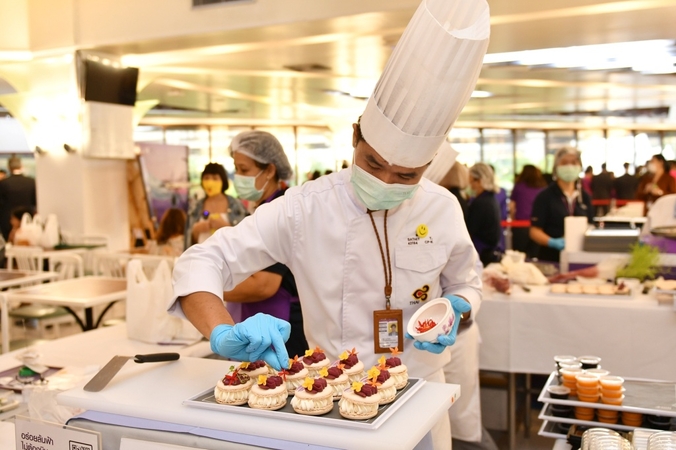
Thai Airways International (THAI) wants to boost its non-flight income from 15 per cent to 50 per cent of total revenue in the next five years, THAI Catering managing director Varangkana Luerojvong told Krungthep Turakit newspaper.
Varangkana said the non-flight businesses – catering, repair and cargo services – have adjusted their strategies in order to raise revenue.
She said the catering business aims to boost its annual revenue from Bt10 billion to Bt20 billion in the next five years.
The repair and cargo businesses are thought to have set similar targets – to double their revenue from the current Bt15 billion-Bt20 billion and Bt20 billion, respectively.
Last year the airline’s catering business posted revenue of Bt8.5 billion.
THAI Catering now aims to expand its franchises for all product brands to a total 700 outlets, aiming to boost its revenue by at least Bt3.5 billion next year.
THAI entered rehabilitation restructuring under bankruptcy court supervision on September 14. The airline will submit its rehab plan for the court’s consideration in the fourth quarter of this year.
Bangchak Corporation (BCP) has announced it is pushing ahead with investment in its Norwegian oil and gas drilling arm OKEA, saying there was no risk of losses even if the oil price falls.
Chaiwat Kovavisarach, BCP president and CEO, said OKEA was now back producing about 20,000 barrels per day after a June-July dip due to maintenance work.
OKEA’s low production costs of US$15 per barrel are usually offset by high government tariffs, but the Norwegian government has paid back US$100 million in tariffs to OKEA to relieve the Covid-19 impact, said Chaiwat.
Therefore, BCP would not change its policy to invest in the upstream business, he added.
“BCP is currently drafting a budget plan for investment in additional production sites, expecting to be finalised by November this year,” he said.
BCP plans include a joint venture to develop lithium mines in Argentina, which is expected to begin production late next year.
“The company is studying the market locations and demand for lithium, and how to maximise benefits,” he said.
The project’s first-phase production capacity has been raised from 25,000 tonnes to 40,000 tonnes per year, while the company expects to realise revenue in 2021. BCP will buy approximately 6,000 tonnes of lithium per year, either to sell or to use to produce batteries.
BCP reports that several businesses are already interested in buying lithium from the company.
By Syndication Washington Post, Bloomberg · Kyunghee Park · BUSINESS, WORLD
Singapore Airlines said all seats on its Airbus SE A380 jetliner pop-up restaurants were reserved within 30 minutes of bookings opening Monday.
With flights largely grounded by the coronavirus pandemic, Singapore Airlines is trying novel ways to raise money, including using two of the superjumbos parked at Changi Airport as temporary eateries.
A meal in a suite costs S$642 ($474), while seats in business class are going for S$321, dropping to S$96.30 for premium economy and S$53.50 for economy. Customers can also pay with frequent-flyer miles.
After lunch on the initial dates of Saturday and Sunday, Oct. 24 and 25, sold out, Singapore Airlines said it will extend the offer for a further two days the following weekend and also add a dinner option on all four days.
About half the seats in each aircraft will be used for dining, in line with restaurant guidelines on group limits and distancing, the carrier said in a statement. In normal flying service, the carrier’s A380s can seat as many as 471 people, according to its website.
Singapore Airlines, which suffered a record S$1.12 billion ($827 million) net loss in the quarter through June and is laying off about 20% of its workforce, is also selling a range of first- and business-class meals and offering a service whereby a private chef reheats, plates and serves customers in their homes.
Meanwhile, demand is soaring for spots on two cruise ships that will start sailing from Singapore next month on round-trip journeys as the city-state aims to give residents an outlet for their wanderlust.
Operator Genting Cruise Lines has received more than 6,000 bookings in 5 days, while competitor Royal Caribbean International said bookings are up 500% compared with the past two weeks, reported the Straits Times. The boats will sail at a reduced capacity of 50% and the journeys are only open to residents of Singapore.
Ford shares surge on optimism about new bosses and models
CorporateOct 13. 2020Jim Hackett, former president and CEO of Ford., right, speaks as Jim Farley, current CEO, stands next to a 2020 Explorer SUV in Detroit, Mich., on Jan. 9, 2019. MUST CREDIT: Bloomberg photo by Jeff Kowalsky.
By Syndication Washington Post, Bloomberg · Keith Naughton · BUSINESS, US-GLOBAL-MARKETS, RETAIL
Shares of Ford surged on optimism about its new leadership and earnings potential from new models such as the Bronco sport-utility vehicle and a redesign of its top selling F-150 pickup truck.
The automaker’s stock rose on Monday after Benchmark analyst Michael P. Ward raised his earnings estimate for the company and upgraded his rating to buy from hold. His recommendation became just the fourth buy on Ford, compared with 13 holds and two sells.
“A new management team and better-than-expected third-quarter earnings provide a near-term catalyst for Ford,” Ward wrote in a note to investors. “Momentum from new products and the need to replenish depleted inventories of full-sized pickup trucks should accelerate the momentum into 2021.”
At the beginning of the month, former Chief Operating Officer Jim Farley replaced retiring Jim Hackett as CEO. Farley, an intense former Toyota executive who came to Ford in 2007, immediately named company veteran John Lawler chief financial officer, replacing former Amazon finance executive Tim Stone, whom Hacket hired last year. Stone is now CFO at software company ASAPP.
“Both Farley and Lawler, in our opinion, will be perceived as significant upgrades by the investment community,” Ward wrote. “The management changes, along with new product momentum and the benefits of cost improvement actions, in our opinion, are positive variables for the stock.”
Ward placed a $10 price target on Ford shares, which have fallen 55% since turnaround specialist Alan Mulally retired as CEO in 2014 but are up about 17% since Farley took the top job on Oct. 1.
Farley has said he plans to accelerate Ford’s turnaround even as the automaker forecasts its first annual loss in a decade. As he takes the wheel, his hand is strengthened by new models on the launching pad, including the redesigned F-150, Ford’s biggest money maker; an electric Mustang Mach-E and the revival of the rugged Bronco, which already has received more than 165,000 deposits of $100.

 From left: Destination Capital CEO James A Kaplan, senior vice-president Supakit Eimsamank, and Thitiphat Thaveesin.
  Bob Iger, chief executive officer of Walt Disney Co., during a Bloomberg Television interview at Disneyland in Shanghai on June 16, 2017. MUST CREDIT: Bloomberg photo by Qilai Shen.
  The Tencent Holdings building stands in the Nanshan district of Shenzhen, China. MUST CREDIT: Bloomberg photo by Brent Lewin
  A Volkswagen on the steering wheel of a VW ID.3 electric automobile, the first of around 22 million vehicles to be produced and delivered worldwide by 2028, at the automaker’s factory in Dresden, Germany, on Sept. 11, 2020. MUST CREDIT: Bloomberg photo by Krisztian Bocsi.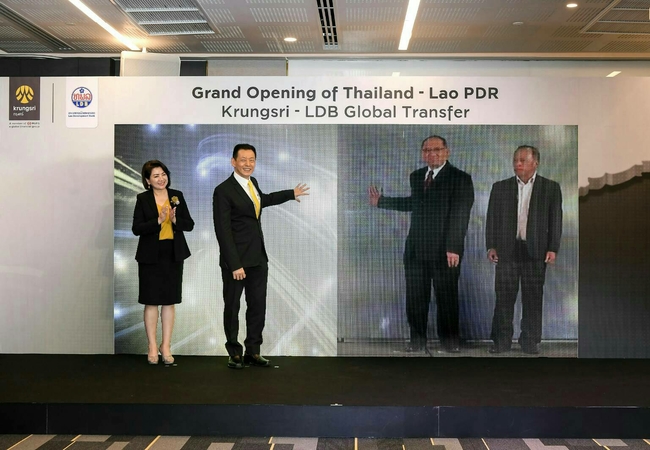

 File photo/ superjumbo
  Jim Hackett, former president and CEO of Ford., right, speaks as Jim Farley, current CEO, stands next to a 2020 Explorer SUV in Detroit, Mich., on Jan. 9, 2019. MUST CREDIT: Bloomberg photo by Jeff Kowalsky.
