Exports of gems and jewellery, excluding gold, in December 2021 were worth US$587.16 million, up 29.33 per cent year on year. Total exports for 2021 (January to December), excluding gold, were worth $6.158 billion, increasing 26.94 per cent compared to 2020.
However, including gold, the exports were worth $10.04 billion, down 44.79 per cent year on year.
One of the key factors behind the increased demand was the recovery of key markets, with the US being the number one export market, up 51.29 per cent, followed by Hong Kong 0.78 per cent, India 60.65 per cent, Germany 1.70 per cent, United Kingdom 134.66 per cent, Belgium 21.23 per cent, Japan 6.49 per cent, United Arab Emirates 29.82 per cent, Australia 10.71 per cent and Switzerland 70.43 per cent.
Major products exported increased, such as silver jewellery 21.71 per cent, gold jewellery 31.75 per cent, platinum jewellery 51.89 per cent, polished diamonds 35.11 per cent, sapphires 17.35 per cent, polished hard gems 38.51 per cent, polished soft gems 0.74 per cent, artificial jewellery 9.70 per cent, silver 24.14 per cent, while gold, which used to be a speculative export when gold prices rose, was down 70.88 per cent.
The outlook for exports in 2022 is expected to continue to recover since the world economy has begun to recover from the impact of Covid-19. The economic activities of many countries have continued to expand since March 2021, and many countries have adjusted their policies to return to normal state.
The government has selected the Queen Sirikit National Convention Centre (QSNCC) as the venue for holding the Asia Pacific Economic Cooperation (Apec) Summit this year.
The decision was made during Wednesday’s meeting of a national panel in charge of making preparations for the summit of Apec members. The meeting was attended by Transport Minister Saksayam Chidchob and Chayatham Promsorn, permanent secretary at the Transport Ministry.
The meeting also selected the Royal Thai Navy’s auditorium as the venue for hosting the gala dinner for Apec leaders and their spouses.
The QSNCC has been closed for renovation for four years and it is scheduled to reopen on September 10 to host the Apec Summit.
Its space has been increased five times to 280,000 square metres.
The new QSNCC will have two large exhibition halls with more than 45,000 square metres of space, two large convention and seminar halls with over 10,000 square metres of space. The QSNCC also will have 50 small meeting rooms and its parking space can accommodate more than 2,700 vehicles. The convention centre also will have a passage linked to the subway to make it convenient for visitors coming to the centre.
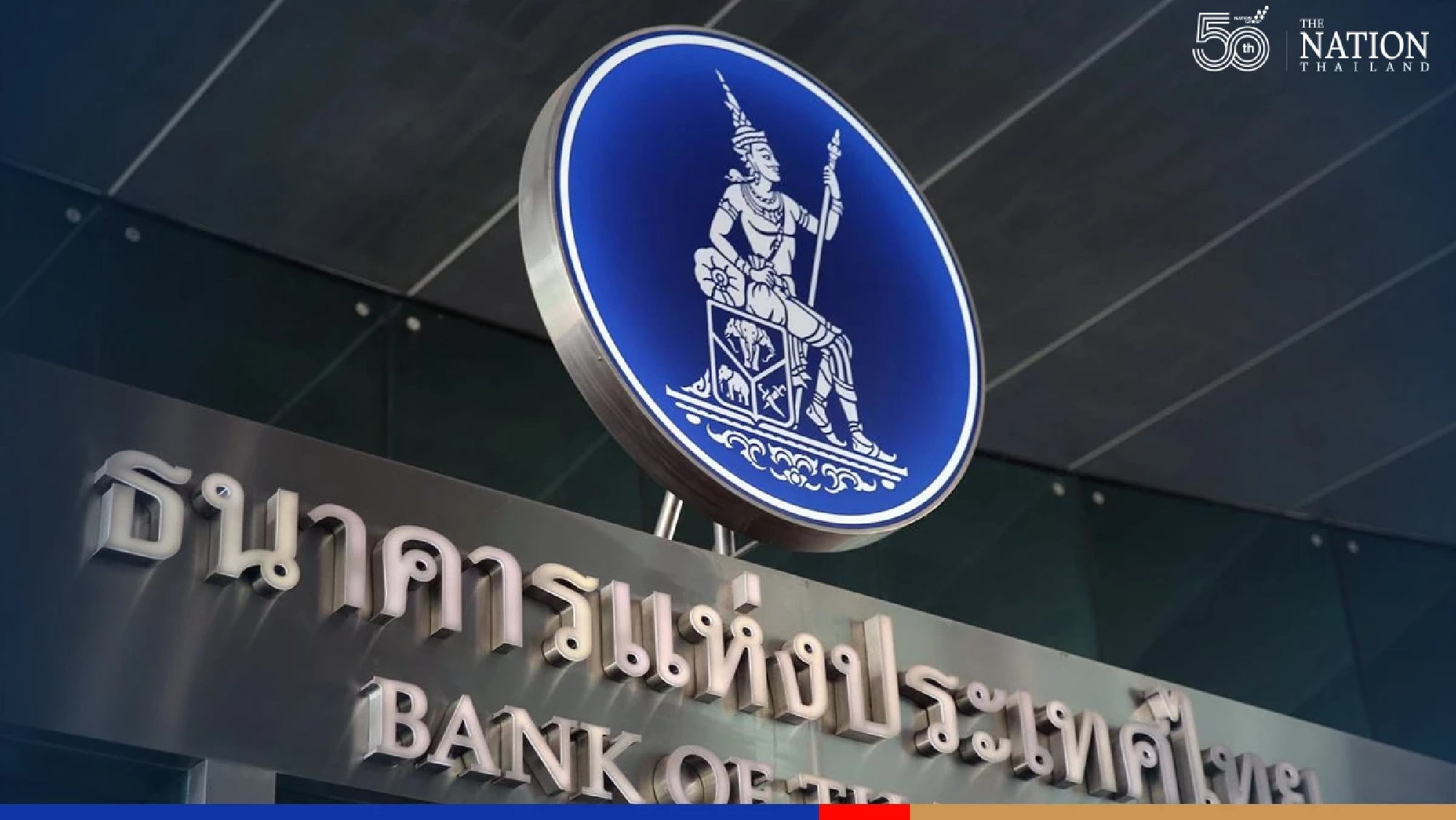
The central bank’s Monetary Policy Committee (MPC) on Wednesday retained the key policy rate at 0.5 per cent to support the economy’s growth.
Piti Disyatat, assistant governor for monetary policy at the Bank of Thailand, said the decision was reached unanimously by the committee members.
He said the low policy interest rate of 0.5 per cent would support economic expansion along with other monetary and finance policies that focus on rehabilitation and increasing economic potential.
The measures are aimed at helping workers, businesses and households to have more income with sustainability, Piti added.
The committee believes that Thailand’s economy expansion will exceed the panel’s estimate at the last meeting.
The panel expects the country’s growth this year to be driven by growth in exports and increase in foreign tourists following the easing of Covid-19 restrictions, Piti said.
The MPC acknowledges that different economic sectors would see different levels of growth, Piti said. For example, the tourism sector would see growth lower than the pre-Covid level.
The MPC wants the government to continue to monitor Covid-19’s impact on workers, who would also be hit by rising cost of living and the fact that their pays have not been fully restored.
The committee realises that inflation may exceed the target in the first quarter because of rising prices of fresh foods and energy, but the average inflation in the year would be within the target because the committee does not expect to see more increases in prices of goods, Piti said.
He added that the MPC expected demand pressure on inflation to still be low this year.
The committee believes the country still enjoys high liquidity in the money system but the levels of liquidity would be different in different sectors.
The MPC advised the government to closely monitor global and Thai currencies and to create a new FX (foreign exchange) ecosystem to protect businesses from exchange risks, Piti said.
The committee called on the government to maintain health policies that would benefit economic recovery and to use monetary and finance policies to distribute liquidity to target groups. For example, the government should use a debt consolidation policy to allow financial institutions to help those in housing debt and micro-finance debt, Piti said.
The inclusion underlines CP Foods’ longstanding and strong commitment to environmental, social, and governance (ESG) efforts in line with Thailand’s “Kitchen of the World” strategy and United Nations’ Sustainable Development Goals, said Wuthichai Sithipreedanant, CP Foods’ senior VP for Corporate Social Responsibility and Sustainable Development.
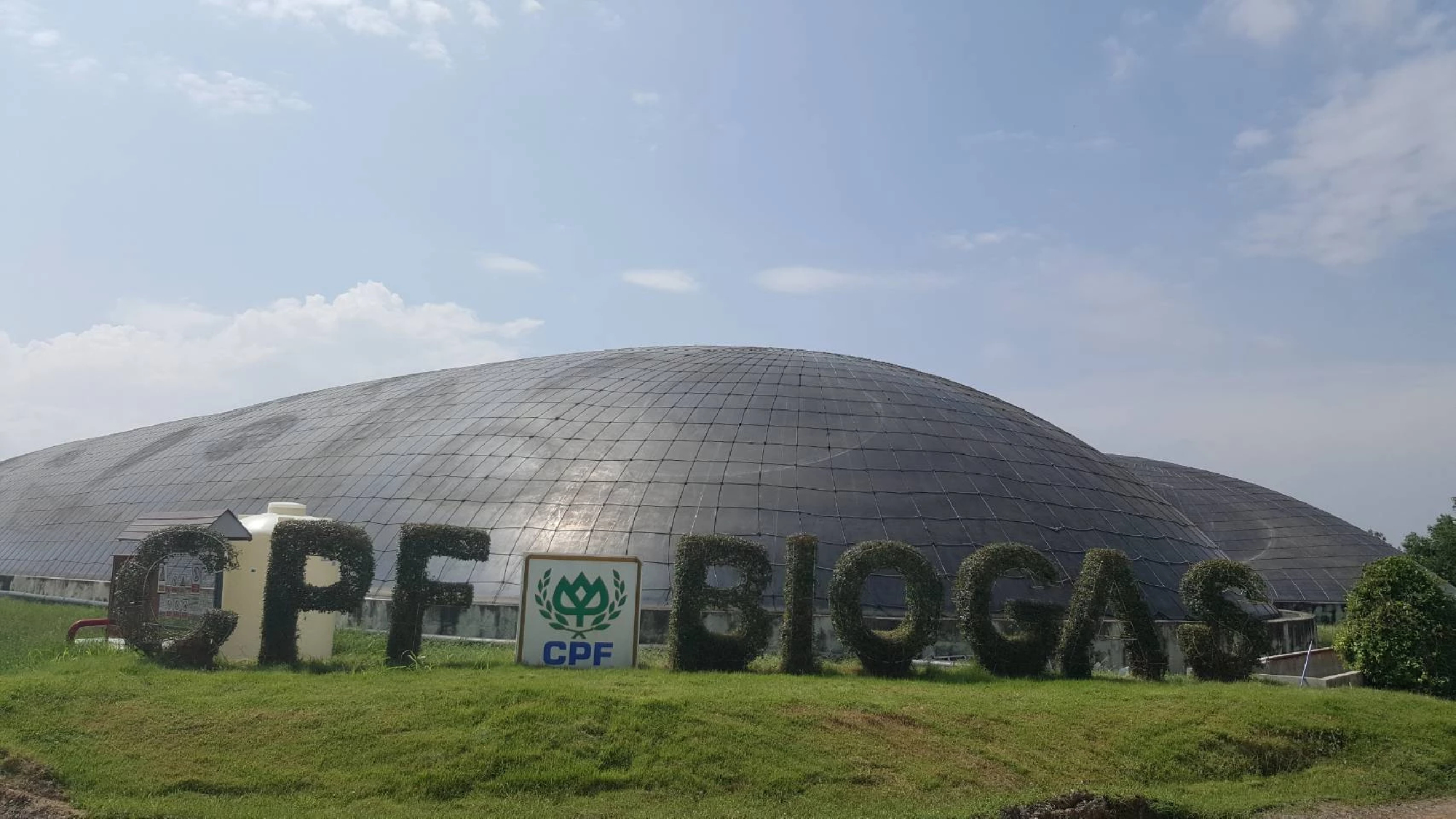
Charoen Pokphand Foods (CP Foods) has been awarded a Silver Class distinction in the S&P Global Sustainability Yearbook 2022, placing it in the top 5 per cent of more than 230 best companies in the global Food Products sector.
The inclusion underlines CP Foods’ longstanding and strong commitment to environmental, social, and governance (ESG) efforts in line with Thailand’s “Kitchen of the World” strategy and United Nations’ Sustainable Development Goals, said Wuthichai Sithipreedanant, CP Foods’ senior VP for Corporate Social Responsibility and Sustainable Development.
Last year, the company launched CPF 2030 Sustainability in Action as a guideline for sustainable growth of business worldwide. CP Foods said the initiative’s key purpose is to create food security for a growing global population, using sustainable practices to mitigate environmental and societal impacts and solve global problems including climate change.
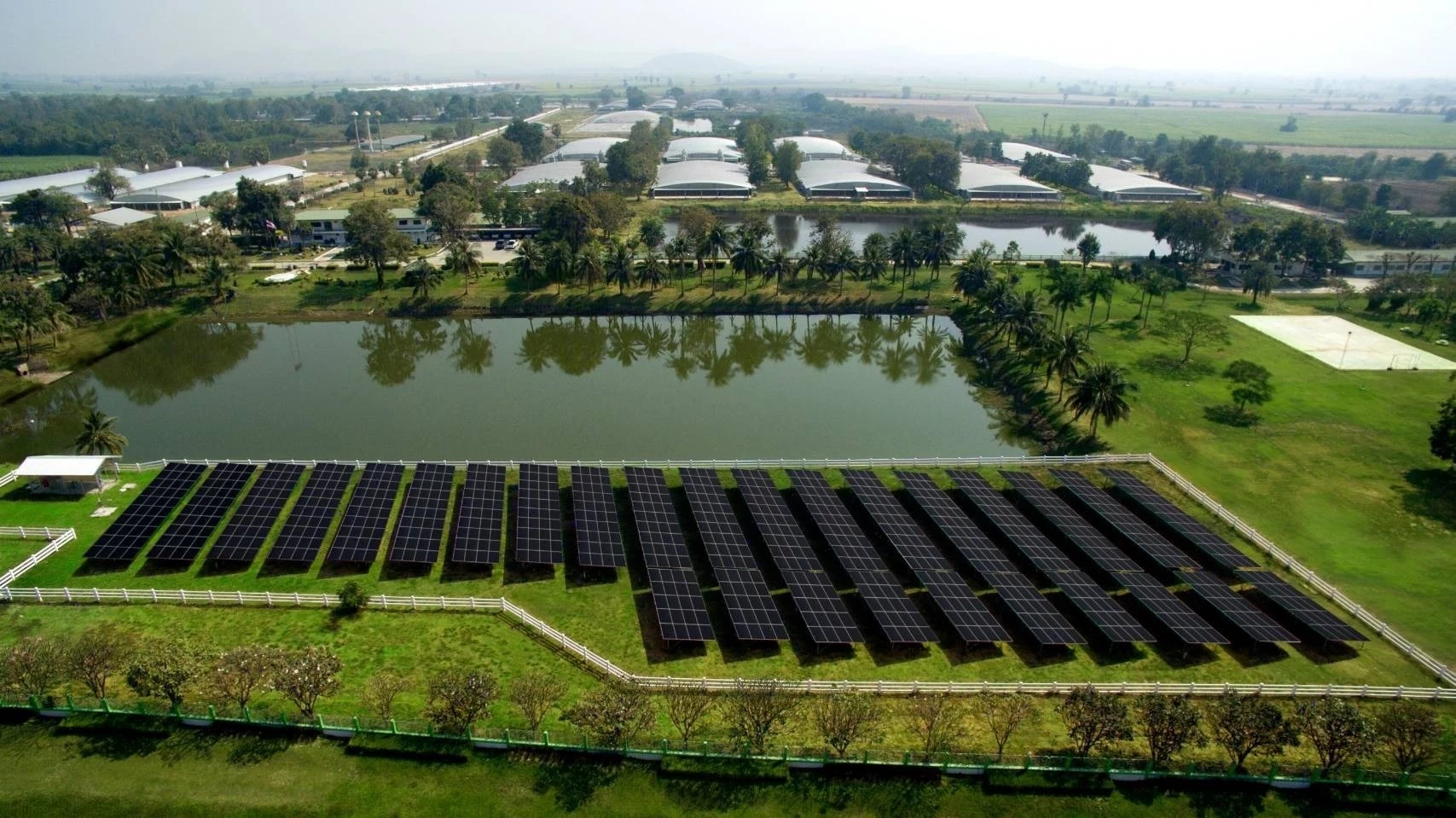
CP Foods said it had made multiple ESG efforts in recent years by adopting renewable energy, developing environmentally friendly packaging, sourcing raw material from responsible sources, and initiating waste-to-value projects to reduce food waste in business processes to zero by 2030.
The company said it is also helping conserve and restore watershed and mangrove forests, while increasing green areas in the workplace to protect biodiversity and mitigate its environmental footprint.
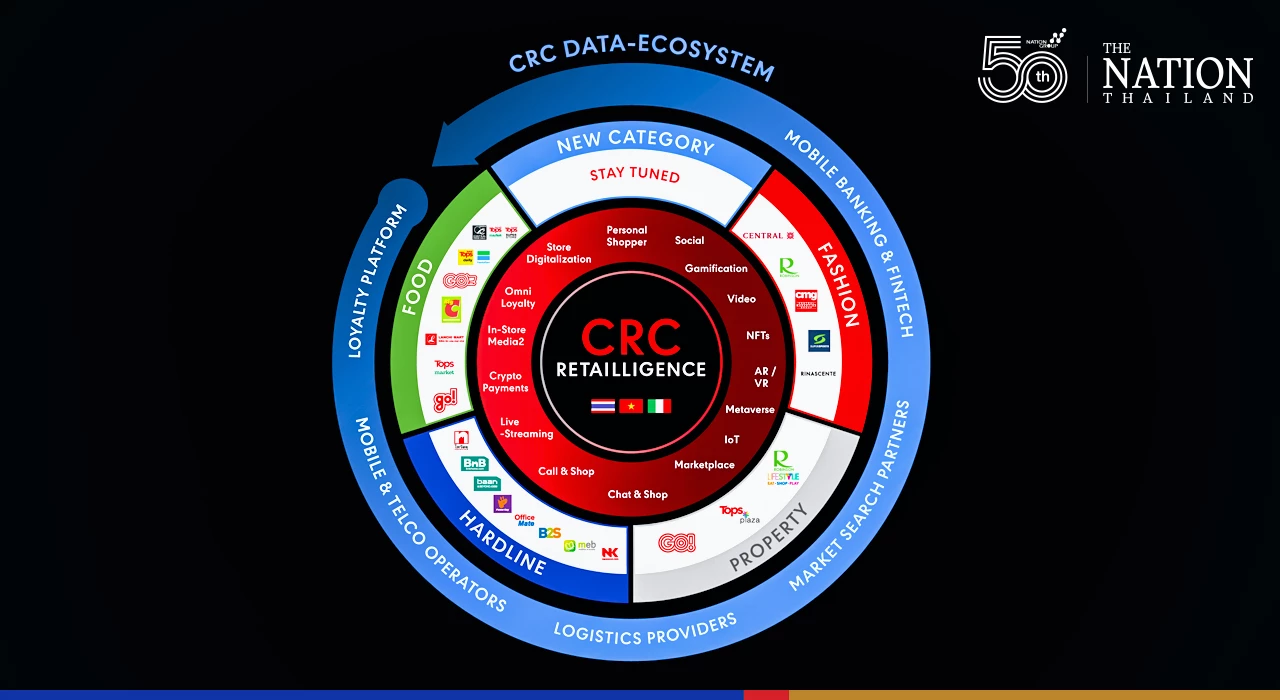
Central Retail Corporation (CRC) has launched a new business strategy, ‘CRC Retailligence’, to guide its growth ambitions for the next five years.
CRC seeks to power its success through four strategies with an investment of over Bt100 billion.
The company aims to increase the revenue by 2.5 times and will expand across business segments from food, fashion, hardline, property, to new businesses. CRC is also leveraging the ‘CRC Retailligence’ ecosystem to enhance customer experiences, the company said.
CRC’s chief executive officer Yol Phokasub said, “There are five emerging trends that are fundamentally changing and shaping our future, and we must be prepared to adapt to these changing customer behaviours and rapid digital transformation.”
The five key trends are:
A new consumer paradigm: Consumer behaviours and expectations are rapidly changing, physically and virtually.
Scaling in the era of digital acceleration: Technology is and will be the driving force in a changing world.
The future of wellness: Consumers will place importance on health and well-being, while technology is playing an integral role in daily living.
Partnership for inclusive growth: Strategic partnerships will become more focused on driving success and growth.
Sustainability agenda for all: Commitment to improve society and operate with sustainability at the core will rise in importance and will bring value to stakeholders
“Central Retail will continue to lead in reshaping the retail industry by leveraging the ‘CRC Retailligence’ strategy and the CRC Data ecosystem to fulfil consumer needs, both in the physical and virtual world,” Yol said. “By offering products and services through hyper-personalised experiences, Central Retail leverages data to unlock customer insights to deliver ‘Now Moment’ experiences in real-time, creating more personal experiences and inspiring moments. And by delivering experiences that merge online and offline worlds via next-gen omni retail, we aim to be the retailer who truly knows and understands our customers, shaping the future of retail in a way that’s never been done before.”
Central Retail said it is employing four strategies:
Reinvent next-gen omni retail – Elevate omnichannel platforms by merging physical and virtual worlds, and leveraging digital technologies to deliver next-level shopping experiences across all business segments from Thailand, Vietnam to Italy.
Accelerate core leadership – Accelerate growth across CRC’s core businesses, both locally and globally, and capture new opportunities to grow with world-class partners.
Build new growth pillars – Capture new opportunities by starting with the wellness segment followed by other segments that tap into global trends and consumer needs.
Drive partnership, acquisition and spin-off – Expand the business under the concept of inclusive growth, inspiring success with partners and enabling value-led sustainability.
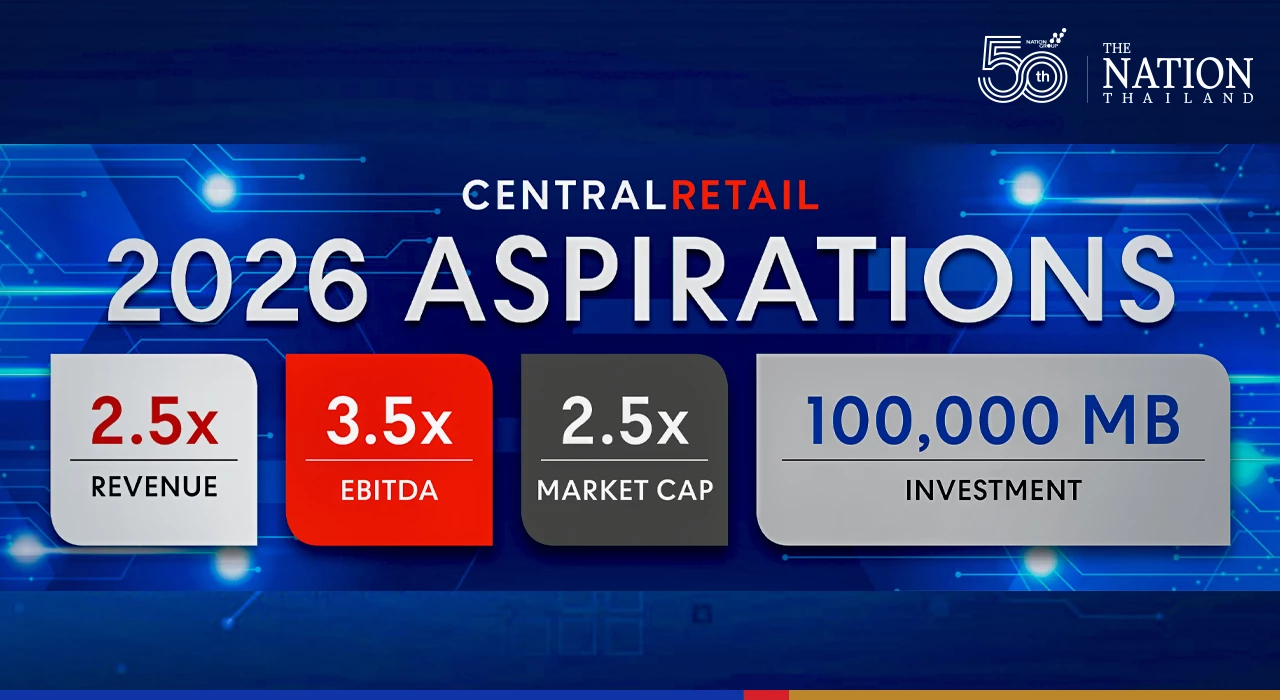
Central Retail aims to unlock new growth across dimensions with an investment of 100 billion and has set ambitious targets for 2026:
Drive revenue growth by 2.5 times
Increase earnings before interest, taxes, depreciation by 3.5 times
Grow market capitalisation by 2.5 times.
“Three years ago, we set out to be the No. 1 regional omnichannel retailer. And today, the new strategy has proved to be a resounding success, which is a testament to Central Retail’s DNA powered by unwavering strength, optimism and boundless potential,” Yol said. “We are ready to move forward with ‘CRC Retailligence’ that prioritises the environment, society and good governance as the key cornerstones in operating our business. Today, we are confident in our capabilities to achieve our growth targets set for the next five years,” Yol added.
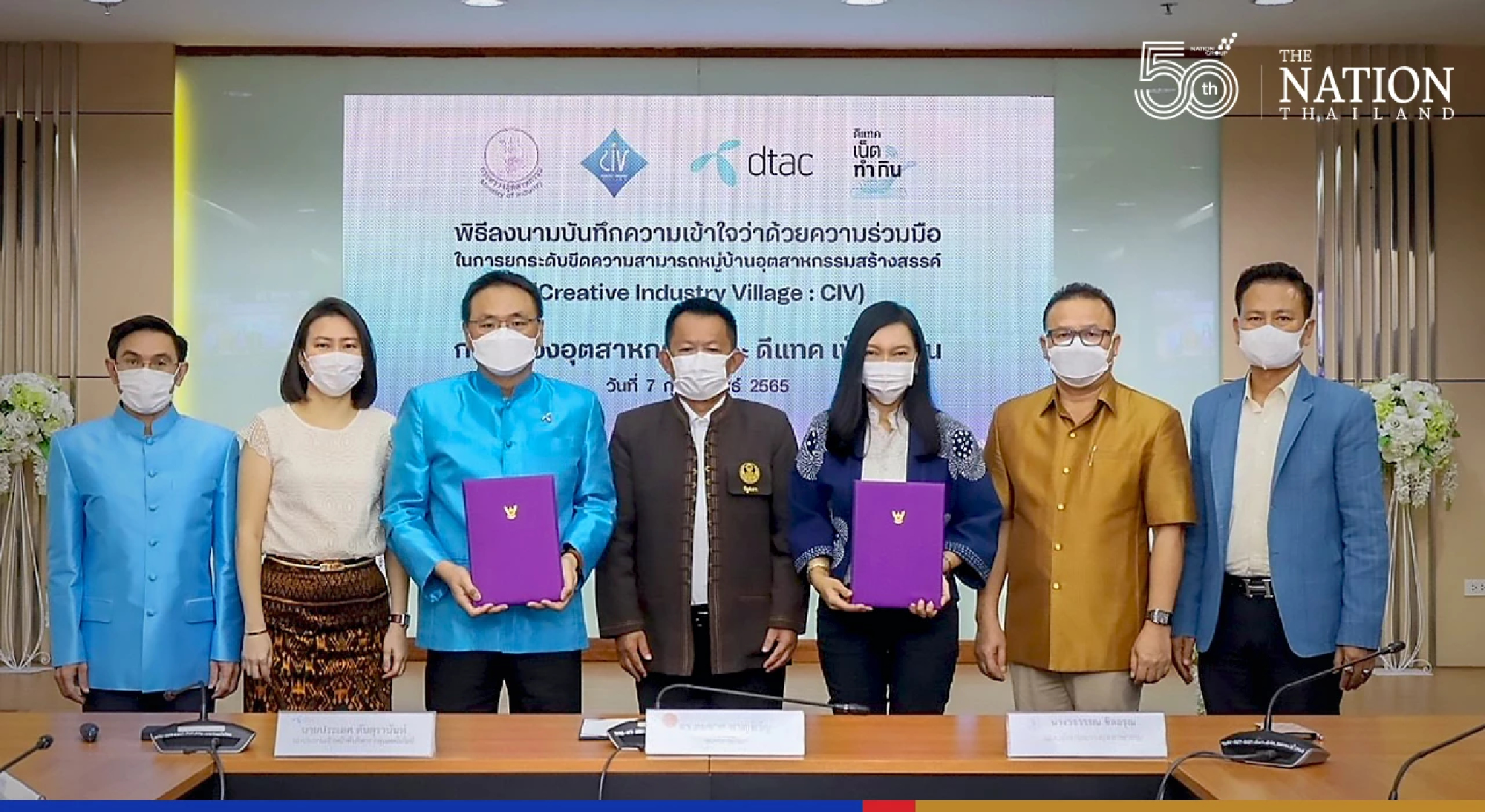
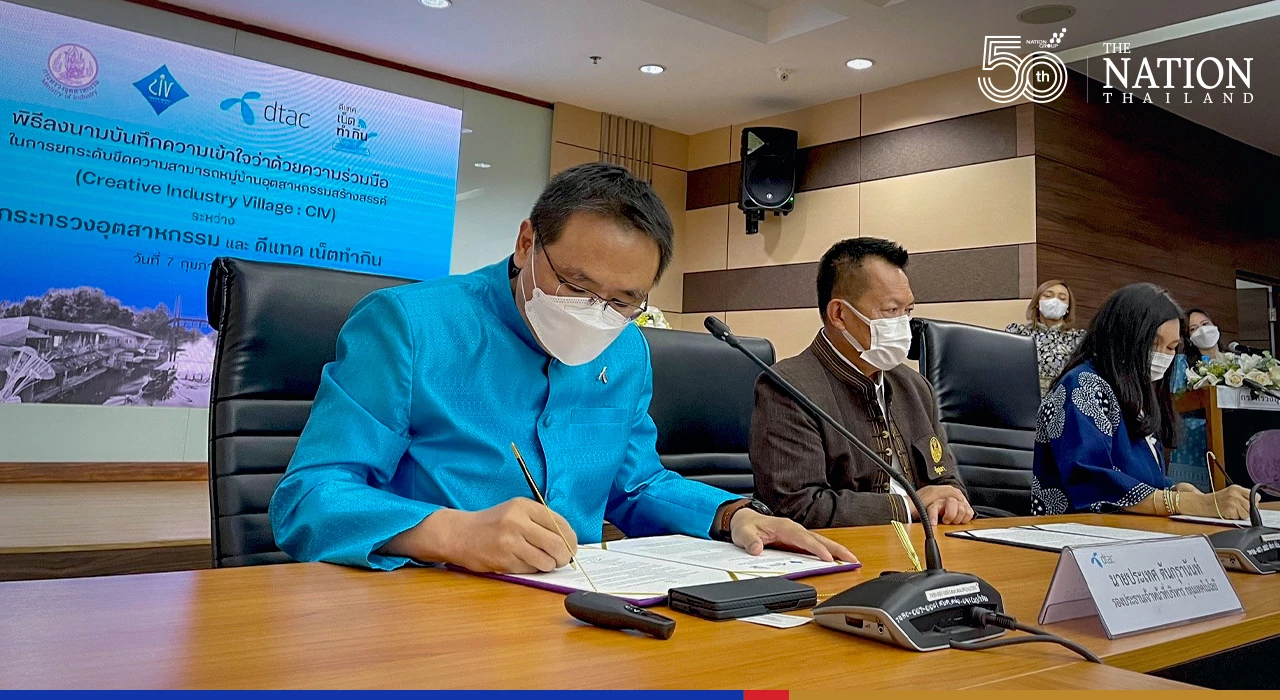
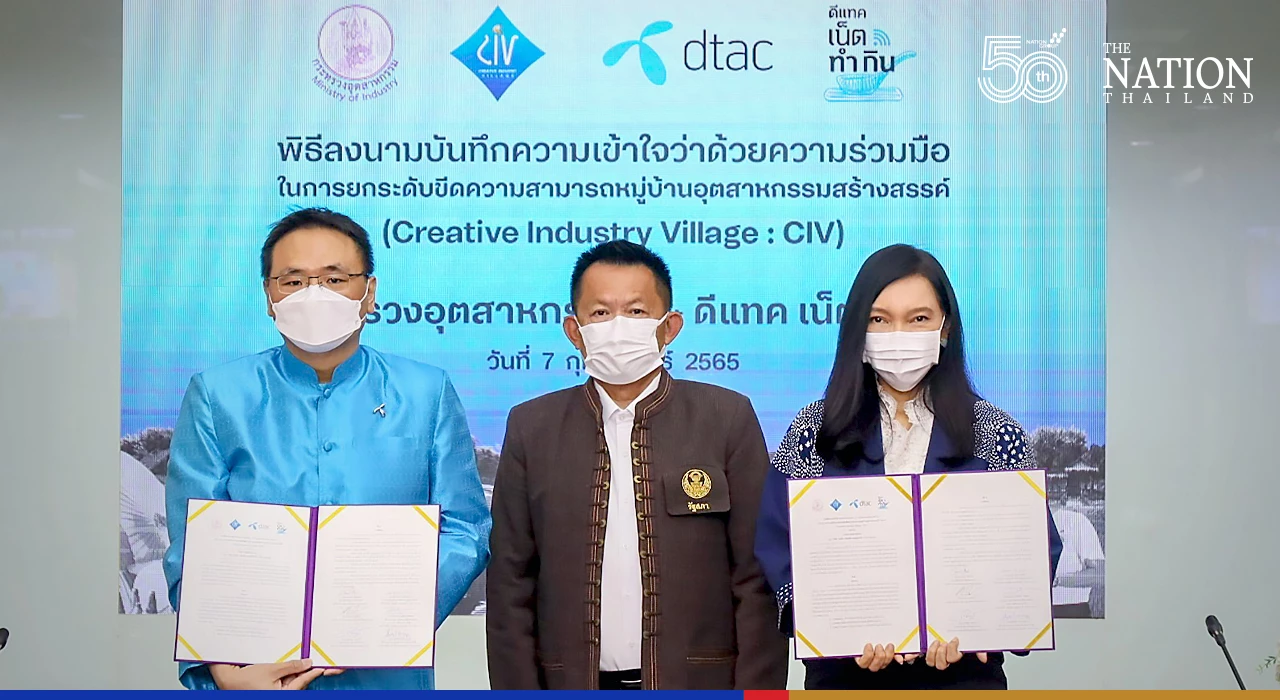
Dtac and the Industry Ministry joined hands on Monday to launch the Creative Industry Village (CIV) project, aiming to generate 250 million baht for local communities in the next two years.
CIV will harness cultural tourism and digital technology in 152 villages to boost individual incomes and local economies.
To achieve this goal, the Industry Ministry has partnered with dtac Net-for-Living to allow locals to promote their villages as tourism destinations by selling products, food and accommodation online.
Dtac will provide digital training, equipping rural entrepreneurs with online marketing skills including product photography and social commerce. The mobile operator boasts Net-for-Living can increase incomes by 40-50 per cent by allowing small businesses to build a digital presence.
Dtac is also expanding its 700MHz network to the targeted villages, ensuring they have suitable voice and data services.
Thirdly, dtac said it will promote the villages’ entrepreneurs to its 19 million customers through the operator’s reward programme. The dtac programme provides freebies and discounts at over 30,000 outlets all over the country. It also regularly features small restaurants and vendors to boost their incomes.
The Industry Ministry expects CIV to boost the number of tourists to rural destinations by 68 per cent and product sales by 76 per cent.
The Electricity Generating Authority of Thailand (Egat) will build its second hybrid hydro-solar power plant at the Ubolratana Dam in Khon Kaen province, Egat deputy governor Prasertsak Cherngchawano said.
Prasertsak said the solar electricity generating facility will be built on the dam’s reservoir and its solar panels will be capable of generating 24 megawatts of power to feed into the hydro-power plant of the dam.
The solar system will be equipped with a BESS (Battery Energy Storage System) so that the Ubolratana power plant would be capable of feeding power to the grid system continually with stability, the deputy governor added.
Prasertsak said that Egat had decided to add the solar-cell function to its Ubolratana power plant after the success of its hybrid hydro-solar power generating project at Sirindhorn Dam.
The solar panels were built on the Sirindhorn Dam’s reservoir to generate 45 megawatts of power that has already been fed to the national power grid for commercial use since October 31 last year.
Prasertsak said the hybrid system at the Sirindhorn Dam created power generating stability and the floating solar panels did not cause any environmental and ecological damage to the reservoir.
The deputy governor said Egat has a development plan to achieve carbon neutrality by using reusable clean energy. He said the two hybrid power plants at the two dams would be able to help Egat reduce carbon emissions by some 47,000 tonnes a year.
The study of the second floating solar panel project at the Ubolratana Dam would also be used to expand the hybrid power-generating projects at other dams, Prasertsak added.
He said Egat is selling bidding documents to companies interested in installing the floating solar panels at the Ubolratana Dam and the bidding envelops will be opened for consideration on March 9.
In 2022, XSpring will move deeper into the digital asset business via its subsidiary XSpring Digital, operator of the Initial Coin Offering (ICO) Portal.
After announcing its achievements in 2021, XSpring Capital Plc (XSpring) said on Monday that it is moving towards its goal of “One-Stop Financial Solutions” this year. The company’s president Varangkana Artkarasatapon said 2021 was a successful year for the company. It was a “business expansion phase” that involved the deployment of several new service channels, the introduction of more financial services and significant investment in new technological platforms to pave the way for XSpring to become the provider of “One-Stop Financial Solutions”. “XSpring does not only focus on the local market, but it also plans to connect Thailand to the world with its advanced ecosystem, helping investors to look for diversified investment opportunities in one place,” Varangkana said. This year, the Thai economy is expected to rebound on the back of domestic recovery, while retail and institutional investors are looking for new investment opportunities. These offer a good facet for XSpring, given its focus on the two core businesses – asset management and digital asset.It will boost investment in the Asset Management Company (AMC), which has high growth potential, and other related units.
Capitalising on investment Holding several licences at the same time is one of the company’s strong points, giving it the advantage of offering various investment opportunities, especially digital assets which are becoming increasingly popular among modern investors. XSpring has been granted a set of 17 licences, which hold the key to driving its expansion here and overseas. Supported by its expertise in investment advisory and a leveraging comprehensive ecosystem, XSpring is set to grow in tandem with the financial gains of investors.
Targeting one-third market share In 2022, XSpring will move deeper into the digital asset business via its subsidiary XSpring Digital, operator of the Initial Coin Offering (ICO) Portal. The company successfully helped clients in the first issue of the real-estate backed ICO in Thailand last year and plans to be involved in the launch of four to six ICOs this year. The Securities and Exchange Commission (SEC) last year granted XSpring Digital four more licences for cryptocurrency brokerage, digital token brokerage, and dealer licences for cryptocurrency and digital token. “These will enable the company to become Thailand’s first one-stop service provider in areas of financial and digital asset investment, as well as link Thailand to the global capital market,” Varangkana said. The group aims for one-third of the local market share, underpinned by robust operation and strengthened by its cryptocurrency brokerage service that will tap into global liquidity. To this end, XSpring Digital will work with Coinbase, a US-based leading digital exchange platform and digital asset custodian to create an integrated service system. The services will be available in the first quarter of this year. At the same time, XSpring gives high value to asset management and plans to expand the business, especially in the new area of digital asset fund manager. “XSpring expects to secure a digital asset fund manager’s licence from the SEC in the second quarter of 2022. It will then be able to offer investment opportunities via various types of investment funds to investors and to the public at large,” Varangkana said. The licence will also allow XSpring to engage in securities brokerage, securities dealing, and securities underwriting of investment units.
Boosting investment in AMC, bidding for NPLs AMC has high growth potential this year and XSpring plans to bid for more non-performing loans (NPLs) with a total outlay of 1 billion baht. It will jointly manage investments with Sansiri Plc, a strategic partner. NPLs are on the rise, giving AMC a bigger role in tackling the issue of distressed assets and improving market efficiency. XSpring group’s AMC business will focus on the management of bad loans backed by collateral such as houses and condominium units.
Deploying green investment strategy This year, XSpring foresees green investment opportunities in light of corporate and social sustainability goals. The group also expects to benefit from joint investments with large corporations in other regions and gain from knowledge sharing in such activities. XSpring has earmarked 10 per cent of its total investment portfolio for this purpose. Recently, it has invested in Sharge Management (SHARGE), a charging service provider for electric vehicles (EV). “SHARGE provides integrated service with its European standards equipment, ensuring user safety from the risk of high voltage. The company also offers after-sale service, managed by professionals providing optimal solutions to customers nationwide,” Varangkana explained. “SHARGE has collaborated with real-estate companies, carmakers, shopping malls, and energy enterprises in the creation of an ecosystem covering all aspects of consumer behaviour: EV charging at home, charging stations and charging points at their travel destinations.” XSpring has also invested in Cibus Enterprise Fund II, a venture capital fund. Recently, it established a joint venture with King of Gamers Club, a subsidiary of Kantana Group Plc, to develop mobile apps for entertainment, advertising, and related marketing activities. This new venture awaits contract signing for the establishment of a new company with XSpring holding 61.54 per cent of total shares. This year, XSpring is committed to all investment opportunities with high growth potential. With prudent plans for the platforms in place, designed to underpin the business foundation, combined with a team of professionals with the vision of investment opportunities in global finance, XSpring expects to see revenue exceeding 1 billion baht this year. “Our road map for 2022 is to capitalise on our strength of “One-Stop Financial Solutions” and contribute to the ultimate goal of developing the Thai capital market as well as widening the range of investment tools to new products with high growth potential,” Varangkana said. These will enable the XSpring Group to become an integrated traditional and digital finance service provider while allowing everyone to conveniently access finance and investment opportunities. “It will also give people access to comprehensive investment information while building transparency and trust in the company’s ecosystem. Our executives and professional team with extensive experience and expertise will provide integrated financial services to all,” Varangkana added.
The Mineral Fuels Department said on Tuesday that it had generated income of Bt103.58 billion for the government in 2021.
Mineral Fuels director-general Sarawut Kaewtatip said the department had received Bt53.637 billion in revenue from oil and gas field concessions and returns from the Thai-Malaysian joint development project.
The remaining Bt49.948 billion revenue came from revenue taxes collected from the oil and gas fields’ concessionaires.
He said his department would this year call for bids for oil and gas prospecting firms to survey three more fields in the Gulf of Thailand – G1/65 field with 8,487.20 square-kilometre area, G2/65 field (15,030.14 square kilometres) and G3/65 field (11,646.67 square kilometres).
Sarawut said the new projects were yet to be approved by Deputy Prime Minister and Energy Minister Supattanapong Punmeechaow before the bids would be called.
The department expects the new fields would compensate for the declining crude oil and gas reserves.
Sarawut said the department estimated investments of about Bt1.5 billion in the new fields, and natural gas and oil from the new sites could be sold within 2026.
Sarawut said the department is also coordinating the transfer of the Erawan field of the G1/61 plot from the original concessionaire, Chevron Thailand Exploration and Production Ltd, to the new contractor, PTT Exploration and Production Pcl. The original concession will expire in April 2022. The PTTEP will operate the field under the production sharing contract.
“It’s believed that within one and a half years, the PTTEP will be able to increase its production of natural gas in the Erawan field to 800 cubit fee per day, which will be sooner than the original two-year transitional period,” Sarawut said.
He said the department is also supporting the government’s policy of trying to reduce carbon emission by cooperating with concessionaires and agencies concerned to try the Carbon Capture and Storage technology. The technology is aimed at capturing emitted carbon from oil and gas fields and store it under rock layers under the sea.
The baht opened at 32.87 to the US dollar on Wednesday, strengthening from Tuesday’s close of 32.93.
The Thai currency is likely to move between 32.80 and 33.00 during the day, Krungthai Bank market strategist Poon Panichpibool predicted.
Poon said the baht was likely to swing sideways before US inflation results from its Consumer Price Index to be released on Thursday.
Investors should watch Thailand’s Monetary Policy Committee meeting, especially its opinion on inflation in the country and pressure from central banks, especially the US Federal Reserve, to increase the policy interest rate, he said.
If the MPC is worried about inflation or pressure from a planned increase in the US interest rate, the committee might also increase its rate, which would cause the baht to strengthen, Poon believed.
He said the baht would not strengthen much until there is a new factor to support the Thai economy or help the market take risks.
He also felt the Thai currency would not strengthen much because importers are waiting to sell the dollar when it hits 32.80 to 32.90, while foreign investors are waiting to offload the baht.



 The new QSNCC will have two large exhibition halls with more than 45,000 square metres of space, two large convention and seminar halls with over 10,000 square metres of space. The QSNCC also will have 50 small meeting rooms and its parking space can accommodate more than 2,700 vehicles. The convention centre also will have a passage linked to the subway to make it convenient for visitors coming to the centre.