Diversity, equity and inclusion key to retaining talent, FleishmanHillard finds after first phase of implementation

#SootinClaimon.Com : ขอบคุณแหล่งข้อมูล : หนังสือพิมพ์ The Nation.

https://www.nationthailand.com/business/corporate/40021234

Diversity, equity and inclusion key to retaining talent, FleishmanHillard finds after first phase of implementation

Diversity, equity and inclusion key to retaining talent, FleishmanHillard finds after first phase of implementation

THURSDAY, OCTOBER 20, 2022

Nongluck Ajanapanya

FleishmanHillard, the world’s fourth-largest communications agency, has revealed the secret sauce to retaining their talented people worldwide — through a commitment to diversity, equity and inclusion (DE&I).

Leela Stake, a senior partner and cabinet member at FleishmanHillard, told The Nation in an exclusive interview that the company had launched the DE&I practice two years ago, just before the Covid-19 pandemic.

Initially intended to promote inclusion and diversity within the organisation, the outcome has been greatly accomplished with the byproduct of low employee resignation and turnover rates, said Stake.

She noted that the DE&I term became a buzzword during the pandemic, when people faced numerous challenges and difficulties.

“The workforce has been raising questions such as, ‘Have I been doing valuable work at my work or am I valuable at work?’. If they feel they are not being valued at work, they will definitely leave. If we can make people feel valued at the workplace, they will stay in that workplace,” Stake stated.

She insisted that losing employees is costly and that finding replacements takes a long time. Therefore, FleishmanHillard, which is in an industry with high turnover rates, must be mindful of retaining employees by demonstrating that the company values them and their opinions.

WORKEST by Zenefits examined data from the US Bureau of Labour Statistics on employee turnover rates at the national level. Backfilling roles, according to analysts, cost employers roughly 20 per cent of the position’s salary in hiring, recruiting, and onboarding costs. On average, the hiring process takes at least 36 days.

According to Stake, the concept of DE&I is literally its definition. Diversity is valuing people’s various backgrounds; Equity is understanding that not everyone had the same opportunity and giving one to the needy, and Inclusion means encouraging participation and making people feel like they belong.

Diversity, equity and inclusion key to retaining talent, FleishmanHillard finds after first phase of implementationIt is, however, easier said than done. As a result, FleishmanHillard developed a concrete practice for their employees worldwide to follow, along with a process for measuring progress.

“We formalised our DE&I plan in 2020 as a two-year plan with targets in different areas. Once a year we record the progress. The progress on DE&I can be slow and requires constant learning. You have to listen to what people are feeling within the organisation. We have a comprehensive survey to ask about DE&I, their feelings and needs. If you are not asking the employees their needs, you can’t measure what you want to achieve,” said Stake.

She added that their first phase of DE&I is now complete so they are looking forward to the next phase.

She mentioned that the next phase is to foster relationships, from which they will learn more about their research findings. It will take time and effort to develop a proactive programme.

“One example is our recent programme called ‘Strengths Finder’, in which we discover each other’s strengths and combine them to form a whole workplace. We will provide additional training to our managers all over the world. DE&I is not just the responsibility of a few people but of everyone,” Stake noted.
 

Aside from the benefits within FleishmanHillard, Stake highlighted the use of DE&I knowledge to benefit its clients by allowing them to have an authentic, local, and relevant voice.

“Creating a statement without understanding the local market is a common mistake made by businesses. At FleishmanHillard, we bring local expertise of those who actually live in the market,” said Stake. “We are looking forward to our DE&I survey results. By having people tell their own personal story and the challenges, we can learn more about their views and needs.”

Stake said that DE&I should be ingrained in how everyone does everything. Every piece of content and every creative campaign should be created with inclusivity in mind. Although it is not yet available everywhere, FleishmanHillard is making strides.

Nongluck Ajanapanya

NBTC commissioners fail to decide on True-DTAC merger after seven-hour meeting

#SootinClaimon.Com : ขอบคุณแหล่งข้อมูล : หนังสือพิมพ์ The Nation.

https://www.nationthailand.com/business/corporate/40021230

NBTC commissioners fail to decide on True-DTAC merger after seven-hour meeting

NBTC commissioners fail to decide on True-DTAC merger after seven-hour meeting

THURSDAY, OCTOBER 20, 2022

The telecom watchdog on Thursday failed to reach a resolution on whether to approve the merger of True Corporation and Total Access Communication (DTAC).

The five members of the National Broadcasting and Telecommunications Commission (NBTC) voted 3:2 to confirm that it has the power to consider the matter.

But when it came to the question of whether the proposed merger between Thailand’s second and third-largest mobile network operators should get the green light, the commissioners had yet to make any decision.

The five commissioners began their meeting at about 9.30am but no decision could be reached after seven hours of deliberations.

Siam Commercial Bank and Barbara Oakley join hands to launch world-renowned course under the LHL Brainery Project to drive lifelong learning for all Thais

#SootinClaimon.Com : ขอบคุณแหล่งข้อมูล : หนังสือพิมพ์ The Nation.

https://www.nationthailand.com/business/corporate/40021228

Siam Commercial Bank and Barbara Oakley join hands to launch world-renowned course under the LHL Brainery Project to drive lifelong learning for all Thais

Siam Commercial Bank and Barbara Oakley join hands to launch world-renowned course under the LHL Brainery Project to drive lifelong learning for all Thais

THURSDAY, OCTOBER 20, 2022

THE NATION

SCB Academy, Siam Commercial Bank in collaboration with Barbara Oakley (PhD, PE.) owner and co-instructor of the world’s famous MOOCs, “Learning How to Learn: Powerful Mental Tools to Help You Master Tough Subjects” working together under the LHL Brainery project to remake the Thai version of this course on Coursera platform.

With aims to speed up learning skills through new approaches and brain-training techniques to equip Thai people with learning agility, helping them to keep up with the pace of change as well as setting a new mindset to be future-ready. Targeting to hand on this learning to students through university partnership networks, also pushing forward the LHL Brainery project to leverage utilization of such knowledge in areas of financial services, education sectors, and expanding into the future of Disruptive EdTech.

Mr Worawat Suvagodha, First Executive Vice President, Head of SCB Academy, Siam Commercial Bank said “We recognize the importance of learning ability and intellectual tools such as “Metacognition Skills” as the enabler for a person to learn anything despite the speed of change.” SCB Academy receiving the honor to be an entrusted re-producer of the course in Thai version on Coursera, would put us as one of the first Thai companies on the platform. With the Thai version of this course, we plan to expose through our partnered universities, government sectors, subsidiary companies, clients, and to the vast public to help elevate the ability to learn. Our collaborative relationship with Barbara Oakley (PhD, PE.) will raise public awareness to engage Thai learners in Learning How to Learn, this can become a national initiative to help raise the standards of learning approach in Thailand.”

SCB Academy’s strategy is to prioritized innovation and digitalization as core strategic goals to advance the overall development objectives through various partnerships. Providing a wider learning platform to promote innovative methods of digital learning and education. In hopes for success, our Academy as a Platform would be a place for connecting knowledge, skills and workforce with job/business opportunities.

“We will put forth a Learning How to Learn Academy to be an ingrained part of the platform. Together the Panel would help identify the needs to replace outdated learning approach with new methodologies that are widely accepted by all top-ranked experts and neuroscientists,” said Mr Worawat. 

Siam Commercial Bank and Barbara Oakley join hands to launch world-renowned course under the LHL Brainery Project to drive lifelong learning for all Thais

Dr Barbara Oakley, owner and co-instructor of the world’s famous MOOCs, Learning How to Learn: Powerful Mental Tools to Help You Master Tough Subjects, said that the course starts the complexity of the brain and how you learn, with using simple, fun metaphors to help people understand that these ideas are not that difficult, but in fact practical.” This could serve as a pioneering program to lay the foundation of metacognition skills for students, academicians, technologists, industry luminaries and experts, as well as large corporate and tech employees in Thailand.

“With our collaboration, SCB Academy has been using the insights of Learning How to Learn to become a learning organization so that employees can rapidly master even the toughest new skills demanded by today’s information economy and of course, this helps the them to stay ahead of the competition. Because digital “know how” is at the heart of the modern banking industry. These digital “know how” can be some of the hardest skills to learn and teach. It is certain that knowledge from Learning How to Learn can help close this knowledge gap and also allowing the Bank to give back to Thai society by creating value for through learning,” said Dr Barbara.

“These types of solid, research-based learning programs can help the country as a whole maintain a competitive edge. They also allow a way for the magnificent new neuroscientific insights about learning to flow into Thai ways of thinking about learning,” she said.

Overall, LHL Brainery is a project established to promote development of Metacognition Skills using principles of neuroscience. With taken fundamental concepts from one of the most popular online courses on Coursera, Learning How to Learn: Powerful Mental Tools to Help You Master Tough Subjects. The project began during COVID, our team of learning enthusiasts reached out to Barbara Oakley (PhD, PE.) for endorsements to adapt concepts from her course for Thai audience. Where she did not hesitate to grant us the opportunity to give back to society.

Siam Commercial Bank and Barbara Oakley join hands to launch world-renowned course under the LHL Brainery Project to drive lifelong learning for all Thais

THE NATION

Freebies not the solution to challenges faced by Thai farmers, says World Bank

#SootinClaimon.Com : ขอบคุณแหล่งข้อมูล : หนังสือพิมพ์ The Nation.

https://www.nationthailand.com/thailand/economy/40021270

Freebies not the solution to challenges faced by Thai farmers, says World Bank

Freebies not the solution to challenges faced by Thai farmers, says World Bank

FRIDAY, OCTOBER 21, 2022

Nongluck Ajanapanya

World Bank experts are urging the Thai government to stop free subsidies to help farmers and instead implement more conditional assistance measures that would directly improve production efficiency.

The statement was made at a seminar co-hosted by the World Bank and Kasetsart University on Friday to launch their joint study, “Ending Poverty in Thailand: Rural Income Diagnostic – Challenges and Opportunities for Rural Farmers”.

Nadia Belhaj Hassine Belghith, poverty economist at the World Bank, noted that rural Thailand continues to face the most severe poverty challenges, with high-income inequality.

Though it is commendable that the Thai government provides many freebies, this type of assistance will have a negative impact in the long run.

Witsanu Attavanich, a professor at Kasetsart University’s Faculty of Economics who participated in this study, elaborated that gratuitous measures only help Thai farmers in the short term, while what they really need is to learn how to increase their productivity in order to sustain their income.

Wisanu called it a “waste of time and money”. He said that the government should use the budget to improve irrigation systems and agricultural technology, as well as to educate more farmers on current farming practices instead.

Belghith added that the right assistance would help Thailand overcome its persistent poverty.

“Cross-cutting policy measures related to skill development will also be important in order to support rural households,” Belghith said. “With low levels of education and digital literacy, combined with an ageing farmer population, it is critical to develop the skills of farmers, young and old, to enable them to adapt to the changing context of climate change and benefit from new technologies.”

The World Bank Rural Income Diagnostic for Thailand aims to examine the challenges and opportunities to improve income and productivity in the rural sector.

The diagnostic also examines how to facilitate income growth in the short to medium term and places particular focus on farming households given their higher poverty and vulnerability.

Freebies not the solution to challenges faced by Thai farmers, says World BankThe report found that Thailand’s poverty rate in rural areas was more than three percentage points higher than in urban areas in 2020. Furthermore, the rural poor outnumbered the urban poor by nearly 2.3 million. The majority of them make a living by farming.

Fabrizio Zarcone, World Bank country manager for Thailand, pointed out that Thailand has the potential to support faster and more sustained rural household income growth.

“As Thailand’s economy adjusts to a new normal post-Covid, policy measures that boost agricultural productivity, encourage crop diversification to higher-value crops, and improve access to markets through improved rural connectivity and digital technology adoption can help overcome the constraints faced by the rural poor,” Zarcone suggested.
 

According to the study, the Covid-19 pandemic has had a significant impact on the urban sector, resulting in strict mobility measures, business closures, and job layoffs.

However, the urban sector is expected to recover faster, while the rural economy will be hit harder by the crisis. The World Bank Thailand Covid-19 monitoring phone survey results also found that 70 per cent of rural households reported a decrease in income since March 2020.

Freebies not the solution to challenges faced by Thai farmers, says World BankThe analysis also shows that Thailand has the highest income inequality rate in East Asia and the Pacific region, with a Gini coefficient of 43.3 per cent in 2019.

The average monthly income for rural households was only about 68 per cent of that of urban households. Rural households continue to face challenges, such as low education, a high number of dependents, and difficult living conditions.

In her closing remarks, Dina Umali-Deininger, regional manager of Agriculture and Food Global Practice at World Bank, urged the Thai government to reduce the disparity between urban and rural households.

She advocated increased agricultural productivity, added value in agricultural products, and more investments to improve the agricultural sector and prepare for the effects of climate change.
 

Nongluck Ajanapanya

NBTC finally gives True-Dtac merger ‘conditional’ approval after 9 months

#SootinClaimon.Com : ขอบคุณแหล่งข้อมูล : หนังสือพิมพ์ The Nation.

https://www.nationthailand.com/thailand/economy/40021269

NBTC finally gives True-Dtac merger ‘conditional’ approval after 9 months

NBTC finally gives True-Dtac merger ‘conditional’ approval after 9 months

FRIDAY, OCTOBER 21, 2022

At a meeting that lasted for more than 11 hours, the Thai telecoms watchdog voted 3:2 to “conditionally acknowledge” a proposed merger between True Corporation and Total Access Communications (Dtac).

The decision was made on Thursday night, many months after True and Dtac – the country’s second and third-largest mobile network operators, respectively – filed their business merger report with the National Broadcasting and Telecommunications Commission (NBTC) in January.

However, this decision was a huge disappointment for consumer protection and civic society groups that have been against the merger, saying it would lead to market control and unfair competition.

Meanwhile, the opposition Move Forward Party has threatened to take legal action against NBTC for alleged dereliction of duty.

Deputy party leader Sirikanya Tansakul said on Friday that the agency failed to perform its constitutional duty to protect the interest of consumers.

In its resolution, the NBTC appeared to avoid using the term “approve”, though the minority commissioners maintained the regulator is empowered to decide whether to give the green light to such a business merger.

In a statement released on Thursday night, the NBTC admitted that the True-Dtac merger “is a sensitive matter that has impacts on the public”.

Prof Pirongrong Ramasoota, one of the two commissioners who voted against, dubbed the lengthy discussion between the five NBTC members as “the longest meeting in my life”.

In her Facebook post, Pirongrong apologised to reporters waiting outside the meeting room for declining an interview. “I was totally exhausted. My battery was depleted,” she wrote.

Pirongrong and her fellow minority commissioner, Assoc Prof Suphat Suphachalasai, reserved their rights not to permit a business merger between True and Dtac.

In her written statement, Pirongrong said she viewed such a merger as ownership of the same business type, which could severely affect the mobile network market and the national economic development.

She said the telecoms law and NBTC rules empower the regulator to prevent monopoly or unfair competition.

In her seven-point arguments, Pirongrong cited constitutional clauses that prohibit business domination and competition restriction. She also mentioned the findings of a study by the NBTC’s independent foreign advisers SCF Associates Ltd that pointed to the negative impacts of the merger on consumers.

In his written statement, Suphat said the True-Dtac merger would have severe consequences on the country’s economy and society, with reduced service quality and obstruction to new players in the market. There is a high likelihood of market collusion that would discourage new competitors, he said.

Before reaching their final decision, the five NBTC commissioners were evenly split. Suphat and Pirongrong viewed that the NBTC should not allow the merger as it would lead to a duopoly of the telecom business and unfair competition. But NBTC president Dr Sarana Boonbaichaiyapruck and Torpong Selanont disagreed, saying the regulator should acknowledge the merger with conditions.

The fifth commissioner, Air Marshal Thanapant Raicharoen, abstained explaining that there were some legal issues that need to be further considered.

The NBTC president cast the deciding vote, making it 3:2 in favour of the proposed merger, which was in line with the NBTC rules.

The conditions set for the merged entity include service fee controls and ceilings, independent verification of cost structures and service pricing by experts to be hired by the operators at their expense, for at least five years after the merger, space to be provided for the operation of mobile virtual network operators (MVNO) and separate rates to be charged for voice, data and messaging services.

Under the NBTC’s conditions, True and Dtac will use their existing brand names, True Move H Universal Communications (TUC) and Dtac TriNet (DTN), for three years after the merger, before they can adopt a new brand name.

They are also required to install a 5G network to cover 75 per cent of the Thai population within three years of the merger and 90 per cent coverage within five years.

Thailand, Cambodia to reach deal on disputed oil field by March: Energy minister

#SootinClaimon.Com : ขอบคุณแหล่งข้อมูล : หนังสือพิมพ์ The Nation.

https://www.nationthailand.com/thailand/economy/40021267

Thailand, Cambodia to reach deal on disputed oil field by March: Energy minister

Thailand, Cambodia to reach deal on disputed oil field by March: Energy minister

FRIDAY, OCTOBER 21, 2022

Thailand’s Foreign and Energy ministries are making progress in talks with Cambodia to relieve the fuel crisis by tapping disputed oil resources in the Gulf of Thailand. The 26,000-square-kilometre overlapping claims area (OCA) in the upper Gulf is estimated to hold up to 500 million barrels of oil, plus gas deposits.

Deputy PM and Foreign Minister Don Pramudwinai said on Friday that his ministry’s legal team and Energy Ministry representatives are studying details of the disputed areas in the upper Gulf.

“Right now, we cannot tell when the negotiations will conclude. Agencies involved are gathering information to determine what we can do about the OCA,” Don said.

Energy Minister Supattanapong Punmeechaow said that a Thai-Cambodian joint technical committee (JTC) will meet again within three months to finalise details of joint development oil project in the OCA.

The JTC met for the first time in October last year. The meeting, led by Deputy Prime Minister Gen Prawit Wongsuwan, set a framework for negotiations over the OCA and appointed two special committees, one for maritime zoning and the other for joint oil extraction.

“The ministry will try to conclude issue before the current Parliament’s term ends,” said Supattanapong, who doubles as deputy prime minister.

The House of Representatives’ four-year term will end on March 23, next year.

Baht plummets further against dollar on Friday

#SootinClaimon.Com : ขอบคุณแหล่งข้อมูล : หนังสือพิมพ์ The Nation.

https://www.nationthailand.com/thailand/economy/40021252

Baht plummets further against dollar on Friday

Baht plummets further against dollar on Friday

FRIDAY, OCTOBER 21, 2022

The baht opened at 38.23 to the US dollar on Friday, weakening from Thursday’s close of 38.12.

The Thai currency will likely move between 38.15 and 38.45 against the greenback during the day, Krungthai market strategist Poon Panichpibool predicted.

Poon said that the baht may weaken further if the currency market remains risk-off, adding that it could test the resistance level of 38.50 to the dollar.

He said the baht is being pressured by mass selloffs of long-term Thai bonds by foreign investors as yields on the US 10-year bond continue to rise.

Gold purchases as the price drops are adding to downside pressure on the baht. Meanwhile, investors are also purchasing yen after the Japanese currency weakened to 25.28 baht per 100 yen.

However, Poon did not think that the baht would breach its resistance level of 38.50 to the dollar since exporters were waiting to sell the greenback at this level and foreign investors shorting the baht may also sell for profit.

He added that foreign outflows from the Thai stock market were decreasing while signs of net buying from investors abroad would slow any weakening of the baht.

Poon advised investors to use hedging tools such as options to manage risks in a highly volatile currency market.

BCG and the path to green energy in APEC

#SootinClaimon.Com : ขอบคุณแหล่งข้อมูล : หนังสือพิมพ์ The Nation.

https://www.nationthailand.com/thailand/economy/40021120

BCG and the path to green energy in APEC

BCG and the path to green energy in APEC

FRIDAY, OCTOBER 21, 2022

From the theme of “Open. Connect. Balance.” chosen to frame Thailand’s hosting of APEC 2022, the thrust of “Balance in All Aspects” has been given importance as a pathway beyond recovering from the COVID-19 pandemic to long- term and sustainable prosperity.

Pointing out that “sustainability starts with how the region fuels its growth” under the topic of balance, APEC host Thailand indicates that while APEC is on the right track, having set energy intensity reduction and renewable energy- doubling goals, it needs to “accelerate energy transition efforts.”

BCG and the path to green energy in APEC

Stating “APEC should explore how advanced technology can be utilized to produce clean and renewable energy,” Thailand has been emphasizing the application of the circular economy, in which value is created at all levels of production and consumption, throughout the past year.

BCG and the path to green energy in APEC

The emphasis has included Thailand’s proposing the “Bangkok Goals on BCG Economy” as a key deliverable.

First introduced at the Informal Senior Officials’ Meeting (ISOM) in late 2021 and discussed extensively at both the second and third Senior Officials’ Meetings, the document seeks to “advance APEC’s sustainability agenda in a more holistic and integrated manner by emphasizing the whole-of-society and whole-of-APEC-system approach to achieve four goals.”

BCG and the path to green energy in APEC

The four goals are: climate action, including net zero greenhouse gas emissions; sustainable trade and investment; sustainable management of resources and conservation of the environment and biodiversity; and resource efficiency and sustainable waste management.

BCG and the path to green energy in APEC

Energy production and consumption are relevant to three of these goals, with Thailand working to lead APEC towards power that does not generate greenhouse gas emissions, is environmentally sustainable and is produced through the efficient use of resources, resulting in minimal waste.

BCG and the path to green energy in APEC

The BCG Economy concept, placed at the center of the Bangkok Goals, or Bio-Circular-Green Economy Model, complements circular economy concepts with the bio and green approaches to provide a path to transforming current aspects of the economy into sustainable, environmentally-friendly forms.

BCG and the path to green energy in APEC

Through the application of BCG in Thailand and the economies of APEC, the entire region is moving to realize the aspiration of “advance the transition to clean and renewable energy.”

BCG and the path to green energy in APEC

Growing global demand for medical and wellness tourism offers bright prospects for Thailand

#SootinClaimon.Com : ขอบคุณแหล่งข้อมูล : หนังสือพิมพ์ The Nation.

https://www.nationthailand.com/thailand/economy/40021233

Growing global demand for medical and wellness tourism offers bright prospects for Thailand

Growing global demand for medical and wellness tourism offers bright prospects for Thailand

THURSDAY, OCTOBER 20, 2022

Increased health consciousness following the Covid-19 pandemic and a global trend towards an ageing society are boosting medical and wellness tourism worldwide.

Demand has increased for wellness and healthcare services by highly skilled professionals at affordable prices, and Thailand has become a popular destination.

Thai authorities and businesses are working together to help strengthen the country’s status as a global hub for medical and wellness tourism.

Meanwhile, industry experts pointed to Thailand’s potential to become an Asian and global hub for wellness and medical tourism due to high-quality services at affordable prices. Foreign visitors can access high-quality care at top-notch facilities for a fraction of the cost they would find in their home countries.

Demand for wellness and medical services has increased as many countries are moving towards an ageing society, with a large part of their population aged over 60.

According to the United Nations, 1.04 billion, or 13.5 per cent of the world’s population, are aged over 60 and the number is expected to increase to 2.1 billion, or 21 per cent in 2050.

Thailand is fast growing to become an ageing society, with 13 million or 20 per cent of its population aged over 60, according to last year’s data by the National Economic and Social Development Council. In 2032, people aged over 60 are expected to account for 28 per cent of the Thai population.

Thailand is ranked fourth in overall medical tourism spending and is the only Southeast Asian nation in the top 15 out of 118 countries assessed by the International Monetary Fund (IMF).

Growing global demand for medical and wellness tourism offers bright prospects for Thailand

In 2019, before Covid-19 struck, medical tourism spending in Thailand accounted for one per cent of the total inbound tourism spending of 1.9 trillion baht. About 3.5 million medical tourists visited Thailand that year.

At that time, an increasing number of medical tourists came to Thailand to take advantage of the great value that top private Thai hospitals provided, the US Department of Commerce’s International Trade Administration said in its report in July.

The Global Wellness Institute in 2020 ranked Thailand ninth among Asia-Pacific countries and 24th in the world in terms of the “wellness economy” potential.

Also, Thailand was ranked second, after Australia, by the Wellness Tourism Initiative 2020 among popular destinations for medical tourists.

Growing global demand for medical and wellness tourism offers bright prospects for Thailand

Prestige Thailand Launches it’s 40 Under 40 List for 2022

#SootinClaimon.Com : ขอบคุณแหล่งข้อมูล : หนังสือพิมพ์ The Nation.

https://www.nationthailand.com/pr-news/more/pr-news/40021194

Prestige Thailand Launches it’s 40 Under 40 List for 2022

Prestige Thailand Launches it’s 40 Under 40 List for 2022

WEDNESDAY, OCTOBER 19, 2022

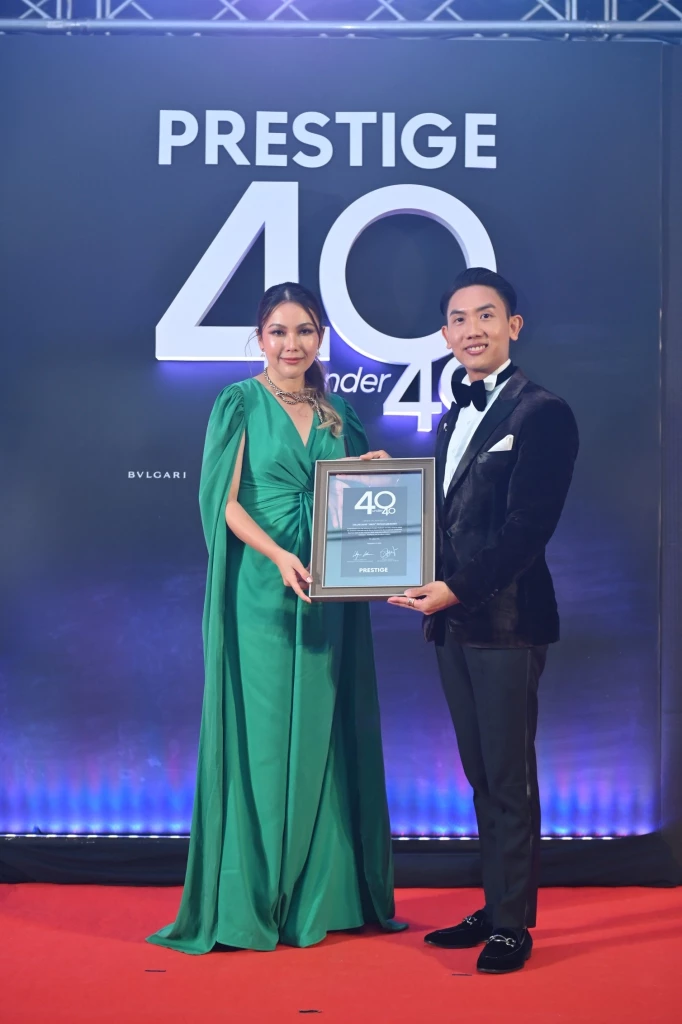
Bangkok, Thailand – One of Thailand’s most anticipated annual awards ceremonies that pays tribute to a new-generation of young achievers, Prestige Thailand’s “40 Under 40” list, was officially launched on September 20 during a glamorous red-carpet event at Capella Bangkok.

Representing the diverse worlds of commerce, entrepreneurship, art and culture, tech startups and other sectors, the 2022 “40 Under 40” awardees were treated to an evening of curated culinary experiences before receiving their awards.

Prestige Thailand Launches it’s 40 Under 40 List for 2022

According to Waraporn Siriboonma, Co-Managing Director of BurdaLuxury and Publisher of Prestige (Thailand), initiatives like “40 Under 40” bring together a collective of like-minded individuals – some of the brightest minds in the country – who are doing extraordinary things. “Here at Prestige, we are cultivating a dynamic community of high achievers, thought leaders and trailblazers who are not only acknowledged, but provided with an opportunity to network with their peers, and to empower each other.”

Prestige Thailand Launches it’s 40 Under 40 List for 2022

The “40 Under 40” is also presented annually by editions of Prestige in Hong Kong, Singapore, and Malaysia – all of which are published by BurdaLuxury.

Prestige Thailand Launches it’s 40 Under 40 List for 2022

This year’s award ceremony coincided with Prestige celebrating its 17th anniversary in Thailand, and having recently re-launched a brand-new logo and design.