By The Washington Post · Dalton Bennett, Sarah Cahlan
As winter approaches, the United States is grappling with a jaw-dropping surge in the number of novel coronavirus infections. More than 288,000 Americans have been killed by a virus that public health officials now say can be spread through airborne transmission.
The virus spreads most commonly through close contact, scientists say. But under certain conditions, people farther than six feet apart can become infected by exposure to tiny droplets and particles exhaled by an infected person, the Centers for Disease Control and Prevention said in October. Those droplets and particles can linger in the air for minutes to hours.
To visually illustrate the risk of airborne transmission in real time, The Washington Post used a military-grade infrared camera capable of detecting exhaled breath. Numerous experts – epidemiologists, virologists and engineers – supported the notion of using exhalation as a conservative proxy to show potential transmission risk in various settings.
“The images are very, very telling,” said Rajat Mittal, a professor of mechanical engineering in Johns Hopkins University’s medical and engineering schools and an expert on virus transmission. “Getting two people and actually visualizing what’s happening between them, that’s very invaluable.”
The highly sensitive camera system detects variations in infrared radiation that are not visible to the naked eye. The technology is more typically used in military and industrial settings, such as detecting methane gas leaks in pipelines. In 2013, it was deployed by law enforcement during the 20-hour manhunt for the Boston Marathon bombers.
But fitted with a filter that specifically targets the infrared signature of carbon dioxide, the camera can be used to map in real time the partial path of the nearly invisible particles we exhale.
According to experts, the footage underrepresents the potential risk of exposure from airborne particles. Those particles may spread farther or linger longer than the visible exhalation plume, which dissipates quickly to a level of concentration the camera can no longer detect.
Environmental factors such as airflow in a space, wind and sunlight can reduce the chances of spread, as can such behavioral factors as mask-wearing and social distancing. The risk of exposure increases when people are not wearing masks and are close together in an enclosed space or in an area with poor ventilation.
Many of those circumstances will become more common as Americans increasingly spend time indoors in the coming months.
Air pollution in Bangkok hit dangerous levels on Friday morning with PM2.5 readings coming in at 30 to 70 micrograms per cubic metre (μg/m3), the Pollution Control Department’s Air Quality and Noise Management Bureau reported.
Thailand’s standard for safe levels of PM2.5 (particles less than 2.5 micrometres in diameter) is 50 μg/m3, though the World Health Organisation sets it at 25 μg/m3.
People in areas where PM2.5 pollution is bad have been advised to stay indoors and monitor their health.
As of 10am, PM2.5 was at dangerous levels in Din Daeng, Prakhanong, Dusit, Pom Prab (Sattru Phai), Samphanthawong, Pathum Wan, Bang Rak, Sathorn, Yannawa, Bang Na, Don Muang, Sai Mai, Bang Kapi, Prawet, Khlong San, Bangkok Yai, Bangkok Noi, Taling Chan, Thawee Watthana, Phasi Charoen, Nong Khaem, Bang Bon, Thung Khru, Phra Nakhon, Bang Sue, Laksi, Bang Khen, Chom Thong, Bang Khae, Bang Khunthien, Bueng Kum and Thung Khru.
Meanwhile, PM2.5 levels in other regions of Thailand were as follows:
North: 14 to 49 μg/m3.
Northeast: 17 to 86 μg/m3, with pollution in Nong Khai’s Muang district highest.
Central and West: 15 to 55 μg/m3, with pollution in Suphan Buri’s Muang district highest.
By The Washington Post · Laurie McGinley, Carolyn Y. Johnson
WASHINGTON – Federal advisers endorsed the Pfizer-BioNTech coronavirus vaccine on Thursday, making it all but certain the Food and Drug Administration will authorize the vaccine on an emergency basis within hours or days, kicking off an unprecedented effort to inoculate enough Americans to stop a rampaging pandemic.
The thumbs’ up from the FDA’s vaccine advisory committee was the culmination of an all-day meeting during which the panel heard presentations on the safety and effectiveness of the vaccine, including plans to monitor its longer-term safety.
The key moment came at the end of the meeting, just after 5:30 p.m. Eastern, when the agency asked its independent advisers: “Based on the totality of scientific evidence available, do the benefits of the Pfizer-BioNTech COVID-19 Vaccine outweigh its risks for use in individuals 16 years of age and older?”
The committee voted yes, 17 in favor, four against and one abstained. Panel members did not have an opportunity to explain their votes, but at least two dissenters objected to inclusion of 16- and 17-year-olds, given the low risk of severe disease in that age group and how few had participated.
“My ‘no’ vote was because of the inclusion of 16- 17-year-olds,” said David Kim, director of the division of Vaccines in the Office of Infectious Disease and HIV/AIDS Policy. “I would have voted ‘yes’ most enthusiastically had the language been ‘. . . 18 years of age and older.’ “
Panel member Paul Offit, a pediatrician and vaccine expert at the Children’s Hospital of Philadelphia, vehemently that argument.
“Kids in our hospital have had cardiac anomalies,” he said. “We have clear evidence of benefit, and all we have on the other side is theoretical risk.”
If as expected, the FDA follows quickly with an emergency authorization, the shots will start being moved to the states within 24 hours, according to officials at Operation Warp Speed, the Trump administration’s effort to accelerate the development and delivery of vaccines. Inoculations could begin early next week.
After the FDA authorization, an advisory committee to the Centers for Disease Control and Prevention will vote on whether to recommend the vaccine and for which groups. First in line to be inoculated are health care personnel and residents and staff of long-term care facilities, according to previous recommendations from the CDC panel. But states will have the final say on who gets the first shots and where they are administered. Those considerations are complicated by extreme logistics challenges, including the sub-Antarctic storage temperatures the vaccine requires.
Kathrin Jansen, Pfizer’s head of vaccine research and development, told the panel that “with the high efficacy and good safety profile shown for our vaccine, and the pandemic essentially out of control, vaccine introduction is an urgent need,”
During the meeting, committee members pressed the FDA on the safety of the vaccine, including raising questions about the allergic reactions that a new issue that cropped up on Wednesday when British regulators ordered hospitals to avoid giving the shots to people who have a history of “significant” allergic reactions. That directive came after two health care workers had adverse reactions after receiving the first dose of the vaccine, which British regulators authorized last week. British authorities said both workers have a history of serious allergies.
Susan Wollersheim, a medical officer in the FDA’s Office of Vaccines Research and Review, said the FDA has asked Pfizer to monitor vaccine recipients for “anaphylactic reactions” as a potential risk following the British reports.
Much remains unknown about the cases in the United Kingdom, and experts said more data was urgently needed. A specific study could be done to see if the vaccine carried risk to people with severe allergies.
“There are tens of millions of people in this country that carry EpiPens because they have peanut allergies and egg allergies. They are going to believe that they can’t get this vaccine. That is a lot of people,” Offit said.
In its review, the FDA found a slightly higher number of adverse events – “potentially representing allergic reactions” – in the group that received the vaccine, compared with those who got the placebo. There were 137 “hypersensitivity-related” reactions to the vaccine, compared with 111 such events in the placebo group. But there were no cases of anaphylactic reactions in the trial.
Pregnant women have been excluded from coronavirus vaccine trials, but FDA’s limited data doesn’t suggest a specific risk to pregnant women or a fetus. Doran Fink, deputy director of the FDA’s Division of Vaccines and Related Products Applications, said the agency is expecting later this month a developmental and reproductive toxicity study in animals that could help elucidate any risks, but will likely allow pregnant women and their doctors to decide whether or not to take the vaccine.
An authorization for Pfizer-BioNTech is the first of what health experts hope will be several vaccines to cross the finish line. Next to be considered is Moderna’s vaccine. The FDA will release its assessment of that vaccine on Tuesday. If it gets favorable evaluations are favorable, as expected, the FDA is likely to authorize that vaccine within days. Between the two vaccines, government officials project having 40 million doses by the end of the year – enough to fully vaccinate 20 million people with the two-shot regimen.
Canada’s health regulator on Wednesday approved Pfizer’s coronavirus vaccine, days ahead of possible approval in the United States. Canadian officials expect to administer them within days. Britain began vaccinations on Tuesday, after authorizing the shots last week. While some have wondered whether the FDA could have acted more quickly, Fink said the agency has been working nonstop to review the companies’ data.
“The American public demands and deserves a rigorous, comprehensive and independent review of the data,” Fink said. “That is what FDA physicians and scientists, all of us career public health servants, have been doing over days, nights, weekends and, yes, over the Thanksgiving holiday. This is in addition to months of review work already completed.”
Besides Canada and Britain, Saudi Arabia and Bahrain also have cleared the vaccine.
There was extensive debate over how to handle the difficult issue of when to give participants who received a placebo access to the vaccine. Some participants have called for it, but the FDA has expressed concerns that “unblinding” could hurt efforts to collect longer-term safety data.
Pfizer officials on Thursday proposed to FDA that participants in the placebo group be eligible to receive the vaccine when they become eligible due to age or other risk factors if they were not in the trial. Eligibility would be determined by local and national guidelines.
In preparation for the meeting, the FDA on Tuesday published a 53-page evaluation saying the vaccine appears to meet the standards it laid out in recent months for emergency authorization. The agency has said a vaccine must be at least 50% effective; its own scientists confirmed Pfizer’s assessment that the vaccine regimen was 95% effective at preventing covid-19 in a large clinical trial.
On safety, the FDA found that the vaccine has “a favorable safety profile, with no specific safety concerns identified that would preclude issuance of an [emergency authorization].” The vaccine caused several side effects, including sore arms, fatigue, headaches, muscle pain and chills, but they typically disappeared after a day or two. Pfizer provided the agency with a median of two months of follow-up on 38,000 participants in the trial.
The one surprise in the Tuesday report was that the first shot in the two-dose regimen was 52% protective against covid-19 in the three weeks between the two shots. But the FDA noted that there wasn’t enough data to draw firm conclusions about the efficacy of a single shot. Government officials have said they plan to hold back supplies for the second shots, which must be given three weeks later, to ensure sufficient supply of the shot that provides people get complete protection. But the signal of early protection from a single dose has led some to suggest that may not be the best way to use limited doses in the midst of amid surging cases.
University of Michigan epidemiologist Arnold Monto is temporary chairman of the 24-person panel, whose official name is the Vaccines and Related Biological Products Advisory Committee, which also includes a consumer representative and a nonvoting member who represents the pharmaceutical industry.
The independent panel of almost 24 members, includes experts on immunology, virology and infectious diseases. They Other Members include HIV researcher James Hildreth, dean of Nashville’s Meharry Medical College, one of the nation’s few historically black medical schools, and Paul Offit, director of the Vaccine Education Center at the Children’s Hospital of Philadelphia and co-developer of a rotavirus vaccine. The panel, whose official name is the Vaccines and Related Biological Products Advisory Committee, also includes a consumer representative and a nonvoting member who represents the pharmaceutical industry.
During the portion of the FDA’s advisory committee meeting for the general public, some people expressed concerns about the authorization of a vaccine that was so rapidly developed and reviewed. But Evan Fein told the panel he was a clinical trial participant at New York University and strongly urged quick action.
He said he is certain he got the vaccine last summer – not a placebo – because he had fatigue, fever and muscle aches after the second shot. But he said there were no longer-term side effects.
He said it would be “immoral and unethical” to not authorize the vaccine.
Relief, reluctance and reality checks with vaccine in sight
Health & BeautyDec 11. 2020Maribel Martinez, 43, outside her home this week in Baltimore. MUST CREDIT: Washington Post photo by Sarah L. Voisin.
By The Washington Post · Ian Duncan
Maribel Martinez has no qualms about getting the coronavirus vaccine. She watched as covid-19 attacked and weakened her husband for days during the summer before he relented and went to the hospital.
He survived, but the experience so shook Martinez that she is determined to get the vaccine as soon as it is available. She said that puts her out of step with most of her friends and neighbors in a predominantly Latino neighborhood in Baltimore where many are resistant to the idea of inoculation.
“We have a big problem,” said Martinez, 43. “The majority of the people around me are relying on what they hear from others, see on social media or their religious beliefs without knowing what it is to have the virus.”
Since the first indications that vaccine trials were successful, hope has grown that 2021 will bring an easing of the pandemic that has raged through 2020.
The three leading vaccines, developed using cutting-edge technology and being fast-tracked through the approval process, hold the promise of keeping the virus at bay in ways that counting on personal adherence to mask-wearing and social distancing have not. For many, making plans for family get-togethers and overseas travel no longer seems futile or outright dangerous.
But vaccines will not mean the immediate end of the pandemic. Emergency approval of the first vaccine, expected this week by officials at the Food and Drug Administration and the Centers for Disease Control and Prevention, will be only the first step in a rollout that presents staggering logistical challenges. Masks and social distancing will continue to be necessary. Because vaccine supplies will be limited at the outset, priority will be given to those most at risk of infection. That means it will probably be months before the average American is eligible for a shot.
And for all the enthusiasm about the vaccine – and a determination Tuesday by the FDA that it is safe and effective – there are swaths of people who, like Martinez’s neighbors, are apprehensive. For many, the speed with which the vaccines have been developed and evaluated by the Trump administration is reason to be cautious.
– – –
Iowa truck driver Candace Marley frets about bringing the coronavirus home from the road. Her boyfriend’s sister has an immune system compromised by cancer. Nevertheless, Marley is in no hurry to be vaccinated.
“They really rushed,” said Marley, 52. “Even if they make us a priority, I’ll probably wait a couple months after they start to see how everyone else is handling it.”
The resistance to vaccination is expected to be deepest in Black and Latino communities – groups that have been disproportionately affected by the virus but also subjected to racist and unethical medical practices and experiments in the past. A recent survey found that fewer than half of Black Americans and only 66% of Latinos would definitely or probably get vaccinated.
The study also found that only 14% of Black people think a vaccine will be safe and 18 percent think it will effective. The numbers for Latinos were 34% and 40%.
Liz Martin, 53, has endured a grueling nine months, moving from Georgia to South Florida for a teaching job that never materialized. She has cut herself off from almost everyone to limit her potential exposure to the virus.
Yet despite the toll the pandemic has taken on her, misinformation from the federal government about the virus has also affected her confidence in the vaccine.
“I don’t want to be anyone’s guinea pig,” said Martin, a single mother who has two children at home with her. “I have a lot to lose.”
Martin, who is Black, said she is aware of the troubled historical legacy of medical research and African Americans. But she also mentioned concern about recent reports of immigrant women in detention camps being subjected to unwanted and unnecessary medical procedures, including hysterectomies. Female detainees at a rural Georgia immigration facility have alleged “overly aggressive” gynecological procedures at a local physician’s office.
“Maybe by summer I’ll feel comfortable because I’ll see people around me who have had success with the vaccine,” she said.
The Trump administration initially pledged that its Operation Warp Speed would deliver about 300 million doses of vaccine by year’s end. The reality has fallen far short – to about 10% of that amount.
The CDC expects 35 million to 40 million doses to be available by the end of the year, enough to reach some 18 million people, because both the vaccines require two doses spread several weeks apart. Based on recommendations from a CDC advisory panel, 21 million health-care workers and 3 million nursing-home residents will be first in line. States will make the final determination on how to allocate the supply of vaccine they receive.
Maribel Martinez, 43, said many of her neighbors are wary of getting a coronavirus vaccine. MUST CREDIT: Washington Post photo by Sarah L. Voisin.
Residents at the Ohio Eastern Star Home in Mount Vernon, about 40 miles northeast of Columbus, have largely been spared by the coronavirus, chief executive Michele Engelbach said, knocking on wood. But she said she has watched lives fade amid the loneliness of the lockdown designed to keep the virus away.
“It’s not like they can say, ‘Well, next Christmas we can get together,’ because who knows?” Engelbach said, describing a “no win” choice between protecting residents from the virus and watching them waste away amid the feelings of isolation.
The 200 staffers and some of the 120 residents at the Eastern Star Home should be among the first people in the country to get the vaccine, solving her dilemma.
“I sure as hell hope so,” she said.
Engelbach said that some of her staffers have expressed concerns about the vaccine and that she will not mandate everyone get it, hoping instead that they can be persuaded. Residents will not be forced to get vaccinated, either, but Engelbach said they have not expressed any hesitancy.
“At that point in my mind, all the residents will be vaccinated, the majority of the staff will be vaccinated, so the only people who will be at risk are the people who choose not to get vaccinated,” she said.
Yet even as the vaccine approval nears, Engelbach said practical things, such as how it will get from the manufacturer to her facility and how it is to be administered, remain unclear, as do the implications for reopening the home to visitors.
“I know [the vaccine is] out there,” she said. “I know it’s coming. That’s about it.”
Significant questions also remain about how the vaccines will preform in the real world. The CDC says it is not clear yet how long the immunity conferred by the vaccines will last or when precautions such as mask-wearing and social distancing can safely be abandoned. There is also a chance that people who are vaccinated could still spread the virus if they subsequently become infected.
Data from the trials shows the vaccines to be generally safe, but federal officials said there will be what are known as “adverse events” as the vaccines are rolled out, and they are planning to monitor their safety.
While others ponder the risks, Bill Moore, an emergency department nurse in Boone, N.C., said he is ready to take the vaccine today, figuring it could safe his life. Though Moore, 65, should be close to the head of the line, he said he has heard nothing about when he might actually receive his first dose.
“If I knew that the vaccine was going to be here next week, I’d feel a lot better about it,” he said. “I’m working this coming weekend, and I dread it, to tell the truth.”
In the new year, the number of doses being manufactured is expected to grow, allowing additional groups of people to be vaccinated.
Whom those groups might include has not been determined, but they are likely to include older people who do not live in nursing homes and people in essential professions such as teaching and food production. Industries and unions have begun campaigning to get their workers good spots on the list.
Major fire service organizations are pushing states to prioritize firefighters, paramedics and emergency medical technicians, because many of these first responders treat coronavirus patients before they are transported to the hospital. Still, some rank-and-file firefighters are reluctant to be first in line. In a union survey of New York firefighters, more than half said they would refuse the vaccine.
Covid-19, the disease caused by the coronavirus, is the leading cause of death this year for law enforcement and corrections officers in the United States. Houston police officer Doug Griffith volunteered for one of the early vaccine trials. Hundreds of the department’s officers have tested positive for the virus. Officer Ernest Leal died of covid-19 late last month.
Griffith said he does not know whether he received the vaccine or a placebo, but he viewed participating in the trial as a way to keep his family safe.
“I’m healthy, and I think its incumbent to help out in any way I can,” said Griffith, 51. “I interact with the public every day and live close to my family. The last thing I want to do is get someone sick.”
Griffith said it makes sense for health-care workers and nursing home residents to be among the first to get the vaccine, but he would like first responders to be a close second or third.
He regularly fields questions from fellow officers about the vaccine: “Why would you do that to yourself? Did you ever feel funny? Are you afraid of it?” Griffith said he’s not trying to persuade anyone to get the vaccine, saying it’s a personal choice – but he is happy to be a “guinea pig” to help ease any doubts or concerns his colleagues might have.
– – –
Federal officials say they recognize that the hesitancy among many Americans is an important obstacle to overcome and are developing strategies to work with community organizations to build confidence in the vaccine.
Baltimore pediatrician Sarah Polk said she was stunned by the depth of the concern and mistrust in the vaccine in the largely Latino community she serves. At a meeting of a community advisory board, Polk, who is White, saw how deeply damaged the medical establishment’s reputation is among immigrants.
One of Polk’s patients works in a job that will probably require her to get vaccinated, but the girl said she would rather lose the job than get the vaccine.
Polk has no concerns about the vaccine and intends to get it – and for her family to get it when it becomes available. She intends to be open with her patients about her plans but said the message might not mean much coming from someone who looks like her.
“You need many different messengers,” she said.
Dallas construction worker Oscar Torres has taken on the job of messenger. He’s heard all the baseless conspiracy theories and falsehoods: The virus is a government-engineered plot for population control. Only old people die of it. If President Trump survived, how bad could it be?
Torres was not sure what to think until he caught the virus. He and his brother were violently ill for 10 days in early May.
“I thought it was an invention to scare people,” he said. “But in reality, when I got it, it was terrible.”
Texas construction workers, a large number of whom are estimated to be undocumented or foreign born, are five times as likely to be hospitalized with covid-19 as other workers, according to a recent study by the University of Texas at Austin.
Torres wants his colleagues to be vaccinated to lower his chances of getting covid-19 a second time. But like Polk, he said the government needs different messaging to ensure everyone realizes the importance of being vaccinated. Officials should be transparent without being alarmist, he said.
“I get it. A vaccine is the most important thing we can do to fight this pandemic,” Torres said. “But . . . there is a lot of mistrust.”
And then there are those like Julie Turner, who at 82 is tired of being stuck at home alone and ready to get back to living. She needs no convincing.
Turner said she has been extremely careful since the pandemic began. When her daughter came to visit in August, she realized she had not touched another person in months.
She splits her time between Waretown, N.J., and a home on the state’s Long Beach Island. She said her health is good, but when it comes to her age, “82 is 82.”
During the summer, going to the grocery store was a high point, but as news about the vaccine became increasingly encouraging, bigger plans took shape for 2021. She has lined up trips to Nepal, Oman and the Caucasus region and plans to be snorkeling in Indonesia’s Raja Ampat region come next December.
Spending Christmas alone is going to tough, Turner said, along with the rest of the winter. But, she said, at least there is now a light at the end of the tunnel.
“I think a lot of people just need to think that there is one,” she said.
By The Washington Post · Anne Gearan, William Booth, Erin Cunningham
The United States set a single day record on Wednesday of more than 3,000 deaths linked to the virus, according to a Washington Post analysis. Texas, Colorado, Illinois and Pennsylvania led the way, with each state reporting more than 200 dead.
The grim milestone came as British regulators on Wednesday directed hospitals not to administer the new coronavirus vaccine to people with a history of “significant” allergic reactions after two people who got the shot had problems.
The Food and Drug Administration is moving ahead with its process to determine whether to approve the same vaccine rolled out in Britain, which is made by the pharmaceutical giant Pfizer and its German partner BioNTech, after a review confirmed that it meets the standard for emergency use.
The federal government has ordered 100 million doses of the two-dose vaccine, delivery of which can start as soon as regulators give the go-ahead.
The pandemic continues to rage, with more than 213,000 new cases reported in the United States on Wednesday. Pennsylvania Gov. Tom Wolf, a Democrat, was the latest notable figure to announce he had tested positive for the virus and was isolating at home. Two days earlier, Wolf had said the virus was out of control in his state and warned of a “dangerous, disturbing scenario” if its spread remained unchecked.
Health and Human Services Secretary Alex Azar said he would gladly take the first dose in the United States to demonstrate its safety. Frontline health workers and residents of nursing homes are expected to be first in line for doses expected to be administered this month.
In an interview on CNN, Azar also said he has met with representatives of the incoming Biden administration, which will be responsible for the rollout of vaccines to most Americans next year.
In a briefing with reporters Wednesday, Moncef Slaoui, science adviser for the White House’s Operation Warp Speed vaccine task force, said he assumes the FDA will consider possible allergic side effects in its review of the Pfizer vaccine.
“Subjects with known severe allergic reactions should not take the vaccine until we understand exactly what happened here,” Slaoui said, referring to the adverse reactions in two British health-care workers who were among the first to get the vaccine.
Meanwhile, Canada granted interim authorization to the Pfizer vaccine and planned to begin inoculations as soon as next week and Israeli Prime Minister Benjamin Netanyahu said Wednesday that he would be the first in Israel to be inoculated against the coronavirus.
Speaking from the tarmac of Ben Gurion Airport, where several thousand doses of the vaccine arrived in the first shipment to reach Israel, Netanyahu He pledged to get the shot as soon as the Pfizer vaccine receives final approval by U.S. and Israeli regulators.
Netanyahu could be the first leader of a country to get a jab against the coronavirus, and his inoculation would come at a time when officials around the world are looking to boost public confidence in several such vaccines, developed on a crash basis.
Although some allergic reactions were anticipated, the temporary guidance issued in Britain came just a day after that nation launched the first mass coronavirus immunization campaign in the West.
Two staffers with Britain’s National Health Service manifested symptoms of “anaphylactoid reaction” after receiving the vaccinations at a hospital Tuesday.
NHS officials said both workers have a history of serious allergies and carry epinephrine injectors – often called EpiPens – for the emergency treatment of acute reactions, which can include rashes, low blood pressure, constricted airways and dizziness.
“Both are recovering well,” said NHS Medical Director Stephen Powis.
Health officials in Britain quickly sought to calm nerves by noting that the nurses and pharmacists who give vaccines are prepared to deal with allergic reactions and that such reactions are rare.
Typically, even for flu shots, people with a history of allergic reactions are urged to consult with their doctors before getting any vaccine.
In remarks to journalists distributed through Britain’s Science Media Center, Stephen Evans, a professor of pharmacoepidemiology at the London School of Hygiene & Tropical Medicine, said “Allergic reaction occurs with quite a number of vaccines, and perhaps even more frequently with drugs. So it is not unexpected.”
The Pfizer data showed that about 0.6% of people had some form of allergic reaction to the vaccine in the clinical trials (although 0.5% also had a reaction to the placebo), Evans said.
The FDA found slightly more adverse events “potentially representing allergic reactions” in its review of the Pfizer data. There were 137 “hypersensitivity-related” reactions to the vaccine, compared with 111 such events in the placebo group.
A spokeswoman for Pfizer said the pharmaceutical giant were advised by British regulators of two “yellow card reports” associated with allergic reactions to the vaccine. Yellow cards are issued in Britain when drugs or vaccines cause side effects, which must be reported.
“In the pivotal Phase 3 clinical trial, this vaccine was generally well tolerated with no serious safety concerns reported by the independent Data Monitoring Committee,” the company said. “The trial has enrolled over 44,000 participants to date, over 42,000 of whom have received a second vaccination.”
Still, there were concerns that the “vaccine hesitant” and those opposed to vaccines in general could focus on the negative news, undermining efforts to combat the pandemic.
Robert Wood Johnson Foundation president and CEO Richard Besser, interviewed by Washington Post Live on Wednesday, called the British development surprising.
“I would expect that the FDA committee tomorrow is going to want to explore that more,” Besser said, adding that the FDA will have questions about what kind of allergies might be implicated.
“People are going to want to know, what does this mean for them?” Besser said.
An FDA advisory committee on vaccines meets Thursday ahead of the agency’s decision on approval of the Pfizer-BioNTech vaccine. Approval is widely expected within days, and the first U.S. vaccinations could take place within the week.
The all-day advisory meeting includes independent experts and an opportunity for the general public to speak, which the agency regards as crucial to its effort to be transparent and convince people to take the vaccine.
Canada’s action Wednesday paves the way for the vast country to embark on what promises to be a logistically challenging vaccination campaign.
Prime Minister Justin Trudeau said this week that Canada could receive up to 249,000 doses of the Pfizer-BioNTech vaccine before the end of the year and is preparing to administer the shots at 14 sites in major cities starting as early as next week.
Canada’s deal with Pfizer includes a minimum of 20 million doses through 2021, with an option to purchase more. The first batch of vaccines could be shipped from Belgium as soon as Friday.
Trudeau has said he hopes most Canadians are vaccinated by September.
A group of advocacy organizations is pointing to Canada, however, as one of the wealthy nations that may be buying up vaccines, leaving little for poor countries. The People’s Vaccine Alliance warned Wednesday that as few as 1 in 10 people in about 70 poor countries are on track to be vaccinated next year.
They cautioned that some wealthier countries, including Canada, have already purchased enough vaccines to inoculate their populations several times over.
On the first day of the rollout in Britain, “several thousand” people received injections at 50 hospitals in England, with shots offered in Wales, Scotland and Northern Ireland, as well. Britain hopes to inoculate as many as 2 million people by the end of the year.
The NHS is prioritizing those age 80 and older, alongside workers in nursing homes, for the first shots. If doses are left over at the end of the day, front-line medical workers at hospitals are being invited to receive a dose, too.
Meanwhile, nearly 700 Delta Air Lines passengers have been barred from flying with the carrier for refusing to wear a mask, the company said Wednesday in a memo to employees.
Chief executive Ed Bastian said the airline has placed hundreds of people on the no-fly list for not complying with the mandatory mask policy, which he described as “one of our most important safety tools” to contain the spread of the virus.
The latest figures from Delta show a sharp increase from just a couple of months ago, when the company said in October that it had banned 460 people from the airline for refusing to wear face coverings. Other airlines have had to enforce public health guidelines by placing customers on a no-fly list, in one example of how corporate America and specifically retail and service workers have been burdened with upholding safety measures in the absence of a coherent federal mandate.
With freezers in tow, U.S. employers rush to fill vaccine void
Health & BeautyDec 09. 2020A Thermo Fisher Scientific Inc. -80C Benchtop Freezer displayed at the White House during an Operation Warp Speed vaccine summit on Dec. 8. MUST CREDIT: Bloomberg photo by Al Drago.
By Bloomberg · Ryan Beene, Michael Hirtzer · NATIONAL, HEALTH
As U.S. health authorities near emergency approvals for the first covid-19 vaccines, companies are taking some of the first concrete steps to prepare for the unprecedented and complex task of distributing hundreds of millions of doses to the American workforce.
Ford has procured deep-freezers to store vaccines at some of its factories. Sanderson Farms, a top poultry producer, will administer vaccines to employees at health clinics erected at its facilities, and the CEO pledges to get inoculated on video to encourage workers to do the same. Activision Blizzard plans to cover vaccination costs for employees and their immediate families. Several industries are lobbying to get their workers near the front of the line after the first doses go to health-care workers and nursing home residents.
More actions will come once federal and state officials set guidelines to steer how and when everyone from teachers to truckers will eventually gain access to the shots in coming months.
“That’s really when the question is: How do employers play this?” said Bunny Ellerin, director of the Healthcare and Pharmaceutical Management Program at Columbia Business School. “They absolutely are going to have to deal with this if they want to have healthy employees” and one day return to a more normal work life.
The answers — whether they come from companies or government — are all part of the effort to save lives and get people back to work. Since the pandemic struck, there are 9.8 million fewer jobs and the U.S. economy has shrunk by 3.5% from its prior peak.
And once the logistics are figured out, another touchy subject awaits: how to get workers to actually take the shot.
The food industry is among the most eager to get priority for their workers, after thousands caught the virus earlier this year at meat and food plants. Such crews should receive vaccinations following health-care employees and those in long-term care, the lobbying group North American Meat Institute said.
The United Food and Commercial Workers International Union has likewise urged federal health officials to grant early vaccine access for essential workers at grocery stores, meatpacking and food-processing facilities. Conagra Brands said it is working through a trade association to get priority for its essential facility workers.
Delta Air Lines hasn’t decided whether to require vaccinations before employees or passengers can fly, though it will strongly encourage its workers to get shots, Chief Executive Officer Ed Bastian said on NBC’s “Today” show last week.
“Airline employees are front-line workers and will be given priority as front-line workers to access to the vaccine,” Bastian said. “Myself, I can’t wait to get vaccinated.”
Other companies with primarily office-based personnel are taking a more passive approach.
“Our plan will be to get the access to the vaccine as fast as possible for our employees, but consistent with what society has in terms of priorities,” Bank of America Corp. Chief Executive Officer Brian Moynihan said in November. “It’s incumbent on us and all private industry to make sure that we let society work through what it needs on this thing, get it in high-risk people, get it in the first responders.”
Banks, which critics have long targeted for big bonuses paid out to executives and traders, were wary of crafting plans to vaccinate white-collar workers early. Adding to their hesitation: They’ve spent months publicly touting how well their employees are performing in the remote environment. Internally, there’s also a desire to show support for front-line branch workers, many of whom have still had to appear in-person.
Several companies said they needed clearer direction from state and federal authorities before deciding how they’ll make a vaccine available to their workers.
The Centers for Disease Control and Prevention’s advisory committee has recommended that states first vaccinate health-care workers and long-term-care residents. The advisory group will finalize recommendations for using specific vaccines only after the Food and Drug Administration authorizes their use. Moreover, those guidelines are non-binding, meaning states can ultimately decide how to use the doses they receive.
Essential workers are likely to be vaccinated soon after health-care workers and long-term care residents. Data show these workers are at an increased risk for catching the virus and vaccinating them is important to protect the people and the work they provide, according to the CDC committee.
Some employers are coordinating directly with pharmacy benefit managers and vendors about vaccine distribution, said Elizabeth Mitchell, CEO of the Pacific Business Group on Health, whose members include large companies and public employers. Most employers say they’ll strongly encourage the shots but not require them, Mitchell said. “The companies have aligned incentives here: They want their workforce to be healthy,” she said.
Hospitals similarly plan to offer covid-19 vaccines to their employees but will not mandate them. Doing so may only deepen mistrust among an already skeptical public, executives say. Instead, they will rely on leaders within the hospital to get vaccinated to set an example for the rest of their ranks.
“The way I portray this to people is the following: This is your ticket out of the pandemic. This is how we end it, we end it with a vaccine,” said Robert Citronberg, executive medical director of infectious disease and prevention at Advocate Aurora Health Inc., a health system with 26 hospitals across Illinois and Wisconsin.
Smithfield Foods, the biggest global pork producer, said it would devote space in its ultra-low-temperature freezers to store vaccines. Sanderson Farms, the No. 3 American chicken producer, has established health clinics at all of its locations where the company intends to administer vaccines when they become available while CEO Joe Sanderson will take the vaccine on video.
Ford has purchased a dozen ultra-cold freezers to store vaccines and offer them to its employees globally once they become available. The company is still studying how to best offer a voluntary vaccination program, which will look different depending on what’s needed at its facilities globally, said Kelli Felker, a company spokeswoman.
“Our initial emphasis is on essential workers at our manufacturing plants, warehouses, workplace-dependent employees and employees who are required to travel,” she said.
Orders for specialty deep-freezers needed to store Covid-19 vaccines at arctic-like temperatures have been pouring in at So-Low Environmental Equipment Co. The closely held company in Cincinnati recently booked nearly 10% of its annual sales in a single day, said Dan Hensler, vice president of sales and marketing.
The company has been working overtime every weekday and all day on Saturdays to fulfill skyrocketing demand from hospitals, county health departments and pharmacies, and even small, independent drugstores — many of which never needed a deep-freezer until now. In some ways, the experience has revealed how communication from authorities about vaccine distribution has been lacking, Hensler said.
“These people were calling up and ordering things and they didn’t really know what they were ordering. They’ve seen the guidelines about how their vaccines needed to be stored, but there was never good direction from above, even to us,” he said. “We took chances and built up inventory over the summer. We could’ve done double if someone had told us what to expect.”
Video game publisher Activision Blizzard may seek government approvals to participate in vaccine distribution as part of a plan to help its employees have access to a vaccine, Milt Ezzard, vice president of global benefits, said in a statement.
“As we’ve done with Covid testing and treatment, we will ensure that costs are covered for employees and their household family members, regardless of enrollment status in our health plans,” Ezzard said.
One area where lack of information has confounded companies that are willing and able to help involves the transportation of the vaccines being produced by Pfizer and Moderna — concoctions that require ultra-cold temperatures.
Mike Kucharski said his JKC Trucking near Chicago hasn’t yet been contacted about any refrigerated vaccine cargo even though it’s been helping FEMA and other agencies distribute medical supplies, protective gear, blood and human plasma for the pandemic response since March. The company, owned with his father, John, has about 250 trucks.
“It’s going to be a new commodity that wasn’t in the market before,” he said. “There’s going to be an instant lack of equipment” capable of maintaining super-low temperatures.
And over at Prime Inc., a Springfield, Missouri-based freight and logistics company with some 6,500 owned or contracted trucks, big clients worry about capacity. “We have had several of our big customers reach out and say ‘Is this going to be a problem for us?'” said Jim Guthrie, director of operations. But that will depend ultimately on how many trucks are needed, he said, and “I just don’t know the answer to that.”
Logistics executives working with the federal government to distribute the earliest vaccines downplay the potential for strain.
The vaccines are being transported in special shipping boxes designed to maintain cold temperatures for 10 days, Wes Wheeler, chief executive officer of Healthcare Logistics at United Parcel Service Inc., said at a White House event Tuesday. And Richard Smith, president of the Americas for FedEx Corp.’s Express unit, said his company and its competitors have plenty of capacity to deliver vaccines via air freight.
“That is a huge myth that’s out there,” Smith said at the event.
For small businesses, planning for distributing the vaccines is hard not only because of the unknowns in guidelines but also because they are already strained during the pandemic. That could potentially put them behind big organizations in accessing the vaccines.
“They obviously don’t have a lot of cash to go out and buy freezers,” said David Chase, vice president of national outreach at Small Business Majority. The trade group represents over 80,000 employers nationwide, many of whom have fewer than 10 employees. “We want to make sure that the distribution is equitable and big businesses aren’t favored over small businesses.”
Eric Cup, owner and founder of art construction company Bridgewater Studio Inc. in Chicago, said he’s been talking to his Covid-19 testing contractor about the possibility of providing vaccines on-site to his staff. He would “strongly encourage” his 48 employees to get the shots. If on-site vaccination is not available, he may consider giving them time off to receive both rounds of vaccines.
While it’s still early days, it’s already clear that companies will face resistance to a vaccine from some members of the workforce. A push by Fiat Chrysler Automobiles NV and other carmakers to reopen factories earlier during the pandemic made some employees question the company on health issues, friction that could spill over to a vaccine, said Mervin White, a quality auditor at Fiat Chrysler’s Ram truck plant in Sterling Heights, Michigan.
“People in the plant already feel like we were drug back like lab rats,” White said. “Is it really about safety, or is it about making bank, or making money?”
Fiat Chrysler said a team that includes medical professionals is studying the most effective approach for distributing vaccines to employees when they become available.
Toyota Motor Corp. is considering how to handle employees who may refuse to take a coronavirus vaccine. The company does suspect that’ll be the case for some and plans to respond flexibly, spokesman Scott Vazin said.
“We aren’t investing in refrigeration because we don’t want to take that away from front-line workers and those truly in need,” Vazin said. With wide availability of a vaccine not expected until spring, “we’re still focused on prevention.”
By The Washington Post · Katie Shepherd · NATIONAL, HEALTH, POLITICS, SCIENCE-ENVIRONMENT, HEALTH-NEWS
Minutes into a public health district’s virtual meeting to vote on a local mask mandate in Idaho on Tuesday evening, Ada County Commissioner Diana Lachiondo tearfully excused herself after getting a phone call that anti-mask protesters had surrounded her home.
“My 12-year-old son is home by himself right now and there are protesters banging outside the door,” she told the Central District Health’s Board of Health, which serves four counties in the state’s most populous region. “I’m going to go home and make sure he’s okay.”
A visibly upset Lachiondo then disconnected from the video call, leaving her colleagues at the meeting stunned. They soon learned that protesters had gathered outside the Central District Health office and one other board member’s residence as well, targeting the public officials who were meeting virtually from their homes and private offices as a precaution amid the worsening pandemic.
“I’m a father and that’s just unbelievable,” David Peterman, a doctor who had been giving an update on the status of the coronavirus pandemic, said after Lachiondo left the meeting.
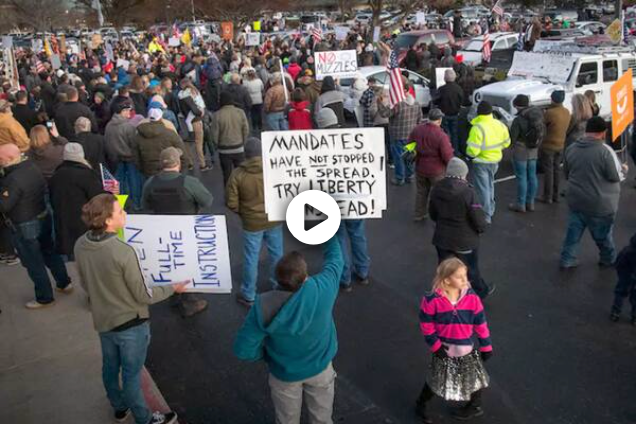
Hundreds of anti-mask demonstrators poured out to protest a public health order that would have limited gathering to fewer than 10 people and required face masks be worn in public and private around non-household members when social distancing is not possible, among other restrictions. More than 3,000 public comments had been submitted on the order between Friday and Monday, the health district said in a statement. The health district board was set to vote on the order Tuesday evening.
The Idaho Statesman first reported the abruptly terminated public meeting a short time after it ended on Tuesday.
Police formed a barrier between Tuesday’s protesters and the Central District Health building as a precaution following a tense meeting last week. On Friday, when the health board met but decided to delay a vote on the public health order, anti-mask demonstrators tried to force their way into the building. No one was arrested.
The protests on Friday and Tuesday were organized by a multistate network of right-wing activists called People’s Rights. The group was founded by Ammon Bundy, a vocal anti-masker and anti-government activist who gained national attention as part of the 2016 standoff between Patriot movement activists and federal police at the Malheur National Wildlife Refuge in Oregon. Bundy was arrested in August at the Idaho Capitol after tying himself to a chair and refusing to leave amid an anti-mask protest.
The group urged its followers to send emails to the Central District Health’s Board of Health members and to show up to protest “BIGGER, STRONGER, and LOUDER” on Tuesday night.
A smaller group of counterprotesters also showed up Tuesday at the Central District Health to support the covid-19 restrictions, displaying signs that detailed how many Idahoans have fallen ill and died in the pandemic already.
Fewer than 15 minutes after Tuesday’s meeting began, Boise police and Mayor Lauren McLean, D, requested that the board cancel it, citing safety concerns for police, staff and board members who were dealing with protesters on their doorsteps. McLean condemned the demonstrators, who she said did not come from the local counties that the health board represents.
“Our officers were asked to respond to people from outside our community whose purpose here was to disrupt local government in action, to intimidate their families,” McLean said in a statement Tuesday night. “This is notOK. Let me be clear: We will hold offenders accountable.”
A Central District Health employee placed one protester under citizen’s arrest for trespassing, and Boise police took custody of the individual a short time later, police said in a statement. That person, who was not named by officials, was booked at the Ada County Jail, police added.
In addition to swarming Lachiondo’s home, protesters also showed up at board member Ted Epperly’s house. Epperly, a physician in Ada County, said about 15 people were still outside his home as other members moved to adjourn the meeting early. He told the Statesman the small crowd banged garbage cans, flashed strobe lights through his windows and knocked on his door as the virtual meeting unfolded.
“Sadly,” he told his fellow board members during the last minutes of the video call, “It is not under control at my house and it’s not under control at Diana’s house.”
Just before 7 p.m. Tuesday, Lachiondo tweeted that she and her son were safe.
“Update: We are fine,” she said. “Thanks all for your concern and especially @BoisePD for your help.”
Idaho has reported more than 111,800 coronavirus cases and at least 1,055 deaths since late February, but those numbers have been rising more rapidly in recent weeks than in earlier phases of the pandemic. The state broke the record for its seven-day rolling average of new daily coronavirus cases on Tuesday. The counties around the state’s capital have been hammered by the pandemic in recent weeks and Boise-area hospitals may be forced to ration care by New Year’s Day if cases continue to rise, the Statesman reported.
“Our community is being severely impacted by this virus and our team members and board are working tirelessly to protect our community’s health,” Russ Duke, district director for Central District Health, said in a statement Tuesday night. “We simply ask that those who may disagree with these difficult discussion points and decisions do so in a way that is respectful and does not endanger our staff, board of health members, and our law enforcement, all who are critical in this response.”
Coronavirus restrictions have been a lightning rod for controversy in Idaho, where elected officials have publicly warred over pandemic rules.
Even as local officials and the governor have tried to implement public health restrictions, Lt. Gov. Janice McGeachin, R, opposed those limits in an October video where she praised “defending life and liberty” with a gun and Bible in hand. Some coronavirus skeptics in the state have gone so far as to falsely claim the pandemic “may or may not be occurring.”
The Central District Health’s vote on a new public health order aimed at beating back coronavirus infections was delayed on Tuesday to an unspecified date. Meanwhile, Boise’s mayor said the demonstrators crossed a line by showing up at board members’ homes and intimidating their families.
“No child should be frightened by a mob of protesters,” McLean said, “No local official should fear violence for their public service.”
By The Washington Post · William Booth, Karla Adam · WORLD, HEALTH, EUROPE
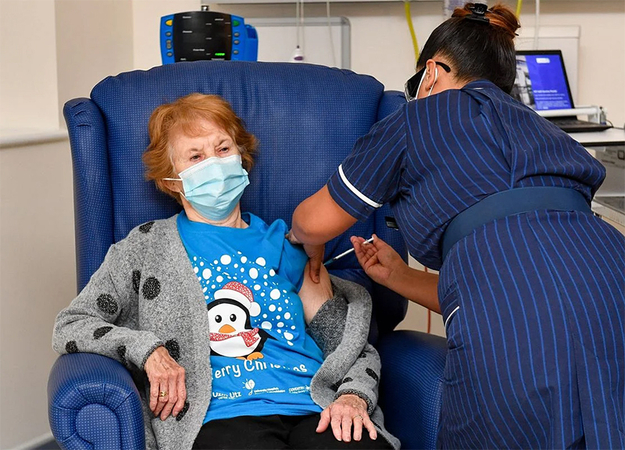
LONDON – It took barely a second. She rolled up her sleeve and Britain’s Margaret Keenan became on Tuesday the first person to receive the Pfizer-BioNTech vaccine shot outside of clinical trials, as the first mass coronavirus immunization campaign in the West began.
The 90-year-old grandmother received her jab, as the Brits would say, at University Hospital in Coventry, England, at 6:31 a.m. local time. The nurse, May Parsons, told her to relax her arm.
“I feel so privileged to be the first,” Keenan said, adding that it meant she could “finally look forward to spending time with my family and friends in the new year after being on my own for most of the year.”
That was one quick shot for Maggie, one giant leap for humankind.
“My advice to anyone offered the vaccine is to take it – if I can have it at 90, then you can have it too,” she said. As she was rolled down the hallway at the hospital, staff members in masks and visors gave her a round of applause.
The former jewelry shop assistant – known to her friends as Maggie – retired just four years ago. She has two children and four grandchildren and spent much of 2020 self-quarantining. Originally from Northern Ireland, she has lived in Coventry for over six decades.
British health officials hailed the first injections as a turning point in the fight against a virus that has infected 67 million people around the globe, killing more than 1.54 million. The vaccine was developed jointly by pharmaceutical giant Pfizer and German biotech firm BioNTech.
“I’m feeling quite emotional, actually, watching those pictures,” British Health Secretary Matt Hancock told Sky News, which broadcast footage of Keenan getting the jab live. “It’s been such a tough year for so many people and finally we have our way through it, our light at the end of the tunnel.”
And the world is watching to see how the country where vaccines were invented three centuries ago rolls out its largest- and speediest-ever health campaign, deploying a revolutionary new vaccine that requires extremely special care and handling.
Thousands of nurses, pharmacists and medical technicians, bolstered by legions of volunteers and members of the British military, will safeguard, transport, unpack and jab millions of doses into the upper arms of a nation grown weary of lockdowns and loneliness, anxiety and sickness.
Very soon, other nations are expected to follow. The United States could grant emergency authorization to the Pfizer-BioNTech vaccine by the end of the week. Europe, by the end of the month.
In its analysis published Tuesday, the U.S. Food and Drug Administration confirmed the safety and efficacy of the Pfizer-BioNTech vaccine. The agency’s briefing documents were published ahead of an advisory committee meeting scheduled for Thursday, when the analysis will be discussed and a vote taken on whether to approve the vaccine.
The ultimate goal is to inoculate enough people to confer individual immunity and eventually stop the virus’s spread. But until more vaccine doses are available and other vaccines are approved, officials in Britain and elsewhere are balancing the need to protect the most vulnerable against the need to slow transmission.
Parsons, the nurse who delivered the vaccine, is originally from the Philippines and has worked for the taxpayer-funded National Health Service for 24 years. She said it was a “huge honor” to “play a part in this historic day.”
“The last few months have been tough for all of us working in the NHS,” she said. Front-line health-care workers such as Parsons had to struggle to fight a mysterious, deadly new virus, sometimes without proper protective gear in the early months.
The second person to be vaccinated at the hospital was 81-year-old William Shakespeare, whose name prompted an inevitable flurry of puns. The Metro newspaper tweeted a picture of him with the caption “The Taming of the Flu.” One person on social media asked if Keenan was patient 1A, then was Shakespeare “Patient 2B or not 2B?” Another chimed in with “The Two Gentlemen of Corona.”
Simon Stevens, chief executive for NHS England, said this would be the “largest vaccination program this country has ever seen.” He cautioned that it was a marathon, not a sprint.
“But if we all stay vigilant in the weeks and months ahead, we will be able to look back at this as a decisive turning point in the battle against the virus,” he said.
Prime Minister Boris Johnson called it “a shot in the arm for an entire nation.” He visited a London hospital Tuesday morning and spoke to waiting patients. He told one that a way to calm nerves about needles was to recite poetry.
“I always try think of something else. Recite some poetry,” he told her.
British officials say they hope to vaccinate “the majority” of especially vulnerable people by the end of February. Priority, though, will go to people over age 80 and to nursing home caregivers.
It will be a while before shots make it to nursing home residents, as the government doesn’t yet have the ability or approval to offer Pfizer injections at those facilities.
Also excluded from the initial round will be most front-line hospital workers. That runs counter to what the United States and most other countries are planning. Although Chris Hopson, chief executive of NHS Providers, said high-risk hospital staff in Britain will be offered “any leftover spare doses” at the end of each day.
Even for Britain’s highest-priority groups, demand could quickly outstrip supply in the early months, public health officials warned.
The country has preordered 40 million doses of the Pfizer product, enough to immunize 20 million people, as two doses are required, three weeks apart. It has also hedged its bets and reserved another 300 million doses of five vaccines in development.
But the Pfizer vaccine is the only one approved so far, and the 800,000 initial doses Britain is set to receive “could be the only batch we receive for some time,” Hopson cautioned last week.
The government says up to 4 million doses of the Pfizer vaccine is coming soon, but exactly how much and when depends on the company’s ability to manufacturing capability at its plant in Belgium.
The vaccine, developed with Pfizer by a husband-and-wife team at the small German company BioNTech, is not like a traditional shot that injects a crippled version of a virus. Instead, it uses a bit of messenger RNA, which encourage the body to produce antibodies to repel the spike protein on the surface of the coronavirus.
The vaccine has shown great promise, demonstrating 95 percent protection in large-scale human trials. It also presents a great challenge. It needs to be stored and shipped at seriously cold, sub-Antarctic temperatures of minus-103 degrees Fahrenheit.
British regulators, in granting emergency approval, said the vaccine cannot be moved more than four times and that the trays of 975 doses packed in dry ice cannot be split apart.
Hopson said the first trays are being delivered from the freezers at National Health Service warehouses to 50 hospitals in England. Similar efforts are underway in Wales, Scotland and Northern Ireland.
NHS officials said primary-care physicians are providing lists of people over 80 who are mobile enough to get to a hospital clinic, and hospital appointment-bookers are calling those people for timed, 15-minute slots. Some afternoon slots will be reserved for nursing home staff members, who are being contacted by their employers.
Vaccination will take place in separate, dedicated clinics at the hospitals, so the elderly and others getting shots do not come in contact with patients who might be infected with the virus.
“The electronic prescribing system will cleverly, automatically book the patient for their three-week-later, second-dose appointment,” Hopson said. “It will also, equally cleverly, automatically send a letter to the patient and their GP with details of that appointment and first dose.”
China is also now rolling out a campaign to inoculate more than a billion people, and it claims it has already injected a million of its citizens with one of its five experimental vaccines.
Russia began a mass program to inject doctors, teachers and social workers in hard-hit Moscow over the weekend. It is not known how effective the experimental Chinese or Russian vaccines are, because the makers there have reported scant data on clinical trials.
Britain was the first country in the West to approve a coronavirus vaccine.
In the United States, the Food and Drug Administration could grant emergency authorization to Pfizer-BioNTech candidate by week’s end and the begin to immediately deliver the drug to the states.
Over the weekend, Moncef Slaoui, the chief science adviser for the White House’s Operation Warp Speed, set out an ambitious goal, saying vaccinations could reach 24 million Americans by mid-January.
Regulators in the European Union are reviewing the safety and efficacy of the Pfizer vaccine and could grant authorization before the end of December.
British medical authorities defended themselves against the accusation that their regulators had acted too quickly.
Anthony S. Fauci, director of the U.S. National Institute of Allergy and Infectious Diseases, initially told Fox News that British regulators had not acted “as carefully” as the FDA, which he called the world’s gold standard for drug review.
He quickly apologized for his remarks, saying he meant to say that British and American regulators do things differently, not better.
June Raine, chief executive of Medicines and Healthcare Products Regulatory Agency, which regulates vaccines in Britain, said she had complete confidence in the Pfizer vaccine.
“The highest standards of scrutiny, of safety and of effectiveness and quality have been met, international standards,” she said.
Raine said the immunization program beginning on Tuesday “will help us turn the corner. There’s really not one of us who hasn’t been affected by this pandemic, and our organization, like every other, has been completely focused on doing our job to be able to help defeat this terrible disease.”
One big question, though, is how many people will be willing to get a shot. More than a third of people in Britain say they are unlikely to accept a vaccine when it’s available, according to an opinion poll published Sunday by the Observer newspaper.
By The Washington Post · Carolyn Y. Johnson, Laurie McGinley, Chris Alcantara, Aaron Steckelberg
WASHINGTON – A two-shot coronavirus vaccine developed by Pfizer and German firm BioNTech appears to be on the cusp of regulatory clearance, after a 53-page review published Tuesday confirmed that the vaccine appears to meet the standard for emergency use authorization.
The Food and Drug Administration briefing document is the first hint of U.S. regulators’ assessment of the vaccine as the agency’s career scientists approach one of the most momentous decisions in the FDA’s history. It is also the most detailed independent review yet of data that has so far been known only through company news releases.
The FDA’s career scientists undertook their own thorough analysis of the data over the last two weeks and confirmed Pfizer’s assessment that the vaccine regimen was 95% effective at preventing disease in large clinical trial and had tolerable short-term side effects, including sore arms, fatigue, headaches, muscle pain and chills that typically resolved within one to two days. The review also found evidence that the vaccine, which is given in two doses, three weeks apart, began to protect people after the first dose.
The document spells out that the vaccine has cleared the minimum threshold of being at least 50% effective and states that the two months of follow-up on 38,000 participants in the trial provide evidence of “a favorable safety profile, with no specific safety concerns identified that would preclude issuance of an [emergency authorization].”
On Thursday, a group of advisers to the FDA will meet for a full-day public meeting to discuss the data and make recommendations on whether the vaccine merits authorization for immediate use. A decision, informed but not dictated by that debate, is expected to come within days of the meeting. The first doses are expected to be shipped within hours, with a target of 6.4 million doses distributed in the first week.
British regulators cleared the vaccine for use last week and administered the first shots Tuesday to elderly people and nursing home workers, but their review relies more heavily on the company’s data analysis.
The vaccine was tested in about 44,000 people, half of whom received two doses of the real vaccine three weeks apart, and half of whom received shots of saline. People then went about their normal lives and were exposed to the virus in their communities. There were 170 cases of covid-19, the disease caused by the virus, in the study. Only eight of those cases were in the group that received the vaccine, an overwhelming signal of efficacy and well above the minimum threshold the agency laid out this summer.
One of the biggest questions about the coronavirus vaccines is whether they work equally well in all people, particularly those at highest risk of severe illness, including older people, those with underlying medical conditions and minority groups. The vaccine trials sought to recruit diverse populations. The FDA review found that efficacy was similar “across age groups, genders, racial and ethnic groups, and participants with medical comorbidities associated with high risk of severe COVID-19.”
Another major question about the vaccines has been whether they can prevent both mild and the most devastating, severe cases of disease. There were 10 cases of severe illness in the trial, with nine of those in the placebo group.
The Pfizer vaccine is the first of two vaccines to be considered by regulators this month based on a novel technology that uses snippets of genetic material to teach the body’s own cells to build the spiky protein that coronaviruses use to latch onto cells. The immune system, exposed to the spike, can then learn to recognize and block the real virus.
One point of debate among outside advisers to the agency this week could be the length of follow-up on a vaccine technology that has never been used in an approved product. The FDA is asking its committee to vote on whether the vaccine has been demonstrated to be effective in preventing covid-19 in people ages 16 and older.
Pfizer has projected that the United States will receive about half of its global supply through the end of the year – about 25 million doses. Government officials expect about another 20 million doses to be provided by Moderna, which is about a week behind the Pfizer and BioNTech vaccine. Pfizer will deliver the balance of the 100 million doses the United States has purchased in the first few months of next year, enough for 50 million people.
The United States approached Pfizer to buy another 100 million doses this past weekend, but was informed the supply may not be available until late June, The Washington Post reported. That raises questions about whether the U.S. goal to create enough vaccine for the entire population by the summer could slip.
By The Washington Post · Laurie McGinley · NATIONAL, HEALTH, HEALTH-NEWS
For a nation ravaged by the pandemic, this week marks a pivotal moment – the final push by federal regulators to clear the first experimental coronavirus vaccine for a besieged populace.
If all goes well over the next few days, the Food and Drug Administration could give emergency authorization to the vaccine as early as week’s end, triggering the start of an unprecedented effort to inoculate enough Americans to confer individual immunity and eventually stop the virus’ spread. That next chapter, however, is filled with herculean challenges, including ramping up production to tens of millions of doses, shipping them in specially designed boxes packed with dry ice to keep them ultracold and vaccinating people in every corner of the United States.
“It’s staggering where we find ourselves,” said Robert Wachter, chairman of the department of medicine at the University of California at San Francisco. “And this remarkable week will either put us on a path to getting out of this in six months, or if people lose trust in the process, put us back by months, or a year.”
The regulatory drama kicks off early Tuesday. The Food and Drug Administration tips its hand to the public for the first time about its view of experimental coronavirus vaccine by pharmaceutical giant Pfizer and German biotech BioNTech, when it releases its evaluation of the safety and effectiveness data. That’s in preparation for a meeting two days later of the agency’s vaccine advisory committee – independent experts who will debate that data and whether the FDA should clear the vaccine, a decision many hope will eventually change the course of the crisis.
The agency sees Thursday’s open committee meeting, which includes time for the general public to speak, as a critical part of its effort to be transparent and convince people to take the vaccine. Its commitment to holding a public session is one reason Britain managed to authorize the vaccine before the U.S., angering President Donald Trump.
“We feel it’s our responsibility to make it happen as fast as possible,” said Peter Marks, director of the Center for Biologics Evaluation and Research. But, he added, “We want to show that we really thought this all through carefully.”
If the advisory committee gives the thumbs’ up in a formal vote on Thursday, the FDA is expected to authorize the vaccine within days, clearing the way for its almost-immediate distribution to all 50 states. Operation Warp Speed, the White House-led initiative to develop and distribute vaccines, has said it plans to begin shipping the vaccine within 24 hours of an FDA authorization. But if an unexpected problem should emerge, or the advisory panel raises concerns, the process could be slowed.
Even if all goes as hoped, a new, potentially lifesaving vaccine won’t immediately change the pandemic outlook. Vaccinating most Americans will take several months, even if the vaccine is widely accepted. And, with more than 280,000 dead, even grimmer days lay ahead, with deaths potentially rising to 3,000 or 4,000 a day, experts say.
– – –
What happens first this week?
Public health experts hope that documents released by the FDA and Pfizer on Tuesday will provide many more details about the vaccine, as well as the agency’s opinion about it. If there are any surprises that could slow or derail an authorization, they could pop up here.
“For now, all we have is this press release with a big efficacy number,” said Jason Schwartz, assistant professor of health policy and management at the Yale School of Public Health, referring to Pfizer’s press statements that its vaccine is a remarkable 95 percent effective overall and 94 percent in people over 65. It hasn’t released information on other subgroups, and the data has not yet been published in a peer-reviewed journal.
Also Tuesday, the White House is having a “Covid-19 Vaccine Summit” to tout the vaccine development effort, and inviting governors, federal officials, and executives of pharmaceutical companies and drugstore chains. The goal appears to be to give Trump, who called the FDA part of the “deep state” and accused Pfizer of trying to hurt his reelection prospects, a chance to claim credit for the vaccine.
– – –
Can I watch the advisory committee meeting?
The all-day remote meeting on Thursday will be carried online by the FDA, YouTube and Facebook. University of Michigan epidemiologist Arnold Monto, the temporary chairman of the panel, is shoring up his spotty home WiFi. Meanwhile, teams of FDA staffers are poring over Pfizer data and the quality of the manufacturing process. Manufacturing vaccines can be notoriously difficult, and quality is paramount. In 1955, tainted polio vaccine made by Cutter Laboratories caused five deaths.
The independent panel has a core group of 15 voting members, including all-star experts on immunology, virology and infectious diseases. They include Paul Offit, director of the Vaccine Education Center at the Children’s Hospital of Philadelphia and the co-developer of a rotavirus vaccine. The panel, whose official name is the Vaccine and Related Blood Products Advisory Committee, also includes a consumer representative and a nonvoting member who represents the pharmaceutical industry.
– – –
What does the FDA want from the meeting?
Agency officials will be looking for the panel to say the Pfizer safety and efficacy data justifies an emergency use authorization for the vaccine. They are likely to consider a broad “label,” saying the vaccine should be used to prevent covid-19, the disease caused by the coronavirus, in people from ages 16 and up. Pfizer has started to test the shots in children as young as 12, but more data is needed.
Emergency authorizations are temporary approvals used to accelerate the availability of medical products during a public health emergency. They require less data than full approvals. The FDA has said, however, it will apply rigorous criteria because millions of healthy people are expected to receive the vaccine.
Panel members are sure to drill down on the safety data. In a general vaccine meeting on Oct. 22, some members said the FDA’s requirement that vaccine developers provide two months’ follow-up on half the trial participants wasn’t stringent enough.
“How much oxygen do those concerns get at this meeting?” said Schwartz. “If there are serious concerns, that would complicate the effort to assure the public that this process is every bit as rigorous as we would expect this vaccine to be.”
FDA officials and some panel members have said the two months’ standard is appropriate, given that most serious complications occur in the first six weeks after inoculation. Waiting longer can’t be justified, they said, considering the pandemic’s horrific daily toll, now up to a seven-day average of more than 2,000 deaths daily.
– – –
What else will be discussed?
A critical issue will be the longer-term safety program the FDA and Pfizer have set up to ensure they catch any serious complications caused by the vaccine after it is on the market. “Once you roll something out to hundreds of thousands and millions of people, safety problems can emerge,” said Lawrence Gostin, a public health expert at Georgetown Law School.
The panel also might ask how long the vaccine’s protection will last. The information is important because once people are vaccinated, they are likely to change their behavior – eschewing masks, for example – said Walid Gellad, director of the Center for Pharmaceutical Policy and Prescribing at the University of Pittsburgh. But officials say it’s too soon to know the duration of protection.
The committee also is likely to wrestle with the ethical issue of whether Pfizer should offer the vaccine to people in the placebo group, once the shots are cleared. The company has said that it plans to do so, but the FDA is worried such “unblinding” of the trial will make it difficult to continue to collect long-term data on safety and duration of protection.
Michael Tovar, a participant in the Pfizer trial, predicted a “mass exodus” of enrollees if the placebo group is not offered the vaccine. “For most of us, the possibility of receiving a vaccine early was one of the main reasons for joining the trial,” he said in a comment filed to the public docket on the meeting. “Were it not for the bravery and commitment of trial participants, this historic moment would not be happening.”
But if those participants are not in high-risk priority groups, they might not be able to get the vaccines outside the trial.
– – –
What’s the most important part of the meeting?
The biggest moment will come at the end of the day – probably 5 p.m. or later – when the panel will vote on questions posed by the FDA. The key one will be on whether to authorize the vaccine.
Does the FDA have to follow the panel’s advice?
No, the advice isn’t binding. But the FDA often follows the recommendations of its advisers. And in this case, with all the controversy and political wrangling that has surrounded the vaccine, experts say it would be hard for the agency to ignore the committee, which is partly designed to boost public confidence in the shots.
– – –
What happens then?
Marks, of the FDA, said the agency could authorize the Pfizer vaccine “within a week” of a favorable recommendation from the advisory committee. Some think the decision would be even sooner than that.
The following week, the process starts over for Moderna. On Dec. 15, the agency will post its view of the vaccine, in preparation for a Dec. 17 advisory committee.

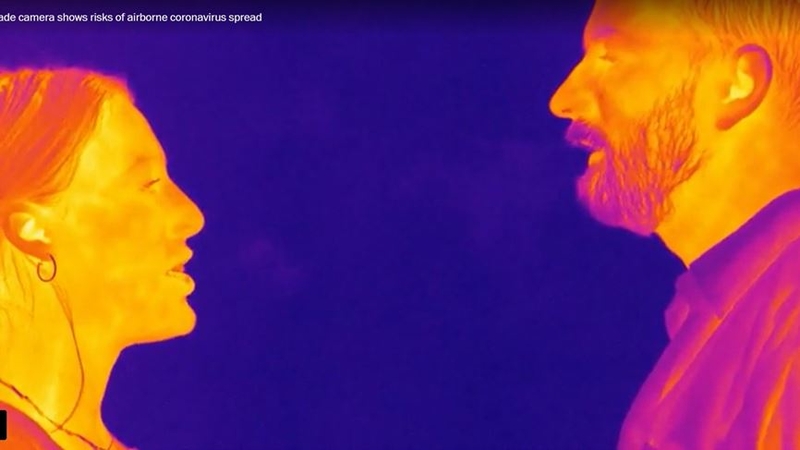
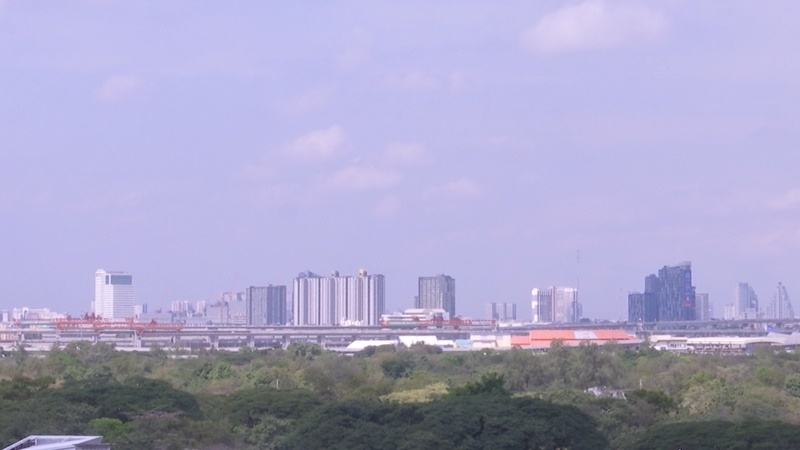
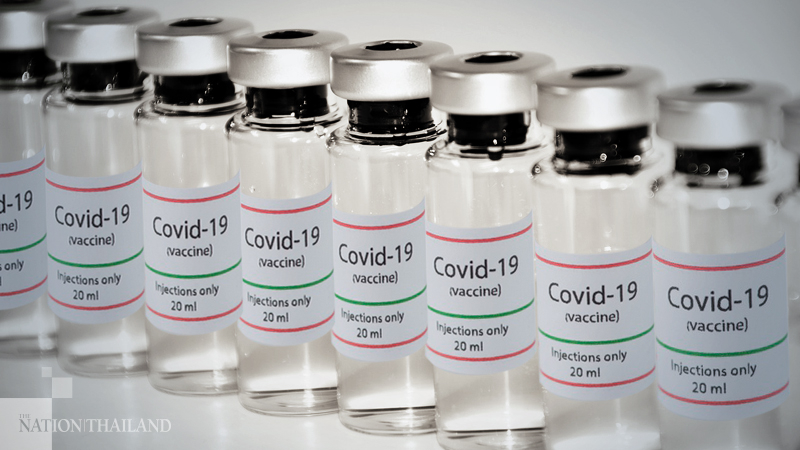

 Maribel Martinez, 43, outside her home this week in Baltimore. MUST CREDIT: Washington Post photo by Sarah L. Voisin.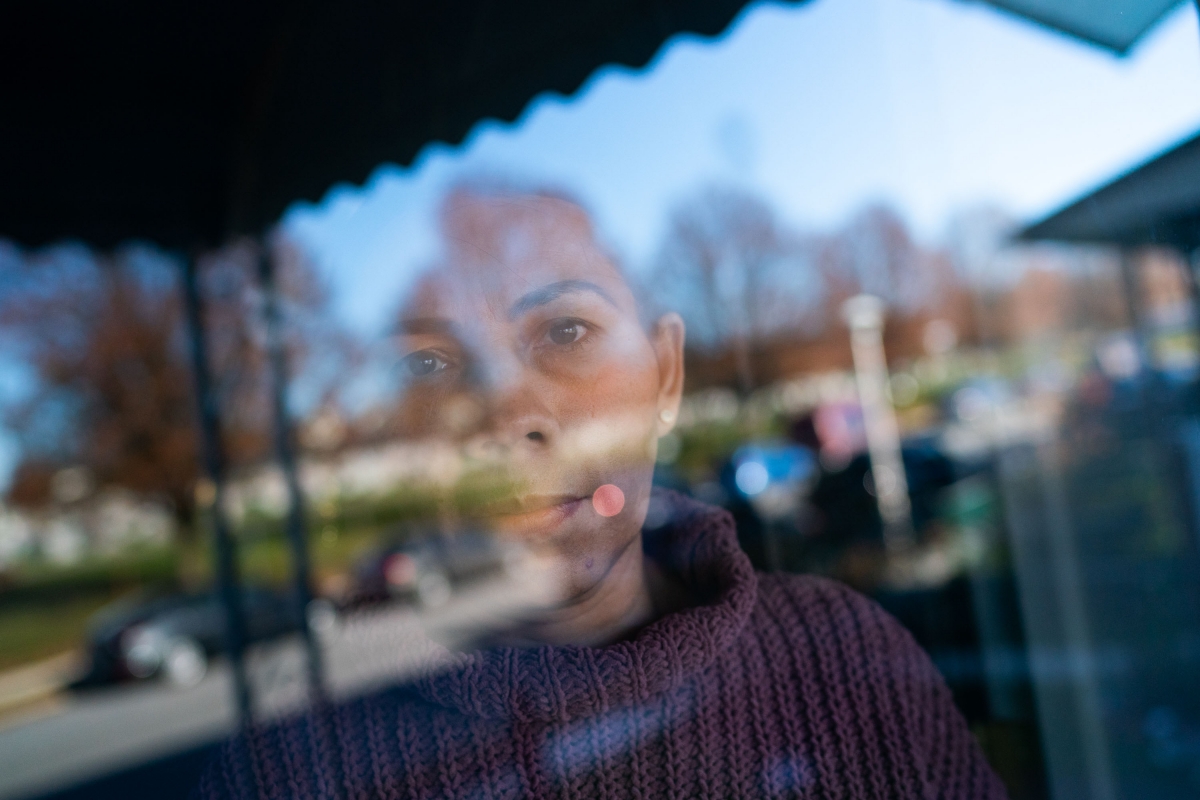
 A Thermo Fisher Scientific Inc. -80C Benchtop Freezer displayed at the White House during an Operation Warp Speed vaccine summit on Dec. 8. MUST CREDIT: Bloomberg photo by Al Drago.