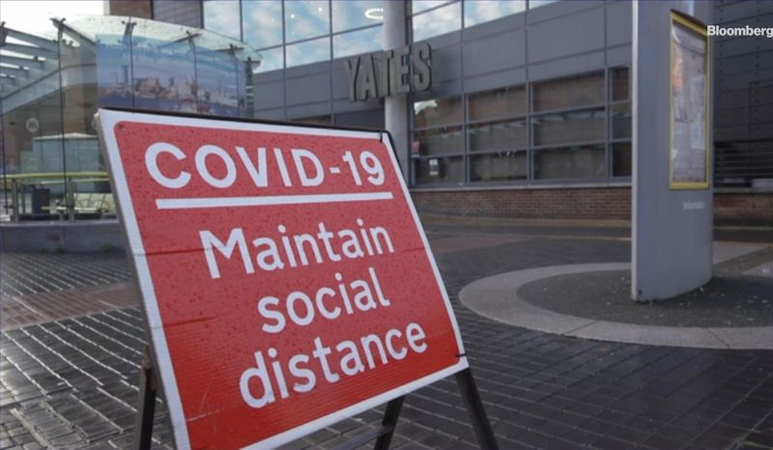
By Syndication Washington Post, Bloomberg · Boris Groendahl · WORLD, EUROPE Austria will shut schools, most stores, and services such as hairdressers starting Tuesday, said Chancellor Sebastian Kurz, after attempts to rely on self-discipline and moderate restrictions failed to slow the coronavirus pandemic.
The new measures come two weeks after a soft lockdown similar to Germany’s was imposed, leaving large parts of the economy and society open. With Austria’s infections spiking, Kurz said he hoped to end the latest measures on Dec. 6 to allow some sort of Christmas celebrations.
“My urgent request: don’t meet anybody,” Kurz said at a news conference from the chancellery in Vienna on Saturday. “Every social contact is one too many.”
Finance Minister Gernot Bluemel said aid for lost business revenue due to pandemic restrictions will be at least doubled.
Austria’s gradual reaction this fall is a contrast to March, when the government acted assertively and was among the first European nations to reverse the Covid-19 wave. “This government has failed,” said Beate Meinl-Reisinger, head of Neos, Austria’s smallest opposition party.
The country had more than 550 new cases per 100,000 people in the last seven days, one of Europe’s highest rates. Less than a quarter of infections can still be traced, the positive-test rate is running at more than 20%, and hospitals and intensive care units are filling up.
The tighter rules are defined in a decree that’s being put to the Austrian parliament’s main committee on Sunday and include:
– People may leave their homes only for certain purposes including grocery shopping or other daily needs, to visit or support relatives, go to work, make urgent visits to court or official buildings, or go out for walks or exercise.These restrictions, which were applicable only at night until now, will apply round the clock under the new plan.
– Shops will close except grocery and drug stores, banks, post offices, gas stations, tobacconists and newsstands, and car repair shops, all of which will have opening hours restricted to 6 a.m. to 7 p.m.
– Office jobs should be done from home if possible.
– Distance learning will expand to under-14s, while schools remain open for parents who need child care.
– While religious services aren’t banned in the law, the Roman Catholic church will suspend normal services and is in talks with the other religious communities to do the same, Archbishop Franz Lackner said in a statement.
Austria will expand aid for businesses affected by the lockdown, Bluemel said. In addition to restaurants and hotels, which can claim 80% of the revenue they had in November 2019 as compensation, services such as hairdressers, cosmetic salons or masseurs will be able to claim the same. Stores will be able to claim 20% to 60%, depending on size, sector and other parameters, Bluemel said.
The extension and broadening of the lockdown will raise the cost of the compensation to at least 3 billion euros ($3.6 billion), from 1.5 billion euros earmarked under the earlier restrictions.
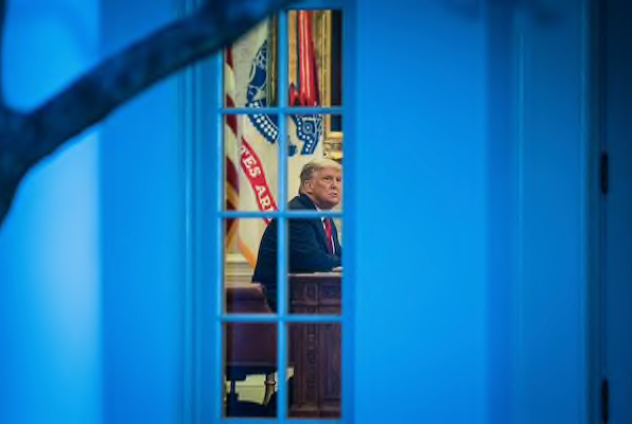
By The Washington Post · Ashley Parker, Josh Dawsey, Yasmeen Abutaleb, Philip Rucker · NATIONAL, HEALTH, POLITICS, SCIENCE-ENVIRONMENT WASHINGTON – President Donald Trump finally received some good news this past week: Amid spiking coronavirus cases nationwide – more than 100,000 new cases a day since Nov. 4, with deaths rising, too – pharmaceutical giant Pfizer announced that its experimental coronavirus vaccine was more than 90% effective.
But the president was furious.
The news came six days after Election Day – too late to help Trump in his contest against President-elect Joe Biden – and he thought both Pfizer and his own Food and Drug Administration had withheld the announcement to prevent delivering him the sort of pre-election public-relations victory that could have helped him in the polls. Instead of touting the vaccine success as a crowning achievement of his administration, as advisers encouraged, Trump barely mentioned it except to gripe on Twitter that “the Democrats didn’t want to have me get a Vaccine WIN, prior to the election.”
Since Election Day and for weeks prior, Trump has all but ceased to actively manage the deadly pandemic, which so far has killed at least 244,000 Americans, infected at least 10.9 million and choked the country’s economy. The president has not attended a coronavirus task force meeting in “at least five months,” said one senior administration official with knowledge of the meetings, who spoke on the condition of anonymity to share candid details.
Now, as he fights for his political life, falsely claiming the election was somehow rigged against him, Trump has abdicated one of the central duties of the job he claims to want: leading the country through a devastating pandemic as it heads into a grim winter.
“I don’t know that I think that’s where his focus is,” said one senior administration official. “But I know that’s where our focus needs to get back to.”
This account of Trump’s indifference and inaction on the newly surging coronavirus pandemic is based on interviews with more than a dozen administration officials, Trump allies, health advisers and others familiar with the response, many of whom spoke on the condition of anonymity to discuss internal deliberations.
On Friday, Trump appeared in the Rose Garden to offer an update on Operation Warp Speed, his administration’s effort to fast-track a vaccine. The president and his team shared some encouraging news: that at least 20 million vaccine doses could be ready as early as December, with 25 million to 30 million doses coming each subsequent month. But Trump seemed deflated, with the dour disposition of a man who understood that the coronavirus progress was too late to help him in the polls. Biden is projected to win with 306 electoral votes, compared with Trump’s 232.
Until his Friday news conference, Trump had barely appeared in public since his Nov. 3 defeat, save for an angry, ranting news conference in which he lobbed baseless claims of voter fraud and a visit to Arlington National Cemetery for Veterans Day, where he violated the cemetery’s policy requiring all visitors to wear a mask. He also made no mention of the rising toll of the virus in his Rose Garden news conference, which included rambling criticism of Pfizer and attacks on New York Gov. Andrew Cuomo, a Democrat,.
In one social media missive, Trump retweeted an angry message that accused CNN of stopping its ” ‘COVID-COVID-COVID!’ drumbeat” after the election.
Trump has increasingly eschewed the advice of even his own public health and medical experts. Deborah Birx, the White House coronavirus response coordinator, has suggested several times reducing in-person dining in restaurants and bars, but Trump has dismissed her suggestions, a senior administration official said. He has also ignored the calls by Anthony S. Fauci, director of the National Institute of Allergy and Infectious Diseases, for more aggressive messaging on the importance of mask-wearing, officials said.
The president is no longer regularly briefed on the pandemic by his team of doctors, and he rarely reads the daily virus reports prepared by Birx, a senior administration official said. The reports have grown increasingly grim in recent weeks, aides said, but are largely ignored in the West Wing. Several of the administration’s top medical experts – including Birx, Fauci and Surgeon General Jerome Adams – have only infrequently visited the White House in recent weeks, multiple administration officials said.
Olivia Troye, a former adviser to Vice President Mike Pence and aide on the White House coronavirus task force who resigned from the administration and supported Biden’s presidential bid, described the current situation as “very upsetting.”
“You would think that now that his presidential campaign is over that he could perhaps leave a legacy of last-minute leadership during this time – an ounce of it, maybe,” Troye said. “He has an opportunity here to focus on the well-being of Americans.”
Jack Chow, a U.S. ambassador for global HIV/AIDS during the George W. Bush administration and a former World Health Organization assistant director general, was similarly alarmed by Trump’s handling of the crisis.
“The duty of a president is to protect the national security of the United States, and this is the most prominent disease of mass destruction America’s ever faced, and we have a commander in chief who has run away from the problem and has made it worse,” Chow said. “We had an opportunity twice over the past eight months to bring it down to safer levels, and we failed. We are on the verge of losing control of this pandemic.”
The White House disputed much of the criticism of Trump’s engagement with the coronavirus pandemic. The president is regularly briefed on the topic by Pence, one administration official said, and Birx has an office in the White House.
“President Trump and his entire administration remain intensely focused on defeating this virus and saving lives as Operation Warp Speed continues to fast track lifesaving treatments and vaccines in record time,” said White House spokeswoman Sarah Matthews, referring to the fast-track vaccine effort. “Thanks to President Trump’s leadership, we’re on track to deliver safe and effective vaccines to 20 million Americans in December and another 25-30 million per month after that. The Task Force continues to work with state and local jurisdictions to ensure communities have the tools and resources to better treat patients and protect the most vulnerable.”
Although many federal health officials firmly believe more needs to be done to strengthen the country’s virus response, most are too afraid to call publicly for firmer action, two people familiar with task force meetings said. For several weeks, Birx and Fauci pushed to dramatically expand testing, raised concerns about hospital overcrowding and sounded alarms both in public and private about the deadly winter the country is hurdling toward – to no avail.
Trump’s negligence on the pandemic comes at a particularly precarious time, just as his administration is winding down and Biden and his team are preparing to assume power, experts said. But Trump – who so far has refused to acknowledge the election results – is further hindering the process by refusing to start a formal transition.
One senior administration official described Trump’s government as performing an elaborate “Kabuki theater, pretending that Biden didn’t win,” a pantomime that has further hurt the administration’s virus efforts.
Trump – who has already fired Defense Secretary Mark Esper and other top Pentagon officials – has hinted that he may use his final weeks in office to purge the government of those he views as disloyal, leaving officials paralyzed by fear over who might be next, several administration officials said.
In internal emails, top officials are still refusing to acknowledge the election results. Some messages include phrases such as “if there’s a transition” and “if there’s a second term,” one senior administration official said, adding that there’s little discussion about the coronavirus at the White House.
Experts said both the Trump administration and the incoming Biden administration need to send a strong and united message emphasizing that the country is entering its worst stretch yet of the pandemic and urging people to take the virus seriously, including by wearing masks and avoiding large gatherings. They also said the administration needs to assess where personal protective equipment shortages are and direct resources to those areas, as well as rapidly expand testing and share information and resources with the Biden team about how to distribute the expected vaccine.
“If you’re going to confront the pandemic – and this campaign will extend beyond Jan. 20 – absolutely they ought to be preparing the Biden team, briefing them about the landscape of programs, any bottlenecks that they’ve encountered, so that the Biden team can develop their strategy,” Chow said, referring to Inauguration Day. “Right now, you have two parallel universes with an iron wall in between, and if that persists for much longer, the Biden strategy will be potentially slower and weaker than what is needed to take on the third wave.”
Career officials across several agencies – including the FDA, the Centers for Disease Control and Prevention and the National Institutes of Health – are trying to quietly work on the pandemic response and take notes on shortcomings, one senior official said, in the hopes that the Biden administration can address the problems when it takes over.
Kavita Patel, a physician and former health adviser in the Obama White House, described “a lot of frustration” at the staff level in the Trump administration. Some Trump officials have reached out to her, she said, saying they want to be helpful to the incoming Biden administration, “but they’re being told very actively to not speak to anybody.”
“Members of the Biden-Harris task force are on TV, in the media, talking about the vaccine, talking about staying at home, making the public messages that I expected the White House coronavirus task force to do,” Patel said. “We have a task force now, [but] it’s just a task force from the transition team with unfortunately no power in the executive branch. The CDC can’t act on President-elect Biden’s word.”
A senior White House official said in addition to sending out Birx’s daily report, the administration has been focused on deploying personal protective equipment and therapeutics where needed and sending teams to hot spots across the nation. Subgroups within the broader task force have also continued to meet regularly, this person added, including a group that consists of Birx, Trump’s son-in-law and senior adviser Jared Kushner, Pence Chief of Staff Marc Short and Center for Medicare and Medicaid Innovation Director Brad Smith.
Behind the scenes, however, many administration officials paint a portrait of chaos, with senior advisers enabling some of Trump’s most questionable instincts on the pandemic.
Chief of Staff Mark Meadows has criticized Fauci and others for being what he viewed as too apocalyptic about the virus, two administration officials said. Meadows told others that he believed focusing on the coronavirus hurt Trump politically.
Some current and former aides said Meadows also has bizarre views on the virus. He has told others, for example, that he believes one of the main ways the virus is spread is through waiters touching the cups of different people at restaurants, according to people who have heard his comments.
Meadows tested positive for the virus just after the election, but he told others not to disclose his condition, according to one administration official.
Two former administration officials put some of the blame for the laggard White House response on Kushner. Scott Atlas – a Trump coronavirus adviser who has espoused the dangerous theory of herd immunity and clashed with the other doctors – was recruited by Kushner and often spent time in Kushner’s office suite before he officially took the job, these officials said. They added that Kushner had been one of the leading voices stressing to Trump the importance of moving on from the virus.
The White House – which probably hosted a superspreader event in late September celebrating the nomination of Supreme Court Justice Amy Coney Barrett – no longer consults health experts before planning events, including the East Room celebration on election night that appears to have led to several infections, two officials said. One person present at the party, who came in contact with at least two individuals who later tested positive for the virus, said she had not heard from any White House contact tracers.
Johnny McEntee, a Trump loyalist who started as the president’s body man and now is director of personnel for the entire U.S. government, has also told others he is not concerned about the virus, said people familiar with his comments. He is engineering much of Trump’s post-election purge of allegedly disloyal officials.
Yet the virus has breached the president’s inner sanctum, making it one of the nation’s notable pandemic hot spots. After an initial outbreak in October that sickened the president, the first lady and their teenage son, Barron, and other top White House and Republican officials, a second wave of illness has now hit close allies of Trump.
In addition to Meadows, David Bossie, the Trump adviser initially tasked with overseeing the presidential campaign’s post-election legal strategy, has tested positive for the coronavirus, as has Trump adviser Corey Lewandowski and about a half-dozen other administration officials. The chief of staff of the Republican National Committee also tested positive, along with at least seven additional RNC staffers.
Experts worry that Trump’s mishandling of the virus so far is only going to get worse as the nation heads into winter. Scott Gottlieb, the former FDA commissioner under Trump, said it was clear the federal government was unlikely to change its approach, so states need to step up their own efforts.
“The numbers are going to get very big in terms of hospitalizations and deaths,” Gottlieb said. “We are just going to have a lot of death and disease.”
At dinner parties and game nights, casual American life is fueling the coronavirus surge
Health & BeautyNov 12. 2020Members dine at a club in August in Annapolis, Md. MUST CREDIT: photo for The Washington Post by Craig Hudson.
By The Washington Post · Karin Brulliard · NATIONAL, HEALTH, HEALTH-NEWS
A record-breaking surge in U.S. coronavirus cases is being driven to a significant degree by casual occasions that may feel deceptively safe, officials and scientists warn – dinner parties, game nights, sleepovers and carpools.
Many earlier coronavirus clusters were linked to nursing homes and crowded nightclubs. But public health officials nationwide say case investigations are increasingly leading them to small, private social gatherings. This behind-doors transmission trend reflects pandemic fatigue and widening social bubbles, experts say – and is particularly insidious because it is so difficult to police and likely to increase as temperatures drop and holidays approach.
The White House coronavirus task force has been urging states that are virus hot spots to curtail maskless get-togethers of family and friends, saying in reports that asymptomatic attendees “cause ongoing transmission, frequently infecting multiple people in a single gathering.”
As new daily cases in the United States surpassed 145,000 on Wednesday, New York Democratic Gov. Andrew Cuomo announced a 10-person limit on gatherings in private homes, calling them a “great spreader.” Similar restrictions have been imposed in states including Ohio, Utah, Connecticut and Colorado, where one recent cluster involved seven people infected while playing the dice game bunco, and Rhode Island, whose governor has pledged to fine violators. Oregon last week announced a “pause” in hard-hit counties on most groups larger than six people.
“Earlier in the outbreak, much of the growth in new daily cases was being driven by focal outbreaks – long-term care facilities, things of that nature,” said Nirav Shah, director of the Center for Disease Control and Prevention in Maine, where cases have soared in the past two weeks. “Now, the kitchen table is a place of risk.”
In Maine, as in other states, case investigators are seeing a new and related pattern: People who are infected list more close contacts than they did earlier, making the work of contact tracers more time-consuming and complicated. From March through September, the average number of contacts identified in Maine coronavirus investigations was 3.5. In October, that rose to 5.8.
“We’ve all gotten used to our bubbles, but I don’t think we’ve really asked whether someone who’s in our bubble is also in another person’s bubble,” Shah said. “People’s bubbles are getting big enough to burst.”
For months, the danger of large events has been a focus of state and local restrictions and of media coverage. Experts say less attention has been paid to the peril of small gatherings among family and friends, who may appear healthy and take similar precautions to avoid the virus.
But each additional contact increases a person’s risk, said David Rubin, the director of PolicyLab at Children’s Hospital of Philadelphia, which warned in a blog post last week that small indoor gatherings create “perfect conditions for a virus that can spread among people who are crowded into a poorly ventilated space.” Rubin said a person’s “bank” of risk should be even lower in winter because respiratory viruses like the coronavirus are more stable in dry, colder air.
“Often, they’re with people we know really well,” Rubin said of these gatherings. “We let our guard down.”
Amber Calderon now knows she did that in October. The 24-year-old was excited to see some of her relatives for the first time in months at her nephew’s birthday party – and she felt safe. The Conroe, Texas, resident knew her relatives wore masks and socially distanced in their day-to-day lives, she said, so she “trusted everyone.”
About 25 people attended the party at a house, and Calderon said just one person wore a mask – her 81-year-old grandmother. Calderon started to feel ill a few days later, and she tested positive for the coronavirus on Oct. 20. Ten other people who were there also got sick, she said, including her grandmother.
“When I tested positive, I was mad at the situation I put myself in,” Calderon said. “I should’ve never attended that party that day. None of us should have. I knew better.”
In some places, the sheer volume of cases is so great that public health departments cannot connect the dots between them or discern whether a gathering attended by one infected person is the same as one reported by another.
In Minnesota, which reported a single-day record of nearly 6,000 cases on Sunday, the state’s infectious-disease director, Kris Ehresmann, described what she called a “circular” problem: Social gatherings are leading to more community spread, and more spread is making those events ever riskier.
“It’s getting more and more difficult to really tease out an interpretation of these data, because our community transmission just keeps going up,” said Amy Westbrook, the public health director of St. Louis County, Minn.
In her county, she said, 30 percent of people who test positive say they don’t know where they caught the virus, and a rapidly growing number haven’t even spoken to overwhelmed contact tracers. Westbrook said she is stepping up public education efforts, but she knows residents are somewhat numb to messages about masks, hand-washing and staying home. And local law enforcement agencies, she said, have other matters to focus on than dinner parties.
“Once there’s community transmission that’s so widespread, there’s not a lot of good, targeted interventions,” Westbrook said.
Timothy McDonald, public health director in the Boston suburb of Needham, said he is considering a campaign centered on the idea of a “social budget,” reminding residents that, according to guidance from the Centers for Disease Control and Prevention, they should avoid spending more than 15 minutes within six feet of most other people in a 24-hour period.
McDonald said he hopes that might help with an alarming widening of social groups and casual encounters, particularly among youths. In-school transmission is not the problem, he said. Instead, spread is happening after school – at play dates, sleepovers and, especially, socializing and carpooling connected to youth sports, he said.
“If your son or daughter is playing on a town soccer team and a travel soccer team, plus lacrosse, and is also on an ice hockey team, they’re exposed and in close proximity to dozens of other kids,” McDonald said. “Instead of counting the contacts on single digits, it’s now getting to two or three dozen in some cases. And those are only people who are defined as close contacts.”
Beyond gathering caps and public pleas, officials and experts say it is unclear what can be done to persuade pandemic-weary Americans to tighten their circles. Capacity limits in bars or mask requirements in stores can be enforced through fines and closures. Cracking down on baby showers or poker nights in private homes is another matter.
Connecticut Democratic Gov. Ned Lamont last week announced a 10-person limit on all indoor and outdoor gatherings, saying informal, private gatherings were “where we’re seeing ignition taking off in terms of the infection rate.” But he acknowledged that enforcement would be “on the honor system.”
In neighboring Rhode Island, Democratic Gov. Gina Raimondo has for weeks admonished residents to shrink their bubbles and skip casual gatherings. Some people have reported 50 close contacts, she said at a briefing in mid-October. A high school slumber party involving at least 20 youths led to at least five infections and put hundreds of people in quarantine, she said as she announced a 10-person limit on social gatherings Oct. 30.
Raimondo said she would not hesitate to fine hosts of gatherings found to fuel transmission $500 for each person over the limit. No such fines have been issued yet, a state health department spokesman said Tuesday.
“It seems strange to wear your mask in your house with your best friend,” Raimondo said. “It’s human. It’s understandable. It’s got to stop.”
Calderon now agrees. Her bout with covid-19, the disease caused by the coronavirus, involved a litany of symptoms: loss of taste and smell, devastating headaches, a cough, congestion, stomach pain, muscle aches, fatigue.
Calderon came out of it feeling lucky. She and all of her relatives recovered. Her grandmother was hospitalized for a week but is on the mend.
Calderon said she also came out of it with renewed resolve to remind others to be vigilant – and tell them “that the party they are about to have is not a good idea.”
Everyone is tired of leading hemmed-in lives, Calderon said. But she views her experience as a painful reminder that “this virus spreads, and it spreads fast,” she said. “And if you continue to ignore it, it will catch up to you, just like it did me.”
Russia says early data show its covid-19 shots 92% effective
Health & BeautyNov 12. 2020A heath worker draws the ‘Gam-COVID-Vac’, also known as ‘Sputnik V’, COVID-19 vaccine, developed by the Gamaleya National Research Center for Epidemiology and Microbiology and the Russian Direct Investment Fund (RDIF) at a clinic in Moscow on Sept. 23, 2020. MUST CREDIT: Bloomberg photo by Andrey Rudakov.
By Syndication Washington Post, Bloomberg · Henry Meyer, Stepan Kravchenko · BUSINESS, WORLD, HEALTH, EUROPE, HEALTH-NEWS
The developer of Russia’s flagship vaccine against covid-19 said it shows a 92% efficacy rate in preventing cases of the illness, as the country pushes for a top slot in the fight against the coronavirus after a rival product by Pfizer reported a similar breakthrough.
The preliminary Phase 3 findings are based on results from 20,000 volunteers who were given the first dose, including more than 16,000 who also received a second injection, its developers Gamaleya Research Institute of Epidemiology and Microbiology and the Russian Direct Investment Fund said in an announcement on Twitter Wednesday.
Russia, which said it was the first in the world to do so when it registered Sputnik V in August, has faced skepticism from scientists and pharmaceutical companies, who say that more testing is necessary to prove the inoculation is safe and effective.
“The Russian vaccine has been vilified so much, it’s developed immunity itself to criticism,” RDIF head Kirill Dmitriev said in a phone interview.
The latest data is based on results 21 days after the initial injection and will be published in a peer-reviewed medical journal, according to the statement. The 92% efficacy rate was based on 20 confirmed covid-19 cases split across vaccinated subjects who got two doses and those who got the placebo. No unexpected adverse events have been reported in the trial and monitoring is continuing, the backers said. The trial is to include a total of 40,000 subjects, but not all have yet been vaccinated.
“The percentage of the infected can change significantly after they inoculate more volunteers and the trial goes into the final phase,” said Ilya Yasny, head of scientific research in Inbio Ventures, a biotech venture capital fund with a Moscow-based scientific team.
“The timing suggests it was motivated in part in response to Pfizer,” said Jeremy Rossman, a senior lecturer in virology at the University of Kent in the U.K. “This seems more about public relations than reporting medical data on the Phase 3 trial.”
The RDIF didn’t immediately respond to a request for comment on the timing of Wednesday’s announcement.
The Sputnik V shots have also been given to more than 10,000 health workers, teachers and officials outside the trial. Preliminary observations from this group show effectiveness over 90%, the Health Ministry said hours after Pfizer’s announcement this week.
“The bottom line is that until we see a peer-reviewed article, we must view the claims with skepticism,” said Arthur Caplan, director of medical ethics at NYU School of Medicine, of the latest announcement.
Pfizer’s vaccine candidate, developed with BioNTech SE, is at least 90% effective, according to an interim analysis published this week in what was hailed as the most encouraging scientific evidence supporting an inoculation to date.
In comparison to the Sputnik V trial, Pfizer enrolled almost 44,000 people in its study and dropped the initially planned 32-case interim analysis in favor of a minimum of 62 Covid-19 cases, eventually publishing the report when the case count reached 94.
“Although based on fewer cases than the recent Pfizer data, the vaccine looks as efficient,” said Ian Jones, professor of virology at the University of Reading in the U.K. “We still need to know about the longevity of the response and the efficiency in different age groups, but the result bodes well for the other trials currently in progress.”
With the world’s fifth-largest number of Covid-19 cases, Russia is also hoping to capture a share of the global market for a tool to control the pandemic that has killed more than 1.2 million people across the planet. Domestic output aims to reach over 70 million a year by April 2021, according to Deputy Prime Minister Tatyana Golikova. Russia also plans to manufacture more than 500 million doses of the Sputnik V vaccine per year in other countries through local production including in India, South Korea, Brazil and China.
Still, since it was approved for use, Sputnik V has faced challenges ramping up production as other inoculations globally prepare for widespread roll-out.

 เคยเห็นไหมที่บางคนอยู่ๆ ก็แขนขาอ่อนแรงครึ่งซีก เดินไม่ได้ มุมปากตก พูดไม่ชัด ทั้งที่ก่อนหน้านี้ไม่กี่นาทียังทำทุกสิ่งอย่างได้ปกติอยู่เลย คิดแล้วก็น่ากลัว ถ้าเป็นกับตัวเองขึ้นมาจะทำอย่างไรดี

 การเลือกรับประทานอาหารที่มีประโยชน์ต่อสมองเป็นประจำช่วยเสริมสร้างการทำงานของเซลล์สมอง ส่งผลให้ความจำและระบบความคิดทำงานได้ดีขึ้น ทั้งยังชะลอการเสื่อมของสมองไม่ให้เกิดเร็วกว่าเวลาที่ควรจะเป็น
 “โรคปอดบวม” อาการติดเชื้อในปอดที่อาจเป็นได้ทั้งเชื้อแบคทีเรีย เชื้อไวรัส หรือเชื้อรา โรคยอดฮิตที่มาพร้อมลมหนาว


 “ตาแดง” ไม่ใช่แค่อาการผิดปกติของดวงตาตามฤดูกาลเพียงอย่างเดียว แต่ยังบ่งบอกถึงโรคต่างๆ ได้ด้วย แล้วตาแดงแบบไหนอันตรายมาก-อันตรายน้อย อยากรู้ต้องอ่าน

 อาการปวดหัวเรื้อรัง ภาวะที่สัมพันธ์กับท่าทางการทำงานรวมทั้งความเครียด

 แพทย์หลายสำนักเตือนโรคติดเชื้อทางเดินหายใจจากเชื้อไวรัส RSV ระบาดบ่อยช่วงปลายฝนต้นหนาว เผยอาการคล้ายหวัด ยิ่งอายุน้อยยิ่งมีความเสี่ยง พร้อมแนะวิธีการป้องกัน
 Members dine at a club in August in Annapolis, Md. MUST CREDIT: photo for The Washington Post by Craig Hudson.
  A heath worker draws the ‘Gam-COVID-Vac’, also known as ‘Sputnik V’, COVID-19 vaccine, developed by the Gamaleya National Research Center for Epidemiology and Microbiology and the Russian Direct Investment Fund (RDIF) at a clinic in Moscow on Sept. 23, 2020. MUST CREDIT: Bloomberg photo by Andrey Rudakov.
