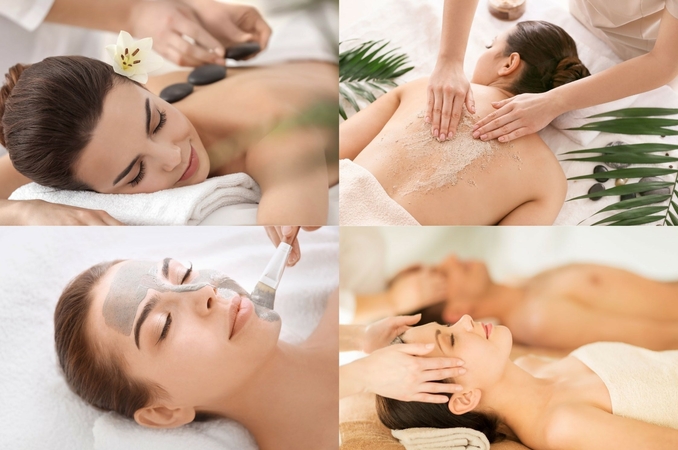
Spa Cenvaree at Centara Grand Ladprao is promising the ultimate in pampering by introducing a new “spa buffet”, which allows guests to mix and match popular services to create a perfect 120-minute treatment for themselves.
Guests can opt for a natural scrub session for detoxification or a spa body wrap to stimulate circulation, and then go for a relaxing body massage, hot stone therapy, aromatherapy, back and shoulder massage, among others. They can also go for facial spa, such as organic or jade stone treatment, before surrendering to total relaxation with a green-tea eye mask.
Visit Spa Cenvaree at Centara Grand, Central Plaza Ladprao for a perfect spa day.
The “spa buffet” is available every day from 9am to 11pm from October 1 to 31.
A 120-minute treatment for one person costs Bt2,200 net, and Bt4,100 net for two persons.
Call (02) 541 1234 for more information or reservation.
Beauties vying for the Miss Universe Thailand 2020 crown were seen strutting down the catwalk in swimsuits at InterContinental Hua Hin Hotel on Thursday (September 24).
The swimsuit competition was held under the concept of “Real You, Real Universe”, in which the contestants did not just have to show off their physical beauty but also their persona, attitude and talent.The swimsuits were provided by BSC and came from its “Uniquely You” line, which was inspired by traditional Thai textiles.The preliminary round to select semi-finalists will be held on October 7 and the final on October 10.
By Syndication Washington Post, Bloomberg · Isabelle Lee · BUSINESS, FEATURES, HEALTH, HEALTH-NEWS Amazon.com launched a “Prime Bike” on Tuesday, a bid to compete with an array of at-home exercise bikes that have become popular in the pandemic, like those offered by Peloton Interactive.
The new EX-Prime Smart Connect Bike is available on the e-commerce giant’s website for $500, a steep discount to Peloton machines that cost well over $1,000.
The Prime Bike is only available to Amazon Prime subscribers and was developed through a partnership with Echelon Fitness. Included with the purchase of the Prime Bike is a free 30-day Echelon membership trial, which includes live exercise classes.
All 30 Miss Universe Thailand contestants graced Prachuap Khiri Khan’s Hua Hin district with their style and beauty on Tuesday (September 22).
They were at the charming seaside resort town to pose for photographs as well as interact with locals and learn of their way of life.The beauties posed for a photoshoot with vintage Rolls Royce and Mercedes Benz cars, and attractions like the iconic Hua Hin Railway Station.
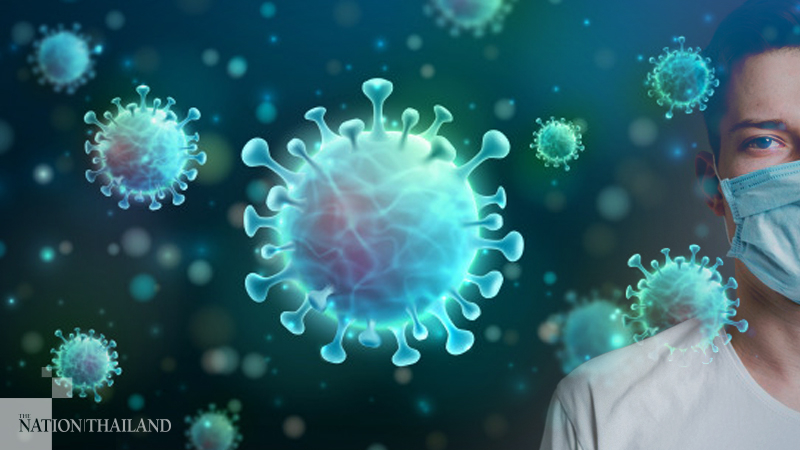
By The Washington Post · Ben Guarino, Chris Mooney · NATIONAL, HEALTH, POLITICS, HEALTH-NEWS WASHINGTON – The Centers for Disease Control and Prevention on Monday removed language from its website that said the novel coronavirus spreads through airborne transmission, the latest example of the agency backtracking from its own guidance.
The agency said the guidance, which went up Friday largely without notice until late Sunday, should not have been posted because it was an early draft.
“Unfortunately an early draft of a revision went up without any technical review,” said Jay Butler, the CDC’s deputy director for infectious diseases. “We are returning to the earlier version and revisiting that process. It was a failure of process at CDC.”
Evidence that the virus floats in the air has mounted for months, with an increasingly loud chorus of aerosol biologists pointing to super-spreading events in choirs, buses, bars and other poorly ventilated spaces. They cheered when the CDC seemed to join them in agreeing that the coronavirus can be airborne.
Experts who reviewed the CDC’s Friday post had said the language change had the power to shift policy and drive a major rethinking on the need to better ventilate indoor air.
Jose-Luis Jimenez, a chemistry professor at the University of Colorado at Boulder who studies how aerosols spread the virus, told The Washington Post before the CDC reversed its guidance that “this is a good thing, if we can reduce transmission because more people understand how it is spreading and know what to do to stop it.”
Although CDC officials said Friday’s post was a mistake, Democratic lawmakers were incredulous. Rep. Raja Krishnamoorthi, D-Ill., tweeted Monday afternoon that he would investigate why the language to airborne transmission had been scrubbed.
The change on Monday was the third time the CDC provided coronavirus guidance or recommendations only to reverse its stance. In the spring, it revised information about contact transmission within days of publishing it. The White House coronavirus task force had directed the agency to change those guidelines in August, stating that asymptomatic people did not need to be tested. Last week the CDC changed its position again, encouraging anyone at risk to get tested.
The agency had posted information Friday stating that the virus can be transmitted over a distance beyond six feet, suggesting that indoor ventilation is key to protecting against a virus that has now killed nearly 200,000 Americans. Whereas the agency previously warned that the virus mostly spreads through large drops encountered at close range, on Friday, it said “small particles, such as those in aerosols,” were important vectors.
“Airborne transmission is plausible and, I would say, possible,” Butler said. But he said data did not suggest that the coronavirus is spread primarily through the air, unlike diseases such as tuberculosis.
Butler said the Friday guidance overstated the agency’s stance on airborne spread. “If I did not know any better, I would think that we were saying that airborne transmission is very important, if not the main mode of transmission,” he said. “That does not reflect our current state of knowledge.”
If airborne spread were the main route, Butler said he would have expected the disease to travel even faster around the globe than it did. “The epidemiology seems pretty clear that the highest risk is in household contexts,” he said, meaning through the proximity of one family member or roommate to another.
Sudden flip-flops on public guidance is antithetical to the CDC’s rules for crisis management. After disastrous communications during the 2001 anthrax attacks – when white powder in envelopes sparked widespread panic – the agency created a 450-page manual outlining how U.S. leaders should talk to the public during crises.
Protecting vulnerable people from a virus that is infecting millions depends on U.S. leaders issuing clear public-health instructions and the public’s trust to follow directions that could save their lives.
It was also the latest disorienting turn in a scientific debate with enormous public consequences for how we return to schools and offices. The debate is over whether the extreme infectiousness and tenacity of the coronavirus is due to its ability to spread well over six feet, especially indoors, in small particles that result from talking, shouting, singing or just breathing.
Many experts outside the agency say the pathogen can waft over considerably longer distances to be inhaled into our respiratory systems, especially if we are indoors and air flow conditions are stagnant.
“Poor ventilation can play a major role in super spreading events when individuals unaware that they are shedding virus, and are highly contagious, spend a long time in a crowded indoor environment where most people are not wearing masks,” said Shelly Miller, a professor of mechanical engineering at the University of Colorado at Boulder who focuses on the quality of indoor air.
“There was a lot of confusion early on because WHO said adamantly that the disease is not airborne. There’s also, somehow, a higher bar of proof required for a disease to be officially considered to transmit through the air,” added Virginia Tech civil and environmental engineering professor Linsey Marr. “That’s due to historical bias, I think, and the fact that you can’t see aerosols.”
Jimenez said a default assumption exists among public health experts that airborne transmission is rare in the world of pathogens. For other diseases, it required decades of research to overcome that assumption, he said, as was the case with measles and tuberculosis, both of which were originally assumed to be passed by large droplets. Experiments with sneezing guinea pigs, conducted by Richard Riley and his colleagues at Johns Hopkins University in the 1950s, ultimately helped persuade the medical field that tuberculosis was airborne.
In July, Marr, Miller, Jimenez and more than 200 of their colleagues sent a letter about airborne coronavirus transmission to the World Health Organization, which responded by acknowledging the “emerging evidence” that the pathogen can spread through the air.
“To the general public, airborne can evoke fear and panic. People think of the movie ‘Contagion,’ which is like ‘Jaws’ but for infectious diseases,” Marr said at a workshop on airborne transmission held in late August sponsored by the National Academies of Sciences. She cited a report by public-health experts in Hong Kong who concluded that a fear of “panic and political blame” caused a reluctance among officials to label the first SARS virus as airborne.
But she emphasized that there are important differences in the environments that might alter how an airborne virus might spread – indoors vs. outdoors, a clinical setting vs. not.
She described a theoretical exhalation of coronavirus akin to the plume of smoke from a cigarette. “Once you get beyond that plume, anything that small enough to stay floating in the air can travel, you know, quite far all the way across the room,” Marr told The Post. “Even if you’re in a room where the air seems still, there’s actually movement of the air that can carry things all the way across the room.”
Unlike ballistic droplets from a cough, which arc like cannonballs launched from a nose or mouth until they splash against a person or drop to the ground, aerosols float on the wind and can be unwillingly inhaled.
– – –
Scientists are trying to understand how some of the biggest virus super-spreading events can be explained by not only the assumption of airborne viral particles but also the conditions of particular indoor spaces, including their ventilation systems and how much they allow for the circulation of fresh air.
In one of the most startling scientific offerings, Bjorn Birnir, a mathematician at the University of California at Santa Barbara, studies three well-documented cases in which the coronavirus spread rapidly and widely in an enclosed or indoor environment – a restaurant in Guangzhou, China; a bus traveling in China’s Zhejiang province; and a call center in Seoul.
Constructing a model of how virus particles from our breath flow through indoor air when ventilation is low, Birnir found that the popular six-foot rule for social distancing can be insufficient in these circumstances. People much farther away from an infected individual can breathe in levels of the virus that might be expected only if they were standing or sitting right next to that person.
In the case of the restaurant, for instance, where one sick person infected nine others. Birnir’s model, which has not yet been published in a peer-reviewed journal, found that thanks to poor ventilation, the virus’s concentration away from the sick person grew so high that within seven minutes, it was as if many others in the space were sitting directly next to that person.
On the bus, a single person infected 24 others over the course of two 50-minute rides, but people sitting near open windows were spared. In the call center, where 97 people were ultimately infected, one individual appears to have infected several others through close contact, and then as the group worked together, the virus spread through the air thanks to the presence of several sick people in a large indoor work area.
“The SARS-CoV-2 Coronavirus attacks in two steps,” Birnir wrote. “The first step is a linear spread between individuals with a couple of days delay. The second step is an exponential spread effected by the air-conditioning system affecting a much larger number of people. Thus in the second step, the ventilation becomes the super-spreader.”
Several experts consulted by The Post offered technical critiques of Birnir’s model, but did not disagree with the main conclusion: Viral particles can build up high concentrations in spaces where the air is not adequately changed.
“It makes sense the concentration of droplets increases over time and if they are not removed by the HVAC system, they stay in the space and increase the probability of infection,” said building engineer Raj Setty, the principal of Setty Associates and a member of the Epidemic Task Force at ASHRAE, an international society focused on building standards.
The model “highlights the need that if you are in an enclosed space – a range of different types of spaces, from a building to a public transit or vehicle – that there’s an importance for outdoor air in moving out that contaminated air stream,” said Krystal Pollitt, an environmental health sciences expert at Yale University, who was not involved with this research.
Much remains unknown. It’s not clear precisely what the infectious dose of the coronavirus is – and it probably varies for different individuals. It is clear that the duration of time that one spends in an infectious space matters, but no one can give precise guidelines on how long is too long. Nor is it entirely clear to what extent there are real “super-spreading” individuals who, for some reason, carry extremely high viral loads that they expel into the air – something Birnir says he doubts – as opposed to particularly stuffy indoor spaces, which allow the virus to accumulate.
What’s clear from such cases is that while the virus surely spreads slowly in households among family members, it also spreads rapidly in indoor events that bring lots of people together.
Perhaps most telling of all is the infamous March choir practice in Skagit Valley, Wash., where 53 out of 61 attendees are suspected to have been infected by a single sick individual over roughly 2 1/2 hours of practice. The participants did not interact much socially, except to sing – making this a difficult-to-dispute case of airborne transmission over large distances in a space where the air was not changing often enough to clear out the virus, and where someone was propelling the virus over extra long distances due to the exertion of singing.
The Skagit choir case is “the most damning” of the superspreading events he’s examined, Jimenez said. He and his colleagues, in a study in review and submitted for publication to the journal Indoor Air, modeled the likely spread of the virus through the church hall based on the behavior of the one choir member who infected dozens of others.
That person, the “index case,” arrived just as the rehearsal began and did not mingle. Because the singers remained in fixed positions in the hall, “there were no opportunities for large droplets to travel from person to person,” Jimenez said. “It becomes extremely implausible it was anything but aerosol transmission.”
In the meantime, many experts are racing ahead with plans to make indoor spaces safer by improving their ventilation.
Pollitt and Sten Vermund, the dean of the Yale school of public health, are working with public and private schools in Connecticut to prevent the spread of coronavirus. Pollitt and her colleagues created a flowchart to guide schools, which, she said, could apply to offices and other public spaces.
Recommendations include: disable sensor-based ventilation to ensure the air in a room is constantly flushed. Reverse the blades of ceiling fans to draw air up and away from the plumes. And open windows.
But industrial hygiene only works if human behavior rises to meet it. “If you’re not having individuals wearing masks, physical distancing, having good hand hygiene, then you can’t engineer yourself out of a bad situation,” Pollitt said.
By The Washington Post · Carolyn Y. Johnson · NATIONAL, HEALTH, SCIENCE-ENVIRONMENT, HEALTH-NEWS WASHINGTON – President Donald Trump stood before a televised audience Wednesday and proclaimed that “results are very good” for vaccines targeting the novel coronavirus. A day later, Moderna and Pfizer, two front-runner drug companies developing a shot, released the full rule books for their studies, revealing that no one yet knows conclusively whether a vaccine is safe and effective – not even company executives.
Trump’s imprecise, extemporaneous comments about vaccines have frequently clashed with messages from government officials, outside scientists and companies. That discord has intensified concerns that political pressure will force a vaccine to be prematurely approved but also has sown public confusion as important public health messages have become entangled with politicians’ appeals to voters and companies’ communications to shareholders.
“We need trust as much as we need efficacy,” said Andrew Pavia, an infectious-diseases specialist at the University of Utah School of Medicine. “We can’t afford to do anything that reduces the trust. It’s not just the trust of the public. Experts in the field have to see enough of the data to feel comfortable to recommend it.”
Leaders of Moderna and Pfizer cited the need for greater transparency than usual in covid-19 clinical trials as the reason behind their decision to release the full documents describing how their studies will measure safety and effectiveness.
The documents confirm that study participants, physicians running the trials and the companies are “blinded,” unable to tell who received a real vaccine and who received a placebo.
Moderna’s trial contains preprogrammed milestones – when there are 53, 106 and 151 cases of covid-19, the illness caused by the coronavirus, among all participants – that allow an independent committee to analyze data to assess if there’s a signal of effectiveness. A key metric in vaccine studies involves examining who falls ill during the course of a trial and whether that person received a shot of protection or a placebo. It’s only then that anyone will know how well the vaccine is protecting people from becoming sick.
After reviewing the infection findings, the data committee will then make recommendations to an oversight group on whether to continue the trial. According to Moderna’s document, the first analysis is projected to be completed by the end of the year, but the timeline will vary depending on how many people get sick while participating in the trial.
“I have seen no data since the Phase 3 [trial] started,” Moderna chief executive Stéphane Bancel said in an interview. He predicted the company may have enough cases to detect whether the vaccine is effective in November, and it is possible but unlikely there could be a signal in October. Bancel predicted it would take a week or two to analyze and clean up data and submit it to regulators.
“We really have to wait for the data,” Bancel said. “We need to wait for the science to cook in the oven.”
Trump predicted Wednesday a vaccine would probably be available by mid-October, an apparent reference to the Pfizer vaccine.
Pfizer chief executive Albert Bourla said he expects there will be enough data for a “conclusive result by the end of October” during an event reviewing the company’s research portfolio, although he told CNBC he did not expect the data to come before a scheduled Oct. 22 meeting of a vaccine advisory committee for the Food and Drug Administration.
But experts have said they believe at that time, the most advanced trials in the United States will be administering the second booster shot needed to trigger immunity to the last participants – or waiting for participants’ immune systems to muster a response before they can begin to count cases.
“Mid-October – that all defies the math of the enrollment, the follow-up, the second booster shots. It doesn’t even compute, if it’s done right,” said Eric Topol, a cardiologist at Scripps Research Translational Institute.
Pfizer spokeswoman Amy Rose said the company traditionally does not share the full protocol of its trials until results are published but is doing so now in recognition that “the covid-19 pandemic is a unique circumstance and the need for transparency is clear.”
Pfizer’s trial protocol shows that interim analyses of data are planned at regular intervals, when there are 32, 62, 92, 120 and 164 cases of covid-19 among study participants.
Late-stage testing of an experimental vaccine from AstraZeneca is paused in the United States after a possible adverse event in a British trial, even as other countries have restarted their trials. Physicians have been calling for transparency about that event to shore up public trust in the vaccine.
Trump’s comments have often made it appear that people already know the vaccine works and getting it approved is a formality that could occur at any time.
But as the documents provided by both companies show, the reasons for stopping a trial early have been carefully delineated. The data analyses by independent committees allow those panels to recommend whether to stop the trial early – because the vaccine is so effective it would be unethical to continue or because it is clearly not working or it is harmful.
The possibility that the vaccine trials will be stopped early has been endlessly examined by politicians and the media, but experts said it is important to remember that stopping a trial early is a rare outcome, not the norm.
David DeMets, a University of Wisconsin at Madison biostatistics expert who has served on data safety and monitoring committees for nearly half a century, said the overwhelming majority of trials are not stopped.
“If we stop too soon, we won’t have as reliable an answer as we set out for,” DeMets said. “If you stop early, not because the data are mature enough but because of other pressures, then you might not have the same confidence in the answer you want to know or needed.”
While the criteria for stopping a trial are heavily dependent on statistics, that should not be the only factor, Topol said.
“If you stop a trial early, it’s not just a statistical assertion; it’s saying it’s unethical to proceed because of overwhelming efficacy,” Topol said. “You sure want to know it works, and you could say it’s unethical not to proceed, to get more compelling and complete data.”
Approving or authorizing any vaccine on incomplete data would spark a cascade of follow-on questions, including whether the people in the placebo arm of the trial should be given the vaccine right away and how future vaccine trials should be structured. Most experts say multiple vaccines will be needed to end the pandemic, but it might become harder to recruit volunteers, or even unethical, to test a vaccine against a placebo if another has been deemed safe and effective by regulators.
Trump indicated the vaccine would be available to the general public right away after it is authorized. His coronavirus adviser, Scott Atlas, said high priority groups would probably be vaccinated by January.
Prioritizing the people who need the first doses of the vaccine is a huge part of the planning process, and those guidelines have not even been finalized. Discussions have focused on prioritizing doses for those at greatest risk for infection, including front-line health-care workers and older people with conditions that increase their risk for serious illness.
Peter Hotez, dean of the National School of Tropical Medicine at Baylor College of Medicine, said the only way to convince the public of the safety and effectiveness of vaccines that utilize new technologies and are likely to get a form of authorization that is short of full approval is through clear and open communication.
“The world is littered with very good vaccines that never get used due to public perception. It could easily happen here,” Hotez said. “We still don’t know if these vaccines are going to work, we have no evidence they’re going to work [yet]. . . . The only way you’ll be able to sell this to the scientific community is through complete transparency.”

 นายแพทย์มนูญ ลีเชวงวงศ์ โพสต์แนะนำให้ผู้ที่เยี่ยมหรือเฝ้าไข้ “โรเบิร์ต สายควัน” ตรวจหาวัณโรคปอด เผยโรคนี้สามารถแพร่เชื้อได้ง่ายและไม่จำเป็นต้องอยู่ใกล้ชิดกับผู้ป่วย

 Photos by Tanachai Pramarnpanich
  The swimsuit competition was held under the concept of “Real You, Real Universe”, in which the contestants did not just have to show off their physical beauty but also their persona, attitude and talent.
 The swimsuits were provided by BSC and came from its “Uniquely You” line, which was inspired by traditional Thai textiles.
 The preliminary round to select semi-finalists will be held on October 7 and the final on October 10.


 Photos By Tanachai Pramarnpanich
 The beauties posed for a photoshoot with vintage Rolls Royce and Mercedes Benz cars, and attractions like the iconic Hua Hin Railway Station.

 President Trump
  การล้างหน้าที่ถูกวิธีเป็นจุดเริ่มต้นของการมีผิวสุขภาพดี แล้วมั่นใจแค่ไหนว่าที่เราล้างหน้าอยู่ทุกวันทำถูกต้องแล้ว 100%
 แพทย์เตือน “ไข้สูง ไอ หนาวสั่น เจ็บหน้าอก หายใจลำบาก” รีบพบแพทย์ เสี่ยงติดเชื้อนิวโมคอคคัส สาเหตุโรคปอดบวมและโรคติดเชื้อในกระแสเลือด พร้อมแนะเสริมสร้างภูมิคุ้มกันให้ห่างไกลโรค

 สังเกตุตนเองให้ดี คุณเสี่ยงเป็นโรคพยาธิหรือเปล่า?


