By Syndication Washington Post, Bloomberg · Nancy Cook
President Joe Biden’s economic team at the White House is determined to make good on his campaign pledge to raise taxes on the rich, emboldened by mounting data showing how well America’s wealthy did financially during the pandemic.
With Republican and business-lobby opposition to the administration’s tax plans stiffening, Democrats need to decide how ambitious to be in trying to revamp the tax code in what’s almost-certain to be a go-it-alone bill. Interviews with senior officials show there’s rising confidence at the White House that evidence of widening inequality will translate into broad popular support for a tax-the-wealthy strategy.
Biden himself has become convinced of the need, saying last week that those earning over $400,000 can expect to pay more in tax.
“2020 really did show him that there were so many of the fragilities across society” that need addressing, Heather Boushey, a member of the White House Council of Economic Advisers, said in an interview. Funding spending priorities given a shortfall in revenues from the 2017 Republican tax cuts “has really demanded the president sit down and think about both the enormous needs, and these questions we’re talking about as to how we tax,” she said.
Behind the scenes, aides have been working on a proposal to pay for some of the longer-term Biden agenda. Boosting income and capital-gains tax rates on top earners, along with levies on companies and an expansion of the estate tax, would help fund priorities such as infrastructure, climate change, and assistance for child care and home health care.
Lawmakers and the administration are stepping up discussions about what measures could pass later in the year. The Senate Finance Committee on Thursday will hold a hearing on the impact on employment and investment of the current U.S. international tax structure.
– – –
Senior members of the administration, including David Kamin, deputy director of the National Economic Council, and Lily Batchelder, who’s been tapped to become assistant Treasury secretary for tax policy, have been working for years on options to raise revenue from the best-off Americans.
Kamin, who with Batchelder mapped out potential reforms in a 2019 paper called “Taxing the Rich: Issues and Options,” signaled in an interview that the following options are among those under discussion:
– Removing “step up in basis” for estates, which revalues assets such as stocks and real estate at market prices, rather than their original purchase cost — reducing tax liabilities
– Taxing capital gains for wealthy Americans at income-tax rates, which are higher
– A minimum tax for large companies
“The idea of finally eliminating what is a massive loophole, in that the highest income Americans escape tax on their wealth by addressing step up in basis and then taxing capital gains as ordinary income, is a major reform of our system, which I think is needed,” Kamin said.
“These would be major accomplishments, which would pretty fundamentally shift how our tax system treats the richest Americans and the largest corporations so they can’t escape tax in the ways they now can,” he said.
The administration is also looking at rolling back a portion of former President Donald Trump’s income-tax cuts, aides say.
“Anybody making more than $400,000 will see a small-to-a-significant tax increase,” Biden said in an interview with ABC earlier this month. For those under that level, there won’t be “one single penny in additional federal tax,” he said.
Major aspects of the plan have yet to be detailed, including the specifics of the threshold for higher taxes. The White House clarified last week that the $400,000 figure applies to families, but Deputy Press Secretary Karine Jean-Pierre suggested Friday that the level at which tax hikes would kick in for individuals isn’t yet set.
“It’s a little early — we’re still working out through the process,” Jean-Pierre said.
The so-called K-shaped recovery, in which wealthier Americans thrived even as low-income and many middle-class workers suffered from job losses, evictions, food insecurity and health risks associated with working in-person jobs during covid-19, has reinforced the administration’s intentions.
The richest 1% of U.S. households added more than $4 trillion in wealth last year as stocks hit record highs and property values swelled, fueled in part by record-low interest rates. The bottom 50% saw their net worth gain by a much-smaller $470 billion — and that was bolstered by the extraordinary income support provided in the March 2020 Cares Act.
A new paper from the left-leaning Economic Policy Institute showed that 80% of job losses in 2020 were concentrated among the lowest 25% of wage earners, while the workers in the top half of the distribution saw gains in employment.
“It is always true that recessions hit low- and middle-income people harder, but I have never seen anything like this,” said Heidi Shierholz, the institute’s policy director and a former chief Labor Department economist.
Republicans warn that higher taxes will hold back the recovery. The U.S. Chamber of Commerce says boosting levies on companies will “make the United States a less attractive place to invest profits and locate corporate headquarters.”
– – –
“Whatever the new normal is we return to after covid-19, I think it is important for the government to stay as far out of the way as possible to allow the economy to find its footing,” said Chris Campbell, a former Senate Republican aide who served in the Treasury during the Trump administration.
Senate Minority Leader Mitch McConnell said last week there wouldn’t be bipartisan support for higher taxes, and predicted Democrats will use the reconciliation process — which allows bills to pass the Senate with a simple majority — for their proposals.
Biden’s current determination marks a shift in a decades-long political career with few episodes of pushing for higher taxes. On the presidential campaign trail he drew a distinction with liberal competitors’ plans for a wealth tax, and as vice president he cut a deal with Republicans in late 2012 to make permanent 82% of the tax cuts originally passed by President George W. Bush.
But liberals are fully behind his efforts now.
“We have seen him propose, fight for, sign, and sell one of the most progressive pieces of legislation in three generations,” said Senator Elizabeth Warren in an interview, referring to the pandemic-relief plan. “There is momentum now for real change, and tax policy is a critical part of that change.”
U.S., E.U., Canada, Britain announce sanctions on China over abuse of Uyghurs
InternationalMar 23. 2021Secretary of State Antony Blinken
By The Washington Post · Emily Rauhala
The United States, the European Union, Britain and Canada each announced sanctions against China over human rights abuses in Xinjiang, a coordinated effort aimed at holding Beijing accountable for a years-long campaign against Uyghurs and other minority groups in the northwestern Chinese region.
The diplomatic push, announced Monday, comes after a tense meeting between U.S. and Chinese officials and amid growing calls for democracies to work together to take on an increasingly authoritarian and assertive Beijing.
The European Union was first to move, saying early Monday that it would punish four Chinese officials and the Xinjiang public security bureau with travel bans and freeze their assets – its most significant measures since an arms embargo after the 1989 killings in Tiananmen Square.
China quickly responded, leveling similar measures against a long list of its European critics.
Not long after, the United States, Canada and Britain jumped in. Secretary of State Antony Blinken announced midday that the United States will add two names to its existing Xinjiang sanctions list.
Britain committed for the first time to freeze assets and ban travel for the same Chinese officials as the European Union did, as well as a Xinjiang security body. Canada said it would sanction the same officials and security body as Britain did.
The U.S., British and Canadian statements stressed that the moves were the result of close cooperation. “We stand united with the UK, Canada, and the EU in promoting accountability for those who abuse human rights,” Blinken wrote in a tweet.
Although the sanctions are largely symbolic, they are sure to complicate ties between China and the rest of the world.
Under President Donald Trump, the United States vowed to take a strong stance on China, but for the most part it did so alone. The Biden administration has stressed the importance of rallying allies to the cause, saying the scale of the challenge requires collective action. Monday’s moves appear to be a step in that direction.
The E.U. sanctions focus on four senior Chinese officials involved in designing and implementing policy in Xinjiang, as well as the region’s much-feared public security bureau.
The British list targets the same senior officials but names a different security entity.
Neither the European Union list nor the British one includes the Chinese Communist Party’s top official in the region, Chen Quanguo, who was named in more-robust U.S. sanctions last year.
Despite extensive reporting, satellite imagery and witness testimony, Beijing denies human rights abuses in Xinjiang, claiming that Uyghurs and other Turkic Muslims are thriving there.
The countermeasures it issued Monday took aim at outspoken members of the European Parliament; Dutch, Belgian and Lithuanian officials; a prominent German think tank focused on China; a Danish foundation; and two European scholars known for their work regarding the Xinjiang region.
The sanctions block those on the list and their families from traveling to the People’s Republic of China, Hong Kong or Macao, or from doing business with China, according to a news release from the Ministry of Foreign Affairs.
The news release condemns the officials for “lies” about the “so-called human rights issues in Xinjiang.”
Raphaël Glucksmann, a French member of the European Parliament who has spoken out on Xinjiang, tweeted Monday that he considered the sanction a “badge of honor.”
In recent months, Europe has been accused of standing idle while the United States took the lead on issues such as Xinjiang.
Late last year, the European Union and China reached an agreement in principle on a much-delayed investment pact, a move seen as a diplomatic victory for Beijing and a snub to the incoming Biden administration.
Critics of that deal asked why Europe was knitting itself closer to an increasingly authoritarian China rather than tackling issues the European Union says it cares about, including forced labor. The fate of that deal remains uncertain.
In the run-up to Monday’s announcement, China’s Communist Party-controlled media warned that there will be “no escape” for “some EU institutions and poorly behaving individuals” if the bloc pressed ahead.
Vaccine battle heats up with EU ready to halt U.K. shipments
InternationalMar 23. 2021A health worker administers the Moderna Covid-19 vaccine to a visitor at a vaccination center in Rome on March 17, 2021. MUST CREDIT: Bloomberg photo by Alessia Pierdomenico.
By Syndication Washington Post, Bloomberg · Nikos Chrysoloras, Suzi Ring, Joe Mayes
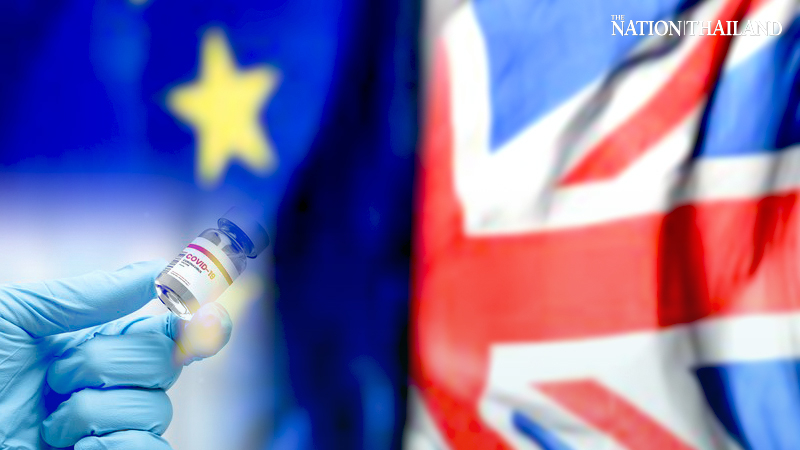
The European Union is ready to start withholding Covid-19 shots from the U.K., risking a sharp deterioration in relations with London in a bid to turn around its lackluster vaccination campaign.
The EU will likely reject authorizations to export AstraZeneca’s coronavirus vaccines and their ingredients to the U.K. until the drugmaker fulfills its delivery obligations to the 27-nation bloc, according to a senior EU official.
The conflict between the EU and the U.K. has been growing since Astra informed Brussels it wouldn’t deliver the number of shots it had promised for the first quarter. Both sides have blamed each other for export curbs and nationalism, posing a risk to the fragile post-Brexit trade relationship agreed on in December. Astra has been at the center of the EU’s vaccination problems since production issues emerged in January. Most recently, its shot was temporarily suspended in much of Europe over blood-clot fears.
While the EU drug regulator backed the vaccine last week, and U.S. trial results published Monday said there were no safety concerns, public trust in the shot has plummeted in Europe. The majority of people in Germany, France, Italy and Spain now see the vaccine as unsafe, a survey by YouGov published by The Telegraph on Monday shows.
The EU, which has pledged to immunize 70% of adults by the end of September, is struggling to overcome a slow start to its inoculation campaign. The bloc has administered 12 doses per 100 people, less than a third of what the U.K. has managed, according to Bloomberg’s Coronavirus Vaccine Tracker. The U.K. vaccinated more than 1.5 million people on Friday and Saturday, setting daily records on successive days.
The European Commission said last week that it would restrict exports of vaccines to countries that don’t reciprocate or that already have high vaccination rates. The U.K. is the largest recipient of doses made in the EU, receiving 10 million of 42 million shots from the bloc so far.
U.K. Prime Minister Boris Johnson and Commission President Ursula von der Leyen spoke last week and a new round of high-level diplomacy is expected among leaders ahead of a summit in Brussels.
“Vaccine nationalism, this kind of breathless speculation about limiting supply doesn’t do anybody any good,” Helen Whately, a junior U.K. health minister, told Sky News on Monday. Von der Leyen “made a commitment to the prime minister that the EU wouldn’t block companies from fulfilling their contractual obligations to supply vaccinations,” she said, urging the EU to “actively stand by that commitment.”
According to the EU official, the bloc has contracts with Astra that aren’t being respected, and any vaccines and their ingredients produced in European factories will be reserved for local deliveries. The official asked not to be named because the decisions are under consideration and haven’t been made public.
EU leaders meeting this week will discuss the plan. Countries including Italy and France said they were open to exploring the export ban while others, such as Ireland, Belgium and the Netherlands, urged caution and warned about the impact on European companies, according to a diplomatic note seen by Bloomberg.
AstraZeneca — one of four approved in the bloc — is now expected to deliver 30 million shots to the EU by the end of this month, less than half of what it initially committed to.
Johnson has called EU leaders about the dispute in recent days, including Dutch premier Mark Rutte and Belgium’s Alexander De Croo, and is prepared for more conversations before this week’s summit, a person familiar with the matter said.
Pfizer warned that the free movement of supplies between the U.K. and the EU is critical to the production of its vaccine. Manufacturing of lipids — the fatty substance used to deliver the genetic material at the heart of the vaccine Pfizer makes with its German partner BioNTech — takes place at a secret location in the U.K. before shipping to the EU where the shots are completed.
The EU official added that there are no outstanding requests for U.K. exports from Astra’s production facility in the Netherlands, but should such a request be made, it will likely be rejected. A production plant in the Netherlands and one in Belgium produce ingredients for the Astra shot.
“The Netherlands in principle allows exports to continue until told otherwise by the European Commission,” the Dutch government said Sunday. “It is of paramount importance that Brussels, London and AstraZeneca reach a deal promptly on the vaccines produced by the company in facilities falling under both contracts.”
The EU isn’t alone in having supply issues. The U.K. is facing a “significant” four-week cut to the supply of Covid-19 vaccines from late March. A delayed shipment of the Astra vaccine from India and a batch requiring re-testing are behind the disruption.
U.K. Defense Secretary Ben Wallace told Sky News on Sunday that the EU should allow Astra to keep supplying Britain and warned the bloc would pay a heavy price if it tried to interfere with those shipments.
“The commission knows deep down that this would be counterproductive,” he said. “They’re under tremendous political pressure at the European Commission. It would damage the EU’s relations globally.” A spokesperson for Johnson’s office declined to comment and referred back to Wallace’s remarks.
By Syndication Washington Post, Bloomberg · Jason Gale, Corinne Gretler
Scientists tracing the origins of the covid-19 pandemic believe they’ve identified a possible transmission source: China’s thriving wildlife trade.
The highly anticipated findings from experts convened by the World Health Organization and the Chinese government are expected to show parallels to the 2002 spawning of severe acute respiratory syndrome, or SARS, a bat-borne coronavirus spread by civets that killed 800 people. The path trod by SARS-CoV-2, as the new coronavirus is known, before it emerged in December 2019 in central China remains a mystery, though it’s one researchers say can be solved.
In Wuhan, where the first cluster of cases occurred, scientists involved in the hunt identified four hypotheses to explain the virus’s genesis, including two that stoked controversy even as they were deemed unlikely. The idea that the virus was introduced via contaminated food or packaging is one embraced in Beijing, while the Trump administration said it may have been the result of a laboratory accident. But the most plausible theory, say experts involved in the mission, concerns China’s wildlife trade for food, furs and traditional medicine, a business worth about $80 billion (520 billion yuan) in 2016.
Live animals susceptible to coronavirus infection were present at the Huanan food market in downtown Wuhan, the city where the first major covid-19 outbreak was detected. It’s possible they acted as conduits for the virus, carrying it from bats — likely the primary source — to humans, says Peter Daszak, a zoologist who was part of the joint research effort, which saw international experts visit Wuhan earlier this year after months of stonewalling by the Chinese government.
“The main conclusion from this stage of the work — and it’s not over yet of course — is that the exact same pathway by which SARS emerged was alive and well for the emergence of covid,” said Daszak, who is also president of EcoHealth Alliance, a New York-based nonprofit that works to prevent viral outbreaks around the world.
The scientists’ report, slated for release this week after delays due to political wrangling, is likely to be far from conclusive. More studies are planned, including outside China, with deciphering covid-19’s creation story vital to understanding how best to thwart its resurgence, and to help avert similar catastrophes in the future.
China is Making It Harder to Solve the Mystery of Where covid Began
While the hunt for the virus’s origin has become political football for the world’s superpowers, Daszak says he thinks the scientific process will prevail. Significant data on where SARS-CoV-2 came from and how it emerged will be uncovered over the next few years, he said during a March 10 webinar organized by Chatham House.
Farmed and wild-caught civets, a small, nocturnal mammal consumed in China, were blamed for spreading the SARS virus in a market in the southern province of Guangdong in 2003. Scientists later found the infection originated in horseshoe bats, a natural reservoir of coronaviruses.
The two species likely collided in markets where live animals are caged in crowded conditions, potentially allowing the bat-borne virus to adapt and amplify before it spilled over to humans, initially among workers and those handling the animals.
Scientists working on the origin hunt say a similar scenario may have played out with covid-19. A study of the first 99 patients treated at an infectious diseases hospital in Wuhan found half were linked to the Huanan seafood market, which also reportedly sold live animals, some illegally captured in the wild and slaughtered in front of customers.
It’s possible the virus was introduced through an infected animal that was sold at the Huanan market or somewhere else in Wuhan, said Dominic Dwyer, a microbiologist in Sydney who was part of the WHO-convened team that traveled to the Chinese city in February.
Still, questions remain about the market’s ultimate role.
Testing after it was shut down in December 2019 failed to turn up any infected animals. Contaminated surfaces were widespread, compatible with the virus being introduced via infected people or tainted animal products. Compounding the confusion, the first known covid-19 patient developed symptoms four days before the earliest cases tied to the market.
An analysis of SARS-CoV-2 samples collected in mid-December found subtle genetic differences between them. The variation indicates the virus may have circulated surreptitiously for weeks in the community before doctors were alerted to it via a handful of severely ill patients with a mysterious viral pneumonia.
The original spillover of the coronavirus to a human was probably followed by rapid adaptation of the virus, said Joel Wertheim, an associate professor of medicine at the University of California, San Diego. It’s possible the virus was transmitted multiple times and went extinct when infected individuals didn’t transmit the virus to anyone, Wertheim and colleagues said in a paper published March 18 in the journal Science. Eventually, the virus infected someone who passed it to several people, who also passed it on to others, possibly in a super-spreading event.
The Huanan market may have been where that occurred, Wertheim said in an interview. “The market may have been key to the virus ensconcing itself in humans.”
Current evidence suggests the market is where SARS-CoV-2 was amplified, and not necessarily its birthplace, Dwyer said.
“When you visit the market, you realize that it’s a perfect place for an outbreak to occur because it’s crowded, lots of stalls, lots of animal products, and ventilation and drainage are a bit suboptimal,” he said in an interview. “It’s not surprising we had an explosion through there.”
The WHO research team found evidence that wildlife farms in southern China were supplying vendors at the Huanan market, Daszak told National Public Radio. It also found a route from southern provinces such as Yunnan — where the closest known coronavirus to SARS-CoV-2 was found in horseshoe bats in 2013 — to Wuhan, he said on the Chatham House webinar.
“It provides a link and a pathway by which a virus could convincingly spill over from wildlife into either people or animals farmed in the region, and then shipped into a market by some means,” Daszak said. “That’s a really important clue. Those beginnings of an understanding of a pathway need to be followed up pretty rapidly.”
For decades, the government of China promoted the farming of wildlife to bolster rural incomes. The practice provided an especially valuable alternative source of meat after African swine fever emerged in 2018. The deadly outbreak resulted in an unprecedented shortage of pork, researchers at the South China Agricultural University and University of Glasgow said in a study that was released in February without a formal peer-review. China typically consumes half the world’s pig meat.
While the pork shortage bolstered wildlife consumption, eating birds, snakes, bamboo rats, squirrels, porcupines and other nondomesticated animals was already popular, especially in southern provinces, the researchers said.
They cited a 2004 survey by the China Wildlife Conservation Association that found 46% of urban residents had consumed wildlife and 2.7% were regular consumers. A January 2017 survey found 52% of markets they investigated were trading wildlife, while 40% of restaurants were providing wild animal dishes.
Much of the trade supposedly ended just over a year ago. After President Xi Jinping warned that the consumption of wildlife posed an immense risk to public health, the Standing Committee of the National People’s Congress decided on Feb. 24, 2020, to expand the scope of China’s Wildlife Protection Law to ban the consumption of almost all wild animals.
Amid international criticism of its handling of the early days of the pandemic, China’s official rhetoric is focused on creating doubt that the pathogen originated within its borders. But China targeted the wildlife trade a year ago for a reason, Daszak told NPR.
“The reason was, back in February 2020, they believed this was the most likely pathway” for the coronavirus to reach Wuhan, he said. “And when the WHO report comes out…we believe it’s the most likely pathway too.”
Germany mulls extending curbs into April as virus worsens
InternationalMar 22. 2021Visitors line up for free covid-19 tests at a ‘Test-To-Go-Station’ in Berlin, on March 8. MUST CREDIT: Bloomberg photo by Liesa Johannssen-Koppitz
By Syndication Washington Post, Bloomberg · Mariajose Vera
Germany is considering an extension of lockdown restrictions into April and the introduction of new rules for those returning from abroad after covid-19 infections rose beyond a key level that may prompt action by authorities to prevent the health system becoming overrun.
Draft plans, seen by Bloomberg, include mandatory quarantine and coronavirus tests for all people returning from a trip to another country, independently of infection rates at their travel destination. They will be discussed by Chancellor Angela Merkel and regional leaders when they meet on Monday.
The national seven-day rate of cases per 100,000 people has risen to 103.9, German health agency Robert Koch Institute said on its website Sunday, taking the rate to the highest since Jan. 26. Separate data from Johns Hopkins University showed cases in the country increased by 24,034 in the 24 hours to Sunday, compared with 10,568 recorded a week earlier.
Cases in Germany are rising again after authorities began to relax restrictions in late February and set out a plan to gradually unwind curbs. That plan depends on the infection trend, heightening the stakes for Monday’s talks.
Germany uses the incidence rate as a gauge of covid-19’s spread. If it exceeds 100 for three days in a row, an “emergency brake” provision allows authorities to tighten lockdown measures again. That threshold had been crossed in 9 out of 16 federal states as of Sunday, prompting some state leaders to call for uniform nationwide measures for virus hotspots.
“We have an instrument that works: the emergency brake. It must be applied consistently everywhere in Germany,” Bavarian Prime Minister Markus Soeder told the Frankfurter Allgemeine Sonntagszeitung in an interview. “Otherwise it will become a toothless tiger.”
Regional leaders expressed diverging views on what to do ahead of the upcoming Easter holiday when asked by the Welt am Sonntag newspaper. Reiner Haseloff, prime minister of Saxony-Anhalt (incidence rate: 115.1), said people should be able to vacation within the confines of their own region. But Bodo Ramelow, president of Thuringia (incidence rate: 207.7), pleaded with the population not to go on vacation at all.
“Whoever believes that you can open up entire holidaying regions without testing in the current phase of the pandemic doesn’t know what’s going on,” Ramelow told the newspaper.
Merkel’s Christian Democratic Union suffered a rout in two regional elections this month. The stuttering pace of the vaccine rollout, irritation with lockdown restrictions in place since late last year and a widening scandal over claims that some conservative lawmakers profited from the pandemic have all taken a toll on her popularity.
Still, Merkel was clear last Friday about the threat to the system posed by the virus resurgence. “We are seeing exponential growth” in cases, Merkel said Friday. “We will unfortunately have to make use of the emergency brake.”
On Sunday, Merkel’s chief of staff Helge Braun tweeted that the draft paper circulating didn’t stem from the chancellery, as first reported by Bild newspaper.
The resolution calls for companies in Germany to offer their employees two rapid covid-19 tests per week and states that the federal government will “enact the relevant regulations by the end of March.”
By Syndication Washington Post, Bloomberg · Nick Wadhams
U.S. and Chinese officials traded acrimony and accusations over two days of talks in Anchorage, Alaska, that both sides hope will clear the air. Now the real work begins.
While the Americans portrayed the talks as a good chance to exchange views, they left Alaska without any clear path forward on issues from tariffs and human rights in Xinjiang and Hong Kong to cyber attacks and the long roster of Chinese companies at risk of being delisted from U.S. exchanges.
That will be a disappointment to officials and businesses on both sides that had hoped for some solid indication that the world’s two largest economies were ready to ease off their confrontation, such as by planning a virtual summit on climate change between Presidents Joe Biden and Xi Jinping. In the end, they didn’t even come away with that.
“We were clear-eyed coming in, we’re clear-eyed coming out and we will go back to Washington to take stock of where we are,” National Security Advisor Jake Sullivan said after emerging with Secretary of State Antony Blinken from the meetings in an Anchorage hotel. They refused to take questions from reporters.
Yang Jiechi, a member of the Communist Party’s Politburo, told Chinese reporters that the talks were “candid, constructive and helpful” but added that “there are still some important differences between the two sides.”
“China is going to safeguard our national sovereignty, security and our interests,” Yang said. If there was any hope to be had, it was that his remarks were far less hostile than his blistering 20-minute monologue at the start of the talks.
The lack of any visible progress underscored just how bad relations have become between the U.S. and China in the time since former President Donald Trump shifted from intermittent praise of Xi to a far more confrontational approach to the country, and how little appetite — or ability — there appears to be on either side to improve relations.
China’s Xinhua news agency reported Saturday that the two sides would establish a joint working group on climate change, and would hold talks on facilitating activities of each other’s diplomats as well as issues relating to journalists. By contrast, the U.S. made no public mention of agreements after the talks.
Lawmakers on both sides of the aisle in the U.S. have pressed Biden to maintain Trump’s tough tone on China, and his team has largely done so.
In China, the government has executed a hard turn toward greater authoritarianism, eroding democratic freedoms in Hong Kong and cracking down on ethnic Muslims in Xinjiang in a campaign that the U.S. has labeled genocide.
That designation especially rankles the Chinese. Calling it “the biggest lie of the century,” the Chinese delegation to the talks protested “the presumption of guilt by those who are biased and condescending,” Xinhua reported after the talks broke up.
The meetings in Anchorage may have been “useful to see if there’s anything else people want to say behind closed doors that they’re not going to say publicly,” Bonnie Glaser, a senior adviser on Asia at the Center for Strategic & International Studies in Washington. She warned, though, that relations may only get worse.
“We’re going to have more bills come out of Congress, not fewer, we’ll have more people screaming about how the U.S. has to stand up to China,” Glaser said.
Richard Haass, president of the New York-based Council of Foreign Relations, said “deft handling” is needed in relations with Beijing. “Anchorage is not a good start,” he said Sunday on CNN’s “Fareed Zakaria GPS.”
“There’s way too much public signaling — they ought to have private dialogues,” Haass said. “By talking in public it forces both sides to take out absolute postures because they are playing to the local crowd.”
In the meantime, the Biden administration’s China policy is work in progress. Officials are still reviewing how hard to push back against Chinese technology firms such as Huawei Technologies Co. and how much can be done to stall China’s ability to develop and export the latest-generation microchips.
They haven’t said what they’ll do about the many Chinese companies that could be delisted from U.S. exchanges, or whether they’ll lift tariffs on billions of dollars in Chinese goods. And China has shown no sign of backing down from its far bolder approach.
“An optimistic read is that Yang’s public performance was entirely for a domestic audience, and behind closed doors it will still be possible to make progress,” Tom Orlik, chief economist for Bloomberg Economics, wrote in a note. “A more straightforward interpretation is that China is now so confident in its ascendancy that it sees no benefit to working cooperatively except on its own terms.”
The U.S. had sought the talks and arranged to hold them in Alaska, where Blinken stopped to refuel after visits to key U.S. allies Japan and South Korea. That was intended to send a signal: The Biden administration would talk to China only on its terms and after checking in with key partners.
But whatever position of strength the U.S. had seemed to dissolve within minutes, as Yang delivered the monologue in what were supposed to be perfunctory open remarks. Responding to a shorter presentation of complaints from Blinken, Yang accused the U.S. of hypocrisy, called its democracy flawed and tainted by racism and said it was the “champion” of cyber attacks.
Within the administration, there was debate about whether the opening session — and even the decision to have talks — was a miscalculation. According to some officials, relations are so sour that Blinken and Sullivan should have expected, and sought to avoid, the show of vitriol.
But others argued that China often amplifies its rhetoric before making concessions, and it was important to allow that before getting down to business. Two people familiar with the matter said the idea of the meeting originated with Kurt Campbell, Biden’s Asia coordinator, and voices in the State Department had pushed back, arguing a meeting had little utility.
Skeptics said that the hope for a free-wheeling conversation was naive because Chinese officials rarely diverge from talking points even in private. That appears to have been the case, as one official who briefed reporters said that while the meeting was frank, they didn’t get the back-and-forth they had hoped for.
Although the talks were merely the first move in the Biden administration’s approach to China, it left very little indication of what’s to come. Some Republicans are already demanding that the U.S. boycott the 2022 Winter Olympics that will be held in China, a decision that would infuriate Beijing.
And although former Secretary of State John Kerry is looking for an opening on climate cooperation, his portfolio, the tone in Anchorage seems to have left little opportunity or trust to make a deal anytime soon.
“If anyone in the Biden administration believes that being testy with the Chinese in this meeting will create domestic space for cooperation,” Derek Scissors, a China analyst at the conservative American Enterprise Institute, said as the talks were underway, “they are out of their minds.”
By Syndication Washington Post, Bloomberg · Nikos Chrysoloras
The European Union will review all requests to export the AstraZeneca vaccine to the United Kingdom “very severely” and probably will reject them until the drugmaker fulfills its delivery obligations to the bloc, a senior E.U. official said.
Responding to comments by U.K. Defense Secretary Ben Wallace on Sunday that the European Union must honor its vaccine contracts, the official in Brussels said it’s not the European Union’s responsibility to help AstraZeneca deliver on its commitments to the United Kingdom.
The European Union has its own contracts with the company that are not being respected, and any vaccines and ingredients produced in European factories will be reserved for local deliveries, said the official, who spoke on the condition of anonymity because the decisions are under consideration and have not been made public.
The European Union and the United Kingdom have been at loggerheads over vaccine exports since AstraZeneca informed Brussels that it would not be in a position to deliver the shots it had promised to the bloc. The row is becoming increasingly toxic, with the two sides accusing each other of export curbs and nationalism, and some fear that the spat could pose a risk for the fragile post-Brexit trade relationship agreed to in December.
The European Union must honor its vaccine contracts even as the sluggish rollout puts pressure on governments there, Wallace told Sky News.
“The commission knows deep down that this would be counterproductive,” he said. “They’re under tremendous political pressure at the European Commission. It would damage the E.U.’s relations globally if they should renege on these contracts.”
The E.U. official said there are no outstanding requests for U.K. exports from Astra’s production facility in the Netherlands, but should such a request be made, it probably would be rejected. More than 10 million doses have been exported from the European Union to the United Kingdom, though officials have said few of these shipments were of the AstraZeneca vaccine and its ingredients.
“The Netherlands in principle allows exports to continue until told otherwise by the European Commission,” a Dutch spokesman said Sunday. “In order to avoid a tipping point where further steps are indeed taken by the Commission in cooperation with member states, it is of paramount importance that Brussels, London and AstraZeneca reach a deal promptly on the vaccines produced by the company in facilities falling under both contracts.”
By The Washington Post · Christopher Rowland, Emily Rauhala, Miriam Berger
Abdul Muktadir, the chief executive of Bangladeshi pharmaceutical maker Incepta, has emailed executives of Moderna, Johnson & Johnson, and Novavax offering his company’s help. He said he has enough capacity to fill vials for 600 million to 800 million doses of coronavirus vaccine a year to distribute throughout Asia.
He never heard back from any of them. The lack of interest has left Muktadir worried about prolonged coronavirus exposure for millions of citizens of Bangladesh and other low-incomenations throughout Asia and Africa who are at the back of the global queue for shots.
“Now is the time to use every single opportunity in every single corner of the world,” Muktadir, whose company is being promoted by the Bangladesh government for emergency vaccine production, said in a Zoom interview. “These companies should make deals with as many countries as possible.”
The drug companies that developed and won authorization for coronavirus vaccines in record time have agreed to sell most of the first doses coming off production lines to the United States, European countries and a few other wealthy nations.
The slow pace of ramping up production and shortages of raw materials have exacerbated the disadvantages for countries unable to afford the large outlays to reserve early supplies. Billions of people are left with an uncertain wait, with most of Africa and parts of South America and Asianot expected to achieve widespread vaccination coverage until 2023, according to some estimates.
But drug companies have rebuffed entreaties to face the emergency by sharing their proprietary technology more freely with companies in developing nations. They cite the rapid development of new vaccines as evidence that the drug industry’s traditional business model, based on exclusive patents and know-how, is working. The companies are lobbying the Biden administration and other members of the World Trade Organization against any erosion of their monopolies on individual coronavirus vaccines that are worth billions of dollars in annual sales.
The debate about how to immunize more people overseas is picking up greater steam in the United States now that President Joe Biden has promised that most Americans will be vaccinated by July. Some Democrats in Congress, fresh off approving Biden’s $1.9 trillion pandemic rescue package, are determined to make sure Americans don’t forget about the rest of the world as they potentially celebrate Independence Day with a semblance of normalcy.
“We’re spending lots of money to save the hospitality industry, the airlines, travel. It will all come to naught if the rest of the world is not protected,” said Rep. Jan Schakowsky, D-Ill., who questioned drug executives at a recent House hearing over their refusal to share vaccine patents openly.
The fights over vaccine supply are not just over a moral dutyof Western nations to prevent deaths and illness overseas. Lack of supply and lopsided distribution threaten to leave entire continents open as breeding grounds for coronavirus mutations. Those variants, if they prove resistant to vaccines, could spread anywhere in the world, including in Western countries that have been vaccinated first.
“It doesn’t make any sense for rich countries to think they can vaccinate their own and let the rest of the world live off dribs and drabs,” said Brook Baker, a Northeastern University law professor.
Baker advised the World Health Organization last year in creating a technology-sharing pool to help developing countries make coronavirus vaccines.
But no coronavirus vaccine manufacturer has agreed to participate in the program, called the COVID-19 Technology Access Pool, the WHO said.Albert Bourla, the chief executive of Pfizer, last year called the concept “nonsense.”
“Unfortunately, only limited, exclusive and often non-transparent voluntary licensing is the preferred approach of some companies, and this is proven to be insufficient to address the needs of the current COVID-19 pandemic,” the WHO said in response to questions from The Washington Post. “The entire population and the global economy are in crisis because of that approach and vaccines nationalism.”
Last month, United Nations chief António Guterres warned that 10 countries had administered 75% of all doses by then and 130 countries had not received a single dose. The WHO-linked vaccine purchasing push, known as Covax, has since delivered some doses to low- and middle- income countries – but dozens of countries remain without a single dose, or with a small quantity that falls woefully short of checking the pandemic.
Of the potential 10 billion to 14 billion vaccine doses the industry hopes to produce in 2021 – a range that relies on optimistic projections – more than two-thirds have been claimed by wealthy and middle-income countries, according to a joint report released by the drug industry and the Coalition for Epidemic Preparedness Innovations earlier this month.
The remaining doses would cover as little as 28% of the populations of 92 of the world’s most impoverished nations, according to the report.
The dire international situation contrasts sharply with theoptimism spreading in the United States.
The United States has committed nearly $20 billion in subsidies for vaccine development and advance purchase agreements of hundreds of millions of doses, mostly spread across six private companies. The upfront investment was intended to reduce the private-sector financial risk of rapidly developing the vaccines. It worked. Emergency FDA authorization of three vaccines – from Pfizer, Moderna, and Johnson & Johnson – arrived in record time.
Two more are in the near-term pipeline for Food and Drug Administration review: shots made by AstraZeneca and Novavax. A sixth vaccine candidate supported with U.S. funds, from Sanofi, has been delayed for further clinical trials after it did not trigger a sufficient immune response in elderly people.
These exclusive franchises are on track to generate billions of dollars in revenue for the companies. The Moderna vaccine, which was co-developed with the United States government and supported with $483 million in taxpayer backing, is expected to bring in $18.5 billion for the company this year, Moderna said in February.
Pfizer, which partnered with Germany’s BioNTech, a company that received German subsidies, has predicted it will get $15 billion from sales of its vaccine, an estimate that is considered conservative. Pfizer did not accept U.S. government funding.
Both the Pfizer and Moderna vaccines are based on novel messenger RNA technology that holds potential for other vaccines and drugs against an array of diseases. That makes the technology especially valuable.
Drug companies are lobbying the Biden administration to block a push at the WTO by India, South Africa and about 80 other countries for a temporary waiver on patent protections for the new vaccines. The pharmaceutical industry argues that innovation as well as vaccine quality and safety depend on maintaining exclusive intellectual property rights.
“Eliminating those protections would undermine the global response to the pandemic,” industry executives and the Pharmaceutical Research and Manufacturers of America, their powerful lobbying group, warned President Biden in a letter this month. Biden has sided with the drug companies so far. The United States on March 10 joined Britain, the E.U. and Switzerland in blocking the push for waivers.
The United States, which initially declined to join Covax under President Donald Trump, last month pledged $4 billion to help pay for vaccine purchases. But there is just not enough supply in the pipeline for Covax to satisfy demand in developing countries, say experts on global health.
“The starting point is that we need to make more vaccine,” said Mara Pillinger, an associate in global health policy and governance at Georgetown’s O’Neill Institute for National and Global Health Law. “Any conversation about allocating the limited supply we have now will never get us where we need to be.”
The companies say they are working furiously to produce more vaccine doses, using their own factories and licensing agreements with contract manufacturers with the highest degree of expertise and the most capacity, most of them in North America, Europe and India.
Step-by-step manufacturing instructions are just as important as intellectual property rights, because vaccines require multiple complex steps to produce. It takes highly specialized equipment and workers trained in biopharmaceutical manufacturing.
“WHO criticism of industry is showing a lack of understanding for the complexity of vaccine manufacturing and global supply chain and a disrespect for the daunting challenge of literally trebling global vaccine capacity for one single disease almost overnight,”Thomas Cueni, director general of the International Federation of Pharmaceutical Manufacturers and Associations, said in an email.
“COVID-19 vaccine makers have been making agreements with other vaccine makers, wherever they are in the world,”he said.”Speed is of the essence; and for these relationships to be established quickly, you need trust, as well as a total shared commitment to the quality and safety of COVID-19 vaccines produced.”
Most of the companies have announced plans to sell vaccine to Covax or directly to poorer nations.
AstraZeneca has been the most aggressive about creating technology transfer deals and has priced its vaccine the lowest, for as little as $2.15 per dose in Europe. But European countries have created a crisis atmosphere around the vaccine by suspending doses after blood clots appeared in a tiny number of individuals who received the shots.
Biden earlier this month announced an initiative to produce 1 billion doses of Johnson & Johnson’s single-shot vaccine in India, at the company’s manufacturing partner there, Biological E, by the end of 2022. Those doses would be targeted to the developing world and could help boost total production as high as 3 billion in 2022, a company executive told Reuters. The company’s vaccine is produced by a network of nine contractor companies, most in North America and Europe. It said in a statement that “we continue to seek out new partnerships.”
Pfizer, which says it plans to produce 2 billion doses of vaccine in 2021, has begun selling its vaccine directly to countries. The company said 36% of its production will be reserved for middle- and low-income countries, with nonprofit pricing baked in for the poorest nations.
“We are firmly committed to equitable and affordable access of coronavirus vaccines for people around the world,” Pfizer spokeswoman Amy Rose said in an email.
Moderna has said it will make nearly 1 billion doses in 2021. It has only a few commitments outside of the United States and Europe. It has been criticized for not yet agreeing to supply doses to Covax.
Moderna last year said it did not intend to enforce its patents against any companies making coronavirus vaccines. The announcement generated positive headlines. But as a practical matter, it is unlikely to have an impact on the supply of vaccine in the developing world.
In a Zoom call on Feb. 3, John Lepore, Moderna’s senior vice president for government engagement, told vaccine advocates the company is reluctant to share details about how to make its vaccine, according toadvocates who participated in the call and were interviewed by The Washington Post. Lepore said Moderna sees its mRNA vaccine delivery system as a proprietary platform for other drugs and vaccines in the future, the participants said.
“He saw this as fundamental to them maintaining proprietary technology,” said one of the people on the call, James Love, director of Knowledge Ecology International, a nonprofit advocacy group that is critical of many monopolistic practices in the drug industry. “Can they really keep the genie in the bottle that long?”
Moderna did not comment on the conversation but referred to the October patent pledge. “Our patent pledge stated that, while the pandemic persists, Moderna will not use its patents to block others from making a coronavirus vaccine intended to combat the pandemic. There was no mention of a commitment to transfer our know-how beyond our chosen partners,” Moderna spokesman Ray Jordan said in an email.
Pakistan has received a small trickle of vaccine doses from China and none from Western drug companies, even though it is the world’s fifth-largest country, with about 220 million people.
Wajiha Javed, head of public health and research at Pakistani drug company Getz Pharma, sees a prolonged crisis on the horizon under the current vaccination plan.
She said she has sent proposals to multiple coronavirus vaccine manufacturers to accelerate vaccine supply to Pakistanis and other customers in the developing world. Getz also has been met with silence, she said in an interview.
“We say we are ready to do tech transfer, import licensing, fill-finish,” she said. “We offer everything. We are desperate. Nobody even bothers to answer back.”
Experts on global health and pandemics are looking for ways to break through the logjam and create more supply.
“Basically, you need a global version of Operation Warp Speed,” said Thomas Bollyky, a senior fellow at the Council on Foreign Relations and director of its Global Health Program, referring to the Trump administration’s effort to develop vaccines in the United States. “Operation Warp Speed did not just spend money. It coordinated, it aligned all the inputs involved, it played a general-contractor role.”
Bollyky ventured that the WHO may have lacked the money or clout to take on big pharma. He envisioned a diplomatic push, perhaps led by the Group of 20.
The high cost of HIV medications, protected by drug industry patents, prevented the treatments from reaching Africa in the late 1990s and created enormous pressure for distribution of low-cost pills. In 2001, the World Trade Organization carved out an exemption to international patent protections for public health emergencies. For vaccines, the industry has said it has scrambled to build new manufacturing capacity fast enough.
Some argue that drug companies have already proved they can transfer the new vaccine production to contract manufacturers and licensees in a matter of months, so there is no reason they can’t continue to expand to a wider roster of companies.
“This idea that it would take too long to stand up is a dodge,” said Pillinger, at Georgetown’s O’Neill Institute. “They are sharing the IP where they see that it is in their financial interest to do so to make the effort worthwhile.”
Muktadir, the pharmaceutical chief executive in Bangladesh, alreadymakes andsells a number of vaccines and other drugs throughout the developing world. Even after his appeal to help in the global pandemic response was reported by the Associated Press, he said he has heard nothing from the vaccine companies.
Bangladesh qualifies as a “least developed country” under WTO rules, which gives it an automatic intellectual property waiver until 2033. But Muktadir said he is not interested in attempting to break any of the vaccine patents. He wants to work with the industry for tech transfer, not against it.
“Incepta is a very, very large, capable, high-quality manufacturing place,” he said, “and we are left out because we are in Bangladesh.”
China tycoon who lost $32 billion tries to salvage an empire
InternationalMar 21. 2021A closed AMC movie theater in Tucson, Ariz., in June 2020. MUST CREDIT: Bloomberg photo by Cheney Orr.
By Syndication Washington Post, Bloomberg · Shirley Zhao, Venus Feng, Rebecca Choong Wilkins
Wang Jianlin used to be Asia’s richest person, busy expanding his Dalian Wanda Group Co. by acquiring trophy assets overseas, all aided by easy credit.
Now the 66-year-old doesn’t even figure among China’s top 30 richest people, having lost about $32 billion of his personal fortune in less than six years — the most for any tycoon in that period. As Wang seeks to cut the group’s total debt from 362 billion yuan ($56 billion) and turn his entertainment-to-property empire around, he’s facing skeptical bond investors.
Braced for a wall of maturing onshore notes peaking this year, some of Wanda’s dollar bonds were among the first to tumble earlier this month, when a broader decline hit the Asian credit market. The selloff, partly triggered by concerns over the looming payments, came as a warning from investors eager to see how Wang will manage to steer his group clear of the debt risks that convulsed peers such as HNA Group Co., China Evergrande Group and Anbang Group Holdings Co.
“The group’s liquidity is a key consideration for investors,” said Dan Wang, an analyst at Bloomberg Intelligence. A representative for Wanda didn’t respond to requests for comment on the debt risks.
Wanda’s Wang, who once purchased Spanish soccer club Atletico Madrid as part of the binge-buying and aspired to compete with Walt Disney Co., is still shedding some of those assets. The latest came last week, when Wanda gave up control of AMC Entertainment Holdings Inc., with its stake now representing less than 10% of the world’s largest movie-theater chain. Its chief executive officer said the company would be governed by a wide group of shareholders, and the stock has surged more than 42% in the past three days.
Despite the disposals following a government crackdown on credit-fueled expansion, Wanda Group’s debt as of June ballooned to the highest since 2017. The pandemic has only added to the woes, dealing a blow to its cinemas, malls, theme parks, hotels and sports events.
As China stabilizes its economy after containing the virus, the reopening of movie theaters and malls is providing Wang the much-needed time to steady his ship. He’s pressing ahead with a strategy he’s advocated for years, called the “asset-light” model, to reduce leverage.
That means spending less by cutting back on land purchases. Dalian Wanda Commercial Management Group Co., one of the world’s biggest mall operators that accounts for almost half of the group’s revenue, will stop buying plots starting this year and license its brand to partners instead, the company’s President Xiao Guangrui told mainland media in September.
“Wanda had no real alternative to its new asset-light strategy,” said Brock Silvers, chief investment officer at Kaiyuan Capital in Hong Kong, who doesn’t hold any Wanda unit shares or bonds. “The company’s debts were unsustainable.”
The effect of the pandemic on Wanda has been astounding.
Movie producer and cinema operator Wanda Film Holding Co. said it may have racked up a record $1 billion in net loss last year. Despite becoming a favorite in the recent Reddit-fueled share rally, AMC warned several times it was near the brink of insolvency and reported its worst-ever annual loss as revenue plunged 77%. Wanda Commercial Management said sales and profit fell nearly 50% in the first nine months of 2020, while Wanda Sports Group Co.’s American depositary receipts were delisted in January after losing more than two-thirds of their value since they began trading in July 2019.
Even if Wanda’s businesses tide over the global health crisis, there’s no certainty creditors will be kind after the developments at other indebted Chinese conglomerates such as HNA, Evergrande and lately at Suning Appliance Group Co.
In an offering circular in September, Wanda told investors that the group’s level of indebtedness may “adversely affect” some operations. The conglomerate is also facing tighter credit rules in the real estate sector as Chinese regulators look to curb financial risk.
Wanda and its units raised about 48.2 billion yuan in local and offshore debt last year, the most since 2016. A part of it was used to pay older obligations as the group needs to refinance or repay about 32 billion yuan of domestic bonds due in 2021.
While the group’s dollar bonds have almost erased their losses since tumbling earlier this month — their worst week in almost a year — credit traders cited concerns over the group’s maturing local bonds and a selloff in some of its onshore notes.
Wanda Commercial Management’s debt is rated non-investment grade by Fitch Ratings, S&P Global Ratings and Moody’s Investors Service.
In his heyday, Wang — a former People’s Liberation Army soldier — jetted around in his Gulfstream G550 private plane, paying top prices for assets including a luxury property in Beverly Hills, Hollywood studio Legendary Entertainment and One Nine Elms in London, one of Europe’s tallest residential towers.
His fortune took a dive as China started to crack down on such expansion and capital outflows. His wealth has shrunk to about $14 billion from a peak of $46 billion in 2015, when he was crowned Asia’s richest person, according to the Bloomberg Billionaires Index.
“Wanda gained surprisingly little from its period of unconstrained investment opportunity,” said Kaiyuan Capital’s Silvers. “The company has since been quicker to shed assets than other conglomerates, but it still has far to go.”
The asset-light strategy would help generate sustainable recurring rental income for Wanda Commercial Management, the “cash cow” of the group, said Chloe He, corporate-rating director at Fitch. It can also prevent the company from committing heavy capital expenditure and taking on too much debt, she added.
“This is going to be very helpful for them to deleverage in the future, provided they don’t invest in something else,” He said.
In this Nigerian city, Pfizer phobia looms over the vaccine rollout
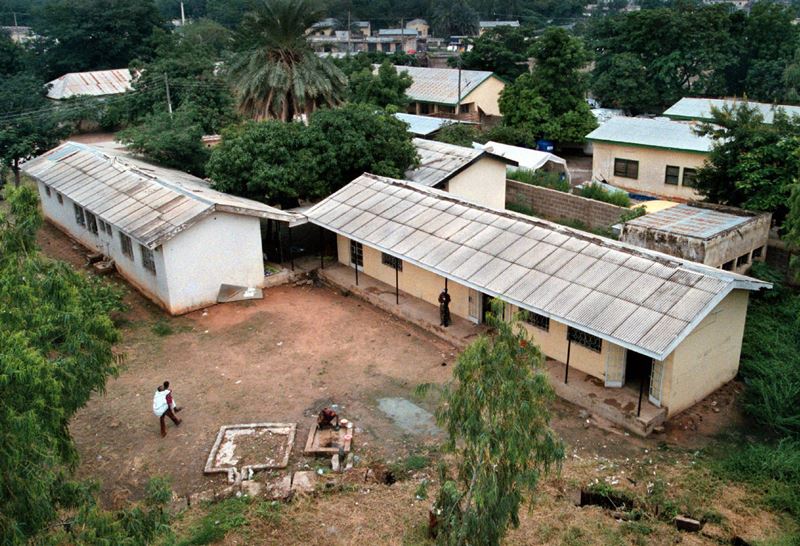
InternationalMar 21. 2021A makeshift pharmacy at Kano state’s Infectious Diseases Hospital in 2000 is adorned with stickers promoting American drug companies. MUST CREDIT: Washington Post photo by Michael S. Williamson
By The Washington Post · Ibrahim Garba, Danielle Paquette
KANO, Nigeria – By the time Pfizer arrived, the meningitis epidemic had struck hundreds of children, leaving many dead or partially paralyzed.
The American pharmaceutical giant pledged to fight the 1996 outbreak in West Africa while testing a new drug, enrolling 200 stricken young patients in a clinical trial. Eleven died of the brain infection – an outcome Pfizer said could not have been prevented – and families in Kano, along with the state government, later received millions of dollars in a lawsuit settlement.
Now the memory looms over the coronavirus vaccine rollout in Nigeria’s second-largest city, sowing doubts around foreign-made shots that officials are rushing to distribute.
“I don’t trust anything from the West,” said Abubakar Sadiq Sulaiman, a 20-year-old college student in Kano, “because of what happened here.”
Vaccine fears driven by the history of medical experimentation in Africa threaten to undermine the battle to end the pandemic, health officials say, as several nations kick off inoculation campaigns this month.
Nigeria has sought to soothe anxieties, deploying teams of public health educators to meet with religious leaders, village chiefs, shop owners, fishermen – voices with sway in their communities. Hesitancy to accept medicine from overseas slowed polio eradication in some areas, and leaders don’t want to see a repeat.
But videos invoking the Pfizer trial and other controversial cases continue to circulate on WhatsApp and Twitter.
“We cannot just dismiss the skepticism,” said Faisal Shuaib, head of the National Primary Health Care Development Agency, which is in charge of the rollout. “We have to recognize that people have their own concerns. We need to listen to them, and then we have to do the extra work that is required.”
A recent survey by the Africa Centers for Disease Control and Prevention of 15,000 people across 15 African nations found that 79% would take a coronavirus vaccine if it were safe – but a quarter thought it would be unsafe. The Nigerians polled were slightly more reluctant to accept a shot at 76%.
An Afrobarometer survey of neighboring countries – Benin, Liberia, Senegal, Niger and Togo – uncovered a far less optimistic outlook: Just 4 in 10 said they’d probably try to get vaccinated, according to the early March findings.
Mistrust is rooted in a variety of factors, researchers say, including painful medical encounters of the past. Western scientists have long faced accusations of exploiting poverty, weak access to health care and flimsy clinical trial oversight in the developing world to fast-track cures.
American researchers, for instance, gave placebo pills to pregnant women with HIV during 1994 trials of a drug meant to stop mother-to-child transmission in Zimbabwe. About 1,000 babies contracted the virus despite the availability of a proven regimen, triggering global backlash.
Even during the pandemic, a French doctor sparked outrage by suggesting on television that the first coronavirus vaccines be tested somewhere in Africa, where people “don’t protect themselves.”
An ill man is carried into the Infectious Diseases Hospital in Kano, Nigeria, in 2000. MUST CREDIT: Washington Post photo by Michael S. Williamson
Then there are the scars of the Pfizer trial in Kano.
The ancient walled city of 4.1 million in Nigeria’s north was the epicenter of a meningitis epidemic that killed more than 15,000 people across West Africa.
Researchers camped for weeks at a local field hospital, administering an experimental antibiotic called Trovan – which was not yet approved in the United States – to 100 children and infants with brain infections. They gave the standard treatment to 100 others.
At the same hospital, a Doctors Without Borders team worked only to save lives. Several expressed concerns about Pfizer’s work to The Washington Post in a 2000 investigation.
“In an epidemic, where you have a very high number of cases who will die, you don’t go and experiment,” one said. “You are talking about human beings, after all.”
The young patients arrived in grave shape, The Post investigation found: Some could no longer talk or move their limbs, and it was unclear if their parents – all of whom were under extreme stress – truly understood they had options. Pfizer said its researchers obtained verbal consent.
“The local Nigerian nurses explained – in the native language, Hausa – the details of the study to parents or guardians, including that participation was voluntary,” the company said in a statement.
Five children died after receiving Pfizer’s experimental antibiotic. Others developed signs of arthritis – though there is no evidence the drug caused it. Six more died while taking the standard treatment. Pfizer has maintained that the children died of meningitis.
“The 1996 Trovan clinical trial was approved by U.S. and Nigerian health officials, was conducted with the consent of parents or guardians,” the company said in a statement, “and the treatment saved lives and proved to be at least as effective as the gold standard treatment available at the time.”
Some medical experts questioned why the company did not switch to the proven pills when it was clear the young patients were approaching death.
Pfizer said Trovan was “at least as effective as the gold standard treatment,” adding, “There is no basis on which to conclude that a change in treatment would have improved outcomes.”
The Food and Drug Administration never approved Trovan for the care of children in the United States. The drug was later linked to reports of liver damage and deaths in adults. European regulators outlawed it entirely.
Fury erupted in Nigeria.
Pfizer conducted “an illegal trial of an unregistered drug,” a Nigerian panel of medical experts wrote, according to a document The Post obtained in 2006, and a “clear case of exploitation of the ignorant.”
The state of Kano and the Nigerian federal government filed criminal and civil lawsuits against Pfizer in 2007. Two years later, the company agreed to pay $75 million to the state and relatives of children who died or were disabled during the trial.
One of the settlement recipients, a 70-year-old man, recalls feeling hopeful in 1996 when a neighbor told him about the American doctors in town helping children. He spoke on the condition of anonymity because he signed a nondisclosure agreement to receive the settlement money.
He didn’t question anyone’s motives. His sole focus was saving his 4-year-old daughter. Today, she cannot walk and requires full-time care.
“I was excited that the treatment was free, but that excitement was short-lived,” he said. “She lost the function of her limbs. Our happiness vanished into thin air.”
The experiment shaped public perception of Western drugs in the region. Parents told their children about it. Teachers lectured about Pfizer in classrooms. Pundits spoke of Western physicians seeking human guinea pigs.
“If I had an enemy, I would not let him take their drugs,” said Najib Ibrahim, a 19-year-old tailor in Kano.
By 2003, three northern states – including Kano – were boycotting polio vaccination campaigns, citing, among other reasons, the Pfizer trial. The resistance added years to Nigeria’s fight against the virus.
So public health officials have doubled down on coronavirus vaccine safety messaging even as recent surveys show rising confidence.
“We’ve been confronted with this problem,” said Chikwe Ihekweazu, director of the Nigeria Center for Disease Control in the capital, Abuja. “We know how much of an impact it had – how much it took us back. We can’t take anything for granted.”
President Muhammadu Buhari received his jab live on television, urging viewers to follow his lead. The nation aims to inoculate 80 million people this year, starting with doses from AstraZeneca through the World Health Organization’s Covax initiative.
Pfizer shots are expected to arrive, officials said, once Nigeria ramps up its ultracold storage capacity.
“Pfizer’s vaccine and the other vaccines are outperforming everybody’s wildest expectations,” said Ihekweazur. “It’s how we will save lives and end this pandemic.”
By Monday, the country had recorded 161,000 cases and 2,013 deaths after enduring a second wave this winter. Officials say the national surveillance system offers only a conservative estimate.
One in 5 people in Lagos state alone – a metropolitan sprawl of 21 million – may have caught the coronavirus by last October, according to a recent antibodies survey from the Nigeria Center for Disease Control. That would be more cases than every African country combined has confirmed.
In Kano, more than 500 medical clinics are being transformed into vaccination centers. The city received its first 200,000 shots in early March.
Local health officials are preparing for the deliveries with “fact and myth” seminars, hoping to boost enrollment.
Musa Abdullahi Sufi, a public health doctor, estimates that 20% of Kano residents would be ready today to accept a dose.
“But that will move to 80 percent,” he said, “once we build more trust.”
Some in town say that hope is futile.
Abdul Murtala, a 45-year-old trader, remembers reading about the 1996 Pfizer trial as the details emerged. The experience changed him, he said.
“Pfizer reminds me of recklessness with human lives,” he said. “It makes me want to forever avoid receiving vaccines from foreign establishments.”
 US President Joe Biden
 Secretary of State Antony Blinken
 A health worker administers the Moderna Covid-19 vaccine to a visitor at a vaccination center in Rome on March 17, 2021. MUST CREDIT: Bloomberg photo by Alessia Pierdomenico.
 Visitors line up for free covid-19 tests at a ‘Test-To-Go-Station’ in Berlin, on March 8. MUST CREDIT: Bloomberg photo by Liesa Johannssen-Koppitz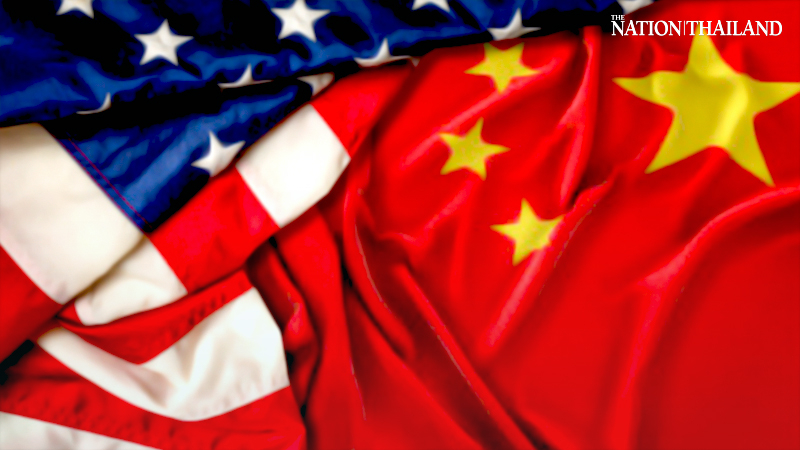
 A closed AMC movie theater in Tucson, Ariz., in June 2020. MUST CREDIT: Bloomberg photo by Cheney Orr.
 A makeshift pharmacy at Kano state’s Infectious Diseases Hospital in 2000 is adorned with stickers promoting American drug companies. MUST CREDIT: Washington Post photo by Michael S. Williamson