By The Washington Post · Shaiq Hussain, Susannah George
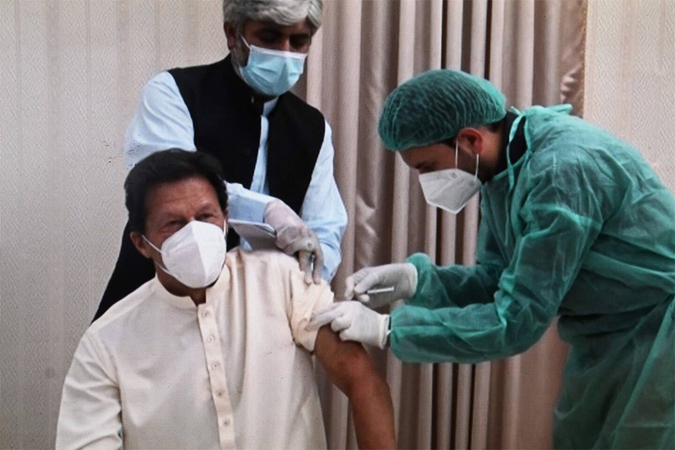
ISLAMABAD, Pakistan – Pakistan’s prime minister, Imran Khan, tested positive for the coronavirus Saturday, two days after receiving his first dose of a vaccine, raising fears among health professionals that the news could heighten vaccine skepticism in a country already deeply wary of inoculation.
Khan was injected with China’s Sinopharm vaccine on Thursday and was probably infected before then, according to Pakistan’s Health Ministry. The Sinopharm vaccine requires two doses about a month apart and can take up to 21 days after the second injection to become fully effective.
Minutes after the news broke of Khan testing positive, debate about the vaccine’s effectiveness heated up on social media in Pakistan and Sinopharm began trending here on Twitter.
The Health Ministry quickly responded that the prime minister was not fully vaccinated when he contracted the virus.
“He only got the first dose merely two days ago which is too soon for any vaccine to become effective. Antibodies develop two to three weeks after the second dose of two-dose covid vaccine,” it said in a tweet.
But doctors and experts fear such statements will not be enough.
“In Pakistan, we already have skepticism, conspiracy theories and negative propaganda about vaccines,” said Javed Akram, one of the country’s top doctors and the vice chancellor of the University of Health Sciences, Lahore.
“Look at what people think of the vaccine for polio, a disease which has been eliminated across the world, nearly,” he said. Many Pakistanis refuse to allow their children to get a polio vaccination because of allegations spread by hard-line religious leaders that it will render them infertile. Pakistan remains one of just two countries in the world where polio is endemic.
“Imran Khan tested positive even after receiving the vaccine, this shows that vaccines imported into Pakistan are of no use,” read one tweet by a Pakistani user from Peshawar who identified himself as Lawangeen Khan.
Another user agreed that the prime minister’s infection proves the vaccine fails to protect against the virus.
Khan from Peshawar added, “May God recover him [from his illness] soon.”
Some trials have shown China’s Sinopharm to be less effective than its Western counterparts, but others have shown that its efficacy is on par with that of vaccines manufactured by Pfizer-BioNTech and Moderna. However, little clinical data on Sinopharm has been released publicly.
China was the first country to provide Pakistan with coronavirus vaccines, a sign of growing ties between the two. The country also completed trials for the drug that drew thousands of participants, despite fears and skepticism.
Pakistan is experiencing a third wave of coronavirus infections and imposed new lockdown measures Saturday after recording nearly 4,000 new cases, the highest in a single day in eight months.
The number of daily hospital admissions and people receiving critical care is rising fast, Asad Umar, the minister leading the government’s response to the coronavirus, warned in a tweet. He said if Pakistanis do not comply with the current restrictions, a tighter lockdown will be imposed.
“Please be very very careful. The new strain spreads faster and is more deadly,” he said, referring to the variant of the coronavirus first detected in the United Kingdom.
Khan’s positive test was announced by Faisal Sultan, his aide, who said in a tweet that the Pakistani leader is self-isolating at home but did not elaborate on his condition.
By The Washington Post, Annie Linskey, Griff Witte, Elyse Samuels, Timothy Bella
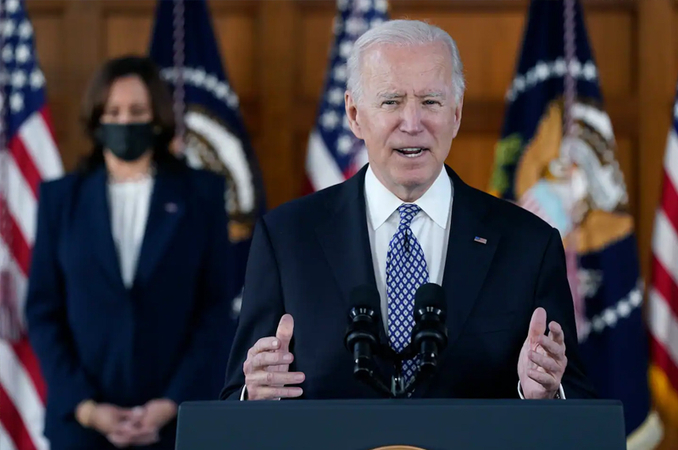
ATLANTA – In their first joint trip, President Joe Biden and Vice President Kamala Harris urged the country to stand against racism and xenophobia, with the president becoming emotional at times as he addressed a region rocked by the deaths of eight people in a mass shooting targeting Asian spas.
“There are simply some core values of belief that should bring us together as Americans, one of them should be standing together against hate, against racism,” Biden said at Emory University.
“Hate and violence often hide in plain sight and are so often met with silence,” Biden said. “But that has to change because our silence is complicity. We cannot be complicit. We have to speak out. We have to act.”
Biden’s visit did little to soothe the grief and anger many Atlanta residents are still grappling with three days after suspect Robert Aaron Long’s alleged rampage. On Friday, officials named four more victims, and local leaders gathered to decry the rise in violence against Asian Americans.
New surveillance video obtained by The Washington Post on Friday offered fresh details about the suspect’s actions immediately before the shooting. According to the footage, Long entered Young’s Asian Massage an hour before reports of gunfire. It is unclear what he did while inside.
The video footage also showed him sitting in his vehicle outside the establishment for about an hour before he entered. Authorities declined to comment on the new details about the timeline of his actions.
The footage shows the driver pulling into a parking spot, nose forward, with the windshield wipers on. He parks directly in front of the spa. An hour later, a slight figure emerges from the car, wearing an orange long-sleeved shirt, dark pants and dark shoes. It takes him less than a dozen steps to move from his car to the door of the business. About an hour later, when he leaves, his head is tilted down. He gets in the car, turns on the windshield wipers and backs out of the spot.
The mass shooting is the highest-profile gun massacre since the country locked down for the covid-19 pandemic a year ago. It has galvanized Asian American leaders who’ve grown increasingly alarmed about hate crimes directed toward their community.
They’ve said that the increase in slurs and other attacks have come as they’ve been unfairly blamed for the pandemic by former president Donald Trump and his allies, who regularly referred to covid-19 as the “China virus,” or “Kung flu.”
Biden and Harris also met for over an hour with advocates from Georgia’s Asian American and Pacific Island community and local lawmakers.
“Racism is real in America, and it has always been. Xenophobia is real in America and always has been,” Harris said. “The last year we’ve had people in positions of incredible power scapegoating Asian Americans. People with the biggest pulpits spreading this kind of hate.”
Harris is the first vice president with Asian heritage; her parents immigrated to America from India and Jamaica.
The presidential trip was initially supposed to focus the benefits of the $1.9 trillion stimulus package that Biden signed into law last week, which the president touched on in his remarks.
Outrage over the killings extended far beyond Atlanta, with donations to GoFundMe campaigns set up to support the victims’ families pouring in from across the nation – and beyond.
One, set up by the son of one of the Atlanta spa victims on Thursday, had raised more than $1.6 million by Friday evening.
Hyun Jung Grant, 51, was among four Asian women killed during the gunman’s rampage in Atlanta, according to the Fulton County medical examiner, which released the names of the women Friday. The mother of two was shot in the head.
“This is something that should never happen to anyone,” wrote Randy Park, one of her sons. “She was a single mother who dedicated her whole life to providing for my brother and I.”
Park called his mother “one of my best friends and the strongest influence on who we are today. Losing her has put a new lens on my eyes on the amount of hate that exists in our world.”
Park said he had had no time to grieve. He has a younger brother to care for and a funeral to plan. He said he is still waiting for his mother’s body to be released by authorities. In an update to the fundraising page posted Friday morning, he said he was overwhelmed by the generosity of strangers.
“I don’t know how any word I write here will ever convey how grateful and blessed I am to receive this much support.” To those who donated money, Park wrote, “To put it bluntly, I can’t believe you guys exist.”
Campaigns for other victims confirmed as legitimate by GoFundMe include those set up for Delaina Yaun, Paul Andre Michels and Elcias Hernandez-Ortiz, who remains in the hospital in critical condition.
The Fulton County Medical Examiner’s office on Friday released the names of three other victims who were killed at Gold Spa and Aromatherapy Spa: Soon C. Park, 74; Suncha Kim, 69; and Yong Ae Yue, 63. Park, Grant and Yue each died of a gunshot wound to the head, according to the examiner’s report. Kim died of gunshot wounds to the chest.
Investigators said this week they waited to identify the four victims because they had been unable to notify all their family members.
Shortly after the shootings, police in Cherokee County had identified the four other victims killed: Xiaojie Tan, 49; Daoyou Feng, 44; Yaun, 33; and Michels, 54.
The identification of the last of the victims came as the suspect’s longtime church condemned him in a lengthy statement on Friday morning, saying 21-year-old Long had committed an “extreme and wicked act.”
Long was charged on Wednesday with eight counts of murder, and police say he has confessed to the crime. Long waived his right to an initial hearing on Thursday, and his attorney has not commented on the charges beyond expressing sympathy to the victims’ families.
“These unthinkable and egregious murders directly contradict his own confession of faith in Jesus and the gospel,” the statement from Crabapple First Baptist Church read. “Aaron’s actions are antithetical to everything that we believe and teach as a church.”
Earlier in the day, Biden and Harris also stopped by the Centers for Disease Control and Prevention, praising an agency that was sidelined during the Trump administration and endured false accusations and political interference as it produced critical guidance.
In Atlanta, standing in an emergency operations center, Biden and Harris listened to a briefing by top CDC officials who noted that the country is still seeing significant community transmission of the virus in many areas. The officials also detailed trends about various variants circulating – and particularly one that is resistant to some treatments.
“Science is back,” Biden declared during brief remarks. “I hope this is beginning of the end of not paying attention to what’s going to come again and again and again and again,” he said, stressing that even once the coronavirus threat recedes other contagions could emerge.
“We cannot stop these viruses,” Biden said, adding that the country’s only defense is to pay attention to the threat and “move quickly when we find them.”
Harris, speaking briefly, focused her remarks on thanking the staff. “You do this work on behalf of people you’ll never meet,” Harris said. “On behalf of people who will never know your names.”
The visit had a far different tone than one by Biden’s predecessor a year ago, where Trump downplayed the seriousness of the virus, saying it was similar to the seasonal flu and inaccurately claimed that the country had a robust capacity to test people for the virus.
“Anybody that wants a test can get a test. That’s what the bottom line is,” Trump said during his visit.
Some staff at the CDC said they appreciated the new tone.
“It was validating and reassuring to hear President Biden and VP Harris affirm the role of science in public health, particularly while standing on the CDC campus,” said a CDC epidemiologist who has been part of the covid response and spoke on the condition of anonymity because they were not authorized to speak publicly. “Typically I would take that message for granted. But, after the past year, I don’t. I hope that in the future I will never need that assurance again.”
Before leaving for his trip, Biden stumbled several times as he climbed the stairs to Air Force One – climbing about a dozen stairs before briefly losing his footing.
The president appeared to regain his balance and took a few more steps on the red-carpeted staircase, then stumbled again. He had more difficulty recovering the second time, stabilizing himself with his hand on a railing at first and starting to rise.
He initially appeared unsteady, but then supported himself and continued up the stairs without apparent difficulty, saluting at the top.
Biden, who at 78 is the oldest president in history, has not released medical records since December 2019. The White House said the incident was not serious.
By The Washington Post, David A. Fahrenthold, Josh Dawsey, Lori Rozsa
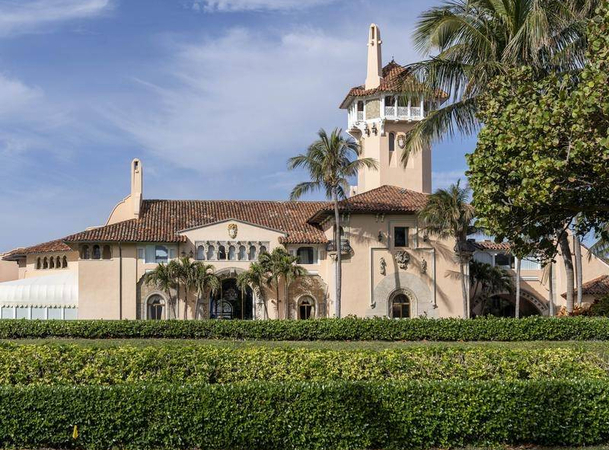
Donald Trump’s Mar-a-Lago Club in Florida has been partially closed after some of its employees were infected with the coronavirus, according to an email sent to club members Friday afternoon.
“As some of our staff have recently tested positive for COVID-19, we will be temporarily suspending service at the Beach Club and à la carte Dining Room,” club management said, according to an email obtained by The Washington Post.
“Banquet and Event services remain open,” the email said.
The Trump Organization declined to say how many workers were affected. The Palm Beach club – which includes the former president’s home as well as restaurants and banquet facilities – has dozens of employees during the winter season.
“Out of an abundance of caution we have quarantined some of the workers and partially closed a section of the club for a short period of time,” a spokeswoman for the Trump Organization said in a statement to The Post.
Lee Lipton, a member at the club, said he received a phone call Friday saying his dinner reservations were canceled for Friday and Saturday nights. “But they said the car show was going on Sunday, and the hotel rooms are fine,” he said.
The partial closure of the club was first reported by the Associated Press.
Palm Beach County, which includes the club, still requires that all guests wear masks, except while “actively consuming food and beverage.”
Last weekend, Mar-a-Lago hosted two large fundraisers for a charity called Big Dog Ranch Rescue, including one event at which Trump appeared, praising the group.
Photos from those events show that few attendees were wearing masks. Trump, who had covid-19 in the fall and was vaccinated earlier this year, also did not wear a mask.
Two people familiar with the club said that Mar-a-Lago waiters wore masks during the events. A spokesperson for the charity declined to comment about the event.
The club has not forced members to adhere to a mask policy, though they have suggested masks be worn and provided them to guests, according to people who have visited.
In January, a Florida state representative asked the county to shut down Mar-a-Lago after photos from a New Year’s Eve event showed that many guests were not wearing masks. In response, Palm Beach County sent the club a formal warning letter, saying that Mar-a-Lago had violated county code and could faces fines up to $15,000 if there was another violation.
Patrick Rutter, assistant Palm Beach County administrator, who oversees the county’s covid enforcement efforts, said he hadn’t heard of Mar-a-Lago partially closing, but that it would be up to the club’s leadership to decide whether to close in case of an outbreak.
“Businesses would make their own decisions of that was the case,” Rutter said.
Omari Hardy, the state representative who had asked for Mar-a-Lago to be closed down, said workers were paying the price of the club’s lax mask policy.
“No one around the president wears a mask. The guests at Mar-a-Lago have photographed themselves partying and carousing not wearing masks,” said Hardy, whose district includes a town just a few miles from Mar-a-Lago that is home to many essential workers who staff the clubs and restaurants on Palm Beach. “Now the workers, who can least afford to get sick, are paying for it with their health.”
A few months ago, Amber Smith was texting her friends about something utterly unimportant – the latest “Real Housewives” episode, she said, or some other small drama. It was the kind of interaction that had been getting her through the pandemic: quick banter, a lot of laughter.
Then her friends stopped responding.
The minutes ticked by: no new messages. Smith, 41, lives alone in New York City. Since the pandemic hit, she has only seen a handful of friends in person.
Staring at her phone, she said, she started to wonder, “Did I do something?'”
From there, her mind jumped to an even more distressing thought: “Maybe all my friends hate me.”
For many women, “friendship doubt” has proliferated in the pandemic, especially during the colder months, when it may have gotten harder to see friends in person. Alone in our apartments, we’re spending more time in our own heads, replaying whatever limited social interactions we’re able to have, experts say. This isolation can make us doubt our friendships, leading us to wonder: Do my friends like me as much as they used to?
There is an ambiguity in friendships that doesn’t exist in other kinds of relationships, said Marisa Franco, a psychologist who specializes in friendship. Relationships with family members and romantic partners come with a societally recognized commitment: When you say you’re somebody’s wife, or somebody’s sister, there are certain expectations.
Friendships operate without these kinds of official promises, Franco said. A friend could be in your life forever, or “just for a season.”
That ambiguity can lead to insecurity, she said.
Mahzad Hojjat, a professor of psychology at the University of Massachusetts at Dartmouth who studies friendship, put it this way: “You agree to be friends, but at any moment one person might decide, ‘I don’t like this person, I don’t want to be her friend.’ ” No breakup is necessary, Hojjat said – you can usually slide off the grid. Especially during the pandemic, she said, “that fear is always there.”
These friendship doubts could be driven by loneliness. Studies show that lonely people are more self-critical and less trusting, Franco said, and are inclined to believe that others like them less than they actually do. Stripped of normal interactions with friends, she added, our social anxiety increases.
Humans have evolved to protect ourselves from strangers when we’re on our own, Franco said – an adaptation that does not serve many well in the pandemic. “When you were separated from your tribe, your goal was to mitigate threat,” she said. And the best way to do that was to be skeptical of others.
In the early days of the pandemic, there was a rush to socialize in novel ways. People were connecting on Zoom, playing virtual board games with high school friends and college roommates they hadn’t talked to in years. But for Smith, sometime in early summer, friends seemed to grow tired of video calls, opting instead for the occasional park hangout or stroll around New York. But once summer ended and her friends went back inside, the social Zooms never resumed.
“Everyone is just mentally over it,” Smith said.
When social activities dropped off, Smith started spending more time in her own head, she said, wondering why no one was reaching out. “I conjured up all the ways that people were mad at me,” she said.
Smith knows she could reach out to people herself, she said, proposing a call or outdoor activity – but a year into the pandemic, the prospect is daunting. These days, she is too emotionally exhausted to do much of anything outside of work.
Kris Nova, a 33-year-old living in San Francisco, said she has also been overthinking friendships in the pandemic. After she spends time with friends, online or in person, she analyzes every little interaction, dwelling on anything she said that might have come off the wrong way.
“I’ll think, ‘Oh god, I’m a horrible person,’ ” Nova said. “I’m going to focus on this little thing that happened and beat myself up for it.”
As Hojjat put it, in self-quarantine, “you’re stuck in your own little cave.” While some people have been busier than usual in the pandemic – like parents at home with their kids – many young or single people have more time to kill. If you’re socially anxious, Hojjat said, that extra time can fuel destructive thoughts.
“Unfortunately, sometimes these ideas just continue to exist in your mind and there’s nothing to interrupt them,” Hojjat said.
Franco said the pandemic hasn’t just left us alone to dwell on the negative – it’s also deprived us of many of the things that typically make us feel good about ourselves. In more normal times, she said, in-person interactions with friends provide an enormous amount of “identity affirmation.” Friends tend to affirm the version of ourselves we would most like to embody, Franco added, which is good for our self-esteem: If you spend a day with a friend, and you leave each other upbeat and laughing, you’ll probably feel better about yourself, knowing you made the other person happy.
“We don’t have access to that now because we’re not seeing each other,” Franco said.
While Zoom has been a critical social tool in the pandemic, it’s a poor substitute for in-person interaction, Franco added. Without normal social cues, like body language, it’s harder to tell how the other person is responding to you, she said.
When Rachael Yeomans, who works in musical theater, talks to her colleagues on Zoom, she worries about how they are perceiving her. Many of them are her friends. But because they’ve all muted themselves, she said, she is left to imagine what they’re thinking. This leads to a “spiral,” she said, where she convinces herself that they don’t like her very much after all.
“I’m a big body-language person. I pay attention to the energy a person is bringing into the room,” said Yeomans, a 25-year-old based in Los Angeles. In person, she said, it’s easy to tell when a colleague is just having a bad day. But if someone isn’t overly enthusiastic on Zoom, she said, she’ll often process their bad day as frustration toward her.
If you and your friend aren’t together in-person, assumptions can abound, Hojjat said: Any hint of conflict could get blown out of proportion. Maybe a friend and colleague misses a Zoom happy hour. Pre-pandemic, when you saw each other every day in the office, you might have swung by your friend’s desk to ask where he was the night before, she said. Because there’s no opportunity for that kind of casual interaction, Hojjat said, people “make judgments about their friends’ behavior,” jumping to conclusions that aren’t necessarily correct.
In these cases, it’s important to give your friends the benefit of the doubt, Hojjat said – especially right now. Everyone is dealing with their own unique struggles in the pandemic. If your friend isn’t responding, she said, they might be busy with a child at home, or pandemic-related stress at work.
If you have the time and energy to reach out yourself, Franco recommended doing so: “Be the security you wish someone would be for you.” With close friends, she said, you could even be honest about your friendship doubt. When you open up, she said, you give your friend the opportunity to say, “Me too.”
Yeomans has her own strategy for dealing with her pandemic insecurity. Whenever she catches herself doubting her friendships – convinced she’s a bad friend, too annoying or “too much” – she’ll look in the mirror and repeat one particular phrase: “My friends love me.”
“I will literally sit there and say it out loud to myself as many times as I need to.”
After a while, Yeomans said, she starts to believe it.
Players and coaches continued Friday to call attention to the wide disparities between the men’s and women’s NCAA basketball tournaments, prompting widespread condemnation of the NCAA and calls for an independent investigation into the situation inside the women’s bubble.
It started with a pair of images shared online: the single dumbbell rack and stack of yoga mats that served as training equipment for women’s players inside the NCAA’s San Antonio tournament bubble, and the massive, state-of-the-art weight facility that had been custom-built for men’s players competing at sites in Indiana.
In addition to complaints of subpar facilities, meals, and player gifts, college officials revealed that women’s team players were being administered a different, less accurate coronavirus test than players in the men’s bubble.
The NCAA’s reassurances that it would work to fix the problem, improving facilities for the women’s teams, did little to quell anger and frustration from college coaches and administrators, as well as prominent professional basketball players who spoke up online.
On Friday, the NCAA’s Committee on Women’s Athletics, a collection of college presidents, administrators, and players, demanded an independent investigation into the disparities in a letter to Mark Emmert, the organization’s president.
The letter said the disparate treatment inside the bubbles “sets back women’s college athletics across the country.”
The stark difference in the treatment of players in the two tournaments touched a nerve for many people at a time of increasing awareness over issues of equity in women’s sports. In a tweet Thursday, Las Vegas Aces star A’ja Wilson called the women’s tournament facilities “beyond disrespectful.”
Other prominent athletes, including the NBA’s Stephen Curry and U.S. women’s soccer star Alex Morgan, also criticized the NCAA online.
NCAA officials acknowledged what they called a “blemish” in their tournament efforts.
“We fell short this year in what we’ve been doing to prepare,” Lynn Holzman, the NCAA’s vice president of women’s basketball, told journalists Friday. She said the NCAA was “actively working” on improving the women’s facilities, including exercise facilities and food.
An NCAA spokesperson told The Washington Post that officials initially thought there was not enough square footage for a weight training facilities at the convention center playing host to the women’s tournament. They later found the space, the spokesperson said.
But coaches and others inside the women’s bubble questioned the NCAA’s claim that space issues had prevented the organization from building a comparable facility for women and men. The rack of dumbbells that served as the women’s sole weight training equipment was located in an enormous and empty part of the convention center, according to several videos posted online.
Geno Auriemma, coach of the Connecticut women’s team, told reporters at a news conference Friday that his team was receiving different coronavirus tests than men’s teams. The rapid antigen tests given to women are faster than PCR tests given to men, but “have a higher chance of missing an active infection,” according to the Food and Drug Administration.
In a statement, the NCAA said that its medical advisory group had determined that both tests were “were equally effective models for basketball championships,” and that it had worked with local providers and officials in San Antonio and Indianapolis to create the testing regimens.
Critics also pointed to images of the “swag bags” provided to players at both tournaments, which showed that the men had been given a large number of items custom-designed for this year’s March Madness tournament in Indianapolis, while the women’s bag included only a few generic items, including a 150-piece puzzle and a towel that said “NCAA women’s basketball.”
MOSCOW – Responding to President Joe Biden’s comments that he thinks Russia’s president is a killer, Vladimir Putin suggested Thursday that the U.S. leader is projecting his own flaws and wished his American counterpart “good health.”
“I say that without irony and not as a joke,” Putin said.
Biden’s remarks in an ABC News interview broadcast Wednesday prompted the Kremlin to summon its ambassador to the United States back to Moscow to discuss how to proceed with the “very bad” relations between the two countries.
Putin spokesman Dmitry Peskov also seemed to imply that they could get worse, warning Thursday that Russia’s response to Biden’s remarks will be “absolutely clear.” He didn’t elaborate.
“It’s clear that [Biden] doesn’t want to normalize relations with our country. This is what we’ll be guided by from now on,” Peskov said.
The Biden administration has imposed sanctions on Russia over the poisoning of opposition leader Alexei Navalny in August. Navalny has said Putin is responsible for nearly killing him; the Kremlin has denied it has any connection to the toxic attack. After recovering in Germany for five months, Navalny returned to Russia in January and was immediately jailed.
When asked by ABC News if he believes Putin is a killer, Biden answered, “I do.” Biden also described Putin as having no soul, adding that he would “pay a price” for allegedly meddling in the 2020 U.S. presidential election, something the Kremlin denies.
Moscow then took the unusual move of temporarily recalling its ambassador to the United States, Anatoly Antonov, in what’s believed to be the first such instance in more than 20 years.
Antonov is leaving Washington for Moscow on Saturday, the Russian embassy said, adding that his trip is “to discuss ways to rectify Russia-U.S. ties that are in crisis.”
“The current situation is a result of the deliberate policy of Washington that during the past years was making steps to bring – in essence, intentionally – our bilateral interaction into a deadlock,” the embassy said in a statement.
Peskov, the Kremlin spokesman, declined to comment when asked if diplomatic relations between the countries could be severed entirely.
In his first comments on Biden’s interview, Putin responded Thursday with a Russian schoolyard expression suggesting that Biden’s accusations revealed more about him than the Russian president. The phrase can be roughly translated as, “I know you are, but what am I?”
Speaking on a video call with residents of Crimea marking the anniversary of its 2014 annexation from Ukraine, Putin pointed to the United States’ history of killing Native Americans and slavery.
“Each nation and every state has very hard, dramatic, and bloody events in their history. But when we assess other people or even when we assess other states and other nations, we always sort of look in the mirror, and we always see ourselves there. Because we always attribute to other people that which we breathe ourselves and what we essentially are,” Putin said.
Russian government officials have reacted angrily to Biden’s remarks. Konstantin Kosachev, a deputy speaker of the Russian parliament’s upper house, said in a Facebook post that Biden’s “gross statement sends any expectations for the new U.S. administration’s policy toward Russia down the drain.”
“Recalling the Russian ambassador from Washington to Moscow for consultations is a prompt and adequate reaction, the only correct one in this situation. I suspect that it won’t be the last one if the American side doesn’t offer explanations and apologies,” he added.
Foreign Ministry spokeswoman Maria Zakharova told Russian state television on Thursday that Moscow expects an explanation for Biden’s comments.
“Why do we always have to translate their strange, unintelligible political gibberish into normal speech?” she said.
WASHINGTON – Over the past few months, the Federal Reserve has joined an international group of central banks focused on climate risk, pointed to climate change a threat to financial stability and established its Supervision Climate Committee.
The Fed’s increasing focus on how climate change can threaten the financial system is garnering praise from Democrats and scorn from Republicans, who say the Fed should stick with helping lower America’s unemployment rate and keep prices stable.
On Thursday, Republicans on the Senate Banking Committee told Fed Chair Jerome Powell in a letter that they were concerned the Fed might use its supervision of the banking system to “further environmental policy objectives,” which “would be beyond the scope of the Federal Reserve’s mission.”
Led by Sen. Patrick Toomey, R-Pa., the lawmakers wrote that the Fed lacks “jurisdiction over and expertise in environmental matters,” questioning whether it had the authority to police climate risks.
In a statement, a Fed spokesperson said the central bank had received the letter and plans to respond. Powell, for his part, has said many financial institutions are already focusing on how climate change will affect their business models over time. The Fed’s attention to these issues is a natural outgrowth of the central bank’s job, he says.
“We’re looking at the same thing from the standpoint of a regulator and supervisor, so research and basic work to lay out a framework, which will take some time, but it is time for us to do that,” Powell told lawmakers in the House last month.
Beyond the Fed’s oversight of the banking system, climate issues have put the Fed up against political jockeying on Capitol Hill. During the Banking Committee’s hearing on climate risk Thursday, a first, Toomey said the Fed’s attention to climate issues ultimately betrayed Fed independence. Powell did not testify at the hearing.
“By straying from its core mission and authorities in support of vague and ill-defined climate goals, the Federal Reserve’s actions threaten to undermine its credibility,” Toomey said in opening remarks.
Democrats, meanwhile, have called on all financial regulators, including the Fed, to increase their oversight to include issues tied to climate change.
“We can’t always predict what it might be,” Chair Sherrod Brown, D-Ohio, said at Thursday’s hearing. “In this case, though, we can predict something that’s going to hurt the economy. We know that climate change threatens the country’s financial stability.”
Powell has said the government’s response to climate change must come from elected officials in Congress and the White House. The Fed’s role is to ensure the resilience of the financial system, including through the regulation of banks and other financial institutions.
“Climate change is an emerging risk to financial institutions, the financial system, and the economy,” Powell told reporters in December. “And we are, as so many others are, in the very early stages of understanding what that means, what needs to be done about it, and by whom.”
The Fed is not alone among financial regulators taking a more formal approach to climate change. Under the Biden administration, the Securities and Exchange Commission named a senior policy adviser oversee the agency’s work related to climate risk and other environmental issues. The Commodity Futures Trading Commission this week established a Climate Risk Unit to focus on the role of derivatives in understanding, pricing and addressing climate-related risk.
In a stark departure from the Trump era, the Biden White House has launched its climate agenda, with a focus on clean energy jobs and environmental justice, as one of its top priorities. That push has trickled down to agencies including the SEC and CFTC, whose leadership changes under new administrations.
But those shifting winds also put Powell in a difficult spot. The Fed avoids politics at all cost, staking much of its authority on its independence from Capitol Hill and the White House.
“They try so hard to stay out of politics, but they always operate in a political context,” said Claudia Sahm, a former Fed economist and now a fellow at the Jain Family Institute, on the Fed’s attention to climate risk. “That’s just D.C.”
Politics may not influence the Fed’s decisions or policymaking, but it does shape how central bankers talk about their work in public, Sahm said.
Climate change is “a good study of how the Fed’s rhetoric changed from Trump to Biden,” Sahm said.
“This is not going to be an activist Fed. But they’re going to be more open about what they’re doing, because they’re not going to be tweeted at by the president,” Sahm said, referring to Trump’s habit of criticizing Powell and airing his displeasure with Fed policies. “They don’t want to get in a fight with progressives either.”
Recently, the Fed has been more upfront with its work on climate risk.
In November, the Fed added a section on the implications of climate change to its Financial Stability Report, noting that “climate change adds a layer of economic uncertainty and risk that we have only begun to incorporate into our analysis of financial stability.”
In a statement at the time, Federal Reserve Gov. Lael Brainard said markets struggle to analyze and price climate risk, exposing the need for more research and transparency across the financial system.
“It is vitally important to move from the recognition that climate change poses significant financial stability risks to the stage where the quantitative implications of those risks are appropriately assessed and addressed,” Brainard said.
In December, 47 GOP lawmakers cautioned the Fed against joining the Network for Greening the Financial System, an international group of central banks focused on managing climate risk, without making a public commitment to only implementing policies that best serve the U.S.’s financial system. The Fed had participated in NGFS discussions and activities for more than a year beforehand and was among the world’s only major central banks that was not an official member.
The Fed formally announced that it had joined the group on Dec. 15, despite GOP concerns.
In January, the Fed tapped a senior official to run a new team examining climate change and its financial risks. Kevin Stiroh, previously head of the New York Fed’s Supervision Group, will run the board’s committee.
Last month, Brainard said it might be helpful to subject lenders to a form of “scenario analysis” that could help lenders and regulators judge whether the industry is prepared for climate change. The Fed is “closely following the climate scenarios being developed by other central banks and supervisory authorities . . . so we can learn from their experiences,” Brainard said.
In November, Greg Baer, president and chief executive of the Bank Policy Institute, wrote in an opinion article that it’s important for bankers and their regulators to measure and manage climate risk “in a way that provides an accurate picture of what is at stake.”
“But trying to capture climate change effects decades in advance – without considering the extraordinary adaptability of the financial system and economy – and incorporating those results into the regulatory capital framework is no easier than predicting how pandemics or machine learning will affect banks by 2050,” Baer wrote in the American Banker.
Plastic prices hit record high to stoke inflation concerns
InternationalMar 19. 2021Green PVC pellets. MUST CREDIT: Bloomberg photo by Eilon Paz,
By Syndication Washington Post, Bloomberg · Kevin Crowley
For anyone looking for examples of inflation these days, raw materials are a good place to start. Copper, steel — even lumber — are either near or at record highs. And so too are plastics, which are often overlooked but are on a tear right now.
Although they’re the building blocks of thousands of everyday products, plastics and their chemical ingredients don’t trade on major commodity exchanges, and large price moves are largely invisible to the wider world. Yet polyvinyl chloride, or PVC, is in the midst of a dramatic rally, driven by a combination of rebounding global consumer demand and production outages from last month’s Texas freeze.
More than 60% of U.S. PVC is still offline nearly a month after freezing weather hit Texas and Louisiana and decimated the power grid, according to ICIS, a data provider. U.S. export prices have nearly doubled to a record high of $1,625 a tonne over the past year. PVC is a major construction material used for pipes, cable insulation, flooring and roofing, and the U.S. has become the world’s biggest exporter of the plastic in recent years.
But PVC is just the tip of the iceberg: prices of polypropylene, used for packaging consumer goods, are at record levels and more than double the 2019-2020 average, according to ICIS. The cost of high density polyethylene, used for shampoo bottles and grocery bags, is at the highest since 2008.
“Today we don’t have enough volume to even meet the needs of the domestic customers” never mind exports, said Bob Patel, chief executive officer of chemicals giant LyondellBasell Industries, referring to polyethylene. “I think we’ll be well into the fourth quarter before we see conditions back to normal,” he told the JPMorgan Industrials Conference this week.
Even before the freeze, the industry was struggling to rebound from back-to-back hurricanes last year, meaning the supply shortfalls will have knock-on effects both domestically and around the world, not least in a housebuilding sector already under pressure from skyrocketing lumber prices. The supply constraints also come just as the U.S. government is unleashing a new round of stimulus and demand for consumer goods is surging, adding to concerns around higher inflation.
Federal Reserve Chair Jerome Powell said the U.S. central bank sees the price effects of supply problems across the economy as temporary.
“We could also see upward pressure on prices if spending rebounds quickly as the economy continues to reopen, particularly if supply bottlenecks limit how quickly production can respond in the near-term,” Powell said in his opening statement before a press conference Wednesday. “However, these one-time increases in prices are likely to have only transient effects on inflation.”
The bottlenecks are already becoming evident in plastics. Honda and Toyota are reducing production of vehicles across North America due in part to the shortage of petrochemicals in their supply chains, the Japanese car giants said this week. Production lines and potentially entire plants are expected to be temporarily halted for several days in Kentucky, West Virginia and Mexico, Toyota spokeswoman Shiori Hashimoto said Wednesday.
Petrochemicals account for more than a third of the raw material costs in the average vehicle, according to ICIS. The car industry is also struggling due to a shortage of semiconductors.
Two of LyondellBasell’s ethane crackers in Texas are back up and running after the winter storm, but a third in Corpus Christi, Texas, will only start up in another three weeks, Patel said. Exxon Mobil, Royal Dutch Shell, Chevron Phillips Chemical Co., Westlake Chemical, Dow Chemical among others have also experienced severe disruptions at their Gulf Coast operations.
Patel estimates the freeze alone will reduce U.S. production of polyethylene, the most common plastic compound, by about 12% this year.
The Texas freeze is a “tipping point” after “an accumulation of a lot of bad production and supply scenarios over the past year,” said Jeremy Pafford, head of North America at ICIS. “That’s a cost somebody eventually is going to have to eat and that usually means the consumer.”
While not as pronounced and widely discussed surges in prices of softwood lumber and steel, the increase in plastics prices is starting to show up in the real economy. According to the Labor Department’s latest report on producer prices, the cost of plastic pipes was more than 16% higher in February than a year earlier. And the data doesn’t take into account the recent price spike.
The supply crunch is running headlong into strong demand for building materials and packaging over the past year. Consumers spending more time at home has led to a hot housing market in the U.S. as people seek more space while grocery and online shopping have increased markedly. These trends are likely to continue as the economy reopens, especially as President Joe Biden’s $1.9 trillion relief bill works its way through the economy.
The bill “included infrastructure program, rental and mortgage assistance, which could support PVC demand in the construction sector in the near term,” Bloomberg Intelligence analyst Horace Chan wrote in a March 16 note.
Longer-term, petrochemicals are set to be the biggest source of oil demand growth due to economic expansion and increased use of plastic in consumer goods globally, according to the International Energy Agency’s Oil 2021 report. Liquefied petroleum gas and naphtha, used as chemical feedstock in Asia and Europe, will account for nearly 70% of higher demand through 2026, compare with 2019 levels, the report said.
In the U.S., where ethane is the primary feedstock, the Gulf Coast petrochemical industry had been booming until the recent operational setbacks due to cheap natural gas liquids from country’s shale fields including the Permian Basin.
It all contributes to reopening higher inflation expectations, particularly in housing, as the U.S. moves toward reopening as the Covid-19 vaccination rate increases, according to Stephen Stanley, chief economist at Amerherst Pierpont Securities.
“It may be a sign of things to come in the sense that once the economy fully reopens we’re likely to see parts of the economy where demand is intense at least for a period of time, leading to some price pressures,” he said. “Housing was the first place where it came about but now we’re seeing it more broadly.”
By Syndication Washington Post, Bloomberg · Ragini Saxena
India will offer tax breaks to owners who hand in their old vehicles for recycling as part of a program that’s aimed at removing millions of gas-guzzling cars and pollution-belching trucks and buses from the roads.
Road-tax rebates of as much as 25% for new cars for personal use and 15% for commercial use will be offered to consumers, Nitin Gadkari, the minister of road transport and highways, said in parliament Thursday. The nation’s so-called cash-for-clunkers plan was outlined in the Feb. 1 budget but details weren’t given at that time.
Automakers are also being urged to offer 5% discounts off new cars if a person offers up their old one. Other incentives include waiving the registration fee for new vehicles and setting a scrap value for old cars that’s at least 4% of a fresh model’s price.
India’s carmakers are counting on the plan to boost sales, which have been smashed by a widespread fall in demand amid the pandemic-induced recession. Mahindra & Mahindra Ltd., India’s largest SUV maker, last year reported its first quarterly loss in nearly two decades, and Maruti Suzuki India Ltd. posted its first-ever loss in the three months ended June 30.
It should also help the environment. The South Asian nation has some of the worst air quality in the world, and the toxic smog costs the country as much as 8.5% of its gross domestic product, according to World Bank calculations, as well as shortening the lives of citizens.
The push to get old cars off roads will also mean that autos more than 20 years old and commercial vehicles more than 15 years old will need to undergo fitness tests. If the fitness certificate isn’t kept current, those vehicles will be deregistered. It will also cost more to get a fitness certificate for cars more than 15 years’ old, plus vehicles used by various government agencies will be automatically de-registered after 15 years.
Data from India show that 5.1 million light motor vehicles are older than 20 years and 3.4 million light motor vehicles are older than 15 years. About 1.7 million medium and heavy commercial vehicles are older than 15 years and don’t even have a valid fitness certificate.
BOJ reportedly mulling wider yield range among tweaks
InternationalMar 19. 2021Haruhiko Kuroda, governor of the Bank of Japan, speaks during an event hosted by business lobby Keidanren (Japan Business Federation) in Tokyo on Dec. 24, 2020. MUST CREDIT: Bloomberg photo by Kiyoshi Ota.
By Syndication Washington Post, Bloomberg · Toru Fujioka, Sumio Ito
The Bank of Japan ends three months of speculation Friday when it is expected to tweak its bond yield management and asset buys after a policy review that could still have sizable implications for investors given the BOJ’s dominant presence in markets.
The central bank is considering widening the movement range around its 10-year bond yield target to 0.25 percentage point from around 0.2, according to a Nikkei newspaper report Thursday that strengthened the yen and pushed up yields.
The BOJ will also scrap its 6 trillion yen annual buying target of exchange-traded funds, the report added. The Nikkei 225 stock index briefly fell by more than 1% following the report.
The report adds to speculation over the likely tweaks the central bank will unveil, though the BOJ is widely expected to keep its main policy rates unchanged at the meeting.
As a way of convincing investors that further rate cuts are still a viable option if needed, Governor Haruhiko Kuroda and his colleagues may also hint at steps that could be taken to lessen the toll its policies are taking on banks.
Since the BOJ announced the review in December, jumps in U.S. Treasury yields that far outrun those in Japan have helped weaken the yen. That’s bolstered Kuroda’s case that the BOJ’s yield-curve control framework is working effectively, and needs only small adjustments so it can be held in place longer to deal with a worsened inflation outlook.
Still, with the BOJ now the biggest single holder of Japanese stocks and bonds, even small changes can have big implications.
“The aim would be to make its yield curve control policy more flexible, and give itself more leeway to reduce asset purchases when market conditions allow,” Masujima, economist with Bloomberg Economics, wrote in a report.
For the BOJ, the risk is leaving any impression that it’s backpedaling on stimulus, especially after the European Central Bank last week made clear it intends to step up its bond buying, while the Federal Reserve overnight continued to project near-zero rates at least through 2023.
Kuroda is likely to stress his readiness to ease further when he meets reporters in Tokyo, usually at 3:30 p.m., following the BOJ’s policy statement expected around noon.
What to look for:
– If the BOJ sets its yield movement band at 0.25% from the current range of around 0.2 percentage point either side of zero, attention will focus on how the band is characterized. After leaving plenty of room for interpretation over the width of the target range, the BOJ could say it had 0.25% in mind all along when it said the range was around 0.2%.
– The BOJ could try to raise the low volatility of Japanese yields also by adjusting its bond operations, its monthly buying plan or even its fixed-rate operations used for suppressing yield jumps.
– To signal that a rate cut is still a real option, the BOJ could offer some kind of analysis that shows the side-effects on banks can be managed.
– Increasing lending incentives or adjusting the structure of the BOJ’s reserves so that more of them are exempted from the negative rate or earn interest are measures that could make a rate cut more palatable for commercial lenders.
– Most analysts see the BOJ signaling its intention to buy fewer exchange-traded funds when stock prices are high while remaining aggressive when needed. A key question is how the bank will convey the shift.
– To convey that message, the bank could ditch its 6 trillion yen ($55 billion) annual purchasing target, while keeping the current 12 trillion yen-per-year upper limit on the buys.





 Green PVC pellets. MUST CREDIT: Bloomberg photo by Eilon Paz,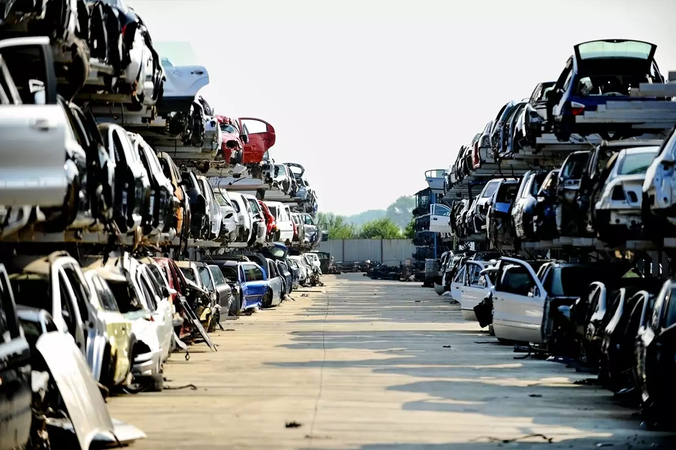
 Haruhiko Kuroda, governor of the Bank of Japan, speaks during an event hosted by business lobby Keidanren (Japan Business Federation) in Tokyo on Dec. 24, 2020. MUST CREDIT: Bloomberg photo by Kiyoshi Ota.
