Biden administration begins chilly faceoff with China in snow-covered Alaska #SootinClaimon.Com

#SootinClaimon.Com : ขอบคุณแหล่งข้อมูล : หนังสือพิมพ์ The Nation.

https://www.nationthailand.com/news/30403868

Biden administration begins chilly faceoff with China in snow-covered Alaska

InternationalMar 19. 2021
By The Washington Post · John Hudson

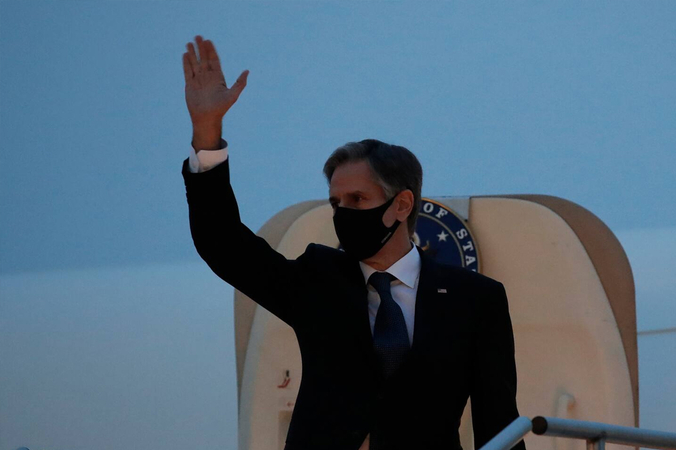
WASHINGTON – The Biden administration’s first faceoff with China began in Alaska on Thursday with a testy exchange between Secretary of State Antony Blinken, who chided Beijing for “cyberattacks on the United States” and “economic coercion toward our allies,” and China’s top diplomat, Yang Jiechi, who detailed America’s own human rights problems, citing recent Black Lives Matter protests.

The world’s two remaining superpowers presaged the meetings with elaborate public posturing, unveiling dueling agendas that appeared to offer little space for common ground amid disagreements over trade, Tibet, Hong Kong, the western Xinjiang region and the coronavirus pandemic.

Blinken cited China’s actions in those areas as threats to “the rules-based order that maintains global stability” at the top of Thursday’s meeting, which included Yang, China’s State Councilor Wang Yi and U.S. national security adviser Jake Sullivan.

Wang criticized new U.S. sanctions against Chinese officials for actions in Hong Kong, saying, “This is not supposed to be the way one should welcome his guests.”

After Wang ended his comments, government handlers began to usher the media out of the conference room, but Blinken waved at them to stay as the top U.S. diplomat added that the United States “is not perfect,” but throughout history it has dealt with its challenges openly. When the media was again ushered out, Yang told reporters to “wait” and raised a finger at the U.S. side, accusing Blinken of speaking in a condescending tone.

The ad hoc remarks and tense back-and-forth marked a sharp break from the heavily choreographed diplomatic engagements that usually occur between U.S. and Chinese officials. But this first meeting had long shown signs of breaking the ordinary mold.

No agreements and no joint statements are expected to result from the meetings in snow-covered Anchorage, U.S. officials said, as the Biden administration hangs onto some of the hard-line China policies implemented under President Donald Trump.

“We do not seek conflict,” Sulivan told his Chinese counterparts at the top of the meeting, “but we welcome stiff competition.”

The four top officials are scheduled to meet three times over the next two days in conversations that “will be pretty tough,” a senior administration official told reporters as temperatures dipped to 14 degrees outside Anchorage’s Hotel Captain Cook, the venue for the conversations.

Blinken set the stage for a confrontational encounter in remarks in South Korea before boarding a plane for Anchorage.

“We are clear-eyed about Beijing’s consistent failure to uphold its commitments, and we spoke about how Beijing’s aggressive and authoritarian behavior are challenging the stability, security and prosperity of the Indo-Pacific region,” he said.

Chinese officials immediately shot back.

“There’s no room for China to compromise on issues related to sovereign security and core interests, and its determination and will to safeguard its core interests is unwavering,” Chinese Foreign Ministry spokesman Zhao Lijian said.

Dispensing with the pomp and circumstance associated with official visits, the four officials are set to hold formal business meetings instead of stately affairs that entail banquets and cultural events. U.S. officials in Alaska said they wanted to avoid a simple recitation of talking points and create space for the two sides to discuss issues and ask each other questions.

“This will be a frank conversation in calling out Beijing’s actions,” State Department deputy spokeswoman Jalina Porter said.

Blinken arrived in Alaska after visits to U.S. treaty allies in Japan and South Korea, where he was joined by Defense Secretary Lloyd Austin. During his stop in Tokyo, the two governments issued a joint statement criticizing China’s treatment of Uyghur Muslims in western Xinjiang province and coercive and “destabilizing behavior” toward its neighboring countries.

“We will push back if necessary when China uses coercion or aggression to get its way,” Blinken said in Japan.

China’s official media organs initially sounded a positive note when the Anchorage meetings were announced, with an editorial in China Daily calling it a “welcome development, reviving hopes that the two countries will be able to demonstrate the wisdom and resolve to navigate ties away from conflict and confrontation.”

But as U.S. officials downplayed the meeting, calling it a “one-off” that entails no intention of “follow-on engagements,” Chinese messaging dimmed in response, with the Chinese ambassador to the United States, Cui Tiankai, saying, “We don’t hold overly high hopes.”

The challenge for U.S. officials will be in balancing what Blinken has called a “complex relationship” that has significant stakes for combating the coronavirus pandemic and climate change given Beijing’s status as the world’s largest emitter of greenhouse gases.

Blinken had made clear he would open the discussions from a tone of confrontation.

“Among the factors that drive the administration’s messaging is not wanting to expose a flank and invite criticism of being appeasing to Beijing,” said Danny Russel, a vice president at the Asia Society Policy Institute and a former career diplomat. “They are disabusing people of the expectation that this is going to produce some solutions or even negotiations. But it’s an opportunity to lay our priorities and level-set.”

U.S. officials told reporters ahead of the trip that Blinken and Sullivan would emphasize U.S. concerns over China’s “increasingly aggressive activities across the Taiwan Strait” and other issues China considers internal matters, such as its treatment of Uyghur Muslims and control over Taiwan. “We will absolutely make those points very clear,” said an official, who like others spoke on the condition of anonymity to discuss the sensitive discussions.

China, in turn, has indicated that it wants the Biden administration to reverse sanctions imposed by the Trump administration, including limitations on U.S. technology sales to Chinese telecommunications companies and chipmakers.

Given the wide gulf between the two countries, the chances of a breakthrough are limited, but they will have the benefit of very few distractions.

“When you’re in Anchorage, there are not Congress people around and there are a finite number of reporters,” Russel said. “You’re basically sequestered.”
AstraZeneca’s vaccine is ‘safe and effective,’ European regulator says, but link to rare blood clots is possible #SootinClaimon.Com

#SootinClaimon.Com : ขอบคุณแหล่งข้อมูล : หนังสือพิมพ์ The Nation.

https://www.nationthailand.com/news/30403867

AstraZeneca’s vaccine is ‘safe and effective,’ European regulator says, but link to rare blood clots is possible

InternationalMar 19. 2021

By The Washington Post · Loveday Morris, , William Booth, Luisa Beck

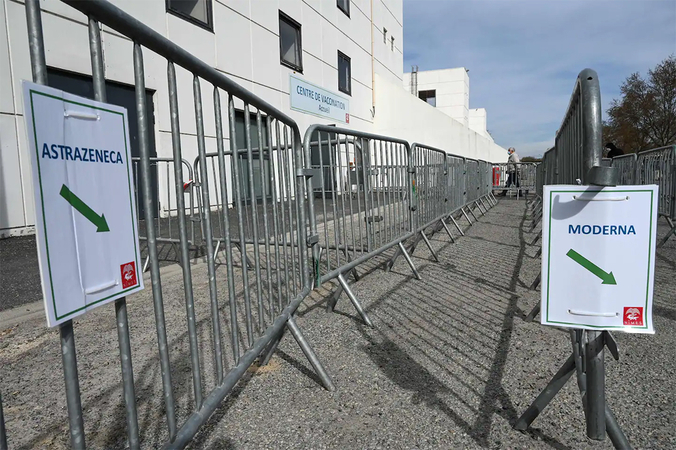
BERLIN – Europe’s medical regulator said Thursday that AstraZeneca’s vaccine was “safe and effective,” but that it could not rule out a link to highly unusual types of blood clots and said a warning would be added to the product.

Many of the countries in Europe that had paused the use of the Oxford-AstraZeneca vaccine – including Germany, France, Italy and Spain – announced that they would resume Friday or early next week. Ireland said it would announce its decision Friday, and Sweden said it would next week.

“If it was me, I would be vaccinated tomorrow,” said Emer Cooke, the head of the European Medicines Agency. “But I would want to know if anything happened to me after vaccination, what I should do about it, and that’s what we’re saying today.”

In addition to the warning, the agency said it would conduct outreach to health-care providers and the public about the signs and symptoms to watch for.

The suspensions of the AstraZeneca vaccine have split both the scientific community and the countries in Europe, with some continuing their vaccination campaigns as others warn that the extremely unusual and deadly nature of blood clots detected, even if in small numbers, warrant caution.

Norwegian experts said Thursday that their investigations into three cases of unusual clots among health workers there, one of whom died, found they were likely caused by an immune response to the vaccine.

Even with the European regulator reiterating that the benefits far outweigh the risks, experts say the damage has been done, with trust in the vaccine already diminished. The pause comes as several European countries warn they are at the beginning of a third wave of the pandemic, with an already slow pace of vaccinations and new more contagious variants spreading rapidly.

The potential ramifications stretch much further than the continent. Easier to store and handle than other products on the market, the offering from AstraZeneca, which developers have said will be distributed on a not-for-profit basis, is a major tool in the fight against the spread of the coronavirus in developing countries.

AstraZeneca has said that the 37 blood clotting incidents reported among the 17 million shots given in Europe are far lower than to be expected in the normal population, and the World Health Organization has said it continues to think that the benefits outweigh the risks.

Experts from the EMA agreed on both counts, but said their investigation was focused on a small number of normally extremely rare brain clots that have been reported in countries, including Germany and Norway, following vaccinations, including in younger people and notably among women.

Their panel said the vaccine “may be associated with” those cases, which include 18 incidents of a rare brain clot known as cerebral venous sinus thrombosis, three of which were reported in the United Kingdom. It’s a kind of stroke that can be deadly.

There have also been seven cases of an unusual condition in which blood clots form in vessels throughout the body. While such symptoms may be linked to the coronavirus itself, “we still feel that we see sufficient information to include a warning,” said Sabine Straus, head of the EMA’s safety committee.

She said that “younger women” seemed to be notably affected, but that it was too early to issue specific guidance, and the agency is looking into whether there could be increased risk for people on contraceptive pills. Women on the pill are already at a higher risk of the rare clots in the brain.

In Britain, where 11 million shots have been administered, almost double the amount across the entire European Union, the medical regulator continues to urge people to get their vaccines.

June Raine, the chief executive of the Medicines and Healthcare Products Regulatory Agency, Britain’s counterpart to the EMA, said they had received a “very small number” of reports of “an extremely rare form of blood clot” in the brain along with lower levels of platelets following vaccination, but that such events could occur among those who haven’t been vaccinated, or those who have coronavirus.

“While we continue to investigate these cases, as a precautionary measure we would advise anyone with a headache that lasts for more than 4 days after vaccination, or bruising beyond the site of vaccination after a few days, to seek medical attention,” she said in a statement on Thursday.

Concerns were first triggered in Austria in early March. As the country vaccinated medical workers, a 46-year-old nurse died of multiple blood clots. Another medical worker at the same hospital suffered a pulmonary embolism. Austria suspended use of that batch as a precaution.

Last week, Europe’s regulator said that it found no evidence of a causal link with the vaccine in those cases, and it maintains that there is no problem with a specific batch.

Given that decision, Germany had initially said it would go ahead with its AstraZeneca vaccinations, with its health minister assuring people of its safety on Friday. But it reversed course after recording eight cases of a rare type of brain clot among 1.6 million doses of vaccine administered. Half of them were in the course of a few days.

Germany said that among the 1.6 million doses of the vaccine administered, the eight cases of a rare type of blood clot, called cerebral venous sinus thrombosis, which occurs in a vein in the brain is higher than one would normally expect.

It said that among a group that size, one case could normally be expected. Johns Hopkins University says it normally affects about 5 people in 1 million each year.

Given the seriousness of the condition, Germany said it had little choice but to pause until there was an expert review.

Norway has reported four similar cases after administering 130,000 doses of the vaccine.

Steinar Madsen, medical director at the Norwegian Medicines Agency, said all four people were under 50 years old, and that two are now dead.

He described the type of blood clot as very rare. “What I can say is that this picture with low platelet counts, blood clots and internal bleeding is very unusual,” he said. “Even experts have not seen cases directly similar to this.”

Experts at Oslo University Hospital said Thursday they think there is a link to the vaccine and three cases of hospitalizations there.

“Our findings support the early theory that the patients had a strong immune response, which led to antibody creation which can ignite blood platelets and cause a thrombosis,” said Pål Andre Holme, the lead physician looking into the cases. He said he could not be certain that the vaccine was the cause, but “I see no other possibility as of today.”

He said he was “surprised” by his team’s findings and that he had not seen a similar response caused by other vaccines. He said his team is continuing its studies and cannot yet say whether the three health workers shared any underlying conditions that could explain why they had such a reaction to the vaccine.

Denmark has recorded one death in a 60-year-old recently vaccinated woman, who had “a highly unusual disease pattern,” which also included a low platelet count and blood clots in small and large vessels.

Spain has said it has had one such case in a 46-year-old teacher who died of a blood clot to the brain, which contributed to its decision to pause its rollout.

The EMA said there were three cases of the brain clots recorded among those who had had the vaccine in Italy.

Amid the pauses, there has been resistance from some parts of the scientific community, particularly in Britain.

Before the EMA annnoucement, Ian Douglas, a professor of pharmacoepidemiology at the London School of Hygiene and Tropical Medicine, said there appears to be no strong evidence that the events are causally related, though he didn’t rule it out.

He said that even if the vaccine was causing some concerning side effects, those most be weighed in a risk-benefit analysis: How serious are the side effects and how numerous when balanced against the drug’s benefits.

“We do this all the time with all medicines,” he said. “You have to weigh the risks and benefits.”

Douglas said he was deeply concerned that the actions taken by European countries would reduce use of this or any vaccine and that European countries acted rashly. To pause the AstraZeneca vaccine, which is desperately needed, requires a higher level of certainty of harmful effects than has been shown, he said.

“If you take action too early it is very easy to lose trust,” he said. “Confidence is easily lost and less easily regained.”

Experts in Germany have speculated that Britain may not be picking up as many similar cases because it began with vaccinations of older people, generally at lower risk of such complications and a population in which deaths might be less notable.

“I think the most likely explanation is different populations being vaccinated,” said Peter Arlett, head of data at the EMA said Thursday.

Klaus Cichutek, president of the Paul-Ehrlich-Instituts, Germany’s regulator, said they had analyzed “large data sets” from Britain and found few cases.

“But the focus and the gaze was not yet focused on such cases either,” he told German broadcaster ARD. “On the other hand, it may be the case that in the U.K. another age group, another population group, was vaccinated.”

Some have alleged that the decision in some countries to suspend the vaccine is political. Paul Hunter, a professor of medicine and infectious diseases at the University of East Anglia, said evidence of a link was weak and he believed herd mentality was at play.

“If Germany is doing this, we don’t want to be seen as less protective than the Germans,” he said. “Many people, including me, don’t think this is real. This is very likely a random association – and not a causal relationship.”

Hans Kluge, the World Health Organization’s Europe director, reiterated Thursday that blood clots occur all the time. The detection and reporting of such events is testament to strong surveillance systems, he said.

“In vaccination campaigns, it is routine to signal potential adverse events,” he said. “This does not necessarily mean that the events are linked to the vaccination.” The WHO is conducting its own assessment and has said details will be made public as soon as possible.

Even before the concerns over blood clots, AstraZeneca had been suffering from an image problem in Europe. Trial data came under fire from the scientific community, while there was also confusion over dosing and efficacy rates.

In Europe there had been reports that AstraZeneca appointments were not being taken up amid particular skepticism over its efficacy.

“Even if it turns out that the vaccine is harmless for most, it will unfortunately not be easy to rebuild trust,” Ulrich Weigeldt, chairman of the German Association of General Practitioners, told Redaktionsnetzwerk Deutschland on Thursday.

Myanmar is descending into chaos. A Yangon neighborhood is in the eye of the storm. #SootinClaimon.Com

#SootinClaimon.Com : ขอบคุณแหล่งข้อมูล : หนังสือพิมพ์ The Nation.

https://www.nationthailand.com/news/30403866

Myanmar is descending into chaos. A Yangon neighborhood is in the eye of the storm.

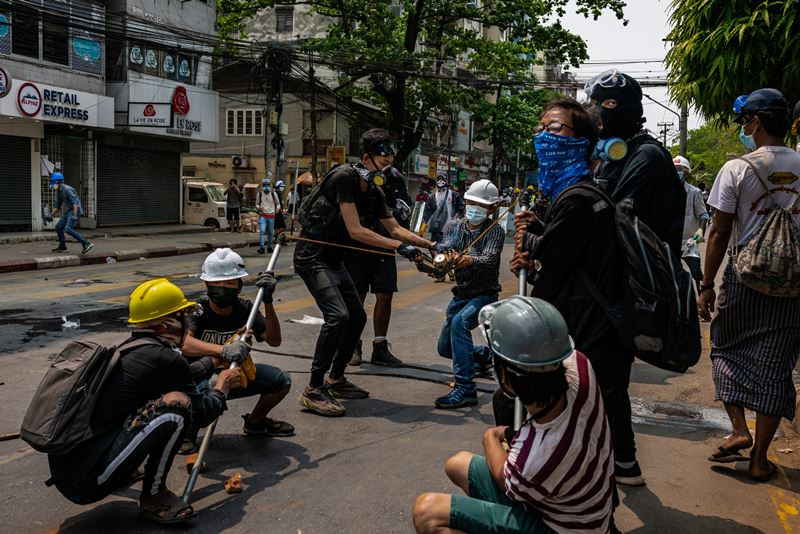
InternationalMar 19. 2021Anti-coup protesters with homemade shields line up during a protest in the Sanchaung neighborhood of Yangon, on March 14. MUST CREDIT: photo for The Washington Post.Anti-coup protesters with homemade shields line up during a protest in the Sanchaung neighborhood of Yangon, on March 14. MUST CREDIT: photo for The Washington Post.
By The Washington Post · Shibani Mahtani

When Moe and two friends moved into a shared apartment in Yangon in 2019, they chose the city’s Sanchaung neighborhood for its lively bars, restaurants and new malls. Striking out on their own for the first time, the young professionals thought they had finally made it as adults – and decorated their digs with stuffed toys and colorful cushions.

Then came the military coup.

Last week, Moe, 23, sat huddled in a bedroom, contemplating torture or death, with her housemates and 13 female protesters. Police officers were rattling on the door, she said, screaming for them to emerge and threatening to arrest them after another day of street battles between security forces and civilians.

“Before the coup, I could have never imagined my life would turn out this way,” Moe said. “I don’t think I could have ever been prepared.”

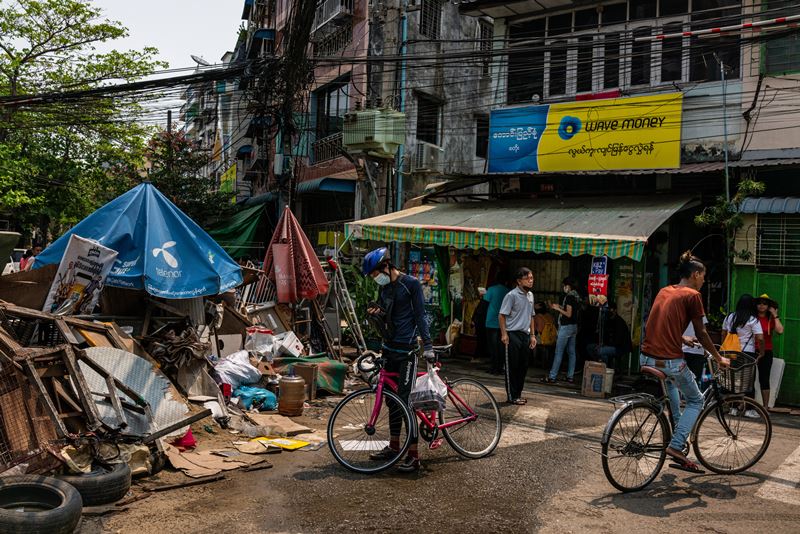
A food delivery employee checks his phone after encountering a barricade in the Sanchaung neighborhood of Yangon. The neighborhood has emerged as the heart of the anti-coup resistance. MUST CREDIT: photo for The Washington Post.
A food delivery employee checks his phone after encountering a barricade in the Sanchaung neighborhood of Yangon. The neighborhood has emerged as the heart of the anti-coup resistance. MUST CREDIT: photo for The Washington Post.
Since the military seized power Feb. 1, hundreds of thousands across Myanmar have protested the ouster of the elected government led by Aung San Suu Kyi. The armed forces, known for campaigns of slaughter against ethnic and religious minorities, have responded by turning weapons on unarmed civilians, killing at least 200, including more than 60 on Sunday, according to human rights groups. Two officials from Suu Kyi’s party have died in custody – one tortured so badly that all of his teeth were missing, according to human rights organizations and his family.

The descent into chaos is playing out most starkly in places such as Sanchaung, a jumble of streets wedged between the gleaming Shwedagon Pagoda and the murky Yangon River that has emerged as the heart of the resistance movement. Starting in 2010, when the military loosened its five-decade grip on power, the area boomed as middle-class families, expatriates and small businesses moved in, followed by malls and high rises. Many of its apartments and hair salons are now staging grounds for protesters.

“Everyone wanted to live here. It was very metropolitan. It represented the future of Myanmar,” said Htun, a 37-year-old Sanchaung resident. “We have lost everything: our freedoms first, then our businesses, our restaurants, our offices, and our townships, which have turned into a battlefield.”

Moe, Htun and others interviewed by The Washington Post spoke on the condition that only part of their names be published, citing security concerns. The military has condemned the protests as “riots” and “incitement,” and said authorities “are exercising restraint as peacefully as possible.”

Protesters throw a homemade smoke bomb toward security forces. Sanchaung residents have offered assistance and shelter to anti-coup demonstrators. MUST CREDIT: photo for The Washington Post.

Protesters throw a homemade smoke bomb toward security forces. Sanchaung residents have offered assistance and shelter to anti-coup demonstrators. MUST CREDIT: photo for The Washington Post.

Spontaneous protests flared immediately after the coup, but within 48 hours became more coordinated. Among the groups acting as representatives of the resistance is the General Strike Committee of Nationalities, a coalition of ethnic minority activists and others. After security forces cracked down on protesters at rally sites, such as the Sule pagoda, the group shifted tactics and organized protests mainly in Sanchaung, which it viewed as strategically located and especially receptive to its goals.

“Many Sanchaung residents experienced military atrocities before,” said Maung Saung Kha, a committee member, noting that ethnic minorities from around Myanmar, formerly known as Burma, had settled in the area. “They know the true colors of the military, and when the chance of revolution presented itself, they were ready.”

Sanchaung’s overwhelmingly young, middle-class and diverse community stepped up, helping demonstrators who poured in from other parts of the city. Htun, Moe and others began receiving protesters, providing them with food, water, shelter, protective gear and other essentials. When police fired rubber bullets or tear gas at the crowds, the dissidents would melt away into apartments and shops.

Volunteers arranged themselves into more than 10 rescue teams, providing medical assistance and security for anti-coup demonstrators. These groups patrol the neighborhood on bicycle, apprehending or threatening those suspected of working as informants for the security forces.

“Protesters feel safe here. They feel well taken care of,” Htun said.

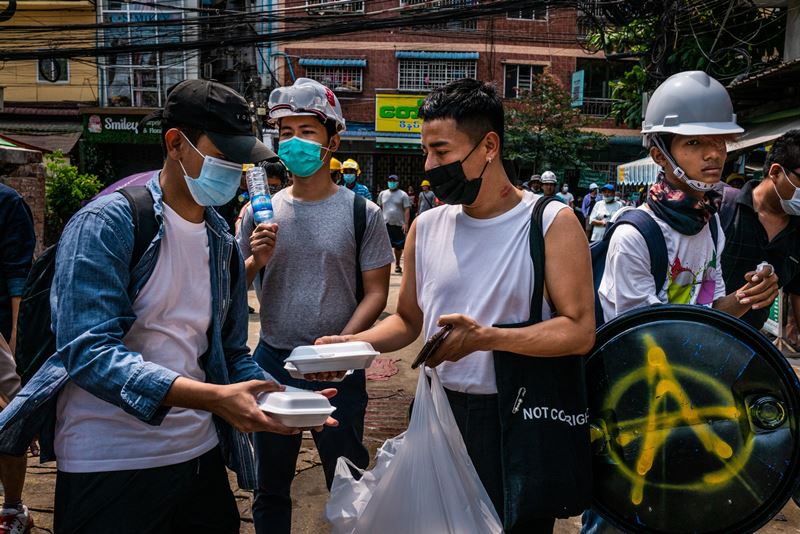
Sanchaung residents give food to the anti-coup protesters. MUST CREDIT: photo for The Washington Post.

Sanchaung residents give food to the anti-coup protesters. MUST CREDIT: photo for The Washington Post.

On March 8, security forces changed tactics, according to protesters and residents in Sanchaung. After using rubber bullets and stun grenades to disperse protesters – who once again took shelter in safe houses – security forces sealed off a section of Sanchaung, trapping hundreds of demonstrators. Police and soldiers threatened to arrest and “punish” anyone caught helping the resistance fighters, according to those who heard the warnings.

May Lay, 38, who runs a beauty salon on one of the barricaded streets, said 13 protesters were sheltering in her premises when the security forces descended on the neighborhood late in the afternoon.

Peering out from her salon, May Lay saw officers break down her neighbor’s door and forcibly remove the occupant and five protesters he was hiding. More than 2,000 have been arrested or detained since Feb. 1, according to the Assistance Association for Political Prisoners (Burma); some have not been seen or heard from since.

Knowing that she and the black-clad protesters in her salon had to leave quickly, May Lay turned to camouflage. She dressed the protesters in sarongs, T-shirts, blouses and flip-flops to make them look like ordinary residents. One protester had identifiable gray hair, which May Lay dyed black. Armed with decoy bags of trash, the protesters sneaked out, telling officers they were on their way to buy groceries.

Others had closer encounters. On a parallel street, police officers saw Moe and her housemates peering out from behind a curtain, and threatened to shoot them, she said. Officers then demanded that the group – the three housemates and the 13 protesters – come down to the street and comply with investigators.

The group rushed into a bedroom as officers ascended to their fifth-floor apartment and tried unsuccessfully to enter, Moe said. The missing doorknob and bits of metal that remain in its place are a testament to how close they came.

Salai Thurein, a 35-year-old member of one of the local rescue teams, said it was especially challenging to hide the protesters’ gear, including makeshift metal shields and hard hats. But virtually every resident within the barricaded area took in some equipment, he said, stashing it in backyards, on rooftops and in drains.

Security forces eventually pulled back early the next day, after arresting several dozen protesters. They took revenge on Sanchaung by smashing cars and destroying shops – but for residents and protesters, that was the best-case scenario.

“We averted a catastrophic event,” Htun said.

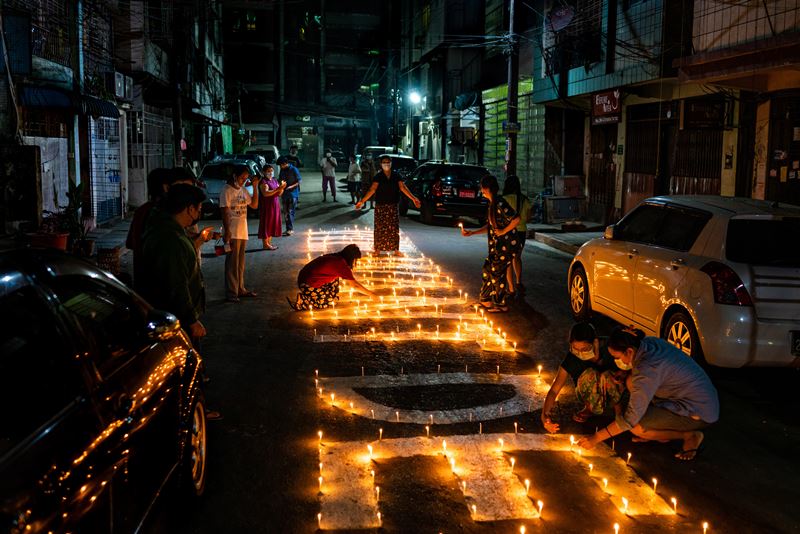
Residents light candles as part of a protest in Sanchaung to pray for those who have died during the protests. MUST CREDIT: photo for The Washington Post.

Residents light candles as part of a protest in Sanchaung to pray for those who have died during the protests. MUST CREDIT: photo for The Washington Post.

Protests against the military’s power grab have intensified and spread. On Sunday, Hlaing Tharyar, an impoverished neighborhood packed with garment factories, became the latest flash point. Soldiers and police took a far more violent approach there than in Sanchaung, killing at least 30, according to doctors at a nearby hospital. Hlaing Tharyar and several other neighborhoods are now under martial law, meaning perceived crimes can be punished with hard labor or the death penalty.

Some protesters say they will soon abandon peaceful tactics and arm themselves, threatening a significant escalation of an already volatile situation. Myanmar is awash with weapons after decades of ethnic conflict.

“We now consider it a battle,” said Naing Min, a 27-year-old physician who witnessed the killings in Hlaing Tharyar. “They have guns, and we have knives, slingshots and homemade weapons. We might be able to kill them, too.”

A committee representing members of Suu Kyi’s National League for Democracy, who were ousted in the coup, said in a statement that people have “the full right to defend themselves or others” in response to the military’s actions.

Longtime observers of Myanmar are warning of an imminent major lethal crackdown – similar to the one the military inflicted on the Rohingya in 2017, in which thousands were killed. The Special Advisory Council for Myanmar, which comprises former United Nations officials who investigated the Rohingya abuses, said in a statement that the military’s actions, including Internet blackouts, are consistent with “past major military offensives.”

“Without immediate political intervention, a major crackdown with fatal consequences is inevitable,” the statement added.

Asian American leaders fear conflict with China will fan racist backlash #SootinClaimon.Com

#SootinClaimon.Com : ขอบคุณแหล่งข้อมูล : หนังสือพิมพ์ The Nation.

https://www.nationthailand.com/news/30403853

Asian American leaders fear conflict with China will fan racist backlash

InternationalMar 18. 2021

By David Nakamura
The Washington Post

WASHINGTON – President Joe Biden has sought to blunt a reported surge in anti-Asian bias incidents by ordering the federal government not to use xenophobic language to describe the coronavirus and calling accounts of “vicious hate crimes” during the pandemic “un-American.”

But Asian American leaders are warning that a deepening geopolitical confrontation between the United States and China is contributing to the heightened suspicion, prejudice and violence against their communities in ways that could continue to intensify even after the pandemic begins to subside.

Advocates called Biden’s rhetorical efforts a welcome corrective to former president Donald Trump, who railed against the “China virus” and “kung flu.” Yet the broadening conflict among the world’s two largest economies – on trade, defense, 5G networks, cybersecurity, the environment, health security and human rights – has contributed to a growing number of Americans calling China the “greatest enemy” of the United States, according to a Gallup poll this week.

The survey found that 45% of respondents named China as the top threat, more than twice as many as a year earlier, when the country was ranked on par with Russia. Democrats and Republicans have voiced bipartisan support for a tougher U.S. policy, including economic sanctions on Beijing over cyber intrusions, human rights violations and crackdowns on democracy in Hong Kong.

“When America China-bashes, then Chinese get bashed, and so do those who look Chinese. American foreign policy in Asia is American domestic policy for Asians,” said Russell Jeung, a history professor at San Francisco State University who last year helped found Stop AAPI Hate, short for Asian American and Pacific Islanders, an advocacy group that has tallied more than 3,000 incidents of bias and hate during the pandemic.

“The U.S.-China cold war – and especially the Republican strategy of scapegoating and attacking China for the virus – incited racism and hatred toward Asian Americans,” Jeung said.

A number of violent assaults on Asian Americans over the past two months, including some that went viral after being caught on video, have drawn political and media attention to escalating fears over public safety. The slaying of eight people, including six women of Asian descent, at three Georgia spas on Tuesday sparked demands for an urgent response from authorities. Police arrested Robert Aaron Long, a White man, in connection with the killings and cited as a potential motive Long’s interest in eliminating “sexual temptation.”

Not all of the cases appear to have a link to anger over the pandemic or were necessarily motivated by racial resentment. But advocates said they have collected enough anecdotal evidence through self-reporting portals set up last year by community groups to illustrate that attacks are spiking.

And they are fearful that the intensifying competition between Washington and Beijing is contributing to scapegoating of Asian Americans in echoes of earlier periods of widespread hostility during geopolitical tumult and heightened nationalism in the United States.

They pointed to the Chinese Exclusion Act in 1882 that banned the immigration of Chinese laborers amid national economic anxiety, the internment of more than 120,000 Japanese Americans during World War II, and attacks on mosques and Muslim Americans in the wake of 9/11.

“For as long as Asians have been in America, we’ve been scapegoated, treated as outsiders and seen as untrustworthy. Too often, these prejudices are exploited for political gain,” said Christopher Lu, who served as White House Cabinet secretary and deputy labor secretary in the Obama administration. “As troubling as our current situation is, I am concerned that things are going to get much worse as U.S.-China tensions grow.”

Asian American leaders acknowledged the need for the United States to develop a tougher strategy to counter the Chinese Communist Party’s influence campaign across the globe. The question, advocates said, is how the federal government and elected officials speak publicly about the challenge and how far they go to counter it.

Trump sought to blame Beijing for the outbreak of the pandemic, employing xenophobic language that was echoed by his supporters and other Republican officials and condemned by Democrats.

But in April, weeks after the onset of the pandemic, Biden also drew heat from Democratic Congress members and community groups for a campaign advertisement that accused the 45th president of having “rolled over for the Chinese” in managing the coronavirus and cast China as a looming threat.

Biden’s campaign apologized for the language and aired a revised version of the ad. But the episode illustrated the intensifying effort of both parties to appear tougher on Beijing.

“It is clearly a difficult line to walk, however I do believe there is a way of disagreeing with China’s policies without denigrating the Chinese people themselves,” said Rep. Judy Chu, D-Calif., chair of the House Congressional Asian Pacific American Caucus.

Chu praised Biden for issuing an executive action in January aimed at barring federal agencies from blaming China for the pandemic and instructing the Justice Department to improve data collection on hate crimes. In a prime-time address to the nation last week about his administration’s coronavirus response, Biden decried attacks and harassment against Asian Americans who have been “forced to live in fear for their lives just walking down streets.”

“It must stop,” Biden said.

White House aides, including domestic policy adviser Susan Rice and senior adviser Cedric Richmond, met virtually with Asian American advocacy groups two weeks ago to hear their concerns. They pledged to use the power of the administration to combat violence but offered few specifics, according to activists who participated who, like others, spoke on the condition of anonymity to discuss a private conversation.

Chu and others have pushed Biden to elevate more Asian Americans to high-level jobs in his administration, noting there is only one Cabinet-level official of East Asian descent, Katherine Tai, who was confirmed Wednesday as U.S. trade representative.

Attorney General Merrick Garland met with advocates on a video call Wednesday that lasted about 45 minutes, telling them he recognized that regardless of whether the Georgia killings were racially motivated, he understood the larger context in which the crime took place and the sense of alarm within the community, according to a person who participated.

Asian American leaders have raised questions about the Justice Department’s “China Initiative,” launched by the Trump administration in 2018, to amplify ongoing U.S. government efforts to counter the Chinese government’s attempts to steal billions of dollars a year in U.S. intellectual property.

Advocates have said the program has led to unfair racial profiling of scientists and academics of Chinese descent. They pointed to the case of University of Kansas researcher Franklin Tao, a permanent U.S. resident who was indicted in 2019 and accused of failing to disclose an alleged teaching contract with a Chinese university while conducting federally funded research. His lawyers have denied the charges.

“Publicly available information suggests at least 60 cases that have been filed had a reference to the China Initiative. Only a quarter of them have actually involved charges of espionage,” said John Yang, executive director of Asian Americans Advancing Justice, which has advocated on behalf of Tao, whose case is pending. Yang’s organization has asked the Biden administration to put a moratorium on the program and conduct a review of it.

“This goes to the perpetual foreigner stereotype we always talk about,” Yang said, “where in various points in history, we are targeted unfairly.”

Justice Department officials met with Asian American advocates two weeks ago, but they declined to comment on the future of that program. They have pledged to develop new grant programs for local police agencies to report on hate crime data and efforts to translate federal hate crime reporting portals into Chinese and other Asian languages.

At her confirmation hearing last week, Lisa Monaco, Biden’s nominee for deputy attorney general, offered credit to the Trump administration for focusing on cyberthreats from China and said she expects to “double down” on the strategy. “This is an area I think we have a great deal more to do,” she told senators.

On Wednesday, the Biden administration announced economic sanctions against two dozen Chinese and Hong Kong officials. The move came in advance of Secretary of State Antony Blinken’s first meeting with Chinese counterparts in Alaska later this week.

Last week, during a House Foreign Affairs Committee hearing, Rep. Ted Lieu, D-Calif., asked Blinken about concerns among some advocacy groups that restrictions on assignments for U.S. diplomats has disproportionately blocked Asian American Foreign Service officers from work in Asian countries.

“It sends a false message that people who look like me would be more disloyal,” Lieu told Blinken, who said he shared the concerns about inequities in the system. “As you manage the relationship with China, I want to remain vigilant that fear of a foreign country does not negatively impact the Asian American community.”

Asian Americans see shooting as a culmination of a year of racism #SootinClaimon.Com

#SootinClaimon.Com : ขอบคุณแหล่งข้อมูล : หนังสือพิมพ์ The Nation.

https://www.nationthailand.com/news/30403852

Asian Americans see shooting as a culmination of a year of racism

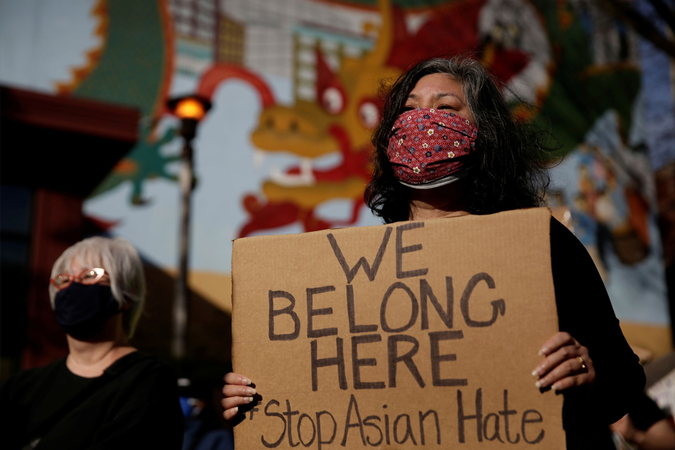
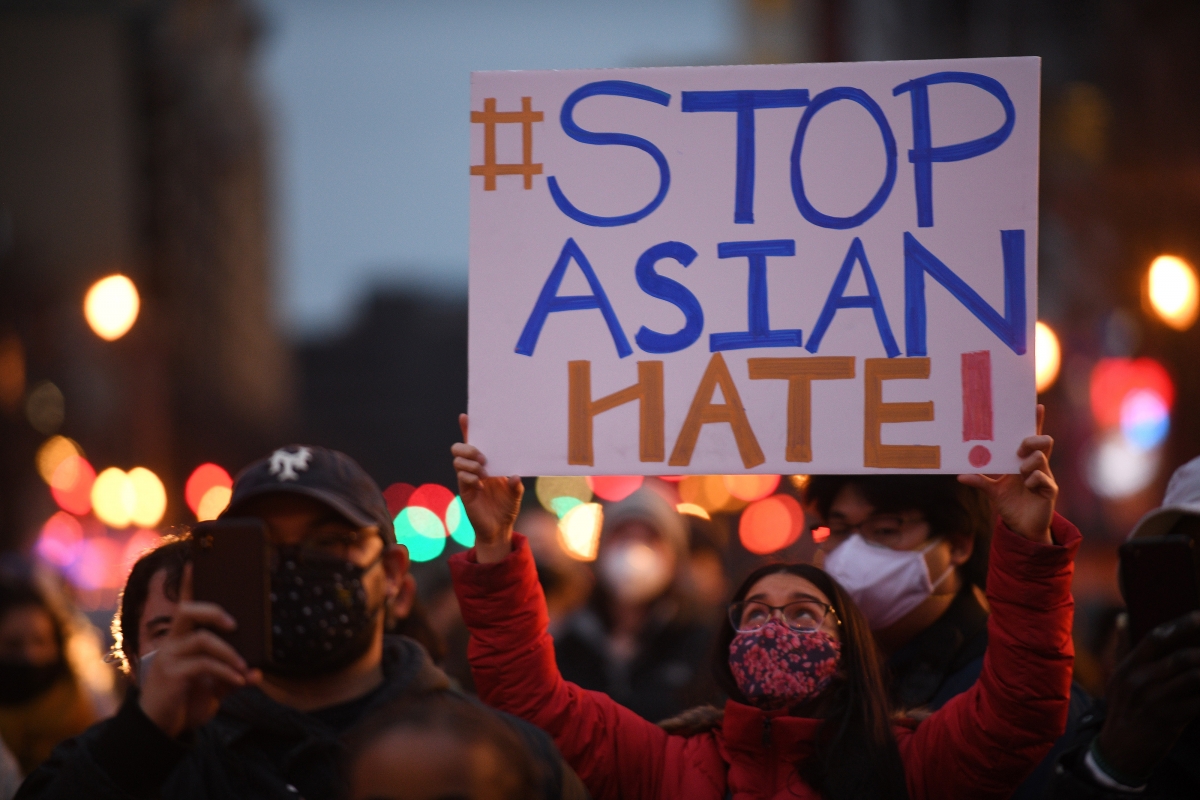
InternationalMar 18. 2021A pedestrian walks in the neighborhood of Chinatown in Manhattan, N.Y., on Wednesday, March 17, 2021. Police said the Atlanta, Ga.-area suspect told them the shooting was not racially motivated, but to many Asian Americans, the intent seemed clear: Six of the eight victimes were Asian women, and the shooter targeted spas known for employing Asians. Photo by Jeenah Moon for The Washington PostA pedestrian walks in the neighborhood of Chinatown in Manhattan, N.Y., on Wednesday, March 17, 2021. Police said the Atlanta, Ga.-area suspect told them the shooting was not racially motivated, but to many Asian Americans, the intent seemed clear: Six of the eight victimes were Asian women, and the shooter targeted spas known for employing Asians. Photo by Jeenah Moon for The Washington Post
By Silvia Foster-Frau, Marian Liu, Hannah Knowles, Meryl Kornfield
The Washington Post

As Helen Kim Ho learned that a White man with a self-described sex addiction was charged with killing eight people – including six Asian women – at spas in the Atlanta area on Tuesday, she imagined the stereotypes of Asian women that must have run through his head.

“We’re not really Americans, we’re perpetually foreigners, and that idea plays out with women as being oversexualized,” said Ho, a Korean American and a founder of the advocacy group Asian Americans Advancing Justice in Atlanta. “All of that had to have played out in this man’s own mind. In addition to the unspoken notion that Asian people are easy targets.”

Atlanta police said the suspect told them his actions were not racially motivated – even though the shooter targeted businesses known for employing Asians, and six victims were Asian women. The suspect claimed he had a “sex addiction,” according to police, and wanted to eliminate temptation, which sounded to many women as if their sexuality was somehow to blame.

The gunman’s intent seemed crystal clear to Asians living in Atlanta and across the nation who have long had to confront stereotyping, hateful harassment and even violence – and who say things have gotten even worse amid the coronavirus pandemic.

For Asian women, the moment felt particularly threatening.

A vigil and march to remember and honor the eight lives lost Tuesday in Atlanta, Ga., takes place in the Chinatown area of the District of Columbia on Wednesday, March 17, 2021. Photo by Astrid Riecken for The Washington Post

A vigil and march to remember and honor the eight lives lost Tuesday in Atlanta, Ga., takes place in the Chinatown area of the District of Columbia on Wednesday, March 17, 2021. Photo by Astrid Riecken for The Washington Post

As soon as Crystal Jin Kim heard about the shooting, she reached out to her mother and father, who immigrated to the United States from Korea. In a text, she urged them “to be safe, to be careful, and to pray.”

She thought about rescheduling one of their upcoming doctor appointments, and she worried about her mother going to work at a small business in the Atlanta area – she asked that the type of business not be named for fear of her mother being targeted.

“Since I was a kid I’ve heard racial slurs yelled at me or my parents, or witnessed my parents being treated as if they were stupid because their English isn’t perfect, even though my mom’s English is really good,” said Kim, a second-generation Korean American. “Those small moments really add up. I don’t think we’ve ever spoken up against those small moments. . . . It’s easier to try not to think about it, or to try to let it go. To try to bury the hurt.”

People have leaned out of cars to scream “Asian!” at her, she said, and she has gotten comments about how she must like Jackie Chan, the Hong Kong martial artist and actor. As an Asian woman, she said men often ascribe characteristics to her that don’t reflect her personality – that’s she’s a pushover, or soft-spoken.

“Really, I’m not – I’m very talkative and extroverted,” Kim said. “It’s just people having these assumptions and treating me like a perfect Asian girl. Not even a woman, but a girl.”

David Palumbio-Liu, a Stanford professor and author of “Asian/American: Historical Crossings of a Racial Frontier,” said there is a long history, extending well before the Vietnam War, of the fetishization of and murderous intent toward Asian women. He cited the Broadway musical “Miss Saigon,” which critics have said romanticizes an imperialistic relationship and portrays Asian women as acquiescent and self-sacrificing.

The suspect “said it wasn’t racially motivated, but on the other hand, he’s going specifically to these spas where Asian women work precisely to serve the sexual fantasies of white males,” Palumbio-Liu said in an interview, “so to disentangle them is really to do a disservice to the fact that these things are so linked together.”

The shooting made visible the worst-case scenarios many Asians living in the United States had feared. Many sadly expressed a similar sentiment: We knew this was coming.

The coalition Stop AAPI Hate has been documenting anti-Asian attacks since the pandemic started last March and says there have been nearly 3,800 hate-fueled incidents against the Asian American and Pacific Islander community in the U.S. – a number the group says is likely a fraction of the true number. About 3 in 10 Asian adults said they’ve experienced jokes or slurs about their race or ethnicity during the pandemic, according to Pew Research – the highest percent among all races.

More than 68% of documented reports of anti-Asian harassment and violence since the beginning of the coronavirus pandemic have been from women.

“I’ve never been this afraid to be Asian in America,” said Dorothy Kuo, 38, who attempted to explain to her 6-year-old daughter what had happened in their community.

“I told her ‘Mommy is having a hard time focusing today because last night there were eight people killed.’ I just told her, honestly, what happened,” said Kuo, who is Korean American, like several of the victims.

Kuo said she felt it was important to tell her daughter so she understands the world she’s stepping into, one in which she might have to be more careful as an Asian woman.

“I’ve been refused seating at a restaurant,” Kuo said, “and even then I’ve never felt what I feel now.”

Jane Kim Coloseus, 32, grew angry Wednesday when Atlanta police declared it was too soon to say whether the slayings were racially motivated.

“As an Asian woman, it brings out a lot of the experiences or harassment we have received throughout our lives in general, and just have that completely invalidated because of what the suspect is saying,” said Coloseus, a Korean American who is executive director of the nonprofit Her Term, which recruits women to run for office in Georgia.

She has long felt like she had to be more guarded – whether it’s in the workplace or walking down the street – because of anti-Asian sentiments and the sexualization of Asian women’s bodies. Asians have long been part of the fabric of the United States, she said, yet have “been kept on the sidelines as the model minority,” their voices ignored or muted.

“To me the equation is pretty straightforward,” she said of the shooter’s intent. “It is racially motivated.”

U.S. subpoenas Chinese companies over possible security risks on eve of summit #SootinClaimon.Com

#SootinClaimon.Com : ขอบคุณแหล่งข้อมูล : หนังสือพิมพ์ The Nation.

https://www.nationthailand.com/news/30403834

U.S. subpoenas Chinese companies over possible security risks on eve of summit

InternationalMar 18. 2021

By The Washington Post · Jeanne Whalen

WASHINGTON – The Biden administration said Wednesday that it has served subpoenas on Chinese companies to seek information on possible national-security risks, showing that at least some of the Trump administration’s tough policies on China are taking root in the new administration.

The announcement of the subpoenas came as Secretary of State Antony Blinken and national security adviser Jake Sullivan prepared to meet their Chinese counterparts in Anchorage, Alaska, on Thursday, the first administration meeting with Chinese officials.

In issuing the subpoenas, the Commerce Department is implementing an executive order signed by President Donald Trump in May 2019 that allowed the executive branch to prohibit the purchase of foreign-made communications equipment or services that could pose national-security risks.

The Commerce Department declined to list which companies it subpoenaed, saying only that they “provide information and communications technology and services (ICTS) in the United States.”

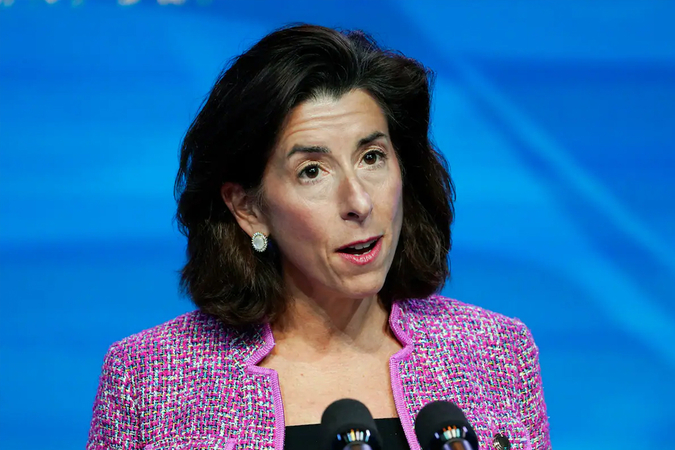
“The Biden-Harris Administration has been clear that the unrestricted use of untrusted ICTS poses a national security risk,” Commerce Secretary Gina Raimondo said in a statement.

“In issuing subpoenas today, we are taking an important step in collecting information that will allow us to make a determination for possible action that best protects the security of American companies, American workers, and U.S. national security,” she said. “The administration is firmly committed to taking a whole-of-government approach to ensure that untrusted companies cannot misappropriate and misuse data and ensuring that U.S. technology does not support China’s or other actors’ malign activities.”

One trade lawyer speculated that the list of subpoena recipients could potentially include the five companies the Federal Communications Commission last week deemed threats to national security – Huawei, ZTE, Hytera Communications., Hangzhou Hikvision Digital Technology, and Dahua Technology.

A Trump-era law requires the FCC to maintain a list of communications equipment that poses “an unacceptable risk to national security.”

Huawei, which has rejected accusations that it presents security risks, declined to comment on the subpoenas. The other companies could not immediately be reached for comment.

Rod Hunter, a lawyer with Baker McKenzie and a former national security official in the George W. Bush administration, said the timing of the announcement, a day before the Anchorage talks, appeared significant.

“It’s kind of interesting they are doing it on the eve of the meeting,” he said. “You have to think this is not by accident they are issuing it now.”

The Trump administration designed the executive order to close what it saw as a gap in U.S. regulation. Other laws allowed the government to stop the military or other federal agencies from purchasing certain technology, or to stop foreign companies from acquiring sensitive U.S. technology companies.

The May 2019 executive order, which comes into full force this month, after the publication of the implementing rules, adds a layer of regulation by allowing the government to stop U.S. companies from buying some equipment or services from entities deemed risky.

“The rule closes the circle at addressing threats to U.S. critical infrastructure by foreign telecom equipment that cannot be addressed by export controls, foreign direct investment controls, or procurement limitations,” said Kevin Wolf, a former senior Commerce official who is now a partner at the law firm Akin Gump Strauss Hauer & Feld.

In countering China, U.S. pitches South Korea a sensitive effort involving Japan #SootinClaimon.Com

#SootinClaimon.Com : ขอบคุณแหล่งข้อมูล : หนังสือพิมพ์ The Nation.

https://www.nationthailand.com/news/30403833

In countering China, U.S. pitches South Korea a sensitive effort involving Japan

InternationalMar 18. 2021

By The Washington Post · Dan Lamothe

SEOUL – The Biden administration made a pitch to South Korean officials on Wednesday for greater collaboration with the United States and Japan as they counter China, a course that could be challenging after years of disagreements between Seoul and Tokyo.

Secretary of State Antony Blinken and Defense Secretary Lloyd Austin visited Seoul as part of the administration’s first overseas trip and shortly before Thursday’s high-stakes meeting between a U.S. delegation led by Blinken and senior Chinese officials in Anchorage, Alaska. The United States is expected to confront Beijing on several issues, including its increasingly aggressive military posture, documented human rights abuses and economic pressure on other countries.

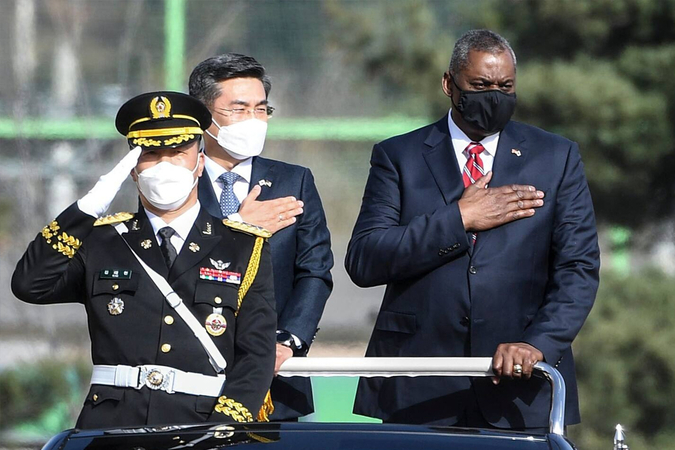
Austin, the retired Army general who Biden selected to be defense secretary, took in a South Korean military ceremony that saw him pass by troops in brightly colored uniforms in a convertible, then lauded South Korea as a “critical partner for our shared priorities in the region,” including upholding “the rules-based international order.”

U.S. officials have said repeatedly that China wants to upset that order, which includes a network of alliances and partnerships devoted to keeping peace that dates back to shortly after World War II.

“You have become a key provider of security and stability in the Indo-Pacific region, and for that we are grateful,” Austin said in opening remarks at a bilateral meeting with Suh Wook, the South Korean defense minister.

The defense secretary added that “given the unprecedented challenges” created by North Korea and China, the U.S.-South Korean alliance “has never been more important.”

Pentagon spokesman John Kirby said in a statement on Wednesday after the meeting that Austin and Suh discussed issues that included “how to rejuvenate trilateral security cooperation,” a reference to collective efforts with Japan.

Ned Price, a State Department spokesman, said in a separate statement that Blinken “affirmed the importance of trilateral cooperation among the United States, Japan and the Republic of Korea in ensuring a free and open Indo-Pacific.”

Similar themes came up in Tokyo, which Austin and Blinken also visited this week. At a news conference with Austin and senior Japanese officials, Blinken said “greater trilateral cooperation” with South Korea “will make us stronger.”

But there are still challenges in making that happen.

While the United States has close relationships with both countries that includes tens of thousands of U.S. troops based in each of them, Japan and South Korea’s history includes conflict on and off for centuries, and strains in recent years on several fronts. They include continued disagreements about how to address World War II-era abuses of Korean women by Japanese soldiers, maritime territorial disputes, and what to call the Sea of Japan, the body of water between the two nations.

Japan and South Korea have joined the United States at times to counter North Korea, including flying fighter jets over the Korean Peninsula in a combined show of force.

Victor Cha, an expert on the region who served in the administration of President George W. Bush, said in a call with reporters last week that Japan-Korea relations “are about at the worst they’ve ever been.” Among the issues Cha cited was a 2019 dispute in which South Korea threatened to stop sharing intelligence with Japan before agreeing to continue to shortly before a deal between the two countries was set to expire.

“This will certainly be, I think, maybe not as much a public part of the discussion, but I think it’ll certainly be something that the United States will impress upon both allies privately, that we need the relationship to improve,” said Cha, a senior vice president at the Center for Strategic and International Studies in Washington.

A senior defense official, asked in Seoul about the discussion, said that the trilateral relationship between the United States, South Korea and Japan is important. The official, speaking on the condition of anonymity because of the sensitivity of the issue, said it ideally includes not only information sharing, but looking for ways to increase the ability of the countries to operate together.

One option that has been floated in Washington is inviting South Korea to join the Quadrilateral Security Dialogue, known as the “Quad.” The coalition, which includes India, Australia, Japan and the United States, is focused on shared security concerns.

South Korea has not been asked to join it by the United States and was not again on Wednesday in the meeting between Austin and Suh, the senior defense official said.

Joining would come with challenges for South Korea, whose largest trade partner is China. In 2017, after the United States deployed a Terminal High Altitude Area Defense missile-defense system on South Korea, China responded by cutting into its tourism and sales in South Korea. They eventually mended ties, focusing instead on threats posed by North Korea.

Japan’s failure to recognize same-sex marriage is unconstitutional, court rules #SootinClaimon.Com

#SootinClaimon.Com : ขอบคุณแหล่งข้อมูล : หนังสือพิมพ์ The Nation.

https://www.nationthailand.com/news/30403832

Japan’s failure to recognize same-sex marriage is unconstitutional, court rules

InternationalMar 18. 2021

By The Washington Post · Simon Denyer, Julia Mio Inuma

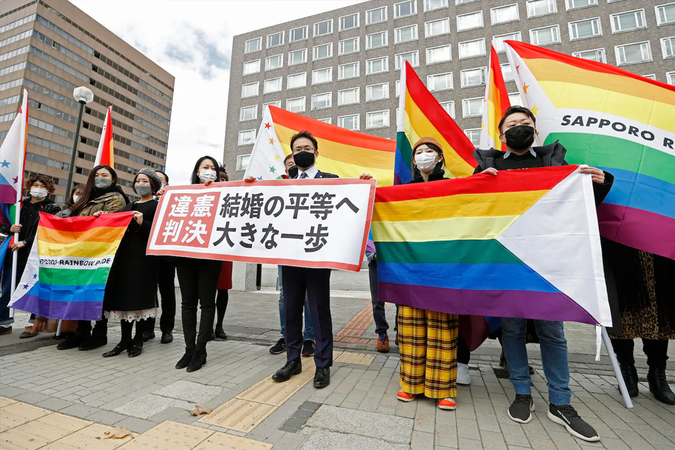
TOKYO – A Japanese court ruled on Wednesday that the government’s failure to recognize same-sex marriages is unconstitutional, a landmark decision that brought joy and hope to the LGBT community.

The case is the first of five similar lawsuits unfolding in Japanese courts, and it brings new pressure on the government to catch up with public opinion and legalize same-sex unions.

But the district court in the northern city of Sapporo denied a request by three same-sex couples for compensation of about $9,200 each for psychological damage after the authorities failed to register their marriages.

The judge cried as she delivered the ruling, local media reported, as did some of the plaintiffs.

“I was in tears hearing her clearly say it was unconstitutional,” one of the anonymous plaintiffs was quoted as saying by Hokkaido Cultural Broadcasting. “It doesn’t mean we can get married tomorrow, so I want to continue our efforts moving forward.”

Another plaintiff said she hoped this would be “the first step for Japan to change.”

Same-sex marriage is legal in some 29 countries or territories, but Taiwan is alone in Asia in legalizing same-sex unions, which it did in 2019.

Japan’s refusal to recognize same-sex marriages is not only humiliating for couples, it means that they are treated as individuals for tax and pension purchases, and face complications with inheritance, adoption and visa rights.

Those in same-sex relationships do not have the legal right to visit their partner in the hospital or receive medical updates, nor make decisions on their partner’s behalf, although some municipalities issue certificates to help get around these sorts of obstacles.

“This ruling is a big step forward,” said Kanae Doi, Japan director at Human Rights Watch. “While the Supreme Court would eventually decide whether the Diet [parliament] needs to act or not, which will be several years away, today’s ruling will affect the already supportive Japanese public opinion on marriage equality, which would make it harder for the Supreme Court to neglect.”

Japan is the only country in the Group of Seven rich industrialized nations not to recognize same-sex marriages. Last year, the American Chamber of Commerce in Japan said this made the country a less attractive option for LGBT couples and urged Japan to “correct this inequality.”

“It’s amazing, I am so thrilled,” said Masa Yanagisawa, head of prime services at Goldman Sachs Japan and a board member of the NGO Marriage for All Japan. “This is a landmark ruling, and I hope it will lead to heightened awareness that marriage is a right that should be afforded to all people equally.”

Although some Japanese multinational companies have recently changed their policies to recognize same-sex couples, many others do not, and this makes it harder for them to hire and retain LGBT staff, Masa said.

Many lesbian, gay, bisexual and transgender people in Japan also face discriminatory comments at work, surveys show.

Japan’s constitution defines marriage as being based on “the mutual consent of both sexes,” with the “equal rights of husband and wife as a basis.”

The government says this precludes same-sex marriages, but the plaintiff’s lawyers successfully argued the article’s intent was to preserve gender equality and individual respect, and that denying same-sex marriages violates a separate constitutional provision ensuring the right to equality, the Kyodo news agency reported.

Chief Cabinet Secretary Katsunobu Kato said the government does not agree that civil law on marriage is unconstitutional, but will “carefully watch” the outcomes of the ongoing court cases.

Homosexual sex has been legal in Japan since 1880, but social attitudes keep the LGBT community largely invisible and many have yet to come out to their families or employers.

Nevertheless, attitudes are changing. Polls in the past decade show narrow majorities in favor of same-sex marriage, while a survey by advertising agency Dentsu in 2018 found that more than 78% of people between ages 20 and 59 approve of same-sex marriage. Some 147 businesses and organizations in Japan have also signed up to a campaign to legalize same-sex marriage.

Li Italiaander, a 32-year-old nonbinary American in a relationship with a Japanese woman, said current rules made it harder for them to remain in Japan, since they do not qualify for a spouse visa.

“Every year, I have to worry about not being able to renew my visa and us potentially being separated,” they said. “The ruling in Sapporo is a huge step toward something that could be life-changing for us.”

E.U. announces vaccine passport plan to enable summer travel #SootinClaimon.Com

#SootinClaimon.Com : ขอบคุณแหล่งข้อมูล : หนังสือพิมพ์ The Nation.

https://www.nationthailand.com/news/30403831

E.U. announces vaccine passport plan to enable summer travel

InternationalMar 18. 2021

By The Washington Post · Rick Noack, Quentin Ariès

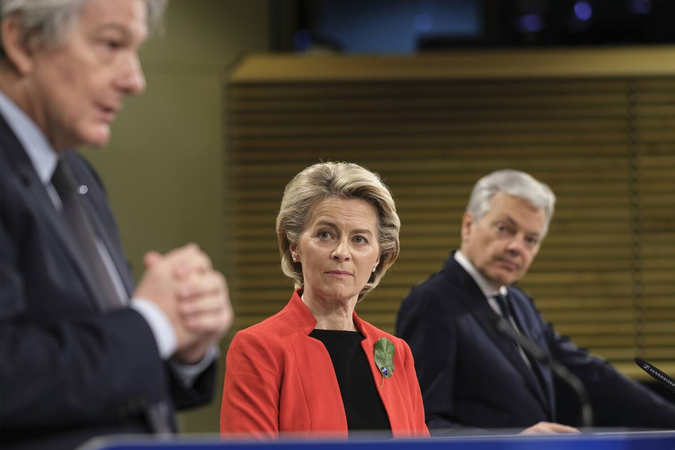
BERLIN – The European Union on Wednesday launched a closely watched effort to create a joint vaccination passport for its more than 440 million citizens and residents, embarking on a tightrope walk between economic pressures, discrimination fears and concerns over Europe’s slow vaccination progress.

Supporters hope the “digital green certificates” will be ready by June, which could help to salvage the European summer tourism season and even serve as a model that could be extended to the United States and other countries. But E.U. countries lag far behind the United States in vaccinations, which has raised concerns that the passport plan could be launched prematurely.

The passes are expected to be digital or paper documents for travelers to prove that they have been vaccinated, that they recovered from the virus or recently tested negative for it. In many cases, this could free travelers from quarantine obligations.

Those privileges could eventually also apply to Americans or British citizens traveling to continental Europe, given that all vaccines approved in the two countries are also approved for use in the European Union. Greece, Cyprus and several other E.U. countries have already announced or are working on plans to welcome British travelers back within months. But E.U. borders will remain closed to most Americans – even those who are vaccinated – until the bloc lifts its travel restrictions.

An easing of those restrictions remains unlikely in the short run, amid persistent E.U. concerns over new coronavirus variants. President Joe Biden also reimposed an entry ban on most European travelers in January, which could become another obstacle, as E.U. officials have cited reciprocity as a factor in their decision-making on travel restrictions.

The European passport initiative appears in some ways modeled on passes already in use in Israel, where QR codes allow fully vaccinated people access to gyms or restaurants.

European Commission President Ursula von der Leyen said the aim in Europe is to have crucial information on travelers’ covid-19 status “mutually recognized in every member state.”

But the plans unveiled Wednesday leave many of the most controversial points up to member states, including the question for which activities the passes would become mandatory.

Whereas Austrian Chancellor Sebastian Kurz recently said that the “vaccinated should have full freedom,” indicating support for an approach similar to the one in place in Israel, some E.U. leaders still see the vaccine certificates mostly as a way to resume European travel.

With many Europeans unvaccinated and some receiving products that aren’t yet approved by the E.U. medical regulator, concerns over unequal treatment have mounted. E.U. member Hungary, for instance, has vaccinated some of its citizens with Russia’s Sputnik V and Chinese vaccines that are not currently recommended for use by the E.U. medical regulator. Under the E.U. proposal, it would be up to member states to decide if they accept those vaccines as sufficient proof of immunity.

“Beyond being a distraction from the task of vaccination, the pass could end up creating a two-tier society,” Israel Butler of the Civil Liberties Union for Europe, a human rights watchdog, said in a response Wednesday.

The vaccination passport plans follow months of lobbying from tourism-dependent European top destinations such as Greece and Spain, which see the passes as an opportunity to revive their tourism sectors. About 20 percent of Greece’s gross domestic product depends on tourism, for example.

But Europe’s two most populous countries – France and Germany – have approached the plans with more caution, which could still derail them as they require the approval of the European Parliament and of member states.

German Chancellor Angela Merkel recently said that preferential treatment of vaccinated travelers “isn’t on the agenda, given the low vaccination coverage at this point.”

There is also still no scientific consensus on the extent to which vaccinations prevent the transmission of the virus.

The German and French stalling has frustrated officials in many southern European countries. Greece, Cyprus and other nations recently announced plans to set up bilateral agreements unless an E.U.-wide solution can be found.

Hong Kong vaccine bookings jump in first day of expanded access #SootinClaimon.Com

#SootinClaimon.Com : ขอบคุณแหล่งข้อมูล : หนังสือพิมพ์ The Nation.

https://www.nationthailand.com/news/30403830

Hong Kong vaccine bookings jump in first day of expanded access

InternationalMar 18. 2021People stand in line outside a community vaccination center in Hong Kong on March 17, 2021. MUST CREDIT: Bloomberg photo by Chan Long Hei.People stand in line outside a community vaccination center in Hong Kong on March 17, 2021. MUST CREDIT: Bloomberg photo by Chan Long Hei.

By Syndication Washington Post, Bloomberg · Jinshan Hong

Hong Kong saw more than 144,000 people snap up covid-19 vaccine appointments the first day the government expanded access to a majority of residents, a sharp increase amid its bid to boost a lackluster inoculation rollout.

Some 30,800 people reserved slots to get the Chinese-made Sinovac Biotech shot and 113,200 others booked doses of Pfizer-BioNTech’s vaccine at community vaccine centers in the 24 hours ending at 8 p.m. Tuesday, the government said. The number of bookings soared from just 18,600 the day earlier.

Data was not available from private clinics, some of which are also offering Sinovac’s shot.

Before the expansion, only some 200,000 people — comprising just 5.4% of priority groups eligible like the elderly and healthcare workers — had come forward for shots since the vaccine drive started on Feb. 26.

The total number of people able to access vaccines now represents some 70% of the city’s population of 7.5 million, with adults aged 30 to 59 years old now eligible. The government added 23,000 new reservation slots to daily capacity on Tuesday, and has increased the number of community centers offering the BioNTech shot from seven to 19.

The extended drive comes as the city grapples with a new outbreak of the virus centered on its expatriate community, including employees of international financial firms. HSBC Holdings’s main Hong Kong office was ordered to close until further notice after three people working in the building tested positive for covid-19.

Chief Executive Carrie Lam said at a Wednesday Legislative Council meeting that the government would explore whether there was room for virus-related social distancing measures to be relaxed for people who were vaccinated. She added that authorities had held preliminary talks with China regarding the easing of some travel restrictions for individuals who had received two vaccine doses.

While Hong Kong’s healthy adult population is one of the first in the world to gain eligibility for inoculation, the expanded access reflects a major vaccine hesitation problem that will likely delay the city’s ability to reopen to the world. Officials widened eligibility earlier than expected after uptake was dismal among priority groups, leaving millions of doses unused.

Demand for covid-19 vaccines has generally been lower in Asia, where contained outbreaks and low death tolls in places like Japan and Singapore has meant that people feel less urgency and more skepticism toward rapidly-developed shots.

It’s unclear if the younger adult population will ultimately help boost these underwhelming numbers, after the initial burst of pent-up demand. An informal poll of 13 people in the 30 to 59 years old group on Tuesday showed that half were planning to get a vaccine now that they can.

George Lin, chief financial officer at Hua Medicine and a former banker at Bank of America, said he was so excited to book a slot that he had a sleepless night. He signed up early Tuesday morning and will receive his first dose of BioNTech’s shot on Saturday in Causeway Bay.

“The first thing I would like to do is to travel internationally,” Lin said, including to the U.S to see his two daughters. “If I were in the U.S., I would not get this until May.”

Others said they did not want to take the risk. Resistance among Hong Kong residents has grown after reports of several deaths among inoculated people, though experts said none of them are directly tied to the vaccine.

“I don’t trust the vaccines, there’s not enough data to show it is safe, there’s not been enough testing,” said hairstylist Kei Ma, 41. “I don’t know how many other things the government is hiding.”

Political turmoil and China’s tightening grip over the former British colony are complicating factors as city officials try to persuade people to take the vaccine. Lam received Sinovac’s shot on Feb. 22 along with other cabinet members.

“The absence of trust only complicates the vaccine rollout,” said Nicholas Thomas, associate professor in health security at City University of Hong Kong. “Short of mandatory vaccinations, which would likely be resisted by the population, the Hong Kong government is facing a slower path to reopening than its earlier successes against the virus suggested would be the case.”

China is planning to ease requirements for foreigners applying for mainland visas from Hong Kong if they’ve received a Chinese vaccine, something that reassures David Bonnet, managing partner at real estate and hospitality advisory firm Delta State Holdings Ltd. who signed up for a Sinovac shot.

“If you live in Hong Kong and Macau, getting one of the Chinese vaccines probably will give some tangible benefits,” he said. “I don’t want to be subject to quarantines and I hope it will be easier to travel with Chinese vaccines. My hope is to resume business as normal.”