Greece tries first 30-year debt sale since 2008 financial crisis
InternationalMar 18. 2021Visitors walk past protective plexiglass barriers towards the Parthenon at the archaeological site of the Acropolis in Athens, Greece, on July 22, 2020. MUST CREDIT: Bloomberg photo by Yorgos Karahalis.
By Syndication Washington Post, Bloomberg · John Ainger, James Hirai
Greece is issuing its longest-maturity bonds since 2008, completing the country’s full return to debt markets.
The nation drew in more than 17 billion euros ($20.3 billion) of orders for its sale of 30-year bonds via banks, showing investors’ long-term confidence and appetite for yields that are likely to be the highest in the euro area. The demand allowed the country to trim its pricing guidance by as much as 10 basis points from initial levels.
The sale is a sign of just how far Greece has come over the past decade. At the height of the euro-area debt crisis in 2012, 10-year yields skyrocketed above 44%, with the country locked out of international markets. Now, yields are below 1%, giving the government a chance to tap long-end bonds and complete its yield curve.
“This Greek bond sale marks the nation’s rehabilitation,” said Alexandros Malamas, a trader at Piraeus Securities in Athens.
The extra supply saw Greek debt leading regional losses on Wednesday, with 10-year yields climbing five basis points to 0.92%, However, for investors the country’s bonds have already delivered. In the past year alone, they have returned around 25%, making them the best performers in the region, according to Bloomberg Barclays Indices.
Greece currently has a cash buffer of 30 billion euros ($35.7 billion), which means that it’s not in an immediate rush to raise short-term funds. Still, the government wants to boost its coffers as the economic fallout from the pandemic is larger than expected. It already plans to fund measures worth 11.6 billion euros, some 4 billion euros more than initially planned.
For Mediolanum fund manager Charles Diebel, the sale means Greece is now “back in the game.” He was put off from buying Greek bonds after staying in Athens during the euro-area crisis in the same hotel as representatives of the institutions that imposed stringent austerity on Greece in return for bailouts.
Trading in Greek bonds remains scant. Bank of Greece data show turnover on the electronic secondary securities market, or HDAT, totaled 2.6 billion euros last month, compared with a peak of 136 billion euros in September 2004.
That means the syndication is also a rare chance for investors to get their hands on Greek assets, particularly with the European Central Bank propping up the market through bond buying. A sale of 10-year debt earlier this year drew record orders of 29 billion euros.
BNP Paribas, Goldman Sachs, HSBC Holdings, JPMorgan Chase and the National Bank of Greece ere appointed as joint lead managers for the sale of the bonds maturing in 2052. Price guidance was tightened to between 150 basis points to 155 basis points above midswaps, from the 160 originally provided.
“It completes their return,” said Jan von Gerich, chief strategist at Nordea Bank. “It will be really interesting because of the long maturity and a good test of the underlying bond market sentiment for risk.”
Uber’s U.K. defeat won’t be blueprint for global labor fight
InternationalMar 18. 2021A protesting Uber driver waves a flag near the U.K. headquarters of Uber Technologies Inc. in London on May 8, 2019. MUST CREDIT: Bloomberg photo by Jason Alden.
By Syndication Washington Post, Bloomberg · Lizette Chapman
For years, Uber has been locked in a fierce and expensive contest with global regulators over the protections it offers to drivers. The gig economy giant has argued that drivers are free agents, able to work when and where they like, and are therefore not directly employed by Uber — or eligible for benefits like sick leave and overtime.
In its home state of California, Uber Chief Executive Officer Dara Khosrowshahi advocated for a “third way” of classifying workers — other than as contractors or as full-time staff. And he’s suggested that the company’s approach in the state could be a blueprint for resolving similar labor battles brewing worldwide.
But on Tuesday, Uber said it would adopt a different model for its drivers in the U.K. After losing a watershed ruling in Britain’s Supreme Court, the company agreed to reclassify all of its 70,000 drivers in the country as “workers,” which are guaranteed specific benefits under U.K. law. The result is essentially a “fourth way” for Uber — and another example of the growing pressure the company is facing from world governments to treat its workers better and comply with with local rules.
“Some countries have strong labor laws and some have none at all. We are all starting at different points,” said Vanessa Bain, co-founder of worker advocacy group Gig Workers Collective. “The complexities of different legal systems continue to be a challenge for both the workers that are organizing and for the companies.”
In the U.K., drivers will now be entitled to the minimum wage, vacation pay and a pension. Drivers in the country had already been getting health benefits since 2018 and will continue to get sickness, injury and parental leave as workers.
Maria Figueroa, director of labor and policy research at Cornell University’s Worker Institute, said that while the new benefits are a step in the right direction, many will argue they don’t go far enough because Uber will still function as an employer without the same responsibilities. Regardless of the limitations, Figueroa said, “advocates in some countries will go for it” because they see it as the first in a series of steps required to win more protections for the world’s fast-growing population of gig workers.
“To engage in a fight for full benefits is a long and winding road,” Figueroa said. “A lot of advocates are re-evaluating whether they want to do that.”
In California, Uber and other gig economy companies effectively overturned a law last year that required them to classify their workers as employees. The company wrote and bankrolled a ballot proposal in the November election that overrode the law, but granted workers a few perks including a wage floor, a health insurance stipend and some mileage reimbursement. The proposal, sponsored by the country’s largest gig companies, was the most expensive measure in state history.
“Uber’s decision to classify drivers as employees in the U.K. after losing a Supreme Court appeal suggests it doesn’t plan to shut operations there,” according to Mandeep Singh, a technology analyst with Bloomberg Intelligence. “It’s likely to add pressure on the Delivery segment, which has been unprofitable so far due to competition, yet we believe it could aid Uber’s share in ride-sharing and force smaller peers such as Ola, Didi and Bolt to retreat from the U.K.”
Under the new rules in both California and the U.K., drivers will only be paid for the time they engage in a ride, and wages won’t cover time spent waiting for a passenger — hours that account for roughly one-third of drivers’ workdays on average, according to a study by the University of California, Berkeley.
Figueroa said the benefits offered in the U.K. for workers are similar to those required by Canada’s “dependent worker” category. And while she said that advocates in many countries wouldn’t be satisfied with the company’s U.K. policy, some of them might lobby for similar protections in their own markets. “Even the unions and the workers who won the ruling will tell you this isn’t enough, but it’s what we got now,” she said.
The drivers who first brought the U.K. case against Uber say the company hasn’t gone far enough. Uber said drivers will be entitled to minumum wage after its accepted a trip from a customer, but the Supreme Court said drivers are working whenever they’re logged into the app.
“While Uber undoubtedly has made progress here, we cannot accept anything less than full complience with legal minimums,” drivers James Farrar and Yaseen Aslam said in a statement. Farrar said on Twitter that they expect to be back in court against Uber.
The rights of gig workers and their employment classification is likely to remain a major flash point in the months and years to come. That will be particularly true as drivers return to work after the pandemic and companies increasingly face different pressures in different regions.
For example, in New York, a proposal to allow gig workers to form unions and collectively bargain could be introduced this spring. In Seattle, the focus is on extending a pandemic hazard pay increase for grocery store employees to people in other jobs. And the cities of San Francisco and Oakland, California last year passed laws giving gig workers up to 80 hours of paid sick leave during the pandemic.
“There’s no one path to get to where we need to go,” Bain said. “There are differences even among cities. It’s a complicated system.”
WASHINGTON – The Federal Reserve expects the U.S. economy to grow at its fastest pace in four decades this year as the unemployment rate falls to 4.5%, according to projections released Wednesday.
It’s the Fed’s rosiest picture of the economy since the coronavirus pandemic gripped the globe last year. But it also comes with risks.
The central bank is now predicting that consumer prices will jump, at least temporarily, as Americans spend their stimulus money and slowly return to normal life. Inflation is now expected to hit 2.4% this year, compared with the Fed’s earlier estimate of 1.8% – the kind of pop some economists have warned could actually harm the economic recovery.
It’s uncharted territory for Fed Chair Jerome Powell. The economy is getting stronger, but not enough for the central bank to roll back the emergency measures it put in place last year. Interest rates are already on the rise, worrying some economists and investors.
Over the coming months and years, Powell will face more pressure as he stands by the Fed’s new commitment to letting the economy run hotter for longer before raising rates. And he must convince Wall Street that near-term price increases will be temporary and won’t lead to widespread or persistent inflation.
“It’s just a lot of people who need to get back to work, and it’s not going to happen overnight,” Powell said, explaining that the economy still had far to go before reaching pre-pandemic levels. “The faster, the better.”
At the conclusion of two days of policy meetings Wednesday, the Fed did not raise rates or pare back its bond purchases, a sign that the economy has yet to fully heal. About 9 million jobs, and probably more, are still missing from the labor force. Entire industries, including hospitality and entertainment, cannot be revived until the pandemic is under control.
At a news conference Wednesday, Powell said some measures of economic activity and employment have “turned up,” thanks in large part to more widespread access to coronavirus vaccines and additional aid from Congress.
“The recovery has progressed more quickly than generally expected,” Powell said, adding that last month, the leisure and hospitality sectors, which have taken a beating since the pandemic began, recouped about two-thirds of the jobs that were lost in December and January.
The Fed now expects GDP growth to reach 6.5% this year, up from its previous projection of 4.2% and the fastest rate since the 1980s. The unemployment rate will fall to 4.5% this year and then tick down closer to pre-pandemic levels – 3.9% in 2022 and 3.5% in 2023, Fed leaders project. That would be a much faster recovery in the labor market than central bankers had previously forecast.
The last time Fed leaders released projections, in mid-December, the outlook for the economy and public health crisis was much different. Holiday-season travel sent coronavirus cases surging. And it was unclear when or whether Congress and the Trump White House would pass another stimulus package, even as Powell repeatedly urged more fiscal spending.
President Donald Trump ultimately signed a roughly $900 billion relief package days after Christmas. And last week, President Biden signed a $1.9 trillion aid bill into law – the result of Democrats’ push to go big on a stimulus measure.
That latest package – known as the American Rescue Plan – significantly changed economists’ expectations for how quickly the economy can return to its pre-pandemic strength. Goldman Sachs is now forecasting U.S. gross domestic product to grow 8% this year in the fourth quarter compared with the same period a year ago,marking the fastest increase in almost 60 years. Major companies, including American Airlines and United Airlines, said they would cancel tens of thousands of planned layoffs.
At the same time, the flood of cash from the latest stimulus bill has some economists warning that such precipitous growth could harm the economy by starting a dangerous cycle of inflation. Their concern is that the economy will overheat and prices will rise, forcing the Fed to raise interest rates and risk another recession.
Wall Street is also betting on soaring economic growth. Bond yields have risen sharply over the past month, and some investors see that as evidence that inflation is likely to materialize. According to the latest Bank of America survey of global fund managers, the pandemic is no longer the biggest “tail risk.” Higher than expected inflation is.
Powell and other Fed leaders said there is no reason to expect that inflation will spiral out of control. Inflation hasn’t reached the Fed’s 2% target for years. Even if inflation hits and exceeds that figure, the Fed says, it will decide when or whether to raise interest rates based on the state of the economy, including how many people are still unemployed.
According to Wednesday’s Fed data, seven of the central bank’s 18 policymakers project a rate hike by the end of 2023.
“I don’t want to get into putting a pin on the calendar [for a rate increase] because it’s going to be data-dependent,” Powell said. “When we are on track to see substantial future progress, we will say so. That involves judgment.”
But economists, particularly those worried about risky cycles of high inflation, say sticking to that strategy could be difficult for the Fed if bond markets or stock prices react poorly. And for some, the Fed’s inflation projections may fuel worries that the economy is growing too fast.
But Julia Coronado, a former Fed economist and president of MacroPolicy Perspectives, said Powell had “weaponized” the Fed’s projections “to say: We expect higher inflation, and we’re still going to hold” policy where it is now.
Even as policymakers expect a jump in inflation to 2.4% this year – followed by 2% in 2022 and 2.1% in 2023 – Powell’s message is that those numbers don’t necessarily reflect the long-term, repeated price increases the Fed needs to see before it raises rates.
“He’s trying to say in words, for a long time now, that this isn’t how inflation works, people,” Coronado said. “Supply chain bottlenecks or reopening pops – that’s not inflation. . . . It has to be tied to the strength of the economy, and not just a one-time sugar rush.”
For example, the price of airline tickets has remained low since the pandemic gutted travel, Coronado said. But as more people get vaccinated and start traveling again, prices could jump as Americans rush to book their post-pandemic vacations.
Yet that dynamic won’t keep up forever, Coronado said. Eventually, people will exhaust their stimulus cash, causing the surge in demand, along with ticket prices, to settle down.
“It doesn’t keep repeating,” she said. “People aren’t going to keep getting stimulus payments year after year.”
By The Washington Post · Michael Birnbaum, Chico Harlan, Stefano Pitrelli
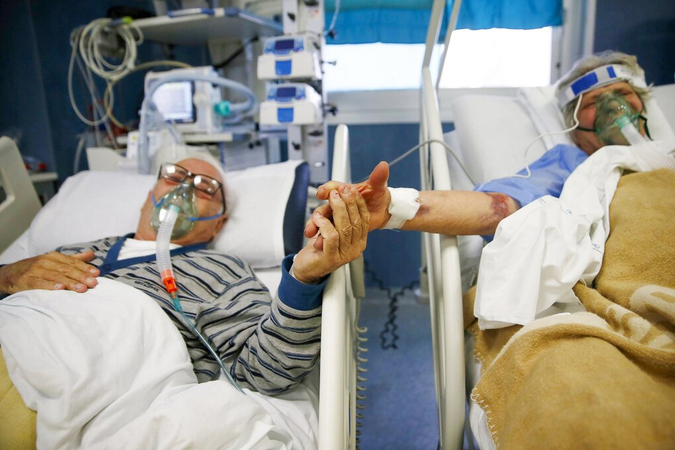
For three weeks, operating 12 hours a day, a convention center in Rome raced to vaccinate Italians before a more contagious variant of the coronavirus took hold. The hope was that despite lagging vaccine supplies, Italy could beat back a third wave of infections and deaths.
That the race had been lost was beginning to sink in on Monday, when much of the country went into lockdown amid rising infections. Then Italy joined other European countries in suspending the use of the AstraZeneca vaccine amid uncertainty about whether it is linked to a handful of rare blood clots and deaths. The convention center has gone dark. A hall that had been giving out 1,800 vaccinations per day now has its doses in storage, guarded by a skeleton crew – and there are fears that the pause in vaccinations across Europe will allow infections to spiral even more out of control.
European citizens were already looking with envy at the United States, Britain and other nations that have been speeding along with their vaccinations, contributing to a decline in covid deaths in those countries and enabling the return of more normal lives. But there is now growing fury that European mismanagement of vaccines has allowed an avoidable third wave. And many public health experts say that halting the AstraZeneca vaccine, even temporarily, is a miscalculation that may emerge as the biggest mistake yet.
“With every day of vaccination delay, there are hospitalizations and deaths,” said Fabrizio Pregliasco, a virologist at the University of Milan.
Even if the European regulator confirms it’s safe to continue administering the AstraZeneca vaccine – a report is due Thursday – many experts fear governments may have permanently lost their citizens’ confidence in this shot and further damaged the inoculation campaign.
While coronavirus cases have been dropping in the United States, infections across the European Union have risen 29 percent in the past two weeks. The more contagious coronavirus variant first identified in Britain now accounts for more than half of the cases in most E.U. countries.
Italy recorded 502 coronavirus deaths on Tuesday, the highest figure in nearly two months. On Wednesday, Hungary registered its daily covid death record and Poland announced a nationwide lockdown until early April.
Athens, facing a spike in cases, just turned over a hospital to be used exclusively for coronavirus patients.
And Germany’s top virologist, Christian Drosten, warned this week that he expected his country to be in a situation at Easter like it was at Christmas. The variants make things “drastically more difficult,” he said on a podcast.
In that context, many scientists were aghast when, one by one, European countries announced they were pausing AstraZeneca vaccinations, a central component of the E.U.’s inoculation plan.
Denmark and Norway halted their programs last week, but the big shift came after Germany said it had identified seven cases – higher than statistically expected – of a rare cerebral blood clot in relatively young people who had been recently vaccinated. The country’s public health institute asked to stop AstraZeneca vaccinations while further assessment was underway.
The pressure in other countries to follow suit was intense. Few politicians want to be blamed for moving forward with a vaccine that later turns out to be hazardous, when others were more cautious.
“There is political pressure. In a lot of countries there’s a domino effect,” said Steven Van Gucht, the head of viral diseases at the public health institute in Belgium, one of the few E.U. countries that resisted a suspension.
“If we continue with this approach, we will have to pause the vaccination campaign over and over again,” every time unusual deaths or medical conditions emerge after a vaccination, he said. “That’s a dangerous slope.”
Recognizing that even a short pause may have long-term impact on acceptance, French Prime Minister Jean Castex declared Tuesday that he would be among the first to get an AstraZeneca vaccine once his country’s suspension is lifted, assuming regulators declare that it’s safe. British Prime Minister Boris Johnson also said he’d get a vaccine from the manufacturer “very shortly,” amid reports that Brits were skipping their vaccine appointments this week.
The suspensions “have damaged confidence in vaccinations very much,” said Antoni Trilla, dean of the medical school at the University of Barcelona, whose hospital has 900 doses of AstraZeneca’s vaccine in its freezers.
“People will say, ‘I don’t want the one that’s been on TV or in the newspaper that produced strange things, I want the other one,'” he said.
Even if the vaccine does turn out to increase the risk of blood clots, that may turn out to be an acceptable risk, he said.
“Working with my colleagues for a full year with covid patients, having seen people in the ICU, having seen how severe this disease can be, I will take as much risk as possible,” Trilla said.
Britain, which has administered millions of doses of AstraZeneca, said it hasn’t seen an abnormal increase in blood clots like the cluster Germany flagged. Many scientists are doubtful that the cases are statistically meaningful and tied to the vaccines, although they say reports of any unusual events deserve scrutiny.
“Many people, including me, don’t think this is real,” said Paul Hunter, an infectious-disease expert at the University of East Anglia.
“This is very likely a random association and not a causal relationship,” he said. The Germans “want to be able to explain it to people, to tell the people what the evidence is, about whether this is real or not.”
The European pause further slows a vaccination campaign that was already lagging.
Fewer than half of Italians 80 and older – the group most vulnerable to the virus – have received even a single dose. The country has fully vaccinated only one in every 28 of its citizens. That means hospitals remain at risk of being overwhelmed by the more contagious variant, which also appears to be deadlier than earlier strains.
By contrast, one in nine Americans is fully vaccinated. One in five has received a first dose. There are increasingly realistic dreams of a more normal summer. Britain is moving even faster: About 37 percent of its citizens have received a first dose. Almost half of those were AstraZeneca.
Europeans are increasingly frustrated as they see their rich-world peers speed ahead of them.
“If the U.S. president says that by the 4th of July they’ll be celebrating their independence, from the pandemic, too, for an Italian or a European who’s still a shut-in, wearing masks, and dealing with work-related issues, this is irksome,” said Massimo Bertoni, 54, the second-generation owner of a high-end clothes shop in Rome’s center that was founded in 1956. He had to shutter it – yet again – because of the latest lockdown.
“It’s very jarring, it bothers you, it makes you angry,” he said.
The vaccine debacle is even more notable since wealthy Europe is home to a slew of pharmaceutical companies whose production capacity could have been ramped up last year had there been major public investment, as was the strategy in the United States with Operation Warp Speed. Instead, Europe moved slowly and focused on buying the vaccines as cheaply as possible.
The strategy ensured they weren’t competing against each other, but it also meant that the vaccine decisions of a rich country like Germany were hamstrung by the economic concerns of countries such as Bulgaria, which is less than half as wealthy.
“This stingy approach was completely wrong,” said Guntram Wolff, director of Bruegel, a Brussels-based economic policy think tank. “It’s really an order of magnitude difference. It’s ridiculous. Whether the prices of a vaccine is 10 or 20 or 30 or 50 euros, even, what’s the daily income of a person in lockdown compared to not in lockdown? The difference is huge.”
He noted that when European countries are chipping in for an $893 billion pandemic bailout fund, devoting a few billion more euros to vaccine development to prevent vast economic damage would have been extremely cost effective.
There were already warning signs for Europe in December, as Britain, the United States and Israel shot into action with aggressive vaccination campaigns. European countries started at about the same time – but the supplies of E.U. vaccines were so much lower that a gap quickly opened.
The difference might not have mattered as much had the more contagious variant not started spreading. That effectively sparked an epidemic within the epidemic, making measures to combat viral spread less effective.
Then, AstraZeneca announced it would deliver fewer than half of the doses it had promised in the first months of the year.
The change infuriated many European policymakers, who noted that the Anglo-Swedish company seemed to have no difficulty supplying Britain with millions of doses, some of them manufactured on E.U. territory. Relations with the drug company quickly soured.
AstraZeneca’s clinical studies were also short on data about the effectiveness of the vaccine for older people – there just weren’t many of them enrolled in the trials – and so many E.U. countries initially restricted their use to younger age groups even though the E.U.’s regulatory agency, the European Medicines Agency, had declared the inoculation suitable for people of all ages.
The supplies are desperately needed.
At the Ancona University Hospital in Italy’s hard-hit Marche region, the more contagious variant has overwhelmed its wards, sparking a massive change in the past two months. More people are hospitalized there with covid-19 than at any point since last April.
“The only other way to contain [this variant] is with vaccinations,” said Stefano Menzo, the hospital’s laboratory director. “The problem is, we don’t have enough vaccines.”
By Hannah Knowles, Reis Thebault, Jaclyn Peiser, Teo Armus The Washington Post
Shootings at three Atlanta-area massage parlors that unfolded within an hour on Tuesday left eight people dead, and authorities said a 21-year-old man in at least one incident has been arrested.
Atlanta police said they found four women – who all appeared to be Asian – dead inside two massage parlors across the street from each other. Another four people, including two Asian women, were killed and one more injured at an Asian massage parlor in nearby Cherokee County, Sheriff’s officials said.
Authorities said they do not know yet whether the killings were racially motivated, but the shootings raised concerns among advocacy groups, who have called attention to a string of high-profile attacks on people of Asian descent.
Cherokee County Sheriff’s Capt. Jay Baker said Robert Aaron Long, a resident of the county, was taken into custody south of Atlanta in Crisp County. Atlanta police said that based on video evidence, Long is the likely suspect in the shootings at all three massage parlors, although they are still working to confirm the connection.
Baker said at a news conference that investigators are working to determine a motive and that “nothing’s going to be ruled out.” The FBI is working on the case with local authorities, officials said.
Those fatally shot in Cherokee County were two Asian women, a White woman and a White man. A Hispanic man was taken to the hospital with injuries, he said.
While the motive remained unclear, the violence stoked fears in a community already reeling from attacks and racist targeting.
“Right now there is a great deal of fear and pain in the Asian American community that must be addressed,” tweeted the group Stop AAPI Hate, which tracks attacks on Asian Americans and Pacific Islanders.
The New York Police Department’s counterterrorism unit tweeted that it was “monitoring the shooting of Asian Americans in Georgia” and that it would deploy “to our great Asian communities across the city out of an abundance of caution.”
Baker said five victims were shot inside Young’s Asian Massage Parlor along Highway 92, about a half-hour’s drive north of Atlanta. Less than an hour later, at about 5:47 p.m., officers responded to a “business robbery in progress” in northeast Atlanta at Gold Massage Spa, said Sgt. John Chafee of the Atlanta Police Department. They found three women dead inside, apparently from gunshot wounds, he said.
Police were still on the scene when shots were reportedly fired from across the street at Aromatherapy Spa, according to Chafee. Officers found one woman inside that business who was also apparently fatally shot, he said.
“Our entire family is praying for the victims of these horrific acts of violence,” tweeted Georgia Republican Gov. Brian Kemp, who praised the “quick apprehension of a suspect.”
Authorities posted photos of a dark-colored vehicle soon after the shootings, and the Crisp County Sheriff’s Office said it heard at about 8 p.m. that a murder suspect was headed their way. State patrol troopers and Crisp County deputies made contact with a 2007 black Hyundai Tucson about a half-hour later on the highway, the sheriff’s office said.
A state trooper performed a maneuver that caused the car to “spin out of control,” Crisp County Sheriff Billy Hancock said. Long was taken to jail “without incident,” Hancock said, and his office forwarded its information to the Cherokee Sheriff’s Office and the FBI.
Chafee said police and Cherokee County officials were in contact, and Atlanta officers have been dispatched to other massage parlors in the area as a precaution.
Bryant, the Atlanta police chief, said the department has located witnesses who were in and near the spas, and no one else at either location was reported wounded.
Lisa Copeland, the manager of an AutoZone Auto Parts a few stores down from Young’s Asian Massage, said she almost went into the smoke shop next door to the salon at the time of the shooting. But at the last minute, she decided against it.
As she sat in her car later, she noticed police vehicles and ambulances arriving at the salon. “It was complete chaos,” she said. “I was racking my brain to ask, ‘Did I see that car drive down there?'”
Jacob Kimmons, an employee at AutoZone, said this kind of violence rarely happens in their neighborhood.
“You never see it in a decent area like this. Just to see something like that happen is crazy,” he said. “I just thank the good lord he didn’t come over here and do anything.”
Xi warns against tech excess, signaling China will widen crackdown
InternationalMar 17. 2021Chinese President Xi Jinping speaks during the United Nations General Assembly seen on a laptop computer in Hastings on the Hudson, N.Y., on Sept. 22. 2020. MUST CREDIT: Bloomberg photo by Tiffany Hagler-Geard
By Syndication Washington Post, Bloomberg · Zheping Huang
China’s top leader warned that Beijing will go after so-called platform companies that have amassed data and market power, a sign that the months-long crackdown on the country’s internet sector is only beginning.
President Xi Jinping on Monday chaired a meeting of the communist party’s top financial advisory and coordination committee, ordering regulators to step up oversight of internet companies, crack down on monopolies, promote fair competition and prevent the disorderly expansion of capital, according to state broadcaster CCTV. Internet companies need to enhance data security and financial activities need to come under regulatory supervision, CCTV also reported.
The unusually strongly worded comments from Xi and his lieutenants suggest Beijing is preparing to amplify a campaign to curb the influence of its largest and most powerful private corporations, which has so far centered mainly on Jack Ma’s Alibaba Group Holding Ltd. and its affiliate Ant Group Co. The term platform economies could apply to a plethora of mobile and internet giants that offer services to hundreds of millions, from ride-hailing behemoth Didi Chuxing to food delivery giant Meituan and e-commerce leaders like JD.com Inc. and Pinduoduo Inc.
“Some platform companies are developing in non-standardized ways and that presents risks,” CCTV said, citing minutes of the meeting. “It is necessary to accelerate the improvement of laws governing platform economies in order to fill in gaps and loopholes in a timely fashion.”
The report came days after Bloomberg News reported that governments watchdogs were now setting their sights on Tencent Holdings Ltd.’s $100 billion-plus finance empire after ordering an overhaul of Ant. Top financial regulators see Tencent as the next target for increased supervision, according to people with knowledge of their thinking. Like Ant, Tencent will probably be required to establish a financial holding company to include its banking, insurance and payments services, said one of the people, seeking anonymity as the discussions are private.
The two firms will set a precedent for other fintech players on complying with tougher regulations, the people added. Such a move would mark a significant escalation in China’s campaign to curb the influence of its technology moguls, which began last year with the scuttling of Ant’s $35 billion initial public offering and the publication of new antitrust regulations governing technology firms.
Tencent lost more than $65 billion of value in the two days following the report, and its shares were little changed Tuesday. The company’s WeChat super-app is the giant that looms across the industry, offering everything from chatting to booking rides and paying for purchases.
Other companies have long accused the service of unfair competition, with chief rival ByteDance Ltd. suing the Shenzhen-based giant earlier this year for blocking access to content from its Douyin platform, TikTok’s Chinese twin. Tencent has called the accusations baseless and malicious.
In e-commerce, the triumvirate of Alibaba, JD.com and Pinduoduo account for an increasing share of consumer spending in China. Researcher eMarketer estimates that online purchases should surpass 50% of the country’s total retail sales this year, a first anywhere in the world. That influence has already drawn scrutiny from the antitrust watchdog and its new anti-monopolistic regulations had specifically called out practices like forced exclusivity arrangements, predatory pricing and algorithms favoring new customers over older ones.
A slew of other services have risen in prominence in recent years and may come under the scrutiny of regulators, including ByteDance’s Toutiao news aggregator and Douyin. Food delivery is dominated by Meituan, with Alibaba’s Ele.me service playing catch-up. Didi Chuxing is the dominant force in ride-hailing after taking over Uber’s business in China, a deal that one local taxi industry group has called on the antitrust watchdog to investigate. Even smaller operators have been caught up in the crosshairs, with community group-purchase startups like Nice Tuan being handed fines for improper subsidies.
“It’s not a good thing if you rule the market right now, especially when it comes to fintech and areas essential to daily lives, like e-commerce and community group buying,” said Ke Yan, Singapore-based analyst with DZT Research. “Dominance in the market now has a downside whereas it was appealing to the investors in the past.”
The development of China’s platform economy is currently at a crucial stage, Xi said at Monday’s meeting. It is necessary to focus on the long term, strengthen weaknesses and create an innovative environment to promote the healthy and sustainable development of the platform economy, he added. Monday’s speech was the first time Xi had specifically addressed platform economies, though he had previously stressed the importance of preventing monopolies.
The semi-regular meeting of the Party’s top financial supervisory group typically helps to set the tone and direction of national policy. During their last gathering in September, Xi focused on the so-called “dual circulation” approach of relying on both international and domestic consumption and production to lift the economy.
China’s efforts to regulate its internet giants coincide with growing global scrutiny over the industry, as governments from the U.S. to the European Union and Australia have clashed with companies like Twitter Inc. and Facebook Inc. That’s a testament to how important the industry has become to basic infrastructure and national security and a coordinated global response is needed to address its healthy development, said Chen Xi, an adjunct professor at Xi’an Jiaotong University
The vertically integrated business models for platform companies can “restrict innovation and the development of job creation and their disorderly expansion will inevitably create obstacles to the recovery of the global economy,” Chen said. “This is a global challenge.”
Iranian oil surge to China hurts OPEC efforts to tighten supply
InternationalMar 17. 2021A gas flare burns from a pipe aboard an offshore oil platform in the Persian Gulf’s Salman Oil Field, operated by the National Iranian Offshore Oil Co., near Lavan island, Iran, on Jan. 5. 2017. MUST CREDIT: Bloomberg photo by Ali Mohammadi
By Syndication Washington Post, Bloomberg
The torrent of Iranian oil gushing into China in recent weeks is crowding out imports from other nations and threatening to complicate efforts by the OPEC+ alliance to tighten supply in the global market.
China, the world’s largest crude oil importer, is buying close to 1 million barrels a day of sanctioned crude, condensate and fuel oil from the Persian Gulf nation, according to estimates by traders and analysts. That’s displacing favored grades from countries such as Norway, Angola, and Brazil, traders said, and resulting in an unusually quiet spot market.
Most refiners and traders around the world are reluctant to buy Iranian crude because of U.S. sanctions, which can result in repercussions like being cut off from the American banking system. However, the seemingly unstoppable rally in global crude prices is making the sharply discounted Iranian oil increasingly attractive to Chinese buyers including its independent refiners, which account for around a quarter of the country’s crude-processing capacity.
While global benchmark Brent is trading near $70 a barrel due to improving demand and tighter supplies from OPEC+, a continuation or increase in the Iranian flows could stymie the alliance’s efforts to keep driving up prices.
Iran is a member of the Organization of Petroleum Exporting Countries, but is exempted from the supply restrictions. However, China’s preference for its cheap crude is displacing demand from OPEC countries like Angola as well as other producers like Norway and Brazil — although the quality of oil from all of these countries is not identical.
As many as 10 million barrels of Angolan oil due for April export were still without buyers as of earlier this week, according to traders, compared with a typical month when such cargoes would have be sold out by now. Grades from Nigeria and Republic of the Congo have also struggled due a lack of buying interest, the traders said.
Three supertankers carrying oil from Norway’s Johan Sverdrup field have been floating off China for at least two weeks without discharging, shipping data show. Only 16 million barrels of North Sea crude left Europe for Asia in February, the least in four months, with the downward trend likely to continue in the short term, said traders involved in the market.
“With increased flows from places like Iran, and all the other grades’ arbitrage to China closed currently, the spot market is looking really weak,” said Yuntao Liu, an analyst with London-based Energy Aspects Ltd. “Between now and June to July, the teapots’ preferred grades such as West African crudes, Norway’s Johan Sverdrup and Brazilian crudes will be quite hard to sell.”
Chinese independent processors are often described as teapot refiners.
The Iranian oil flowing to China is a mix of barrels that are transported directly from the Persian Gulf, as well as Iranian-origin cargoes that are rebranded as Middle Eastern or Malaysian grades. Chinese imports of crude from the nation will average 856,000 barrels a day this month, the most in almost two years, data intelligence firm Kpler said last week.
Most of it is being purchased by domestic Chinese trading houses, traders said, as private and state-owned refiners try to distance themselves from dealings with the U.S.-sanctioned nation. It’s likely that these supplies will be temporarily held in onshore tanks before getting resold to local refineries on a later date, they added.
These private processors, which are mostly based in Shandong province, have been known to refine Iranian and Venezuelan crude into fuel, and utilize sludgy, low-quality fuel oil as feedstock for their units.
The increased Iranian flows are happening as the administration of President Joe Biden attempts to revive a nuclear deal with Tehran. The Persian Gulf supplier exported around 2.5 million barrels a day of oil before the sanctions were first imposed in 2018. Iran is starting the year as the “biggest wild card” for oil prices, Ed Morse, head of commodities research at Citigroup Inc., said in a note in January.
InternationalMar 17. 2021President Biden gives remarks March 15 at the White House on the implementation of the American Rescue Plan. MUST CREDIT: Washington Post photo by Demetrius Freeman
By The Washington Post · Ashley Parker, Tyler Pager
WASHINGTON – The Biden administration is launching a nationwide effort this week to sell the administration’s $1.9 trillion coronavirus relief package – a push that will take President Joe Biden, Vice President Kamala Harris and their spouses to seven states that Biden won in 2020, including two he flipped from Republicans and four that have competitive Senate races next year.
The sales pitch – including a visit by Biden on Tuesday to Chester, Pa. – will feature a host of top administration and Cabinet officials and is expected to encompass Republican-leaning states, too. Biden could visit Ohio, for instance, as early as next week, according to two people familiar with the plans, who spoke on the condition of anonymity because they were not authorized to discuss them publicly.
The early itinerary reflects a clear political calculation, with the first and second families visiting four states – Georgia, Nevada, New Hampshire and Pennsylvania – that could prove crucial to maintaining Democrats’ tenuous hold on the Senate in the 2022 midterms.
Biden will visit the two states he wrested from Republican control last year that also have competitive Senate races – Pennsylvania on Tuesday and Georgia on Friday, where he will be accompanied by Harris.
First lady Jill Biden was in New Jersey on Monday and is heading to New Hampshire on Wednesday. Harris and second gentleman Doug Emhoff are headed to Colorado on Tuesday after visiting Nevada on Monday. Emhoff will also make a stop Wednesday in New Mexico.
Though public polls show that the relief package is popular with the majority of the country, administration officials – many of whom also worked in the Obama administration – say they learned lessons from Democrats’ failure to rally the public around former president Barack Obama’s stimulus package in 2009 and the Affordable Care Act in 2010. They are hoping to use the travel campaign to harness existing momentum and inform Americans how they can benefit from the relief package.
Speaking in the State Dining Room of the White House on Monday, Biden stressed the tangible specifics of the bill: “Shots in arms and money in pockets,” he said, referring to the administration’s vaccination and stimulus efforts.
White House press secretary Jen Psaki told reporters Monday that the president’s focus is less on selling the package, and more on clearly explaining how to access its intended relief. Last week, she said, she and Biden were speaking about the $1,400 direct payments to most families when he asked her, “How do you explain to people how checks get out the door?”
“So this is what’s on his mind, right?” she said. “How do people know how this money will help their schools? You know, how do they know, you know, how this will help get vaccines in the arms of their friends and family members?”
Although Republicans were unified in voting against the package, the party has struggled to settle on a clear message in opposition. Some Republicans have publicly voiced support for aspects of the legislation, while defending their disapproval of the package overall.
Republicans have offered varying reasons to oppose the package, from decrying it as part of Democrats’ “socialist agenda” to arguing that it only narrowly addresses the coronavirus crisis and includes wasteful spending. Sen. Rick Scott, R-Fla., the chair of the Senate Republicans’ campaign arm, has warned about the impact of the stimulus on the federal debt.
Unlike with the Obama-era stimulus and health-care initiatives, Biden and his team may benefit from the fact that the effect of the coronavirus relief package should begin taking hold almost immediately for many voters.
“They understand that you have to ram it into people’s brains that the improvement they see is connected to the covid relief bill,” said Jennifer Palmieri, who served as communications director under Obama. “But of course that only works if things are actually getting better, and the good thing about this bill is the relief is immediate.”
Administration officials and outside allies said part of the Biden team’s strategy is to convince the public that government can be trusted to improve their lives. They also argued that unlike former president Donald Trump, Biden plans to work even for Americans who did not vote for him.
“You want to restore credibility in government, not just from the Trump years, but in general,” Palmieri said. “They want you to know that Democrats made this happen, but they’re also making the victory shared across the board with the American people.”
The travel and public relations push will continue over at least the next three weeks, with each day this week having a different theme, ranging from “Help for Small Business” (Tuesday) and “Help for Schools” (Wednesday) to “Help Immediately With Direct Checks” (Friday), according to administration officials.
Political groups have also started to put money behind the effort. The Democratic National Committee is running a 60-second ad titled “Help Is Here” in battleground states and paid for billboards to call out Republicans who voted against the rescue package. American Bridge, a pro-Democratic super PAC, is also kicking off its $100 million nationwide campaign for the cycle with a six-figure advertising buy in Pennsylvania.
“We’re going to level with the American people at every step of the way and communicate clearly about why this plan matters to them and their family, and how they can access the benefits afforded to them,” White House deputy chief of staff Jen O’Malley Dillon wrote to senior staff last week in a memo obtained by The Washington Post.
O’Malley Dillon added that administration officials and surrogates would do local TV interviews and highlight the bipartisan support for the plan that exists outside Washington, particularly among mayors and other local elected officials.
“It’s a lot of money across a wide section of programs, and so they really do feel an obligation to have people understand where the money is going and how to access it, and that’s not just individual citizens but local governments and small businesses and lenders,” said Hilary Rosen, a Democratic strategist. “They believe if they do that part right, the politics will take care of itself.”
But the travel schedule also sends an unmistakable message that the White House is already working to avoid the disastrous showing in the midterms that historically has bedeviled the sitting president’s party.
Democrats say the overlap between the competitive 2022 Senate races and traditional battleground states helps the White House achieve its dual goals of working to hold the Senate and thanking voters who supported Biden.
“It’s a huge benefit that we’re going to have Democratic leaders going to these states, talking about all the positives in this legislation and making sure that voters understand what’s in it and making that case proactively instead of allowing Republicans to define it,” said Stewart Boss, the press secretary for the Democratic Senatorial Campaign Committee.
That effort is no more apparent than in Georgia, where Biden is expected to be joined by Sens. Jon Ossoff and Raphael G. Warnock, who delivered Democrats the majority after winning runoff races there in January. Warnock is up for reelection in 2022, and Psaki told reporters Monday that the Georgia trip was to “underscore how they and congressional Democrats fulfilled their promise in delivering $1,400 checks to finish the job of $2,000 in direct relief to millions of Americans.”
Cabinet officials also plan to be heavily involved in the full-court press to sell the package, with some expected to start traveling next week. Lily Adams, a former top Harris aide, joined the Treasury Department on Monday and is expected to play a key role in coordinating various government agencies’ communication efforts.
Transportation Secretary Pete Buttigieg, in particular, will play an outsize role with a frenzy of media appearances, officials said, while Education Secretary Miguel Cardona and Housing and Urban Development Secretary Marcia L. Fudge will join Psaki in the White House briefing room this week to discuss the elements of the plan that fall under their purview.
By Syndication Washington Post, Bloomberg · Nikos Chrysoloras, Marthe Fourcade
The European Union’s drugs regulator reiterated that the benefits of AstraZeneca’s coronavirus vaccine outweigh the risks as it urgently reviews safety data after the suspension of shots by a growing number of countries.
The comments were the second from the European Medicines Agency (EMA) in two days, and they come amid reports of blood clots in some people who received shots. Its intervention follows dramatic measures by several E.U. member states to halt the use of AstraZeneca’s vaccine, potentially throwing the region’s already slow inoculation campaign further off track. The EMA’s executive director, Emer Cooke, said she was concerned that the government decisions could undermine public support for vaccines.
“We are worried that there may be an effect on the trust in the vaccines,” Cooke said at a news conference Tuesday. The EMA is expected to make a more formal recommendation Thursday. “Our job is to make sure that the products we authorize are safe and can be trusted by European citizens.”
E.U. health ministers are holding a video call Tuesday to discuss concerns over side effects. The EMA will comment again Thursday after it’s evaluated the latest information. Cooke declined to list all the possible conclusions, mentioning an additional warning on the product or possibly more radical action, “if there is a problem that can’t be solved.”
She said that “a situation like this is not unexpected when you vaccinate millions of people,” and that there’s “no indication that vaccination has caused these conditions.”
The health scare joins the issues that the European Union is already facing related to vaccinations. It’s been involved in a blame game with AstraZeneca over production, and there’s tension with the United Kingdom and the United States over accusations of hoarding. Even within the bloc itself, governments are unhappy with how shots are being shared.
On Tuesday, Austrian Chancellor Sebastian Kurz called for a “correction mechanism” of vaccine distribution in the European Union. Speaking in Vienna alongside the prime ministers of Bulgaria, the Czech Republic and Slovenia, he declined to discuss how such a mechanism should work, except saying the guiding principle should be that every member state has the same access to vaccine doses at the same time.
Kurz said the leaders were in talks with European Commission President Ursula Von der Leyen about their proposal.
– – –
The EMA’s latest intervention comes a day after France, Germany and other countries reversed course on the vaccine, suspending its use after initially continuing injections. Worries initially arose in Austria and Denmark, which stopped using some AstraZeneca shots last week.
Germany’s Health Ministry said seven out of 1.6 million people who received the Astra shot recently experienced clotting in or near their brains. That’s higher than the 1 to 1.4 cases that would normally be expected in such a population sample over a similar stretch of time.
On Tuesday, the United Kingdom repeated its view that the AstraZeneca shot, which was developed with the University of Oxford, is “safe and effective.”
The EMA’s Cooke stressed the need to take the time to evaluate every reported case and come up with an assessment that is science-based.
“This is a serious concern,” she said, that requires “thorough analysis of all the cases that are reported and evaluate whether this is a coincidence or indeed a causal effect.”
– – –
The European Union has received 14 million doses from AstraZeneca, and it was expected to get about 120 million in the next six months. Of the doses delivered to the European Union, almost 8 million have not been administered.
The European Commission has committed to immunizing 70% of adults by the end of September, but the latest precautions could push back efforts.
With infection numbers creeping up again in countries such as Germany, the risk of further vaccine shortages will increase pressure on politicians who have been punished for a lackluster immunization program. German Chancellor Angela Merkel saw her party slump to its worst ever results in two state elections on Sunday.
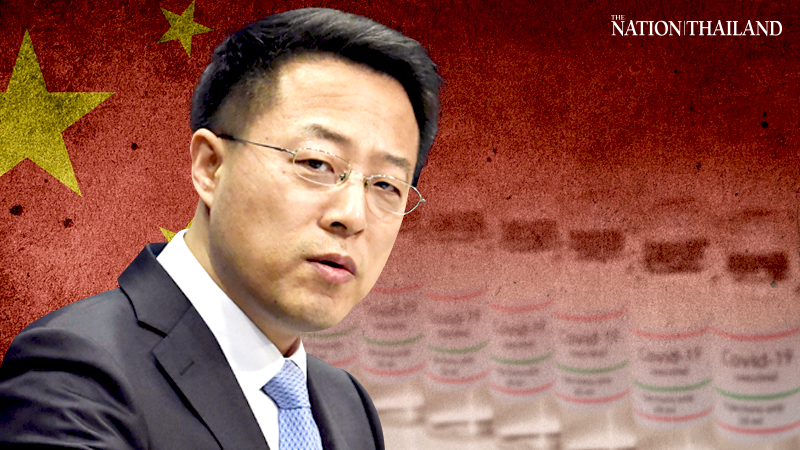
TAIPEI, Taiwan – In the latest move by China to promote its coronavirus vaccines and flex its soft power, Beijing will offer some foreigners inoculated with Chinese-made doses “conveniences” when applying for entry into the country.
Notices of the new policy to “resume people-to-people exchanges between China and other countries” were issued by Chinese embassies or consulates in the Philippines, Japan, Thailand, Germany, Italy, the United States, Israel and India as of Monday. The announcements said China would simplify the application process for those with certificates proving they had been given a Chinese vaccine.
The idea mimics interest in some other countries to develop so-called vaccine passports, or a mechanism for verifying and offering certain privileges to vaccinated travelers.
It also is in keeping with China’s ongoing efforts to use its coronavirus vaccines for diplomacy, to extend spheres of influence and deepen economic ties. These overtures, however, have hit snags, with some countries hesitant to take the Chinese-made vaccines due to Beijing’s lack of transparency around their development.
Speaking on Monday afternoon, Chinese Foreign Ministry spokesman Zhao Lijian did not specify how the application process would be streamlined.
A notice on the Chinese embassy’s website in the United States said that foreign nationals and their family members visiting China to resume “work and production in various fields” could apply. In India and the Philippines, notices on the embassy websites said those interested could prepare their applications “in accordance with requirements before the pandemic.” A statement issued by the embassy in Germany said applicants would not need to provide invitation letters by provincial foreign affairs or commercial departments.
China has so far approved four vaccines for emergency use – for the most part exporting them to developing countries. Its latest vaccine, approved last week, was developed by Anhui Zhifei Longcom Biopharmaceutical company and the Chinese Academy of Sciences. The final phase trials are underway in Pakistan, Uzbekistan and Indonesia, according to a statement Monday from the Chinese Academy of Sciences.
For most of the last year, China has maintained tight border entry requirements, barring most foreigners, including journalists, students and business travelers. Those allowed entry are required to quarantine for at least two weeks and often require special approval.
In Monday’s announcement, the Foreign Ministry also said the criteria for emergency humanitarian visas, such as visiting family, attending funerals or seeing critically ill relatives, would be expanded.
Some countries in Europe, such as Spain and Greece, are pushing for the European Union to develop digital “vaccine passports” to ease entry for visitors – and ensure summer tourism revenue. Others have pushed back on the idea, over concerns that it would create an unfair, two-tiered system between the vaccinated and unvaccinated. Israel, where a massive effort is underway to reach herd immunity through inoculation, has already begun issuing a “green pass” with which vaccinated people can enter certain establishments.
Along with short-term concerns about inequalities between European countries, countries across Africa, where coronavirus vaccine access is either nonexistent or extremely limited, are concerned that inoculation travel requirements could lead to years of discrimination against their populations. While the United States and other western countries have monopolized much of the world’s existing vaccine supplies, China has stepped in to offer its vaccine version to countries unable to compete for western-made vials.

 Visitors walk past protective plexiglass barriers towards the Parthenon at the archaeological site of the Acropolis in Athens, Greece, on July 22, 2020. MUST CREDIT: Bloomberg photo by Yorgos Karahalis.
 A protesting Uber driver waves a flag near the U.K. headquarters of Uber Technologies Inc. in London on May 8, 2019. MUST CREDIT: Bloomberg photo by Jason Alden.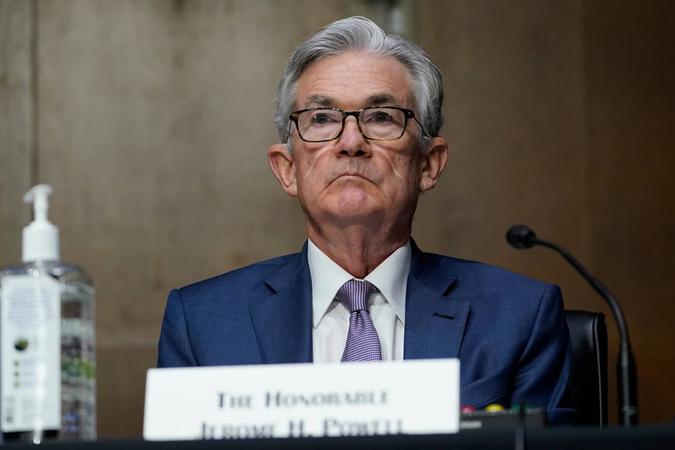


 Chinese President Xi Jinping speaks during the United Nations General Assembly seen on a laptop computer in Hastings on the Hudson, N.Y., on Sept. 22. 2020. MUST CREDIT: Bloomberg photo by Tiffany Hagler-Geard
 A gas flare burns from a pipe aboard an offshore oil platform in the Persian Gulf’s Salman Oil Field, operated by the National Iranian Offshore Oil Co., near Lavan island, Iran, on Jan. 5. 2017. MUST CREDIT: Bloomberg photo by Ali Mohammadi
 President Biden gives remarks March 15 at the White House on the implementation of the American Rescue Plan. MUST CREDIT: Washington Post photo by Demetrius Freeman