
House Democrats pass Biden’s $1.9 trillion relief plan despite setback on minimum wage #SootinClaimon.Com

#SootinClaimon.Com : ขอบคุณแหล่งข้อมูล : หนังสือพิมพ์ The Nation.

https://www.nationthailand.com/news/30403122

House Democrats pass Biden’s $1.9 trillion relief plan despite setback on minimum wage

InternationalFeb 28. 2021House Speaker Nancy PelosiHouse Speaker Nancy Pelosi

By The Washington Post · Erica Werner, Jeff Stein

WASHINGTON – The House approved President Biden’s $1.9 trillion stimulus plan early Saturday and sent it to the Senate, as Democrats defied united GOP opposition to advance the massive relief package aimed at stabilizing the economy and boosting coronavirus vaccinations and testing.

The legislation, Biden’s first major agenda item, passed 219-212. Republicans unanimously opposed the bill, a strikingly partisan outcome just a month after the new president was inaugurated with calls for bipartisanship and unity. All but two Democrats voted in favor.

The vote closed shortly after 2 a.m. Saturday after a long day of debate, with Republicans repeatedly decrying the legislation as a partisan boondoggle and Democrats defending it as much-needed relief. Even bigger fights await in the Senate, where Democratic unity will face greater tests.
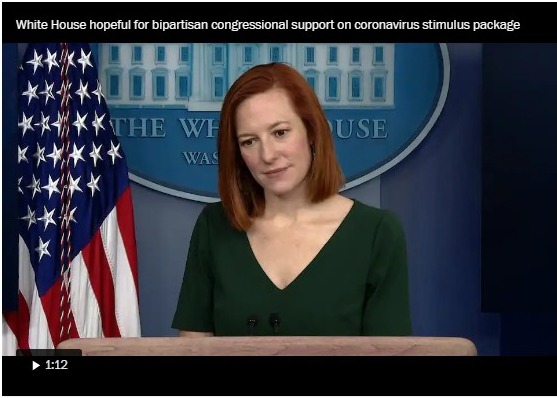
The action in the House came after the Senate parliamentarian ruled that the $15 minimum wage in the legislation is not permitted under Senate rules. House Democrats included it anyway, and it’s not clear how the issue will get resolved.

Ahead of the vote House Speaker Nancy Pelosi, D-Calif., pledged that even if the Senate takes out the minimum-wage increase – the No. 1 priority for many liberals – the House will “absolutely” pass the revised legislation and send it to Biden to sign.

“The sooner we pass the bill and it is signed, the sooner we can make the progress that this legislation is all about – saving the lives and the livelihood of the American people,” Pelosi said at a news conference Friday.

Beyond the minimum-wage increase, the sprawling relief bill would provide $1,400 stimulus payments to tens of millions of American households; extend enhanced federal unemployment benefits through August; provide $350 billion in aid to states, cities, U.S. territories and tribal governments; and boost funding for vaccine distribution and coronavirus testing – among myriad other measures, such as nutritional assistance, housing aid and money for schools.

Democrats hope to push the legislation through both chambers and get it signed into law by March 14, when enhanced unemployment benefits are set to expire. It is uncertain whether disputes over the minimum wage or other issues could complicate that timeline, although Pelosi insisted Friday that the March 14 deadline would be met, adding: “I would like it well before that.”

On Thursday night, the Senate’s parliamentarian ruled the wage hike as written could not proceed under reconciliation, the budgetary maneuver Democrats are using to pass the stimulus bill through the Senate without GOP votes.

Liberals erupted, with some even suggesting the nonpartisan parliamentarian should be fired, but Pelosi and other House leaders indicated Friday they’re ready to move beyond the dispute and save the minimum-wage fight for another day, while insisting they’d get it done one way or another.

As an alternative to the minimum-wage increase, Senate Democrats are exploring a tax hike on large corporations that do not pay a $15-an-hour minimum wage. Senate Majority Leader Chuck Schumer, D-N.Y., is considering a move to include the provision in the relief bill in the Senate, according to two Democratic aides who spoke on the condition of anonymity to discuss internal thinking. It was uncertain whether the proposal would prove viable or command enough support to advance.

The vote on the massive legislation came as the economy showed some signs of progress. Personal income rose 10 percent in January, the Commerce Department reported Friday, thanks largely to the December stimulus package Congress passed. New claims for unemployment insurance fell sharply last week as coronavirus cases continue to decrease and vaccine distribution becomes more widespread.

Still, only slightly more than half the 20 million jobs lost during the pandemic have returned, and Federal Reserve Chair Jerome Powell has said the real unemployment rate is closer to 10 percent, meaning the economy has a long way to go to recover to its pre-pandemic levels.

Congressional Republicans argued throughout hours of debate Friday and early Saturday that Biden’s stimulus is poorly targeted and too expensive, and that it includes measures unrelated to the pandemic. Congress approved some $4 trillion to fight the pandemic last year, including $900 billion in December, and Republicans said that is more than enough, especially in light of signs the economy is improving.

“This isn’t a relief bill. It takes care of Democrats’ political allies while it fails to deliver for American families,” said House Minority Leader Kevin McCarthy, R-Calif. “We already know what is the best stimulus plan out there: It is to fully reopen our economy. To do that, we need our economy to go back to work, back to school and back to health.”

Democrats, however, argued that more financial assistance is sorely needed for families, and more money should be directed to boost vaccine development and production and help the health-care system days after the country reached the grim milestone of 500,000 covid deaths.

“If you don’t think Congress has more work to do here, then you either don’t get what American families are going through, or you don’t care. I don’t know how else to say it,” said House Budget Committee Chairman John Yarmuth, D-Ky. “Well, we cannot wait, and we aren’t going to wait.”

Democrats and Republicans also sparred over the process, with Republicans complaining that they had been shut out of negotiations. Democrats argued that even if the legislation did not command support among Republicans in Congress, it was broadly supported by the public – and by many GOP mayors and some governors.

Biden made some efforts at bipartisan outreach after unveiling his proposal, including meeting with a group of 10 Senate Republicans who made a $618 billion counteroffer. He ultimately dismissed their ideas as too meager and made the decision to move forward without GOP support, repeatedly defending his proposal in recent days and challenging critics to tell him: “What would they have me cut?”

Republicans fumed over Democrats’ go-it-alone approach, but Democrats countered that Republicans took the same tack when they controlled both chambers of Congress and the White House at the start of the Trump administration and pushed through an unpaid-for $1.5 trillion tax-cut bill.The two Democrats opposing the legislation Saturday were Kurt Schrader of Oregon and Jared Golden of Maine. Golden has argued that the House should have pursued a stand-alone vote on a vaccine-funding bill before turning to larger relief legislation.

While House passage of the legislation had been all but assured, the outlook is trickier in the Senate, where moderate Democrats have raised questions about a number of provisions, including the structure of the state and local aid. The Senate is split 50-50 between Democrats and Republicans, so if Republicans remain opposed, Democrats can pass the legislation only if they stay united and Vice President Kamala Harris breaks the tie.

The budget reconciliation process allows legislation to pass the Senate with a simple majority vote instead of the 60 votes usually required. But it also contains limitations, prohibiting certain measures that do not affect the federal budget in particular ways. The parliamentarian determined that the minimum wage did not pass that test.

If the Senate passes the bill without the minimum-wage increase and sends it back to the House, liberals will have to make peace with supporting it anyway. Raising the minimum wage from its current level of $7.25 an hour was some liberals’ top priority in the bill, and they were irate over the parliamentarian’s decision. Some called on Schumer to try to overturn it or move to eliminate the filibuster, the 60-vote threshold that protects minority rights in the Senate.

“Democrats are just going to have to make a choice about using, really going to the mat and really using every lever of power that we have to govern for the majority of the American people,” said Rep. Pramila Jayapal, D-Wash., chair of the Congressional Progressive Caucus. “In two years, I don’t think we can go back to voters and say, ‘Look, I know Republicans, Democrats, independents support this, we promised it, but because of an unelected parliamentarian who gave us a ruling, we couldn’t do it.’ “

The White House, however, has indicated that Biden intends to respect the parliamentarian’s ruling. And Democrats do not have the votes to overrule the parliamentarian or eliminate the filibuster in the Senate anyway, because of opposition from at least two moderate Senate Democrats: West Virginia’s Joe Manchin and Arizona’s Kyrsten Sinema.

Biden administration preparing another tent facility to cope with border influx #SootinClaimon.Com

#SootinClaimon.Com : ขอบคุณแหล่งข้อมูล : หนังสือพิมพ์ The Nation.

https://www.nationthailand.com/news/30403110

Biden administration preparing another tent facility to cope with border influx

InternationalFeb 27. 2021 A sign outside of a reopend facility in Carrizo Springs, Texas, that will begin housing migrant children this week. 
photo for The Washington Post by Sergio Flores. A sign outside of a reopend facility in Carrizo Springs, Texas, that will begin housing migrant children this week. photo for The Washington Post by Sergio Flores.

By The Washington Post, Karen DeYoung

WASHINGTON – U.S. border officials are preparing to open another tent facility in South Texas to cope with soaring numbers of migrant families and children crossing into the United States in recent weeks, according to three Homeland Security officials involved in the planning.

The temporary facility is expected to open in the coming weeks in U.S. Customs and Border Protection’s Del Rio sector, and will be similar to another “soft-sided” structure the agency opened in Donna, Tex., three weeks ago. That site and other Border Patrol facilities are under increasing capacity strain from the burgeoning influx of Central American minors and family groups in U.S. custody.

Officials are also looking at the possibility of opening additional sites in Arizona, but those plans are less advanced, according to one official.

The Del Rio sector tent facility, which will be located near the town of Eagle Pass, is distinct from another temporary shelter the Biden administration opened this week in Carrizo Springs, Tex., where Health and Human Services is holding migrant teens who crossed the border without a parent.

President Biden has used executive authority to reverse several Trump administration border policies, but he is facing a looming crisis as more and more minors and family groups enter without authorization. The number of minors arriving without a parent has grown to more than 300 each day in recent weeks, a fourfold increase since last fall.

Late Thursday night, 130 adults and teens arrived in a group near Mission, Tex., according to Brian Hastings, the Border Patrol sector chief in Rio Grande Valley. “In less than a 24 hour period, this area alone saw more than 500 illegal entries,” Hastings said in a tweet.

The Trump administration used a pandemic-related public health order to rapidly send border-crossers back to Mexico, but the policy was denounced by immigrant rights groups for sending vulnerable minors to dangerous border cities. Biden ordered CBP to stop “expelling” minors, and since then the number of teens and children arriving without parents has ballooned.

U.S. law requires CBP to deliver unaccompanied minors to HHS within 72 hours, but the volume of new arrivals has led to backups, and Homeland Security officials are scrambling to find more shelter space. Pandemic distancing protocols have reduced capacity by about 40 percent in the HHS shelter network.

HHS’s Office of Refugee Resettlement oversees the shelters and works to vet sponsors who can assume custody of the minor – typically a parent already living in the United States or other relative. After migrant advocacy groups criticized the Biden administration this week for opening influx facilities, HHS said it would begin paying for airfare to deliver minors to family members and sponsors who cannot afford the travel costs.

“What is happening now is there are children fleeing [persecution], fleeing threats in their own countries, traveling on their own, unaccompanied, to the border,” White House press secretary Jen Psaki told reporters Thursday. “And our focus is on approaching this from the view of humanity and from – and with safety in mind.”

Biden officials have faced daily questions from reporters and criticism from other Democrats who say the government should not be holding the migrant children, and allowing them to reunite with relatives as quickly as possible.

HHS and other agencies that care for the minors say they need to screen sponsors carefully, a task made more challenging when these adults lack legal status, a permanent address and other records. In 2014, teens were released to traffickers who put them to work on an egg farm in Ohio, an incident that outraged lawmakers and led to a more thorough vetting process.

“Each day brings new reports of a surge of arrivals at the U.S. southern border, which we know will increase the risk of trafficking in persons, especially for unaccompanied children arriving in greater numbers,” said Sen. Rob Portman, R-Ohio, the ranking GOP member on the Senate Homeland Security and Governmental Affairs committee, in a statement.

“I urge the Biden administration to ensure that these children do not fall victim to human trafficking, abuse, or other harm and that the agencies of jurisdiction improve their operations and meet their responsibilities under the law,” Portman said.

Family groups pose a different challenge to the administration. The Biden administration has continued to use the Trump-era pandemic order, known as Title 42, to quickly return them to Mexico. But last month, Mexican authorities stopped taking back some family groups in the Rio Grande Valley and other sectors, citing capacity limits in its shelter system.

The Biden administration started releasing those families into the U.S. interior in late January, typically after giving them a notice to appear in court and affixing some sort of GPS monitoring device to track their whereabouts.

Democratic officials in South Texas, a region devastated by the pandemic, have urged the Biden administration to stop the releases. Earlier this month, Del Rio Mayor Bruno Lozano implored Biden to halt the practice in a video uploaded to YouTube.

“I am pleading and requesting with you to put a halt to any measures regarding the release of immigrants awaiting court dates into the city of Del Rio and surrounding areas,” Lozano said.

Internal communications among DHS officials show agency leaders scrambling to avert a humanitarian crisis.

DHS Secretary Alejandro Mayorkas has asked U.S. Immigration and Customs Enforcement to help process families and transport them further north, away from the border towns and cities where local officials are upset with Biden, according to a Feb. 12 internal email obtained by The Washington Post.

Critics of the Biden administration, including some Democrats, have compared the tent facilities to the chain link enclosures denounced as “cages” during the Trump administration’s Zero Tolerance 2018 crackdown, when thousands of minors were separated from their parents by the government.

The McAllen, Tex., warehouse that is the Border Patrol’s largest facility for families and children is closed for a major renovation that includes the removal of the chain link fencing used to separate teens by gender and age. The chain link will be replaced with more humane-looking dividers, CBP officials say.

As attacks against Asian Americans spike, Jeremy Lin pushes for action #SootinClaimon.Com

#SootinClaimon.Com : ขอบคุณแหล่งข้อมูล : หนังสือพิมพ์ The Nation.

https://www.nationthailand.com/news/30403109

As attacks against Asian Americans spike, Jeremy Lin pushes for action

InternationalFeb 27. 2021Jeremy Lin, the former New York Knicks star guardJeremy Lin, the former New York Knicks star guard
By The Washington Post, Glynn A. Hill

Violence against and harassment of Asian Americans have spiked in the United States in the past year. Jeremy Lin, the former New York Knicks star guard, spoke out this week via social media, recounting his own recent experiences with anti-Asian racism and pushing for change.

“Something is changing in this generation of Asian Americans. We are tired of being told that we don’t experience racism, we are tired of being told to keep our heads down and not make trouble,” Lin, who plays for the NBA G League’s Santa Cruz Warriors, wrote in an Instagram post Thursday.

“We are tired of being invisible, of being mistaken for our colleague or told our struggles aren’t as real.”

Lin, who was born in California to Taiwanese parents, played in the NBA for nine years and became the first Asian American player to win an NBA championship when the Toronto Raptors defeated the Golden State Warriors in the 2019 NBA Finals. But he said that experience has not protected him from being called “coronavirus” on the court.

Such an incident fits into a broader surge of anti-Asian slurs and violence, which advocates anticipated would be amplified by former president Donald Trump’s anti-China rhetoric over the coronavirus pandemic.

Stop AAPI Hate, a group that tracks incidents of violence, harassment and discrimination against Asian Americans and Pacific Islanders in the United States, reported more than 2,800 incidents from March through December 2020.

Those incidents include a Korean man who was chased out of a convenience store restroom in California, a 67-year-old individual in New York who was spit on, as well as a further catalogue of threats, insults and physical assaults. An 84-year-old man from Thailand died as a result of injuries he suffered after an attack in San Francisco last month.

Some law enforcement agencies have reported an increase in bias attacks against Asian Americans, including New York City’s hate crimes task force, which investigated three such incidents in 2019, but saw a ninefold increase last year. Fears, anxieties and anger about those episodes have produced patrol groups in California and New York to combat that harassment.

Lin told NBC Sports Bay Area this week that he is “angry and heartbroken” about these incidents, and discussed what they have engendered in him.

“The first one is just this emotion of like, ‘Are you kidding me?’ Who does this, or why would you do this? And there’s an anger and a confusion and a frustration,” Lin said. “But as I take more time . . . after a while I feel bad. I feel bad for somebody who harbors hate for somebody else who they’ve never met just based on skin color or I don’t even know, so that makes me want to do something.”

Lin is 10th in G League scoring, averaging 19.6 points in 31.3 minutes through five games, although he has missed the last four. He has twice played in China and for eight teams throughout his NBA career, highlighted by a stint with the Knicks during which he captivated the league. A three-time All-Ivy League selection at Harvard, Lin recounted the discrimination he’s faced during his playing career on The Debrief podcast earlier this week.

“Growing up I only really experienced the overt racism like: ‘Oh, you’re a Chinese import. Oh, your eyes are so whatever,'” Lin said. “A lot of people [in the stands] are drunk but to see the violence on their face and their eyes are red . . . and they’re just like ‘The orchestra’s on the other side of campus,’ or ‘Can you even see the scoreboard with those eyes?’ or ‘Go back to China.’

“I’m playing in places that also have Asians in those same student sections. It was a little mind-boggling at the time but I learned a lot from it.”

Lin said he experienced “less of that” in the NBA, although he hopes coaches and scouts stop describing players of Asian descent as “deceptively” athletic. The league, for its part, released a statement against anti-Asian violence on Tuesday.

FDA says it will ‘rapidly work’ to approve Johnson & Johnson single-dose coronavirus vaccine after advisory panel’s unanimous vote #SootinClaimon.Com

#SootinClaimon.Com : ขอบคุณแหล่งข้อมูล : หนังสือพิมพ์ The Nation.

https://www.nationthailand.com/news/30403108

FDA says it will ‘rapidly work’ to approve Johnson & Johnson single-dose coronavirus vaccine after advisory panel’s unanimous vote

InternationalFeb 27. 2021

By The Washington Post, Carolyn Y. Johnson, Laurie McGinley

WASHINGTON – The Food and Drug Administration said Friday evening that it will “rapidly work” to authorize the Johnson & Johnson single-shot coronavirus vaccine, shortly after an expert committee unanimously recommended the vaccine.

In a statement, the agency said it has notified the company and federal officials involved in vaccine distribution so that they can prepare to ship the vaccine shortly. The FDA may issue an emergency use authorization as soon as Saturday, with the first few million doses of a shot that is relatively simple to store, handle and administer distributed next week.

On Friday, the agency’s vaccine advisory committee strongly endorsed the Johnson & Johnson vaccine, which will be the third coronavirus vaccine in the United States and the first to require just a single dose.

The third vaccine will arrive as the United States this week marked the grim milestone of 500,000 deaths at a crucial moment in the pandemic. After weeks of declining new cases, the downward trend has stalled – a change that makes many experts uneasy that officials are relaxing restrictions and people are letting their guard down just when variants capable of spreading faster or slipping by some aspects of immunity are poised to take off.

The Johnson & Johnson vaccine was 85% effective at protecting against severe cases of illness, and there were no deaths or hospitalizations a month after participants received the vaccine. The vaccine was less effective at preventing moderate to severe cases of illness, and some experts have feared there could be an erroneous perception among the public that they should wait for other vaccines, which could prolong the pandemic and leave people unprotected.

“It’s a relatively easy call; it clearly gets way over the bar, and it’s nice to have a single-dose vaccine,” said Eric Rubin, an infectious-diseases specialist at the Harvard T.H. Chan School of Public Health and a member of the advisory committee. “It’s a bit challenging about how to use it clinically right now, but the demand is so large, it clearly has a place.”

Adding another vaccine will help bolster the nation’s limited supply of the two authorized shots, one made jointly by Pfizer and its German biotech partner, BioNTech, and the other from Moderna. It should help accelerate the vaccination campaign, although the initial impact of the Johnson & Johnson vaccine is expected to be modest as the company ramps up manufacturing over the next month, with the first 20 million doses expected to be delivered by the end of March.

“There are limited options to control the virus,” said Gregory Poland, director of the Vaccine Research Group at the Mayo Clinic, who spoke to the FDA advisers as part of the Johnson & Johnson presentation and is a paid expert consultant to the company. “We need vaccines that are effective and well-tolerated, and – importantly – ones that are simple to deploy.”

Poland argued that a one-dose vaccine could speed up and simplify the effort to reach individual and herd immunity, making mass immunization campaigns that could end the pandemic more logistically feasible.

Johnson & Johnson applied to the FDA for emergency use authorization in early February, submitting clinical trial data involving 44,000 participants in eight countries. The data showed the vaccine was 72% effective in preventing cases of moderate to severe covid-19 in the United States, where variants of concern have only recently begun to be detected.

In South Africa, where a variant capable of evading some parts of immunity became dominant late last year, it was 64% effective against moderate to severe illness. Across countries, it was completely effective in preventing hospitalization and deaths a month after study participants received the shot.

During thepresentation to FDA advisers, company officials underscored the strong protection the vaccine provided against severe bouts of illness, the outcome that is of greatest concern. That protection was just as robust even in regions of the world where concerning variants have arisen.

Johnson & Johnson, like other companies, is working to create a second generation of the vaccine tailored to the variants as a precaution. An updated version of the vaccine would be ready to be tested in people in a small study before summer, in case it is needed, said Johan Van Hoof, global therapeutic area head of vaccines for Janssen, the Johnson & Johnson division that developed the vaccine.

The emergence of the variants has raised a debate among experts about when and whether vaccines might need to be updated – and whether they protect not only against illness, but infection.

“In the long run, we have to stop infection in order that we don’t give the coronavirus the opportunities to mutate and adapt. . . . We know that nobody’s going to be safe until we are all able to shut down the virus replication,” said A. Oveta Fuller, an associate professor of microbiology and immunology at the University of Michigan Medical School.

Compared with the first two vaccines, Johnson & Johnson’s one-shot vaccine was tested during a more complicated phase of the pandemic, when a variant capable of slipping by some immunity had emerged.

The United States backed the development of the vaccine and has ordered 100 million doses through $1.5 billion in contracts. Federal health officials have said 3 million to 4 million doses could be shipped next week, if the vaccine is authorized, with 20 million doses total expected in March. The remaining doses are scheduled to be delivered by the end of June.

“During the last two months, we have all seen it is critically important to manufacture and distribute vaccines quickly and efficiently. And Janssen’s vaccine offers logistical and practical advantages to help simplify the distribution and expand vaccine access,” Van Hoof said.

There was some discussion among committee members about another trial testing two doses that is expected to report results later this year. Van Hoof said the company settled on a one-dose vaccine trial first because there was good evidence to suggest that it would be highly effective and that such a vaccine would be the best tool to get the pandemic under control and to reach more people.

The first coronavirus vaccines in the United States were authorized in December. They are being distributed nationally in an unprecedented drive to stem covid-19.

The advisory committee, which includes pediatricians, infectious-disease doctors and biostatisticians, heard presentations by the FDA, the Centers for Disease Control and Prevention and Johnson & Johnson. The stage was set for the committee’s positive recommendation on the vaccine by the FDA’s upbeat assessment, issued Wednesday.

The efficacy rate was lower, about 42%, in preventing moderate to severe illness in adults 60 and older who had diabetes, obesity or other chronic medical conditions. But the FDA said there was a high degree of statistical uncertainty regarding the data, which might reflect a smaller number of participants in that category.

The FDA, in deciding whether to clear a product, usually follows the nonbinding advice of its outside experts. An emergency use authorization is not a full approval. It is a temporary clearance that can be granted relatively quickly during a public health emergency and requires a lower level of evidence. But the FDA decided last year to use criteria for coronavirus vaccines that were nearly as rigorous as what is used for approvals.

A CDC advisory committee is scheduled to meet after the FDA’s expected authorization to recommend who should get the vaccine.

All the vaccines in late-stage development work by introducing the immune system to versions of the spike protein that dots the outside of the coronavirus. But the Johnson & Johnson vaccine adds a different technology to the mix, one that takes a more established approach than the Pfizer-BioNTech and Moderna products.

The new vaccine uses a harmless cold virus that has been genetically tweaked so that it cannot make copies of itself. That cold virus acts as a vector to deliver a gene encoding the spike protein to cells. The Pfizer-BioNTech and Moderna vaccines, in contrast, deliver a strip of genetic material called messenger RNA that carries the instructions to build the spiky protein found on the outside of the virus.

In all three vaccines, cells follow genetic instructions to construct the spike and the immune system learns to recognize the real thing from these replicas.

U.S. releases intelligence report implicating Saudi crown prince in killing of Jamal Khashoggi #SootinClaimon.Com

#SootinClaimon.Com : ขอบคุณแหล่งข้อมูล : หนังสือพิมพ์ The Nation.

https://www.nationthailand.com/news/30403107

U.S. releases intelligence report implicating Saudi crown prince in killing of Jamal Khashoggi

InternationalFeb 27. 2021 The Committee to Protect Journalists along with other press freedom and human rights groups hold a candlelight vigil in front of the Saudi Embassy in Washington on the first anniversary of journalist Jamal Khashoggi's murder, Oct. 2, 2019. 
Washington Post photo by Marvin Joseph. The Committee to Protect Journalists along with other press freedom and human rights groups hold a candlelight vigil in front of the Saudi Embassy in Washington on the first anniversary of journalist Jamal Khashoggi’s murder, Oct. 2, 2019. Washington Post photo by Marvin Joseph.

By The Washington Post, Karen DeYoung

WASHINGTON – The Biden administration will impose no direct punishment on Saudi Arabia’s Crown Prince Mohammed bin Salman for the 2018 murder of Saudi journalist Jamal Khashoggi, despite the conclusion of a long-awaited intelligence report released Friday that he “approved” the operation, administration officials said.

“The relationship with Saudi Arabia is bigger than any one individual,” Secretary of State Antony Blinken said at a news conference. By making public the intelligence report – withheld by the Trump administration for two years – and taking other actions, President Joe Biden has moved toward a promised “recalibration” of the U.S.-Saudi relationship, he said.

But for many lawmakers, human rights activists and Saudi dissidents, it was not enough.

The crown prince “should suffer sanctions, including financial, travel and legal – and the Saudi government should suffer grave consequences as long as he remains in government,” said Sen. Ron Wyden, D-Ore., whose legislation in early 2019 mandated release of the report by the Office of the Director of National Intelligence.

Wyden was joined in those sentiments by a number of Democrats, although others spoke vaguely only of further “accountability.” Few Republican lawmakers ventured a public opinion.

The Open Society Justice Initiative, which has been in court since early last year to force release of intelligence on the Khashoggi murder, said “the U.S. and other governments must take immediate measures to hold the Crown Prince and the Saudi government accountable for their flagrant disregard for the rule of law.”

Senior administration officials sharply rejected suggestions that its decision not to sanction the crown prince was a continuation of President Donald Trump’s cozy relationship with the Saudi rulers, and Mohammedin particular.

The United States, “as a matter of practice has not generally applied sanctions on the highest leadership” of countries with which it has diplomatic relations, said a senior administration official, who briefed reporters on the condition of anonymity under rules set by the White House.

“Having looked at this extremely closely, over the last five weeks or so, really, the unanimous conclusion is that there’s just another more effective means to dealing with these issues going forward,” the official said.

Barring unforeseen palace upheaval, Mohammed, 35, the grandson of the kingdom’s founder and heir to the throne currently occupied by his 85-year-old father, King Salman, will soon be the absolute ruler of a major U.S. regional security partner, officials noted. The crown prince already serves as de facto leader of the kingdom in place of his ailing father.

At the same time Biden has expressed displeasure with the repressive Saudi monarchy, he has called the kingdom an important regional partner, saying the United States will continue counterterrorism cooperation and defensive assistance against regional threats, including Iran.

But the White House delayed Biden’s initial call with Salman until a month after the inauguration and made clear it did not want his son on the line. Neither side mentioned whether the Khashoggi issue was discussed on the call, which took place Thursday.

Sanctioning Mohammed would place him on a short list that includes North Korea’s Kim Jong Un; Belarusian President Alexander Lukashenko; Nicolas Maduro of Venezuela; Syria’s Bashar Assad; and the late Robert Mugabe of Zimbabwe. It would be viewed in the kingdom as an enormous insult and make an ongoing relationship extremely difficult, if not impossible.

For the present, the administration has said it does not intend to deal with the crown prince in any capacity other than as Saudi defense minister, a position he also holds. He will not be extended an invitation to visit the United States any time soon.

In new measures announced Friday, the State Department imposed what it called “the Khashoggi ban,” visa restrictions against anyone found to be “acting on behalf of a foreign government” and involved in “serious, extraterritorial counter-dissident activities.” It said that 76 Saudi “individuals believed to have been engaged in threatening dissidents overseas, including but not limited to the Khashoggi killing,” had already been listed.

The Treasury Department is also imposing sanctions on Maj. Gen. Ahmed al-Assiri, who served as a close aide to Mohammed as deputy chief of Saudi intelligence. He was fired from the post a few weeks after Khashoggi was killed and implicated by Saudi prosecutors in the murder plot. But the Trump administration, while sanctioning 17 other Saudi operatives, declined to list him, for reasons it never explained.

Responding to the released report, Saudi Arabia said that it “completely rejects the negative, false and unacceptable assessment pertaining to the Kingdom’s leadership.” A statement issued by the Foreign Ministry said the report contained “inaccurate information and conclusions.”

But while it said “the Kingdom rejects any measure that infringes on its leadership, sovereignty, and the independence of its judicial system,” the ministry also affirmed a “robust” and “thriving” partnership between Saudi Arabia and the United States.

The unclassified report, by the Office of the Director of National Intelligence (ODNI), confirmed classified conclusions reached by the CIA just weeks after the killing of Khashoggi, a Virginia resident and contributing columnist for The Washington Post.

The two-page report said the intelligence community based its conclusions on the absolute control the crown prince, known as MBS, had over decision-making in the kingdom, his “support for using violent measures to silence dissidents abroad, including Khashoggi,” and the participation in the operation of his senior aides and security officials.

“We assess that Saudi Arabia’s Crown Prince Muhammad bin Salman approved an operation in Istanbul, Turkey to capture or kill” Khashoggi, the report said. “Since 2017, the Crown Prince has had absolute control of the Kingdom’s security and intelligence organizations, making it highly unlikely that Saudi officials would have carried out an operation of this nature without the Crown Prince’s authorization.”

As part of his review of relations with Saudi Arabia, Biden has cited Saudi human rights violations and political repression, the prosecution of the Saudi-led war in Yemen and the Khashoggi killing. He has already stopped the U.S. sale of offensive weapons used in the war against Yemen’s Houthi rebels and paused for review all other weapons purchases by the kingdom, the world’s largest customer for U.S. defense goods.

Release of the report marks the end of a long process that began when Khashoggi, lured to the Saudi Consulate in Istanbul to pick up documents, was drugged and dismembered by Saudi agents. His remains have never been found.

The CIA, based in part on intercepts of text messages and telephone calls, along with an audio recording of the actual killing, quickly contradicted the Saudi government’s claims that the crown prince was not involved. After a classified briefing just weeks after Khashoggi’s death, lawmakers said the evidence was irrefutable.

“If the crown prince went in front of a jury, he would be convicted in 30 minutes,” then-Sen. Bob Corker, R-Tenn., told reporters.

But Trump, who had also been briefed, continued to insist there were no firm conclusions, asking, “Well, will anybody really know?”

Although his administration imposed sanctions on 17 Saudi officials with alleged direct involvement in the killing itself, Trump insisted that the U.S. security alliance and massive Saudi purchases of U.S. weaponry were more important than holding the top Saudi leadership accountable.

“We do have an ally, and I want to stick with an ally that in many ways has been very good,” he told Fox News after hearing the intelligence evidence.

In the early 2019 measure introduced by Wyden, Congress demanded that the ODNI produce an unclassified report of U.S. intelligence conclusions, including names of involved Saudi officials at all levels, giving the administration 30 days to release it.

For the next two years, Trump ignored the law, while he and his son-in-law, Jared Kushner, the White House official in charge of the Saudi portfolio, continued to develop a close relationships with Mohammed.

Saudi Arabia, while convicting 11 intelligence agents of the murder in a closed-door trial – with five death sentences later commuted to 20 years – avoided directly addressing the CIA findings and instead raised Trump’s skeptical public comments.

The crown prince, during a 2019 interview with “60 Minutes,” pointed out that the United States had never released “an official statement” implicating him. “There isn’t clear information or evidence that someone close to me did something,” he said.

Asked about the reported CIA finding, he said, “If there is any such information that charges me, I hope it is brought forward publicly.”

Last year, on the second anniversary of Khashoggi’s murder, Biden said in a statement that, as president, he would “reassess our relationship with the Kingdom, end U.S. support for Saudi Arabia’s war in Yemen, and make sure America does not check its values at the door to sell arms or buy oil.”

At her confirmation hearing last month, Biden’s national intelligence director Avril Haines was asked whether she would release the ODNI report. She replied she would “follow the law.”

Biden is hiking up the cost of carbon. It will change how US tackles global warming #SootinClaimon.Com

#SootinClaimon.Com : ขอบคุณแหล่งข้อมูล : หนังสือพิมพ์ The Nation.

https://www.nationthailand.com/news/30403106

Biden is hiking up the cost of carbon. It will change how US tackles global warming

InternationalFeb 27. 2021 Excessive rainfall from storms along the Central California coast caused mudslides and rockfalls in vulnerable areas of the Dolan Wildfire burn scar area closing portions of Highway 1 in Big Sur, Calif., shown Jan. 28, 2021. More intense storms are causing havoc nationwide. 
Washington Post photo by Melina Mara Excessive rainfall from storms along the Central California coast caused mudslides and rockfalls in vulnerable areas of the Dolan Wildfire burn scar area closing portions of Highway 1 in Big Sur, Calif., shown Jan. 28, 2021. More intense storms are causing havoc nationwide. Washington Post photo by Melina Mara

By The Washington Post, Juliet Eilperin, Brady Dennis

WASHINGTON – President Joe Biden on Friday dramatically altered the way the U.S. government calculates the real-world cost of climate change, a move that could reshape a range of consequential decisions, from whether to allow new coal leasing on federal land to what sort of steel is used in taxpayer-funded infrastructure projects.

The administration plans to boost the figure it will use to assess the damage that greenhouse gas pollution inflicts on society to $51 per ton of carbon dioxide – a rate more than seven times higher than that used by former president Donald Trump’s administration. But the number, known as the “social cost of carbon,” could reach as high as $125 per ton once the administration conducts a more thorough analysis.

In a recent interview, Biden’s national climate adviser, Gina McCarthy, said the administration is setting an initial price to inform its policies “and then work more diligently about what the actual cost might be as we move forward, and get the information that we need to be able to do that.”

The ultimate figure will be incorporated into decisions across the federal government, including what sort of purchases it makes, the kind of pollution controls it imposes on industry and which highways and pipelines are permitted in the years to come. Just as important, the move sends a powerful signal to the private sector and to ordinary Americans that the choices the country makes now could lock in disastrous consequences on both current and future generations – or help to avert the worst impacts.

“A new social cost of carbon can tip the scales for hundreds of policy decisions facing the federal government,” said Tamma Carleton, assistant professor at the Bren School of Environmental Science & Management at the University of California, Santa Barbara. “Any policy, project, or regulation that lowers emissions will now have a higher dollar value, reflecting the many benefits future Americans enjoy when emissions fall today.”

“Confronting climate change will cost money,” she added. And putting a higher price on global warming’s damages “highlights the large hidden costs of doing nothing.”

While this is not a new tax that consumers would have to pay, it would make it harder for fossil fuel projects to win government approval by factoring in their long-term costs to society.

For example, if the Trump administration had applied the Obama-era calculation to its rollback of federal mileage standards, the costs of that rule would have far outweighed the benefits and would have been much harder to justify. And any federal coal leasing in the Powder River Basin would be unlikely to win approval: University of Chicago professor Michael Greenstone noted that the climate damages associated with that mining “are six times larger than the market price of that coal.”

There is mounting evidence that climate change impacts are already costing the United States and other countries billions of dollars each year, but policymakers are not fully accounting for these damages when they approve projects or make purchases that will cause more planet-warming pollution. Wildfires, more intense storms, increased flooding and heat waves linked to rising greenhouse gas emissions are already taking their toll in the United States and overseas, and scientists expect those calamities to grow worse over time.

The National Oceanic and Atmospheric Administration, for example, has estimated that last year there were “22 separate billion-dollar weather and climate disasters across the United States, shattering the previous annual record of 16 events.” If the world does not curb its overall carbon output, according to a recent academic paper, future warming could raise the average mortality rate in Los Angeles roughly 20 percent by the end of the century.

For many Americans, the costs are already clear.

Herve Hamon directs planning and zoning for Dorchester County, Md., which recently published a plan saying sea-level rise “will lead to the failure of conventional septic systems, contaminated drinking water supplies, loss of productive agricultural land and damage to seafood processing infrastructure.” By 2050, the plan projects, the cost of flood damage will rise from $11 million to $66 million, and “790 buildings are expected to be constantly wet.”

Hamon and his colleagues are struggling to figure out how to maintain road infrastructure to waterfront homes given the expanding water on the county’s south side, even as more people want to build there. If national policymakers can curb greenhouse gas emissions by putting a price on their impact, he said in an interview, it could reduce the county’s sea-level rise threat.

“For us, having anything that would slow down the degradation would be fantastic,” he said. “The less it rises the better it is, and the longer the county will function.”

California Insurance Commissioner Ricardo Lara, whose state suffered several billion dollars in wildfire-related losses last year, called the move “fantastic” in an interview, saying the approach allows elected officials to “measure climate risk in a way that people can actually understand, and in a way that can shape policy.”

But many industry groups remain nervous about putting a higher price tag on carbon emissions, and are warning the administration it needs to listen to them before settling on a final figure for doing so. On Tuesday, a coalition of business groups – including the American Chemistry Council, the Council of Industrial Boiler Owners, the Portland Cement Association and the U.S. Chamber of Commerce – wrote White House officials to say they expected them to provide “ample channels and opportunities for public and stakeholder input” as they update the government’s cost-benefit approach.

Nick Loris, an energy economist at the conservative Heritage Foundation, criticized the accounting mechanism as an ineffective way to pursue climate policy, in part because changes in assumptions from one administration to the next can result in vastly different estimates.

“It’s concerning to me that a figure that has such wild swings . . . could ostensibly determine whether or not the benefits of a project outweigh the costs,” Loris said. “It doesn’t give you any policy or regulatory certainty, or really any confidence in rulemaking if the costs can swing that wildly.”

Sen. John Barrasso, R-Wyo., called the move Friday “a backdoor carbon tax” that would lead to higher energy costs.

“The administration is laying the traps to justify punishing new regulations,” Barrasso said in a statement. “Since the president can’t rationalize the crippling costs of his climate policies, he needs to exaggerate the benefits.”

The federal government first started incorporating the cost of climate impacts into its decision-making under President George W. Bush, after a federal court invalidated its mileage standards on the grounds that they did not address the damages associated with carbon dioxide. President Barack Obama made the issue a priority, establishing an interagency working group that set the number at $37 per ton by the end of his presidency.

In 2017, the National Academies of Sciences, Engineering, and Medicine recommended that the federal government update the methods it uses to estimate the real-world, economic impacts of climate change. But that same year the Trump administration disbanded the federal working group that had been created to study those figures, and slashed the carbon price to between $1 and $7 per ton by excluding climate damages projected overseas.

Even as the Trump administration backtracked, Democratic-leaning states have pressed ahead.

In December, for example, New York state adopted a “value of carbon guidance” ranging between $79 and $125 that it will apply to policies and programs going forward. Colorado, Minnesota and Virginia require regulators to factor in the cost of climate damages when evaluating new power generation applications, and Illinois and Maine also incorporate this into their electricity sector policies.

“They certainly have swayed the decisions these states are making,” said Kevin Rennert, who directs Resources For the Future’s Social Cost of Carbon Initiative.

While the Biden administration has now set an initial price to inform its analysis of policies ranging from gas mileage standards to purchasing, it will now embark on a months-long process to determine a longer-lasting one. That price will take other factors into account, such as the fact that the poor suffer more from climate impacts than the wealthy and more recent scientific findings on climate impacts.

In the meantime, Minneapolis Mayor Jacob Frey is waiting for action. He has watched as the Minnesota climate has grown warmer and wetter, with more extreme weather. In recent years, faster snowmelts have overwhelmed sewer tunnels and landslides have caused millions of dollars in damage to local parkways.

“There have been some major changes over just the last several years that have had dramatic impact on city coffers,” Frey said. “This is a climate issue.”

And one that Minneapolis can’t tackle alone, even though it also has imposed a $42 per ton estimate for the costs of climate change.

“We’re not an island, obviously. We are impacted by what Phoenix and Cleveland and Baltimore and the entire state of Texas does … Carbon does not respect borders,” Frey said. That is why a federal standard is essential, he added.

“It really should be baked into every decision.”

Digital health passports promise to simplify travel, but come with a lack of standards #SootinClaimon.Com

#SootinClaimon.Com : ขอบคุณแหล่งข้อมูล : หนังสือพิมพ์ The Nation.

https://www.nationthailand.com/news/30403105

Digital health passports promise to simplify travel, but come with a lack of standards

InternationalFeb 27. 2021

By The Washington Post, Lori Aratani

The latest information on travel requirements, coronavirus test results and someday perhaps, proof of vaccinations – all available in one handy place. That’s the appeal of the digital health passport.

In recent months, technology companies, trade groups and nonprofit foundations around the globe have launched versions of a digital health passport. It’s a tool they say could become indispensable for travelers as proof of a negative coronavirus test becomes the norm for travel and as airlines and countries seek ways to streamline travel and prevent fraud.

But there are growing concerns that the sheer number of options and lack of standards could complicate travel as airlines and governments move to adopt platforms that might not play well together.

American, Alaska and Iberia airlines, for example, are partnering with VeriFly. Emirates and Ethiad Airways are using the International Air Transport Association’s TravelPass on selected flights. United Airlines is working with CommonPass, a platform developed by a Swiss nonprofit called the Commons Project Foundation, on certain international flights but also has developed its own version integrated into its travel app.

Hawaii has developed its own version of a digital health pass used to track visitors and ensure they are following state-imposed rules for quarantine and testing. But the state also recently inked a partnership with CLEAR, allowing visitors to use the company’s digital platform to book testing appointments and verify results.

Officials at American said their partnership with VeriFly has made it easier to move travelers through the check-in process since VeriFly will tell customers whether they have met requirements for their destinations, even before they arrive at the airport. Automating that process eliminates the need for agents to manually process each traveler’s paperwork.

“It’s about making the travel experience less stressful for our customers,” said Preston Peterson, director of customer experience innovation for American Airlines.

Even before the pandemic, airlines had embraced digital platforms for tasks that used to require face-to-face interaction, but the pandemic has given many companies added incentive.

In 2018, Dulles International Airport officials launched a program they hoped would replace paper boarding passes with facial scans on select international flights. Last year, Reagan National Airport began piloting a Transportation Security Administration program using facial scans at security checkpoints.

The travel industry has seized on preflight testing as a strategy for reopening borders. Hawaii has allowed visitors to skip quarantine if they can prove they have tested negative for the virus. The industry hopes more destinations will follow suit.

But the additional requirements also bring additional burdens – paperwork and a patchwork of rules that vary by destination. Shifting to digital credentials could smooth out the process.

“It boils down to being able to process large quantities of people in a reasonable amount of time,” said Jeremy Drury, director of digital and technology service at Star Alliance, the world’s largest carrier alliance with 26-member airlines. “You have to have a process in place to allow the journey to be as seamless as it was before covid. Having a paper-based solution isn’t going to do that.”

The array of options doesn’t have to be a problem if the industry can agree on standards that span the various platforms and allow users to choose one that meets their needs, Drury said.

“You don’t carry six purses, you shouldn’t have to carry six digital wallets,” Drury said.

Ease of use is the focus of the Good Pass Health Collaborative, an initiative launched in early February. Led by ID2020, a U.S.-based organization that advocates for digital IDs and is crafting standards for coronavirus passports, its goal is to build a consensus for how the platforms will operate, including how they will protect users’ privacy.

“Many of these efforts are moving forward and being implemented at different airports by different airlines, by different solution providers, but without guidance around standards,” said Dakota Gruener, ID2020’s executive director.

The collaborative’s focus is weaving together various efforts that will adhere to a common set of principles laid out in a recent white paper. The passports must be: “privacy-protecting, user-controlled, interoperable, and widely accepted for international travel.”

Without agreed-upon standards, travelers could find themselves in a situation where documentation that’s deemed acceptable by one airline isn’t by another, Gruener said.

The white paper warns that lack of agreement “could undermine acceptance, adoption, and ultimately, the utility of digital health passes.”

Gruener said she remains confident an agreement can be forged.

“We can get there – even with multiple systems – as long as solutions adhere to open standards and participate in a common governance framework,” she said.

For industry groups, like the Airports Council International, a member of the Good Health Pass Collaborative, reaching an agreement is critical.

“We’ve got to make sure that the system in interoperable. Interoperability is key. Trustworthiness is key,” said Michael Rossell, senior vice president of international relations and corporate secretary at Airports Council International. “We support all of this because it’s going to be absolutely essential, because otherwise, we’re not going to be able to give the confidence to governments in order to reopen the borders.”

FBI focuses on video of Capitol Police officer being sprayed with chemicals before he died in pro-Trump riot #SootinClaimon.Com

#SootinClaimon.Com : ขอบคุณแหล่งข้อมูล : หนังสือพิมพ์ The Nation.

https://www.nationthailand.com/news/30403104

FBI focuses on video of Capitol Police officer being sprayed with chemicals before he died in pro-Trump riot

InternationalFeb 27. 2021Capitol Police Officer Brian SicknickCapitol Police Officer Brian Sicknick

By The Washington Post, Matt Zapotosky, Spencer S. Hsu

WASHINGTON – Investigators have uncovered video appearing to show someone spraying a chemical irritant at Capitol Police Officer Brian Sicknick and other law enforcement personnel fending off rioters in last month’s attack, though they have yet to identify the person or tie the activity directly to Sicknick’s death, according to people familiar with the matter.

Sicknick’s death has long vexed investigators exploring the Jan. 6 riot, as they have struggled to figure out how precisely he died and whether someone could be held criminally accountable in connection with the death.

Investigators determined Sicknick did not die of blunt force trauma, people familiar with the matter said, speaking on the condition of anonymity to discuss an ongoing investigation. U.S. Capitol Police in a statement Jan. 8 said that Sicknick died “due to injuries sustained while on duty.” No autopsy or toxicology report has been made public, unusual seven weeks after a death.

Capitol Police said in a statement Friday the medical examiner’s report was not yet complete, adding, “We are awaiting toxicology results and continue to work with other government agencies regarding the death investigation.”

The video could offer prosecutors a path to charging someone in connection with Sicknick’s death – though they still have to identify the assailant, and would then have to establish that the spraying proved fatal. Prosecutors, instead, might consider bringing assault charges.

The FBI captured screenshots of people visible in the video, one person familiar with the matter said, and in the last month released the images publicly hoping to identify them. The bureau did not mention Sicknick or depict the chemical spraying when distributing the images.

Spokespeople for the FBI and the Justice Department declined to comment. The new video was previously reported by CNN. The New York Times reported more of its contents on Friday.

Acting Deputy Attorney General John Carlin said Friday that prosecutors have now charged more than 300 people in connection with the Jan. 6 attack at the Capitol, when a mob supportive of then-President Donald Trump stormed passed barricades and sparred with police inside and outside the building. They have arrested more than 280, Carlin said.

Sicknick, a 42-year-old from South River, N.J., joined the Capitol Police in 2008. He was the sixth Capitol Police officer to die in the line of duty since 1952, and the fourth to be a victim of an attack on the Capitol grounds. Those who knew Sicknick said he was conservative and supported Trump, but his political views did not align neatly with one party.

Yellen seeks debt transparency as IMF eyes expanded firepower #SootinClaimon.Com

#SootinClaimon.Com : ขอบคุณแหล่งข้อมูล : หนังสือพิมพ์ The Nation.

https://www.nationthailand.com/news/30403071

Yellen seeks debt transparency as IMF eyes expanded firepower

InternationalFeb 26. 2021Janet Yellen, then chair of the U.S. Federal Reserve, speaks during a news conference following a Federal Open Market Committee (FOMC) meeting in Washington on Dec. 13, 2017. MUST CREDIT: Bloomberg photo by Andrew Harrer.Janet Yellen, then chair of the U.S. Federal Reserve, speaks during a news conference following a Federal Open Market Committee (FOMC) meeting in Washington on Dec. 13, 2017. MUST CREDIT: Bloomberg photo by Andrew Harrer.
By Syndication Washington Post, Bloomberg · Saleha Mohsin

U.S. Treasury Secretary Janet Yellen called for greater transparency around the use of International Monetary Fund resources and on existing stocks of debt as global finance chiefs consider an expansion in the IMF’s lending firepower.

“Transparent and comprehensive debt data will help promote sustainable growth,” Yellen said in a letter to her Group of 20 counterparts Thursday ahead of a virtual meeting Friday of finance ministers and central bankers. She said that while an expansion in the IMF’s resources could help low-income nations in the fight against the coronavirus, the G-20 and others need to work toward “greater transparency and accountability” in the use of the fund’s firepower.

The IMF is eyeing a $500 billion boost to its reserve assets, called special drawing rights or SDRs, which the U.S. and others including France and Italy are likely to support, Bloomberg News has reported.

A key concern among private debtholders, along with Republican critics in the U.S. Congress, has been the scale of China’s loans to developing nations. The worry is that fresh loans to some countries could end up flowing to pay off obligations to China; such concerns contributed to holding up a bondholder deal with Zambia last November.

Yellen’s letter is “very helpful” and raises an important issue for the G-20,” IMF Communications Director Gerry Rice said at a briefing Thursday.

SDR allocations served the world “very well at the time of the global financial crisis, and our view is that it could serve the world well again in this crisis,” he said.

Yellen also made an appeal for multilateral cooperation among the G-20, in a sharp reversal from Trump-era unilateralism that triggered rifts between the U.S. and many allies.

“No one nation alone can declare victory” over the historic health and economic crises stemming from the deadly coronavirus, Yellen wrote in her letter. “Our cooperation has never mattered more. This is a moment made for action and for multilateralism.”

She endorsed strengthening support for developing nations, saying that “without further international action to support low-income countries, we risk a dangerous and permanent divergence in the global economy.” The IMF and World Bank “must continue to play a role in financing the global health response,” she said.

Boosting the IMF’s firepower proved a political battle in Washington in the past, and some have declared their opposition this time around as well. Yellen’s predecessor, Steven Mnuchin, opposed the move, saying that because reserves are allocated to all 190 members of the IMF in proportion to their quota, some 70% would go to the G-20, with just 3% for the poorest developing nations.

In her letter, Yellen continued to urge allies to take “significant” fiscal policy actions, echoing her calls that the U.S. Congress “go big” with domestic relief and recovery efforts.

She also called on the G-20 to help distribute Covid-19 vaccines more broadly through efforts such as the Covax initiative, saying that “a rapid and truly global vaccination program is the strongest stimulus we can provide to the global economy.”

With Italy the host for this year’s G-20, this week’s talks will debut the new Mario Draghi administration.

AstraZeneca CEO defends EU vaccine delivery in parliamentary grilling #SootinClaimon.Com

#SootinClaimon.Com : ขอบคุณแหล่งข้อมูล : หนังสือพิมพ์ The Nation.

https://www.nationthailand.com/news/30403069

AstraZeneca CEO defends EU vaccine delivery in parliamentary grilling

InternationalFeb 26. 2021

By Syndication Washington Post, Bloomberg · Suzi Ring, Tim Loh

AstraZeneca’s Chief Executive Officer Pascal Soriot sought to deflect blame for a shortfall in covid-19 vaccine deliveries to Europe this year, while reassuring lawmakers that his company is working to meet targets for the second quarter.

Speaking remotely to a European Parliament hearing, Soriot said his company would deliver 40 million doses to the European Union in the first quarter, with the volume set to rise in the coming months. Soriot said employees are working around the clock to increase the amount of vaccines extracted in production, but that perfecting the process takes time and isn’t without setbacks.

“Whether you manufacture cars, planes or indeed vaccines, you often have issues with manufacturing,” Soriot said. “Typically in our industry we have years to refine the process. Here we didn’t have that time, we didn’t have that luxury, we had six months. The alternative would have been to be ready later. Those are the challenges we are facing.”

AstraZeneca will look at tapping its global supply chain to make up for some of the shortfall, including production in the U.S., Soriot said. He was repeatedly asked on the panel about doses made in the U.K. traversing over to the European Union and vice versa, as lawmakers sought reassurance that citizens in the bloc are getting the agreed supplies.

The EU has come under fire for its slow vaccine roll-out, compounded by delivery delays from some of the key drugmakers, with countries like the U.K., Israel and the U.S. pushing ahead.

In January, the bloc engaged in a bitter, public spat with Astra after the company said it wouldn’t be able to deliver the doses promised in the first quarter because of production issues. The event led the EU to introduce tighter controls on the export of vaccines from the region to ensure other countries weren’t being given preferential treatment.

Relations between Astra and the EU threatened to deteriorate again this week over a cut to second-quarter delivery, but the company said it is working to increase productivity in its European supply chain to ensure that the 180 million doses promised would be delivered.

Things got personal at one point in the hearing, when Finnish MEP Silvia Modig accused Soriot of being “like a piece of soap, impossible to get hold of.”

Despite the slow start, the EU looks to be catching up with the U.K. and U.S. and should be able to vaccinate 75% of its adult population by the end of August, about two months earlier than previously forecast, according to London-based research firm Airfinity Ltd. The bloc’s supply outlook has brightened in recent weeks on new deals with Pfizer Inc. and Moderna Inc. to secure hundreds of millions of additional doses.

One hurdle the EU must counter still is public take-up. Reluctance to be vaccinated, particularly with the shot from Astra and partner the University of Oxford, has led to doses going unused. Questions around its efficacy and restrictions on its use among the elderly in many EU countries have created confusion. U.S. trial results from Astra, expected in the coming weeks, should provide more clarity. Soriot reiterated at the hearing that his vaccine dramatically cuts the rate of hospitalization.

European Commission President Ursula Von der Leyen told lawmakers this month she expects 300 million vaccine doses to be delivered to the bloc next quarter — a significant increase on the estimated 18 million doses delivered in January, 33 million in February and 55 million in March.

The European Parliament hearing follows a similar session in Washington earlier this week, where pharma executives assured lawmakers that vaccine supply bottlenecks should soon ease. CEOs from Moderna, CureVac and Novavax were also at the EU hearing Thursday.