The World Health Organisation (WHO) has dismissed a report that a WHO team member suggested Thailand could be the origin of the Covid-19 pandemic.
The WHO was referring to a report on Monday by Denmark’s Politiken newspaper, which quoted Danish epidemiologist Thea Kolsen Fischer as saying Southeast Asia could be the origin of the Sars-Cov-2 virus, not Wuhan in China. The report named Chatuchak market in Bangkok as the possible origin of the pandemic.
Prof Fischer, who was on the WHO Covid-19 fact-finding mission to China last month, said she was misquoted by the paper and had only spoken of horseshoe bats as the possible source of SARS viruses.
“One expert member of this [China fact-finding] group was recently misquoted as suggesting that the origin of the virus was Thailand,” the WHO said in a statement on Wednesday. “There is no current evidence to suggest this. The article with the misquote has since been corrected.”
The WHO statement added that its team recently concluded its mission to China and is working on its report. However, the report would “not provide a conclusion on the virus origins, as much more work remains to be done to reach such a conclusion”.
The UN world health agency said past experience showed that the search for the origin of the virus may take months or even longer.
By The Washington Post · Craig Timberg, Shibani Mahtani
Facebook banned accounts for the military of Myanmar and its related media entities on Wednesday night, citing its “history of exceptionally severe human rights abuses” and potential to use social media to pursue new rounds of violence following a coup this month.
The move, which also affects Facebook subsidiary Instagram, extends a series of actions in recent years to sharply limit the ability of the nation’s military, called the Tatmadaw, to use the platforms in any way, including through paid advertising.
Military personnel had used Facebook extensively to push propaganda against the Rohingya minority group amid a genocidal campaign beginning in 2017, prompting many to blame the company for enabling mass murder – a point underscored by a scathing U.N. report in 2018 that concluded Facebook played a key role in fomenting violence.
Since taking power in a coup on Feb. 1 that deposed the civilian government led by Aung San Suu Kyi, the military has imposed controls on the Internet and sporadically banned social media platforms including, briefly, Facebook while also using the site to publicize its own pronouncements and decrees.
Facebook is the de facto Internet in Myanmar, used almost universally for communication and access to everyday services, and has emerged as a major platform for organizing resistance to the military coup.
The ban announced Wednesday affects the Air Force, the Navy, the Ministry of Defense and other government agencies and spokespeople, Facebook said.
“We’re continuing to treat the situation in Myanmar as an emergency and we remain focused on the safety of our community, and the people of Myanmar more broadly,” Rafael Frankel, Facebook’s director of policy for emerging countries in the Asian Pacific region, said in a post Wednesday night. “Events since the February 1 coup, including deadly violence, have precipitated a need for this ban. We believe the risks of allowing the Tatmadaw on Facebook and Instagram are too great.”
Ahead of the announcement, pages of the Myanmar Navy and other military-linked accounts could not be accessed.
Facebook in 2018 removed the accounts of the commander in chief of the Myanmar military, Min Aung Hlaing, and other military top brass after coming under pressure including from the United Nations for doing too little to stop the proliferation of hate speech on its platform particularly against the Rohingya Muslim minority. The Myanmar military in 2017 launched a “scorched earth” campaign against the Rohingya minority, driving more than 1 million out of their homes to neighboring Bangladesh amid accusations of indiscriminate killings, rape and torture.
Human rights activists say Facebook’s inaction allowed the military to whip up hate against the minority and lay the groundwork for the bloodshed, which was generally accepted, and even praised, by many in Myanmar.
Since the military coup, the military has subjected major cities to a communications blackout between the hours of 1 a.m. and 9 a.m. in an effort to depress the effectiveness of protests such as the nationwide general strike this past Monday. Activists have switched to international SIM cards with data roaming functionality, an expensive workaround, and see Facebook and other platforms like Twitter and Instagram as crucial to their organizing efforts.
Facebook had been removing other pages linked to the military in a piecemeal manner since the coup, including state media pages like the Tatmadaw True News Information Team Page, and MRTV and MRTV Live Pages, saying they violate the platform’s policies. These pages have broadcast military decrees and warnings, crucial for journalists, citizens and others to understand how the army might respond to an upcoming protest or strike.
By The Washington Post · Danielle Paquette, Emily Rauhala
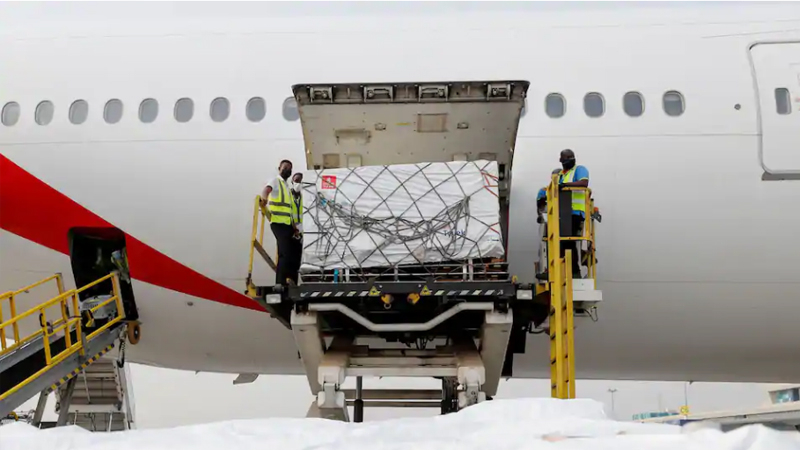
ABUJA, Nigeria – Ghana became the first country to receive a shipment of coronavirus vaccines from a global effort to equitably distribute doses after a plane landed Wednesday with 600,000 AstraZeneca shots.
The rollout is an early step toward getting doses to low- and middle-income countries cut out of the global vaccine race. But the timing and the relatively modest supply – enough for 1% of Ghana’s population – reflect major challenges in the immunization effort.
More than 190 countries signed up to participate in Covax, a multilateral effort to develop and distribute coronavirus vaccines, but the initiative has struggled to secure enough because wealthy countries snapped up a disproportionate share of early supply.
President Joe Biden last week pledged $4 billion to the effort, reversing the Trump administration’s decision to opt out. Yet the United States and other wealthy countries have so far resisted calls to give doses, rather than funding, to countries in greatest need.
“So far, 210 million doses of vaccine have been administered globally – but half of those are in just two countries,” WHO head Tedros Adhanom Ghebreyesus said Tuesday in Geneva. “More than 200 countries are yet to administer a single dose.”
Covax aims to distribute 2.3 billion doses by the end of 2021 – a significant amount but still well short of demand.
Ghana, a country of 31 million people, was selected as the first recipient after sending a rollout plan to Covax showing that its health-care teams and cold chain equipment were ready to support a quick distribution. The Ivory Coast and other countries in the region are expected to soon receive similar shipments soon.
The doses touching down in the capital, Accra, came from the Serum Institute of India, the world’s largest vaccine manufacturer.
Boxes of vaccines left Mumbai on Tuesday for Dubai, where a logistics crew picked up hundreds of thousands of syringes, before hurtling toward Africa’s west coast.
“In the days ahead, front-line workers will begin to receive vaccines, and the next phase in the fight against this disease can begin – the ramping up of the largest immunization campaign in history,” Henrietta Fore, the executive director of the United Nations Children’s Fund, said in a statement.
The organizations running Covax – the World Health Organization, the Coalition Epidemic Preparedness Innovations and Gavi, the Vaccine Alliance – have tried to secure funding, particularly after the Trump administration spurned the effort, in part because of its feud with the WHO.
The effect of the Biden administration’s support probably will be felt over the mid- to long-term but probably will not help with the urgent and immediate task of getting doses to front-line workers in low- and middle-income countries.
French President Emmanuel Macron last week suggested that the United States, Europe and other wealthy buyers should give 4% to 5% of their current vaccine supplies to developing nations in an immediate show of goodwill and commitment.
But the United States has steered clear of making any commitment, focusing instead on vaccination efforts at home.
The African Union is pushing to inoculate 60% of the continent’s 1.3 billion people over the next three years, but soaring global demand – coupled with the weaker buying power of poorer nations – have delayed this objective.
The body said it has obtained 670 million doses of AstraZeneca, Pfizer and Johnson & Johnson vaccines for 54 countries. Several countries are negotiating vaccine packages with China and Russia. Most still rely on the Covax support.
Health officials warn that uneven access to vaccines will prolong the pandemic, spawning variants that are harder to tame.
The variant identified in South Africa, which is far more transmissible, has been detected in Ghana and several other nations, fueling devastating second waves across the continent.
“There is so much stress now with the second strain of this disease,” said Rebecca Kumah, a nurse who treats covid-19 patients in Accra. “The fight is still on. As health-care workers in the line of duty, the vaccines are a great relief.”
By Wednesday, Ghana had recorded more than 80,700 coronavirus cases and 580 deaths.
Ghana plans to first protect the vulnerable: health-care personnel, the elderly and those with medical conditions that increase their risk of serious illness. The first shots will be administered early next week.
More than 300,000 community health workers have received vaccine distribution training in the coronavirus era, health officials said.
The goal is to eventually vaccinate 20 million people, Kwame Amponsa-Achiano, Ghana’s program manager for immunization, told reporters this month. It is unclear how long that effort could take.
“There is hope in sight,” said Juliette Tuakli, a public health physician and pediatrician in Accra. “People have underestimated the enormous mental health toll covid has taken on everyone. We never thought we’d be dealing with this a year-plus later.”
Merkel warns of third virus wave as Germany weighs ending lockdown
InternationalFeb 25. 2021A protective face mask sign in Romerberg Square in Frankfurt, on Jan. 29. MUST CREDIT: Bloomberg photo by Alex Kraus.
By Syndication Washington Post, Bloomberg · Arne Delfs
Chancellor Angela Merkel warned that Germany is in the midst of a third wave of coronavirus infections and should proceed carefully with reopening schools and businesses, putting a damper on discussions to loosen lockdown curbs.
The note of caution comes as Germany struggles on numerous fronts to control the pandemic. Infection rates haven’t come down for days, while the pace of vaccinations remains sluggish. A delayed test strategy represents the latest foul-up.
Health Minister Jens Spahn promised to make quick tests widely available from March 1 to facilitate a gradual return to normality as immunizations ramp up. After Merkel shot down Spahn’s plan in a cabinet meeting on Monday, she will now discuss it with state leaders on March 3.
“We’re in principle ready to go, but many have asked how we can better integrate it into opening strategies, so we’re discussing that now,” Spahn said in an interview with ZDF television. The cabinet member was scheduled to face lawmaker questions over the bungled plan later on Wednesday.
Political strains have increasingly bogged down Germany’s pandemic fight, as election-year campaigning muddies discussions. Multiple plans to reopen Europe’s largest economy are in the works, while Merkel — who will leave office after the September elections — argues for a gradual approach.
Ending restrictions on personal contact must be accompanied by more testing and vaccinations, Merkel told lawmakers from her conservative bloc during a video conference on Tuesday, according to a participant on the call. The chancellor warned that the aggressive British variant is already spreading in Germany, threatening the success of the country’s containment efforts to date.
Helge Braun, Merkel’s chief of staff and a trained medical doctor, told lawmakers that virus mutations could rapidly lead to a rise in new infections. He said the contagion rate could potentially soar as high as 800 infections per 100,000 people over seven days.
After falling steadily since Christmas, Germany’s incidence rate has been stuck at about 60 for more than a week, according to data from the Robert Koch Institute. Merkel has set a rate of 50 as the minimum for lifting certain restrictions, with further curbs possibly eased when the level falls below 35.
With Germans growing increasingly weary of the lockdown and a nationwide exit plan not in place, state officials have put forth their own proposals.
In Germany’s northernmost state of Schleswig-Holstein, Daniel Guenther — the premier from Merkel’s Christian Democrats — called for a four-stage program of reopening shops and restaurants in regions with an incidence rate below 50, while the Social Democrats’ Malu Dreyer — who leads Rhineland Palatinate and faces an election on March 14 — has a separate plan based on the number of new infections, tests and vaccinations.
Bavarian Premier Markus Soeder — a possible chancellor candidate for Merkel’s conservative bloc — has warned of the danger from virus mutations and called for the continuation of the chancellor’s strict lockdown policy.
Alexander Dobrindt, caucus leader for the Bavarian conservative party, proposed a digital certificate to allow vaccinated citizens to circulate freely, while calling for a return to normalcy even before its vaccination program is complete.
Aside from the growing array of state plans, Economy Minister Peter Altmaier is working on his own strategy aimed at providing a perspective for businesses. On Tuesday, Chief of Staff Braun met with state officials to try to find a consensus ahead of the crunch meeting on March 3.
In the meantime, there is some positive news. Spahn announced that the first coronavirus self-tests will be approved on Wednesday, with more set to follow next week.
By The Washington Post · Anne Gearan, Amanda Coletta
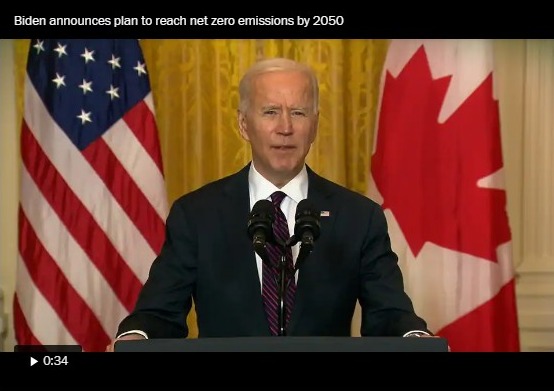
Even through a video screen, you could feel the warm fuzzies between President Joe Biden and Canadian Prime Minister Justin Trudeau as the two met Tuesday for a symbolic rebooting of neighborly relations grown testy over the past four years.
Biden recalled visiting Canada in 2016 when he was vice president and joked about his poor French. Trudeau said he welcomed partnership with the United States “to keep making sure we are pulling our weight around the world and making the world a better and safer place for everyone.”
The relief on Trudeau’s masked face was obvious as he and Biden held the pandemic version of an Oval Office sit-down. Trudeau was in Ottawa and Biden in Washington, but the White House clearly intended the session to be intimate and celebratory, a sort of hug meant to salve Canada’s wounded pride after the slights inflicted by President Donald Trump.
“The United States has no closer friend – no closer friend – than Canada,” Biden said. “That’s why you were my first call,” he added, and the first foreign leader to receive an invitation to the White House, even if conducted long-distance.
Neither leader mentioned Trump by name during the portion of their long-distance meeting seen by reporters. They didn’t have to.
“U.S. leadership has been sorely missed over the past years,” Trudeau said. He noted how differently the process of crafting a joint statement went this time: “It’s nice when the Americans aren’t pulling out all references to climate change, and instead adding them in.”
That was partly a reference to a disastrous 2018 meeting of the Group of Seven industrialized democracies hosted by Canada. Trump skipped the session on climate change and refused to sign onto a statement endorsing the Paris climate agreement. Trump pulled the United States out of that pact; Biden recently rejoined it.
Trump’s outburst at the time of that G-7 meeting included personally attacking Trudeau, tweeting after leaving the meeting that his Canadian host was “very dishonest” and “weak.”
The shock and hurt in Canada, the largest U.S. trading partner and a close ally, was hard to overstate. But for all the palpable relief Tuesday, several irritants remain between the two countries, and Biden added one more on his first day in office when he canceled the permit for the Keystone XL pipeline.
Ahead of the meeting, opposition lawmakers from across Canada’s political spectrum called on Trudeau to push for an exemption from Biden’s “Buy American” executive order on procurement, which could squeeze Canadian firms out of U.S. government contracts.
Conservative Party leader Erin O’Toole also urged the prime minister to ask Biden to let Canada acquire its coronavirus vaccines from U.S.-based manufacturers. Canada has been obtaining vaccines from Europe, and recent shipments have encountered delays.
“At a time when both our countries need to be focused on getting people back to work and returning to normal post-covid-19, Justin Trudeau needs to show Canadians he’ll stand up for our interests and our jobs,” O’Toole said in a statement.
None of that appeared to dampen the mood Tuesday.
The White House released a “road map” for U.S.-Canada relations, focused on a recovery from the pandemic, a reversal of the economic downturn and cooperation on climate change and other priorities. Among those is a recommitment to traditional alliances and international institutions such as the United Nations, NATO, the Group of Seven and the World Trade Organization.
The United States and Canada also will work together to resume three-way meetings with Mexico, a White House statement said.
Trudeau was just one of the traditional allies whom Trump publicly scorned, and both the Canadian and U.S. leaders were eager Tuesday to signal a clean break from the former president’s tendency toward isolationism and protectionism.
Trump had mused about sending troops to the U.S.-Canada border, for example, and ordered the manufacturing giant 3M to stop sending N95 masks to Canada, before reaching a deal with the company that would allow the protective gear to continue flowing.
Trump trade adviser Peter Navarro even appeared to call into question the motives for Canada’s contribution to the U.S.-led mission in Afghanistan, in which 158 Canadian soldiers have been killed.
The comments were “such an affront to Canadian contribution and Canadian loss,” a deputy defense minister wrote to Canada’s ambassador to the United States in an email obtained by The Washington Post through a public records request.
Biden is now trying to make up for those years of tension. Even though it was the diplomatic equivalent of a Zoom meeting, Tuesday’s session, as the first one-on-one with a foreign leader, was meant to reflect the resetting of a traditionally close relationship.
The White House arranged the day with as many bells and whistles as could be managed virtually. After their private meeting, Biden and Trudeau appeared side by side on separate screens to make public statements.
“Now that the United States is back in the Paris agreement, we intend to demonstrate our leadership in order to spur other countries to raise their own ambitions,” Biden said.
He made a point of condemning the detention in China of two Canadians caught up in a dispute over Canada’s arrest of Huawei executive Meng Wanzhou. “Human beings are not bartering chips,” Biden said.
Trudeau, who called Biden “Joe,” added, “We’re facing tough times, no doubt. But we’re not facing them alone. Canada and the United States are each other’s closest allies, most important trading partners and oldest friends.”
Still, Canada’s relationship with the new administration got off to a bumpy start. On Biden’s first day in office, he signed an executive order revoking the permit for Calgary-based TC Energy’s Keystone XL pipeline expansion, which would carry Canadian crude oil from Alberta to Nebraska.
The move was not a surprise, but Canadian officials had hoped for a chance to make their case.
A senior U.S. official told reporters Monday that the United States considers the matter settled. “The decision will not be reconsidered. It has already been made,” said the official, who spoke on the condition of anonymity to preview the meeting.
Airline bookings surge on Johnson’s plan to reopen travel
InternationalFeb 24. 2021A member of ground crew prepares a passenger aircraft, operated by Easyjet on the tarmac at Nice Cote d’Azur Airport in Nice, France, on Friday, Feb. 5, 2021. MUST CREDIT: Bloomberg photo by Jeremy Suyker
By Bloomberg · Siddharth Philip, Christopher Jasper
U.K. holidaymakers reappeared with a roar, showering airlines with summer bookings after Prime Minister Boris Johnson outlined a roadmap for air travel to return.
EasyJet ticket sales more than quadrupled in the hours after Johnson said Monday that international trips may restart as soon as May 17. Tour operator TUI said holiday bookings to Spain, Turkey and Greece jumped sixfold overnight, while Ryanair Holdings cited Italy as another popular destination.
Airline shares advanced for a second day as evidence mounted of burgeoning customer demand for the crucial summer season. While travel could open as soon as late May or June, travelers are hedging their bets, with the uptick concentrated on July and August. Price-comparison site Skyscanner said that flight bookings on Monday increased by 69% compared with the previous day.
“We are seeing this latest news translate into a surge in travel demand,” said Hugh Aikten, vice president of flights at Skyscanner. Ultimately, he said, further steps will be needed to truly unlock demand, “including greater global alignment on common, international standards to enable people to plan.”
Shares of EasyJet rose as much as 12% in London on Tuesday, a day after gaining 7.3% in response to Johnson’s plan to gradually reopen the economy. TUI surged as much as 7.3% and Jet2 10%, while Ryanair and IAG, owner of British Airways, also added to Monday’s gains.
U.K. hotel operators such as Whitbread and InterContinental Hotels Group meanwhile rose in anticipation of a pickup in internal. Hotels could reopen May 17, a month after campsites and self-catering accommodation.
Britain has established a task force that will set out a roadmap for when international travel might resume, with a report due by April 12. Questions still remain about requirements for testing and quarantines.
Bookings for flights from the U.K. jumped 337% in a few hours, EasyJet said late Monday. Sales of package holidays soared 630%, the low-cost carrier said.
Sunny spots such as Malaga, Alicante and Palma in Spain, Faro in Portugal and the Greek island of Crete are among top destinations, EasyJet said. While travel may reopen sooner, August is the most popular period.
Bookings from Britons have begun to surge at the 21-floor Madeira Centro Hotel in Benidorm on Spain’s Costa Blanca, according to commercial manager Juan Natera, who said that reservations are strong for August and September, extending into the fall.
Michalis Vlatakis, president of the Association of Cretan Tourism and Travel Agencies, said that restarting travel will depend on the roll-out of vaccinations and decisions by Greek authorities, he said.
“Tourism is psychology and the right psychology must be created for people to travel,” Vlatakis said.
While the U.K. ticket sales validate optimism for customer demand, the outlook for travel in the early part of summer remains cloudy.
TUI will seek to encourage customers to take a break after May 17, when the current ban on tourist travel potentially ends, by extending a policy allowing them to rebook for free until the end of June.
“We will continue to work closely with the government so people can look forward to a well-deserved break away, after what has been a very difficult year for many,” said Andrew Flintham, managing director of TUI UK and Ireland.
Erick Tsang, Hong Kong’s secretary for constitutional and mainland affairs.
By The Washington Post · Shibani Mahtani, Theodora Yu
HONG KONG – Serving as a district councilor in Hong Kong means addressing everyday concerns such as pest control, traffic issues and helping elderly residents pay bills. One of the few perks of the modest office is having a say, alongside tycoons and Beijing loyalists, in choosing Hong Kong’s leader.
On Tuesday, Hong Kong’s government announced that anyone running for these local positions will need to be a “patriot” – meaning they must swear loyalty not to their constituents but to Beijing and the Communist Party – as China moves to quash the territory’s last avenue of democracy.
The changes, which are expected to be introduced to the legislature – where there is no viable opposition – next month and become law soon thereafter, will trigger the expulsion of several young pro-democracy councilors, even if they read the oath as instructed. Disqualified candidates will be barred from running in any elections for five years.
“You cannot say you love the country but you don’t respect” the Chinese Communist Party, said Erick Tsang, Hong Kong’s secretary for constitutional and mainland affairs. “It does not make sense.”
The insistence on “patriots” allows China to ensure that pro-democracy representatives cannot influence the selection of the financial hub’s next leader. The district councils have some say in a committee that selects Hong Kong’s chief executive, but they are currently dominated by pro-democracy politicians who won a landslide victory in 2019 elections.
With Tuesday’s announcement, the councils, the only fully democratic body in Hong Kong, fall in line with China’s broader reshaping of a city once known for its boisterous political culture as democratically chosen representatives are replaced with Beijing loyalists.
Since the 2019 protests, China has weeded out elements that could galvanize resistance to its tightening control over Hong Kong, jailing activists and forcing others into exile, including through a new national security law. Pro-democracy lawmakers have been ousted from the legislature, political slogans have been banned, and schools have been ordered to toe Beijing’s line.
Xia Baolong, one of Beijing’s top officials in charge of Hong Kong, outlined his vision on Monday for “patriots” ruling the territory, signaling electoral changes and dismissing the opposition camp as “radical” and “anti-China.” Patriots, he said, must hold roles in all the city’s institutions, including the judiciary, legislative and statutory bodies.
In a news conference Tuesday, government officials laid out a set of criteria and oath-taking procedures for the district councilors and warned of legal consequences if they did not comply. They prepared a two-and-a-half page list of “positives” and “negatives” they would use to determine whether an official was abiding by Hong Kong’s mini-constitution, known as the Basic Law. Some of the “negatives” echo language in the Beijing-drafted national security law, which punishes people guilty of soliciting “foreign interference” or advocating Hong Kong independence with up to life in prison.
Other offenses that could force a candidate’s disqualification, according to the guidance provided by authorities on Tuesday, include undermining the “political order” led by the chief executive and “indiscriminately” objecting to government proposals – potentially rendering all opposition politics illegal.
Tsang said this list of “positives” and “negatives” was not exhaustive, and loyalty of public officers would be reviewed on a “case-by-case” basis.
The changes will be introduced March 17 in the legislature, which is now devoid of meaningful opposition after Beijing disqualified four pro-democracy lawmakers, prompting the mass resignation of their colleagues. Four serving district councilors already disqualified from contesting legislative elections will similarly be dismissed from their local positions.
They include Lester Shum, a democracy activist involved in the 2014 Umbrella Movement and the 2019 protests; Tiffany Yuen, the former vice chairwoman of a political party founded by prominent activist Joshua Wong; and Fergus Leung. All were arrested under the national security law in January but were not charged.
Shum, in a Facebook post, wrote that it is within his expectations that the government “is completely stifling the space for opposition voices.”
“Though the end has been set, I will stand firm by my post, and perform my duties until the very last minute,” he added.
South Africa’s unemployment rate climbed to a record in the fourth quarter as more people started to look for jobs in an economy that was ravaged by lockdown restrictions to curb the impact of the coronavirus.
The jobless rate rose to 32.5% from 30.8% in the previous three months, Statistics South Africa said Tuesday in a report released in the capital, Pretoria. That’s the highest number on record. The median estimate of five economists in a Bloomberg survey was 31.5%. Unemployment according to the expanded definition, which includes people who were available for work but not looking for a job, fell to 42.6% from 43.1% in the previous quarter.
The unemployment rate in Africa’s most-industrialized economy has remained above 20% for at least two decades, largely due to structural barriers, including an education system that doesn’t provide adequate skills. Restrictions to curb the spread of covid-19 probably caused the economy to contract the most since the Great Depression, with the lockdown forcing some businesses to cut wages, reduce staff or shut permanently. The market is not creating sufficient jobs to absorb enough people of working age into employment, Statistician-General Risenga Maluleke told reporters.
The persistently high unemployment rate poses a challenge for Finance Minister Tito Mboweni as he prepares to deliver his budget speech on Wednesday. While joblessness has added to social tensions that dent the country’s status as an investment destination and erode business confidence, it could also hinder efforts to stabilize South Africa’s rapidly deteriorating public finances. The Treasury will have to fork out more cash to finance a three-month extension of a special coronavirus jobless relief grant.
Restrictions reintroduced at the end of December and warnings of increased business rescues earlier this year may weigh on new hirings in the first quarter.
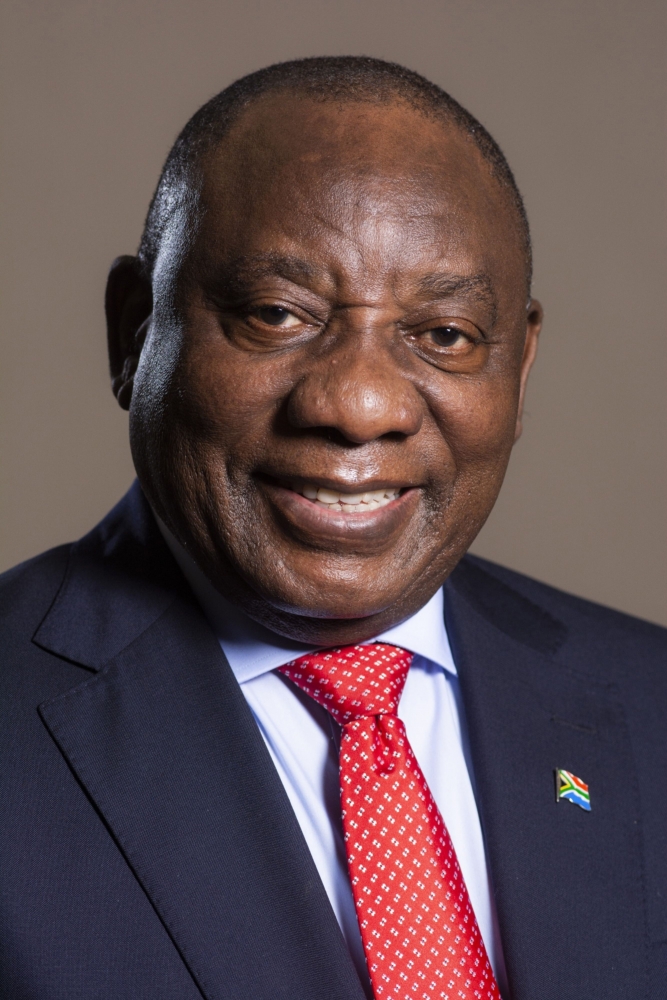
Cyril Ramaphosa, South Africa’s president, following a Bloomberg Television interview in Johannesburg on Nov. 18, 2020. MUST CREDIT: Bloomberg photo by Waldo Swiegers.
Jobs were among President Cyril Ramaphosa’s top four priorities in his state-of-the-nation address this month and at the center of a post-virus reconstruction and recovery plan he presented last year. The government has allocated 13 billion rand ($885 million) to create job opportunities.
Other highlights:
– The number of people employed rose 333,000 to 15 million. The number of unemployed climbed 701,000 to 7.2 million. The employment numbers have come in worse than the recovery in gross domestic product, Sisamkele Kobus, fixed income analyst at Ninety One, said in an email. The data shows that the extension of the covid-19 grant was the right thing to do, despite the current fiscal limitations, Kobus said.
– Community and social services, which include the government, added 170,000 positions.
– The finance industry lost 123,000 jobs and mining shed 35,000.
– Construction gained 86,000, trade 55,000 and transport 65,000 jobs. Private household employed 76,000 more people.
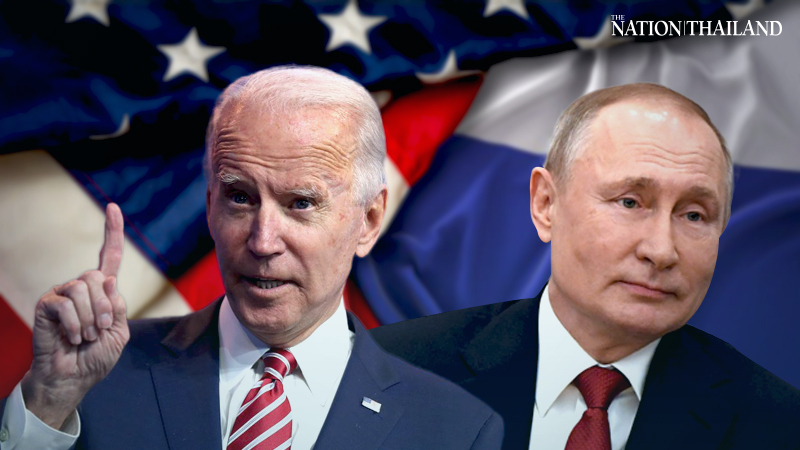
WASHINGTON – The Biden administration is preparing sanctions and other measures to punish Moscow for actions that go beyond the sprawling SolarWinds cyber espionage campaign to include a range of malign cyber activity and the near-fatal poisoning of a Russian opposition leader, said U.S. officials familiar with the matter.
The administration is casting the SolarWinds operation, which hacked government agencies and private companies, as “indiscriminate” and potentially “disruptive.” That would allow officials to claim that the Russian hacking was not equivalent to the kind of espionage the U.S. also conducts, and to sanction those responsible for the operation.
Officials also are developing defensive measures aimed at making it harder for Russia and other sophisticated adversaries to compromise federal and private sector networks, said the officials, several of whom spoke on the condition of anonymity because of the matter’s sensitivity.
Part of the administration’s response, too, will be an attribution statement stronger than the one the intelligence community released in January saying that Moscow “likely” was behind the SolarWinds operation. A White House official said last week that the Russian campaign hit nine U.S. government agencies and about 100 private companies.
But the aim of the various measures, officials said, is to convey a broader message that the Kremlin for years has used cyber tools to carry out an array of actions hostile to the interests of the United States and its allies: interfering in elections, targeting coronavirus vaccine research and creating a permissive atmosphere for criminal hackers who, among other things, have run ransomware botnets that have disrupted American public health facilities.
In a speech to the Munich security conference last week, President Joe Biden said that “addressing . . . Russian recklessness and hacking into computer networks in the United States and across Europe and the world has become critical to protecting our collective security.”
National security adviser Jake Sullivan said Sunday that the response, expected in the coming weeks, “will include a mix of tools seen and unseen, and it will not simply be sanctions.” The bottom line, he told CBS’s “Face the Nation,” is that “we will ensure that Russia understands where the United States draws the line on this kind of activity.”
The administration is also working on an executive order that will improve the Department of Homeland Security’s ability to ensure the resilience of government networks. Part of that is deploying a new technology, a senior administration official said, that gives federal defenders at the department’s Cybersecurity and Infrastructure Security Agency “visibility” into networks that was missing in the SolarWinds hacks.
“You can’t defend against something you can’t see,” the official said in an interview.
The punishment for the cyber hacks is intended to be part of broader measures aimed at holding Moscow accountable for other actions, such as its use of a banned chemical weapon against anti-corruption activist Alexei Navalny.
Politico on Monday reported on the administration’s plan to impose sanctions for the poisoning and jailing of Navalny, in coordination with European allies.
On Monday Secretary of State Antony Blinken welcomed the European Union’s decision to sanction Russia in response to actions taken against Navalny and his supporters.
The government in January characterized the Solar Winds operation as “an intelligence-gathering effort.” Espionage is an activity the United States and virtually every other country conducts against its adversaries – and even allies. But senior Biden administration officials have said they view the Russian activity as more than just classic espionage.
Last week, Anne Neuberger, deputy national security adviser for cyber and emerging technology, said at a news briefing that “when there is a compromise of this scope and scale, both across government and across the U.S. technology sector . . . it’s more than a single incident of espionage. It’s fundamentally of concern for the ability for this to become disruptive” – damaging computers or undermining their operation.
What’s notable about these breaches is they were enabled by the Russians hacking software used in the victims’ networks – what is known as a “supply chain” attack.
For instance, some of the victims had downloaded poisoned software updates from the Texas company SolarWinds, which was the Russians’ initial steppingstone into their computers. About 18,000 entities worldwide received the updates. But only a fraction were compromised. The Russians designed the operation so they could choose which targets to victimize. Those they chose to ignore received a “kill switch” dismantling the malware.
Some U.S. officials argue privately that that feature – the selective targeting and disabling of the malware – made the campaign “discriminate,” and not as alarming as an attack that compromised every person whose computer downloaded the poisoned update.
But the senior administration official viewed it differently. “We’re seeing that this kind of broad, indiscriminate compromise, and the access that it enabled the hackers to have, crosses a line of concern to us because it can be turned to be disruptive so quickly,” the official said. “So, at its centrality, it is destabilizing.”
Meddling with the supply chain is concerning, said Trey Herr, director of the Atlantic Council’s Cyber Statecraft Initiative, if only because it undermines customer confidence in the integrity of the software supplier and may lead consumers to distrust software updates that are important to patching vulnerabilities.
Herr stressed that the United States must accept responsibility for not securing its software supply chain. “This is huge egg on the face of the U.S. cybersecurity establishment – both public and private sector,” he said. “It’s not shame on the Russians. It’s shame on us.”
Others also counseled restraint. When it comes to cyber spying, said Fiona Hill, a former deputy assistant to president Donald Trump and senior director for Russia at the National Security Council, the best offense is a good defense. “There’s a huge risk if we say we’re going to take action through cyber retaliation,” Hill said. “If you do tit-for-tat vengeance, you always risk getting in a cycle.”
Paul Kolbe, former chief of the CIA’s Russian operations, said sanctions with Russia have generally been ineffective. “It gives us the satisfaction of having taken some action and sends a signal of displeasure,” he said. “But I’m hard-pressed to find a single act that we’ve sanctioned Russia for that’s actually changed its behavior.”
The Washington Post reported in December that intelligence officials think the SVR, Moscow’s foreign intelligence service, carried out the intrusions, but the administration has not decided whether to say that publicly.
Some intelligence officials were pushing for a stronger attribution before the administration change last month, but White House officials, wary of angering Trump, who publicly played down the notion that Moscow carried out the hacks, softened it to “likely,” said several people familiar with the matter.
Biden has ordered the intelligence community to provide an assessment of the breaches. Last week, Neuberger said the government has found that nine federal agencies were compromised. She did not name them, but The Post has confirmed the identities with U.S. officials. They include NASA and the Federal Aviation Administration, which have not been previously publicly identified.
The Transportation Department, which houses the FAA, and NASA did not dispute that they were compromised. A DOT spokesman said the department is “continuing to investigate and look into the [FAA] situation.” A NASA spokeswoman said the agency is continuing to work with CISA on “mitigation efforts to secure NASA’s data and network.”
The seven other agencies are the departments of State, Justice, Treasury, Energy, Commerce and Homeland Security, as well as the National Institutes of Health (part of the Health and Human Services). In all cases, the data stolen was unclassified and no operational systems were breached.
“Our general assumption is this was designed to be a long-term operation, low and slow, targeting very few accounts in each individual agency and being selective about the exfiltration so as to avoid detection,” a second U.S. official said.
In some ways, SolarWinds is a misnomer for the campaign. The Russians hacked other companies’ software to gain access to victims’ networks. They compromised the email security firm Mimecast, and a Microsoft corporate partner that handles cloud-access services. And they broke into two federal agencies using “brute force” password cracking, or algorithms that guess passwords, officials said.
The SVR hacked the State Department, the White House and the Joint Chiefs of Staff unclassified networks in 2014 and 2015. But that operation was “noisier,” using phishing emails that were easier to detect, said Dmitri Alperovitch, founder of the Silverado Policy Accelerator and a cybersecurity expert who investigated the earlier hacks.
“Ultimately, those campaigns – at least against those high-priority targets – weren’t very successful, because the intruders were quickly discovered and ejected,” he said. “I believe that realization drove them to the supply-chain model – to get into victims’ networks through third-party suppliers.”
Thousands of protesters have take to the streets in some of Spain’s largest cities every night for the past week, where they have often clashed with police. In just one night in Barcelona on Saturday, authorities said they had detained 38 people and recorded injuries among 13.
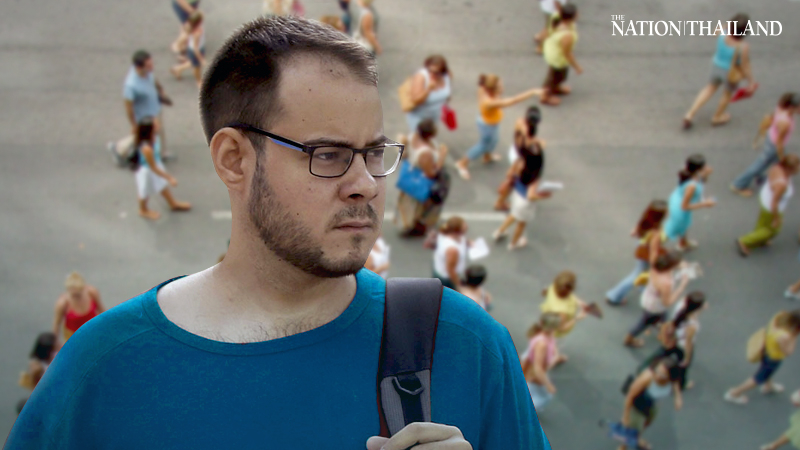
The anger of the young protesters is centered around the high-profile arrest of a man who until recently been an obscure figure: Pablo Rivadulla, a rapper better known by his stage name, Pablo Hasel.
With an aggressive, anti-authoritarian musical style, the 32-year-old Hasel has a lengthy rap sheet. In the past, he has been sentenced of assaulting a journalist and for threatening a witness at a trial. But Hasel’s rise to infamy has mostly come not through his actions, but through his words.
Or more specifically, in the case of his latest arrest and nine month sentence, his tweets.
Spanish prosecutors had pointed to more than 60 tweets Hasel sent between 2014 and 2016, in which he had expanded on the left-wing stance in his lyrics.
Hasel’s tweets were certainly provocative.
They included references to the police as killers, Nazis and “cry babies.” The Spanish royal family were described as “mafioso, medieval,” derided for their alleged links to Saudi Arabia who would be “remembered in history as the parasites they are.”
Arguably more offensive, however, were references to the Marxist organization GRAPO and Basque separatist movement ETA, mostly defunct groups that had been previously linked to hundreds of killings between them. Both were categorized as terrorist organizations by the European Union.
“The demonstrations are necessary but insufficient, let’s support those who have gone further,” Hasel tweeted in 2016, alongside a photograph of Victoria Gómez, a GRAPO member jailed in relation to a violent crimes.
Hasel’s subsequent arrest has now sparked a major debate in the country that extends far beyond Twitter.
A petition signed by more 200 Spanish cultural figures, including film director Pedro Almodóvar and actor Javier Bardem, said that Spain resembled countries like Morocco or Turkey, where artists can no longer create freely.
“We are aware that if we allow Pablo to be imprisoned, tomorrow they could come after any one of us,” the petitioners wrote.
Salil Tripathi, chair of PEN International’s writers in prison committee, warned Tuesday that “democracies don’t jail poets, even if the words they express are disturbing or uncomfortable,”
The situation has sparked some of the largest protests in years in Catalonia, a northeastern region of Spain with a strong separatist movement. Hasel, who was born in the region, was also a public supporter of Catalonian independence. His arrest came two days after regional elections in Catalonia.
If the protests continue, they may not only threaten peace and quiet but the coalition that holds together the left-wing Spanish government.
Hasel was previously convicted in 2015 after a series of songs he uploaded to YouTube that included lyrics describing violence against Spanish journalists and politicians.
One song, titled “Obama Bin Laden,” saw Hasel says that Televisión Española, Spain’s public broadcaster, “deserves a bomb.” Another, titled “I’m not sorry for your shot in the neck,” is addressed to the supporters of Spain’s center-right People’s Party.
In 2015, the rapper was then sentenced to two years in prison, though he ultimately didn’t serve any time behind bars.
The new sentence that focused on his tweets came first in March 2018. It was reduced on appeal to nine months and one day, in part because neither GRAPO or ETA were currently active. This shorter sentence was later upheld by Spain’s Supreme Court.
Hasel isn’t the first rapper to face prison time for his words. His friend and co-performer Josep Miquel Arenas, known as Valtonyc, was sentenced to three and a half years, but he fled to Belgium and is now fighting against extradition back to Spain.
But Hasel now looks set to become the first rapper to actually serve his sentence. In some ways, that may not be a surprise. “I will go to jail,” he told The Washington Post during an interview in 2018. “I can do it.”
More surprising is the chaos the arrest has caused. Though most of the protests have been peaceful, in some cities like Barcelona there have been clashes every night.
Free speech advocates argue that restrictions in Spain have grown in recent. They point to a 2015 public security law imposed under a previous People’s Party government which broadened an article in the Spanish criminal code that focuses on those that “glorified terrorism.”
“If these articles of the criminal code are not amended, freedom of expression will continue to be silenced and artistic expression will continue to be restricted,” Esteban Beltrán, director of Amnesty International Spain, warned shortly after Hasel’s arrest.
On Tuesday, PEN Català president Àngels Gregori called on Article 578 to be repealed and said defamation should be a matter of civil law “where the government has no role.”
Government officials in the center-left Socialist party said that the country would review Spain’s free speech laws, potentially removing prison terms for related crimes, but the reform is said to be in the early stages.
But the left wing Unidas Podemos, junior partner in the government, have gone further, proposing new legislation that would eliminate the crime of glorifying terrorism or insulting the royal family. The split has resulted in tension within the coalition, which was already deeply divided over economic policy.
It’s a sign of the growing power of the rappers, whose status has only increased in recent years despite the laws meant to silence them. In 2018, Hasel told The Post that his last job had been picking grapes and apples.
At the time of his tweets between 2014 and 2016, he topped out at around 50,000 Twitter followers. Now, he has close to 140,000.

 A protective face mask sign in Romerberg Square in Frankfurt, on Jan. 29. MUST CREDIT: Bloomberg photo by Alex Kraus.
 A member of ground crew prepares a passenger aircraft, operated by Easyjet on the tarmac at Nice Cote d’Azur Airport in Nice, France, on Friday, Feb. 5, 2021. MUST CREDIT: Bloomberg photo by Jeremy Suyker