Impeachment is over, but other efforts to reckon with Trump’s post-election chaos have just begun #SootinClaimon.Com

#SootinClaimon.Com : ขอบคุณแหล่งข้อมูล : หนังสือพิมพ์ The Nation.

https://www.nationthailand.com/news/30402895

Impeachment is over, but other efforts to reckon with Trump’s post-election chaos have just begun

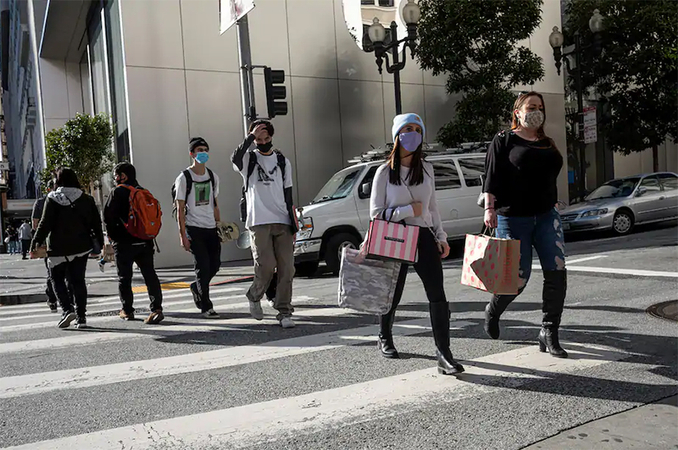
InternationalFeb 22. 2021People pray outside the Wisconsin Capitol in Madison on Dec. 14, 2020, in a protest of the presidential election results. MUST CREDIT: Photo for The Washington Post by Darren HauckPeople pray outside the Wisconsin Capitol in Madison on Dec. 14, 2020, in a protest of the presidential election results. MUST CREDIT: Photo for The Washington Post by Darren Hauck

By The Washington Post · Rosalind S. Helderman

WASHINGTON – The state of Michigan and the city of Detroit have asked a federal judge to sanction attorneys who filed lawsuits that falsely alleged the November vote was fraudulent, the first of several similar efforts expected across the country.
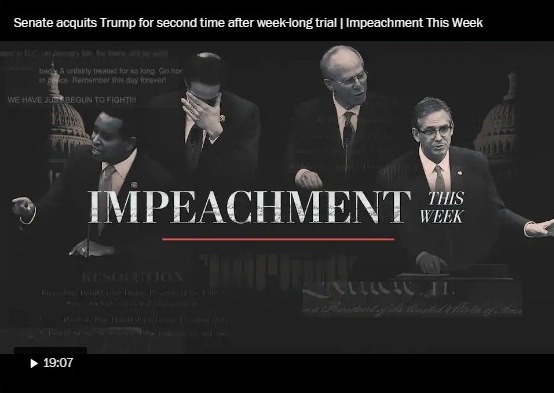
An Atlanta-area prosecutor has launched a criminal investigation into whether pressure that then-President Donald Trump and his allies put on state officials amounted to an illegal scheme to overturn the results of the presidential election.

And defamation lawsuits have been filed against Trump’s allies – the start of what could be a flood of civil litigation related to false claims that the election was rigged and to the subsequent riot at the U.S. Capitol on Jan. 6.

Although Trump was acquitted by the Senate on a charge that his rhetoric incited the deadly Capitol siege, public officials and private companies are pursuing a multifront legal effort to hold him and his allies accountable in other ways. The actions target the former president and numerous others – including elected officials, media pundits and lawyers – who indulged and echoed his falsehoods that Joe Biden did not win the election.

The goal, according to lawyers and others supportive of such efforts, is to mete out some form of punishment for those who helped undermine confidence in the election results and fueled the Jan. 6 attack on the Capitol. But even more, they said they hope to discourage other public officials from rerunning Trump’s strategy of attempting to overturn an election result by sowing doubt about the legitimacy of the vote.

“There has to be some consequence for telling these lies – because when you lie to people, they take action based on what they think is true,” said Philadelphia Commissioner Al Schmidt, a Republican who received threats after false allegations of fraud in the counting of the city’s votes. “Because it’s such a dangerous new thing that occurred, there has to be some reconciliation. Moving on isn’t enough.”

A federal judge in the District of Columbia late Friday referred one lawyer for possible disciplinary action. It’s not yet clear how far courts will go in pursuing sanctions against lawyers who may have believed in their own conspiracy theories, or whether prosecutors will ultimately bring criminal charges related to the election. The civil litigation could linger for years.

One side effect of the endeavors: They could provide new forums for Trump and his allies to showcase their false claims about the vote in 2020.

Former New York mayor Rudy Giuliani, who served as Trump’s lead post-election attorney and who is the target of several of the lawsuits that have been filed, said in a text message that he sees the court actions as “an opportunity” to defend his claims. Or, as he wrote, “it will give me a chance to get the truth past the Iron Curtain of Big Tech and Most Media censorship.”

A spokesman for Trump did not respond to a request for comment.

The most serious ongoing legal actions involve criminal inquiries. More than 225 people have been charged with various crimes directly related to storming the Capitol on Jan. 6. Justice Department officials have said they do not expect to file criminal charges against Trump or others who gave incendiary speeches in Washington that day before the violence, but they also said that the case is complex and that the investigation ongoing.

Even without charges against the former president, several lawyers representing alleged rioters have signaled that they plan to argue that their clients were merely following what they believed were Trump’s directions that day – meaning there could be lengthy legal wrangling over Trump’s culpability.

Meanwhile, one local prosecutor is directly examining whether Trump and his allies broke state laws when they sought to overturn the results in Georgia.

Fulton County District Attorney Fani Willis sent a letter this month to various state officials indicating that her office is examining a variety of criminal charges related to “attempts to influence” the 2020 election.

In December, Trump called Georgia’s top state elections investigator and asked the person to “find the fraud.” Then, in a recorded phone call in January, Trump pressured Georgia’s secretary of state, Republican Brad Raffensperger, to “find” enough votes to reverse Biden’s win in the state.

Another front could open up in Wisconsin, where a recount confirmed Biden’s victory.

Last week, lawyers representing the state council of the Service Employees International Union sent a letter to Milwaukee County District Attorney John Chisholm, a Democrat, requesting a criminal investigation into whether laws were broken when 10 would-be Wisconsin electors sympathetic to Trump met behind close doors at the state Capitol on Dec. 14 and tried to appoint themselves as the state’s representatives to the electoral college.

The group signed illegitimate certificates of election and sent the fake documents to federal and state officials, proclaiming that Trump had won the state’s electoral votes.

Their actions came as Wisconsin’s governor on the same day convened Biden’s electors in an open ceremony elsewhere in the Capitol, as prescribed by state law, to formally give the state’s votes to Biden and Vice President-elect Kamala Harris.

The union identified six Wisconsin laws it says the would-be Trump electors may have broken, including prohibitions on forgery and falsely assuming to act as a public officer.

“Some of this is about trying to bring bad actors to account,” said Jeffrey Mandell, an attorney representing the union. “But the bigger part is trying to make sure we never go through something like this again. We have seen an intensification from election to election of how far people are willing to push these issues. And we need it to stop.”

The Milwaukee County District Attorney’s Office did not respond to a request for comment, nor did a spokesman for the Wisconsin Republican Party, which was involved with organizing the Trump elector effort. Party Chair Andrew Hitt was one of the 10 people purporting to be Trump electors.

Meanwhile, a variety of groups and individuals who say they were harmed by lies told about the election are pursuing lawsuits.

On Tuesday, Rep. Bennie Thompson, D-Miss., chairman of the House Homeland Security Committee, sued Trump, Giuliani and members of two extremist groups, arguing that their rhetoric caused the Jan. 6 riot in violation of an 1871 law that bars violent interference in the performance of Congress’s duties. Thompson is being represented by the NAACP, which said other members of Congress are expected to join.

Trump spokesman Jason Miller has rejected the effort, saying in a statement that “the facts are irrefutable” that Trump “did not incite or conspire to incite any violence at the Capitol on Jan. 6th.”

Separately, two election technology companies are pursuing multibillion-dollar defamation suits against various Trump allies, alleging that they repeatedly told lies about the companies’ products in the weeks leading up to Jan. 6.

Dominion Voting Systems, one of the two companies, has filed twin $1.3 billion defamation suits against Giuliani and another lawyer, Sidney Powell, who together promoted false claims that the company’s voting machines were somehow manipulated to swing the election to Biden.

Dominion lawyers have said they plan to file similar action against Mike Lindell, a leading Trump supporter who is the chief executive of the company My Pillow, and the lawyers have sent letters warning of potential litigation to dozens of others, including the Trump campaign.

Lindell has said he would welcome a lawsuit that might result in discovery and allow him to press his allegations against Dominion.

Giuliani has accused the company of using the suit “to wipe out and censor the exercise of free speech” and has likewise said the lawsuit will give him an opportunity to litigate his assertions about the election.

Dominion has claimed in court documents that Powell “evaded” service of its suit, forcing it to pursue her across state lines. In an email, her attorney Howard Kleinhendler called that claim “false,” indicating that she had been traveling frequently for work and was facing security threats but had not been avoiding the lawsuit.

A second company, Smartmatic, which has said that during the November election it operated in only one U.S. county, a jurisdiction in California, has filed a $2.7 billion lawsuit against Fox News and several of its prominent commentators, as well Giuliani and Powell. Smartmatic says the commentators and lawyers used the network to propagate wild lies, including falsely claiming the company had been founded by Venezuelans close to former leader Hugo Chávez.

Kleinhendler called the lawsuits “empty, self-serving publicity stunts and pathetic attempts at obscene and unfounded damages claims” and said Powell looked forward to defending herself in court.

The lawsuits are turnabout for Trump and his allies, who filed more than 60 lawsuits after the election, challenging the results in various states. They lost all the suits but one in Pennsylvania that affected few ballots.

Judges in some of those suits are considering requests to sanction the pro-Trump lawyers, either through monetary penalties or by referring them for disciplinary action in the states where they hold their law licenses.

Federal rules prohibit lawyers from filing frivolous suits or from using litigation for improper purposes such as to harass or delay. Lawyers also are not allowed to lie in court.

The purpose of the rules, said Stephen Gillers, a professor at New York University’s law school and an expert in legal ethics, is to discourage bad practices: “Lawyers should not bring garbage complaints to the court and take up valuable court time. Judicial time is limited – it’s a valuable resource.”

Detroit was the first formally to request sanctions, filing a motion in December asking U.S. District Judge Linda Parker to assess monetary fees against Powell, Lin Wood and several others involved in a case that had challenged Michigan’s presidential election results.

In ruling against the Trump allies at one stage of the litigation, Parker had called the suit “stunning in its scope and breathtaking in its reach” and an attempt to “disenfranchise the votes of the more than 5.5 million Michigan citizens who, with dignity, hope, and a promise of a voice, participated in the 2020 General Election.”

In January, Detroit also asked Parker to initiate a process that could prevent the lawyers from being able to work in Michigan courts. Michigan Gov. Gretchen Whitmer and Secretary of State Jocelyn Benson, both Democrats, have asked the judge to sanction the lawyers. The two officials, along with Michigan Attorney General Dana Nessel, a Democrat, have written letters to state bar associations requesting grievance proceedings against the lawyers.

“Attorneys who use their license to fuel the fires of insurrection have no right to run and hide when their battle is lost,” said David Fink, a Detroit-based lawyer representing the city in the case. “They chose to misrepresent the facts to the court and participated in a scheme to persuade millions of Americans that this was not a free, fair and open election. They have to be held accountable for what they’ve done.”

In a filing this month, attorney Stefanie Lambert Junttila, representing the pro-Trump lawyers, called the request for sanctions “baseless,” “procedurally improper” and “an attempt to create a dangerous precedent that could dissuade future civil rights and voting rights plaintiffs from bringing their disputes to court.” (She also argued that Powell should not be sanctioned because she had not actually signed documents that were filed in the case under her name.)

Kleinhendler, also a lawyer for Powell, said there was “no credible basis” that any ethics complaint could stand against her and said she had practiced “with the highest professional legal integrity” throughout her career, which included a stint as a federal prosecutor in Texas.

Similar motions for sanctions could be forthcoming in other states where Trump and his allies challenged election results in court.

In Wisconsin, Gov. Tony Evers, a Democrat, said in a statement to The Washington Post that state officials will “absolutely” be seeking attorney fees from and sanctions for the Trump lawyers. “These lawsuits had no basis in the law or reality, and they were an attack on our democracy. There needs to repercussions for this reckless, dangerous behavior,” he said.

No sanction motions have been filed in Pennsylvania, where Giuliani appeared in court to argue Trump’s case, but a spokeswoman for Attorney General Josh Shapiro, a Democrat, said, “We have made it clear there will be accountability for those who filed and defended those meritless claims regarding the Pennsylvania election.”

“We saw the horrific consequences that ensued on January 6th as a result of these baseless attacks designed to undermine faith in our election process,” she added.

In D.C., Judge James Boasberg of the U.S. District Court initiated possible sanctions without any formal request. Late Friday, he formally referred Minneapolis-based lawyer Erick Kaardal to an attorney grievance committee for an investigation into Kaardal’s conduct over a last-ditch lawsuit filed in December seeking to stop Biden from taking office.

The suit, in which Kaardal was representing a conservative group called the Amistad Project, was filed against then-Vice President Mike Pence, both houses of Congress, the leaders of five states and the electoral college – a body that does not exist as a permanent entity.

In his order, Boasberg identified a variety of problems with Kaardal’s suit and added that the lawyer had sought a “staggering” outcome – to invalidate a presidential election. “When any counsel seeks to target processes at the heart of our democracy, the Committee may well conclude they are required to act with far more diligence and good faith than existed here.”

A lawyer for Kaardal had argued earlier this month against the move, writing that Kaardal had acted in good faith and that disciplinary action would have a “chilling effect” on future litigants who assert similarly good-faith arguments in challenging existing law.

Separately, Wood, who worked closely with Powell, has said he has been alerted by the State Bar of Georgia that it is considering disciplinary action against him – which could result in the suspension or revocation of his law license. An official of the Georgia bar association declined to comment, citing the confidentiality of the process, as did an official with the bar association in Texas, where Powell is licensed.

“The false attacks are propaganda intended to smear my good name,” Wood said in an emailed statement. “The enemy wants me to stop speaking truth. I will not be stopped.”

There also is an effort to seek sanctions in New York, where Gillers, the NYU law school professor, helped draft a complaint asking state courts to investigate Giuliani’s conduct, potentially to revoke his license to practice law in the state.

Gillers noted that New York state has an especially stringent rule that prohibits lawyers from engaging in “conduct that adversely reflects on the lawyer’s fitness as a lawyer.” Although the disciplinary process can take three to four years to resolve, he said the court has the option to suspend a lawyer’s license on an interim basis if that lawyer is deemed a threat to the public interest. He said Giuliani could be a candidate for that kind of drastic action.

“He spent months as the titular head of the Trump legal challenges, bringing useless cases and publicly claiming that the election was fraudulent, thereby creating confusion,” he said. “I believe he knew it – or should have known it – and I think that behavior, across many months and after many losses both in court and in public opinion, adversely reflects on his fitness as a lawyer.”
North Korea’s economy is ravaged – and Kim is lashing out #SootinClaimon.Com

#SootinClaimon.Com : ขอบคุณแหล่งข้อมูล : หนังสือพิมพ์ The Nation.

https://www.nationthailand.com/news/30402893

North Korea’s economy is ravaged – and Kim is lashing out

InternationalFeb 22. 2021

By The Washington Post · Simon Denyer

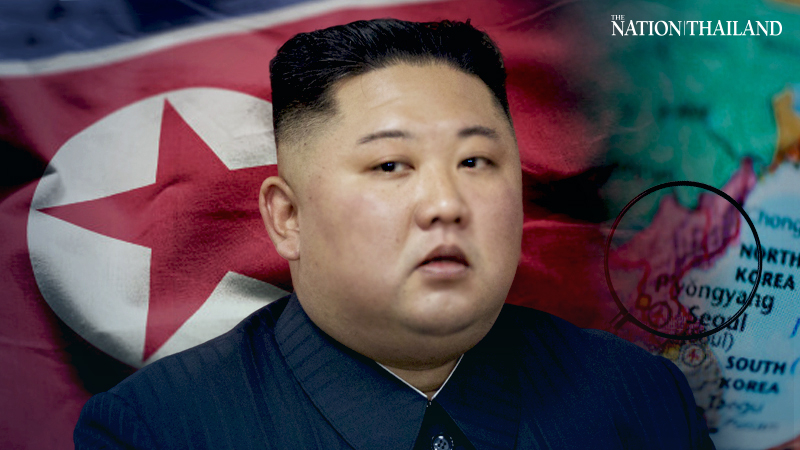
TOKYO – Kim Jong Un is angry, and he’s lashing out.

North Korea’s last economic plan failed “tremendously,” he complained. And his inner circle lacked an “innovative viewpoint and clear tactics” in drawing up a new one, Kim told the ruling Workers’ Party last month, yelling and finger-pointing at frightened-looking delegates.

His economy minister, appointed in January, has already been fired.

It’s not altogether surprising. North Korea is suffering its worst slump inmore than two decades, experts say. It’s a combination of international sanctions and especially a self-imposed blockade on international trade in attempts to keep the coronavirus pandemic out.

A shortage of spare parts usually supplied from China has caused factories to close, including one of the country’s largest fertilizer plants, and crippled output from the country’s aging power plants, according to news reports. Electricity shortages, long a chronic problem, have become so acute, production has even halted at some coal mines and other mines, Kim himself admitted in mid-February.

“Without imported materials, raw materials and components, many enterprises stopped, and people, accordingly, lost their jobs,” Alexander Matsegora, the Russian ambassador to North Korea, told the Interfax news agency.

The economic pain is unlikely to threaten Kim’s regime or force any retreat in North Korea’s standoff with the United States and allies over Pyongyang’s nuclear program. Nor should it lead to famine – as it did in the 1990s, when hundreds of thousands of people died – partly because food production and distribution has improved in the past decades and ally China would probably come to North Korea’s rescue, experts say.

But it does presage more pain and misery for millions of ordinary North Koreans.

Even in the capital Pyongyang, the regime’s bastion and home to its elite, shelves have emptied and it’s difficult even to buy basic products such as pasta, flour, vegetable oil and sugar, Matsegora said, as well as suitable clothes and shoes.

“If you manage to get something, it is three to four times more expensive than before the crisis,” he told Interfax.

But Kim’s response to the crisis risks appears to be making the situation much worse.

Andrei Lankov, a Russian university professor based in Seoul, called it a “dramatic U-turn.” Kim has turned his back on even modest economic and market reforms and reverted back to de facto Leninism, emphasizing central planning while trying to clamp down on the private entrepreneurial activity that has become a mainstay of the country’s mixed economy, he said.

In speeches to the ruling party, Kim demanded the restoration and strengthening of the system under which the economy runs “under the unified guidance and management of the state,” putting special emphasis on metal and chemical industries as the “main link in the whole chain of economic development.”

Kim also announced plans to expand state control of society, clamp down on foreign culture and media, and launch a “powerful mass campaign against practices running counter to the socialist lifestyle.”

Benjamin Katzeff Silberstein, a nonresident scholar at the Stimson Center foreign policy think tank, said Kim is unwilling to undertake serious reforms to the state-controlled system.

“The only thing left is to blame officials for not doing their jobs properly,” he said, “as if a more competent official would be able to work within the system and make it more efficient – whereas, in fact, it’s the system itself that’s the problem.”

North Korea’s economic managers are largely flying blind, without even the reliable data they would need to run a command economy, said Kim Byung-yeon, an economics professor at Seoul National University.

The few clues he can glean suggest cement production has fallen by 25 percent since 2016, while interviews with defectors suggest household incomes declined a similar amount between 2017 and 2019. The overall economy may have contracted by 20 percent since 2017, he “guesstimates.”

In rural areas, there are many days when households only get two hours of electricity, the Seoul-based Daily NK news service reports, while fertilizer shortages could compound an already shaky food situation.

But it’s the scarcity of goods in Pyongyang and possible discontent among the elites that will have Kim more worried, experts say.

His attempt to reimpose state control of the economy may partly be driven by a desire to corral what limited resources are there. But it also could be simply driven by insecurity.

“To make a Stalinist economy work these days is pretty much as hopeless as teaching pigs to fly,” Lankov said. “He probably understands that, but he also feels insecure about losing control. He decided that, in the days of crisis, he should increase control over the economy and population.”

Lankov noted that Kim’s father, Kim Jong Il, oscillated among turning a blind eye to private enterprise, actively promoting market reforms and reverting to state control during his rule. It now appears his son may be following the same path.

“I used to believe Kim Jong Un would be different from his father,” he said. “I didn’t expect him to surrender his nuclear weapons or pursue political liberalization, but I did expect him to pursue economic liberalization.”

Ever since the 1990s, North Korea has allowed a degree of private enterprise as the only way to prevent total economic collapse, allowing traders to sell food and consumer goods in markets, and other people to run small businesses. Since taking power, Kim had quietly expanded these freedoms in measures “that were clearly copied from China in the 1980s,” Lankov said.

Now, Kim’s apparent swing back toward central planning and the “juche” philosophy of self-reliance is unrealistic in an economy that was dependent on trade with China, experts say.

“The economy was quite open before sanctions,” said Seoul National University professor Kim. “He is trying to encourage people by saying they can overcome the crisis by the juche ideology. But if he really tries to implement it, it will worsen the economic situation.”

The crisis is partly self-inflicted, driven by what Katzeff Silberstein calls a “remarkable paranoia” about the coronavirus pandemic that saw the regime not only block the movement of people across its border with China – with armed guards told to shoot on sight – but also block the movement of goods.

Despite the crisis, Lankov said, North Korea’s diplomatic calculus is unlikely to change, and certainly won’t induce Kim to go cap-in-hand to Washington or Seoul for help.

Kim is never going to surrender his nuclear weapons, which he considers essential for the survival of his regime and his family, Lankov said.

“Kim Jong Un basically wants to negotiate the partial or complete removal of sanctions, but at a limited cost,” he said. “Denuclearization is not acceptable to the North Koreans, and so if the Americans only want to talk about denuclearization, it means nobody is going to talk to them.”

Six months after massive Beirut explosion, official investigation has been upended #SootinClaimon.Com

#SootinClaimon.Com : ขอบคุณแหล่งข้อมูล : หนังสือพิมพ์ The Nation.

https://www.nationthailand.com/news/30402892

Six months after massive Beirut explosion, official investigation has been upended

InternationalFeb 22. 2021

By The Washington Post · Sarah Dadouch, Nader Durgham

BEIRUT – The Lebanese judge leading the investigation into the August explosion that tore through Beirut had set his sights on the caretaker prime minister and three former ministers, charging them with negligence for ignoring the highly combustible material stored for six years on the waterfront.

But when two of the former ministers filed a complaint, alleging Judge Fadi Sawan had demonstrated a lack of neutrality by charging prominent figures to appease the public, he was dropped last week from the case. The Lebanese court that dismissed Sawan further questioned whether he could be impartial because his own home had been damaged in the blast – like those of hundreds of thousands of other Beirutis.

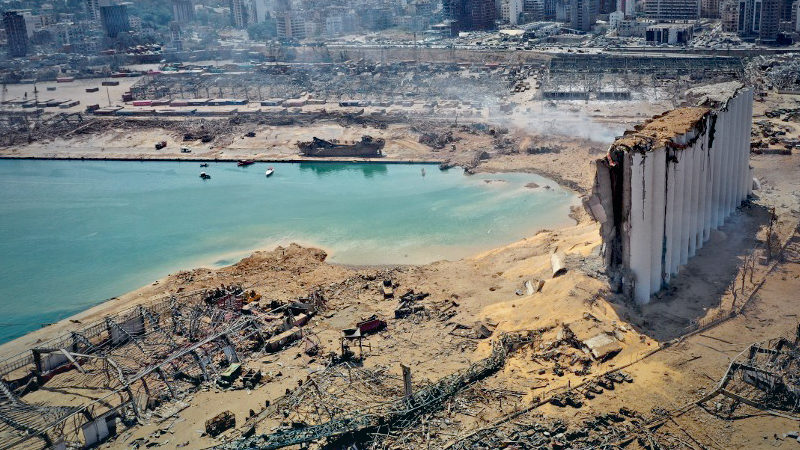
More than six months after the explosion, which killed more than 200 people, injured more than 7,500 others and devastated large portions of the capital, the official investigation is struggling to break through Lebanon’s culture of corruption and political influence to hold anyone of consequence accountable.

Sawan had already brought charges against 33 people, placing 25 of them in detention, but most were low-level customs, port and security officials.

When he summoned caretaker Prime Minister Hassan Diab and two former ministers for questioning as defendants, they refused, claiming immunity from prosecution as public officials.

Throughout his investigation, Sawan had focused on a question that has gripped much of Lebanon since August: Who was responsible for allowing 2,750 tons of ammonium nitrate to be stored haphazardly in a warehouse, alongside fireworks and paint thinners, on the edge of a crowded city?

“I believe there was purposeful negligence,” Diab said in an interview earlier this month at the Grand Serail, the prime minister’s offices. Most of their windows were still covered with tarps, the glass yet to be replaced after it was shattered in the blast. “A blind eye has been turned for seven years,” he added. Diab resigned after the blast but holds the role of caretaker prime minister until a new government is formed.

Although Diab has refused to be interrogated as a defendant, Sawan had succeeded in questioning him previously as a witness, and the focus had been on when he had first learned about the storage of the ammonium nitrate in Beirut. Diab, during the interview with The Washington Post, laid out the timeline he had provided under questioning, saying he initially heard about the material on June 3 of last year and brought the matter to the attention of the appropriate ministers. Diab said he had not realized how dangerous the material was.

Government documents reviewed by The Washington Post show that officials were well aware of the dangers posed by the large chemical stockpile long before last year. The documents reveal that responsibility for the ammonium nitrate was for years passed among different public and private entities, including the Public Works and Transportation Ministry, the judiciary, the army and even a private explosives company.

At least since 2015, a chemical expert made officials aware of the hazard of storing the chemicals at the port, and officials were advised to move the material out of the port.

A report by Lebanon’s national security agency, which was sent to Diab two weeks before the explosion after he requested an assessment of the shipment, cited the expert at Lebanese University who had examined the material and warned, “if ignited, (it) would cause a massive explosion, one of whose results would cause the semi-destruction of Beirut’s port.”

Sawan’s investigation had largely set aside questions surrounding how the ammonium nitrate arrived at the port and what caused the material to explode, according to Diab and lawyers who spoke to Human Rights Watch. The ownership of the ammonium nitrate remains unclear, as does how it ended up on a ship in Beirut’s port in 2013. Local media have been probing a series of shell companies allegedly involved with the shipment.

While officials across sectarian and political lines have been calling for accountability, many of them rallied against Sawan once he charged the four senior officials in December. A week later, two of the former ministers he charged, Ali Hassan Khalil and Ghazi Zeaiter, filed a motion to the Court of Cassation to replace Sawan, and his investigation was paused. Khalil and Zeaiter have not addressed the merits of the charges against them, arguing instead that they are immune from prosecution.

The 26-page decision dismissing Sawan on Thursday said there was “legitimate suspicion” regarding his neutrality and impartiality, in part because the judge said he would not recognize the legal immunity claimed by the ministers. The question of how far legal immunity extends for public officials is hotly contested in Lebanon.

The decision also alleged that he covered up the failings of other judges, including at least one who had allegedly known about the dangers posed by the ammonium nitrate but did not act, and that Sawan could not maintain impartiality because his house was damaged in the blast.

Sawan has not made any public statements since being dismissed and did not respond to multiple requests for comment for this article.

On Friday, a new judge, Tarek Bitar, was appointed by the Minister of Justice to replace Sawan. Bitar will now have to restart the investigation.

“In a country dealing with decades of legal impunity and after months of pushing for the investigation to target high-level politicians, this is a major setback,” said Ghida Frangieh, head of litigation at the Legal Agenda advocacy group.

Sawan’s investigation was not without issues, said Aya Majzoub, a Lebanon researcher for Human Rights Watch. She said, for instance, that his use of pretrial detention of dozens of suspects without presenting specific charges or evidence against them violated their due process rights.

But Sawan’s removal is a sign of the “red line” courts have drawn around politicians, Majzoub said. “What this policy of immunity has done is make the political class completely, completely unaccountable, perpetuating the culture of impunity,” she said.

Immediately after the Aug. 4 explosion, tens of thousands of protesters angrily filled the rubble-and-glass-littered streets, demanding accountability. The protests pushed Diab to resign on Aug. 10. Three days later, Sawan was named as the judicial investigator.

Hours after Sawan’s removal was announced on Thursday, families of the victims gathered in front of the Ministry of Justice.

“The Lebanese state doesn’t do anything,” said Mona Jawish, whose daughter Rawan was killed when the blast tore through the popular bar where she worked as a waitress. “They don’t care about us. They don’t care about the martyrs. We are just here crying but (the politicians) only care about themselves.”

The protesters held photos of family members lost in the blast, a sea of printed faces gathered around a burning tire. Several held out a banner that somberly demanded: “We want the results of the investigation with transparency before our patience runs out.”

58 people died in last week’s frigid weather #SootinClaimon.Com

#SootinClaimon.Com : ขอบคุณแหล่งข้อมูล : หนังสือพิมพ์ The Nation.

https://www.nationthailand.com/news/30402891

58 people died in last week’s frigid weather

InternationalFeb 22. 2021

By The Washington Post · Reis Thebault, Paulina Firozi, Brittany Shammas

The cold has killed the young and the old. It has claimed lives from southern Texas to northern Ohio. And authorities expect the toll to rise in the coming days, with frigid weather lingering, hundreds of thousands without electricity and millions without clean water.

The two major winter storms that have plunged most of the United States into an Arctic chill have killed at least 58 people since Sunday, according to data compiled by The Washington Post. More than half of them – 32 – lived in Texas, where persistent power outages have exposed residents to bitter temperatures.

Texans are well-versed in hurricanes and heat waves, but snowstorms and frigid temperatures are rare. Last week’s weather was what some have called a once-in-a-generation event.

“It’s not unusual in July or August, in Fort Worth, anyway, to have stretches of days where it’s over 100 degrees,” said Matt Zavadsky, a spokesman for the area ambulance provider MedStar. “But we’re accustomed to that. We’re not accustomed to a string of days where it’s 3.”

The Post’s data includes deaths confirmed or suspected to be linked to the weather and its attendant hardships, and the true number is undoubtedly higher than what is known so far. Some first responders worry about what they’ll find in their next week’s worth of wellness checks.

In Taylor County, Texas, Sheriff Ricky Bishop said his officers have been checking on residents for days, delivering food and water and following up with them later to make sure they’re all right. Already, they’ve found three people dead.

“There’s definitely that possibility that over the next week or two we could find some more that we don’t know about right now,” Bishop said.

The identities of most victims still aren’t known. Authorities have confirmed the ages of fewer than half, but of those, 23 were 50 or older and six were 85 and older. Eight states have at least one confirmed death.

Some died while trying to keep warm. An early-morning house fire in Sugar Land, Texas, killed a woman and her three grandchildren as they were huddled near their fireplace.

Douglas Adolph, a spokesman for the city, said the exact cause of the fire is under investigation, but he noted that fireplaces in the area – where winter temperatures typically hover in the 60s – are not meant to burn for hours or heat a home.They tend to be “small and aesthetic in nature,” he said.

Where the weather is coldest, some resorted to risky, last-ditch attempts to escape the cold.

“It’s heartbreaking,” Harris County Judge Lina Hidalgo said in a news conference this week, tallying hundreds of 911 calls about gas poisoning. “This carbon monoxide poisoning is a disaster within a disaster.”

Others seem to have frozen to death. At least 17 people died of hypothermia or “exposure.” Some of them were among society’s most vulnerable.

Early Thursday, a man was found lifeless in a parking lot north of Houston. He was wearing a jacket with no shirt beneath, authorities said. He had no shoes and no socks.

About 350 miles northwest, in Abilene, another person was found dead whom the local fire chief described as “a transient” who had been sleeping outside.

Even those with shelter succumbed.

In rural eastern Kentucky, two elderly women from Ashland – a city of 20,000 on the banks of the Ohio River – died in 48 hours, both of hypothermia. One woman, age 77, lost power in her home, Boyd County Coroner Mark Hammond said. Her family, blocked by ice and felled trees, couldn’t reach her and couldn’t contact her. She was found on Wednesday.

Still others have died in cold weather accidents – in cars and on foot.

In Louisiana, a 77-year-old man in Calcasieu Parish, where Lake Charles is located, slipped, fell into a pool and drowned. And in Lafayette Parish, a 50-year-old man died after slipping on ice and slamming his head on the ground.

A 10-year-old boy died in Shelby County, Tenn., after falling through ice into a pond with his 6-year-old sister, who is in critical condition. When authorities arrived at the scene, it was just 14 degrees.

That boy is one of three known victims under the age of 12. The youngest was 5, one of the three children killed in the Sugar Land house fire. Another, identified by Univision as Cristian Piñeda, was 11. His mother had just managed to get Cristian from Honduras to Texas so the two could live together, she told the outlet. With no electricity, she tried to cover him with blankets as best she could.

It was 12 degrees when Cristian’s mother put him to bed Monday night. He never woke up.

White House says Biden is ‘eager’ to go to Texas, possibly as soon as this week #SootinClaimon.Com

#SootinClaimon.Com : ขอบคุณแหล่งข้อมูล : หนังสือพิมพ์ The Nation.

https://www.nationthailand.com/news/30402890

White House says Biden is ‘eager’ to go to Texas, possibly as soon as this week

InternationalFeb 22. 2021People wait in line outside a 7-Eleven store in Austin, Texas, on Wednesday, Feb. 17, 2021. MUST CREDIT: Photo for The Washington Post by Sergio FloresPeople wait in line outside a 7-Eleven store in Austin, Texas, on Wednesday, Feb. 17, 2021. MUST CREDIT: Photo for The Washington Post by Sergio Flores

By The Washington Post · Paulina Firozi, Amy B Wang, Peter Whoriskey

With millions of Texans grappling with water restrictions, spiking energy bills and other havoc left behind by last week’s winter storm, White House officials said Sunday that President Joe Biden is “eager” to visit and could head there as soon as this week.

The majority of the 58 deaths linked to the Arctic outbreak have occurred in Texas, according to tracking by The Washington Post. As of noon Sunday, more than 11 million Texans were under orders to boil tap water before drinking it and another 120,000 were without any water at all because public water utilities remained hindered, according to figures from the Texas Commission on Environmental Quality.

Many in the state were being hit with extraordinarily high utility bills – many times higher than normal – with experts blaming the state’s lightly regulated energy markets for the prices, which spiked when the storm caused shortages.

“He is eager to go down to Texas and show his support,” White House press secretary Jen Psaki said Sunday on ABC News’s “This Week.” “But he’s also very mindful of the fact that it’s not a light footprint for a president to travel to a disaster area. He does not want to take away resources or attention.

– – –

The wholesale price of electricity in Texas spiked more than 10,000%, leaving many with dizzying bills ranging from four digits to more than $17,000.

Three generations of Texans were trying to stay warm in the blackout. Then a deadly fire erupted in a fully occupied hotel in Texas late Friday, raging for several hours while the sprinkler system was disabled by frozen pipes.

Biden is taking a notably low-key approach to the storm relief process. It’s a marked contrast to predecessor Donald Trump’s habit of making himself the often-hostile center of attention during natural disasters.

Texas is clawing its way out of crisis mode as temperatures rise and the ice begins to thaw. Photographers captured the slick streets, grocery store lines and distribution events that partly defined the alarming week.

Houston Mayor Sylvester Turner, a Democrat, said Sunday that Biden “certainly can come now.”

“We certainly would welcome him,” Turner said on CBS News’s “Face the Nation,” adding: “He would not be a distraction, neither a burden.”

The storm, which has killed people in at least eight states, also knocked out power for millions in brutally cold weather. Many of those initially considered fortunate because their lights stayed on are now facing jaw-dropping electric bills because they had opted for one of the state’s increasingly popular variable-rate plans.

Such electricity plans offer a potentially lower-cost alternative to traditional fixed-rate energy payments, but in a crisis situation can saddle customers with outsize bills. As wholesale energy prices soared, some have charged thousands of dollars for a few days of power.

One company, Griddy, said it was forced to raise its prices as much as 300 times the normal wholesale rate, meaning a typical $2-a-day household would face more than $600 in daily charges.

The spike in prices left many Texans with dizzying bills in the wake of the storms – ranging from four digits to more than $17,000.

“We are about to see a wave of bankruptcies, foreclosures, and evictions as these bills hit consumer and retailer mailboxes,” said Robert McCullough, a consultant and former utilities executive who has testified before Congress.

McCullough noted that electric companies are profiting from the price spikes. Those serving Texas’s main power grid – the portion managed by the Electric Reliability Council of Texas (ERCOT) – garnered $40 billion in revenue, according to his estimates.

“Somebody won big,” McCullough said. “That’s not all profit, but I suspect most of it will be.”

ERCOT, which manages about 90% of the state’s electric load, is facing a state investigation and two lawsuits arguing that its preparation, or lack thereof, for extreme cold left residents freezing and in the dark.

Texas Attorney General Ken Paxton, a Republican, said Friday that he was launching an investigation into how ERCOT and power companies had “grossly mishandled” the winter storm.

An ERCOT official defended the decision to trigger rolling outages, saying in a statement Saturday that it had been the “right choice to avoid a statewide blackout.”

With Biden signing a major disaster declaration that will allow much of the state to tap vast reserves of federal aid, Rep. Michael McCaul, R-Texas, suggested that the federal assistance would be used to help those facing spiking power bills.

“The current plan is, with the federal assistance, to be able to help the homeowners both repair – because we have a lot of water leaks, a lot of water damage, pipes bursting – but, also, their electricity bills as well,” McCaul said Sunday on CNN’s “State of the Union.”

He said federal assistance is “what Texas needs right now so desperately. A lot of people are hurting right now.”

Turner agreed that consumers should not be saddled with the astronomical power bills.

“For these exorbitant costs, it’s not the consumers who should assume that cost,” he said on “Face the Nation.” “They are not at fault for what happened this week. The bills should go to the state of Texas.”

Griddy officials knew the storm would drive up prices, and the company sent an email to customers Feb. 14, warning them to find new providers. But when customers went shopping, the other companies were not offering plans.

One resident, Ty Williams, told local TV station WFAA that he saw the email from Griddy and tried to switch to a new company, but that no one would accept him as a new customer until Feb. 26.

Williams said that he normally pays $660 a month across three electric meters – home, guesthouse and office – but that his bill shot to more than $17,000 in the past week. “How in the world can anyone pay that?” Williams told the station. “I mean you go from a couple hundred dollars a month . . . there’s absolutely no way . . . it makes no sense.”

Gov. Greg Abbott, a Republican, said Saturday that he was convening an emergency meeting with state lawmakers to discuss the spikes, saying in a statement that “it is unacceptable for Texans who suffered through days in the freezing cold without electricity or heat to now be hit with skyrocketing energy costs.”

“The catastrophic winter storm was expected to become the “largest insurance claim event in [Texas] history,” said the Insurance Council of Texas, a trade group, which estimated that the damage would far outpace the $19 billion in claims from Hurricane Harvey in 2017.

The White House’s disaster declaration followed similar state-of-emergency notices in Louisiana and Oklahoma, which will allow the general public and business owners to apply for temporary-housing grants, home-repair loans and other emergency aid.

It offers individual assistance to 77 of 254 counties, including the areas around Houston, Dallas and Austin, but does not cover the entire state.

Abbott said Saturday that the White House’s “partial approval is an important first step.” The White House and the Federal Emergency Management Agency said more counties could be covered as government officials continue assessing the damage. Michael Hart, a spokesperson for the agency, told The Post that major disaster declarations “routinely begin with an initial set of counties for which damage information is available.”

In recent days, the Federal Emergency Management Agency has provided generators, food, water and other supplies statewide.

Asked about the partial declaration on ABC News’s “This Week,” Psaki said the White House has been in “very close touch with Governor Abbott.”

“What happens here is the governor requested a federal disaster declaration. The president asked his team to expedite that,” she said. “And FEMA determined where the counties should be – where it should focus the immediate resources, where the counties that are hardest hit, so that they can make sure they get to the people in most need.”

Biden declares major disaster in Texas as focus shifts to who is responsible for the winter weather crisis #SootinClaimon.Com

#SootinClaimon.Com : ขอบคุณแหล่งข้อมูล : หนังสือพิมพ์ The Nation.

https://www.nationthailand.com/news/30402865

Biden declares major disaster in Texas as focus shifts to who is responsible for the winter weather crisis

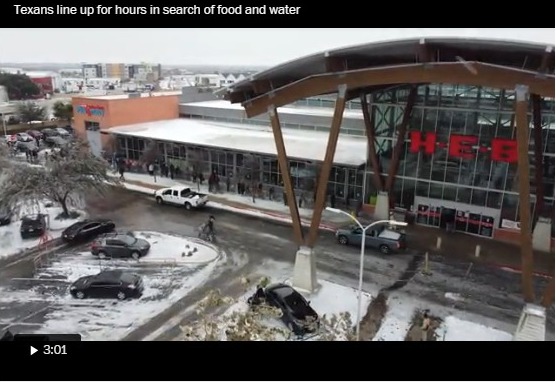
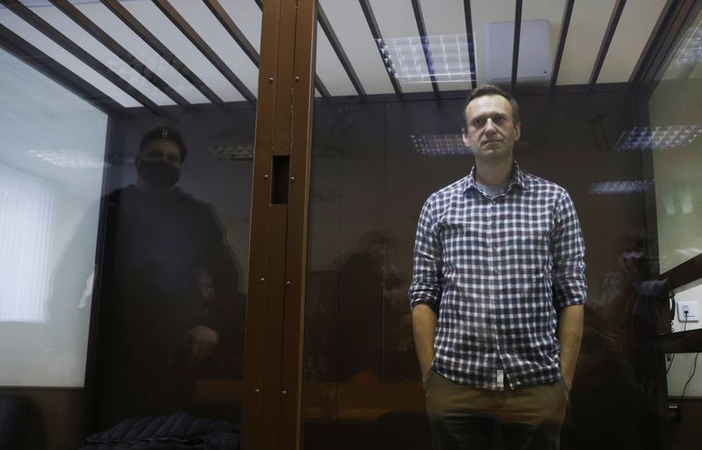
InternationalFeb 21. 2021Customers walk through nearly empty aisles at the Natural Grocers in Austin, Texas, on Friday. Grocery stores and some places like breweries were trying to offer free water to residents who could bring their own containers. MUST CREDIT: photo for The Washington Post by Sergio Flores.Customers walk through nearly empty aisles at the Natural Grocers in Austin, Texas, on Friday. Grocery stores and some places like breweries were trying to offer free water to residents who could bring their own containers. MUST CREDIT: photo for The Washington Post by Sergio Flores.

By The Washington Post · Drew Harwell, Brittney Martin, Marisa Iati, Kim Bellware

HOUSTON – President Joe Biden signed a major disaster declaration that will allow much of Texas to tap vast reserves of federal aid, the White House said Saturday, offering a new lifeline to a state struggling to recover from a brutal winter storm that left more than 50 dead and millions without power across the South.

https://www.washingtonpost.com/video/c/embed/69880787-cf0c-4449-86e7-54f0a3a1c961?ptvads=block&playthrough=false

As Texas thawed from days of frigid darkness, an epic blame game emerged over who is responsible for the billions of dollars in damages from what some expected would become the most costly weather disaster in state history.

Texas’s deregulated electrical grid had triggered mass outages that left residents in the nation’s second-largest state trapped without heat for days in freezing homes. Several died following desperate attempts to stay warm, including a 75-year-old woman and her three young grandchildren in a suburban Houston house fire sparked by a fireplace.

Many other households faced jaw-dropping electrical bills from some of the state’s increasingly popular variable-rate plans, which charged thousands of dollars for a few days of power as wholesale energy prices soared.

The plans offer a potentially lower-cost alternative to traditional fixed-rate energy payments, but the outages quickly raised havoc. One company, Griddy, said it was forced to raise its prices to 300 times higher than the normal wholesale rate, meaning a typical $2-a-day household would face more than $600 in daily charges.

Texas Gov. Greg Abbott, a Republican, said Saturday he was convening an emergency meeting with state lawmakers to discuss the spikes, saying in a statement that “it is unacceptable for Texans who suffered through days in the freezing cold without electricity or heat to now be hit with skyrocketing energy costs.”

The Electric Reliability Council of Texas (ERCOT), which manages the state’s power grid, faces a state investigation and two lawsuits arguing that its failure to prepare for extreme cold left residents freezing and in the dark.

Texas Attorney General Ken Paxton said Friday he was launching an investigation into how ERCOT and other power companies had “grossly mishandled” the winter storm. An ERCOT official defended its decision to trigger rolling outages, saying in a statement Saturday that it had been the “right choice to avoid a statewide blackout.”

The catastrophic winter storm was expected to become the “largest insurance claim event in [Texas] history,” said the Insurance Council of Texas, a trade group, which estimated the damage would far outpace the $19 billion in claims from Hurricane Harvey in 2017.

Biden’s major disaster declaration in Texas, which followed similar state-of-emergency notices in Louisiana and Oklahoma, will allow the general public and business owners to apply for temporary-housing grants, home-repair loans and other emergency aid. Dallas Mayor Eric Johnson, a Democrat, said Saturday that the declaration would “help our city recover.”

Biden’s Texas declaration offers individual assistance to 77 of 254 counties, including the areas around Houston, Dallas and Austin, but does not cover the entire state. Biden said Friday at the White House that he hopes to visit the state this week.

Abbott said Saturday that the “partial approval is an important first step,” and the White House said more counties could be covered as government officials continue assessing the damage. The Federal Emergency Management Agency has in recent days provided generators, food, water and other supplies statewide.

The gatekeepers of the Texas power grid – famously unregulated and disconnected from the broader United States – are expected to face intense scrutiny over whether they neglected infrastructural upgrades and weather safeguards that could have helped during the disaster.

Congress is likely to open an investigation next week into what went wrong, and the Texas legislature is expected hold its own hearings. At least two Texas residents have filed lawsuits faulting ERCOT for not heeding safety warnings or boosting energy supplies.

Although temperatures have risen since the Arctic storm dropped air below freezing, many across the South are just beginning to recover from the devastation of burst pipes, power failures and flooded homes.

More than 14 million people across the South are still without a consistent supply of clean drinking water, and roughly 80,000 utility customers across Texas woke up Saturday morning without heat or power.

In Houston, the nation’s fourth-largest city, residents on Saturday were still being told to boil all water. In Austin, the state capital, many homes still lacked running water, and officials couldn’t say when it might return.

“This has just been one thing after another,” Austin Mayor Steve Adler, a Democrat, told CNN on Friday. “This is a community of people that are scared and upset and angry. We’re eventually going to need some better answers to why we’re here.”

More than 50 recent deaths have been linked to the bitterly cold weather and its aftermath, including from hypothermia, house fires and carbon-monoxide poisoning from people using cars or ovens to stay warm. In the Houston suburb of Sugar Land, Loan Le, 75, and her three grandchildren – ages 5, 8 and 11 – died in a house fire early Tuesday after using a fireplace to stay warm overnight while without power, city spokesman Douglas Adolph said.

Even as temperatures warmed, the threat of ruptured pipes and dry water supplies threatened further strain. In Killeen, a fire at a fully occupied Hilton Garden Inn raged out of control after the hotel’s sprinkler system failed, officials said. No deaths were reported, and the cause of the blaze is still unknown.

For many, the storm’s challenges are just beginning. Tabitha Charlton, 44, was playing Uno and trying to stay warm with her 7-year-old twins Tuesday when a pipe burst and covered her girls’ bedroom with soggy gray insulation.

On Saturday, as the family laid pillows and stuffed animals out to dry on their lawn in Sienna, 30 miles south of Houston, Charlton remembered back to the three years she had spent battling insurance companies and state agencies for repair costs related to home damages from Hurricane Harvey.

“I settled my Harvey insurance claim last Wednesday, six days before this damage occurred. I haven’t even received the check yet,” Charlton said. “After dealing with that trauma for three-plus years, I felt immediately gutted when this happened. I fell to my knees and sobbed.”

Many in the Lone Star State, faced with an uncertain recovery, have pushed to take matters into their own hands. Don Nichols, 70, visited four hardware stores Saturday trying to find parts to fix the busted pipes at his home in Crosby, 25 miles northeast of Houston, where he also owns a barn and some rental properties. He, his tenants and his 100 cows had been without water for most of the week.

On Saturday afternoon, Nichols stood in line with about 30 others at a Home Depot in the city of Humble, waiting to pick through the remaining plumbing supplies. He said he still remembers the last time it was this cold for this long: Christmastime 1989.

“I had my blankets on and my feather bed and my comforter and all of that, and I was still freezing to death,” he said. “I’m a pretty tough ol’ Boy Scout and I don’t worry about that. But this time, man, I did.”

Israel agrees to vaccinate Palestinian workers, Palestinian officials say #SootinClaimon.Com

#SootinClaimon.Com : ขอบคุณแหล่งข้อมูล : หนังสือพิมพ์ The Nation.

https://www.nationthailand.com/news/30402864

Israel agrees to vaccinate Palestinian workers, Palestinian officials say

InternationalFeb 21. 2021

By The Washington Post · Steve Hendrix

JERUSALEM – Israel, which has faced criticism from human rights groups for not extending its world-leading vaccination program to Palestinian territories under its control, agreed Friday to inoculate 100,000 Palestinians who regularly cross into Israel to work, according to the Palestinian Minister of Health.

The vaccinations, which will occur at ad hoc centers set up along the line dividing Israel from the West Bank, she said, would mark the largest delivery of the protectant serum to the five million Palestinians living there and the Gaza Strip. Authorities there are largely depending on vaccines yet to be distributed by an internationally-funded effort targeting poor countries, as well independent purchases they are making on the open market.

To date, Palestinians have gotten access to about 10,000 doses of the Russian Sputnik vaccine donated by Moscow, 2,000 of which of arrived in Gaza this week. Israel also sent 5,000 doses in early February to inject health workers.

Being able to reach 100,000 workers would mark a significant boost in the Palestinian program, according to Palestinian Heath Minister Mai al-Kaila.

“We welcome this,” al-Kaila said Saturday. “We need to vaccinate our people so we can end the pandemic everywhere.”

The agreement followed a rare meeting between Israeli and Palestinian officials Friday in Ramallah, the West Bank seat of the governing Palestinian Authority. Senior health officials from both sides, including Israel’s coronavirus “czar,” Nachman Ash, discussed efforts to control the outbreak that has killed more than 1,900 in the territories.

Israel’s Ministry of Health has not officially announced the provision of vaccines and officials did not respond to requests for comment Saturday, the Jewish sabbath. But the ministry had indicated earlier in the week its intention to offer doses to Palestinian workers, thousands of whom cross checkpoints every day to work in construction, service and other jobs in Israel.

In a statement, the ministry said Friday’s meeting occurred in the understanding “that Israel and the Palestinians live in one area and that an outbreak of COVID-19 among the Palestinian Authority may also affect the infection rate among Israeli residents.”

Israel has depended on the Pfizer vaccine, which requires ultracold storage, to inoculate more than 40% of its residents. But it also took shipment of a reported 120,000 doses of the Moderna vaccine in January. It was unclear what vaccines would go to the Palestinians and how quickly the shots could begin.

“We agreed on the principle but we don’t know the details yet,” al-Kaila said.

The agreement would represent a reversal of Israel’s reluctance to offer vaccine in mass quantities to the Palestinians. The government has faced months of criticism for that stance, even as it has mounted a fast-paced campaign to inoculate its own population.

Some officials, including the Israeli health minister, said they would be willing to aid the Palestinians but only after their own citizens had gotten the jab.

Human Rights advocates argue that Israel has a moral and legal obligation to vaccinate a population under its effective control. Israel countered that the 30-year-old Oslo accords places responsibility for health care with the Palestinian’s own elected leaders, the Palestinian Authority in the West Bank and the militant Hamas group in Gaza.

The issue grew heated this week when Palestinians accused Israel of pollical interference Tuesday when it turned back a shipment of the Russian-donated vaccine meant for Gaza at a military checkpoint. That incident occurred amid calls from some right-wing Israeli politicians to condition the delivery on the release of hostages and human remains held by Hamas.

Israeli officials said the request to send the vaccine across the checkpoints required time for an official review. The vaccines was allowed to reach in Gaza two days later.

“To me, health should be beyond politics,” al-Kaila said. “We and the Israelis, the Lebanese, the Syrians, the Egyptians, we are all in the same region. We should reach herd immunity together.”

In a Russian court, Alexei Navalny loses again but still has the last word #SootinClaimon.Com

#SootinClaimon.Com : ขอบคุณแหล่งข้อมูล : หนังสือพิมพ์ The Nation.

https://www.nationthailand.com/news/30402863

In a Russian court, Alexei Navalny loses again but still has the last word

InternationalFeb 21. 2021

By The Washington Post · Robyn Dixon

MOSCOW – Russian opposition leader Alexei Navalny lost in a court appeal against jail time Saturday, but again used his time in the dock to expound on why he stands against President Vladimir Putin, no matter the personal risk.

Even as Russian authorities try to crush Navalny’s stature and his activist network, a series of court hearings has offered him an unexpected public forum for commentary that has run the serious to the sublime.

From the glass-enclosed cage used for defendants, he has talked about a salted cucumber recipe and mused about his lonely path – jailed for standing against the regime.

He has called the judge in his libel case “Obersturmbannführer” – a Nazi paramilitary rank – and described Putin as an old man quivering in his bunker, terrified of his own people.

An Instagram post attributed to him Wednesday mused about spaceships and the risks of living in confinement.

Not expecting justice from a judiciary with an acquittal rate of less than half a percent, Navalny is using his time in the dock in two current court trials to ram home his message that Russia’s criminal justice system is a sham used to silence Putin’s critics.

He calls the cases “performances” trumped up by the authorities to instill fear in the population or to smear him, but he has seized the stage they afford for his own purposes. He appeared in court Saturday for the result of his appeal against a prison term for breaching probation. A second ruling on his trial for criminal libel was due later Saturday. A third case, involving embezzlement allegations and up to 10 years in prison, is pending.

At the appeal hearing Saturday, Navalny mused on the meaning of life and the importance of religious belief, telling the truth and doing what was right, no matter how hard the consequences.

He said the authorities were using the trials against him “showing me they can do as they want, like jugglers.

“Ordinary people who look at this think, ‘What if I run into the judicial system? Do I stand a chance?'” The goal of power, he said was to make people like him feel isolated, alone and frightened.

Navalny said if he was not willing to take risks, he would just be a bunch of molecules floating through space.

He was not enjoying prison but “I do not feel any regret. On the contrary I feel satisfaction. In a difficult moment, I have not betrayed the commandments.” The court rejected his appeal against the jail term, but shortened it slightly to two years and five months to take into account the time he has spent under house arrest.

Navalny said the libel case, in which he is accused of defaming a World War II veteran, is designed as a smear. On Monday, a state media presenter, Vladimir Solovyov, compared Navalny unfavorably to Hitler, who he said had fought bravely as a soldier – “unlike this codpiece Führer,” a reference to a state security agent’s comment that the opposition leader’s underwear was poisoned in an August attack.

The libel allegation stemmed from Navalny’s tweet criticizing a group of people – including actors, other celebrities, sports figures and one war veteran, 94-year-old Ignat Artemenko – who appeared in a RT network propaganda video urging Russians to support constitutional changes that could keep Putin power until 2036. Navalny called the participants traitors and lackeys.

His lawyers argue that his tweet was not libelous because the activist was voicing an opinion, not an assertion capable of being proved factual or otherwise.

When Judge Vera Akimova repeatedly struck out the questions Navalny raised during the trial, he addressed her from his glass prisoner’s cage as Obersturmbannführer and likened the hearing to a Nazi interrogation, adding that she would look good with a German machine gun.

In his final words before the libel verdict Saturday, Navalny said Putin’s United Russia party – which faces testing parliamentary elections due in September – “has turned into an enormous pig which guzzles from a trough of oil and dollars.” He said the regime was using the libel case to pretend it cared about veterans.

Authorities have restricted Navalny’s ability to use the hearing as a platform, with Akimova barring video of the proceedings. However, state media aired his rant against the judge at length, while also reporting that his remarks could trigger yet more charges – of insulting the court.

“Navalny’s hysterics continue, and in the meantime his team, guided by sponsors from the United States, Canada and Europe, are preparing a military coup in the country,” said state TV presenter Yevgeny Popov.

By Tuesday, day three of the hearing, Navalny said the case was so ridiculous he might just as well talk about cucumbers as the law.

“Every moment of this case is obvious legal nonsense,” he said, veering off to tell how he had to order salt repeatedly to his cell, only to finally get three kilograms all at once.

“Now I have a lot of cucumbers and three kilos of salt. Since it makes no sense to talk about any legal issues here, maybe, Prosecutor and Your Honor, you know some good recipes for salted cucumbers,” he said.

According to the independent investigator media website Proyekt, the libel case grew out of a vast Kremlin-directed campaign involving state security service agents, state media propagandists, regional governors and ambitious freelancers all working hard to discredit Navalny. In August, Proyekt published a WhatsApp message that it said was from the presidential administration to all regional policy groups in June initiating an operation against Navalny – based on his tweet – in the lead-up to the Jun. 25 to July 1 vote on the constitutional changes.

“Colleagues, we must urgently organize an information campaign (responses, quotes, rebukes) defending the WWII veteran insulted by A. Navalny. The campaign is to run *until 1 July*,” the message said, including the asterisks. It asked participants to instigate news articles citing other veterans, patriots “or simply any high-profile or well-known individuals” and to submit the articles and links to it.

At the appeal hearing Saturday, Navalny said he dreamed of a future where Russia was not only free but also happy.

“Despite the fact that our country is built on injustice and we constantly face it and see its worst form, armed injustice, tens of millions of people want the truth and they sooner or later they will get it,” he said.

Navalny is finding other ways to communicate. A post on his Instagram account Wednesday, made on his behalf, said that being in jail was not so hard but felt rather like a space voyage “to a beautiful new world.”

“Could I, a fan of books and movies about space, refuse such a flight, even if it lasts three years? Obviously no,” he wrote.

“There’s just one big difference from space movies. I have no weapons at all. What if the ship is attacked by xenomorphs? I doubt I could fight them off with a kettle.”

Space travel is “dangerous,” Navalny added. The voyage could take years longer than expected, or it could take him nowhere.

U.S. economy may have its best chance in years to break from era of subpar growth #SootinClaimon.Com

#SootinClaimon.Com : ขอบคุณแหล่งข้อมูล : หนังสือพิมพ์ The Nation.

https://www.nationthailand.com/news/30402862

U.S. economy may have its best chance in years to break from era of subpar growth

InternationalFeb 21. 2021

By The Washington Post · David J. Lynch

As increasingly widespread covid-19 vaccinations signal a possible return to normal life, the United States is moving toward an unusual experiment that could produce an economy many Americans will not recognize – for better or for worse.

Factories are humming and consumers are spending again, signs that the United States could emerge from the current health crisis with its strongest growth in decades. Goldman Sachs expects the economy to expand this year at an annual rate of 7%, the fastest pace since President Ronald Reagan proclaimed “morning again in America” in 1984.

The question is whether that fast-paced rebound can be made to last, freeing the nation from the low-growth rut it has plowed for most of the past 20 years, or will instead ignite the sort of inflation that has not been seen since the 1970s. Prominent economists such as former Treasury Secretary Larry Summers already are warning that potential overheating could end in a new recession.

After 20 years of subpar growth, the odds are against a prolonged boom. But the pandemic has catalyzed new thinking about both fiscal and monetary policy, creating the most favorable conditions for restoring vigorous economic growth in several decades.

“In terms of history, this is a unique situation,” said Chetan Ahya, chief economist for Morgan Stanley, who recently advised clients to prepare for a fast-growing “high-pressure economy” through at least the end of 2022.

The Biden administration plans to spend $1.9 trillion backstopping growth on top of the $3.7 trillion in federal funds that have flowed since March, helping all but guarantee years of massive government borrowing to spur the economy.

At the same time, the Federal Reserve says it will keep interest rates near zero even if inflation creeps above the central bank’s annual target of 2%, making it easier for businesses and consumers to borrow.

Not for 75 years, since American G.I.s were battling two totalitarian empires, has the economy been boosted simultaneously by so much deficit spending and so much easy money. The economy will enjoy additional support this year from consumers, who have more than $1.6 trillion in excess savings, thanks in part to last year’s stimulus checks, according to Bank of America.

As President Joe Biden seeks congressional approval of fresh pandemic relief, he plans other moves to boost the economy’s long-term prospects. Administration officials are drawing up an ambitious spending package that would provide up to $3 trillion for a range of Democratic priorities, including infrastructure, clean energy, domestic manufacturing and child and elder care.

The U.S. economy, most experts say, clearly needs a push to re-create the kind of growth that made Americans so prosperous in the last half of the 20th century. Over the past 20 years, by contrast,the U.S. economy grew at an average annual rate of just 1.9%, well below the 3.5% figure between 1980 and 2000.

Expanding the labor force – either through immigration or by making it easier for women to return to work – and modernizing the nation’s infrastructure would deliver faster long-term growth, manyeconomists said. Growing over the next decade at an annual rate of 2.5% rather than the tepid 1.8 pace the Congressional Budget Office expects would produce nearly $11 trillion in additional economic activity.

“Policies make a difference,” said economist Julia Coronado, president of Macropolicy Perspectives. “There’s scope to move toward a higher run rate.”

The current situation bears little resemblance to the government’s response to the 2008 crisis, which produced the most anemic recovery in U.S. history. The Bush and Obama administrations deployed more than $2 trillion to save the economy, but within months of the recession’s official end in June 2009, the United States began reducing the federal deficit, which sapped the economic rebound.

The deficit fears that colored that era’s policy debates today are less potent. Investors require just 1.3% interest to lend money to the government for 10 years, one-third of what they demanded in 2009.

Republican lawmakers still warn against lavish government spending. But after agreeing to add more than $5 trillion to the national debt during the Trump administration, their complaints may carry less weight.

Biden, in any event, seems determined to avoid repeating the mistake of premature austerity.

“Now is the time to go big,” the president said during a CNN town hall this week.

The Fed also has revolutionized its approach to managing the economy. For decades, the central bank had believed that if unemployment fell too low, inflation would rise, requiring it to pump the brakes by raising interest rates.

But as the economy recovered from the Great Recession, unemployment declined to half-century lows without inflation reaching the Fed’s 2% price stability target.

After raising rates in 2018 to head off price increases that never materialized, the Fed pivoted to cutting them in 2019. Fed officials also set out on a national listening tour to hear from communities that hadn’t reaped the benefits of “full employment.”

In August, the Fed announced it no longer would be so quick to raise rates. Instead, central bank officials will allow the jobless rate to fall until inflation exceeds its 2% target for a temporary, but unspecified period of time in order to get more Americans in the workforce.

The new framework is rooted in the lesson of the final pre-pandemic months, when wage gains began reaching lower-income workers who until then had missed out on the expansion’s benefits. Fed officials concluded they “could do more to tighten the labor market than we previously thought was possible,” said Skanda Amarnath, research director at Employ America, a left-leaning think tank.

Still, there are risks with running the economy hot. Summers, who was also an economic adviser to the Clinton and Obama administrations, warned earlier this month that Biden’s $1.9 trillion relief bill could “set off inflationary pressures of a kind we have not seen in a generation.”

Olivier Blanchard, former chief economist of the International Monetary Fund, also has warned that the legislation is too large and risks triggering inflation that would cause the Fed to raise interest rates and likely send the economy into recession.

If demand for goods and services rose too fast, eventually the pool of unemployed workers would be exhausted and factories would be stretched. Beyond that point, wages and prices could begin climbing, repeating the experience of the late 1960s, when President Lyndon B. Johnson famously refused to choose between the “guns” of the Vietnam War and the “butter” of his Great Society domestic agenda. By 1969, prices were increasing at an annual rate of 6.2%, up from just 2.4% two years earlier.

A similar situation today would almost certainly cause the Fed to raise its benchmark lending rate, a move that often leads to recession.

Powell and Treasury Secretary Janet Yellen, a former Fed Chair, have dismissed those concerns. Despite the decline in the official jobless rate, roughly 10 million fewer Americans are working today than were employed last February. More aid from Congress plus a spike in consumer spending could cause “some upward pressure on prices” but it “will be neither large nor sustained,” Powell said.

“We are still very far from a strong labor market whose benefits are broadly shared,” the Fed chair said last week.

But Robin Brooks, chief economist for the Institute of International Finance, an industry group, said financial markets are beginning to register concern. One measure of inflation expectations, the 10-year treasury break even rate, has jumped since the November election to 2.2%, its highest level in more than two years.

“That thing is screaming,” Brooks said. “Perhaps we’re overdoing it.”

At issue is how far below its potential the economy is operating, a measurement that economists call “the output gap.” Those who worry about overheating say the economy was operating close to its limits before the pandemic hit and would be pushed beyond them by Biden’s plan.

CBO says the economy now is about 3% below its potential. But using a different calculus, Goldman Sachs this week pegged the gap at 6%.

“Trying to estimate potential growth is more an art than a science,” said Megan Greene, global chief economist at the Harvard Kennedy School of Government.

Indeed, over the past two decades, CBO scorekeepers have repeatedly lowered their assessments of the economy’s ability to grow without sparking inflation. Throughout 2018 and 2019, CBO said the economy was operating above its sustainable path. Yet the unemployment rate declined from 4.1% at the end of 2017 to 3.5% in February 2020, while inflation stayed tame.

One year ago, the economy was largely healthy. Unemployment of 3.5% was near a half-century low amid a record-long expansion.

The recovery from the pandemic crash, which pushed unemployment to nearly 15% in April, has been faster than expected. Thanks to multiple rounds of federal relief last year, the economy should rise “meaningfully above its pre-covid-19 path” later this year and total output will be higher next year than economists expected before the pandemic, according to Ahya.

But Biden’s “build back better” program aims to create an economy that exceeds the February 2020 model, with reduced income inequality and greater opportunities for women and disadvantaged minority communities.

“There’s now an increased focus not just on aggregate GDP, but how it’s spread across the population [and] addressing inequality and racial justice,” Coronado said. “It’s not just about the growth numbers and the stock market.”

To make that a reality, additional spending beyond the $1.9 trillion relief bill will be needed. Even before that legislation has cleared Congress, the administration is talking up a potential $3 trillion infrastructure package, which faces an uncertain reception on Capitol Hill.

Launching the economy onto a permanently higher trajectory also will require worker retraining, expanded child care to allow women forced from the labor force by the pandemic to return to work, and updated bridges, ports and broadband connections, Greene said.

As millions of Americans each week get vaccinated against covid-19, the economy is stirring. Retail sales in January jumped by more than 5% – their best showing since June – while industrial production rose for the fourth straight month.

“The whole economy is going to grow in a way that we haven’t seen it grow in a long time,” the president said Wednesday. “This is the time for us to move.”

Billions in damage across the South prompts focus on who’s to blame, and who will pay #SootinClaimon.Com

#SootinClaimon.Com : ขอบคุณแหล่งข้อมูล : หนังสือพิมพ์ The Nation.

https://www.nationthailand.com/news/30402854

Billions in damage across the South prompts focus on who’s to blame, and who will pay

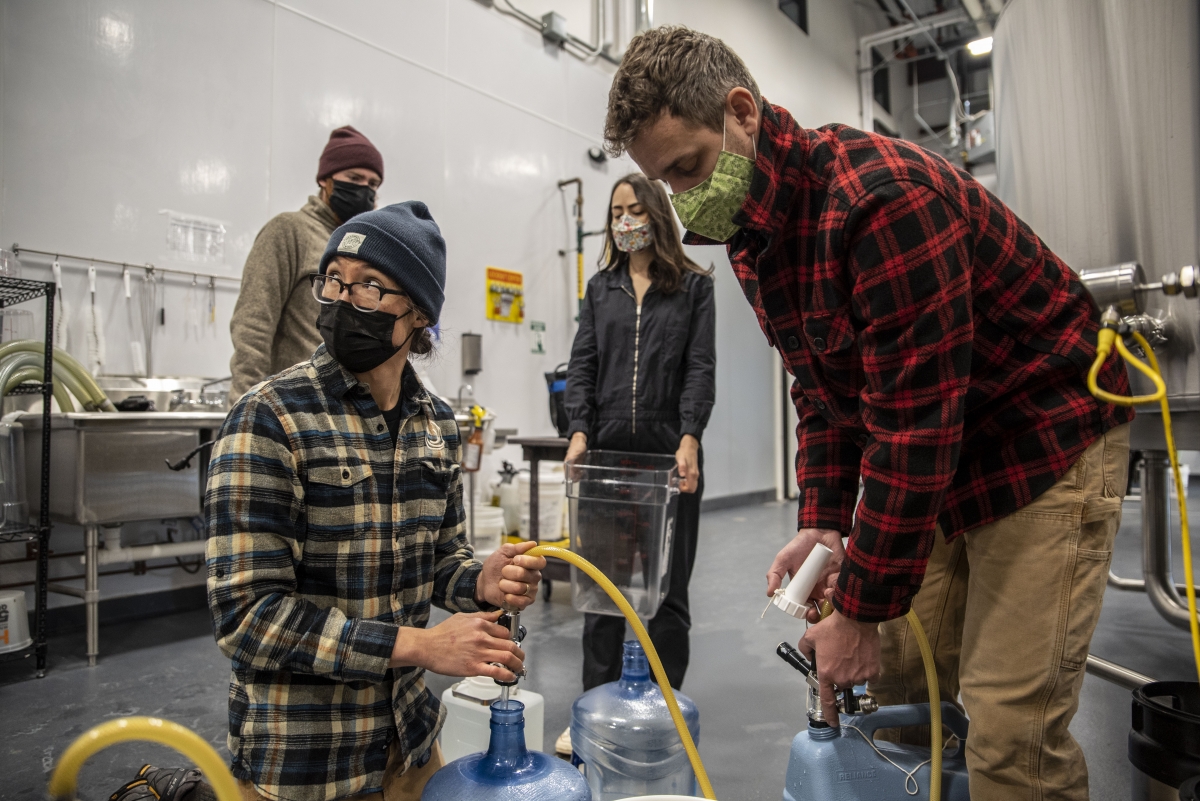
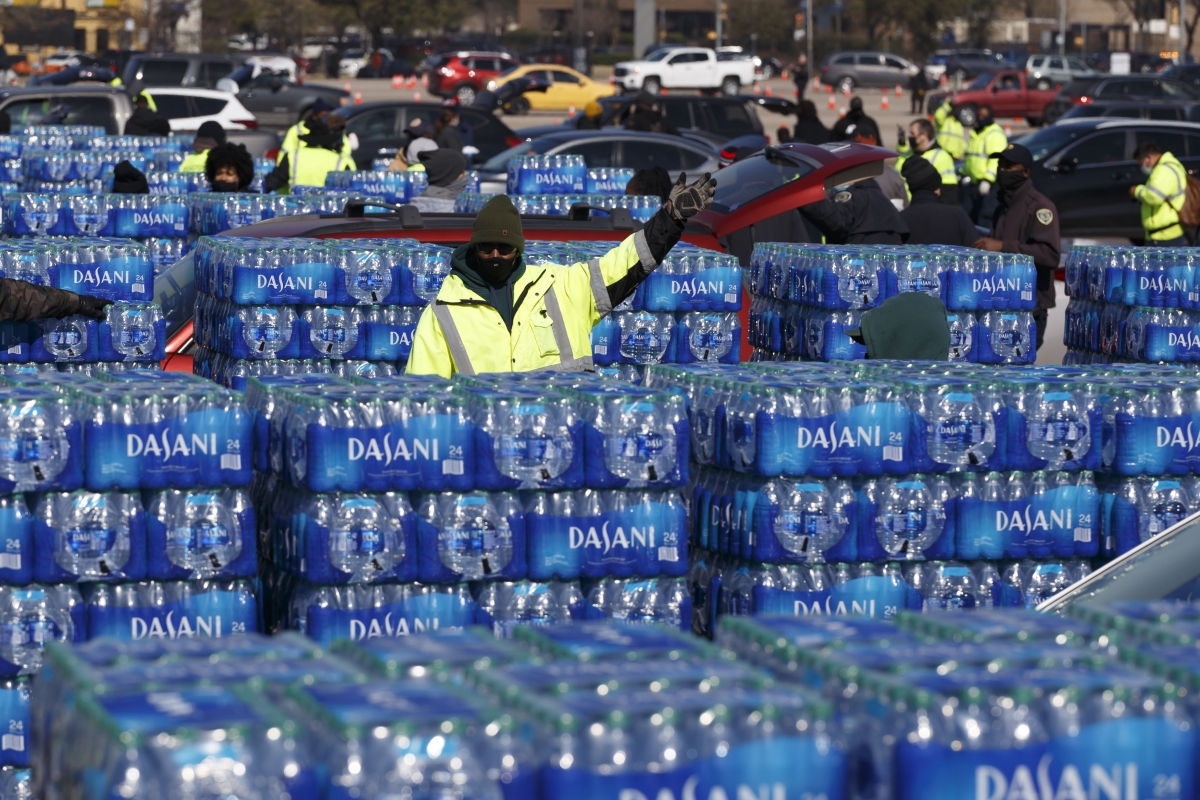
InternationalFeb 20. 2021 With their power out since Monday morning, Evelyn Hernandez, 15, and her sister, Daeslyn, 1, use a samping stove on their family's front porch in Houston to keep warm. 
Photo by Callaghan O'Hare for The Washington Post With their power out since Monday morning, Evelyn Hernandez, 15, and her sister, Daeslyn, 1, use a samping stove on their family’s front porch in Houston to keep warm. Photo by Callaghan O’Hare for The Washington Post
By The Washington Post, Sofia Sokolove, Emily Wax-Thibodeaux, Mark Berman, and Griff Witte

AUSTIN, Texas – Millions of people across a storm-scarred South were bracing for one last night of extreme cold Friday following a devastating week in which dozens of people died, homes and businesses sustained billions of dollars in damage and basic services such as power and water catastrophically failed.

The reckoning over why – and who is to blame – was intensifying Friday, even as residents were still coming to grips with the scale of destruction. Across the region, homeowners who had fled frigid, energy-starved houses or apartments were returning after the lights finally switched back on. But once there, they discovered burst pipes, flooded floors, collapsed ceilings – and no water to drink.

In Texas, the epicenter of the disaster, more than 14 million people in 160 counties were still experiencing water-service disruptions, with impacts also being felt in Mississippi, Louisiana, Tennessee and beyond.

Houston, the nation’s fourth-largest city, was under a boil-water advisory. In Austin, Texas’s capital, much of the city was without running water, and officials could not say Friday when it might return. Bottled water had been stripped from the shelves of minimarts and gas stations, and lines were wrapped around some supermarkets, which were imposing purchase limits as residents scrambled for food.

 Will Jaquiss and Nao Ohdera fill containers with water for residents at Meanwhile Brewing Co. in Austin on Friday. Photo by Sergio Flores for The Washington Post

Will Jaquiss and Nao Ohdera fill containers with water for residents at Meanwhile Brewing Co. in Austin on Friday. Photo by Sergio Flores for The Washington Post

“We know that it’s intolerable,” said Texas Gov. Greg Abbott, a Republican, during a Friday afternoon news conference.

With a long recovery ahead, the focus was rapidly shifting to who would pay. The Insurance Council of Texas, an organization that represents the state’s home, auto, renters and business insurance agents, said the storm would be the “largest insurance claim event in [Texas] history,” with hundreds of thousands of claims expected.

“We are used to our storms in Texas with tornadoes, hurricanes and hail,” said Camille Garcia, communications director for the council. “But those hit smaller areas. This winter event reached every part of Texas.”

Some of the costs of recovery will be handled by the federal government. President Joe Biden said Friday he plans to sign a major disaster declaration for Texas, freeing up funds that can be tapped by individuals who have been impacted, as well as by the state and local governments.

Attention was also shifting Friday to whether the scale of the disaster could have been avoided. Congress is likely to open an investigation next week into what went wrong in Texas, and the state’s legislature is expected to conduct its own hearings.

Abbott, Texas’s governor, has consistently blamed the state’s electric grid operator for a lack of preparation and has called on its leadership to resign.

But the operator – the Electric Reliability Council of Texas (ERCOT) – said Friday that it had little control over the power suppliers and could not force them to better prepare for extreme cold.

“We don’t own the generation units. We don’t own the transmission,” said ERCOT chief executive Bill Magness in a video call with journalists. “It’s not really our role to do winterization.”

Independent authorities said it is up to the Public Utility Commission of Texas – which oversees ERCOT – to mandate that suppliers better prepare for extreme cold and penalize those that choose not to do so. Without such costs, experts said, the power suppliers will continue to neglect preparations, with predictable consequences.

“To save millions of dollars, the generators failed to weatherize, and the consequences are that people have died and it’s cost the state many billions of dollars in repairs to our homes and our buildings,” said Tom “Smitty” Smith, the former longtime director of the Texas office of Public Citizen.

The exact scale of the damage was still becoming clear on Friday. Karen Clark, co-founder and chief executive of Karen Clark and Company, a catastrophe modeling firm, said the bout of winter weather could cost $18 billion in insured losses, with the total economic damage likely to be higher. The damage was spread across 20 states, though most was in Texas.

Beyond the financial toll, there was the human one: The storms have killed at least 48 people since Sunday – including 30 in Texas, according to data compiled by The Washington Post.

Still, there were signs Friday that a halting recovery had begun. Millions of people who had lost power earlier this week had it restored by Friday, with ERCOT declaring in the morning that “operations have returned to normal” after days of rotating outages. Across Texas, Louisiana and Mississippi, the number of customers without electricity was down to about 300,000 as of Friday afternoon.

 Houston city workers direct lines of cars waiting to receive bottled water at a high school sports complex. Houston, the nation's fourth-largest city, was under a boil-water advisory Friday, as more than 14 million Texans were still experiencing water-service disruptions. Photo by Michael Stravato for The Washington Post

Houston city workers direct lines of cars waiting to receive bottled water at a high school sports complex. Houston, the nation’s fourth-largest city, was under a boil-water advisory Friday, as more than 14 million Texans were still experiencing water-service disruptions. Photo by Michael Stravato for The Washington Post

And after repeated blasts of Arctic wind – including one more moving in Friday night – the weather finally appeared poised to offer a respite, with temperatures forecast to climb Saturday and stay higher into next week.

But even with the thaw, peril lurked: The dramatic uptick in temperatures was expected to lead to potholes – and more burst pipes.

That’s damage the region can ill afford.

In Louisiana, Gov. John Bel Edwards, a Democrat, said Friday that authorities are “having to deliver bulk and bottled water to a big part of the state today” after nearly a million people were left without access to clean drinking water Thursday.

Edwards, who spoke during a Washington Post Live event, said temperatures were expected to hit record lows again late Friday, before several days of warming that he hoped would provide utility companies and authorities the opportunity to make extensive repairs to the state’s water and energy infrastructure.

Louisiana’s damage has been most extensive in Shreveport, located in the northwest part of the state.

“It’s been a rough one for us,” said Mayor Adrian Perkins, a Democrat, recounting how roughly six inches of sleet and snow made local highways so slick that even National Guard troops and tankers couldn’t reach the city with fresh water until Wednesday night.

Residents with four-wheel-drive trucks helped pull ambulances out of ditches. Area oil and gas companies supplied some “gray water” to hospitals for heating systems.

Power outages also continued to plague Mississippi on Friday, with one utility warning residents that it could take a few days for all the lights to come back on.

In downtown Tulsa, where hundreds of pipes had burst, the Chalkboard was hit with massive damage. Shannon Garner, who has owned the restaurant with her brother for nearly a decade, said she was still feeling shock and disbelief.

“The fire suppression system sprinklers just busted, and it was like it was raining in the kitchen,” she recounted. “We ended up with five inches of water in the dining room, and it went down into our wine cellar.”

The cumulative impact of the week’s power cuts and burst pipes was forcing residents of Austin to take extreme measures, including posting to neighborhood Facebook groups and Slack channels rumors of where food and water could be found.

“It feels like it’s just one thing after another after another,” Austin Mayor Steve Adler, a Democrat, said Friday on NBC’s “Today” show.

By 10 a.m. on Friday, at least 50 people armed with large plastic jugs, empty milk cartons and soda bottles were queued up for drinking water outside Meanwhile Brewery in South Austin, The scene was similar at a Natural Groceries store in north Austin, where people waited with mostly empty carts, holding pots, tea kettles and jugs to fill from the tap of a small sink labeled “kombucha rinse only!”

Brewery owner Will Jaquiss said that after its water was shut off Wednesday evening, the bar decided to give out all the potable water it had on hand, about 3,500 gallons. Staff shared 2,000 gallons on Thursday, including to four hospitals. The rest was swiftly doled out on Friday.

Nina Selzer Bellomio, a 47-year-old graphic designer who lives in northwest Austin with her two teenagers and husband, said she has been “harvesting snow, boiling it and using it to wash dishes. But the problem is we don’t have much food.”

The family moved from Boston in 2009, because her husband got a job in technology. At first, Austin seemed like a dream: cheaper housing, a vibrant counterculture and music scene.

But she said politics and the state’s refusal to better regulate its energy industry had made Texans like her family “feel like we are back in time, doing sponge baths at the sink. Hauling buckets of water. It’s like being a pioneer.”

To Houston resident and real estate agent Zory Calcaben, the week brought the elements indoors.

“I kid you not, the temperature was 22 degrees,” she said. “And we thought we had good insulation.”

The extreme conditions, she said, brought out the best in her neighbors.

“People were calling out for help, and amidst the sleet, the snow, the freezing cold, people were coming and helping each other,” she said.

But Calcaben said the week had also exhibited the worst in politicians and others who are, at least in theory, responsible for protecting the public from the sort of deprivations on display statewide.

“The ones who are supposed to ensure our safety, they seem to get away with everything,” she said.

That sort of anger was widespread in Texas on Friday, and it led some to predict that state leaders will have no choice but to initiate reform.

“Given the magnitude statewide of this crisis, I do think there will be changes,” said Sherri Greenberg, who spent a decade as a Democratic Texas state representative and now teaches at the University of Texas’s public affairs school.

But others were much more skeptical, given that any shift would probably require more aggressive government regulation – and higher upfront costs – in a state whose politics are dominated by conservative Republicans.

“The issue is Texas doesn’t want to spend the money on an expensive weatherization package,” said Jim Krane, an energy studies fellow at Rice University’s Baker Institute. “There is no mandate.”

Even with this week’s disaster, that may not change. Any reports taking stock of what went wrong “are going to arrive when it’s sunny, 87 and lovely,” said Calvin Jillson, a political science professor at Southern Methodist University

“And people are going to say, ‘Wow, that was terrible, but it’s going to be really expensive to deal with that, let’s think this through.’ “