
Rising coronavirus cases at U-Va., VMI and other Virginia colleges spark worry, lead to changes #SootinClaimon.Com

#SootinClaimon.Com : ขอบคุณแหล่งข้อมูล : หนังสือพิมพ์ The Nation.

https://www.nationthailand.com/news/30402853

Rising coronavirus cases at U-Va., VMI and other Virginia colleges spark worry, lead to changes

InternationalFeb 20. 2021
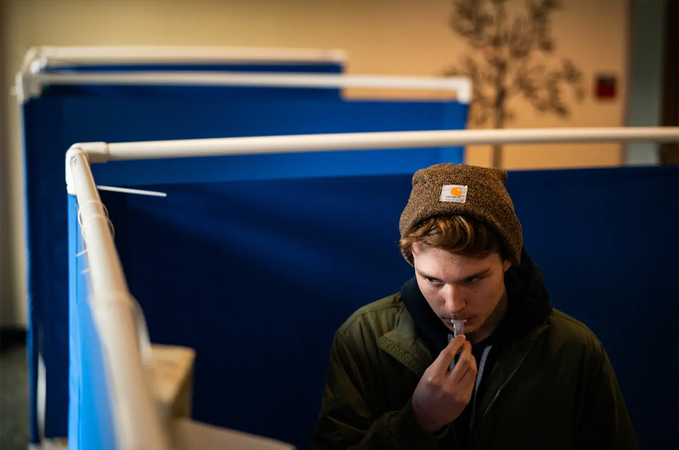
By The Washington Post, Lauren Lumpkin

Virginia universities are ramping up testing and at least one is banning in-person gatherings to deal with surging cases of the coronavirus and protect against a more contagious variant that was first detected in the state in late January.

More than 600 students have been sickened this week at the University of Virginia, spurring restrictions that have left the campus divided. And cases at the Virginia Military Institute have been on the rise since early this month.

Schools like George Mason University have also noticed an uptick in cases, and the campus is preparing to ramp up testing – with a goal of testing every student twice a week, said Gregory Washington, the university’s president.

Elsewhere, the number of coronavirus cases have recently been falling across the greater District of Columbia region.

U-Va. officials are blaming widespread incidents of noncompliance for that campus’s spike. But cases began to surge after a weekend of in-person fraternity and sorority recruitment events that U-Va. President Jim Ryan admitted at a town hall on Friday that “perhaps, we should have tried harder to discourage.”

Mitch Rosner, a professor and chair of the Department of Medicine, said about three-quarters of cases reported by the university are among students living off campus, but contact tracing efforts have not linked any cases from the university to the wider Charlottesville community.

A variant first identified in U.K. has thrown another wrench into the university’s ability to control the virus. Rosner said the strain – detected on the campus about a week ago – has not had a major influence so far on the ongoing outbreak.

The university has yet to disclose how many cases of the variant have been identified in the community. Rosner said capacity to sequence the viral genetic material is limited, and officials cannot provide data about how prevalent this variant is on campus at this time.

The surge of cases at U-Va. – including 229 new cases among faculty, staff, students and other employees reported on Tuesday – triggered restrictions designed to curb the virus’ spread. But some students at the university’s town hall questioned the decision to ban in-person gatherings and close essential services, such as the library. Students – particularly those who continue to follow the rules – feel unfairly punished.

“I’m sorry you’ve had to sacrifice and endure so much,” Ryan told students. “The days ahead will test the character of our community and I implore all of you to do the right thing.”

Recent outbreaks have also frustrated students at the Virginia Military Institute, which has 166 active cases, or roughly 10% of the school’s enrollment. Fifty-six cadets have been sickened since Monday.

The Lexington campus started to see a spike in cases around Feb. 2, four days before hosting the annual “Breakout,” a day of grueling military-style exercises after which first-year students – also called “rats” – become recognized as “fourth-class cadets” in the corps.

A cadet, who spoke on the condition of anonymity because of fear of reprisal, said the school’s commandant staff was not rigorously enforcing social distancing rules and mask-wearing at the breakout. The cadet, an upperclassman, said many students had their masks down or off entirely.

“The way kids here are being treated is sick. It’s not healthy for anybody to be here at the moment. They should have done a lot more to keep these kids safe and not [let the breakout] be a superspreader like it was,” said the cadet. “It’s inhumane what’s happening and they won’t send the Corps home for whatever reason and are completely oblivious to what is happening.”

Bill Wyatt, a spokesman for VMI, said the school offers a unique experience and many of the institution’s traditions cannot be replicated online. “Breakout is the culminating event of a first year cadet’s time as a ‘rat’ and an important educational experience,” Wyatt said in an email.

Wyatt added that breakout events were held outdoors, with mask usage and social distancing. Cadets and staff were briefed before the event on safety guidelines, but “even if all protocols are followed perfectly, transmission can still occur,” he wrote.

Washington, from George Mason University, said he is worried about the rise in cases on his campus but is not alarmed enough to issue the kind of restrictions seen at U-Va. Ninety-five students and 26 employees on the Fairfax campus have tested positive for the coronavirus since the semester started last month.

The campus tested every student twice this week and is gearing up to pull off the same feat every week for the rest of the semester by March 1, Washington said. He estimates the school will administer nearly 10,000 tests weekly to students, employees and about 500 athletes, who are tested three times a week.

Last semester, the university tested about 1,000 people weekly, switching midsemester from nasal swab tests to saliva-based tests, which are cheaper to administer and can be processed on-campus, Washington said.

And although testing will be more common, Washington cautioned students this week to continue wearing masks and to avoid gatherings. He reminded students to complete daily health checks that officials use to detect the early signs of an outbreak.

“It’s just to remind people that we are not out of this yet. Don’t get too comfortable, don’t get too relaxed. Let’s double down on what we did previously,” Washington said in an interview.

Many of the warnings being issued at George Mason are to prepare students for the variant first identified in the U.K. Eleven incidents of the variant have been identified so far in Virginia, according to the Centers for Disease Control and Prevention. The federal agency expects the strain to be the predominant variety of the virus by March.

The variant has appeared on several U.S. campuses, including the University of Michigan and the University of California at Berkeley. An outbreak of the original strain of the virus and a cluster of variants at the University of Miami spurred a 10-day ban on large in-person gatherings, with the exception of face-to-face classes.

At Virginia Tech, the variant has not been detected so far on the Blacksburg campus, but officials are telling students to assume that it has already arrived.

“By this point in the fall, positivity was declining. It is now increasing,” Tim Sands, the university’s president, said Tuesday in a message to the community. He called the evolution of the virus “a complicating factor.”

Researchers have found the variant to be more infectious and some evidence suggests it can cause more severe symptoms than the original strain.

“We are seeing evidence among our student population that the prevalence of moderate symptoms is increasing,” Sands said, adding that the campus will double prevalence testing.

Other campuses have also noticed an uptick in cases. Virginia Commonwealth University has reported 346 cases among students since January. It took the campus almost three months to reach that number in the fall, data from the university show.

“It’s very tempting to feel like we’re out of the worst of this and, unfortunately, that just might not be true,” said Michelle Doll, an assistant professor in VCU’s School of Medicine and infectious diseases specialist. “Now is certainly the time to really go back to social distancing and make sure we are making good decisions.”

And it’s not just Virginia schools that are dealing with a surge. The University of Maryland at College Park announced Thursday it would limit in-person gatherings to five people – with the exception of in-person classes – following an increase in coronavirus cases on and around campus.

Seventy-seven U-Md. students and employees have reported contracting the virus since Monday, data shows, and officials have threatened additional restrictions if there is not a significant decrease in cases.

Recent developments have required schools to be particularly nimble.

“The thing about the virus is that it’s trying to survive, so it’s always changing,” Washington said. “We have to change when it changes.”
Biden reassures allies that ‘America is back’ #SootinClaimon.Com

#SootinClaimon.Com : ขอบคุณแหล่งข้อมูล : หนังสือพิมพ์ The Nation.

https://www.nationthailand.com/news/30402852

Biden reassures allies that ‘America is back’

InternationalFeb 20. 2021

By The Washington Post, Anne Gearan

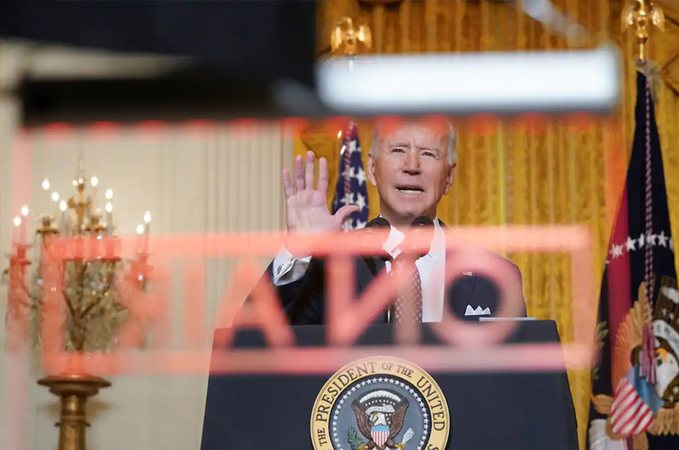
WASHINGTON – President Joe Biden delivered a stark warning Friday that “democratic progress is under assault” in much of the world, including the United States and Europe, telling allies that America would challenge authoritarians and seek diplomatic options for problems including Iran’s nuclear ambitions.

Biden asserted that democracies will fare better than autocracies in the competitions of the future and promised that the United States would again be an enthusiastic leader among them, as he charted a foreign policy agenda dominated by a post-Trump cleanup campaign.

“I’m sending a clear message to the world: America is back. The transatlantic alliance is back,” Biden said in video remarks to the Munich Security Conference, an annual gathering of world leaders to discuss matters of war and peace. “And we are not looking backward; we are looking forward, together.”

Biden’s first speech to a global audience as president punctuated his determination to veer sharply from the path set by former president Donald Trump. In just the past two days, Biden has pledged $4 billion to a global vaccine initiative that Trump spurned; officially rejoined the Paris climate accords that Trump pulled out of; and moved to restart talks on the Iran nuclear deal that Trump rejected.

The new president warned of a rise in authoritarianism in many parts of the world and did not spare the threat in the United States, where a pro-Trump mob stormed the U.S. Capitol last month in an unsuccessful attempt to prevent Biden from becoming president. He suggested the world faces a fateful choice between autocracy and democracy as the best system to take on sweeping challenges such as the coronavirus pandemic.

“We are in the midst of a fundamental debate about the future and direction of our world. We’re at an inflection point,” Biden said. “I believe that – every ounce of my being – that democracy will and must prevail. We must demonstrate that democracies can still deliver for our people in this changed world.”

After focusing chiefly on domestic priorities in his first month in office, including the pandemic and its economic fallout, Biden flavored his discussion Friday with reminders that the pandemic is a global issue as well.

Speaking to the Munich conference from the White House before a trip to Michigan to tour a vaccine manufacturing site, he stressed the need for international cooperation to end the coronavirus outbreak. And he delivered a similar message in separate closed-door remarks to the Group of Seven large industrial democracies earlier Friday, encouraging other countries to follow his model of big-government investment to turn the tide of the pandemic.

Although Biden never mentioned Trump by name, he cast much of his agenda in deliberate contrast to the defeated Republican – a list of repairs that begins with repudiating the authoritarian model Trump found appealing.

“Democracy doesn’t happen by accident. We have to defend it, fight for it, strengthen it, renew it,” Biden said. “We have to prove that our model isn’t a relic of our history; it’s the single best way to revitalize the promise of our future.”

His appeal to global cooperation and inclusion was an answer to Trump’s populism and isolationism, epitomized in his “America first” slogan. Biden’s pledges to a common defense under NATO and a unified policy on Iran were markers of his return to traditional notions of what America means to Europe and vice versa.

Biden’s central message Friday was that the United States will work “in lockstep” with Europe, where the same nationalist strains that elevated Trump have produced semi-authoritarian leaders in Poland, Hungary and Turkey and where Russia seeks to bully democratically elected leaders.

Trump took Russian President Vladimir Putin at his word that Russia did not meddle in the 2016 U.S. election; Biden flatly said Russia “attacks our democracies and weaponizes corruption to try to undermine our system of governance.”

Trump had basked in praise from Polish President Andrzej Duda, who proposed naming a military base for the American president, and mused about punishing Germany by relocating American forces stationed there. Biden made a point Friday of saying that all U.S. force decisions are on hold.

In announcing the U.S. return to the transatlantic fold, Biden sought to focus on the issues that unite America and Europe, stressing the “existential” threat of climate change and Iran’s nuclear ambitions.

He glided over more divisive issues, making little mention of lingering trade frictions and other differences. The European Union inked a trade deal with China just before Biden took office, for example, and several European leaders have taken a far softer stance toward Russia than the new U.S. president.

“This was a homecoming speech – the prodigal American son has returned to the transatlantic family,” said Heather Conley, head of the Europe program at the Center for Strategic and International Studies. “This was not a time to raise family squabbles or traumas.”

Biden appeared on screen alongside German Chancellor Angela Merkel and French President Emmanuel Macron as he wrapped the European leaders in the diplomatic equivalent of a bear hug. Over and over, he reassured allies shunned by Trump that he considers them front-line partners in every major challenge.

The leaders of France and Germany were happy to return the compliment.

“Prospects for multilateralism are a little better than they used to be, and that has a lot to do with Joe Biden being the president of the United States of America,” Merkel said.

She said her country’s troops would stick with America’s if the Biden administration decides to extend its deployment in Afghanistan. She welcomed Biden’s interest in reviving the Iran nuclear deal. And she trumpeted Germany’s rising defense spending, one of the biggest areas of contention between the two nations during the Trump presidency.

Macron also played nice, while underscoring that things have changed in Europe as a result of trump’s hostility. Macron has advocated for greater independence from the United States, and like other European leaders, he is wary that U.S. politics could swing back toward isolationism in four years.

Europe would be a stronger partner to Washington if it were less dependent on the United States for its security, Macron said Friday. “It is time for us to take much more of the burden of our own protection,” he said.

Along with relief, European leaders now have high expectations that have to be managed on both sides of the Atlantic, said a senior diplomat, who requested anonymity to describe confidential discussions. The way to do that, the diplomat suggested, is by showing the public the benefits of U.S.-European cooperation.

“The president did not win the election because the American people decided that the one thing missing in the U.S. was love with Europe, right?” said the diplomat. “So we immediately came out with concrete proposals for cooperation, not just nice words. We want to show that the transatlantic relationship delivers on real things that matter to Americans and Europeans.”

Iran’s ability to obtain nuclear weapons is among the most closely watched issues facing Biden as he undoes Trump policies and installs his own. As a candidate, he pledged a conditional return to the 2015 international agreement limiting Iran’s nuclear activities, but did not say how he would accomplish that.

That agreement – which also included Russia, China, Britain, France and Germany – was former president Barack Obama’s signature foreign policy accomplishment. Trump withdrew from the deal in 2018, saying it gave too much to the Iranians.

As president, Biden has said that Iran must make the first move by ending uranium enrichment activities that violate the accord. Iran has said it is up to Washington to make the first move by dropping sanctions Trump had reimposed, and it is not entirely clear whether Iran wants to renew talks.

The Biden administration opened the door to talks Thursday, saying it would accept a European invitation to join the other members of the agreement for talks about how both the United States and Iran could return to its fold.

The White House announced Thursday that it would commit $2 billion for the global vaccine initiative known as Covax and would pledge another $2 billion over the next two years.

“Drawing on our strengths and values as democratic, open economies and societies, we will work together and with others to make 2021 a turning point for multilateralism and to shape a recovery that promotes the health and prosperity of our people and planet,” a joint statement from the G-7 leaders said Friday.

The G-7 leaders are expected to meet in person in Britain in June, and Biden is expected to attend, in what could be his first foreign trip as president.

The White House has not announced any other international travel, and it is likely to be months before Biden hosts any foreign leaders at the White House.

Blueprint for a raid: Documents shed light on plan to buy U.S. helicopter gunships for assault on Tripoli #SootinClaimon.Com

#SootinClaimon.Com : ขอบคุณแหล่งข้อมูล : หนังสือพิมพ์ The Nation.

https://www.nationthailand.com/news/30402850

Blueprint for a raid: Documents shed light on plan to buy U.S. helicopter gunships for assault on Tripoli

InternationalFeb 20. 2021

By The Washington Post, Joby Warrick

The commandos for hire who landed in Benghazi in June 2019 had arranged, at great expense, to procure every weapon and tool needed for an assault on Libya’s government. They obtained drones, inflatable speedboats, night-vision goggles, a mobile command center and even gear for jamming enemy communications.

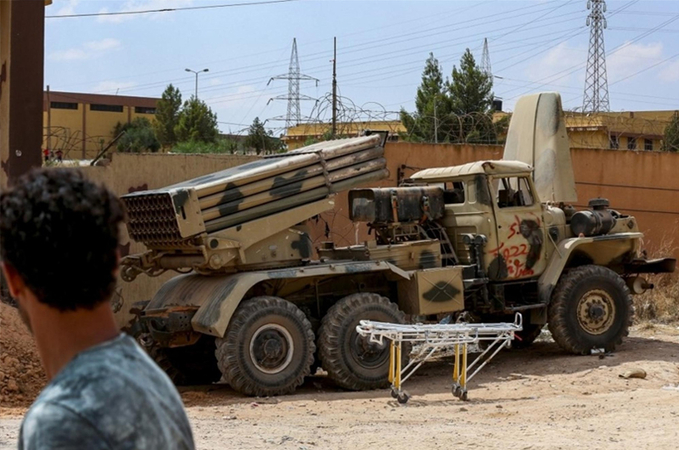
And there were the helicopter gunships: three AH-1F Cobras, configured with mounts for machine guns and rocket launchers. The U.S.-made aircraft had been given to Jordan years earlier, and leaders of the operation traveled to Amman believing they had a deal to acquire them. In a status report to comrades, a commando team member described the helicopters as packed up and waiting to be loaded onto transport planes bound for Libya.

“Can be operational in seven days,” said the report, which was obtained by The Washington Post.

Only a last-minute intervention by Jordanian officials prevented the gunships’ departure for Benghazi, the rebel-held city on Libya’s northeastern coast. Once there, officials at the United Nations think, the American-made weapons might have helped tip the balance in an offensive intended to overthrow a U.N.-backed government based in Tripoli that the United States officially supports.

Scores of documents obtained by U.N. experts in an 18-month investigation have shed new light on the unusual 2019 attempt by private security companies to insert Western military experts and weapons into Libya on behalf of Khalifa Hifter, the commander of a rebel army in eastern Libya who is seeking to take control of the country with the backing of Egypt, Russia and the United Arab Emirates.

The plan, the subject of a U.N. report, underscores a weapons-proliferation challenge that Biden administration officials have vowed to confront: the flow of U.S. arms and equipment into Middle Eastern war zones, aided at times by U.S. allies as well as soldiers of fortune. Among other lines of inquiry, U.N. officials have investigated the role of Erik Prince, the Blackwater founder and former private military contractor who officials allege tried to use his personal influence to help secure the release of military equipment bound for Libya.

Any transfer of U.S.-made military aircraft and heavy weapons to a third party is a potential violation of U.N. arms embargoes as well as U.S. laws governing foreign military sales. But U.S. and U.N. investigators are examining multiple incidents involving different types of American-made military hardware, including C-17 transport planes and Javelin antitank missiles, that ended up in Libya or Yemen, according to current and former U.S. and U.N. officials familiar with the investigations who spoke on the condition of anonymity to discuss sensitive intelligence.

Some of the weapons have been traced directly to governments that received the arms from the United States. But often, the transactions involved middlemen, including private security contractors seeking to profit from civil wars and insurgencies from South Asia to North Africa, the officials said.

“There’s a wild, wild West of criminal networks and arms traders providing weapons and [flouting] all kinds of international rules and norms,” said William Lawrence, a former State Department official and diplomat who served in Tripoli. “Libya is emblematic of the problem.”

Last month, the Biden administration announced a temporary freeze on missile sales to Saudi Arabia and a review of a pending sale of F-35 fighter jets to the UAE. Proposed weapons sales to the two U.S. allies had drawn bipartisan objections in Congress, in part because of concerns about the countries’ past use of American weapons in proxy wars in the Middle East and North Africa.

Congress is separately investigating the transfers. While private arms traffickers are drawn to wars to pursue profits, the United States is obligated to use its leverage with allies to prevent the unauthorized use of American-made weapons in some of the world’s most brutal conflicts, said Rep. Tom Malinowski, D-N.J., a member of the House Foreign Affairs Committee.

“The responsibility here rests with governments to stop this kind of behavior,” Malinowski said. “There are countries involved that are considered partners and allies of the United States.”

– – –

Documents obtained or seen by The Post offer a rare glimpse into what investigators describe as one of the most unusual guns-for-hire operations in Libya’s 10-year history of conflict after the toppling and killing of dictator Moammar Gadhafi.

The papers, acquired by a panel of U.N. officials probing alleged arms violations, include flight logs, manifests, financial records and communications among individuals allegedly involved in the operation that unfolded over the spring and summer of 2019. Among the records is a status or “situation” report – called a “sitrep” – written by a team member and describing in detail the plan to insert a team of Western military operators and equipment into Libya at the height of a rebel offensive intended to capture the capital and overthrow the country’s U.N.-backed government. The memo, obtained by The Post, refers to the private contractors collectively as the “Opus Group.” It was written by a team member identified in the document as “Opus 1.” Three current and former U.N. and U.S. investigators vouched for the document’s authenticity.

The plan fell apart before it could be fully launched, with many of the would-be participants fleeing Libya by boat for the island of Malta, current and former U.N. officials said. While the plan has been previously reported on by other publications, including Rolling Stone and the New York Times, the “sitrep” document and other records reveal the full scale of the group’s effort to acquire sophisticated arms – including Cobra helicopters – to support a strike team of up to 20 Western military experts, including South African, British and Australian military veterans and at least one American.

At the time of their arrival in Benghazi in the late spring of 2019, Libya’s Government of National Accord in Tripoli appeared to be clinging to power by the flimsiest of threads. The Libyan National Army, or LNA, the patchwork of militias led by Hifter, had captured the capital’s outskirts in a spring offensive that appeared poised to overrun the capital within weeks.

According to U.S. and U.N. officials familiar with the events, who spoke on the condition of anonymity to discuss sensitive intelligence, Hifter had approved a plan to acquire helicopters and experienced, Western-trained military experts to bolster his efforts to storm Tripoli. Among the options under consideration, the officials said, was a plan to use a private commando force to kill or capture top political and military leaders, some of whom had been identified on a hit list as potential targets.

Around April 2019, Hifter procured the services of a group of private security and logistics contractors based in the UAE, and they collectively referred to themselves in the documents as the “Opus Team.” According to financial records and other documents obtained by investigators, the chief logistical and financial backers of the team were Opus Capital Assets and Lancaster6, two companies headquartered in Dubai. Lancaster6 is headed by Christiaan Durrant, a former Australian air force pilot. Durrant also has held senior management positions with Opus Capital Assets.

Durrant, responding to a query from The Post, referred to a previous written statement in which he denied any role in the June 2019 operation other than to provide “engineering inspections and recommendations” on aircraft acquired in Jordan.

“I am not, never have or will be a mercenary,” Durrant said in a statement provided to the Australian Broadcasting Corp., “or a leader of such.” Durrant, who has been interviewed by the U.N. panel investigating the events, acknowledged in his prepared statement that he participated in efforts to set up a “logistics hub” in Libya, in part to help provide security for oil and gas infrastructure. Durrant said neither he nor his companies were involved in efforts to supply weapons to Libyan combatants. “We don’t breach sanctions; we don’t deliver military services, we don’t carry guns,” Durrant said in his prepared statement. He said he had no knowledge of the origins of several of the documents attributed to the Opus Group.

Emails and text messages requesting comment from Hifter and from Opus Capital Assets’ senior management in Dubai did not receive a response.

The sitrep suggests that the Opus team had invested considerable effort and expense in acquiring weapons and hardware for the strike, and that by mid-June 2019, the group had nearly everything it needed.

By the time the report was written, on June 18, 2019, Opus had significant assets on the ground, including an intelligence “fusion and targeting cell” as well as a “cyber team” for communications and radio jamming, the document states. Two high-speed inflatable vessels had been acquired for the mission and were “ready and fueled in Malta awaiting the advance team’s arrival in Benghazi,” it said. The boats had been mounted with guns in anticipation of stopping and commandeering enemy supply vessels, the report said.

Investigators who examined the document said the report reflects a sophisticated planning effort for the raid, as well contingency arrangements for evacuating any wounded personnel or captives, and for fleeing Libya in the event the mission failed.

The last of the major acquisitions were waiting in Jordan. Members of the band flew to the Jordanian capital in mid-June, apparently believing they had cut a private deal with a group of Jordanian officials to acquire three AH-1F Cobras, believed to be priced at about $6 million each, according to current and former U.S. and U.N. officials familiar with the investigation.

The gunships had been disassembled for shipping and were ready to be loaded onto a pair of Russian-made cargo planes the team’s leaders had arranged to be in Amman for the pickup, current and former U.N. officials said. In addition to the Cobras, the Opus group anticipated getting a supply of small arms, ammunition and night-vision equipment from their Jordanian contacts. A military drone also had been purchased and was due to arrive in Amman within days, the sitrep said.

“Team can be effective within 7 days if the [government of Jordan] supports with an export of controlled items, including helicopters, air ammunition, ground weapons, ground ammunition and night vision,” the report said.

– – –

But the plans were thrown into chaos when the Jordanian government refused to cooperate.

Shortly before the Opus team arrived in Amman, the authorities there began looking into the scheme, concerned about potential violations of U.S. regulations, current and former U.N. officials said. At the time, Jordan was in the process of selling some of its surplus Cobras, which were being phased out to make room for newer aircraft. Negotiations were underway to sell some of the helicopters to the Philippines, subject to approval by the U.S. government.

No formal permission had been granted for releasing the Cobras to Opus, so the Jordanians balked at letting the aircraft leave the country, the officials said. Members of the Opus team continued to pressure the Jordanians anyway, insisting that they were conducting a humanitarian operation and that their plans had been approved at the highest levels by the U.S. and UAE governments, according to private communications given to U.N. investigators and seen by The Post.

A flurry of calls to Washington found no support for the visitors’ claims, the officials said. Then, an inspection determined that the Opus transport planes that had arrived in Amman were already partly filled with other weapons, apparently bound for Libya, according to an official familiar with Jordan’s internal investigation of the incident.

“They [Opus team leaders] were adamant that they had all the approvals,” including permission from the Trump administration to acquire the Cobras, said the official, who, citing the ongoing investigations, agreed to an interview on the condition that neither he nor his country be identified. “There was no official approval.”

Durrant, in a statement to The Post, denied that Opus ever claimed that the acquisition attempt had official U.S. blessing.

“This is totally false in every part,” he wrote in an email message.

As part of the investigation, U.N. officials have sought to interview Prince, a former Navy SEAL and private military services contractor, current and former U.N. officials said. The U.N. panel was seeking information about at least two phone calls made by Prince to Jordanian officials, allegedly asking that the Cobras be released to the Opus team, the officials said. Prince is a former business associate of Durrant’s.

A lawyer representing Prince said the former military contractor had broken no laws. “Erik Prince had absolutely nothing to do with any operation in Libya in 2019, or at any other time,” the lawyer, Matthew Schwartz, said in an email.

For Opus, Jordan’s refusal to release the helicopters was a serious – and ultimately fatal – blow to the mission.

“Despite confirmations by all hierarchical parties involved that [the government of Jordan] would support the Opus operation,” the sitrep’s author wrote, “the support has not yet materialized, which has had serious impact on the project.” The group was arranging to purchase helicopters elsewhere, he wrote, but “this places considerable legal risk on Opus and is beyond the scope of the agreed contract.”

Indeed, the planned mercenary raid fell apart within days after the report was penned. When an Opus delegation traveled to Benghazi to brief Hifter on the events, he erupted in fury, angered by the group’s failure to secure the U.S.-made gunships that had been promised, according to the two officials familiar with investigation of the incident.

Fearing that they might be arrested, the mercenaries left Libya in their inflatable vessels and fled to Malta, the officials said. They arrived on July 2 and were detained by customs officials, then released.

Hifter’s offensive against the Tripoli government faltered soon afterward. Despite weeks of steady advances and drone strikes on central Tripoli, Hifter’s fighters were slowly driven back by government troops bolstered by increasing military support from Turkey.

On June 26, just over a week after the memo was written, Hifter’s army was driven from Gharyan, a key LNA stronghold south of the capital, and the retreating convoys were decimated in an aerial attack. Hifter would try again to take Tripoli, but he has not regained his momentum.

Protester, 20, first fatality in Myanmar junta’s crackdown #SootinClaimon.Com

#SootinClaimon.Com : ขอบคุณแหล่งข้อมูล : หนังสือพิมพ์ The Nation.

https://www.nationthailand.com/news/30402835

Protester, 20, first fatality in Myanmar junta’s crackdown

InternationalFeb 19. 2021Photo credit:  Civil Disobedience Movement on TwitterPhoto credit: Civil Disobedience Movement on Twitter
By The Nation

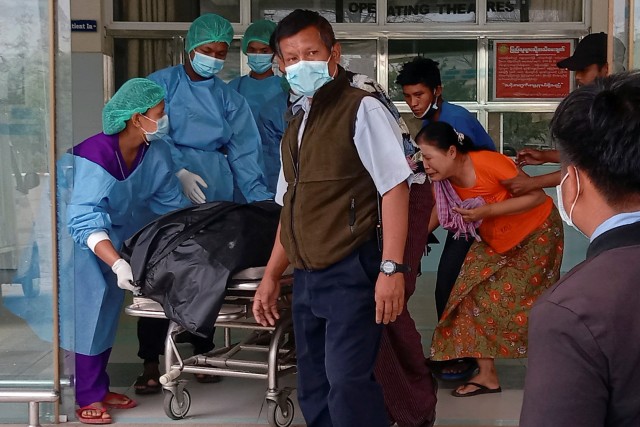
A Myanmar hospital has confirmed that a 20-year-old woman shot in the head at an anti-coup protest last week has died, marking the first fatality in the crackdown following the February 1 putsch.

Naypyidaw General hospital said on Friday that Mya Thwe Thwe Khine had succumbed to injuries sustained at a massive rally on February 9. Police used water cannon, rubber bullets and live ammunition to disperse protesters at the rally in the capital Nay Pyi Taw. Video clips circulating online show Mya wearing a helmet as water cannon is fired at her. She then falls to the ground after a bullet penetrated her helmet.

Doctors confirmed that she was shot with a live round despite police claims that only rubber bullets were used on the protesters. Mya was declared brain dead but kept alive on a ventilator for several days. Thursday marked her 20th birthday.

Her sister last week expressed sorrow for the youngest member of the family but vowed that her sacrifice would not be in vain. She called on the whole nation to continue their fight against the military dictatorship that deposed the elected government of Aung San Suu Kyi. Mya has become a symbol of resistance for the protesters, who have unveiled giant banners featuring her image at demonstrations.

Biden immigration agenda takes shape as lawmakers unveil bill #SootinClaimon.Com

#SootinClaimon.Com : ขอบคุณแหล่งข้อมูล : หนังสือพิมพ์ The Nation.

Biden immigration agenda takes shape as lawmakers unveil bill

InternationalFeb 19. 2021Applicants for U.S. citizenship listen to a presentation during a naturalization ceremony at the Paramount Theatre in Oakland, Calif., on Feb. 13, 2019. MUST CREDIT: Bloomberg photo by David Paul MorrisApplicants for U.S. citizenship listen to a presentation during a naturalization ceremony at the Paramount Theatre in Oakland, Calif., on Feb. 13, 2019. MUST CREDIT: Bloomberg photo by David Paul Morris

By Syndication Washington Post, Bloomberg · Jordan Fabian, Steven T. Dennis

President Joe Biden’s proposed immigration overhaul was introduced in Congress on Thursday, kicking off what will likely be one of his most difficult legislative challenges.

The legislation, known as the U.S. Citizenship Act of 2021, hews closely to the outline that Biden sent to Congress on his first day in office. The proposal includes an eight-year path to citizenship for most of the roughly 11 million immigrants living illegally in the U.S., bolsters the nation’s refugee and asylum systems and calls for additional technology to be used to help secure the southern border.

The citizenship path is not conditional on the implementation of border security measures, which had been a trade-off included in past immigration bills designed to earn Republican support.

Linda Sánchez, D-Calif., sponsored the bill in the House. Robert Menendez, D-N.J., is its chief sponsor in the Senate.

Previous attempts to reform the nation’s immigration system have failed over the past two decades, and Biden’s bill could face an even more daunting path because GOP lawmakers’ opposition to legalizing undocumented immigrants, which they decry as amnesty, hardened during the Trump era.

The White House previously signaled it is open to breaking the package into pieces and presenting them separately to win over at least some Republicans. Biden said in a CNN town hall event on Tuesday that smaller measures could help fix the system “in the meantime.”

Yet his team plans to defer to leaders in the House and Senate on the best path forward, including whether to try to use a procedural maneuver known as budget reconciliation to pass it with only Democratic votes while building support for broader legislation. The Democrats are employing the reconciliation process to pass Biden’s $1.9 trillion coronavirus relief plan.

Menendez said Thursday during a virtual news conference that it’s time to go big on an immigration overhaul after calling former President Donald Trump’s immigration policies “a cornerstone of Trump’s hateful horror show.”

“It’s time to bring all 11 million undocumented out of the shadows,” he said, calling them essential workers who should not be left behind by piecemeal efforts. “We are not going to make concessions out of the gate. We are not going to start with 2 million.”

Menendez said lawmakers won’t know if they can get 60 votes in the Senate until they try, which would be necessary to vote on the bill without using the reconciliation process.

“We will never win an argument we don’t have the courage to make,” he said.

New U.S. citizens wave American flags during a naturalization ceremony at the Evo A. DeConcini U.S. Courthouse in Tucson, Ariz., on Sept. 16, 2016. MUST CREDIT: Bloomberg photo by David Paul Morris

New U.S. citizens wave American flags during a naturalization ceremony at the Evo A. DeConcini U.S. Courthouse in Tucson, Ariz., on Sept. 16, 2016. MUST CREDIT: Bloomberg photo by David Paul Morris

Menendez said some Republicans want portions of the package – like provisions for farmworkers or tech workers – but he made clear he wants a broad path to citizenship in return. It’s possible portions of the package could eventually move separately, including in a second budget reconciliation bill Democrats are planning on later this year, which would not need Republican votes, the senator said.

Menendez said there is a strong argument to be made that some provisions should be eligible because immigration has substantial budget impacts. Senate rules restrict what kinds of provisions can be included in a bill moving through reconciliation.

“We are not foreclosing any pathway,” Menendez said.

Several other bills could serve as vehicles to move parts of the Biden plan.

A bipartisan group of lawmakers has reintroduced the Dream Act, which would offer deportation protections and a citizenship path to immigrants, known as Dreamers, who were brought illegally to the U.S. as children. Democrats have also supported legislation that would offer immediate relief to farmworkers.

Biden’s proposal makes Dreamers, farmworkers and migrants with temporary protected status eligible to apply for permanent legal residence right away, which would allow them to apply for citizenship within three years. That faster path to citizenship is meant to signal that those groups are important, but it doesn’t mean the White House has decided to pursue piecemeal bills to protect them, an administration official said on Wednesday.

Only immigrants who were in the country on or before Jan. 1, 2021 would be eligible for the legalization process.

Rep. Joaquin Castro, D-Texas, is also introducing a bill that would offer permanent legal status to about 5 million undocumented immigrants who have worked in front-line jobs during the coronavirus pandemic, as well as so-called Dreamers and those with temporary protected status.

The Menendez-Sánchez legislation would also expand legal immigration for those seeking employment- and family-based visas by clearing backlogs of those waiting for green cards, lifting per-country visa caps, and exempting spouses and minor children from annual green card quotas.

It also contains provisions designed to please labor unions, which have in the past complained that certain visa programs allow companies to employ lower-paid migrant workers instead of American citizens. The bill would tie green card levels to macroeconomic conditions and establish a commission on workplace conditions composed of union officials, civil rights advocates and others, administration officials said.

Biden has already signed a number of executive actions intended to roll back Trump’s hard-line immigration policies, including reversing a travel ban on some predominantly Muslim nations, allowing certain asylum seekers to begin entering the U.S. while their cases are being processed and beginning the process of winding down Trump’s “public charge” rule, which sought to deny green cards to immigrants who used Medicaid, food stamps, housing vouchers or other forms of government assistance.

The president also ordered construction halted on Trump’s wall at the Mexican border. His proclamation rescinded the national emergency that Trump declared to secure funding for the project.

The administration is facing pressure from business groups to end Trump’s bans on most work visas, which the former president put in place shortly after the pandemic hit the U.S. The White House has put the visa bans under review but has yet to revoke them.

New unemployment claims climb to 861,000 #SootinClaimon.Com

#SootinClaimon.Com : ขอบคุณแหล่งข้อมูล : หนังสือพิมพ์ The Nation.

New unemployment claims climb to 861,000

InternationalFeb 19. 2021

By The Washington Post · Eli Rosenberg

WASHINGTON – The number of new unemployment claims filed last week rose slightly, to 861,000, according to data released by the Labor Department, as the pandemic continues to drain energy from the economy.

That was an increase of about 68,000 from a previous tally, which included an updated jobless claim figure from the previous week.

Another 516,000 claims were filed last week for Pandemic Unemployment Assistance, the program for gig and self-employed workers.

The unemployment claims have fallen sharply from record peaks in the earliest months of the pandemic, but they remain well above the highs from previous economic crises, nearly a year into the pandemic.

“It’s fair to say that with rising caseload, the job market has stalled,” said Augustine Faucher, chief economist of the PNC Financial Services Group. “The job market will get better. With a big jump in retail sales and cases falling significantly and vaccine distribution, the jobs should start to rebound in the spring. But I think things are going to be pretty dicey in the next few months.”

Jobless claims reflect a recovery that has flatlined since the end of the summer, with about 833,000 people filing for unemployment insurance in the past four weeks in adjusted data.

“We have seen claims move higher in January and February this year than November and December in 2020, a slight softening in the job market over the past couple months,” Faucher said. “That coincides with the rise in coronavirus cases. So the short answer is: ignore the weekly fluctuations but pay attention to the underlying trend, and the trend is that the job market is not as good as it was in the fall of 2020.”

The number of continuing claims for unemployment benefits at the end of January was 18.3 million, the Labor Department said. But Faucher cautioned that the numbers are still inflated by data-processing issues and fraudulent claims at state unemployment agencies.

Unemployment insurance continues to drive the discussion about a new stimulus package in Washington, as benefits are set to expire for many in mid-March. President Biden’s $1.9 trillion plan calls for the deadline to be pushed to September, although the latest version of the bill in Congress would extend benefits through August. The weekly unemployment bonus is expected to be raised to $400.

White House announces $4 billion in funding for Covax, the global vaccine effort that Trump spurned #SootinClaimon.Com

#SootinClaimon.Com : ขอบคุณแหล่งข้อมูล : หนังสือพิมพ์ The Nation.

White House announces $4 billion in funding for Covax, the global vaccine effort that Trump spurned

InternationalFeb 19. 2021

By The Washington Post · Emily Rauhala, Erin Cunningham, Adam Taylor

The White House is throwing its support behind a global push to distribute coronavirus vaccines equitably, pledging $4 billion dollars to a multilateral effort the Trump administration spurned.

At a Group of Seven meeting of leaders of the world’s largest economies on Friday, President Biden will announce an initial $2 billion in funding for GAVI, the Vaccine Alliance, to be used by the Covax Facility, senior administration officials said in a briefing.

The United States will release an additional $2 billion over two years once other donors have made good on their pledges, and will use this week’s G-7 summit to rally other countries to do more.

The money, which was appropriated by a bipartisan congressional vote last year, will give a much-needed boost to a program jointly led by GAVI, the World Health Organization and the Center for Preparedness Innovations.

Thomas Bollyky, director of the global health program at the Council on Foreign Relations, said that the money would be significant for Covax, which has struggled to raise the enough funding since it was announced last year.

“Certainly earlier funds would have been helpful to Covax,” said Bollyky. “But theres not much point in going back to that point. The question is, what can we do now? And this is a signal at least, that the U.S. intends to invest in and bolster Covax as a mechanism to meet the world’s vaccine needs.”

Covax aims to get coronavirus vaccines to low- and middle-income countries that have been cut out of a vaccine race that’s seen rich countries snap up the majority of doses, leaving everyone else to wait.

Although more than 190 countries have agreed to participate, the Trump administration opted out, in part because of the former president’s feud with the WHO. Covax has secured 1.1 billion doses so far, according to data compiled by Duke University’s Global Health Innovation Center.

But so far the initiative has not began deliveries, and it has struggled not just with funding but also competition from wealthy nations who pursued bilateral deals.

“These kinds of political commitments do matter and make a difference,” said Sema Sgaier, an assistant professor of public health at Harvard and co-founder of nonprofit Surgo Ventures, adding that confirmed funding would allow Covax to pursue new deals.

Covax plans to start distributing vaccines in the first half of this year. On Thursday, GAVI announced a memorandum of understanding with Novavax for a 1.1 billion doses of their vaccine, adding to earlier deals with Pfizer, AstraZeneca, Sanofi and Johnson and Johnson.

The White House announcement comes amid growing concern from global health experts that the inequitable distribution of vaccines could prolong the pandemic, not only leaving vulnerable people in developing countries at risk but also raising the possibility of new variants.

United Nations Secretary-General António Guterres slammed the distribution of vaccines as “wildly uneven and unfair” at a Security Council meeting on Wednesday, saying that 10 countries accounted for 75% of all vaccinations to date.

Global vaccine distribution is among the planned topics of discussions for Friday’s G-7 meeting, which is hosted by Britain and will be held remotely. A number of world leaders have made proposals ahead of the closed door meeting.

In remarks published Thursday, French President Emmanuel Macron said the United States and Europe should provide coronavirus vaccines to developing countries by donating up to 5% of the doses they have ordered.

“We are allowing the idea to take hold that hundreds of millions of vaccines are being given in rich countries and that we are not starting in poor countries,” Macron said in an interview with the Financial Times.

While Western-made vaccines are being sold to African nations at “astronomical prices,” he said, those same countries are being offered cheaper Chinese and Russian shots “of uncertain efficacy against new variants of the virus.”

Macron suggested allocating between 4 and 5% of current vaccine supplies in Europe and the United States and transferring them quickly to developing nations “so that people on the ground see it happening.”

High-income countries have so far secured over 4.6 billion doses among them – far more than all middle-income and lower-income countries combined, which had secured 2.5 million, according to Duke University.

Macron said that German Chancellor Angela Merkel supported his plan to donate doses and that he hoped it would find backing from the United States and European allies. It is not clear if other nations would back donations of doses to other countries before the majority of their country has been vaccinated.

Texas hospitals are running out of water. Some facilities are now evacuating patients for their safety. #SootinClaimon.Com

#SootinClaimon.Com : ขอบคุณแหล่งข้อมูล : หนังสือพิมพ์ The Nation.

Texas hospitals are running out of water. Some facilities are now evacuating patients for their safety.

InternationalFeb 19. 2021

By The Washington Post · Timothy Bella, Katie Shepherd, Fenit Nirappil, Frances Stead Sellers

The historic storms and power outages pummeling Texas are shutting down water and heat at hospitals across the state, forcing some facilities to turn patients away and take drastic steps to conserve resources.

Health systems are reporting hundreds of their employees sleeping overnight because of perilous road conditions. Many patients who are ready for discharge are stuck because they have no power at home. And many others are showing up at hospitals in search of a warm place to sleep or to keep lifesaving medical equipment powered.

“For Texas hospitals, this is an emergency on top of a pandemic,” Carrie Williams of the Texas Hospital Association said in an email. “They have been on the front lines now with broken pipes, dwindling supplies and water restrictions.”

Hospitals are going to great lengths to protect their water supplies, including in Austin where staff used trash bags to remove feces from toilets, a nurse told KVUE. A hospital in Houston relied on buckets of rain water from the roof to flush toilets. Elsewhere, staff are cleaning themselves with hand sanitizer instead of soap and water.

Some hospitals said the situation improved Thursday as temperatures warmed and water trucks arrived. But authorities fear more pipes will burst, heating systems will fail and water pressure will plunge at hospitals as temperatures dip below freezing for the next several nights.

In a stretch of Southeast Texas from Houston to Corpus Christi, 45 of roughly 100 hospitals declared an “internal disaster” status Wednesday night to dissuade emergency medical crews from taking patients to them. The area is home to about 8 million people. While Texas is no stranger to hurricane seasons – including Hurricane Harvey, which flooded Houston in 2017 – health care leaders say the strain on hospitals is particularly acute this year with a natural disaster impacting the entire state during a pandemic.

“For me, this is worse than Harvey because of the enormous swath of Texas that this has covered,” said Darrell Pile, chief executive of the Southeast Texas Regional Advisory Council, who oversees preparations for and management of medical crises for the 25-county region. “We have never had this many hospitals impacted simultaneously.”

Some are now moving patients to other facilities for their safety – if they can find anywhere with the ability to take them.

“No one hospital currently has the capacity to accept transport of a large number of patients,” David Huffstutler, CEO of St. David’s HealthCare, which operates four hospitals in the Austin area, said in a statement.

St. David’s hospital in Austin lost water pressure Wednesday, which also meant losing heat because water feeds the boiler. The entire city is under a boil water advisory that could last days. Patients washed their hands with jugs of water and staff emptied toilets with bags as a result. The hospital also transported about 30 of 300 patients elsewhere.

Huffstutler said the hospital restored heat after bringing in water trucks to create a closed-loop warming system. While water trucks were working to recharge water pressure, another Austin facility lost water pressure and a third continues to experience low pressure. Other hospitals in Austin, as well as hospitals in Arlington and San Antonio, also had low water pressure issues.

“One of our biggest challenges has been the inability to discharge patients due to mobility and transportation issues, as well as power and water outages at their homes, and limited access to shelters in the area,” Huffstutler wrote. “Fortunately, so far, we have been able to manage through that, and things should get better over the next couple of days.”

In Houston, which is also under a boil water notice, Mayor Sylvester Turner, a Democrat, pleaded with residents to stop running water to prevent pipes from freezing to help conserve resources for hospitals. Pipes have already burst at multiple Houston Methodist hospitals, and at least two facilities are operating without water

The lack of water forced some quick thinking, said Roberta Schwartz, executive vice president and chief innovation officer at Houston Methodist. She described a swiftly rigged system to sluice rainwater from the roof into a large laundry bin, then used to fill buckets and flush toilets.

Across the seven-hospital system, emergency rooms were inundated with patients who, in addition to typical medical emergencies, slipped on ice, needed batteries for medical appliances and sought dialysis treatments after their usual centers closed. One large emergency room treated nearly twice the usual 110 daily patients.

Ben Saldana, the medical director for the Houston Methodist’s emergency departments, said the threat of coronavirus complicated an already fraught situation. Each patient had to be evaluated to see whether they might be suffering from the virus.

“We were teasing it out,” Saldana said. “Is it also covid?”

Turner, who has already dipped into a water supply bookmarked for irrigating parks, has instructed grocery store chains to send whatever available water they can spare to hospitals. He also said the city parks and recreation department delivered water to hospitals Wednesday night. The Houston Fire Department has separately sent water to at least one facility, Lyndon B. Johnson Hospital.

Rural health care providers with far fewer resources than big-city hospitals faced especially tough challenges trying to deliver care in the storm-battered state.

“We have not had power outages at our clinics like this before that have kept us from seeing patients,” said Lynn Falcone, CEO of Cuero Regional Hospital, a rural system with five clinics based about a hundred miles south of Austin.

The clinics shut down Monday after losing power and water and are not expected to reopen until next Monday. One requires significant repair after burst pipes left two to three inches of water on the floor.

The main 49-bed hospital is still operational with staff sleeping overnight, Falcone said, but has struggled to find others willing to accept patients with more complicated cases. One patient traveled four hours to Laredo because roads were safer. A mother and her newborn stayed an extra night because they lacked water and power at home.

Ari Espinosa, 18 of San Antonio, spent about four hours trying to find a doctor after suffering an allergic reaction Wednesday morning. He had no WiFi or data on his phone to look up options.

He and his mother first drove to a nearby urgent care clinic where the lights were off and parking lot empty. They braved slippery roads with reckless drivers to try another two clinics before regaining connection to the Internet and discovering most were closed. They tried a large hospital where the parking lot was so overrun that staff allowed patients to park illegally.

“It was completely packed, and there were really really sick people,” Espinosa recalled. “Someone was vomiting and moaning in the corner. Some guy walked in and his hand was bleeding all over the place.”

He finally saw a doctor at the fifth facility they tried, capping off a treacherous search.

As routine medical care goes interrupted, ongoing coronavirus vaccine drives have ground to a halt too.

“This is as challenging of a weather situation in our area than I’ve ever seen,” said George Roberts, CEO of the Northeast Texas Public Health District, which canceled vaccinations until next week. “We have a generational weather event associated with a generational pandemic.”

U.K. gets approval to infect healthy volunteers in world’s first coronavirus ‘challenge trial’ #SootinClaimon.Com

#SootinClaimon.Com : ขอบคุณแหล่งข้อมูล : หนังสือพิมพ์ The Nation.

U.K. gets approval to infect healthy volunteers in world’s first coronavirus ‘challenge trial’

InternationalFeb 18. 2021

By The Washington Post · Karla Adam

LONDON – Britain will become the first country to deliberately infect healthy volunteers with the coronavirus, now that the country’s ethics body has approved a “human challenge trial.”

The effort, funded by the British government, aims to accelerate scientific understanding of vaccines and treatments.

The first stage will begin within the month and see up to 90 adults, aged 18 to 30, exposed to the coronavirus “in a safe and controlled environment” to gauge the smallest amount of virus needed to cause infection, the government said in a statement Wednesday.

The government has said that in subsequent stages, which will require further approval, it hopes to quickly assess vaccines and conduct head-to-head comparisons.

Infecting healthy people with a potentially deadly virus – even in small doses and controlled settings – is controversial. And some in Britain have questioned whether there’s still a need, given the rapid authorization and rollout of highly effective vaccines. More than 15 million people in the United Kingdom have already received at least one “jab,” as a vaccine shot is called here.

Clive Dix, the head of Britain’s vaccine task force, said, “We have secured a number of safe and effective vaccines for the U.K., but it is essential that we continue to develop new vaccines and treatments for covid-19.

“We expect these studies to offer unique insights into how the virus works and help us understand which promising vaccines offer the best chance of preventing the infection.”

Robert Read, a professor of infectious diseases at the University of Southampton, said the current vaccines, while very good against most of the strains circulating, “may not actually be the last vaccines that we use globally.” The human challenge trials could “give ourselves the potential to test new vaccines very quickly, and that’s really the primary purpose of this effort.”

When the trial gets underway, volunteers will be infected via droplets squirted up the nose and then monitored closely during a hospital stay. In addition to regular blood and heart rate tests, patients will be given scratch-and-sniff cards, to detect loss of smell, and cognitive tests on a tablet, leader researcher Christopher Chiu said.

Peter Openshaw, an immunologist at Imperial College London and a co-investigator on the study, said it was “important to emphasize that the aim of the initial studies are not to produce any great severity of disease.

“Indeed, if we can just demonstrate that the virus grows in the nose, that’s really the endpoint we’re looking for.

“We’re not aiming to make any of the subjects sick, and we’re doing that by very slowly escalating the dose.”

Scientists will use the version of the virus that has been in circulation since March of last year and not any of the more infectious variants.

The volunteers in the first study will receive about 4,500 pounds ($6,243) for their participation over the course of the study, which will involve 17 days of quarantining at the Royal Free Hospital in north London and follow-ups over 12 months.

The study “involves quite an imposition on a young person, 17 days in quarantine when you cannot be visited by any member of your family or friend or relative,” said Terence Stephenson, chairman of the Health Research Authority. “For the first 1,500 pounds for 17 days, we’ve got something like 88 pounds a day, which I don’t think anyone would sense was a ridiculous coercion or inducement.”

Andrew Catchpole, chief scientific officer for hVIVO, a clinical research organization that is recruiting volunteers, said that while “thousands” have offered to participate, the study is still looking for recruits who have not yet been exposed to the virus and who can pass health screening tests.

Jacob Hopkins, 23, is hoping to take part in the trials, and he is waiting to hear back about his background health checks. “I’m not ignorant to the real risks, but I’ve gone through rigorous pre-screening, and the risks are very, very minor for someone who is young, fit and healthy,” he said.

Hopkins said his biggest concern was the potential long-term effects, “but that’s still not enough to make me change my mind. I want to help bring an end to this as soon as possible.”

Myanmar’s Suu Kyi appears before court without warning #SootinClaimon.Com

#SootinClaimon.Com : ขอบคุณแหล่งข้อมูล : หนังสือพิมพ์ The Nation.

Myanmar’s Suu Kyi appears before court without warning

InternationalFeb 18. 2021

By Syndication Washington Post, Bloomberg

The first court hearing of ousted Myanmar leader Aung San Suu Kyi since the Feb. 1 coup began earlier than scheduled and without her lawyer present, further signaling the military’s intention to end her political career.

Speaking by phone on Wednesday, her lawyer Khin Maung Zaw said that Suu Kyi appeared in front of the court via video link without representation. The hearing had earlier been scheduled for Wednesday. He said the court has yet to recognize him as her attorney and he has been barred from seeing her since she was detained by the military.

Already facing as many as three years in prison for allegedly possessing illegally imported walkie-talkies, the police filed an additional charge against Suu Kyi on Tuesday under the Natural Disaster Management Law, a conviction for which carries the same penalty. Under that charge, she is accused of violating covid-19 restrictions while campaigning in last year’s election, which her National League for Democracy won in a landslide.

Detained former President Win Myint, who also appeared virtually in court on Tuesday, faces the same charge but has thus far refused legal representation, Khin Maung Zaw said.

“We will try our best to win this case as our leaders are the lifeblood of the state,” he said.

The UN Special Rapporteur on the situation of human rights in Myanmar, Tom Andrews, said in a statement that he was “terrified” of the “potential for violence on a greater scale” Wednesday with several planned protests amid reports of troops converging in Yangon.

“I am issuing an urgent call on all governments, individuals and entities that may have influence on Myanmar military authorities to use that influence to convince the junta that rallies planned for Wednesday must be allowed to proceed without detentions or violence,” he said in the statement.

Despite the concern, protesters numbering in the hundreds of thousands took to the streets of Yangon Wednesday as drivers used vehicles to block streets in defiance of the military.

Brigadier-General Zaw Min Tun, the lead spokesman for the military-run State Administration Council, said Tuesday during the first briefing since the coup that Suu Kyi was in “good health,” adding that authorities were also investigating money laundering at a foundation she runs. The next hearing for Suu Kyi and Win Myint is scheduled for March 1.

Myanmar’s junta shut down the internet for a third straight night Tuesday as part of efforts to stem nationwide protests that have ballooned across the country, according to a Twitter post by monitoring service NetBlocks. Military leaders have struggled to gain control of the streets since ousting the government led by Suu Kyi. She has urged the country’s 55 million people to oppose the army’s move, calling it “an attempt to bring the nation back under the military dictatorship.”

Suu Kyi and other political leaders are among more than 400 people detained since the coup, a number that keeps rising by the day. During the Tuesday briefing, the junta again defended its move to oust the civilian government in the face of nationwide protests, dismissing the impact of U.S. sanctions while showing no signs of a compromise with demonstrators.

“To ensure democracy and prosperity, people should cooperate with us without being emotional,” Zaw Min Tun said.