By Syndication Washington Post, Bloomberg · Arne Delfs, Raymond Colitt
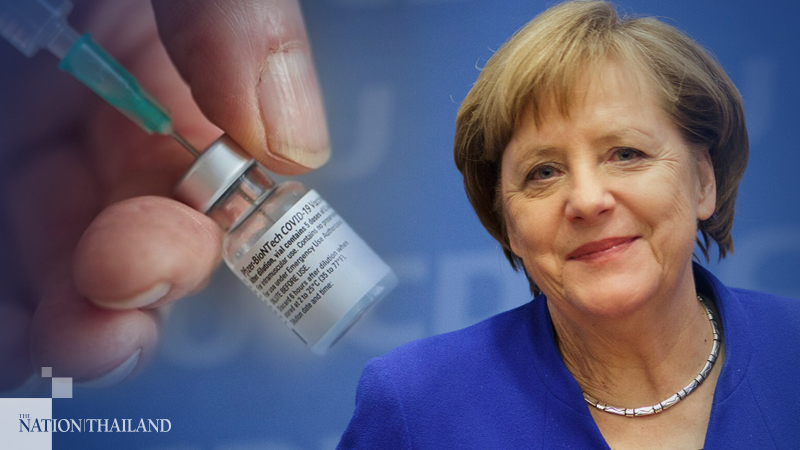
Chancellor Angela Merkel and regional leaders agreed to extend and tighten Germany’s coronavirus restrictions as they step up efforts to check the stubborn spread of the disease.
On a video call Tuesday, Merkel and the premiers of the 16 states decided to prolong lockdown rules — which include closing schools and nonessential stores — until mid-February, according to a person familiar with the agreement, who asked not to be identified discussing confidential information.
They also moved to limit private meetings to only one other person, make medical face masks obligatory on public transport and agreed to intensify pressure on companies to allow employees to work from home where possible, another person familiar with the talks said. The call was brought forward by almost a week due to concern faster-spreading variants of the disease could establish themselves in Europe’s biggest economy.
Authorities were under pressure to act with the contagion rate still nearly triple a government target, despite increasingly stringent curbs — including tighter limits on private gatherings and movement restrictions in hard-hit areas. The country has had 2.05 million covid-19 cases and nearly 48,000 deaths.
While infections have been receding in recent days, Merkel has warned that the new mutations could cause a surge like in Britain and Ireland.
Some of the regional leaders — who are responsible for health policy under Germany’s federal system — were pushing back against Merkel’s bid to prolong school closures, and a final decision on the issue had yet to be made, Der Spiegel magazine reported earlier, without identifying the source of its information.
Tuesday’s talks marked the first since Armin Laschet — the premier of North Rhine-Westphalia — was elected head of Merkel’s Christian Democrats. He’ll compete with Markus Soeder — his Bavarian counterpart from the CSU sister party — for the right to be the conservative bloc’s chancellor candidate in September elections.
Ahead of the tighter measures, Merkel’s administration expanded aid to affected companies with additional support totaling at least $12 billion (10 billion euros) in the coming weeks. That includes bridge financing of as much as 1.5 million euros a month and writing off unsold winter goods.
“We have the strength to continue taking massive action to offset the coronavirus crisis, and we will do exactly that,” Finance Minister Olaf Scholz said Tuesday in Berlin. “We will continue to do everything to support companies and workers, and protect health.”
Extended lockdowns are likely to cause German output to shrink in the first three months of 2021, with Bloomberg Economics forecasting a 3% contraction before a rebound starts in the second quarter.
Germany risks severe economic consequences if it fails to contain the pandemic, with companies carrying too much debt and cash reserves exhausted, according to one of the country’s leading economists.
“I’m afraid we’re too optimistic about getting out of this crisis quickly,” said Marcel Fratzscher, president of the German Institute for Economic Research, or DIW.
The country has still fared relatively well compared with its European peers, mainly due to the extensive fiscal support and a large manufacturing sector that is less exposed to restrictions than shops and restaurants. Investors grew more confident, with ZEW’s gauge of expectations for the next six months rising to 61.8 in January from 55.0 a month earlier.
Europe has emerged as a global hot spot for the virus, with more than 401,000 fatalities and nearly 17 million infections. The European Union is urging member states to do more to track dangerous virus mutations with genome sequencing. Only one is testing more than 1% of samples, while some others aren’t sequencing at all.
Janet Yellen faces critical choice for global economy, poor nations rocked by coronavirus
InternationalJan 20. 2021Janet Yellen, President- elect Joe Biden’s pick to be Treasury Secretary, speaks in Wilmington, Del., on Dec. 1, 2020. MUST CREDIT: Washington Post photo by Demetrius Freeman
By The Washington Post · Jeff Stein, David J. Lynch
WASHINGTON – An International Monetary Fund proposal to approve emergency financial backing for nations reeling from the devastating economic impact of the coronavirus has the support of the overwhelming majority of its 189 member countries.
But for months, the initiative has been blocked almost single-handedly by the Trump administration, which has used effective U.S. veto power over IMF decisions to reject theinternational consensus.
The fate of the additional IMF aid will soon fall in large part to incoming treasury secretary Janet Yellen, the former chairwoman of the Federal Reserve.
Even as she confronts daunting domestic economic needs, Yellen will face an early foreign policy test in the battle over the IMF’s special drawing rights or “SDRs.” Established as an international reserve asset in 1969, the SDRs can be converted into one of five major currencies, including the dollar or Japanese yen. The IMF can dramatically increase the amount of SDRs in circulation at no cost to U.S. taxpayers, economists say, allowing countries to stabilize their financial reserves and prevent capital flight.
The proposed increase in the IMF’s crisis war chest is backed by American farmers and manufacturers hoping to revive their overseas markets, as well as global antipoverty advocates such as Oxfam and the International Rescue Committee. Larry Summers, a former Treasury Secretary, calls the move a “no brainer.”
Yet Yellen has seemed skeptical, echoing in the past objections to the plan raised by her predecessor, Treasury Secretary Steven Mnuchin.
“A large share of the money goes to developed countries like the United States. It’s unclear that this strategy would provide sufficient funds to stressed emerging markets,” Yellen said in an interview with the Brookings Institution in April.
Mnuchin had raised similar concerns, saying last year that 70 percent of an SDR increase would go to members of the Group of 20 nations, which don’t need the help. Only 3 percent would reach low-income countries, he said.
Mnuchin also told reporters last month that approving additional special drawing rights would effectively turn the IMF into “the equivalent of a central bank” by having it serve as a source of global emergency liquidity.
Some Democrats on Capitol Hill may seek to force Yellen’s hand. Sens. Dick Durbin, D-Ill., the No. 2 Senate Democrat, and Bernie Sanders, I-Vt., have pushed legislation to increase the amount of SDRs in circulation by 2 trillion or roughly $2.9 trillion. Durbin, Sanders and incoming Senate Finance Committee chair Ron Wyden, D-Ore., are circulating a letter to Yellen urging her support for swift passage of their proposal, saying it would help “solve the urgent crises of poverty, hunger and disease being experienced by hundreds of millions of people worldwide.” That effort has been approved by the House but stalled amid Republican opposition in the Senate.
Yellen could unilaterally approve U.S. support for the IMF issuing additional SDRs of about $650 billion, although she would have to give Congress 90 days notice before doing so, according to Mark Weisbrot, an economist at the Center for Economic and Policy Research, a left-leaning think tank.
A Biden transition spokesman did not respond to a request for comment.
Additional IMF aid could help some of those suffering the most from the pandemic and its economic consequences.
UNICEF estimates that 2 million children under five years of age could die this year due to a lack of health care and nutrition, with more than 140 million children being added to the ranks of the global poor due to economic deterioration caused by covid-19. World Food Programme director David Beasley recently said in the Guardian: “We are losing the battle against hunger as never before.” Concerns have also emerged about poor countries’ ability to pay for the coronavirus vaccine.
IMF Managing Director Kristalina Georgieva told reporters earlier this month that she plans to immediately start working with the incoming Biden administration on SDRs, touting them as “one of the instruments” for shoring up developing economies.
“It would avoid an enormous amount of suffering around the world and redound to the benefit of the United States,” said Joseph Stiglitz, a Nobel Prize winning economist at Columbia University who mentored Yellen and remains a friend. Stiglitz said there is no good economic rationale against a dramatic increase in SDRs. “There’s a very broad consensus among economists that this is a good thing to do.”
Summers, who also served as chief economist at the World Bank, added that dramatically expanding SDRs would “require no U.S. budget cost” and is more urgent now given the spread of mutations of the coronavirus.
“This is a place where the new Biden administration needs to step up on behalf of American humanitarian values and economic common sense,” added Gene Sperling, an economist who advised Biden during the presidential campaign and served as a top economic adviser to President Clinton. “This is the least we should do.”
The dispute over IMF credit facilities illustrates the complex global agenda that awaits Yellen, if she is confirmed, as expected. Yellen weathered her first Senate committee confirmation hearing on Tuesday.
The former Federal Reserve chief is best known for her views on issues of domestic economic policy, ranging from deficit spending to wealth inequality. But her portfolio at the Treasury Department will also include enormous powers that could shape the global economy, including the ability to impose sanctions on nations that choke them off from international markets and bludgeon their economies.
“Quite possibly the most important decisions Treasury Secretary Yellen can really make will be in the international arena, where there has been an incredible vacuum of U.S. leadership,” said Summers, who served as treasury secretary during the Clinton administration.
SDRs are only one part of Yellen’s international portfolio. She and her deputy, Adewale “Wally” Adeyemo, also will be kept busy managing the active global sanctions agenda they will inherit from the Trump administration.
From his first days in office, President Donald Trump’s enthusiasm for unilateral presidential power drew him to economic sanctions, which offer a middle ground between diplomacy and military force. In February 2017, the new president responded to an Iranian missile test by slapping sanctions on 25 companies and individuals involved in the military program.
Ever since, sanctions have been the administration’s preferred tool in disputes with both adversaries such as China, Russia, and Venezuela, and allies such as Turkey. Trump has resorted to sanctions nearly twice as often as his predecessors, according to statistics compiled by Adam Smith, a partner at Gibson Dunn.
Trump has added an average of more than 1,000 individuals or companies to the government’s sanction list each year, blocking any assets held by U.S. financial institutions and barring any American person or company from doing business with them. The comparable figures for Presidents Barack Obama and George W. Bush are 533 and 435, respectively.
Treasury’s list of “Specially Designated Nationals and Blocked Persons” fills a 1,528-page online report.
“There’s been a steady increase since 2001. But Trump has taken it to new levels,” said Smith, a senior sanctions adviser at Treasury during the Obama administration.
Those figures probably understate recent U.S. activism. They don’t take into consideration that Trump targeted more large foreign companies than his predecessors and they exclude export controls, Smith said.
By contrast, Biden is likely to seek allied agreement whenever possible before imposing new financial restrictions. Sen. Maria Cantwell, D-Wash., told Yellen to be “aggressive” in the administration’s use of sanctions policy during the Senate finance committee hearing on Tuesday. Yellen responded by saying she would be tasking Adeyemo with a review of U.S. sanctions policy to ensure their efficacy.
“You can be sure I will be focused on making sure they’re used strategically and appropriately,” Yellen said of sanctions.
Yellen won’t be the only Cabinet officer to grapple with key sanctions decisions in the administration’s early months. More than a dozen federal agencies play an active role in sanctions implementation or enforcement, according to a 2020 General Accounting Office analysis. Last week, the Commerce Department added several companies, including China’s state-owned oil exploration company, China National Offshore Oil Corporation (CNOOC), to an export blacklist barring it from U.S. suppliers. More than a dozen federal agencies play a role in sanctions implementation or enforcement, according to a 2020 Government Accountability Office analysis. So for many of the most consequential measures, she will be one of several players in an interagency debate.
Commerce has made frequent use of its power over U.S. exports in service of Trump’s foreign policy goals.
But the details of implementing that ban, which only applies to CNOOC activities in the disputed South China Sea, will be left to the Biden team. Commerce also is leaving unfinished proposed regulations designed to largely prevent information technology gear from six countries – China, Russia, Iran, North Korea, Cuba and the Venezuelan government of Nicolas Maduro – from being used in U.S. communications networks.
The department must provide 60 days for public comments on the proposed restriction, meaning its ultimate fate rests with Biden’s commerce secretary-designate Gina Raimondo.
Yellen also will be drawn into some of the administration’s core foreign policy debates, including how to lure Iran back to the negotiating table. U.S. officials credited tough sanctions for getting Tehran to agree to the 2015 nuclear deal.
Trump quit the deal three years later, preferring to tighten the screws on Tehran in hopes of securing a more comprehensive settlement.
On Friday, Secretary of State Mike Pompeo announced new sanctions on the Islamic Republic of Iran Shipping Lines, its CEO and several companies that shipped steel to Iran via the Iranian shipping company.
“It’s just become so messy. There are so many cooks in this kitchen,” said Smith.
Treasury’s Office of Foreign Asset Control (OFAC) has struggled to keep pace with the rising workload. Though Congress has agreed to fund a larger staff, the department has had trouble competing with the private sector and other government agencies for talent. In fiscal 2020, 21 percent of OFAC’s 259 authorized staff positions were vacant, GAO said.
The proliferation of U.S. sanctions have imposed costs on global businesses, sparking grumbling from some foreign executives and government officials. In a 2016 speech, Treasury Secretary Jack Lew in a 2016 speech warned that Washington risked driving companies away from the U.S. financial system if it overdid the use of sanctions.
“Sanctions should not be used lightly. They can strain diplomatic relationships, introduce instability into the global economy, and impose real costs on companies here and abroad,” Lew said.
Bank of France Governor Francois Villeroy de Galhau
By Syndication Washington Post, Bloomberg · Alexandre Rajbhandari, William Horobin
The shift of jobs and assets to Paris after Brexit will accelerate this year, providing Europe with an opportunity to strengthen its own financial infrastructure, according to Bank of France Governor Francois Villeroy de Galhau.
Financial institutions had transferred about 2,500 jobs and $206 billion (170 billion euros) worth of assets to France as of the end of 2020, with further relocations expected, Villeroy de Galhau said in an online speech on Tuesday.
The protracted departure of the U.K. from the European Union has triggered a tide of businesses moving from London to the continent’s main financial hubs, he said. In 2019, The European Central Bank estimated that 24 banks will settle in the bloc and a total of 1.3 trillion euros in assets will eventually move from London to the euro area.
European countries have been promoting their own financial centers to attract businesses leaving London. Germany’s Bundesbank said 400 billion euros in assets have been transferred to the country as of the end of 2020, a figure that is set to increase after Morgan Stanley shifts 100 billion euros over the coming months.
Villeroy de Galhau said the U.K.’s departure and post-pandemic recovery plans provide an opportunity for the EU to strengthen its own market structures to ensure its financial autonomy. In particular, the bloc should reinforce capabilities for clearing, an area long dominated by London. The economic recovery from the pandemic also a chance to improve the existing financial system, he said.
“It is now or never that we should seize the double opportunity of Brexit and the reconstruction to make a capital markets union,” Villeroy said.
Villeroy welcomed the ECB’s decision to allow banks to partially resume dividend payments, but said it’s only a very cautious first step that will allow them to attract investors and raise capital. The low returns on equity among French banks, roughly half the level of their U.S. counterparts, remains a challenge for the sector, he said.
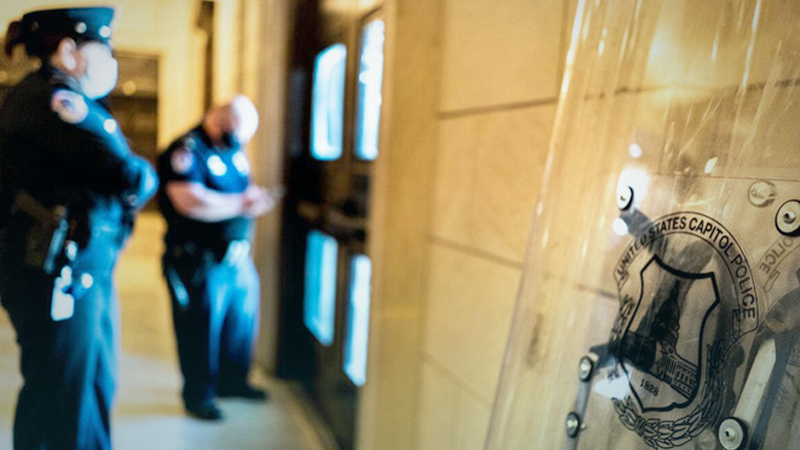
Capitol Police secure the rotunda doors as the U.S. Capitol becomes locked down because of a fire nearby. Police cleared the scene a short time later, and no injuries were reported. (Melina Mara/ The Washington Post)
By The Washington Post · John Wagner, Katherine Shaver
WASHINGTON – The Capitol Police on Monday alerted people at the Capitol and surrounding complex not to enter or exit for a brief period because of what was characterized as “an external security threat,” which turned out to be a small fire several blocks away.
A rehearsal for Wednesday’s inauguration of President-elect Joe Biden and Vice President-elect Kamala D. Harris was underway at the time; U.S. Capitol police quickly ushered participants inside the rotunda and locked the doors.
“Due to an external security threat located under the bridge on I-295 at First and F Streets SE, no entry or exit is permitted at this time,” the police said in an alert that went out to members of Congress, staffers and others who work inside the building shortly after 10 a.m. “You may move throughout the buildings but stay away from exterior windows and doors. If you are outside, seek cover.”
From the Capitol, where Biden is scheduled to sworn in at noon Wednesday, smoke could be seen coming from the location of the bridge.
Shortly afterward, D.C. firefighters announced that they had responded “to an outside fire in the 100 block of H St SE that has been extinguished.”
“There were no injuries. This accounts for smoke that many have seen,” D.C. Fire and Emergency Medical Services said on Twitter.
The alert was lifted and the all-clear given shortly after 11 a.m., and the rehearsal resumed.
D.C. police spokesman Stephen Benson said the fire started at a homeless encampment. He said the alert was sent because of the proximity of the fire to the Capitol, which – along with much of the rest of downtown Washington – has been on high alert since the Jan. 6 breach of the Capitol by a mob protesting President Trump’s election defeat.
The fire occurred after propane in a Coleman heater exploded, said D.C. Fire spokesman Vito Maggiolo.
He called the explosion was “very minor” and said firefighters extinguished the blaze quickly. A woman who had been using the heater suffered minor injuries but declined to be taken to a hospital, Maggiolo said.
The Post was with Russian opposition leader Alexei Navalny on the plane taking him to Moscow from Berin on Jan. 17, five months after a nearfatal poisoning. (The Washington Post)
By The Washington Post · Robyn Dixon
MOSCOW – Russian opposition leader Alexei Navalny called on Russians to take to the streets in mass protests after a court ordered Monday that he be held in custody for 30 days after his return to Russia.
He said Monday’s abrupt court hearing, to which a handful of pro-Kremlin media were admitted, was a sign of Russian President Vladimir Putin’s fear and weakness.
“They are afraid of you,” he said in a video message after the verdict, calling Putin’s regime a gang of monstrous crooks. “They are afraid and that is why they do things urgently and secretly.
“So I appeal to you: Don’t keep quiet. Resist! Take to the streets! No one can protect us but ourselves, and there are so many of us that if we want to achieve something, we will achieve it.”
International pressure mounted for Navalny’s release as he was abruptly summoned to the hearing, which he described as “the highest degree of lawlessness.” His lawyers said they were given just minutes’ notice of the hearing.
Navalny faces another hearing Feb. 2 over prison authorities’ claims that he violated conditions set down in a three-and-a-half-year suspended jail sentence relating to a 2014 embezzlement conviction, a case Navalny and the European Court of Human Rights have called a political prosecution. At that point, the original jail term could be reinstated.
Navalny’s Anti-Corruption Foundation announced plans for mass protests across the country Jan. 23.
“I don’t know what’s going on,” Navalny, 44, said in a video comment in court, where pro-Kremlin media had been ushered in. He said he thought he would meet his lawyers but found himself suddenly facing a court hearing.
The hearing took place at the Khimki police department near Moscow’s Sheremetyevo Alexander S. Pushkin International Airport, where he was arrested Sunday after flying home to Russia from Germany. He had been receiving medical treatment in Germany after an August poison attack.
“I don’t understand. Why was no one warned? No summons? I have seen a lot of mockeries of justice but this time the grandpa in his bunker is so afraid that the criminal code has been just torn apart and dumped,” he said, referring to Putin.
In an appeal to the judge, he said it was absurd that only select media representatives were admitted to the court, “but real journalists who are standing outside in the frost are not allowed in.”
His lawyer Olga Mikhailova told Judge Elena Morozova that no notice of the hearing had been given to Navalny’s legal team: “It is secret even for me. Having entered here, I found out that a court session was underway. Is this open?” The judge then gave Navalny’s lawyers 30 minutes to read the case materials and 20 minutes to consult with Navalny.
Eerily, a poster on the wall of the hearing room depicted Genrikh Yagoda, the infamous head of the NKVD, Stalin’s secret police, from 1934-1936. Yagoda supervised show trials and executions of officials during Stalin’s purges.
Dozens of Navalny’s supporters gathered outside the court, chanting “Alexei!” as the temperature dipped to -4 degrees Fahrenheit.
Yulia Navalnaya, who returned with her husband from Germany on Sunday, posted a supportive Instagram message to Navalny: “When you were poisoned I wrote that we could cope with everything and we could cope with that,” she wrote, adding the same was true now. “There is nothing we cannot cope with. Everything will definitely be fine!”
Russian authorities have dismissed Western alarm over Navalny’s arrest amid calls for his release by U.S., British and European officials.
Foreign Minister Sergei Lavrov brushed off the international criticism, describing it as an attempt by Western officials to distract from their own problems.
“It looks like Western politicians view this as an opportunity to divert attention from the deepest crisis the liberal development model has ever found itself in,” he said at a news conference in Moscow.
Lavrov said there were no grounds to open an criminal case into the poisoning, because no poison was found in Navalny’s system when he was hospitalized in Omsk, the Siberian city where his plane landed after he fell ill during a flight to Moscow. He added that German authorities had provided no material evidence of poisoning.
Navalny has blamed the poisoning on Putin and Russia’s domestic security agency, the FSB, a successor to the KGB.
Navalny’s arrest has been condemned by U.S. and European officials, who have called for his immediate release.
“We note with grave concern that his detention is the latest in a series of attempts to silence Navalny and other opposition figures and independent voices who are critical of Russian authorities,” U.S. Secretary of State Mike Pompeo said in statement Sunday.
NATO Secretary General Jens Stoltenberg on Monday joined the calls to release Navalny.
British Foreign Secretary Dominic Raab tweeted Monday, “it is appalling that Alexei Navalny, the victim of a despicable crime, has been detained by Russian authorities. He must be immediately released.”
Raab added that rather than arresting Navalny, Russia should be explaining “how a chemical weapon came to be used on Russian soil.”
German Foreign Minister Heiko Maas also called for Navalny’s immediate release, saying Russia was bound by its own constitution and respect for civil rights. Charles Michel, president of the European Council, called the arrest unacceptable.
Ursula von der Leyen, president of the European Commission, issued a statement Monday condemning the arrest and calling for his immediate release.
“Detention of political opponents is against Russia’s international commitments,” she said.
The French Foreign Ministry said it was following the case with “utmost vigilance” and demanded that authorities release him.
Commenting on Navalny’s arrest, Carl Bildt, former Swedish prime minister and co-chair of the European Council on Foreign Relations, said, “I guess he is accused of having survived the authorities’ attempt to kill him.”
He dismissed Russian authorities’ claim that Navalny’s future would be determined by the courts.
“Is there anyone who believes this statement by the authorities in Russia?” he tweeted. “Everyone knows who decides.”
Amnesty International called for Navalny’s immediate unconditional release, calling him a prisoner of conscience and adding that “Russian authorities have waged a relentless campaign against Navalny.”
The office of United Nations High Commissioner for Human Rights Michelle Bachelet said she was “deeply troubled” by Navalny’s arrest, and called for his immediate release and respect for his rights.
Putin and other Kremlin officials routinely underscore their disdain for Navalny by refusing to ever use his name, resorting to a range of constructions such as “the blogger,” or “the Berlin patient,” or “the patient who is in a coma for reasons yet to be determined.”
A military laboratory in Germany found incontrovertible evidence that he was poisoned with a Novichok group agent, a finding confirmed by labs in France and Sweden. Russian authorities deny the poisoning and have blamed Germany.
Europe and Britain have sanctioned Russian officials over the attack.
Investigative reporting group Bellingcat linked Navalny’s poisoning to members of a special unit within the FSB, by analyzing flight and mobile phone records.
Navalny has accused Putin of direct involvement. Last month he called a member of an elite toxins unit of the FSB team, Konstantin Kudryavtsev, while posing as an official compiling a report for Russia’s National Security Council.
In revelations highly embarrassing to Russian authorities, Kudryavtsev said the team had worked well on the project, explaining that the only reason Navalny survived was because of the actions of the pilot diverting the flight to Omsk and the medical team at Omsk airport. He described an intense coverup operation that included twice cleaning Navalny’s clothing, in particular his underpants.
Navalny had been under intense security surveillance for years before his arrest, and faced repeated arrest and harassment including having his bank accounts and those of his family frozen last year. Authorities recently announced new embezzlement charges against him, meaning he could face a lengthy jail term if convicted.
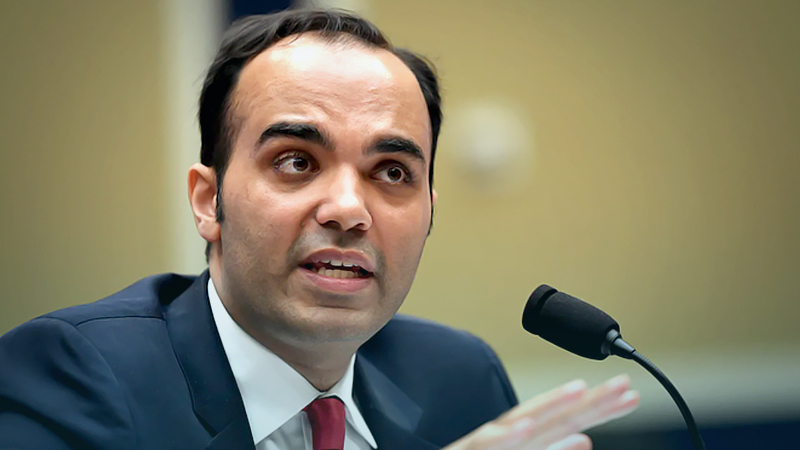
Rohit Chopra, head of the Federal Trade Commission, testifies during a House subcommittee hearing in 2019. President-elect Joe Biden is set to nominate Chopra as the director of the Consumer Financial Protection Bureau. (Susan Walsh/ AP)
By The Washington Post · Tory Newmyer
WASHINGTON – President-elect Joe Biden is set to nominate Rohit Chopra, the former student loan ombudsman for the Consumer Financial Protection Bureau, to lead the consumer finance agency.
And Biden will tap Gary Gensler, the former chairman of the Commodities Futures Trading Commission, to run the Securities and Exchange Commission.
The choice of the Obama-era regulators to lead two key agencies overseeing the financial sector signals the incoming Biden team’s intent to provide an aggressive check on the industry after four years of deregulation and light-touch enforcement under the Trump administration.
“Our administration will hit the ground running to deliver immediate, urgent relief to Americans; confront the overlapping crises of COVID-19, the historic economic downturn, systemic racism and inequality, and the climate crisis; and get this government working for the people it serves,” Biden said in a statement. “These tireless public servants will be a key part of our agenda to build back better – and I am confident they will help make meaningful change and move our country forward.”
Chopra, who has served since 2018 as a Democratic commissioner on the Federal Trade Commission, is an acolyte of Sen. Elizabeth Warren, D-Mass. He worked with her on establishing the Consumer Financial Protection Bureau (CFPB) before joining it in 2011 to lead its efforts in exposing abuses in the student lending market.
Chopra brought a background as a graduate of the University of Pennsylvania’s Wharton School, who, as a consultant with the global management firm McKinsey & Co., had focused on student debt and other consumer credit markets. At the CFPB, he called out private student lenders for their treatment of borrowers and helped lay the groundwork for President Barack Obama’s Student Aid Bill of Rights, focused on providing borrowers more power with loan servicers. He has been a similarly outspoken industry critic at the FTC, pressing for more aggressive enforcement actions against tech companies and others. Chopra declined to comment Monday on his appointment to lead the CFPB.
Sen. Sherrod Brown, D-Ohio, expected to chair the Senate Banking Committee that will handle Chopra’s nomination, praised his selection, calling him a “bold and experienced choice.”
“I am confident that Mr. Chopra will not only return the CFPB to its central mission – protecting consumers – but also ensure the agency plays a leading role in combatting racial inequities in our financial system,” Brown said in a statement.
Democrats have criticized the agency’s current director, Kathy Kraninger, saying she undermined the office’s mission by rolling back rules on businesses and not enforcing those on the books. She is serving a five-year term that runs through 2023. But because of a Supreme Court ruling in June, Biden can fire her as soon as he takes office.
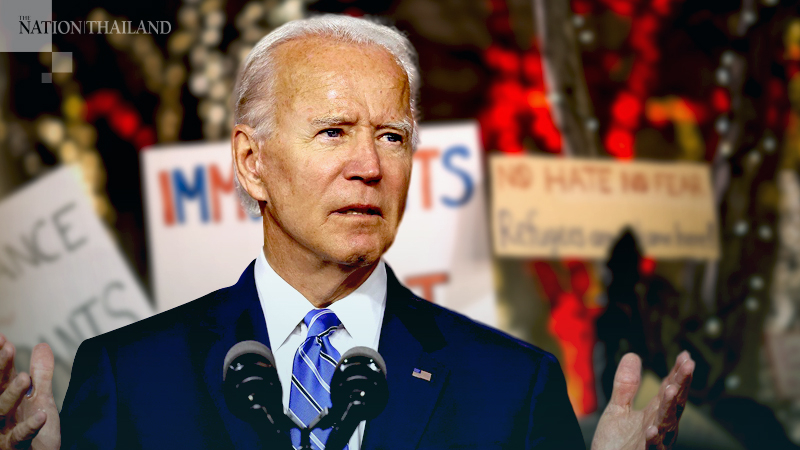
WASHINGTON – President-elect Joe Biden propose major changes to the nation’s immigration laws the day he is inaugurated, including an eight-year pathway to citizenship for immigrants who do not have legal status and an expansion of refugee admissions, alongside an enforcement plan that deploys technology to patrol the border.
Biden’s legislative proposal, which is expected to be sent to Congress on Wednesday, also includes a heavy focus on addressing the root causes of migration from Central America, a key part of Biden’s foreign policy portfolio when he served as vice president.
The centerpiece of the plan from Biden and Vice President-elect Kamala Harris is the eight-year pathway, which would put millions of qualifying immigrants in a temporary status for five years, then grant them a green card once they meet requirements such as a background check and payment of taxes. They would be able to apply for citizenship three years later.
To qualify, immigrants must have been in the United States as of Jan. 1, a move meant to blunt any rush to the border.
Beneficiaries of the Deferred Action for Childhood Arrivals – which granted key protections for “dreamers” – and the temporary protected status (TPS) program for migrants from disaster-ravaged nations could apply for a green card immediately. The details were described by transition officials who spoke on the condition of anonymity because they were not authorized to speak publicly.
The president-elect’s plan has received praise from pro-immigration advocates and Democratic lawmakers who have toiled to change the immigration system for decades. But it also comes at a time when the Republican Party, led by President Donald Trump, has shifted rightward on immigration, complicating efforts at a deal that can get enough GOP support.
In a significant contrast with the Obama administration – which was criticized by the Latino community for not tackling immigration when Democrats controlled the House, the Senate and the White House early in Barack Obama’s presidential tenure – Biden has made immigration his chief legislative priority behind the immediate health and economic relief stemming from the ongoing coronavirus pandemic.
“Having leadership makes a big difference,” Sen. Robert Menendez, D-N.J., said in an interview Monday. “You cannot achieve immigration reform without presidential leadership, and from what I see, the seriousness of their purpose to start off with gives me a real good feeling that the president-elect is actually going to use capital to try to make this happen.”
The Biden effort would mark the most substantial attempt at a comprehensive immigration overhaul since the Senate passed legislation in 2013, only to have it collapse in the House, controlled by Republicans, the following year.
After that collapse, pressure from Democratic lawmakers and immigration advocates pushed Obama to issue a wide-reaching effort aimed at protecting parents of U.S. citizen children and green-card holders who were in the country illegally, but that action was promptly blocked in the courts.
Under Trump, the GOP-controlled Senate tried to pass various revisions to U.S. immigration laws, prompted by the outgoing president’s attempt to cancel the temporary protections for the immigrants. Trump was ultimately rebuffed by the Supreme Court on his push to end DACA.
Biden’s bill will have three overarching pillars, the transition officials said: provisions to address the causes of migration, border management and a path to citizenship.
The focus on Central America reflects the message that Biden has already relayed to senior officials in the region: that he will advocate for policy changes aimed at what drives scores of migrants there to come to the United States illegally to seek safe harbor.
“Ultimately, you cannot solve problems of migration unless you attack the root causes of what causes that migration,” said one official, pointing to the various reasons – from economic to safety – that drive migrants to flee their home countries. “He knows that in particular is the case in Central America.”
Transition officials are aware of recent reports of the increased numbers of migrants at or heading to the border in anticipation of the end of Trump’s presidency, and urged them to stay in their home countries. They emphasized that newly arriving immigrants would not qualify for the legalization program that Biden proposes.
Biden wants to move the refugee and asylum systems “back to a more humane and orderly process,” said the official. But “it’s also been made clear that that isn’t a switch you flip overnight from the 19th to the 20th, especially when you’re working with agencies and processes that have been so gutted by the previous administration.”
The president-elect hopes to reinstate a program granting minors from Central America temporary legal residence in the United States. The Trump administration terminated the program in August 2017, officials said. The administration also wants to set up a reunification program for Central American relatives of U.S. citizens that would allow those who have been approved for U.S. residency to be admitted into the country, rather than waiting at home for an opening. The program would be similar to ones that existed for Cubans and Haitians but were also ended by the Trump administration.
The Biden proposal would also put in place a refugee admissions program at processing centers abroad that would better help identify and screen those who would qualify to be admitted as refugees into the United States.
As for border enforcement, the plan calls on the Department of Homeland Security to develop a proposal that uses technology and other similar infrastructure to implement new security measures along the border at and between ports of entry. Biden has long vowed not to expand the border wall Trump has extended.
“This is not a wall, this is not taking money from [the Department of Defense],” a transition official said, referring to how Trump helped to finance his wall, after pledging that Mexico would pay for it. “It’s a very different approach.”
The legislation from the Biden White House also will contain several revisions to the legal immigration process, according to transition officials.
It would bolster the number of key employment- and family-based visas available, by recapturing unused visas from previous years and exempting spouses and children of green-card holders from quotas that restrict immigrants from immediately entering the country.
It also would grant work permits for spouses and children of temporary worker visa holders, though the number of available H-1B visas (for high-skilled foreign workers) and H2-B visas (for lower-skilled nonagriculture workers) would not be expanded, officials said.
Doctoral graduates in the science, technology, engineering and mathematics fields are also exempted from visa limits that critics say have led to talented immigrants moving elsewhere in the world, depriving the United States of their ingenuity.
The incoming administration has already said Biden will issue a flurry of executive orders on his first day, including one that would repeal the ban on citizens of some majority-Muslim nations from entering the United States. In another potential executive action, the Biden administration plans to review TPS programs “across the board” to see which programs ended by the Trump White House – including benefits for immigrants who fled from El Salvador, Nicaragua or Haiti – could be reinstated.
Transition officials declined to rule out other immigration executive actions if attempts at legislating fail, but they stressed that only Congress can implement certain changes, such as a path to citizenship.
“The president-elect supports resources that are there, and his secretary of homeland security will use them in a smart and humane way,” said another official. “But we really need Congress to step up.”
To win passage, the administration would have to retain all Democratic votes as well as persuade at least 10 Republican senators to cross the aisle. Some proponents of the 2013 effort – such as Sen. Lindsey Graham, R-S.C., and Marco Rubio, R-Fla. – remain in the Senate, though many others have since left.
Under Trump, Republican lawmakers favoring a more restrictive immigration system have gained a larger platform and, along with the president, have pushed measures limiting not only illegal but legal migration into the United States.
“He’s unveiling his draft immigration bill this week, and it’s what you’d expect from the party of open borders: Total amnesty, no regard for the health or security of Americans, and zero enforcement,” Sen. Tom Cotton, R-Ark., tweeted Monday. “Let’s be clear: Joe Biden is prioritizing amnesty ahead of the pandemic or getting Americans back to work. We can’t let him get away with it.”
Menendez, who worked on the 2013 immigration effort, said he believed the proposal from the incoming Biden administration was “definitely” more liberal than the compromise he helped negotiate as part of the “Gang of Eight,” which ultimately included a surge of border security resources that advocates said was too draconian.
“The Biden-Harris administration is going to be strong partners in helping undo a lot of the Trump administration’s cruel and divisive immigration policy over the last four years,” he said.
By The Washington Post · Cat Zakrzewski, Tony Romm
WASHINGTON – The Biden administration’s agenda, already focused on the coronavirus, will face immediate pressure to address a related tech issue: access to home broadband that has become essential to continuing work, school and other important activities during the pandemic.
The country is in the midst of another surge in the virus – this time with a more contagious strain – and schools and offices nationwide are again closing their doors. The pandemic is highlighting a persistent digital divide, in which Americans without a strong and affordable Internet connection are increasingly boxed out of work and education opportunities.
President-elect Joe Biden promised throughout his candidacy that he would prioritize expanding Internet access as he made fixing the nation’s infrastructure a central tenet of his campaign message. His “Build Back Better” plan, a response to the dual health and economic crises, calls for the creation of “universal broadband” for every American.
That could set the stage for Democrats to finally make good on a long-standing push to expand federal funding for Internet access.
“Broadband access and deployment should be in every recovery package, in every infrastructure package,” said Sen. Ron Wyden (Ore.), the ranking Democrat on the Senate Finance Committee, whose work has paved the way for emergency broadband rebates. “That’s something you can really move in the next few weeks.”
The Biden transition team is exploring immediate actions it can take to bring relief to Americans in need of an Internet connection.
Once under Democratic control, the Federal Communications Commission will be positioned to make changes to the E-rate program, which helps schools and libraries obtain affordable broadband access. The transition landing team already has received recommendations for changes to the program, which the FCC is expected to enact, according to three people who spoke on the condition of anonymity to describe private conversations with the Biden camp.Democrats have been pushing for changes to the program so that its funding can be used to expand Internet access for students attending school virtually.
Last year, House Democrats passed a bill that would allocate $80 billion to deploy broadband to unserved areas. With victories in two recent Senate runoff elections in Georgia, Democrats are better positioned to ensure that such goals are achieved in future infrastructure packages.
There’s also pressure for Biden to follow through on campaign promises to undo the Republican FCC’s efforts to further deregulate the Internet. Democrats fiercely opposed a 2017 vote that dismantled Obama-era rules that required broadband companies to treat all websites equally. This created concerns that companies such as AT&T and Comcast could speed up service for their own services, while blocking or slowing down traffic to competitors.
Once Democrats again have a 3-2 majority on the FCC, they also will be well-positioned to restore the Obama-era rules. There will be two Democrats and two Republicans on the commission after current Republican Chairman Ajit Pai is expected to depart this week. Democrats are expected to nominate another commissioner, who must be confirmed by the Senate. The timeline for nominations is unclear, as the Senate is under pressure to confirm key members of Biden’s Cabinet while also addressing pandemic relief and the impeachment of President Trump.
There are some immediate actions that the Biden administration can take in the interim. Lawmakers and activists are pressuring the incoming administration to immediately withdraw from a federal lawsuit brought under the Trump administration challenging California’s net neutrality law. The lawsuit reflected Republicans’ efforts in recent years to repeal Obama-era rules that required AT&T, Verizon and other service providers to treat all Internet traffic equally – and stop states from adopting their own similar provisions.
A group of 13 Democratic lawmakers, led by Rep. Anna G. Eshoo (Calif.), sent a letter to Merrick B. Garland, Biden’s nominee for attorney general, last week. The lawmakers called Garland to make dismissing the case one of his first actions after the inauguration to ensure that it does not obstruct states’ efforts to regulate on many tech policy issues. The judge hearing the case has called on the Justice Department to say by Feb. 9 whether it will to drop the government challenge to California’s law.
Democrats also could try to leverage their narrow control of Congress to pass legislation that would enshrine net neutrality principles into federal law, and thus make it less susceptible to legal challenges and reversals under future Republican administrations. However it’s unclear how much of a priority that will be for lawmakers amid the pandemic, impeachment and economic fallout.
Sen. Edward J. Markey (D-Mass.) is optimistic that Democratic control of Congress will put Democrats “in a position to act” on passing a strong net neutrality bill. If Congress passed such a measure, Democrats would not have to worry about a future Republican-run commission again overturning it.
Tom Wheeler, who was chairman of the Federal Communications Commission under President Barack Obama, warned tech policy wonks against getting caught in the minutiae of individual issues, and to keep their eye on how Internet regulation can be used to confront the pandemic, the economic crisis and racial injustice.
“The Biden administration exists in a different environment that puts that kind of thinking in second place behind broader thinking about how do we deal with the collection of existential challenges that exist today,” Wheeler said.
WASHINGTON – Antitrust action is perhaps the most formidable tool in the incoming administration’s arsenal to rein in Silicon Valley.
President-elect Joe Biden is ascending to power after months of bipartisan momentum to expand antitrust enforcement against the tech industry and update existing competition laws for the digital era. Before even taking the oath of office, Biden and his staff are already under pressure to scale up that work.
The recent violence at the Capitol and its aftermath is adding fresh urgency, as tech platforms’ role in amplifying violent rhetoric highlights the industry’s broad power and influence over American democracy.
Democratic control of the White House and Congress could result in reforms to competition laws governing large tech companies’ business practices and even more litigation that could force breakups or significant structural changes at some of the world’s largest corporations.
“Basically, the Biden administration is inheriting a lot of momentum and a big opportunity to make online communications safe for democracy and fair in the commercial sphere,” said Sarah Miller, who leads the American Economic Liberties Project.
Biden and Vice President-elect Kamala D. Harris, both moderate Democrats, are not the most likely politicians to take on power in Silicon Valley. They were not as aggressive as some of their more liberal peers, such as Sens. Elizabeth Warren, D-Mass., and Bernie Sanders, I-Vt., in calling to break up specific tech giants during the Democratic presidential primary.
Biden has said little specifically about how he intends to address antitrust issues in Silicon Valley, but he promised throughout his candidacy that he would take on growing economic concentration and monopoly power.
Consumer advocates and liberal Democrats want the Federal Trade Commission and the Justice Department under Biden to be significantly tougher on the tech giants than they were during the Obama presidency. Facebook, Google and Amazon did not have a single merger blocked between 2009 and 2016.
And many expect these agencies will be as the tech industry’s fortunes in Washington have significantly dwindled in the intervening years. The incoming officials at the Justice Department and the FTC will inherit a pair of federal antitrust lawsuits filed last year against Facebook and Google that are widely expected to proceed after the transition.
Both Democrats at the FTC supported a lawsuit against Facebook by the agency, which argued that the company is an illegal monopoly that should potentially be broken up. The Justice Department also filed a lawsuit in the fall against Google. The suit received broad bipartisan support.
But Biden is under pressure to expand this litigation. A recent report from the American Economic Liberties Project, an anti-monopoly group led by a member of Biden’s transition team, called on the incoming Justice Department to commit to “seeking a Google breakup.” The department’s lawsuit currently focuses on the power the company exerts over search, and the group wants it to challenge the company’s position in travel, maps and the App Store.
The group also called on the FTC to bring an antitrust case against Amazon, which has faced scrutiny over its treatment of third-party sellers. (Amazon Chief Executive Jeff Bezos owns The Washington Post.)
Antitrust is also increasingly a priority in Congress. Now that Democrats will control the House and the Senate, they will be able to use their powerful perches to call in executives to testify about competition in the industry. Last year, House Democrats led a grilling of the chief executives of Apple, Amazon, Facebook and Google on these issues.
Biden’s campaign said last year that he plans to work with Rep. David Cicilline, D-R.I., who led an investigation that found that Amazon, Apple, Facebook and Google engaged in anti-competitive tactics. The report recommended broad changes to laws that would punish big companies, such as making it illegal for Amazon and Google to give greater preference to their own products over competitors’ merchandise on their platforms. The recommendations also included expanding federal regulators’ powers to block future tech mergers.
Those recommendations could serve as a blueprint for legislation in the coming months. However, it remains to be seen how much of a priority antitrust policy will be in the new Congress, as lawmakers also grapple with the coronavirus pandemic, the economic crisis and the second impeachment of President Donald Trump. Cicilline, who declined to comment for this article, is one of the managers of the impeachment process.
“There’s an extent to which this is part of those crises,” said Charlotte Slaiman, competition policy counsel at the consumer group Public Knowledge. “The misinformation that is spreading on social media is making it harder for us to contain the coronavirus pandemic. It is making it harder for our democratic processes to function properly. I think this still absolutely needs to be a high priority with those other concerns.”
As Trump departs, scholars seek to understand his reign – and what it says about American democracy
InternationalJan 18. 2021Thousands of Trump supporters violently storm the U.S. Capitol on Jan. 6, 2021, to support President Donald Trump’s baseless claims that he won the election. MUST CREDIT: Washington Post photo by Michael Robinson Chavez
By The Washington Post · David Nakamura · NATIONAL
WASHINGTON – More than 30,000 falsehoods and lies. Nearly 400,000 coronavirus deaths. Rising white nationalism. Financial self-dealing. A social media ban. Two impeachments. A deadly attack on the U.S. Capitol.
President Donald Trump’s four years in office come to a close Wednesday after a reign defined by constant chaos, corruption and scandal, a tenure that numerous scholars predict is destined to rank him among America’s worst presidents.
Trump’s claims of policy victories – including a raft of conservative judges and steps toward Middle East peace – will be vastly overshadowed by his mismanagement of the pandemic and his unprecedented assault on the U.S. election results, they said.
“You never want to be ranked below William Henry Harrison, who was only president for one month. If you rank below him, it means you’ve harmed the country,” presidential historian Douglas Brinkley of Rice University said. “Now you’re getting into James Buchanan and Andrew Johnson territory. Trump will automatically be in that category.”
Yet as Trump departs the White House – and the daily controversies and social media warfare he provoked begin to subside – the historians preparing to reckon with his legacy said it’s not just Trump who will be examined under the harsh reflection of history’s mirror, but also American society and the nation’s commitment to democracy.
Trump’s relentless attacks on civic institutions, provoking of racial and social divisions, trampling of political norms, broadsides against the free press and impugning of America’s international allies have raised profound questions about the nature of American governance and the endurance of the values the United States has long professed to cherish, scholars said.
“Trump and Trumpism have brought those flaws into sharp relief,” said Matthew Dallek, a political historian at George Washington University. “The fact that 74 million people could vote for someone who is a conspiracy theorist and a perpetual liar and encouraged violence and the Proud Boys and white supremacy – in that sense, the Trump presidency will be important for those reckoning with ‘What does it mean to be an American?’ And also what does it mean to live in what a lot of people thought was the world’s greatest experiment in democracy, when it turns out that experiment is incredibly fragile?”
The Trump years have been something of a boon for political historians and scholars who were vaulted into slots as cable television analysts and newspaper pundits to assess his presidency in real time. Now, the more traditional work begins, as they gain distance from the day-to-day political combat and wade through historical records of the past four years to make broader judgments about his place in history.
It is here that some raised concerns over the volume and reliability of the records that can help guide them. Before his Twitter account was shutdown in the wake of the U.S. Capitol siege on Jan. 6, Trump had posted nearly 60,000 tweets and retweets to more than 88 million followers – offering a moment-to-moment reflection of his mind-set.
Yet scholars said other records, such as memos and interviews with aides, are more tenuous. Some worried that Trump and his associates will destroy documents despite laws meant to preserve them, while others voiced concerns that White House aides, who like their boss have a record of misleading the public, will be unreliable narrators of his presidency.
“I wonder if there will be the same documentation of Trump’s own decision-making and processes that we have with other presidents,” said Joseph Crespino, a history professor at Emory University in Atlanta. “He’s not a reader or a note taker or a memo writer. That will be a challenge.”
In many ways, Trump’s presidency was so aberrant – a real estate promoter and reality television star with no political or military experience winning the highest elected office with a minority share of the popular vote – that it is difficult to place him within the continuum of his peers, historians said.
Yet they also emphasized that Trump did not come out of nowhere – that his rise to political prominence behind a false birther conspiracy seeking to delegitimize his predecessor, President Barack Obama, is rooted in the Republican Party’s history of racial grievance politics and its leaders’ increasing willingness to embrace the far-right wing.
Likewise, they said, Trump’s use of new social media tools to spread disinformation was made possible by rapidly changing technologies, but the rhetoric he employed to radicalize his base is steeped in language of American demagogues – from Joseph McCarthy to Father Charles E. Coughlin to George Wallace.
Historians “will think less in terms of analogy [to past presidents] and think more in terms of puncturing the mythic past that both Trump and the people opposed to him alight on – that America had a pure form of democracy that we either lost because of Trump or that Trump brought back,” said Nicole Hemmer, a historian who specializes in conservative media and is working on the Obama Presidency Oral History at Columbia University.
“There’s a lot more continuity here than we might think,” Hemmer said. “We might not be able to pluck one person out of the past and say that is what Donald Trump is like. But we can understand that throughout American history there has been racism and fascism and anti-democratic forces and say he is drawing from those powerful influences.”
Ruth Ben-Ghiat, a New York University historian who studies fascism, said Trump is best understood in comparison to authoritarian-leaning figures abroad who have employed similar tactics of sowing division and chaos – which she called “crisis politics” – to wield power.
In her view, Trump’s critics missed an important point when they mocked Trump for being lazy by spending so much time golfing and tweeting. Like other autocrats, she said, Trump focused on using his presidency to enrich himself – in Trump’s case by constantly promoting his private resorts and golf courses.
And the president deployed his social media accounts to delegitimize criticism and maintain allegiance from his followers, fostering a “personality cult that is way out of proportion to any other president, including Ronald Reagan,” Ben-Ghiat said.
“I don’t think we can use the same frame of reference as with other presidents because Trump never intended to govern in a recognizable presidential manner,” she emphasized. “His aims and goals were totally different.”
Republicans have called such criticism of Trump’s presidency overblown and faulted his critics for fanning the divisive political partisan and cultural divides that led to mass social justice protests last summer and violent clashes between Trump supporters and counterprotesters since the election.
Trump’s GOP allies also have pointed to successes in the party’s conservative agenda – including three conservative Supreme Court justices, a Republican-backed tax cut, broad environmental and business deregulation – as evidence of the president’s achievements. And they noted that Trump won 74 million votes in 2020, the second-most ever in a presidential election to Biden’s 81 million, reflecting his deep support among the public.
Yet historians said Trump’s tenure is virtually certain to be defined by the tumultuous events of the past year, during which he has actively sought to play down the risks of the global pandemic, used government force to clear protesters from a park just beyond the White House gates last June, falsely claimed victory over President-elect Joe Biden and helped incite a pro-Trump mob that stormed the Capitol, resulting in the deaths of five people.
To Leah Wright-Rigueur, associate professor of American history at Brandeis University, Trump’s presidency has been a case study in the “naked, unadulterated pursuit of power and self-interest, at the cost of 400,000 lives and at the cost of the American union.”
She added that Trump’s four years have dramatically exposed what racial minorities and other marginalized Americans have long understood – that the nation’s democracy has always been “brutal, exclusionary and flawed” for many citizens.
The storming of the Capitol “will be the moment everybody remembers about Trump’s presidency,” Wright-Rigueur said. “It tells the story about the failures of American democracy – not just about Trump, but also the centuries-old lies we tell ourselves about who we are.”

 Janet Yellen, President- elect Joe Biden’s pick to be Treasury Secretary, speaks in Wilmington, Del., on Dec. 1, 2020. MUST CREDIT: Washington Post photo by Demetrius Freeman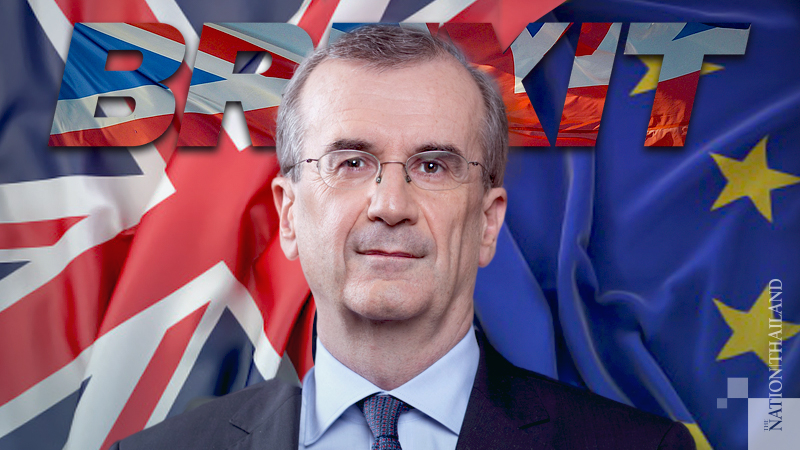

 President-elect Joe Biden
 Thousands of Trump supporters violently storm the U.S. Capitol on Jan. 6, 2021, to support President Donald Trump’s baseless claims that he won the election. MUST CREDIT: Washington Post photo by Michael Robinson Chavez
