Republicans begin to join impeachment push #SootinClaimon.Com

#SootinClaimon.Com : ขอบคุณแหล่งข้อมูล : หนังสือพิมพ์ The Nation.

Republicans begin to join impeachment push

InternationalJan 13. 2021
By The Washington Post · Mike DeBonis, Josh Dawsey

WASHINGTON – The push for an unprecedented second impeachment of President Donald Trump took a bipartisan turn Tuesday, when several senior House Republicans joined the Democratic effort to remove him for his role in inciting a mob to storm the Capitol last week. The White House braced for more defections.

https://www.washingtonpost.com/video/c/embed/a640fc21-852a-4cda-8823-1a1e48880e0a?ptvads=block&playthrough=false

Rep. Liz Cheney of Wyoming, the third-ranking House Republican, and Rep. John Katko of New York, the top Republican on the House Homeland Security Committee, said Trump was responsible for Wednesday’s violence. They were joined by Rep. Adam Kinzinger, R-Ill., a frequent Trump critic.

“The president of the United States summoned this mob, assembled the mob, and lit the flame of this attack,” Cheney said in a statement, adding, “There has never been a greater betrayal by a president of the United States of his office and his oath to the Constitution.”

Katko’s language was similarly strong. “To allow the president of the United States to incite this attack without consequences is a direct threat to the future of our democracy,” he said.

Kinzinger added, “If these actions . . . are not worthy of impeachment, then what is an impeachable offense?”

A senior administration official said the White House expects at least a dozen Republicans to support impeachment in the House vote planned for Wednesday. The White House is rudderless, unwilling or unable to mount any defense other than saying that Trump will already be leaving next week, two administration officials said, speaking on the condition of anonymity to disclose internal dynamics.

Trump, barred from Twitter, for the first time lacks the ability to aim angry tweets at those who oppose him, and White House officials conceded that he has few ways to stem the tide. He has asked Sen. Lindsey Graham, R-S.C., to urge fellow Republicans to oppose impeachment, an official said.

The Republican statements supporting impeachment – which came after Trump delivered remarks earlier Tuesday expressing no regret for his actions – represented a watershed moment. They signaled high-level GOP concern about the role of Trump and other party leaders in spreading conspiracy theories about the recent election, and reflected how much the political landscape has shifted since Trump was acquitted in his impeachment trial in February.

In another potential sign of a changing atmosphere, Sen. Charles Grassley, R-Iowa, chairman of the Senate Finance Committee, scheduled a confirmation hearing for Treasury Secretary-designate Janet Yellen after weeks of delays in setting hearings for Biden’s Cabinet picks.

Meanwhile, Senate Majority Leader Mitch McConnell, R-Ky., has been telling associates since the attack that Trump probably committed impeachable offenses, The New York Times first reported. McConnell, a close adviser said, has not decided how he will vote on impeachment and wants to hear the case first.

McConnell has not returned Trump’s calls in weeks and remains livid with him, and he will not pressure his colleagues to oppose or support convicting the president. “He’s not going to whip the vote,” said the adviser, who spoke on the condition of anonymity to discuss private conversations.

McConnell’s office declined to comment.

Meanwhile, House Minority Leader Kevin McCarthy, R-Calif., has floated a censure of Trump to his caucus members as a potential alternative to impeachment, but most Democrats – including House Speaker Nancy Pelosi, Calif. – have dismissed that penalty as insufficient because it comes with no consequences.

The White House Counsel’s Office has not drawn up a plan for combating the impeachment effort, an administration official said, and its legislative affairs team is not reaching out to lawmakers, unlike during Trump’s first impeachment.

The endorsement of impeachment by top Republicans complicates the prevailing GOP message of recent days – that it is a needlessly divisive and partisan move.

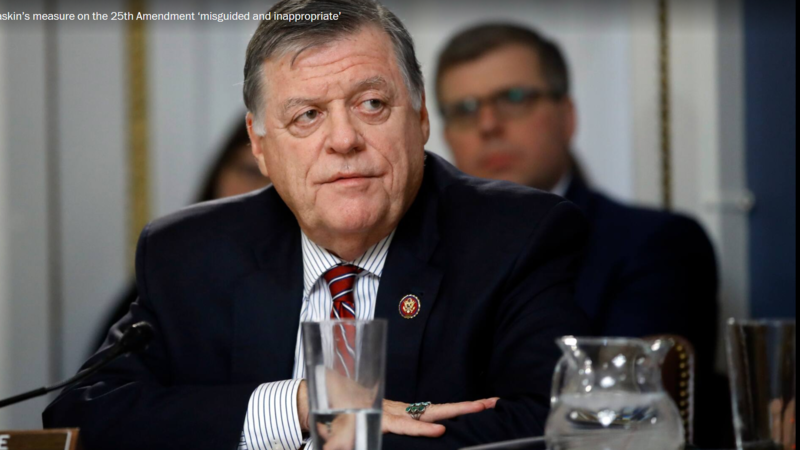
House members prepared for a preliminary step toward impeachment Tuesday evening, taking up a resolution urging Vice President Mike Pence and the Cabinet to use their powers under the 25th Amendment to remove Trump immediately. Pence has given no signal that he intends to do so, however, and Pelosi has indicated that she will then move immediately to impeach Trump.

Democratic aides said they expected the full House to vote on impeachment no later than Wednesday night – one week after the Capitol invasion and one week before Trump is scheduled to leave office.

It is unclear how many more House Republicans would support impeachment. None joined the Democrats in December 2019 when they impeached Trump for urging Ukraine to investigate Biden and his son, but the Capitol attack has shaken up the political dynamic.

The formal debate over sanctioning Trump began Tuesday morning when the House Rules Committee readied the 25th Amendment resolution for the House floor. The mood of the debate went from somber to angry as lawmakers sparred about Trump’s culpability – and one another’s – for Wednesday’s events.

“Rushing this resolution to the floor will do nothing to unify or heal the country,” said Rep. Jim Jordan, R-Ohio. “These actions, again, will only continue to divide the nation.”

In response, Rules Committee Chairman Jim McGovern, D-Mass., accused Jordan and others of having “given oxygen to the president’s conspiracy theories” and said appeals to civility were coming too late.

“We all want healing, but in order to get to healing, we need truth and we need accountability,” McGovern said.

Trump on Tuesday denied responsibility for last week’s riot, telling reporters that “what I said was totally appropriate” when he addressed supporters before the assault.

At a rally that day, Trump urged his followers to head for the Capitol and “fight much harder” to prevent Biden’s victory from being certified in Congress. “If you don’t fight like hell, you’re not going to have a country anymore,” he said.

On Tuesday, Trump called impeachment “ridiculous” and “a continuation of the greatest witch hunt in the history of politics.” He suggested that proceeding with it might spark additional violence: “I think it’s causing tremendous danger to our country, and it’s causing tremendous anger. I want no violence.”

If the House impeaches Trump on Wednesday and transmits the charge to the Senate, as seems almost certain, Senate Democrats would immediately have to figure out how to hold an impeachment trial without bogging down Biden’s agenda.

With Trump accused of “incitement of insurrection,” Republican leaders are bracing for more defections. GOP lawmakers are openly considering whether to support impeachment, and Cheney gave them space to consider their options on a Monday conference call with colleagues.

She said that in light of Wednesday’s violence, impeachment was a “vote of conscience” for lawmakers rather than a matter of party discipline.

Other GOP leaders, including McCarthy and Minority Whip Steve Scalise, R-La., have urged lawmakers to oppose impeachment, calling it needlessly divisive. And Trump’s defenders in Congress signaled that they would not stand idly by.

Jordan, who promulgated conspiracy theories about election fraud and attended a “stop the steal” rally after the election, accused Democrats of a “double standard” because they had raised objections to the electoral votes of previous Republican presidents, including Trump and George W. Bush.

Democrats noted that in those cases, the losing candidate had long since conceded and many lawmakers who protested made clear that they accepted the election results, while at no point encouraging violence.

Rep. Jamie Raskin, D-Md., cited liberals’ reaction to Trump’s election, including the massive Women’s March on Washington.

“What did the Democrats do? They put on pink winter hats, marched peacefully with a million people, joined Planned Parenthood, worked with their churches to try to reform America,” Raskin said. “Nobody was out there agitating for a violent armed insurrection against the government.”

Another Democrat, Rep. Ed Perlmutter of Colorado, pleaded with Jordan to acknowledge that the election was not stolen and that Biden had won.

“Yes, he’s going to be president,” Jordan said, but added, “There are serious problems with this election that deserve an investigation.”

The sparring came as Democrats debated how to structure their steps after impeachment passes the House. The Senate is not scheduled to return to regular business until Jan. 19, a day before Biden’s inauguration, meaning there would be virtually no chance of conducting a Senate trial and ousting Trump from office prematurely.

Senate Minority Leader Chuck Schumer, D-N.Y., called on McConnell to join him in invoking a provision that allows the Senate to convene early in cases of emergency, if both chamber leaders call for it.

“This is a time of emergency,” Schumer said. “We could come back ASAP and vote to convict Donald Trump and get him out of office now, before any further damage is done.”

Asked whether the House could delay transmission of the impeachment resolution, allowing the Senate to confirm at least some of Biden’s Cabinet nominees before plunging into an impeachment trial, Pelosi declined to comment Tuesday.

“Take it one step at a time,” she said.

Schumer also criticized Trump’s comments disclaiming responsibility for the mob violence. The senator called it “a pathological technique used by the worst of dictators.”

“Trump causes the anger, he causes the divisiveness, he foments the violence and blames others for it,” he said. “That is despicable.”

Democrats have discussed the potential for “bifurcating” Senate business so the chamber could approve nominees in the morning and hold a trial in the afternoon. But there is no modern precedent for doing that, and it would require cooperation from Republicans that they may be unlikely to grant.

Biden’s allies are increasingly fretting that an extended Senate trial of an already departed president would significantly obstruct the early Biden agenda.

AFL-CIO President Richard Trumka told reporters Tuesday that “the trial cannot be allowed to distract from or delay the critical work of providing economic relief and economic opportunity for the American working people.”

“We have to confirm a Cabinet, and we have to get economic relief to them very, very quickly,” Trumka said.

Schumer said in a letter to colleagues Tuesday that “our work on behalf of the American people must not and will not be deterred,” promising to deliver “the bold change our country demands.”

FBI report warned of ‘war’ at Capitol, contradicting claims that there was no indication of looming violence #SootinClaimon.Com

#SootinClaimon.Com : ขอบคุณแหล่งข้อมูล : หนังสือพิมพ์ The Nation.

FBI report warned of ‘war’ at Capitol, contradicting claims that there was no indication of looming violence

InternationalJan 13. 2021A mob riots at the Capitol on Wednesday, Jan. 6, 2021. MUST CREDIT: Washington Post photo by Matt McClainA mob riots at the Capitol on Wednesday, Jan. 6, 2021. MUST CREDIT: Washington Post photo by Matt McClain
By The Washington Post · Devlin Barrett, Matt Zapotosky

WASHINGTON – A day before rioters stormed Congress, an FBI office in Virginia issued an explicit internal warning that extremists were preparing to travel to Washington to commit violence and “war,” according to an internal document reviewed by The Washington Post that contradicts a senior official’s declaration the bureau had no intelligence indicating anyone at last week’s pro-Trump protest planned to do harm.

A situational information report approved for release the day before the U.S. Capitol riot painted a dire portrait of dangerous plans, including individuals sharing a map of the complex’s tunnels, and possible rally points for would-be conspirators to meet up in Kentucky, Pennsylvania, Massachusetts and South Carolina and head in groups to Washington.

“As of 5 January 2021, FBI Norfolk received information indicating calls for violence in response to ‘unlawful lockdowns’ to begin on 6 January 2021 in Washington. D.C.,” the document says. “An online thread discussed specific calls for violence to include stating ‘Be ready to fight. Congress needs to hear glass breaking, doors being kicked in, and blood from their BLM and Pantifa slave soldiers being spilled. Get violent. Stop calling this a march, or rally, or a protest. Go there ready for war. We get our President or we die. NOTHING else will achieve this goal.”

BLM is likely a reference to the Black Lives Matter movement for racial justice. Pantifa is a derogatory term for antifa, a far-left anti-fascist movement whose adherents sometimes engage in violent clashes with right-wing extremists.

Yet even with that information in hand, the report’s unidentified author expressed concern that the FBI might be encroaching on free speech rights.

The warning is the starkest evidence yet of the sizable intelligence failure that preceded the mayhem, which claimed the lives of five people, although one law enforcement official, speaking on the condition of anonymity to avoid disciplinary action, said the failure was not one of intelligence but of acting on the intelligence.

At the FBI office in Norfolk, the report was written within 45 minutes of receiving the information, officials said, and shared with counterparts in Washington.

The head of the FBI’s Washington field office, Steven D’Antuono, told reportersFriday that the agency did not have intelligence suggesting the pro-Trump rally would be anything more than a lawful protest. During a news conference Tuesday, held after The Post’s initial publication of this report, he said that the alarming Jan. 5 intelligence document was shared “with all our law enforcement partners” through the joint terrorism task force, which includes the Capitol Police, the U.S. Park Police, Washington’s D.C. police, and an variety of other federal and local agencies.

He suggested there was not a great deal for law enforcement to do with the information because the FBI at that time did not know the identity of the people who made the comments. “That was a thread on a message board that was not attributable to an individual person,” D’Antuono said Tuesday.

D’Antuono did not say what, if anything, the FBI or other agencies did differently as a result of that information. Nor did he explain why he told reporters on Friday that there had been no such intelligence.

Recently departed Capitol Police Chief Steven Sund said in an interview Tuesday that he never received nor was he made aware of the FBI’s field bulletin, insisting he and others would have taken the warning seriously had it been shared.

“I did not have that information, nor was that information taken into consideration in our security planning,” Sund said.

After the riot, agents and prosecutors feel a great sense of urgency to track down and arrest the most violent participants in the mob, in part because there is already significant online discussion of new potential clashes Sunday and again on Jan. 20 when Biden will be inaugurated.

Acting U.S. Attorney for D.C. Michael Sherwin said there would be a strike force of prosecutors looking to file charges of seditious conspiracy where the evidence merited it.

The Jan. 5 FBI report notes that the information represents the view of the FBI’s Norfolk office, is not to be shared outside law enforcement circles, that it is not “finally evaluated intelligence,” and that agencies that receive it “are requested not to take action based on this raw reporting without prior coordination with the FBI.”

Multiple law enforcement officials have said privately in recent days that the level of violence exhibited at the Capitol has led to difficult discussions within the FBI and other agencies about race, terrorism, and whether investigators failed to register the degree of danger because the overwhelming majority of the participants at the rally were White conservatives fiercely loyal to the President Donald Trump.

“Individuals/Organizations named in this [situational information report] have been identified as participating in activities that are protected by the First Amendment to the U.S. Constitution,” the document says. “Their inclusion here is not intended to associate the protected activity with criminality or a threat to national security, or to infer that such protected activity itself violates federal law.

“However,” it continues, “based on known intelligence and/or specific historical observations, it is possible the protected activity could invite a violent reaction towards the subject individual or others in retaliation or with the goal of stopping the protected activity from occurring in the first instance. In the event no violent reaction occurs, FBI policy and federal law dictates that no further record to be made of the protected activity.”

The document notes that one online comment advised, “if Antifa or BLM get violent, leave them dead in the street,” while another said they need “people on standby to provide supplies, including water and medical, to the front lines. The individual also discussed the need to evacuate noncombatants and wounded to medical care.”

On Jan. 6, a large, angry crowd of people who had attended a nearby rally marched to the Capitol, smashing windows and breaking down doors to get inside. One woman in the mob was shot and killed by a Capitol Police officer; officials said three others in the crowd died from medical emergencies. Another Capitol police officer died after suffering injuries.

The FBI said in a statement that its “standard practice is to not comment on specific intelligence products,” but added that FBI field offices “routinely share information with their local law enforcement partners to assist in protecting the communities they serve.”

For weeks leading up to the event, FBI officials discounted any suggestion that the protest of pro-Trump supporters upset about the scheduled certification of Joe Biden’s election could be a security threat on a scale with racial justice protests last summer in the wake of George Floyd’s death in Minneapolis police custody.

While the nation’s capital is one of the most heavily guarded cities on the planet, local and federal law enforcement agencies sought to take a low-key approach to last week’s event, publicly and privately expressing concerns that they did not want to repeat the ugly clashes between protesters and police last year.

Some law enforcement officials took the view that pro-Trump protesters are generally known for over-the-top rhetoric but not much violence, and therefore the event did not pose a particularly grave risk, according to people familiar with the security discussions leading up to Jan. 6.

Even so, there were warning signs, though none as stark as the one from the FBI’s Norfolk office.

FBI agents had in the weeks before the Trump rally visited suspected far-right extremists hoping to glean whether they had violent intentions, a person familiar with the matter said, though it was not immediately clear who was visited or if the FBI was specifically tracking anyone who would later be charged criminally. These visits were first reported Sunday by NBC News.

In addition, in the days leading up to the demonstration, some Capitol Hill staffers were told by supervisors to not come into work that day, if possible, because it seemed the danger level would be higher than a lot of prior protests, according to a person familiar with the warning. Capitol Police did not take the kind of extra precautions, such as frozen zones and hardened barriers, that are typically used in major events around the Capitol.

Federal agents are in a state of high-alert in the days leading up to the inauguration as authorities brace for possible violence not just in Washington, but around the country, officials said.

The FBI recently issued a different memo saying that “armed protests” were being planned “at all 50 state capitols” and in D.C. in the days leading up to the inauguration, according to an official familiar with the matter, speaking on the condition of anonymity to discuss a sensitive law enforcement matter.

The memo – first reported on by ABC News and later confirmed by The Post – is a raw intelligence product, compiling information gathered by the bureau and several other government agencies, an official said. Some of it is unverified, and the threat is likely to differ significantly from place to place, the official said.

But the data it highlights to law enforcement are nonetheless troubling – including that there was information suggesting people might storm government offices, or stage an uprising were Trump to be removed from office, the official said.

In a statement, the FBI declined to comment specifically on the memo about state capitols but said: “Our efforts are focused on identifying, investigating, and disrupting individuals that are inciting violence and engaging in criminal activity. As we do in the normal course of business, we are gathering information to identify any potential threats and are sharing that information with our partners.

“The FBI respects the rights of individuals to peacefully exercise their First Amendment rights,” it continues. “Our focus is not on peaceful protesters, but on those threatening their safety and the safety of other citizens with violence and destruction of property.”

Trump administration reverses stance, will no longer hold back second shots of coronavirus vaccine #SootinClaimon.Com

#SootinClaimon.Com : ขอบคุณแหล่งข้อมูล : หนังสือพิมพ์ The Nation.

Trump administration reverses stance, will no longer hold back second shots of coronavirus vaccine

InternationalJan 13. 2021

By The Washington Post · Lena H. Sun, Laurie McGinley, Isaac Stanley-Becker, Amy Goldstein

WASHINGTON – The Trump administration announced sweeping changes to its vaccination rollout on Tuesday, including making all of the coronavirus vaccine supply immediately available, urging states to provide shots to anyone 65 and older and warning that states with lagging inoculations will lose some of their shots to speedier places.

The steps, part of an effort to accelerate a delayed and disjointed rollout, depart from the administration’s original strategy, and come just days after President-elect Joe Biden announced plans to release nearly all the vaccine supply. Biden is expected to provide a detailed blueprint on reinvigorating the rollout later this week, including likely calling for inoculations of everyone 65 and older and expanding the number of venues where shots are administered, according to two people familiar with the deliberations who spoke on the condition of anonymity because they were not authorized to discuss them.

But it is not clear how, or even if, the outgoing administration’s plan to change state allotments of vaccines will play out. Health and Human Services Secretary Alex Azar told reporters in a briefing that in two weeks, the government would begin “redirecting” shots to states based on the size of their 65-and-older population and the pace of their vaccinations. States doing a poor job of getting shots into arms could see their allotments shifted to those performing better, he said, noting that about 10 states might be affected.The current allocation system is based on a state’s population.

Federal officials have complained the data on state immunization efforts is incomplete and that states vary significantly in how many of the shots given to people are reported within the required three days.

“This new system gives states a strong incentive to ensure that all vaccinations are being promptly reported, which they’re currently not,” Azar said. “And it gives states a strong incentive to ensure that doses are going to work protecting people rather than sitting on shelves or in freezers.”

But Azar, a Trump cabinet secretary, will be gone in a little over a week, and it is unclear whether the Biden camp endorses the idea. The president-elect’s transition team declined to comment on it. Other federal health officials expressed concern the changes would cause confusion, and questioned how they could be enforced, said one health official who spoke on the condition of anonymity to share internal discussions.

State health officials, meanwhile, denounced the plan as punitive.

“It is too early to begin to judge how well states are administering this, and a punitive approach isn’t going to help us reach our goal of vaccinating the entire population as safely and quickly as possible,” said Michael Fraser, who heads the Association of State and Territorial Health Officials.

Since the mass vaccination effort began last month,the Trump administration has held back roughly half the vaccines to ensure sufficient supply for people to get a required second shot.Under the new policy, the expectation is that people will still get their second doses about a month later, as planned. Azar and other Operation Warp Speed officials, who oversee vaccine distribution, said concerns about possible hiccups in manufacturing and distribution have been allayed by the steady ramp-up.

Over the next two weeks, Azar said, doses held in reserve will be shipped out based on states’ orders. Beyond that, he said, the available doses will be released first to cover second doses and then to provide additional first vaccinations.

Ohio Gov. Mike DeWine, a Republican, called the move to release all available doses a “welcome change.” “More details will be coming,” he said at a briefing Tuesday. “It is in fact very good news.”

Other supporters said that while releasing more vaccines could mean some people might face a small delay in getting a second shot, the risk of delayed inoculations is much greater as the pandemic claims thousands of lives daily and as a new, more contagious variant of the virus first identified in Britain spreads through the United States.

Critics, however, worry that an unforeseen and extended delay of the booster shot could undermine the efficacy of the vaccines.

Both the Pfizer-BioNTech and Moderna vaccines – the only two coronavirus vaccines that have been cleared by the Food and Drug Administration – were shown in clinical trials this year to be highly effective when administered in a two-shot regimen. The second Pfizer shot is given after 21 days, and the second Moderna shot after 28 days.

The administration’s call to states to broaden access to those 65 and older and those under 64 with high-risk medical conditions sharply increases the potential number of people seeking shots to about 184 million, intensifying demand on already stressed sign-up systems.

Under the original CDC recommendations, about 74 million people are in the first priority groups for vaccination: health-care workers; staff and residents of long-term care facilities; front-line essential workers; and adults 75 and older.

Neither Azar, nor other Warp Speed leaders, addressed how expanding the priority age groups would affect access to vaccine for front-line essential workers, from grocery store clerks to bus drivers, who had been in the next group prioritized for vaccination in many state plans. Azar noted that some states, such as Florida and Texas, already are vaccinating those 65 and older, and called it a faster way to protect many of the most vulnerable.

But Jason Schwartz, an assistant professor of health policy at the Yale School of Public Health, said on Twitter that the change could usher in “a free-for-all.”

“This seems like chaos,” he added. “Effectively telling 100 million+ people that they are eligible for vaccines now, while knowing that most will have to wait for several months actually get it” will cause rampant frustration.

Others noted that the priorityrecommendations from a Centers for Disease Control and Prevention advisory committee were a compromise between the desire to shield front-line essential workers who are disproportionately people of color and most likely to catch and transmit the virus because they cannot work from home, and to protect older people who are most prone to serious complications and death.

The change in the vaccination plans was discussed with governors in a meeting Tuesday afternoon chaired by Vice President Pence. Azar told the group the United States was on track to hit 1 million vaccinations a day within seven to 10 days, according to a Washington state readout.

The decisions to overhaul the vaccine distribution program were made this weekend in two meetings held by the leadership of Operation Warp Speed, as officials searched for ways to speed up a sluggish rollout, according to the senior administration official.

Some of the changes closely mirror options under consideration by Biden’s covid-19 response team, which is preparing the president-elect to lay out his own pandemic plan later this week. The Biden team was also looking at ways of broadening access for adults 65 and older, and getting states a clearer forecast of future vaccine supply, according to two people familiar with the deliberations who spoke on the condition of anonymity because they were not authorized to discuss the specifics.

Several state health officials and immunization managers complained Tuesday that they got no advance notice of the changes.

“I don’t think making allocations more complicated and unpredictable does anything to improve efficiency, or help states get vaccine to where it needs to go,” said Claire Hannan, executive director of the Association of Immunization Managers, whose members direct immunization programs throughout the country.

Fraser, the head of the state health officials group, added, “The root problem is a supply issue. When will we have 184 million x 2 vaccines?”

But Azar blamed the slow rollout on states that have been overly rigid in adhering to the priority list, attempting to inoculate everyone in one group before moving to the next. “There was never a reason that states needed to complete vaccinating all health-care providers before opening vaccinations to older Americans and other vulnerable populations,” he said.

He likened it to boarding an airplane. “Imagine if you fined gate agents for boarding people out of order – you’d be standing at the gate for hours.”

Nearly 40 million doses are available to states now, Azar said. The latest figures show that more than 27 million doses of the two authorized vaccines have been distributed, with more than 9 million doses administered as of Tuesday at 9 a.m., according to the Centers for Disease Control and Prevention.

Last week, he had announced the federal government was accelerating a plan to distribute vaccines through retail pharmacies, which will handle scheduling appointments and reporting vaccinations. He said officials are also planning to use federally qualified health centers that serve low-income and minority populations.

An expansion of vaccination venues is part of Biden’s plan as well. The president-elect said last week that he wants to “establish thousands of federally run and federally supported community vaccination centers of various sizes across the country located in high school gyms or NFL football stadiums.”

Biden said the effort will include mobile clinics in rural areas remote from pharmacies, as well as a storefront vaccination programs in pharmacies and other commercial spaces. But he cautioned “that will cost money,” saying that the Trump administration and Congress have not yet devoted enough effort to the unprecedented mass vacation campaign.

Biden team briefs Congress on emerging stimulus plan, aims for bipartisan deal #SootinClaimon.Com

#SootinClaimon.Com : ขอบคุณแหล่งข้อมูล : หนังสือพิมพ์ The Nation.

Biden team briefs Congress on emerging stimulus plan, aims for bipartisan deal

InternationalJan 13. 2021

President-elect Joe Biden walks into the Queen theater in Wilmington, Del,, on Jan. 10. (Tom Brenner/ Reuters)

President-elect Joe Biden walks into the Queen theater in Wilmington, Del,, on Jan. 10. (Tom Brenner/ Reuters)

By The Washington Post · Erica Werner, Jeff Stein

WASHINGTON – President-elect Joe Biden is finalizing his coronavirus relief plan, with aides briefing congressional staffers Tuesday and indicating the measure will be tailored to get bipartisan support.

The proposal, which Biden intends to unveil on Thursday, is expected to include $2,000 stimulus payments, an extension of enhanced unemployment insurance, money for vaccine distribution and delivery, funding for cities, states, schools, child care and more.

Transition officials indicated in meetings with Democratic staffers that Biden will try to get bipartisan support for the measure, instead of using a special budgetary tool that could allow him to push legislation through Congress with only Democratic votes, according to several people with knowledge of the discussions who spoke on the condition of anonymity because the deliberations were private.

That’s led to speculation that the price tag of the package could be below $2 trillion – although Biden said last week that it could cost in the multiple trillions of dollars. Republicans are likely to balk at spending too much more after Congress has already devoted around $4 trillion to fighting the ravaging coronavirus pandemic and economic fallout.

Biden has said repeatedly that passing a coronavirus relief and economic stimulus package will be his No. 1 priority upon taking office Jan. 20. Incoming Senate Majority Leader Chuck Schumer, D-N.Y., made the same point in a letter to colleagues on Tuesday, describing a relief bill as “our first order of legislative business” once the new Senate is organized and Kamala Harris sworn in as vice president, giving Democrats control of the Chamber.

“The job of covid emergency relief is far from complete. Democrats wanted to do much more in the last bill and promised to do more, if given the opportunity, to increase direct payments to a total of $2,000 – we will get that done,” Schumer wrote. “We will also further support vaccine distribution efforts and help American families, small businesses, schools and state and local governments.”

But even as Biden makes plans to advance his agenda, the House is preparing to impeach President Donald Trump a second time over his incitement of last week’s deadly invasion of the Capitol. It’s unclear when an impeachment trial would take place in the Senate, and how that will impact Biden’s goal of quickly enacting bipartisan legislation.

A spokesperson from Biden’s transition team declined to offer details of the proposed stimulus plan.

Biden said this week that he hoped the issues could be “bifurcated” so that the Senate could simultaneously approve his Cabinet nominees and work on coronavirus economic relief legislation while also moving forward with impeachment. It’s uncertain how well that would work in practice, if that is the path the Senate takes.

Outside interest groups are cautioning that impeachment should not be allowed to draw focus from the work of passing a new economic relief bill.

“The trial cannot be allowed to distract from or delay the critical work of providing economic relief and economic opportunity for the American working people,” AFL-CIO President Richard Trumka said on a press call Tuesday. “We have to confirm a Cabinet and we have to get economic relief to them very very quickly. And I think the Senate and the House are both capable of doing those things simultaneously.”

Biden’s coronavirus relief plan would build on a $900 billion bill Congress negotiated and Trump signed in December. Democrats have repeatedly said that legislation left unfinished business as the virus continues its deadly march through the nation, vaccinations lag and the economy sheds jobs.

Biden ran on his prowess as a bipartisan dealmaker, but given the highly polarized political climate it’s unclear how much bipartisanship there will be in a Senate divided 50-50 between Democrats and Republicans. Some Democrats believe the events of last week at the Capitol may cause some Republicans to want to take a more bipartisan approach, in an effort to create more unity.

At the same time, some Democrats are warning against spending too much time trying to get a bipartisan outcome. President Barack Obama took office with both chambers of Congress controlled by Democrats, and spent months trying unsuccessfully to get GOP support for the Affordable Care Act, before ultimately passing it with only Democratic votes in the Senate.

“It would be good to have Republicans on board, but we should spend not an inordinate amount of time testing Republican willingness to come on board,” said Sen. Brian Schatz, D-Hawaii. “It would be excellent if we can get a big bipartisan vote, but if that’s Plan A we’re going to have to move to Plan B pretty quickly if we can’t get the votes.”

Merkel warns Germany may need strict curbs for 10 more weeks #SootinClaimon.Com

#SootinClaimon.Com : ขอบคุณแหล่งข้อมูล : หนังสือพิมพ์ The Nation.

Merkel warns Germany may need strict curbs for 10 more weeks

InternationalJan 13. 2021

By Syndication Washington Post, Bloomberg · Arne Delfs, Raymond Colitt

Chancellor Angela Merkel warned that Germany faces hard lockdown measures into late March if authorities fail to contain a fast-spreading variant of the coronavirus.

During a video call on Tuesday, the German leader said that a strain that surfaced in Britain could lead to a rapid increase in the country’s contagion rates and prompt a 10-week extension of virus curbs, according to a person on the call who asked not to be identified.

Germany has struggled to control the spread of the disease despite weeks of stricter measures, including the closing of schools and non-essential stores and limiting contact between people. The news was first reported by the Bild newspaper. Merkel’s chancellery declined to comment when contacted by Bloomberg.

The numbers of infections and fatalities have roughly doubled since the end of November, rising to nearly 2 million and almost 42,000, respectively. The infection rate has been climbing in recent days and was at 165 cases per 100,000 people on Tuesday, more than triple the level the government has determined to be manageable without wide-ranging contact restrictions.

German officials are on alert over a strain of the virus that could be over 50% more transmissible. Since first being detected in southeast England in mid-December, British hospitals have been swamped with covid-19 patients as infections surge despite a faster pace of vaccinations than anywhere else in Europe.

The variant has spread to other countries, notably Ireland, which now has one of the world’s highest contagion rates.

Because Germany’s labs don’t regularly examine the structure of the virus, it’s unclear how widespread the variant may already be in the country. To counter this, Merkel’s government is looking to make funds available and require labs to share data with the country’s RKI public health institute.

Authorities will meet on Jan. 25 to discuss the next steps in the fight against the pandemic. Current measures are set to run until at least the end of the month, but are widely expected to be extended.

The opposition Green party called for restrictions beyond the current lockdown, including obliging people to work from home where feasible and requiring seat reservations on commuter trains.

Germany and its European Union partners began rolling out a vaccine at the end of December, but progress has been slow and officials have said it will take months for the shots to have a tangible impact.

Misinformation is undermining Germany’s campaign, including discouraging workers in old age and nursing homes from getting the shot, Bavarian state premier Markus Soeder said on Tuesday.

He said the government should consider making vaccinations obligatory for people coming into close contact with vulnerable individuals, adding that Germany already requires inoculations for the measles, which is far less dangerous than the coronavirus.

“It’s surprising,” he told ZDF television. “It has to do with this incredible fake news that spooks around on the web.”

U.S. will require coronavirus test for international travelers arriving in the country #SootinClaimon.Com

#SootinClaimon.Com : ขอบคุณแหล่งข้อมูล : หนังสือพิมพ์ The Nation.

U.S. will require coronavirus test for international travelers arriving in the country

InternationalJan 13. 2021

By The Washington Post · Lori Aratani

WASHINGTON – Federal officials will require all international travelers flying to the United States to show proof they have tested negative for the coronavirus, Centers for Disease Control and Prevention officials announced Tuesday.

The order, set to go into effect Jan. 26, would greatly expand a requirement put into place last month that mandated testing for American citizens and others flying to the U.S. from the United Kingdom. Officials say they hope expanding the mandatory testing could help to thwart the virus and a faster-spreading variant that surfaced there and is now circulating in the United States.

“Testing does not eliminate all risk,” CDC director Robert Redfield said in a statement. “But when combined with a period of staying at home and everyday precautions like wearing masks and social distancing, it can make travel safer, healthier and more responsible by reducing spread on planes, in airports and at destinations.”

More than 100 countries require visitors to show proof of a negative coronavirus test. CDC officials said about 100,000 travelers come to the U.S. daily.

Airlines long have pushed for a testing requirement in hopes that it could replace quarantine measures that many nations have used to stop the spread of the virus.

In a letter sent to the White House last week, the trade group Airlines for America endorsed testing for international travelers instead of restrictions in place for those from Europe, the United Kingdom and Brazil. Nicholas Calio, A4A’s chief executive officer, wrote that a well-planned program could ensure the safety of the traveling public while also making room for “essential economic activities on which our country relies.”

“We believe a well-planned program focused on increasing testing of travelers to the United States will further these objectives in a much more effective way than the blanket travel restrictions currently in place,” wrote Nicholas Calio, A4A’s chief executive officer.

Calio asked that airlines be given 14 days to implement a testing program.

The order mirrors one issued Dec. 24 for travelers flying to the U.S. from the United Kingdom. Under those requirements, passengers are required to be tested within three days of their flight and must provide written documentation of the results. Both PRC and antigen tests will be acceptable.

However, the CDC does not support using testing as a substitute for quarantines, which some states and countries have put into place to slow the spread of the virus. The agency’s updated guidance recommends testing in combination with quarantining, frequent hand washing, mask wearing and physical distancing.

It did not appear there were plans to drop travel restrictions the U.S. imposed in March on many foreign nationals who had been in the United Kingdom, several countries in Europe and Brazil in the previous 14 days. Most travelers from those nations are not permitted to enter the U.S.

Many airports around the world offer on-site testing with results in as little as 30 minutes. Airlines, too, have set up programs that allow customers to be tested for the virus before they board flights.

The aviation industry has pushed for countries to embrace testing in place of quarantines, while surveys show travelers are more reluctant to travel to destinations that require them to quarantine. Even so, countries have not rushed to do away with quarantine requirements as new waves of infections have swept the globe.

In the U.S., some states, including Hawaii, Connecticut and New York, are allowing visitors to reduce the amount of time they must quarantine or skip quarantines altogether if they can provide proof of a negative coronavirus test.

In a call with reporters Tuesday, Alexandre de Juniac, director general of the International Air Transport Association, expressed frustration that nations have continued to implement quarantines.

“A more balanced public policy approach is needed – one that is based on testing as a replacement for quarantines so that we can begin addressing the severe side effects of covid-19 policies,” he said. “Science tells us that travelers will not be a significant factor in community transmission if testing is used effectively. But most governments have tunnel-vision on quarantine and are not at all focused on finding ways to safely reopen borders – or alleviate the self-imposed economic and mental health hardships of the lockdowns.”

Though is it not part of the order issued by the CDC, the agency also previously recommended that people be tested three to five days after the return home.

Trump creates a crisis for his business empire just before returning to it #SootinClaimon.Com

#SootinClaimon.Com : ขอบคุณแหล่งข้อมูล : หนังสือพิมพ์ The Nation.

Trump creates a crisis for his business empire just before returning to it

InternationalJan 13. 2021Signage is displayed at Trump International Hotel & Tower New York in New York on March 7, 2019. MUST CREDIT: Bloomberg photo by Michael NagleSignage is displayed at Trump International Hotel & Tower New York in New York on March 7, 2019. MUST CREDIT: Bloomberg photo by Michael Nagle

By Syndication Washington Post, Bloomberg · Max Abelson

It’s right there in the first few pages of “Trump University Branding 101”: “The truth is, everything you say and do is important,” he wrote in the 2008 book’s foreword. “Actions matter.”

After egging on a mob that rioted inside the U.S. Capitol last week, the brand that’s at the heart of President Donald Trump’s career and fortune is in crisis. He is being shunned by some of the political donors who fuel him, the tech companies that amplify his voice, the banks handling his finances, the American golf industry that brings business to his clubs, and even the Canadian company behind his online stores.

It took all four years of Trump’s presidency for most of those corporate allies to turn on him. Now, they’re standing up to him when their pressure can’t change much about an administration that’s in its final days. But they do have the power to hurt his return to the business world.

“As he’s walking out of the palace gates he’s torching the kingdom, but in doing so he’s permanently damaging his own brand,” said Sally Hogshead, a branding specialist. “There’s a shame factor with being associated with the Trump brand for a larger percentage of the population than before.”

The Trump Organization didn’t immediately respond to requests for comment.

In a span of a few days, Trump has been rejected by Wall Street, Silicon Valley, and Washington. Internet giants took away his social media megaphone after his posts encouraged violence, with Twitter Inc. suspending his personal account and Facebook Inc. extending a ban indefinitely. Shopify Inc. said it shut down his e-commerce stores, impacting the Trump Organization’s official store and a campaign shop. The firm “does not tolerate actions that incite violence,” a spokeswoman said.

Some of the banks that Trump and his family have worked with for years are distancing themselves.

Deutsche Bank AG has decided to refrain from further business with Trump and his company, said a person with knowledge of the matter, asking not to be identified because the deliberations were confidential. Trump owes the Frankfurt-based lender more than $300 million.

Signature Bank, the New York lender where Ivanka Trump once served on the board, said it’s cutting ties while it presses for his resignation. Signature is closing two personal accounts in which Trump held about $5.3 million, said a spokesperson for the firm. The New York Times reported the bank’s moves earlier on Monday.

Finance firms more broadly say they’ll use the power of their campaign donations to condemn the politicians whose attempt to overturn the November presidential election spurred last week’s riot. In Washington, House lawmakers are on course to try to make Trump the only president in U.S. history to be impeached twice.

Even Trump’s favorite elite bastion is taking its business from him. The PGA of America said its board voted to end an agreement to host next year’s PGA Championship at a golf course owned by Trump in New Jersey.

“It’s become clear that conducting the PGA championship at Trump Bedminster would be detrimental to the PGA of America brand,” Jim Richerson, PGA of America’s president, said in a video message. When Trump announced his presidency with a speech that said Mexican immigrants include rapists, the PGA decided not to hold its 2015 Grand Slam of Golf at Trump National in Los Angeles.

Trump’s business future isn’t bright, according to Carly Fiorina, the former CEO of Hewlett-Packard Co. who ran against Trump in the 2016 primaries.

“His brand is toxic,” Fiorina said Monday on Bloomberg Television. “That will have real consequences for his businesses, even as perhaps he continues to have support from some in the Republican Party and some in the nation.”

Even so, Trump’s career is a story of stormy falls and improbable rebounds — and his brand may be stronger than ever among the fervent fans he drew to the Capitol. Supporters said there would still be lucrative opportunities for him in right-wing media, including a possible role at a news channel, his own media venture or a book deal. Simon & Schuster has already moved to distance itself from one backer of election-fraud claims, canceling plans to publish a book by Sen. Josh Hawley, R-Mo.

“I’ll be the first to admit it’s not always easy,” Trump wrote in the university’s 2008 book on branding. Eight years later, just before moving into the White House, he agreed to pay $25 million to settle claims that the defunct school cheated thousands of students.

Rebecca Horan, a brand strategist, said it’s hard to imagine Trump’s brand “coming back from treasonous actions.” She added a caveat: “History shows us that we have short memories.”

Whistleblowing soars to record with Americans working from home #SootinClaimon.Com

#SootinClaimon.Com : ขอบคุณแหล่งข้อมูล : หนังสือพิมพ์ The Nation.

Whistleblowing soars to record with Americans working from home

InternationalJan 13. 2021Signage is displayed outside the headquarters of the U.S. Securities and Exchange Commission in Washington, D.C., on Dec. 22, 2018. MUST CREDIT: Bloomberg photo by Zach Gibson.Signage is displayed outside the headquarters of the U.S. Securities and Exchange Commission in Washington, D.C., on Dec. 22, 2018. MUST CREDIT: Bloomberg photo by Zach Gibson.
By Syndication Washington Post, Bloomberg · Matt Robinson, Ben Bain

The work-from-home phenomenon has triggered a fresh frustration for U.S. corporations: Americans are blowing the whistle on their employers like never before.

The proof is in the data, with the U.S. Securities and Exchange Commission receiving 6,900 tips alleging white-collar malfeasance in the fiscal year that ended Sept. 30, a 31% jump from the previous 12-month record. Officials at the agency, which pays whistle-blowers for information that leads to successful investigations, say the surge really started gaining traction in March when Covid-19 forced millions to relocate to their sofas from office cubicles.

The isolation that comes with being separated from a communal workplace has made many employees question how dedicated they are to their employers, according to lawyers for whistle-blowers and academics. What’s more, people feel emboldened to speak out when managers and co-workers aren’t peering over their shoulders.

“You’re not being observed at the photocopy machine when you’re working from home,” said Jordan Thomas, a former SEC official who helped set up the agency’s whistle-blower program a decade ago. “It’s never been easier to record a meeting when you can do it from your dining room table,” added Thomas, who now represents tipsters as an attorney at Labaton Sucharow in Washington.

Adam Waytz, a psychologist and professor at Northwestern University’s Kellogg School of Management, agrees.

“When you feel disconnected from work, you feel more comfortable speaking up,” said Waytz, who has studied the motivations of whistle-blowers.

Intended or not, the SEC itself has played a big role in encouraging informants to come forward by showing how lucrative whistle-blowing can be. Since the pandemic hit the U.S., the agency has paid out some $330 million in awards, including an eye-popping $114 million to a single tipster in October. While the payments are tied to SEC investigations that almost certainly predate coronavirus, the amount of money going out the door is unprecedented in the decade since the regulator started its whistle-blower program.

For corporations, the rise in tips risks triggering a consequence from work from home that will last long after employees return to the office. Even if few of the tips lead to SEC enforcement cases, companies could still be dealing with years of compliance distractions as the agency launches investigations, subpoenas documents and grills senior executives.

“Corporations and their lawyers are acutely aware of the fact that tips are flooding in and that whistle-blower awards have ballooned,” said Joseph Grundfest, a former SEC commissioner who’s now a law professor at Stanford University. “You pay whistle-blowers more than $100 million, you’re going to get more whistle-blowers.”

The SEC gained authority to pay whistle-blowers as part of the 2010 Dodd-Frank Act after lawmakers assailed the agency for missing signs of corporate wrongdoing that were later found to have laid the groundwork for the 2008 financial crisis. Another massive black eye was the regulator’s failure to catch Bernard Madoff’s Ponzi scheme despite repeated warnings from whistle-blower Harry Markopolos.

Under the program, tipsters can receive financial awards if they voluntarily provide unique information that results in an enforcement action. Payouts can range from 10% to 30% of the money collected in cases where sanctions exceed $1 million. Awards are paid from a fund set up by Congress — not money owed to harmed investors.

Leveraging whistle-blowers has become one of the SEC’s most potent tools for rooting out financial crime, despite the fact that most of the tips the SEC receives don’t lead to enforcement cases. Information has come from more than 100 countries, with whistle-blowers providing evidence such as texts, emails and recorded calls.

The SEC never discloses the names of whistle-blowers and what cases were brought with their help. Agency officials sometimes don’t even know the identity of tipsters. Thomas, the whistle-blower attorney, has gone so far as to use voice-changing technology to disguise clients’ genders on conference calls with the SEC.

About $737 million has been paid to 133 individuals since the SEC issued its first payment in 2012, with most tipsters waiting months or even years after the agency wraps up its investigations to get their awards. Part of the reason payouts have quickened recently is that the SEC has streamlined its process so that enforcement lawyers who work with tipsters can actively vouch for how crucial their help was.

Discussing the dramatic jumps in tips since the start of the pandemic, then SEC Enforcement Director Stephanie Avakian said Dec. 3 that it’s too soon to assess the quality of the information the agency is receiving. She credited the huge awards that the SEC paid out last year as an important factor in encouraging whistle-blowing.

“Making more awards — certainly larger awards — all those things do go toward incentivizing whistle-blowers to come forward,” Avakian, who left the SEC last month, said at an event hosted by the American Conference Institute.

Grundfest, the Stanford Law professor, just hopes the SEC doesn’t get overwhelmed.

“The problem is that they’re being flooded with tips and don’t have a robust mechanism for separating the wheat from the chaff,” he said.

In recent months, the SEC has received reports on possible financial-disclosure violations and the mismarking of assets. The coronavirus’ impact on businesses has also triggered allegations of wrongdoing, as companies have a responsibility under SEC rules to be truthful about how the pandemic is affecting their bottom lines.

“It’s very convenient for management to blame Covid for underperformance,” said Howard Schilit, author of “Financial Shenanigans: How to Detect Accounting Gimmicks & Fraud in Financial Reports.””It becomes an alibi for a company’s problems.”

Trump defiant and unapologetic about his role in inciting Capitol mob attack #SootinClaimon.Com

#SootinClaimon.Com : ขอบคุณแหล่งข้อมูล : หนังสือพิมพ์ The Nation.

Trump defiant and unapologetic about his role in inciting Capitol mob attack

InternationalJan 13. 2021

By The Washington Post · Philip Rucker, Josh Dawsey

ALAMO, Texas – President Donald Trump emerged Tuesday from six days out of public view defiant and unapologetic about his incitement of last week’s mob attack on the Capitol and warned that his impeachment could lead to more violence.

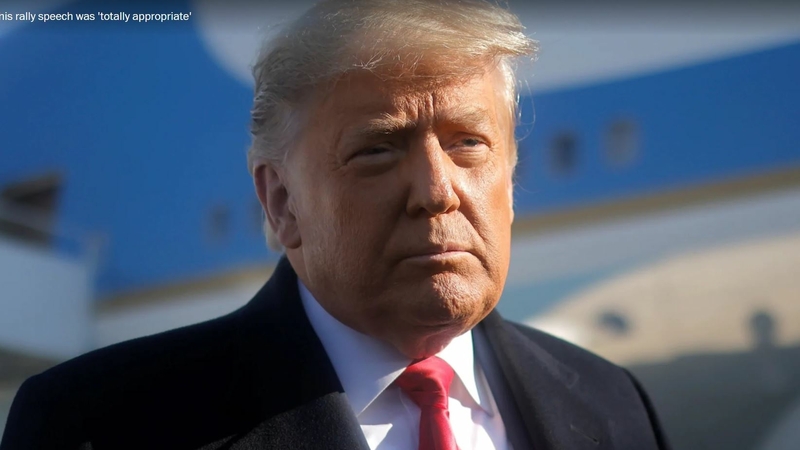
The president denied any culpability in the violent riot that killed two police officers and threatened the lives of Vice President Mike Pence and members of Congress. He said his remarks encouraging throngs of supporters last Wednesday to march to the Capitol in a show of force to pressure and intimidate lawmakers to overturn the election results were “totally appropriate.”

During a visit to a portion of newly constructed border wall here in the Rio Grande Valley, Trump warned against the effort by congressional Democrats to hold him accountable.

“The impeachment hoax is a continuation of the greatest and most vicious witch hunt in the history of our country and is causing tremendous anger and division and pain, far greater than most people will ever understand, which is very dangerous for the U.S.A., especially at this very tender time,” Trump said.

Trump for the first time addressed the calls from Democrats and even some Republicans for Pence and the Cabinet to invoke the 25th Amendment of the Constitution to remove him from office before his term expires.

“The 25th Amendment is of zero risk to me but will come back to haunt Joe Biden and the Biden administration,” Trump said. “As the expression goes, ‘Be careful what you wish for.’ “

Washington is seeing a heightened police and military presence in and around the city, and law enforcement authorities are bracing for future violence in the run-up to President-elect Joe Biden’s inauguration on Jan. 20.

Trump at first hesitated to tell his supporters to stand down when they stormed the Capitol, captivated by the spectacle playing out on live television and entranced by the notion that the rioters were fighting for him, people with knowledge of the events said. And when he issued a video last Wednesday afternoon telling them to “go home,” he also declared his support for them by saying, “We love you.”

Trump changed his tune here in Texas on Tuesday. Reading from a prepared script, the president seemed to instruct his supporters not to rise up in violence. “Now is the time for our nation to heal. And it’s time for peace and for calm. Respect for law enforcement is the foundation of the MAGA agenda,” he said, referring to his “Make America Great Again” campaign slogan.

Earlier Tuesday, Trump deflected a reporter’s question about his “personal responsibility” in the Capitol attack as he boarded Air Force One at Joint Base Andrews for the flight to Texas.

“People thought what I said was totally appropriate,” Trump said, claiming he had seen this view reflected across the media. In fact, he has been almost universally condemned for his remarks, including by many of his Republican allies.

Trump then drew a comparison to racial justice demonstrations last summer and suggested other political leaders were more culpable for violence related to those events than he was for what happened at the Capitol last week.

“If you look at what other people have said – politicians at a high level – about the riots during the summer, the horrible riots in Portland and Seattle, in various other places. That was a real problem, what they said,” Trump said. “But they’ve analyzed my speech and words and my final paragraph, my final sentence, and everybody, to the T, thought it was totally appropriate.”

On Capitol Hill, Trump’s allies differed with that assessment.

A spokesman for House Minority Leader Kevin McCarthy, R-Calif., said he disagreed with Trump that his comments were “totally appropriate.” The spokesman added that McCarthy told House members on Monday that the president bore blame.

A spokesman for Senate Majority Leader Mitch McConnell, R-Ky., declined to comment, and a spokesman for House Republican Conference Chair Liz Cheney, R-Wyo., pointed to her previous comments decrying Trump’s Jan. 6 remarks at the Ellipse.

Republican National Committee Chairwoman Ronna McDaniel said in a statement, “We all bear responsibility to reflect on the rhetoric leading up to the abhorrent violence of last week, including the president.”

Trump has resisted some entreaties to take responsibility for the mob, claiming that he did not know his supporters would literally storm the Capitol and that he did not want them to do so. He has dismissed concerns from his lawyers and other aides that he might have legal liability for his instigation, according to a senior administration official, who, like some others, spoke on the condition of anonymity to share internal details.

Trump continues to say privately that he won the election, another senior administration official said, but is no longer talking about trying to stay in office after his term has ended.

Tim O’Brien, a Trump biographer, said that Trump’s first instinct always has been to lie and attempt to bulldoze his way through any sort of turmoil in his life – and that his response to the Capitol attack has been no different.

“His father trained him to see the world only as winners and losers, and he’s never going to acknowledge he’s a loser,” O’Brien said. “He has no remorse and no regret about any of it. It’s what makes him such a damaged and damaging man. He doesn’t have any of the minimal guilt or regret that a healthy, stable individual has.”

Last Wednesday’s events have quickly made Trump a pariah. He is poised to be impeached for the second time – the first president in U.S. history to achieve that distinction – when the Democrat-led House brings an article of impeachment for a vote this Wednesday. Meanwhile, he has been silenced on social media for messages that instigated violence and shunned by much of corporate America.

A poll released Monday by Quinnipiac University found that Trump’s overall approval dipped to 33%, tied for the lowest the pollster has recorded, with majorities holding him responsible for the Capitol attack and favoring his removal from office or his resignation.

Trump sought to escape this dark reality Tuesday by flying to the U.S.-Mexico border in a bid to burnish his presidential legacy as a crusader against illegal immigration. He toured a portion of the wall on the dusty banks of the Rio Grande, with soaring steel beams forming an imposing monument to his anti-immigrant agenda. Trump brandished a Sharpie and signed his autograph on a piece of the wall.

Trump’s hope is that history remembers him not for encouraging a coup against democracy, but for erecting a physical barrier to keep foreigners out – an apostle of law and order, as he sees himself.

“He’s going to do anything and everything to leave a stamp of ‘Trump was here’ on the national body politic before he heads permanently to Mar-a-Lago,” presidential historian Douglas Brinkley said, referring to Trump’s Florida resort home.

But, Brinkley added, “anything Trump does now, he is a greatly diminished figure. He shrunk into Thumbelina size. He can act big at the wall, but he’s really tiny because of the way he publicly responded to the siege at the Capitol.”

Sen. Lindsey Graham, R-S.C., who traveled with the president Tuesday, spent four hours with him last Friday helping to orchestrate the border wall trip and other events later this week. The objective, Graham said, is to give Trump daily obligations in his final full week as president and to “not look back on the past.”

“We’ve laid out a plan for him, every day to do something,” Graham said.

The Rio Grande Valley continues to be the busiest section of the border for illegal crossings. Although U.S. Customs and Border Protection identified these sections as its top priority for border wall construction, the Trump administration ended up building relatively few miles of new barriers there.

A major impediment to construction efforts in the Rio Grande Valley has been resistance from local landowners. Most of the land the government needed to build new barriers is privately owned. In addition, some of the locations are on river levees, which adds to the expense and difficulty of construction.

Instead, the administration has built hundreds of miles of barrier on public lands farther west, where the government already controlled the land but where there are comparatively fewer migrant crossings than in the Rio Grande Valley.

David Lapan, a former senior official in Trump’s Department of Homeland Security, said the irony of Trump’s border-wall visit Tuesday was that the Capitol attack showed the more serious danger to the country comes from some of his own supporters, not from foreign migrants.

“Rather than the threat being from Mexicans and Central Americans and people that cross the southwest border, we’ve seen evidence that the threat comes from within,” Lapan said. “The only thing he’s done about that threat is encourage it.”

U.S. set to evade jobless recovery curse if vaccines work #SootinClaimon.Com

#SootinClaimon.Com : ขอบคุณแหล่งข้อมูล : หนังสือพิมพ์ The Nation.

U.S. set to evade jobless recovery curse if vaccines work

InternationalJan 13. 2021

By Syndication Washington Post, Bloomberg · Craig Torres

It’s a bold forecast that some say borders on fantasy: Wall Street banks and Federal Reserve officials see powerful employment gains over the next three years that evade the curse of past recessions.

If they’re right, millions of Americans will leap back into the workforce as soon as vaccines against the coronavirus roll out. If they are wrong, the U.S. enters another so-called jobless recovery in which payroll gains lag a pickup in economic growth and production.

The optimists, including Federal Reserve Vice Chair Richard Clarida, say this economic crisis is different because it was caused by something more like a natural disaster than a financial shock. Once the pandemic has subsided, pent-up demand for services, entertainment, and even travel will unleash and companies will hire or rehire.

“The economy has turned out to be more resilient in adapting to the virus,” Clarida said in remarks to the Council on Foreign Relations on Jan. 8. “Most of my colleagues and I revised up our outlook for the economy over the medium term.”

The pessimists are more cautious, pointing to signs that this time around many workers may drop out of the labor force and a huge swath of the jobs lost will never come back. That will force many to learn new skills or relocate, which can take years while the transition falls hardest on those with less income and education.

Low-wage workers are particularly at risk of being left behind, especially if they live in more rural areas, says Harvard professor Raj Chetty.

“There are early signs of a potential jobless recovery from this recession that could be quite persistent geographically,” Chetty said at a conference earlier this month.

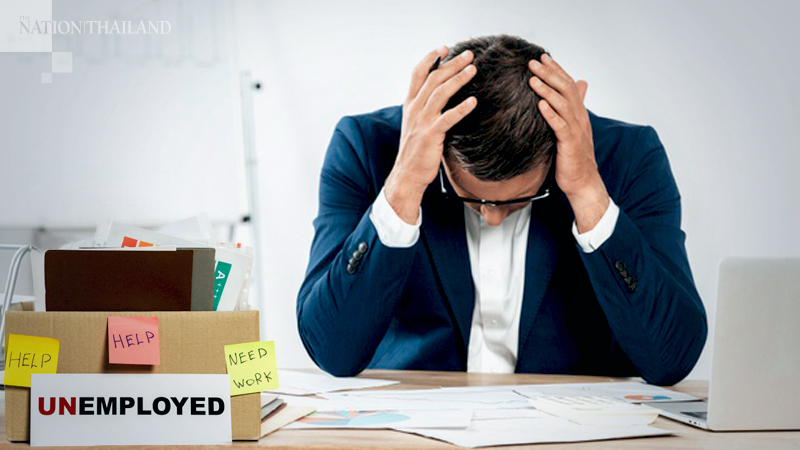
The latest jobs report Friday shows just how important controlling the virus is to future job gains. Non-farm payrolls decreased by 140,000 from the prior month, while the unemployment rate held at 6.7%.

The weakness was concentrated in restaurants, bars and other businesses hit hard by fresh pandemic restrictions. Many of the 3.9 million long-term unemployed — those out of a job for at least 27 weeks as of December — are in these industries. The leisure and hospitality industry, for instance, makes up 22.6% of total long-term unemployment.

There are reasons for hope in this grim data, said Julia Coronado, founding partner at MacroPolicy Perspectives LLC.

“There is plenty of evidence in here that if we can get the virus under control and begin reopening, many of these jobs can come back,” she said, adding that she also worries business-strategy changes could have a lasting impact on some service sector jobs. “The idea that we will flip a switch and have a frictionless recovery in the labor market seems highly unlikely.”

U.S. central bankers expect the unemployment rate to fall to 5% by the end of this year, to 4.2% in 2022, and 3.7% by the end of 2023. That would bring it in the vicinity of the jobless rate in February — of 3.5% — before the outbreak of the virus.Goldman Sachs Group Inc. economists are also positive on the jobs outlook. They expect the unemployment rate to dip to 4.8% at the end of 2021, and to be around pre-pandemic lows by the end of 2023.

One of the things they point to is the prospect for additional government support from the incoming administration of President-elect Joe Biden. He’s set to release his proposals on Thursday, and the broad outlines suggest it could provide a tail wind for employment gains.

Still, what’s unusual about these outlooks is that it just hasn’t happened that way in recent recoveries.Take the 2008-2009 financial crisis. It took about eight years for the labor market to heal. After the 2001 recession, it was nearly six years before the unemployment rate closed in on prior levels.

The unemployment rate is just one measure of labor market health and its decline may not signal a full recovery.

The pandemic has reduced labor-force participation, the share of the working-age population looking for a job or who are employed. People drop out of the labor force to take care of their family, acquire more education or because their skills don’t match the needs of employers.

Those decisions are “sticky,” notes Stephanie Aaronson, head of economic studies at the Brookings Institution, meaning they aren’t reversed quickly.

Chris Fryett is an example. He worked as a software developer for IBM Corp. for 15 years before being let go in June in a reorganization. He thought he would land a job quickly.

But “employers weren’t really talking,” he says, so he decided to go back to school to earn a four-year degree in biology.

Fryett, 51, and many Americans like him, is now out of the labor force, and one of the big questions is when will they come back?

The answer to that depends on the huge uncertainty about whether the pandemic has changed businesses temporarily — or for good. Ashok Bajaj, a well-known Washington, D.C. restaurateur, is one of those business owners who says it could take years for consumers to feel safe again, even with a vaccine.

Bajaj had to close one of his 10 restaurants and let go about 250 staff members. He doesn’t expect to put the same number of seats in his restaurants as he reopens.

“People will revert back to their old habits gradually,” he said. “Is it going to happen in 2021? No, it is not.”

Claudia Sahm, a former Fed Board forecaster who now runs her own firm, says policy should aim at a strong labor market recovery — but it won’t be easy. “You can’t have malaise this long — we are still down 10 million jobs since February — and expect it to unwind this fast,” she says. “This is very different recession and there is massive uncertainty around everybody’s forecast.”