Biden expected to include new child benefit in major new stimulus proposal #SootinClaimon.Com

#SootinClaimon.Com : ขอบคุณแหล่งข้อมูล : หนังสือพิมพ์ The Nation.

Biden expected to include new child benefit in major new stimulus proposal

InternationalJan 14. 2021Joe BidenJoe Biden

By The Washington Post · Jeff Stein, Erica Werner

WASHINGTON – President-elect Joe Biden is expected to include a significant new benefit for children in poor and middle-class households in the coronavirus relief package he will release this week, according to three people speaking on the condition of anonymity to share details of internal deliberations.

Biden officials are likely to include the expansion of an existing tax credit for children as part of a relief package that will also include $2,000 stimulus payments, unemployment benefits and other assistance for the ailing economy – as well as money to fight the coronavirus pandemic and increase vaccine distribution. Biden is expected to formally unveil his proposal Thursday.

Biden transition officials have not disclosed the overall price tag of the package, but it is expected to be more than $1 trillion.

While a final decision has not been made, Biden is expected to push for a proposal similar to his campaign pledge to provide $300 per month to American households for every child under 6, as well as $250 per month for every child between the ages of 6 and 17. That would amount to $3,600 per year for families with one young child and $3,000 per year for families with older children. Biden is also likely to seek to extend the existing child benefit to millions of poor families currently shut out of the program.

The United States has significantly higher rates of child poverty than much of the industrialized world, and Democratic lawmakers in the House and Senate have for years pushed for expansions in child tax benefits in response to that problem. The effort may draw opposition from Republican lawmakers who have balked at the trillions of dollars already authorized by Congress in response to the economic downturn caused by coronavirus.

The potential inclusion of the child benefit emerges as Democratic lawmakers begin to jockey over priorities for the economic relief package, which will be Biden’s first legislative effort as president. Brian Deese, incoming director of the White House National Economic Council, said at an event hosted by Reuters on Wednesday that Biden would be introducing a “robust package.”

Deese said Biden would lay out a two-track plan, starting with a recovery package focused on the coronavirus pandemic, with a larger relief effort to follow.

Democratic lawmakers will be able to advance stimulus legislation through the House and Senate without Republican votes. The incoming White House team is indicating it will pursue a bipartisan relief package first, while not ruling out approving the measure solely with Democratic support, through a budget process known as reconciliation.

Following the initial relief package, Biden’s team is likely to come back later this year for another major legislative effort centered on longer-term economic measures, such as an infrastructure or health-care bill.

Biden’s emergency relief legislation is expected to include an expansion of paid family leave benefits, funding for education and an extension of supplemental federal unemployment benefits, two people familiar with the package said.

Under current law, enhanced federal unemployment benefits of $300 per week are set to expire in the middle of March even though widespread vaccination is unlikely until the fall. Biden’s team is expected to push for the higher unemployment payment to be extended through September, the people said. The size of the weekly benefit Biden will seek remained unclear.

“Our view here, both substantively and strategically, is this is an approach that Democrats and Republicans can and should support,” Deese said of the administration’s imminent relief package.

Biden has sought to embrace proposals with widespread Democratic support, and a major expansion of the existing child tax credit has nearly universal backing among Democratic lawmakers.

House Democrats approved an expansion of the child tax credit last year, led in part by House Ways and Means Committee Chairman Richard Neal, D-Mass. Under legislation written by Sens. Michael Bennet, D-Colo., and Sherrod Brown, D-Ohio, and backed by most Senate Democrats, the child benefit would be primarily claimed by parents who use it to offset their existing tax obligations when they pay taxes. The millions of Americans who do not make enough to file income taxes would be able to claim the credit as a refund by filling out an online form with the IRS, akin to the mechanism used to deliver $1,200 stimulus payments last year.

Brown told reporters earlier this week that he spoke to Biden’s nominee for treasury secretary, Janet Yellen, about creating new bank accounts through the Federal Reserve that would make it easier for Americans to claim the child tax benefit.

“The $250 a month will go to these low-income families every month, year-round — $300 if your child is under five,” Brown said. “Why not have this directly deposited in one of these Fed accounts everybody can have? Just imagine the difference it would make for families who are struggling.”

Some policy experts said it would be better for the Biden administration to provide direct cash payments, rather than a reduction in tax liability, to American parents. Many low-income Americans will receive only a negligible amount from the new benefit once it is deducted off their existing tax burdens, a process that itself will prove more administratively difficult and complex than sending more stimulus payments, said Matt Bruenig, founder of the People’s Policy Project, a left-leaning think tank.

“Trump put his name on checks worth $1,200, and Democrats could be at risk here of appearing to offer way less help in a way, and in a way that nobody notices,” Bruenig said, citing tax cuts passed through President Barack Obama’s stimulus plan during the Great Recession that flew below the radar.

Bennet has defended his approach, citing its political traction and research suggesting it could reduce child poverty by as much as 45%. “I can think of nothing more at war with who we are as Americans than allowing kids to grow up in poverty,” Bennet said about the plan last year.

House set to impeach Trump, with some Republicans joining, but Senate plans unclear #SootinClaimon.Com

#SootinClaimon.Com : ขอบคุณแหล่งข้อมูล : หนังสือพิมพ์ The Nation.

House set to impeach Trump, with some Republicans joining, but Senate plans unclear

InternationalJan 14. 2021A week after the insurrection of the U.S. Capitol, Speaker of the House Nancy Pelosi greets the National Guard troops occupying and surrounding the newly fenced-in Capitol Complex in Washington, D.C., on Wednesday. MUST CREDIT: Washington Post photo by Melina MaraA week after the insurrection of the U.S. Capitol, Speaker of the House Nancy Pelosi greets the National Guard troops occupying and surrounding the newly fenced-in Capitol Complex in Washington, D.C., on Wednesday. MUST CREDIT: Washington Post photo by Melina Mara

By The Washington Post · Mike DeBonis, Seung Min Kim

WASHINGTON – The House prepared to break new ground Wednesday by impeaching a president for a second time, a week before he leaves office, indicting President Donald Trump for inciting a riot with false claims of a stolen election that led to the storming of the Capitol and five deaths.

Unlike Trump’s first impeachment, which proceeded with almost no GOP support, Wednesday’s effort attracted several Republicans, including Rep. Liz Cheney, the No. 3 party leader in the House. The Senate now appears likely to hold a trial after Trump’s departure, an unprecedented scenario with uncertain consequences.

One of the final dramas of a tumultuous presidency, the impeachment unfolded against the backdrop of near-chaos in the House and uncertainty about where Trump’s exit leaves the GOP. Democrats and Republicans exchanged accusations and name-calling throughout the day, while Trump loyalists were livid at fellow Republicans who broke ranks, including Cheney, leaving the party’s leadership shaken.

Most Republicans stood by the president, including Minority Leader Kevin McCarthy, R-Calif. He argued on the House floor that while Trump bears responsibility for the attack on the Capitol, the “snap impeachment,” which came together in a matter of days following the riot, would only “further fan the flames of partisan division.”

McCarthy publicly endorsed censuring Trump for the first time, but the call came too late to serve as an effective alternative to impeachment.

House Speaker Nancy Pelosi, D-Calif., and other Democrats made it clear Wednesday that censure would not suffice in any case, given that Trump orchestrated a mob attack on Congress as it was certifying President-elect Joe Biden’s victory.

“He must go,” Pelosi said. “He is a clear and present danger to the nation that we all love.”

The House is scheduled to take a final vote Wednesday afternoon, one week after the riot and just two days after the impeachment resolution was filed. It was a stunningly swift response from a House that took nearly three months to impeach Trump in 2019 on charges of abuse of power and contempt of Congress.

But with just seven days remaining in Trump’s term, it became increasingly certain Wednesday that Trump would not be removed from office prematurely.

Senate Majority Leader Mitch McConnell, R-Ky., refused a request from Minority Leader Chuck Schumer, D-N.Y., to reconvene the Senate early to launch Trump’s trial. That means it can start the proceedings no sooner than Jan. 19 – a day before Biden’s inauguration.

McConnell, who signaled through advisers Tuesday that he would be open to a possible conviction, said in a memo released as the House debated that there was no chance that a trial could be fairly concluded before the inauguration.

“I have not made a final decision on how I will vote and I intend to listen to the legal arguments when they are presented to the Senate,” he said in the note, first sent to his fellow Republican senators.

Meanwhile, one influential Republican – Sen. Lindsey Graham, S.C. – came out strongly against it.

“It is a rushed process that, over time, will become a threat to future presidents. As to Senate leadership, I fear they are making the problem worse, not better,” he said, not specifying which party’s leaders he was critiquing. “The last thing the country needs is an impeachment trial of a president who is leaving office in one week.”

Moments after McCarthy called on Trump to “quell the brewing unrest,” Trump issued a brief statement seeking to do just that.

“In light of reports of more demonstrations, I urge that there must be NO violence, NO lawbreaking and NO vandalism of any kind,” he said. “That is not what I stand for, and it is not what America stands for. I call on ALL Americans to help ease tensions and calm tempers. Thank You.”

The statement – which was read on the floor by Trump loyalist Rep. Jim Jordan, R-Ohio – came as several Republican lawmakers struggled with their decisions, which McCarthy declined to whip as a matter of party loyalty.

Most Republicans in Wednesday’s debate, like Graham, sidestepped the specific charge against Trump, instead arguing that Democrats were being divisive and that the impeachment was hasty and unnecessary. Several referred to last summer’s racial justice demonstrations to accuse Democrats of hypocrisy, saying those protests were also unruly and violent.

House Speaker Nancy Pelosi greets the National Guard troops occupying and surrounding the newly fenced-in Capitol Complex in Washington on Wednesday. MUST CREDIT: Washington Post photo by Melina Mara

House Speaker Nancy Pelosi greets the National Guard troops occupying and surrounding the newly fenced-in Capitol Complex in Washington on Wednesday. MUST CREDIT: Washington Post photo by Melina Mara

Many GOP members said they were struggling to reconcile their anger at last week’s events, and Trump’s culpability in them, with their fears of escalating violence and threats directed at lawmakers.

“This isn’t a fun time, that’s for sure,” said Rep. David Valadao, R-Calif., who said he was undecided just hours before the vote.

Cheney’s decision in particular emboldened the corps of Republicans breaking with Trump, and numerous Democrats cited her strong statement announcing her decision.

“The President of the United States summoned this mob, assembled the mob, and lit the flame of this attack,” Cheney said in declaring her support for impeachment Tuesday, adding, “There has never been a greater betrayal by a President of the United States of his office and his oath to the Constitution.”

Democrats encouraged the handful of Republicans who came to the floor Wednesday in support of impeachment. When Rep. Dan Newhouse, R-Wash., became the sixth Republican to publicly break with Trump, colleagues across the aisle delivered applause.

“These articles of impeachment are flawed, but I will not use process as an excuse,” he said. “There is no excuse for President Trump’s actions.”

Rep. Jaime Herrera Beutler, R-Wash., another defector, said, “I am not choosing a side – I’m choosing truth. It’s the only way to defeat fear.”

But the great majority of Republicans speaking Wednesday put little distance between themselves and Trump, instead accusing Democrats of embarking on a divisive second impeachment without acknowledging his crusade to overturn the November election or his actions to invite supporters to Washington on Jan. 6 and send them toward the Capitol.

“It’s always been about getting the president, no matter what,” Jordan said of Democrats in a speech on the House floor. “It’s an obsession, an obsession that has now broadened. It’s not just about impeachment anymore. It’s about … canceling the president and anyone that disagrees with them.”

Rep. Andy Biggs, R-Ariz., leader of the pro-Trump House Freedom Caucus who had embraced the “Stop the Steal” effort than culminated in the Jan. 6 rally, warned Democrats that they would only embolden Trump supporters if they vote to impeach him a second time.

“You believe that your hunger will be finally satiated by impeaching this president without completion of his full term of office,” Biggs said. “Instead of stopping the Trump train, his movement will grow stronger, for you will have made him a martyr.”

The scene in the Capitol highlighted how fluid the political landscape has become one week before the departure of a president who has aggressively shaken up politics for four years. Cheney and Jordan were emerging as leaders of what are roughly anti- and pro-Trump factions of the GOP, with the party’s nominal leader, McCarthy, somewhere in the middle.

Democrats, meanwhile, face what is likely to be Pelosi’s last term as speaker without a clear successor and with the narrowest congressional majorities in decades – often a recipe for trouble as voters’ expectations exceed a party’s ability to deliver.

The most immediate fallout from the impeachment effort appears likely to occur inside the Republican Party, as several Trump loyalists called for Cheney to immediately resign her leaderships position. A petition for her resignation circulated among GOP offices in the Capitol as hard-right members seethed over her role in backing Trump’s ouster.

Cheney on Wednesday insisted she would not resign.

“I’m not going anywhere,” she told reporters, repeating that impeachment represented a “vote of conscience” for lawmakers. “Our nation is facing an unprecedented, since the Civil War, constitutional crisis. That’s what we need to be focused on. That’s where our efforts and attention need to be.”

Democrats, meanwhile, prepared for a new governing reality – with Biden assuming the presidency in a week and Democrats taking the narrowest of Senate majorities, with Vice President-elect Kamala Harris poised to break 50-50 ties.

With some Democrats openly floating delaying transmission of the impeachment measure to allow the Senate to confirm at least some of Biden’s Cabinet nominees, Pelosi on Wednesday did not respond to questions about her plans.

Some Republicans predicted that their internal bloodletting over Trump would soon be swept aside once Democrats take unified control in Washington.

“We’re going to get through this, and we’re going to be united, because Speaker Pelosi is going to bring some very dangerous policy to the House floor that’s frankly going to divide them and unite us,” said Rep. Richard Hudson, R-N.C., a junior member of the party leadership.

Members of both parties expressed awe at how quickly the process of impeaching Trump moved over the past week. The previous Trump impeachment – rooted in his efforts to leverage foreign aid to Ukraine in an effort to dig up dirt on Biden and his son, Hunter – unfolded over months, with dozens of closed-door interviews and open committee hearings.

“Today, we don’t need a long investigation to know the president incited right-wing terrorists to attack the Congress to try to overturn constitutional government,” said Rep. Zoe Lofgren, D-Calif., who has participated in every presidential impeachment since Richard M. Nixon’s as a lawmaker or aide. “The actions were in public – plain as day. His actions are the most serious offense against our Constitution and our country. They are impeachable acts.”

For Joe Biden, life and destiny converge to offer a new challenge #SootinClaimon.Com

#SootinClaimon.Com : ขอบคุณแหล่งข้อมูล : หนังสือพิมพ์ The Nation.

For Joe Biden, life and destiny converge to offer a new challenge

InternationalJan 14. 2021Biden speaks during the Democratic National Convention, in Wilmington, Del., in August. MUST CREDIT: Washington Post photo by Salwan GeorgesBiden speaks during the Democratic National Convention, in Wilmington, Del., in August. MUST CREDIT: Washington Post photo by Salwan Georges

By The Washington Post · Matt Viser

The first time Joe Biden was sworn into federal office, he stood in a hospital chapel. His two young sons were recovering from a car accident that killed Biden’s wife and daughter and the newly elected senator had refused to leave his boys to travel to Washington. So the secretary of the Senate came to Wilmington to administer an oath that is so rarely allowed outside of the U.S. Capitol that it took a Senate vote – passed unanimously – to allow it to occur. Biden’s oldest child, almost 4-year-old Beau, was wheeled into the packed room on a stretcher, his left leg in traction and suspended in the air, to watch the ceremony.

https://www.washingtonpost.com/video/c/embed/b30e57ec-124e-4e75-8ffa-7ce306e839c0?ptvads=block&playthrough=false

Biden gave brief remarks in which he questioned whether he would continue serving after six months, much less run for another six-year term.

“Lord God, the whys of life and destiny are often hard,” the Rev. Justin Diny, headmaster at Biden’s high school, said that morning.

Now, more than 48 years later, the hard whys of life and destiny have rewarded Biden – and placed him in another perilous moment.

After building one of the deepest résumés in American political history, with 36 years in the Senate and eight years as vice president to Barack Obama, he will be sworn in again on Jan. 20. This time, the ceremony will take place in Washington. This time, it comes amid not a personal tragedy but a national one. This time, it will be for the office he sought two times before, and only won this time after a roller coaster campaign against two dozen Democrats and a Republican incumbent who fought for months to deny Biden the title he always wanted: president.

There are few parallels to Biden’s long record in American history. He served in the Senate for longer than all but 17 senators in American history. He has held office with 15 percent of all senators who ever served – and with one-third of the current U.S. Senate.

He discussed anti-busing legislation with Jimmy Carter, Supreme Court nominees with George H.W. Bush. He ushered in the crime bill with Bill Clinton and approved of the Iraq War under George W. Bush.

He has seen political stars rise and giants fade into the history books. And now the man who was once one of the nation’s youngest senators – turning 30, the required minimum age of a senator, a few weeks before being sworn in – enters the White House as the nation’s oldest president.

But as he achieves a lifelong goal, he faces challenges more daunting than many of his 44 predecessors. The coronavirus pandemic rages on, with tens of millions infected and hundreds of thousands dead, and will dominate the early months of Biden’s presidency as he attempts to accelerate the pace of vaccinations. The economic devastation over the past year has exacerbated the nation’s yawning gaps in income inequality, with the stock market soaring to new heights as job losses are forcing poorer Americans to miss rent payments and endure long lines at food banks.

Biden will confront an existential climate threat, a domestic racial reckoning, and renewed questions about America’s role on the world stage. The outgoing president has ensured that this transition has been among the most volatile in American history, and a mob encouraged by President Trump stormed the Capitol in an attempt to overturn the election two weeks before the inauguration.

One of his oldest friends and a longtime staffer, Ted Kaufman, likes to say of Biden, “He’s the luckiest person I have ever met in my entire life. And he’s also the unluckiest person I have ever met in my life.”

His life has been defined by overcoming obstacles. As a child, he had a debilitating stutter that left him terrified of speaking in public, working so steadily to overcome it that years later he would be described by a fellow New Castle County councilor as “the only man he knew who could give an extemporaneous 15-minute speech [about] the underside of a blade of grass.”

The car crash that killed his wife and daughter made him question his purpose and his life. He has talked, though not often, about how it led him to contemplate suicide. His son Beau’s death in 2015 from brain cancer led him to opt out of a 2016 presidential campaign, and he still grows emotional at the mention of him.

Both circumstances would cultivate in Biden a public empathy, which would prove to be a key political attribute as he sought the presidency of a nation in despair.

Still, his presidential campaign this time around seemed as doomed to failure as his first two tries. His party flirted with more liberal candidates, turning toward a deep and diverse field much fresher than the septuagenarian former vice president. The early contests and his occasional verbal miscues seemed to prove that he was out of step, with decisive losses the result.

“He was left by the side of the road after New Hampshire,” said Kate Bedingfield, one of his closest campaign advisers, who will be the White House communications director.

But while Biden never anticipated the drubbing he was dealt, he always maintained that his candidacy would take off once the contest arrived in more representative states – which is what happened after he resoundingly won South Carolina, followed by almost all of the Super Tuesday states. And then, suddenly, the nomination was his.

“Over the course of his career, he has been both personally and politically resilient,” Bedingfield said.

The key to understanding Biden is to understand his outlook on the Senate, where he spent most of his career. It’s the place where the fathers of the institution – there were no women when he arrived – draped their arms around him, helping him heal from his grief and find a new purpose. They taught him lessons about compromise, and about not questioning someone else’s motives. They operated in a world where civil consensus was the highest goal, even if that notion now seems quaint in an institution where partisanship has been weaponized.

“The United States Senate has been my life, and that is not a hyperbole,” he said during a farewell address before becoming vice president in 2009. “It literally has been my life.”

To this day, when speaking with former Senate majority leader Harry M. Reid, he almost always mentions, “We’re Senate guys.”

“It becomes who you are,” Reid said. “Like you played for the Yankees or the Dodgers. It’s who you are.”

Those lessons also are likely to inform Biden’s approach to governing. He has proclaimed his trust in institutions, and he has resisted liberal pressure to upend norms, like expanding the Supreme Court or eliminating the Senate filibuster. In his career, he has been less a leader who rallies the masses and shifts public opinion than one who identifies where public opinion is heading, stakes a middle ground, and gives it prominent voice.

“The magic of Joe Biden is that everything he does becomes the new reasonable,” former presidential candidate Andrew Yang said last year while reminiscing about their Democratic primary contest.

But one major unanswered question, one which could define his presidency, is how much room remains for any type of consensus-building. The modern-day Senate has changed dramatically, and whether Biden can still master it will have far-reaching implications for his ability to pass any of the ambitious legislation he is preparing.

For some aides the future has called to mind a bit of gallows humor Obama and Biden used to engage in as they faced an economic collapse that began during the 2008 campaign and shook the transition and administration.

“They used to joke with each other: Is it too late to get out of this thing?” said Anita Dunn, a senior adviser. “That sentiment kind of came back a little jokingly both as the depth of the crisis and what the next president is going to face, how deep the hole dug by the present administration has become.”

Biden ran as a cautious candidate in what seemed like an incautious time. He ran as an empathetic person at a time when the nation’s politics run coarse and caustic. At what seemed like a revolutionary moment, he ran as a restorative candidate. He ran as the anti-Trump, leaving in question exactly how potent his support will be once the divisive ex-president is out of office.

At moments, the candidate who has played the long game seemed dismissive of actually wanting the job he was running for.

“Could I die happily not having heard ‘Hail to the Chief’ play for me?” Biden asked in Iowa, at a time when his rivals were drawing the massive crowds that he lacked. “Yeah. I could. That’s not why I’m running. The irony is the longer I’ve been around, the less that appeals to me. I’ve watched up close and personal what eight years in the White House is like. And I watched it. And it’s not something that I can hardly wait – to move in the White House. But I tell you what: I want to make those decisions because I think I can move the country in a direction that can set us on a path for the next 30 years to lead the world.”

Biden’s self-deprecating humor and flashy smile has always masked the healthy dose of ambition that exists underneath. A nun once recalled a 7-year-old Biden writing a paper declaring he wanted to be president. It is a dream he has pursued for decades.

This time, the moment met him in a way it hadn’t during past campaigns. The man who believes in fate was right for a moment. When Trump’s allies derisively referred to Biden as “Mister Rogers” after one televised town hall, they hit at Biden’s natural appeal. After all, his campaign was about the comfort of the familiar and unthreatening, one which would return the country to tying-its-shoes basics.

“It’s a reaffirmation of his belief in America and that we are better than we have been acting,” Valerie Biden, his sister and one of his closest confidants, said in an interview shortly after the election. “In America we often get the person that we need for the moment. We had Lincoln during the Civil War and FDR after the Depression. My brother is right for these challenges we face today. He knows how to heal. And Joe’s life is about healing and recovery – and that’s what we need as a country.”

The Biden who will be inaugurated Wednesday is the father of four, two living and two dead.

He was mourning his daughter Naomi when he was sworn in for his first Senate term, and in 2015 he suffered the death of his eldest son, Beau. In life and death, Beau has become Biden’s totem for a life of integrity, and Biden has spoken often of him as the inspiration of his latest campaign.

In the two and a half months since Election Day, Biden has alluded several times to Beau, reflecting on both the grief of the past and his hopefulness for the future and intertwining his feelings with those of the wounded country he will now lead.

During his victory speech on Nov. 7, the night he was projected as the presidential winner, Biden said he had been thinking about the hymn “On Eagle’s Wings,” and the faith that sustains him. The hymn, he said, gives him solace – and he hoped it would give a suffering country solace, too.

What Biden did not say was that he and an ailing Beau used to sit on his dock and watch an eagle soar past. The night his son died, Biden watched the eagle circle several times before flying away.

Now, when Biden steps to a lectern, he will be greeted by a presidential seal. It features as its most prominent symbol a bald eagle, a reminder both of what he has accomplished and what he has lost, the whys of life and destiny.

U.S. vaccine shift stirs fresh unease as 128 million join line #SootinClaimon.Com

#SootinClaimon.Com : ขอบคุณแหล่งข้อมูล : หนังสือพิมพ์ The Nation.

U.S. vaccine shift stirs fresh unease as 128 million join line

InternationalJan 14. 2021Syringes with doses of the Pfizer-BioNTech covid-19 vaccine while pharmacists move through the Brooklyn Center for Rehabilitation and Healthcare nursing home to distribute them to residents in the Brooklyn borough of New York on Jan. 5, 2021. MUST CREDIT: Bloomberg photo by Eric Lee.Syringes with doses of the Pfizer-BioNTech covid-19 vaccine while pharmacists move through the Brooklyn Center for Rehabilitation and Healthcare nursing home to distribute them to residents in the Brooklyn borough of New York on Jan. 5, 2021. MUST CREDIT: Bloomberg photo by Eric Lee.

By Syndication Washington Post, Bloomberg · Angelica LaVito, John Tozzi

The U.S. government wants states to offer vaccines to millions more Americans as covid-19 infections continue to soar, in a bid to bolster an immunization campaign that’s off to a rocky start.

In recommending that states start immunizing all residents 65 and older, along with all those between 16 and 64 with medical conditions that make them more vulnerable to serious disease, U.S. health officials are clearing a path for about 128 million more Americans to be vaccinated.

About 10 million people have received the first dose of a covid vaccine since immunizations started in late December, according to Bloomberg’s vaccine tracker. The rapid shift in strategy has raised worries that an accelerated rollout, for which many states may not be ready, could lead to new shortfalls down the road.

“The first couple of weeks it was all: Why aren’t they all done, why aren’t you getting them out fast enough?” Maryland Gov. Larry Hogan said in a briefing Tuesday. “The next story is going to be: There’s hundreds of thousands of people waiting for the vaccines and we don’t have any.”

Expanding eligibility is intended to speed up vaccination by increasing demand and giving providers more flexibility, resulting in fewer wasted doses. Yet such a strategy with supplies still limited risks exacerbating the frustration and chaos already playing out in some states. Striking a balance between immunizing quickly and establishing confidence in the U.S. vaccination campaign will be crucial in the weeks ahead.

In a briefing Tuesday, Health and Human Services Secretary Alex Azar also urged states to open up vaccination to younger people with medical conditions that put them at higher risk of severe illness from covid-19. States can ultimately decide how to prioritize the shots they receive.

If the entire country follows the guidelines Azar recommended, another 128 million Americans would immediately become eligible for vaccinations, according to population estimates from the Centers for Disease Control and Prevention. That would expand the pool to 58% of those 16 and older in the U.S.

Demand likely will outstrip supply if states expand immunization to these groups. The U.S. has made about 25 million doses of the vaccine available so far, Azar said, enough to give the first shots to priority groups of health-care personnel and long-term care residents. Both of the vaccines currently available require two shots.

Some states have already expanded vaccination to seniors and other priority groups. Scenes of older people camped out in Florida awaiting a vaccine have become a symbol of the chaos that can ensue when large groups of people suddenly become eligible.

Hogan, the Republican governor of Maryland, said he never wants to see images like those in his state. The current system is slow, but it’s working, he said, and shouldn’t be thrown out given the limited supply.

“I don’t want to lie to people and open the floodgates,” Hogan said.

Other states are embracing expansion. In New York, Gov. Andrew Cuomo said Tuesday in a briefing that the state is opening vaccinations to those 65 and older, as well as those who have compromised immune systems. Hospitals must still prioritize health-care workers and New York City must do the same for essential workers, he said.

Colorado Gov. Jared Polis said infrastructure is already in place to make vaccine available to people ages 65 and older, and the state will start doing so in the next few weeks. “It’s not a major change for us,” Polis said during an online news briefing. “We’re already doing 70 and up. Running the numbers, that’ll add maybe 20-to-30% to that group.”

The number of doses available increases by a few million each week. The Trump administration on Tuesday also announced it will release second doses of the vaccines it had been holding back to ensure people would receive the full course.

Azar said the administration is confident in the manufacturing and quality control processes and therefore feels comfortable shipping shots as they become available. Others disagreed, citing concerns about future supplies.

The U.S. has spent billions of dollars to secure initial supplies of 200 million shots each from Moderna and Pfizer. Those doses are scheduled to arrive through June and July. Vaccines from other manufacturers still in trials may further boost supply in the months ahead. Despite the supply commitments, health systems and state officials have been frustrated with week-to-week uncertainty about how many doses they’ll receive.

“There’s nothing to make me think that we have a supply chain right now that allows us to be more aggressive in the long term,” said Marcus Plescia, chief medical officer of the Association of State and Territorial Health Officials. “We can get a few more people vaccinated because we’ve got a surplus right now, but that surplus is going to dry up.”

Officials Tuesday stressed their view that the federal government’s responsibility is to get shots and supplies to providers. Once they’re out, it’s the responsibility of the states to make sure they get into arms.

Federal leaders suggested local officials start sending shots to pharmacies and other vaccination sites where people can more easily access them than in hospitals. Louisiana, for example, has started immunizing people in pharmacies across the state.

Operation Warp Speed plans to start allocating doses to states based on their vaccination rates, in a shift from its current policy of distributing shots based on population size, Azar said. The new policy would take effect in two weeks so states have time to prepare, he said, meaning the incoming Biden administration would be in charge of implementing it.

Carlos del Rio, executive associate dean at the Emory University School of Medicine, said he supports the vaccination of those 65 and older. Yet simply making the vaccine available is not enough, he said, as states must have funding for distribution.

“That’s a little bit like saying we’re going to send the states bullets and now it’s up to the states to hire soldiers, to find rifles, to train the army and then you can fight a war. You wouldn’t like to be fighting a war like that, right?” he said. “This is the same thing. The Trump administration is releasing bullets to the states, but that’s not going to get us to winning the war.”

Sweden finally tightens covid measures after being slammed by virus #SootinClaimon.Com

#SootinClaimon.Com : ขอบคุณแหล่งข้อมูล : หนังสือพิมพ์ The Nation.

Sweden finally tightens covid measures after being slammed by virus

InternationalJan 14. 2021Employees wear protective face masks inside a store in Gothenburg, Sweden, on Dec 19, 2020. MUST CREDIT: Bloomberg photo by Fredrik Lerneryd.Employees wear protective face masks inside a store in Gothenburg, Sweden, on Dec 19, 2020. MUST CREDIT: Bloomberg photo by Fredrik Lerneryd.

By Syndication Washington Post, Bloomberg · Rafaela Lindeberg, Niclas Rolander, Love Liman

After taking arguably the world’s softest approach to handling the coronavirus pandemic, Sweden is tightening the screws.

As of Sunday, the government of Premier Stefan Lofven can fine and shutter businesses that fail to follow restrictions such as caps on visitors, as well as restrict private gatherings, under a new law that runs through September. It’s a departure from relying mainly on recommendations and trusting people to follow them. With the health-care system under increasing duress and deaths surging, some say it was too little too late.

“Like many places Sweden has learned about the virus the hard way,” said William Hanage, associate professor of epidemiology at Harvard’s School of Public Health in Boston, who has followed the country’s strategy closely. “Sweden was too slow. There was ample evidence from the spring, in Sweden and elsewhere, of what could be expected in the autumn and winter if the policy was not changed and these are the consequences.”

While pursuing its unusual strategy, Sweden questioned other nations’ decisions to lock down. Its path to mandatory restrictions has left the Nordic country with more than three times more virus deaths per capita than Denmark, the closest regional peer in terms of fatalities. Confidence in the government has dwindled, and been compounded by top officials — including Lofven himself — flouting their own rules. Even King Carl XVI Gustaf called the nation’s response a failure.

As in the rest of the world, the debate in the pandemic era has centered around balancing people’s health against the fallout of shutting down economies. Sweden’s economy has held up better than most, while deaths now exceed 9,600.

Top epidemiologist Anders Tegnell, who in June labeled countries that opted for strict lockdowns as “mad,” said the pandemic law shouldn’t be seen as a U-turn, but rather an extension of what’s already been done.

“We’re still mainly working with voluntary measures for individuals,” he said in an interview. “And we’re mainly working with regulating different kinds of agencies, different kinds of shops were regulations are needed for them to fulfill their obligations.”

One of Tegnell’s main detractors, Professor Bjorn Olsen of Uppsala University, said “reality has caught up with the Public Health Agency.”

“They have been extremely stubborn in holding on to the strategy without listening or doing any external analysis,” he said.

Anders Litzen lost his 71-year-old mother Agnetha in the spring, sitting by her side for her last 16 hours in full protective gear. The 42-year-old, who lost his job because of the pandemic and started working as a runner at a hospital, said the government’s communication has been too vague.

“‘My mother, and I think most Swedes, didn’t really take it seriously,” Litzen said. “I can’t say that what Sweden did is right or wrong, but from a personal perspective I think when you want to send a message, it has to be strong and clear.”

Lofven and health officials, facing early criticism including from President Donald Trump, acknowledged in April that the country hadn’t succeeded in protecting its elderly in nursing homes. A government-appointed commission recently reached a similar conclusion.

Sweden made “good decisions” in moving toward stricter measures, Mike Ryan, head of the World Health Organization’s emergencies program, told reporters on Monday.

“It’s an example of how difficult it is to sustain public health and social measures that are purely determined by the individual’s willingness or determination to carry out those measures,” Ryan said. “It somehow tells us that at the beginning of 2021 how difficult, how challenging that environment is.”

The Nordic region’s largest economy has weathered the crisis better than most Western nations, with its factories less affected by supply disruptions in the latter part of 2020.

Differences in lockdown strategies between the Nordic and Baltic countries were offset by their common dependence on manufacturing, so they’ve benefited from a recovery of global trade, according to SEB AB Chief Economist Robert Bergqvist. “When we summarize 2020, the industry has helped us to withstand some of the downturns seen in many other countries.”

Low debt levels also allowed Sweden to unleash fiscal stimulus, supported by the Riksbank’s asset purchase program. While the pandemic law may require additional stimulus measures, “in an international perspective, Sweden will still continue to have very strong central government finances,” Danske Bank said in its Nordic Outlook last week.

Lofven has seen voter confidence erode as criticism of the government’s response mounted. It didn’t help that he was spotted among Christmas shoppers in a mall, his finance minister was caught renting skis at a resort and the top official running the corona-virus response team took a Christmas trip to the Canary Islands, all of which went against official guidelines. And the opposition isn’t pulling punches.

“Infection transmission won’t be stopped by a serious tone at a press conference,” main opposition leader Ulf Kristersson told a national security conference on Monday, lambasting the government for “a lack of leadership, bad preparations and unclear division of responsibilities.”

Support for the Social Democrats fell 2 percentage points to 23%, while Kristersson’s Moderate Party edged ahead with 23.2% voter backing to become Sweden’t biggest party in the latest Aftonbladet/Demoskop poll. There’s no imminent threat to Lofven’s job given the political system.

The recent response has been “a partial turnaround” that has fallen short of what’s needed, such as mandating face masks and closing more schools, Olsen of Uppsala University said. Primary schools remain open.

“Now we should be very busy vaccinating, but a lot of effort is going into just keeping a lid on transmission so that it doesn’t boil over,” Olsen said. “It’s constantly half-hearted, limping efforts. What many other countries would have done in this situation would be to close down entirely.”

Sweden had inoculated at least 80,000 people by Jan. 10, or 0.8% of its population, health authorities said Tuesday. That’s below Denmark’s 2% tally, based on the Bloomberg Covid-19 Vaccine Tracker.

“At this stage of the crisis, I think it will be less about lockdown strategy and more a matter of vaccine strategy,” SEB’s Bergqvist said.

Litzen, who decided to help in the pandemic fight after losing his mother, says tougher restrictions should have taken the place of voluntary recommendations earlier. “When it comes to recommended regulations, it’s very naive to think that a whole country can follow through unless you make it some sort of law.”

U.S. core consumer-price gauge cooled slightly from prior month #SootinClaimon.Com

#SootinClaimon.Com : ขอบคุณแหล่งข้อมูล : หนังสือพิมพ์ The Nation.

U.S. core consumer-price gauge cooled slightly from prior month

InternationalJan 14. 2021Shoppers walk through the Easton Town Center Mall in Columbus, Ohio, on Jan. 7, 2021. MUST CREDIT: Bloomberg photo by Luke Sharrett.Shoppers walk through the Easton Town Center Mall in Columbus, Ohio, on Jan. 7, 2021. MUST CREDIT: Bloomberg photo by Luke Sharrett.

By Syndication Washington Post, Bloomberg · Reade Pickert

A key measure of prices paid by U.S. consumers cooled in December from a month earlier as slack in the labor market and muted demand helped keep inflation pressures tame.

The core consumer price index, which excludes volatile food and energy costs, increased 0.1% from the prior month after a 0.2% gain in November, a Labor Department report showed Wednesday. Compared with a year earlier, the core CPI rose 1.6%.

Buoyed by higher gasoline prices, the broader CPI advanced 0.4% from a month earlier and 1.4% from December 2019. Both the core and overall CPI month-over-month increases matched the median estimates in a Bloomberg survey of economists.

The S&P 500 was little changed in early trading, the yield on the 10-year Treasury note eased and the dollar was slightly firmer.

The report shows inflation remains well below the Federal Reserve’s goal and reflects an economy still grappling for momentum amid a resurgent pandemic. At the same time, demand is gradually picking up for some industries, while widespread vaccinations and additional fiscal stimulus have the potential of generating some pricing power in the coming months.

Most economists — and the Fed — expect inflation to remain relatively tame this year, though inflation expectations among market participants have steadily crept higher.

Proponents argue additional stimulus and pent-up consumer demand for goods and services in industries most impacted by the coronavirus will help drive up prices. Conversely, many economists argue any potential acceleration in the coming months will likely prove temporary amid a gradually recovering job market.

As for the Fed, policy makers have signaled they plan to keep interest rates near zero for quite some time. And even if price pressures build, the central bank’s new inflation target allows for periods when inflation can moderately overshoot 2% — as measured by the Commerce Department’s personal consumption expenditures price index.

However, the path of U.S. inflation metrics could have an impact on the trajectory of monetary policy.

For all of 2020, the CPI increased 1.4%, the smallest gain since 2015, while the 1.6% advance in the core measure was the smallest since 2014.

Highlights from the report:

– Gasoline prices jumped 8.4%, most since June, accounting for more than 60% of the increase in overall CPI.

– Food costs rose 0.4%, also the most since June, after a 0.1% decrease a month earlier, reflecting higher prices for groceries and meals out.

– Cost of shelter edged up 0.1%; medical-care services fell 0.1%, the third straight decline.

– Rent of primary residence rose 2.3% from December 2019, the smallest advance since September 2011.

– Prices of apparel rose 1.4%, the most since June; used-vehicle costs dropped for a third month, though were up 10% from December 2019.

– A separate report showed inflation-adjusted hourly earnings increased 3.7% from a year earlier, the largest gain since June

YouTube suspends Trump, days after Twitter and Facebook #SootinClaimon.Com

#SootinClaimon.Com : ขอบคุณแหล่งข้อมูล : หนังสือพิมพ์ The Nation.

YouTube suspends Trump, days after Twitter and Facebook

InternationalJan 14. 2021

By The Washington Post · Gerrit De Vynck, Rachel Lerman

YouTube suspended President Donald Trump from uploading new videos to his official account for at least a week, making the decision days after fellow social media giants Twitter and Facebook shut the president out of his accounts because of concerns his posts will incite violence.

The Google-owned video site was the last of the major social media networks to suspend Trump after the attack on the U.S. Capitol. It said it removed a video uploaded Tuesday for violating its policies and “in light of concerns about the ongoing potential for violence.”

YouTube wouldn’t confirm which video broke its rules, but a review of archived versions of its site suggests it was a clip from a news conference Trump gave to reporters where he said his comments to supporters before the Capitol attack were “totally appropriate.”

In the same clip, which is available on C-SPAN, Trump said social media companies were making a “catastrophic mistake” and doing a “horrible thing for our country” by penalizing him.

The White House did not respond to a request for comment.

Last Thursday, Facebook said it would cut the president off indefinitely, “for at least the next two weeks.” Facebook COO Sheryl Sandberg later told Reuters that the company had no plans to reinstate the president’s account. YouTube took down one video from the president’s account. A day later, Twitter banned him.

YouTube’s decision came after a weekend of criticism that the company hadn’t acted strongly enough against the president. The newly-formed Alphabet Workers Union, a collection of Google employees and contractors, put out a statement saying YouTube’s actions in taking down just one video were “lackluster, demonstrating a continued policy of selective and insufficient enforcement of its guidelines.”

YouTube has a three-strike process when deciding which channels to take down which directly affects the speed at which it moves. Facebook also has a strike system, but big, complex decisions often roll up directly to Sandberg and CEO Mark Zuckerberg. At Twitter, decisions are made by the company’s policy team and signed off on by CEO Jack Dorsey.

YouTube’s process can seem “frustratingly slow,” but the company actually has more of a thought-out process than Twitter and Facebook do, said Jim Steyer, CEO and founder of Common Sense Media, which advocates for safer technology for children. The suspension of Trump is a positive first step, but the ban should be made permanent, he said.

“I think all the platforms missed this one,” Steyer said, saying they should have acted earlier to crack down on misinformation Trump shared.

It’s not the first time YouTube specifically has come under fire for moving too slow.

In June 2019, gay rights activists and other progressive groups lambasted the company for not taking down videos by YouTuber Steven Crowder in which he used homophobic language against another popular YouTuber, journalist Carlos Maza. The company said Crowder’s comments were “hurtful” but did not break its rules against promoting hatred. “Opinions can be deeply offensive, but if they don’t violate our policies, they’ll remain on our site,” the company said in a statement at the time.

A day later, YouTube changed its mind, deciding to block Crowder’s ability to make money from ads on his videos, but not taking them down completely.

YouTube differs from Facebook and Twitter in sharing advertising revenue with creators. In many cases, the company has chosen to just turn off the flow of cash to videos called out as harmful. It’s also tweaked its algorithm so that those videos don’t get as much attention as others. But banning videos and creators altogether is a much more rare.

The resistance to removing videos completely has helped allow YouTube to fly under the radar as other social media sites take the heat for allowing misinformation to proliferate on their sites, said Harvard Law School Lecturer Evelyn Douek.

Twitter CEO Jack Dorsey and Facebook CEO Mark Zuckerberg have become familiar faces on Capitol Hill where they were called to testify in front of Congress about tech’s power and role in misinformation last year. Google CEO Sundar Pichai has testified as well, but YouTube CEO Susan Wojcicki escaped the grilling.

YouTube is often mentioned as an afterthought, even as social media companies have been pushed into a harsher spotlight for the lies that spread on their sites.

Researchers tend to focus on text-based Twitter and Facebook, Douek said, because video can be more time consuming and labor intensive to sift through. That doesn’t mean there is less misinformation floating around on YouTube, and in fact the company has been accused of allowing people to get radicalized on the site by promoting conspiracy theory videos, she added.

YouTube’s policy of laying out rules and using a strike-system to enforce them is better than ad hoc decision-making by executives, Douek said.

“My view of content moderation is companies should have really clear rules they set out in advance and stick to, regardless of political or public pressure,” she said. “We don’t just want these platforms to be operating as content cartels and moving in lockstep and doing what everyone else is doing.”

On Wednesday, Google also said it wouldn’t allow political ads until at least Jan. 21, the day after the inauguration of President-Elect Joe Biden. The company paused political ads in the week after the November presidential election as well, following a policy Facebook had laid out earlier.

The strike against Trump’s account means he can’t add new videos for a minimum of seven days, YouTube said in a Twitter post late Tuesday. The company will also disable comments on his channel indefinitely. A second strike within the next three months would net Trump a two-week suspension, and a third strike would result in a ban, according to YouTube’s policies.

Trump’s YouTube account is still visible and past videos can still be viewed.

The suspensions from YouTube, Facebook and Twitter effectively cut the president off from his usual social media megaphones. Niche right-wing social media platform Parler, which was growing in popularity with conservatives, was knocked offline Monday after Amazon pulled its technical support.

(Amazon founder and chief executive Jeff Bezos owns The Washington Post.)

Facebook and YouTube could allow the president to access his account again as early as next week.

Trump’s animosity toward tech companies has become particularly heated in the past year after Twitter and Facebook started labeling his posts. He has repeatedly called for Section 230, an Internet liability shield law, to be revoked, presumably to penalize the companies.

Section 230 shields tech companies from being sued over what their users post on those sites. Politicians on both sides of the aisle generally agree the law needs to be reformed, but open-Internet advocates say revoking it could have a chilling effect on free speech on the Web.

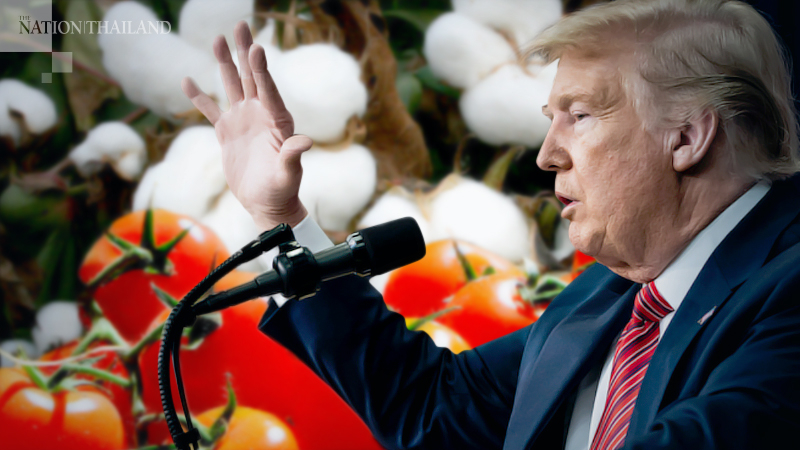
Trump administration bans imports of cotton and tomatoes from China’s Xinjiang region, citing forced labor #SootinClaimon.Com

#SootinClaimon.Com : ขอบคุณแหล่งข้อมูล : หนังสือพิมพ์ The Nation.

Trump administration bans imports of cotton and tomatoes from China’s Xinjiang region, citing forced labor

InternationalJan 14. 2021

By The Washington Post · Jeanne Whalen, Eva Dou

WASHINGTON – The Trump administration on Wednesday issued a sweeping ban on imports of cotton or tomato products from China’s Xinjiang region, saying it had reviewed evidence of forced labor in the region.

The move is the administration’s latest effort to punish China over what Western officials and human-rights groups call the country’s campaign of repression against the Muslim Uighur population of Xinjiang, which has included the population’s mass detention in camps.

The ban, which covers everything from cotton apparel to canned tomatoes, will affect a wide array of U.S. importers. Xinjiang accounts for almost one-fifth of global cotton production, according to official figures and calculations by The Washington Post.

U.S. Customs and Border Protection said Wednesday it would immediately start detaining cotton and tomato products produced in the region, “based on information that reasonably indicates the use of detainee or prison labor and situations of forced labor.”

The agency said it conducted an investigation that revealed working conditions including “debt bondage, restriction of movement, isolation, intimidation and threats, withholding of wages, and abusive living and working conditions.”

“DHS will not tolerate forced labor of any kind in U.S. supply chains. We will continue to protect the American people and investigate credible allegations of forced labor, we will prevent goods made by forced labor from entering our country, and we demand the Chinese close their camps and stop their human rights violations,” Ken Cuccinelli, acting deputy secretary of the Department of Homeland Security, which oversees Customs and Border Protection, said in a statement.

The ban includes textiles, tomato seeds, tomato sauce and other goods made with cotton and tomatoes. China’s embassy in Washington, D.C., didn’t immediately respond to a request for comment.

In a statement, the American Apparel & Footwear Association, the National Retail Federation and two other industry groups said they “remain outraged” by reports of forced labor in the region and “have long made eradicating forced labor in our supply chains a top operational and public policy priority.”

“We look forward to working with the U.S. Customs and Border Protection (CBP) to make sure enforcement is smart, transparent, targeted, and effective,” the groups said. “We urge CBP to share with industry the evidence gathered, and the evidentiary thresholds used, that led to today’s announcement.”

The measure follows a more targeted ban the Trump administration issued in December, against cotton products made by Xinjiang Production and Construction Corps, which CBP called “an economic and paramilitary organization subordinate to the Chinese Communist Party.”

In September, the U.S. banned the import of certain apparel and computer parts from China, saying they were made by forced laborers from the Xinjiang region.

Over the past three years, a heavy-handed Chinese anti-extremism campaign has swept an estimated 1 million Uighurs and other Muslim minorities into what the government calls “reeducation centers.” Satellite images show these high-security compounds are similar in layout to prisons, and former detainees have alleged they were subject to torture.

Many detainees were placed at textile factory jobs in Xinjiang upon their release, according to official reports. Local officials have said it is voluntary work for rehabilitated criminals, but some workers have alleged they were threatened with detention if they refused.

The U.S. actions have followed a concerted push by a coalition of more than 190 organizations urging major fashion brands to stop using Xinjiang cotton, and international auditing firms to stop working with factories in the region.

The president as pariah: Trump faces a torrent of retribution over his role in the U.S. Capitol siege #SootinClaimon.Com

#SootinClaimon.Com : ขอบคุณแหล่งข้อมูล : หนังสือพิมพ์ The Nation.

The president as pariah: Trump faces a torrent of retribution over his role in the U.S. Capitol siege

InternationalJan 14. 2021President Trump stops to talk to reporters as he walks to board Marine One and depart from the South Lawn on Tuesday. MUST CREDIT: Washington Post photo by Jabin BotsfordPresident Trump stops to talk to reporters as he walks to board Marine One and depart from the South Lawn on Tuesday. MUST CREDIT: Washington Post photo by Jabin Botsford

By The Washington Post · David Nakamura

He has been banned on social media, shunned by foreign leaders, impeached (again) in the House, threatened with censure by Republicans, deserted by Cabinet members, turned on by Senate Majority Leader Mitch McConnell, R-Ky., canceled by his hometown of New York City, dropped by the PGA golf tour and snubbed by New England Patriots Coach Bill Belichick.

And that’s just in the past few days for President Donald Trump, who after ruling Washington for nearly four years through a mix of bullying, intimidation, patronage and a sense that his willingness to spew lies and disinformation would have no consequences is suddenly facing a torrent of retribution from those who long excused his behavior or were too scared or powerless to confront it.

The fallout on Trump for his role in riling up thousands of supporters in a speech ahead of their deadly siege on the U.S. Capitol last week has intensified quickly – leaving the world’s most powerful leader as a pariah in many quarters, more isolated than ever.

Trump won 74 million votes in the November election – the second-most ever behind President-elect Joe Biden’s 81 million – but Twitter, Facebook and YouTube have cut him off from easily reaching them in the real-time stream of explosive, demeaning and sometimes dangerous missives that have defined his presidency. Three banks, two real estate companies and the 2022 PGA Championship tournament have severed ties with the Trump Organization at a time when Trump and his family are facing mounting pressure from massive financial debts.

Leaders in tiny Luxembourg canceled meetings with Secretary of State Mike Pompeo, and Belgian leaders condemned the attack on the Capitol, prompting the top U.S. diplomat to scrap a final foreign trip to Europe this week. And some Republicans – beyond Sen. Mitt Romney, R-Utah, the lone GOP lawmaker to buck Trump in January’s impeachment trial – voiced support for the second impeachment effort from Democrats on Wednesday.

“There has never been a greater betrayal by a president,” Rep. Liz Cheney, R-Wyo., the third-ranking House Republican, said in a statement ahead of the vote. House Minority Leader Kevin McCarthy, R-Calif., reportedly floated the idea of censuring Trump, though he opposed impeachment.

“The House of Trump is unraveling and it’s what happens when he’s about to lose power,” presidential historian Douglas Brinkley said. “He was a bully president and so people were fearful of him, but with only a few days left in his tenure people realize he’s about to be an ex-president with a boatload of legal suits and a brand that is no longer neon.”

Trump and his allies lashed out at the widening condemnation. In remarks Tuesday in Alamo, Texas, where he toured a section of border wall, Trump declared that “free speech is under assault like never before,” positioning himself as a victim of the “greatest and most vicious witch hunt” in the nation’s history. Before the trip, the president insisted that his 70-minute address to supporters on Jan. 6 – in which he repeated false claims that he had won the election, implored Vice President Mike Pence and McConnell to block Congress’s certification of Biden’s victory and urged supporters to march on the Capitol – was “totally appropriate.”

Trump’s son, Eric, blamed the damage to the family business on liberal “cancel culture” ahead of Democratic New York Mayor Bill de Blasio’s announcement Wednesday that the city would cut $17 million in contracts with the Trump Organization over operations of two ice rinks, a golf course and the Central Park Carousel.

“It is something that they have been doing to us and others for years,” Eric Trump told the Associated Press. “If you disagree with them, if they don’t like you, they try and cancel you.” The younger Trump then abruptly hung up the phone when asked if the president had incited the crowd, the wire service reported.

The moment has marked a dramatic turnabout for a president who had spent four years using his private resorts and golf courses – including Mar-a-Lago in South Florida and Trump International Hotel in Washington – as places of official government business, charging foreign governments and American taxpayers millions of dollars.

And despite his son’s eagerness to pin the notion of cancel culture on liberals, Trump has often governed as the canceler-in-chief, calling for boycotts of brands including Goodyear tires, Macy’s, Harley-Davidson, the National Football League and a host of media organizations.

For years, Twitter, Facebook and YouTube resisted public pressure from liberal groups to moderate or suspend Trump’s accounts. In the wake of the siege, all three have blocked his access or taken them down, citing evidence that his posts were continuing to foment potential violence.

“The platforms definitely didn’t want to be in this situation – they arrived here under unprecedented circumstances,” Daphne Keller, a former legal adviser to Google who now works at Stanford University’s Cyber Policy Center. “The cynical way to look at it is that before the election, they were afraid to antagonize Republicans too much because Republicans could really punish them politically. After the election, the Republicans did not have as much power and it became politically easier. Then, the flash point last week provided a really clear moment when the decision seemed very justified to many people.”

Keller cautioned, however, that the backlash to Trump has been limited to “an abrupt shift among elites” that has not yet been reflected in the president’s far-right base. Trump also has maintained vocal support from most conservative lawmakers, including Sen. Lindsey Graham, R-S.C., a close ally who briefly distanced himself from Trump last week but flew with him to Texas on Air Force One on Tuesday.

And though Trump clashed with Pence over his insistence that the Constitution offered him no powers to stop Congress’s certification of Biden’s victory, the vice president resisted calls from Democrats to invoke the 25th Amendment that would allow the Cabinet a path to removing Trump from office.

Still, the rejection of Trump is hitting closer to home. Belichick, the Super Bowl-winning coach who Trump views as an ally, took the extraordinary step of declining his offer for the Medal of Freedom, the nation’s highest civilian honor. Several high-ranking White House aides – including Transportation Secretary Elaine Chao, acting Homeland Security secretary Chad Wolf and deputy White House national security adviser Matthew Pottinger – have resigned in the wake of the siege.

And McConnell on Wednesday left open the possibility of voting to convict Trump in the Senate after House impeachment, saying in a statement that “I intend to listen to the legal arguments when they are presented to the Senate.”

Overseas, European leaders “will be extremely relieved to see the back end of the Trump administration,” Brookings Institution analyst Thomas Wright said. “It’s a combination of how they felt all along, but crucially the events of the last week really did shock Europe and the world. They don’t see why they ought to pretend everything is fine.”

Tim O’Brien, author of the biography “TrumpNation,” said the backlash from Republicans, especially McConnell, is likely “creating vast wells of unquenchable resentment” in the president. He predicted Trump will seek revenge on GOP leadership by continuing to hold campaign-style rallies and supporting insurgent candidates.

But O’Brien said it was the economic pain to Trump’s businesses – and the blows to his self-esteem through the loss of his social media platforms and snubs from the PGA and Belichick – that are probably more hurtful to him.

“For someone who has had his nose pressed against the glass of public approval for most of his life over things that others find silly,” O’Brien said, “Donald Trump can’t live without them.”

Brexit deal may mean less British cod for fish & chips #SootinClaimon.Com

#SootinClaimon.Com : ขอบคุณแหล่งข้อมูล : หนังสือพิมพ์ The Nation.

Brexit deal may mean less British cod for fish & chips

InternationalJan 14. 2021Fishermen from Newhaven sort their catch in the English Channel on Jan. 10. MUST CREDIT: Bloomberg photo by Jason AldenFishermen from Newhaven sort their catch in the English Channel on Jan. 10. MUST CREDIT: Bloomberg photo by Jason Alden

By Syndication Washington Post, Bloomberg · Eddie Spence

Scottish fisherman Peter Bruce hoped Brexit would allow him to catch more cod, one of Britain’s favorite fish dishes. Instead, he’s worried he’ll end up with less.

While Prime Minister Boris Johnson claimed last month’s trade deal will let the U.K. regain control of its fishing waters by taking back 25% of the European Union’s rights over five years, many fishermen feel let down. They’re upset that the share fell far below original demands and may even mean smaller amounts of some key catches.

“One of the species we are most worried about is cod,” said Bruce, who has fished the waters off northeast Scotland for decades. “We were hoping to get more quota. I’m sorry to say it’s looking like we’ll have less.”

Although a tiny part of the economy, fishing was a key issue that held up trade talks and became symbolic after membership of Europe’s single market precipitated its demise. The government says the deal will let Britain catch an extra 146 million pounds ($199 million) of fish, aiding an industry that saw a big decline since the 1970s.

The accord will allow fleets to catch more mackerel and herring, but some fisherman could be left with smaller amounts of cod and haddock — favored in the U.K.’s iconic fish and chips dish.

The U.K. landed almost 1 billion pounds of fish in 2019. Johnson originally demanded an 80% cut to EU rights in British waters, before giving up ground to get an agreement done. Britain has some of Europe’s most fertile fishing areas, though has had to share them with other nations.

The accord also means quota swapping — where rights to species are swapped between boats — may no longer be possible for U.K. fleets. That means the amount of cod they can catch in the North Sea will fall to 57%, from 63.5%, the Scottish government said. Much of the mackerel and herring caught by U.K. boats gets sold to the continent.

While quota swapping between individual countries will no longer be allowed, the U.K. and EU will hold separate talks over developing a new mechanism. In response to concerns about key fishing stocks, the Department for Environment, Food and Rural Affairs said on its website the deal will allow the U.K. to prioritize the needs of fishermen and pointed to quota transfers as part of annual negotiations.

It’s still unclear what the outcome will be, and that means more uncertainty for the industry.

“They’ve given away far too much,” said Bruce, who works from Peterhead, Britain’s biggest fishing port. “It’s taking back control in name only.”

The industry wanted Brexit to compensate for losses suffered over the past five decades, after the country traded its expansive fishing grounds for access to the common market, but that hasn’t happened, said Scottish fisherman-turned-seafood entrepreneur Jimmy Buchan. There’s also disappointment that foreign boats will still be able to catch within 12 miles of British shores.

“One of the gold nuggets we’ve just given away was not keeping foreign vessels outside of 12 miles,” said Rob Wing, who runs the Cornish Fishmonger, a wholesale merchant based in southwest England. “The bulk of our industry could have been helped so significantly.”

Merchants are also worried about sales to the continent, their top export market. New red tape is causing shipment delays, leaving perishable goods at risk of rotting at customs stations. Many hauliers are no longer taking mixed loads of seafood because of the complex paperwork involved.

“You need a PhD in exporting to fit in with this,” said Victoria Leigh-Pearson, sales director at salmon company John Ross Jr., which had a shipment to Europe delayed for six days due to customs holdups. “Food is being wasted because of this.”

Some British vessels have even resorted to landing their catch in Denmark to make the process easier, cutting out business for British processors, said James Withers, chief executive officer of industry group Scotland Food & Drink. He estimates seafood merchants are currently losing 1 million pounds of exports a day because of the customs chaos.

The increased paperwork also means added costs, which risks making U.K. businesses less competitive, especially smaller companies, said Buchan, who’s also CEO of the Scottish Seafood Association.

The deal obviously brings benefits too. It will let U.K. fleets land more overall, with those extra volumes should benefit processors — the middlemen between fishermen and retailers — going forward, Wing said. The government has pledged a 100-million pound package to help rebuild fleets, aging infrastructure and expand the processing sector’s capacity to handle the extra catch.

Many are also happy to do away with some of the restrictive regulations in the EU, such as having to bring all fish caught into land.

The key questions going forward are how quickly the industry can build new vessels and upgrade ports to take advantage of the new deal, and what the future holds in 5 1/2 years’ time.

Johnson has suggested that better terms can be sought in annual negotiations once the phasing-in period is over, though both the U.K. and EU would be able to use retaliatory tariffs if they disagree. Many in the industry doubt that the government will address the fishing industry’s concerns when new negotiations start, instead focusing on sectors with a bigger economic impact.

“Despite that high political profile, we didn’t succeed to move anything like the distance we should have moved,” said Barrie Deas, chief executive of the National Federation of Fishermen’s Organisations. “There is a great deal of skepticism now within the industry that 2025 or 2026 will be any different.”