India kicks off vaccination of its massive population #SootinClaimon.Com

#SootinClaimon.Com : ขอบคุณแหล่งข้อมูล : หนังสือพิมพ์ The Nation.

India kicks off vaccination of its massive population

InternationalJan 13. 2021Health workers stand next to volunteers during a nationwide trial of a covid-19 vaccine delivery system at a vaccination center in New Delhi on Jan. 2, 2021. MUST CREDIT: Bloomberg photo by T. NarayanHealth workers stand next to volunteers during a nationwide trial of a covid-19 vaccine delivery system at a vaccination center in New Delhi on Jan. 2, 2021. MUST CREDIT: Bloomberg photo by T. Narayan

By Syndication Washington Post, Bloomberg · Ragini Saxena, P R Sanjai, Bibhudatta Pradhan

India has kicked off one of the world’s biggest inoculation programs that will be a crucial test of how quickly developing countries, with limited health and transportation infrastructure, can protect their populations against covid-19.

Refrigerated trucks and private planes, accompanied by police officers, fanned out Tuesday from the western city of Pune to around 60 different locations across India as hundreds of thousands of medical workers are on standby to start vaccinations this weekend.

With a protracted back-and-forth over a supply deal resolved, doses that had been sitting in storage at Serum Institute of India Ltd. started going out to government depots and then beyond to hospital and health centers in cities and the hinterland.

The administration of Prime Minister Narendra Modi faces the daunting task of rolling out shots at an accelerated pace in a country of more than 1.3 billion people which has long struggled with limited health infrastructure and patchy cold-chain storage facilities. The country has so far reported nearly 10.5 million infections as of Tuesday and 151,000 deaths.

Serum, the company enlisted to manufacture a billion doses of AstraZeneca Plc’s Covid-19 vaccine has started shipments after it received orders from the Indian government for 11 million shots priced at around $2.86 (200 rupees) plus taxes a dose, Rajesh Bhushan, secretary at India’s federal health ministry told reporters at a briefing in New Delhi Tuesday.

The Pune-based company — the world’s largest vaccine manufacturer by volume — began distribution Tuesday using its own refrigerated trucks for initial batches to load it on to private airlines. The delivery of the first batch of vaccines will be completed by Thursday, Bhushan said.

The government has designated four main distribution points — Karnal, Mumbai, Chennai and Kolkata — and there are 37 state vaccine storage areas in the country but few details have been made available about where and to whom the first shots will be administered on Saturday.

Plans drawn up by India’s health ministry outline broad steps to inoculate 300 million people in the first stage through August.In a first round 30 million health care and front line workers — such as police and defense force staff — will be vaccinated, with the federal government picking up the tab, Modi said on Monday.

In the second round, about 270 million people of above 50 years of age and those at particular risk to Covid will receive shots.

There is no information on when and at what price Serum can start selling it shots privately.

New Delhi will purchase 5.5 million shots of Covaxin, the indigenous vaccine being produced by Bharat Biotech International Ltd, Bhushan said, adding that some 3.85 million doses will be purchased at around 295 rupees per dose while the rest will be provided at no cost by the company.

To transport the vaccines, Serum is using the Mumbai-based Kool-ex Cold Chain Ltd., which is moving shots from it’s manufacturing facility in Pune to the government depots equipped to handle and store vaccines, Kunal Agarwal, a director at the company, told Bloomberg.

Kool-ex, which has been transporting vaccines for a decade, deployed 400 GPS-enabled refrigerated trucks to move the shots and can add another 500 at a short notice, Agarwal said, adding that it was dispatching six to ten trucks to Serum on Tuesday. There’s a “lot of security” stationed for the trucks, he said, adding that empty trucks are being accompanied by police.

The company is informed of destination points only after the trucks have been loaded, sealed and have undergone temperature checks. Kool-ex has so far not signed new contracts with vaccine manufacturers for the distribution of Covid-19 shots and its existing long-term contracts will cover this without any changes in the pricing, Agarwal said.

It expects to start dispatching vaccines from Bharat Biotech around March or April followed by a candidate from Zydus Cadilla, another company producing an indigenous shot.

Airlines will then move the vaccines widely across the country. SpiceJet Ltd. said on Tuesday that it carried India’s first consignment of 34 boxes of Serum’s vaccine from Pune to Delhi. The private airline will be carrying multiple consignments to different Indian cities, including Guwahati, Kolkata, Hyderabad, Bhubaneswar, Bengaluru, Patna and Vijayawada through the day, the carrier’s Chairman Ajay Singh said in a statement.

More than 61,000 program managers, 200,000 vaccinators and 370,000 other vaccination team members have been trained at states to carry out the exercise, according to the government.

Mumbai, India’s financial hub which has been particularly hit by the coronavirus, will be among the first to start giving shots at around eight government hospitals. Surrounding Maharashtra state plans to vaccinate 50,000 health workers on Saturday and cover 800,000 others over the next two months with around 1.8 million doses, according to local media.

While the government is optimistic about its inoculation drive it will be held back by production constraints and the fact the program will heavily rely on state governments whose capacities and expertise vary widely, Akhil Bery, Scott Rosenstein and Peter Mumford, analysts at Eurasia Group, said in a note on Jan. 11.

A successful vaccination drive is important for Modi “who is under pressure from ongoing farmer protests,” the note added.

Besieged U.K. hospitals warn of lag in coronavirus vaccines #SootinClaimon.Com

#SootinClaimon.Com : ขอบคุณแหล่งข้อมูล : หนังสือพิมพ์ The Nation.

Besieged U.K. hospitals warn of lag in coronavirus vaccines

InternationalJan 13. 2021

By Syndication Washington Post, Bloomberg · Naomi Kresge, Rudy Ruitenberg

U.K. hospitals, swamped with covid-19 patients even as the country pushes to vaccinate 200,000 people a day, hold a cautionary tale for the rest of Europe.

While the United Kingdom is way ahead on its rollout – having vaccinated almost as many people as the rest of Europe combined – its hospitals are being pushed to their limits by a surge in cases from the new, faster-spreading variant of the disease. On the continent, meanwhile, health officials are worried that the mutation will spread out of the United Kingdom more rapidly than vaccinations can keep up.

“It’s a variant that completely changes the game for this start of the year,” Arnaud Fontanet, an epidemiologist who sits on the scientific council that advises the French government on the coronavirus, said Monday on RMC radio. “It’s almost a new epidemic within the epidemic.”

Although the new variant has been spotted in about 31 countries outside the United Kingdom, including Germany and France, the extent to which it is spreading on the continent remains murky. But the rapidity with which it sent cases and deaths soaring in the United Kingdom, and the strained state-run National Health Service is prompting calls for more stringent movement restrictions.

“It’s our biggest concern that numbers don’t explode, that hospitals don’t collapse and that we get infection rates under control,” Annalena Baerbock, a member of the German parliament and co-chairwoman of the opposition Green Party, said Monday, advocating stricter rules. On Tuesday, Chancellor Angela Merkel warned that Germany faces hard lockdown measures into late March if authorities fail to contain the fast-spreading variant.

In the United Kingdom, Prime Minister Boris Johnson is banking on accelerated vaccinations, even as he warned of tightened lockdown rules. More than 2.2 million people in the United Kingdom have received the first shot of a vaccine. That’s over four doses per 100 people, which is more than five times the rate in Germany and nearly 20 times that in France.

The United Kingdom has pledged to vaccinate 15 million people by mid-February to shield its most vulnerable residents from the new variant. Even that’s a strategy not guaranteed to succeed, with the NHS already buckling under the stress, daily infections at record levels in recent days and the death toll the highest in Europe.

Meanwhile, much of the rest of the region is far behind on vaccinations, grappling with logistical or supply issues and in some cases vaccine skepticism. That’s raising additional questions about their preparedness for the new variant – should it hit the continent on a large scale. Intensifying that worry is a pickup in the number of hospitalizations.

European countries that went into lockdown in November saw hospitalization rates – and more importantly the number of people in the intensive care unit – decline. That applied to the United Kingdom, too, where the number of people in beds with ventilator capacity started dropping in late November.

The trend reversed itself in the United Kingdom in mid-December, despite stricter rules, as the new strain began to spread. The government’s scientific advisers believe new infections are running above 100,000 a day – comparable to or exceeding the first wave in the spring. ICU beds are rapidly filling up, and Johnson said on Monday that supplemental-oxygen supplies are running short in some areas.

Hospitalizations are now beginning to climb elsewhere as well. In Ireland, with its close ties to the United Kingdom, the number of covid-19 patients in the hospital has tripled since Jan. 1 to more than 1,500 cases, with about 87% of intensive-care beds occupied.

In Spain, the number of patients in ICUs has climbed 24% since Dec. 31. Italian ICUs are also seeing more patients after a drop at the end of last month. In Germany, intensive-care beds had never opened – and while hospital admissions are down 8% from a peak at the beginning of the year, officials worry that the new variant could quickly refill wards.

“The worst is to be feared,” said the Green Party’s Baerbock.

Twitter, Amazon, Facebook face fallout from taking action against Trump and his supporters #SootinClaimon.Com

#SootinClaimon.Com : ขอบคุณแหล่งข้อมูล : หนังสือพิมพ์ The Nation.

Twitter, Amazon, Facebook face fallout from taking action against Trump and his supporters

InternationalJan 12. 2021

By The Washington Post · Tony Romm

Amazon, Twitter and other tech companies confronted fresh blowback on Monday for banning President Donald Trump and taking action against a wide array of websites that had glorified the deadly riot at the U.S. Capitol last week.

Twitter’s decision to remove Trump’s account, citing the potential that his corrosive rhetoric might incite additional violence, precipitated a sharp drop in the company’s shares, which fell by more than 6% by midday Monday. Twitter also braced for a potential protest outside its San Francisco headquarters, a demonstration that the president’s supporters have sought to organize on pro-Trump forums in recent days.

Amazon, meanwhile, faced a new lawsuit from Parler, an alternative social network that had become a haven for Trump’s backers. Amazon Web Services, which provides cloud computing services, suspended its relationship with Parler starting Monday in a move that removed it from the Web – prompting Parler to allege that Amazon had acted unlawfully. Amazon shares also dipped slightly by afternoon.

(Amazon chief executive and founder Jeff Bezos owns The Washington Post.)

The flurry of activity reflected the still-intensifying clash between Washington and Silicon Valley in the days since Trump’s incendiary comments about the 2020 election helped spark a riot that forced the U.S. Capitol into lockdown and left five people dead.

Late Friday, Twitter banned Trump, citing two tweets, including one that said he is not planning to attend President-elect Joe Biden’s inauguration. Facebook earlier in the week said it was suspending Trump for at least two weeks. Sheryl Sandberg, the company’s chief operating officer, said in an interview with Reuters on Monday that there are “no plans to lift” the ban.

On Monday, Facebook announced additional policy moves, including a new crackdown against posts that reference “stop the steal” – a rallying cry for Trump and others that have sought to delegitimize the outcome of the 2020 race. Before Biden’s swearing-in ceremony, Facebook said it also would maintain its pause on political ads and aim to monitor its service more aggressively for harmful content as it seeks to “stop misinformation and content that could incite further violence during the next few weeks,” executives said in a blog post.

Other tech giants have joined Twitter and Facebook in taking action against the president and his allies in recent days amid mounting political tensions in the United States – and growing fears about deadly violence still to come. That includes Parler, which Apple and Google removed from their app stores in a move that further constrained the right-leaning service’s reach. Joining Amazon, the tech giants each say Parler has not properly policed its platform for violent threats, an accusation Parler denies.

Trump responded to the Twitter ban with a statement late Friday promising to seek an alternate social network – or build one of his own – in an attempt to get around the vast digital blockade. Trump is expected to spend the final days of his presidency attacking Silicon Valley over allegations of censorship, according to a person familiar with the matter who spoke on the condition of anonymity to describe internal White House planning.

“We will not be SILENCED!” Trump said in the statement, which he previously had tried to tweet from the president’s @POTUS account before Twitter blocked it.

Twitter and its fellow tech giants deny the charges of censorship. The White House did not immediately respond to requests for comment.

Trump’s supporters, meanwhile, took to a forum sympathetic to the president, called TheDonald.win, to express their own displeasure. Some users even called for the execution of House Speaker Nancy Pelosi, D-Calif., and other political figures, according to posts reviewed and compiled by the SITE Intelligence Group, which tracks online extremism. Others encouraged a protest at Twitter’s headquarters, though no such crowd had formed at the company’s offices by midday Monday.

“Maybe the hq should be burned down when everyone goes,” wrote one user on a widely trafficked thread.

A wide array of pro-Trump online communities, including TheDonald, had teemed with similar talk ahead of the riot at the Capitol last week – and since then they have glorified the violence that took place in Washington. The National Guard is set to deploy up to 15,000 troops during the inauguration in response to the heightened threats.

As users online lashed out, Parler filed a new lawsuit against Amazon that alleges the company acted anti-competitively, and hypocritically, in choosing to suspend it. Twitter also hosted violent threats, according to lawyers from Parler, who asked a judge to grant a temporary restraining order to prevent Amazon “from shutting down Parler’s account.”

“Doing so is the equivalent of pulling the plug on a hospital patient on life support,” the lawsuit contends. “It will kill Parler’s business – at the very time it is set to skyrocket.”

Pfizer, BioNTech boost vaccine output goal by more than 50% #SootinClaimon.Com

#SootinClaimon.Com : ขอบคุณแหล่งข้อมูล : หนังสือพิมพ์ The Nation.

Pfizer, BioNTech boost vaccine output goal by more than 50%

InternationalJan 12. 2021

By Syndication Washington Post, Bloomberg · Naomi Kresge, Riley Griffin

Pfizer Inc. and BioNTech SE plan to produce 2 billion doses of their coronavirus vaccine this year, boosting previously expected output by more than 50% in response to surging global demand.

The companies have already agreed to deliver more than 1 billion doses in pacts with various countries, BioNTech said in a presentation at the JP Morgan Healthcare Conference on Monday. The European Union last week sealed a deal to double its supply of Pfizer-BioNTech shots to as many as 600 million, while the U.S. has locked in a total of 200 million doses.

Vaccine supply has been under scrutiny as faster-spreading virus variants emerge and the distribution effort in the U.S. faces strains. Pfizer and BioNTech’s vaccine is intended to be given in two doses 21 days apart. But some countries, including the U.K., have elected to stretch out the time between shots in an effort to immunize more people as virus cases soar.

Previously, Pfizer and BioNTech had expected to produce 1.3 billion doses this year. While the companies plan to ramp up output with the help of contract manufacturers, the new target also takes into account a label change that allows doctors to extract six doses instead of five from each vaccine vial, BioNTech said.

The change “increases the number of vaccine doses 20% overnight,” BioNTech Chief Executive Officer Ugur Sahin said at the JPMorgan conference.

Representatives for Pfizer didn’t immediately respond to a request for comment.

A new production site in Marburg, Germany, expected to become operational by the end of February, will be able to make as many as 750 million doses per year, according to the presentation. BioNTech said it’s also seeking to add suppliers and contract manufacturers and improve its production processes. Sahin expects that in years to come as the covid-19 pandemic shifts to an endemic, where the disease persists, recipients of the Pfizer-BioNTech will likely need additional boosters.

The partners had shipped 32.9 million vaccine doses as of Jan. 10, BioNTech said. Some of the 50 million shots produced in 2020 remain in deep-freeze storage because countries weren’t yet ready to receive them, a BioNTech spokeswoman said. For example, 12.5 million doses of last year’s production capacity were reserved for the EU, but since the bloc’s approval of the vaccine came late in the year, not all were shipped.

The promise for a production boost comes as U.S. President-Elect Joe Biden’s team has said he’ll distribute more of the available vaccine doses once he takes office, rather than holding back half of existing supply to guarantee the second shots needed to reach maximum potency.

The move, backed by a group of Democratic governors, represents a gamble that there will be enough supply to ensure timely second shots. Some public-health officials have said that the change could lead to gaps in dosing, or for some people to miss their second doses entirely.

U.S. campaign finance system rocked as major firms pause or halt political contributions after election results challenged #SootinClaimon.Com

#SootinClaimon.Com : ขอบคุณแหล่งข้อมูล : หนังสือพิมพ์ The Nation.

U.S. campaign finance system rocked as major firms pause or halt political contributions after election results challenged

InternationalJan 12. 2021

By The Washington Post · Todd C. Frankel, Jeff Stein, Tony Romm

The funding of U.S. political campaigns is being rocked as some of the nation’s largest firms such as Google and J.P. Morgan announced plans to halt all political contributions after last week’s insurrection at the Capitol, with some companies targeting the 147 GOP politicians who voted against certifying the presidential vote totals – a sign of corporate America’s growing uneasiness with the election doubts and violent attacks inspired by President Donald Trump.

Major companies that collectively pour millions of dollars each year into campaigns through employee-funded political action committees are registering their worry and anger about last week’s chaos with a reexamination of their role in powering America’s fractious politics.

Facebook, Google and Microsoft said they will halt all political donations while they reviewed their giving. Banking giants such as Goldman Sachs and JP Morgan said they were doing the same. BlackRock made a similar announcement in a memo to its employees, noting its decision was spurred by “the horrific events in the nation’s capital.”

But Marriott, the world’s largest hotel chain, and many other firms announced a much more targeted response: A halt to the campaign cash flowing to the Republicans who voted against certifying President-elect Joe Biden’s win. Marriott said its decision suspending donations to 147 Republican U.S. representatives and senators was motivated by “the destructive events at the Capitol to undermine a legitimate and fair election.”

The Blue Cross Blue Shield Association said it would do the same, with the provider of health insurance to more than 100 million people pledging to end contributions “to those lawmakers who voted to undermine our democracy.”

American Express struck a similar note in a memo sent to all employees Monday, halting contributions to the Congress members who voted “to subvert the presidential election results and disrupt the peaceful transition of power.”

Hallmark Cards went even further. The Kansas City-based greeting card maker said its political action committee was asking that Sen. Josh Hawley, R-Mo., and Sen. Roger Marshall, R-Kan., return its donations following the Capitol attack. The committee gave $7,000 to Hawley’s campaign and $5,000 to Marshall’s in the last two years.

“Hallmark believes the peaceful transition of power is part of the bedrock of our democratic system, and we abhor violence of any kind,” said JiaoJiao Shen, a Hallmark public relations official said in a statement Monday. “The recent actions of Senators Josh Hawley and Roger Marshall do not reflect our company’s values.”

Last week’s violence at the Capitol appears to have companies scrambling to react, as they increasingly realize that this is not an ordinary political dispute and the option of sitting on the sidelines grows increasingly unsatisfying.

“These corporations are doing something very new, and something that could potentially alienate an important base for them,” said Craig Holman, government affairs lobbyist for Public Citizen, a money-in-politics group. “I’ve never heard of this happening before.”

The decisions could have lasting impact. Dow, a chemical company with 36,000 workers worldwide, said its decision to cut off political donations to the 147 Republican U.S. representatives and senators would last for an entire election cycle – two years for House members and six years for senators.

Commerce Bank – a holding company with branches in five mostly Midwestern states – said in a statement that its PAC has “suspended all support for officials who have impeded the peaceful transfer of power.” Some of the corporate decisions were first reported by the newsletter Popular Information.

The pace of corporate announcements has picked up in the days since last Wednesday’s violence at the Capitol and the vote to certify the presidential election results. What started out as companies and trade groups rushing to register their outrage — with statements ranging from condemnations to direct calls for Trump’s removal from office — has morphed into going after one of the main fuels of political campaigns: Money.

Some political operatives doubted that companies would be able to refrain from PAC donations for too long.

“The vast majority of these guys will be back at the table,” said a former White House official who departed last year, requesting anonymity to speak candidly. “When they see policies that threaten their business, they’ll have to be.”

But others were encouraged by the corporate reactions.

“I’d caution reading too much into it right now, but it will continue to snowball as the companies doing this continue to be applauded for it,” said Rory Cooper, managing director at Purple Strategies, a corporate reputation consulting firm.

“It’s a fantastically, extraordinarily big deal,” said Danielle Brian, executive director of the Project on Government Oversight, good government group. She said some politicians supported a vote against election certification as part of a calculation to maintain party support and receive political contributions. “This is adding a counternarrative to that calculation.”

And companies are rushing in — with decisions that are certain to be noticed.

The PACs of tech giants Facebook, Google and Microsoft donated more than $4.2 million over the last two years, according to Center for Responsive Politics’ Open Secrets.

Charles Schwab, after spending nearly $550,000 on PAC contributions in the last two years, said it was halting contribution to all politicians for the rest of this year.

Airbnb said in a statement it was withholding PAC support — money — from the GOP politicians “who voted against the certification of the presidential election results.”

Marriott’s PAC – which is funded by employee donations – gave more than $410,000 in the last election cycle, according to Federal Election Commission data.

The hotel chain also has a direct business relationship with Trump. It books travel to Trump Turnberry through the Marriott Luxury Collection program.

Marriott’s decision – along with ones such as from Blue Cross Blue Shield – would hurt the fundraising efforts of those who voted last week against certifying the presidential election results.

More pressure on companies is coming. The Lincoln Project, an anti-Trump group, in the coming days will launch a multimillion-dollar ad campaign targeting companies that bankroll Republicans who voted against certifying the results of the election, pushing those firms to cease donations to these and other Republicans.

The project will launch broadcast and cable advertising aimed at these companies and their senior leaders. The Lincoln Project will also target advertising for these corporation’s workers, hoping to “destabilize the companies’ operations by fomenting employee rebellions,” said Steve Schmidt, co-founder of the Lincoln Project.

Schmidt declined to comment on the companies the Lincoln Project plans to campaign against.

“Eighty-$90 million was spent by corporate America on political committees . . . on extremist groups that have destabilized American democracy,” Schmidt said. “After this point, nothing goes back to normal.”

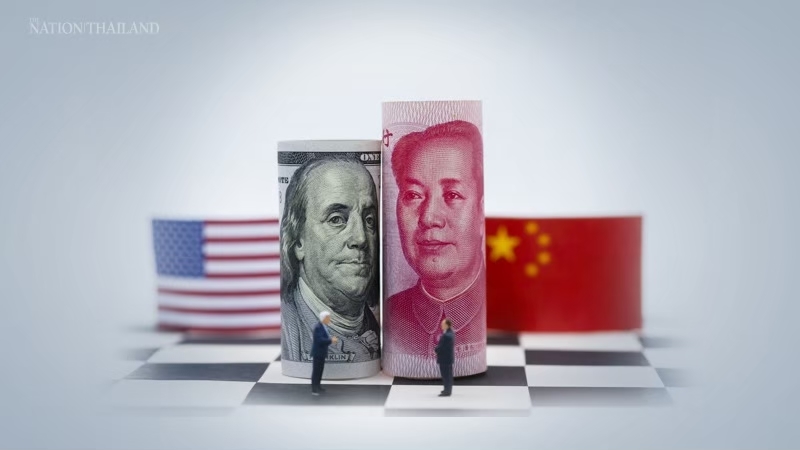
Trump’s last days bring fresh turmoil to U.S.-China relations #SootinClaimon.Com

#SootinClaimon.Com : ขอบคุณแหล่งข้อมูล : หนังสือพิมพ์ The Nation.

Trump’s last days bring fresh turmoil to U.S.-China relations

InternationalJan 12. 2021

By Syndication Washington Post, Bloomberg

The Trump administration’s final days are proving as confounding as ever for companies and investors stuck in the middle of an increasingly contentious U.S.-China relationship.

After a week of widespread confusion over the scope of a U.S. ban on investments in businesses linked to China’s military, both Washington and Beijing took steps over the weekend that threaten to further ratchet up tensions and cloud the outlook for cross-border commerce.

Secretary of State Michael Pompeo upended decades of U.S. policy on Saturday by removing self-imposed restrictions on how government officials interact with Taiwan, eliciting swift calls for retaliation by China’s state-run media. Pompeo’s announcement came just a few hours before Beijing issued new rules that would allow Chinese courts to punish global companies for complying with foreign sanctions — a move that could theoretically force businesses to choose between the world’s two largest economies.

In both cases, it was far from clear how the edicts would be implemented. China, for example, has been expanding its toolkit to fight back against U.S. sanctions for years, though it has so far refrained from using measures including blacklists and export controls. Hanging over everything is the question of how the world’s most important geopolitical relationship will evolve after Joe Biden enters the White House later this month.

The upshot is continued uncertainty for companies caught in the crossfire, from Apple Inc. to Tencent Holdings Ltd. and HSBC Holdings Plc. That risks chilling investment decisions, deal-making and startup funding at a time when the coronavirus-pummeled global economy needs all the support it can get.

“There is an escalation of tit-for-tat,” said Alex Capri, a research fellow at the Hinrich Foundation, an Asia-based foundation set up by U.S. entrepreneur Merle Hinrich to promote sustainable global trade. “From a corporate governance perspective, multinational companies and individuals will find themselves increasingly whipsawed.”

Chinese stocks underperformed regional peers on Monday, with the CSI 300 Index falling 1% at the close. S&P 500 Index futures slid 0.5% as investors weighed the implications of higher Treasury yields and President-elect Biden’s push for more fiscal aid.Traders in Taiwan largely brushed off rising cross-strait tensions, sending the local stock index to a record high. Pompeo lifted U.S. guidelines on meetings with Taiwanese officials, put in place after Washington’s recognition of China in 1979. They had required written permission from the State Department for diplomats and military personnel above a certain rank to visit Taiwan, and restricted the venues where meetings with Taiwan representatives could take place.

The Chinese Communist Party-backed Global Times warned that Pompeo was pushing the world’s biggest economies toward military conflict. Hu Xijin, the newspaper’s editor-in-chief, added in a microblog post that China has a “precious window of opportunity for mainland China to teach a heavy lesson to the ‘Taiwan independence’ forces” and re-establish “strategic leverage” in the Taiwan Strait.

The Chinese Foreign Ministry, which opposes official U.S.-Taiwan interactions, said Monday that it “firmly opposes and strongly condemns” the U.S. move and repeated that Taiwan is an “inalienable” part of its territory.

Beijing’s new rules on foreign sanctions, unveiled by the Commerce Ministry on Saturday, are meant to protect local firms from “unjustified” overseas enforcement actions by allowing Chinese citizens or companies to sue for compensation in Chinese courts if their interests are damaged by the application of foreign laws.

ByteDance Ltd., for example, has been pressured by the Trump administration to cede control over its hit TikTok short-video app for alleged national security concerns, but the startup’s investors could seek to use China’s new rules to win financial compensation for any losses.

Other potential scenarios raised by the new rules: if Apple removes Tencent’s WeChat or TikTok from its app store, could they get sued in mainland China for damages? Or if TSMC complies with sanctions against Huawei Technologies Co. by refusing to supply its chips, could the Chinese company seek financial compensation?

Beijing’s announcement at the end of Trump’s presidency was likely timed to send a signal to U.S. policy makers without overly antagonizing a new Biden administration in its early days, said Sean Ding, a Washington-based partner and analyst at Plenum, a research firm specializing in Chinese politics and economics.

“The new rules are more than anything a signaling mechanism to both Chinese companies and U.S. companies in China: We now have a legal ability to counteract the long arm jurisdiction of U.S. domestic law,” Ding said. “In short, it’s more of a signal at this stage rather than actually trying to put legal efforts in motion.”

That approach would be in line with previous Chinese responses to U.S. restrictions, including Beijing’s creation of an “unreliable entity list.” While the government has vowed to punish firms, organizations or individuals on the list that damage national security, authorities have yet to say if anyone has actually met the criteria for inclusion.

The national security law imposed by the Communist Party on Hong Kong in June also underscores how the U.S. may have an upper hand when it comes to sanctions, particularly those that affect the financial industry.

Even though Hong Kong’s security law forbids sanctions against the financial hub and China, state-owned lenders including Bank of China Ltd. have quietly taken steps to comply with U.S. sanctions against officials such as Hong Kong Chief Executive Carrie Lam. With more than $1 trillion of liabilities denominated in U.S. dollars, China’s four largest state-owned banks have huge incentives to stay on the good side of American regulators so they can retain access to dollar funding.

A similar dynamic has played out with international companies navigating conflicting rules in the U.S. and European Union over Iran, said Angela Zhang, director of the Centre for Chinese Law at the University of Hong Kong and author of “Chinese Antitrust Exceptionalism: How the Rise of China Challenges Global Regulation.”

“If you look at the EU precedent, I don’t see the Chinese rules being very effective in actually countering the U.S. sanctions,” Zhang said. They will, however, increase compliance costs for businesses, she said.

The long reach of U.S. sanctions — and the potential for confusion over their implementation — was on display again Monday as banks and money managers raced to comply with Trump’s executive order banning investments in Chinese military-linked companies.

Goldman Sachs Group Inc., Morgan Stanley and JPMorgan Chase & Co. said in exchange filings over the weekend that they’ll delist 500 structured products in Hong Kong, a move that will impact investors in the U.S. and around the world.

Investors have in many cases been given little warning on how regulators, banks, index providers and exchanges plan to implement Trump’s order, which takes effect Monday. The New York Stock Exchange flip-flopped twice before finally confirming last week it will delist China Mobile Ltd. and two other Chinese telecom companies. MSCI Inc. removed the three stocks from its indexes on Friday, giving global funds just one day to adjust billions of dollars of passive investments.

Wendy Liu, head of China equity strategy at UBS Group AG, said some bargain-hunting investors in Europe are interested in taking advantage of the sanction-induced drop in Chinese share prices. But she added that many are still waiting to pull the trigger as they await more clarity on the outlook for U.S.-China tensions.

“Reversing Trump’s sanctions and China policies too quickly will give a ‘pro-China’ signal that will not be beneficial for Biden’s polls,” Liu said. “We still need to wait and see how U.S.-China relations will unfold in the new administration.”

Biden’s go-big stimulus plans set up fresh fight in Senate #SootinClaimon.Com

#SootinClaimon.Com : ขอบคุณแหล่งข้อมูล : หนังสือพิมพ์ The Nation.

Biden’s go-big stimulus plans set up fresh fight in Senate

InternationalJan 12. 2021Joe BidenJoe Biden

By Syndication Washington Post, Bloomberg · Erik Wasson, Laura Davison, Nancy Cook

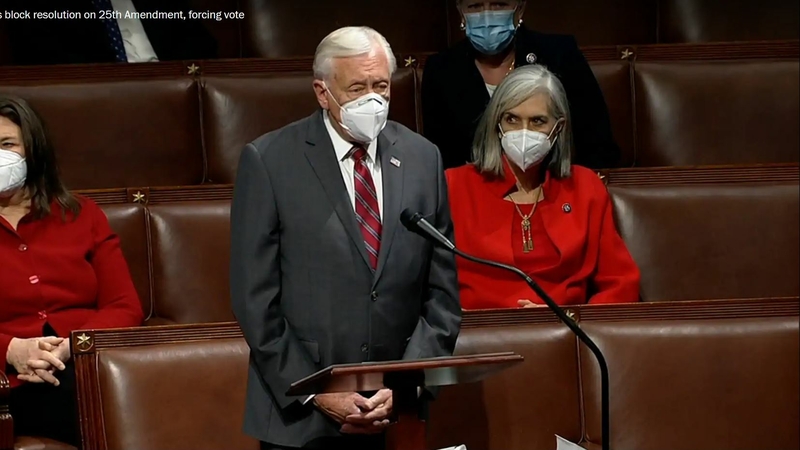
President-elect Joe Biden’s plan to pass a multitrillion-dollar economic stimulus package early in his administration faces challenges in a closely divided U.S. Senate, with a potential impeachment trial for outgoing President Donald Trump that could add to delays.

Biden is set to release his proposals — the price tag for which has yet to be unveiled — on Thursday. The package will feature a range of support for state and local authorities long blocked by Republicans, a bump in direct payments to $2,000 and expanded unemployment benefits, along with funding for vaccine distribution, school re-opening, tax credits, rental relief and aid to small businesses.

Parts of last month’s $900 billion aid bill start running out in mid-March, and may not prove enough to forestall an economic contraction this quarter as the coronavirus continues to surge and wreak record deaths. Failure to win congressional approval by then could wallop equities, which climbed to a record last week amid expectations the Democrats’ coming Senate majority would unleash major new stimulus. Investors turned more cautious Monday, with the S&P 500 Index retreating.

The stakes underscore the risk of proceeding with Trump’s impeachment. The Senate isn’t coming back until Jan. 19, and an impeachment trial by law pushes to the top of the calendar. House Democrats are considering passing an impeachment article this week, then withholding it from the Senate indefinitely to allow the stimulus bill to jump ahead of impeachment in the legislative timetable.

Many elements of Biden’s plan are expected to be drawn from House Democrats’ $3.4 trillion Heroes Act, which passed in May and was blocked by the GOP-controlled Senate.

Economic and political aides to Biden spent the last several days working on size and components. Aides are still weighing the desire to spend money to help as many Americans as possible, against the political feasibility of passing another bill through Congress — even a Democratic-controlled one.

Sen. Chuck Schumer is set to be majority leader with the barest possible control of the chamber — a 50-50 split. Deficit-hawk Democrats from conservative states, such as West Virginia’s Joe Manchin and Montana’s Jon Tester, will have equal influence with leftist progressive Bernie Sanders.

Biden on Friday highlighted that the current historically low level of interest rates allows for taking action to bolster both the short-term and long-term growth outlook. Ultimately, it would “reduce our national debt burden,” he said.

– – –

“If we don’t act now things are going to get much worse,” Biden said on Friday.

Republicans are unlikely to warm to the argument. Their congressional leaders have signaled they will likely resist another major package after the last two record-high $2 trillion and $900 billion relief bills.

Biden and Schumer will need to hold the Democratic caucus together. Manchin specified on Friday he wants direct payments “targeted to those who need it.” On Sunday, he said $2,000 checks aren’t a clear “no” for him, but indicated he’s skeptical. Among his concerns: many higher income families who have not lost their jobs get the benefit.

Parts of Biden’s plan, including stimulus checks, unemployment relief and rental assistance, can be passed with just 50 votes using a special procedure for budgetary legislation. But other measures, such as state and local aid, may not qualify for so-called reconciliation, and would then require 60 votes; at least 10 Republicans would be needed to proceed.

– – –

The Biden team views boosting gross domestic product as just one metric of success, according to an ally of the president-elect. The uneven nature of the economic recovery has meant parts of the labor market have been hit much harder than others. Friday’s employment report showed a 140,000 slump in payrolls in December — the worst monthly report since April — with restaurant jobs hit particularly hard.

Appetite for some parts of a giant new bill could yet be limited. With California reporting an unexpectedly large surplus in its state budget last week, the case for the half trillion dollars in aid that Democrats were seeking for state and local authorities before the election may be tough to make to moderate members of the party. Some GOP members had backed $160 billion, while others wanted none.

Key Democrats are already weighing in with their own proposals for the bill.

Incoming Senate Finance Committee Chairman Ron Wyden wants to link expanded unemployment benefits for gig workers and the long-term unemployed to automatic triggers that would extend the programs based on national and state unemployment rates. The idea is to remove the need to negotiate repeated extensions after the initial bill is passed.

Wyden is also interested in boosting supplemental unemployment insurance payments to the $600 level that expired in mid-2020. The December bill included $300.

– – –

“Tying these programs to conditions on the ground also ensures Mitch McConnell and Senate Republicans can’t hold them hostage,” said Wyden in an emailed comment, referring to the GOP leader.

Biden’s plan will likely include an expansion of the child tax credit and tax break for dependent care, according to a person familiar with the plan. It could also have an expansion of the earned income tax credit, the person said.

Wall Street banks’ expectations for the next round of stimulus fall well short of Biden’s multi-trillion dollar framework. JPMorgan Chase & Co. is at the higher end, penciling in $900 billion, while Goldman Sachs Group stands at $750 billion.

Others are even more restrained. UBS Group economists estimate any new covid-19 relief package in the wake of Biden taking office at $500 billion.

“We are firmly in the camp looking for half a loaf rather than a whole loaf” on the next fiscal package, said Seth Carpenter, UBS’s chief U.S. economist, who worked at the Treasury Department in the Obama-Biden administration. Carpenter highlighted the ability of Manchin and other centrist Democrats to scale block more ambitious proposals.

Goldman, JPMorgan to delist some products in Hong Kong #SootinClaimon.Com

#SootinClaimon.Com : ขอบคุณแหล่งข้อมูล : หนังสือพิมพ์ The Nation.

Goldman, JPMorgan to delist some products in Hong Kong

InternationalJan 12. 2021A person past signage for Hong Kong Exchanges & Clearing at the Exchange Square complex in Hong Kong on Aug. 19, 2020. MUST CREDIT: Bloomberg photo by Roy Liu.A person past signage for Hong Kong Exchanges & Clearing at the Exchange Square complex in Hong Kong on Aug. 19, 2020. MUST CREDIT: Bloomberg photo by Roy Liu.
By Syndication Washington Post, Bloomberg · Yueqi Yang, Colin Keatinge

The fallout from U.S. sanctions on Chinese military-linked companies widened as banks and money managers raced to comply with a vaguely worded executive order from Donald Trump that bans new investments starting Monday.

Goldman Sachs, Morgan Stanley and JPMorgan Chase will delist 500 structured products in Hong Kong, filings show. The city is the world’s largest market for such contracts with more than 12,000 of them, according to Hong Kong Exchanges and Clearing.

Products being pulled include warrants and callable bull/bear contracts on the benchmark Hang Seng Index, the Hang Seng China Enterprises Index and China Mobile. The $14 billion Tracker Fund of Hong Kong managed by State Street Global Advisors Asia, the island’s most actively traded ETF, won’t make new investments in companies covered by the ban after saying it’s no longer “appropriate” for U.S. investors.

Investors have struggled to get more clarity on how regulators, exchanges and intermediaries will implement the order Trump issued in the waning days of his presidency. The New York Stock Exchange said last week it will delist China Mobile and two other Chinese telecom companies. MSCI deleted the stocks from its global benchmark indexes on Friday, triggering a rush to sell that led to record trading volume in the stocks and drove China Mobile’s share price to a 14-year low.

Trump’s order said designated stocks cannot be purchased by Americans starting on Jan. 11, and that holdings by Americans must be fully divested by November when transactions will be frozen.

For banks, index compilers and money managers, that has added to the challenges of navigating tensions between Washington and Beijing that have increasingly entered the financial sphere. China issued new rules on Saturday to protect its firms from “unjustified” foreign laws that will allow Chinese courts to punish global companies for complying with foreign restrictions.

“This will raise a big dilemma for companies,” Jingzhou Tao, an arbitrator with Arbitration Chambers, said in a Bloomberg Television interview. “On one hand you have these U.S. sanctions which you must observe, otherwise you get sanctioned by the U.S. government, on the other hand you have the Chinese government, if they say that you should not observe these sanction-related laws, then you’re in a big dilemma.”

The delisting of Hang Seng Index products, and State Street’s warning that U.S. investors should avoid the tracker fund, show how Trump’s order is impacting investment flows beyond just the handful of Chinese companies on the U.S. sanctions list.

The about 500 structured products being delisted account for less than 1% of Hong Kong’s turnover, according to Bloomberg Intelligence.

Even if banned companies comprise a small fraction of a widely followed index, the sanctions could force money managers to shift billions of dollars out of products linked to that index. It’s one reason why MSCI, FTSE Russell and S&P Dow Jones Indices have all adjusted their equity gauges to remove banned companies like China Mobile. Hang Seng Indexes said Friday that it has no plan to change its benchmarks for now, though it will monitor “market developments” closely.

Hong Kong’s exchange said it’s working closely with banks to ensure orderly delistings. “We do not believe this will have a material adverse impact on Hong Kong’s structured products market,” the exchange said in a statement Sunday. The city’s securities regulator said it has also been in close dialogue with the affected issuers and has reminded them to carefully assess the impact of the U.S. sanctions on their products.

House Democrats introduce article of impeachment charging Trump with ‘incitement of insurrection’ #SootinClaimon.Com

#SootinClaimon.Com : ขอบคุณแหล่งข้อมูล : หนังสือพิมพ์ The Nation.

House Democrats introduce article of impeachment charging Trump with ‘incitement of insurrection’

InternationalJan 12. 2021

By The Washington Post · Annie Linskey

WASHINGTON – President-elect Joe Biden said Monday he is consulting with Senate leaders and the chamber’s parliamentarian about whether the Senate can “bifurcate” its schedule, so it can move forward simultaneously with impeaching President Donald Trump and enacting Biden’s agenda, including a multitrillion-dollar coronavirus relief plan.

https://www.washingtonpost.com/video/c/embed/ff55dd6e-eb04-43c5-9840-6645a9137309?ptvads=block&playthrough=false

Biden’s comments, made Monday just after he received his second dose of the coronavirus vaccine at a Delaware hospital, revealed his most detailed thinking to date about the threat that congressional Democrats’ impeachment efforts could overshadow the early days of his presidency.

The remarks also affirmed that the president-elect wants Congress to focus on improving the response to the virus and bolstering the struggling economy ahead of rebuking Trump for his role in inciting a deadly mob that briefly took control of the U.S. Capitol building last week.

“My priority, first and foremost, is the stimulus bill,” Biden said Monday, “and secondly to begin to rebuild the economy.”

Those sentiments could collide with the determination of many House members to penalize Trump for his role in the assault on the Capitol and to ensure he cannot seek office again. Speaker Nancy Pelosi, D-Calif., has said the House will push ahead on impeachment if Vice President Mike Pence does not move to oust Trump by Wednesday, a step that seems highly unlikely.

Democratic leaders worry that if the Senate is consumed by an impeachment trial for the first few weeks of Biden’s term that it will have little capacity to do anything else, and Biden signaled Monday he is looking for a way around that.

“I had a discussion today with some of the folks in the House and Senate,” he said. “And the question is whether or not, for example, if the House moves forward, which they obviously are, with the impeachment and sends it over to the Senate, whether or not we can bifurcate this.”

Biden has been particularly concerned about Senate confirmation for his Cabinet nominees and getting his national security team in place. “Can we go half-day on dealing with the impeachment and half-day getting my people nominated and confirmed in the Senate?” he said.

Biden campaigned on bringing the country together, and some lawmakers believe that could be more difficult if he launches his presidency amid a fiery effort to punish his polarizing predecessor. But many in Biden’s party argue that it will not be possible for the country to unify if Trump is not held accountable for his role in the riot.

Biden has said little about his views on whether impeachment should go forward, suggesting Friday that it is a matter for Congress to decide. But he has made it clear he wants lawmakers to “hit the ground running” on his agenda once he takes office on Jan. 20.

Although the House is expected to vote this week on an article of impeachment, Senate Majority Leader Mitch McConnell, R-Ky., issued a memo last week saying the Senate would not consider the matter until Jan. 19, which would mean a trial would bleed into Biden’s term and potentially derail chunks of his legislative program.

Biden was more forceful Monday in discussing the rioters who took control of the Capitol, saying they should be prosecuted. Dozens have been arrested.

“I think it’s critically important that there be a real serious focus on holding those folks who engaged in sedition and threatened people’s lives and defaced public property and caused great damage, that they be held accountable,” Biden said. “And I think that’s a view that is held by the vast majority of Democrats and Republicans in the Congress.”

Biden added that it is his “hope and expectation” that his agenda can move forward amid impeachment. But he said he has not heard from the parliamentarian about whether it is feasible for the Senate to handle other business during an impeachment trial.

Biden was also asked whether he is “afraid” at all of taking the oath of office outside in the aftermath of the violence at the Capitol. “No,” Biden said.

He has previously expressed confidence in the Secret Service, which he said would be handling the event. “I am not afraid of taking the oath outside. I’m getting briefed,” Biden said Monday, presumably a reference to intelligence and security briefings.

Up to 15,000 National Guard members could be deployed in D.C. during inauguration #SootinClaimon.Com

#SootinClaimon.Com : ขอบคุณแหล่งข้อมูล : หนังสือพิมพ์ The Nation.

Up to 15,000 National Guard members could be deployed in D.C. during inauguration

InternationalJan 12. 2021

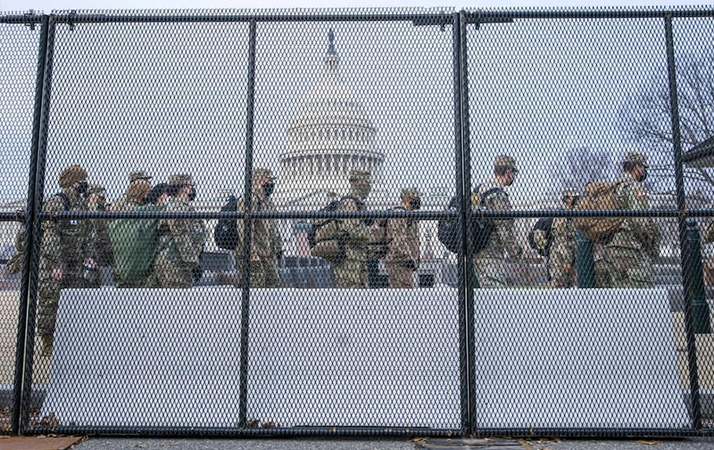
Members of the National Guard outside the U.S. Capitol on Jan. 11. (Sarah Silbiger/Bloomberg News)

Members of the National Guard outside the U.S. Capitol on Jan. 11. (Sarah Silbiger/Bloomberg News)

By The Washington Post · Dan Lamothe

WASHINGTON – Up to 15,000 National Guard members could be deployed in Washington during the presidential inauguration, senior defense officials said Monday, part of a rapidly expanding response following a deadly insurrection at the Capitol last week.

Army Gen. Daniel Hokanson, the chief of the National Guard Bureau, said in a call with reporters that about 6,000 guardsmen from six states already are in the nation’s capital, and that the military response will expand to about 10,000 by the weekend.

Hokanson said the numbers will be determined by the requirements that federal agencies have for support. The National Guard will bring their weapons to Washington and carry them based on discussions with the FBI, police and other agencies.

“Obviously, we’re very concerned that we want our individuals to have the right to self-defense,” the general said. “And so, that will be an ongoing conversation, and if the senior leadership determines that that’s the right posture to be in, then that is something that we will do.”

The shift comes after the Defense Department carved out a narrow role ahead of a protest of President Donald Trump’s election loss on Wednesday. Trump directed thousands of people to the Capitol afterward, some of whom began storming the building and attacking Capitol Police officers, including one who later died.

Just 340 D.C. National Guard members had been activated ahead of the riot, and none were posted outside the Capitol. Instead, they were assigned to traffic duty in other parts of the city, because the Capitol Police and the Pentagon had not worked out a plan in the event of a crisis at the home of Congress.