Biden, once a warrior, may slowly retreat from the ‘war on drugs’ #SootinClaimon.Com

#SootinClaimon.Com : ขอบคุณแหล่งข้อมูล : หนังสือพิมพ์ The Nation.

Biden, once a warrior, may slowly retreat from the ‘war on drugs’

InternationalJan 12. 2021

By The Washington Post · Tim Craig

President-elect Joe Biden built part of his political career on being known as a fighter in the “war on drugs,” supporting legislation as a senator that set harsh penalties for some drug offenses.

But as president, Biden could potentially oversee broad changes in federal drug policy, including how the government and law enforcement agencies view drug addiction and treatment and classify the use of marijuana.

Biden will take office at a time when the nation’s attitudes about drugs, particularly the legalization or decriminalization of marijuana, appear to be one area where there is relative, and growing, bipartisan unity.

In an election that was otherwise defined by stark political differences, voters in both red states and blue states – Arizona, Montana, New Jersey and South Dakota – supported ballot initiatives to legalize the personal use of marijuana, while Mississippi voters legalized it for medicinal use. Along with earlier action by state legislatures or voters, 15 states have legalized marijuana, while 36 others have approved some form of medicinal marijuana use, according to the National Conference of State Legislatures.

But marijuana remains illegal under federal law, leaving users and suppliers vulnerable to prosecution even in places where the drug is otherwise legally sold and used. The nation’s growing cannabis industry also faces hurdles in transporting its products across state lines and accessing the country’s federally regulated banking system.

During his primary campaign, Biden was one of the few Democratic candidates who did not support federal legalization of marijuana for recreational use, citing concerns that it could be a “gateway drug.” But during the general-election campaign, he softened his stance, saying that the drug should be decriminalized and that individual states should decide whether to legalize it for recreational use.

As the general-election campaign progressed, Kamala Harris, Biden’s running mate and a former prosecutor, also advocated for the decriminalization of marijuana despite past opposition to legalizing it. During the October vice-presidential debate, Harris said a Biden-Harris administration “will decriminalize marijuana, and we will expunge the records of those who have been convicted of marijuana” crimes.

LED lights cast a strong glow in the grow room at District Growers in Washington on May 1, 2019. MUST CREDIT: Washington Post photo by Bonnie Jo Mount.

LED lights cast a strong glow in the grow room at District Growers in Washington on May 1, 2019. MUST CREDIT: Washington Post photo by Bonnie Jo Mount.

Marijuana advocates are gearing up to make sure Biden sticks to his campaign pledge, which they note that strong majorities of Democratic voters support, according to recent polls.

Last month, for the first time, the Democratic-controlled House voted – 228-164 – to decriminalize marijuana and remove it from the federal schedule of controlled substances. The Republican-controlled Senate did not take up the measure, and many advocates are skeptical of its chances there, even though Democrats narrowly won control of the chamber after two runoff elections in Georgia last week.

But advocates say Biden can still push toward decriminalization, even without a vote from Congress.

Under its current classification, which dates to a decision made under President Richard Nixon in 1970, marijuana is classified as a Schedule I narcotic for having “no currently accepted medical use and a high potential for abuse.” The remaining schedules of narcotics, II through V, are ranked by their potential for abuse and perceived level of danger, and the classifications help guide federal enforcement and regulations for controlled substances, including prescription medication.

Maritza Perez, director of national affairs for the pro-reform Drug Policy Alliance, said legal analysts for the movement think the Biden administration can unilaterally reschedule marijuana to a higher classification or even remove it from the list. Although she prefers congressional action, Perez said the administration could declassify marijuana through a process that would involve sign-off from the incoming attorney general as well as the secretary of the Department of Health and Human Services.

Biden has nominated California Attorney General Xavier Becerra, who has defended his state’s legalization of marijuana, as his secretary of Health and Human Services.

“The attorney general would have to work hand-in-hand with the HHS secretary, but we think this is certainly something within the administration’s power, which is why the marijuana advocates have been pushing for him to appoint a pro-marijuana AG,” Perez said.

But Sam Kamin, a law professor at the Sturm College of Law at the University of Denver and a leading expert on marijuana laws, is skeptical that Biden will aggressively pursue the unilateral rescheduling or de-scheduling of marijuana. De-scheduling the drug could upend international drug control treaties, while rescheduling it could undercut state medical marijuana laws, he said.

“They can begin the rescheduling process, but whether they can de-schedule without stepping on other rules and regulations is more complicated,” Kamin said. “Treating marijuana like a Schedule II or III drug would create serious tensions with a lot of states. . . . If it was scheduled the same way Vicodin is scheduled, you could not get it over-the-counter as you can in many states. You would need a prescription from a medical doctor.”

A chair used by people while they do drugs sits under a bridge near train tracks in Philadelphia on July 27. MUST CREDIT: Washington Post photo by Salwan Georges.

A chair used by people while they do drugs sits under a bridge near train tracks in Philadelphia on July 27. MUST CREDIT: Washington Post photo by Salwan Georges.

Even if Biden decides to largely steer clear of the marijuana debate, advocates for reforming the nation’s drug laws still think his administration will usher in a new period of compassion when it comes to addiction.

To combat the opioid crisis, Biden has promised to spend an additional $125 billion over 10 years on drug treatment and prevention programs, while also supporting some controversial local initiatives such as needle exchanges.

Perez is optimistic that the Biden administration, unlike President Donald Trump’s, will take a hands-off approach when it comes to proposals by some cities to open safe-injection sites, where people can use illegal drugs in safe, monitored environments.

Last year, the Trump administration sued to try to stop Philadelphia from opening a so-called safe injection site. But Perez noted in July that Becerra, as California attorney general, joined a multistate amicus brief in support of Philadelphia.

“Safe injection sites . . . are an innovative tool to combat the opioid epidemic and drug dependency while reducing overdose death and transmission of diseases,” Becerra said at the time.

Biden’s ambitious LGBT agenda poises him to be nation’s most pro-equality president in history #SootinClaimon.Com

#SootinClaimon.Com : ขอบคุณแหล่งข้อมูล : หนังสือพิมพ์ The Nation.

Biden’s ambitious LGBT agenda poises him to be nation’s most pro-equality president in history

InternationalJan 12. 2021Kelly Miller, left, and her wife, Lindsey Miller, center, embrace on June 26, 2015, outside the White House, lighted in multicolored lights in recognition of the Supreme Court's decision to legalize same-sex marriage in all 50 states. The Millers were married two years ago in Washington State, where same-sex marriage was legalized. MUST CREDIT: Washington Post photo by Michael S. WilliamsonKelly Miller, left, and her wife, Lindsey Miller, center, embrace on June 26, 2015, outside the White House, lighted in multicolored lights in recognition of the Supreme Court’s decision to legalize same-sex marriage in all 50 states. The Millers were married two years ago in Washington State, where same-sex marriage was legalized. MUST CREDIT: Washington Post photo by Michael S. Williamson
By The Washington Post · Emily Wax-Thibodeaux

WASHINGTON – Joe Biden became a fast friend of the LGBTQ community as vice president in 2012 by stating his support for same-sex marriage in a television interview even before his boss, President Barack Obama, did.

That same year, outside an Obama-Biden campaign office in Florida, it was Biden’s unexpected support for the transgender community that elevated his status from an LGBTQ ally to a champion. When the mother of a Miss Trans New England pageant winner asked Biden if he would help transgender people, she later told reporters, Biden whispered that it was the “civil rights issue of our time.”

Since then, Biden’s views on the LGBTQ community have become clearer and louder.

When he left the vice presidency, Biden partnered with other advocates to start the As You Are campaign to advocate for families’ acceptance of their transgender children, which “dramatically improves their child’s self-esteem and decreases the likelihood they will experience depression or suicidal ideation,” the Biden Foundation was cited as saying in a 2019 announcement.

Now advocates say the 78-year-old will be the nation’s most pro-LGBTQ president ever. He and Vice President-elect Kamala D. Harris have promised an ambitious slate of actions that would go beyond reversing what LGBTQ advocates have called President Donald Trump’s “discrimination administration.”

The Trump Accountability Project, by the advocacy group GLAAD, has recorded more than 180 anti-LGBTQ statements and actions by the Trump administration and those in the president’s circle since January 2017, including a proposal that would allow homeless shelters to house transgender people according to their sex assigned at birth rather than their gender identity.

Transgender rights have become a lightning rod in the relentless culture war that has come to dominate American politics, pitting conservative Christians who want their religious views to be accommodated against liberal and secular Americans who think some of those views trample on minority groups’ rights.

Just weeks before it leaves office, the Trump administration handed out a 400-page document detailing how federal contractors and recipients of government grants can cite their religious views to refuse to provide health coverage for birth control and other reproductive care and adoption services to single people or LGBTQ couples.

Biden has called religious freedom “a fundamental American value,” but also promised to reverse Trump administration policies that are “misusing these broad exemptions.”

He has committed to overturning every Trump administration rule that limits transgender rights, including tossing out its near-total ban on transgender troops serving in the military on “Day One.” Biden also has promised to reinstate Obama-era guidance for protecting transgender students that the Trump administration withdrew.

“Biden has made it clear that he intends to weaponize the law to crush dissent, in order to implement a far-left agenda,” said Kristen Waggoner, general counsel for Alliance Defending Freedom, a conservative legal organization that says it protects religious and moral convictions and freedom of speech. “That impacts not just people of faith, but all Americans who want to live life according to their convictions. The government can’t engage in religious bigotry.”

Alliance Defending Freedom is representing Christian adoption agency New Hope Family Services in an ongoing legal battle with New York state over its policy to place children only in homes with married opposite-sex couples.

“We live in a pluralistic society,” Waggoner said. “The government should not single out and punish those who believe that the best home for a child includes a married father and a mother.”

A judge recently sent the case back to a lower court, ruling that it should be allowed to continue its faith-based approach to adoption as the case proceeds, a move Waggoner cited as a win for religious liberty.

Biden has said he will protect the rights of anyone who qualifies to adopt, regardless of religion or family composition. Biden, who is Catholic, has split from his church’s stance on some issues, saying he values “the dignity of every person.”

During a town hall meeting with voters, Biden surprised even longtime LGBTQ advocates when he addressed the killing of transgender women – largely of color. At least 43 transgender or gender-nonconforming people were killed in the United States in 2020, according to the Human Rights Campaign. Advocates praised Biden for bringing the issue to the national stage and vowing to direct federal resources to prevent and prosecute such homicides.

“There’s an opportunity here for a national discussion on transgender people of color who are often just left out of the national conversation,” said David J. Johns, executive director of the National Black Justice Coalition, a civil rights organization dedicated to the Black LGBTQ community. “Even though the transgender community may have more visibility in TV shows like ‘Pose,’ the vitriol at the policy level that exists within the system leaves no promise of justice.”

Johns said he hopes to see more LGBTQ leaders of color appointed in Biden’s administration.

“That way they can show up and craft policy which will ensure that people of color can raise the alarm about issues of mental health, safety, housing or dealing with police in their communities,” he said.

Biden has promised that his administration will “look like America,” and has said he will provide anti-bias training for federal employees and offer incentives for states that adopt programs that help prepare transgender people for the workplace.

But he could face his most laborious hurdle in passing the Equality Act, a package of measures that protect against discrimination on the basis of sexual orientation that was passed by the House in 2019 but blocked by the Republican-led Senate.

That act – which Biden has pledged to make a policy priority during his first 100 days in office – has been a cornerstone of the community’s fight for equal rights in housing and employment since it was first discussed after the Stonewall riots in 1969.

If Republicans retain control of the Senate, the legislation’s passage will remain unpredictable. Some Republicans have instead backed the Fairness for All Act, which provides some LGBTQ protections while also granting certain exceptions for religious institutions and organizations.

Much of the battle over LGBTQ rights has been happening in statehouses, where those issues have been lightning rods in the nation’s culture war. This has kept policy debates about restroom access and puberty blockers largely beyond the reach of the federal government, but the rhetoric coming out of the White House does have influence, said Drew Anderson, a longtime LGBTQ advocate who used to work with GLAAD.

“It always helps to have an LGBTQ ally in the White House who will call it for what it is: hatred for an everyday American,” Anderson said.

Biden has credited his passion for LGBTQ issues to his late son Beau Biden’s close friendship with Sarah McBride, who is transgender.

McBride worked on Beau Biden’s reelection campaign for attorney general in Delaware, where they later collaborated to pass protections for transgender people in housing, health insurance and employment.

The Biden family developed a close relationship with McBride after Beau Biden died of brain cancer in 2015. McBride’s husband, Andy Cray, had died of cancer the year before.

“The president-elect has always been far out ahead on transgender issues. And I think all of us benefit from knowing people who are trans and organic agents of change in daily life,” said McBride, who was elected in Delaware in November as the first openly transgender state senator in the country. “But I know Joe Biden also wants to honor and carry forward his son’s work and legacy on this issue.”

Joe Biden wrote the foreword for McBride’s book “Tomorrow Will Be Different: Love, Loss and the Fight for Trans Equality.”

In it, he calls transgender equality “the civil rights issue of our time.”

Britain faces harder lockdown restrictions as covid infections soar #SootinClaimon.Com

#SootinClaimon.Com : ขอบคุณแหล่งข้อมูล : หนังสือพิมพ์ The Nation.

Britain faces harder lockdown restrictions as covid infections soar

InternationalJan 12. 2021

By Syndication Washington Post, Bloomberg · Tim Ross, Emily Ashton

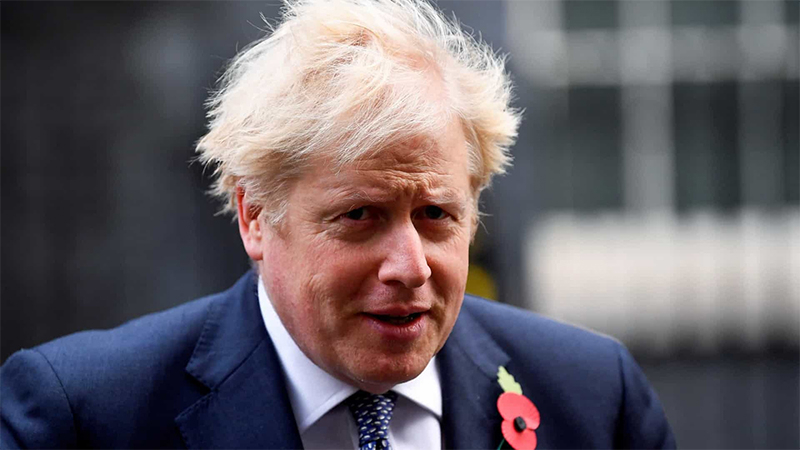
British Prime Minister Boris Johnson warned he may tighten the coronavirus lockdown if people don’t follow the rules as his government backed tougher enforcement.

Any “complacency” about the disease is misplaced, Johnson said, even though an immunization program is well underway and 2.2 million people have received shots so far.

But he risked undermining his own appeal to the public to stay home and act responsibly when it emerged he had taken a bike ride 7 miles across London on Sunday.

“Of course, if we feel that things are not being properly observed, then we may have to do more,” Johnson said during a visit to a vaccination center in a sports stadium in Bristol, southwest England, Monday. The vaccine rollout is a “race against time,” with the country at a “very perilous moment” as infection rates soar, he said.

Britain is facing its toughest period of the pandemic, with hospital admissions up 22% in a week to more than 32,000, and the death toll now more than 80,000. Last week Johnson announced a third national lockdown, a move that threatens to push the U.K. into another recession and compound the damage of the first lockdown, which caused the deepest contraction for 300 years.

The vaccination program is the key to the economic recovery, Chancellor of the Exchequer Rishi Sunak told lawmakers Monday.

The government aims to start relaxing restrictions after Feb. 15, the target date by when Johnson wants all 15 million of the most vulnerable people and their carers to have been given at least one immunization dose.

Even though Britain is far ahead of other European countries in the rollout of vaccines, a new more contagious variant of the disease is pushing the health service to breaking point. Medical advisers and officials are growing increasingly concerned the public is not keeping to the rules, and that hospitals will soon be overwhelmed.

Johnson said the lockdown rules need to be enforced properly in food stores and urged people to think carefully before leaving home for any reason. Hospitals are under intense pressure from a surge in covid-19 cases, with oxygen supplies running short in some areas, he said.

Health Secretary Matt Hancock said everyone shares responsibility for ensuring the rules are obeyed and praised store chain Wm Morrison Supermarkets Plc for saying it will refuse entry to anyone not wearing a mask without a specific exemption.

“I am delighted that the police are stepping up their enforcement, but it isn’t just about the government and the rules we set, or the police and the work that they do, it’s about how everybody behaves,” he told a press conference. “I applaud the action Morrisons has taken today,” he said. “That’s the right approach.”

The premier’s office faced questions over his own action after London’s Evening Standard newspaper reported Johnson was seen cycling around the Olympic Park, 7 miles east of his official residence, at about 2 p.m. Sunday. Official government guidance allows people to leave their homes for the purpose of taking exercise but advises that people should stay within their “local area.”

Hancock said long bike rides and walks of 7 miles are allowed under the rules.

But the episode threatens to reignite a row over the behavior of Johnson’s former aide Dominic Cummings, who was accused of breaking lockdown rules last spring by driving more than 250 miles out of London when the country was being told to stay at home. Johnson’s office did not immediately respond to requests to comment on his trip.

On civil rights, policing, prosecutions, Biden’s Justice Department will be distinct from Trump’s #SootinClaimon.Com

#SootinClaimon.Com : ขอบคุณแหล่งข้อมูล : หนังสือพิมพ์ The Nation.

On civil rights, policing, prosecutions, Biden’s Justice Department will be distinct from Trump’s

InternationalJan 12. 2021Joseph Biden walks with civil rights leaders and lawmakers over the historic Edmund Pettus Bridge in Selma, Ala., on March 3, 2013. MUST CREDIT: Washington Post photo by Melina MaraJoseph Biden walks with civil rights leaders and lawmakers over the historic Edmund Pettus Bridge in Selma, Ala., on March 3, 2013. MUST CREDIT: Washington Post photo by Melina Mara

By The Washington Post · Matt Zapotosky

WASHINGTON – The Justice Department in the Biden administration is likely to increase resources for the civil rights division and resume wide-ranging scrutiny of troubled police departments nationwide, analysts say, as President-elect Joe Biden seeks to fulfill his campaign promises of combating systemic racism and fighting for equal rights.

Biden had been under pressure from civil rights leaders to appoint a Black attorney general with a background in civil rights and criminal justice reform. His selection, federal appellate judge Merrick Garland, is considered one of the more moderate candidates he could have chosen, and some criminal justice reform advocates have said previously that Garland’s record on the bench shows that he is too deferential to law enforcement. But others say that Garland has merely applied the law as his job requires, and that as attorney general he would surely seek to implement Biden’s agenda.

Biden also selected two prominent civil rights leaders for other top Justice Department jobs, allaying some concerns.

At a news conference announcing his nomination, Garland noted that the Justice Department was founded after the Civil War – in part to enforce constitutional amendments abolishing slavery and ensuring people of color the right to vote – and that the principles at that time remain relevant. He vowed that under his leadership, the department would be devoted to “ensuring racial equity in our justice system.”

For associate attorney general, the third-highest-ranking official, Biden chose Vanita Gupta, the president of the Leadership Conference on Civil and Human Rights and a former head of the Justice Department’s civil rights division. And he nominated Kristen Clarke, president of the Lawyers’ Committee for Civil Rights Under Law, as head of the Civil Rights Division.

Clarke said at the news conference, “We will turn the page on hate and close the door on discrimination by enforcing our federal civil rights laws.” Gupta vowed that the department would go far beyond merely repairing the reputational damage it suffered under President Trump, and would harness all the tools at its disposal to protect civil rights and force police reform.

“It will not be enough to restore what has been undermined or lost,” Gupta said. “This moment demands bold leadership.”

On his campaign website, Biden has made detailed commitments to how he will remake the Justice Department, especially when it comes to civil rights and policing. The Trump administration almost completely abandoned using broad pattern-or-practice investigations and court-monitored consent decrees to address systemic misconduct at local police departments, because Jeff Sessions, Trump’s first attorney general, did not favor them and issued a memo curtailing their use.

Judge Merrick Garland studies a toy that has been customized with his likeness, during a February, 2020 ceremony to pass the title of chief judge of the U.S. Court of Appeals for the D.C. Circuit to Sri Srinivasan, back right. MUST CREDIT: Washington Post photo by Bill O'Leary.

Judge Merrick Garland studies a toy that has been customized with his likeness, during a February, 2020 ceremony to pass the title of chief judge of the U.S. Court of Appeals for the D.C. Circuit to Sri Srinivasan, back right. MUST CREDIT: Washington Post photo by Bill O’Leary.

The Justice Department’s civil rights division under President Barack Obama opened 25 investigations of local law enforcement agencies across the country and enforced 14 court-approved consent decrees mandating changes. The Justice Department under President Trump initiated just one case involving a local police department, examining the former narcotics unit in Springfield, Mass. It opened other inquiries involving prisons.

Biden’s website, by contrast, promised to increase funding to the Justice Department’s civil rights division, which conducts such investigations and implements such decrees, and also vowed to push for legislation to clarify that pattern-or-practice inquiries could also target misconduct in prosecutors’ offices. Civil rights leaders welcome Biden’s promises.

“We need the Justice Department back in the business of holding the most egregious offenders accountable,” Clarke said in an interview weeks before her selection as the nominee to lead the Civil Rights Division was made public.

Biden’s campaign website said his administration would also reinvigorate the Community Oriented Policing Services office, which doled out grants in the Trump administration but stopped working with police departments on broad reform agreements.

Trump’s Justice Department took an aggressive posture toward cracking down on crime. Sessions issued a broad policy calling for prosecutors to pursue the most severe penalties possible, including mandatory minimum sentences, reversing an earlier directive by Obama attorney general Eric Holder to avoid charging offenses that might trigger such severe penalties.

Many federal prosecutors were not fond of Holder’s memo, and it was not immediately clear whether Biden’s attorney general will reinstate it. Doing so would probably win plaudits from advocates for criminal justice reform and from civil rights leaders, but it could spark complaints from prosecutors.

Biden’s campaign website said that he would “reduce federal spending on incarceration” and that the criminal justice system “must be focused on redemption and rehabilitation.” The site said Biden would again end the government’s use of private prisons – something that then-Deputy Attorney General Sally Yates had done when Biden served as vice president.

Biden also promised to aggressively press voting rights enforcement – which Clarke said was sorely lacking in the Trump Justice Department.

Trump’s recognition of white nationalists will loom as Biden confronts surge in hate crime #SootinClaimon.Com

#SootinClaimon.Com : ขอบคุณแหล่งข้อมูล : หนังสือพิมพ์ The Nation.

Trump’s recognition of white nationalists will loom as Biden confronts surge in hate crime

InternationalJan 12. 2021Chanting Chanting “White lives matter,” “You will not replace us” and “Jews will not replace us,” several hundred white nationalists and white supremacists carrying torches march in Charlottesville on Aug. 11, 2017, during the Unite the Right Rally. MUST CREDIT: Photo for The Washington Post by Evelyn Hockstein

By The Washington Post · Matt Zapotosky

When Joe Biden formally announced his entry into the presidential race in 2019, he said he was moved to do so while watching President Donald Trump talk about a white nationalist rally that turned violent in Charlottesville. A woman protesting the racist demonstrators had been killed in the mayhem, but rather than condemning the white nationalists, Trump said there were “very fine people on both sides.”

“With those words, the president of the United States assigned a moral equivalence between those spreading hate and those with the courage to stand against it,” Biden said. “And at that moment, I knew the threat to this nation was unlike any I had ever seen in my lifetime.”

As Biden enters the White House, he will now have to address that threat himself, as hate crimes are on the rise and analysts say white supremacists and other domestic extremists have been emboldened by Trump. The acute challenge he will face was crystallized on Wednesday, when a mob of Trump supporters stormed the Capitol.

“I wish we could say we couldn’t see it coming,” Biden said Thursday. “But that isn’t true. We could see it coming. The past four years, we’ve had a president who’s made his contempt for our Democracy, our Constitution, the rule of law clear in everything he has done.”

Analysts say a change in presidential rhetoric will help, and the FBI and the Department of Homeland Security have been able to take some steps to try to tamp down on domestic extremism, sometimes in spite of Trump. Biden will face pressure to do even more.

Federal appellate judge Merrick Garland, whom Biden has nominated as his attorney general, has a background in prosecuting domestic terrorism cases. He oversaw the prosecution of the 1995 bombing of the federal building in Oklahoma City that killed 168 people. He also oversaw the prosecution of Ted Kaczynski, the Unabomber, who eluded authorities for years while mailing bombs to people.

At a news conference where his nomination was announced, Garland noted that the Justice Department was founded after the Civil War – in part to enforce constitutional amendments abolishing slavery and ensuring people of color the right to vote – and that the principles at that time remained relevant in the modern era.

“They echo today in the priorities that lie before us, from ensuring racial equity in our justice system, to meeting the evolving threat of violent extremism,” Garland said. “If confirmed, those are the principles to which I will be devoted as attorney general. President elect-Biden understands this.”

Garland also referenced the riots from a day earlier, saying, “As everyone who watched yesterday’s events in Washington now understands, if they did not understand before, the rule of law is not just some lawyers’ turn of phrase. It is the very foundation of our democracy.”

Kristen Clarke, whom Biden nominated to head the Justice Department’s Civil Rights Division, said in an interview before she was chosen for the job that she would like to see that division intensify its efforts to prosecute hate crimes and crack down on white supremacy.

“We need a division that is using its enforcement powers to counteract those efforts, to send a strong message to white supremacists that this conduct will not be tolerated in our country,” said Clarke, president of the Lawyers’ Committee for Civil Rights Under Law. “We have seen some prosecutions of the most violent offenders, but they need to do more, given the spike in activity. We need to see more from the Civil Rights Division in this area.”

Some advocates have pushed for a law that would give officials the ability to designate domestic terrorist organizations the same way they do international organizations, and then charge those who support them. Such legislation – which would require congressional approval – would probably run into significant First Amendment and civil liberties challenges.

During the Trump administration, they could never be seriously discussed, because Trump showed little interest in the issue, and his relationship with Congress was not conducive to getting tough legislation passed, said Elizabeth Neumann, who served as the assistant secretary for threat prevention and security policy in the Trump administration’s Department of Homeland Security.

“There was no opportunity for any sort of tough conversation like this to happen because there was a leadership vacuum at the White House,” she said.

Neumann said that Biden simply installing a functioning government to work with Congress to study the issue using normal processes might help.

“If you had the ability to designate a terrorist organization or if you had [the] ability to designate somebody as a domestic terrorist actor, then hypothetically you would be able to watch-list them,” she said, although she conceded that such measures probably would face legal challenges and that domestic terrorist groups may not be as easily tagged as international ones, because they are far less organized.

“Given that many of the groups are not really groups as much as decentralized, amorphous goo, it’s not maybe the panacea that some people assume it might be,” she said.

Jonathan Greenblatt, chief executive of the Anti-Defamation League, which tracks extremism nationwide, said Biden might consider creating a White House task force to address hate crime. The FBI, he noted, has been tracking steady increases in such offenses – although many police departments don’t adequately report data – and in 2019, his organization tracked the highest number of anti-Semitic incidents ever.

“The reality is, extremists feel emboldened in this environment,” Greenblatt said.

The FBI during the Trump administration charged several suspected members of neo-Nazi or white supremacist groups, including Atomwaffen Division and the Base, in connection with alleged plots, and FBI Director Christopher A. Wray has said repeatedly that he takes domestic extremism seriously. But he also has noted that the FBI’s role is to investigate and arrest those who perpetrate violence, rather than taking aim at a particular ideology. Biden, officials said, will have to look elsewhere to try to prevent white supremacist violence, and to de-radicalize potential attackers.

The Trump administration drew criticism early for not funding a DHS program created to counter violent extremism, and for not focusing on white supremacy. Neumann said that later on, though, the department formulated a strategy and asked Congress for $80 million in new money to focus on preventing violence and intervening with people before they become fully radicalized.

Such funding was included in a $2.3 trillion spending bill for fiscal 2021.

“There’s good news,” she said. “But it’s going to take a while for that to come to fruition.”

Also key for the incoming administration will be leaning on tech companies such as Facebook, whose algorithms can magnify white supremacist content, Greenblatt said.

“Social media has played a central role in radicalizing domestic extremists,” he said. “I think addressing the issues of hate online is imperative if we really want to have an effective whole-of-government solution to stopping the spread of domestic terror.”

Neumann said Biden also will have to contend with the legacy Trump has left behind, as tens of millions of people continue to embrace his conspiracy theories and racist ideas.

“He’s clearly not going to go quietly, so there’s clearly going to be a Trump side to this,” she said. “My concern there is that now we have this massive pool who are vulnerable to getting recruited into a darker movement.”

Pelosi says staff hid under a table for hours as rioters vandalized her office: ‘A terrible, terrible violation’ #SootinClaimon.Com

#SootinClaimon.Com : ขอบคุณแหล่งข้อมูล : หนังสือพิมพ์ The Nation.

Pelosi says staff hid under a table for hours as rioters vandalized her office: ‘A terrible, terrible violation’

InternationalJan 12. 2021House Speaker Nancy Pelosi, D-Calif., is shown on Jan. 7, 2021, the day after rioters stormed the U. S. Capitol. MUST CREDIT: Washington Post photo by Melina Mara.House Speaker Nancy Pelosi, D-Calif., is shown on Jan. 7, 2021, the day after rioters stormed the U. S. Capitol. MUST CREDIT: Washington Post photo by Melina Mara.

By The Washington Post · Jaclyn Peiser

As a pro-Trump mob beat down the door to House Speaker Nancy Pelosi’s office on Wednesday, her staff ran into a conference room, barricaded the door, switched off the lights and cowered under a long table. Eight of them stayed there for 2½hours as rioters pounded on the door and ransacked and defaced the speaker’s office, Pelosi told “60 Minutes” on Sunday.

As the California Democrat walked CBS’s Lesley Stahl through her vandalized office, she again urged Vice President Mike Pence to remove President Donald Trump from office under the 25th Amendment – and promised that Congress will pursue impeachment if he does not.

“Sadly, the person that’s running the executive branch is a deranged, unhinged, dangerous president of the United States,” Pelosi said. “. . . He has done something so serious that there should be prosecution against him.”

Pelosi made the case for impeachment as House Democrats are divided over the move, with some citing concerns that it could interfere with President-elect Joe Biden’s early push to take immediate action on the pandemic and a foundering economy.

Speaking to “60 Minutes,” Pelosi said she would prefer that Trump be removed through the 25th Amendment, which “gets rid of him” immediately. “He’s out of office,” Pelosi added. The amendment allows the vice president and a majority of the Cabinet to remove the president if he’s unable to fulfill his duties.

Impeachment would take longer, and it’s uncertain how a Senate trial would play out. But Pelosi said that impeachment and conviction would serve as a just punishment and could prevent Trump from running for office again.

“That’s one of the motivations that people have for advocating for impeachment,” Pelosi said.

Another reason for the urgency, Pelosi said, would be to prevent Trump from pardoning “these people who are terrorists on the Capitol.”

Pelosi said her demands for Trump’s removal are informed by her own terrifying experience during the riots. The speaker told Stahl that her security detail swiftly removed her from the House chamber and rushed her to a safe location.

“I think [it] was universally accepted that what happened was a terrible, terrible violation,” Pelosi said, pausing for what appeared to be an emotional moment, ” . . . of the Capitol, of the first branch of government, the legislative branch, by the president of the United States.”

Pelosi showed Stahl where the rioters broke down her office door and shattered an antique mirror, scattering glass. The mob stole computers and rustled through documents. One man sat at a desk, which has since been removed, and “defamed” it, Pelosi said, posing for pictures while leaning back in the chair and resting his boot on the desk.

That man has since been identified as 60-year-old Richard Barnett of Gravette, Ark. He was arrested Friday and charged with three counts of entering restricted grounds, violent entry and disorderly conduct at the Capitol and theft of public property, prosecutors said.

As the vandals wreaked havoc through Pelosi’s office, her staff members remained hidden under a table, listening as the mob called out for them and their boss.

“They were vocally saying, ‘Where’s the speaker? We know she has staff. They’re here someplace. We’re going to find them,’ ” Pelosi told Stahl.

“The evidence is now that – that it was a well-planned, organized group with leadership and guidance and direction,” the speaker added. “And the direction was to go get people.”

The FBI has confirmed that agents are investigating whether some rioters stormed the Capitol with the intent to kill lawmakers or take hostages.

Once the Capitol was clear, lawmakers returned to work to confirm Biden’s victory. But many Republican lawmakers stuck with their original plan to challenge election results in some states that Trump lost, making baseless claims of mass fraud. Pelosi condemned those lawmakers, which included two-thirds of the House’s Republican caucus.

“These people are enablers of the president’s behavior,” Pelosi said. “I remember when Republicans in the Senate went to see Richard Nixon and said, ‘It’s over.’ That’s what has to happen now.”

Pelosi also reiterated that Trump’s actions were so grave that he deserves severe punishment.

“This president is guilty of inciting insurrection,” Pelosi said. “He has to pay a price for that.”

Myanmar govt targets militia over Covid-riddled border casinos #SootinClaimon.Com

#SootinClaimon.Com : ขอบคุณแหล่งข้อมูล : หนังสือพิมพ์ The Nation.

Myanmar govt targets militia over Covid-riddled border casinos

InternationalJan 11. 2021

By THE NATION

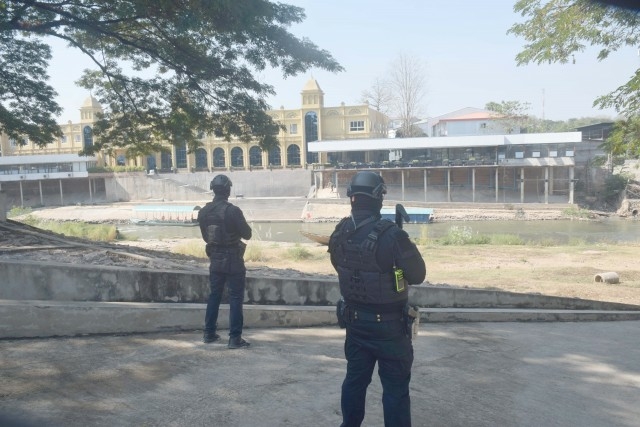
Myanmar’s government is demanding the resignation of a Border Guard Force (BFG) leader it said controls illegal casinos along the Thai-Myanmar border that are linked with Covid-19 outbreaks in both countries.

Local media report that hundreds more Thais working in a casino in the border town of Myawaddy, Karen state are expected to return to Thailand this week, as infections among returnees rise. Late last week, 17 Thais tested positive for Covid-19 after crossing back over the border from Myawaddy to Mae Sot in Tak province.

A news source in Tak said the Myanmar government has ordered the resignation of three commanders of the BGF, an armed group backed by the country’s military.

Among them is Karen-BGF leader Colonel Saw Chit Thu, who reportedly controls China-backed casinos in Myawaddy Township’s new gambling hub, Shwe Kokko.

“The three commanders are accused of cooperating with foreigners in opening casinos along the Thai-Myanmar border without permission from the government,” said the source. “These casinos are believed to have spread the virus among guests and workers, which include Thai, Myanmar and Chinese nationals, and have caused serious damage to the country.”

Since 2015, Chinese businesspeople have poured investment into Shwe Kokko. The controversial gambling hub now reportedly hosts more than 10 casinos and several thousand Chinese residents.

As of January 9, Myanmar had reported a total of 130,049 cases of Covid-19 and 2,826 deaths.

Pandemic debt leads to global reckoning #SootinClaimon.Com

#SootinClaimon.Com : ขอบคุณแหล่งข้อมูล : หนังสือพิมพ์ The Nation.

Pandemic debt leads to global reckoning

InternationalJan 11. 2021

By The Washington Post · Anthony Faiola, Alexander Villegas, Lesley Wroughton

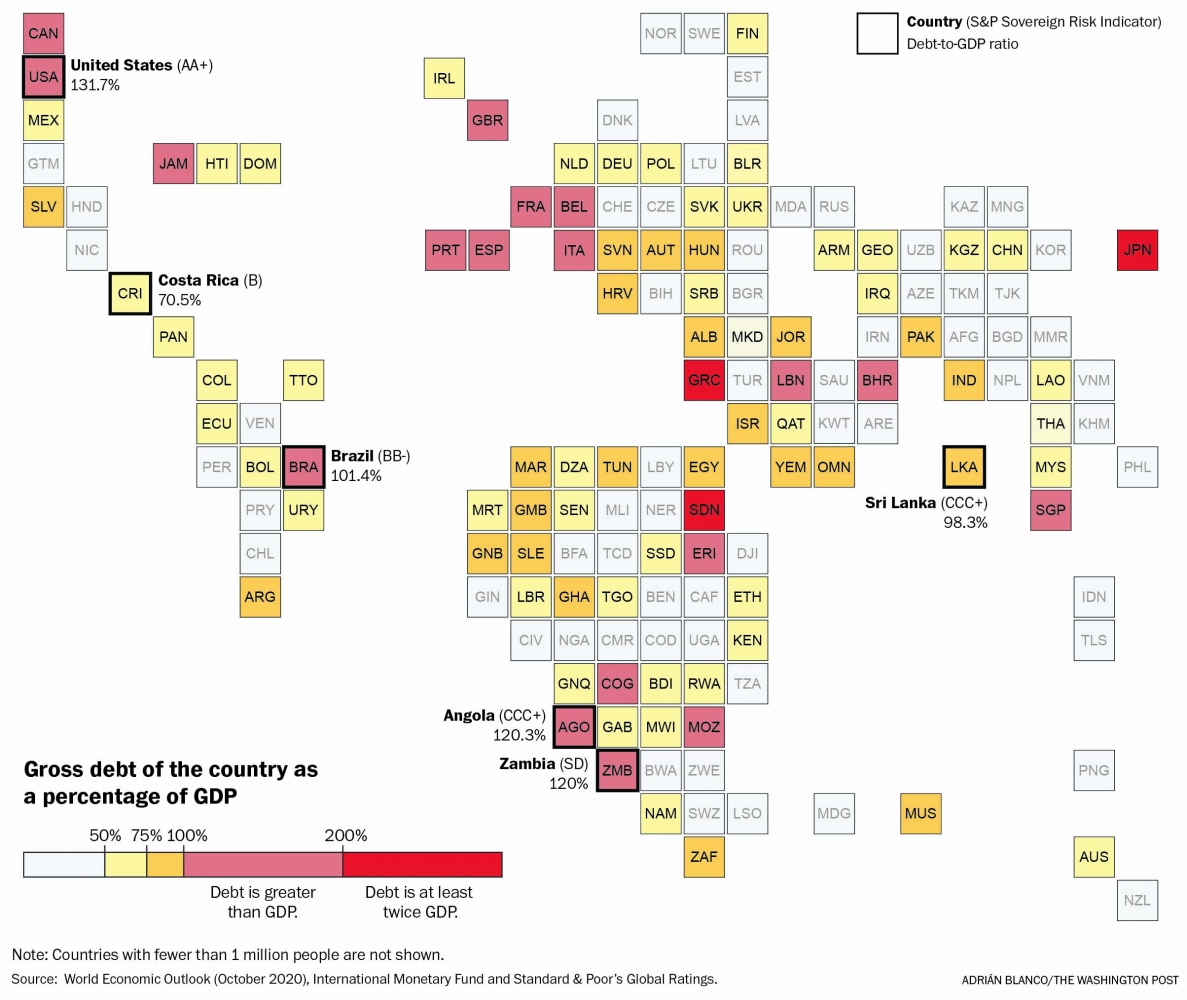
SAN JOSE, Costa Rica – This nation built Latin America’s model society, enacting universal health care and spending its way to one of the Western Hemisphere’s highest literacy rates. Now, it’s reeling from the financially crushing side effects of the coronavirus as cratering revenue and crisis spending force a reckoning over a massive pile of government debt.

The pandemic is hurtling heavily leveraged nations into an economic danger zone, threatening to bankrupt the worst-affected. Costa Rica, a country known for zip-lining tourists and American retirees, is scrambling to stave off a full-blown debt crisis, imposing emergency cuts and proposing tighter measures that touched off rare violent protests last fall. To keep the lights on, an eco-friendly nation is weighing desperate solutions – including open-pit gold mining, even oceanic fracking.

“Costa Rica is facing a social crisis,” said Ana Rosa Ruiz, an economist at the Costa Rican Technological Institute.

Around the globe, the pandemic is racking up a mind-blowing bill: trillions of dollars in lost tax revenue, increased spending and new borrowing set to burden the next generation with record levels of debt. In the direst cases – low- and middle-income countries, mostly in Africa and Latin America, that are already saddled with backbreaking debt – covering the rising costs is transforming into a high-stakes test of national solvency.

Analysts call it a “debt tsunami”: National accounts are sinking into the red at a record pace.

“I consider the risk to be very high of an emerging-market debt crisis where a lot of countries run into problems at once,” said Harvard University economist Kenneth Rogoff, former chief economist at the International Monetary Fund. “This is going to be a rocky road.”

By the end of 2020, total government debt worldwide was projected to soar by $9 trillion and top 103% of global GDP, according to the Institute of International Finance – a historic jump of more than 10 percentage points in one year. Countries have maxed out their credit to buy medical equipment, set up field hospitals, deploy health-care workers and source vaccines, even as pandemic-related recessions have caused tax revenue to plunge and aid for the unemployed to spike. Countries that rely on tourism, which has ground to a virtual halt, or commodities such as oil that have sunk in price have felt the sting most keenly.

The United States has run up debt at a pace not seen since World War II. But the world’s wealthy nations are better able to cope with growing debt than their poorer counterparts.

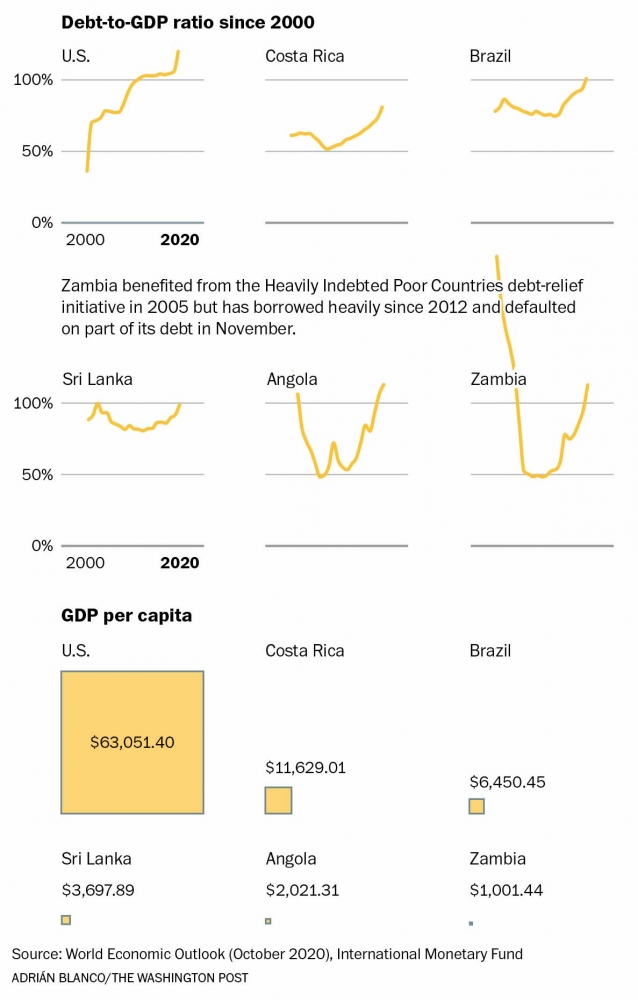
Angola, effectively shut out of global markets, is racing to strike a deal with the Chinese, but even that might not be enough to prevent a debt crisis. Sri Lanka, locked in recession, is required to make $4 billion in debt payments this year with only $6 billion in the bank. Brazil’s debt, worsened by a yawing budget deficit, has surged to 95% of GDP – raising alarm over the medium-term ability of the Latin American giant to stay afloat.

The IMF and the World Bank have sought to aid the most vulnerable states, and the world’s wealthiest nations endorsed a plan in October to extend a suspension of debt payments owed to them by the poorest. In November, those nations additionally agreed to jointly work toward some form of debt relief for the poorest nations that seek it from them, and they encouraged private lenders to follow suit.

But analysts say that may not be enough. Thirty-eight low-income countries are either in debt distress, according to the IMF, or at high risk of falling into it. Unless private creditors and wealthy nations step up and agree to concessions or outright debt forgiveness, the pandemic’s fiscal shock could hurl some of those, as well as highly leveraged middle-income countries such as Costa Rica, toward catastrophic national bankruptcies.

Analysts argue that the need for stimulus to keep economies running during this historically challenging period still outweighs the need to balance budgets. Even the IMF, the global guardian of fiscal rectitude, is telling countries that now is not the time to scrimp, lest they jeopardize still-fragile economic recoveries.

Yet even if a repeat of the cascading financial crises seen in Latin America and Asia in the 1980 and 1990s is avoided, the debt surge threatens to linger as a millstone around the necks of nations for years. It will compromise their ability to fight the first global increase in extreme poverty since the 1990s, and to invest in infrastructure projects, education and innovation down the line.

“You could think of it as a big crack in the ice,” said Sonja Gibbs, managing director of global policy issues at the Institute of International Finance. “Suddenly you’re in danger of a number of countries falling off the edge.”

Zambia, once a shining example of Africa’s economic renaissance, is now the Ghost of Crises Future for debt-burdened countries slammed by the pandemic.

The sub-Saharan nation fell into default in November, a result of its high reliance on foreign debt; a pandemic blow to the price of copper, its main commodity; and one of its worst droughts in 40 years. The country is now printing money to survive, forcing a devaluation of the kwacha and creating spiraling inflation that’s spreading misery at the worst possible time.

At the government’s Cancer Diseases Hospital in Lusaka, the capital, doctors say the price of imported drug treatments has doubled. A third of the country’s workers have lost wages, according to a household survey in July; 39% were skipping a meal, and 67% were worried about not having enough food.

Sakala Zulu, a 26-year-old teacher from eastern Zambia, said staples such as eggs and sugar now cost 60% more than three months ago, making it harder to feed his six children. The cost of transport for the 12-mile commute to and from work has risen by 20%.

“Right now, I feel there is no part of my life not affected,” Zulu said.

Zambia is seeking to restructure its debt, but private creditors have shown little willingness to budge. A move to renegotiate substantial loans from China has been cloaked in secrecy.

As things stand, more than half of government spending this year is earmarked for servicing debt alone – leaving little for social programs, health or education.

“What you see now on the ground is reduced spending on key social sectors,” said Ishmael Zulu of the advocacy group CUTS International. “With the high levels of poverty in Zambia, there are many people that are heavily reliant on government programs. These programs are suffering at the cost of increased debt levels. Hospitals that are in small districts and the far-flung areas of the country are suffering at the cost of increased debt servicing.”

– – –

Half a world away, Costa Rica is scrambling to avoid a similar fate.

When the pandemic hit, tourism, the country’s economic lifeblood, dried up and unemployment skyrocketed to more than 24%, draining state coffers of health-care contributions just as the government was struggling to respond to the coronavirus. A tax break for hard-hit businesses and financial aid to out-of-work Costa Ricans dug the fiscal hole deeper.

The ensuing cash crunch forced hard decisions, including emergency cuts. At El Jardín elementary school in northern Costa Rica, Principal Elizabeth Mejía says the operating budget was slashed in half. Teachers are buying their own printers, ink cartridges and paper to distribute assignments to students. Mejía said she’s been told by the government to hold fundraisers to cover maintenance: “They tell us if we need to fix something, that we should go sell tamales.”

In the years after the Great Recession of 2008, Costa Rica ran up deficits and debt to sustain expansive state payrolls and liberal policies. Two years ago, the government attempted what economists describe as a fiscal Band-Aid: a new value-added tax and limits on salary increases for state workers.

Those measures paled in comparison with the proposal last year, when the government of President Carlos Alvarado Quesada, seeking to boost its bid for a $1.75 billion IMF bailout, sought broad tax increases during the pandemic.

Protesters hit the streets, blocking intersections nationwide, clashing with police and slowing commerce in a country that had only recently come out of lockdown.

“People don’t have money to pay their debts,” said Gerardo Zúñiga, an activist who joined the protests with a mask on his face and a rosary around his neck. “Businesses don’t have money to pay for supplies, their employees, their permits and all the social contributions.

“We understand that there has to be some agreement with the IMF, but what we don’t agree with are items where the most vulnerable people are harmed.”

The government backed off that proposal and is now in talks with the opposition, unions, civic activists and industrial groups to find a more palatable solution. But to avoid a painful default like the one the country suffered in 1981, when runaway inflation and spikes in poverty sparked a lost decade, something’s got to give.

With tourism not expected to recover fully for years, politicians and businesses are pushing sources of revenue that run afoul of Costa Rica’s renowned environmentalism. They include open-pit gold mining – effectively an ecological trade-off for what supporters estimate would be 6,500 direct and indirect jobs and a $9.52 billion jolt for the economy.

In August, lawmakers pushed another controversial option: opening Costa Rican lands and shorelines to fracking and oil drilling.

“Our marine territory is 10 times larger than our landmass and we know little about its riches,” lawmaker Patricia Villegas said during a congressional debate. “We have sources of energy that we exploit like hydroelectric, wind, geothermal and solar, but we haven’t wanted to discuss the possibility of taking advantage of gas and oil. Costa Rica is sitting on a gold mine.”

In a country that pledged to rely entirely on renewable energy by 2030, the debt debate is pitting the country’s economic future against cherished environmental ideals. Activists, and the government, say any boost in oil and natural gas exploration runs counter to everything the country has worked for. The nation, they say, must find other ways.

“We’ve launched a decarbonization plan to the world, and those things are fundamental to us as a nation, not just cosmetic,” said Elián Villegas, Costa Rica’s finance minister. “I find those solutions to be very distant from the essence of being Costa Rican.”

Biden still planning to be sworn in on the steps of U.S. Capitol two weeks after mob attack #SootinClaimon.Com

#SootinClaimon.Com : ขอบคุณแหล่งข้อมูล : หนังสือพิมพ์ The Nation.

Biden still planning to be sworn in on the steps of U.S. Capitol two weeks after mob attack

InternationalJan 11. 2021Workers put up fencing outside the U.S. Capitol on Jan. 7. MUST CREDIT: Washington Post photo by Matt McClainWorkers put up fencing outside the U.S. Capitol on Jan. 7. MUST CREDIT: Washington Post photo by Matt McClain

By The Washington Post · Emily Davies, Matt Viser

Joe Biden still plans to be sworn in on the steps of the U.S. Capitol on Jan. 20, exactly two weeks after a pro-Trump mob with rioters wielding Confederate flags stormed the building to attack the very nation Biden was elected to lead.

That moment shrouded in symbolism will launch a 59th presidential inauguration set to take place under extraordinary circumstances. The event was already scaled down and subdued by the coronavirus pandemic. And now, the Biden administration has the added weight of showing strength and stability to the rest of the world, which watched in horror as American democracy wavered from the exact place where he is to take the oath of office.

While changes could still be made, as of last week Biden’s inauguration and swearing in were set to take place on the west front of the U.S. Capitol.

“We are confident in our security partners who have spent months planning and preparing for the inauguration, and we are continuing to work with them to ensure the utmost safety and security of the president-elect,” a senior Biden inauguration official said last week, speaking on the condition of anonymity to discuss security matters. “This will mark a new day for the American people focused on healing our nation, bringing our country together and building it back better.”

Following weeks of historic unrest, the Biden administration is hoping that the inauguration will draw attention toward the importance of national unity and away from President Donald Trump, who said in a tweet Friday that he would not attend the event. He would be the first president to skip his successor’s swearing-in ceremony in 152 years.

Some involved in the inauguration planning, who have been in close contact with security agencies, noted that the security footprint for the event will be much larger than it was Wednesday at the Capitol, when the mob disrupted the Senate and House of Representatives as lawmakers accepted the election results.

The inauguration is deemed a National Special Security Event (NSSE), which brings in a wide range of federal agencies and law enforcement officials that create a wide security perimeter, with road closures and barriers around the Capitol. The Secret Service, the agency responsible for designing and implementing a security operation plan for such events, released a statement Thursday night stressing its readiness for Inauguration Day.

“For well over a year, the U.S. Secret Service, along with our NSSE partners, has been working tirelessly to anticipate and prepare for all possible contingencies at every level to ensure a safe and secure Inauguration Day,” the statement said.

D.C. Mayor Muriel Bowser released a letter Sunday urging Chad Wolf, acting secretary of the Department of Homeland Security, to take “a very different approach than previous inaugurations given the chaos, injury, and death experienced at the United States Capitol during the insurrection.”

Bowser asked the department to extend the NSSE period and coordinate with other federal agencies to free up the D.C. police to focus on “its local mission.” She also called on Wolf to cancel and deny permits for all demonstrations from Monday to Jan. 24.

Officials say Joe Biden will still be sworn in as president Jan. 20 on the steps of the Capitol, where a mob stormed the building Jan. 6. MUST CREDIT: Photo for The Washington Post by Astrid Riecken

Officials say Joe Biden will still be sworn in as president Jan. 20 on the steps of the Capitol, where a mob stormed the building Jan. 6. MUST CREDIT: Photo for The Washington Post by Astrid Riecken

Just three days before Wednesday’s pro-Trump demonstration at the Ellipse, the National Park Service adjusted the event permit from 5,000 to 30,000 people, a decision Bowser said “demonstrated the National Park Service’s willingness to approve last minute permits and major adjustments.”

Some Trump supporters have vowed to return to the District of Columbia on Jan. 17, with one online post cited by Alethea Group calling for an “ARMED MARCH ON CAPITOL HILL & ALL STATE CAPITOLS.” Others have discussed a “Million Militia March” on Inauguration Day.

As of Friday, the Park Service had issued only two permits that together allow for 75 people for demonstrations around the Inauguration, according to Mike Litterst, a spokesman for the Park Service.

The Park Service is still processing five permit applications, which include two requests for events expecting 5,000 people. The first of those applications was submitted last January by D.C. Action, a liberal group based in D.C. The second was submitted in December by Black Pact, a nonpartisan political group organizing a march for reparations.

Litterst said he was waiting for instructions from the Presidential Inaugural Committee to “make any adjustments to our facility and our property.”

Sen. Roy Blunt, R-Mo., chairman of the Joint Congressional Committee on Inaugural Ceremonies (JCCIC), and Sen. Amy Klobuchar of Minnesota, the ranking Democrat on the Senate Rules and Administration Committee, said in a statement Thursday that the storming of the Capitol was a “sad and solemn day for our country,” but plans to swear in Biden and Vice President-elect Kamala Harris will move forward as planned.

“The outrageous attack on the Capitol, however, will not stop us from affirming to Americans – and the world – that our democracy endures,” they said in the statement.

Paige Waltz, communications director for the JCCIC, said that the committee is working with “institutional partners to conduct a thorough assessment of the inaugural platform, and the other Capitol spaces and grounds that are traditionally used for inaugural ceremonies.”

Waltz added that the committee will not make further comments about the specifics of the event until the assessment is complete.

The District has also ramped up security measures. On Wednesday, Bowser extended a public emergency order through Jan. 21, which allows her to issue curfews, close businesses, halt transit and dip into emergency funds, among other actions, to preserve public safety through the inauguration.

Military officials have erected a seven-foot fence designed to prevent scaling around the periphery of the U.S. Capitol. More than 6,000 National Guardsmen were expected to arrive in the District over the weekend to help support the D.C. police and Capitol Police, U.S. Army Secretary Ryan McCarthy said Thursday.

The focus on fortification and security may further scale down an event already limited in size by the pandemic. The Presidential Inaugural Committee (PIC) requested and received permits for Lafayette Square, portions of the National Mall from Third to 14th streets, land surrounding the Lincoln Memorial and the Martin Luther King Jr. Memorial, among others, for the inauguration. The permit requests include plans for a Biden-Harris inaugural celebration at the Martin Luther King Jr. Memorial and an event with stages and tents at the Lincoln Memorial. But even before the pro-Trump attempted insurrection at the Capitol, Biden’s inaugural team had announced that the iconic parade would be virtual and canceled all in-person balls.

In December, the JCCIC said members of Congress would receive only two tickets each, as opposed to the 130,000 they are typically instructed to distribute among their constituents, citing public health concerns.

During the 2017 inauguration, more than 95 percent of hotel rooms were filled across the District, according to a spokesperson for Destination DC, a group that promotes the city to visitors. This year, while comprehensive occupancy data is not available until after the event, there are few signs pointing to a surge in visitors to the District.

Thomas Penny, president of Donohoe Hospitality, which oversees more than 15 hotels in the region, said that reservations at his hotels remain light in late January, with the most noticeable uptick in interest since Wednesday coming from security-related agencies seeking hotel rooms. He said one security-related agency called on Thursday to book 200 rooms for the inauguration.

Emily Mooney, retail strategy manager for the DowntownDC Business Improvement District, said her team has been working closely with the city government and security agencies to communicate with local businesses about expectations for the inauguration and ensure that their landscaping is up to par for the event, no matter the number of people who travel downtown that day.

She said her district would refrain from issuing formal guidance to business owners about boarding up or closing shop unless city leadership suggests otherwise.

“We are preparing as we normally would for inauguration even though we expect a much smaller turnout,” she said. “We fully expect that downtown D.C. will be safe and secure for the inauguration.”

Republicans wonder whether Trump’s problems will be his undoing #SootinClaimon.Com

#SootinClaimon.Com : ขอบคุณแหล่งข้อมูล : หนังสือพิมพ์ The Nation.

Republicans wonder whether Trump’s problems will be his undoing

InternationalJan 11. 2021President Donald Trump addresses a Jan. 4 campaign rally in Dalton, Ga., on the eve of the runoff elections lost by Republican incumbent Sens. Kelly Loeffler and David Perdue. MUST CREDIT: Washington Post photo by Jabin BotsfordPresident Donald Trump addresses a Jan. 4 campaign rally in Dalton, Ga., on the eve of the runoff elections lost by Republican incumbent Sens. Kelly Loeffler and David Perdue. MUST CREDIT: Washington Post photo by Jabin Botsford

By The Washington Post · Philip Rucker

WASHINGTON – Whether President Donald Trump is forced from office or serves out the remaining days of his term, he is now destined to slink out of the White House considerably diminished from the strapping, fearsome force he and his advisers imagined he would be in his post-presidency.

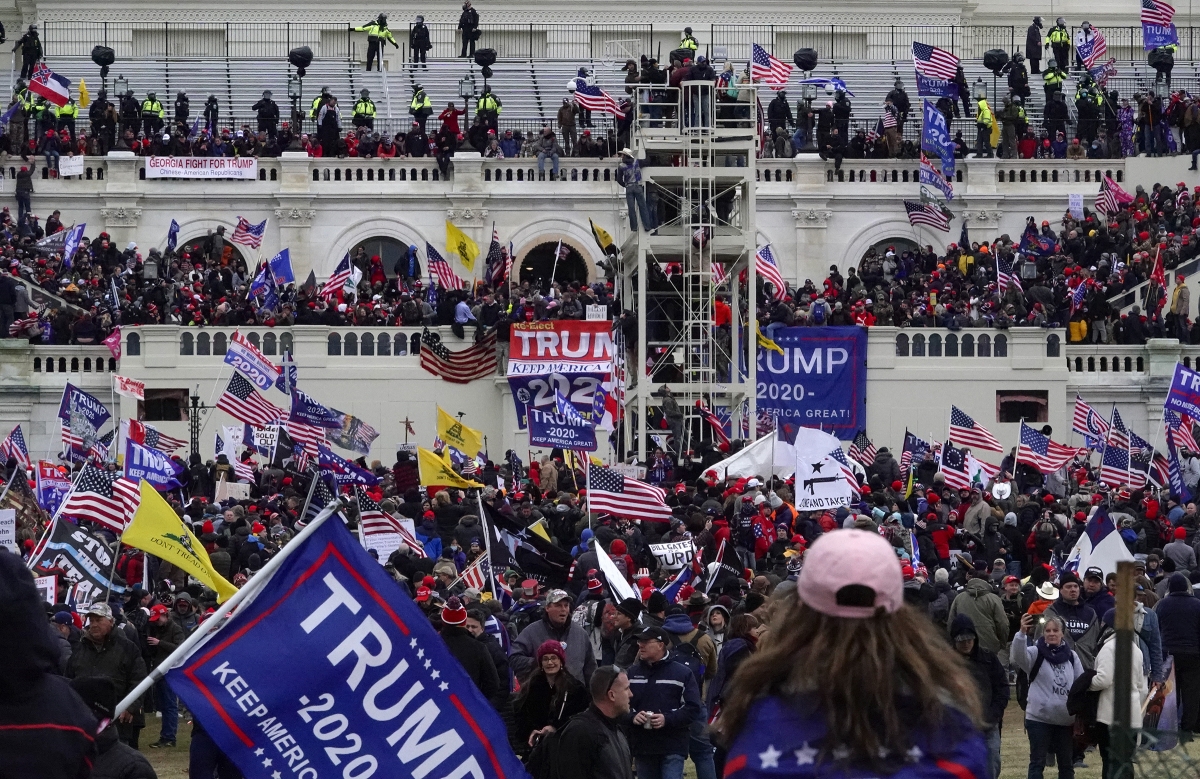
In the wake of the mob attack on the Capitol that Trump incited, some allies have abandoned him, many in the business community have shunned him and Twitter took away his social media megaphone. Many Republicans also hold him responsible for losing their Senate majority with last week’s twin defeats in Georgia, not to mention their House majority two years ago.

Trump had planned to retreat from Washington to plot a comeback that could return him to the White House in four years, but now he will have to contend with a possible second impeachment or perhaps even criminal charges.

With 10 days remaining in his presidency, Trump has become the political equivalent of a balloon in the Macy’s Thanksgiving Day Parade flying high down New York’s Sixth Avenue, only to be punctured, twist in the wind and deflate as it rounds the corner to the parade’s endpoint at Herald Square.

“The way he handled himself in the last 60 days has tarnished his reputation and his ability to be a future leader – and by botching the Georgia Senate races, his entire economic agenda is about to get overturned by the Senate,” longtime Republican strategist Scott Reed said. “He’s really gone backwards like no one ever would have imagined.”

Despite Trump’s current troubles, he is sure to maintain a grass-roots following. In his statement Friday night reacting to Twitter’s extraordinary decision to permanently ban his account because the president’s messages posed a threat of future violence, Trump effectively laid claim to the 74.2 million “great American patriots” who voted for him in November.

Jason Miller, a senior political adviser to the president, said after speaking with Trump on Saturday that the president plans to spend tens of millions of dollars from his political action committee to help Republicans win back the House and Senate in 2022. He left open the possibility that Trump would run for president again in 2024.

“President Trump is still the biggest name in American politics and the president is still the leader of the Republican Party. He’ll be the most sought-after political endorsement heading into the 2022 midterms,” Miller said. He added: “You can’t censor an entire movement. This is critical to keep in mind for Beltway politicians and pundits who themselves have lost touch with Republican grass-roots activists around the country.”

Still, the new reality for Trump is messy. Frank Luntz, a veteran GOP pollster, conducted a focus group the night after the Capitol attack with 12 Trump voters from 11 different states. He said they fell into three camps: those who believe the fact that President-elect Joe Biden won the election and think it’s time Trump move on; those who think it was stolen from Trump but he still should move on; and those who think it was stolen and Trump should continue to fight.

Luntz was flabbergasted by the sharp, even angry tone of the discussion.

“They were very emotional with each other, very harsh with each other,” he said. “This has never happened in a Trump focus group I’ve done. … Trump voters are like single moms with kids. They back each other, they empathize with each other, because they know the stresses and strains they each have. Not anymore. These Trump voters are ready to declare war with each other.”

That spells trouble for the president, Luntz concluded. “When you’ve got a unified force, you can speak to them as their general and motivate them to change their behavior,” he added. “But when they have broken down into tribes, it’s impossible to deliver a message that reaches everybody. Trump is much less powerful today than he was 72 hours ago.”

Luntz said that when he asked the group of 12 to name their preferred candidate for president in 2024, only two said Trump. None said Vice President Mike Pence.

Wednesday’s attack was a clarifying moment for Trump backers. A handful of administration officials – including two original members of Trump’s Cabinet, Transportation Secretary Elaine Chao (who is married to Senate Majority Leader Mitch McConnell) and Education Secretary Betsy DeVos – resigned in the aftermath.

The scene Jan. 6 outside the Capitol after a mob of Trump supporters breached the building in a violent riot. MUST CREDIT: Washington Post photo by Bonnie Jo Mount

The scene Jan. 6 outside the Capitol after a mob of Trump supporters breached the building in a violent riot. MUST CREDIT: Washington Post photo by Bonnie Jo Mount

On Capitol Hill, McConnell, R-Ky., publicly broke with Trump even before the deadly siege began, warning in a speech Wednesday that “our democracy would enter a death spiral” if the losing side in an election were able to overturn a fair outcome with baseless allegations. McConnell has also told fellow senators and other confidants that he does not plan to speak with Trump again.

Others have joined in. Sen. Lisa Murkowski, R-Alaska, told the Anchorage Daily News: “I want him to resign. I want him out. He has caused enough damage.”

Sen. Lindsey Graham, R-S.C., long one of Trump’s confidants and golfing buddies, declared on the Senate floor: “Count me out. Enough is enough.”

Sens. Mitt Romney, R-Utah; Patrick Toomey, R-Pa.; and Ben Sasse, R-Neb., also roundly denounced the president for his rhetoric and complicity in the mob attack.

There have been other defections, too. Consider the case of Rep. Nancy Mace, a newly elected Republican freshman from South Carolina, a state the president carried by a sizable 12 percentage points.

Mace worked as a coalitions and field staffer on Trump’s 2016 campaign, and in her congressional campaign last year she touted her work for the president. She featured a photo of him with her, Trump smiling and flashing a thumbs-up. And the president tweeted his support for her four times.

But on Thursday, when a reporter from the State asked whether she still believed in Trump, Mace did not hesitate. “No, I don’t,” she said. “I can’t condone the rhetoric from yesterday, where people died and all the violence. These were not protests. This was anarchy.”

Speaking more generally, Mace told the newspaper that the Trump-incited riot undermined all that he has accomplished as president.

“That legacy has now been wiped out,” Mace said. “It is gone, and we have to start over from scratch.”

Some Trump allies would only speak about the president’s weakened state privately. One evangelical leader, for instance, likened Wednesday’s events, coupled with the election defeats on Tuesday in Georgia, to a torpedo hitting the starboard side of a warship. But the person’s concern about being quoted by name and angering Trump was itself a testament to the president’s enduring, if somewhat diminished, political power.

Brendan Buck, a former adviser to former Republican House speakers Paul Ryan and John Boehner who has criticized Trump before, cautioned against declaring the outgoing president politically dead.

“It is folly to suggest that everyone will just turn their back on him,” Buck said. “His power has always rested in the sway he has with voters. It was never because members of Congress particularly cared for him or liked him. I have seen so many times where you thought, this was the moment things would change, but folks went home, they heard from their constituents, their constituents demanded continued loyalty to Donald Trump and they came back refreshed as Trumpers once again.”

Buck argued that any kind of punishment for Trump – be it impeachment or prosecution or merely a censure by Congress – could accrue to his political benefit, a point Miller made as well.

“His whole persona is built on grievance, that he is the champion of regular people while the elites in Washington are against him,” Buck said. “I think that he would reap a lot of political benefit from the impeachment.”

Anthony Scaramucci, a former White House communications director who has since come out sharply against Trump, warned that the outgoing president is capable of a political rebirth – though at 74 years old, he argued, Trump does not have time to waste.

“Unless they put him in a position where he is no longer eligible to run for office and decapitate him politically, it is not clear to me that we’ve seen the last of Trump,” Scaramucci said.

Still, the lessons of history do not favor Trump. U.S. presidents tend to be like new cars parked in a showroom. Once they leave office, they depreciate in value immediately, followed by a steady erosion. Even if they maintain their popularity, as Barack Obama has, or recast their image, as Bill Clinton did through his charity work, they never again command the attention and power they had in office. This has proven especially, painfully true for presidents defeated in their bids for re-election, such as Gerald Ford and Jimmy Carter.

“In American politics, love turns to hatred very quickly,” presidential historian Michael Beschloss said. “How appealing is Donald Trump going to look in a month or two? Is this someone who will be beleaguered by indictments and/or lawsuits? Is this someone who is going to be struggling with financial problems? Those things may not look so appealing, even to people who love him at the moment.”

Beschloss added: “Americans have a tendency, almost in their DNA, to like and respect a president. (Richard) Nixon had a lot of popularity right down until the end, but very quickly he became the embodiment of lying, criminality and bad political ethics, and became so radioactive that he was never invited again to a Republican convention.”