Democrats split on how hard to push impeachment #SootinClaimon.Com

#SootinClaimon.Com : ขอบคุณแหล่งข้อมูล : หนังสือพิมพ์ The Nation.

Democrats split on how hard to push impeachment

InternationalJan 11. 2021
By The Washington Post · Felicia Sonmez, Mike DeBonis, Juliet Eilperin

WASHINGTON – Disagreements are breaking out among Democrats over how aggressively to push for the impeachment of President Donald Trump as House members insist that he face consequences for inciting last week’s deadly assault on the Capitol while President-elect Joe Biden signals that he does not want the effort to interfere with his agenda.

https://www.washingtonpost.com/video/c/embed/72efb300-76da-4e5e-b1f3-8679e2306af2?ptvads=block&playthrough=false

Both sides are treading carefully, aware that many voters hope Congress will prevent Trump from provoking further violence, but also want Biden to be free to take immediate action on the coronavirus pandemic and a faltering economy. Some Democrats said privately that they are wary of impeachment but unsure how to slow its momentum given the intensifying passions against Trump.

The conflict gives Biden with his first test on what could be an early, incendiary dilemma facing his presidency: how hard to pursue accountability for Trump and those in his orbit.

“There has to be consequences, and that can take various forms,” said Rep. Dean Phillips, D-Minn. “Clearly impeachment has its own consequences, and we recognize that we don’t want to impact the Biden administration. And we want to ensure that whatever we pursue can be achieved.”

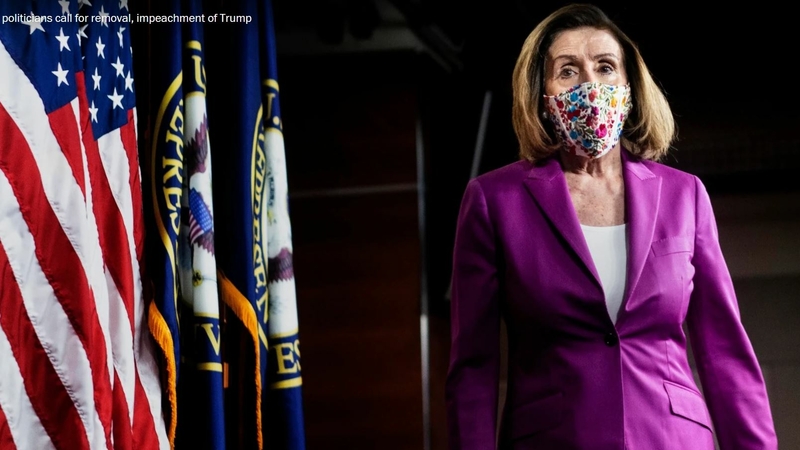
House Speaker Nancy Pelosi, D-Calif., on Sunday evening said the House would “proceed with bringing impeachment legislation to the Floor” but announced no firm timeline to do so. First, she said, Democrats plan to pass a resolution calling on Vice President Mike Pence and the Cabinet to remove Trump under the provisions of the 25th Amendment.

“As the days go by, the horror of the ongoing assault on our democracy perpetrated by this president is intensified and so is the immediate need for action,” she said.

In a sign of the Democrats’ struggles with the issue, Rep. James Clyburn, D-S.C., a Biden ally and House leader, proposed Sunday that the House vote this week to impeach but wait a few months to submit the articles of impeachment to the Senate for a trial.

Those comments provoked widespread frustration among Democrats, according to aides and lawmakers, who spoke on the condition of anonymity to air internal discussions, and they worried that Clyburn’s remarks would undermine the party’s case for Trump’s quick removal: that he is an immediate danger to the nation.

Some Democrats are looking to Biden to take a firm public stance and slam the brakes on impeachment, but top Democrats now see it as increasingly unlikely that the president-elect will go further than his measured warning on Friday that whatever else Congress does, it needs to “hit the ground running” on his agenda when he takes office.

“The train has left the station. I think many are worried about how it gets done, how it’s going to be handled, and how do we make sure it’s not going to divide the country further,” one Democrat said of impeachment. “It’s on a track that, while people have reservations, nobody knows how to stop it.”

On Monday morning, House members plan to introduce responses to Wednesday’s assault on the Capitol and Trump’s role in encouraging it. The earliest action could come Tuesday in the House Rules Committee, which would meet to prepare legislation for the House floor; actual votes on impeachment or other items can occur no sooner than Wednesday – a week before Biden’s inauguration.

As of Sunday afternoon, a draft impeachment resolution had garnered 210 co-sponsors in the House, according to Rep. David Cicilline, D-R.I., one of its authors.

Pelosi and other Democratic leaders are increasingly determined to hold Trump immediately accountable and force his Republican defenders to choose whether to stand by him – a stance that has been reinforced by members’ personal anger at the breach of the Capitol, as well as the fumbling, often-equivocal GOP response. Several said the Republican calls dismissing impeachment as too divisive have further infuriated Democrats.

“Republicans need to be put on the record,” Pelosi said on a Thursday call with her leadership team, according to two people familiar with her remarks.

Phillips said impeachment would move forward unless Republicans embraced an alternative: “It is now Sunday evening, and we’re still awaiting any proposition from the GOP to hold him to account,” he said. “Many of my colleagues on the other side of the aisle are talking about unity. . . . If we want unity within the Congress, I invite a proposition from the GOP to fulfill those conservative principles of accountability and consequence.”

Among those joining the effort Sunday was Rep. Stephanie Murphy, D-Fla., co-chair of the moderate Blue Dog Coalition, who said in a tweet that Congress has a “constitutional and moral obligation” to hold the president accountable “for inciting violence and insurrection.”

Another prominent Blue Dog – Rep. Kurt Schrader, D-Ore., who raised concerns about a rapid impeachment in a Friday teleconference of House Democrats – backed the effort late Saturday. “While I have pushed other remedies for his criminal conduct, impeachment is the tool before us and warranted for his seditious acts,” he tweeted.

House Republicans are planning their own conference call on Monday to discuss their approach.

Democrats must act quickly because Trump is scheduled to leave office on Jan. 20 in any case. And the rage of many Democrats is colliding with Biden’s desire to set up an administration that will immediately face crises – as well the desire to repair a government the Biden team sees as badly damaged and demoralized.

A Senate engulfed in an impeachment trial would struggle to do anything else, and Biden has voiced frustration that senators have not moved faster to confirm his Cabinet picks.

“There is an appetite to better understand where President-elect Biden’s head is at relative to what he believes is in the best interest,” Phillips said, acknowledging that Biden doing so publicly “presents complications.”

The dilemma led to a flurry of alternative proposals Sunday as lawmakers looked for a way to navigate the pressures.

Clyburn said his idea of waiting until after the Biden administration’s first 100 days to send articles of impeachment to the Senate would allow the new president install key members of his team. “Let’s do the people’s work and let’s vote to impeach this president, and then we’ll decide later – or the Senate will decide later – what to do with that,” Clyburn said.

Others said Congress should censure Trump instead of impeaching him, an action that could be taken quickly and possibly attract broader support.

Democratic Del. Eleanor Holmes Norton, the District of Columbia’s nonvoting representative in the House, said she plans to introduce such a measure Monday, describing it as “the only way to send a bipartisan, bicameral message without delay to the country and the world that the United States is a nation of laws.”

Rep. Adam Kinzinger, R-Ill., a Trump critic, also suggested that he would back a censure motion.

But other Democrats have expressed worry that if the House and Senate do not act quickly, Trump and his supporters will be emboldened to continue working to overturn Biden’s election, and that the country may be wracked by further threats to the safety of lawmakers, officials and the democratic system.

On Sunday, several high-profile Republicans, including Sen. Pat Toomey of Pennsylvania and former New Jersey governor Chris Christie, joined the calls for Trump’s removal, potentially making it harder for any Democratic leader to oppose impeachment.

Pelosi told CBS News’s “60 Minutes” that one reason to impeach Trump would be to prevent him from running again in 2024. “There’s strong support in the Congress for impeaching the president a second time,” she said in the interview, which was taped Friday and aired Sunday.

Rep. Ted Lieu, D-Calif., responding to the argument from some Republicans that impeachment would be a “bad start” for Biden as he seeks to unify the country behind an ambitious agenda, said in a tweet that the country “cannot heal until we first get justice.”

Rep. Alexandria Ocasio-Cortez, D-N.Y., a second-term congresswoman who is among the leading voices of the party’s liberal wing, suggested that Democrats should pursue an “all-of-the-above” approach that includes various avenues for ousting the president.

She rejected the idea that removing Trump should take a back seat to Biden’s plans, suggesting Biden’s own safety may be at stake.

“With profound respect, I believe that the president’s safety and the safety of the United States Congress and the security of our country takes precedent over the timing of nominations and the timing of potential confirmations,” Ocasio-Cortez said on ABC News’s “This Week.” “This is an immediate danger right now.”

Some Democrats are pushing for the invocation of the 25th Amendment, which provides for the removal of an unfit president, as a way to resolve the issue quickly without involving Congress. Pelosi said she favors that “because it gets rid of him; he’s out of office.”

But that would require Pence and a majority of the Cabinet to support removing Trump, an unlikely scenario. Some Democrats also cite the 14th Amendment, which prevents individuals from holding office if they have supported insurrection, but that, too, seems remote.

Neither Biden nor Trump spoke publicly Sunday, and the president has been barred from Twitter, his preferred communication channel. White House spokesman Judd Deere said Trump is expected to travel to Alamo, Texas, on Tuesday to mark progress on his border wall.

While Biden did not directly weigh in on impeachment, he reiterated in a tweet Sunday his theme of looking ahead, saying, “In 10 days, we move forward and rebuild – together.”

That echoed the message of the president-elect’s news conference Friday, when he told reporters he was focused on “getting our agenda moving as quickly as possible” and declined to call on Congress to take any particular action against Trump, saying it was their decision.

“We were duly elected, so I think it’s important that we get on with the business of getting him out of office – and the quickest way that that will happen is us being sworn in on the 20th,” Biden said.

One close Biden ally, Sen. Chris Coons, D-Del., said on CBS’s “Face the Nation” that the most important thing Republicans can do is stop spreading the falsehood that the 2020 election was stolen and help convince Trump’s supporters that Biden is the duly elected president.

“There can only be reconciliation with repentance,” Coons said.

Most Republicans have largely been silent about any consequences for Wednesday’s riot, whether for Trump or the members of Congress who encouraged it. But some on Sunday joined Democrats in calling for Trump to leave office.

Asked on CNN’s “State of the Union” whether Trump should step down, Toomey said, “I think at this point, with just a few days left, it’s the best path forward, the best way to get this person in the rearview mirror for us.”

Speaking on “Fox News Sunday,” Trump’s former chief of staff Mick Mulvaney said that of all of the things Trump has done, “I could probably defend almost all of them” until this point. But in the riot’s aftermath, he would “seriously” consider voting to impeach Trump if he were still a House member.

On ABC’s “This Week,” Christie, a former Trump backer, said he would also vote to impeach if he were in Congress. “If inciting to insurrection isn’t [an impeachable offense], then I don’t really know what is,” Christie said.

Other Republicans remained wary or opposed to impeachment, including most of those currently in office. Sen. Roy Blunt, R-Mo., suggested that it was not necessary because there was little chance Trump would repeat his dangerous actions.

“Now, my personal view is that the president touched the hot stove on Wednesday and is unlikely to touch it again. And if that’s the case, I think we – we get -” Blunt said, trailing off. Then, he added: “Every day we get closer to the last day of his presidency, we should be thinking more about the first day of the next presidency than the last day of his presidency.”

For anti-Trump Americans, calamity spurs a muted sense of vindication #SootinClaimon.Com

#SootinClaimon.Com : ขอบคุณแหล่งข้อมูล : หนังสือพิมพ์ The Nation.

For anti-Trump Americans, calamity spurs a muted sense of vindication

InternationalJan 10. 2021The American flag flies at half-staff at the U.S. Capitol on Jan. 8 as ordered by House Speaker Nancy Pelosi, D-Calif., in reaction to the death of Officer Brian D. Sicknick of the U.S. Capitol Police after a mob attacked the Capitol two days earlier. MUST CREDIT: Washington Post photo by Melina MaraThe American flag flies at half-staff at the U.S. Capitol on Jan. 8 as ordered by House Speaker Nancy Pelosi, D-Calif., in reaction to the death of Officer Brian D. Sicknick of the U.S. Capitol Police after a mob attacked the Capitol two days earlier. MUST CREDIT: Washington Post photo by Melina Mara
By The Washington Post · Matt Viser · NATIONAL, POLITICS 

For the past four years, a parade of Democrats and establishment Republicans had shouted alarm about the noxious brand of politics that President Donald Trump had nurtured, saying that it would lead to potentially deadly repercussions and a political repudiation. 

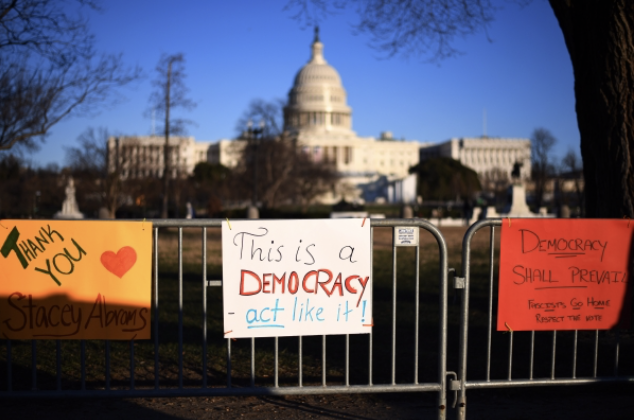
Pro-democracy signs line a fence near the U.S. Capitol in Washington on Jan. 9, three days after the building was invaded and vandalized by Trump-supporting rioters. MUST CREDIT: Photo for the Washington Post by Astrid Riecken

Pro-democracy signs line a fence near the U.S. Capitol in Washington on Jan. 9, three days after the building was invaded and vandalized by Trump-supporting rioters. MUST CREDIT: Photo for the Washington Post by Astrid Riecken

Over the course of a 24-hour period last week, both of those fearful predictions came to pass, as the worst aspects of what Trump has wrought were put on full view and he, his party and the nation faced significant consequences. 

First, Republicans lost two Senate races they had been favored to win in the usually conservative state of Georgia, giving Democrats full control in Washington as Trump’s party blamed him for the losses. Next, Trump incited his supporters with false allegations about the November election and directed them to the U.S. Capitol, where the mob mounted a deadly attack on another branch of the government, and on democracy itself. 

Roses are left Jan. 9 at the fence that now surrounds the U.S. Capitol building, three days after it was invaded and vandalized by Trump-supporting rioters. MUST CREDIT: Photo for the Washington Post by Astrid Riecken

Roses are left Jan. 9 at the fence that now surrounds the U.S. Capitol building, three days after it was invaded and vandalized by Trump-supporting rioters. MUST CREDIT: Photo for the Washington Post by Astrid Riecken

It was no outside force, only the actions of Trump and his supporters, that brought on calamity. In its wake was left a shaken nation and a mix of reactions among those who had long sounded the warnings that last week became undeniable. Yet any sense of vindication was buried under the horror of Wednesday’s insurrection at the Capitol.

“It’s finally coming into focus,” said David Bowen, a Wisconsin state assemblyman and Democrat from Milwaukee. “Maybe it was blurred before. But it couldn’t be more clear at this point – even for people who supported Trump for a number of different reasons.”

Bowen found himself dejected Tuesday afternoon when the Kenosha County district attorney announced that no officers would be charged for the shooting of Jacob Blake, a 29-year-old Black man who was left paralyzed. By evening, he felt uplifted when Democrats won control of the Senate, which he hopes will allow them to address racial injustices. 

The next day, some of his worst fears came true when the Capitol mob engaged in what he viewed as an attempted coup. But alongside that arose gratification in the widespread condemnation of Trump. 

“To have these shifts of just raw emotions,” Bowen said. “The silver lining was that possibility we are better positioned than ever to have a Congress at the national level that will try to find some national standards around justice for Black people who are seeking change. … For Trump to proudly do nothing on these issues of justice and systemic racism – it’s all coming to a head right now, even in his last days of the presidency.”

The backlash against Trump has been swifter than after past missteps by him, giving longtime Trump opponents the sense that, finally, their warnings about the president’s toxicity have been recognized. Twitter and Facebook have banned him from their platforms, cutting off some of the social media oxygen he craves. Longtime allies, many of whom went along with Trump in sowing doubt about the election results and accommodating his coarsest moments, have abruptly shifted gears. Across the political landscape, the calculus instantly changed, as fear of crossing Trump was replaced with fear of being seen as complicit. 

“Enough is enough,” Sen. Lindsey Graham, R-S.C., one of Trump’s closest allies and a frequent golfing partner of the president’s, said in the aftermath of the mob attack. “I’m out.”

Among Democrats, the emotions of last week were significantly different from November’s. Then the excitement that Biden had defeated Trump – with spontaneous dance parties breaking out in cities – was tempered by the party’s loss of seats in the House and failure to claim the Senate majority. In Georgia, neither Democrat had come close to winning outright, forcing dual runoffs that traditionally favored Republicans. It was a sobering reminder that Trump – who won 74 million votes, the second most in U.S. history behind only Biden – had a potent grip on a much larger swath of the country than many had believed. 

“What really surprised me was that the public did not hold the people who enabled Trump for four years accountable,” said Will Buergey, the Democratic Party chairman in Gogebic County, Mich. “And when I initially saw Nov. 3 results out of Georgia, I was pretty pessimistic about Democrats’ chance to win.”

So the results last week were a welcome shock. Trump’s actions clearly damaged the Republican Party’s chances; his repeated criticism of Republicans over their unwillingness to go along with his false claims about a fraudulent election failed to work, with a majority of voters even in Georgia no longer willing to go along with him. Between the November election and the runoff two months later, it was the Biden-backed Democratic candidates who gained significant ground, not the Trump-backed Republican incumbents.

“I was thrilled,” Buergey said. Finally, he added, “It was a repudiation against Trump.”

Georgians also sensed repudiation in a continuation of the shifts that have happened alongside Trump’s rise or, in some cases, in direct response to it. 

Sheikh M. Rahman, an immigrant from Bangladesh who in 2018 became the state’s first Muslim state senator, saw in the election of the two Democrats – Jon Ossoff, the state’s first Jewish senator, and Raphael Warnock, who will be the state’s first black senator – an outright rejection of the style of politics that Trump practiced.

He sees in the elections a new Georgia, and a new America, too. 

“I do feel gratified,” he said. “Now, we have to deliver.”

Those contests ended just as the country was gripped by the images from the U.S. Capitol, which cut short their celebrations over winning control of the Senate.

Trump’s rhetoric has always been outside the pale. He refused to fully condemn white nationalists after the deadly “Unite the Right” rally in Charlottesville, Va., in August 2017. During a presidential debate he told the Proud Boys, a male-chauvinist organization with ties to white nationalism, to “stand back and stand by.” He ridiculed NFL football players for kneeling during the national anthem as a protest of racial injustice, and he nodded to anti-Semitic tropes. As far back as the spring of 2016, an opponent – now an ally, Sen. Ted Cruz, R-Texas – said Trump “has a consistent pattern of inciting violence.”

But there were few far-reaching ramifications for Trump until recently. 

“It’s been more of an eye-opener,” said Nancy Quarles, a commissioner in Oakland County, Mich., of the impact of last week. “Even people I serve with – Republicans and independents who were looking at not so much him as a person but believed in his philosophies – some of that has turned. They’re not as strongly supporting him.” 

She said the week has been turbulent and, at times, felt like the country has reached an all-time low in its ability to engage in civil discourse – even as she is optimistic about news that she felt got lost: Democrats winning the Senate majority. 

“I’m hopeful. And looking forward to this being over with. And moving on,” she added. “The new administration is going to have their hands full trying to repair everything. They have to pick up the pieces and put it all back together. And I don’t know how long that’s going to take.”

Trump almost certainly will retain a strong and powerful base of support, as he has after every other controversy. There were still 147 Republicans who supported objections to count Biden’s electoral college votes, even after the Capitol was attacked. Trump retains broad support among Republican National Committee members. And Ronna McDaniel, the chairwoman he installed to lead the party four years ago, was unanimously reelected Friday without a challenger.

For years, Trump has run roughshod over other Republicans using the same strongman tactics he has used in attempts to thwart Democrats. It has at time muffled his critics, but over the past few days, they, too, have grown more vocal. 

Sen. Mitt Romney, R-Utah, the only Republican senator to vote to convict Trump for abuse of power at his impeachment trial, delivered a passionate speech on the Senate floor decrying Trump as “a selfish man” and last week wrote an essay urging the country to heal its “social sickness.”

Senate Majority Leader Mitch McConnell, R-Ky., who has largely appeased Trump to fulfill his goal of remaking the federal judiciary, delivered a forceful condemnation of Trump for peddling “sweeping conspiracy theories” about the election. Transportation Secretary Elaine Chao, who is McConnell’s wife, became the first Cabinet secretary to resign over the president’s role in inciting the mob to storm the Capitol. 

“If there’s ever any silver lining in an awful, awful, awful day, I think it’s that this has accelerated the march away from Trumpism,” said former senator Jeff Flake, R-Ariz., who has warned his party for years about the perils of following Trump and said he had the feeling last week that, finally, more Americans might be seeing things the way he has for a long time.

“We should not have tolerated so many other elected officials amplifying the president’s falsehoods without calling that out,” Flake said. “That’s what has been frustrating and painful. And I do think it’s changed.”

Bellingcat breaks stories that newsrooms envy – using methods newsrooms avoid #SootinClaimon.Com

#SootinClaimon.Com : ขอบคุณแหล่งข้อมูล : หนังสือพิมพ์ The Nation.

Bellingcat breaks stories that newsrooms envy – using methods newsrooms avoid

InternationalJan 10. 2021President Trump supporters stand on the east side of the U.S. Capitol on Jan. 6 before they stormed and breached the building to support the president's false and baseless claims that he won the election. MUST CREDIT: Washington Post photo by Michael Robinson Chavez.President Trump supporters stand on the east side of the U.S. Capitol on Jan. 6 before they stormed and breached the building to support the president’s false and baseless claims that he won the election. MUST CREDIT: Washington Post photo by Michael Robinson Chavez.

By The Washington Post · Elahe Izadi, Paul Farhi · WORLD, TECHNOLOGY, MEDIA, EUROPE 

In his hunt to unmask the would-be assassins of a Kremlin critic, Christo Grozev had spent weeks sifting through the shocking amounts of personal data from Russia that has been leaked onto the Internet – including passenger information from over 6 million flights.

But before he could expose the suspected Russian agents who allegedly poisoned opposition leader Alexei Navalny – a blockbuster story for which a CNN reporter confronted one of them on his doorstep – Grozev’s investigation hit a brick wall. Free data would only take him so far. So he opened his wallet to pay for some of the most crucial evidence: flight manifests and cellphone metadata that placed the men in proximity to Navalny when he fell sick.

Paying for intel of dubious origins might set off ethical alarm bells in most Western newsrooms. But Grozev is not a traditional journalist.

He’s a Vienna-based Bulgarian radio station manager whose sideline in blogging led him a few years ago to join the global corps of sleuths known as Bellingcat. 

The investigative collaborative – which relies on both paid and volunteer researchers combing through “open-source” digital data available to anyone with the right searching skills – has been responsible for several eye-popping scoops: pinning the crash of a Malaysian airliner in Ukraine to a Russian missile, unmasking spies supposedly behind the poisoning of a Russian double agent in England and dissecting the racist motives of the Christchurch, New Zealand, mosque mass shooter.

This week, Bellingcat plunged into an investigation of the pro-Trump mob that stormed the U.S. Capitol on Wednesday, asking volunteers to help catalogue and preserve the hundreds of videos and photos of the event that have circulated freely online – before the posters choose to remove them – to aid efforts to identify suspects. “At the very least what we’re trying to do here is provide preservation” for the sake of future analysis, Aric Toler, who heads up Bellingcat’s training and research, told The Washington Post on Thursday.

As it has partnered with mainstream news organizations to get its findings to the public – including CNN and the German magazine Der Spiegel for the Navalny investigation last month – Bellingcat’s occasional use of what is essentially a black market for data raises questions for American newsrooms. Grozev said he prefers freely available data, though, and only pays when he has exhausted other means – and when he strongly suspects a state crime has taken place.

“When the government is trying to cover its wrongdoing,” he said, “if the only way to prove the wrongdoing by the state is by acquiring data, then we find that ethically justifiable.”

– – – 

Bellingcat was started in 2014 by Eliot Higgins, at the time an unemployed blogger and gamer in England whose obsessive personal research quest helped him become one of the foremost experts of munitions used in the Syrian civil conflict. Since then, Bellingcat has assembled a worldwide team whose work relies almost exclusively on digital data. 

Their Navalny report, also produced with Russian outlet the Insider, found that the dissident had been trailed for years by at least eight operatives with chemical warfare expertise who worked for the Federal Security Service (FSB), successor to the Soviet-era KGB. The report cited “voluminous telecom and travel data” that also identified three operatives in proximity to Navalny as he prepared to take an August flight that ended in an emergency landing and his medically induced coma. 

Russian President Vladimir Putin denied the murder plot, joking darkly at a news conference that if state agents had wanted to kill Navalny “they would have probably finished the job.” That was the cue for Bellingcat to release the daring Part Two of its investigation – a recording of a phone conversation with one of the alleged operatives in which Navalny himself, impersonating an FSB supervisor, got the man to acknowledge the crime. 

Bellingcat’s work has long drawn attacks from the Russian government, which has referred to them as “pseudo-investigators” and promoters of “fake news.” To underscore their credibility, Bellingcat employs a show-your-work approach, publishing exhaustive reports that walk readers through exactly where they got their data – including leaked records of private information – and how they analyzed it. 

“Credibility is our only asset,” said Grozev, Bellingcat’s lead Russia investigator. “Especially when the Russian government is openly creating this disinformation campaign that we’re nothing but a front for Western intelligence. It’s a very, internally conflicting narrative they’re presenting – ‘everything they put out is fake, but it is also very high quality so it must be Western intelligence.’ “

– – – 

Not long after Grozev took up his hobby of investigating Russian agents, he turned to a broker who sold illegal access to government records. After the resulting story was published, the broker with sent him an angry letter, “to the tune of, ‘I thought you were just a regular, small-time criminal like my other clients, but you are a journalist and that is unacceptable,’ ” Grozev said. “I felt I had offended this person because I’m not a criminal, but a journalist.”

In many Western countries, the idea that you could shell out a couple dollars in cryptocurrency to an automated messaging application and obtain someone’s passport number, cellphone metadata and vehicle registration seems astonishing. But poor data security and rampant corruption in Russia makes it quite simple, and common. In 2019, a BBC reporter exploring the black market for personal data paid about $25 to an online forum and, in less than a day, received a file containing his own passport information dating back to when he was 14.

The supply chain typically begins with low-level government workers who have access to data and a hunger to make money on the side; they use third-party, anonymous platforms to sell this information. While perhaps a technically illicit trade, many customers run these searches for non-nefarious reasons – such as employers doing background checks on potential hires or real estate agents considering business deals, said Toler.

Certainly, there are more questionable uses, such as blackmail, he said. “You also hear a lot of stories about jealous wives who think their husband is cheating on them, so you spend 40 bucks to look at their phone records.”

Journalists in Russia have increasingly turned to the data market as a reporting tool, but the data they obtain doesn’t always tell a clear-cut story. The Insider recently cited records from a leaked database to report that the daughter of a high-ranking Putin official holds French and Russian dual citizenship – something that’s illegal for Russian lawmakers and highly controversial for their family members. 

The woman did not return the Insider’s inquiries, and the French government declined to confirm, citing privacy concerns – so it was only after the story published that she shared with another publication a copy of her French residence permit, suggesting that she may merely have a home there, not citizenship. The Insider had to amend its story. 

The unreliability of such data is one reason Bellingcat does rigorous cross-checking, preferably connecting to “a source we’ve obtained earlier than we started the investigation, before anyone has had the idea to poison the data,” Grozev said. In the case of the Navalny plot, Bellingcat analysts turned to previously verified offline databases to back up their new findings.

For legal purposes, Bellingcat does not use its foundation money to purchase leaked data, instead relying on individual researchers like Grozev to pay for it themselves. So the bigger ethical question the group contends with is how much of this data to make public, Toler said: No one wants to inadvertently reveal information about suspected spies’ relatives or others who are not the direct focus of their investigation.

“It’s kind of a case-by-case basis here, because it’s unprecedented in some ways that you can get the phone records of a spy,” Toler said. “It’s not something you read about in a journalism textbook.”

– – – 

But this approach does raise questions for American news outlets that typically have prohibitions against paying sources in exchange for information – especially when it may, technically, have been stolen.

In its report on the Navalny investigation, CNN cited “thousands of phone records along with flight manifests and other documents obtained by Bellingcat,” without getting into how those records were obtained. 

“At all points when you are using controversial data or controversial reporting techniques, you must disclose exactly what you’ve done,” said Alicia Shepard, a former ombudsman for NPR. “It is incumbent upon CNN to be as transparent as possible, and they are making a lot of assumptions that you’re not going to question where they got the information.”

Shepard said CNN could have addressed this by simply linking to Bellingcat’s own thorough explainer on its online report. “To me, transparency [means] I should be able to read a story and if I had the desire to re-report it, I could check it out.”

A CNN spokesman, Jonathan Hawkins, said the network stands by its reporting and its inclusion of Bellingcat’s research. “Bellingcat has explained its methodology in full and transparent detail.”

Edward Wasserman, media ethics professor and dean emeritus of UC Berkeley’s Graduate School of Journalism, argues that the privacy concerns involved with Bellingcat’s work in this instance are not a substantial argument against the kind of reporting they do. “The wrong being concealed far outweighs the claim of ‘this is mine and you can’t have it,’ ” he said.

Even if Russia has negligently left its data protections so weak, Wasserman warns that journalists should not exploit these kinds of sleuthing techniques to dig up salacious but inconsequential information. But the Navalny case is different, he said. “This is a move against a major political opponent taken by one of the most powerful politicians in the world on behalf of bolstering his claim to power,” Wasserman said. “This is big stuff, and in that respect, you’re not going in for trivial reasons, not just because you’re trying to get a story on deadline, but because you’re trying to expose major criminality – and you’re going about it in a very serious way.”

But now Bellingcat and other journalists may have another issue to contend with: Shortly after the Navalny report, Russia moved to crack down on the leaks that have driven the data black market. Legislation to bolster privacy protections for members of the FSB, military intelligence and other agencies is making its way through the State Duma, Russia’s lower parliamentary body. 

“Seems rather late though,” Higgins, Bellingcat’s founder, tweeted last month. “I guess you could say the Bellingcat is out the bag.”

Capitol siege was planned online. Trump supporters now planning the next one #SootinClaimon.Com

#SootinClaimon.Com : ขอบคุณแหล่งข้อมูล : หนังสือพิมพ์ The Nation.

Capitol siege was planned online. Trump supporters now planning the next one

InternationalJan 10. 2021Rioters surround the Capitol on Wednesday, Jan. 6, 2021. MUST CREDIT: Photo by Amanda Voisard for The Washington PostRioters surround the Capitol on Wednesday, Jan. 6, 2021. MUST CREDIT: Photo by Amanda Voisard for The Washington Post

By The Washington Post · Craig Timberg, Drew Harwell, Marissa J. Lang

WASHINGTON – The planning for Wednesday’s assault on the U.S. Capitol happened largely in plain view, with chatters in far-right forums explicitly discussing how to storm the building, handcuff lawmakers with zip ties and disrupt the certification of Joe Biden’s election – in what they portrayed as responding to orders from President Donald Trump.

This went far beyond the widely reported, angry talk about thronging Washington that day. Trump supporters exchanged detailed tactical advice about what to bring and what to do once they assembled at the Capitol to conduct “citizens arrests” of members of Congress. One poster said, “[expletive] zip ties. I’m bringing rope!”

Such comments were not confined to dark corners of the Web. They were scooped up and catalogued by researchers who made their findings public weeks before a seemingly unprepared Capitol Police force was overrun by thousands of rioters, in an incident that left one officer, one protester and three other people dead.

The question left unanswered is why didn’t authorities prepare more effectively for a storm that many outsiders saw looming on the horizon – especially when those planning the assault were so open about their intentions?

“Given the very clear and explicit warning signs – with Trump supporters expressing prior intent to “storm and occupy Congress” and use “handcuffs and zip ties,” clear plans being laid out on public forums, and the recent precedent of the plot to storm the Michigan Capitol building while Congress was in session – it is truly mind-boggling that the police were not better-prepared,” said Rita Katz, executive director of SITE Intelligence Group, which was among the research groups that detailed what was coming in the weeks before the Capitol was attacked. It recapped much of this evidence in a report published Saturday.

Capitol Police spokeswoman Eva Malecki did not respond to requests for comment on Saturday.

The desire to prevent a repeat of Wednesday’s attack helped drive Twitter’s decision to suspend Trump’s account after years in which years he challenged their policies against hate speech and inciting violence. The two tweets the company cited in their announcement Friday night were tamer than many during his candidacy or his presidency, but Twitter said it was particularly concerned about contributing to a possible “secondary attack” on the U.S. Capitol and state government facilities next weekend.

Concerns about more violent incidents appear to be well founded. Calls for widespread protests on the days leading up to the inauguration of President-elect Joe Biden have been rampant online for weeks. These demonstrations are scheduled to culminate with what organizers have dubbed a “Million Militia March” on Jan. 20 as Biden and Vice President-elect Kamala Harris are to be sworn in on the same Capitol grounds that rioters overran on Wednesday.

“We all knew that tens of thousands of extremists would converge on DC Wednesday, so there’s no excuse for the resourcing failure,” said Brian Harrell, a former Trump administration Department of Homeland Security assistant secretary for infrastructure protection, now chief security officer for AVANGRID, an energy company. “Law enforcement was ill prepared for an event the entire country knew was coming, and one that [the president] has been signaling for weeks… It’s shocking.”

These renewed calls to action have bristled with violent talk and vows to bring guns to Washington in defiance of the city’s strict weapons laws. A new analysis of such posts by Alethea Group, an organization combating disinformation that draws its name from the Greek word for “truth,” found abundant evidence of threatening plans on a range of platforms large and small.

The aggressive and often hateful chatter has appeared on both mainstream sites such as Twitter and Facebook and niche, conservative sites such as TheDonald.win and Parler. The specified locations include the U.S. Capitol and the Mall in Washington, the Utah Capitol in Salt Lake City, and locations in Pittsburgh and Columbus, Ohio. Some events, including an “Armed March on All State Capitals,” include localized events in all 50 states.

“REFUSE TO BE SILENCED,” said one online post cited by Alethea Group, calling for an “ARMED MARCH ON CAPITOL HILL & ALL STATE CAPITOLS” for Jan. 17, the last Sunday of Trump’s polarizing presidency. Another post called for action at “DC & All State Capitols” and was signed by “common folk who are tired of being tread upon” declares: “We were warned!”

Parler’s chief operating officer, Jeffrey Wernick, declined to comment. An unnamed moderator for TheDonald wrote an accusatory email in response to a request for comment that used an obscenity to describe Washington Post reporters but did not respond to the substance of the query.

The bitterness and specificity of the posts cited by the Alethea Group resembles what was publicly reported ahead of Wednesday’s assault. In addition to SITE, the Coalition for a Safer Web sent numerous dispatches warning of the trouble brewing, as did Advance Democracy. Online chatter was organized, in some cases, around hashtags such as #StormTheCapitol and included threats to kill Congressional leaders.

Numerous researchers cited a Trump tweet urging supporters to come to Washington on Wednesday, the day of the presidential vote certification in Congress, that said, “Be there, will be wild!”

One poster responded on a pro-Trump forum, “He can’t exactly openly tell you to revolt . . . This is the closest he’ll ever get.” Another poster, according to the SITE report, called for storming the building to “encircle” Congress and “go after the traitors directly.” Another said, “Bring handcuffs and zip ties to DC” – things that later showed up in numerous images of the riot.

“It’s not so much that the cops weren’t aware of it. It’s almost like they were willfully ignorant of the possibility of violence.” said Marc Ginsberg, president of the coalition who personally shared his findings with government officials. “I felt like crawling into a hole after I saw what happened.”

Warnings even came from private citizens, including activists normally wary of the police. One activist, who spoke on the condition of anonymity for fear of backlash from the far-right groups, said she spent her Christmas neck-deep in far-right death threats, wading through online forums that detailed plans to smuggle guns into the District, kidnap Democrat lawmakers and violently attack District of Columbia police and racial justice activists.

What she read disturbed her so deeply that she decided to violate one of the cardinal rules of the District activist groups she has protested among since the summer: Call the police. She called the FBI’s tip line on Monday, Dec. 28 and told the woman on the other end of the phone about detailed threats and plans she had seen shared on forums including Parler, Telegram and threads on the website TheDonald. All proved to be major staging grounds for Wednesday’s attack.

“It was a very difficult decision for me to call the FBI, but who else can you tell? They’re explicitly discussing committing federal crimes – attacking the Capitol, attacking the police, attacking us,” said the activist. “I told them, ‘Look, they’re planning to kill members of Congress and they’re openly discussing bringing guns over state lines.’ I thought if that didn’t get their attention nothing would.”

The FBI did not respond to a request for comment Saturday.

Federal, state and local law enforcement have been aggressively building their intelligence capabilities since the Sept. 11, 2001, terrorist attacks caught the nation off guard. Subsequent investigation pointed to failures to shared pieces of information gathered by various agencies, prompting the creation of fusion centers and other means for transmitting intelligence in the future.

The spread of social media in recent years – and its widespread use as an organizing tool for activists – has made tracking threats that build online easier.

“There’s a big distance between having information and having a threat assessment,” said Chuck Wexler, executive director of the Police Executive Research Forum, a think tank. “The question is what they did with the intelligence they had? Did they make a proper threat assessment? If not, why not?”

Similar information is flowing freely to authorities now, as the same online forums light up with the same kind of violent chatter.

Some event listings for the days ahead of the inauguration are openly discussing delivering “justice” for Ashli Babbitt, a rioter and Air Force veteran who was fatally shot by police inside the Capitol on Wednesday.

The aggressive and often hateful chatter has appeared on both mainstream sites such as Twitter and Facebook and niche, conservative sites such as TheDonald.win and Parler.

“REFUSE TO BE SILENCED,” said one online post cited by Alethea Group, calling for an “ARMED MARCH ON CAPITOL HILL & ALL STATE CAPITOLS” for Jan. 17, the last Sunday of Trump’s polarizing presidency. Another post calling for action at “DC & All State Capitols” and signed by “common folk who are tired of being tread upon” declares: “We were warned!”

Cindy Otis, vice president of analysis at Alethea said, “So much of the conversation right now is the general making of threats. There’s a risk of these particular dates leading to violence because that’s the kind of amped-up conversation we’re already seeing from people.”

Military quick-reaction force not deployed during storming of Capitol because of a lack of planning, defense officials say #SootinClaimon.Com

#SootinClaimon.Com : ขอบคุณแหล่งข้อมูล : หนังสือพิมพ์ The Nation.

Military quick-reaction force not deployed during storming of Capitol because of a lack of planning, defense officials say

InternationalJan 10. 2021President Trump supporters stand on the east side of the U.S. Capitol on Jan. 6 before they stormed and breached the building to support the president's false and baseless claims that he won the election. MUST CREDIT: Washington Post photo by Michael Robinson Chavez.President Trump supporters stand on the east side of the U.S. Capitol on Jan. 6 before they stormed and breached the building to support the president’s false and baseless claims that he won the election. MUST CREDIT: Washington Post photo by Michael Robinson Chavez.

By The Washington Post · Dan Lamothe

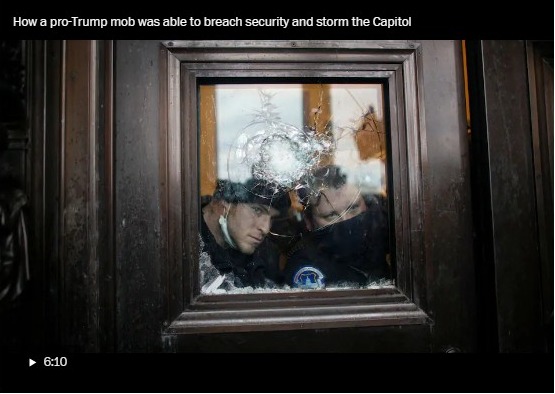
WASHINGTON – A small quick-reaction force assembled by the Defense Department to assist if needed during protests in Washington on Wednesday did not immediately respond when a pro-Trump mob stormed the Capitol because of a lack of planning with Capitol Police over how it might be deployed, Pentagon officials said.

The D.C. National Guard force of 40 troops is mentioned in a new timeline of events that the Pentagon released Friday night, after two days of questions about how security on Capitol Hill was so lax that the mob could storm the building and force its evacuation. Five people died in the chaos, including a Capitol Police officer.

The timeline states that the quick-reaction force was a few miles away at Joint Base Andrews in Maryland and authorized for use by acting defense secretary Christopher Miller “if additional support is requested by civil authorities.”

But a senior defense official, speaking on the condition of anonymity because of the sensitivity of the issue, said the Defense Department and Capitol Police hadn’t reached an agreement or settled on a concept ahead of time. The Pentagon had made plans with D.C. police, which oversees much of the city, including Black Lives Matter Plaza near the White House, the official said.

Attempts to reach Capitol Police on Friday night were not successful. Capitol Police Chief Steven Sund announced his resignation Thursday.

D.C. Democratic Mayor Muriel Bowser’s office did not respond to questions for this story.

Defense officials have said previously that with no plan in place with Capitol Police, there was concern about injecting National Guard forces into the situation abruptly. After absorbing frequent criticism about the thousands of National Guard members that Trump deployed in the city in June in response to protests spawned by the police killing of George Floyd in Minneapolis, the Pentagon sought a much narrower mission, preparing and providing only what D.C. officials specifically requested in advance.

“We receive our intelligence from law enforcement agencies, whether they’re federal or local,” Army Secretary Ryan McCarthy said. Defense Department officials, he added, didn’t in their “wildest imagination” envision the crowd breaching the Capitol grounds.

It’s not clear how the quick-reaction force could have been used to restore order once thousands of Trump’s supporters surrounded the Capitol and as some began entering the building. National Guard members at the D.C. Armory were also not deployed until Miller determined at 3 p.m. that all available D.C. National Guard forces should be sent to reinforce D.C. and Capitol police positions, according to the timeline.

The timeline states that Miller was informed that Trump’s supporters were moving to the Capitol at 1:05 p.m. Capitol Police ordered the evacuation of the building at 1:26 p.m., as the mob stormed it.

McCarthy’s office spoke with Bowser at 1:34 p.m., the Pentagon timeline said. It states she made a request for an “unspecified number of additional forces.”

Fifteen minutes later, Sund called Maj. Gen. William Walker and also asked for forces, the Pentagon said.

McCarthy spoke on the phone with Bowser again at 2:22 p.m., with D.C. police and other D.C. officials also on the line.

Eight minutes later, Miller, McCarthy and Gen. Mark A. Milley, the chairman of the Joint Chiefs of Staff, met to discuss the request for more forces. Miller approved the deployment of all available forces to assist both police forces at 3 p.m.

At 5:02 p.m., 154 members of the National Guard left the Armory. They arrived on Capitol Hill at 5:40 p.m. and were then sworn in to work with Capitol Police.

Defense officials have deflected criticism of their response to the crisis, stating that law enforcement authorities were in charge and confident that they had the city under control. Pro-Trump groups had openly suggested online for weeks that they might take action on Wednesday, as a protest of the president’s election loss was underway.

Additional members of the National Guard from nearby states were on the ground Thursday. It would have been nearly impossible for them to arrive more quickly, considering they were not put on notice that they might be needed, said Maj. Gen. Timothy Gowen, the top officer in the Maryland National Guard.

Gowen suggested that National Guard members might need to manage expectations better.

“We are not a first-response force,” he said. “We are not the fire or police.”

Trump scrambles to find new social network after Twitter ban, as White House prepares to blast big tech #SootinClaimon.Com

#SootinClaimon.Com : ขอบคุณแหล่งข้อมูล : หนังสือพิมพ์ The Nation.

Trump scrambles to find new social network after Twitter ban, as White House prepares to blast big tech

InternationalJan 10. 2021

 Donald Trump

Donald Trump

By The Washington Post · Tony Romm, Josh Dawsey

WASHINGTON – Twitter’s decision to ban President Donald Trump mere days before the end of his term sparked a fierce political backlash among his most fervent allies on Saturday, sending some of his supporters – and the White House itself – scrambling to find another potent tool to communicate online.

Many prominent conservatives – including Brad Parscale, Trump’s former campaign manager, and Rush Limbaugh, the leading voice in right-wing radio – reacted to Trump’s suspension by blasting Twitter, quitting the site outright or encouraging the president’s loyal following to turn to alternative services. Trump himself signaled he is in negotiations to join other social networks, and he raised the possibility he could create a new online platform on his own.

For now, the White House is considering an early push as soon as Monday against Twitter and other tech giants, blasting it for having silenced the president’s ability to reach supporters while calling for fresh regulation against Silicon Valley, according to a person familiar with the matter who spoke on the condition of anonymity. Trump, who is apoplectic about being banned, plans to spend the final days of his term in office railing against the industry, the person said.

Yet Trump’s threats also underscore his reliance on the very social-media sites he has long disparaged for perceived political biases. On Twitter, the outgoing president frequently leveraged his more than 88 million followers to savage his rivals, boost allies, and sometimes spread falsehoods on a viral scale.

This vast online reach offered Trump an online megaphone that was unparalleled in American politics. But his rhetoric was also vitriolic – the consequences of which turned deadly after a mob of his supporters seized on his baseless tweets about the 2020 election and stormed the U.S. Capitol this week.

The president and his allies now face a daunting technical and logistical challenge in relocating to a new social network or setting up their own online hub, which is likely to be much smaller than the grand audiences Trump had enjoyed until recently. A shift away from mainstream platforms would mark a retreat to more insular conservative communities and threaten to exacerbate the partisan divisions in a country that Trump already had left on edge.

“For more casual supporters of the president, I think they will receive his messages less frequently,” said Emerson Brooking, a resident senior fellow at the Atlantic Council who studies issues including disinformation.

“Obviously, he will have millions of hardcore supporters tuned into broadcast sources still carrying his messages, or [they will] go into whatever online space he occupies . . . but that is going to be a smaller, more devoted group,” Brooking said, expressing fears they may become “extremely radicalized.”

Trump’s removal from Twitter came as part of a broader reckoning late Friday across much of the mainstream web, as tech giants including Apple, Facebook and Google took unprecedented steps to discipline apps, users and accounts seen as instrumental in stoking the violence that left lawmakers under lockdown earlier in the week.

Before it banned Trump, Twitter removed a slew of users affiliated with QAnon, a prominent conspiracy theory. Google-owned YouTube suspended channels associated with Stephen Bannon, Trump’s former campaign manager. And Google also removed Parler, a pro-Trump app where users have threatened further violence, from its portal for smartphone software downloads. Apple issued a similar threat to boot Parler from its App Store unless the company improves its content-moderation practices.

The actions reflect a new vigor on the part of Silicon Valley to punish those that have peddled harmful content – from election disinformation to hate speech and violent threats. Congressional lawmakers, digital researchers and human-rights groups praised the moves this week, even as they decried them as too little, too late, coming near the end of Trump’s term.

But the bans amounted to a digital massacre in the eyes of Trump’s conservative allies, many of whom decried them as censorship.

One of Trump’s top allies, Sen. Lindsey Graham (R-S.C.), pledged he is “more determined than ever” to try to terminate legal protections for Facebook, Twitter and other social-media sites, faulting them for censorship. Limbaugh deleted his Twitter account, and fellow talk-radio host Mark Levin also announced he would leave, encouraging users to do the same. The president’s son, Donald Trump Jr., posted a widely watched video on Facebook that warned supporters it is only a matter of time until social media companies “inevitably throw us all off the platforms they so heavily censor and regulate only one way.” He solicited Trump supporters to sign up for alerts on his website.

“I’ll let you know where I end up, my father ends up, where we can direct ourselves so we can keep this going,” Trump Jr. said.

On Friday, Trump threatened to decamp to a new social-networking serving almost immediately after Twitter banned him, vowing he would “not be SILENCED!!” — and promising a “big announcement soon.” More than any other social service, the loss of Twitter seemed to strike a personal note: Trump had been obsessed with the platform, he loved to post a tweet and time how long it would take to command attention on television. He often would pull out his phone and say, “Watch this, bing bing bing,” recalled senior administration officials.

The White House on Saturday declined to comment on the president’s plans or timing.

Already, though, Trump’s team has been inundated with requests for him to join their alternate social networks – and his emissaries have entertained conversations with other companies. But Trump has told allies he prefers to launch his own services, according to two aides, who cautioned it may be infeasible and expensive. He also plans to hammer lawmakers in the coming days for failing to repeal Section 230, a provision of federal law that spares tech giants from being held liable for the content posted by their users. Such a repeal could have backfired on Trump, some experts note, resulting in his removal from Twitter sooner.

Parscale, his former campaign manager, encouraged the president on Saturday to strike out on his own. “I believe the best avenue for POTUS is to use his own app to speak to his followers,” he said. If Apple or Google block the service, Parscale added, Trump has “a clear path to a victorious lawsuit against them.”

Even before the Capitol riot led to his suspension, Trump had weighed turning to other social-media services. In the summer of 2019, aides to Trump at the White House and others on his reelection campaign discussed joining Parler, according to two people familiar with the matter who requested anonymity to describe private conversations. Trump even invited Parler’s top executive to the White House as part of a broader social-media summit that summer where he blasted Silicon Valley over unproven allegations that they censor conservatives online.

A locked, private account with the name @realDonaldTrump – the same username the president once had on Twitter – appears to have sat dormant on the site since this June. The president’s campaign – under the account Team Trump – also has had an active account on Parler dating back to 2018. On Saturday, the Team Trump account blitzed their roughly 3 million followers with posts that faulted Twitter for having censored the president. Parler did not respond to a request for comment.

Another conservative hub online, Gab, took to Twitter to reveal it had a “big call with someone very special” scheduled on Saturday. The company did not mention Trump or anyone else by name, but later tweeted a story mentioning the president’s negotiations with potentially new social services, fueling speculation.

Like other pro-Trump online communities, Gab departs from much of Silicon Valley by eschewing aggressive enforcement against content that its critics see as harmful, dangerous and violent. Asked about Gab’s tweet, the company’s chief executive, Andrew Torba, responded with an insult and otherwise declined to comment. Gab later tweeted Saturday that “threats of violence have no place” on the site, noting it has “tens of thousands of volunteer users” who monitor it.

Trump would face a daunting task in standing up his own social network. It could be an expensive endeavor that might take years to build. Social-media sites are attractive to users only insofar as they manage to capture a large number of them and their friends. Trump may struggle to incubate such an audience given the overtly political nature of his digital endeavor, some experts said.

“It’s very hard to build a new network,” said Yochai Benkler, the co-director of the Berkman Klein Center for Internet and Society at Harvard University. “Maybe he’s so big and important he could get some millions of people to join a network. The economics will make it much more insular and internal . . . Networks benefit from being an option for people to reach lots of different people.”

But Trump’s quest to rebuild his online reach – securing himself a prominent voice as he prepares to relinquish the presidency – marks only the latest effort on the part of Republicans to serve as their own information gatekeepers. The party and its allies dominated talk radio starting in the late 1980s, set their sights on cable news in the 90s and in more recent years have stood up a wide array of websites that operate under the banner of conservative news. Social-media, experts said, is simply the next frontier.

“The quote-unquote liberal bias of the media is not simply an assertion, it’s a taken-for-granted reality on the right,” said Lawrence Rosenthal, the chair of the Center for Right-Wing Studies at the University of California, adding that many conservatives now see the same bias in Silicon Valley. “It is the current incarnation of something that has been taken for granted on the right for decades and decades.”

Pope Francis plans to get vaccine, calling it ethical obligation #SootinClaimon.Com

#SootinClaimon.Com : ขอบคุณแหล่งข้อมูล : หนังสือพิมพ์ The Nation.

Pope Francis plans to get vaccine, calling it ethical obligation

InternationalJan 10. 2021

Pope Francis

Pope Francis

By The Washington Post · Chico Harlan, Stefano Pitrelli

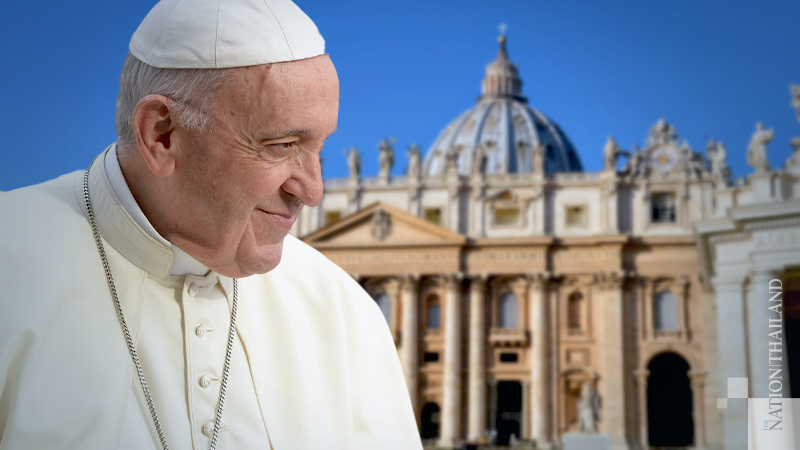
ROME – In a forthcoming television interview, Pope Francis says that he will soon receive a coronavirus vaccination, perhaps as early as next week, while calling the inoculation a duty for everyone.

“I believe that ethically everyone needs to receive the vaccine,” Francis said in an interview with Italy’s TG5 that will air Sunday.

Francis did not specify the exact timing of his inoculation, but the pontiff said the Vatican’s vaccine rollout will begin next week and that he had already booked an appointment.

Francis’s plan sends a significant pro-vaccine signal to the world’s 1.3 billion Catholics. But it also marks a crucial step in safeguarding an 84-year-old who is missing part of a lung, doesn’t like to wear a mask and relishes face-to-face interaction.

Vatican watchers had widely anticipated that Francis would be administered the jab, and he has spoken favorably for months about the international vaccine effort, calling it a light of hope “in this time of darkness.” Until now, though, the Vatican had remained vague on its vaccine plans for the pope. The Holy See only said that its campaign would first target the elderly, medical personnel, and those most in contact with the public

The Vatican’s health director said the city-state will be using the vaccines produced by Pfizer-BioNTech.

In the upcoming interview, Francis suggested his own perspective on vaccines had been shaped by childhood memories of polio, when “so many kids ended up paralyzed because of this and there was a desperation to receive the vaccine.”

“I don’t know why some will say, ‘No, the vaccine is dangerous.’ ” Francis said. “But if doctors offer it to you as something that can work, that poses no special risk, why not take it? There is a suicidal denialism that I wouldn’t know how to explain, but today you need to take the vaccine.”

The journalist who conducted the Friday interview of the pope, Fabio Marchese Ragona, shared a passage of the transcript with The Washington Post.

Almost since the beginning of the pandemic, Francis has seemed to have the vaccine on his radar. In May, he said that the search for vaccines should be “transparent and selfless.” And he has said several times that leaders must ensure that vaccines are provided to the poor, the sick and the vulnerable.

Once fully vaccinated with the two doses, Francis – and the church – will still have to behave cautiously. Medical experts say even those vaccinated should wear a mask. But the pontiff can more easily resume some of the activities that have been on hold for nearly a year, such as international travel. Francis is planning a trip in early March to Iraq, what will be his first venture outside of Italy since the start of the pandemic.

Francis, who complained of feeling “caged” during Italy’s initial spring lockdown, has made it clear that he does not want to be a Zoom-only pope. As that initial clampdown loosened, Francis tried to reclaim the parts of his papacy he seemed to miss the most, mixing to a greater degree with crowds and meeting with pilgrims. Even amid Europe’s second wave, Francis has continued to host groups and hold in-person meetings.

Francis’s resistance to mask-wearing has perplexed some inside the church, and by forgoing masks in meetings, he is bucking the Vatican’s own safety protocols. Neither he nor the Vatican has offered an explanation for his decision to generally go mask-free.

The pope’s inoculation will hardly mark the first instance of church vaccine endorsement. Last month, the Vatican’s doctrinal watchdog said it was “morally acceptable” for Catholics to receive the vaccines that have used cell lines derived from aborted fetuses. Before that guidance, several U.S. bishops had suggested such vaccines were immoral.

“From the ethical point of view,” the Vatican said, “the morality of vaccination depends not only on the duty to protect one’s own health, but also on the duty to pursue the common good.”

The queen gets her shot in pro-vaccine message to Britain #SootinClaimon.Com

#SootinClaimon.Com : ขอบคุณแหล่งข้อมูล : หนังสือพิมพ์ The Nation.

The queen gets her shot in pro-vaccine message to Britain

InternationalJan 10. 2021

By The Washington Post · Karla Adam

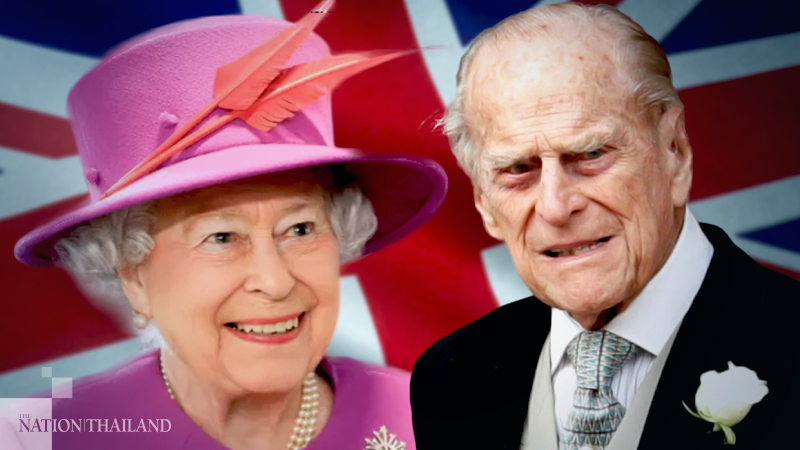
LONDON – Queen Elizabeth II and her husband Prince Philip received their first coronavirus vaccine doses on Saturday, Buckingham Palace said in a rare medical statement apparently aimed to show royal support for the vaccination effort.

The 94-year-old queen and Philip, 99, received their jabs by a royal household doctor at Windsor Castle. Their ages put them among the high-risk groups that are being prioritized during the country’s vaccine rollout, which has seen 1.5 million people receive at least one dose of a vaccine.

Buckingham Palace said in a statement: “The Queen and the Duke of Edinburgh have today received Covid-19 vaccinations.”

It is highly unusual for the palace to release private medical details, but a palace spokeswoman told The Washington Post that “a decision was taken by Her Majesty to let it be known to prevent inaccuracies and further speculation.”

Public health experts hope that such a move will persuade vaccine skeptics at a time of soaring distrust in leaders and institutions.

Penny Ward, a pharmaceutical researcher at King’s College London, previously told The Post: “I know my mother would do anything the queen did.”

Britain’s Health Secretary Matt Hancock tweeted that he was “delighted” by the news. “We are defeating this virus jab by jab,” he said.

The palace spokeswoman would not comment on which vaccine the royals received. Britain has granted approval for three vaccines, although only two are currently being administered: the Pfizer-BioNTech vaccine and the homegrown Oxford-AstraZeneca vaccine.

On Friday, Britain granted approval to a third vaccine developed by U.S.-based Moderna, but supplies won’t be available until the spring.

While the palace normally does not comment on medical matters like this, it’s also not unheard of. In the 1950s, the palace let it be known that Prince Charles and Princess Anne had received the polio vaccine.

Last year, Charles, the heir to the throne, tested positive for coronavirus. His eldest son, Prince William, also caught it around the same time, although it wasn’t publicized. The Sun tabloid, which first reported the story, said that the diagnoses was kept secret at the time because William “didn’t want to alarm the nation.”

The queen and duke are currently living at Windsor Castle amid a lockdown seeking to curb a surging outbreak. On Friday, Britain recorded 1,325 daily deaths, the highest daily figure since the pandemic began.

Coronavirus cases mount in Virginia, as the state begins next phase of vaccinations #SootinClaimon.Com

#SootinClaimon.Com : ขอบคุณแหล่งข้อมูล : หนังสือพิมพ์ The Nation.

Coronavirus cases mount in Virginia, as the state begins next phase of vaccinations

InternationalJan 10. 2021

By The Washington Post · Jenna Portnoy

The day after Northern Virginia health districts announced they will move to the next phase of their coronavirus vaccination plans, the state on Saturday reported record numbers of new cases and hospitalizations, underscoring the continued severity of the pandemic.

Saturday’s new virus case totals – 5,789 in Virginia, combined with 3,758 in Maryland and 350 in the District of Columbia – fueled a daily regional caseload of 9,906 and a seven-day average of 8,157, both new highs, data show.

In Virginia, 3,302 people were hospitalized on Saturday, compared with 1,877 in Maryland. Hospitalizations in the District rose to a record 280, boosting the seven-day average to 264, data show.

The number of new coronavirus-related deaths continued to climb, with 69 in Virginia, 30 in Maryland and four in the District for a single-day regional total of 103.

The numbers of vaccinations administered in the region is climbing steadily, and officials say more people have been vaccinated than reflected by the cumbersome data reporting software.

Vaccinations began last month with health-care personnel and people living and working in long-term care facilities. Virginia, Maryland health departments and the District are prioritizing different groups based on each jurisdiction’s population, vaccine supplies and logistical capabilities.

In Virginia, at least 156,429 first doses were administered as of Saturday, followed by Maryland with at least 123,971 first doses administered, according to each state’s reporting websites. As of Monday, the last day the District updated its website, 16,989 doses were administered, which represents the 58 percent of providers who have fully reported data to the city’s health department. District providers plan to begin vaccinating residents 65 or older on Monday.

Public health districts in Arlington, Fairfax, Loudoun and Prince William counties and the city of Alexandria, as well as Southwest Virginia west of Roanoke, will move to their second phase of vaccine distribution gradually, the Virginia Department of Health said.

The category includes people age 75 and older; people living in correctional facilities, homeless shelters and migrant labor camps; and a large and varied category of front-line essential workers who cannot work remotely.

Local health departments will contact groups of essential workers in the following order: police, fire and hazardous materials response teams; corrections and homeless shelter workers; K-12 teachers and school and child-care staff; food and agriculture workers, including veterinarians; manufacturing workers; grocery store staffers; public transit workers; mail carriers, including the U.S. Postal Service and private companies; and finally those needed to maintain continuity of government.

Across the region, hospitals are administering vaccine to front-line clinicians first, followed by nonclinical and administrative staff. CVS and Walgreens pharmacies are coordinating vaccination of long-term care facility residents and staff.

In Virginia and Maryland, local health districts are responsible for other health-care professionals who live or work in their locality. Giant, Safeway and select nonprofit organizations fill that role in the District.

Brexit becomes trucker nightmare as red tape ties up drivers #SootinClaimon.Com

#SootinClaimon.Com : ขอบคุณแหล่งข้อมูล : หนังสือพิมพ์ The Nation.

Brexit becomes trucker nightmare as red tape ties up drivers

InternationalJan 10. 2021

By Syndication Washington Post, Bloomberg · Joe Mayes

A week on from Brexit, the main road to Dover has been so quiet that officials were able to close half of it Thursday for a litter-picking operation without causing delays for drivers.

But behind such placid scenes, many truckers are still warning of chaos as they struggle to adjust to the new paperwork required by Britain’s departure from the European Union. Drivers are being held up for hours because they lack the right documents, they say.

With traffic well below its usual levels, the pain has so far manifested itself out of sight at factory gates and truckers’ depots. It’s likely to spread to the ports as activity rebounds in coming days, according to seven firms interviewed by Bloomberg.

“It’s an absolute mess,” said David Zaccheo, operations manager at Alcaline U.K. Ltd., whose fleet of 145 vehicles shuttles goods between Britain and the EU. “What’s going to happen next week? We’re not even that busy at the moment.”

Zaccheo said his firm has had vehicles stuck in Italy since Monday because of a lack of correct transit documents. In another case, a trailer destined for Milan had to wait for two days in the U.K. before it could move because it didn’t have the right paperwork, he said.

Faced with the threat of chaos at the border in the weeks after Brexit, many firms decided to stockpile goods or delay deliveries, leaving Dover eerily quiet. Traffic through the port is down 85% from its 2019 average. With the industry expecting activity to pick up in coming days, Britain faces the first major test of its Brexit readiness.

“At the moment, the border is in fact flowing and it’s flowing very smoothly,” Transport Secretary Grant Shapps told the BBC on Friday. Less than 1% of vehicles are turning up without the correct paperwork, he said. By far the bigger problem, he said, is drivers not having the Covid test necessary to get into France.

While the U.K. may have struck a trade deal with the EU avoiding tariffs and quotas, companies are facing new frictions affecting cross-border trade. Firms now have to fill in forms such as customs declarations and export health certificates that weren’t required when Britain was a member of the bloc. The problem, some logistics firms say, is many customers don’t understand what documents are required.

Ellis Blackham, an account manager at JJX Logistics, a Kingswinford, England-based firm that moves goods from the U.K. to the EU, said it took six hours — at least three times longer than usual — to load one of its trucks up with pharmaceutical products bound for Germany because the customer didn’t have the correct paperwork.

“It’s a nightmare,” Blackham said. “It starts right from the top and goes all the way down, the level of confusion.”

He said another company had sent them a pallet of manufactured goods to be shipped to France, but they had provided no accompanying documents. They were surprised when they were told it wouldn’t be possible to send it, Blackham said.

“The customers are massively confused about what’s needed,” he said. “I don’t expect it to be until March at least before people familiarize themselves.”

Bowker Group, a Preston, England-based company that moves freight into the EU, said it had a trailer of chemicals stuck on a quay in Belgium for more than two days this week because of confusion over who was responsible for obtaining the customs clearance.

“It’s fire-fighting all the time at the moment,” said Jason Tiffen, international operations manager at Bowker. “Customs clearance agents are overstretched and under-resourced.”

The industry has long been warning of a shortage of trained staff to fill out the extra 400 million customs declarations that will be required each year for goods moving between Britain and the EU at a cost of about 13 billion pounds ($18 billion).

The Customs Clearance Consortium, which is helping to run a U.K.-government-backed program to assist traders with the forms, told customers this week there is still a “huge shortage” of agents.

“The first few days of the new rules have been very tough,” according to the note by Robert Hardy, the consortium’s co-founder. “There are so many new processes and a massively steep learning curve.”

Another problem U.K. firms are confronting are the new rules of origin that determine whether goods qualify for tariff-free treatment. On Friday, retailer Marks & Spencer Group Plc warned that tariffs and “very complicated administrative processes” will significantly hit its operations in Northern Ireland, the Czech Republic, and France.

Ray Murphy, managing director at Intersped Logistics, said a customer had ordered 23 tonnes of cable but then discovered it was manufactured in Egypt, meaning it didn’t have enough U.K or EU content to qualify for zero-tariff treatment. It would have attracted a 3% tariff on arrival in Greece and the order was canceled, Murphy said.

“There’s a lot of shock among people at the moment,” Murphy said, whose 20-employee firm moves road freight into the EU. Murphy said a shipment was stuck in Italy because the U.K. importer didn’t have an EORI number, a requirement for post-Brexit trade.

“There are many disgruntled people out there,” he said, “and we’ve not even got to what would be a busy period.”