New York Times stops providing stories to Apple News
Jun 30. 2020
By Syndication Washington Post, Bloomberg · Mark Gurman, Gerry Smith · BUSINESS
The New York Times is removing its content from Apple News, dealing a blow to the iPhone maker’s news aggregation service and app for the iPhone, iPad, Mac and other devices.
The Times had been part of the Apple News app, which debuted in 2015, for several years, but balked at joining the paid Apple News+ service when that launched in March 2019. The newspaper company said Apple News didn’t give the paper enough control of its news business or reader relationships.
“Apple News does not align with our strategy to fund quality journalism by building direct relationships with paying readers,” the Times said Monday in a statement. “We believe quality publishers should be fairly compensated for the expensive proposition of creating and providing platforms valuable independent journalism. We’re confident we’ll continue to have strong partnerships with Apple through a variety of other products.”
The exit is a notable setback for the Apple News service, which has been criticized by multiple media organizations because of its revenue split and decision to limit the amount of user data provided to content organizations.
Late last year, the service’s business head exited and a replacement was named a few weeks ago.
The Times has provided just “a few stories per day,” Apple said in a statement. “We are committed to providing the more than 125 million people who use Apple News with the most trusted information and will continue to do so through our collaboration with thousands of publishers, including The Wall Street Journal, The Washington Post, the Los Angeles Times, the Houston Chronicle, the Miami Herald, and the San Francisco Chronicle and we will continue to add great new outlets for readers.”
The Cupertino, California-based technology giant said it’s “committed to supporting quality journalism through the proven business models of advertising, subscriptions, and commerce.”
Japan government to support development of post-5G tech
Jun 29. 2020
By The Japan News-Yomiuri
The government has decided to provide financial support for domestic manufacturers to develop technologies for the post-fifth-generation mobile communication network standard.
The aim is to better compete with China, which is ahead regarding the current 5G large capacity, ultrahigh-speed standard, and prevent information leaks and other dangers by developing key technologies in Japan to reduce security threats.
Of the 110 billion yen fund set up in the New Energy and Industrial Technology Development Organization in the supplementary budget for fiscal 2019, about ¥67 billion will be earmarked for it.
5G and later standards are expected to be used in a wide range of fields, including autonomous driving, factory automation and telemedicine.
Launched in Japan this spring, 5G is 100 times as fast as 4G, making the ultra-high speed mobile communication a key component in the so-called Internet of Things.
The government plans to support the development of key technologies, such as communications infrastructure and fiber-optic networks. To provide support, it will let domestic technology companies that excel in these fields compete among one another, and will judge in about 18 months the technologies and competitiveness of those companies. The government plans to continue supporting only those that are outstanding.
According to government sources, Fujitsu Ltd. and NEC Corp. are expected to participate in mobile telecommunication infrastructure, while Fujitsu, NEC and NTT Electronics Corp. are seen participating in fiber-optic networks.
The 5G-related market is expected to expand significantly in the future, and the global market for infrastructure alone was estimated in one survey to exceed 4 trillion yen. Huawei Technologies Co. and other Chinese companies accounted for more than 40% in the global market for mobile infrastructure up to 4G in 2018. Japan, in contrast, is remarkably behind – Fujitsu and NEC each accounted for less than 1%.
From the viewpoint of national security, it is urgent to establish a reliable information and communications system.
The United States has already demanded that Huawei Technologies products be removed because of high security risks, such as leaks of confidential information and cyber-attacks. If Japan’s allies are victimized by cyber-attacks with the large capacity, ultra-high speed 5G, “it would cause huge damage and jeopardize a country’s governing ability,” a government official said.
The government plans to promote technological development in cooperation with the United States and other countries.
Facebook will label violating posts from public figures going forward
Jun 27. 2020The moves amount to major concessions amid rising public pressure, employee unrest and a burgeoning advertiser boycott over Facebook’s long-standing refusal to more aggressively address hate speech and other platform violations from politicians such as President Donald Trump.
By The Washington Post · Rachel Lerman, Craig Timberg · NATIONAL, BUSINESS, TECHNOLOGY
SAN FRANCISCO – Chief executive Mark Zuckerberg said Friday that Facebook will remove posts that incite violence or attempt to suppress voting – even from political leaders – and that the company will affix labels on posts that violate hate speech or other policies as well.
The moves amount to major concessions amid rising public pressure, employee unrest and a burgeoning advertiser boycott over Facebook’s long-standing refusal to more aggressively address hate speech and other platform violations from politicians such as President Donald Trump.
The shifts are at least a partial retreat from the company’s traditional deference to speech it deems “newsworthy,” including Facebook’s decision earlier this month to not label or remove a post by Trump that said, “when the looting starts, the shooting starts.” Other companies, such as Twitter, which affixed a warning label on a similar post, have been more forceful at responding to what they deemed to be policy violations, including from politicians.
“There are no exceptions for politicians in any of the policies that I’m announcing today,” Zuckerberg said in a town hall that was streamed live Friday.
The announcement did little to cool complaints from civil rights leaders, who say they’ve spent years trying to get Facebook to understand the seriousness of the problems on the platform and had won only modest concessions. They noted that Facebook already supposedly had strict policies against voter suppression and hate speech, and that Friday’s announcement did little to further address those issues.
“Facebook is feeling pressure,” which is good, said Brandi Collins-Dexter, senior campaign director at Color of Change, an activist group long critical of Facebook. “I still think, at the end of the day, they still have a long way to go.”
The most consequential change may be Facebook’s new willingness to affix warning labels on problematic posts – a step that Zuckerberg long has resisted. The implications could reverberate far beyond the United States at a time when political leaders in many other nations have been exploiting the latitude Facebook has traditionally offered them to lie, misinform and engage in hateful characterizations of other people.
Social media companies are under an especially bright spotlight this year in the lead up to the 2020 presidential election, facing pressure to control hate speech and misinformation on their sites – something that still haunts them from rampant disinformation that spread online during the 2016 campaign.
Facebook in particular has faced harsh criticism in recent weeks for its decision to leave up posts from the president that many advocates said clearly incited violence. Twitter, on the other hand, labeled tweets by the president that falsely said mail-in ballots would be fraudulent and that appeared to called for violence against protesters.
In that May post, President Trump referred to protesters as “THUGS” and wrote, “Any difficulty and we will assume control but, when the looting starts, the shooting starts.”
The new policy is not retroactive. Also, that Trump post dealt with “state use of force,” something that Facebook is still working on, spokesperson Tom Reynolds said.
“A handful of times a year we make a decision to leave up content that would otherwise violate our policies because we consider that the public interest value outweighs the risk of that content,” Zuckerberg said in the town hall.
Facebook for years has been wrestling with how to enforce its policies against hate speech, disinformation and other violations when the person posting the content is Trump or some other political leader. As the company massively ramped up its teams for detecting and acting against content that violated policies – hiring tens of thousands of people in the process – it explicitly carved out an exemption for posts or advertisements from politicians, even though they had emerged as a leading source of disinformation and other problematic content in many nations.
The White House and the Trump campaign did not immediately respond to requests for comment.
Zuckerberg has repeatedly expressed his reluctance to have Facebook serve as an “arbiter of truth,” and has worked to neutralize claims by conservatives that the company was biased against them and their ideas, even though no systematic evidence of such bias has ever emerged.
But Friday’s action suggested that Facebook’s balancing act had grown untenable in light of increasingly intense and visible employee backlash, including some high-profile departures, as well as the advertiser boycott.
That it has grown to include in recent days such prominent corporate staples as Verizon, Hershey’s and Unilever is a worrying sign for a company that generates its multibillion-dollar profits and massive stock market valuation by maintaining a robust flow of advertising dollars. Its stock price fell by more than 8 percent on Friday, far steeper than the market overall on a down day.
While Facebook’s business prospects have bounced back before from major controversies over privacy and disinformation, it has been struggling to recover its previously strong reputation among consumers and increasingly hostility in Washington from leaders of both major parties.
Issues related to hateful and violent speech have crystallized in recent weeks amid rising national unrest about police violence. Trump’s bid for reelection – following his shrewd and effective use of the platform four years ago – remains a major source of anxiety within the company.
As Facebook has avoided confronting Trump, rival Twitter has started more aggressively labeling posts from him and other politicians in the past few months. It has now slapped some sort of warning label on five of Trump’s tweets. That also includes one with a doctored video and one that said protesters would be met with force if they tried to set up an Autonomous Zone in the District of Columbia.
Trump lashed out at social media companies over Twitter’s labeling, signing an executive order that sought to open the door for a crucial law – Section 230 – to be rethought. The law ensures that social media companies are exempted from legal liability for nearly everything their users post on the sites.
Facebook left these posts unlabeled, prompting a public outcry from civil rights groups, advertisers and its own employees, who rarely speak out publicly against the social media giant. Zuckerberg for weeks defended his company’s decisions, even appearing on Fox News.
In the last week, a growing list of advertisers have pulled their ads temporarily from Facebook as part of the civil rights group-led Stop Hate for Profit campaign, which urges advertisers to put financial pressure on Facebook to implement stricter policies against hate speech.
Facebook said its changes Friday were made after discussions with civil rights groups.
Facebook will prohibit more hate speech in ads, including political ads, such as claims that people from a specific group – be it race, immigration status or sexual orientation – are a threat. The ads policies will also prohibit language that suggests refugees, immigrants or other groups are inferior in any way.
The company will also point users to official information on voting when they post about the topic and remove posts that try to intimidate or suppress voters.
Lawmakers unveil bipartisan proposal to make social media moderation more transparent
Jun 26. 2020
By The Washington Post · Cat Zakrzewski · NATIONAL, TECHNOLOGY, POLITICS, CONGRESS, MEDIA
Many Republicans and Democrats agree that social networks’ prized legal shield is flawed. A new bill is a sign they could also find common ground to change it.
Sens. John Thune, R-S.D., the Chair of the Senate Commerce communications subcommittee, and ranking member Brian Schatz, D-Hawaii, introduced legislation Wednesday that aims to make major social media companies more transparent about content moderation on their services. The bill would require companies to remove posts and other activity that the courts determine is illegal within 24 hours.
The legislation, known as the PACT Act, is one of the more nuanced proposals on Capitol Hill in the contentious debate over Section 230 of the Communications Decency Act, a 1996 law that protects social networks from litigation over the content that people share on their services. President Donald Trump has recently called for the provision to be revoked outright, and he recently signed an executive order that would direct federal regulators to reexamine its scope.
Schatz said that the rhetoric around Section 230 in Congress has been “stupid and polarized.”
“Our approach is a scalpel rather than a jackhammer,” he told reporters during a call Wednesday. “In my view the best thing we can do for the Internet, and the law that allowed the Internet to happen, is to modify that law so that it works for another 20 years, rather than pretending it’s perfect just as it is.”
Content moderation is now the most divisive tech issue in Washington.
But the senators are hoping that this bill includes provisions that could appease both sides of the aisle. That’s no easy task in an election year, especially one when the companies’ decisions about how to handle rhetoric of a president running for reelection is under the microscope.
“We are pleased with this legislation because we think it can pass,” Schatz told reporters on a phone call. “We are pleased with this legislation because we think it is time to lower the temperature on the conversation, and start to go through the regular order and actually make a bill, as opposed to making a stand.”
Republicans have accused the tech companies of going overboard in censoring the speech of the president and other politicians. Meanwhile, Democrats say social media companies aren’t doing enough to curtail the spread of disinformation, hate speech, racist rhetoric and other harmful content.
One area of consensus is that the companies’ policies are confusing and unevenly enforced.
Schatz told reporters that lawmakers frequently hear complaints that the companies act like a “black box” and provide limited information about how they make decisions about the content they’re pulling off their services. Under this legislation, the companies would have to create a system that notifies users of moderation decisions within 14 days, and also provides a way for people to appeal those decisions. Smaller companies would be given greater flexibility in responding to the complaints.
It also would also encourage companies to share best content moderation practices with each other, through a National Institute of Standards and Technology-led framework, similar to those that companies already use to share best cybersecurity practices.
It’s one of many proposals floated in Washington that could change Section 230.
The other primary bipartisan initiative is the EARN It Act, which would strip companies of legal protections when their users share materials that exploit children. Lawmakers are set to start reviewing the bill Thursday.
Schatz said there are “significant areas of disagreement” between the EARN It Act and his legislation. He said chief among them is that an industry group would share best content moderation practices under his bill, while the government plays a larger role in the Earn It.
Republicans have also introduced proposals that have not received buy-in from Democrats. The Justice Department recently unveiled its own proposal for restructuring Section 230. Sen. Josh Hawley, R-Mo., has introduced multiple bills that would change Section 230, largely aiming to hold the platforms accountable for decisions they make that could limit political speech.
Hawley’s office did not respond to a request for comment on whether he would support the PACT Act.
However, the new bill could appeal to Republicans who have raised similar concerns about political speech. “Anyone who is concerned about bias on these platforms will appreciate that this bill would require platforms to give users the ability to appeal a takedown decision and provide an explanation that is linked to their terms of service,” said a Republican Senate aide, who spoke on the condition of anonymity because he was not authorized to speak to reporters about the bill.
It remains to be seen whether the Trump White House will back the bill.
Tech companies have vigorously opposed any attempt to overhaul Section 230.
Netchoice, which lobbies on behalf of companies including Airbnb and Facebook, blasted the bill in the statement.
“By attaching counterproductive strings to Section 230, this bill would make it harder for online platforms to focus on removing harmful content in an especially turbulent election season,” Carl Szabo, vice president and general counsel at NetChoice, said in a statement. “We should enable platforms to remove harmful content, not weigh them down with unnecessary regulations.”
Amy Murphy, the director of federal government affairs at the Internet Association, said she is reviewing the legislation.
The senators consulted academics and consumer groups when crafting the legislation.
Danielle Citron, a professor the Boston University School of Law, has long argued that Section 230 should not be a “free pass,” but rather contingent on companies engaging in reasonable content moderation practices. She said this legislation is a step in that direction.
“The bill does not go far enough for me, but it is a good start on the road to conditioning the legal shield on reasonable content moderation practices in the face of illegality causing clear harm,” she told The Washington Post.
Jeff Kosseff, who wrote a book on Section 230 called “The Twenty-Six Words That Created The Internet,” said this bill addresses criticisms from both parties of Section 230 to some extent.
“It’s definitely not a huge change to 230 like some of the other proposals are,” he said.
Trump administration seeks to drill on more than two-thirds of nation’s largest swath of public land
Jun 26. 2020A bear looks after her three cubs in North Slope Borough, Alaska, between Nuiqsut and Teshekpuk Lake, where the Trump administration is proposing to open the land to oil and gas drilling, on May 25, 2019. MUST CREDIT: Washington Post photo by Bonnie Jo Mount
By The Washington Post · Juliet Eilperin, Steven Mufson · NATIONAL, BUSINESS, SCIENCE-ENVIRONMENT, WHITEHOUSE WASHINGTON – The Trump administration proposed on Thursday to open more than two-thirds of the nation’s largest piece of public land to oil and gas drilling, removing wildlife protections for the Alaskan tract that have been in place for more than four decades.
Interior Department’s Bureau of Land Management wants to allow fossil fuel extraction in roughly 82 percent of the National Petroleum Reserve-Alaska on the state’s North Slope. Less famous than the neighboring Arctic National Wildlife Refuge, it is one of the most ecologically valuable tracts of federal property – providing a critical refuge to polar bears as well as tens of thousands of migrating caribou and waterfowl.
Caribou and geese at Teshekpuk Lake in North Slope Borough, Alaska, on May 26, 2019. MUST CREDIT: Washington Post photo by Bonnie Jo Mount
The reserve, about the size of Indiana, is also one of the most promising onshore oil prospects in the country. A recent analysis by the U.S. Geological Survey suggests that it could hold as much as 8.7 billion barrels in undiscovered oil and 25 trillion cubic feet of natural gas.
Under the current plan, finalized in 2013, only half the nearly 23 million-acre reserve is open to drilling. The new plan would increase the area open to development by about 7 million acres.
An oil pipeline stretches across the landscape outside Nuiqsut, Alaska, on May 29, 2019. MUST CREDIT: Washington Post photo by Bonnie Jo Mount
“President [Donald] Trump has committed to expand access to our nation’s great energy potential,” Interior Secretary David Bernhardt said in a statement. “Today’s action is one more significant step in the process of delivering on his promise.” He said the move was in line with a March 2017 executive order by President Trump.
The BLM posted notice of its Final Environmental Impact Statement on Thursday, and is expected to issue a final Record of Decision within 30 days. Environmentalists and some Alaska Natives, who have lived on the North Slope for a millennia and depend on its game for subsistence, are likely to challenge the decision once it’s final.
ConocoPhillips has already been exploring the site, known as NPR-A. Alaska’s largest oil producer, it holds a total of 1.1 million acres and has discovered oil in remote areas called Mooses Tooth and Bear Tooth.
But many Alaska Natives living near the reserve object to further development, on the grounds that it could harm the animals that make up a significant portion of their diet. Teshekpuk Lake serves as molting area for one-fifth of the world’s Pacific black brant and calving grounds for tens of thousands of caribou each summer.
The new plan shrinks the protected area around Teshekpuk Lake, a 22-mile-wide reservoir created by thawing permafrost, though it does restrict major construction activities using heavy equipment between May 20 and August 20 unless authorized by federal, state and local officials so caribou can calve and seek refuge from mosquitoes. It also eliminates most of the protections around the Colville River Special Area, which was established in 1977 to protect raptors and other area wildlife.
U.S. Fish and Wildlife Service officials last year recommended the administration maintain the long-standing safeguards, according to documents obtained under the Freedom of Information Act by The Wilderness Society. In them, the agency said it believes the “full protection of these areas is necessary to sustain the biodiversity and ecologic integrity of the North Slope/coastal plain, especially given the impacts of climate change including increased coastal erosion and permafrost subsidence.”
Suzanne Bostrom, a staff attorney at the nonprofit environmental law firm Trustees for Alaska, said in an interview that the fact that BLM has devised a drilling plan that goes further than any of the options the agency outlined last year, which is poised to be finalized without public comment, makes it legally vulnerable.
“We definitely have serious concerns about them adopting a new and even more harmful alternative that the public has not had a chance to consider,” Bostrom said.
Nicole Whittington-Evans, Alaska program director of Defenders of Wildlife, said in a statement that the plan “gives away critical habitat for imperiled polar bears and vital habitat for caribou and migratory birds to oil companies that will only exacerbate the climate crisis by expanding into a fragile frontier area with new drilling. It is bad for the Western Arctic and bad for the planet.”
President Warren Harding recognized the oil potential in the area and established what was then called the Naval Petroleum Reserve No. 4 in 1923. In 1976, the Naval Petroleum Reserves Production Act designated the roughly 23-million-acre area specifically for oil and gas development, renamed it the NPR-A, and moved its management from the Navy to the BLM.
In the 1976 legislation, Congress mandated that Teshekpuk Lake and Utukok Uplands receive “maximum protection.” And in 1977, then Interior Secretary Cecil Andrus designated three “special areas” for that status. Presidents Clinton, George W. Bush and Obama all enlarged the special areas.
Other major leaseholders in the NPR-A include North Slope Energy, Borealis Alaska, Emerald House, and Repsol, a Spanish exploration and production firm.
Even though the Trump administration is clearing the way for oil and gas exploration in Alaska, companies face new financing obstacles. JPMorgan Chase, one of the world’s biggest lenders to fossil fuel projects, and investment bank Goldman Sachs have both announced that they would stop financing of oil and gas developments in the Arctic.
Pavel Molchanov, senior energy analyst at the investment firm Raymond James, questioned whether oil firms would expand drilling in Alaska even if the federal government makes more leases available.
“At anything close to current oil prices, the industry has virtually no appetite for Alaska drilling,” he said in an email, adding that capital spending by global oil and gas companies in 2020 has plunged to multi-decade lows, “and nowhere is the decline more steep than in the U.S.”
Kara Moriarty, president of the Alaska Oil and Gas Association, said in an email that some banks’ decisions to restrict lending had “yet to deter investment in Alaska” but her members are more concerned about an initiative on the state ballot in November that “would drastically increase production taxes” between 150 percent and 300 percent, depending on the price of oil.
Alaska’s congressional delegation – GOP Sens. Lisa Murkowski and Dan Sullivan, and Rep. Don Young, R, – hailed the new plan as a way to bolster their state’s economy.
NASA to rename headquarters for Mary W. Jackson, agency’s first female African American engineer
Jun 25. 2020Mary Winston Jackson, the first female African American engineer at NASA. MUST CREDIT: NASA
By The Washington Post · Christian Davenport · NATIONAL, SCIENCE-ENVIRONMENT, RACE
NASA will name its headquarters building for Mary W. Jackson, the first female African American engineer at the space agency, who as one of the “Hidden Figures” overcame rampant racial discrimination and gender bias to help propel the agency at the dawn of the Space Age, NASA Administrator Jim Bridenstine announced Wednesday.
Jackson began her career in the 1950s in a segregated computing unit at NASA’s Langley Research Center in Hampton, Va., that recently drew national attention as the setting for the movie “Hidden Figures,” based on a book by the same name.
Last year, the portion of E Street SW in front of NASA headquarters was renamed “Hidden Figures Way” in recognition of the African American women who worked at NASA in its early days.
The news came the same day some in the space industry began to push NASA to change the name of the Stennis Space Center in southern Mississippi, named for John Stennis, the longtime senator from Mississippi, a segregationist who opposed racial equality and the integration of schools. And it comes as communities across the country are taking down Confederate monuments in the wake of the killing of George Floyd while he was in police custody.
The push coincided with a move to change the Navy’s aircraft carrier, also named for the late senator.
In response to the request to rename the space center, a NASA spokesman said that agency “leadership is sensitive to the discussions of racism, discrimination and inequalities going on around the world. We are aware of conversations about renaming facilities and are having ongoing discussions with the NASA workforce on this topic. NASA is dedicated to advancing diversity and we will continue to take steps to do so.”
The agency said it was honored to name its headquarters building after Jackson, who Bridenstine said was “part of a group of very important women who helped NASA in getting American astronauts into space. Mary never accepted the status quo, she helped break barriers and open opportunities for African Americans and women in the field of engineering and technology.”
Carolyn Lewis, Jackson’s daughter, said her family was “honored” by the recognition. “She was a scientist, humanitarian, wife, mother and trailblazer who paved the way for thousands of others to succeed, not only at NASA but throughout this nation.”
An accomplished mathematician and aerospace engineer, Jackson joined NASA’s predecessor, the National Advisory Committee for Aeronautics, starting as a research mathematician and working under fellow “Hidden Figure” Dorothy Vaughn at Langley. In the film, Jackson was portrayed by Janelle Monáe.
At NASA, Jackson went on to work with wind tunnel experiments, helping conduct experiments in an environment where the winds howled at nearly twice the speed of sound.
Her supervisor suggested she further her education with a program that would allow her to be promoted from mathematician to engineer. But the classes for the required training program were held a segregated high school, and she had to obtain special permission to attend the program.
Over a storied career that lasted until her retirement from NASA in 1985, she wrote numerous research reports, many focused on the behavior of the boundary layer of air around airplanes.
But in 1979, “seeing that the glass ceiling was the rule, rather than the exception for Langley’s female professionals, she made a final, dramatic career change,” according to a NASA bio. She left engineering and took a pay cut in order to serve as an administrator as an Equal Opportunity Specialist, working to promote females and minorities.
She died in 2005, and in 2019 was posthumously awarded the Congressional Gold Medal.
Segway stops production, marking the end of a scooter era
Jun 25. 2020
By The Washington Post · Rachel Lerman · BUSINESS, TECHNOLOGY SAN FRANCISCO – The Segway PT, that two-wheeled vehicle that makes riders lean forward, will soon be no more.
Segway-Ninebot said this week that manufacturing for its most recognizable product will halt July 15. The company said it was a decision based on economics. The PT, or personal transporter, only made up 1.5 percent of the company’s revenue last year, Segway President Judy Cai said in a statement.
Retiring what most simply know as the Segway will free up room for the company to focus on its newer products, she said, which include a self-balancing “WALL-E” podlike vehicle called the S-Pod, a more traditional looking electric kick scooter and a smaller self-balancing vehicle controlled by the user’s knees.
“Given our decades-long history, we recognize that this decision may come as a disappointment to our strong and loyal following among private owners, who view the Segway as one of the more innovative creations of the early 21st century,” Cai said.
Indeed, the Segway has developed a fervent but niche following in a few markets, notably for city tours, mall and airport security and some law enforcement departments. But even as companies and consumers have shifted to a new era of micro mobility with shared rides, bikes and scooters, the device failed to keep up.
The Segway may have been introduced too early for its time, in a world where scooters were still thought of as kids’ toys. It was introduced in 2001 on “Good Morning America” and went on sale the next year on Amazon.
The scooter, a version of which is still for sale for more than $6,000 on Segway’s website, failed to go mainstream. As early as 2015, Wired declared the device dead, writing that the scooter never took off in part because it was clumsy to use inside buildings and there was no real way to use it on city streets. Plus, the publication added, it made people feel lazy.
That stereotype – that Segway riders were lazy, that they should just walk – was a big drawback for the Segway, which had been introduced with such an enduring “wow” factor, said Loup Ventures partner Gene Munster.
Popular portrayals in the media, while cementing the scooter’s place as a cultural icon, also didn’t help its cool factor. The Segway is probably best known in movies and TV for being the preferred mode of transportation for goofy mall cop Paul Blart and for underachieving brother Gob in “Arrested Development.”
Segway’s debut came years before docked bike-sharing options popped up in a widespread way, and even longer before Lime, Spin and Uber scooters populated city streets.
“I think that Segway didn’t get to a cheap enough product fast enough to really win the micromobility race,” Munster said. Still, he pointed out, the Segway lasted for nearly 20 years – much longer than many flashy tech products.
The Segway was also been marred by controversy, including safety concerns when Segway owner Jimi Heselden died after driving off a cliff while riding one of the devices.
In the meantime, there’s been a e-scooter explosion of the more traditional version, with companies like Lime and Bird flooding the streets with motorized shared scooters that provide a more practical, cost-effective method of getting around.
Now people can buy their own electric scooter for less than $1,000, said David Zipper, a visiting fellow at the Harvard University’s Taubman Center for State and Local Government. And while scooters got a pretty controversial start in some cities as they ran up against local regulations, the tides are starting to turn as some people start to rely on them and bike shares rather than cars.
“I think some people may not like dockless scooters, but you’re not laughing at them,” he said.
Once scooters and electric bikes and the sharing economy took off, it was a matter of time before the big, once-innovative Segway vehicles took a backseat.
“Once we had solved the micromobility problem, it kind of wrote the last chapter for Segway,” Munster said.
Chinese company Ninebot bought Segway in 2015. Segway said 21 people will be laid off next month because of the discontinuation of the Segway and of two other products.
Still, some businesses rely on the Segway devices. Many of those offer city tours to tourists who are looking for a novel way to get around, without walking or driving.
Kenneth Lippman’s tour company, Another Side Tours, was founded in 2007 in the back of his friend’s Mexican restaurant “with four Segways and a dream,” he said. It now offers a wide variety of walking, driving and Segway tours in Los Angeles and San Diego, so he has other offerings to lean on as Segways phase out. But even that will take quite some time, he said.
Lippman still has a few of the Segways from his first tour in his fleet today, and he expects his newer models will last several more years.
“They’re built like tanks,” he said.
In Colorado, Rocky Mountain Segway owner Diana Greenberg and her husband, Sanford – affectionately known in the industry as “Segway Sandy” – own both a touring company and a sales and service center for Segway vehicles.
Greenberg figures people will still need to get their Segways fixed, and she’s already been selling other Segway-Ninebot products so she’s not too worried. But she is concerned for other businesses that are built around solely giving tours.
“Every time I get on one, I always say ‘Oh my God,’ and away I go,” she said.
Most Americans believe the government should do more to combat climate change, poll finds
Jun 24. 2020An eroding beach near South Kingstown, R.I. MUST CREDIT: Washington Post photo by Salwan Georges
By The Washington Post · Brady Dennis · NATIONAL, SCIENCE-ENVIRONMENT
Nearly two-thirds of Americans believe the federal government should act more aggressively to combat climate change, and almost as many say the problem is already affecting their community in some way, according to a survey released Tuesday by the Pew Research Center.
In addition, the nationwide survey of 10,957 adults conducted this spring finds that Americans overwhelmingly want the government to do more to reduce the greenhouse gases linked to a warming climate, with significant majorities backing policies that would plant huge numbers of trees, greater restrict power plant emissions, require more fuel-efficient cars and tax corporations based on their emissions.
Climate poll. Photo by: The Washington Post — The Washington Post File Size: 0.94 Mb
While President Donald Trump has embraced the idea of widespread tree planting, his administration has relaxed regulations on the fossil fuel industry, pushed for more drilling, weakened vehicle fuel-efficiency standards and shown little appetite for carbon taxes.
Despite the growing numbers of Americans who believe climate change poses a serious threat, deep partisan divides remain about whether humans are fueling the problem and how much of a priority it should be for the nation’s leaders.
Pew has found that 60% of the U.S. public now views climate change as a “major” threat – up from 44% about a decade ago, said Alec Tyson, the Pew Research Center’s associate director for science and society.
“But that change is driven almost entirely by changing views among Democrats,” he said in an interview, noting that 88% of Democrats now describe climate change as a grave threat, while only 31% of Republicans feel the same.
That partisan chasm also surfaced in Tuesday’s findings when people were asked their views about whether humans are driving the Earth’s warming, mainly through the burning of fossil fuels.
Nearly three-quarters of Democrats and Democratic-leaning independents (72%) agree with the scientific consensus that human activity contributes “a great deal” to climate change. But that number drops sharply among Republicans and those who lean Republican, to 22%, while a 43% plurality say humans contribute “some” to climate change. The difference is even more startling between self-described liberal Democrats who say humans contribute heavily to climate change (85%) and only 14% of conservative Republicans who say the same.
Those gaps, Tyson said, “are as large as they have ever been.”
At the same time, broad bipartisan support exists for some policies aimed at reducing emissions to mitigate climate change and avoid its worst consequences, the Pew survey finds.
Large majorities of Republicans, Democrats and independents favor the idea of planting a trillion trees around the world to help offset carbon dioxide emissions – an idea backed by Trump, who otherwise has largely dismissed climate action and plans to withdraw the United States from a key international climate accord later this year. Democrats and Republicans also overwhelmingly support offering a tax credit for technologies designed to capture and store carbon.
While partisan divides are more pronounced on other climate-related policies, majorities in both parties also say they favor tougher restrictions on power plant emissions and stricter fuel-efficiency standards on cars and pickup trucks – two President Barack Obama-era policies that are among the many environmental regulations the Trump administration has sought to roll back. A broad majority of Americans (79%) also say the country should prioritize alternative forms of energy, such as wind and solar power, instead of expanding the production of fossil fuels.
The mounting desire for the federal government to do more to tackle climate change comes, perhaps not surprisingly, as its effects touch more lives in the United States. Seven in 10 Americans who live within 25 miles of a coastline say that climate change is already affecting their community. But even among those who live 300 miles or more from the reach of rising seas, 57% of respondents say they have witnessed at least some impacts.
The survey also comes during a time when the globe already has warmed more than 1 degree Celsius since the Industrial Revolution – and much more in some places. Scientists say that while rising seas, more intense heat waves and more frequent extreme weather are already happening, an increase in average global temperature of 2 degrees Celsius (3.6 Fahrenheit) or more will trigger catastrophic effects. Nations around the globe, with the exception of the United States, have pledged to work together to sharply cut emissions and try to remain “well below” that threshold as part of the Paris accord signed in 2015, but the world remains far off track in meeting those goals.
Tuesday’s findings from Pew echo those from a survey conducted last summer by The Washington Post and the Kaiser Family Foundation, which found that a growing number of Americans describe climate change as a crisis. At the time, two-thirds also said President Trump was doing too little to tackle the problem.
“I am deathly afraid, not for my kids, but for my kids’ kids and what they will have to deal with,” Mechaella DeRicci, a respiratory care practitioner in Bristol, Conn., told The Post at the time. “What are we leaving as a legacy besides a hot mess?”
But while Americans are increasingly worried about climate change, fewer than 4 in 10 said they believe that tackling the problem will require them to make “major sacrifices,” The Post-Kaiser poll found. And most are unwilling to pay for it on a personal level.
For example, while nearly half of adults said they would be willing to pay a $2 monthly tax on their electricity bills to help combat climate change, just over a quarter said they are willing to pay $10 extra each month. And while two-thirds support stricter fuel-efficiency standards for the nation’s cars and trucks, increases in the gas tax remained deeply unpopular.
Instead, clear majorities say they would prefer that climate initiatives be funded by increasing the taxes on wealthy households and on companies that burn fossil fuels.
Whether rising concerns over climate change and its impacts on everyday life will translate to the ballot box this fall remains a question mark.
Climate and the environment have emerged as a central issue for Democrats, particularly over the past decade, Tyson said, noting that climate change was a key topic in the recent Democratic presidential primaries. “But for Republicans, it’s just the opposite. Concerns over climate remain among their lower priorities. That’s been true for some time.”
Add to that the nation’s focus on the ongoing coronavirus pandemic, the battered economy, nationwide protests for racial equality and a deeply divisive incumbent president, and voters will have plenty else on their minds come November.
“Even as climate has become a top-tier issue for Democrats,” Tyson said, “it remains to be seen how prominent a role it will play in 2020, given the dynamics of this race.”
‘Canada is awesome,’ Shopify’s CEO tells workers barred from U.S.
Jun 23. 2020Tobias Lutke, founder and chief executive officer of Shopify. speaks at a global technology conference in Brooklyn, N.Y., on Oct. 30, 2019. MUST CREDIT: Bloomberg photo by Cate Dingley
By Syndication Washington Post,Bloomberg · Ilya Banares · NATIONAL, BUSINESS, WHITEHOUSE
Shopify Inc. Chief Executive Officer Tobias Lutke is touting Canada as a relocation option after President Donald Trump temporarily suspended several employment-based visas.
“If this affects your plans consider coming to Canada instead,” Lutke said in a tweet Tuesday. “If getting to the U.S. is your main objective you can still move on south after the H1-B rules change. But Canada is awesome. Give it a try.”
Trump ordered a freeze on new work visas this week, affecting those seeking employment in technology and hospitality industries in the U.S. The directive is in place until the end of this year and has garnered significant backlash from tech behemoths like Amazon.com Inc. and Microsoft Corp.
Ottawa-based Shopify is on a hiring spree and has “lots of experience” with relocating people, Lutke said on Twitter. The e-commerce firm claimed the second-largest share of online retail sales in the U.S. last year and powers more than 1 million merchants across 175 countries, from Victoria Beckham’s clothing line to megabrands such as Heineken and PepsiCo.
In 2019, Shopify helped move $61 billion of goods. This year, the coronavirus pandemic has given Shopify a huge push as brick-and-mortar retailers switch to online platforms and more consumers make purchases digitally. Since January, the company’s share price has more than doubled, vying with Royal Bank of Canada as the nation’s largest publicly traded company.
In contrast with its neighbor to the south, Canada has an international reputation of welcoming immigrants. More than one in five Canadians are foreign-born and roughly 60% of new arrivals came under the federal government’s economic-admission category, according to the 2016 Census conducted by Statistics Canada.
Tech leaders say Trump’s immigration crackdown will be bad for business
Jun 23. 2020
By The Washington Post · Cat Zakrzewski · NATIONAL, TECHNOLOGY, POLITICS, WHITEHOUSE Tech industry leaders are aggressively criticizing President Donald Trump’s immigration crackdown, warning the move could prevent them from recruiting the most highly skilled workers from around the world.
Many major companies including Amazon, Microsoft, Twitter and top industry groups came out swinging against Trump’s sweeping order to block a broad range of worker visas until the end of the year. The president’s proclamation applies to H-1B visas, which many tech companies rely on to bring engineers and other specialized workers to the United States. (Amazon chief executive Jeff Bezos owns The Washington Post.)
Aaron Levie, the chief executive of Box, warned the restrictions could result in the next top tech company developing outside the United States.
The Trump administration argues the order will protect U.S. workers struggling with job losses during the coronavirus pandemic, Washington Post writers Nick Miroff and Tony Romm report. The proclaimation will prevent foreign workers from filling 525,000 jobs, according to the administration’s estimates.
But tech executives tell The Washington Post that the order couldn’t come at a worse time.
Many tech companies in cloud and big data businesses have not been as adversely impacted by the pandemic as other sectors, especially as many workers log on from home. Companies still actively hiring worry Trunp’s immigration order could prevent them from recruiting the best talent.
“My gut reaction was, I cannot believe that that the administration is doing this at this time,” Doug Merritt, chief executive of the big data company Splunk, told The Washington Post in an interview. Merritt warned the order could have a detrimental impact on innovation at a critical time during the pandemic, possibly impacting improving technology in health care.
“National borders and country of residence should not be a barrier when this is a global phenomena,” he said. “It’s not a national phenomenon.”
The order only applies to H-1B visa applicants seeking to come to the United States, not workers who are now on American soil. But H-1B visas are key to Splunk’s workforce, as the company relies on such visas to sustain more than 300 U.S.-based employees, or 5% of the company’s workforce. Splunk could not immediately say how many outstanding offers it has to H-1B candidates who would now be barred from coming.
Amazon slammed the move as “short-sighted.”
“Preventing high skilled professionals from entering the country and contributing to America’s economic recovery puts American’s global competitiveness at risk,” Amazon spokesman Brandon Scheller told The Post in a statement.
The order is a clear blow at the tech industry, which has aggressively lobbied the White House on immigration.
Immigration policy has been one of the top tension points between the Trump administration and tech companies. Since Election Day 2016, tech industry executives and investors have fretted that Trump’s anti-immigration rhetoric would result in policies that could adversely affect their recruiting efforts.
Tech companies have deployed a variety of tactics to fight the most aggressive of Trump’s immigration policies. They’ve actively opposed some of the administration’s early travel bans, as well as efforts to restrict Deferred Action for Childhood Arrivals. Apple chief executive Tim Cook has also directly appealed to Trump on the issue.
Such restrictions on immigration run counter to the tech industry’s core values.
Many of the top companies in the tech industry have founders or core executives who are immigrants or the children of immigrants. More than half of the top American tech companies were founded by immigrants or the children of immigrants, tech investor Mary Meeker said in her 2018 report on the future of the Internet.
“Our business is all about getting the most talented technical team in the world together, and so we rely a lot on foreign visas,” Okta chief executive Todd McKinnon said in an interview. McKinnon estimates hundreds of the company’s 2,500 workers are on such visas, underscoring how vital they are to the business.
To be sure, the broad shift to remote work during the pandemic could make it easier for some companies to adapt to Trump’s order.
McKinnon said Okta’s move to remote work has been accelerated by the broad stay-at-home orders. He said that could actually make it easier for some potential recruits to log on from outside the United States than before, adding he’ll be letting applicants and employees concerned about the immigration crackdown know that could be an option.
“It gives us an option in terms of getting top technical talent, even with these kinds of restrictions,” he said.


 The moves amount to major concessions amid rising public pressure, employee unrest and a burgeoning advertiser boycott over Facebook’s long-standing refusal to more aggressively address hate speech and other platform violations from politicians such as President Donald Trump.
 A bear looks after her three cubs in North Slope Borough, Alaska, between Nuiqsut and Teshekpuk Lake, where the Trump administration is proposing to open the land to oil and gas drilling, on May 25, 2019. MUST CREDIT: Washington Post photo by Bonnie Jo Mount

 Mary Winston Jackson, the first female African American engineer at NASA. MUST CREDIT: NASA
 An eroding beach near South Kingstown, R.I. MUST CREDIT: Washington Post photo by Salwan Georges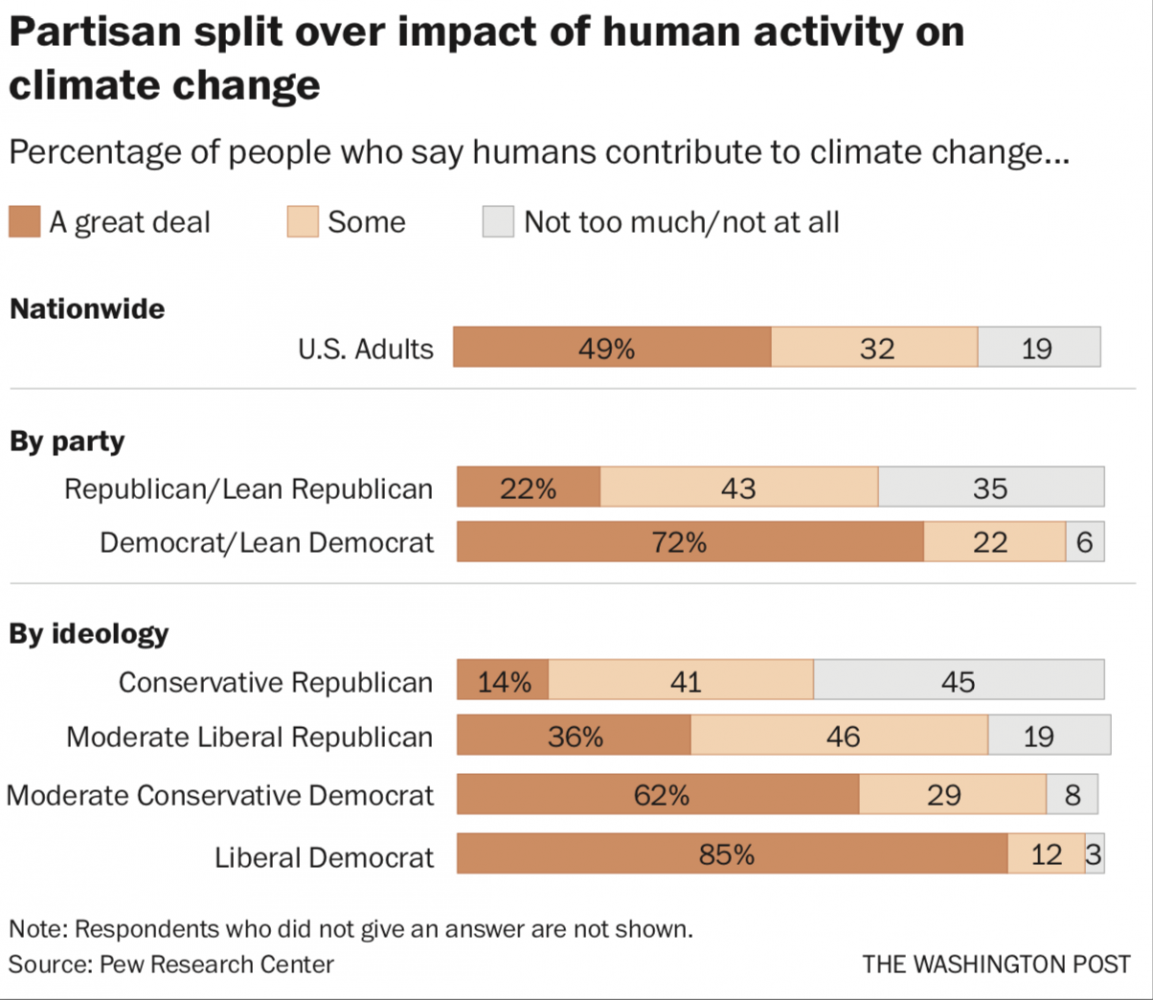
 Tobias Lutke, founder and chief executive officer of Shopify. speaks at a global technology conference in Brooklyn, N.Y., on Oct. 30, 2019. MUST CREDIT: Bloomberg photo by Cate Dingley
 SootinClaimon.Com