Jun 23. 2020Fugaku, a supercomputer co-developed by the Riken research institute and Fujitsu Ltd., was ranked the world’s fastest by the U.S.-European TOP500 project. | KYODO
By The Japan News-Yomiuri
Supercomputer Fugaku, developed by Riken and Fujitsu Ltd., ranked No. 1 in the latest TOP500 world rankings for supercomputers based on computing speed, an international conference of supercomputer researchers announced on Tuesday.
This is the first time in 8½ years that a Japan-made supercomputer has been ranked as the world’s best, since K in November 2011.
Fugaku is the successor to the K supercomputer, which was also developed by Riken and Fujitsu. It can do about 410 quadrillion calculations per second, nearly 40 times more than K.
It is currently undergoing a trial run and is being used to search for potential treatments for the novel coronavirus.
In the future, it is expected to be used in a wide range of fields such as meteorological and global environmental forecasting and drug discovery.
The Education, Culture, Sports, Science and Technology Ministry plans to spend about 110 billion yen to fully implement a system using the computer in fiscal 2021.
New from Apple at WWDC: Hand washing alerts, iPhone widgets and privacy ‘nutrition labels’
Jun 23. 2020
By The Washington Post · Geoffrey A. Fowler, Heather Kelly · BUSINESS, TECHNOLOGY
SAN FRANCISCO – Coming this fall, your Apple gear will look a little different. The iPhone home screen will look more like an Android phone. The Mac will look kind of like you’re running an iPad. And the Apple Watch will even nudge you to spend longer washing your hands.
These developments and a blizzard of other software changes were on the agenda Monday at Apple’s WWDC, short for Worldwide Developers Conference. The annual event, normally held in a conference hall full of developers and press, went virtual this year, with chief executive Tim Cook and other Apple executives streaming announcements online through a slick prerecorded video. It gave the hour-and-40-minute event the feeling of a very long commercial, lacking executives’ usual stage presence and the cheers (or jeers) of an audience.
Cook touted Apple’s support of racial justice and thanked health-care workers. But he carefully sidestepped some controversies brewing with regulators over the control Apple asserts over its App Store – and the exposure-tracking technology it developed with Google for the coronavirus that we’ve yet to see widely adopted.
There was also no new hardware. Apple typically saves those announcements for the fall – which makes even more sense this year during the pandemic.
So what did we learn? Apple took the moment to announce long-discussed plans to shift Mac computers away from Intel processors to ones it makes itself. That could mean Macs with longer battery life and other advantages when they start arriving at the end of the year.
For most of us, the biggest impact out of the WWDC announcements will come in new capabilities and tweaks to software we use every day. We didn’t get everything on our wish list: You still can’t set Google Maps as your default map, and there’s still no Messages app for friends and family with Android phones.
Here’s the Apple updates we think will matter, most of which will be available as public beta test downloads in July and finished software for everyone in the fall.
– – –
Home screen
There’s little revolutionary in iOS 14, but the iPhone home screen will get its first real makeover in years with a feature lovingly borrowed from Android phones. You can add “widgets,” which are windows with live, glance-able information from apps, such as the weather, music or upcoming appointments. (Previously, widgets were available on the iPhone’s swipe-left info screen and the iPad home screen.) It gives you one more reason to look down at your phone screen, but it could save you a few taps from opening common apps. Don’t fret if changing your home screen sounds annoying – you have to actively add them.
– – –
Apple Watch
A feature made for our pandemic times, the new hand-washing alert on the Apple Watch is a gentle nudge to stop the spread of the coronavirus, or any other viruses or germs that are going around. With the update, the watch will look out for the signs you’re at a sink, from the way you move your hands to the sound of water swooshing by. Then the watch will give you a countdown to make sure you spend the doctor-recommended amount of time cleaning away all those nasty germs.
– – –
App Library
In a long-overdue option to bring order to apps on the iPhone and iPad, the App Library will show your apps in folders automatically based on category. The new view will appear at the end of your homepage and use information such as your location and the time of day to decide which apps get the most prominent position. Anyone who’s ever wasted time trying to move jiggly little apps into folders should appreciate the help. As a bonus, it will make folders that automatically update and change based on what apps you use the most or downloaded most recently.
– – –
Privacy
It’s difficult to understand what apps are doing with our data. Now Apple will at least force apps to report some information about how they’re using our data, in simplified boxes that show up in the App Store. Modeled after nutrition labels, these will tell you what kind of data apps are collecting that’s linked to you, and how it is being shared. That’s good for people who take the time to look, but it doesn’t solve our bigger privacy problem.
And one more thing: iOS 14 apps will also ask your permission to track you across other apps and websites. Lots of apps do this to deliver targeted ads at you.
– – –
Mail, browser
Well, this only took a decade: iPhones and iPads can now choose a different, non-Apple default app for email and Web browsing. You’ve long been able to install competing apps but could not change the default that iOS opens when you click on a link. Now you can switch to a competitor such as Firefox or DuckDuckGo.
But Apple forgot an important one: Maps. Apple forcing us to use its own Maps app – which only this year is gaining directions for bicycling – is the sort of anti-consumer move that riles government antitrust regulators.
– – –
Sleep
WatchOS 7 adds a built-in sleep-tracking capability, but it comes with some strings attached. You activate it by choosing your ideal time to go to sleep and when you want to wake up. At your selected time, your watch’s screen will turn off, and it will begin looking for signals that you’ve fallen asleep. In the morning, it will wake you with an audio alarm or a jiggle on your wrist. A featured called Wind Down lets you create a pre-bed routine, such as playing music that makes you sleepy.
Unlike other sleep-trackers on the market, this Watch app won’t track your sleep cycles or tell you whether you were restless. You just get a daily readout on how long you were in bed and asleep. Your watch will need to have at least 30% battery life left before you go to sleep – which means you’ll have to find some other time every day to charge your watch.
– – –
Keys
File this one away for your next car purchase: iPhones and Apple Watches will eventually be able to replace car keys on compatible autos. Tesla vehicles already do this using a phone’s Bluetooth connection. Apple’s approach uses different technology, either the near-field communication system used by Apple Pay or the ultra-wideband wireless that Apple built into its latest devices. You’ll even have the power to temporarily share a key with a kid – curfew will never be the same! But it will require a car with compatible hardware; the first is the 2021 BMW 5 Series, available next month.
– – –
iPad
The iPad’s OS 14 may look familiar to Mac users, with more sidebars, drop-downs, toolbars and search features that seem lifted directly from the Mac operating system. Meanwhile, over on the Mac, a design overhaul will make it look slightly more iPad-like as part of the Big Sur operating system, including bringing more mobile features to the Messages app, such as confetti animations. Apple’s default browser, Safari, is throwing in a new translate tool and the ability to customize its home screen.
– – –
Clips
Sometimes you want to use an app but not download it. App Clips is Apple’s attempt to make it easy to use a feature offered by an app without installing it. For example, if you pass a busy store and want to get on a waiting list, point the phone at a special QR code and the option would pop up on your screen. There’s an option to then download the app, but the beauty is being able to skip downloading something you don’t need.
– – –
Misc.
A few things made us smile even if they’re not a huge deal:
The Apple Watch will track dancing, because that’s totally exercise, too. Close your rings with the Macarena.
Memojis, Apple’s cute animated avatars, can now wear face masks along with a bunch of other new options. Covid-chic.
When you’re using AirPods and put down one device and pick up another, the wireless connection should travel with you. We’ll believe it when we see it.
The Maps app on iPhones and the Apple Watch adds bicycling directions, which is useful for socially distant commuting.
The iPhone will get a recording indicator along the top, so you know when you’re being watched out of the front or back camera.
Seeing isn’t always believing: Google starts fact-checking images
Jun 23. 2020
By The Washington Post · Rachel Lerman · BUSINESS, TECHNOLOGY
SAN FRANCISCO – Photos aren’t always quite what they seem, and Google is trying to make it easier for people to identify phony or manipulated pictures online.
Google said Monday it will start identifying some misleading photos in its specific search tool for images with a fact-check label, expanding that function beyond its standard non-image searches and videos, as misinformation is rampant online. The fact check label will appear on any image that is included in an article that fact checks a photo or another claim. A larger preview of the photo will show a short summary of the fact-check and direct users to its source.
The Mountain View, Calif.-based company has used these fact-checking labels for years in its main search results and on video-streaming site YouTube. In December, Google said fact-checks appear more than 11 million times each day in search results.
“Photos and videos are an incredible way to help people understand what’s going on in the world,” Google product manager Harris Cohen wrote in a blog post announcing the new fact-check labels. “But the power of visual media has its pitfalls – especially when there are questions surrounding the origin, authenticity or context of an image.”
Tech companies’ efforts to fact-check the myriad claims made across their sites have become a major focal point as advertising and campaigning for the 2020 U.S. elections heats up. Twitter’s decision to label two of President Donald Trump’s misleading tweets about mail-in ballots with fact-check links set a de facto standard for social media companies last month. Twitter labeled another tweet by Trump with a warning last week after the president tweeted a doctored video showing fake CNN headlines. The company said it violated its policies on manipulated media.
Fact-checking from social media and other tech companies has become common in the past three years – Facebook, Twitter and Google all do it to some extent – but it is by no means universal and often relies on news media and other partners to publish a fact-check and make sure the companies see it. It can also be applied unevenly, something that triggers complaints.
YouTube CEO Susan Wojcicki noted in a Washington Post Live interview last week that the company removes videos that violate its policies – which prohibit some hate speech, inciting violence and some incidents of manipulated media that could cause disinformation – whether they are from a politician or anyone else. But the company keeps some of the videos on the site if they are presented in context, by a news report or for educational purposes, she said.
Google’s efforts are the first widespread initiative to try to fact-check images, said Nina Jankowicz, a disinformation specialist at the Wilson Center and author of the forthcoming book “How to Lose the Information War.”
Seeing manipulated images and video can be a lot more convincing to people than disinformation in text, Jankowicz said, and she’s hopeful that Google’s labels will at least cause people to think before they post. It won’t work for everyone, she said.
“Some people will just push back against any content they believe is not true,” she said. But others may pause. “It could get people to slow down and think before they share.”
Manipulated photos are one tool to spread misinformation. This month, Fox News published manipulated photos of a protest zone in Seattle, making it seem as though a city block was on fire. But it was really multiple images edited together, and the fire was actually in Minnesota.
Google image search does not yet show a fact-check for the Fox News photos, which Fox has since removed. The company does not apply fact-checking labels to all manipulated photos. It instead points users to articles that have fact-checked the photos, if they exist. It is using the service ClaimReview, which organizes fact-checks throughout the Internet and makes them visible to search engines.
The company used the example of an image showing a giant shark swimming along a Houston street. Now a search for the shark image – which was edited to make it seem as though a storm had caused the ocean wildlife to swim alongside cars – will show a small fact-check label next to a photo attached to a PolitiFact article.
Google said it is launching the feature fully this week.
Apple’s new processors give it more power over developers on the Mac
Jun 23. 2020
By The Washington Post · Reed Albergotti · BUSINESS, TECHNOLOGY, US-GLOBAL-MARKETS
Apple announced new chips for its Macs, which the company said Monday would make the computers more power efficient. But some worried about a different kind of power: the kind Apple wields over its developers.
Apple is switching from Intel processors, which it has used for more than a decade, to custom-designed chips made by Arm, a British company owned by the Japanese conglomerate Softbank.
The change, which Apple announced at its WWDC developer event, is no small thing. Software written for today’s Mac computers will no longer work unless it’s adapted for the new language. Apple said the change will take two years to complete.
Apple said its “Apple Silicon” will make it easier for developers to write apps for the entire “ecosystem.” Onstage during the virtual event, Craig Federighi, Apple’s senior vice president of software engineering, said, “Users will want their favorite apps to take full advantage of the capabilities of our custom silicon.”
By switching from Intel to Arm, Apple gets to develop its own customized microprocessor. Those tailor-made chips have allowed Apple to get more processing power with less heat and battery consumption out of its iPhones, iPads and watches. Apple also incorporates more built-in security protections that make it more difficult for hackers to break into a computer.
But transitions to new processors often create major waves for software developers. Some developers are concerned that chaos will mean opportunity for Apple, which for years has been making efforts to get developers on the Mac to distribute their products through the Mac App Store. Apple gets a hefty cut of all revenue generated through the App Store and imposes strict limitations on what the software is allowed to do.
“I can guarantee you that the fact that any developer can host their own Mac software bugs Apple terribly,” said Jason Fried, CEO of Basecamp, which has been battling with Apple over its email app developed for iPhones called “Hey.” Apple recently blocked Hey from being updated on iOS because it offered subscriptions outside of Apple’s payment system, thus avoiding Apple’s 30% cut on subscription revenue.
An Apple spokeswoman did not immediately respond to a request for comment.
Mac users have long been accustomed to downloading software directly from developer websites. By contrast, the iPhone has never allowed that level of freedom. Apps in iOS have to be downloaded through the App Store.
With the same processor base across its devices, Apple seems to be moving in the direction of iOS, where things are more tightly controlled by Apple, said Patrick Wardle, a long time developer of Mac software and principal security researcher for Minneapolis-based software maker Jamf.
“It does kind of just unify their computing platform and does make the transition for this more lockdown model easier to comprehend on Mac,” he said. “Unfortunately, we’re just moving down this path where Apple has complete control.”
Apple’s iPad apps already work on Arm processors. Apple last year began offering a service to make iPad apps work on desktop, called Mac Catalyst. With Arm processors, that interoperability becomes even more seamless, and could help increase the number of apps downloaded from the comparatively small Mac App Store.
“If Apple decides to lock the Mac down further and require all apps to go through the App Store, it’s going to be a bitter pill,” said Matt Ronge, CEO of Astro HQ, maker of AstroPad, a drawing app that competes with Apple’s version. “I think many developers will start to seriously look at other platforms if the Mac is that locked down.”
Apple already includes an Arm-based processor inside Macs, called the T2 Security Chip, to handle some security operations. Some have described it as a mini Apple Watch sitting inside a computer.
Ben Volach, co-founder of Blix, another maker of email software, said he’s concerned that Apple will make it easier for Mac developers to transition their software to Arm processors if they distribute through the App Store, disadvantaging developers who rely on customers directly downloading software.
Apple already offers developers on the Mac App store some conveniences that aren’t available to those who don’t use the store. For instance, developers who distribute through the store automatically get “notarized,” which confirms the identity of a developer and allows the software to be installed. Developers must obtain certificates manually if they don’t go through the store. Earlier this year, Apple tightened restrictions on apps that aren’t notarized by Apple.
Apple can “make the user experience worse for running apps distributed outside the Mac App Store, with extra warnings when you first open them,” said Manton Reece, the founder of Micro.blog, a blogging platform and social network with an iOS and Mac app.
Reining in the software free-for-all on Macs could take years, in part because Apple might invite a backlash from users and developers.
“The fact is the Mac has existed for 30 years without the App Store. It’s a whole lot harder to cram that back into the App Store,” said Paul Kefassi, the co-founder of Rogue Amoeba, maker of Airfoil and other popular Mac software. That doesn’t mean he’s not worried, he said. “Apple has never come out and said we’re committed to software outside the App Store. That secrecy means there’s always some part of us that has to be worried about it.”
Even Apple’s power over iOS software downloads has also been challenged in recent weeks, with the European Commission questioning whether the App Store should be the only way users can download software. Several major developers, including the companies behind Tinder and Fortnite, two of the most popular apps, have called out Apple for the way it controls its system, criticism that was once rare from the people who depend on the company for their livelihoods.
Mike Sax, chairman and founder of the App Association, an industry group funded in part by Apple, said he didn’t believe Apple’s switch to ARM chips would give Apple more power. On the contrary, he said it was “amazing” how seamless the transition will likely be. “They’re basically replacing the guts of these computers mid flight but everything will continue working,” he said.
Intel, in a written statement Monday, said Apple was still a customer across several areas of business and it would continue to provide support. It said Intel chips were “the most open platform for developers, both today and into the future.”
The move to Arm chips comes amid a big shift in Apple’s business model. As sales of iPhones have slumped, Apple has been expanding its services business, which includes revenue it makes on its App Store. Wall Street analysts are keeping a close watch on exactly how much Apple’s services revenue grows and at what pace. And of course, the move to Arm chips also reduces what Apple pays to Intel for chips.
Apple, which is valued by investors at more than $1.5 trillion, didn’t say anything Monday about how the move to Arm might help it eke more revenue out of developers or reduce costs. “As always with Apple it’s never what you see on the surface,” Blix’s Volach said.
Spyware found on journalist’s phone days after maker’s anti-abuse pledge
Jun 22. 2020
By The Washington Post · Dana Priest · WORLD, AFRICA
Technologists who discovered spyware made by an Israeli company targeting journalists in several authoritarian countries said they found the same spyware used against a Moroccan journalist three days after the company announced a policy against such uses.
Amnesty International’s Security Lab, the forensic technology arm of the human rights organization, said it found telltale signs that NSO Group’s Pegasus software had been used to infect the cellphone of an award-winning Moroccan journalist and human rights defender, Omar Radi. On Sunday, the group released its analysis of Radi’s phone.
In its report, Amnesty said its research “demonstrates NSO Group’s continued failure to conduct adequate human rights due diligence and the inefficacy of its own human rights policy.” Because NSO says it sells its software only to governments, Amnesty assumes the surveillance was conducted by Moroccan authorities.
In a statement, a company spokesman said: “NSO is deeply troubled by the allegations in the Amnesty International letter. We are reviewing the information therein and will initiate an investigation if warranted.” It would not confirm or deny whether Morocco is a client.
The Moroccan government did not respond to requests for comment from The Washington Post.
NSO says it markets its tools to governments for fighting terrorism and crime. Israel classifies Pegasus as a weapon and must approve any exports of the technology. The software can surreptitiously gain access to a phone’s camera, microphone, text messages, emails and location information.
NSO has become the target of intense scrutiny by nongovernmental technologist groups and journalists in recent years, and lawsuits have said Pegasus software was used against nonviolent dissidents, journalists and human right activists.
The firm, founded in 2010, has denied that its products have been misused and has said it conducts due diligence of potential clients. NSO software was instrumental in the capture of Mexican cartel leader Joaquin “El Chapo” Guzman.
In 2018, the Citizen Lab at the University of Toronto’s Munk School issued a report alleging that Pegasus was used by six countries with a record of spyware abuse against civil society: Bahrain, Kazakhstan, Mexico, Morocco, Saudi Arabia and the United Arab Emirates.
A lawsuit filed in Israel by a Saudi dissident says Saudi authorities used Pegasus to infect his phone and track his friend Washington Post contributing columnist Jamal Khashoggi before Khashoggi was killed and dismembered on orders, U.S. intelligence officials concluded, of Crown Prince Mohammed bin Salman. WhatsApp, a communications application owned by Facebook, also is suing NSO, alleging it inserted spy software through its application in violation of federal anti-hacking laws.
NSO in September adopted a policy pledging to continue to uphold United Nations human rights standards, to conduct due diligence before sales, to forgo sales if the risk of abuse of its software is high and to investigate serious allegations of abuse of its software.
David Kaye, the U.N. special rapporteur for human rights, said in an interview that NSO’s new human rights policy “is a first step” but that “there is nothing about their statement that’s enforceable by anyone outside the company.” NSO has declined to make public the list of countries that use Pegasus or details about the technology, saying both are confidential.
In the Radi case, Amnesty said it discovered the same type of “network injection” attacks it had documented against another Moroccan journalist, Maati Monjib, in 2019. During such an attack, the software hijacks the victim’s browser momentarily and reroutes the victim’s request for a particular website to one that is infected by the spyware.
Radi, who works for the LeDesk media outlet, was arrested by Moroccan authorities in December 2019. He was charged with “insulting a public servant” for a tweet he posted that criticized a judge who had convicted 43 people and sentenced them up to 20 years in prison for their participation in a 2017 protest in the northern Rif region. Radi was convicted of the charge and given a four-month suspended sentence. Morocco, a monarchy with an elected legislature, has in recent years increasingly cracked down on speech, independent media and protests.
In an interview, Radi,who lives in Rabat, said his job has been hampered by the government surveillance and publication of some of his private conversations on a website he described as friendly to police authorities.
“The biggest negative effect is that it makes people reluctant to talk,” he said. “It’s a deterrent if they know that I’m being bugged.”
Other Moroccan journalists have reported having their cellphones infected with spyware when they clicked on a link. In Radi’s case, he said he was using the Twitter app to visit the Ministry of Justice website when the website address went “change, change, change. . . . That’s when I got infected.”
Bill Marczak, a senior research fellow at Citizen Lab who read the Amnesty report on the Radi case, called its technical analysis “very compelling” and said the method of inserting Pegasus software when calling up a website was harder for a cellphone user to detect. “It’s very scary, the prospect that visiting a benign website can become a vector for [infecting] your phone.”
Radi said government surveillance has become an expected part of journalists’ life in Morocco. “You have to live with it,” he said. “It’s like the coronavirus.”
Amnesty’s report was released to Forbidden Stories, an international consortium of journalists, including The Post, which investigates threats and violence against journalists.
Hottest Arctic temperature record likely set with 100-degree reading in Siberia
Jun 22. 2020Children play in a lake outside Verkhoyansk, the Sakha Republic, about 2,900 miles northeast of Moscow, Russia, Sunday, June 21, 2020. A Siberian town that endures the world’s widest temperature range has recorded a new high amid a heat wave that is contributing to severe forest fires. –Olga Burtseva via AP
By The Washington Post · Andrew Freedman · WORLD, SCIENCE-ENVIRONMENT
A northeastern Siberian town is likely to have set a record for the highest temperature documented in the Arctic Circle, with a reading of 100.4 degrees (38 Celsius) recorded Saturday in Verkhoyansk, north of the Arctic Circle and about 3,000 miles east of Moscow. Records at that location have been kept since 1885.
If verified, this would be the northernmost 100-degree reading ever observed, and the hottest temperature on record in the Arctic, a region that is warming at more than twice the rate of the rest of the globe.
On Sunday, the same location recorded a high temperature of 95.3 degrees (35.2 Celsius), showing the Saturday reading was not a fluke. The average June high temperature in Verkhoyansk is just 68 degrees (20 Celsius).
Verkhoyansk is located at 67.5 degrees north latitude, whereas the Arctic Circle begins at 66.5 degrees.
The town of about 1,300 is located farther north than Fairbanks, Alaska, and is known for having an unusually wide temperature range. During the winter, Verkhoyansk is one of the coldest spots in the world, with temperatures frequently dipping well below minus-50 degrees.
Temperatures in Chersky, about 700 miles to the northeast of Verkhoyansk, reached 86 degrees (30 Celsius) in the past week, which is also unusual and caused by the large area of high pressure, or heat dome, that remains parked over it.
In 2020, Siberia has stood out for its above-extreme temperatures, which has accelerated the melting of snow and ice; contributed to permafrost melt, which led to a major oil spill; and got the Siberian wildfire season off to an unusually early and severe start.
The oil spill in Norilsk – above the Arctic Circle in north-central Russia – leaked at least 20,000 tons of diesel fuel into the nearby Ambarnaya River and is thought to be the worst spill in the Russian Arctic’s history.
While some questions remain about the accuracy of the Verkhoyansk temperature measurement, data from a Saturday weather balloon launch at that location supports the 100-degree reading. Temperatures in the lower atmosphere, at about 5,000 feet, also were unusually warm at 70 degrees (21 Celsius), a sign of extreme heat at the surface.
Such a reading makes the record high “even more legitimate,” meteorologist Etienne Kapikian of Meteo France said on Twitter.
Randy Cerveny, the professor at Arizona State University who leads the World Meteorological Organization’s (WMO) weather and climate extremes team, said in an email that the U.N. agency is “preliminarily accepting the observation as a new extreme, pending further detailed review.”
The preliminary finding, Cerveny said, is based in part on observations that bolster the surface temperature measurement.
The WMO verifies global temperature records, though it does not yet recognize the polar regions as a separate region for the WMO extremes archive.
During the spring, stubborn and sprawling areas of high pressure parked over the region resulted in parts of Siberia recording temperature departures from average that reached a staggering 18 degrees (10 degrees Celsius), according to the Copernicus Climate Change Service, which is an initiative of the European Union.
In western Siberia in particular, it was “by far” the warmest May on record, a Copernicus special report states.
For example, on May 22, the town of Khatanga, Siberia, located well north of the Arctic Circle, recorded a temperature of 78 degrees, about 46 degrees above normal. The typical maximum temperature for the day at that location is 32 degrees. The town obliterated its previous record high for the date of 54 by about 24 degrees and its monthly record of 68 by about 10 degrees.
According to the report on recent Siberian temperatures, the persistence of the warm anomalies stands out from the historical record.
The recent trends are likely to continue, too, with computer models showing continued extreme warmth in northern Siberia in the next 10 days, spilling over into parts of Canada, Scandinavia and, eventually, most of the Lower 48 states.
In addition to the May record, the average temperatures in the December-May period were the warmest recorded, dating to 1979.
By pairing the data with NASA’s surface records going back to 1880, Copernicus scientists found that this most recent six-month period is probably unprecedented since at least 1880.
The Siberian Arctic, like the Arctic as a whole, is seeing rapidly increasing temperatures as a result of human-caused global warming. This is in part because of accelerating feedback loops between melting snow and ice and air and ground temperatures, as well as other features of the region’s climate.
Large wildfires are proliferating from Siberia to Alaska and Scandinavia; permafrost is melting, which releases even more planet-warming greenhouse gases into the atmosphere; and sea ice extent and thickness are plummeting, among other changes.
Jun 21. 2020Photo taken by Korbphuk Phromrekha and Khanathit Srihirundaj in Bangkok
By The Nation
People in the northern part of Thailand saw a larger partial eclipse while people in Bangkok witnessed the annular eclipse from 13.11pm to 16.10pm.
Sunday was also summer solstice.The largest moon shadow obscured 39.5 per cent of the Sun from 2.49pm.
Photo taken by Korbphuk Phromrekha and Khanathit Srihirundaj in Bangkok
People in Thailand saw the partial eclipse while people in some other countries saw an annular eclipse, according to the Bangkok Planetarium.
People in the Thepa district of Songkhla province, in the South, could watch the eclipse only for a short period. They saw the moon cast its shadow on 20 per cent of the Sun, but then clouds obstructed the view.
Photo taken by Charoon Thongnual in Songkhla province
Sunday was also the longest day of the year, with the Sun appearing in the Thai skies for 12.56 hours.
The next partial solar eclipse will happen on April 20, 2023.
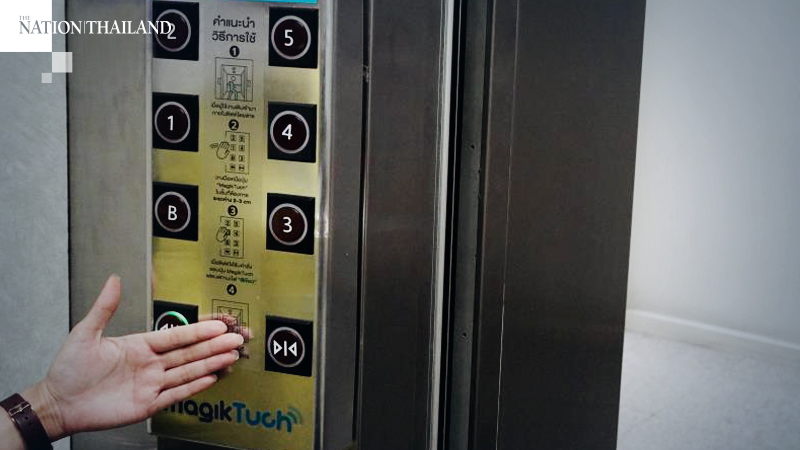
National Security and Dual-Use Technology Centre (NSD) has developed “MagikTuch”, a touchless elevator button to protect people from contagious diseases.
Dr Siwaruk Siwamogsatham, NSD director
NSD director Dr Siwaruk Siwamogsatham, said that many diseases can be transmitted through secretions on various objects, such as door knob and elevator button.
“Therefore, avoiding touching risky spots can help reduce risk of infection and contain the spread of diseases,” he said.
“Elevator is a transportation system used by many organisations, such as authorities, hotels, department stores, hospitals, and companies.”
He explained that people can use MagikTuch by holding their hand over the floor button at a distance of 2-3 centimetres.
“The sensor will detect your hand and order the elevator automatically,” he said.
“This device is easy to install because it can be installed in the lift directly, while it was designed to support both alternating current and direct current power systems.”
He added that NSD is currently installing MagikTuch in Siriraj Hospital and Impact Exhibition Centre to gain the confidence of people using the elevator.
“The touchless elevator button is one of our innovations for dealing with Covid-19 in order to be in line with new normal trends,” he added.
Twitter labels Trump video tweet as manipulated media, continuing its crackdown on misinformation
Jun 19. 2020
By The Washington Post · Cat Zakrzewski · NATIONAL, BUSINESS, TECHNOLOGY, POLITICS
Twitter on Thursday evening took the rare step of appending a warning label to one of President Donald Trump’s tweets after the company determined it violated its policies on manipulated media.
The president tweeted a doctored version of a popular video that went viral in 2019, which showed a black and a white toddler hugging. In the version Trump shared, the video has been edited with ominous music and a fake CNN headline that says, “Terrified toddler runs from racist baby.”
“Racist baby probably a Trump voter,” the headline then says in a subsequent screen.
The video then cuts to the original clip of the children hugging, and then cuts to the message “America is not the problem. Fake news is.”
The video received at least 3.8 million views, and more than 75,000 retweets.
“This tweet has been labeled per our synthetic and manipulated media policy to give people more context,” Twitter spokeswoman Katie Rosborough said.
This is only the third time that the company has announced that it would take action against one of the president’s tweets. Twitter has previously appended labels to a pair of Trump’s tweets that made misleading claims about mail-in ballots, as well as another post that said “when the looting starts, the shooting starts” for violating its terms on violence.
Trump lashed out at Twitter after the company’s initial decision to label his tweets regarding the mail-in ballots, signing an executive order that week that sought to punish social media companies by calling on federal regulators to reexamine a key legal shield that gives tech companies broad immunity for the posts and photos people share on their services.
Twitter’s decision to label the tweets is the culmination of a series of quiet and incremental processes intended to dismantle a long-standing exception that the social media industry has made for the speech of politicians. Social media companies are under increased pressure to moderate content on their websites – especially from the Oval Office – as concerns mount about misinformation amid the coronavirus pandemic and the run-up to the 2020 presidential election.
In March, Twitter also applied a similar manipulated media warning to a video tweeted by White House social media director Dan Scavino, which Trump retweeted.
The manipulated video Trump tweeted Thursday remains unlabeled on Facebook, where it received more than 100,000 likes and more than 26,000 shares. The company did not immediately respond to a request for comment about whether it planned to take similar action against the video.
Facebook’s CEO Mark Zuckerberg has said the president’s previous posts haven’t violated the company’s policies, drawing ire internally from employees.
Twitter previously labeled Trump’s tweet on fraudulent mail-in ballots with a label that says, “Get the facts about mail-in ballots.” It redirects users to news articles about Trump’s unsubstantiated claim.
For the tweet that called for violence during the protests, Twitter added a gray box that now hides the tweet from public view unless a user clicks on it that reads: “This Tweet violated the Twitter Rules about glorifying violence.” The move also prevented other users from liking the president’s tweet or sharing it without appending comment.
“These THUGS are dishonoring the memory of George Floyd, and I won’t let that happen,” Trump tweeted late last month, adding, “Any difficulty and we will assume control but, when the looting starts, the shooting starts.”
EGCO Group removes learning limit on energy education with “Khanom Learning Center Virtual Exhibition”
Jun 19. 2020
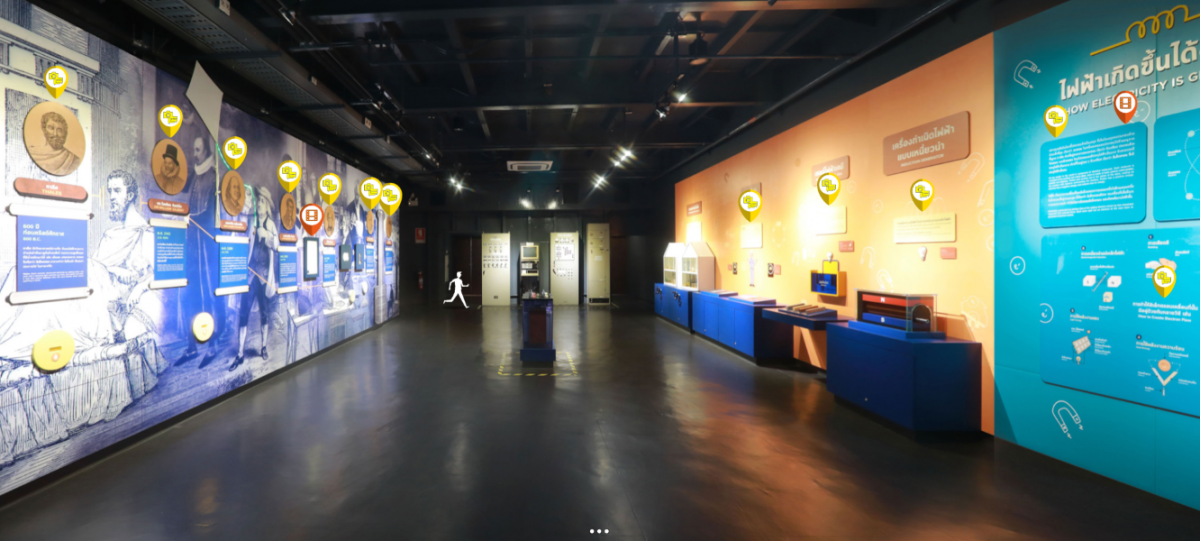
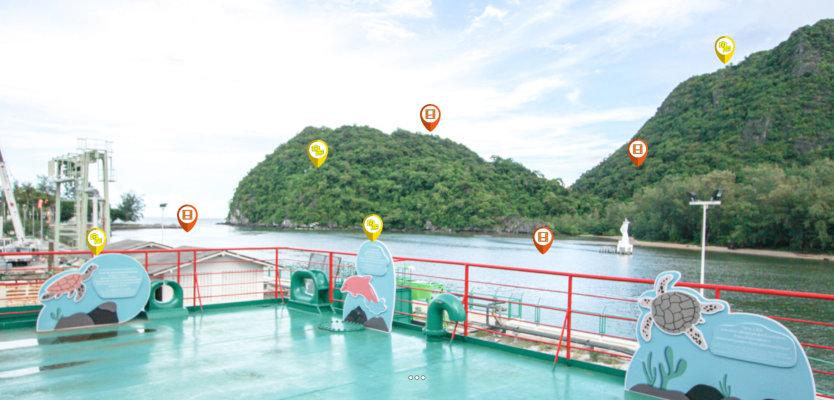
Electricity Generating Public Company Limited or EGCO Group launched “Khanom Learning Center Virtual Exhibition” providing young people and the public with an opportunity to learn more about electricity without interruption even during COVID-19 pandemic through online media. The virtual exhibition makes it possible for anyone to virtually visit the country’s first and only floating electricity generation learning center even while physical distancing is required. Interested persons can visit the virtual exhibition at https://www.egco.com/khanomlearningcenter on computer, tablet and smartphone from now.
In addition, EGCO Group has delivered multimedia learning kit on energy and environment to the Office of Basic Education Commission (OBEC) to support teaching and studying while COVID-19 continues to spread around the world.
Mr. Thongchai Chotkajornkiat, Executive Vice President – Corporate Management of EGCO Group, said, “Although COVID-19 pandemic situation in Thailand has been improved, the public is advised to continue physical distancing. This measure is important to prevent and reduce risks of infection among young people who are now enjoying school break. EGCO Group as an expert in the electricity generating industry realizes that it is important to promote learning and knowledge about energy and environment among children and youth, who will grow up and become the leaders in community, social and national development. We believe that a good beginning makes a good ending and that we can stop the pandemic without stop learning. We, therefore, seek a new learning way for the young by using modern technology and online system. We have developed a virtual learning system to allow people to “virtually” visit the “Khanom Learning Center” so that they can continue learning about energy, electricity generating process, community learning centers and the environment in Khanom District. With this virtual exhibition, interested persons can visit our learning center anytime and from anywhere.”
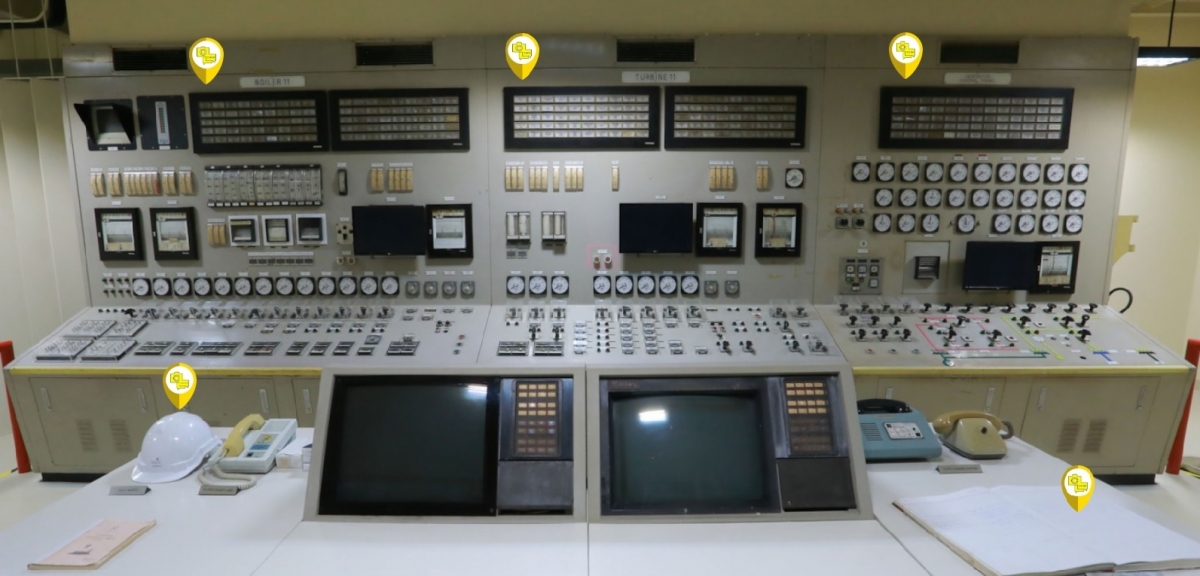
The Khanom Learning Center Virtual Exhibition allows interested persons to explore and enjoy the world of energy and electricity at their fingertips. The exhibition comprises seven zones beginning with the discovery of electricity and basic electricity generating theory to water turbine electricity generation which is the main system at Khanom Power Plant Unit 1. In addition, visitors can also enjoy the virtual surrounding of the learning center, including the scenic view, rich nature, way of living, history and culture in Khanom through multimedia tools. Later, EGCO Group will develop fun and knowledgeable games that enhance learning, promote analytical and other important skills that support modern learning of the 21st Century.
“In addition to the virtual exhibition of Khanom Learning Center, EGCO Group has distributed various learning tools from our “Energy for Life: Fighting Global Warming with Sufficiency Theory” to promote sustainable conservation of energy and the environment. Such tools come in many forms like posters, comic books, games and other multimedia tools. Such knowledge is added in the OBEC’s e-content application. This allows teachers, academics and students to have access to the information on energy and environment, which must be updated all the time. Even in the time that we all are fighting against COVID-19, learning should not be interrupted,” concluded Mr. Thongchai.

 Fugaku, a supercomputer co-developed by the Riken research institute and Fujitsu Ltd., was ranked the world’s fastest by the U.S.-European TOP500 project. | KYODO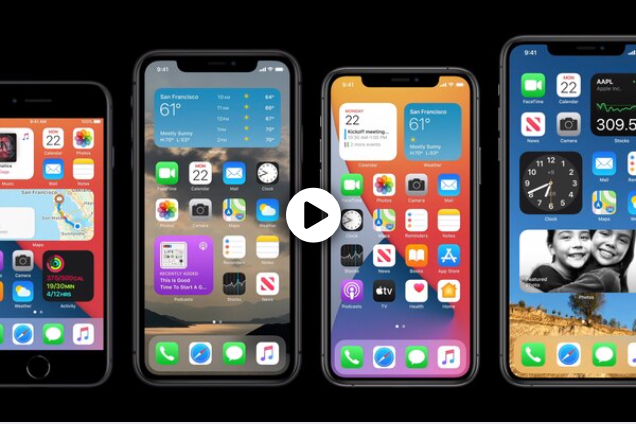


 Children play in a lake outside Verkhoyansk, the Sakha Republic, about 2,900 miles northeast of Moscow, Russia, Sunday, June 21, 2020. A Siberian town that endures the world’s widest temperature range has recorded a new high amid a heat wave that is contributing to severe forest fires. –Olga Burtseva via AP
 Photo taken by Korbphuk Phromrekha and Khanathit Srihirundaj in Bangkok