Microsoft says antitrust bodies need to review Apple app store
Jun 19. 2020
By Bloomberg · Dina Bass, Mark Gurman · NATIONAL, BUSINESS, TECHNOLOGY
Microsoft Corp. President Brad Smith said it’s time for antitrust regulators in the U.S. and Europe to discuss tactics that app stores use to take advantage of those who want to distribute their software.
Smith was referring to Apple Inc.’s App Store, a Microsoft spokesperson said, though he didn’t specify the iPhone maker in his remarks. European antitrust regulators on Tuesday opened an investigation into Apple’s policies, saying developers may be forced unfairly to provide a share of app store revenue to the company.
Some app stores create a far higher barrier to fair competition and access than Microsoft’s Windows did when it was found guilty of antitrust violations 20 years ago, Smith said Thursday at an event hosted by Politico.
“They impose requirements that increasingly say there is only one way to get on to our platform and that is to go through the gate that we ourselves have created,” Smith said. “In some cases they create a very high price per toll – in some cases 30% of your revenue has to go to the toll keeper.”
An Apple representative didn’t immediately reply to requests for comment. The U.S. Justice Department couldn’t be reached for comment.
“The time has come – whether we are talking about D.C. or Brussels – for a much more focused conversation about the nature of app stores, the rules that are being put in place, the prices and the tolls that are being extracted and whether there is really a justification in antitrust law for everything that has been created,” Smith said.
Microsoft’s concerns with Apple’s App Store are clear. The software maker, like other developers on Apple’s platform, must give Apple a 15% to 30% cut of any subscription to software such as Microsoft Office or their email program Microsoft Outlook. Microsoft can’t point customers to sign up on its website either as that would circumvent the Apple fee.
As with Spotify Technology SA and others that have made complaints against the app store, Microsoft is competing with Apple services and the iPhone maker doesn’t need to share revenue with anyone else. Apple has argued that it’s the store keeper and takes a fee to support developers and distribute their apps and services.
Beyond productivity software, Apple’s App Store rules have prevented Microsoft, among others, from launching new and popular cloud gaming services on the iPhone and iPad, Bloomberg News reported earlier this year.
Apple reacted to news of the investigation on Tuesday by saying “it’s disappointing the European Commission is advancing baseless complaints from a handful of companies who simply want a free ride, and don’t want to play by the same rules as everyone else.”
Huawei chip unit short-circuited Trump’s sanctions. Then it got burned.
Jun 19. 2020
China chip sales Photo by: The Washington Post — The Washington Post
By The Washington Post · Eva Dou · BUSINESS, WORLD, TECHNOLOGY, US-GLOBAL-MARKETS, ASIA-PACIFIC For most of its history, Huawei’s tinkering in semiconductors was considered little more than a curious hobby by industry rivals.
The Chinese technology company occasionally outfitted its smartphones with its homegrown Kirin chipsets, named after a mythical beast with the horns and hoofs of a deer and the scaly body of a dragon.
But Kirin chips remained a rare presence in the wild. Huawei’s chip subsidiary, HiSilicon, attracted little outside attention until the Trump administration’s sanctions on Huawei brought this backup squad to the front line.
“This was history’s choice today, that our spare tires were all put into use overnight,” HiSilicon’s reclusive president, Teresa He, wrote to her staff in a letter dated “before dawn,” after sanctions hit in May 2019. Google, Qualcomm, Intel and other U.S. companies suspended business dealings with the Chinese firm.
Depriving Huawei smartphones of Qualcomm’s powerful processors was meant to cripple Huawei’s smartphone business. But Huawei’s handset sales stayed strong, bolstered by patriotic buying at home.
And a lot of these phones now had Huawei’s chips inside them, pushing HiSilicon past Qualcomm to become China’s No. 1 smartphone chip vendor this spring.
The Commerce Department was not amused. It tried again this May, forbidding the sale of U.S. technology not only to Huawei, but also HiSilicon’s suppliers and the suppliers of those suppliers.
“For HiSilicon, it’s really a big hit,” Linda Sui, a director at research firm Strategy Analytics, said of the new sanctions. “Nobody can bypass U.S. technology.”
A smartphone chipset looks unassuming – a small, black square – but it reflects the limit of how small and precise humans can draw a pattern. In high-end smartphone chips, each transistor, or switch, is so small that more than 10,000 of them, end to end, would still be less than the thickness of a sheet of paper. Each new generation must be smaller yet.
To cope with the crushing research costs, companies and nations decided decades ago to specialize. Today, a few companies flatten sheets of pure silicon into near-perfectly flat surfaces, while several others make machines that draw microscopic patterns with beams of light.
Other companies make software to design the circuit paths, and yet other companies construct the chips in rooms so clean the air is free of dust.
These specialized suppliers are now being told to pick between the United States or China, resulting in a profound remapping of the global semiconductor supply chain. A number have chosen the United States in recent weeks, deepening Beijing’s urgency to develop its own suppliers.
For instance, Taiwan Semiconductor Manufacturing Co. – which manufactures cutting-edge chips for Huawei as well as Apple and other leading brands – said earlier this month it will follow the U.S. sanctions, leaving HiSilicon in the lurch.
Semiconductor fabrication plants, or fabs, like TSMC have little choice but to abide by the U.S. sanctions, as they rely on U.S. suppliers to operate, said Dan Wang, a technology analyst at Gavekal Dragonomics.
“Any modern semiconductor fab requires U.S.-origin equipment,” he said.
Huawei has been quiet on the new sanctions, beyond a statement in May saying its business would be “inevitably affected.” It declined last week to comment further.
HiSilicon was formally established in 2004, on the heels of a major humiliation for Huawei. Cisco Systems had sued Huawei the previous year, alleging its Chinese rival had copied and pasted some of its router code for use in its own cheaper products.
The case was settled out of court, but Huawei’s reputation was battered. Huawei’s founder, Ren Zhengfei, came close to selling his company to Motorola in 2003, believing a U.S. alliance would help Huawei survive future clashes with the West.
“We were hesitant, and we wondered if it would be possible for Huawei to wear an ‘American cowboy hat,’ ” Ren told Chinese media in an interview last year, according to a transcript released by the company. “If we had been sold to this company, we would have been able to get our American cowboy hat and try to take the world by storm.”
The deal fell through at the 11th hour, and Ren said younger Huawei executives were adamant against trying to sell the company again.
Ren spun off Huawei’s fledgling chip team into an official subsidiary in 2004, pouring in so much money that HiSilicon earned the colorful internal nickname “the cash-sucking baby that will burn your hands,” according to state media reports. HiSilicon remained unprofitable from 2004 to 2013.
HiSilicon recruited experienced engineers globally, from Canada to Germany to Taiwan. In recent years, it has unveiled advanced processors on par with leading Western brands, although its limited production scale kept it off the radar as a major challenger.
Today, she is the only woman to lead one of the global top 10 semiconductor vendors, after HiSilicon entered the ranks this spring. In keeping with Huawei’s low-key culture, the former engineer has never given a media interview. She declined to be interviewed for this article.
Her letter to employees last year, however, reflected unmistakable excitement that after years of toiling quietly on “spare tires” kept in reserve, HiSilicon was being fully unleashed.
“We have safeguarded the strategic security and uninterrupted supply of a large share of Huawei’s products!” she wrote. “On this darkest day, every ordinary son and daughter of HiSilicon has become a hero of the era!”
Researchers get much closer to finding malaria drug by crystallising the virus’s protein in space
Jun 18. 2020Photo credit: GISTDA
By The Nation
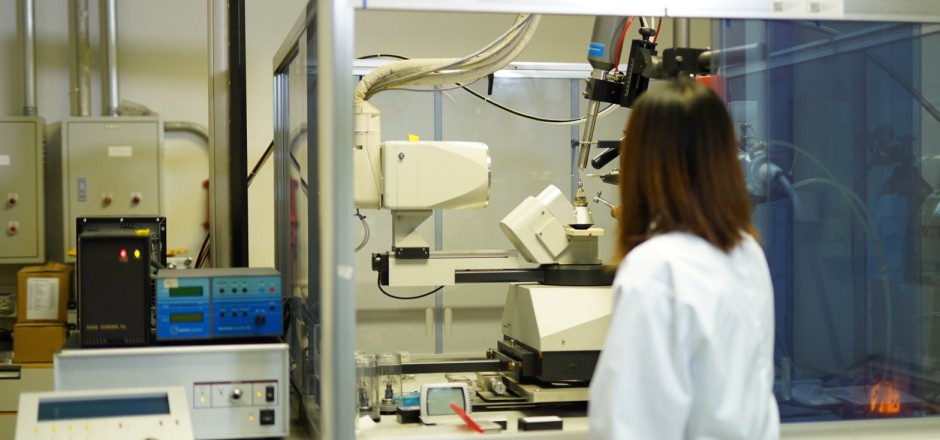
After successfully crystallising protein in space, Dr Chairat Uthaipipull, a senior researcher at Biotech, has sent the protein crystals to the Japan Aerospace Exploration Agency (JAXA) for further study.
The aim of this project is to create effective anti-malaria drugs.
Dr Chairat said on Wednesday (June 17) that the crystallisation of protein is important for researchers to design drugs that can better bind to this protein.
“When we see the protein’s structure clearly, it’s like we have found a key to a padlock. Crystallisation of the protein was better in space as there is no gravity and the crystals can be created in the most natural manner possible,” he said.
Photo Credit: GISTDA
The protein crystals have been sent to JAXA, where they will be fired with the synchrotron light to see how it scatters.
“Then we will be able to create 3D structure of the protein to see how it looks. This will help us design a drug that can bind to this protein well, and if we can stop this protein – which is the virus’s core – from activity, then the virus will die,” the expert said.
Izumi Yoshizaki, manager of the JAXA Protein Crystal Growth project, which sent the protein to space, said: “We added protein solutions at the launch pad in the Kennedy Space Centre a few hours before take-off to prevent a pre-reaction of the matter. Therefore, we have achieved very high-quality and complete space crystals. Gistda [the Geo-Informatics and Space Technology Development Agency] will have information of the light scattering and irradiation in the crystal’s structure by July.”
‘Zoombombing’ may be a thing of the past as Zoom rolls out end-to-end encryption
Jun 18. 2020
By The Washington Post · Rachel Lerman · BUSINESS, TECHNOLOGY
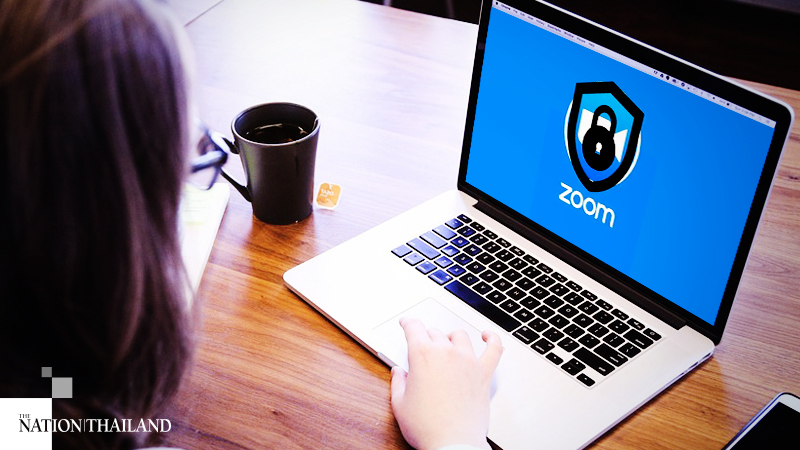
Zoom will roll out secure end-to-end encryption for all users – even those who do not pay for the service, reversing course on a previous announcement.
The videoconferencing app, which has reported massive growth as people stay at home and work remotely during the coronavirus pandemic, has been skewered for privacy breaches as millions of new users logged on.
It was plagued by reports of private videos being hacked online and uninvited guests dropping in on calls. End-to-end encryption secures a call so only the people who start it and their invitees can access the information – essentially locking all third parties out.
Zoom will begin testing the feature with customers in July, a nod to privacy experts who had called for increased security.
Zoom faced quick backlash from users and privacy advocates earlier this month when it said it would release the new encryption features only for paid customers, noting it was partly because law enforcement might need access.
“Free users, for sure, we don’t want to give that, because we also want to work together, with FBI, with local law enforcement,” in case the technology is used for a bad purpose, Zoom CEO Eric Yuan said on a conference call with analysts in early June after the company announced its first-quarter financial results.
But end-to-end encryption is not without its drawbacks, and it has become a hot-button issue in the past few years between tech companies and law enforcement agencies that say it has made it harder to track down crimes taking place online.
In investigating crimes including the sharing of child pornography, the U.S. government has sought access to various encrypted messaging services. It has also asked companies such as Apple, which encrypts its iMessages, and Facebook-owned WhatsApp to build a “back door” for law enforcement. But the companies pushed back on the government’s demands, pointing out that leaving conversations open to law enforcement also would make them vulnerable to hackers or other attacks.
After Zoom made its own declaration on wanting to help law enforcement, privacy organizations including the Electronic Frontier Foundation and Mozilla Foundation called on the company to reconsider.
“But the idea that compromising on encryption will give special access to U.S. officials is a fallacy,” the EFF and Mozilla wrote in a letter to Zoom. “Any mechanism that law enforcement uses to access Zoom users’ data will be vulnerable to oppressive regimes and other bad actors.”
The digital advocacy group Fight for the Future also collected 70,000 signatures to try to persuade Zoom to expand the technology to free users.
Yuan backpedaled in a blog post Wednesday, writing that the company had consulted with child-safety experts and civil liberties groups about the technology. Free users of Zoom will have to provide more personal details, including a phone number, to use the service, an extra piece of identification that Zoom said will keep calls safer.
“We are confident that by implementing risk-based authentication, in combination with our current mix of tools – including our Report a User function – we can continue to prevent and fight abuse,” Yuan wrote.
Encryption will be an add-on feature that users can toggle on and off. It will not work for people dialing in from phone numbers, so many people might choose to keep it off during less sensitive calls.
Apple’s diversity chief leaves as companies vow to tackle racism
Jun 17. 2020An Apple inc. logo is displayed at their store at Yorkdale mall in Toronto on Aug. 22, 2019. MUST CREDIT: Bloomberg photo by Brent Lewin.
By Syndication Washington Post, Bloomberg · Shelly Banjo, Mark Gurman · BUSINESS, TECHNOLOGY, CAREER-WORKPLACE
Apple’s head of diversity and inclusion Christie Smith is leaving the iPhone company, according to people familiar with the matter.
Last week, Chief Executive Officer Tim Cook said Apple is launching a $100 million Racial Equity and Justice Initiative, adding to the company’s response to the police killing of George Floyd last month. Earlier this month, Cook wrote in a letter to employees and customers that society needs to do more to push equality, particularly for Black people.
“To create change, we have to reexamine our own views and actions in light of a pain that is deeply felt but too often ignored. Issues of human dignity will not abide standing on the sidelines,” Cook wrote in the letter.
Smith joined Apple in 2017 after 16 years at consultancy Deloitte. Unlike her predecessor, who reported directly to the CEO, Smith reported to Apple’s Senior Vice President of Retail and People Deirdre O’Brien. The previous person in the role, Denise Young Smith, lasted only six months and left after apologizing for controversial comments she made about the mostly white makeup of Apple’s executive team.
“Inclusion and diversity are core Apple values and we deeply believe the most diverse teams are the most innovative teams,” Apple said in an emailed statement confirming the news. “Christie Smith will be leaving Apple to spend more time with her family and we wish her well. Our Inclusion and Diversity team continues to report directly to Deirdre O’Brien on the Executive Team.”
Apple said the move was planned two months ago, though a person familiar with the matter said Christie Smith’s last day was Tuesday. She was unique among Apple’s executive team in commuting from Seattle to Cupertino.
Read more: A Black Money Manager Speaks Out on Workplace Race Conversations
The Cupertino, California-based company has made little progress in increasing the diversity among its overall workforce since it began releasing data in 2014. According to its 2018 diversity report, 67% of global employees were male, down from 70% in 2014. In the U.S., 6% of tech employees were Black in 2018, unchanged from 2014.
Apple hasn’t disclosed its most recent diversity numbers yet, but the company has made some headway in recent years increasing diversity among new hires. More than half of new hires in the U.S. in 2018 were Black, Hispanic or from other historically underrepresented groups in tech. Women accounted for 38% of Apple’s workforce under the age of 30, compared to 33% of the its overall staff.
Royal Thai Air Force satellite all set for launch from French Guiana
Jun 16. 2020
By THE NATION
The Royal Thai Air Force’s NAPA-1 satellite will be launched into orbit from Guiana Space Centre in French Guiana, South America, on June 19 at 8.51am (Thailand time).
The satellite will head into space aboard an Arianespace Vega rocket and be placed in low earth orbit 500 kilometres high.
NAPA-1 (meaning “sky” in Thai) is the Air Force’s first satellite to be used for air surveillance in national security missions.
“The satellite will also be used to support disaster prevention and mitigation, such as displaying heat areas to help put out forest fires and exploring drought areas to improve the efficiency of water resource management,” an Air Force announcement said yesterday (June 15).
NAPA-1 is a small satellite based on the 6U CubeSat platform and weighs around 5kg. It will orbit Thailand four times a day and can take photos at a resolution of 5 to 40 sq metres.
The Air Force plans to launch two more satellites into orbit this year.
Black Lives Matter could change facial recognition forever – if big tech doesn’t stand in the way
Jun 13. 2020
By The Washington Post · Geoffrey A. Fowler · TECHNOLOGY, COURTSLAW The Black Lives Matter movement notched a win in Silicon Valley this week, turning police use of facial recognition technology into a litmus test for big tech’s support of civil rights.
Now everyone protesting for police reform needs to hold the companies to it.
Like dominoes in a lineup of corporate public relations stunts, first IBM, then Amazon and finally Microsoft (at a Washington Post Live event) each said it won’t sell or would at least pause police use of its facial recognition technology until there are federal laws on the matter.
Never mind that none of these companies were actually major players in the police facial recognition market. (Microsoft admitted it didn’t sell the tech to U.S. police at all.) But civil rights leaders and privacy advocates I’ve spoken to this week tell me what they need is for big tech to stop arresting their legislative efforts to make the technology off-limits.
So far, Silicon Valley’s record has mostly put it at odds with groups like Color of Change, the NAACP and the American Civil Liberties Union. A Microsoft employee literally wrote a new facial recognition law in Washington state opposed by many civil rights groups for not being tough enough.
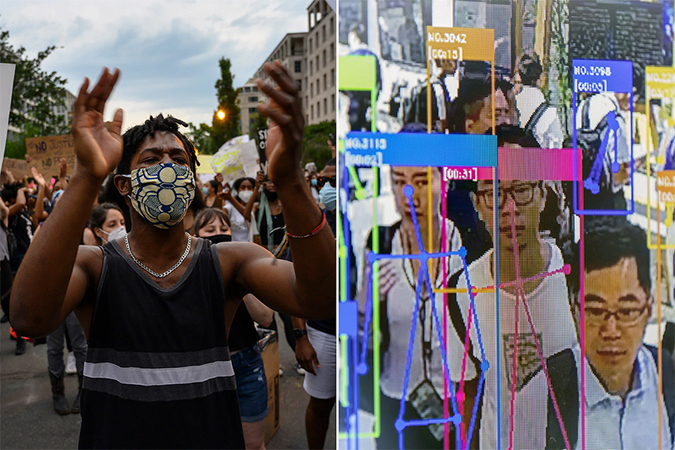
What happens next will impact the lives of many Americans. Facial recognition technology uses photos to help computers identify people. You might have already encountered it to unlock your phone or board an airplane. It can also be used to identify people who don’t even know they’re being watched, like at a protest.
It’s one of the most powerful surveillance tools ever invented, but even a federal government study found it to be less accurate at identifying minorities and women. Ramping up its use could, in theory, help keep criminals from escaping arrest – but it also opens a slippery slope to a world of supercharged policing that’s likely to disproportionately impact people of color through misidentification or just more surveillance of minority communities.
Amazon also owns the connected doorbell maker Ring, which privacy groups have criticized for partnering with hundreds of police forces, granting them potential access to camera footage of many American streets. Ring doesn’t currently offer facial recognition, but its video can be shared with police who have it. (Amazon CEO Jeff Bezos owns The Washington Post.)
There’s no evidence of police using facial recognition technology to make arrests of people protesting the death of George Floyd, though it may take time for those records to emerge. Police in dozens of U.S. cities have access to the tech, and in several have explicitly asked citizens to share images of protesters.
What changed this week is that facial recognition got linked to police racism, the issue that’s gotten Americans angry enough to protest during a pandemic and made the tech politically toxic. Previously, privacy advocates (including me) had linked it to less urgent-sounding concerns like surveillance and squashed speech.
To be clear, this week’s announcements alone likely won’t do much to stop the use of this technology by law enforcement. The most important players in the murky market, such as NEC Corp, Idemia and Clearview AI, are lesser-known companies that have not joined in on the voluntary moratoriums.
“Clearview AI is also committed to the responsible use of its powerful technology and is used only for after-the-crime investigations to help identify criminal suspects,” the company said in a statement.
NEC said its technology could combat racism, by helping to “correct inherent biases, protect privacy and civil liberties, and fairly and effectively conduct investigations for social justice.” Idemia didn’t immediately reply to requests for comment.
The only thing that’s really going to stop police from using the tech is new laws.
That’s why the announcements by IBM, Amazon and Microsoft were a success for activists – a rare retreat by some of Silicon Valley’s biggest names over a key new technology. This came from years of work by researchers including Joy Buolamwini to make the case that facial recognition software is biased. A test commissioned by the ACLU of Northern California found Amazon’s software called Rekognition misidentified 28 lawmakers as people arrested for a crime. That happens, in part, because the systems are trained on data sets that are themselves skewed.
Yet facial-recognition opponents say the problems go far beyond bad software. “Yes, accuracy disparities mean already marginalized communities face the brunt of misidentifications,” said Buolamwini, founder of an organization called the Algorithmic Justice League. “But the point isn’t just that facial recognition systems can misidentify faces, it’s that the technology itself can be used in biased ways by governments or corporations.”
For example, more cameras could be pointed at minority neighborhoods, used to target immigrants or even people who join protests about police brutality.
Buolamwini has asked tech companies to sign a pledge that would prohibit the use of the their technology in contexts where lethal force may be used, including by police or the military. (So far, none of the big ones have.)
“There are too many ways in which it can be recklessly applied, and too few examples of the ways in which it serves a fundamental public good,” said Brandi Collins-Dexter, Senior Campaign Director with the organization Color of Change, which opposed the California bill.
That’s why she and others are calling for not just better facial recognition tech, but a stop to its use by governments.
A half-dozen cities such as San Francisco already have those sorts of laws. On Tuesday, Boston held a hearing about adopting its own ban, during which Police Commissioner William Gross said he didn’t want to use the tech because it was faulty.
The challenge, say opponents of facial recognition, is that tech companies want to say they support civil rights without actually putting significant limits on potential business upside. There are potential military, international and corporate contracts at stake, largely missing from this week’s promises. And weak laws could end up legitimizing police use of the tech.
Microsoft, in particular, has been trying to have it both ways. Last week CEO Satya Nadella told employees in a blog post the company would support racial justice to honor the death of Floyd. A day earlier, the company was fighting some 65 civil rights organizations in California to push a law authorizing police and companies to use facial recognition tech with some restrictions that fall far short of a moratorium.
Microsoft didn’t get its way in California: AB 2261 failed in the state’s legislature last week.
Microsoft was the first big tech company to call for facial recognition laws back in 2018, and has been the most visible in state house and city hall hearings. It says it opposes use of facial recognition for mass surveillance, racial profiling or other violations of basic human rights and freedoms.
“We need to use this moment to pursue a strong national law to govern facial recognition that is grounded in the protection of human rights,” said Microsoft president Brad Smith at The Post event Thursday. “If all the responsible companies in the country cede this market to those that are not prepared to take a stand, we won’t necessarily serve the national interest or the lives of the black and African American people.”
But the company’s legislative stance so far has boiled down to: Put some rules in place, sure – but not a moratorium on it.
The devil is in the details. In Washington state, Microsoft supported facial recognition legislation – sponsored by Microsoft employee State Sen. Joe Nguyen – that outlines some of how the government can use the tech, and requires agencies to produce accountability reports. And it addresses accuracy concerns by saying government agencies can only use the tech if it comes from a developer that makes its software available for testing.
But opponents said the Washington law comes with too few limits and enforcement measures. “Agencies may use face surveillance without any restrictions to surveil entire crowds at football stadiums, places of worship, or on public street corners, chilling people’s constitutionally protected rights and civil liberties,” said the ACLU of Washington.
Microsoft’s announcement this week that it is wouldn’t sell to police until there is a federal law “should feel like winning but it feels more like a thinly veiled threat,” said Liz O’Sullivan, the technology director of the Surveillance Technology Oversight Project. The Washington law, she said, would be a bad model for Congress.
“They’re seeding the conversations around facial recognition regulation in a number of states by lobbying for bills that might look to a lot of people like they’ve got really strict protections. But then, if you actually look at them, they don’t really actually regulate the technology much as it’s used,” said Jameson Spivack, a policy associate at Georgetown Law School’s Center on Privacy & Technology. “It’s their way of getting ahead of the opposition and co-opting the movement.”
Amazon, which didn’t reply to my requests for comment, has said less in public about its legislative goals, aside from calling for federal privacy and facial-recogntion legislation. One pressing issue for any national legislation is whether it would overrule state and local laws that might be more strict.
“Legislatures and activists and civil rights groups are already leading on this issue,” said Matt Cagle, Technology and Civil Liberties attorney for the ACLU of Northern California. “We just hope that companies like Microsoft see that and stand with us rather than against us.”
Jun 12. 2020With a diminutive footprint of just 17.9×8.8×2.2 centimetres, Lenovo’s ThinkCentre M90n Nano is one of the smallest desktop computers in the market.
By Paisal Chuenprasaeng
Special to The Nation
Perfect for the office with limited working space, Lenovo’s ThinkCentre M90 Nano is as small as it is sturdy.
One of the world’s smallest desktop computers, what Lenovo’s ThinkCentre M90n Nano lacks in size is more than made up by its powerful punch, especially when it comes to running business applications.
Perfect for the modern office needing to save space and energy, the M90n Nano comes in a metal chassis build with a diminutive footprint of just 17.9×8.8×2.2 centimetres, making it smaller than a VHS cassette tape or roughly the same size as two smartphones stacked on top of each other.
Lenovo’s survey last year showed that the M90n Nano is indeed the smallest commercial desktop computer currently on the market. It is even 65 per cent smaller than Lenovo’s earlier compact ThinkCentre Tiny desktop series.
And the M90n Nano weighs just 505 grammes, making it a highly portable desktop. With the ultra-compact size and light weight, the M90n Nano can be mounted anywhere – behind the monitor, under a desk, on the wall or stuck away on a shelf. The Nano is designed for modern offices that have limited space or for use in a specialized area where you need a lot of computers in a tight space. And if you are short of AC outlets, you will be happy to find that the M90n Nano can be powered by a USB-C port so it can be chained-powered from nearby units.
The tiny form factor allows the M90n Nano to be easily moved and if you need to move it often, then it is best paired with Lenovo’s ThinkVision M14 Portable Monitor. The mobile display for on-the-go productivity can be connected to the M90n Nano with just one USB-C able that allows it to send display data to the monitor while also powering it. The 14-inch monitor has a foldable stand and it weighs just 598 grammes, making it just as portable as the Nano PC.
Despite its ultra compact size, the M90n Nano is powerful when it comes to handling business applications, depending on the choice of CPU and amount of installed memory. The M90n Nano is powered by Intel’s 8th generation U-series processor but can also be juiced by up to 8th Generation Intel Core vPro i7 Processors that would make the Nano very powerful for handling business applications in multitasking situations.
The Nano’s memory can scale up to 16 gigabytes and it comes with two ports for installing up to two 512GB SSD drives.
The M90n Nano I tried was powered by Intel Core i-5825U 1.6 GHz and installed with 8GB DDR4 RAM or active working memory and a 256GB SSD drive. It runs on Microsoft Windows 10 Pro operating system while it uses integrated Intel UHD Graphics 620 chipset for graphics display.
I connected it to ThinkVision M14 and the connection was a breeze – the display functioned well without the need to install any driver software. During the test, I used a USB full-sized keyboard and a USB mouse, both connected to the Nano’s full-sized USB ports at its back. Windows 10 Pro automatically detected the mouse and keyboard and installed driver software for them.
I found during the test that the M90n Nano started and shut down fast, thanks to the fast SSD drive. It ran business applications, like Microsoft Office, fast too. Web pages browsed using the Microsoft Edge browser were generated at high speed and YouTube clips flew smoothly. The Nano also has a built-in speaker with good enough sound quality for enjoying YouTube clips or other multimedia applications. That said, you should use a pair of headphones and these can be connected using the 3.5mm jack headphone on the front of the computer. The desktop uses the Realtek ALC233VB audio chipset for its sound system.
One of the M90n Nano’s advantages is that it consumes much less power than a typical desktop computer. This is because Intel’s 8th generation U-series processors are mobile-class chips that are generally used in ultra-thin laptop computers. So, the M90n Nano consumes 15-per-cent less energy than Lenovo’s earlier smallest systems or the ThinkCentre Tiny desktops.
Deploying M90n Nano desktops will bring peace of mind to companies because they come with built-in security. Each M90n Nano is installed with the Trusted Platform Module (TPM) chipset for safeguarding critical data such as passwords and encryption keys. Moreover, the M90n Nano has a Kensington lock slot for securing it in more public spaces.
Despite its ultra-compact size, the M90n Nano is a tough and durable computer. It has been tested to meet MIL-STD-801H military specifications and is certified to withstand harsh working conditions. Among other things, it has been tested to withstand dust, humidity, and temperature shock.
Another impressive feature of this ultra compact desktop is that it comes with plenty of ports and connections. It has two full-sized USB 3.1 ports and one micro-sized USB-C port on the front. At the back are a DC-in port, a DisplayPort, two USB 3.1 ports and a USB-C port as well as an Ethernet (RJ45) port. The USB-C port at the back has display function and also supports power-in.
The M90n Nano has a built-in Intel 9560 11ac wireless LAN unit with 2×2 multiple-input and multiple-output connections and it also comes with Bluetooth 5.0 connection. During the test, I had no problem connecting it to my 11ac home router. Several optional accessories are available for mounting the M90n Nano. One is the ThinkCentre Tiny-in-One (TIO) Display Accessory that helps you create a modular All-In-One (AIO) workspace without cables or clutter. The display accessory is available in 22-inch, 24-inch and 27-inch sizes and can work with ThinkCentre Nano TIO Cube. You simply connect your Nano PC to your TIO Cube and then slide into a TIO monitor, turning the PC and display into an AIO PC.
There is also a ThinkCentre Nano Power Cage Kit that allows you to integrate a power adapter with a Nano PC effortlessly. If you want to attach the Nano PC to your monitor but it’s not a TIO model, you can buy ThinkCentre Nano Monitor Clamp to use with it.
Lenovo’s ThinkCentre M90n Nano has a starting price of Bt13,900. Prices vary depending on processor, memory and SSD storage configurations.
Key specs:
OS: Windows 10 Pro 64
Processor: Intel Core i5-8256U 1.6 GHz (With up to 8th Generation Intel Core vPro i7 Processors)
Memory: 8GB DDR4-2666
Storage: 256 SSD M.2
Graphics: Integrated Intel UHD Graphics 620
Wireless connections: Intel 9560 11ac 2×2, BT5.0
Front ports: 2 USB 3.1 Type-A Gen 2, 1 USB 3.1 Type-C Gen 2, 1 Headphone/Mic combo jack
Rear ports: 2 USB 3.1 Type-A Gen 2, 1 USB 3.1 Type-C Gen 2, 1 RJ-45, 1 DisplayPort
The Cornea and Refractive Surgery Society of Thailand (CRST) has debuted the mobile application “Dry Eye Or Not?” to let users check the dryness of their eyes, which should lead to better eye care and effective treatment when necessary.
Associate Prof Dr Ngamjit Kasetsuwan, head of Refractive Surgery Centre at King Chulalongkorn Memorial Hospital and president of CRST, said the hospital had seen increasing numbers of patients who suffered from eye dryness nowadays, most of whom have minor symptoms and do not require a doctor’s treatment.
“Dry eyes are often the result of wearing contact lens or using computer or communication devices for prolonged periods,” she said. “Mild eye dryness can be treated by applying artificial tears or by simply blinking more often. However, eye dryness in the more serious stage will require treatment by ophthalmologists.”
Ngamjit further added that by using the mobile application, users can self-diagnose their symptoms, choose appropriate treatment and avoid wasting money and time by coming down to the hospital unnecessarily.
“The application is extremely easy to use, just log in and follow the listed instructions and fill out a short questionnaire. In a few minutes it can tell whether or not you have dry eyes and what is the best course of action for your symptoms,” she added.
Ngamjit also added that in the future the CRST is planning to further develop the application to collect patients’ data to analyse user behavior and the cause of eye dryness, which should be beneficial to effective treatment planning as well as in designing preventive measures against eye dryness.
“Dry Eye Or Not?” application is available for free download at both App Store and Google Play Store, or by scanning the below QR code.
Microsoft won’t sell police its facial-recognition tech, following similar moves by Amazon and IBM
Jun 12. 2020
By The Washington Post · Jay Greene · NATIONAL, BUSINESS, TECHNOLOGY, POLITICS, RACE
SEATTLE – Microsoft joined the list of tech giants who’ve decided to limit the use of their facial-recognition systems, announcing that they will not sell the controversial technology to police departments until there is a federal law regulating the technology.
The move, announced by Microsoft President Brad Smith at a Washington Post Live event Thursday morning, follows similar decisions by Amazon and IBM, and comes as protesters across the nation press for an end to police brutality and racial profiling.
Smith said that Microsoft has not sold its facial-recogntion technology to law enforcement. The company has backed legislation in California that would allow police use of the technology with restrictions.
“We will not sell facial-recognition technology to police departments in the United States until we have a national law in place, grounded in human rights that will govern this technology,” Smith said.
The company also plans to put in place “review factors” that Smith said would “go even beyond what we already have” to determine the use of the technology beyond law enforcement.
“The bottom line for us is to protect the human rights of people as this technology is deployed,” Smith said.
The decision by Microsoft comes a little more than two weeks after the killing of George Floyd, who died after a Minneapolis police officer dug his knee into his neck for nearly nine minutes. Protests across the country have called for changes in policing.
Privacy advocates have long raised concerns that police using facial-recognition technology could lead to the wrongful arrest of innocent people who resemble a video image. Studies have shown that facial-recognition systems misidentify people of color more often than white people.
On Wednesday, Amazon said it banned police from using its controversial facial-recognition technology for a year to give Congress “enough time to implement appropriate rules.” (Amazon chief executive Jeff Bezos owns The Washington Post.)
A day earlier, IBM said it will get out of the facial-recognition business altogether over concerns about how the technology can be used for mass surveillance and racial profiling.
After those decisions, critics of police-use of the technology increased pressure on Microsoft to follow suit.
“Microsoft also needs to take a stand,” Joy Buolamwini, a MIT Media Lab researcher, told The Post before the company’s announcement. Buolamwini co-authored a study that found Amazon’s facial-recognition system performed more accurately when assessing lighter-skinned faces.
While Microsoft followed Amazon and IBM, it was the first to call on the U.S. government to regulate facial-recognition technology two years ago. At the time, Microsoft argued that tech giants were not likely to regulate themselves.
The American Civil Liberties Union, which has criticized police use of facial-recognition technology, called on federal and state lawmakers to ban police use altogether.
“When even the makers of face recognition refuse to sell this surveillance technology because it is so dangerous, lawmakers can no longer deny the threats to our rights and liberties,” Matt Cagle, technology and civil liberties attorney with the ACLU of Northern California, said in a statement. “Congress and legislatures nationwide must swiftly stop law enforcement use of face recognition, and companies like Microsoft should work with the civil rights community – not against it – to make that happen.”
He said any legislation should be vetted by the communities most effected.
“No company backed bill should be taken seriously unless the communities most impacted say it is the right solution,” Cagle said.

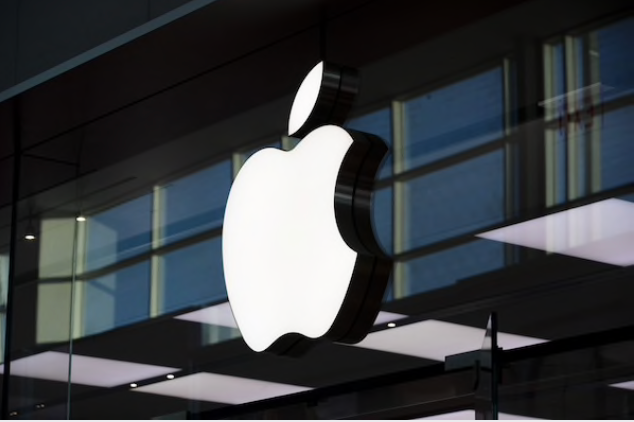
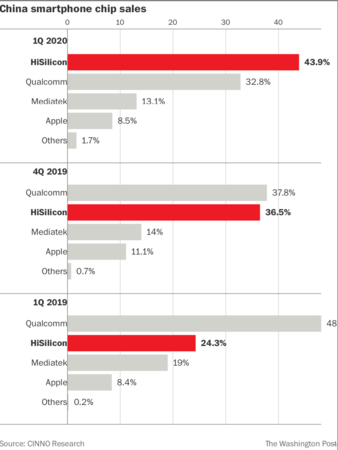
 Photo credit: GISTDA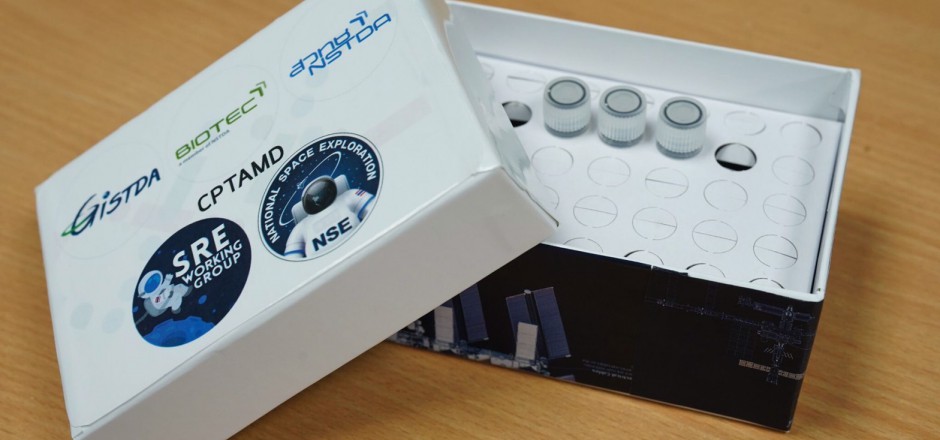
 An Apple inc. logo is displayed at their store at Yorkdale mall in Toronto on Aug. 22, 2019. MUST CREDIT: Bloomberg photo by Brent Lewin.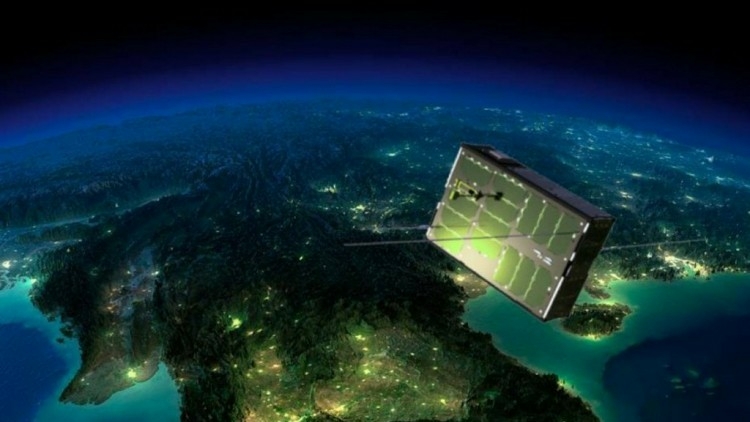

 With a diminutive footprint of just 17.9×8.8×2.2 centimetres, Lenovo’s ThinkCentre M90n Nano is one of the smallest desktop computers in the market.