Facebook will pay millions to content moderators who suffer PTSD at work #ศาสตร์เกษตรดินปุ๋ย

#ศาสตร์เกษตรดินปุ๋ย : ขอบคุณแหล่งข้อมูล : หนังสือพิมพ์ The Nation.

https://www.nationthailand.com/edandtech/30387742?utm_source=category&utm_medium=internal_referral

Facebook will pay millions to content moderators who suffer PTSD at work

May 13. 2020
By The Washington Post · Elizabeth Dwoskin · NATIONAL, BUSINESS, COURTSLAW, CAREER-WORKPLACE

SAN FRANCISCO – Facebook has agreed to pay $52 million to thousands of U.S. workers who suffer the psychological consequences of reviewing posts depicting acts of suicide, homicide, child abuse, and other disturbing content, lawyers for the workers said Tuesday.

The class action settlement, in which Facebook did not admit or deny harms caused to these workers, is the first of its kind, the lawyers said, and applies to any content moderator who has ever worked for a third-party company providing services to Facebook and its subsidiaries WhatsApp and Instagram, a group that includes thousands of people.

“I am incredibly proud of the plaintiffs in this case, who put themselves in jeopardy in coming forward,” said Steve Williams, a partner at the Joseph Saveri Law Firm in San Francisco, one of several firms involved in the case. “No one had ever seen a case like this, and the jobs that people do were in some ways beyond description.”

“We are grateful to the people who do this important work to make Facebook a safe environment for everyone. We’re committed to providing them additional support through this settlement and in the future,” Facebook spokesman Drew Pusateri said in an emailed statement.

In September 2018, former Facebook moderator Selena Scola broke a confidentiality agreement and sued Facebook, alleging that she developed PTSD after working at a job reviewing disturbing content including rape, homicide and animal cruelty. The complaint argued that Facebook failed to provide a safe workplace or compensate them for the psychological harms that they endured.

The Verge first reported the settlement.

Building Agility, Resilience and Recovery amidst the Current Economic Uncertainties #ศาสตร์เกษตรดินปุ๋ย

#ศาสตร์เกษตรดินปุ๋ย : ขอบคุณแหล่งข้อมูล : หนังสือพิมพ์ The Nation.

https://www.nationthailand.com/edandtech/30387735?utm_source=category&utm_medium=internal_referral

Building Agility, Resilience and Recovery amidst the Current Economic Uncertainties

May 12. 2020
Ron Beck, Marketing Strategy Director, Aspen Technology

Ron Beck, Marketing Strategy Director, Aspen Technology
By Exclusive Article for The Nation
By Ron Beck, Marketing Strategy Director, Aspen Technology

The chemicals sector has been hit hard by the current global economic interruptions, with rapid drops in demand, difficulty staffing essential production sites and fragility of supply lines. This article will focus on short term actions, and reflect on sustainability as companies go into recovery.

Multiple respected economic forecasters believe demand will not fully recover for at least one to three years. Industry watchers predict permanent changes in the roles of on-the-ground versus remote working. Organizations are seriously considering how more work can be done remotely and with fewer people in dangerous settings, in and around assets. Autonomous production is no longer thought of as in the distant future.

Some analysts feel the energy transition will be accelerated; others forecast the opposite. Chemical businesses are likely to rethink supply chains which are today highly globally interdependent and just-in-time in nature. It will also impact the speed at which refineries integrate their operations to incorporate chemicals and shift away from transportation fuels.

Digital as a Tactical Tool

How will companies most effectively contend with future business uncertainties?

In a recent discussion, a Middle Eastern customer referred to digitalization as “a tactical lever in this environment.” Many organizations have realized during the current disruption that they need to develop capabilities to automate operations as much as possible and enable remote experts to address production plans, needs, and interruptions, and are not as far along in digitally enabling their assets as they should be. So, amidst the business uncertainty, several companies have small teams looking at how to digitally enable themselves more rapidly.

There are short-term moves companies have made and can make in terms of digitalization to navigate the current period and prepare for future economic recovery. These include:

  • First, rebalancing capital spending (CAPEX) and operational expenses (OPEX) spending to match the current business climate. Economic analysis and risk tools can look at scenarios and optionality, and help rapidly assess CAPEX and OPEX ranking essential expenditures that will succeed under different economic futures.
  • Production planning and scheduling tools are being creatively used to react to and solve challenges related to supply chain, demand and pricing disruption, by remote teams.  Teams are building future scenarios to plan for variable market and regional recoveries.
  • There are essential products that are in high demand, and require accelerated production, and adjustments to production assets.  Effective responses require engineering, supply chain, production, and risk input which require collaboration and advanced tools.
  • Visualization and workflow digital tools are providing remote workers the ability to react to and collaboratively manage asset production.  An Italian company is continuing urgent engineering work remotely with a front-end engineering collaboration tool that works as effectively from home as in the office.
  • Some chemical companies have production continuity contingency plans, though probably not in anticipation of such a widespread disruption. Roles are divided into those that need to be performed onsite and others that can be performed remotely. Today, there is a re-examination of how digital  technologies enable virtual working.
  • With assets operated with the fewest possible on-site staff, routine inspection and maintenance has been deferred. Digital twin tools, such as troubleshooting online column models and predictive analytics tools that are evaluating how long equipment runs safely with deferred maintenance, are forecasting equipment failures and process upsets, efficiently deploying small strike teams to avoid damage and downtime.
  • With assets running at lower rates, modeling tools are crucial to ensure that these operating scenarios can proceed without damaging the asset.

Where does that leave sustainability and the circular economy

Prior to the pandemic, the chemical industry had embraced a razor-sharp focus on  sustainability and concepts of circular economy.

Jim Fitterling, CEO of Dow Chemical Company said, “We cannot lose momentum on the important work we have all been doing to address big global challenges – such as moving to a more circular, more carbon-neutral global economy. This will take collaboration and urgency, like the fight against COVID-19.” (3-30-2020)

Process manufacturers need technology to navigate the difficult problem of balancing production, margins, sustainability, minimum energy and water use. To mitigate unplanned downtime, Southeast Asia’s integrated petrochemical pioneer, IRPC PLC, has selected Aspen Mtell software for its refinery and petrochemical plants in Rayong Province in Thailand. This deployment will help IRPC ensure that critical equipment is available on demand, helping the company achieve operational excellence. With increasing market complexity, petrochemical companies will be well-positioned to compete in the global economy by adopting cutting-edge prescriptive maintenance software.

Another Thai company, Packaging Business, SCG, a packaging solutions provider locally, has also selected Aspen Mtell software to achieve operational excellence via advanced machine learning, in pursuit of strategic digital transformation. With plans to deploy Aspen Mtell software company wide, SCG becomes an early adopter of Industry 4.0 technologies by using predictive and prescriptive analytics for optimal maintenance.

A Progressive Recovery

Agility and flexibility will be a key in the chemical industry, as unpredictable patterns of demand will be in front of us.

From our position as a partner to the chemical industry, we have been working with companies globally to support workers who have the critical need to access AspenTech software for remote access to perform their daily mission-critical work. Customer and training websites, customer service telephone and chat systems are all fully available to rapidly respond to support companies and their teams who are currently operating in work from home mode.

In global virtual hackathon, Earth satellite data will be examined to find answers to covid-19 #ศาสตร์เกษตรดินปุ๋ย

#ศาสตร์เกษตรดินปุ๋ย : ขอบคุณแหล่งข้อมูล : หนังสือพิมพ์ The Nation.

https://www.nationthailand.com/edandtech/30387590?utm_source=category&utm_medium=internal_referral

In global virtual hackathon, Earth satellite data will be examined to find answers to covid-19

May 09. 2020
By Special To The Washington Post · Erin Blakemore

Could data about Earth help with our struggle against the novel coronavirus?

NASA wants to find out, so it’s hosting a virtual hackathon that invites participants to use satellite data to tackle covid-19.

It’s called the Space Apps Covid-19 Challenge, and it will bring together participants from around the world on May 30 and 31.

In-person hackathons offer a heady kind of fun: a chance to commune with like-minded people and create innovative projects on a condensed schedule. The events, which originated in the world of software development, usually bustle with conversation and creativity.

Because it will take place online, the challenge will have different trappings. But it promises the same kind of buzz – and an opportunity to use data generated by the American, European and Japanese space agencies to help others.

The 48-hour-long hackathon is an open invitation to scientists, coders, builders and even artists to use Earth observation data from NASA and the European and Japanese space agencies to create ways to learn about the coronavirus and its spread, help people recover from its economic effects and address how it affects Earth.

In 2019, participants in the Space Apps Challenge were asked to use Earth observation data to address the United Nations’ sustainable development goals. They used information from satellites and other sources to predict harmful algae blooms and dengue cases, spot forest fires and detect oil spills. More than 29,000 people in 71 countries participated. Together, they developed more than 2,000 solutions for various problems.

This year, participants will mingle and find teammates in chat rooms. Then, starting May 30, they’ll get their hands on data from a variety of Earth-observing satellites. Participants will have two days to come up with solutions during what NASA is calling the first global virtual hackathon. Registration starts in mid-May. Visit spaceappschallenge.org for details.

The Technology 202: Tech offices could look very different when employees return #ศาสตร์เกษตรดินปุ๋ย

#ศาสตร์เกษตรดินปุ๋ย : ขอบคุณแหล่งข้อมูล : หนังสือพิมพ์ The Nation.

https://www.nationthailand.com/edandtech/30387549?utm_source=category&utm_medium=internal_referral

The Technology 202: Tech offices could look very different when employees return

May 09. 2020
By The Washington Post · Cat Zakrzewski · BUSINESS, TECHNOLOGY

Communal tables, shared espresso machines, open floor plans and tiny huddle rooms are the amenities that for years have defined many modern tech offices.

When workers return in the coronavirus era, the new hallmarks could be hand sanitizer, touch-free garbage cans and even Plexiglass barriers between workspaces.

“There’s going to be a lot of evolution of doing similar things but in a more physically distant way, in a more individually packaged way,” said Katie Drucker from Seattle-based Madrona Ventures, who has been working on building a “Back to Work” toolkit for companies. “I don’t think it means the end of ever being in an office.”

The coronavirus pandemic is poised to forever change the layout of American offices.

As President Donald Trump and governors across the country weigh plans to reopen the economy, tech companies across the country are scrambling to overhaul their offices. It is likely to result in a huge culture change for an industry that pioneered the open floor plans that have come to define many corporate offices today.

Qumulo, a Seattle-based start-up, plans to space its workstations more than six feet apart in all directions and reconfigure all its conference rooms to let employees maximize distance from each other. Robyn Singh, its vice president of people, says the company is considering many different scenarios, including taking offline popular perks such as the office espresso machine and panini press – at least initially. The company is also thinking about ways to cut down on employees using commonly-touched surfaces, such as door handles.

“The safety of our people, of any visitors or customers who come into the office, is our top priority,” Singh said. “Whatever we need to be implementing to maintain that within our offices, we will.”

The company is also starting to think about how to supply new essential items for the office, such as hand sanitizer, wipes and masks for employees.

Larger tech companies have far more resources to build back to work plans.

They are taking cues from their experiences dealing with other outbreaks such as SARS in Asia to develop their game plan for returning to work. And major tech companies with operations that have already restarted in Asia during the coronavirus crisis can incorporate those lessons from easing stay-at-home orders, too.

Intel for instance recently published a plan to return employees to work in phases after local authorities lift stay-at-home orders and see cases in the surrounding communities start to decline. Intel has a mix of different floor plans, with cubicles in some locations and open floor plans in others. The company is working through reconfiguring any work areas where people would be in close contact.

Venture capital firms could be a resource for smaller start-ups that don’t have the resources for pandemic planning.

The tool kit of resources for companies trying to plan how they’ll bring back workers from Madrona Ventures covers everything from how to instruct employees to clean down their work stations to technologies that could help monitor whether people are maintaining social distance. The kit also includes checklists for reconfiguring office space to ensure people can remain at least six feet apart. The recommendations are partially based on the findings of larger corporations in the Seattle area.

Drucker, the firm’s head of business development and partnerships, said it’s a starting point for companies that feel overwhelmed by all the changes they need make.

“It is meant to be walking a mile in the shoes of a business owner – these are the things you need to think about,” she said.

Many tech companies have already said they won’t bring back all employees for a long time.

Despite the emerging state guidelines for reopening, companies are making their own decisions. And tech workers may come back on slower timelines than many other businesses because so much of their work can be done remotely.

Most Facebook employees will be allowed to continue to work from home through the remainder of 2020, according to a CNBC’s Salvador Rodriguez. However the Menlo Park, Calif., company will begin to open most of its offices on July 6.

Microsoft has said that it would allow most employees to have the option to work remotely through October, unless employees are in an essential role or authorities mandate otherwise, GeekWire reports. Amazon has said workers who work remotely can continue to do so until at least October 2.

Other tech companies say they are closely watching the actions of government officials in locations where they have offices.

Nintendo falls on dour forecast despite strong Switch sales #ศาสตร์เกษตรดินปุ๋ย

#ศาสตร์เกษตรดินปุ๋ย : ขอบคุณแหล่งข้อมูล : หนังสือพิมพ์ The Nation.

https://www.nationthailand.com/edandtech/30387548?utm_source=category&utm_medium=internal_referral

Nintendo falls on dour forecast despite strong Switch sales

May 08. 2020
An attendant uses a Nintendo Co. Switch game console at the Tokyo Game Show 2019 in Chiba, Japan, on Sept. 12, 2019. MUST CREDIT: Bloomberg photo by Kiyoshi Ota.

An attendant uses a Nintendo Co. Switch game console at the Tokyo Game Show 2019 in Chiba, Japan, on Sept. 12, 2019. MUST CREDIT: Bloomberg photo by Kiyoshi Ota.
By Bloomberg · Takashi Mochizuki · BUSINESS, WORLD, TECHNOLOGY, US-GLOBAL-MARKETS, ASIA-PACIFIC

Nintendo Co. warned that its profit and sales may decline in the current fiscal year in part because of the coronavirus, sending its shares tumbling despite strong financial results in the last quarter.

The Kyoto-based game maker forecast a 15% decline in operating profit, a drop in Switch console sales to 19 million and a fall in software sales to 140 million. Its shares dropped as much as 5.6% on an intraday basis on Friday, while the Tokyo market rose.

In the last quarter, helped by global home confinement enforced by the virus, Nintendo’s operating profit tripled to 89.5 billion yen ($842 million) while its Animal Crossing: New Horizons title soared to 13.4 million sales in its first six weeks on sale. That helped Nintendo sell 21 million Switches in the year ended March, beating its own estimate and Morningstar Research’s expectation of roughly 20 million units.

Nintendo joined other tech corporations in sketching out a cautious outlook for the year ahead, largely because of uncertainty over the Covid-19 pandemic’s impact on production and services. The company continues to wrestle with component shortages for its console but now expects disruptions to fade away over the summer, President Shuntaro Furukawa said.

“We expect the covid-19 impact on our production to go away by summer, and our 19 million sales forecast is based on that. But we will revise the forecast if the virus impact is set to persist longer than we currently expect,” Furukawa told analysts on a call. “There’s a risk that we may need to delay releases of the games we plan for this fiscal year. But, at this point, we don’t expect any major delays,” he added.

“The stock is falling because of bad guidance and comments by management indicating delays to game schedule,” said David Gibson, chief investment adviser at Astris Advisory Japan. “I estimate they are assuming only one AAA title for the fiscal year, plus users buy one older title, meaning two games per Switch owner.”

For now, Nintendo is riding the surging popularity of Animal Crossing: New Horizons, which helped propel a 40% rally in the company’s shares since their low in March, adding more than $16 billion to the Japanese firm’s market value. Arriving at a time when people were looking for ways to connect with friends while staying at home, the marquee title — in which players adopt cartoon avatars to interact with each other and set up their own isles — has proven a haven from the outbreak.

Furukawa said the game’s momentum took even Nintendo by surprise, catching on first among younger women who were early franchise devotees before spreading to a much wider audience via word of mouth.

​Animal Crossing’s popularity has made the Switch hard to find almost everywhere in the world. The company asked suppliers to boost Switch production to about 22 million units for the current fiscal year, Bloomberg News reported in April.

Rivals Sony and Microsoft plan to launch new consoles for the holiday season. Nintendo, which launched the more affordable Switch Lite in September, said earlier this year it doesn’t plan to release any additional new hardware in 2020.

Nintendo has struggled in past years to take full advantage of the global smartphone gaming boom and has yet to communicate a clear strategy for competing in the online sphere. On Thursday, Nintendo’s Furukawa signaled the company would focus on developing revenue from existing mobile games rather than refilling its pipeline with regular new titles. That marks a shift from its previous indications that it would release two to three new mobile games each year. Nintendo said revenue from mobile games and licensing loyalties combined was 51 billion yen in the past fiscal year.

“Nintendo’s results are impressive but management is implying that the Switch has peaked,” Serkan Toto, CEO of Kantan Games Inc. said. “What is really strange is that Nintendo expects less software sales despite a massively expanded install base. So either Nintendo is being comically conservative, or they expect covid-19 to have a massive impact on demand or their internal software pipeline.”

Citing economic downturn, Maryland governor vetoes sweeping education plan #ศาสตร์เกษตรดินปุ๋ย

#ศาสตร์เกษตรดินปุ๋ย : ขอบคุณแหล่งข้อมูล : หนังสือพิมพ์ The Nation.

https://www.nationthailand.com/edandtech/30387496?utm_source=category&utm_medium=internal_referral

Citing economic downturn, Maryland governor vetoes sweeping education plan

May 08. 2020
Maryland Gov. Larry Hogan holds a May 6, 2020, news conference on covid-19 updates in Annapolis. With him is schools superintendent Karen Salmon. MUST CREDIT: Washington Post photo by Bill O'Leary

Maryland Gov. Larry Hogan holds a May 6, 2020, news conference on covid-19 updates in Annapolis. With him is schools superintendent Karen Salmon. MUST CREDIT: Washington Post photo by Bill O’Leary
By The Washington Post · Erin Cox, Ovetta Wiggins · NATIONAL, EDUCATION

Maryland Gov. Larry Hogan on Thursday vetoed a sweeping plan to overhaul public schools that proponents said would fix generations of inequity, saying the coronavirus pandemic made the costly education proposal “irresponsible” to enact.

“The economic fallout from this pandemic simply makes it impossible to fund any new programs, impose any new tax hikes, nor adopt any legislation having any significant fiscal impact, regardless of the merits of the legislation,” Hogan, a Republican, wrote in a veto message as he struck down 22 bills that carried a price tag. Among them was a $580 million disbursement to the state’s historically black colleges and universities, key to settling a long-running lawsuit over inequitable funding.

Hogan warned weeks ago that high unemployment and widespread economic pain made it unlikely he would approve any legislation that forced the state to spend more money. Maryland has already spent as much as $2 billion on the pandemic and seen losses so large that the state could lose 15 percent of its annual revenue by the end of June.

The $4 billion annual price tag for the education plan, known as Kirwan, made it a prime target of his veto pen.

The Democratic-controlled legislature approved the plan in mid-March by a margin large enough to override his veto, before the spread of the virus forced it to abbreviate the annual lawmaking session.

The legislature also passed several new taxes to help pay for the plan, including a tax on digital downloads such as Netflix and video games, a corporate tax change intended to bring in tens of millions each year, a new tax on vaping products and a doubled tax on cigarettes. It also passed a first-in-the-nation proposal to tax the targeted digital advertising on giant online platforms such as Facebook and Google.

The governor vetoed each of them.

“With our state in the midst of a global pandemic and economic crash, and just beginning on our road to recovery, it would be unconscionable to raise taxes and fees now,” Hogan wrote.

Democrats who lead the General Assembly – and who worked for years to craft the education overhaul – condemned the governor’s decision as shortsighted.

“While we are in the midst of a public health and economic crisis of an extraordinary magnitude, stopping progress on education and school construction puts us even further behind,” House Speaker Adrienne Jones, D-Baltimore County, said in a statement minutes after the veto was issued. “We know that there are students across this State that are losing millions of hours of learning. The result of this shortsighted action is Maryland will continue to graduate students that are not ready for the real world.”

Senate President Bill Ferguson, D-Baltimore City, added, “He chose to foreclose hope, leaving Maryland families and historically black colleges and universities with an open question for the future.”

Even before the coronavirus pandemic wreaked havoc on the state’s economy, Hogan was an outspoken critic of the plan and its eventual $4 billion annual price tag.

Democratic lawmakers said the state’s public education system needed an overhaul because of generations of disparities and conditions that left the state’s once vaunted school system slipping into mediocrity.

The bill set in place a 10-year plan to expand prekindergarten; increase funding to schools with a high percentage of poor, special-education or limited-English students; raise teacher pay and increase standards; and add programs to ensure that students are prepared for college and careers.

Its goals were ambitious – ensuring that every child is prepared for college or work by the end of the 10th grade (no later than the end of the 12th grade); raising student performance to among the best in the world; and eliminating achievement gaps based on race, ethnicity and income.

It was the first major overhaul on education policy by a state since Massachusetts – regarded as the nation’s gold standard on public education – approved legislation nearly three decades ago.

The American Civil Liberties Union, which is involved with a decades-long court case over the disparities in Maryland, urged the legislature to override the governor, saying the veto “means that tens of thousands of children will continue to attend substandard schools that do not meet the state’s constitutional guarantee of a ‘thorough and efficient’ education.”

The General Assembly can reverse Hogan’s veto with a three-fifths majority and has opened each of its recent legislative sessions by overriding some of his decisions.

If lawmakers do not reverse Hogan’s decision on Kirwan, Thursday’s veto also ends a separate program that would have spent an unprecedented $2.2 billion on school construction over the next five years. Hogan had heralded that initiative as a way to complete every school construction project in the state. But in an effort to dissuade Hogan from vetoing the education overhaul, lawmakers made the school construction bill contingent on Kirwan taking effect.

Thursday’s veto also creates uncertainty for a 13-year lawsuit over whether Maryland systematically gave fewer resources to historically black colleges.

A coalition of college graduates filed the case in 2006, alleging that the state caused damage to the HBCUs’ enrollment by letting other state colleges duplicate programs that once attracted a diverse student body to the historically black institutions. Hogan and his predecessors have been at odds with the Legislative Black Caucus of Maryland over the legal battle for years. The funding under the bill is almost three times as much as Hogan’s “final offer” made last year to settle the suit, a sum plaintiffs and black lawmakers considered insufficient to fix the disparity.

“We are frustrated and disappointed that our work was responded to with the Governor’s veto,” Del. Darryl Barnes, D-Prince George’s, the head of the Legislative Black Caucus, said in a statement. “Allowing the bill to become law would have leveled the playing field for our HBCUs.”

Hogan also vetoed bills aimed at reducing violent crime in Baltimore, saying the legislature should have enacted his proposals instead.

The measures he vetoed included one that required background checks for some private sales of rifles and shotguns. It was initially proposed after a gunman killed five employees of the Annapolis Capital Gazette newspaper with a legally purchased, pump-action shotgun. Del. Vanessa Atterbeary, D-Howard, tweeted that she was “beyond disappointed” that the bill was one of seven crime-related bills Hogan vetoed.

Several measures with significant price tags survived the governor’s veto pen, including a $424 million project to eventually rebuild the Pimlico racetrack in Baltimore, home of the Preakness Stakes. Another bill creates a $1.4 million annual program to let people go on payment plans to pay fines on suspended driver’s licenses.

The governor also allowed hundreds of bills to become law without his signature, including a measure that broadens the state’s hate-crime law, a bill that makes it illegal for landlords to discriminate against renters based on income, and legislation that bans discrimination against black hairstyles.

Millions of children out of school because of coronavirus in the world’s poorest countries may never go back, expert says #ศาสตร์เกษตรดินปุ๋ย

#ศาสตร์เกษตรดินปุ๋ย : ขอบคุณแหล่งข้อมูล : หนังสือพิมพ์ The Nation.

https://www.nationthailand.com/edandtech/30387485?utm_source=category&utm_medium=internal_referral

Millions of children out of school because of coronavirus in the world’s poorest countries may never go back, expert says

May 08. 2020
By The Washington Post · Valerie Strauss · WORLD, EDUCATION 

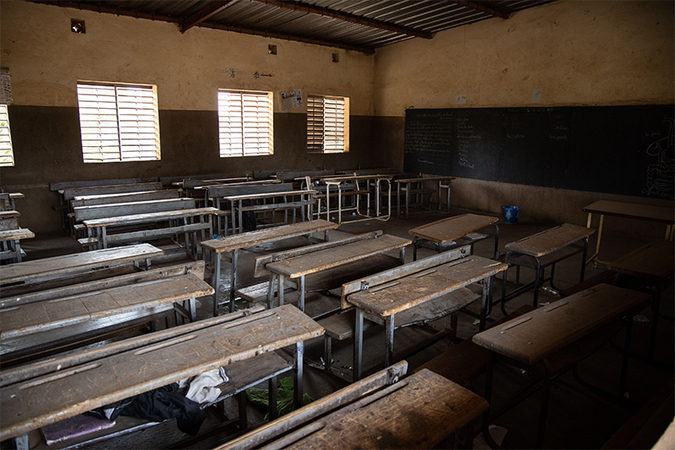
As countries around the world start to reopen their economies and consider how to safely reopen schools amid the coronavirus pandemic, international development experts say they are worried that tens of millions of students in the world’s poorest nations may never go back to class.

Alice Albright, chief executive of the Global Partnership for Education, said that the combination of the coronavirus crisis, economic weakness and unrest in some places will affect millions of young people who are out of school, and that many will probably not return because of the costs and family pressures on them to work. Girls, she said, will be the most severely affected.

“Because so many of the children who are out of school are the most marginalized, once they are out of school, they are likely to be out for good,” she said. “It is not easy to revert back.”

The Global Partnership for Education is the only global fund solely dedicated to education in developing countries, with contributions from dozens of countries as well as international organizations, the private sector and philanthropy. It works to strengthen education systems in the world’s 67 poorest countries to strengthen their education systems. In those 67 countries, 58 have closed schools, affecting 341 million children as of May 6.

The partnership has made available $250 million in emergency funding for countries to use on education recovery costs during the coronavirus crisis, but Albright said that is nowhere near enough. Two grants have already been approved – $10 million each for Rwanda and Zambia, and 14 more proposals, totaling $152.4 million, are under review. Meanwhile, 36 additional countries have said they will apply for a coronavirus accelerated grant before the end of May, for a total of $361.6 million (more than the amount allocated).

“It will begin to make a dent in the number of students who are out of school,” she said.

The emergency funding by the Global Partnership for Education can be used to, among other things, ensure that learning continues during the pandemic; pay for radios, textbooks and other equipment; support teachers; and provide services for children with disabilities.

According to UNESCO, on May 7 there were 1,268,164,088 students, or 72.4 percent of total enrolled learners around the world, still affected by school closures because of the pandemic, which is down from a month ago, when 90 percent, or 1.57 billion students from pre-primary to tertiary education, were out of school (not including the approximately 250 million children, adolescents and youths who were not in school when the pandemic began).

Albright said that the impact of school closures is more intense with adolescent girls from the poorest and most rural households because they are more exposed to domestic violence and sexual harassment, and are more likely to be deprived of basic social, health and educational services than boys. As has happened in earlier school closures caused by pandemics, such as the 2014-16 West African ebola outbreak, experts expect to see an increase in early pregnancies and marriages because of the coronavirus crisis.

Fears about the fate of millions of children are in line with a report released recently by the Nairobi-based charity Oxfam, which said that the economic crisis sparked by the pandemic could see the worldwide poverty rate increase for the first time since 1990, with an estimated 548 million people slipping back into poverty after progress made in recent decades. Reuters reported that if that were to happen, it would mean that nearly 4 billion people worldwide would be living below the $5.50 a day poverty threshold.

Albright said that the hardest-hit regions even before the coronavirus hit are the African countries of Chad, Burkino Faso and Mali, where increasing regional insecurity adds to the difficulties facing the population. “You have schools being blown up and used as military bases,” she said, “and you have overlaying that huge pressure due to climate change.”

Another problem facing the poorest countries, she said: The pandemic is likely to last longer there than in the developed world, which will be the first to get treatments and a vaccine.

DeVos announces new rules on campus sexual assault, offering more rights to accused #ศาสตร์เกษตรดินปุ๋ย

#ศาสตร์เกษตรดินปุ๋ย : ขอบคุณแหล่งข้อมูล : หนังสือพิมพ์ The Nation.

https://www.nationthailand.com/edandtech/30387412?utm_source=category&utm_medium=internal_referral

DeVos announces new rules on campus sexual assault, offering more rights to accused

May 07. 2020
Education Secretary Betsy DeVos, left, and other Cabinet members attend the State of the Union in February 2020. MUST CREDIT: Washington Post photo by Toni L. Sandys

Education Secretary Betsy DeVos, left, and other Cabinet members attend the State of the Union in February 2020. MUST CREDIT: Washington Post photo by Toni L. Sandys
By The Washington Post · Laura Meckler · NATIONAL, EDUCATION 

WASHINGTON – Education Secretary Betsy DeVos on Wednesday released a sweeping new directive governing how schools must handle allegations of sexual assault and harassment, granting new rights to the accused and handing colleges a clear but controversial road map to navigating these highly charged investigations.

The new rule bars universities from using a single official to investigate and judge complaints, a popular model, and instead creates a judicial-like process in which the accused has the right to a live hearing and to cross-examine accusers.

The rule also adds dating violence and stalking to the definition of sexual harassment. But it otherwise offers a narrow definition of harassment, requiring that it be severe and pervasive, as well as objectively offensive.

“Today we release a final rule that recognizes we can continue to combat sexual misconduct without abandoning our core values of fairness, presumption of innocence and due process,” DeVos told reporters. The new regulation, scheduled to take effect on Aug. 14, falls under the federal civil rights law known as Title IX, which bars discrimination on the basis of sex in federally funded schools.

The rule, first proposed in 2018, has come under fire from women’s rights groups and Democrats, who said it would allow assailants and schools to escape responsibility, discourage victims from coming forward, subject survivors to additional trauma and make college campuses less safe for women.

“The Title IX rule is a devastating blow,” Sen. Patty Murray, D-Wash., said on Twitter, adding that “it’s about silencing survivors.”

The move was also opposed by university officials, who argue the new rules will turn their campuses into courtrooms incompatible with an academic atmosphere. On Wednesday, a leading advocacy group for colleges said the decision to implement the rules in the midst of the coronavirus pandemic reflected “appallingly poor judgment.”

Even before the 2,033-page regulation was released, opponents were vowing a legal challenge, hoping to halt or at least stall the new rules.

“We will fight this rule in court, and we intend to win,” Emily Martin, a vice president at the National Women’s Law Center, an advocacy group, said Wednesday. She said the core of the challenge would be that the Education Department was “arbitrary and capricious” and in violation of the Administrative Procedure Act, which governs how agencies write regulations. She said the agency ignored evidence showing that the rules would harm survivors of sexual violence.

The rules follow years of pressure on universities to better respond to allegations of sexual assault. That pressure has increased amid a #MeToo movement that has empowered women to tell their stories of harassment and abuse, and amid a broad cultural debate over how to balance those stories against the rights of the accused.

Most recently, the debate has hit former Vice President Joe Biden, who has denied an allegation of sexual assault. Biden, the presumptive Democratic nominee for president, has promised to restore Obama-era rules for universities dealing with allegations, measures that are friendlier to alleged victims. His campaign did not reply to a request for comment on the DeVos regulation.

Supporters of the DeVos rule said it would restore balance and fairness to proceedings that too often tilt in favor of accusers. They were particularly buoyed by the requirement for cross-examination, saying it is the most effective way of ferreting out the truth of what happened in a situation when students offer different recollections of the same event.

“The cross-examination requirement means that if you’re going to accuse someone of a terrible crime, you’re finally going to be asked hard questions about that,” said Justin Dillon, a lawyer with the D.C. firm KaiserDillon who has represented scores of students accused of sexual misconduct. “That’s how it should be, given the stakes.”

There are limits. Accusers are not required to be face-to-face or answer questions directly from the accused. The regulation also provides “rape shield protections,” such as a bar on questions about an accuser’s sexual history.

The new rules also allow schools to offer survivors supportive measures, such as dorm reassignments, in lieu of a disciplinary proceeding.

DeVos hoped to publish the rule late last year, but she was delayed in part by the need to respond to a crush of public comments – 124,196 in all, including a torrent of criticism from universities, advocacy groups, survivors of sexual assault and campus leaders.

This spring’s coronavirus pandemic also contributed to delaying the announcement, but critics said the agency should have waited longer or given universities more time before the rules take effect, given the crisis.

Ted Mitchell, president of the American Council on Education, which represents university presidents, said his group pleaded with the agency to hold off issuing the rules during the pandemic. He said that implementing something this complex would be challenging under normal conditions but will be extremely difficult with campuses closed.

“This is irrational, unrealistic and completely at odds with the Trump administration’s oft-repeated statement to tread lightly when imposing complex new regulations,” he said.

DeVos responded that universities knew what was coming and should be prepared to implement it. “The reality is that civil rights really can’t wait and students’ cases continue to be decided now,” she said. A department attorney added that the rule gives schools flexibility to conduct investigations and hearings remotely and that it covers online harassment.

The Education Department also wanted to finalize the rule in time to avoid having it rolled back by the Congressional Review Act, which allows Congress to overturn regulations passed in the previous months, GOP officials said. The administration feared that passing it too late might allow Democrats to attempt to undo it if they win control of Congress next year.

The rewrite of Title IX regulations will probably be recorded as the most significant and lasting legacy of DeVos’s tenure as education secretary.

Her views promoting school choice for elementary and secondary students have stirred controversy, but she has made little headway in translating them into federal policy. She has worked to bolster for-profit colleges, but those moves affect just a slice of higher education.

These regulations, by contrast, affect every school that accepts federal money, which is virtually all of them.

In its broad outlines, the rules are unchanged from the proposed version released in 2018, though there were some alterations. In one change, the regulation explicitly adds dating violence, domestic violence and stalking as allegations that must be investigated.

The rules give universities a choice about what standard of proof they use in judging complaints. Schools may choose between “preponderance of the evidence” or the higher bar of “clear and convincing evidence.” But a school may not use the lower standard if it relies on the higher one for allegations against employees, including faculty members.

Overall, the rules narrow the types of complaints that institutions are obligated to investigate. For instance, universities will be required to investigate complaints only if they are made to proper authorities. In a change from the proposed rule, though, any report to an employee of a K-12 school would put the school on notice and require a probe. (K-12 schools are also not required to hold live hearings.)

The final rule also clarifies that universities are responsible for investigating incidents that take place in university-recognized fraternity or sorority houses located off campus, or in other locations, such as at an academic conference that relates to a university program.

But incidents that occur off campus between two students on their own would not be subject to Title IX procedures.

The rule replaces less formal guidance issued by the administration of President Barack Obama and revoked by DeVos in 2017.

The new regulation could be undone or modified through legislation should Democrats gain control of Congress and the White House next year. But because it is a formal regulation, a new administration could not simply reverse it the way DeVos did with the informal guidance issued under Obama.

The National Weather Service is working to revolutionize severe storm warnings #ศาสตร์เกษตรดินปุ๋ย

#ศาสตร์เกษตรดินปุ๋ย : ขอบคุณแหล่งข้อมูล : หนังสือพิมพ์ The Nation.

https://www.nationthailand.com/edandtech/30387221?utm_source=category&utm_medium=internal_referral

The National Weather Service is working to revolutionize severe storm warnings

May 04. 2020
Meteorologists simulate issuing warnings with experimental software at the National Weather Service's Hazardous Weather Testbed. MUST CREDIT: NOAA

Meteorologists simulate issuing warnings with experimental software at the National Weather Service’s Hazardous Weather Testbed. MUST CREDIT: NOAA
By The Washington Post · Matthew Cappucci · NATIONAL, SCIENCE-ENVIRONMENT

We’ve all heard them – the blaring alerts that activate our cellphones or television when a severe weather warning is issued.

Perhaps our favorite weather app sent us a push notification, or we saw a television meteorologist pointing at vibrant boxes on a weather map. Whatever the medium, weather warnings have a way of finding us, especially whenever a severe thunderstorm is close by. Now, those warnings, specifically the way in which they’re generated, are in the process of getting a makeover.

Severe weather warnings are issued for individual thunderstorms; before 2007, entire counties would be alerted at once. Over the years, weather warnings have become more targeted – but one warning can still cover an expansive area. Moreover, conditions can vary wildly even within the region enclosed by a single warning.

Now, the National Weather Service is hoping to change that.

Kodi Berry leads the program that’s updating warnings at the National Severe Storms Laboratory (NSSL) in Norman, Oklahoma. The Forecasting a Continuum of Environmental Threats program, or FACETs, is an endeavor the National Weather Service is pursuing to communicate the hazards posed by severe thunderstorms on a hyperlocal level.

Berry says the goal is provide a more continuous flow of information for those who need it the most.

According to the National Severe Storm’s Laboratory, FACETs aims to improve weather watches and warnings to provide “detailed hazard information through the use of ‘threat grids’ that are monitored and adjusted as new information becomes available.”

Typical weather warnings are issued in the form of polygons digitally drawn on a map. If you’re within the polygon, you’re alerted and urged to take action – such as seeking shelter. But just a stone’s throw away, a neighboring home outside the polygon may not be given any special instructions. The current state of weather warnings is binary, akin to a “yes” or “no” to severe weather.

Berry’s team is hoping to improve that by creating a product that reflects the gray area in between. They are experimenting with displaying probabilities to reflect the range of possible outcomes in a rapidly-evolving severe weather event.

“There has been a lot of social science research that shows that, given probabilistic information, people make better decisions,” Berry said. “If we appropriately define these probabilities and what they mean, people can use them to make better decisions.”

An example? Imagine you work in a nursing home 20 miles downwind of a tornado-producing thunderstorm. An existing tornado warning only extends 15 miles downstream, so you’re not under a warning – yet.

But you know it takes half an hour or more to move all the residents to shelter. Do you start now? Or do you wait until a warning is (or is not) issued?

Berry’s team found that the one-size-fits-all binary nature of warnings doesn’t necessarily fit all consumers. “Some people may need a little more time than what the warning provides,” Berry said. “They may have a lower personal probability threshold.”

Adding probabilities will not replace existing weather warnings, but rather offer more context for people around the warning itself. The probabilities will be assigned on a gridded map, much like most weather forecasts, and will update by the minute in real time.

Probabilities will be greatest along the center of the storm’s predicted path, diminishing radially outward as well as farther downwind. Berry’s office compares the so-called “plume” to the probabilistic wind speed graphics issued by the National Hurricane Center.

Severe thunderstorm and tornado warnings themselves are getting an overhaul, too. Warnings will now “move” with storms, growing downwind if a storm looks to hold together. The back edge of the warning will “drop out” behind the storm, too – akin to an “all clear” message once the danger has passed.

“I think the most beneficial thing is the more equitable lead time,” said Berry. “(In the past), people near the downstream edge of the warning (got) much less lead time if they (weren’t) weather aware.”

The warnings themselves will also be updated more frequently. “I think the National Weather Service policy (currently) is that a tornado warning should be updated … once every 15 minutes,” explained Berry. “We’ve tested one minute updates, two minute updates … we started to notice a big difference when we got to the five or two minute (intervals.)”

All this updating could dramatically heighten a forecaster’s workload, particularly in environments with multiple storms occurring simultaneously. That’s where automation comes in.

“(Meteorologists) are getting some automated guidance that isn’t solely radar,” Berry said. While details are hazy as to what this computer software guidance might look like, it would likely ingest data from surface observations, satellite products, lightning mapping arrays and more.

That means some severe weather warning updates could theoretically be entirely computer-generated. But that doesn’t mean anything is being left on autopilot so-to-speak.

“There’s a lot of forecaster value that I don’t think can be replaced by automation,” said Berry. “One of the features that we included (in an online interface) was to be able to graphically tell which ones were automated versus which ones had been touched by the forecaster.”

The shape of the warning could also be changed by automated software packages based on severe weather probabilities churned out by high-resolution computer models. Berry’s team is working on a proposal regarding best practices to prevent fluctuations in the forecast to result in an “expanding and contracting (warning) with time.”

“You don’t want people going in or out of the warning,” said Berry. “We’re working to create more consistency with the warning.”

Berry estimates these changes could take up to 5 years to implement. By then, atmospheric scientists are hoping to overhaul their strategy for issuing weather warnings – making calls based on forecasts, rather than detection.

For example, in the current system, a severe thunderstorm warning isn’t issued until a storm meets severe thunderstorm criteria – the capability of producing damaging wind or hail larger than the size of quarters. The same is true with tornado warnings – rotation must be spotted within a storm.

With more advanced high-resolution computer models, the National Oceanic and Atmospheric Administration aims to model individual thunderstorms before they become severe or generate a tornado, issuing warnings based on the forecast of severe weather. Such modeling would test the limits of current forecasting, since they would have to detect weather features at local scales that many current models miss.

In the future, there may even come a day when you’ll get a severe thunderstorm or tornado warning while standing beneath a blue sky – awaiting a storm that has yet to develop.

Cellphone monitoring is spreading with the coronavirus. So is an uneasy tolerance of surveillance. #ศาสตร์เกษตรดินปุ๋ย

#ศาสตร์เกษตรดินปุ๋ย : ขอบคุณแหล่งข้อมูล : หนังสือพิมพ์ The Nation.

https://www.nationthailand.com/edandtech/30387185?utm_source=category&utm_medium=internal_referral

Cellphone monitoring is spreading with the coronavirus. So is an uneasy tolerance of surveillance.

May 03. 2020
Photo credit: apple.com/ Apple and Google partner on Covid-19 contact tracing technology.

Photo credit: apple.com/ Apple and Google partner on Covid-19 contact tracing technology.
By The Washington Post · Kareem Fahim, Min Joo Kim, Steve Hendrix · NATIONAL, BUSINESS, WORLD, TECHNOLOGY, HEALTH 

ISTANBUL – A smartphone app in Turkey asked for Murat Bur’s identity number, his father’s name and information about his relatives. Did he have any underlying health conditions, the app wondered, presenting him a list of options. How was he feeling at the moment, it asked. It also requested permission to track his movements.

None of this felt intrusive to Bur, a 38-year old personal trainer. The app, which he had voluntarily downloaded, had helpfully warned him that his neighborhood was a coronavirus hot spot. “There are people in our country still having parties and picnics. I do not see the harm in people being followed,” he said. “There is an extraordinary situation in the world.”

To the feelings of fear, restlessness, insecurity and sorrow taking hold around the globe, the pandemic era has added another certainty: being watched.

In a matter of months, tens of millions of people in dozens of countries have been placed under surveillance. Governments, private companies and researchers observe the health, habits and movements of citizens, often without their consent. It is a massive effort, aimed at enforcing quarantine rules or tracing the spread of the coronavirus, that has sprung up pell-mell in country after country.

“This is a Manhattan Project-level problem, that is being addressed by people all over the place,” said John Scott-Railton, a senior researcher at Citizen Lab, a research center at the University of Toronto.

He is among a group of researchers and privacy advocates who say there is not enough debate over the consequences and utility of the new surveillance tools, and no indication how long the scrutiny will last – even as the flood of prying apps are becoming a reality for millions of people, like solitude and face masks.

Because of the pandemic, surveillance is a “necessary evil,” said Lee Yoon-young, a South Korean university student who was under strict, government-monitored quarantine after returning home from her studies overseas. “I am not disturbed since I understand that stronger quarantine control allows those not under stay-at-home order to continue on with their lives without a nationwide lockdown,” she said.

At least 27 countries are using data from cellphone companies to track the movements of citizens, according to Edin Omanovic, the advocacy director for Privacy International, which is keeping a record of surveillance programs. At least 30 countries have developed smartphone apps for the public to download, he said.

The monitoring has raised fewer objections in countries that have been more successful at battling the virus, like Singapore, and provoked a much louder debate in Europe and the United States – a difference that is reflected in the numbers of people who voluntarily download tracking applications.

In South Korea, millions of people have signed up to use websites or apps that show how the virus is spreading. More than 2 million Australians quickly downloaded a coronavirus contact-tracing app that was released on Sunday. But 3 in 5 Americans say they are unwilling or unable to use an infection-alert system being developed by Google and Apple, a Washington Post-University of Maryland poll has found.

Epidemiologists and government health officials have taken a central role in designing some of the coronavirus tracking programs. Privacy groups have been far more concerned when intelligence agencies have taken the lead, as they have in Pakistan and Israel, or when governments outsource tracing to private companies.

Infection-tracking software by NSO, an Israeli company, has attracted criticism before it has even launched. The company is best know for designing surveillance tools used by authoritarian governments to spy on dissidents, journalists and others. A person close to NSO said its new coronavirus tracking software, called Fleming, was being tested by more than two dozen governments around the world.

The pandemic has all but silenced the debate about encroachments on privacy by corporations, Scott-Railton said. “People are anxious. They are worried. They want to go back to normal, to handle doorknobs, to online date.

“We are looking to anyone who is pitching hope.”

– – –

Turkey, which is wrestling with one of the worst outbreaks in the world, uses technology to track the spread of the virus in at least two ways. One is the app, called Life Fits in the Home, which solicits personal details to track infections and provides information, including the location of nearby hospitals and pharmacies.

The government has said that it is doing mandatory tracking of people 65 years or older, who are required to quarantine, and sending them cellphone messages when they venture out of their homes.

There has been little public backlash against the surveillance in Turkey, where people are accustomed to an intrusive and increasingly authoritarian central government. Any misgivings have also been tempered by a feeling the state should be taking stronger measures to control the outbreak.

Cigdem Sahin, an economics professor at Istanbul University, said she didn’t think twice before downloading the tracking app, even though she is normally wary of government surveillance.

“I actually think it might be useful to surveil the spread of corona – if the system is used effectively and does not give an error,” she said.

“I have no doubt that Turkey will use such apps as a vehicle for pressure and surveillance when need be,” Sahin said.

But her primary concern was whether the app could work properly. It told her little she did not already know about her neighborhood, called Fatih, where there was a high concentration of infections. So she stopped using the app.

“We are being watched and our lives are being recorded, and one wonders how to deal with it,” she said. “There is no escaping it.”

One of the most critical questions is whether the programs actually yield reliable information about infection chains. Hasan Kasap, 73, a retired university professor, said he received a text message from the health ministry last month warning him to stay home, though he said he had not left his apartment in weeks.

“This approach made me lose my trust in this institution or this tracking system and even made me feel insulted,” he said. “Location information is private. It should remain private.” After the message, he turned off the option on his own phone that allowed it to be tracked, he said.

– – –

South Korea has never imposed a nationwide lockdown or travel restrictions in response to the coronavirus, only issuing strong advisories against nonessential travel as part of a national social distancing campaign. The country’s coronavirus response, featuring widespread testing for infections, is often held up as a model around the world.

As part of that effort, South Korea’s health authorities track the movement of people and then later retraces the steps of those diagnosed with the virus by using GPS phone tracking, credit card records, surveillance video and interviews with patients. The patient travel histories are published without names to help others identify whether they crossed paths with a virus carrier.

Another smartphone app monitors thousands of people under self-quarantine and reports their movements to the government.

Lee Yoon-young, the university student who has been under the remotely monitored quarantine, said she welcomed the geo-positioning app on her phone that allowed the government to pinpoint her location.

Lee returned to South Korea after her studies in the United Kingdom were disrupted by the pandemic. The contrast between the government response in the two countries was stark. In Brighton, where she studied, she had relied on patchy news reports to identify virus-prone locations to avoid. In South Korea, she has found it reassuring to be able to see online travel histories of virus carriers.

But the Korean travel data can be accessed not just by health-conscious residents but also voyeuristic onlookers, which was “concerning,” she said, adding that personal information about infected people should be redacted.

Singapore also mobilized early to contain the epidemic by aggressively tracking chains of infection, imposing harsh penalties on patients who violated quarantine rules and mounting ubiquitous public awareness campaigns – while avoiding a full lockdown. Cellphone apps were developed to helped enforce self-quarantine rules and aid the contact-tracing effort by making use of Bluetooth technology.

Cheryl Lu-Lien Tan, an author and journalist who lives in New York, saw how strictly quarantine rules were enforced when she flew to Singapore in late March and was forced to self-isolate in a hotel. Her location was monitored through her cellphone and twice a day, she was required to verify her whereabouts for the government, occasionally by sending a picture of her surroundings. Once, she got a video call from health officials, just to make sure she was where she said she was.

“They were very strict about it,” she said. “As they should be.”

Her experience in New York, with one of the world’s deadliest outbreaks, made her more willing to accept government monitoring and less tolerant of people flouting quarantine and other distancing rules. “These are desperate times. I would have fought for my personal liberties on many levels before. Now I am the one trying to restrict the people around me. I am more of a scold,” she said.

The intrusions were easier to accept because Singapore’s government appeared to have citizens’ welfare in mind, and no “ulterior motives,” she said. But the number of intrusions was rising: one government app allowed people to report violations by their neighbors. More recently, some grocery stores had required people to provide their identity numbers to enter.

“It’s worrying once you give up these liberties,” she said. “Is this the way it’s always going to be?”

– – –

The experience of countries hurriedly deploying apps and similar surveillance software highlights the limits of such technology and the challenge of wide-scale public buy-in even in places that are largely open to being watched.

Experts warn, for example, that apps relying on Bluetooth radios can provide inexact location data and falsely identify people as infected.

Jason Bay, the director of Singapore’s contact tracing app, called TraceTogether, said in an online post last month, “If you ask me whether any Bluetooth contact tracing system deployed or under development, anywhere in the world, is ready to replace manual contact tracing, I will without qualification say that the answer is no.”

John Scott-Railton of Citizen Lab said the effectiveness of such apps was ultimately determined by “human social behavior and racial and age demographics.”

Apps are of limited utility unless a large percentage of a country’s population downloads them, and even then, the reach of the software is limited to people who own smartphones, which often excluded lower income people, racial minorities and people over 65, he said.

Some surveillance initiatives have also run into organized efforts to rein them in.

In Israel, a group of civil liberties groups went to court in March to block a far-reaching effort by Israel’s internal security agency, the Shin Bet, to track cellphones of covid-19 patients. The agency uses cellphone location signals of known coronavirus cases and its own vast trove of data to detect users who have been in proximity to an infected person – information health officials use to alert people to self-isolate.

On Sunday, the Israeli Supreme Court ruled that the government tracking would require parliamentary legislation to continue much past the end of April, when the emergency measure was due to expire.

Adalah, the Legal Center for Arab Minority Rights in Israel, was one of the groups that filed a petition with the high court objecting to the government’s reliance on emergency powers to expand the reach of its security apparatus. “Surveillance violates the constitutional right to privacy and there exist other tools to deal with the coronavirus,” said Suhad Bishara, an attorney for Adalah.

While contact tracing is an important tool for isolating infected people, “extending the work of such an agency to do civil-related matters becomes very problematic,” she said, adding that many Palestinians, subject to surveillance or interrogations by Israeli security services over decades, fear the agency would misuse health records and other data it has access to, she said.

Roxanne Halper, 60, who works in international development and leans toward the left end of Israel’s political spectrum, said she would normally be wary of government surveillance, but not this time.

“I feel like I should have a problem with it and yet I don’t,” Halper said during a phone interview from her home on a small kibbutz between Jerusalem and Tel Aviv.

Like many, she said health considerations now seem more pressing than privacy. She had even downloaded a voluntary government app and appreciated it every day when it told her she had had no contact with a known coronavirus case. (The app is separate from the Internal Security Agency’s tracking efforts.)

“I take comfort from that,” she said. “I can’t be afraid of the [risk to privacy] right now. I’m much more afraid of corona and what it’s doing to society,” she said.