Initiative seeks to challenge Trump’s online megaphone #ศาสตร์เกษตรดินปุ๋ย

#ศาสตร์เกษตรดินปุ๋ย : ขอบคุณแหล่งข้อมูล : หนังสือพิมพ์ The Nation.

https://www.nationthailand.com/edandtech/30387152?utm_source=category&utm_medium=internal_referral

Initiative seeks to challenge Trump’s online megaphone

May 02. 2020
President Trump

President Trump
By The Washington Post · Isaac Stanley-Becker · NATIONAL, WORLD, TECHNOLOGY, POLITICS

A new Democratic-aligned political action committee advised by retired Army Gen. Stanley McChrystal, the former head of U.S. forces in Afghanistan, is planning to deploy technology originally developed to counter Islamic State propaganda in service of a domestic political goal – to combat online efforts to promote President Donald Trump’s handling of the coronavirus pandemic.

The group, Defeat Disinfo, will use artificial intelligence and network analysis to map discussion of the president’s claims on social media. It will seek to intervene by identifying the most popular counter-narratives and boosting them through a network of more than 3.4 million influencers across the country – in some cases paying users with large followings to take sides against the president.

The initiative reflects fears within the Democratic Party that Trump’s unwavering digital army may help sustain him through the pandemic, as it has through past controversies, even as the economy craters, tens of thousands have died, and Trump suffers in the polls.

“It’s often said campaigns are a battle of ideas, but they’re really a battle of narratives,” said David Eichenbaum, a Democratic media consultant who is a senior adviser to the PAC. “Today those narratives spread quickly online.”

The initiative is run by Curtis Hougland, whose received initial funding for the technology from DARPA, the Pentagon’s research arm, as part of an effort to combat extremism overseas. He insists Democrats are ill-prepared for the looming battle over information and attention, which is bound to play an outsize role in November.

Hougland cites as an example Trump’s suggestion last week that injecting bleach or other household disinfectants could be a treatment for the novel coronavirus – a moment that appeared unequivocally damaging to the president but was less clear-cut as it unfolded on social media. Although the episode was associated with a spike in Twitter engagement about Trump, especially in swing states such as Wisconsin and Pennsylvania, according to Hougland’s analysis, four of the top six tweets about Trump and disinfectant came from accounts partial to the president, boosting the notion that he had not really suggested the bogus cure.

Among them was a tweet from Ryan Fournier, national co-chair of Students for Trump, who wrote, “No, President Trump did not tell people to inject themselves with Clorox or Lysol. If you believe that, you’re a moron.”

Fournier said there’s a grass-roots digital army prepared to defend the president when his back is against the wall.

“I see the people on Twitter,” he said. “I see the Facebook groups. I see the posts across these networks. I see the websites people have created to support the president. It’s tremendous amounts of stuff that I’ve never seen in a presidential election before.”

Hougland agreed. Republicans, he said, “have greater volume frequency and quality of digital narrative.”

Though he is advising the overtly political effort, McChrystal stopped short of endorsing Trump’s opponent, former vice president Joe Biden, whom the former general once criticized as part of a dust-up that led to his resignation.

McChrystal said his interest in the PAC is about ensuring the accuracy of information leading up to the election, even if it involves chasing viral attention with emotional appeals and other tactics rewarded by online clicks.

“Everyone wishes the Pandora’s box was closed and none of this existed, but it does,” McChrystal said in an interview.

His ambivalence is shared by large parts of the Democratic Party, which recoiled at an effort, brought to light at the end of 2018, to use Russian-inspired tactics, including the creation of fake accounts, to sway the 2017 Senate election in Alabama.

Hougland’s PAC shuns these methods. Yet it differs from more traditional Democratic-aligned PACs, such as Priorities USA and American Bridge 21st Century, in embracing the practice of paying influencers to convey their messaging. The approach raised eyebrows and prompted tech companies to clarify their rules when it was put into practice by Mike Bloomberg’s presidential campaign earlier this year.

“I have no trepidation about paying content creators in seeking out and amplifying the best narratives,” Hougland said.

Stephanie Berger, a former national finance director for the Democratic National Committee, is raising funds for the initiative, which is an extension of Hougland’s technology company, Main Street One. Andrew Tobias, a former DNC treasurer, was an earlier investor in the start-up.

Main Street One’s leaders were previously involved in cultivating digital narratives in Eastern Europe to counter Russian propaganda and, more recently, have waded into American politics. The organization ran a campaign that paid influencers to boost Kentucky Democrats before the gubernatorial election last fall. A super PAC supporting Sen. Cory Booker of New Jersey in his bid for the Democratic nomination paid Main Street One more than $500,000 for similar services last year.

Hougland said his aim is to maintain the “largest repository of content against Trump,” and to be nimble in boosting organic material that is already performing well, such as videos produced by the Biden campaign.

The presumptive Democratic nominee, whose primary bid counted on the gulf between Twitter and real life, has sought to expand his digital prowess as campaigning has gone fully virtual. He anchors a new podcast, and his campaign is plugging virtual rallies with mantras like “#SoulSaturday” designed to compete with Trump’s digital reach.

At the same time, Biden’s aides are betting that the president’s bully pulpit is just as likely to turn voters off as it is to win them over. Matt Hill, a campaign spokesman, pointed to recent moves by the president’s team to “pull back his daily disinformation shows as his credibility continues to sink.”

But Joe Trippi, a Democratic operative who helped manage the 2017 Senate campaign in Alabama, said the president is partially insulated from the fallout over his own remarks by a “media echo chamber that is very disciplined about just picking up whatever the misdirection of the day is and amplifying it.” That protective armor makes it all the more critical for Democrats to turn up the volume on anti-Trump messaging, he said.

But Trippi wondered about the long-term consequences of adopting some of the online tactics favored by the right.

“Once someone does something that works, it’s usually picked up by the other side,” Trippi said. “You’ve got to fight it, but the question is, like negative ads, if it works, do you just get better and better at it? I don’t think that’d be very helpful for our democracy.”

Restraint could be a more effective approach, said Cindy Otis, a former CIA officer and disinformation researcher. She stressed the need to illustrate the real-world consequences of the president’s words, for instance demonstrating that his comments about bleach were followed by a spike in calls to emergency hotlines.

Otherwise, she said, “it’s most effective to counter false narratives with straight-up facts.”

Foreign students caught in travel bans threaten Trudeau stimulus plans #ศาสตร์เกษตรดินปุ๋ย

#ศาสตร์เกษตรดินปุ๋ย : ขอบคุณแหล่งข้อมูล : หนังสือพิมพ์ The Nation.

https://www.nationthailand.com/edandtech/30387103?utm_source=category&utm_medium=internal_referral

Foreign students caught in travel bans threaten Trudeau stimulus plans

May 01. 2020
Pedestrians pass through the University of Toronto campus on April 28, 2020. MUST CREDIT: Bloomberg photo by Galit Rodan

Pedestrians pass through the University of Toronto campus on April 28, 2020. MUST CREDIT: Bloomberg photo by Galit Rodan
By Syndication Washington Post, Bloomberg · Shelly Hagan, Kait Bolongaro · BUSINESS, WORLD, THE-AMERICAS

The coronavirus ground nearly all business in Canada to a temporary halt. Now it’s also threatening one of the nation’s main drivers of long-term growth: foreign students.

While Canadian universities are still admitting international students for the fall, there’s growing unease among applicants over the halt in travel and visa processing.

Asfar Lathif recently accepted an offer from the University of British Columbia master’s program in genome science. But the 21-year-old, who lives in Chennai, India, is worried about getting all his approvals in time since it’s been difficult to gather the necessary documents amid government shutdowns.

“It’s a problem. With the covid-19 situation, I’m finding it difficult to get through the study permit process,” Lathif said. “I am hoping lockdown is over before July.”

There were more than 642,000 foreign students in Canada at the end of last year, helping power the biggest increase in immigration to Canada in more than a century. Encouraged by Prime Minister Justin Trudeau’s open-door policies, the flood of newcomers has won praise as a form of “human stimulus.” Any reduction could worsen the economic blow from the pandemic.

The government, which had been planning to increase immigration levels until the virus hit, has stopped issuing student visas while shutdown restrictions remain in effect. That means any foreign student accepted into a Canadian education program will have to remain in their home country until further notice.

A date for resuming visa service will depend on how the pandemic develops. But even once the government begins processing them again, it’s possible a cohort of students will choose to take a semester off or a gap year.

“It’s not just going to be a function of regulatory barriers but also a willingness of people to cross borders,” Andrew Agopsowicz, an economist at Royal Bank of Canada, said by phone. “I would not be surprised to see declines in international enrollment in the fall if this continues.”

The 2019 foreign student tally marked a 13% increase from the prior year and a 95% jump since 2014. Overall, the country took in a net 488,000 people from abroad last year, driving the fastest population growth in three decades.

Many Canadian universities say it’s too early to tell whether enrollment figures will drop, with final numbers not due until classes start in September. McGill University in Montreal is among those that have pushed deadlines for students to confirm admission back to June 1, while others like the University of Toronto and UBC have kept their May 1 cutoffs.

Lathif said he is considering delaying his arrival at the Vancouver school until January if the situation doesn’t improve. Students like him are crucial to Canada’s higher educational institutions as they pay higher fees. They make up more than a fifth of the post-secondary student body and bring in close to $4.3 billion (C$6 billion) in tuition annually, according to a Royal Bank of Canada report.

They’re also seen as a natural pipeline into the Canadian labor force. International students contribute C$21 billion annually to the nation’s economy, according to government data. India was the top country of origin for students, with a total of 139,740 study permits issued last year. China, South Korea and France rounded out the top four.

The issue is being discussed at the highest levels of government in both Canada and India. Trudeau spoke with Prime Minister Narendra Modi on Tuesday about the pandemic and the agenda included Indian students already in Canada and those hoping to arrive this year, according to New Delhi’s envoy in Ottawa.

High Commissioner Ajay Bisaria has been in touch with federal authorities, the provinces and universities regarding the study permit concerns of incoming students. “In terms of intention, Canada continues to be very welcoming,” he said in an interview Wednesday.

Trudeau has announced a series of measures aimed at helping post-secondary students who face declining employment opportunities this summer. A monthly stipend is available and students can also get paid for volunteer work, but those programs apply only to citizens and permanent residents. Limits on the number of hours international students can work while classes are in session, however, have been lifted.

Schools are stepping in to fill the gaps. The University of Toronto has provided over C$2.3 million in emergency groceries to more than 2,000 students and is working on offering micro grants over the summer that would allow them to get paid for doing Covid-19 related work. Other universities are offering virtual job fairs and online career-planning discussions for students.

“One of the priorities of the university is to keep them engaged as best we can,” said Joseph Wong, U of T’s vice-provost of international student experience. “Our skilled labor market is dependent on international talent having been educated here. So for the Canadian economy, it’s critical.”

The world embraces contact-tracing technology to fight Covid-19 #ศาสตร์เกษตรดินปุ๋ย

#ศาสตร์เกษตรดินปุ๋ย : ขอบคุณแหล่งข้อมูล : หนังสือพิมพ์ The Nation.

https://www.nationthailand.com/edandtech/30387102?utm_source=category&utm_medium=internal_referral

The world embraces contact-tracing technology to fight Covid-19

May 01. 2020
People wearing protective masks practice social distancing at a market during a lockdown imposed due to the coronavirus in Mumbai on April 5, 2020. MUST CREDIT: Bloomberg photo by Dhiraj Singh.

People wearing protective masks practice social distancing at a market during a lockdown imposed due to the coronavirus in Mumbai on April 5, 2020. MUST CREDIT: Bloomberg photo by Dhiraj Singh.
By Syndication Washington Post, Bloomberg · Gerrit De Vynck · NATIONAL, BUSINESS, WORLD, HEALTH, US-GLOBAL-MARKETS, THE-AMERICAS, ASIA-PACIFIC, EUROPE 

Covid-19 has killed more than 200,000 people and triggered a severe recession. Governments want to get people back to work, and a key part of this is contact-tracing technology that helps authorities track the virus and warn citizens who may be infected to stay home or get tested.

Tech companies have jumped at the opportunity, with the highest-profile effort coming from Apple and Google. These tech giants aren’t alone, though. Here’s a round-up of initiatives from around the world:

– U.S.: Compared to the rest of the world, the U.S. is behind in developing contact-tracing apps. There is no official national system, and a patchwork of apps have sprung up at the state and even municipal level.

Apple and Google plan to released the first version of their contact-tracing system by the middle of May. This will let health agencies build apps that allow a person who tests positive for Covid-19 to input their diagnosis. The system will then use Bluetooth technology to learn who the person has come into contact with and then notify those people of a possible exposure. A second phase, to be rolled out in the coming months, will have deeper integration with Apple’s iOS and Google’s Android operating systems to rely less on apps.

In early April, a startup repurposed an app that had been used by football fans traveling to far-off championships to begin tracking Covid-19 in North and South Dakota. It’s anonymous, but uses location data to track where people go. If someone tests positive, public health authorities can use the historical data to figure out who else should be tested and quarantined. When Apple and Google’s tool launches, it will be integrated into the app, according to the North Dakota government’s website.

Utah’s HealthyTogether app uses Bluetooth and location data to track people’s whereabouts and go back to see who they might have been in contact with if they test positive. The app also lets people input their symptoms and connects them to a testing center if they’re deemed high risk.

Nodle, a startup that has developed Bluetooth applications in the past, is building its own app that follows similar principles to Apple and Google’s plan. Using Bluetooth, it keeps tabs on interactions between people, and can notify users if they’ve come into contact with someone who has Covid-19. It’s a global app but is being tested in Berkeley, California right now.

Last week, New York Gov. Andrew Cuomo said the state is building a “tracing army” to track the origin of individual Covid-19 coronavirus cases and reduce the spread of the virus. Former New York City Mayor Michael Bloomberg and Bloomberg Philanthropies are donating $10.5 million to the effort. (Michael Bloomberg is the founder and majority owner of Bloomberg LP, the parent company of Bloomberg News.)

– Asia: China, South Korea and Singapore have led the way in developing contact-tracing systems. Some governments already had systems in place, having learned from the SARS epidemic 15 years ago.

South Korean white hat hackers and self-taught coders jumped into the development of tracing apps as early as January, even before there was a domestic outbreak. Coronamap.site, created by a university student, informs users of the movements of confirmed patients and places where infected people have circulated. The government has also developed an app to enforce quarantine orders, which uses location data and tracks whether smartphone users have turned off their GPS. About 90% of people under self-quarantine had installed the government app as of April 13.

China’s tech giants stepped in early to help the government contain the pandemic. Alibaba Group Holding’s Alipay and Tencent Holdings’s WeChat, the country’s primary digital payment channels, already tracked the consumer activity of hundreds of millions of users. During the outbreak, both companies released QR code systems that can be read by smartphones and allow authorities to designate which people pose health risks and need to be quarantined and which ones can use public spaces and transportation.

The government is using the technology extensively to police the country as it gets back on its feet. Alibaba’s system assigns each user one of three colors — green, yellow or red — based on their location, health information and travel history. Green allows freedom of movement, while yellow and red indicate that people must self-quarantine or enter a supervised quarantine facility, respectively. The system has been widely adopted.

Singapore was among the first to roll out a contact-tracing app. TraceTogether launched on March 20, and more than a million of Singapore’s 5.7 million residents installed it by mid-April. The system uses Bluetooth, and data is crunched securely on each individual’s phone, making it a precursor to the Apple and Google plan. Due to relatively low adoption, the country still had to institute a strict lockdown.

India’s contact-tracing app, Aarogya Setu was downloaded by more than 50 million people in just 13 days at the urging of Prime Minister Narendra Modi. The app collects lots of sensitive information, and can use it in more ways, which prompted criticism from privacy advocates.More than two million Australians have downloaded the government contact-tracing app, which uses Bluetooth instead of GPS data. That’s well below the 40% of the population that need to use it for the system to be effective, according to the government’s estimates.

– Europe: The European Union has published guidelines for contact-tracing apps. The requirements dictate that apps should be voluntary, approved by national health authorities, preserve user privacy and should be dismantled as soon as they are no longer needed. Interoperability is key so tracing can continue even when citizens start to cross borders again.

Iceland’s app, called Rakning C-19, uses smartphone location data, which must be enabled at all times to work. Once set up, the app runs in the background and saves the phone’s location several times per hour, storing the data on the phone itself and deleting it after 14 days. Using location instead of Bluetooth can give health authorities richer data about the virus’s spread, but it also makes it easier for governments to track individuals in a way that could infringe on privacy.

Austria and Switzerland are building apps based on an approach called DP-3T, designed collaboratively by researchers to preserve user privacy. Some of its principles are similar to Google and Apple’s approach, and it uses Bluetooth in the same way. The effort is strictly opposed to centralized apps that let governments and health authorities store and access information.

SAP and Deutsche Telekom are working with Germany to build the country its own contact-tracing app. Data was originally supposed to be stored on a central server, but after criticism about a lack of privacy, the country opted for a decentralized approach, following the principles outlined by Apple and Google.

The U.K.’s National Health Service is building its own app that will store information centrally so virus trackers can have more information to work with. NHS engineers were able to tweak existing software from Apple and Google to make the Bluetooth app work even when running in the background.

In Israel, the government ordered telecom carriers to share data with security services for contact-tracing. The plan gave authorities access to detailed data that usually is reserved for military purposes. In April, the country’s Supreme Court said the order was illegal and the government needs to pass official legislation allowing the program, or shut it down completely.

Developer SoftMining introduced a contact-tracing app in Italy in March. Soon after, hacking groups launched Android knock-offs with malicious code capable of opening backdoors into personal devices, according to security researchers.

Songkla Uni develops 15-min Covid test for distribution in South #ศาสตร์เกษตรดินปุ๋ย

#ศาสตร์เกษตรดินปุ๋ย : ขอบคุณแหล่งข้อมูล : หนังสือพิมพ์ The Nation.

https://www.nationthailand.com/edandtech/30387074?utm_source=category&utm_medium=internal_referral

Songkla Uni develops 15-min Covid test for distribution in South

Apr 30. 2020
By THE NATION

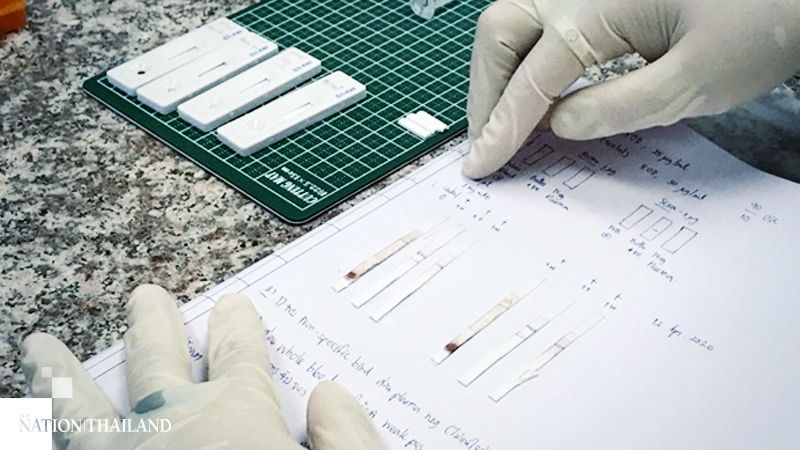
Prince of Songkla University (PSU) is developing Covid-19 test kits that can produce results in 15 minutes, and is aiming to distribute the first batch to three deep South provinces by May 15.

The PSU Covid-19 Rapid Test Kit uses the principle of immunochromatography to detect IgM and IgG antibodies produced by the body’s immune system after it has become infected with Covid-19, explained Asst Professor Theerakamol Phengsakul, a researcher at PSU’s Medical Technology Faculty. The test is conducted on a small blood sample of 15-20 microlitres (a few drops).

“It can produce results in 15-20 minutes via a colour-strip similar to a pregnancy test,” he said.

“The test kits can be stored at room temperature for several months, making them suitable to use in remote areas where medical equipment is limited.”

Once the first batch is produced, the test kits will be distributed to the three southern provinces of Yala, Pattani and Narathiwat by May 15. The following batches will be delivered to all 14 provinces in the South.

Currently, the standard method for detecting Covid-19 is the RT-PCR test, which identifies ribonucleic acid (RNA) from the virus in patients’ respiratory fluid.

“The traditional method requires skilled staff, expensive equipment, and takes 2-3 hours to produce results. Therefore it is not suitable for field testing, not to mention the fact that collecting samples brings a high risk of spreading the virus,” said Theerakamol.

“The new method is designed to be a preliminary screening procedure as it requires less time and poses minimal risk of the virus spreading from the collection of blood samples. If a patient gets a positive result from the rapid test kit, they should then be tested by the RT-PCR method to confirm the result.”

Microsoft posts earnings boost from cloud business #ศาสตร์เกษตรดินปุ๋ย

#ศาสตร์เกษตรดินปุ๋ย : ขอบคุณแหล่งข้อมูล : หนังสือพิมพ์ The Nation.

https://www.nationthailand.com/edandtech/30387035?utm_source=category&utm_medium=internal_referral

Microsoft posts earnings boost from cloud business

Apr 30. 2020
By The Washington Post · Jay Greene · BUSINESS, TECHNOLOGY

SEATTLE – Even as much of the global economy has shutdown amid the coronavirus pandemic, Microsoft recorded huge revenue gains in its fiscal third quarter as homebound workers turned to its cloud-computing services to get their jobs done.

In the last quarter, companies raced to Microsoft’s cloud offerings, in which they rent internet-based computing services as they need them so employees could work remotely, Satya Nadella, chief executive of the Redmond, Washington, software giant, said.

“We’ve seen two years’ worth of digital transformation in two months,” Nadella said in a statement.

Analysts expected as much, and that’s one reason Microsoft’s stock is closing in on its all-time high hit in early February. It’s shares have jumped nearly 12% since the beginning of the year even as the overall Nasdaq composite index has fallen 1%, helping secure Microsoft’s spot as the most valuable public company in the world with a market capitalization of $1.35 trillion.

Microsoft had already seen rapid adoption of its cloud offerings, and said in its earning release that the coronavirus has not slowed it. Microsoft saw a spike in several of its cloud-based offerings, including its Teams video chat business and its security software. Teams now has more than 75 million daily active users and tallied more than 200 million meeting participants in a single day, Nadella said during a call with financial analysts Wednesday. Its Windows PC operating system business, as well as its lineup of Surface computers, benefited from remote work and school mandates. And its Xbox business gained as well, as consumers turned to gaming with other entertainment options limited.

Nadella noted that its Xbox Live online gaming service had nearly 90 million monthly active users, and its Xbox Game Pass, which provides access to its game catalog, had more than 10 million subscribers in the period, both records for the company.

It’s the second bellwether tech company to report financial results in the wake of the pandemic. And like Google-parent Alphabet’s earnings announcement Tuesday, Microsoft, too, is getting stronger, a sign that the economic fallout from the coronavirus may help the biggest tech giants consolidate their power.

“The big get bigger. Scale wins,” Stifel Nicolaus & Co. analyst Brad Reback said. “These guys have all the right products in place.

In the quarter ended March 31, Microsoft earned $10.8 billion, or $1.40 per share, on $35.0 billion in sales. Earnings jumped 22 percent from the year-ago quarter, while sales grew 15%.

Analysts surveyed by S&P Global Market Intelligence expected Microsoft to report per-share earnings of $1.27 on revenue of $33.7 billion.

Notably, revenue from the company’s Intelligent Cloud segment, which includes its Azure cloud-computing business, rose 27% to $12.3 billion. Microsoft trails only Amazon’s cloud unit, Amazon Web Services, in the market for computing infrastructure that’s delivered over the internet on a subscription basis.

(Amazon chief executive Jeff Bezos owns The Washington Post.)

Last fall, Microsoft’s cloud-computing business beat out Amazon for a controversial $10 billion, 10-year cloud contract from the Pentagon. Amazon is currently challenging that award.

Microsoft noted just a few financial setbacks from the pandemic. Supply chain constraints in China held back its Windows and Surface business toward the end of the quarter. And cuts in advertising spending hurt revenue from its LinkedIn professional-networking service and its web search business.

Going forward, LinkedIn’s sales growth, which climbed 21% in the quarter, will face “a significant slowdown” to mid-single-digit growth as the job market tightens, Microsoft finance chief Amy Hood said during the analyst call.

And even though Microsoft spent $3.9 billion in the quarter on capital expenditures, money doled out largely to build massive data centers for its cloud services, the company said it delayed spending related to supply-chain constraints.

Microsoft shares rose during Wednesday’s trading, finishing at $177.43, up 4.5% for the day. The company results, posted after the market closed, helped boost shares another 4.5% in after-hours trading, just shy of its highest ever close of $181.85, achieved on Feb. 10.

Facebook earnings rise, but uncertainties from coronavirus dominate outlook #ศาสตร์เกษตรดินปุ๋ย

#ศาสตร์เกษตรดินปุ๋ย : ขอบคุณแหล่งข้อมูล : หนังสือพิมพ์ The Nation.

https://www.nationthailand.com/edandtech/30387034?utm_source=category&utm_medium=internal_referral

Facebook earnings rise, but uncertainties from coronavirus dominate outlook

Apr 30. 2020
By The Washington Post · Elizabeth Dwoskin · BUSINESS

Facebook reported an 18 percent increase in first-quarter revenue Wednesday, but the social media giant said it wasn’t making financial predictions because of the uncertainty caused by the coronavirus and what is expected to be the greatest economic contraction since the Great Depression.

Facebook chief executive Mark Zuckerberg expressed concern about what lies ahead for the country. “While there are massive societal costs from the current shelter in place restrictions, I worry that reopening certain places too quickly, before infection rates have been reduced to very minimal levels, will almost guarantee future outbreaks and even worse economic outcomes,” he said. “I am very concerned that this health emergency and therefore the economic fallout will last longer than people are currently anticipating.”

The caution Zuckerberg urged stands in stark contrast to others who want to see the quarantine orders lifted as soon as possible. State officials in places such as Georgia have rushed to reopen for business, even though the number of new infections remains high. Tesla CEO Elon Musk tweeted late Tuesday, “FREE AMERICA NOW.”


Zuckerberg’s focus on the broader health crisis reflects his personal involvement in this issue: He and his physician wife run the Chan Zuckerberg Initiative, a philanthropic effort focused on eliminating disease, and have personal ties to many public health leaders. Facebook and other tech giants were among the first companies to urge employees to work from home last month, even before the first shelter-in-place orders were announced.

But for his business, Zuckerberg sees opportunities to grow. On a call with analysts, he said he believes that times of economic downturn are a time to invest.

“During a period like this, there are a lot of new things that need to get built,” he added. “I think it’s important that, rather than slamming on the breaks now, as a lot of companies may, it is important to keep building for the new needs people have and … make up for the stuff that other companies will pull back.”

He noted that Facebook had just launched a video group calling app, Messenger Rooms, that would be a competitor to Houseparty and Zoom. Zuckerberg said that the company expects to lose profits in the year ahead but emphasized the social network’s strength at the current moment. Executives have announced that Facebook will hire 10,000 people this year, a potential strategic advantage to poach the best talent as smaller tech firms lay workers off.

At a moment when other companies are facing huge layoffs and declining revenue due to the pandemic, Facebook’s revenue growth is notable and was cause for optimism on Wall Street.

The company’s first quarter revenue was $17.7 billion, up from $15.1 billion the same quarter a year ago. That was slightly more than analyst expectations , presenting a rosier picture than many traditional companies gearing up for the prolonged crisis. The company’s profits doubled to $4.9 billion compared to the previous year.

Facebook’s stock price shot up 10 percent in after-hours trading.

However, Facebook is not immune to the current crisis. The company said that it expects profits to go down this year and that it was not making its usual second quarter predictions due to the uncertainty.

Though the company was not making specific predictions, executives noted that ad revenue were flat in April, a sign that the advertising industry would be significantly impacted. Those numbers will be captured during second quarter earnings.

“The effects of the pandemic didn’t hit most of the world until mid-March, and that was reflected in Facebook’s earnings report,” eMarketer principal analyst Debra Aho Williamson said in an emailed statement. But the flat April revenue indicates that the next quarter will be “much more challenging” than the current one.

The company also said that prices for its ads have gone down because of lower demand and that it did not expect engagement with some of its services to remain at the same levels as it has during the lockdowns.

“There is a strong evidence in the numbers that Facebook ad revenue aren’t receiving the big hits many expected from the Covid-19 shock,” said Haris Anwar, senior analyst at financial markets platform investing.com, who said that he thought the business would quickly recover from ad spending losses. Facebook’s “stock is well-positioned to outperform its peers,” he added.

Many of Facebook 2.89 billion users have been quarantined at home around the world, and they are using the company’s services – which include Instagram and WhatsApp – more than ever. In Italy, a country to enter an early lockdown, viewership on the company’s streaming services Facebook and Instagram live doubled in a week, the company has said. Calling for Messenger and WhatsApp more than doubled year over year in many countries that instated lockdowns. Group video calling has increased more than 1,000 percent since March.

That’s welcome news for a company that has seen the number of new users plateau and a significant reduction in the amount of time those users spend engaging with the company’s services in recent years.

In general, Facebook and its fellow tech giants are in a better position to withstand the coming recession. The company’s market capitalization is $553 billion, making it one of the most valuable and cash-rich companies in the world.

Google parent company Alphabet’s stock was up nearly 10 percent Wednesday following the company’s positive earnings report. But it warned that advertising experienced a significant decline starting in mid-March. Microsoft also beat analyst expectations as the coronavirus drove demand from businesses for its cloud infrastructure.

Technology 202: The coronavirus could worsen some of Amazon’s political problems #ศาสตร์เกษตรดินปุ๋ย

#ศาสตร์เกษตรดินปุ๋ย : ขอบคุณแหล่งข้อมูล : หนังสือพิมพ์ The Nation.

https://www.nationthailand.com/edandtech/30386951?utm_source=category&utm_medium=internal_referral

Technology 202: The coronavirus could worsen some of Amazon’s political problems

Apr 29. 2020
By The Washington Post · Cat Zakrzewski · BUSINESS 

Amazon’s business is booming amid the novel coronavirus pandemic. But it’s still a political target in Washington.

One of the top tech industry critics in Congress is now calling for the Justice Department to open a new, criminal antitrust investigation of the e-commerce juggernaut. Sen. Josh Hawley, R-Mo., said recent reports indicate the company “has engaged in predatory and exclusionary data practices to build and maintain a monopoly.” His letter, addressed to Attorney General William Barr, cites the Wall Street Journal’s reporting that Amazon employees used data from third-party sellers to develop competing products.

He said government action is even more urgent because of the virus.

“Thousands of small businesses have been forced to suspend in-store retail and instead rely on Amazon because of shutdowns related to the coronavirus pandemic,” Hawley said. “Amazon’s reported data practices are an existential threat that may prevent these businesses from ever recovering.”

The backlash from Hawley stands in stark contrast to the company’s goodwill tour.

Amazon has been trumpeting the many new jobs it’s creating during the pandemic and its role in delivering essential items. The company’s stock climbed to a record high in recent weeks as its e-commerce business appears to not just be immune to the pandemic but benefiting from it. As the country grapples with a record-setting surge in unemployment, the company has announced plans to hire 175,000 new employees, mostly in jobs in its warehouses. Meanwhile, the pandemic dealt a blow to brick-and-mortar retailers, as companies such as Macy’s furlough thousands, as The Washington Post’s Elizabeth Dwoskin reported.

“There are really two Americas right now,” said Scott Galloway, a marketing professor at the New York University Stern School of Business, told Elizabeth. “There is Big Tech and there is everyone else. They can do what very few companies can do, which is play offense in the middle of a pandemic.”

(Amazon chief executive Jeff Bezos owns The Washington Post.)

Amazon has pushed back on the notion the pandemic could make it even stronger as other companies falter. Amazon spokesman Dan Perlet told Elizabeth in a statement, “While we appreciate the opportunity as a retailer to serve customers and are seeing increased demand for essential products, there are no winners out of Covid-19.”

Amazon did not immediately respond to request for comment about Hawley’s letter, but the company told the Wall Street Journal it has launched an internal investigation into how its employees were using seller data.

Yet the health crisis is exacerbating long-running sore spots for the company in Washington. Amazon’s recent success could raise new questions about its power.

The Federal Trade Commission was already reportedly scrutinizing the company, interviewing sellers about its data practices. Amazon is also part of the House antitrust subcommittee’s investigation of the tech industry, as well DOJ’s broad review of large tech companies. Amazon, however, has not disclosed formal investigative inquiries from DOJ or FTC as have Facebook and Alphabet.

Those investigations are slowed for now, Elizabeth reports.

But some of the trends that prompted them could be accelerated as many pandemic sellers become even more dependent on Amazon’s channels.

ProPublica reported many suppliers are favoring Amazon over other retailers out of fear the company’s algorithms will bury them in rankings if they have product shortages at a time when such vendors are more reliant on e-commerce. Amazon told the publication it’s a relatively small player in the retail market compared to many brick-and-mortar retailers.

“Retail is a competitive industry with many choices for both customers and suppliers,” the company told ProPublica. “Suppliers make their own business decisions, not Amazon.”

President Donald Trump’s long-running feud with the company has also persisted.

The administration has weighed tough terms on an emergency coronavirus loan to the U.S. Postal Service in an effort to change charges for delivering packages, The Washington Post’s Jacob Bogage and Lisa Rein report. A potential price hike on package deliveries – USPS’s sole area of profitability in recent years – could hit Amazon and other internet companies that Trump argues are exploiting the service.

Trump recently suggested to reporters that USPS loses money on every package they deliver for Amazon – a claim The Washington Post’s fact checker has given four Pinocchios.

Trump has also conspicuously omitted mention of Amazon at many White House coronavirus task force briefings – even when praising actions by other tech company chiefs or hosting major retail executives. Bezos, however, is a member of the administration’s Great American Economic Revival Industry Groups retail task force.

The virus is also renewing concerns among regulators about the company’s treatment of warehouse workers.

The New York state attorney general’s office says Amazon may have violated safety standards by taking “inadequate” steps to protect warehouse workers in the state amid the pandemic, NPR reported last night.

The office says the company may have run afoul of the state’s whistleblower laws for dismissing a warehouse worker who helped lead a protest in a Staten Island facility, according to a letter to Amazon obtained by NPR. The worker, Christian Smalls, called to close the plant after several workers there contracted the coronavirus. Employees have fallen sick at Amazon warehouses around the world, and they have complained Amazon is not offering them proper protective gear.

“While we continue to investigate, the information so far available to us raises concerns that Amazon’s health and safety measures taken in response to the COVID-19 pandemic are so inadequate that they may violate several provisions of the Occupational Safety and Health Act,” as well as other federal and state guidelines, Letitia James’s staff wrote in the letter.

Five Democratic lawmakers also recently pressed Bezos on the company’s decision to fire Smalls.

Amazon has said Smalls was fired for putting other workers at risk by coming to the warehouse after coming in contact with another employee who tested positive for the coronavirus. The company has also said it’s taking measures to keep staff safe, such as enforcing social distancing and supplying masks to U.S. and European workers.

Surveillance technology could help Americans get back to work. But it’s untested and raises privacy concerns.

New York investigating Amazon’s pandemic labor practices #ศาสตร์เกษตรดินปุ๋ย

#ศาสตร์เกษตรดินปุ๋ย : ขอบคุณแหล่งข้อมูล : หนังสือพิมพ์ The Nation.

https://www.nationthailand.com/edandtech/30386947?utm_source=category&utm_medium=internal_referral

New York investigating Amazon’s pandemic labor practices

Apr 28. 2020
An employee carries a box at the Amazon fulfilment center in Tilbury, United Kingdom. MUST CREDIT: Bloomberg photo by Jason Alden

An employee carries a box at the Amazon fulfilment center in Tilbury, United Kingdom. MUST CREDIT: Bloomberg photo by Jason Alden
By Syndication Washington Post, Bloomberg · Erik Larson · NATIONAL, BUSINESS, COURTSLAW

Amazon’s safety measures and labor practices during the coronavirus pandemic are being investigated by New York’s top law enforcement officer after the company fired the leader of a Staten Island warehouse walkout.

New York Attorney General Letitia James told Amazon in an letter sent Wednesday that the state is looking into whether the company violated federal employment law or ran afoul of state whistleblower protections by dismissing the worker, Chris Smalls, her spokesperson confirmed on Monday.

James’ preliminary finding is that Amazon may have fired Smalls to silence him and that the working conditions at the facility may have violated provisions of the Occupational Safety and Health Act, the spokesperson said. The letter was obtained and reported first by National Public Radio.

The attorney general’s office declined to comment further. Last month, James called Smalls’ firing “immoral and inhumane.” Her deputy labor bureau chief tweeted the NPR report Monday night.

At the end of March, a group of workers at the Staten Island fulfillment center walked off the job and demanded that Amazon close the facility for extended cleaning. They said a number of their colleagues were diagnosed with covid-19, the disease the novel coronavirus causes. Seattle-based Amazon said at the time that Smalls violated safety regulations, including not abiding by a 14-day quarantine required after being exposed to an employee with a confirmed case of the disease.

Amazon said it’s taken “extreme measures” to keep its employees safe, including increasing time off and pay.

“We encourage anyone to compare the health and safety measures Amazon has taken, and the speed of their implementation, during this crisis with other retailers,” Lisa Levandowski, an Amazon spokeswoman, said in an emailed statement.

New smart grid to ensure uninterrupted power supply in Pattaya #ศาสตร์เกษตรดินปุ๋ย

#ศาสตร์เกษตรดินปุ๋ย : ขอบคุณแหล่งข้อมูล : หนังสือพิมพ์ The Nation.

https://www.nationthailand.com/edandtech/30386874?utm_source=category&utm_medium=internal_referral

New smart grid to ensure uninterrupted power supply in Pattaya

Apr 28. 2020
By The Nation

The Provincial Electricity Authority (PEA) has launched a “smart grid” pilot project in the eastern resort town of Pattaya, PEA governor Sompong Preeprem said.

The new smart grid will improve the distribution of electricity, cut down instances of power blackouts and help consumers cut down on utility costs, he said.

The agency is installing an advanced metring infrastructure (AMI), which will cover 120,000 households in the Pattaya City area, he said. The AMI system will also provide information to households so they can manage their consumption to suit their needs and accordingly save costs.

Along with the smart grid, PEA is also installing a smart substation, which will ensure fast and secure power distribution, which will cut down on blackouts. For instance, if a car collides with an electricity pole and power is cut off, then other stations will step in and power supply will continue uninterrupted.

PEA is also exploring the option of getting a private-sector partner in order to expand the smart grid project, he said.

CM University making 3D-printed face-mask ‘enhancers’ #ศาสตร์เกษตรดินปุ๋ย

#ศาสตร์เกษตรดินปุ๋ย : ขอบคุณแหล่งข้อมูล : หนังสือพิมพ์ The Nation.

https://www.nationthailand.com/edandtech/30386833?utm_source=category&utm_medium=internal_referral

CM University making 3D-printed face-mask ‘enhancers’

Apr 27. 2020
By THE NATION

Chiang Mai University is manufacturing 3D-printed face-mask “enhancers” for medical staff to reduce the risk of Covid-19 infection.

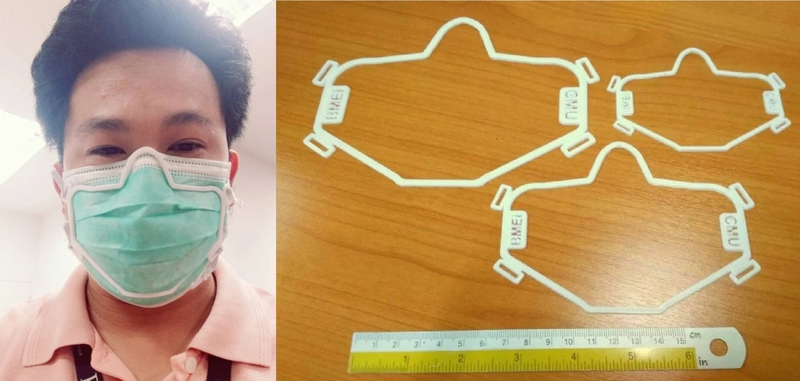
The university’s Biomedical Engineering Institute (BMEi) has announced that it has designed a face-mask enhancer, a specialised apparatus that can help snap a sanitary face mask to a wearer’s face and reduce the open space through which viruses and germs can enter.

“The BMEi face-mask enhancer will help increase safety for medical staff, who have to be in close contact with infected patients for long hours,” said the institute. “It is made of plastic from 3D printing and will come in three sizes – S, M and L – to suit the wearer’s face structure.”

In the early stage the institute will manufacture the enhancers in limited numbers for medical staff at selected hospitals before letting private manufacturers produce them in high volume for the general public.

“At present we still have not perfected the mass production technique and therefore have to make it one by one from the printer, resulting in slow manufacturing and high cost,” said the BMEi.

The institute had previously designed a reusable face shield for health workers and the public with the aim to reduce waste, which it predicted would lead to a serious environmental impact after the Covid-19 situation returns to normal.

For more information on the product, you can visit: http://bmei.cmu.ac.th/read.php?id=119