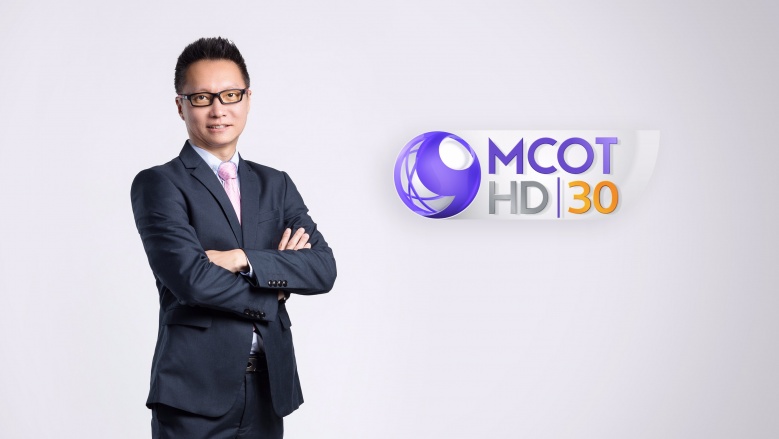
นายสิโรตม์ รัตนามหัทธนะ กรรมการ รักษาการในตำแหน่งกรรมการผู้อำนวยการใหญ่ บริษัท อสมท จำกัด (มหาชน) เผยว่า สำหรับช่อง 9 ในปี 2564 เราจัดให้แฟนหน้าจอแบบครบรส เริ่มด้วยซีรีส์สุดพรีเมี่ยมจากอังกฤษ ของ BBC One ที่ครองใจนักวิจารณ์กระชากเรตติ้งสูงสุด 3 เรื่องเด็ด “The Musketeers สามทหารเสือ” และพบกับดาราดัง โคลิน มอร์แกน เจ้าของรางวัลนักแสดงยอดเยี่ยมหลายเวที ในซีรีส์เรื่อง “The living and the dead ท้าเป็นท้าตาย” ปิดท้ายด้วยซีรีส์ยอดเยี่ยม “The Kettering Incident คดีลับเมือง 2 โลก” ชมฝีมือการแสดงของนักแสดงหญิงยอดเยี่ยมแห่งออสเตรเลีย เอลิซาเบธ เดบิคกี
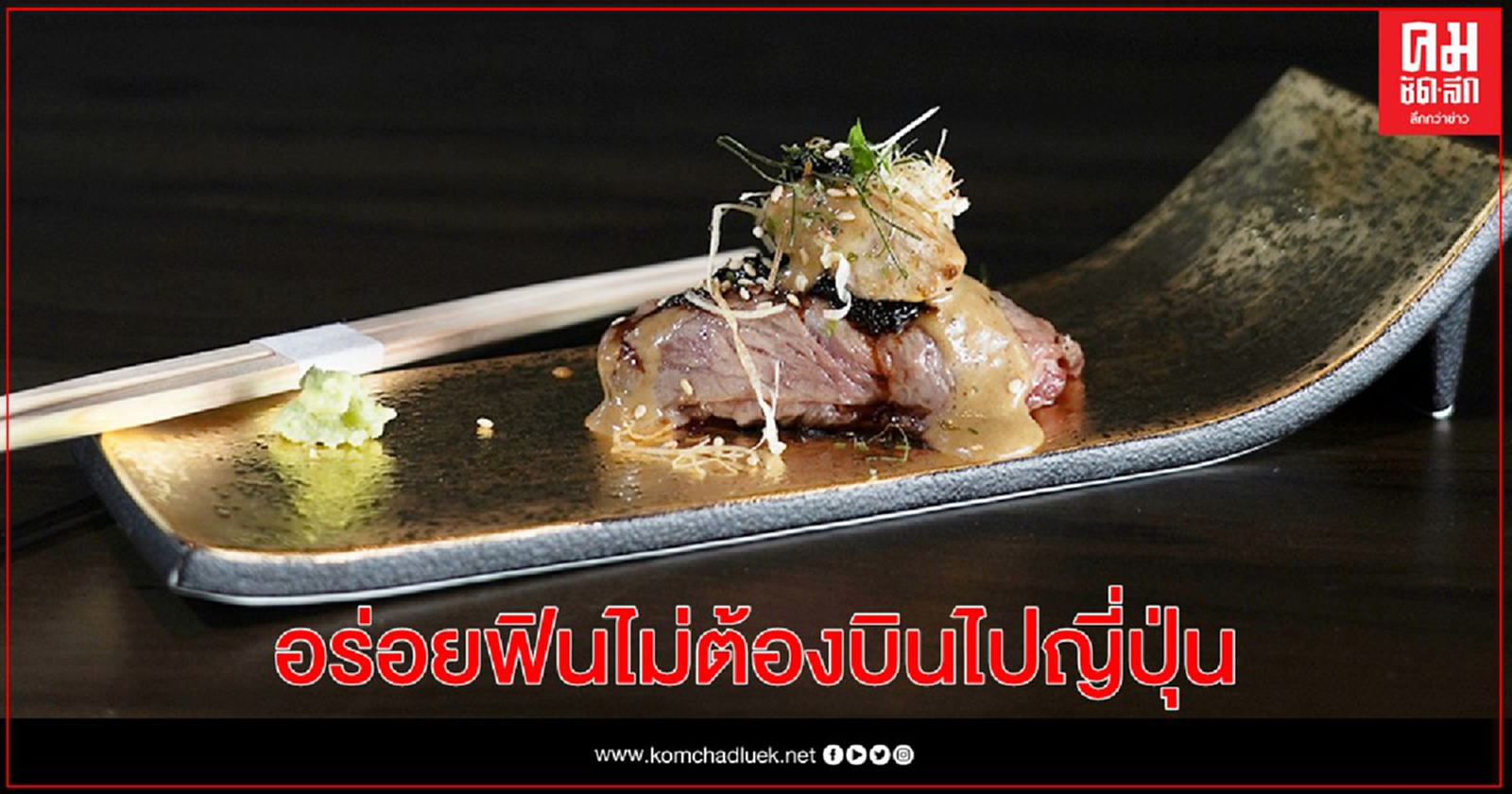
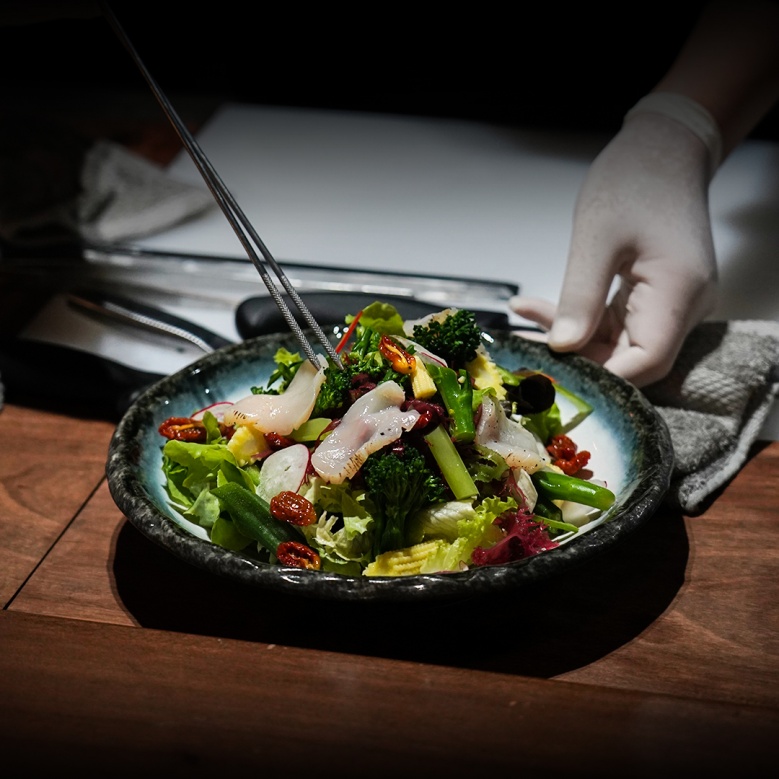
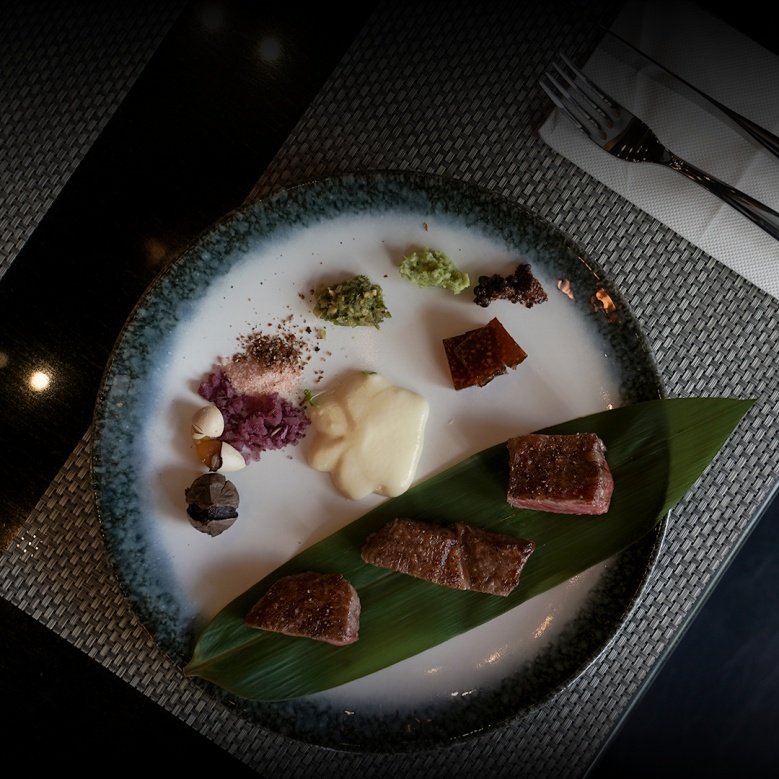
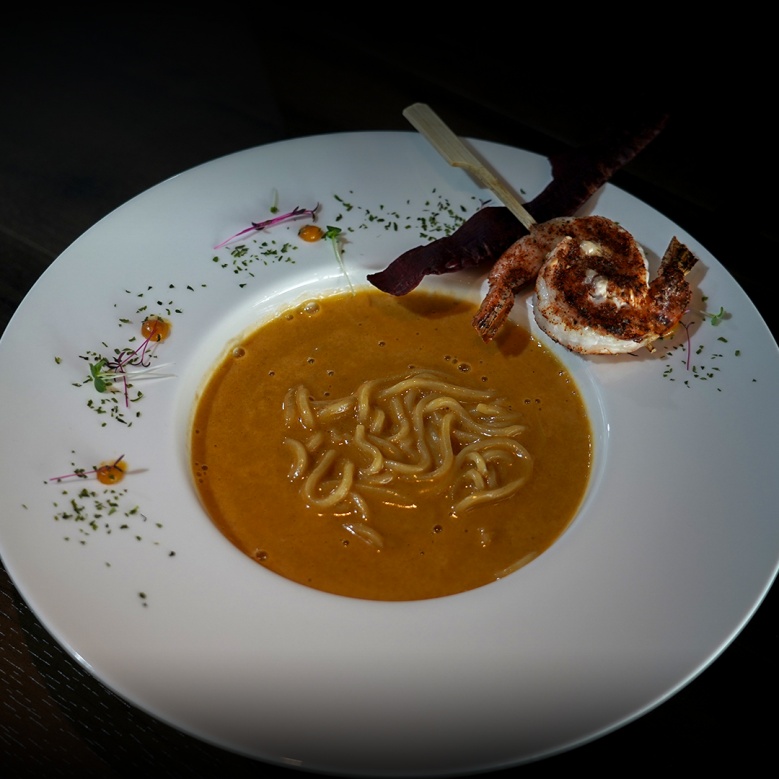
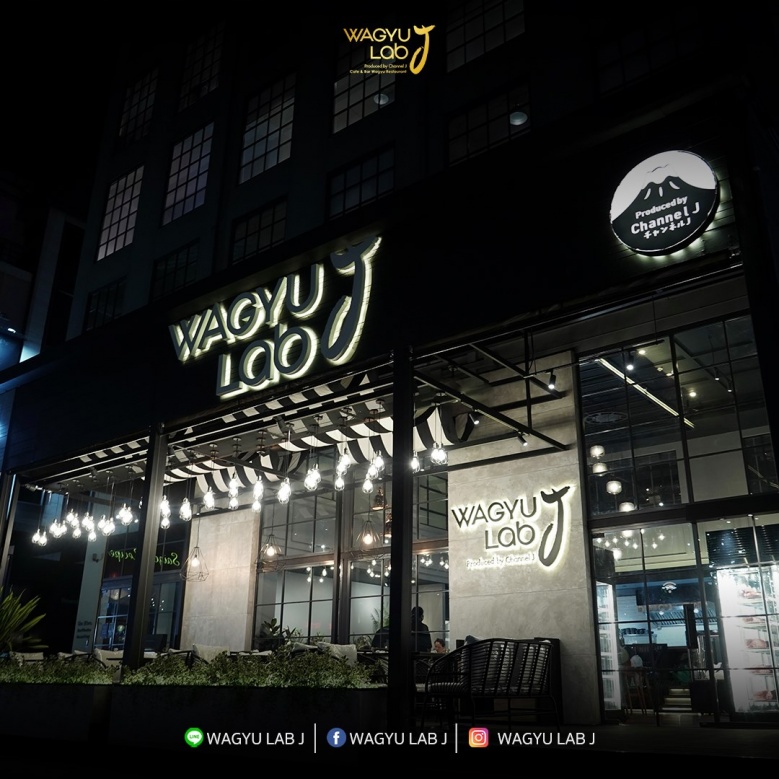
อร่อยฟินไม่ต้องบินไปญี่ปุ่นกับร้านสเต็กเนื้อวากิวพรีเมียมที่อยากให้คุณลอง Wagyu Lab J Produced By Channel J
29 ธันวาคม 2563 – 18:19 น.
Wagyu Lab J produced by Channel J ร้านอาหารญี่ปุ่นที่แรกที่เดียวในประเทศไทยที่แตกต่างจากที่อื่นด้วยคุณภาพของเนื้อวากิวชั้นเลิศและส่วนผสมคุณภาพเยี่ยม พร้อมบรรยากาศหรูหรา เหมาะสำหรับเป็นที่สังสรรค์ยามค่ำคืนที่สนุกสนานและสร้างความประทับใจ
Health & BeautyDec 27. 2020CDC Director Robert Redfield speaks during a briefing by President Trump’s coronavirus task force on Jan. 31 at the White House. MUST CREDIT: Washington Post photo by Jabin Botsford.
By The Washington Post · David Willman
A new virus was exploding in Wuhan, a Chinese city with 11 million people connected by its airport to destinations around the world. In the United States, doctors and hospitals were waiting for the federal Centers for Disease Control and Prevention to develop a test to detect the threat.
On Jan. 13, the World Health Organization had made public a recipe for how to configure such a test, and several countries wasted no time getting started: Within hours, scientists in Thailand used the instructions to deploy a new test.
The CDC would not roll out one that worked for 46 more days.
Inside the 15-acre campus of the CDC in northeast Atlanta, the senior scientists developing the coronavirus test were fighting and losing the battle against time.
The agency squandered weeks as it pursued a test design far more complicated than the WHO version and as its scientists wrestled with failures that regulators would later trace to a contaminated lab.
The Washington Post reviewed internal documents and interviewed more than 30 government scientists and others with knowledge of the events to understand more fully the missteps in those early weeks as the coronavirus began to spread unchecked across the nation. Most spoke anonymously because they were not authorized to do so publicly.
This account reveals new details about how an overly ambitious test design and laboratory contamination caused the CDC’s delay, and describes previously unreported challenges that confronted the agency scientists assigned to carry out the work.
CDC leaders underestimated the threat posed by the new virus – and overestimated the agency’s ability to design and rapidly manufacture a test. Quality-control measures failed to prevent the shipping of compromised kits to dozens of state and local public health labs.
The CDC’s response to what became the nation’s deadliest pandemic in a century marked a low point in its 74-year history. More than 329,000 Americans have died of the virus. In an agency long known for its competence, hubris became the nemesis that could not be overcome.
The CDC has quietly removed or shifted to other duties several scientists who were involved in developing the coronavirus test, according to those familiar with the matter. Those displaced included a longtime division director, a supervising branch chief and a respiratory virus specialist who led the design of the test.
The problems with the CDC’s test kits are the subject of ongoing inquiries by the Department of Health and Human Services’ inspector general and the U.S. Government Accountability Office.
“We missed the game,” a senior CDC disease-transmission specialist said in an interview. “Many people here wish we had done things differently.”
Nearly all of those in charge at the highest levels of the CDC lacked hands-on lab expertise and for weeks deferred to subordinates – scientists who were logging grueling, high-pressure hours on the highly technical work.
Stephen A. Morse, a retired agency microbiologist who had helped establish a formal affiliation with the public health labs to ensure rapid responses to outbreaks caused by nature or biological terrorism, said the CDC’s approach was simply too narrow.
It would have been prudent, he said, “to use the WHO test that was already available. At the same time, get a better understanding of the performance of that test – see if you could improve on it with a second-generation test, as opposed to trying to develop your own test, independent of what’s out there.”
Without tests to identify the early cases, health authorities nationwide were unable to isolate the infected and trace the rapid spread among their close contacts. Those who were asymptomatic, yet contagious, went undetected.
CDC Director Robert Redfield, an appointee of President Donald Trump, took a hands-off approach while the in-house manufacturing efforts foundered and agency scientists clashed over whether to alter the design of the problem-plagued test, according to CDC and other federal officials.
James Le Duc, who as the director of the Galveston National Laboratory in Texas oversees development of diagnostics for rare pathogens, said he is perplexed by the CDC’s decision-making.
“The test that the WHO used early on was quite successful,” said Le Duc, a former senior CDC official who still serves as an adviser to the agency. “I frankly don’t know why CDC didn’t accept it.”
Redfield and other CDC leaders declined to be interviewed or to respond to written questions about the agency’s handling of the test.
“Appreciate the opportunity, but we are going to pass,” said CDC spokesman Benjamin N. Haynes.
The struggles with the test kits had far-reaching consequences.
“If we would have put [tests] out there quicker, could we have saved lives? Well sure,” said Peter C. Iwen, director of the Nebraska Public Health Laboratory in Omaha. “If we would have diagnosed quicker, we would have saved people.”
– – –
Since its founding in 1946, the CDC has grown from a regional bulwark against malaria in the southern United States to a world leader in fighting diseases of all kinds.
Nowhere has the CDC’s presence abroad been larger than in Thailand, where the agency maintains offices and a staff of about 170 epidemiologists, laboratory specialists and others. In 1980, the CDC established its first overseas epidemiology program in a suburb of Bangkok, training a new cadre of disease detectives.
In early January, Thai doctors in Bangkok were worried by the outbreak in Wuhan, less than seven hours away by airliner. They strategized at length about the threat with their local CDC counterparts. They also learned from scientists enough about the genetic makeup of the new coronavirus to begin developing a molecular test for in-hospital use.
That initial test would use real-time polymerase chain reaction, or RT-PCR, to examine sputum samples in search of unique genetic material from the virus.
On Jan. 12, using their new test, the Thais became the first country to confirm a coronavirus case outside China, a sickened traveler from Wuhan.
The same day, the Chinese posted on the Internet what public health authorities worldwide had been waiting for: the complete genetic sequence of this previously unseen strain of the coronavirus, the cause of the disease soon to be named covid-19.
Another breakthrough came the next day, Jan. 13, when the WHO publicly shared a protocol, essentially a recipe, specifying the materials needed to build a molecular test.
The Thais used that protocol to make a second test to detect the virus. This redundancy would eventually become the model for developing a vaccine against the virus.
“Multiple shots on goal,” as Anthony Fauci, the U.S. infectious-disease expert, often said of the approach. That way, said Fauci, if one attempt stalled or failed, another might score.
The approach paid off immediately for the Thais.
“We have not relied only on one testing technique from one laboratory,” Krit Pongpirul, a researcher and clinical epidemiologist at Bangkok’s Bumrungrad International Hospital, said in an email exchange with The Post.
Using their version of the WHO test, Thai health officials within days found other cases, including a taxi driver. He had not been to Wuhan, but Pongpirul and a colleague suspected he had become infected by Chinese travelers. Thai officials traced and tested close contacts of the cabbie and others who were found to be infected. The contacts were persuaded to isolate themselves to prevent the virus from spreading.
One of the infected, the Thais found, was asymptomatic – an early warning that the coronavirus was being spread by those not overtly sick.
“Patient 4 had detectable [virus] for 4 consecutive days, but we were only able to follow her for 7 days before she returned to China,” the Thai doctors and others wrote in a subsequent scientific journal article. “Her case is an example of a person without reported symptoms but with radiologic evidence of disease and detectable virus over several days.”
By the end of January, the Thais had diagnosed 11 patients with covid-19, according to Pongpirul, who described the details in the email correspondence and in the journal Emerging Infectious Diseases, published by the CDC.
Four of Pongpirul’s 11 co-authors were CDC specialists – three of them based in Bangkok and the other in Atlanta.
“The early availability of the RT-PCR testing definitely helped to reduce transmission and save lives,” Pongpirul told The Post by email.
The Thai scientists shared their success and insights in a Jan. 13 conference call that included CDC personnel in Bangkok and at headquarters in Atlanta.
“This was the first indication of international spread,” said an Atlanta-based official who described the call as riveting. ” ‘Why Thailand?’ We found out there was a direct flight from Wuhan.”
John R. MacArthur, a physician who had led the CDC’s Thailand operations since 2013, said that when PCR testing confirmed the first case there, “I immediately contacted CDC leadership in Atlanta to let them know what was happening.”
“Seeing the first case outside of China, I thought, was a big moment,” MacArthur said in a phone interview.
MacArthur, one of the co-authors of the journal article, said the CDC’s lab training in Thailand gave officials there “the tools that they needed to respond very quickly and effectively.”
At CDC headquarters, officials did not adopt the strategy that proved successful in Thailand.
Instead, the agency planned to design and manufacture its own test in-house and ship 300 of those kits to 120 public health labs throughout the United States.
At the time, CDC officials in Atlanta expected that the strain emanating from Wuhan, while worrisome, would be no worse than two earlier coronaviruses that spurred dread before fizzling out, those familiar with the matter said.
One of those viruses, severe acute respiratory syndrome, or SARS, originated in China in late 2002 and killed 774 people worldwide, but none in the United States. Middle East respiratory syndrome, or MERS, emerged in 2012 and over the next seven years killed 866 people, but resulted in only two U.S. infections and no deaths.
Neither SARS nor MERS was known to be widely spread by people who had no symptoms.
“It was being treated as a MERS situation or a SARS situation,” said a CDC scientist who had helped confront the new threat in January and who declined to speak on the record because he was not authorized to do so. “At that point we thought it was going to be a limited activity.”
– – –
In the first week of January, Nancy Messonnier, a physician and director of the CDC’s National Center for Immunization and Respiratory Diseases at the Atlanta campus, spoke to Stephen Lindstrom, an accomplished respiratory virus specialist. She wanted to know if, and how soon, he could get a coronavirus test up and running.
“Can you make this happen?” she asked, according to a person familiar with the exchange.
Lindstrom, co-inventor of seven earlier CDC tests for strains of the flu, had transitioned in 2018 to lead a respiratory virus lab that focused on diseases other than influenza.
Before saying yes to Messonnier, Lindstrom had an ask that she would promptly grant: He needed to pull in at least 20 people to supplement his staff of eight lab specialists.
On Jan. 9, Lindstrom outlined his plans to Messonnier, as well as the director of the viral diseases division, Mark A. Pallansch, and the respiratory viruses branch chief, Susan Gerber, among others. In a conference room near Messonnier’s eighth-floor office, Lindstrom narrated a slide show that spelled out how the test manufacturing and other tasks would be divided up.
That same week, Lindstrom recruited Julie M. Villanueva, who was also a PhD scientist and with whom he had collaborated on anti-flu efforts over the previous decade. In 2016, she had led the CDC’s Emergency Operations Center during an outbreak of the Zika virus.
Over the next few days, Lindstrom, who had not previously designed a coronavirus test, set about researching what materials were necessary as well as a recipe for combining them to detect the virus with PCR.
All of the CDC scientists and officials involved with the test’s development and named in this report – including Messonnier, Lindstrom, Pallansch, Gerber and Villanueva – declined to comment or referred questions to the agency’s public affairs office.
Invented in 1983, PCR is a multi-step test to detect infectious agents, including viruses in humans, using a sample of sputum or other genetic material. A machine extracts nucleic acids from the sample, placing them into a small tube with various chemical reagents, including an enzyme that converts viral RNA, which is present in coronaviruses, into DNA.
Some of the solution is then transferred to tiny plastic wells containing additional reagents to help detect whether the virus is present. The wells are placed into a PCR machine, resembling a midsize office photocopier.
The process seeks to copy and amplify targeted regions of the coronavirus genome. If the virus is present in the original sample, a detectable, fluorescent dye is released.
Two components that Lindstrom designed for the CDC’s test, called N1 and N2, focused on separate regions of the virus’s genome, a conventional approach.
But Lindstrom, aided by a lab colleague with coronavirus experience, Xiaoyan Lu, chose to add a third component that distinguished the CDC’s test design from others: This component would identify a wider family of coronaviruses, including SARS and bat-carried strains not known to have infected humans. They called it N3, and Lindstrom told colleagues it would help detect the novel coronavirus if it began to mutate, according to interviews with those familiar with the matter.
Villanueva’s chief role was to ensure that each step of development and production was properly documented and communicated to the public health labs and to regulators at the Food and Drug Administration. CDC officials expected the FDA to expedite emergency authorization of the test, and scientists said Lindstrom and Villanueva worked so seamlessly that colleagues took to calling them what sounded like one name, “Steve-and-Julie.”
On Jan. 17, just days after the Chinese made public the virus’s genetic sequence, Messonnier announced at a news briefing that health authorities in Thailand and Japan had already used molecular testing to detect coronavirus cases. Testing was beginning as well in South Korea and Taiwan.
“We at the CDC also have the ability to do that today, but we are working on a more specific diagnostic,” Messonnier said, indicating that the agency was seeking a more sophisticated test.
To provide reliable detection, a PCR test must be sensitive enough to identify microscopic levels of a pathogen – and able to distinguish them from genetic neighbors.
During the same briefing, Messonnier gave a low-key forecast of what to expect from the new coronavirus.
“It’s highly plausible that there will be at least a case in the United States,” she said.
Nationwide, the stakes were magnified because the 120 public health labs were without a government-approved test of their own and, with few exceptions, depended wholly on getting the CDC’s kits. Based on Messonnier’s forecast, companies had no incentive to navigate regulatory hurdles and mass-produce kits.
Representatives from the public health labs listened to Messonnier’s remarks on Jan. 17 and heard no grounds for concern.
Scott J. Becker, chief executive of the Association of Public Health Laboratories, recalled thinking: “We’ll get 100 labs up and running really quickly. We’ll be on top of this.”
Confidence remained high over the next few days. Messonnier said in another briefing that, as of Jan. 19, the CDC had “finalized development” of its test. The CDC used it in Atlanta, she said, to quickly confirm the first known U.S. coronavirus case, a man in Washington state who had just returned from Wuhan.
“Right now, testing for this virus must take place at CDC, but in coming weeks, we anticipate sharing these tests with domestic and international partners,” Messonnier said, adding, “We continue to believe the risk of this novel coronavirus to the American public at large remains low.”
On Jan. 30, the New England Journal of Medicine published an account from German doctors describing a worrisome twist with the virus.
They documented the case of a 33-year-old “otherwise healthy” businessman who took ill on Jan. 24 with a sore throat, chills and body aches from what turned out to be covid-19. Three days before, he had met extensively in Munich with a Chinese counterpart. At the time they interacted, she had shown no signs of sickness. But the woman became ill on her return flight to China, where she tested positive for the virus on Jan. 26.
It was “notable,” the doctors wrote, that the woman’s “infection appears to have been transmitted during the incubation period,” before she showed symptoms.
– – –
Lindstrom had seen no significant trouble with his nascent test when he confirmed the diagnosis of the first U.S. patient on Jan. 19, those involved said. As February approached, he was collaborating with Villanueva and their team to work through the remaining technical details.
They had to ensure proper manufacturing of the test so it could be distributed to the labs nationwide, and also secure the FDA’s swift authorization.
Lindstrom, who grew up in the Canadian prairie province of Saskatchewan, was known to colleagues as diligent, accessible and, at times, bluntly spoken. A self-described lab geek, he had worked at the CDC since July 2000.
Now he was conducting a burgeoning scientific orchestra.
Lindstrom turned to the Biotechnology Core Facility Branch on the CDC’s Atlanta campus to make detection-enabling “probes” and “primers.” These were synthetic nucleic acids to be added to the mixture of other reagents. As the core lab commenced production on Building 23’s top floor, it sent Lindstrom a portion of each batch for quality-control vetting.
He still saw nothing of undue concern, according to those involved. With help from a third lab, the Reagent and Diagnostic Services branch, also in Building 23, the materials were poured into vials and readied for shipment to the states. On Feb. 4, the FDA granted the emergency authorization.
The state labs started vetting the kits, using samples that contained no virus. Then calls and emails began coming in to Atlanta describing a consistent problem: false-positive results – confined to Lindstrom’s signature N3 component.
Lindstrom tried to grasp the underlying cause. Were the labs doing something wrong? Could his design or protocol for conducting the tests be revised to eliminate the false positives and ensure reliable detection? Did something go wrong with the CDC’s manufacturing?
The troubleshooting dragged on for weeks, but the false positives persisted. The CDC halted further shipment of the kits.
Soon the state labs and the Association of Public Health Laboratories were pressing the CDC: What about streamlining the test to get it up and working? Lindstrom and Villanueva opposed doing so.
“We had a conversation with Steve and Julie and asked, specifically: ‘Lots of members are asking if we can drop N3 and just keep N1 and N2,’ ” recalled Kelly Wroblewski, director of infectious diseases for the professional association, based in Silver Spring, Md.
“And their response at that point was: ‘FDA isn’t going to go for that.’ Both of them were like, it’s a non-starter.”
Government officials later told The Post that the FDA would have considered proposals to remove N3.
Some CDC scientists also were questioning among themselves the need for N3.
“Why are we trying so hard? . . . We know there’s a problem with it,” one of them recalled asking.
Instead of dropping N3, the CDC set about trying to manufacture a new batch of reagents in hopes of eradicating possible contamination that had caused the false positives. On Feb. 11, Villanueva informed directors of the state and local labs about the development.
“Thank you for your patience as CDC investigates reported sporadic aberrant reactivity in the N3 assay,” Villanueva wrote in an email. “After consultation and agreement with FDA, CDC is currently manufacturing and quality control testing a new N3 primer/probe set. . . . We hope to provide this replacement component as soon as possible.”
Lindstrom contacted industry sources, seeking private vendors that could promptly make more reagents, officials said. Scientists said he complained to colleagues about what he saw as a lack of urgency within the CDC to expedite the paperwork necessary for the contracts.
The public health labs remained in limbo as the virus continued to spread.
On Feb. 15, the labs’ newly formed task force on coronavirus testing circulated a bulletin, noting that “an overwhelming number of labs” had reported problems with the N3 component, adding in boldface, “The Task Force does not recommend that any PHL proceed with testing until CDC issues the new primer/probe set for the N3.”
The same bulletin advised that several of the labs had also reported “similar, although less frequent issues” with the N1 component.
A Feb. 17 email from a CDC supervisor, Darin Carroll, to six agency scientists, including Lindstrom, described concern about lab-induced contamination.
Referring to Jan Pohl, the core lab’s director, the email said, “Jan’s thoughts are that if the production facility is found to be free from contamination today it may be possible to have a small production run ready for drying/assembly by late this week.”
That same week, officials from a unit of the CDC responsible for monitoring lab safety and quality, led by associate agency director Stephan Monroe, traveled to the FDA’s offices in Silver Spring to confer about the false positives. Lindstrom also spoke with Monroe’s staff and opened his team’s lab records for review.
Meanwhile, the CDC tasked Lindstrom’s team with overseeing prompt PCR analyses of a growing number of samples arriving from the state labs, which remained unable to conduct tests themselves because the kits were unreliable.
Travelers returning from virus-besieged cruise ships were escalating demands for rapid test results in Atlanta. Lindstrom and Villanueva were also ordered by agency administrators to document their work in a separate information-management system, a time-consuming chore.
In mid-February, Lindstrom sought to clarify priorities at a meeting he attended that was led by the CDC’s coronavirus incident manager, influenza specialist Daniel B. Jernigan, and others in charge. “Tell me what the f— you want me to do,” Lindstrom said, a person who heard the remark recalled.
Though pressure mounted from the public health labs and from within the CDC, Lindstrom and Villanueva defended the test’s design.
Lindstrom warned superiors that dropping N3 might lead to missed cases of infection, false negatives. Villanueva told colleagues that the design was of “Nobel quality,” according to those familiar with the matter.
Lindstrom also conferred with Pohl, the chief of the core lab. A chemist, Pohl initiated rigorous measures to eliminate any contamination that might be causing the false positives, which were not confined to N3, records show.
Nine public health labs, including facilities serving the city and state of New York, the District of Columbia and Minnesota, reported difficulty with N1, lab officials said. The FDA would later conclude that N1 was probably contaminated during work in Lindstrom’s lab in Building 18, a view shared by CDC leaders.
In an email on Feb. 19, a scientist at the core lab, Nicky Sulaiman, told Lindstrom that Pohl had agreed to also decontaminate “all . . . areas and instruments” to be used in further manufacturing of the reagents.
On Feb. 23, a diagnostic-test expert from the FDA, Timothy Stenzel, entered the CDC to examine how the test kits were developed. He concluded that lab conditions for making the kits were substandard and that contamination was the most likely cause of the many N3 false positives, federal officials told The Post. It was likely, Stenzel later told HHS lawyers, that the contamination occurred during quality-control checks made in Lindstrom’s lab.
Stenzel saw nothing wrong with Lindstrom’s design, including N3 – but he flatly advised the CDC to shift any additional manufacturing of the kits to outside contractors.
Lindstrom believed that the contamination with both N1 and N3 stemmed from the core lab, those familiar with the matter said. He continued to say that the kits should include N3.
Meanwhile, the delays had become a national crisis.
By the third week of February, Fauci, the director of the National Institute of Allergy and Infectious Diseases, who was leading the government’s quest for a coronavirus vaccine, ducked into the office of Brian Harrison, chief of staff to HHS Secretary Alex Azar, about the stalemate with testing.
“Brian – you’ve got to do something,” Fauci said. According to officials familiar with the conversation, Harrison replied, “I share your concern.”
Azar urged Redfield and FDA Commissioner Stephen Hahn to intervene and take steps to end the impasse, a department official said. On Feb. 26, the FDA told the CDC by email that public health labs could use the test, without N3.
Two days later – 46 days after the World Health Organization publicly shared its protocol for coronavirus testing – Messonnier announced that the labs “can start testing.”
– – –
Throughout the CDC’s struggle to deliver a reliable test, Director Redfield repeatedly assured officials that a solution was close at hand, according to interviews with those involved.
When members of the White House coronavirus task force pressed him, Redfield, a physician and longtime HIV researcher, signaled complete faith in the CDC’s scientists. One task force member recalled that Redfield “kept on saying, ‘We got this covered, don’t worry.’ He made it seem that the fix was quick, a minor thing.”
Another official, who was privy to Azar’s regular phone calls with Redfield, said the low-key CDC director consistently defended the agency’s approach with the test kits.
“This was kind of the theme for about a month,” said the official, who spoke anonymously because he was not authorized to comment.
Messonnier has told colleagues that, not being a virologist or laboratory specialist, she relied on subordinates with greater subject-matter expertise.
Starting in spring and over the next few months, CDC leaders removed or shifted several of the people who worked on or supervised the original test, officials said.
Lindstrom was shifted to an advisory role and no longer leads the respiratory virus lab.
Gerber, Lindstrom’s boss and an epidemiologist experienced with coronaviruses, was excluded from supervisory decisions and accepted a scientific position elsewhere in the agency.
Pallansch, who oversaw Gerber and Lindstrom, was removed by Messonnier from his job as director of the viral diseases division and now holds a title of special adviser, officials said.
A polio virus expert and 36-year CDC employee, Pallansch told colleagues that if he had known about the N3 component when the test was designed, he would have challenged its inclusion as unnecessary. A person familiar with Pallansch’s thinking also said he regretted not having initially sought out the information.
In a June 19 report on the testing problems, the HHS lawyers said that “time pressure to ship test kits out quickly” may have caused the CDC to shortchange proper quality control and to miss “anomalies in data” and “likely” contamination before the kits were released.
What happened at the CDC remains under scrutiny by the HHS inspector general and by the GAO, according to their representatives. The department lawyers also have recently questioned Messonnier and staffers involved with making the kits, officials said.
Global mortality from the disease has varied dramatically: Thailand, South Korea, Japan and Taiwan, all of which jump-started coronavirus testing in January, have experienced death rates of less than 2 per 100,000 people. In the United States, the rate is 91 deaths per 100,000 people, according to lab-confirmed cases archived by Johns Hopkins University. Experts hesitate to quantify how many lives were saved by the early testing in Asia.
But Michael V. Callahan, a Massachusetts General Hospital infectious-disease physician who was detailed in February by HHS to help repatriate Americans from cruise ships hit by the coronavirus, said the CDC and the White House should have seen the gravity of the threat.
“We had a fast-moving outbreak with a solution at hand,” said Callahan, referring to the tests used immediately in Thailand and elsewhere. “Yes, CDC should make its own super-special test. But until then, they should make the test that will help us curb the problem.”
In recent weeks, senior CDC officials, including Jernigan and Monroe, have been drafting a review of the testing struggles that attributes the test failures with N3 to Lindstrom’s design, and with N1, to contamination in his lab. Officials said the summary is envisioned for public release, possibly in a scientific journal.
The GAO’s chief scientist, Timothy M. Persons, said that lessons to be learned from the CDC’s mishandling of coronavirus testing should shape policy for future outbreaks.
“The whole thing is a race,” Persons said. “You have to get the testing right as soon as possible, because if you don’t, you don’t know the size of the problem.”
The highly transmissible variant of the coronavirus first detected in England had by Saturday been documented in several European countries, as well as Canada, Japan, Australia and Lebanon, despite efforts to curb its spread through massive global disruptions in travel and movement.
Fears over the fast-spreading form of the virus that causes covid-19 come in sharp contrast to a wave of hope sweeping some countries and communities as vaccination programs begin to be rolled out. Scientists do not think the British variant is more deadly or resistant to the current coronavirus vaccines.
The variant has also been detected in France, Denmark, Spain, Sweden, the Netherlands, Germany and Italy.
In Canada, Ontario’s Chief Medical Officer announced Saturday that they had confirmed two cases, the first detection of the variant in North America. The patient, a couple, had no known travel history, meaning it was likely a case of community spread.
While the United States has not yet reported a case, experts say it is probably due to the nation’s very low rate of genetic sequencing of the virus to check for such changes, despite Americans leading the world in coronavirus infections and deaths.
Beginning Monday, the U.S. government will require all travelers flying in from Britain to show proof of a negative coronavirus test taken within 72 hours of the plane’s departure. Early in the pandemic, the United States banned travelers from China and the European Union, among others, though by that point the novel coronavirus had already been widely spreading undetected due to limited U.S. testing.
Japan on Saturday temporarily banned all foreign nationals except those with residency from entering the country starting Dec. 28 through the end of January. Japan reported its first case of the British variant on Friday amid a new surge of coronavirus cases in the capital, Tokyo. Japan said five patients detected with the variant had all traveled from the United Kingdom, from which Japan had curbed travel last week.
Countries across Europe and other continents began to block or restrict travelers from the U.K. last week in reaction to the variant’s outbreak. Some, like France, have since walked back near total border closures amid widespread disruptions in trade and travel.
France initially closed its border to all travelers from the United Kingdom on Sunday, but on Wednesday began allowing E.U. citizens to pass through. The border closure, however, led to a massive backlog in freight trucks, leading thousands of drivers stuck Christmas Day near the border waiting for coronavirus test results to be able to cross the English Channel back to France.
Elsewhere, hopes are tentatively rising. Hungary on Saturday became the first European Union member to begin vaccinations, a day ahead of France, Germany and Spain, among others, who will kick off vaccinating high-risk populations on Sunday.
Scientists, however, are additionally closely following news of another variant of the novel coronavirus first detected in South Africa that experts say also appears to be highly transmissible. British health officials have already documented cases of the South African variant in the United Kingdom.
Merry ‘Covid Christmas’? Families struggle to celebrate amid the year’s losses and as coronavirus cases surge.
Health & BeautyDec 25. 2020Amy Solo of Greensboro, N.C., with the family presents she was set to deliver to Virginia on Wednesday. MUST CREDIT: Photo for The Washington Post by Eamon Queeney
By The Washington Post · Annie Gowen, Scott Wilson, Abigail Hauslohner
Amy Solo and her husband, Brian, skipped the traditional Thanksgiving dinner with their 20-something kids this year out of pandemic-related safety concerns.
It was okay at the time, Solo said, because “we were all going to be together at Christmas.”
Christmas is always the “big show” in the Solo household, starting with a festive Christmas Eve of hors d’oeuvres and matching holiday pajamas, and then a boozy Christmas morning brunch and present opening, with a traditional dinner in the evening.
At some point the group poses for an annual family photo, which this year was supposed to be post-apocalyptic and Kardashian-themed, in tuxedos and black dresses, a “2020 kicked our butts, but we’re leaving it in style” kind of thing, she said.
But in recent days, Solo, who has asthma, grew increasingly worried about the health and safety issues of the coronavirus, as small groups continue to drive the virus’s spread.
Her 1847 home in Greensboro, N.C., left little room for social distancing, and her children all work in jobs where they come in contact with the public.
The 56-year-old homemaker started making the calls to inform her family of the cancellation on Dec. 18. She began with her daughter Marjorie Solo, 25, a server in Greensboro, and son Burke, a 27-year-old music teacher in Henrico County, Va.
But the hardest call was to the young woman she considers her third child, Alysse Messick, 25, a Washington D.C. hairdresser who has been an adopted member of the family since she lost her parents in high school.
“She’s the one with the tenderest heart,” Solo said, “so the decision not to be together for the holidays was the hardest on her.”
“I was telling myself this story: ‘Seven people, that’s not that many.’ But even in masks it would be so different than what we usually have here – hugs and laying on each other like puppies,” she said.
Much of the country, like Solo’s family, is spending this holiday in a suspension – of fixed plans and quirky traditions, of shared meals and extended gatherings marked by family photos each year like milestones, of long catch-up conversations and first meetings of just-born family members.
Many are making the best of it, arranging just a handful of place settings rather than dusting off the card table from the garage, bumping it up against the dining room table to accommodate the siblings, cousins, aunts and uncles, and others welcomed in years past.
Too many others are mourning, such as Karen Kirby, who in a town west of Atlanta is seeking some Christmas solace after losing her mother, father and grandmother to covid-19, the disease caused by the virus. The holiday this year is being marked after more than 325,000 Americans have died of the virus.
In this uneasy isolation, Zoom may be the greatest gift of all, with present-opening sessions scheduled to be shared from the Los Angeles living room of Jonathan Contreras’s mother, who will watch her 14-month-old granddaughter Cataleya open “lots of Disney,” to the Germantown, Md., home of Mary Pedder, who has a time locked in on Christmas Day to join her daughter and grandchildren online in Belgium.
A few days before Christmas, Solo was putting up decorations and “faking it, hanging candy canes from light fixtures and pretending everything’s all right.”
“That’s what you do when the world burns, right?” she said.
White lights twinkled hopefully on the Christmas tree.
A “sad tin of gingersnaps” sat on the piano, never to be eaten. A red wooden tchotchke on the mantel said it all: “This is as Merry as We Get.”
In ordinary times, the family would gather on Christmas Eve, five dogs underfoot, munching on Marjorie’s famous crab dip. A new – well, newish – poker table was set to debut for holiday card games this year.
Then on Christmas morning, everybody does a tequila shot before a plenty-of-bacon brunch and opening presents.
The kids always put a lot of thought into their gifts, Solo said, trying to one-up each other to “win” Christmas. Some of the great gifts of years past are now part of family lore, like the time someone got a “Chambong” – a bong-like device for the rapid consumption of Champagne.
Later it would be the family photograph and the typical big meal of hot sausage dressing, Cajun-spiced turkey, two kinds of potatoes (mashed and marshmallow-studded yams), Champagne gravy and pumpkin pie.
They had also planned a Boxing Day dinner with neighbors on Saturday, inspired by the TV show “It’s Always Sunny in Philadelphia,” complete with Rum Ham, which figures in one of the show’s more popular episodes.
“It breaks my heart,” Solo said. “But in the grand scheme of things, so many people will have an empty seat at the table this year. All of my seats are empty now, and that’s for the best.”
– – –
– Goleta, Calif.
“We’ll be going to Colorado soon,” Levi Perrin, 5, told his dad gleefully after school let out for the holidays last week.
Jared Perrin paused.
The trip to Carbondale, Colo., for Christmas was the family’s annual end-of-year celebration and a key provision of the compact between Perrin and his wife, Meredith, that allowed the couple to live happily here along the California coast.
When Christmas came, the family would visit Meredith’s parents in the Rockies. That was the deal, and the fact that it included a few days skiing in Aspen, well, all the better.
Levi, the eldest of the couple’s three children, counted on seeing his grandparents. The countdown-to-Colorado chatter always began around Thanksgiving, as it did this year, but Jared and Meredith, both physicians, were quieter than usual about the holidays, uncertain what the virus would do over the next few weeks.
As it turned out, as the nation’s coronavirus deaths topped 325,000, it produced only more fear and, eventually, a fateful call to Tina Linnehan, Meredith’s mother. The family would not be coming. Meredith’s brother in Minnesota, a father of two, also canceled.
“She cried when we told her,” Perrin said. “She was understanding, but it’s very hard, particularly for my wife being so far from her family. This is when it is most pronounced, being away from family. Especially after nine months.”
Perrin and his family are among the 34 million Americans who AAA estimates will not travel this end-of-year holiday season after doing so last year, a nearly 30 percent decrease.
A doctor at the Santa Barbara County public health department who treats covid-19 patients, Perrin said he knows the decision to stay put is the right one, even though it has been a challenge to explain it to Levi.
“We have tried to explain to him all year what we just refer to as ‘the virus,’ ” Perrin, 34, said. “We just had to tell him that like the masks we wear, not being able to travel is a part of what this virus has brought.”
– – –
– Douglasville, Ga.
If this year were like most years, Karen Bowen Kirby, 44, would be in the kitchen on Christmas Eve with her dad and granny, making country ham and biscuits.
At night, Kirby, along with her parents and granny, her husband and their sons would unload their Christmas stockings, goodies placed inside them by Kirby’s mom. And then they would sit around, checking the lottery scratch tickets that her dad had put in there, too – a long-running family joke.
None of that will happen this year.
There will be no lottery tickets. No ham and biscuits. No stockings stuffed by grandparents.
Wilma Gail Bowen, 70; Willard Daniel Bowen, 73; and Geraldine Lewallen Williams, 91, are all buried, side by side, in the family plot in Paulding County, Ga. All of them, her parents and grandmother, are victims of the coronavirus.
They died weeks apart. And Kirby, an only child, is contending with how suddenly and radically her life changed.
“Some days I know exactly what I’m doing,” she said, “and some days I feel like I’m walking through a fog.”
Kirby’s grandmother, Geraldine, died Nov. 7. A few weeks later, Kirby’s parents died together in the same hospital room, just hours apart, on Thanksgiving. Her father was holding her mother’s hand when he died.
The couple had celebrated their 50th wedding anniversary in September.
They had so many plans.
Before they fell ill, her mother was still working as a nurse at a local school. Her father was collecting and selling antiques, which he loved to do.
They were planning this summer to take a cruise all together – a belated celebration of her parents’ 50th anniversary – once they figured the pandemic would be over. And Kirby had just purchased a house for her parents, five minutes down the road from her own, so they could be closer, and her father could drive her youngest son to school.
Even when her parents became ill, Kirby and her husband initially thought that they would be able to bring them home from the hospital in time for Christmas.
“We planned on things being as normal as we could get,” she said.
There will be no normal this year.
Kirby’s friends – whom she refers to affectionately as her “village”-“swooped in” after the funerals.
They put up a Christmas tree in Kirby’s house, and decorated it. They left presents underneath. Her in-laws will host them for dinner on Christmas Eve. Even her boys, also wrestling with the loss of their grandparents, have tried to make things easier on her, telling her not to worry about presents.
“Everyone is reaching out and trying to help, but it’s just that void. It’s something you can never get back,” she said. “We’ve always loved Christmas, but I’m not looking forward to that emptiness.”
– – –
– Philadelphia
Hana Choy, an emergency medicine physician in Philadelphia, had already postponed traveling to Columbus, Ohio, to visit her parents and brother over Thanksgiving because of the surging virus case count.
Instead, she had planned to start the seven-hour drive after her last shift this week. She and her husband would make it to Christmas Eve Mass with her parents, then a holiday week spent with them eating, talking and watching Korean dramas.
The holiday visit had held special significance for her because she had not seen her parents, both 76 and in decent health, for a year.
“It made me really sad not to have seen them for so long,” said Choy, 39, who also is an assistant professor of clinical emergency medicine at Penn Medicine. “That was pulling at me, this sense of, ‘I don’t have much time left with them.’ “
But the covid-19 case numbers worsened in December. Choy surveyed her friends and fellow physicians, asking them about their Christmas plans. Most said they would use Zoom to do Christmas. Her parents and brother also advised her to stay home.
So on Dec. 17, on the same day she received the first dose of the coronavirus vaccine, Choy scrapped her plans.
“You would think that because [doctors] see it so much, and we see people so sick from covid, that it would make it easier for us to make these decisions,” she said. “But I think we struggle with it, just like everyone else does, because we have loved ones we’d meant to see and friends we want to hang out with.”
Choy and her husband, Chris Vacca, a 39-year-old business owner, will stay in their Philadelphia home and cook a Christmas meal of ham, Brussels sprouts, butternut squash and twice-baked potatoes.
She has already secured days off in May, around Mother’s Day, and in June, around Father’s Day. She will have received the second dose of vaccine and expects it to be at full strength, so she’ll head to Columbus then.
“It’s worth it: Sacrifice, for now, in order to protect the ones you love and simply protect your fellow human beings,” she said. “It sucks for everybody, but ultimately, the spirit of Christmas, the spirit of these holidays, is to be unselfish.”
– – –
– Milwaukee
When she visited her father last week, Karen Berenson cut the 74-year-old’s hair.
She did things he struggles to do since his Stage 4 lung cancer spread to his brain and decreased his mobility: She cleaned his ears and washed his feet. Once the personal hygiene was done, he told her he’d bought a new sweater and declared himself “all ready for Christmas!”
Covid-19 had other plans.
Berenson’s 78-year-old mother, Jayne, tested positive on Wednesday, two days before they were to gather, after learning she’d been exposed to the virus by her boss at an insurance agency the previous week. She quickly alerted the family: There will be no gathering this year, and she will be in quarantine until New Year’s Day.
“The only phrase that sums this up is ‘2020,’ ” Berenson said.
Berenson’s sister, Nancy Iverson, had already planned to celebrate alone at home with her two dogs. Her husband died of melanoma seven years ago. She’s at high risk of contracting the coronavirus because of the immunosuppressants she uses since receiving a kidney donated by Berenson in 2019.
Before the positive test, other family members were still deciding, left in the limbo between risking their health and missing what could be a last Christmas for some.
“We know how special our days together are,” Berenson said.
Her father was taken to the hospital last week. He came out okay, but it served as a reminder of his precarious health. Two daughters-in-law are undergoing treatment for breast cancer.
Christmas always has included the six adult children, four spouses, nine grandchildren and six great-grandchildren. Dean and Jayne Luke buy a gift for everyone.
After each gift opening, the family chants, “Throw the bow!” The recipient tosses the bow at the Christmas tree. If it sticks, family members applaud. If it’s a miss, they jeer: “Air bow!” And playing on repeat in the living room is “A Christmas Story.”
Now, Christmas is on hold till next year. This is the first year the family has missed.
“My dad was really looking forward to seeing everyone,” Berenson said. “He wasn’t built to be isolated.”
– – –
– Germantown, Md.
For every one of her 60 years, Mary Pedder and her family have gathered on Christmas Day to exchange gifts and drink eggnog and eat cookies, and generally have an uproariously good time.
By now, with her kids and her siblings’ seven kids grown up, some of them with their own kids, the gatherings have become massive – often 70 people crammed into her sister’s house on Christmas afternoon for a smorgasbord of ham and turkey and prime rib, among other goodies.
Pedder’s daughter usually flies home from Belgium, where she lives, and her other two children and their spouses drive over. Her nephew is always the first to reach for the tin of her homemade frosted Christmas cookies and gobble a few down. And everybody exchanges gifts through a Secret Santa-type arrangement.
This Christmas, they will meet via Zoom at 2 p.m.
“This is the first year that we all won’t be together,” said Pedder, a retired paraeducator in Germantown, who on Wednesday was driving to her siblings’ houses to drop off batches of her cookies for everyone to enjoy separately.
Her sister who makes the eggnog was doing the same.
Instead of a giant gift exchange, the family opted this year to do a charitable giving exchange instead. Each person will choose a charity to which their Secret Santa will donate.
Pedder will spend the day at her beach house in Delaware, where she will be joined by two of her children and their spouses and dogs. The daughter in Belgium won’t come – “obviously,” Pedder said.
“It’s the first time we’ve done it this way, so I’m sure the day of it is going to be very strange for us,” Pedder said.
But the family never saw much choice in the matter.
รายการในวันเสาร์ เริ่มด้วยเพลงพระราชนิพนธ์ มาร์ชราชวัลลภ เพลงประกอบภาพยนตร์ Star Wars, Viktor’s tale จาก The Terminal โดย John Williams และ Cinema Paradiso โดย Ennio Morricone นักประพันธ์เพลงชาวอิตาเลียนผู้ยิ่งใหญ่ระดับตำนานของวงการฮอลลีวู้ด และบทเพลงยอดนิยม อาทิ The Sound of Music, ฉันจะฝันถึงเธอ โดย สาธิดา พรหมพิริยะ New York, New York, Have Your Self A Little Christmas โดย กรกันต์ สุทธิโกเศศ ก่อนจะร่วมกับข้องในเพลง The Prayer ที่สร้างความประทับใจให้กับทุกคน ปิดท้ายในวันอาทิตย์ เริ่มรายการอย่างตราตรึงด้วยเพลง William Tell Overture ตามด้วย The Royal Celebration Overture ประพันธ์โดย ศ.ดร.ณรงค์ฤทธิ์ ธรรมบุตร ศิลปินศิลปาธร และตราตรึงไปกับการบรรเลงเพลงพระราชนิพนธ์ ในดวงใจนิรันดร์ บทเพลงประกอบภาพยนตร์ Adventure on Earth จาก E.T. โดย John Williams, The Best of Billy Joel เพลง Ballade Pour Adeline ของ Richard Clayderman ที่นำมาเรียบเรียงใหม่ ร่วมด้วย พิจิกา จิตตะปุตตะ ขับร้อง Reflection จาก Mulanม อยู่ๆ ก็มาปรากฎตัวในหัวใจ Over the Rainbow อิสรพงศ์ ดอกยอ ขับร้องบทเพลงลูกทุ่งอมตะ มนต์รักลูกทุ่ง ชมทุง ก่อนจะปิดรายการด้วย การขับร้องหมู่ เพลงพระราชนิพนธ์ พรปีใหม่ และ Radetzky March























 CDC Director Robert Redfield speaks during a briefing by President Trump’s coronavirus task force on Jan. 31 at the White House. MUST CREDIT: Washington Post photo by Jabin Botsford.
 Amy Solo of Greensboro, N.C., with the family presents she was set to deliver to Virginia on Wednesday. MUST CREDIT: Photo for The Washington Post by Eamon Queeney