America is poised to enter into its worst stretch yet of the pandemic
Health & BeautyOct 24. 2020President Donald Trump and Democratic presidential candidate Joe Biden participate in the final presidential debate on the campus of Belmont University on Oct. 22, 2020, in Nashville, Tenn. MUST CREDIT: Washington Post photo by Jabin Botsford
By The Washington Post · William Wan, Jacqueline Dupree · NATIONAL, HEALTH, POLITICS, HEALTH-NEWS
America on Friday hit its highest daily number of coronavirus case since the pandemic began, recording at least 81,400 new infections and surpassing the previous record set during the summertime surge of cases across the Sun Belt.
The rising numbers puts the nation on the precipice of what could be its worst stretch to date in the pandemic with some hospitals in the West and Midwest already overwhelmed and deaths counts beginning to rise.
The current surge is considerably more widespread than the waves from last summer and spring. The unprecedented geographic spread of the current surge makes it more dangerous, with experts warning it could lead to dire shortages of medical staff and supplies. Already, hospitals are reporting shortfalls of basic drugs needed to treat covid-19, the disease caused by the novel coronavirus.
And it’s not simply a matter of increased testing identifying more cases. Covid-19 hospitalizations increased in 38 states over the past week and are rising so quickly that many facilities in the West and Midwest are already overwhelmed. The number of deaths nationally has crested above 1,000 in recent days.
The last time the country hit a new daily record for coronavirus cases – 76,533 on July 17 – just four states accounted for more than 40,000 of those cases: Arizona, California, Florida and Texas.
On Thursday, the daily number of cases reached 73,686. But this time, it’s 14 states accounting for that same lion’s share of cases. And 22 states have broken their records for single-day highs of cases in the past two weeks.
More than 170 counties across 36 states were designated rapidly rising hotspots, according to an internal federal report produced Thursday for officials at the Department of Health and Human Services and obtained by The Washington Post.
“One key way we got through previous waves was by moving health-care workers around. That’s just not possible when the virus is surging everywhere,” said Eleanor J. Murray, an epidemiologist at Boston University.
Equally alarming, Murray said, is that no one knows how high this wave will grow before peaking.
“We are starting this wave much higher than either of the previous waves,” she said. “And it will simply keep going up until people and officials decide to do something about it.”
More than 8.3 million Americans so far have been infected with the coronavirus, and at least 222,000 have died, according to a database maintained by The Post.
The high case numbers of recent days have stoked concerns because the country has not even hit the stretch of holidays and cold weather, which experts have long warned will send cases soaring even higher. More interactions could mean more transmission during celebrations of Halloween, Christmas and the New Year. The winter’s cold, dry air will also help the virus stay stable longer, even as it drives people to hunker down together indoors.
On Thursday, Chicago Mayor Lori Lightfoot, D, announced new restrictions on businesses. Hours later, White House coronavirus response coordinator Deborah Birx warned that closing public spaces may not be enough.
“It won’t be as simple as closing public spaces,” Birx said, pointing to increased gatherings in people’s homes. “What has happened in the last three to four weeks is that people have moved their social gatherings indoors.”
In some areas of Wisconsin, 90 percent of hospital intensive care unit beds are full, the office of Gov. Tony Evers, D, said. The first patient was admitted Wednesday to a makeshift field hospital erected at a state fairgrounds.
Hospitals from Missouri to Idaho are starting to reach capacity. On Thursday, America had more than 40,000 current covid-19 hospitalizations – the first time that level has been reached since August. In the past three weeks, 34 states saw sizable increases in hospitalizations, and the number has more than doubled in Connecticut, Montana, New Mexico and Wyoming.
In Utah, leaders are trying to open a field hospital at an exposition center. State epidemiologist Angela Dunn warned that the health-care system is at capacity, hospital staff are exhausted, and Utahans are getting scared.
“You know, I just, I don’t know what to do anymore,” Dunn said at a Thursday news conference, pleading for residents to be more cautious. “I’m really not trying to scare anyone. I’m just trying to inform you of what’s going on.”
Experts said the problem facing many hospitals this winter won’t be finding enough beds. It will be ensuring that hospitals have sufficient specialized staffing.
“Creating beds is relatively easy, but what do you do when you outstrip ICU nurses, doctors and teams?” said Michael T. Osterholm, director of the University of Minnesota’s Center for Infectious Disease Research and Policy.
In recent months, health-care workers have been able to lower mortality rates – the ratio of patients who die once infected. Much of that progress has come through hard-earned expertise by ICU staff – new approaches and knowledge about how to combat the virus, such as when to use ventilators, the adoption of treatments such as steroids and proning patients, which helps with breathing by shifting them onto their abdomens.
But the hard-won battle to lower mortality rates could be imperiled as hospitals are overwhelmed and staffing gets stretched, Osterholm said. And as the pandemic has seeped into rural swatches of the Midwest, skeleton staffs at smaller hospitals are shrinking further as doctors and nurses fall ill.
A report this week by Osterholm’s center showed shortages in 29 of the 40 basic but critical drugs often used for covid-19 patients. That includes antibiotics, sedatives like propofol that are used to calm patients during intubation and heart medication such as norepinephrine. And because of the widespread nature of the infections, hospitals are finding it harder to draw from excess supplies of such drugs elsewhere.
The nation’s growing fatigue with the pandemic will likely make it even harder to contain a wintertime wave, specialists fear.
Even as hundreds of people are dying each day, “there’s this false sense of calm right now,” said Tom Inglesby, director of the Johns Hopkins Center for Health Security. “We have the president saying, ‘We’re rounding the corner.’ We have state leaders openly defying public health guidances.”
Inglesby pointed to plans and metrics many states laid out last spring for reopening. “That’s been completely disregarded in many places,” he said.
In North Dakota – among the hardest-hit states – Gov. Doug Burgum, R, put the onus on individuals to wear masks and avoid gatherings.
“It’s not a job for government,” Burgum recently declared.
At Thursday night’s final presidential debate, President Donald Trump claimed the virus was “going away” and “we’re learning to live with it.” His Democratic rival, former vice president Joe Biden, responded, “We’re learning to die with it.”
Experts say rapid action is needed by leaders and residents to tamp down virus transmission.
“It’s been framed as this false choice between full shutdowns and doing nothing, but that’s not the case,” said Inglesby, who urged people to wear masks and avoid large gatherings.
Politicians also need to stop minimizing the risk posed by the virus and start discussing openly with the public the hard decisions and trade-offs that lie ahead, Murray said. Is it, for example, worth keeping bars open if it means having to close schools?
“I worry sometimes about being too pessimistic,” she said. “We are not making predictions and saying this dark winter is somehow inevitable. We’re trying to warn people this is how it will be if we don’t do something about it.
By The Washington Post · Carolyn Y. Johnson · NATIONAL, HEALTH, HEALTH-NEWS
The Johnson & Johnson coronavirus vaccine trial, paused earlier this month due to an unexplained illness in a participant, is preparing to restart after investigators concluded the man’s stroke did not appear to be related to the vaccine, according to two individuals familiar with the trial who spoke on the condition of anonymity.
The AstraZeneca vaccine trial, on hold in the United States since early September, also got the greenlight Friday to restart from the Food and Drug Administration, according to a company statement.
When a potential adverse event occurs during a clinical trial, the testing is typically stopped so that an independent data and safety monitoring board can thoroughly investigate and determine whether the problem was likely related to the vaccine. Rules around clinical trials and patient privacy usually restrict details from being released, but the tremendous scrutiny of the coronavirus vaccine trials has led many experts to call for greater transparency in disclosing and explaining the reasons for such halts.
In the Johnson & Johnson trial, which was paused on Oct. 12, a man who received a vaccination suffered a stroke that may have been triggered by an infection. To conclude it was not likely to be related to the shot, investigators probed not only the medical details of the event, but also examined a safety database of 100,000 people who have received vaccines that use the same underlying technology.
The investigation found “no clear cause” of the incident, according to a company statement. It also found no evidence the vaccine triggered the event, the details of which were not disclosed by the company. The independent board that monitors the trial recommended lifting the pause.
“With the information which we gathered to date and the information from external experts, the company found no evidence the vaccine candidate caused it,” Paul Stoffels, chief scientific officer of Johnson & Johnson said in an interview. He did not offer any details of the illness, citing patient privacy.
The company is testing the only vaccine that aims to protect people with a single shot; other prospective vaccines require a return visit and second shot three to four weeks after the first to trigger a protective immune response.
It was the second late-stage vaccine trial put on hold in recent weeks; the vaccine being developed by AstraZeneca and the University of Oxford was halted on Sept. 6 after a British participant developed a neurological problem. While the AstraZeneca study had resumed in the rest of the world, it did not get clearance to restart in the U.S. until Friday.
AstraZeneca spokeswoman Michele Meixell did not provide further information on the illness, but said the FDA reviewed data from the trials running around the world before concluding it was safe to restart. She said the company was adding a new expert panel “to provide advice on diagnosis and causality assessment of neurological events,”in addition to continuing standard company oversight and the independent data and safety committee.
Pausing and unpausing clinical trials happens routinely, and experts have said that the public should be confident the process worked as intended to protect the health and safety of participants.
“We see this all the time during clinical research,” said Carlos del Rio, an infectious diseases physician at Emory University School of Medicine. “As long as the data and safety monitoring board has reviewed the data and says its OK to proceed, we proceed.”
But whether the temporary halts — particularly the prolonged pause of the AstraZeneca trial — dampens volunteers’ interest in participating remains to be seen.
“We are excited to get this trial back up and running,” said William Hartman, a principal investigator of the AstraZeneca trial at the University of Wisconsin Hospital and Clinics. “It is too soon to tell whether participant enthusiasm will approach what it was prior to the pause. We certainly hope it will.”
By The Washington Post · Meryl Kornfield, Christopher Rowland, Lenny Bernstein, Devlin Barrett · NATIONAL, BUSINESS, HEALTH, COURTSLAW
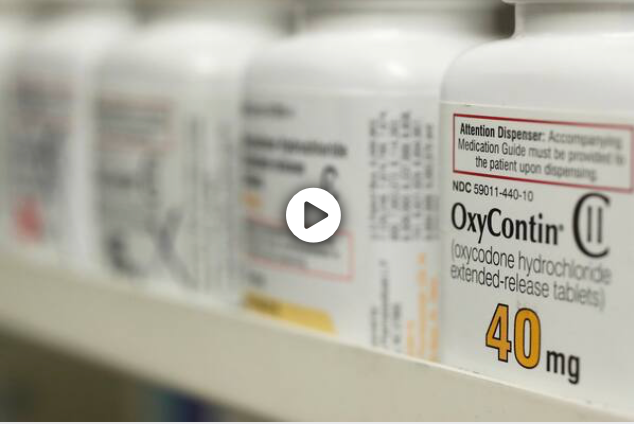
WASHINGTON – The Justice Department announced a historic $8.3 billion settlement Wednesday with OxyContin-maker Purdue Pharma, capping a long-running federal investigation into the company that, for critics, became a leading symbol of corporations profiting from America’s deadly addiction to opioid painkillers.
As part of the deal – the largest such settlement ever reached with a pharmaceutical company, officials said – Purdue Pharma agreed to plead guilty to three felonies. But state authorities and families who have lost loved ones to their products said the Justice Department’s terms, which include a $225 million civil settlement with the billionaire Sackler family that once ran the firm, are too lenient.
Wednesday’s announcement comes as the Justice Department has pushed to settle a number of outstanding investigations involving major corporations. Administrations often seek to resolve significant cases as they near the possible end of their time in office, and with Election Day drawing near, the Trump administration has pushed to finalize a number of such matters this month. A multibillion-dollar settlement with Goldman Sachs over alleged financial misdeeds is expected to be announced later this week.
While numerous other lawsuits and court fights over opioids will continue, the Purdue Pharma settlement highlights how, for more than two decades, the widespread problem of overprescribing, diverting, and abusing pain pills raged across America while drug manufacturers, distributors, pharmacists, and doctors profited from the problem and largely deflected responsibility.
Deputy Attorney General Jeffrey Rosen said the settlement “will redress past wrongs, and will also provide extraordinary new resources for treatment and care of those affected by opioid addiction.”
Massachusetts Attorney General Maura Healey, a Democrat, said the Justice Department “failed” because justice in this case “requires exposing the truth and holding the perpetrators accountable, not rushing a settlement to beat an election. I am not done with Purdue and the Sacklers, and I will never sell out the families who have been calling for justice for so long.”
As part of the settlement, officials said, Purdue Pharma will admit in federal court in New Jersey to defrauding the United States and violating the anti-kickback statute from 2009 to 2017. The settlement includes a criminal fine of more than $3.5 billion, criminal forfeiture of $2 billion and a civil settlement of $2.8 billion.
The proposal must be approved by the bankruptcy court judge if it is to be enacted.
Federal prosecutors alleged the company, which manufactured millions of opioid pills during the height of the epidemic, paid two doctors through Purdue’s doctor-speaker program and an electronic health records company to drive up prescriptions for its opioid products, including its top seller OxyContin.
“The kickback effectively put Purdue’s marketing department in the exam room with their thumb on the scale at precisely the moment doctors were making critical decisions about patient health,” District of Vermont U.S. Attorney Christina Nolan said at the Justice Department briefing.
Purdue acknowledged the wrongdoing the company was resolving, saying Wednesday that it is a “very different company” today.
“Purdue deeply regrets and accepts responsibility for the misconduct detailed by the Department of Justice in the agreed statement of facts,” said Steve Miller, who has headed the company’s board since July 2018.
The criminal plea, officials said, does not preclude the potential for criminal charges in the future against any executive or member of the Sackler family, who own Purdue Pharma.
In a statement, family members denied criminal and civil culpability. They sought to distinguish between their ownership and leadership of the company, and the individual criminal acts of lower level managers.
“No member of the Sackler family was involved in that conduct or served in a management role at Purdue during that time period,” they said in a statement. The family’s $225 million civil settlement with the government stems from its drive, as past directors of the company, to increase OxyContin sales.
The family members – including Richard Sackler, David Sackler, Mortimer D.A. Sackler, Kathe Sackler, and Jonathan Sackler (who is now deceased) – demanded in 2012 that company executives come up with a plan to generate greater revenue in response to slumping sales, according to the settlement. They approved a new marketing plan called “Evolve to Excellence” in which “Purdue sales representatives intensified their marketing of OxyContin to extreme, high-volume prescribers who were already writing ’25 times as many OxyContin scripts’ as their peers,” the Justice Department said.
Those efforts directly led to uses of the addictive tablets that were “unsafe, ineffective, and medically unnecessary, and that often led to abuse and diversion,” the government said.
The $8 billion figure is largely symbolic – the bankrupt drugmaker is already indebted to states, communities and other creditors. The company is among numerous drugmakers and distributors embroiled in litigation over the deaths and economic devastation inflicted by the opioid epidemic. In the past two decades, more than 400,000 Americans have died of opioid overdoses.
About 2,800 cities, counties, Native American tribes and other groups have sued drug retailers, distributors and manufacturers, including Purdue, in a mammoth case that has been consolidated before a federal court judge in Cleveland. Separately, most states have sued the company in their courts, believing those venues give them a legal advantage.
By declaring bankruptcy, Purdue shielded itself from that litigation. Purdue has a tentative deal with about half the states and the lawyers representing the municipalities, but the remainder of the states want the Sackler family to contribute more. The divide is largely along party lines, with Republican attorneys general agreeing to the deal and Democratic states opposed.
Purdue has said it wanted the federal investigations settles before it finalized any global settlement of the thousands of cases.
Critics of the Sacklers and Purdue blame OxyContin for fueling the epidemic and have argued for harsher penalties. Like Healey in Massachusetts, attorneys general in the middle of litigation reacted harshly to the settlement news Wednesday.
North Carolina Attorney General Josh Stein, a Democrat, said he doesn’t support the settlement because it “does not force the Sacklers to take meaningful responsibility for their actions. A real agreement to resolve these cases would force the Sacklers to pay more and would provide funding to help pay for the treatment and programs people need to get well.”
“Today’s deal doesn’t account for the hundreds of thousands of deaths or millions of addictions caused by Purdue Pharma and the Sackler family,” New York Attorney General Letitia James wrote in a statement. “Instead, it allows billionaires to keep their billions without any accounting for how much they really made.”
With the federal government now in line with other creditors, it is unclear what money will remain for states, cities and towns to fund addiction recovery programs and supply overdose reversal medication, said Carl Tobias, a professor at Richmond University School of Law.
“If the federal government actually does get any of these resources, is there anything left for the states?” Tobias asked.
Purdue Pharma filed for bankruptcy in September 2019, as it faced thousands of civil lawsuits brought by states, counties and cities across the country. As part of the bankruptcy proposal, the Sackler family has agreed to relinquish ownership of the company, which now has a shrinking base of revenue amounting to a few hundred million dollars a year. It would be reestablished as a for-profit public trust corporation with the goal of distributing anti-addiction and overdose rescue drugs.
The family is not part of the bankruptcy filing, but it has asked the court to be shielded from lawsuits as part of their agreement to a proposed bankruptcy settlement, which would include a family contribution of $3 billion.
States have hotly contested the request for the family’s shield from lawsuits, contending it should pay more. A company-hired consultant has said that Sackler family members paid themselves up to $13 billion from the company.
The modern version of the family-owned company, based in Stamford, Conn., got its start in 1952 when three brothers – Arthur, Raymond, and Mortimer – bought it. The Purdue Pharma affiliate was founded by two of the brothers, Raymond and Mortimer, in the early 1990s. It introduced OxyContin in 1996.
The company aggressively marketed the drug and its timed-release properties to doctors for use in patients with chronic pain. But it was soon blamed for contributing to a spike in addiction and was investigated by federal and state authorities who said it helped fuel a nationwide crisis.
In 2007, Purdue Frederick, an associated company, and three of its executives, none of them Sackler family members, pleaded guilty to deceptive marketing charges.
Gary Mendell, who lost his son Brian in 2011 to suicide after years of an opioid addiction, said he supports the settlement’s proposal to reestablish the company as a public trust corporation to ensure that funding is devoted to advanced treatment programs.
“The most important thing is that we prevent parents from having to bury a child,” Mendell said. “It’s very important now to use this funding to apply toward treatment that is based on science, to help those that are addicted get care that will help them live full and fulfilling lives, and also use it to change the way that society thinks about this disease.”
By The Washington Post · Ian Duncan · NATIONAL, BUSINESS, HEALTH, TRANSPORTATION, US-GLOBAL-MARKETS, HEALTH-NEWS
A Texas woman died of covid-19 while she was on board a Spirit Airlines flight heading home to Dallas from Las Vegas in late July, officials said this week.
The Spirit flight left Las Vegas on the evening of July 24, bound for Dallas-Fort Worth International Airport and was diverted to Albuquerque because the woman was unresponsive, said Stephanie Kitts, a spokeswoman for Albuquerque International Sunport. The woman was dead by the time she arrived, Kitts said.
The woman, who was 38, fell unconscious on the flight and stopped breathing, according to a police report documenting the incident. A member of the flight’s crew tried to administer CPR and passed out from exhaustion, according to the report.
When the plane landed, emergency crews carried the woman from the jet on a gurney and tried to resuscitate her but gave up after several minutes.
The Dallas County Judge’s Office, which first disclosed the woman’s death, said she had an underlying medical condition. The investigation into her death by officials in New Mexico concluded that her cause of death was a covid-19 infection, contributed to by asthma and morbid obesity.
Airport managers in Albuquerque did not learn until later that the woman had covid-19, so the case was handled as a typical medical diversion, Kitts said. Officials in Dallas County added the woman to their virus death toll on Sunday.
“She expired on an interstate airline flight, and did have underlying high risk health conditions,” the county said in a new release updating its tally.
Erik Hofmeyer, a spokesman for Spirit, offered the airline’s condolences to the woman’s family and friends. He said that the airline remains confident in its protocols for handling coronavirus cases and that it works with the Centers for Disease Control and Prevention on any contact-tracing requests.
“Our Flight Attendants have in-depth training to respond to medical emergencies and utilize several resources, including communicating with our designated on-call medical professionals on the ground, using onboard medical kits and personal protective equipment, and receiving assistance from credentialed medical personnel traveling on the flight,” Hofmeyer said.
It’s unknown how many people where on the flight or whether they were notified that they might have been exposed to the virus. Spirit referred questions about any contact tracing to the CDC.
The CDC has said it has investigated about 1,600 cases of people who traveled while they posed a risk of spreading the coronavirus, identifying 11,000 people who were potentially exposed. It wasn’t immediately clear whether the agency investigated the case of the woman who died on the Spirit flight.
The New Mexico Office of the Medical Investigator, which handles unusual deaths in the state, responded to the airport and investigated the woman’s death, said Alex Sanchez, a spokeswoman for the office. The office’s report shows that the woman was tested for the coronavirus as part of the investigation.
“SARS-CoV-2 (COVID-19) has been shown to be more severe in people with comorbidities such as obesity and asthma,” a medical investigator wrote. “The manner of death is natural.”
A relative traveling with the woman who died told police she had been suffering from shortness of breath, but it’s not known whether she was aware that she was infected with the coronavirus. The relative declined to comment when reached by phone.
Officials in Dallas initially said the woman died in Arizona, a detail that was widely reported, before confirming that she actually died in New Mexico.
Although it appears to be an extreme case, the woman’s death was disclosed as airlines continue to try to convince potential passengers that flying is safe during the pandemic. Trade organizations have stressed that there have not been confirmed cases of people catching the virus on planes in the United States and that only a few cases have been documented globally.
Nevertheless, passenger numbers continue to be down considerably from normal times as businesses curtail travel and some states impose quarantine requirements on travelers.




 23 ตุลาคม 2563 – 13:50 น.


 President Donald Trump and Democratic presidential candidate Joe Biden participate in the final presidential debate on the campus of Belmont University on Oct. 22, 2020, in Nashville, Tenn. MUST CREDIT: Washington Post photo by Jabin Botsford