Taylor Swift thanks fans for her happiness, as she wins big at the AMAs
MONDAY, NOVEMBER 21, 2022
Pop superstar Taylor Swift won the most prestigious honour on Sunday (November 20) at the American Music Awards when she was named artist of the year at the world’s largest fan-voted ceremony.
The “Anti-Hero” singer thanked voters for supporting her after releasing four original albums and two re-recordings in the last three years.
“The more music I made and the more music I put out, the happier I was, the more I just kept that channel open and just kept creating, kept making things. And the more that happened, the more you guys were like, yeah, I keep doing it. And the happier I was. So, I have the fans to thank, essentially for my happiness, and I love you more than I can say,” she said on stage at the awards show in Los Angeles.
Earlier, Swift’s re-recording of her 2012 record “Red” took the trophy for a favorite pop album. The 32-year-old singer has been making new versions of albums from her past after a dispute with her former record label.
Swift did not mention last week’s controversy over Ticketmaster’s sales for her upcoming tour, which were filled with glitches and prompted the company to apologize to her.
In the artist of the year category, Swift triumphed over formidable names including Beyonce, Harry Styles, The Weeknd, Drake, Adele and Bad Bunny.
Singer Pink opened the awards show dancing and singing on roller skates to her upbeat song “Never Gonna Not Dance Again.”
Dove Cameron, a former Disney Channel actress who reached the Billboard charts this year with the pop single “Boyfriend,” earned the first trophy of the night with her best new artist win.
Collecting her award, she thanked the LGBTQ community and spoke of the importance of visibility, after a gunman opened fire inside an LGBTQ nightspot in Colorado Springs late on Saturday (November 19), killing at least five people and injuring 25 others
“On the heels of the tragedy that happened at Club Q in Colorado Springs, I want to remind everyone how important queer visibility is and how important our community is,” she said.
Machine Gun Kelly, wearing a purple suit with long silver spikes, was named favorite rock artist.
Thailand was among the last countries to secure broadcasting rights for the 2022 World Cup, signing a contract just “two days” before the tournament began.
But there was a problem with the broadcast distribution even before the first match kicked off within a few hours of signing the deal, creating an unsavoury controversy.
The Nation offers a clear insight into the whole process of acquiring the rights and the controversy over the distribution of matches for broadcast.
Thai people have been watching the event for free
• Thailand started broadcasting the World Cup in 1970, 52 years ago, but initially it was only the opening match, the semi-finals, and the final.
• From 1990 to 2018, Thai people could watch every match of the World Cup for free while people in other countries have to pay for special pay-per-view packages on cable TV if they want to watch every match.
“Must-have” rule, the cause of the fiasco
• When there was a fiasco over telecast rights for the 2014 World Cup, the National Broadcasting and Telecommunications Commission (NBTC) passed a “must-have” rule. The rule stipulates that Thai people must be able to watch seven sports tournaments for free. They include: the Southeast Asian Games, Asian Games, Olympic Games, and also the football World Cup.
The “must-have” rule discouraged private companies from buying broadcasting rights of these big sports events because they could not sell TV packages for profit and were forced to broadcast for free, which was not worth the investment.
A funding crisis
• Fifa, football’s world governing body, does not itself sell broadcasting rights of the World Cup. It has an agency, Infront, which is responsible for selling them.
Infront set the price of broadcasting rights for Thailand at 1.36 billion baht with a tax of 240 million baht, or 1.6 billion baht in total, an absurdly high price.
The pricing criteria is determined by the market value in each country and the purchase price for Thailand for the 2018 World Cup was 1.4 billion baht in total.
• Lacking a budget to acquire the rights, and with no private company coming forward to buy them, NBTC’s board decided to approve a budget of only 600 million baht from the Broadcasting and Telecommunications Research and Development Fund for Public Interest to purchase broadcasting rights. The Sports Authority of Thailand (SAT) was left with the task of finding the remaining 1 billion baht.
• Several private companies joined together to pay the remaining amount. They included True (300 million baht), PTT (100 million baht), and Thai Beverage (100 million baht).
With this funding of 500 million baht added to the NBTC’s contribution of 600 million baht, the total added up to only 1.1 billion baht, well short of the quoted price. The SAT tried to negotiate a lower price but Infront rejected their plea as they were worried other countries might use the same method.
• Several sectors had to step up including Khunying Patama Leeswadtrakul, a member of the International Olympic Committee, who talked with Fifa and stated that the World Cup is important for Thai people and will create the dream for youths to love football and sports. The Football Association of Thailand also sent a letter to Fifa.
It helped the governor of the Sports Authority of Thailand to negotiate. Fifa discussed with Infront again and agreed to lower the price to 1.18 billion baht (US$33 million), or 1.4 billion baht after tax.
With this, Thailand was the last country to obtain broadcasting rights for the 2022 World Cup on November 18, shortly before Fifa’s deadline expired.
Digital television operators up in arms
Even after Thailand obtained broadcast rights, there was a problem of broadcast distribution. The Association of Digital Television Broadcasting (ADTEB) submitted a complaint to the NBTC, claiming discrimination by the SAT which allowed True to broadcast on every platform. The association asked the telecom watchdog to review the broadcast rights. It argued three points in its submission to the NBTC:
1. A contribution of 600 million baht to acquire the rights came from the Broadcasting and Telecommunications Research and Development Fund for Public Interest.
The budget was from television operators to support, promote, study, and develop broadcasting and that is why they also supported the purchase.
The ADTEB said that the funding supported the purchase of rights for 64 matches, not 32 matches, and accounted for 40 per cent of the total budget needed for acquiring the rights.
However, private broadcaster True was allowed to select important matches, which reflected inequality and unfairness.
2. True contributed 300 million baht for purchase of the broadcasting rights but the company got exclusive broadcasting rights on all channels and platforms and was able to choose 32 matches including advertisement minutes from broadcasting channels.
The NBTC had contributed 600 million baht with a resolution that the broadcast rights of all 64 matches be distributed equally.
However, they distributed only 32 matches so ADTEB viewed the proportion as unfair and not equal while it was also beneficial to a single private company.
3. The SAT held a meeting to distribute broadcasting rights on Saturday from 10am to 4pm. It allowed the main sponsor, True, to choose 32 matches and left the balance 32 matches to other channels.
The ADTEB said that the association and its members had conveyed to the SAT several times that the practice was unfair and unequal, but the SAT had ignored their objections.
Has the ref’s watch stopped? Mystery of added time at World Cup solved
TUESDAY, NOVEMBER 22, 2022
Fans confused over why Monday’s three World Cup matches ended with a combined 59 minutes of added time have new Fifa guidelines to thank.
The match between England and Iran alone lasted almost 30 minutes beyond the 90-minute mark, or the equivalent of the extra-time period in the knockout stage.
The time added in the first half was understandable, given the long stoppage needed to treat Iran goalkeeper Alireza Safar Beiranvand after he suffered a head injury with concussion.
However, in the second half, despite only a brief halt in play when England defender Harry Maguire got injured, another 13 minutes was added to the clock.
Fans scratching their heads got the explanation for the sudden increase in stoppage time from former Italian referee Pierluigi Collina, who now chairs the Fifa Referees Committee. Collina explained that Fifa is using a new system to calculate added time at the 2022 World Cup.
Under the new system, the match clock is stopped every time the ball goes out of play, during dead-ball situations, and for throw-ins, goal kicks, free kicks, substitutions, the referee checking VAR, and even goal celebrations.
All of these will result in time added to the match, Collina said.
The new guidelines are aimed to stop time-wasting by players and encourage the game to flow. Collina added that fans can expect to see at least 10 minutes of added time in every match.
NBTC tells True to return exclusive broadcast rights for 16 World Cup matches
TUESDAY, NOVEMBER 22, 2022
True Corporation (True) has been asked to return exclusive Fifa World Cup broadcast rights for 16 of the 32 matches it was allotted, in order to maintain fairness in match allocation, the National Broadcasting and Telecommunications Commission (NBTC) said on Tuesday.
The move came after the Association of Digital Television Broadcasting (ADTEB) filed a complaint with the NBTC over what it said was unfair distribution of rights for the 2022 World Cup matches.
The ADTEB claimed that True had been given exclusive broadcasting rights on all channels and platforms and was able to choose 32 matches including advertisement minutes from broadcasting channels, in violation of the NBTC’s resolution that all 64 matches must be distributed equally.
The 32 matches allocated to True were: the final, third-place playoff, one quarter-final, two semi-finals, four round-of-16 matches and 23 first-round matches.
NBTC acting secretary-general Trairat Viriyasirikul said the SAT will reallocate 16 matches to other digital television operators.
“It is up to the SAT to decide which matches will be reallocated,” he said, adding that True did not object to NBTC’s move.
He said people in Thailand could not watch the broadcast of the Fifa World Cup on online channels other than True because of a contract between True and SAT.
He added that the SAT will talk to True about broadcasting match highlights.
Trairat added that the NBTC had acknowledged True’s proposal to broadcast the World Cup final in high-definition system instead of standard-definition, but did not acknowledge the reason.
“The proposal is expected to be discussed at the NBTC board meeting on Wednesday,” he added.
‘I feel very good,’ says Messi ahead of probable last World Cup
TUESDAY, NOVEMBER 22, 2022
Reuters
Argentina captain Lionel Messi said he was physically ready for the World Cup in Qatar and that it will be a special occasion as his side are one of the favourites in what is likely to be his last appearance in the global tournament.
“I feel very good physically, I think I’m in a great moment, both personally and physically and I don’t have any problems,” Messi, who did light training away from his team mates on Saturday, told a news conference on Monday (November 21).
“I heard that they said I trained differently. It was because I had a knock but there is nothing strange (happening). It was just a precaution.”
The 35-year-old, who in Qatar will be playing his fifth World Cup, added that he did not prepare differently for the tournament which for the first time is being played in November and December.
“I didn’t do anything special,” the forward said.
“I took care of myself and worked as I have done all my career, knowing that this is a special moment, as this is probably my last World Cup, my last chance to achieve this great dream that I have, that we all have.”
Argentina captain Lionel Messi said he was physically ready for the World Cup in Qatar and that it will be a special occasion
The seven-time Ballon d’Or winner has enjoyed a trophy-laden career at both club and personal level but has so far failed to deliver a long awaited World Cup for his country, something many fans around the world would like to see change this time around.
“It’s a beautiful thing that many people outside Argentina want us to be champions and that it’s largely because of me,” Messi said.
“I’m grateful for the love I’ve received around the world during my career, and here in Qatar it’s another example of that.
“I don’t know if we arrive better than at other World Cups. But we’ve just won (the 2021 Copa America) and that decompresses us a lot.
“It makes us work in a different way, without anxiety about the national team and its results, and enjoying ourselves.”
Argentina kick off their World Cup campaign with a Group C opener against Saudi Arabia on Tuesday and will then face Mexico and Poland.
Iran chose not to sing anthem at World Cup opener as England take the knee
MONDAY, NOVEMBER 21, 2022
Players of Iran’s national soccer team chose not to sing their country’s anthem at their opening World Cup match against England on Monday (November 21), in an apparent show of support for protesters back home.
The players were silent as the anthem was played at the Khalifa International Stadium, where Iranian fans gathered in the stands and shouted as the music was played. Some were seen making thumbs-down gestures.
More than two months of protests in Iran, sparked by the death of a young woman in the custody of the morality police, are one of the boldest challenges to Iran’s clerical leaders since the 1979 Islamic Revolution.
Iranian state television, during its live broadcast, censored the footage of the players lining up before the match as the anthem was played.
England players took the knee ahead of kick off as a symbol of anti-discrimination, with captain Harry Kane wearing a black armband with the words “No Discrimination” on it.
England together with Wales, Belgium, the Netherlands, Switzerland, Germany and Denmark decided not wear ‘OneLove’ rainbow armbands at the World Cup under pressure from FIFA, their associations said in a joint statement on Monday.
FIFA has threatened to issue yellow cards to any player wearing the multi-coloured armband which was introduced to support diversity and inclusion.
England captain Harry Kane spoke on Sunday (November 20) of his desire to wear the armband in Monday’s Group B opener against Iran.
True says it has signed contract with SAT for exclusive online World Cup broadcasting rights
MONDAY, NOVEMBER 21, 2022
Telecom giant True Corporation Plc on Monday issued a statement clarifying why people in Thailand could not watch the broadcast of the Fifa World Cup on online channels other than True.
In the statement, True said its three subsidiaries — True Digital Group, True Visions Group, and True4U Station — have entered into a contract with the Sports Authority of Thailand (SAT) to purchase the rights to broadcast the Fifa World Cup being held in Qatar from November 20 to December 18, so that Thai viewers could watch the event on free TV.
The SAT had received a budget of 600 million baht from the National Broadcast and Telecommunications Commission (NBTC), but it was not enough to cover the cost of broadcasting rights, hence True had contributed 300 million baht in exchange for exclusive broadcasting rights on all channels and platforms.
“Under the contract with the SAT, True possesses the broadcasting rights of Fifa World Cup Final 2022 via cable, satellite, IPTV, Internet, mobile, OTT, and terrestrial transmissions,” said the statement. “However, under the NBTC’s must-have rule of 2012, only the broadcast via terrestrial transmission must be made available for free to the public.”
True said it therefore reserves the exclusive right to broadcast the event via channels and platforms other than terrestrial TV, to comply with the must-have rule as well as intellectual property laws.
Earlier on Monday, the Association of Digital Television Broadcasting (ADTEB) filed a complaint with the NBTC over what it said was unfair distribution of rights for the 2022 World Cup matches.
ADTEB claimed that True got exclusive broadcasting rights on all channels and platforms and was able to choose 32 matches including advertisement minutes from broadcasting channels, in violation of the NBTC’s resolution that all 64 matches must be distributed equally.
Unhappy digital TV broadcasters complain to watchdog about World Cup rights distribution
MONDAY, NOVEMBER 21, 2022
The Association of Digital Television Broadcasting (ADTEB) on Monday filed a complaint with the National Broadcast and Telecommunications Commission (NBTC) over what it said was unfair distribution of rights for the 2022 football World Cup matches.
The NBTC had approved a contribution of 600 million baht to acquire the broadcasting rights for the Fifa World Cup.
The ADTEB said there was unfairness in the distribution of broadcast rights after the first meeting on Thursday. It said that as per the agreement, the broadcasting rights of 64 matches were to be distributed equally to digital television operators.
The ADTEB submitted three points to the NBTC to investigate and consider whether the distribution was fair:
The budget was from television operators to support, promote, study, and develop broadcasting and that is why they also supported the purchase.
The ADTEB said that the funding supported the purchase of rights for 64 matches, not 32 matches, and accounted for 40 per cent of the total budget needed for acquiring the rights.
However, private broadcaster True was allowed to select important matches, which reflected inequality and unfairness.
● True contributed 300 million baht for purchase of the broadcasting rights but the company got exclusive broadcasting rights on all channels and platforms and was able to choose 32 matches including advertisement minutes from broadcasting channels.
The NBTC had contributed 600 million baht with a resolution that the broadcast rights of all 64 matches be distributed equally.
However, they distributed only 32 matches so ADTEB viewed the proportion as unfair and not equal while it was also beneficial to a single private company.
● The Sports Authority of Thailand (SAT) held a meeting to distribute broadcasting rights on Saturday from 10am to 4pm. It allowed the main sponsor, True, to choose 32 matches and left the balance 32 matches to other channels.
The ADTEB said that the association and its members conveyed to the SAT several times that the practice was unfair and unequal, but the SAT had ignored their objections.
The association then decided to approach the NBTC’s board that its members did not agree with the SAT, and had unwillingly accepted the decision at Saturday’s meeting as it would affect the broadcast on Sunday.
The association said that it did not accept the SAT’s principles and methods in distributing the broadcasting rights and asked the NBTC to investigate and consider their complaint.
Experts say Thailand’s ‘must carry’ rule must end after World Cup fiasco
MONDAY, NOVEMBER 21, 2022
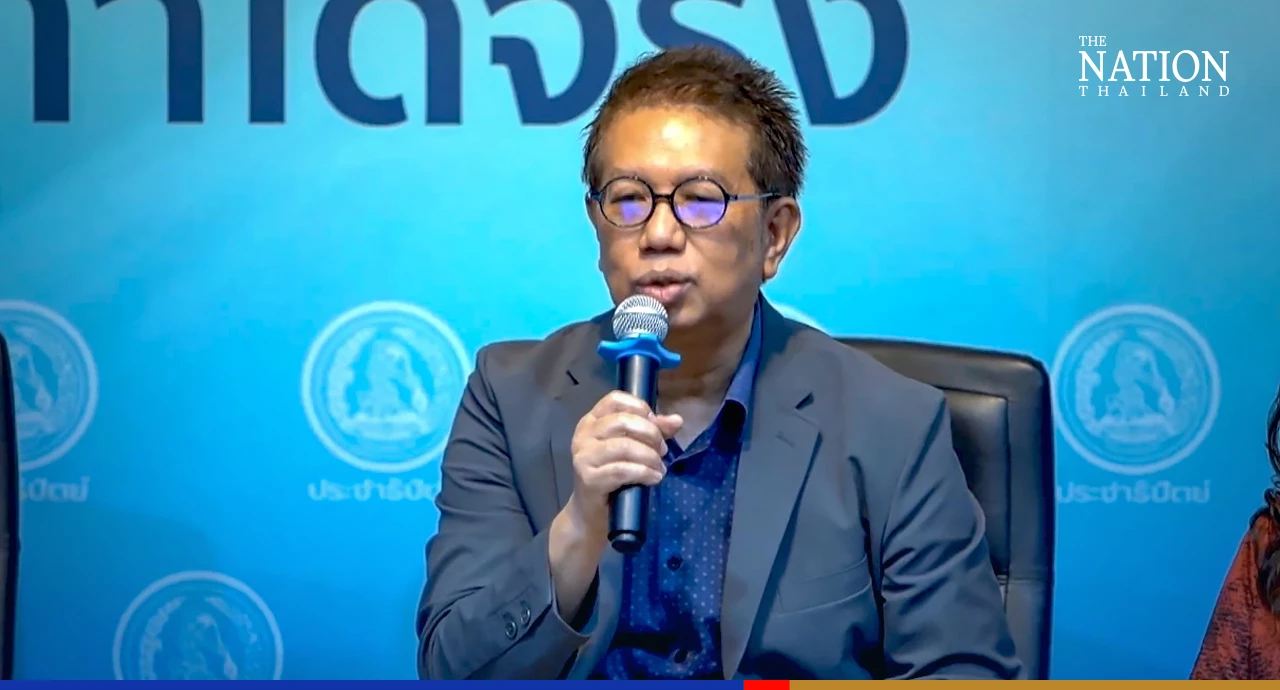
Experts at a seminar slammed the way Thailand obtained broadcasting rights for the 2022 Fifa World Cup as a fiasco on Sunday.
The seminar was held by the Democrat Party to air complaints after the rights were purchased for 1.2 billion baht under the “must carry” rule for free broadcasts.
CP’s broadcasting arm True Corp was then allocated half of the World Cup’s 64 matches including the final, which sparked complaints from other broadcasters.
Paisan Limsathit, a legal expert from Thammasat University, said the NBTC had overstepped its jurisdiction by organising the purchase, which should have been managed by the Sports Authority of Thailand (SAT).
He explained that the NBTC is responsible for regulating broadcasters but that did not include purchasing broadcasting rights or approving funds to do so from the Universal Service Obligation fund.
Paisan said the rights should have been purchased with money from the National Sports Development Fund (NSDF) or the private sector.
Kemmatat Poldej, former president of the Mass Communication Organisation of Thailand (MCOT), said broadcasting licences for sport were the most expensive. Higher viewership means higher licence prices, so their purchase needs to be discussed first, he added.
Watanya Bunnag, former manager of the Thailand national under-23 football team, pointed out that money to buy the rights came from the sale of digital broadcast licenses, which are a national asset. She added that the NSDF was also funded by the national budget.
Watanya, a Democrat candidate for the next election, explained that Thailand had never faced difficulties obtaining broadcasting rights before the digital television era because back then, television channels gathered purchase budgets and found revenue from sponsors.
The problems only arrived with the NBTC’s “must have/must carry” rule in the digital television era, as the regulator’s attempt to disrupt the market had backfired, she said.
Watanya reiterated her call for the NBTC to review the “must carry” rule to avoid future problems.
Tech Review: Sony Xperia 5 IV: Every budding photographer’s dream come true
TUESDAY, NOVEMBER 22, 2022
A powerful smartphone that takes beautiful snapshots to share instantly is the dream for most users, but the reality in their pockets can often be disappointing.
Step forward Sony’s new Xperia 5 IV – it may just be the holy grail snap-happy people may be seeking.
The fourth edition of Xperia 5 is powered by the fast Qualcomm Snapdragon 8 Gen 1 Mobile Platform chipset with a hefty working memory of 8 gigabytes and 256GB storage.
It’s 6.1-inch wide, 21:9 format display using a 120-Hertz OLED panel with a 2,520×1,080 pixel resolution serves as a perfect viewfinder for both still photos and videos.
Enthusiasts will love that Sony has packed Xperia 5 IV with the advanced photography technology it developed for its famous Alpha series cameras.
With a ZEISS-quality lens calibrated specially for this smartphone and its Exmor RS sensors, the new Xperia 5 IV can make snapping and sharing a joyful experience.
The smartphone camera comes with three lenses and three focal lengths, each with a 12-megapixel resolution. For ultrawide focuses of 16mm, it uses a 1/2.5-inch Exmore RX sensor, a 1/1.7-inch sensor for a 24mm standard focal length and a 1/3.5-inch sensor for a tele-focal length of 60mm. Each lens is bright with a wide aperture of F1.7 to F2.4.
The smartphone comes packed with Sony’s own photography software called Photo Pro, which offers two modes – Basic and Auto/P/SM modes.
In most cases, you can use the Basic mode to snap regular photos or clips, but if you want to be more creative and produce high-quality clips or pics, you can opt for the Auto/P/S/M modes.
For the Basic mode, the software uses AI technology to detect scenes and lighting conditions before it adjusts shooting parameters automatically. The AI can choose from shooting formats like gourmet, macro, soft snap, infant, backlight portrait, backlight, night portrait, night scene, low light, landscape and spotlight and display the respective icon on the screen.
While testing the Xperia 5 IV, I found that it managed to easily capture top-quality shots using Basic mode. It effectively handled difficult backlit conditions effectively capturing dark subjects clearly with a brightly lit background.
The Auto/P/S/M modes were also fun, as they turn the phone’s display into a large viewfinder with control buttons on the right for horizontal shooting.
However, the buttons take up almost half of the screen if you try to take a vertical picture.
The Auto mode is much like the Basic mode when it comes to AI detecting scene types and automatically adjusting shooting parameters, though the Auto mode gives you more control.
For instance, you can use the control panel on the right-hand side to select between single-shot autofocus (AF) and continuous AF.
You can also choose between a wide and centre focus, as well as the drive mode, which offers single and continuous shooting both in high and low quality, self-timer and HDR continuous shooting.
While testing, I used the continuous shooting Hi mode to capture shots of flying seagulls. Normally, it’s difficult to capture clear, in-focus shots of flying birds, but I used the continuous shooting mode to capture bursts of images before selecting those that caught the birds in focus with bright colours.
If you are an experienced photographer, you will enjoy the P/S/M modes or Programme auto, Shutter speed priority and Manual exposure.
The P mode gives you more control compared to the Auto mode. For instance, you can select a white balance and ISO setting. You can even select a metering mode among multi, centre and spot modes of light metering, as well as adjust the exposure value to make the image brighter or darker.
In S mode, you select the shutter speed and the camera will adjust the rest of the parameters for you or you can try to set some parameters.
The M mode is more advanced as the Xperia 5 IV gives you full control from shutter speed to other parameters.
The smartphone is also capable of shooting 4K HDR video at a high frame rate of 120fps and also comes with a 12MP front camera with an f2.0 lens for beautiful selfies.
Its display with a native refresh rate of 120 Hertz is very good for enjoying movies and playing games.
The display function comes with Motion Blur Reduction technology that reduces the blurriness of fast-moving pictures and the phone also comes with a Game Enhancer function that helps adjust various settings so you can play graphics-intensive games smoothly.
The phone also comes with three apps for video and music creators. Music Pro lets you record and edit your compositions like you are in a studio, while the Cinema Pro and Video Pro apps allow you to shoot and edit your clips like a pro.
The Xperia 5 IV can also function as a high-quality digital music player, capable of playing high-resolution audio (Hi-Res Audio) formats.
I played the old Eagles classic “Hotel California” in Flac 24bit/192kHz Hi-Res Audio format, using Audio-Technica ATH-ANC700BT headphones that support Hi-Res Audio and heard it delivered with clarity, good details and deep bass.
The CPU chipset of the phone is really fast thanks to its eight cores, one running at 3GHz, three at 2.50 GHz and the remaining four at 1.79GHz, according to Geekbench 5 benchmarking app. The app reported that the phone has a single-core score of 1,146 and a multi-core score of 3,311.
As a smartphone, Sony Xperia 5 IV runs on the Android 12 operating system and supports the 5G network.
Its large 5,000mAh battery is packed with fast-charging technology which has the phone getting a 50% charge in 30 minutes.
Sony Xperia 5 IV has a suggested retail price of 39,990 baht, though early birds will get wireless LinkBuds S worth 7,490 baht or an 8,000 baht discount. The offer is only valid until November 30.
Key specs
OS: Android 12
Networks: 2G, 3G, 4G, 5G
CPU: Snapdragon 8 Gen 1 Mobile Platform
Memory: 8GB RAM
Storage: 256 GB UFS
Rear camera: Triple cameras with 12MP resolution each with f1.7, f2.2 and f2.4 lens
Front camera: 12MP with f2.0 lens
Display: 6.1-inch 120hz OELD panel with 2520×1080 pixel resolution



 Argentina captain Lionel Messi said he was physically ready for the World Cup in Qatar and that it will be a special occasion




 If you are an experienced photographer, you will enjoy the P/S/M modes or Programme auto, Shutter speed priority and Manual exposure.
 The smartphone is also capable of shooting 4K HDR video at a high frame rate of 120fps and also comes with a 12MP front camera with an f2.0 lens for beautiful selfies.
 I played the old Eagles classic “Hotel California” in Flac 24bit/192kHz Hi-Res Audio format, using Audio-Technica ATH-ANC700BT headphones that support Hi-Res Audio and heard it delivered with clarity, good details and deep bass.
