Hun Sen speaks to Zelensky, agrees to send Cambodian deminers to Ukraine
WEDNESDAY, NOVEMBER 02, 2022
Prime Minister Hun Sen said that Cambodia would send deminers to Ukraine to provide training in mine and unexploded ordnance (UXO) clearance, while also accepting his Ukrainian counterpart’s invitation to visit the country at a “suitable time”.
Hun Sen made the pledge during a phone conversation with Ukrainian President Volodymyr Zelensky on November 1.
According to a press statement released by the Ministry of Foreign Affairs and International Cooperation, Cambodia will provide the demining training in collaboration with Japan, though it did not specify the timeline for the dispatch to the country at war with Russia.
Hun Sen also expressed concern over the recent attacks by the Russian military on the Ukrainian capital Kyiv and other regions, which had caused heavy casualties, damage to civilian infrastructure, power outages and water shortages.
He shared the suffering that Cambodia had gone through, and urged all parties to the conflict to strive for a “comprehensive” compromise so that Ukraine can regain peace, stability, territorial integrity and development.
Zelensky thanked Cambodia for co-sponsoring the UN General Assembly resolutions against Russia’s invasion and annexation of Ukrainian regions.
On the diplomatic front, Zelensky agreed to Hun Sen’s proposal to appoint ambassadors between the two countries.
“Onigiri” photos campaign helps provide 6.8 million meals to children in Africa, Asia
WEDNESDAY, NOVEMBER 02, 2022
“Onigiri” rice ball photos posted on social media through a campaign launched in 2015 by a Japanese nonprofit organization have helped provide a total of 6.8 million school meals to African and Asian children in need.
Under the “Onigiri Action” annual autumn campaign by Table for Two International (TFT), supporting entities donate 100 yen (25 baht) per photo post to deliver five school meals via local partners.
Onigiri is a staple traditional Japanese food made of white rice formed into triangular or cylindrical shapes and often wrapped in nori.
Any onigiri is acceptable, whether homemade or shop-bought, and anyone can post photos any number of times, free of charge.
TFT said more and more people in and outside Japan are taking part in the campaign as they can easily extend aid by simply posting photos on such social media as Twitter with the hashtag “#OnigiriAction” or on a dedicated website.
This year, the campaign is being held for a month through November 6, bringing together a record 37 supporting entities, including major convenience store chain operator 7-Eleven Japan Co and the prefectural government of Miyagi, northeastern Japan.
TFT said that thanks to school meals, more children in areas it supports now go to school and that their school performance is dramatically improving. Countries to which school meals have been sent through the campaign include Rwanda, Kenya, Tanzania and the Philippines.
The campaign has also helped improve the living standards of local farmers who provide food materials used in school meals.
After the start of the novel coronavirus pandemic, many schools closed, and the number of children diagnosed with nutritional deficiencies went up sharply as school meals were the most nutritious meal of the day for many of them.
Despite the pandemic easing, hunger issues remain severe across the world. According to the United Nations, the number of people affected by hunger reached 828 million globally in 2021, up by 150 million since the outbreak of the pandemic.
Food price surges triggered by Russia’s invasion of Ukraine are also dealing a blow to efforts to tackle malnutrition, making it harder to achieve “zero hunger”, one of theUN Sustainable Development Goals, or SDGs, which should be met by 2030.
TFT, which aims to resolve hunger issues in developing countries and obesity problems in developed nations simultaneously, is calling for more people and entities to join the support effort.
For this year’s campaign, TFT has set a target of providing 1.6 million school meals, the highest number since its launch and equivalent to annual school meals for 8,000 children.
“We are keen to unite our efforts to resolve social issues,” says Seiichi Aoyama, executive officer of 7-Eleven Japan, which sold about two billion onigiri rice balls last fiscal year. “Through onigiri, we hope to help achieve SDGs.”
Complex Myanmar crisis hangs over Asean summits, no immediate end in sight: analysts
WEDNESDAY, NOVEMBER 02, 2022
The Myanmar crisis stemming from the removal of former civilian leader Aung San Suu Kyi from power and subsequent violent conflicts between her supporters and the military remain a mounting concern for Asean member states with no immediate end in sight, analysts said.
Cambodian political observers generally believe the country, as the rotating chair of Asean this year, has achieved some fruitful results in its work on the Myanmar situation as it prepares to hand over the task to Indonesia in 2023.
Meanwhile, as Cambodia prepares to host the 40th and 41st Asean summits and related meetings in Phnom Penh on November 10 to 13, the Myanmar crisis is expected to be a central topic for discussion, with tact and diplomacy most likely required on the Cambodian side as was the case in previous talks.
Local pundits said they see it as a success that Cambodia has been able to maintain Myanmar’s membership within the Asean family at all, given the hard stances taken by some of the bloc member states and Myanmar’s lack of progress on the five-point consensus (5PC) devised as the guiding principles for solving the crisis.
Kin Phea, director of the International Relations Institute at the Royal Academy of Cambodia, said Cambodia and Asean have worked well together for nearly a half-century now, in line with the kingdom’s policy of strong support for multilateral diplomacy in the region.
“Throughout the many decades of its post-colonial era, Myanmar has been under military power and it has not been easy to get the juntas to give up power,” he said.
Phea noted that some of Myanmar’s neighbouring countries have also been barriers to resolving its internal political crisis, citing India as an example.
He claimed India does not want to see political stability in Myanmar as it serves its geopolitical strategy and that China and the US also have differences over the crisis.
First, Cambodia created the Asean special envoy position held by Minister of Foreign Affairs and International Cooperation Prak Sokhonn. Second was the visit to Myanmar by both the Asean special envoy and Prime Minister Hun Sen, who urged each side to end the conflict. The third was paving the way for Asean’s provision of humanitarian assistance directly to Myanmar, which has helped avert even greater tragedy from occurring.
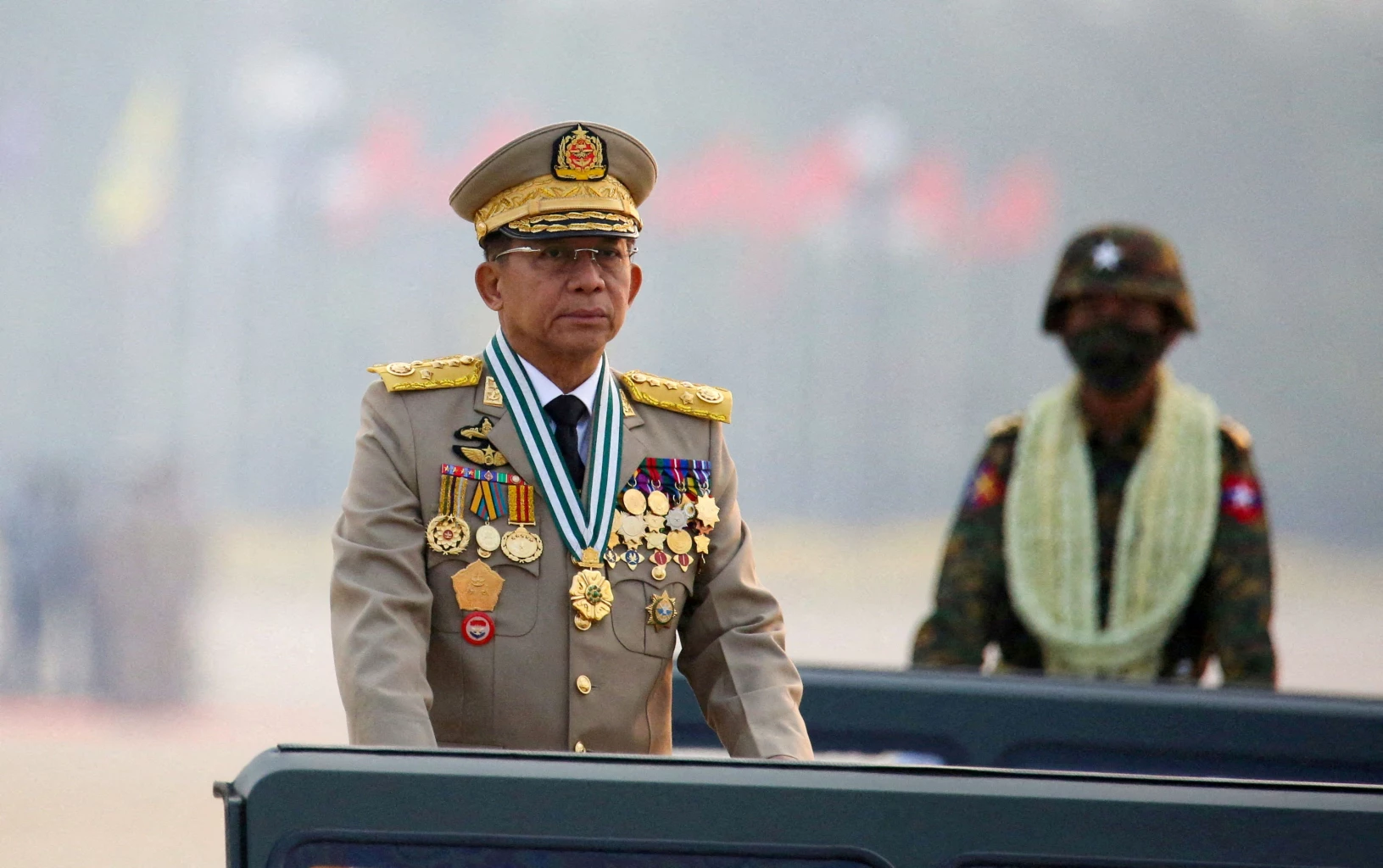
Bunna said these were all good elements to finding a solution, though they have not come to full fruition yet. He explained that Myanmar, currently led by the State Administration Council (SAC) with Senior General Min Aung Hlaing as chairman, does not seem interested in making any political concessions or negotiating with the other parties to the conflict, which has subsequently prolonged the crisis.
“We see that Russia and China’s support for the military regime is also a key reason why Myanmar military leaders remain strong despite sanctions from the international community, especially the West.
“On the other hand, Asean does not seem to be able to force a solution in a timely manner, and besides issuing the 5PC, Asean has had no other consensus on plans for solving the crisis,” he said.
With only two months remaining before Cambodia hands over the chair’s gavel, Bunna said he does not believe the country will be able to make much further progress on Myanmar aside from handing over work on the issue to Indonesia, which is said to be in the process of developing a master plan to address the crisis.
Kyodo News Agency correspondent Puy Kea said one remarkable result that Cambodia has achieved is to keep the Asean family from splitting up over the issue and losing any of its 10 members.
On the other hand, he said Cambodia has not persuaded the SAC to begin negotiations with the other parties to the conflict nor make headway on implementing the 5PC.
Kea believes that if Indonesia dares to use “hot” measures against Myanmar during its turn in the rotating chairmanship, then Asean could be faced with a bad scenario in which Myanmar might withdraw from the organisation in protest, as the nation was famously isolationist in its approach and closed off for decades by its military regime.
Rim Sokvy, co-founder and chairman of foreign relations research institute The Thinker Cambodia, believes Asean uses mechanisms that are too complex and require total consensus on most measures while some of the bloc’s members actively disagree on certain aspects of how to approach the Myanmar crisis.
“Obviously, under the 5PC, Asean has a common position in supporting negotiations between the parties to the conflict in Myanmar. But in reality, Asean has only met with the military side through Min Aung Hlaing and has not been given access to the others.
“So that is a serious issue – that Asean has not been allowed to meet with the other parties to the conflict, such as members of the former civilian government led by Suu Kyi, while Asean meetings or visits [by the chair’s special envoy] seem to have had little effect,” he said.
Thong Mengdavid, a researcher at the Asian Vision Institute’s Mekong Centre for Strategic Studies, said the Myanmar issue has given Asean members a lot of headaches and caused many disagreements. But Cambodia as the rotating chair of Asean has to continue to embrace its role and its responsibility in leading discussions to find a common solution and position for the bloc on the matter.
“At the upcoming Asean Summit, I feel that Cambodia must remain committed to urging Myanmar’s non-political representatives to attend, despite some disagreements over the composition of Myanmar’s delegation.
“Asean has no choice but to urge Min Aung Hlaing to stop the military violence against civilians and members of other political parties in exchange for humanitarian assistance from Asean and the UN,” he said.
Asean unity is being tested and it remains to be seen whether the bloc can continue to stand on the principle of centrality, he said, adding it would have to answer the question of how far it would go to put pressure on Myanmar.
He said that at the November summit, Cambodia must focus on coordinating with other Asean members and do its utmost to urge more powerful countries to participate in resolving the crisis.
At the start of Cambodia’s chairmanship of Asean in early January 2022, Hun Sen paid a state visit to Myanmar and was heavily criticised by some in the international community who felt it was a show of support for the SAC.
But the premier countered at the time that his two-day visit was aimed only at uniting Myanmar and finding a negotiated “win-win” solution to the crisis and that Cambodia’s move as Asean chair and willingness to criticise the Myanmar leaders since then have generally substantiated his claims.
In April 2021, Asean member states agreed on the 5PC in Indonesia, namely an immediate cessation of violence, constructive dialogue among all parties, appointment of a special Asean envoy to facilitate dialogue, the provision of humanitarian assistance, and a visit by the special envoy. But the summit notably failed to call for the release of Suu Kyi and other political prisoners.
The local pundits agree that Cambodia should urge the SAC to respect its commitment to the cessation of violence called for by the 5PC and that the bloc must remain united in its approach regardless of which member holds the Asean chair.
They agreed that Cambodia should do its utmost to urge Indonesia, as Asean chair for 2023, to continue to work towards resolving the crisis peacefully.
They also want to see Asean stay united, hoping that the bloc can soon find some way to end the Myanmar crisis so that the nation of 50 million people can heal quickly and return to peaceful democracy.
A majority of the Asean populace feels satisfied with the economic benefits brought by cooperating with China but still feels “anxious” and “distrustful” about Beijing’s political and security policies, a survey by the Foreign Policy Community of Indonesia found on Monday.
The distrust, stemming from China’s perceived lack of commitment to abide by international law, has resulted in a “paradoxical” relationship between the rising superpower and Asean, experts explained.
The onus is on Beijing, they said, to remedy this scepticism if it wishes to expand its influence in the future.
More than 1,600 respondents from 10 Southeast Asian countries participated in the survey. While students made up more than half of the respondents, “elite” voices were also represented by academia, the business community and civil society groups, analysts said. The responses, while mixed in some aspects, reflected an overarching tone of anxiety and wariness.
The survey found that 68.69% of all respondents believed that trade with Beijing was “the most satisfactory area of cooperation”, while defence was ranked first in the category of the “least satisfactory” aspect of China-Asean collaboration.
Compared with the United States Indo-Pacific strategy andIndo-Pacific Economic Framework, an overwhelming majority of participants also stated that Chinese programmes – the Belt and Road, Global Development and Global Security initiatives – had made “more contributions for Asean”.
“This is the paradox of the Asean-China relationship. On one hand, we welcome and relish our close economic [ties]. But there is also an apprehension when it comes to security,” said Renato Cruz de Casto, professor at Manila’s international studies department at La Salle University.
Troubled waters
Beijing’s response to some of the region’s most pressing issues, such as the South China Sea and Mekong River disputes, have been cited as the primary reason for anxiety looming over Southeast Asia.
With regard to the statement that “China respects the national unity, sovereignty and territorial integrity of Asean countries”, nearly 40% of respondents responded with “disagree” or “strongly disagree”.
While 29.19% declined to answer, 31.36% “agreed” or “strongly agreed” with the idea.
“There is a strong [indication] of scepticism in the satisfaction [rate] for [China’s] cooperation during the consultation of the Code of Conduct [COC],” said Shofwan Al Banna, head of the University of Indonesia’s international relations department.
The South China Sea, an area with an estimated 11 billion barrels of untapped oil and trillions of cubic feet of natural gas, has been disputed by China and several Asean countries – Malaysia, the Philippines, Brunei and Vietnam – since at least the 1970s.
In 2002, Asean leaders signed the Declaration on the Conduct of Parties (DOC) in the South China Sea and used various legal mechanisms such as the 1982 United Nations Convention on the Law of the Sea to resolve the dispute, with only lacklustre results. The COC was then drafted as a follow-up to the DOC, but China’s lack of commitment to the document’s discussion has resulted in a two-decades-long rut.
Another study previously cited the South China Sea as the “most dangerous and riskiest” problem for the region in terms of regional security and economy, as a consequence of possible trade disruption and the short geographical distance to Beijing, which could prove detrimental for Southeast Asian countries – Indonesia included.
An openness to resolve the South China Sea dispute through diplomatic means would be the ultimate remedy to this “trust deficit” issue, the experts said.
“The litmus test for China is the Code of Conduct. Respecting international law would be a signal to Asean countries that it is willing to have its power constrained by international law,” Cruz de Casto suggested. “It would be a good gesture for China to sit down and finalise the negotiations.
It would go a long way to addressing the distrust issue,” added Endy Bayuni, a seasoned foreign affairs journalist and observer.
The ball is now in China’s court to earn the trust of Asean and prove that it will not be unsparing as a hegemon, the panel of experts concurred.
“[Beijing] needs to project the image that it is a benign superpower, not a ruthless one,” Endy said.
‘Holding’ peace
Addressing these concerns in a pre-recorded speech, Chinese Ambassador to Asean Deng Xijun emphasised that a deeper relationship between Beijing and the bloc would only “contribute to peace, stability, development and prosperity of the region and the world”.
“China will always be committed to its foreign policy goals of holding world peace and promoting global development,” Deng asserted.
But the world is “entering a new phase of turbulence and transformation”, Deng said, alluding to the fact that resistance from long-existing superpowers has been the primary factor of instability in the world.
“Certain countries put their own hegemonic interests above the common interest, […] blatantly pursuing their own priorities at the expense of others. […] They gang up and stir up trouble,” he claimed.
“[These] external environments [have caused] China-Asean relations [to be] full of risks and challenges.”
Prayut, Don send condolences to South Korea over Halloween tragedy
WEDNESDAY, NOVEMBER 02, 2022
Prime Minister Prayut Chan-o-cha expressed his condolences to the South Korean president over a weekend Halloween stampede in Seoul, which led to more than 150 deaths.
The Foreign Ministry said on its website on Tuesday that Prayut sent a message of condolence to South Korean President Yoon Suk-yeol.
“I am extremely saddened to learn of the Halloween stampede at Itaewon district on 29 October 2022 in Seoul, which resulted in the loss of many lives, including a Thai national,” Prayut said in the statement.
“On behalf of the Royal Thai Government and the people of Thailand, I wish to extend my heartfelt condolences to you, and through you, to the people of the Republic of Korea and the bereaved families who have lost their loved ones in this tragedy. Our thoughts are also with those injured for a speedy recovery.
“I am confident that under your leadership and supervision, the Government of the Republic of Korea will be able to return the situation to normalcy in due time. We in Thailand stand in solidarity with the Republic of Korea during this difficult time,” Prayut added.
Meanwhile, Foreign Minister Don Pramudwinai also sent a message to his South Korean counterpart Park Jin.
“I wish to express my deepest sympathy and condolences to your excellency on the tragic Halloween festivity at Itaewon district on 29 October 2022 in Seoul, which caused the loss of many lives and casualties of Koreans and foreigners, including a Thai national,” Don wrote.
“We in Thailand extend our heartfelt thoughts and prayers to the families who have lost their loved ones in this unexpected tragedy and the injured for a full and speedy recovery. As the Republic of Korea observes a national mourning period, we send our support and encouragement to the Republic of Korea and her people in overcoming this difficult moment.”
At least 154 people were killed in the crush when a huge crowd celebrating Halloween surged into Itaewon, an alley in a nightlife area in the South Korean capital Seoul on Saturday night.
At least one Thai was killed in the stampede, according to the Royal Thai Embassy in South Korea.
Baht might weaken but resistance level will be 38: market strategist
THURSDAY, NOVEMBER 03, 2022
The baht opened at 37.80 to the US dollar on Thursday, weakening from Wednesday’s close of 37.58.
The currency will likely move between 37.70 and 38.00 against the greenback during the day, Krungthai market strategist Poon Panichpibool predicted.
He speculated that the baht might be pressured to weaken as the dollar advances amid increased gold purchases as prices of the precious metal went down after the US Federal Reserve chairman signalled he would continue to increase the interest rate.
This is in line with Poon’s view that investors should beware of a volatile baht and there could be a chance the Thai currency would weaken after the Fed chairman’s statement.
Poon said the baht might weaken but its resistance level will be 38 to the dollar.
However, he said the baht will not weaken much from its resistance level while its support level would be around 37.50 to 37.60, the level that importers are waiting for to buy the dollar.
Poon advised investors to use hedging tools such as options to manage risks in a highly volatile currency market.
Thailand targets a juicy THB200 bn worth of fruit exports next year
THURSDAY, NOVEMBER 03, 2022
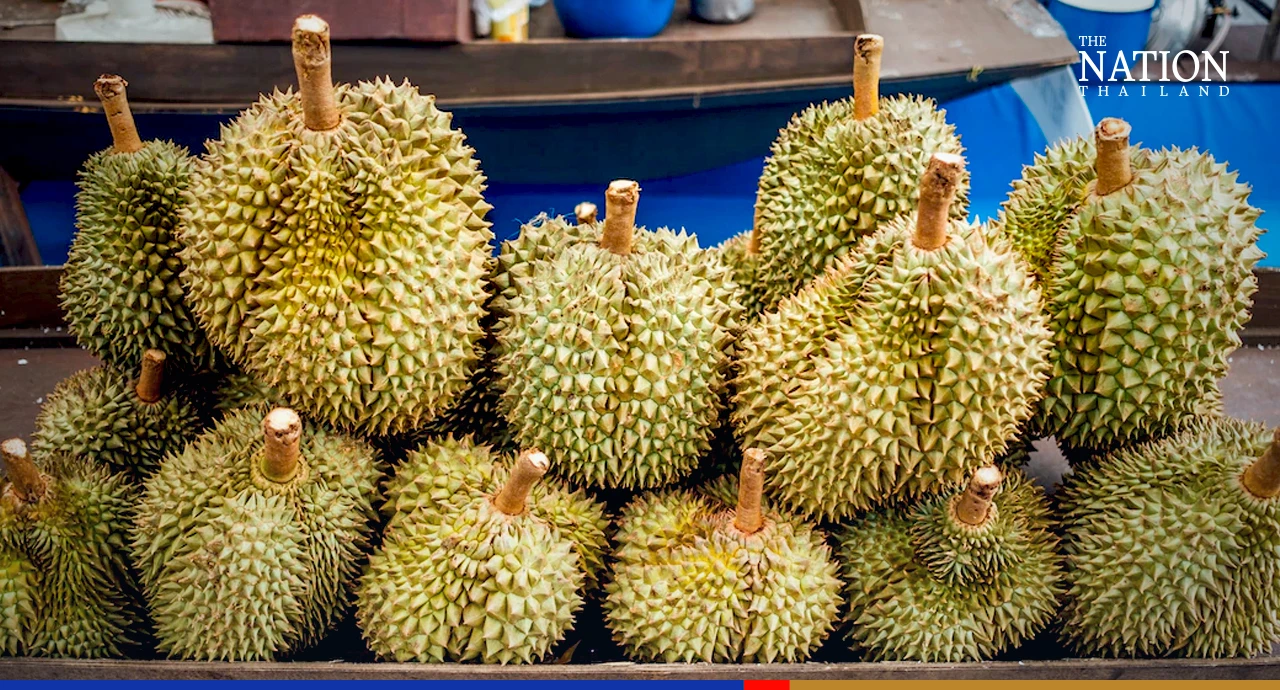
Thailand expects 200 billion baht worth of fruit exports in 2023 after earning 1.8 billion baht in revenue so far this year from 2.82 million tonnes of fruit exports, the Department of Agriculture said.
Director-general Raphiphat Chantarasriwong said on Wednesday that China is still Thailand’s biggest market, responsible for 84.75 per cent of total fruit exports. Other markets include Malaysia, Indonesia, Vietnam, South Korea and the United States, respectively.
“Next year, we expect China to import up to 2.39 million tonnes of fruit worth 159 billion baht, while overall fruit exports would reach 200 billion baht,” he said.
Raphiphat said that next year the department plans to apply to export more types of fruits to several countries after negotiating with foreign markets.
“We plan to apply for exports of date palm, passion fruit and salak to China; coconut husk to Saudi Arabia; lychee, longan, rambutan, dragon fruit and pomelo to the US; mango, mangosteen and pomelo to Japan, and lychee, longan and pineapple to Australia,” he said.
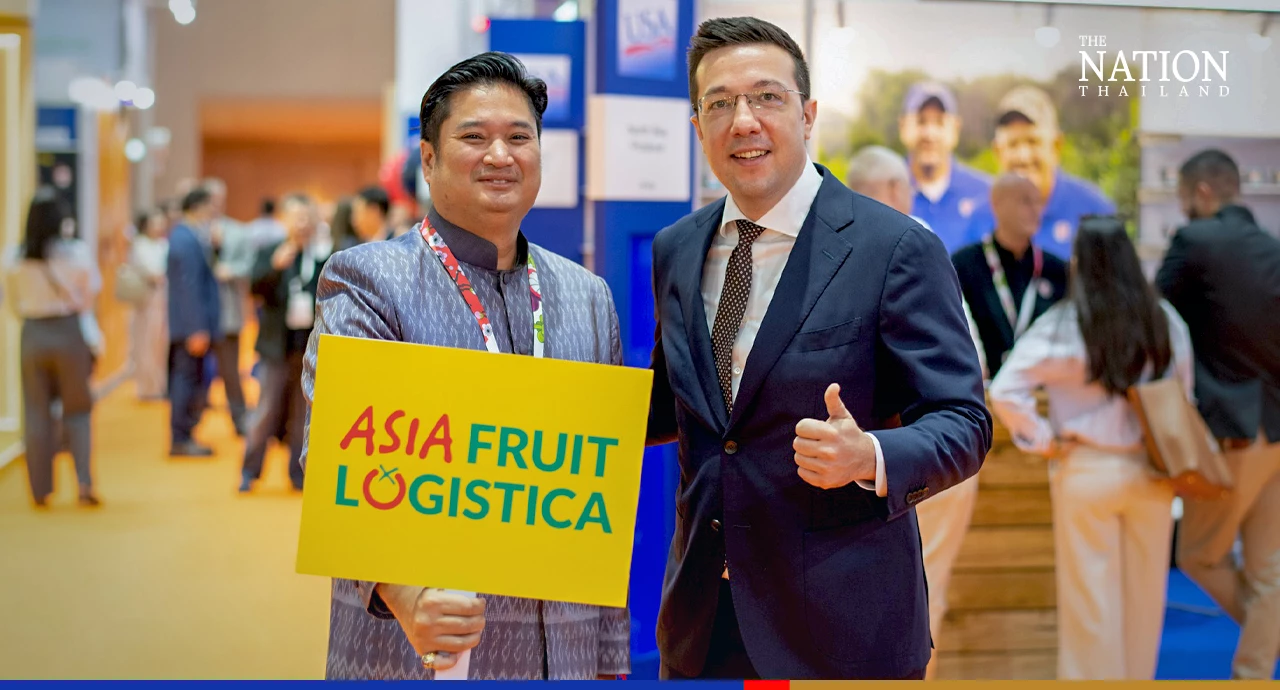
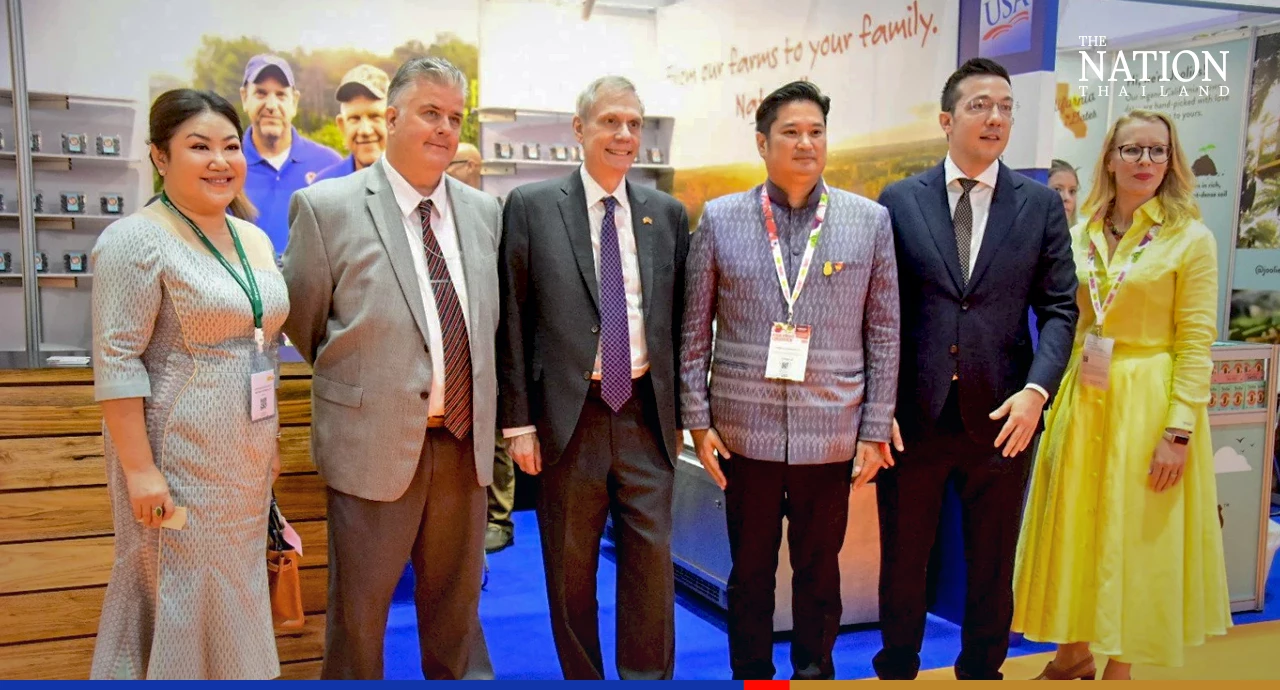
Raphiphat was visiting the “Asia Fruit Logistica” fair, which runs from November 2 to 4 at Queen Sirikit National Convention Centre in Bangkok. The annual event has been organised for the past 15 years with participation from Thai and international agricultural authorities, fruit importers/exporters, and companies across the fruit supply chain to carry out fruit-trade negotiations. The event also helps local firms to explore new market opportunities in the Asian region.
At the fair Raphiphat met Spanish Ambassador Emilio de Miguel Calabia and American Ambassador Robert F Godec, while visiting the booths of the two countries to discuss fruit import and export opportunities as well as additional agricultural cooperation.
Baht advances but could be affected by results of key US Fed meeting
WEDNESDAY, NOVEMBER 02, 2022
The baht opened at 37.76 to the US dollar on Wednesday, strengthening from Tuesday’s close of 37.74.
The currency will likely move between 37.65 and 37.95 against the greenback during the day, Krungthai market strategist Poon Panichpibool predicted.
He said the baht strengthened more than he expected due to a series of factors – the weakening of the dollar, hopes that the Chinese government would ease its Covid restrictions, the increasing gold price, and over 6.1 billion baht in foreign transactions involving Thai stocks.
However, these supporting factors might decrease or disappear if investors remain unsure whether the US Federal Reserve would slow its interest rate increases.
Poon warned investors to beware of market and stock volatility during the Fed chairman’s press conference.
He expected the market not to get too shaken up with the results of the Fed’s key meeting and has acknowledged that the Fed might increase the interest rate by 0.75%.
If the Fed chairman does not clearly signal a move to slow its interest rate increases in the future or does not show concern for the US economy, the baht might weaken as the dollar would strengthen.
Poon said the baht’s new support level is between 37.60 and 37.70 to the dollar, while the resistance level is between 38.20 and 38.30 if the Thai currency exceeds the 38 level.
It might weaken to 38 if the market fluctuates during the Fed press conference, Poon added.
He advised investors to use hedging tools such as options to manage risks in a highly volatile currency market.
Thai private sector ‘ready to host’ world business leaders at APEC CEO Summit
TUESDAY, NOVEMBER 01, 2022
Nongluck Ajanapanya
Thailand’s private sector said on Tuesday it will be ready to host the Asia Pacific Economic Cooperation (APEC) CEO Summit on November 16-18, revealing programme highlights and keynote speakers.
Poj Aramwattananont, chair of the business leaders’ summit, held a press conference on Tuesday to announce that 90% of preparations were complete, including the venue, hospitality, security, reception party, and the summit’s programme – which covers the economy, trade, investment and society.
He said the remaining 10% concerned the schedule for world leaders attending the summit as keynote speakers, including China’s President Xi Jinping.
“We invited economic leaders from 13 economies to attend the APEC CEO Summit 2022, and the PM [Prayut Chan-o-cha] intends to deliver a speech.”
Poj said three leaders had confirmed their attendance at the CEO Summit: Peru’s Pedro Castillo, Chile’s Gabriel Boric, and Vietnam’s Nguyên Xuân Phuc.
He pointed out that current economic challenges on all fronts – food shortages, power crises, inflation, and pandemic recovery – had put the private sector on high alert.
The APEC CEO Summit will offer a platform for exchanges on key global directions, as well as an opportunity for Thailand to revive its economy after reopening post-pandemic, Poj said.
The main agendas for world business leaders at the summit will be lowering barriers to free trade, measures to combat inflation, and the Bio-Circular-Green (BCG) economy model for sustainable development.
Business leaders will exchange ideas at a forum themed “Embrace, Engage, Enable” on November 17 and 18, said Kasemsit Pathomsak, executive director of the CEO Summit.
Leaders of economies would be joined by top CEOs and thought leaders from around the world, such as Prof Klaaus Schwab, founder and managing director of the World Economic Forum; Hooi Ling Tan, founder of Grab; Bob Moritz, PWC global chairman; and executives from Johnson & Johnson, Meta, Google, Exxon, and others.
Also present will be leading Thai CEOs such as Nualphan Lamsam, managing director and president of Muang Thai Life Assurance; and Suphachai Chearavanont, managing director of True Corporation.
Sanan Angubolkul, chairman of the Joint Standing Committee on Commerce, Industry and Banking and chairman of the Thai Chamber of Commerce said that the summit is seen as a great “opportunity” for the country to showcase its trade, investment, and competitive potential in multiple dimensions including food, tourism, healthcare, and automotive manufacturing.
The APEC CEO Summit 2022 will be held at the Athenee hotel in Bangkok on November 16-18. Some 500-600 business leaders from across the Asia-Pacific region will be joined by over 200 high-level Thai CEOs at summit events.
Ruling coalition rallies to narrowly kill Move Forward’s liquor production bill in third reading
WEDNESDAY, NOVEMBER 02, 2022
The ruling coalition on Wednesday killed the opposition Move Forward Party’s progressive liquor bill in a 196-194 vote in Parliament on Wednesday.
The termination of the bill proposed by the Move Forward came just a day after the Cabinet approved a ministerial regulation to ease controls on alcohol production, seen as a move to pre-empt the passage of the opposition bill.
The voting in the third reading was held at 2.45pm after three hours of deliberation of the bill in the second reading.
The vote results showed that 177 MPs voted against it while 174 voted for it and 11 abstained.
After the vote results were known, Natthaphong Ruengpanyawut (Move Forward-Bangkok) asked the chairperson of the meeting, deputy House speaker Suchart Tancharoen, to hold roll-call voting.
Natthaphong reasoned that a House regulation stated that if the margin of votes was fewer than 25 votes, roll-call voting would be needed to confirm the results.
Following a brief dispute, Suchart ordered roll-call voting.
Following long disputes and the vote count, Suchart announced the roll-call voting results at 5.15pm, which found that 194 MPs had voted for the bill while 196 MPs had voted against it and 15 had abstained.
Ahead of the roll-call, Move Forward posted on its Facebook wall, urging the public to monitor the voting as it was unfolding to see who had voted against the liberal bill.
The bill, which has seven sections, sought to terminate existing regulations that are seen as major obstacles to liquor making.
Before the vote, Move Forward leader Pita Limjaroenrat said the current requirements, such as the need to produce 30,000 litres of liquor a day and the requirement for makers to become legal entities, stand in the way of capable but low-budget liquor-makers.
On Tuesday, Move Forward MP Taopiphop Limjittrakorn had accused the government of trying to derail the bill, which would have reduced barriers to allow small brewers to enter a market currently dominated by two giant companies.