US army to learn Muay Thai from champ Buakaw during Cobra Gold
MONDAY, FEBRUARY 20, 2023
Muay Thai boxer Sombat Banchamek, widely known as Buakaw Banchamek, has been invited by the US Army to train US soldiers in the Thai martial art during the upcoming Cobra Gold military drills.
Cobra Gold, the multinational Indo-Pacific military exercises, are scheduled to take place in Thailand from February 27 to March 10.
Besides training the US soldiers in Muay Thai, Buakaw will take part in Cobra Gold’s Strategic Airborne Operations (SAO) training.
The 40-year-old Thai boxer said on Facebook on Sunday (February 19) that even the US army, which is equipped with top-notch military equipment, has accepted the effectiveness of Muay Thai, which involves only the use of one’s bare hands.
“As a cultural tradition, Muay Thai symbolises Thai people’s tenacity. Being accepted internationally, Muay Thai is the best martial art in the world,” he added.
Buakaw had earlier trained US soldiers in Muay Thai during the US-Thai bilateral army exercise “Hanuman Guardian 22”, held in Prachuap Khiri Khan province last year.
He earned a reputation by triumphing in international boxing tournaments, such as the 2004 and 2006 K-1 World MAX competitions.
Current supply of Chinese veggies in Thai markets ‘no threat to local produce’
MONDAY, FEBRUARY 20, 2023
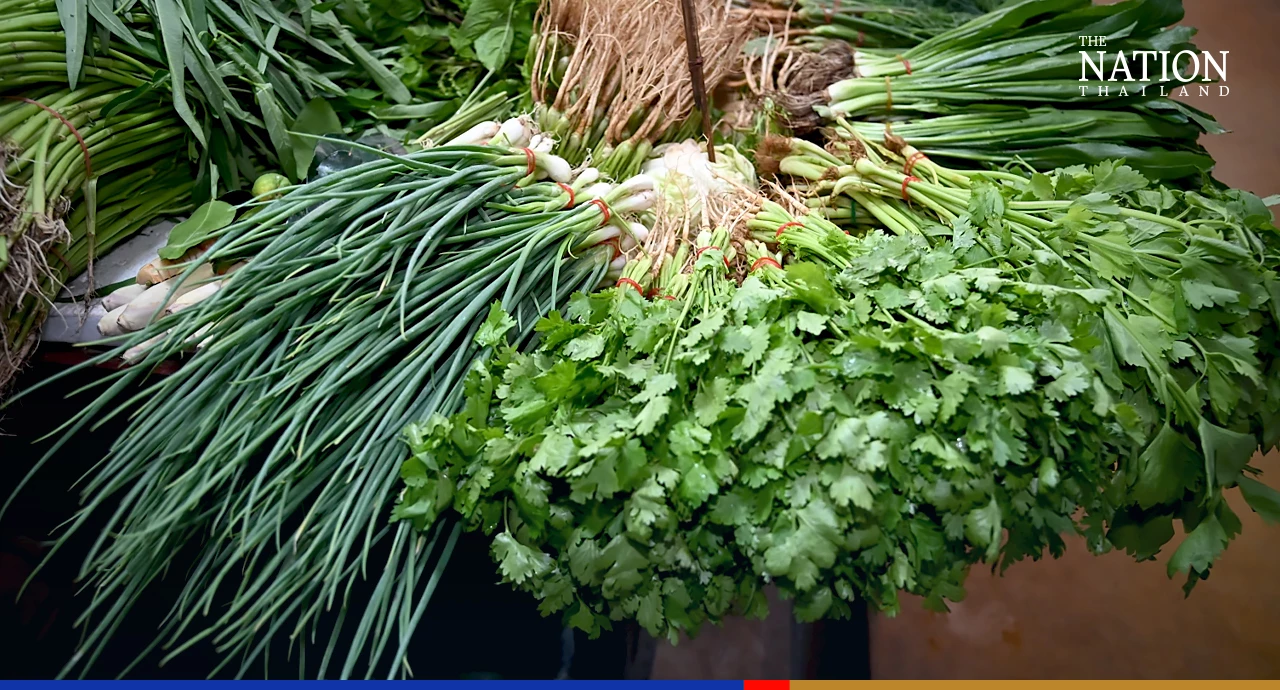
The quantity of Chinese vegetables in Thai markets are not yet at an alarming level as to affect the prices of locally grown vegetables, the Department of Internal Trade said on Monday.
The department was reporting its survey from three major wholesale markets, namely Taladd Thai and Si Mum Muang markets in Pathum Thani province, and Sri Mueang Market in Ratchaburi province.
The survey found that the amount of imported vegetables from China were still at normal levels.
“Local growers have forwarded their concerns to the department that imported vegetables could steal their market share and drive the prices down,” said department director-general Wattanasak Sur-iam. “However, after surveying the Thai markets, we found no signs of an influx of Chinese produce.”
The department added that the import of Chinese vegetables usually increases only when local growers experience low yields. Under normal circumstances, customers often choose to buy locally grown vegetables due to their superior quality.
The department also said that the prices of cold weather crops, such as cabbage and Chinese cabbage, in Thai markets were still at the normal level of 6 and 8 baht per kg for wholesale and 20 and 25 baht per kg for retail, respectively. This shows that the current volume of imported vegetables still has no effect on the price.
Wattanasak said the department would continue to monitor the markets closely as well as set up checkpoints to prevent smuggling of foreign produce into the country.
The department will also help farmers by providing mobile units to transport their produce from farms to markets in case their normal transport method is overwhelmed due to increasing yield.
To report unfair underpricing or smuggling of foreign products, contact the department’s hotline at 1569.
No respite for Bangkokians as PM2.5 readings continue rising
MONDAY, FEBRUARY 20, 2023
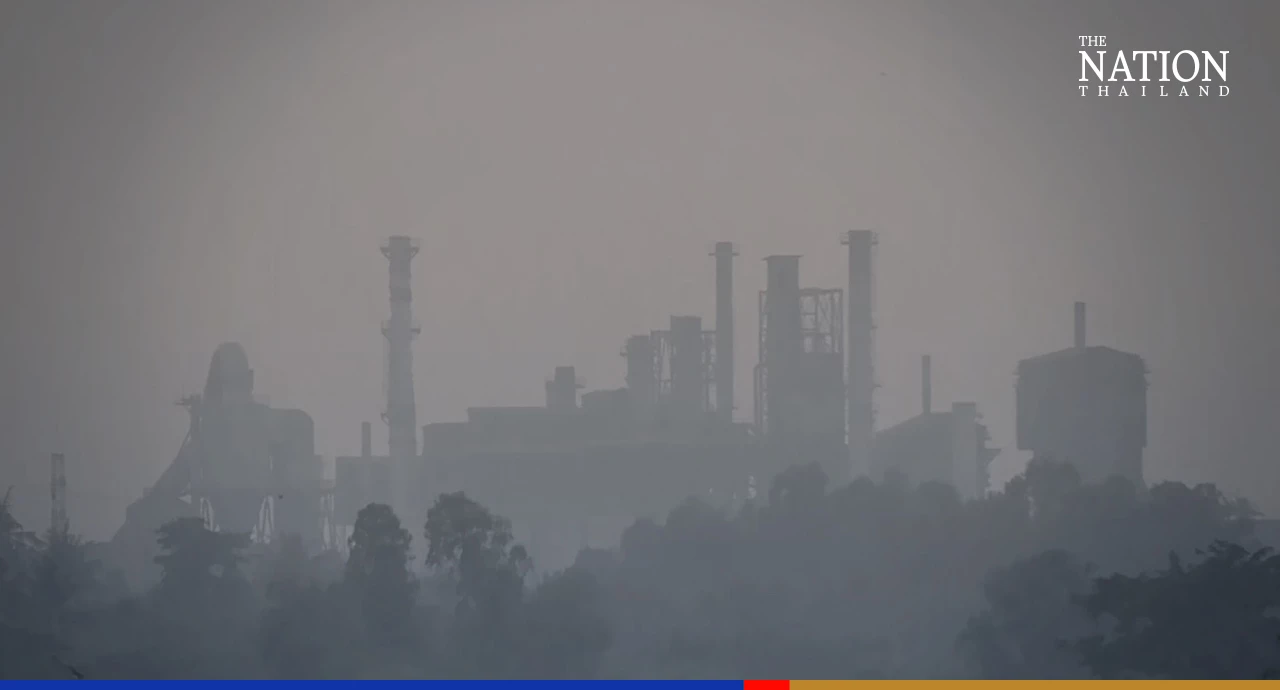
Most of Bangkok was covered in a haze of hazardous air as of 7am on Monday, with 67 air-quality monitoring stations reporting high levels of PM2.5 pollution.
PM2.5 readings were between 49 and 77 micrograms per cubic metre of air (μg/m3) in most parts of the capital. PM2.5 are dust particles less than 2.5 micrometres in diameter that can severely affect people with chronic lung and heart conditions.
Thailand’s safe standard for PM2.5 pollution is 50μg/m3, though the World Health Organisation sets it at 12μg/m3 or lower.
The top 10 most polluted areas in Bangkok as of 7am on Monday were:
The Bangkok Air Quality Centre also said it expects the air quality in 17 districts to hit unsafe levels on Tuesday. The 17 districts are Lak Si, Chatuchak, Khlong Toei, Phra Khanong, Bang Na, Phaya Thai, Din Daeng, Huai Khwang, Khlong Sam Wa, Minburi, Saphan Sung, Taling Chan, Bangkok Noi, Thawi Watthana, Bang Khae, Nong Khaem and Bang Bon.
Air circulation in Greater Bangkok is expected to be low until Friday, before improving on Saturday and Sunday, the centre said.
People have been advised to prepare for bad pollution from Wednesday to Saturday. Those living in areas with bad air quality should stay indoors and check pollution levels before stepping outside.
Fewer people testing positive for Covid-19 in Thailand, records show
MONDAY, FEBRUARY 20, 2023
The number of people admitted to hospital for Covid-19 dropped substantially last week, the Department of Disease Control said in its weekly report published on Monday.
In the week of February 12-18, 203 people tested positive for Covid-19 compared to 392 in the previous week.
Of the 203 Covid-19 patients recorded last week, 78 developed lung inflammation, while 51 had to be hooked up to respirators.
Last week, eight people succumbed to the virus, compared to 12 in the week of February 5-11.
The total number of Covid-19 patients admitted to hospitals and deaths this year, so far, stands at 3,912 and 233, respectively.
Meanwhile, another 351 people got their first Covid-19 shot last week, 281 their second shot and 1,218 a booster. This brings the total number of Covid-19 vaccines administered in Thailand to 144,807,129.
As per figures published by Worldometer, confirmed cases globally had risen to 678.69 million as of Monday, 651.36 million of whom have recovered, 20.53 million are active cases (40,904 in critical condition) and 6.79 million have died.
Thailand ranks 31st in the global list of most cases with 4.72 million. The US tops the list with 104.98 million cases, followed by India with 44.6 million, France with 39.5 million, Germany with 38 million and Brazil with 36.9 million.
Thailand hit by growing cybercrime tsunami, warns tech industry
MONDAY, FEBRUARY 20, 2023
Government must join hands with private agencies to combat the tsunami of cybercrime, experts said during a seminar in Bangkok on Saturday.
Titled “How to maintain cybersecurity and provide a telecoms network across Thailand”, the seminar was held at Samyan Mitrtown as part of “Thailand National Cyber Week 2023” organised by the National Cyber Security Agency (NCSA).
The cybercrime wave sweeping the country is intensifying, NCSA secretary-general AVM Amorn Chomchey told the seminar.
“NCSA is working on cybersecurity management in Thailand to deal with various types of cybercrimes,” he said, adding the work included boosting digital infrastructure security and helping agencies to implement anti-cybercrime measures.
Incidents of cybercrime are growing, confirmed Kanokorn Chawang, director of the Telecommunications Regulatory Division at the National Broadcasting and Telecommunications Commission (NBTC).
She said the NBTC was issuing guidelines to lift Thailand’s cybersecurity to international standards.
“Apart from issuing cybersecurity regulations and guidelines, NBTC is cooperating with several agencies to protect them from cybercrimes, such as ensuring that the banking system will not crash,” she said.
She said NBTC guidelines would ensure telecoms operators work to the same standards, which will boost confidence among customers.
NBTC is also considering a network equipment security assurance scheme as a framework for the mobile industry.
Surachai Chatchalermphan, Huawei Technologies (Thailand)’s cybersecurity and privacy officer, warned that “If the security system is not safe, Thailand’s infrastructure could crash due to cyberattacks.”
He said the 2019 Cybersecurity Act is essential to ensure safety for Thailand’s internet users while vowing to enhance cybersecurity for Huawei customers.
He said all parties must work together on cybersecurity.
True Corporation’s cyber expert, Kittipong Thiraruengchaisri, said the volume of cybercrime had increased over the past three years as more people access internet services.
He said the company is cooperating with NCSA and NBTC to enhance cybersecurity to boost confidence among customers as well as growth in the telecoms industry.
“The company is also creating awareness among customers to keep them safe from cybercrimes,” he added.
Triads targeted in crackdown on foreign businesses using Thai nominees
MONDAY, FEBRUARY 20, 2023
Triad grey businesses are among 325 foreign companies being investigated on suspicion of using Thai nominees to register in Thailand, the Department of Business Development (DBD) said on Monday.
The investigation is part of a Commerce Ministry crackdown against criminals using Thailand as a base for their illegal business operations. The Department of Special Investigation (DSI) is cooperating in the crackdown.
The DSI has targeted 325 companies in nine provinces – Chiang Mai, Chiang Rai, Phuket, Surat Thani, Chonburi, Rayong, Prachuap Khiri Khan, Phetchaburi, and Bangkok – said DBD deputy director-general Jittakorn Wongkhetkorn.
Of the targeted companies, 161 are in the tourism industry, 123 in property, and 41 operate hotels and resorts, he added.
Jittakorn said investigations in Bangkok will focus on suspected triad operations, especially in the Yaowarat and Huai Khwang areas.
Since the crackdown launched in 2015, a total of 191 foreign companies have been investigated leading to 66 prosecutions.
The number of companies being investigated this year has more than doubled from the previous high of 145 in 2021. That year, the property industry accounted for most nominee probes, followed by tourism and services.
Jittakorn said DBD data on suspected companies are supporting in-depth investigations by the DSI.
Companies caught using nominee as shareholders face a maximum 1-million-baht fine plus a daily fine of up to 50,000 baht until the issue is fixed, he warned. Meanwhile company directors and nominees are also punishable with a maximum fine of 1 million baht and 3 years in jail, or both.
The DBD said it will also advertise requirements for business registration, prohibitions and other regulations under the Foreign Business Act of 1999, to ensure that all foreign businesses comply with Thai laws.
Chiang Rai’s Mai Sai checkpoint with Myanmar reopens after 3 years
MONDAY, FEBRUARY 20, 2023
The Thailand-Myanmar border checkpoint at Mae Sai in Chiang Rai reopened on Monday after a three-year closure because of Covid-19.
Chiang Rai deputy governor Somwang Boonrayong and Thachileik governor U Min Nai presided over the reopening ceremony for the Thailand-Myanmar Friendship Bridge at 7.30am.
The checkpoint will open on a trial basis from 6.30am to 6.30pm, instead of 6.30am to 9pm as in the past, until peace is secured on the Thachileik side.
The Myanmar border town is notorious as a gateway for the flood of methamphetamine and other drugs into Thailand from the Golden Triangle.
The border checkpoint was closed on March 23, 2020 following the Covid-19 outbreak.
Security concerns meant Tachileik and Chiang Rai officials coordinated by phone rather than in person as they presided over the reopening.
Somwang said the move would boost border trade, adding that Thais who do not have passports can obtain border passes at Mae Sai district office.
Thais who want to enter Tachileik must present proof of Covid-19 vaccination and a negative test.
Myanmar people do not need proof of vaccination to cross to the Thai side, Somwang added.
Mae Sai district chief Narongpol Kid-arn said Tachileik officials do not accept digital vaccination certificates on the MohPrompt app so Thais must have photocopies of their vaccine certificate with them.
The district chief expects proof of vaccination will be required by Myanmar border authorities for at least the next month.
‘Game over, Covid’: 10 things we learned about the virus in past 3 years
MONDAY, FEBRUARY 20, 2023
One of Thailand’s top virologists on Monday listed 10 things we have learned from the new coronavirus as the world shifts out of pandemic mode.
This year will be “game over” for Covid-19, said Dr Yong Poovorawan, head of the Centre of Excellence in Clinical Virology at Chulalongkorn University, in a Facebook post. However, he added the pandemic had changed the world in several aspects.
“We have lived with Covid-19 for more than three years. This is what we have learned so far and the estimation of what will happen next,” said Yong.
1. Covid-19 is like influenza in the sense that the virus will evolve in a bid to coexist in the host by reducing the severity of symptoms. The disease that initially had a fatality rate of 3-5% now kills less than 0.1% of infected patients.
2. Diseases with severe symptoms, such as Ebola, Marburg and Lassa fever, are less likely to cause a global pandemic, unlike low-severity diseases such as Covid-19 and influenza.
3. Different types of Covid-19 vaccine are equally capable of preventing severe symptoms and deaths. While mRNA vaccine is capable of raising immunity in the short term, the immunity will also decrease faster. Statistics show that countries that administer only mRNA vaccines do not have significantly lower infection and mortality rates.
4. The reason infection rates are currently slowing is because the majority of the population has already been infected and developed immunity. This is apparent in countries where over 70% of the population has been infected.
5. Immunity created from infection combined with vaccination is stronger and will last longer than immunity created from the vaccine alone.
6. As Covid-19 becomes endemic, the infection pattern will be similar to that of influenza or other respiratory diseases that we know.
7. In the future, only people in vulnerable groups will need Covid-19 vaccines, while healthy people will be able withstand reinfection with only mild symptoms.
8. Knowledge from study and research is the most crucial factor in tackling the global pandemic.
9. This year will be “game over” for Covid-19, as the World Health Organisation will likely stop reporting daily infections due to low numbers. Covid-19 infections will eventually become a seasonal event, prompting countries to gradually reduce their surveillance status.
10. As for Thailand, infections will subside from February and then start emerging again from June to September (in line with the rainy season), before subsiding again. This seasonal rotation will occur every year.
Thailand’s ‘mini’ FTA with Hainan pays off in big way
MONDAY, FEBRUARY 20, 2023
The “mini” free trade agreement Thailand signed with China’s Hainan province two years ago helped push up exports to the area by 91.9% last year.
Commerce Minister Jurin Laksanawisit made this comment after meeting Hainan’s executive vice governor Shen Danyang on Monday.
“The Commerce Ministry has accepted China’s invitation to participate in the Hainan Expo from April 11 to 15,” he said.
Jurin reckons at least 20 Thai businesses will participate in the expo.
He added that Thailand will promote Hainan as a free trade port, and even set up an office there to publicise Thai products.
“Thailand has asked Hainan to further expand the mini FTA, increase the frequency of trade discussions and add Thai products to Hainan’s duty-free shops,” he said.
“The Commerce Ministry is also inviting Hainan to send businessmen to participate in Thailand’s five trade fairs, namely Style Bangkok, Thailand Autoparts and Accessories, Thaifex-Anuga Asia, Tilog Logistix and Bangkok Gems & Jewellery Fair.”
Jurin said China was still Thailand’s key export market, despite the global economic slowdown, the ongoing Russia-Ukraine war and inflation.
He said Thailand will sign mini FTAs with Shenzhen and Yunnan soon as part of its aim to boost exports to China by 1% this year.
The value of exports to Hainan last year came in at 18.2 billion baht, up 91.9% year on year. The most popular products exported were rubber, fruit, chemicals and ore.
Jurin said the mini FTA with Hainan was signed on August 20, 2021, which further strengthened the country’s ties with China.
He said Thailand currently has seven mini FTAs with key cities globally and expects negotiations on another six to be completed soon.
Govt revenue soars past target in first four months of fiscal 2023
MONDAY, FEBRUARY 20, 2023
Government revenue collection for the first four months of fiscal 2023 (October to January) surpassed its target by 12.3%, the Finance Ministry’s Fiscal Policy Office (FPO) said on Monday.
FPO director-general Pornchai Thiraveja said revenue was 866.643 billion baht in the first four months, which was also 10% higher than for the same period last year.
Government agencies surpassing revenue targets this year are:
– The Revenue Department with 613.298 billion, or 11% above target, driven by higher corporate tax revenue due to the expanding economy.
– The Customs Department with 47.112 billion, or 32.7% above target, after receipt of excise taxes following rulings in smuggling cases.
– Other agencies, which have received revenue from their revolving funds and concession fees from mobile phone operators and auction of licenses for FM radio frequencies. Some state firms also remitted their income for fiscal 2022, adding to revenue in this group.
In contrast, the Excise Department’s revenue was 14.4% lower than its target of 160.415 billion after the government cut diesel excise tax to reduce the impact of rising prices on consumers.
Excluding the Customs Department and other government agencies, the government collected 57.928 billion in revenue during the first four months of fiscal 2023, 7.8% higher than targeted and 5.6% higher than the previous fiscal year.








 SootinClaimon.Com