The Police Cyber Taskforce (PCT) has warned people to beware of a new scam involving a fake Revenue Department website.
The scammers phone prospective victims to offer an income tax return, PCT head and deputy national police chief Damrongsak Kittiprapas said on Saturday.
They then send victims a link for what appears to be the Revenue Department’s official website. Victims who click on the link are asked to register for a tax return by providing their personal information on the website, which is fake.
The scammers then ask victims to tell them the one-time password (OTP) that was sent to their phones. With the password, the scammers are able to take control of the victim’s phone remotely.
Victims have discovered that their bank accounts linked to mobile apps installed on their phones have been emptied by criminals using this method.
The cyber-criminals also threaten to expose “embarrassing secrets” found on the victims’ phones unless they pay more money, Damrongsak said.
Offering advice on how to prevent falling victim to cyber-scammers, he said people should double-check the website address to make sure it is official. The address of the Revenue Department’s official website is http://www.rd.go.th. He also urged people not to reveal their OTPs, especially to strangers. Damrongsak added that the Revenue Department does not handle tax-return cases by phone.
Bangkok taxi fares will likely be increased later this year as the Transport Ministry is considering a request submitted by four groups of taxi drivers and service operators.
The last increase in taxi fares was approved in 2014.
Sorapong Paitoonphong, Transport Ministry deputy permanent secretary, said the proposed hike will be carefully considered, with the potential impact on taxi drivers, business owners and passengers taken into account.
“A fare increase will have to come with improved services for passengers,” Sorapong said.
He added that details on the increased taxi fare will be available in October, in time for a nationwide 5-8 per cent hike in minimum daily wages that will be implemented on October 1.
Transport Minister Saksayam Chidchob has appointed a working group to consider the proper rate along with possible impacts, said Sorapong, who chairs the panel.
The panel comprises representatives of the Transport Ministry, Department of Land Transport, Thailand Development Research Institute and Consumer Protection Board.
In their request, the taxi groups want the starting fare for the first kilometre to be increased to 45 baht from the current 35 baht and to 10 baht for each subsequent kilometre from 5.50 baht.
As for when the cab is stuck in traffic or moves slower than 25 kilometres per hour, they want the charge to be increased to 5 baht per minute from 1.50 baht.
They also want the 50-baht surcharge for rides to and from Bangkok’s Don Mueang and Suvarnabhumi airports to be increased to 75 baht for normal taxis and to 95 baht for larger taxis.
Bangkok authorities have issued a flood warning for communities along the Chao Phraya River that are not protected by embankments. The Bangkok Metropolitan Administration (BMA) warned locals to look out for rising water levels until next Saturday (September 10).
BMA cited the National Water Command Centre’s warning of heavy rain from Saturday to Thursday in the North, Northeast and East.
The centre forecasts that the water flow through the Chao Phraya Dam will increase from 1,800 to 2,000 cubic metres per second.
The centre expects the water level downstream from the dam to rise by 0.4-0.5 metres, affecting communities outside embankments, including in Bangkok, until September 10.
The BMA has set up a centre to monitor flooding and will coordinate with the Navy’s Hydrographic Department, Royal Irrigation Department, Thai Meteorological Department, and the National Water Command Centre.
BMA said officials are being deployed to risk points and preparing flood defences and equipment such as sandbags.
BMA staff will also inspect embankments for the Chao Phraya River and Bangkok Noi, Maha Sawat, and Phra Khanong canals.
The BMA warned that communities outside embankments may also be inundated by waves from boat traffic, but this would be regulated by the Marine Department.
Meanwhile, the Electricity Generating Authority of Thailand (Egat) and related agencies have mounted flood-prevention and relief efforts in Bangkok and surrounding provinces.
Over the past year, the Army has seized more than 220 million methamphetamine pills and arrested over 47,000 illegal immigrants, spokesman General Santipong Thampiya said on Saturday.
During the current fiscal year, which runs from October 1, 2021 to September 30, 2022, more than 221.2 million smuggled “yaba” pills have been seized by soldiers at the borders, Santipong said.
Other narcotics were also seized during that period, including 3,400 kilograms of crystal meth aka “ice”, 58kg heroin, 515kg ketamine, 61kg opium and 4kg of ecstasy pills.
The Royal Thai Army’s border forces also intercepted 47,420 foreign nationals trying to enter the country illegally, he said, adding that the arrests were five times more than last year.
No breakup of nationalities was available.
Santipong said the huge drug haul points to the Army’s efficiency in protecting society from dangerous narcotics that can bring negative economic and social impacts to the country.
SINGAPORE – Singapore hotels’ average room rate (ARR) rose to a near-decade high in July, extending growth for the sixth straight month, as global visitors returned with the reopening of international borders.
ARR in July was $259 – the highest since September 2012 when it was $261.66, according to the latest data from the Singapore Tourism Board (STB).
Year on year, ARR shot up 69.2 per cent from July last year, while it grew 7.7 per cent month on month.
Overall, hotel revenues reached $318.5 million for the month, more than 4½ times the level recorded in the corresponding period a year ago.
The increase in industrywide room revenue – which also rose month on month against $297 million in June – came as visitor arrivals surged to 726,601 in July, from 543,733 in the previous month.
Revenue per available room (RevPAR) rose to record a new post-Covid-19 high, hitting $204.99 in July, up 140.3 per cent from the previous year, and up 9.2 per cent from June.
Average occupancy rates increased to a multi-year high of 79 per cent, a hair above June’s 78 per cent and just 4 percentage points shy of the pre-pandemic rate of 83 per cent clocked in both December 2019 and January 2020.
Growth was also seen in July across all hotel categories, with ARRs of $126.44 in the economy segment, $206.80 in the mid-tier segment, $301.07 in the upscale segment and $538.27 in the luxury segment.
For the year to date, overall room revenue was $1.39 billion, higher than the amount earned for the whole of 2021.
For the first seven months of the year, ARR reached $220.93, up 47.2 per cent compared with the same period in 2021.
RevPAR was up 102.4 per cent for the period to $153.43, STB data showed.
The average occupancy rate rose 18.9 per cent from the same period last year to 69.5 per cent.
By Elysia Tan
Asia News Network: The Nation (Thailand), The Korea Herald, The Straits Times (Singapore), China Daily, Jakarta Post, The Star and Sin Chew Daily (Malaysia), The Statesman (India), Philippine Daily Inquirer, Yomiuri Shimbun and The Japan News, Gogo Mongolia, Dawn (Pakistan), The Island (Sri Lanka), Kuensel (Bhutan), Kathmandu Post (Nepal), Daily Star (Bangladesh), Eleven Media (Myanmar), the Phnom Penh Post and Rasmei Kampuchea (Cambodia), The Borneo Bulletin (Brunei), Vietnam News, and Vientiane Times (Laos).
China has donated a new fleet of 150 vehicles to Cambodia for use to transport dignitaries at the upcoming ASEAN and ASEAN Plus summit and to assist the Kingdom’s Ministry of National Defence with its military archive works.
Defence minister General Tea Banh said the donation once again showed the “ironclad” bonds friendship between the two nations.
Tea Banh told reporters after the September 1 handover ceremony he co-presided over with Chinese ambassador Wang Wentian in Phnom Penh that Cambodia had requested China’s assistance because of difficulties that had arisen with a lack of appropriate vehicles for use at the recent ASEAN ministerial meetings, and to be well prepared for the November summits.
He said China’s helpful responses towards its smaller neighbours showed the sincerity of its heart, and that China had made a timely response after receiving the proposal, with the vehicles arriving in Cambodia well in advance of the summit.
Tea Banh noted that of the 150 vehicles, some will be used to transport senior delegates and some others will be delivered to the defence ministry’s Military History unit.
“We’ll use them to transport senior delegates who come to attend the summits, and as a means of carrying out this archiving work we’re doing.
“The archiving is important because some of the military’s works contributed significantly to [Prime Minister Hun Sen’s] win-win policy that eventually brought about comprehensive peace, as evidenced by Win-Win monuments we have built at historical sites,” he said.
“We have gone through a lot in history and we cannot just let it fade away. So we need to maintain historical records and evidence, especially at some historical sites concerning our sovereignty. We put this proposal to China because this [Military History] unit is newly established and there were no appropriate means for carrying out this work.
“So, we enlisted China and now we’ve received a fleet of 150 new vehicles in response,” he said while also expressing the gratitude of the Cambodian government and people for the assistance as the Kingdom gets ready to host world leaders from ASEAN and around the globe this November.
China-Cambodia Friendship Radio (CCFR) quoted ambassador Wang as saying that China and Cambodia had built a community of common destiny.
Wang said the community is of such strategic importance that they would be strengthening and developing a series of comprehensive strategic relations, with the bonds of friendship between the two countries having reached the highest levels ever in their long historical record of ties.
He said the Chinese side has given its firm support to Cambodia to go about choosing its path of development on its own and building its military and national economy.
“We provide these donations as merely a practical course of action to help support Cambodia in hosting the ASEAN Summit and related meetings. China hopes that Cambodia will play a more active and important role in regional security affairs, because we have the goal of seriously implementing China-led initiatives, both global security and global development initiatives,” the statement broadcast on CCFR said.
CCFR added that Tang Hao, the chief of staff at the Chinese embassy in Phnom Penh, and Nim Sovath, director-general of the Cambodian defence ministry’s General Department of Policy and Foreign Affairs, co-signed the memorandum transferring ownership of the fleet of 150 vehicles.
By Ry Sochan
Asia News Network: The Nation (Thailand), The Korea Herald, The Straits Times (Singapore), China Daily, Jakarta Post, The Star and Sin Chew Daily (Malaysia), The Statesman (India), Philippine Daily Inquirer, Yomiuri Shimbun and The Japan News, Gogo Mongolia, Dawn (Pakistan), The Island (Sri Lanka), Kuensel (Bhutan), Kathmandu Post (Nepal), Daily Star (Bangladesh), Eleven Media (Myanmar), the Phnom Penh Post and Rasmei Kampuchea (Cambodia), The Borneo Bulletin (Brunei), Vietnam News, and Vientiane Times (Laos).
WASHINGTON — Los Angeles is to host on Sept. 8 and 9. the first in-person meeting of the Indo-Pacific Economic Framework (IPEF), a new U.S.-led trade pact comprising 14 nations including Japan, aimed at strengthening supply chains and promoting cooperation in economic security to counter China.
The main topics in a draft statement seen by The Yomiuri Shimbun ahead of the ministerial-level meeting included supply chains, clean economies, trade and fair economies.
Representatives from all 14 IPEF countries are expected to attend the talks.
According to the draft statement, IPEF members plan to work together to quickly restore supply chains in the event of disruptions caused by a pandemic or conflict. The number of supply sources will be increased and accumulated logistics data will be utilized in preparation for such eventualities.
The document on clean economies is expected to include matters related to energy security.
To help countries decarbonize, technology will be provided to IPEF members lagging behind in the use of hydrogen and ammonia, which do not emit carbon dioxide, easing the shift away from fossil fuel reliance.
On trade, practices such as paperless and electronic customs procedures are expected to be promoted.
Regarding fair economies, IPEF members are expected to confirm the importance of efforts to prevent double corporate taxation and eliminate corruption in order to increase investment in the participating countries. The pact aims to forge values such as compliance with rules by following the example of countries with fewer violations.
Next week’s talks will be the first in-person IPEF meeting and Economy, Trade and Industry Minister Yasutoshi Nishimura is expected to attend.
Partly due to concerns in the United States about the negative impact on industry and employment, the IPEF does not include the reduction or elimination of tariffs as items for negotiation.
Tough negotiations are ongoing among relevant ministers concerning the cross-border exchange of data, as there are still differences of opinion between Japan and the United States, and some of the participating countries.
Nishimura plans to meet with Indonesian ministers in the near future to discuss the issue.
The IPEF comprises 14 countries: Japan, the United States, South Korea, Australia, New Zealand, India, Indonesia, Thailand, Malaysia, Singapore, Vietnam, Brunei, the Philippines and Fiji.
The combined gross domestic product of the participating countries represents about 40% of world GDP.
By Hiroyuki Tanaka and Hiroshi Tajima
Asia News Network: The Nation (Thailand), The Korea Herald, The Straits Times (Singapore), China Daily, Jakarta Post, The Star and Sin Chew Daily (Malaysia), The Statesman (India), Philippine Daily Inquirer, Yomiuri Shimbun and The Japan News, Gogo Mongolia, Dawn (Pakistan), The Island (Sri Lanka), Kuensel (Bhutan), Kathmandu Post (Nepal), Daily Star (Bangladesh), Eleven Media (Myanmar), the Phnom Penh Post and Rasmei Kampuchea (Cambodia), The Borneo Bulletin (Brunei), Vietnam News, and Vientiane Times (Laos).
The Union Minister for Information said that Mtube live streaming platform that can be used like YouTube is being developed.
The Union Minister said that the MRTV Application was developed for news release, but it was taken down in various ways, so it can be said that the people’s right to know the information is being destroyed.
“Today, as we are faced with limiting the news we publish on social media platforms and bullying by using technology, so we are developing a Mtube live streaming platform that can be used like YouTube. Today, foreign media and unethical media outlets are spreading false information and deceiving the people and the ministry is responding to false information in various ways,” Union Minister U Maung Maung Ohn said.
U Kyaw Swar Min, director of United Info-Sec Company and his team met with the Union Minister for Information U Maung Maung Ohn on the afternoon of September 1 to explain the development of a Mtube live streaming platform that can be used like YouTube, the Ministry of Information reported.
The Union Minister said that as the Ministry of Information is expanding Myanmar’s audio and television channels, it is also expanding its online media activities. He said that the media is very important in every sector and needs to be properly used.
Asia News Network: The Nation (Thailand), The Korea Herald, The Straits Times (Singapore), China Daily, Jakarta Post, The Star and Sin Chew Daily (Malaysia), The Statesman (India), Philippine Daily Inquirer, Yomiuri Shimbun and The Japan News, Gogo Mongolia, Dawn (Pakistan), The Island (Sri Lanka), Kuensel (Bhutan), Kathmandu Post (Nepal), Daily Star (Bangladesh), Eleven Media (Myanmar), the Phnom Penh Post and Rasmei Kampuchea (Cambodia), The Borneo Bulletin (Brunei), Vietnam News, and Vientiane Times (Laos).
Researchers develop world’s first climate recovery map
Agroup of researchers at Yonsei University have found that even if the concentration level of greenhouse gases in the atmosphere is reduced to that of the pre-industrial era, it will be difficult to restore the climate’s condition to its original state.
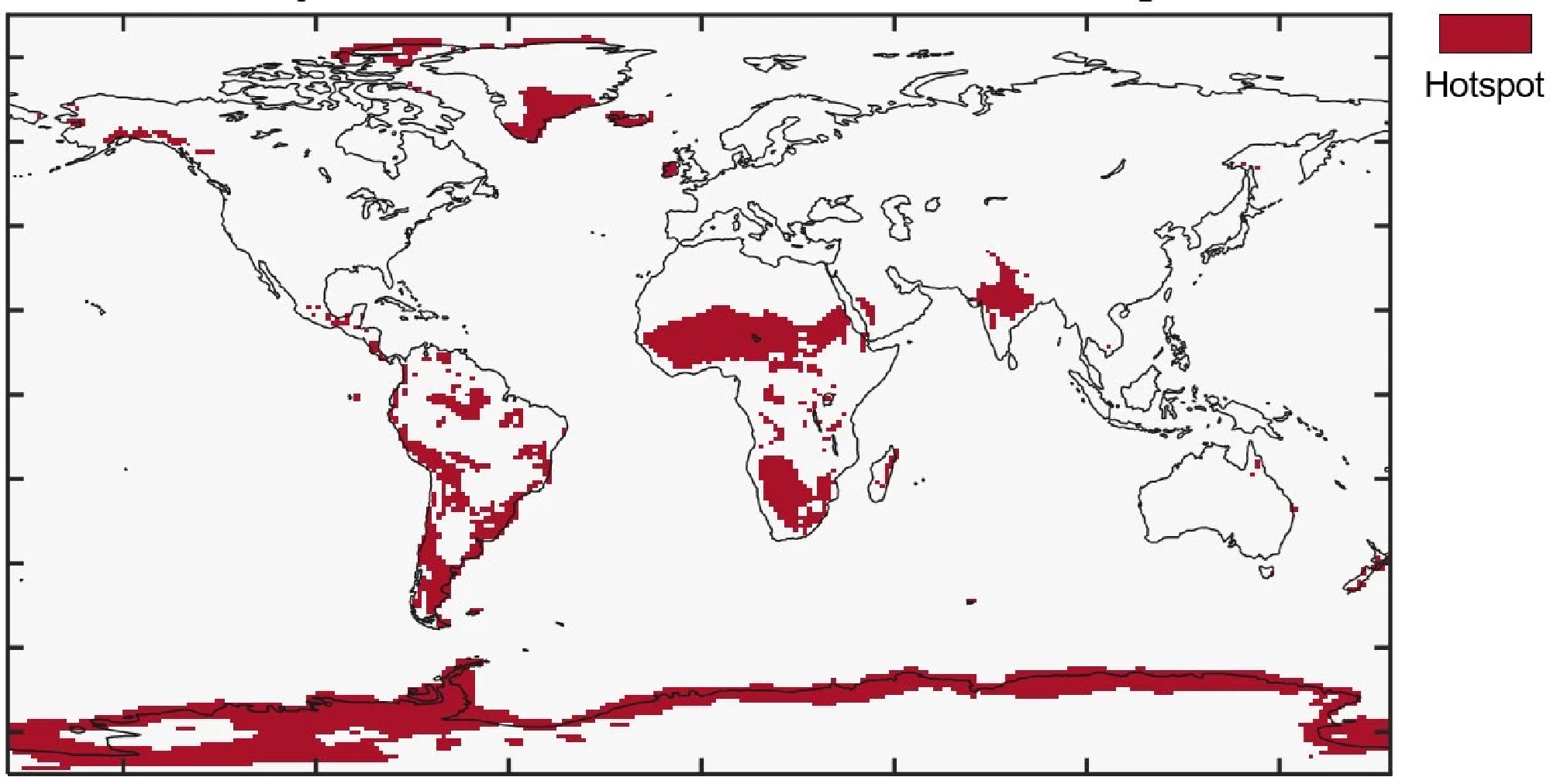
According to Yonsei University on Friday, an in-house research team led by atmospheric sciences professor An Soon-il developed the world’s first climate recovery map, which is designed to illustrate possible improvements in global surface temperatures and precipitation with reduced greenhouse gas emissions by region over a timespan of centuries.
The researchers used an Earth system model with the idealized scenario of removing carbon dioxide emissions to pre-industrial levels.
Despite the decreased amount of CO2 emissions, the study projected that 89 percent of global areas would experience irreversible changes in surface temperature, while 58 percent will experience irreversible changes in precipitation. The results showed that African and South American regions will inevitably face a climate crisis, whereas North American, European and East Asian areas’ climate could improve in the future.
“These findings show that reducing greenhouse gases in most parts of the world does not restore the climate to its original condition, and even if greenhouse gases are removed from the atmosphere, their impact will remain for the long term,” said Kim Soong-ki, the first author of the study.
“The difference between the climate improvability levels of developing countries and developed countries is significant, which indicates the potential damage to developing countries from greenhouse gas emissions is very large,” he added.
The researchers marked the areas that are forecast to have the lowest level of climate improvability as “hot spots.” Most of the hot spots fell on developing countries across the world.
An, the study’s corresponding author, stressed the need for stronger policies to reduce more greenhouse gas emissions.
“Achieving zero carbon dioxide emissions, the goal of the Paris Agreement, is not the complete solution to the climate problem,” An said.
The study was published in the journal Nature Climate Change with open access on Thursday.
By Kan Hyeong-woo
Asia News Network: The Nation (Thailand), The Korea Herald, The Straits Times (Singapore), China Daily, Jakarta Post, The Star and Sin Chew Daily (Malaysia), The Statesman (India), Philippine Daily Inquirer, Yomiuri Shimbun and The Japan News, Gogo Mongolia, Dawn (Pakistan), The Island (Sri Lanka), Kuensel (Bhutan), Kathmandu Post (Nepal), Daily Star (Bangladesh), Eleven Media (Myanmar), the Phnom Penh Post and Rasmei Kampuchea (Cambodia), The Borneo Bulletin (Brunei), Vietnam News, and Vientiane Times (Laos).
Malaysia is rolling out a new visa scheme to attract foreign tycoons and wealthy businessmen to invest and boost the national economy.
The Malaysia Premium Visa Programme is expected to attract at least 1,000 foreigners in its first year, which the government expects will add 200 million ringgit (1.62 billion baht) to the national coffers, with 1 billion ringgit in deposits.
Launching on October 1, this “residence by investment” programme is modelled on the Golden Visa initiatives introduced by countries such as Singapore, Portugal and Thailand.
Home Minister Hamzah Zainudin, who announced the visa scheme this week, said the government had received proposals and suggestions to introduce a programme to allow applicants to study, work and conduct business here.
He said the scheme differed from Malaysia My Second Home (MM2H) initiatives, which bar foreigners from work or study.
“The premium visa programme will spur economic growth, generate income and open up more job opportunities. We are confident it will attract global tycoons and wealthy businessmen to not just reside in Malaysia but to also invest and run their businesses here,” he told a press conference.
Hamzah said the programme would not pose a threat to the country’s security and sovereignty as there were conditions to be met by foreign applicants, adding that the number of Premium and MM2H visa holders would not exceed 1 per cent of the national population.
He added that holders would not be eligible for Malaysian citizenship.
The premium programme is open to foreign businesspeople and tycoons, except from countries with which Malaysia has no diplomatic relations.
The premium visa programme has 15 conditions, including proof of offshore income of at least 40,000 ringgit per month or 480,000 ringgit per year.
Applicants must also have 1 million ringgit in fixed deposits and pay a one-off participation fee of 200,000 ringgit for the principal holder and 100,000 ringgit for each dependent.
Participants can list their spouses, children, parents, and in-laws as dependents and will be allowed to bring in their maids. They will have to show proof of good behaviour, pass a police check, and get their health checked.
Hamzah expressed confidence the programme would attract more foreign direct investment into the country and strengthen the ringgit.
He said the businesses the participants could be involved in were as per the sectors listed by the International Trade and Industry Ministry as well as the Economic
The Star
Asia News Network
Asia News Network: The Nation (Thailand), The Korea Herald, The Straits Times (Singapore), China Daily, The Jakarta Post, The Star and Sin Chew Daily (Malaysia), The Statesman (India), Philippine Daily Inquirer, Yomiuri Shimbun and The Japan News, Gogo Mongolia, Dawn (Pakistan), The Island (Sri Lanka), Kuensel (Bhutan), Kathmandu Post (Nepal), Daily Star (Bangladesh), Eleven Media (Myanmar), The Phnom Penh Post and Rasmei Kampuchea (Cambodia), The Borneo Bulletin (Brunei), Vietnam News, and Vientiane Times (Laos).