TMB Thanachart Bank says it will compensate customers who were affected by the two-day outage of its ttb touch mobile banking app.
In an announcement posted on its website on Saturday, the bank apologised for the disruption to app services on Thursday and Friday.
The announcement said although the app is back online, the backlog of transactions might mean certain users find it hard to access mobile banking services.
The bank advised those who experience difficulty logging in to wait for a moment before trying again.
It also announced the following four measures to compensate users of the app:
– The issuing fee for new TMB debit cards will be exempted this month.
– Current debit card holders will have their annual fee reduced to reflect the two-day app outage.
– Customers who carry out inter-bank ORFT (Online Retail Funds Transfer) transactions at TMB ATM machines will be exempted from fees throughout this month.
– Customers who use the app to pay monthly instalments will be compensated in two cases:
Those who make loan repayments to TMB will be exempted from late-payment penalties and interest incurred during the two-day downtime.
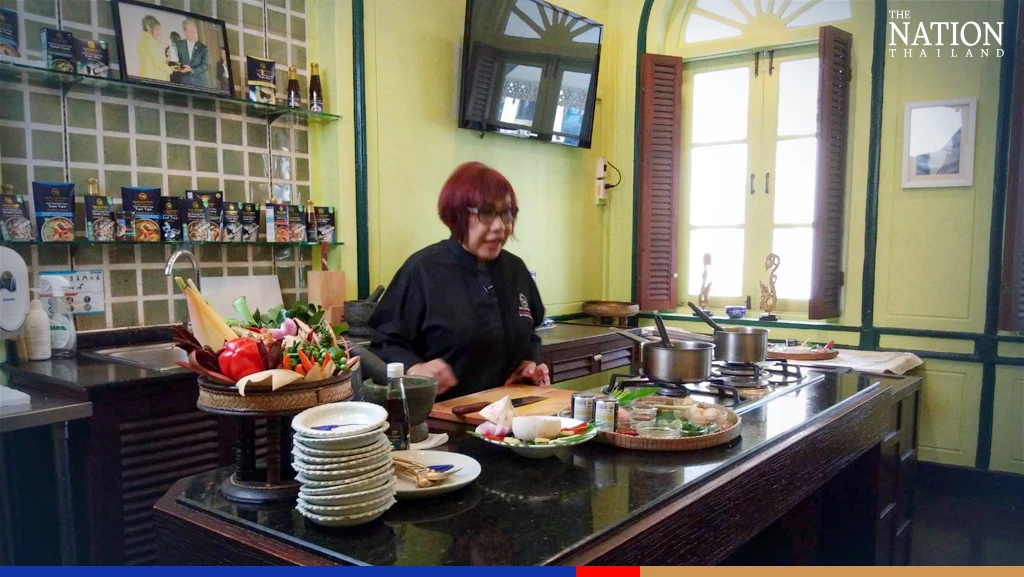
Delicate authentic flavours are not enough to ensure success in the Thai fine-dining business today. Adding consciousness about sustainability is a key to level up, according to Blue Elephant, a well-known global Thai fine restaurant chain.
Thai cuisine is popular around the world because it is marketed as the healthiest meal which the rich of herbs. Many non-Thai customers visit Thai restaurants around the world. In 2017, seven Thai dishes were named in CNN Travel’s “World’s 50 Best Foods” list, which was based on an online poll of 35,000 people.
According to statista.com, revenue in Thai food market amounts to US$65.31 billion in 2022. The market is expected to grow annually by 5.83 per cent.
Blue Elephant Group and Blue Spices Vice Managing Director Kevin Somany discusses his goals and challenges after half-inheriting this 42-year-old Thai fine-dining restaurant in an exclusive interview with The Nation in order to stay at the forefront of this competitive market.
Blue Elephant, which opened in Brussels, Belgium in 1980, was one of the first well-known Thai fine dining restaurants among foreigners.
After years of tremendous success, the Blue Elephant Restaurant and Cooking School returned to its homeland, opening in Bangkok in 2002, followed by a Phuket branch in 2010. The Blue Spice factory, the Blue Elephant group’s manufacturing arm, was then opened in 2006.
Kevin concedes that the authentic taste of genuine traditional Thai cuisine at Blue Elephant restaurants, and their other spice products, such as curry pastes, sauces and seasonings, have given them global recognition. These key elements, however, cannot be their sole unique selling points to sustain the business in the long run.
Adding more items to the menu, creating more products and more services will help, but they will not be enough to make Blue Elephant and Blue Spices any different from other Thai restaurants, he points out.
“When you come out with any new products, it has to have something unique beyond normal standards,” Kevin says, and that’s when he discovered the critical part of the sustainability factor.
Kevin says that Blue Elephant has been concerned about people, the community, and the environment since its inception. It is the guiding principle of chef Nooror Somany Steppe and her husband, restaurant founder Karl Steppe.
Hence, all he needs to do now is make those principles visible and concrete.
That’s when he and his management team decided to go for a makeover in the packaging of all Blue Spices products, including their pastes, sauces, spices, and cooking sets in 2020.
“The change is in the very small details, you have to observe closely to see it,” says Kevin, as he demonstrates their products.
All the cardboard used for packaging is 100 per cent from trees certified by Forest Stewardship Council, meaning the trees are harvested from forests that are responsibly managed, socially beneficial, environmentally conscious and economically viable.
Besides, the packaging has been redesigned to eliminate the use of plastic film coating, no more see-through windows to prevent a plastic, non-toxic water-based matted coating, and a smart lock pack to eliminate the use of glue or Polyvinyl chloride sticker.
Furthermore, the package is labelled with a new logo to certify that the improvement is in the nature of more eco-friendly packaging, Kevin points out.
“As Blue Elephant, no one doubts our quality and the authentic Thai traditional taste. However, in every change, we have to add a bit more level of delicacy that will please our customers,” Kevin noted.
He says that the market has reacted favourably to the products. Blue Elephant sold 3.5 million units of products just before Covid. With people staying at home during the pandemic and a growing interest in Thai cuisine, it peaked at 4.6 million units, with curry pastes accounting for 70 per cent of sales.
However, he believes that a part of the reason people from other countries choose Blue Elephant is not only the savoury flavours, but also the innovative eco-friendly packaging.
According to a study on “Thai Cuisine to Global Market” by Napavarn Noparatnaraporn, an expert in biodiversity, one of the most important things that draws customers’ attention is creative and distinct packaging. Furthermore, food producers must be concerned about society, the environment, and the global food market in the near future.
“Our biggest market is the USA, followed by Switzerland, Austria, Israel and Hong Kong. The Netherlands, despite a year-long disruption, could be added to this list as it has always been in the top 3 and is about to be back in the top 5,” says Kevin.
Kevin is currently moving forward with his plan to expand its Pathum Thani factory, where work was temporarily suspended due to the pandemic. The new factory will be twice the size of the old one and will begin production in 2024.
“The demand is growing stronger and stronger. With the factory expansion, we can increase production, manpower, and use a more sustainable method. We are in the midst of a young generation that is just stepping in. Hopefully, we will be able to continue for the next hundred years,” Kevin states.
Blue Spices now has four main product categories: ready to cook, ready to eat, ready to heat, and ingredients.
“I think Blue Elephant is a great concept and my dream would be to have one Blue Elephant in every major city in the world. There are many places that deserve to have a Blue Elephant restaurant,” Kevin says.
Currently, there are four Blue Elephant restaurants in operation: Bangkok, Phuket, Copenhagen, and Malta. They did, however, manage to expand their Blue Spice products to 45 countries worldwide, with more new markets on the way.
In addition, they provide cooking-based curry pastes, dipping and dressing sauce to airlines, hotels, and Thai restaurants as well as Thai cooking classes.
Sustainability has been a buzzword for many years as a result of the global environmental crisis. The United Nations declared climate change an emergency and urged all parties to do more to protect the environment.
The term is also thought to be a key secret to success for many businesses looking to expand and is projected to skyrocket in developing economies and emerging markets in the coming years
Fortune Business Insights found out that the global green technology and sustainability market is expected to grow from $13.76 billion in 2022 to $51.09 billion by 2029.
The Business Development Department expects hotel booking and tour businesses to experience growth this year after suffering a massive drop in revenue for two years.
In its recent report, the department said these two types of businesses saw their combined revenue of 123.79 billion in 2019 fall by 70.42 per cent to 36.42 billion in 2020 and again by 61.08 per cent from the previous year to 14.25 billion baht in 2021.
The department attributed this drop to the Covid-19 pandemic and subsequent lockdowns that kept tourists away.
This year, however, the department is upbeat about the two businesses enjoying growth, especially with several indicators pointing to an upward trend in travel.
The report also cited a forecast from the University of Thai Chamber of Commerce, which said some 6 million to 8 million tourists can be expected to visit Thailand in the second half of this year and this would generate revenue of up to 50 billion baht per month.
Another indicator is the registration of new tourism and hotel-booking businesses this year, the report said.
From January to July this year, 549 new tourism-related companies have been registered with a capital of 988.53 million, marking a 169.12 per cent increase year on year.
The report said the lifting of travel restrictions and the fact that Thailand has destinations that can be visited all year are factors that will encourage foreign arrivals and encourage travel by local people, thus boosting the growth of related businesses.
Bangkok police have advised motorists to avoid Ratchaprasong intersection in Pathum Wan district, where anti-government protesters are gathering on Sunday.
Pathum Wan police station chief Pansa Amarapithak said drivers should avoid Ratchadamri Road from Ratchaprasong to the Pratunam intersection and Rama I Road from Chid Lom to the Chalermphao intersection.
The areas are expected to be congested from 5pm when rally organiser Kana Lomruam Prachachon (Melting Pot Group) says the protest will start.
Pansa said the group’s leaders, Jatuporn Promphan of the United Front for Democracy against Dictatorship (UDD), and Nitithorn Lamlua, told police that about 300 protesters would attend the rally.
Pansa said the two leaders promised the protest would stick to the pavement in front of CentralWorld and not stray onto the road.
But the Sunday rally would add pressure to traffic congestion in the busy shopping district, so shoppers should use the Skytrain where possible instead of driving, the station chief added.
Jatuporn said his group will continue protesting against the so-called “3 Ps” despite Gen Prayut Chan-o-cha being suspended as prime minister pending a Constitutional Court ruling on his tenure limit.
The two other “Ps” are acting PM Gen Prawit Wongsuwan and Interior Minister Gen Anupong “Pok” Paochinda. The three generals joined forces to stage the 2014 coup and have been in Cabinet together since then.
Earlier, Jatuporn noted that Prayut was not suspended from Cabinet as he still held the post of defence minister. He added that the former coup leaders were seeking to cling on to power forever.
Pansa said that both plainclothes and uniformed police would be deployed to monitor the rally and maintain security at ground level and on the Skywalk.
Police would check for weapons at the rally site while also ensuring the Skywalk was not used to launch attacks on protesters below, he added.
He said protesters’ constitutional right to demonstrate peacefully would be protected as long as they did not mention the royal institution. He also advised them to confine their activities to the seven sites prepared for them by the Bangkok Metropolitan Administration. Protesters who gathered elsewhere must avoid violating traffic law by blocking roads, he said.
Though fake news about Covid-19 has fallen off the top 10 list, false finance reports are still going viral, the Digital Economy and Society Ministry said on Sunday.
From August 26 to September 1, the ministry studied 266 social media posts and found 141 to be fake. Of them, only four were related to Covid-19.
“Fake news about Covid-19 may have dropped because more people are becoming aware of the issue and confidence in government reports is growing,” the ministry’s spokesperson Noppawan Huajaiman said.
However, she said, misleading reports related to finance are still spreading among netizens, with most related to dubious loans, investments and recruitment of staff.
She urged people to check the news thoroughly before sharing.
The top 10 fake reports shared on social media from last Friday to Thursday were:
1. Healthy teenagers’ blood pressure should be 120/80 and 140/90 for the elderly.
2. The Thai Meteorological Department predicts the Lionrock and Kompasu storms will hit 29 provinces.
3. People can apply for Government Savings Bank (GSB) loans worth up to 300,000 via Line application.
4. People can register on Line for loans of 5,000 to 300,000 baht from GSB and Krungthai Bank (KTB).
5. The GSB grants monthly loans.
6. KTB lets people apply for loans worth five times their income via the Line application.
7. Facebook and Line invite people to invest in high-profit schemes under the Securities and Exchange Commission’s supervision.
8. Text messages from the Thai Credit Guarantee Corporation encouraging people to apply for loans online.
9. Drinking cold-pressed coconut oil helps balance the body and relieve muscular pain.
10. The Islamic Bank of Thailand recruits staff via Facebook.
A knife-wielding Taiwanese man went on a rampage at a petrol station in Ayutthaya’s Uthai district on Saturday night before being overpowered and handed to police.
The drama began at about 9.30pm when the man walked into the petrol station on the outbound section of Highway 32 in Tambon Thanu.
Security camera footage posted by the Nation TV website
shows the man walking in and threatening two staff with a pocketknife as they collect money from the driver of a blue sedan car. The car quickly accelerates away.
The man then walks to a white Honda being refuelled, opens the rear left-side door and gets in. Driver Pasiwanut Singprae, 31, is seen fleeing the vehicle as the man gets in.
He later told police that the knifeman had sat down in the backseat and shouted “go, go!” Paswanut said he and his girlfriend were frightened so they grabbed the car keys and fled. He added that the assailant had scratched the vehicle with his knife in several places.
Footage then shows the man leaning through the window, pulling out the fuel pump nozzle and throwing it to the ground before closing the fuel cap. Station staff back away as he jumps into the driver’s seat and closes the door. Apparently realising that he cannot start the engine, he then exits the vehicle, gesticulates wildly at a passing motorcycle and grabs a fuel nozzle. However, fuel supply to the nozzle appears to have been remotely shut off by station staff. The man then walks around holding the nozzle in a state of high agitation before climbing up to sit on the Honda’s bonnet.
Saharat Homsukhon, a rescue official of a unit near the station said the man had earlier walked into his unit, wielding a knife and threatening rescue staff, who fled.
Saharat said the man was shouting crazily as he left the rescue unit and walked in the direction of the petrol station.
Rescue officials followed before confronting the man at the station. A fight reportedly ensued and the assailant suffered head injuries as he was overpowered by petrol station staff and rescue officials. Police arrived at the scene shortly afterwards to find the man complaining bitterly about being attacked. They handcuffed him and seized his pocketknife before rescue officials rushed him to a local hospital for treatment. Police said they would charge the assailant, adding they suspected he had been taking drugs.
The construction of the Mass Rapid Transit (MRT)’s Orange, Yellow and Pink lines is more than 90 per cent ready, government spokesman Anucha Burapachaisri said on Sunday.
He said the Yellow Line from Bangkok’s Lat Phrao district to Samut Prakan’s Samrong district is 94.56 per cent done, while the Pink Line from Nonthaburi’s Khae Rai area to Bangkok’s Minburi district is 90.55 per cent done.
“Trial runs of the Yellow and Pink lines will be conducted in October before they are officially opened next year,” he said.
Anucha Burapachaisri
He added that the Orange Line from Thailand Cultural Centre to Minburi was 95.94 per cent complete and was well ahead of schedule.
Anucha went on to say these projects aim to reduce traffic congestion in Greater Bangkok, support the city’s expansion and improve residents’ quality of life.
He added that related agencies have been instructed to keep an eye on the construction to mitigate impacts on the environment and traffic, as well as ensure people’s safety.
The Land Traffic Act’s 13th amendment, which imposes stricter rules and stronger penalties to ensure road safety, will go into effect on Monday.
Under the amendment, the new penalties are as follows:
• Up to 4,000 baht fine for speeding, jumping traffic lights or refusing to stop at zebra crossings.
• Up to 2,000 baht fine for driving against the traffic, not wearing a helmet or not fastening the seat belt.
• Up to 1 year in prison and/or a fine of between 5,000 and 20,000 baht for driving without concern for others’ safety.
• Up to 1 year in prison and/or a fine of between 5,000 and 20,000 for the first instance of drunk driving.
• Up to 2 years in prison and/or 50,000-100,000 baht fine for repeat drunk driving violations.
The law threatens to slap motorists who meet for racing, unlawfully modify their vehicles or behave suspiciously with up to three months in prison and/or a fine of 5,000 to 10,000 baht. Shops that unlawfully modify vehicles also stand to face two-thirds of the penalty.
Race organisers and advertisers can face up to six months in prison and/or a fine of 10,000 to 20,000 baht.
Driver and front-seat passengers of pick-up trucks are required to fasten their seat belts and carry a limited number of passengers in the rear bed.
The Royal Thai Police and related agencies are still considering the correct number of passengers that can be allowed to sit in the rear of pick-up trucks. Regulations on the number of passengers in the rear of trucks and ensuring children under the age of six be placed in car seats will be stringently implemented from December 4.
The Agriculture Department has designed a special machine to help farmers climb coconut trees so they no longer have to rely on monkeys.
This was in response to a 2020 report from the People for the Ethical Treatment of Animals (Peta) accusing Thai coconut farmers of abusing monkeys. Peta has been pushing for a ban on the use of monkeys in the agricultural industry in many countries.
Rapeepat Chansriwong, the department’s director-general, said the climbing machine was created to mitigate the impact Peta’s report has had on Thailand’s coconut exports.
Adding that the machine was safer than the Indian prototype because it includes a belt to ensure the climber’s safety, he said this would bring the industry closer to being automated.
Rapeepat Chansriwong
“The machine weighs 5 kilograms on either side and allows the user to climb the tree at 0.14 metres per second,” he explained.
Rapeepat explained that the Agriculture Department has set a monkey-free standard as part of its good agricultural practices in response to Peta’s report and is also selling small coconut-tree sprouts.
The climbing machines are being produced by three factories. Those interested in purchasing one can call the department’s Agricultural Engineering Research Institute at (02) 579 2757.
Olympic champion Panipak “Tennis” Wongpattanakit added another medal to her trophy cabinet with gold at the 2022 World Taekwondo Grand Prix.
Competing in Paris at the second of four Grand Prix events this year, Panipak won through to the 49kg final on Friday. She faced a daunting challenge in the showdown, going up against 2022 European Champion Merve Dinçel. However, the in-form Thai made short work of her Turkish opponent, winning the final 2-0 with a score of 6-0 and 11-6.
The victory also saw Panipak earn crucial qualifying points for the 2024 Summer Olympics in Paris.
She missed the opening Taekwondo Grand Prix in Rome earlier this year due to her tight competition schedule.
The third series of the Grand Prix will be held in Manchester, UK from October 21 to 23, followed by the Wuxi 2022 World Taekwondo Grand Prix Final in China from December 12 to 13.
Panipak was congratulated on winning the gold by government spokesman Anucha Burapachaisri. He praised her performance after she made the weight at 49kg despite recently competing in the 53kg category.
“[The government] also urges Thais all over the country to encourage Thai athletes in other competitions”, Anucha said.









 But the Sunday rally would add pressure to traffic congestion in the busy shopping district, so shoppers should use the Skytrain where possible instead of driving, the station chief added.
 Earlier, Jatuporn noted that Prayut was not suspended from Cabinet as he still held the post of defence minister. He added that the former coup leaders were seeking to cling on to power forever.
 He said protesters’ constitutional right to demonstrate peacefully would be protected as long as they did not mention the royal institution. He also advised them to confine their activities to the seven sites prepared for them by the Bangkok Metropolitan Administration. Protesters who gathered elsewhere must avoid violating traffic law by blocking roads, he said.


 He later told police that the knifeman had sat down in the backseat and shouted “go, go!” Paswanut said he and his girlfriend were frightened so they grabbed the car keys and fled. He added that the assailant had scratched the vehicle with his knife in several places.
 Saharat Homsukhon, a rescue official of a unit near the station said the man had earlier walked into his unit, wielding a knife and threatening rescue staff, who fled.


 Anucha Burapachaisri


 Rapeepat Chansriwong


