Thailand’s first electric locomotive will be tested at Bang Sue Grand Station in Bangkok this year, Energy Absolute (EA) said on Tuesday.
EA deputy chief executive officer Amorn Sapthaweekul said the electric locomotive manufactured by Chinese locomotive manufacturer CRRC Dalian arrived in Thailand on July 17.
He added that the company had cooperated with locomotive maintenance specialist Asia Engineering & Service (Thailand) on installing a battery system for the electric locomotive.
“This electric locomotive is a part of the development of energy-saving and eco-friendly battery-powered trains,” he said.
He added that the company would cooperate with King Mongkut’s Institute of Technology Ladkrabang and Rajamangala University of Technology Isan to conduct shunting test at Bang Sue Grand Station this year.
Amorn added that the locomotive can run a distance of 150-200 kilometres, adding that it could save energy cost by more than 40 per cent compared to diesel-powered one.
He said the EA has developed an ultra-fast charge system that can charge electric locomotive within an hour, as well as a battery-swapping station that can change battery in not more than 10 minutes.
“EA is ready to design and develop ultra-fast charge system to meet the government’s strategy to promote Thailand as logistics hub in Asia,” he said.
He said electric locomotive is considered a turning point for Thailand as transition from fossil fuel to electricity is now global trend.
He also hopes that electric locomotive will become an important innovation, which help Thailand to achieve sustainable development goals.
News that Thailand’s Khao Soi (Northern Thai curry noodles) has been named the world’s best soup put a smile on the face of embattled Prime Minister Prayut Chan-o-cha on Tuesday.
“It’s good news that Thai food is becoming so well known among foreigners,” said Prayut, speaking at a food-promotion exhibition organised by the Digital Economy and Society Ministry (DESM) at Government House in Bangkok.
Prayut, who faces a tenure dispute that could see his term as PM end next Tuesday, added that Khao Soi was now part of Thailand’s “soft power” push to boost the economy.
He urged the DESM and Thailand Post to continue promoting Thai food via channels such as YouTube and internet influencers.
Khao Soi topped the list of the “50 Best Soups in the World” published last Thursday by TasteAtlas, a website that gathers recipes and reviews from food critics worldwide.
The Thai soup was followed by Cullen Skink, Ramen, Tonkotsu Ramen, Żurek, Mercimek çorbası, Sinigang, Rawon, Salmon Soup (Lohikeitto) and Ciorbă de pește “ca-n Deltă”.
“A signature dish of Northern Thailand, khao soi is a delicious coconut soup in which numerous regional influences are combined to create a truly spectacular dish,” TasteAtlas said.
The Royal Thai Air Force (RTAF) clarified on Tuesday that joint military exercises with China are not related to the current tensions with Taiwan.
Air Force spokesman Air Vice-Marshal Prapas Sornjaidee said on Tuesday that the Falcon Strike 2022 exercises had been planned two years in advance and it was being continued for the fifth year.
He said that the training is not a secret as China had sent their soldiers from Kunming to train with Thailand. He said that the world must live together with love and peace, while each sector should find a solution together by talking.
From the military aspect, he said that soldiers around the world practise together on different terrain to exchange experiences and learn together because soldiers speak the same language.
He said Thailand has trained with China, the US, Indonesia, Malaysia, Singapore, and Australia.
From the perspective of international relationship aspect, Prapas said it is a different aspect from military relations. He repeated that soldiers always trained together and these exercises were not based on any situation.
Prapas also told people not to worry if the exercises would affect the F-35 deal with the US because it is a different subject and there is a contract on which country it could be used to train with.
The dangers of Rohypnol were highlighted by authorities on Tuesday after a Bangkok used-car dealer was killed in a drug-fuelled shooting rampage.
Thanapon Anusornchaicharoen, 28, was caught in a hail of bullets at his rented home in Petchthaweesuk Village in the western suburbs on the night of August 11. Police found dozens of bullet casings at the scene of the crime, attesting to a frenzied attack.
On Monday, they arrested the main suspect, Meen Parasingh or “Mos Klong Kwang”, 25. Police said investigations indicated Meen was a regular user of Rohypnol, known locally as “ya lin fah” or blue-tongue drug for its effect when chewed.
The Food and Drug Administration (FDA) on Tuesday said that Rohypnol (Flunitrazepam) is a controlled psychoactive drug that must be only prescribed by physicians. Doctors must report to the FDA before prescribing these drugs, FDA deputy secretary-general Surachoke Tangwiwat said.
“Rohypnol has a sleep-inducing effect similar to Alprazolam, so it’s mostly prescribed by psychiatrists,” he added.
Rohypnol is also given to patients as a sedative before surgery, Kasetsart University lecturer Weerachai Phutdhawong pointed out.
It is also used as “date-rape drug”, often slipped into alcoholic drinks to boost its effects.
Hence, the drug’s manufacturers had changed the formulation so that Rohypnol pills turn liquid blue and leave sediment at the bottom of the glass, he said.
“However, when drug addicts consume this drug, the colour shows on their tongues instead,” he added.
The Public Health Ministry will ask the Centre for Covid-19 Situation Administration (CCSA) to downgrade the status of the disease at its next meeting expected on Friday, the minister said on Tuesday.
Public Health Minister Anutin Charnvirakul said when the CCSA meets, it would be informed of the decision of the National Communicable Disease Committee to downgrade Covid’s status from a “dangerous communicable disease” to a “communicable disease under surveillance”.
Anutin said the ministry wants to hear the CCSA’s opinion on the decision.
He said although the government had returned the authority to the ministry to lead operations on controlling Covid, the ministry still wanted to coordinate with the CCSA and other government agencies for the operations.
Anutin was not clear on the status of the CCSA once Covid is downgraded to a “communicable disease under surveillance”.
“Let’s put it this way. All persons on the CCSA came together to help with the work. Prime Minister Prayut Chan-o-cha took it upon himself to command the CCSA so that all government agencies can work together,” Anutin said.
“When it’s clear that everything has returned to normalcy and when the ministry is certain that it no longer needs the authority of other government agencies, the prime minister would make a decision based on the situation.”
Meanwhile, Dr Kiattiphum Wongrachit, permanent secretary for Public Health, said the meeting of the Public Health and Medical Emergency Operation Centre on Monday was informed of the National Communicable Disease Committee’s decision to downgrade Covid’s status.
Kiattiphum said the ministry would have to adjust its operation plan accordingly that will be enforced until December.
As part of the new operation plan, the ministry will ensure that Covid medicine will be accessible from drug stores but require prescription by doctors.
Kiattiphum said the committee had also decided to change the treatment and surveillance period of Covid patients from seven days for treatment and three days for surveillance to five days for treatment and five days for surveillance.
The permanent secretary said the antiviral Molnupiravir drug will be the main medicine for Covid treatment and the ministry is certain the drug would be adequate.
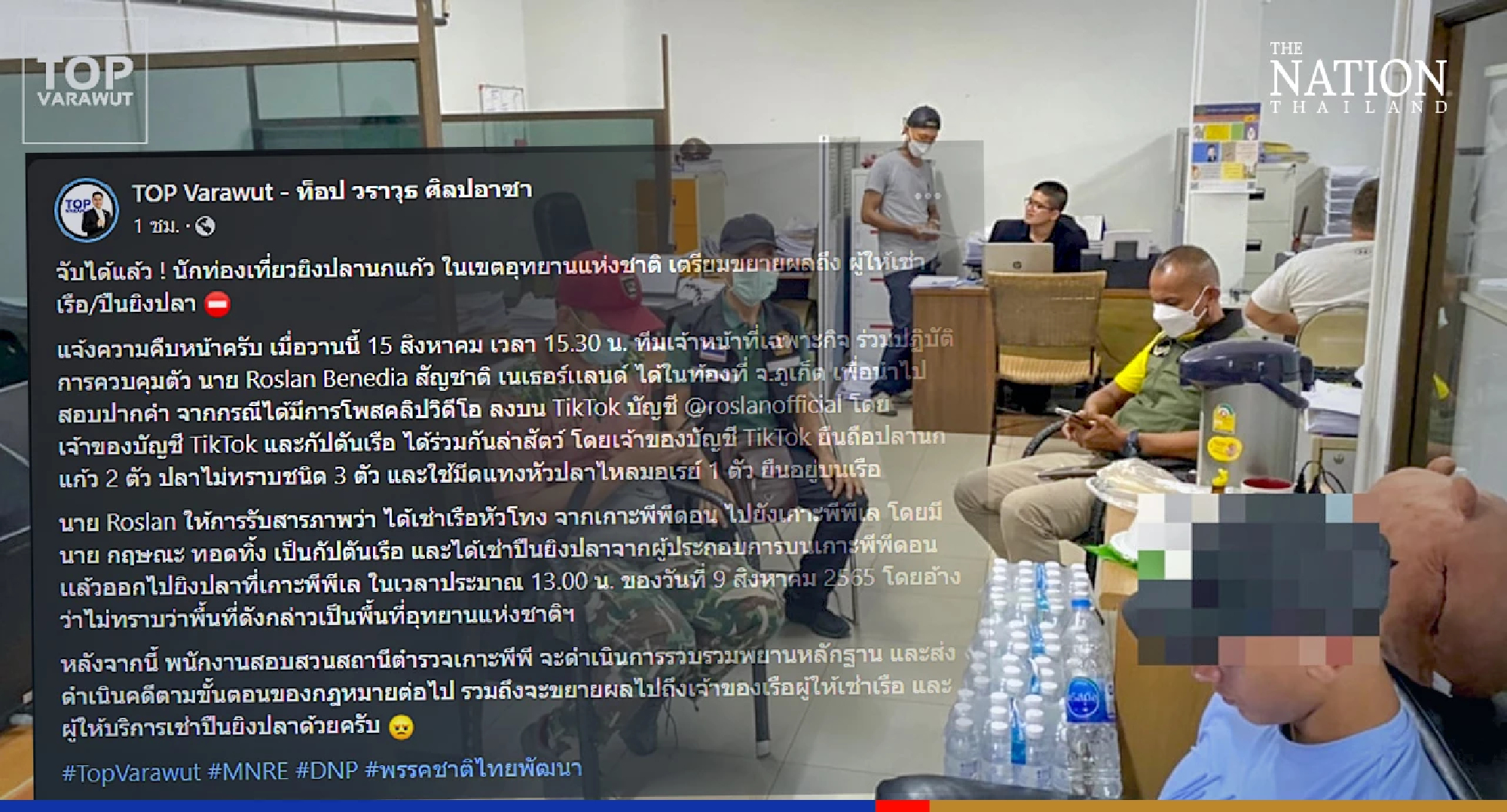
Police arrested a Dutch national in Phuket on Monday for allegedly hunting rare parrotfish in Krabi’s national park.
The foreigner was hunted down after he posted a TikTok clip posing with a catch of three parrotfish, one moray eel and two other unidentified fish in Hat Noppharat Thara-Mu Ko Phi Phi National Park. The clip sparked outrage on Thai social media.
In a Facebook post on Tuesday, Natural Resources and Environment Minister Varawut Silpa-archa said the suspect, Roslan Benedia, has pleaded guilty.
Benedia said he had rented a boat and speargun at Phi Phi Don Island at before heading to Phi Phi Leh at 1pm on August 9. The boat was captained by Krisana Todting.
The suspect claimed he did not know the area had gone fishing in was protected.
Varawut said Phi Phi Island police will collect evidence and take legal action against Benedia. Police will also look into arresting the boat and speargun rental service providers.
Water resources near Doi Suthep mountain are being checked for bacteria after a Chiang Mai University lecturer warned people that the Rab Sadet Waterfall is contaminated with E.coli.
Rungsrit Kanjanavanit, a lecturer at the university’s Faculty of Medicine, said in a Facebook post that the waterfall was contaminated due to poor wastewater management in the community living further up. The community lives above the waterfall near the Wat Phra That Doi Suthep temple.
Pollution Control Department director-general Attapon Charoenchansa said the Environmental and Pollution Control Office 1 and Regional Health Promotion Centre 1 collected samples at three water resources on Monday, namely Peen Pak Pai and Rab Sadet waterfalls and Wat Pha Lat Bridge.
“The Pollution Control Office 1 will conduct tests for E.coli, which will take seven days,” he said. “The Environmental and Pollution Control Office 1 will, meanwhile, check for total coliform bacteria and faecal coliform bacteria.”
He said that Rungsrit had cited a study conducted by Chiang Mai University students, but it did not include E.coli tests. He also claimed that the lecturer’s Facebook post can cause confusion and panic among people.
“Hence, it is necessary to boost awareness,” he said, adding that the concept of launching public awareness campaigns has been discussed with related agencies.
He added that the Environmental and Pollution Control Office 1 will cooperate with other agencies to help tackle the issue if the waterfall is found to be contaminated.
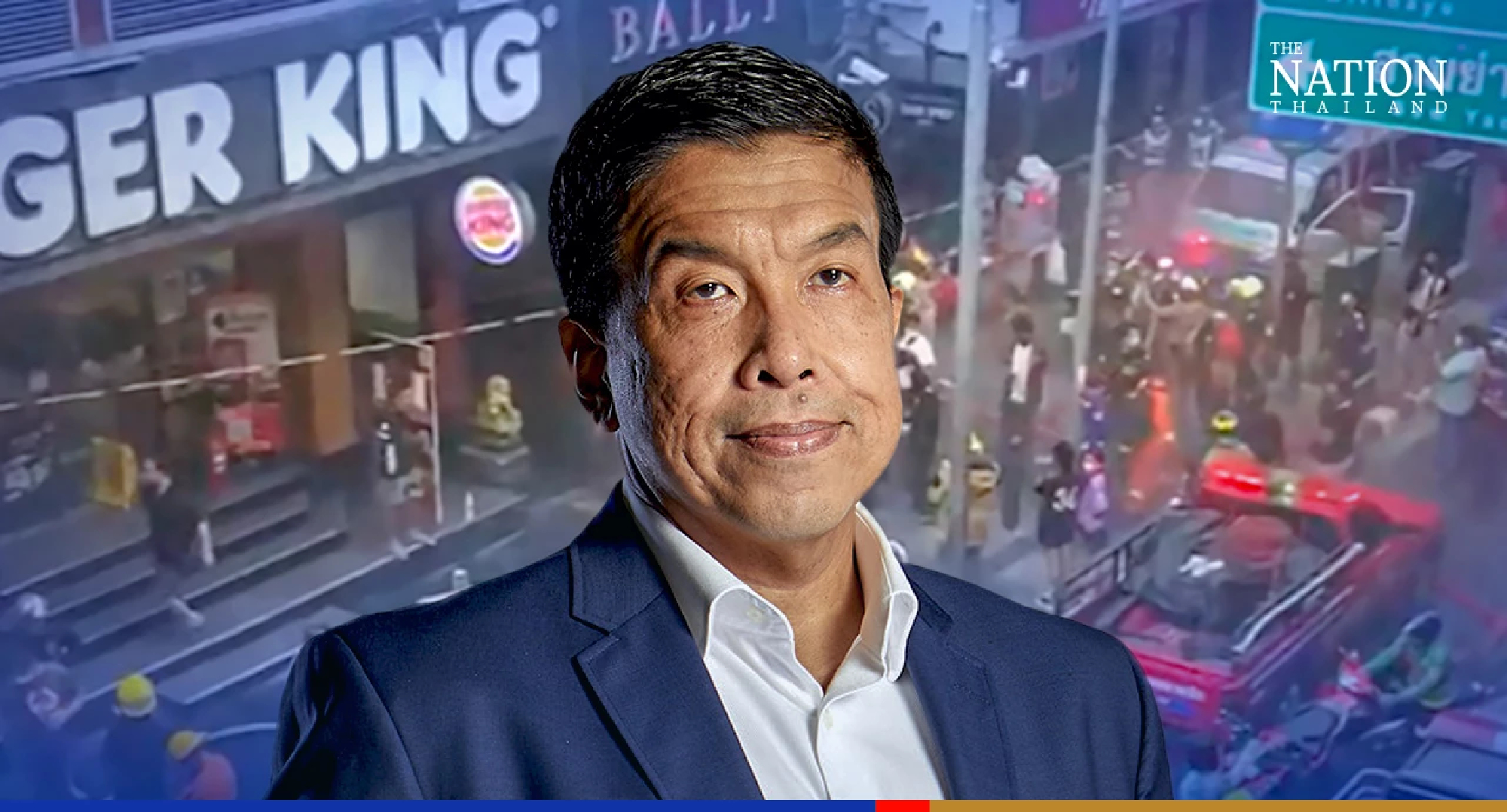
In the wake of the fatal Chonburi pub blaze that killed 19 and injured dozens of others earlier this month, the Bangkok governor is planning to revise regulations for nightspots here.
At a meeting with Bangkok Metropolitan Administration (BMA) executives on Monday, Chadchart Sittipunt said the Mountain B pub fire in Sattahip district is a valuable lesson. He also pointed out that the blaze has affected the confidence of tourists just as the tourism industry has started to recover.
The nightclub went up in flames at about 1am on August 5, killing 13 people on the spot and injuring scores of others. Since then, six victims have succumbed to their third-degree burn injuries. The pub was found to have been operating illegally as an entertainment venue despite only having a restaurant permit.
The building had also been illegally altered.
Chadchart said his aim is to revise all regulations related to entertainment venues in metropolitan areas with a focus on updating outdated clauses and eliminating overlapping regulations.
“The current regulations involving the building’s permit, safety and structural issues have been in use for over 20 years and are now due revision. We will also combine related regulations to reduce confusion,” he said.
Chadchart added that the BMA will also coordinate with the police to ensure legal compliance regarding opening and closing hours and noise created by entertainment venues. Though these factors are not under BMA’s jurisdiction, the city will work with police to prevent these venues from being a nuisance to surrounding communities, he said.
The governor added an initial survey shows that more than 90 per cent of nightspot owners are willing to comply with the BMA regarding fire safety, including adding more exits and fire extinguishers.
The governor said BMA has no immediate plans to revise the city’s zoning of entertainment venues.
Prime Minister Pham Minh Chinh on Sunday attended a conference reviewing the cooperation between the President Ho Chi Minh Mausoleum Management Board and the All-Russian Scientific Research Institute of Medicinal and Aromatic Plants (VILAR) in preserving the body of the late leader.
In 1992, when the agreement between Vietnam and the former Soviet Union became invalid, with permission from the Vietnamese and Russian Governments, the Mausoleum Management Board and VILAR switched to direct cooperation in preserving the body of the President.
Addressing the conference, PM Chinh said when President Ho Chi Minh passed away in 1969 at the age of 79, with the endless love and gratitude for the leader and to realise the strong aspirations of the entire Party, army and people, the Politburo and the Party Central Committee decided to preserve his body and build a mausoleum so that his reputation, great career, and enormous devotion would exist forever in the hearts and minds of every Vietnamese person and become an everlasting symbol of national solidarity and unity.
Braving the fierce war, experts from the Soviet Union worked side by side with Vietnam’s military officers and soldiers to make tireless efforts to preserve the body in the best possible condition.
The PM described the achievements so far as a vivid illustration of Vietnam’s close cooperation and friendship with the Soviet Union in the past and Russia at present.
On behalf of the Vietnamese Party and State leaders, he appreciated the cooperation and assistance from the Soviet Union, now Russia, especially the VILAR scientists and medical experts, for this “particularly sacred and noble” task.
PM Chinh also spoke highly of the dedications and contributions of Vietnamese scientists, ministries, sectors, localities, and the Mausoleum Management Board and High Command.
The long-term preservation of President Ho Chi Minh’s body, along with the promotion of the mausoleum’s political and cultural values, is a special political task holding great significance to the building and protection of socialist Vietnam, he said, adding that since its inauguration, the mausoleum has served more than 60 million visitors, including over 10 million international guests from most countries around the world and international organisations.
The Government leader expressed his hope that the Mausoleum Management Board and VILAR will keep exerting efforts to overcome difficulties and challenges and effectively coordinate to fulfil the tasks.
At the conference, he presented the third-class Labour Order to VILAR, the Friendship Order to the chief trade representative of Russia in Vietnam, and certificates of merit to 12 collectives and individuals from the Mausoleum Management Board in recognition of their contributions.
Prior to the event, PM Chính and a VILAR delegation led by Director Sidelnikov Nikolai Ivanovich paid tribute to President Ho Chi Minh at the mausoleum. He also hosted a reception for the delegation.
Preliminary results of the family income and expenditure survey for 2021 released by the Philippine Statistics Authority (PSA) on Monday showed that the poverty rate had worsened to 18.8 per cent from 16.7 per cent in 2018.
Rosalyn (not her real name) is a 34-year-old mother of three who works as a domestic helper in Parañaque City. She has been with her current employer since 2005 and has seen her monthly wage increase from P3,500 to P12,000 a month. Still, Rosalyn complains that her earnings are never enough.
Her common-law husband Jerry (not his real name) works as a night watchman in a public school in Pangasinan, but is paid by the local government “only when there are surplus funds from the municipal budget.”
For months when most of Luzon was on lockdown, Jerry did not get paid as the school he worked in was closed, forcing Rosalyn to advance portions of her future wages to send to her partner who is caring for their three children—now age 10 to 14.
Rosalyn said that a few days ago, Jerry called to tell her to borrow P12,000 from her employer as their kids still did not have school uniforms, books and other supplies.
An argument ensued, Rosalyn recalled, saying she was already tired of borrowing money and blamed Jerry for being unable to make ends meet with the cash she sends every month.
“But deep inside, I know he tells the truth. The price of everything has gone up. And because he lost his job during the pandemic, Jerry stays at home to take care of the children. I know he feels ashamed. But my borrowings are now at P40,000. And I can never send enough back home,” Rosalyn said, her voice breaking.
Rosalyn and her family are among the 2.3 million Filipinos who joined the ranks of the poor because of the lingering COVID-19 pandemic.
Preliminary results of the family income and expenditure survey for 2021 released by the Philippine Statistics Authority (PSA) on Monday showed that the poverty rate had worsened to 18.8 per cent from 16.7 per cent in 2018.
This translates to 19.99 million Filipinos who are living below the poverty line, or those making less than P12,030 a month for a family of five. In 2018, the last time the survey was made, there were 17.67 million Filipinos living below the poverty threshold of P10,481 a month. The poverty rate was worse in 2015 at 23.5 per cent or the equivalent of 23.68 million poor Filipinos.
Unemployment The poverty threshold is the minimum income needed to meet the basic food and nonfood needs such as clothing, fuel, light and water, housing, transportation and communication, and health and education expenses.
“The effects of the COVID-19 pandemic, including income and employment losses, caused the poverty incidence to rise. Restrictions on mobility and low earning capacity of poor households due to limited access to regular and productive jobs made the lives of Filipinos difficult,” said Socioeconomic Planning Secretary Arsenio Balisacan, who heads the state planning agency National Economic and Development Authority (Neda).
“We do know that we have a tough road ahead, but we are already prepared to face these challenges head-on. Our poverty reduction efforts will focus on three main areas: the full reopening of the economy; more investments in human capital, social development, and social protection, and transformation of the production sectors to generate more quality jobs and competitive products,” Balisacan said.
“Social protection programs and services must effectively reach and empower them,” Sen. Grace Poe added on Monday.
The senator said improving employment opportunities for Filipinos would be critical, particularly in the agriculture sector, as the pandemic forced many companies to close down.
She said the passage of the Public Service Act, which allowed foreign ownership of companies in telecommunication, airlines and railways, would definitely help in generating jobs.
She also noted that the government should let drivers of public utility vehicles return to their routes “as they have waited for too long without income.”
“The commuters need them, especially the millions of students who will return to schools next week,” she stressed.
Despite recent employment gains due to the reopening of more economic sectors, the Philippines’ latest jobless rate in June of 6 per cent, equivalent to 2.99 million Filipinos, was still the second-worst in emerging Asia.
“The unemployment rate in the Philippines remains one of the highest among major Asian economies, though much lower than that of India,” Neda noted in a report issued on Monday. India’s jobless rate in June was 7.8 per cent.
The unemployment rate in Vietnam was 2.5 per cent in June; Malaysia, 3.9 per cent in May; China, 5.6 per cent in March; and Indonesia, 5.8 per cent in February, Neda’s report showed.
Economic reopening Among families, poverty incidence inched up to 13.2 per cent of households in 2021 from 12.1 per cent in 2018, although still below the 18 per cent in 2015. This meant the number of poor Filipino households increased to 3.5 million last year from 2018’s three million.
While the PSA has yet to release sectoral poverty statistics, National Statistician Dennis Mapa told a press briefing that farmers and fisherfolk were historically among the poorest of the poor in the country.
Mapa said it did not help that entrepreneurial activity and cash receipts from abroad—among the top sources of Filipino families’ incomes—were the most badly hit by the hard times caused by the pandemic.
Thousands of small local businesses had been shuttered by the most stringent lockdowns at the onset of the pandemic in 2020. The COVID-19 crisis also temporarily stopped the deployment of overseas Filipino workers, while hundreds of thousands of them lost their jobs and returned home due to a global recession.