พิพิธภัณฑ์ศิลปะซานอันโตนิโอ (San Antonio Museum of Art) ซึ่งจัดแสดงประติมากรรมนี้เปนการชั่วคราวระบุว่า รูปเหมือนของดรูซุส เกร์มานิคุส “ครั้งหนึ่งเคยตั้งอยู่ในเมืองอัสชาฟเฟนบวร์ก (Aschaffenburg) ประเทศเยอรมนี ในบ้านจำลองเต็มรูปแบบจากเมืองปอมเปอีที่เรียกว่า Pompejanum (ปอมเปยานุม) สร้างโดยพระเจ้าลุดวิกที่ 1 แห่งบาวาเรีย (Ludwig I of Bavaria) ในช่วงสงครามโลกครั้งที่ 2 เครื่องบินทิ้งระเบิดของฝ่ายสัมพันธมิตรมุ่งเป้าไปที่เมืองอัสชาฟเฟนบวร์ก และทำให้ Pompejanum เสียหายร้ายแรง และภาพเหมือนก็หายไป”
The Times of India ระบุว่าความคิดเห็นของคณะกรรมการมีขึ้นหลังจากที่แอนโธนี เฟาซี ที่ปรึกษาทางการแพทย์ของรัฐบาลสหรัฐให้ความเห็นว่าการล็อกดาวน์ของจีนไม่น่าจะประสบความสำเร็จในระยะยาว เช่นเดียวกับชาวจีนจำนวนหนึ่งที่ตั้งคำถามถึงความจำเป็นและความสมเหตุสมผลของมาตรการดังกล่าว ซึ่งกระทบต่อเศรษฐกิจและห่วงโซ่อุปทาน หลังจากที่กิจกรรมทางเศรษฐกิจของประเทศหดตัวลงอย่างรวดเร็วในเดือนเม.ย. ที่ผ่านมา
The Philippines holds an election on Monday to decide thousands of positions across the archipelago, including who will take over from Rodrigo Duterte and become its president for the next six years.
Below is a rundown of what to expect.
WHAT’S BEING DECIDED?
The election will choose a president, vice president, 12 senators, 300 lower house legislators, and about 18,000 officials across 7,600 islands, including mayors, governors and their deputies.
About 67.5 million of the Southeast Asian nation’s 110 million population are eligible voters and most ballots will be cast on election day, with polls open from 6 a.m. to 7 p.m. (2200-1100 GMT).
Each voter must select one candidate for each post, from president, vice president and senate, all the way down to their local district councillors. Winners serve three-year terms, except for the president, vice president and senators, who serve six years.
WHO ARE THE PRESIDENTIAL CONTENDERS?
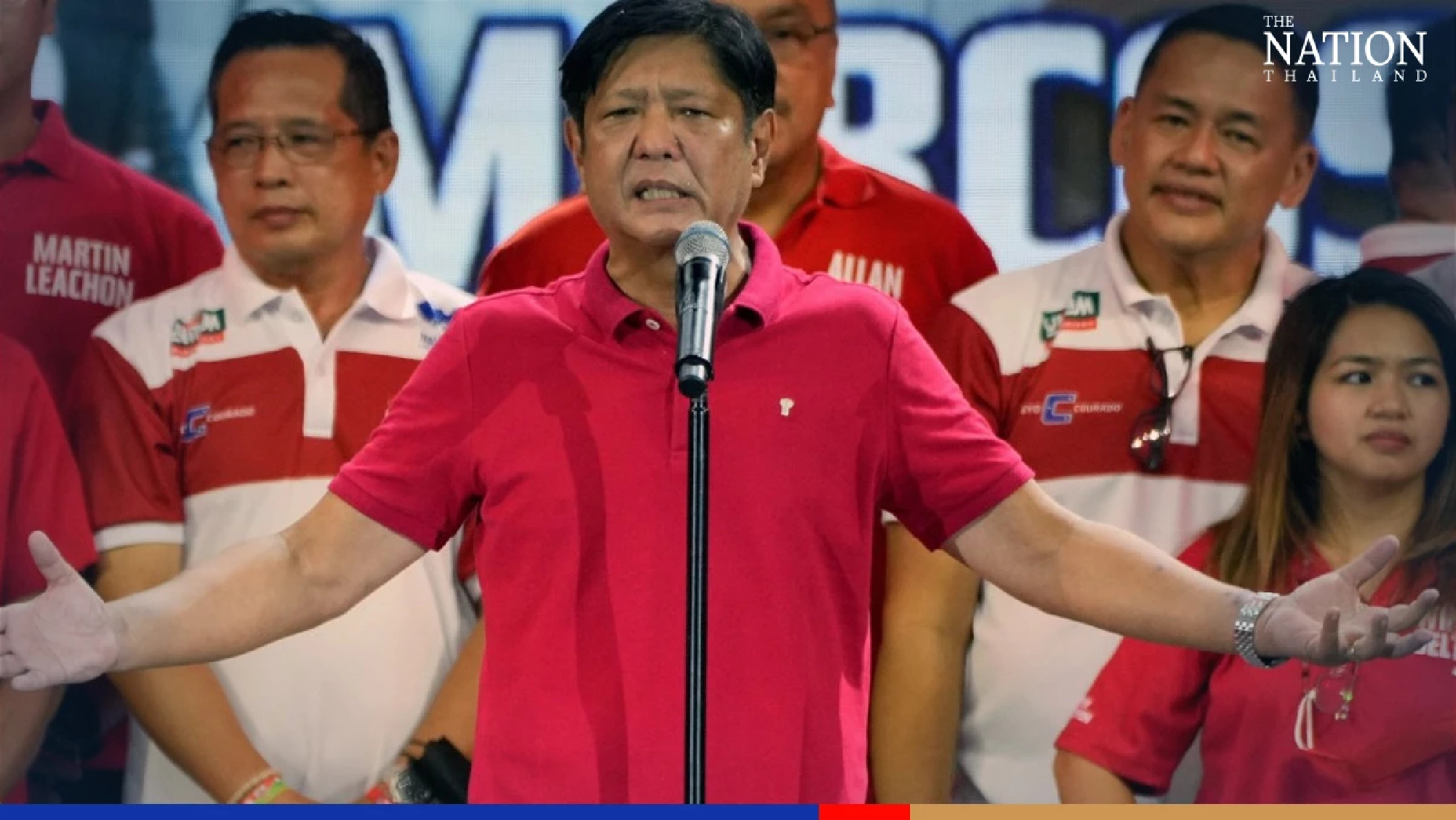
Ferdinand Marcos Jr, 64, the son and namesake of the dictator overthrown in a 1986 “People Power” uprising, has been the clear leader in all opinion polls this year.
A former governor, congressman and senator, Marcos is a political heavyweight from a family with deep pockets and powerful connections. Critics say him winning the presidency is the Marcos family’s endgame in whitewashing its past and changing narratives of authoritarianism, plunder and opulent living.
Marcos’s campaign message is unity and during recent interviews has been unabashed in praising his late father for his “genius” and leadership.
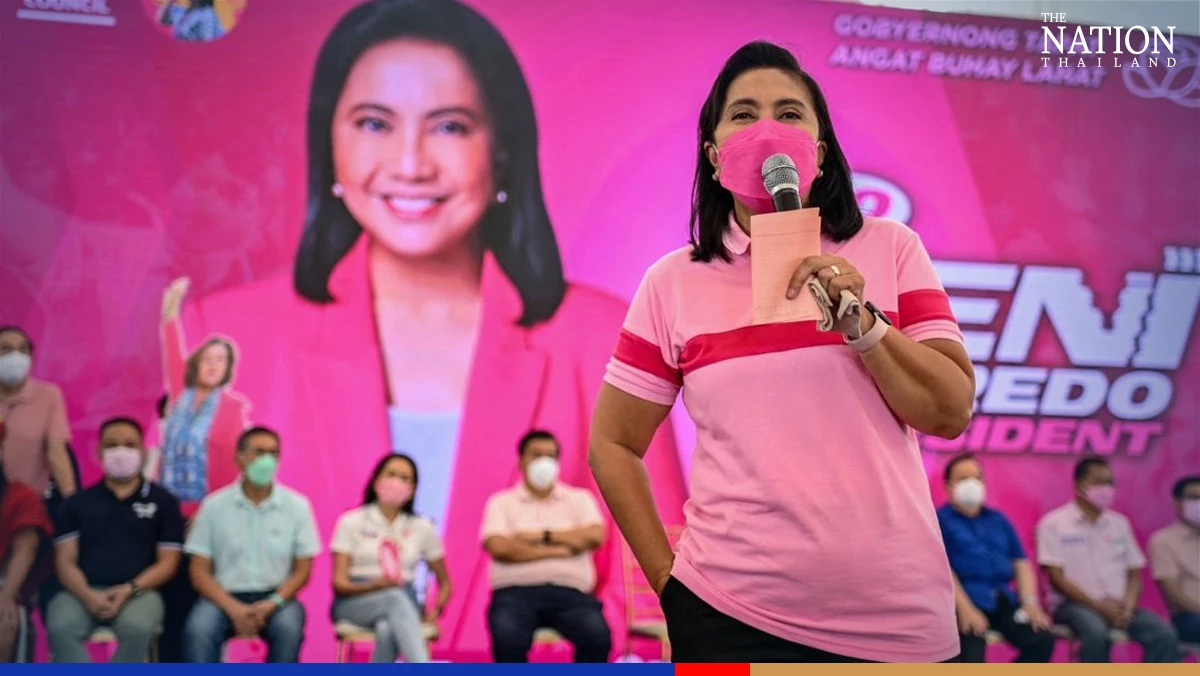
His closest rival is Leni Robredo, 57, who beat Marcos in the 2016 vice presidential election. Robredo is a former human rights lawyer and staunch liberal who as vice president has led campaigns against poverty and gender inequality. She entered politics in 2013 after the death in a plane crash of her husband, a former interior minister.
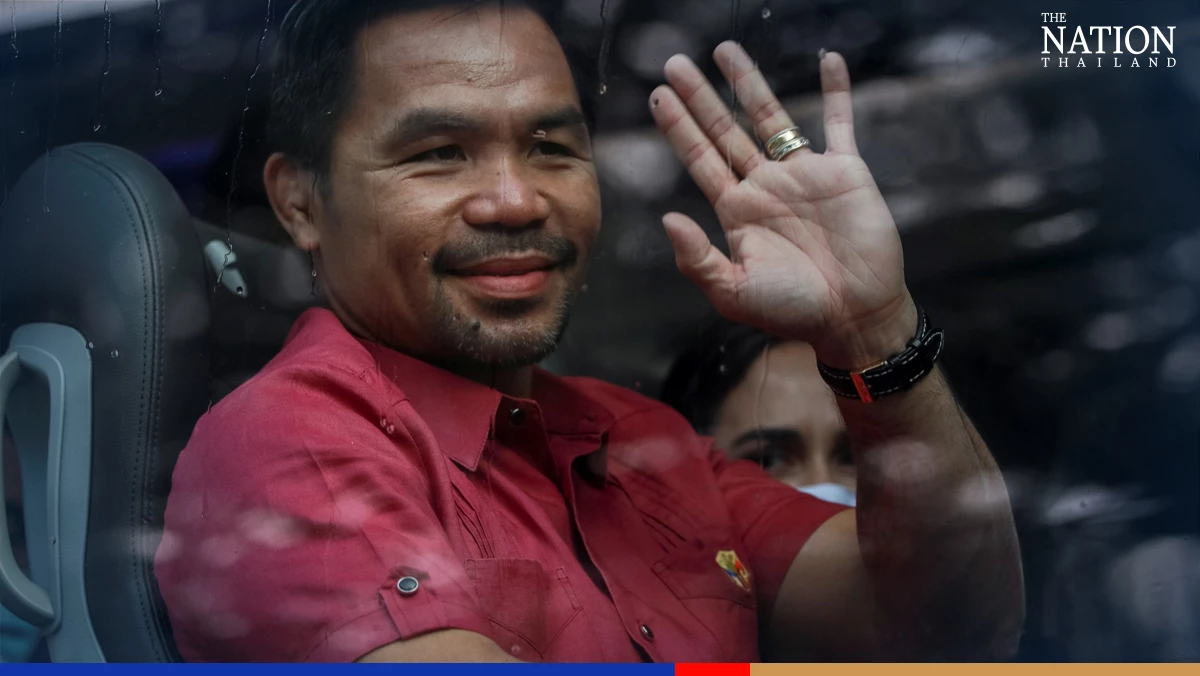
Other candidates include Manila mayor Francisco “Isko Moreno” Domagoso, retired boxing champion Manny Pacquiao and Panfilo Lacson, a former police chief, although they have consistently trailed in polls.
ARE PHILIPPINE ELECTIONS CREDIBLE?
Although vote-buying, political violence and occasional glitches with electronic voting machines have been problems in the Philippines, fraud on the level that would cast doubt on the credibility of polls or their outcome is very unlikely.
Independent poll monitor the Asian Network for Free Elections concluded that each of the most recent Philippines elections were generally free and fair, with turnout remaining high at about 80%.
HOW IMPORTANT IS THE OVERSEAS BALLOT?
Millions of Filipinos have either settled or taken jobs overseas. They collectively remit tens of billions of dollars each year, helping sustain families and drive the Philippine economy.
As breadwinners, the 1.7 million registered overseas voters – and many more Filipinos holding other nationalities – can be key in influencing the voting choices of their families back home or their communities abroad.
WHEN WILL WINNERS BE KNOWN?
Vote-counting starts after polls close and there can be a strong indication of who will be the new president within a few hours via a live, unofficial vote count.
The election commission is aiming to announce most of the winners by the end of May and those will soon after be confirmed by a proclamation of the current legislature.
The president-elect has seven weeks before being sworn in, during which time their transition team will work out policy plans and sound out potential cabinet members.
DOES THE VICE PRESIDENCY MATTER?
The vice president has no real power unless the president vacates office, but as election running mates, they can be crucial allies in rallying supporters behind presidential candidates.
Marcos has teamed up with current President Duterte’s daughter, Sara Duterte-Carpio. Her support in the south – historically a weak spot for the Marcos family – could be a game-changer. While her father has not endorsed Marcos, or any other candidate, he is almost certain to absorb some of the outgoing president’s support.
The vice president is elected in a separate contest and may not be an ally of whoever becomes president.
WHAT ABOUT PARTIES?
In the Philippines, political parties tend to be secondary to personalities, with loyalties shifting easily.
Family names and endorsements from celebrities, social media influencers and politicians carry enormous weight – far more than party affiliation.
Widespread defections are anticipated and lawmakers will often ally themselves with whoever becomes president, although rivalries and ideological differences will ensure a political opposition exists.
Authorities in Fiji have seized a $300 million yacht of Russian oligarch Suleiman Kerimov at the request of the United States, the U.S. Justice Department said on Thursday (May 5), as Washington and its allies press Russia over its invasion of Ukraine.
AFiji court had ruled on Tuesday that the United States can seize a Russian-owned superyacht, weeks after it arrived and was impounded by police.
Authorities in various countries have seized luxury vessels and villas owned by Russian billionaires in response to sanctions imposed on Russia over its invasion of Ukraine, which Russia calls a special military operation.
Kerimov was sanctioned by the United States in 2014 and 2018 in response to Russia’s actions in Syria and Ukraine. He has also been sanctioned by the European Union.
The U.S. Justice Department’s Taskforce KleptoCapture has focused on seizing yachts and other luxury assets to put the finances of Russian oligarchs under strain in a bid to pressure Russian President Vladimir Putin over the war in Ukraine.
The luxury vessel, the Amadea, arrived in Fiji last month after an 18-day voyage across the Pacific from Mexico.
The U.S. Treasury Department’s office of foreign assets control designated Kerimov as part of a group of Russian oligarchs who profit from the Russian government through corruption and its activities around the globe, including the occupation of Crimea.
India on Thursday (May 5) objected to a new World Health Organization (WHO) report of people having died as a result of COVID-19, which showed the country’s toll was nearly 10 times the reported figure.
Almost three times as many people have died as a result of COVID-19 as official data show, according to a new World Health Organization (WHO) report, the most comprehensive look at the true global toll of the pandemic so far.
There were 14.9 million excess deaths associated with COVID-19 by the end of 2021, the U.N. body said on Thursday (May 5).
The official count of deaths directly attributable to COVID-19 and reported to WHO in that period, from January 2020 to the end of December 2021, is slightly more than 5.4 million.
The WHO’s excess mortality figures reflect people who died of COVID-19 as well as those who died as an indirect result of the outbreak, including people who could not access healthcare for other conditions when systems were overwhelmed during huge waves of infection.
It also accounts for deaths averted during the pandemic, for example, because of the lower risk of traffic accidents during lockdowns.
But the numbers are also far higher than the official tally because of deaths that were missed in countries without adequate reporting. Even pre-pandemic, around six in 10 deaths around the world were not registered, WHO said.
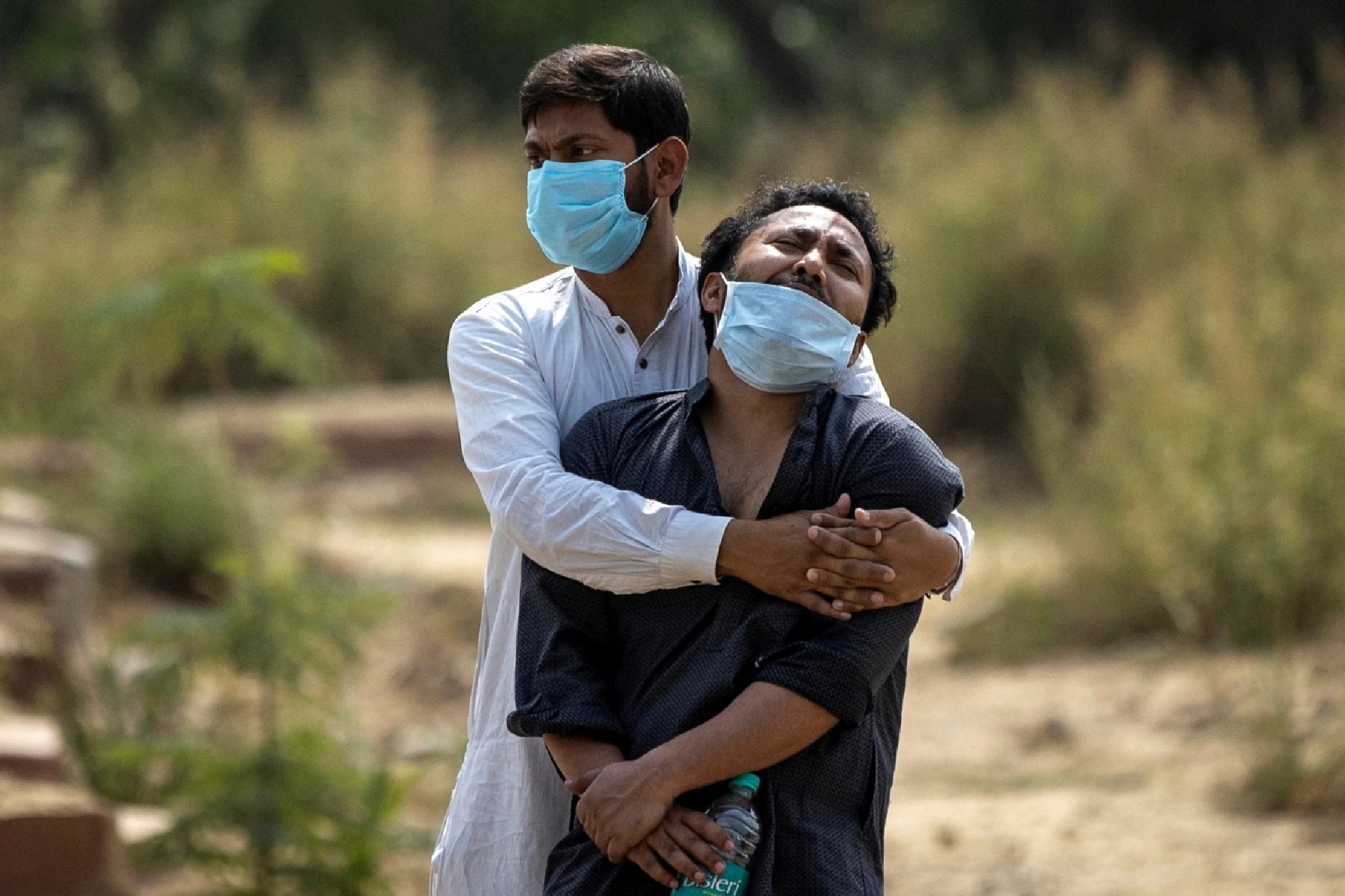
The WHO report said that almost half of the deaths that until now had not been counted were in India. The report suggests that 4.7 million people died there as a result of the pandemic, mainly during a huge surge in May and June 2021.
The Indian government, however, puts its death toll for the January 2020-December 2021 period far lower: about 480,000.
WHO said it had not yet fully examined new data provided this week by India, which has pushed back against the WHO estimates and issued its own mortality figures for all causes of death in 2020 on Tuesday. WHO said it may add a disclaimer to the report highlighting the ongoing conversation with India.
The WHO panel, made up of international experts who have been working on the data for months, used a combination of national and local information, as well as statistical models, to estimate totals where the data is incomplete – a methodology that India has criticised.
However, other independent assessments have also put the death toll in India far higher than the official government tally, including a report published in Science which suggested 3 million people may have died of COVID in the country.
Other models have also reached similar conclusions about the global death toll being far higher than the recorded statistics. For comparison, around 50 million people are thought to have died in the 1918 Spanish Flu pandemic, and 36 million have died of HIV since the epidemic began in the 1980s.
Samira Asma, WHO assistant director-general for data, analytics and delivery for impact, who co-led the calculation process, said data was the “lifeblood of public health” needed to assess and learn from what happened during the pandemic.
“Too much is unknown,” she told reporters in a press briefing.
Prime Minister Narendra Modi’s government has rejected the WHO estimate that 4.7 million people died in India as a result of the pandemic until last year when hospitals ran out of oxygen and beds due to a record wave is driven by the Delta variant. India has reported only 524,002 COVID-19 deaths – the most after the United States and Brazil – with more than 43 million infections. Actual infections are believed to be in the hundreds of millions in the country of 1.35 billion people.
In a statement issued after the numbers were published, the Indian government said WHO had released the report “without adequately addressing India’s concerns” over what it called “questionable” methods.
A senior health official said the Indian government rejected the WHO estimates as “the numbers are based on modelling and assumptions”.
BBC รายงานว่าดูไบได้กลายเป็นสวรรค์สำหรับเศรษฐีรัสเซียที่หนีผลกระทบจากการคว่ำบาตรของตะวันตก หลังเกิดสงครามในยูเครน โดยบรรดามหาเศรษฐีและผู้ประกอบการชาวรัสเซียเดินทางไปยังสหรัฐอาหรับเอมิเรตส์ด้วยจำนวนที่ไม่เคยเกิดขึ้นมาก่อน
The US provided intelligence that helped Ukraine target Russia’s prized Moskva warship with anti-ship cruise missiles, sources say. https://t.co/lmIvCewO1a
โดยรายงานจาก The New York Times และ CNN ล่าสุดระบุว่าสหรัฐมีส่วนช่วยเหลือยูเครนในการโจมตีเรือมอสควา โดยให้ข้อมูลตำแหน่งที่ตั้งของเรือลำดังกล่าวแก่ยูเครน
รายงานของ The New York Times ก่อนหน้านี้ยังชี้ว่าในช่วงหลายเดือนที่ผ่านมาสหรัฐได้ให้ความช่วยเหลือด้านข่าวกรองแก่ยูเครน ช่วยให้ยูเครนสามารถกำหมดเป้าหมายและสังหารนายพลรัสเซียได้หลายคน