เว็บไซต์ Daily Mail อ้างรายงานจาก Siberian Times ระบุว่าเลือดจากเขากวางที่หลายคนนำไปอาบหรือดื่มกันนั้น คาดว่าเป็นวิธีปฏิบัติที่มีมาอย่างยาวนานหลายศตวรรษในรัสเซีย และยังกล่าวกันว่าในจีนและเกาหลีใต้ก็มีการอาบเลือดกวางเช่นกัน
Deaths among American nursing home residents from COVID-19 appear to be at their lowest levels since the coronavirus first swept the country more than two years ago, according to the U.S. Centers for Disease Control and Prevention.
The United States is promoting a second booster vaccine to protect aged people and those with underlying conditions or chronicle illnesses, as the average daily COVID-19 deaths dropped to 649 nationwide on Sunday with a minus 41 percent change over 14 days.
NURSING-HOME DEATHS DOWN
Deaths among American nursing home residents from COVID-19 appear to be at their lowest levels since the coronavirus first swept the country more than two years ago, according to the most recent data from the U.S. Centers for Disease Control and Prevention (CDC).
Some 67 residents died during the week ending March 27. While that number could be adjusted in the coming weeks, it mirrors the lows last reached during June 2021 before facilities were hit with the Delta and Omicron variants, The New York Times cited the data.
Cases among nursing home residents rose sharply in the fall and winter, with deaths reaching 1,500 in January prior to a steady decline. Experts, however, raised little reason for complacency, as this group remains highly vulnerable to the virus for their age and underlying medical conditions.
Amid growing concern over a highly contagious subvariant of Omicron, with booster shots proved protective against severe illness, federal regulators already authorized second booster shots of the Pfizer-BioNTech and Moderna coronavirus vaccines last week.
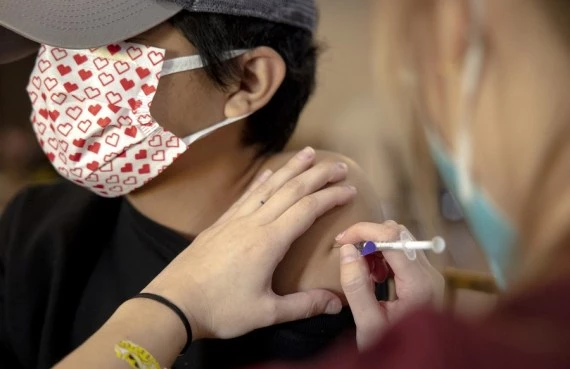
A man receives a dose of COVID-19 vaccine at a vaccine clinic in San Antonio, Texas, the United States, Jan. 9, 2022. (Photo by Nick Wagner/Xinhua)
SECOND BOOSTER CONFUSION
The federal government offered little detailed guidance about who should get the additional booster dose and when. Instead, the CDC said on Tuesday that immunocompromised and older Americans could get a second booster while stopping short of recommending they do so.
CDC Director Rochelle Walensky said that those most likely to benefit fall into two categories: those 65 and older; or anyone 50 and older with underlying medical conditions who are at higher risk for severe disease from COVID-19.
Some doctors and experts argued that “the agency’s scant guidance left them responsible for complicated clinical decisions in a landscape with unclear and constantly evolving data,” “leaving them unprepared and confused by the policy shift,” reported The Washington Post on Saturday.
However, other experts agreed with CDC’s decision, saying that risk varies widely from person to person, and doctors and patients should have the opportunity to make individual choices about a fourth shot based on a slew of factors, according to the report.
DIABETES PATIENTS WORRIED
After older people and nursing home residents, perhaps no group has been harder hit by the pandemic than people with diabetes, reported The New York Times on Sunday. Recent studies suggest that 30 to 40 percent of all coronavirus deaths in the United States have occurred among people with diabetes.
“People with diabetes are especially vulnerable to severe illness from COVID, partly because diabetes impairs the immune system but also because those with the disease often struggle with high blood pressure, obesity and other underlying medical conditions,” said the report.
Diabetes patients hospitalized with COVID-19 spend more time in the ICU, are more likely to be intubated and are less likely to survive, according to several studies, one of which found that 20 percent of hospitalized coronavirus patients with diabetes died within a month of admission.
“Though researchers are still trying to understand the dynamics between the two diseases, most agree on one thing: uncontrolled diabetes impairs the immune system and decreases a patient’s ability to withstand a coronavirus infection,” the report added.
Iranian Foreign Minister Hossein Amir-Abdollahian on Monday urged the United States to be “realistic” to help reach an agreement in Vienna talks aimed at reviving the 2015 nuclear deal, formally known as the Joint Comprehensive Plan of Action (JCPOA).
The Iranian diplomat said in a tweet that “the excessive demands” of the United States could lead to a pause in the Vienna negotiation as Iran will “never give in” to such demands.
Amir-Abdollahian also pointed out that “an agreement can be reached if the United States is realistic.”
Earlier in the day, Iranian Foreign Ministry Spokesman Saeed Khatibzadeh said that the United States should be responsible for protraction in Vienna talks.
Iran signed the JCPOA with the world powers in July 2015. However, former U.S. President Donald Trump pulled the United States out of the agreement in May 2018 and reimposed unilateral sanctions on Tehran, prompting the Islamic republic to scale back some of its nuclear commitments under the agreement in retaliation.
Since April 2021, eight rounds of talks have been held in Vienna between Iran and the remaining JCPOA parties, namely China, Russia, Britain, France, and Germany, to revive the deal.
Over the past weeks, reports from Vienna suggested that the negotiators were “close” to an agreement with few key issues remaining which required “political decisions” of the parties.
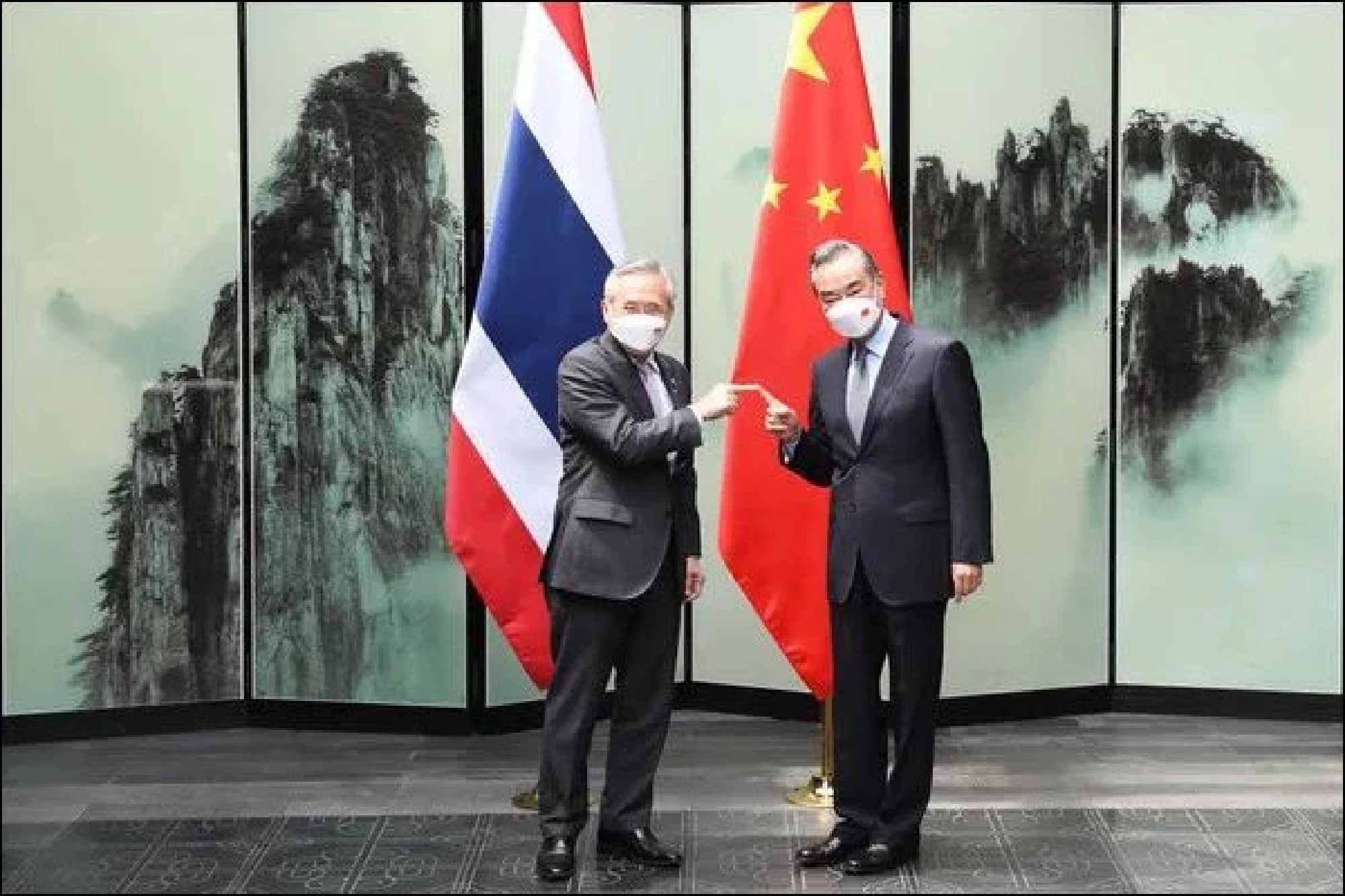
While visiting his Chinese counterpart on Saturday, Foreign Minister Don Pramudwinai shifted the focus to speeding up the construction of the Sino-Thai railway project, so the railway can connect Thailand to Laos route as soon as possible.
Don was meeting his Chinese Foreign Minister Wang Yi in Tunxi in Anhui province. The ministers also discussed the possibility of extending the high-speed railway to Malaysia and Singapore in line with China’s ambitious Pan Asia line project.
Wang, meanwhile, said both sides should speed up cooperation over the Belt and Road Initiative, railway, industrial parks, vaccines as well as medical research and development.
China and Thailand should use the implementation of the Regional Comprehensive Economic Partnership (RCEP) agreement as an opportunity to tap the potential of bilateral economic and trade cooperation, Wang said. He also encouraged further cooperation in electronic technology, the digital economy and new energy.
The RCEP, which took effect on January 1, includes Thailand and the other nine members of ASEAN as well as China, Australia, Japan, New Zealand, and South Korea.
Noting that 2022 marks the 10th anniversary of the China-Thailand comprehensive strategic cooperative partnership, Wang called on both countries to work together to “write a new chapter” in bilateral ties.
At the meeting, Don also recalled his first trip to China in 1975, when the two countries established diplomatic relations. He said Thailand values its friendship with China and is ready to help build Belt and Road as well as participate in the Global Development Initiative.
Don also said he hopes to expand cooperation on agricultural products and inter-connectivity between Thailand and China as well as ensure the industrial and supply chains are secure.
The two sides also agreed to promote a China-Asean comprehensive strategic partnership and deepen the Lancang-Mekong cooperation.
Noting that China, Thailand and Indonesia will host meetings among BRICS, APEC and G20 members this year respectively, Wang said China was ready to inject more positive energy and stability into the world and bolster Thailand and Indonesia’s commitment to peaceful development.
As for the Russia-Ukraine war, Wang said the key factor is to maintain peace and stability in Asia, resist unilateral sanctions and “long-arm jurisdiction that has no basis in international law”.
Don responded by saying he appreciated and understood China’s “objective and fair” position on the issue. The two sides also exchanged views on the Myanmar situation.
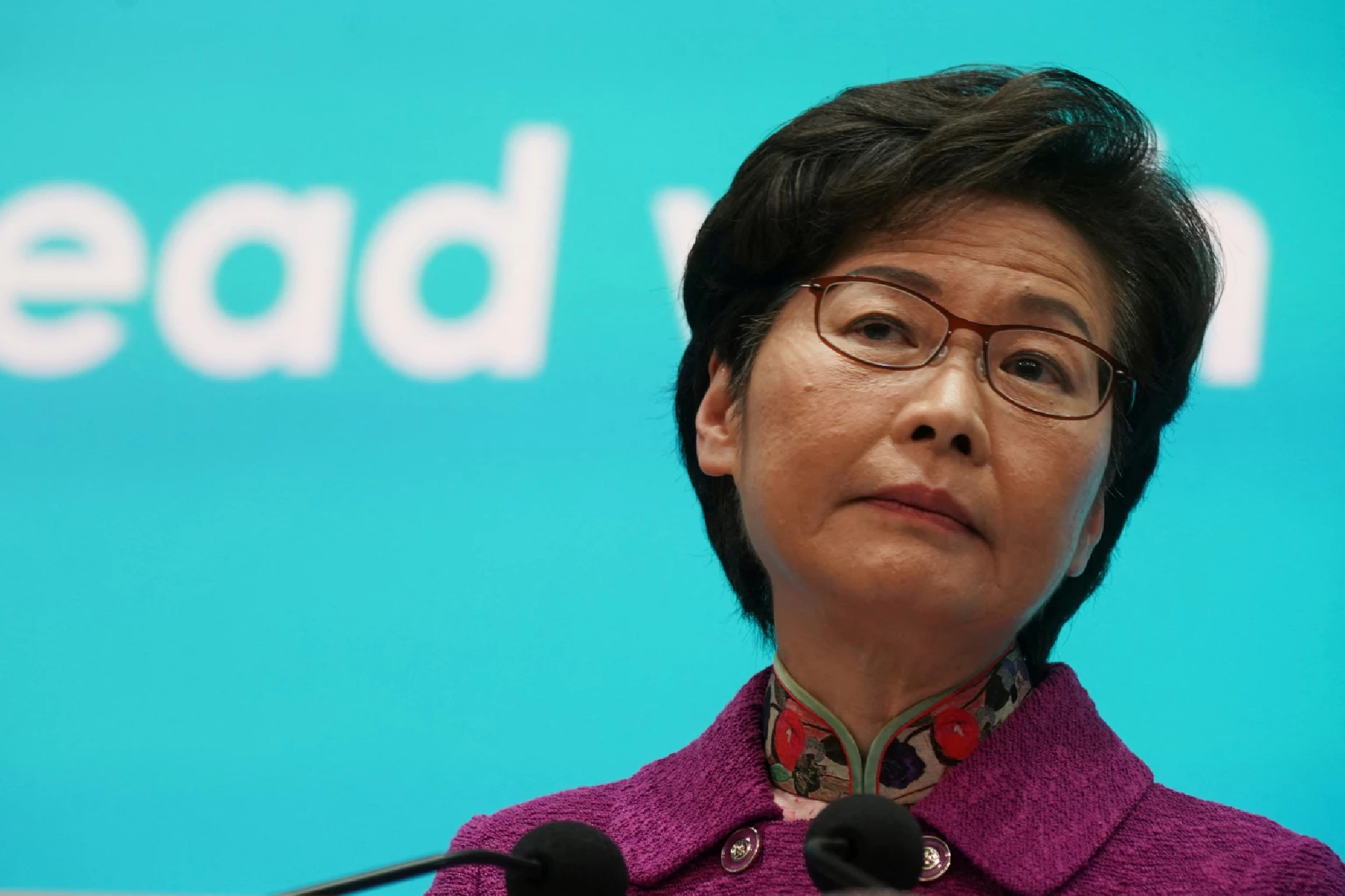
Hong Kong leader Carrie Lam, who has governed the global financial hub through the unprecedented upheaval of anti-government protests and COVID-19, said on Monday (April 4) that she will not seek a second five-year term of office.
“There is only one consideration and that is family. I have told everyone before that family is my top priority. They think it is time for me to go home,” Lam told a regular press briefing.
The leadership election was pushed back from March 27 to give the government time to battle a COVID outbreak that has infected more than a million of the 7.4 million people in the former British colony.
Lam, born in British-ruled Hong Kong in 1957 and a life-long civil servant who describes herself as a devout Catholic, took office in 2017 as Chief Executive with a pledge to unite a city that was growing increasingly resentful of Beijing’s tightening grip.
Two years later, millions took to the streets in sometimes violent anti-government protests that ultimately led Beijing to implement a sweeping national security law in June 2020, giving it more power than ever to shape life in Hong Kong.
Lam, in remarks to a group of businesspeople at the height of the unrest in 2019, said that if she had the choice she would quit, adding that the chief executive “has to serve two masters by the constitution, that is the central people’s government and the people of Hong Kong.”
The “political room for manoeuvring is very, very, very limited,” she added in an audio recording obtained by Reuters.
In August 2020, the United States imposed sanctions on Lam, and a number of other Hong Kong and Chinese officials, saying they had undermined Hong Kong’s high degree of autonomy from Beijing and curtailed political freedoms.
Hong Kong returned from British to Chinese rule in 1997 with the guarantee of wide-ranging freedoms, including an independent judiciary and the right to protest, for at least 50 years.
Chinese and Hong Kong authorities deny that individual rights are being eroded and say the security legislation was needed to restore stability after prolonged unrest.
The spark for the mass demonstrations in 2019 was a legislation proposal since withdrawn, that would have allowed people to be sent to mainland China for trial.
Many protesters demanded Lam quit at the time, and full democracy to select their own leader.
She is the least popular Hong Kong leader since the handover from British to Chinese rule, according to historical surveys from the Hong Kong Public Opinion Research Institute. Her support ratings fell from 63.6 per cent in July 2017 to 35.7 per cent in December 2021.
While Hong Kong’s mini-constitution, or Basic Law, says universal suffrage for the city’s leader is an “ultimate aim”, all of its post-handover chief executives have been chosen by a small committee stacked with pro-Beijing loyalists.
Some historians point out that the British did nothing to promote democracy in Hong Kong until the final years of more than a century-and-a-half of colonial rule.
Lam’s term ends in June 2022.
Lam’s announcement came as local media said Chief Secretary John Lee, Hong Kong’s second most senior official, was set to resign to join the race to replace Lam in May and become the Chinese-ruled city’s next leader.
\Former police officer John Lee, was reported to be interested in running for the city’s top job, according to local media, which could see Beijing signing off on the first security official to run the global financial hub.
Chief Secretary Lee is a former Hong Kong security chief and deputy police commissioner who was known as an anglophile during British colonial rule.
In recent years, he has been forceful in enacting China’s harsher security regimen – with scores of democrats arrested, jailed or forced into exile, civil society groups forced to disband, and liberal media outlets raided by police and shuttered.
Hong Kong selects a leader every five years under a process that Beijing oversees behind the scenes. Since the city reverted from British to Chinese rule in 1997, there have been four chief executives, all of whom have struggled to balance the democratic aspirations of some residents with the vision of China’s Communist Party leaders.
A nomination period for candidates began on Sunday (March 3) and will last for two weeks. The election is scheduled for May 8, with the new chief executive to take office on July 1.
Other possible Chief Executive candidates mentioned in local media include Financial Secretary Paul Chan, Chief Secretary John Lee and Margaret Chan, the former head of the World Health Organisation.


 A man receives a dose of COVID-19 vaccine at a vaccine clinic in San Antonio, Texas, the United States, Jan. 9, 2022. (Photo by Nick Wagner/Xinhua)