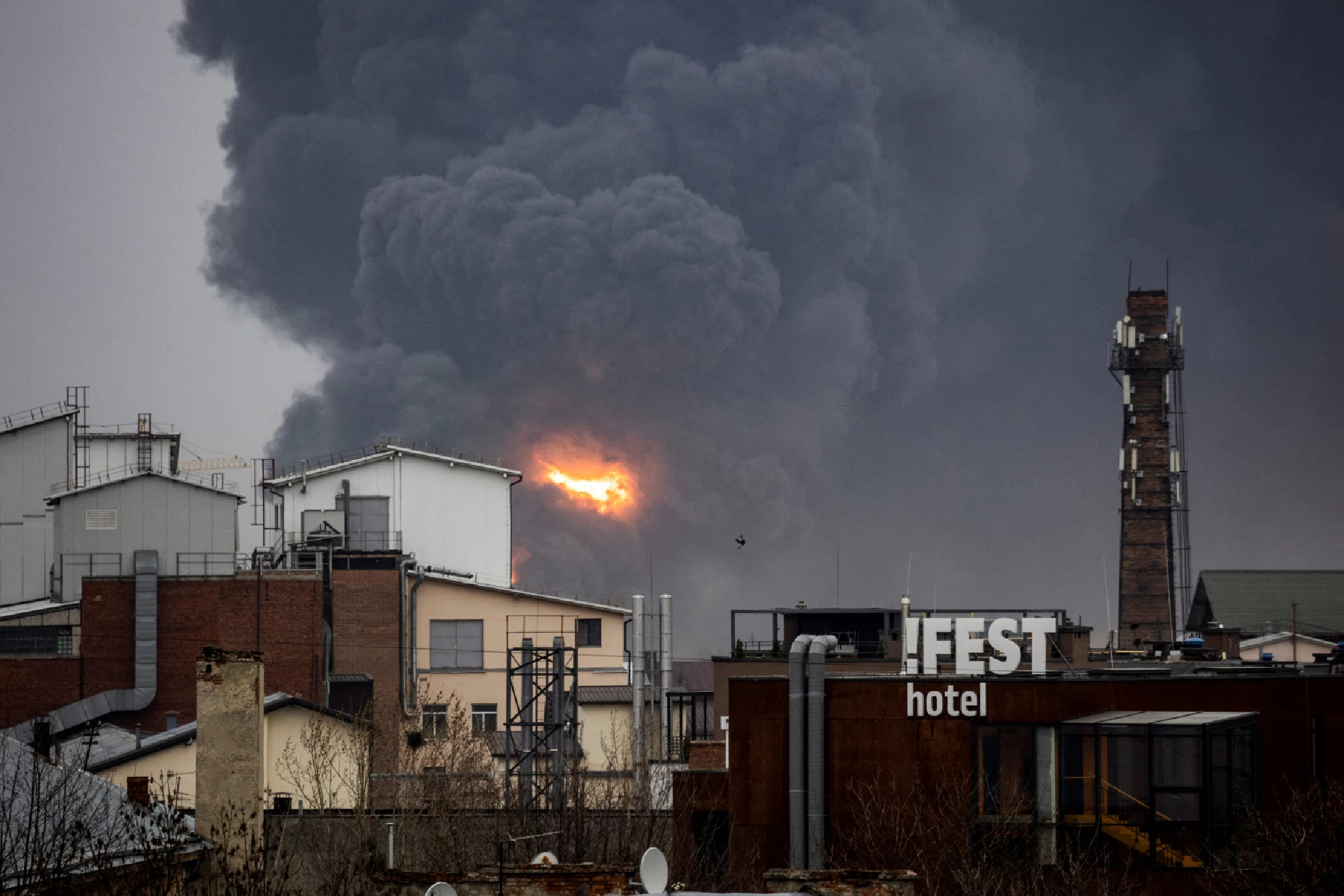
Four rockets hit the western Ukrainian city of Lviv on March 26, local officials said, in the most significant attack on the city since the start of the war with Russia.
Lviv, just 60 kilometres (40 miles) from the Polish border, has so far escaped the heavy bombardment and fighting that has devastated some Ukrainian cities closer to Russia since Moscow launched its invasion on Feb. 24.
Governor Maksym Kozytskyy said five people had been wounded after two rockets hit a fuel depot and two others later hit a military factory. Earlier he reported powerful explosions in Lviv’s eastern outskirts from the strikes.
The rockets fell as U.S. President Joseph Biden, speaking in Warsaw during a visit to Poland, condemned Russian aggression and assured Ukraine of the United States’ unwavering support.
“With today’s blows, the aggressor sends greetings to President Biden, who is in Poland,” Lviv Mayor Andriy Sadoviy said in a televised briefing, saying Russia had fired the rockets from Sevastopol in Crimea which it annexed in 2014.
There was no immediate comment on the Lviv attacks from the Russian authorities, who refer to the invasion as a “special military operation” aimed at demilitarising Ukraine.
The city authorities did not give the exact locations of the strikes but said they damaged critical infrastructure, set fire to the fuel depot, and blew out the windows of a school building. No residential buildings were hit, according to the mayor.
Yemen’s Houthi group said on Saturday (March 26) it was suspending missile and drone strikes on Saudi Arabia for three days, in a peace initiative it said could be a lasting commitment if the Saudi-led coalition fighting in Yemen stopped air strikes and lifted port restrictions.
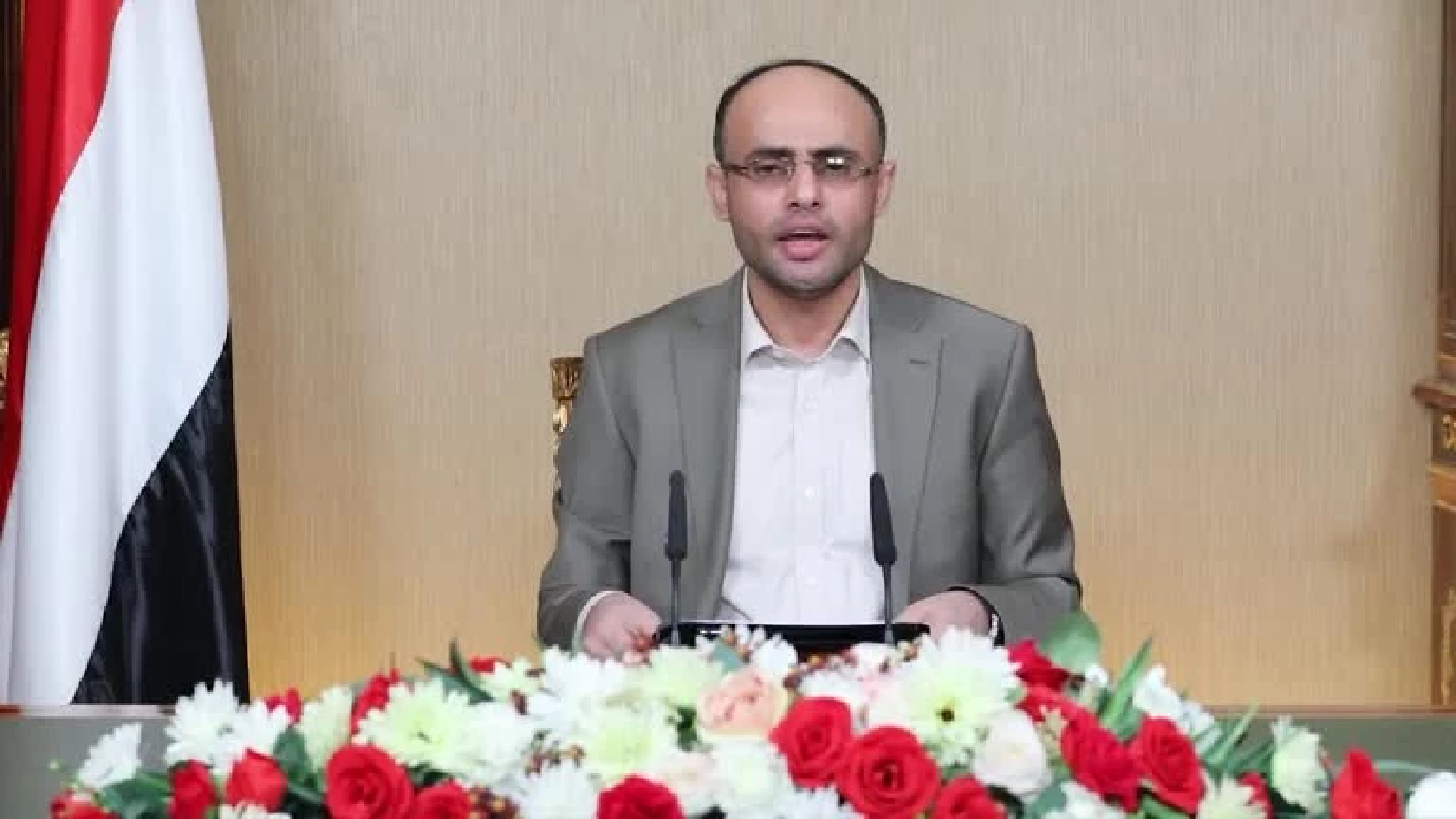
The group also announced a three-day suspension of ground offensive operations in Yemen, including in the gas-producing region of Marib, said Mahdi al-Mashat, the head of the Houthis’ political office, in a speech broadcast on television.
The unilateral initiative came as violence between the Iran-aligned group and the Saudi-led coalition, which have been at war since 2015, escalated dramatically this month.
Airstrikes of the Saudi-led coalition pounded the Houthi-controlled seaports of Hodeidah and Salif on Saturday (March 26), a day after the group launched broad attacks on Saudi Arabia, including on an oil facility in Jeddah, causing a massive fire and a huge plume of black smoke.
Lifting restrictions imposed by the coalition’s warships on the Red Sea Yemeni ports has been a major condition from the Houthis for a ceasefire.
Saudi Arabia says there is no blockade on the ports and it is only preventing arms smuggling.
Mashat said Saturday’s initiative would last if the coalition reopened the ports and stopped its airstrikes.
In exchange for extending the suspension of ground offensive operations, he said Saudi Arabia must announce a withdrawal of foreign troops from Yemen and stop supporting local militias.
It is unlikely that the kingdom would agree to such conditions, as Riyadh seeks an inclusive ceasefire simultaneously with reopening the ports and Sanaa airport.
Mashat added the group was ready to release all prisoners, including the brother of Yemen’s President Abd-Rabbu Mansour Hadi.
The United Nations is also trying to secure a temporary truce for the Muslim holy month of Ramadan that starts in April, and ahead of Riyadh’s hosting Yemeni parties for consultations later this month.
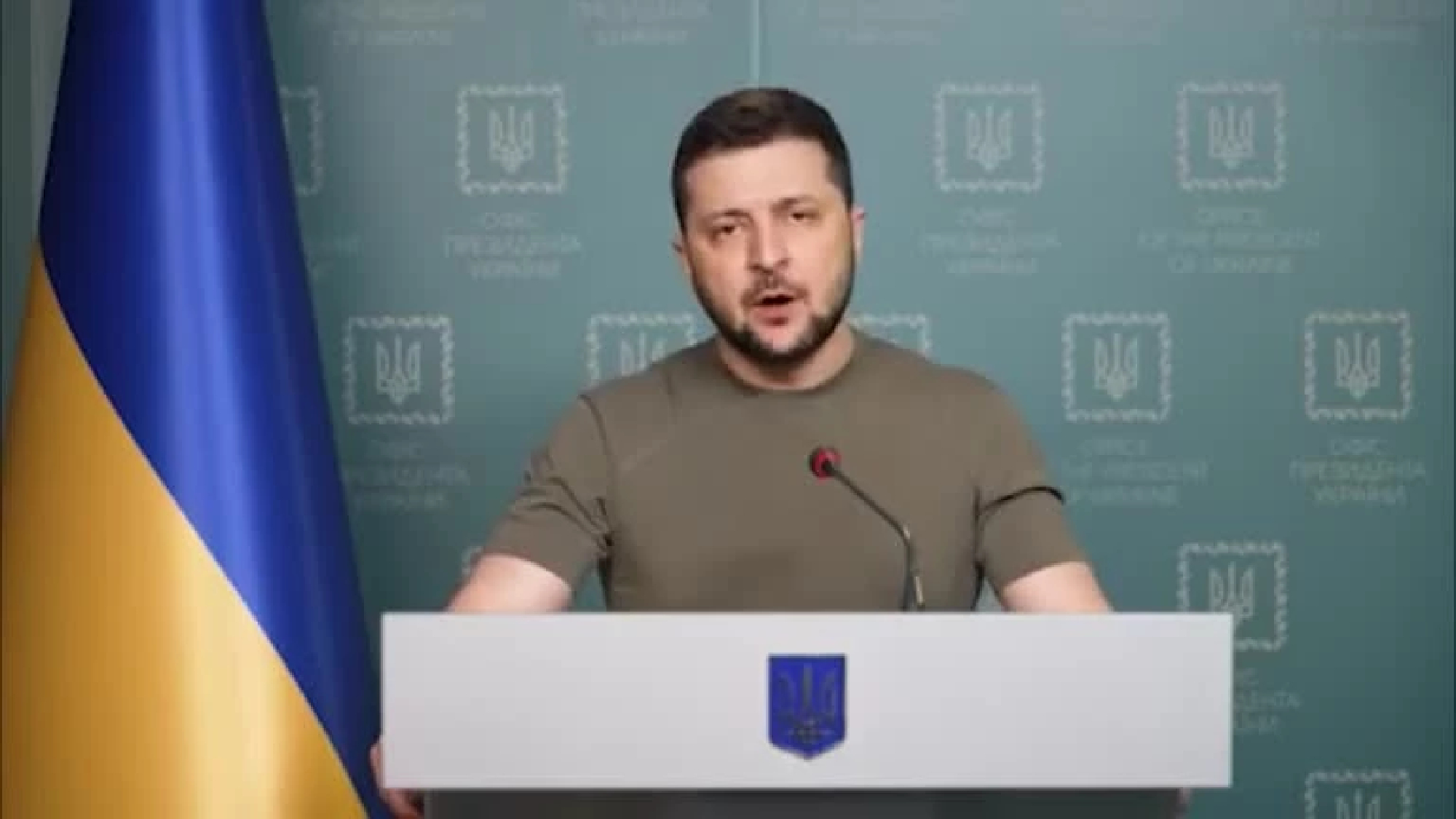
Ukrainian President Volodymyr Zelenskiy, visibly irritated, on March 26 demanded Western nations provide a fraction of the military hardware in their stockpiles and asked whether they were afraid of Moscow.
Several countries have promised to send anti-armour and anti-aircraft missiles as well as small arms but Zelenskiy said Kyiv needed tanks, planes, and anti-ship systems.
Zelenskiy has repeatedly insisted that Russia will seek to expand further into Europe if Ukraine falls.
NATO though does not back his request for a no-fly zone over Ukraine on the grounds this could provoke a wider war.
Earlier in the day, Zelenskiy talked to Polish counterpart Andrzej Duda and expressed disappointment that Russian-made fighter aircraft in Eastern Europe had not yet been transferred to Ukraine, Zelenskiy’s office said in a statement.
“The price of procrastination with planes is thousands of lives of Ukrainians,” the office quoted him as saying.
Zelenskiy said Poland and the United States had both stated their readiness to make a decision on the planes.
Earlier this month, Washington rejected a surprise offer by Poland to transfer MiG-29 fighter jets to a U.S. base in Germany to be used to replenish Ukraine’s air force.