The figures, which exclude automobile dealers, gasoline stations and restaurants, exceed the previous record in 2020 when holiday sales grew 8.2 percent to 777.3 billion dollars.
U.S. holiday sales during November and December are expected to grow between 8.5 percent and 10.5 percent over 2020 to reach between 843.4 billion U.S. dollars and 859 billion dollars, the National Retail Federation (NRF) said on Wednesday.
The figures, which exclude automobile dealers, gasoline stations and restaurants, exceed the previous record in 2020 when holiday sales grew 8.2 percent to 777.3 billion dollars.
“Consumers are in a very favorable position going into the last few months of the year as income is rising and household balance sheets have never been stronger,” NRF President and CEO Matthew Shay said in a statement.
“Retailers are making significant investments in their supply chains and spending heavily to ensure they have products on their shelves to meet this time of exceptional consumer demand,” Shay said.
NRF chief economist Jack Kleinhenz noted that pandemic-related supply chain disruptions have caused shortages of merchandise and most of this year’s inflationary pressure.
“With the prospect of consumers seeking to shop early, inventories may be pulled down sooner and shortages may develop in the later weeks of the shopping season. However, if retailers can keep merchandise on the shelves and merchandise arrives before Christmas, it could be a stellar holiday sales season,” Kleinhenz said.
While e-commerce will remain important, households are also expected to shift back to in-store shopping and a more traditional holiday shopping experience during the upcoming holiday season, according to the NRF.
“We advocate the development of a procedure for the mutual recognition of vaccination certificates,” Putin said.
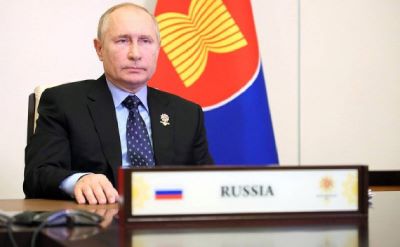
Russian President Vladimir Putin proposed the creation of a regional mechanism aimed at promoting closer cooperation against COVID-19 among Russia and countries of the Asia-Pacific region at the 16th East Asia Summit on Wednesday.
“We suggest that a regional mechanism for anti-pandemic collaboration be established under the aegis of the East Asia Summits, and we will shortly submit specific considerations on this score via the expert channels,” Putin said during his speech.
Among the COVID-19 response initiatives introduced by the president was a proposal to expand training opportunities for epidemiologists from ASEAN countries.
“We advocate the development of a procedure for the mutual recognition of vaccination certificates,” Putin said, adding that such a mechanism is necessary to ensure the free movement of citizens across the Asia-Pacific region.
“I would like to note that Russia is seeking to make a real contribution to efforts aimed at ensuring free and non-discriminatory access to vaccines against COVID-19 for citizens of all states,” he said.
Alongside anti-coronavirus cooperation, the Russian leader discussed economic relations and prospects for collaboration in the tourism sector.
He also pointed to the importance of joint efforts aimed at tackling climate change, including through coordinated approaches with regard to innovative solutions to decarbonization, and the development of low-emission industries.
The 16th East Asia Summit, which was chaired by Brunei, was held in the format of a video conference.
The number of abductions of UN personnel drastically increased to 17 in 2020, from six in 2019. Another seven personnel were abducted in the first six months of 2021.
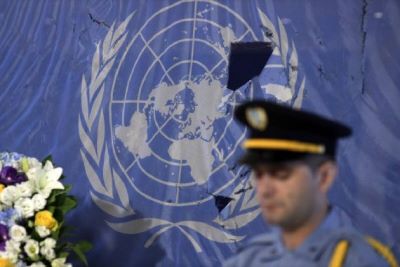
Acts of violence and safety-related incidents claimed the lives of 28 UN civilian personnel in 2020 and the first six months of 2021, according to a report released Wednesday.
Of the 28 fatalities, seven were as a result of acts of violence, and 21 were due to safety-related incidents, shows the UN secretary-general’s latest report, “Safety and Security of Humanitarian Personnel and Protection of UN Personnel.”
The number of abductions of UN personnel drastically increased to 17 in 2020, from six in 2019. Another seven personnel were abducted in the first six months of 2021.
During the 18 months covered in the UN chief’s report, 153 personnel were injured due to acts of violence, and 157 others were injured due to safety-related incidents.
Overall, incidents relating to safety and security affected 2,217 UN personnel, compared with 2,162 in the previous 18 months.
During the latest reporting period, there were 45 attacks on UN premises, 164 attacks on UN vehicles and 177 intrusions into UN premises.
For the past 18 months, three major trends have persisted, with adverse effects on the levels and types of threats against UN and humanitarian personnel carrying out their critical work in volatile settings, says the report.
First, the role of non-state armed actors continued to gain prominence. Second, information technology, alongside its benefits, has posed threats associated with disinformation. Third, the expansion of violent extremism across continents continued, in particular in areas lacking employment opportunities for young people and basic state services such as security.
UN and humanitarian personnel continue to risk their lives to bring aid and hope to those in despair. They have prevented the worst outcomes in dire humanitarian situations. In the past 18 months, seven UN personnel and a reported 101 humanitarian personnel from nongovernmental organizations (NGOs) have lost their lives as a result of violence, says the report.
“I am deeply saddened by these deaths and express my sincere condolences to the bereaved families. I condemn, in the strongest terms, all forms of violence against United Nations and humanitarian personnel. The legacies of these fallen brave men and women live on in our commitment to continue to work, even in dangerous places, to create a better world,” said UN Secretary-General Antonio Guterres in the report.
He also voiced deep concern over the sharp rise in the number of abductions of UN and humanitarian personnel, with 17 abduction incidents affecting UN personnel in 2020, more than double the number of abductions in 2019. Similarly, the reported number of NGO humanitarian personnel abducted rose to 182 in 2020, compared with 127 in 2019.
During the 18 months, 27 uniformed peacekeepers died as a result of malicious acts — 12 in 2020, and 15 in the first six months of 2021.
The daily count of people getting dose 1 has been decreasing since mid-August, reaching a record low of 25,336 on Tuesday, according to latest data of the U.S. CDC.
The daily count of people receiving first shots of COVID-19 vaccines in the United States dropped to a record low since vaccines were available in the country last December, as experts stressed urgency for the vast unvaccinated to take the first step.
The daily count of people getting dose 1 has been decreasing since mid-August, reaching a record low of 25,336 on Tuesday, according to latest data of the U.S. Centers for Disease Control and Prevention (CDC).
The average number initiating vaccination each day is down 15 percent from last week.
The slowdown came as the recent wave of the pandemic continues to show signs of easing in the country. New daily COVID-19 cases in the United States have fallen by nearly 60 percent nationwide since a peak in mid-September brought by the highly transmissible Delta variant.
But some northeastern states are starting to see new outbreaks, and the nation is still averaging nearly 70,000 daily cases and more than 1,000 deaths per day, according to CDC data.
About 191 million people have been fully vaccinated in the United States as of Wednesday, accounting for 57.5 percent of the whole population. About 14.4 million people have received booster shots.
Advisers to the U.S. Food and Drug Administration (FDA) on Tuesday recommended authorizing the Pfizer-BioNTech COVID-19 vaccine for children ages 5 to 11. They found that the benefits of the vaccine outweighed the risks for this younger population.
It is now up to the FDA and the CDC to make a final decision. If authorized, it would be the first COVID-19 vaccine for younger children.
Health experts said getting younger kids eligible for COVID-19 vaccines could impact the trajectory of the pandemic. However, to convince the vast unvaccinated population to take the first step remains key to ending the pandemic.
Hong Kong has banned films that run contrary to the interests of a Beijing-drafted national security law, the latest crackdown on freedom of expression in the Asian financial hub.
The city’s opposition-free legislature amended the Film Censorship Bill on Wednesday, turning movie censors into gatekeepers of the security law with penalties as high as HK$1,000,000 ($130,000) and three years in prison for those who screen non-approved content.
Inspectors can search without a warrant a premises showing a film, including company offices or a private members’ club, and the Film Censorship Authority can demand more information about a screening under the new rules.
Questions hang over how the changes will impact streaming services such as Netflix Inc., which offers a documentary on student activist Joshua Wong in Hong Kong, for example. Netflix declined to comment, while Vimeo Inc., Amazon.com Inc. and Apple Inc. didn’t reply to questions about the changes.
“It is a treacherous climate for businesses having to make content decisions,” Darrell West, senior fellow at the Center for Technology Innovation at the Brookings Institution, said of the law, which makes no mention of online content but has repeated references to videotapes.
The changes are part of a wider legal assault on the freedom of expression and information once prized in the former British colony, but severely reduced in mainland China. Since the security law passed in June 2020, the city legislature has adopted an anti-doxxing law, moved to limit information available in the companies registry, and curtailed the content of public broadcaster Radio Television Hong Kong, which has axed programs critical of the government.
The city’s leader Chief Executive Carrie Lam said the Legislative Council had “delivered a brilliant performance” since all the political opposition had either been arrested, disqualified or resigned after Beijing mandated national security officials approve candidates. “They have done really well in terms of legislative amendments and proposals,” Lam said in a regular press briefing Tuesday.
Censorship had seeped into the industry even before the changes. In March, a local theater pulled the prizewinning documentary “Inside The Red Brick Wall” about 2019 anti-government protests. The film’s distributor, Ying E Chi, lost its government funding soon after.
Around the same time, the University of Hong Kong warned its student union that a screening of a documentary on the pro-independence activist Edward Leung could violate the security law.
Then in June, the government updated the censorship guidelines in relation to the security law, instructing censors to watch out for content “capable of being perceived as endorsing, supporting, promoting, glorifying, encouraging or inciting such acts or activity.”
Baking such censorship into law were “dictatorial manoeuvrings designed to undermine a vibrant Hong Kong film culture,” said Joseph Lee, director of the Global Asia Institute at Pace University in New York, who has published two papers on Hong Kong cinema. After decades producing global movie stars like Tony Leung, who starred in Marvel’s “Shang-Chi” blockbuster hit this summer, some in the film industry worried the amendments signaled the “death of Hong Kong Cinema,” Lee said.
“It is hard to imagine how film directors, executive producers and actors could stay politically neutral because China’s definition of politics focuses narrowly on any opinion and action thought to be a security threat,” he said.
A U.S. ban of China Telecom (Americas) Corp. by regulators shows that broad concerns about Beijing persist in Washington, even as the Biden administration takes steps to improve communications between the worlds biggest economies.
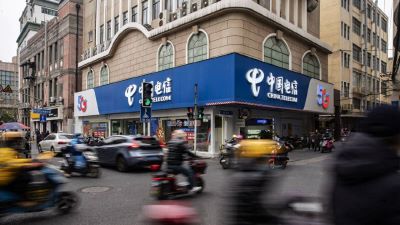
The Federal Communications Commission, an independent government agency overseen by Congress, on Tuesday voted 4-0 to cancel permission to operate in the U.S. for the unit of China Telecom, one of three leading communications providers in China.
Though the company doesn’t do a lot of business in the U.S., being barred from the market is significant coming on the heels of the moves against other strategic Chinese tech giants, including Huawei Technologies Co.
“It’s an important action,” said Martijn Rasser, director of the technology and national security program at the Center for a New American Security in Washington. “It also sends a broader message to Beijing, that regardless of who’s president, the U.S. continues to be concerned about the risks posed by Chinese tech firms operating in the U.S.”
Leaders Joe Biden and Xi Jinping are expected to meet virtually later this year, as overall relations show signs of warming following a Sept. 9 phone call between them. Shortly afterward, the U.S. reached a deal to release Huawei Chief Financial Officer Meng Wanzhou from extradition proceedings in Canada — one of Beijing’s top demands.
Since then, the U.S. and China have moved to rebuild communication lines cut off during years of clashes during the Trump administration over everything from trade and Taiwan to tech and the origins of the coronavirus. Vice Premier Liu He and U.S. Treasury Secretary Janet Yellen this week held their second call in about four months, which China described as “pragmatic, candid and constructive.”
Still, areas of tension remain. In addition to U.S. sanctions and other punitive actions on Chinese officials and companies, the Biden administration’s overtures to Taiwan have angered Beijing. The Hang Seng Tech Index, which tracks mostly Chinese technology firms traded in Hong Kong, declined as much as 3.9% on Wednesday, the most in more than a month.
The case against China Telecom was first brought during former President Donald Trump’s administration, along with actions against China Unicom Americas Ltd., Pacific Networks Corp. and its subsidiary ComNet. The FCC is also moving toward ending authorizations for those companies.
The Trump administration pursued an aggressive strategy against China, using export controls, prohibitions and executive orders to block companies including China’s biggest technology company, Huawei, and chipmaker Semiconductor Manufacturing International Corp. The FCC has also stepped in with actions against Huawei, China Mobile Ltd. and others.
On Tuesday, the agency said that China Telecom (Americas) “raised significant national security and law enforcement risks.”
“Our record makes clear it operates as a subsidiary of a Chinese state-owned enterprise” giving the Chinese government’s ability to control its actions, said acting FCC Chairwoman Jessica Rosenworcel. “That can lead to real problems with our telecommunications networks,” including surveillance and misrouted traffic.
Beijing-based China Telecom is one of the largest phone companies in China and the second-largest wireless carrier in China with 370 million subscribers, according to an Oct. 22 securities filing by the company. Along with China Mobile and China Unicom, it dominates the Chinese telecommunications market, according to a U.S. Senate report last year.
“The FCC action is long overdue,” said Derek Scissors, senior fellow at the American Enterprise Institute. “The Chinese telecom majors are arms of the government much more than they are commercial enterprises.”
China Telecom earlier told the agency it’s an independent business based in the U.S. and isn’t subject to Chinese government control.
“The FCC’s decision is disappointing,” Ge Yu, a China Telecom spokesman, said in an email. “We plan to pursue all available options while continuing to serve our customers.” There was no response to an email sent to the press contact at the Chinese embassy in Washington.
The FCC’s action shows that more moves against Chinese tech may be brewing, said Roslyn Layton, co-founder of the China Tech Threat website that tracks Chinese technology and suggests policies to bolster security.
“This move demonstrates that the FCC is not afraid to take action against the world’s big players,” Layton said in an email.
In June the FCC proposed a ban on products from five Chinese companies including Huawei and surveillance camera-makers Hangzhou Hikvision Digital Technology Co. and Dahua Technology Co.
FCC Commissioner Brendan Carr has called for steps to bar Shenzhen, China-based drone maker SZ DJI Technology Co. from the U.S. market, calling it “a Huawei on wings.”
China Telecom needs to cease operations in the U.S. within 60 days of the FCC’s order being published, the agency said in a news release. The company’s U.S. business is dwarfed by its activities elsewhere.
The U.S. business’s contribution to the overall revenue and assets is small, China Telecom’s Chief Executive Officer Ke Ruiwen said during an earnings call in August 2020, without giving details. Its U.S. unit leases lines from American infrastructure providers and carriers to provide enterprise and wireless services.
China Telecom’s internet backbone reaches into the U.S., said John Byrne, an analyst with GlobalData.
“Essentially what they do is provide a very reliable domestic Chinese network for multinational companies in a variety of markets that are looking to access supply chain partners or customers. Conversely, they provide reliable U.S. connectivity for Chinese entities,” Byrne said.
“In the current environment, many Chinese operators and telecoms equipment vendors are being painted with the same brush — no real evidence of any misdoings but a general perception that they could commit some sort of malfeasance at the behest of Chinese government actors – corporate espionage or the like,” Byrne said. “And frankly there is no constituency at this moment for a U.S. politician or regulator appearing to take the side of the Chinese government.”
U.S. officials have said they get information about potential threats in confidential briefings.
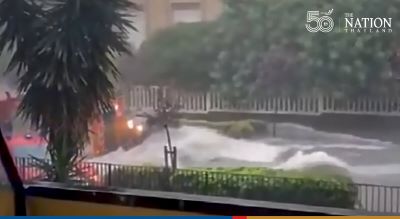
Floods sparked by days of heavy rainfall ravaged the Italian island of Sicily Tuesday, forcing evacuations and officials to issue a stay-at-home notice amid the severe weather which also swept the region of Calabria, in southwest Italy.
At least two people died as a powerful cyclonic storm dumped an estimated 300 mm (11.8 inches) of water – almost half the average amount of the island’s expected annual rainfall – in just a few hours on Sunday and into Monday, the Sicilian Farmers’ Association said.
According to experts, the extreme wet weather is a result of a rare “medicane,” also known as a Mediterranean hurricane. Medicanes are typically smaller, and shorter in duration, than hurricanes, although they can still bring strong winds and torrential rain.
Italy’s fire department said Monday that firefighters had carried out close to 600 flood rescues in 24 hours, carrying out 400 rescue missions in Sicily and 180 in Calabria.
Videos shared to social media highlighted the scale of the destruction: streets turned into rivers, abandoned vehicles almost entirely submerged in murky, fast-flowing waters.
“I urge the entire population to not leave home except for emergency reasons,” the mayor of Catania, Salvo Pogliese, posted on Facebook, adding that streets were “overrun by water.”
On Sunday, the Department for Civil Protection issued a red alert – the most severe weather warning – for parts of Sicily and Calabria warning of a threat to life and property.
The rising water, torrential winds and flooding also forced schools to close.
The wet weather continued into Wednesday, with forecasters predicting more rainfall throughout the week.
The scenes come following a summer of deadly floods across Europe, that wreaked havoc across communities from Germany to Belgium to the United Kingdom.
A recent study found that extreme flooding is set to increase as global temperatures rise.
This month, leaders will gather in Glasgow, Scotland, for this year’s global climate conference – but most of the world is already feeling the repercussions of their inaction – be it through intense heat waves, flooding or wildfires.

 สหรัฐและออสเตรเลียทำความเข้าใจต่ออาเซียนในประเด็นสนธิสัญญา AUKUS ย้ำไม่ทำลายเสถียรภาพในภูมิภาค
 สิงคโปร์ติดเชื้อเกิน 5,000 ครั้งแรกหลังตัวเลขพุ่งผิดปกติในไม่กี่ชั่วโมง
 หลายประเทศเลิกสนใจตัวเลขผู้ติดเชื้อ หันไปให้ความสำคัญกับวัคซีนเพื่อป้องกันการเจ็บป่วยอาการหนักและการเสียชีวิตจากโควิด-19