Six Palestinians escape from an Israeli prison through a tunnel, sparking a manhunt
Israeli security forces launched a manhunt on Monday for six Palestinian prisoners who escaped overnight from one of the countrys highest security prisons through a hole in their bathroom.
Asecurity official said the fugitives fled down a shaft beneath the bathroom floor and then sneaked through underground passages in the prison’s foundation.
Israeli police responded in large numbers, erecting roadblocks after the rare jailbreak from the Gilboa prison in northern Israel. Security forces patrolled streets in the north of the country and the occupied West Bank, as helicopters flew above.
Prime Minister Naftali Bennett described the escape as a “grave incident.” Arik Yaacov, chief of the Israeli Prisons Service, said an investigation was underway and that the six men appeared to have found a flaw in the facility rather than tunneled the entire way out, Israel National News reported. It was not immediately clear if they had help from outside to orchestrate the escape.
The Gilboa prison, located about two miles from the West Bank, is one of the most heavily guarded in the country.
The men on the run ranged from 26 to 49 years old, the Palestinian Prisoners Society said. At least four had been serving life sentences, with one of them detained since 1996.
The Israeli Prisons Service said five of prisoners had links to the Islamic Jihad movement, which called the breakout “a heroic act that will shock the Zionist defense system.” The group commended them in a statement for “snatching their freedom with their fingertips from under the eyes and ears of the occupier.”
Among the six fugitives is Zakaria Zubeidi, 46, who was jailed since 2019 and was a former commander of the al-Aqsa Martyrs Brigades in the West Bank town of Jenin during the second Palestinian uprising more than 20 years ago.
Authorities were now planning to move 400 inmates to other prisons to avoid other jailbreak attempts, Israel’s Army Radio said on Monday.
Photos circulated in Israeli media of people inspecting a hole in the ground outside the prison, purporting to show the end of the escape route.
Brazil suspends use of millions of doses of Chinas Sinovac coronavirus vaccine
Brazils health regulator suspended the use of just over 12.1 million doses of the coronavirus vaccine manufactured by Chinas Sinovac after learning that vials containing the shots were filled at an unauthorized production base.
The suspension is for 90 days as an investigation is carried out, said Anvisa, the regulator, which announced the decision in a statement Saturday. The Butantan Institute, a Sao Paulo biomedical center that has partnered with Sinovac to fill the vaccine for local usage, notified Anvisa about the irregularity the prior day, the agency said.
“The manufacturing unit responsible for the filling was not inspected and was not approved by Anvisa,” the regulator said in the statement. “Thus it is necessary to adopt a temporary measure to avoid the exposure of the population to a possible imminent risk.”
Plans to distribute an additional 9 million doses of the same vaccine will be halted, as they were also filled at a location that was not inspected by health officials, Anvisa said in the statement.
The regulator said the suspensions were precautionary and not punitive. They aim to “avoid use of irregular or suspect products,” Anvisa said. The lack of information about the environment at the production bases, combined with the need for vaccine shots to be made in strictly aseptic settings, persuaded officials to take the measure, Anvisa said.
Anvisa and the Butantan Institute didn’t immediately reply to requests for comment. Sinovac also did not immediately reply, but the Beijing-based company has previously blamed delays in deliveries to production bottlenecks and bureaucratic reasons such as export licenses.
The suspensions add to the general confusion surrounding Brazil’s vaccine rollout, which has relied on Sinovac for many of its immunization shots.
Brazil’s elderly have expressed concern about Sinovac’s efficacy against the delta variant, pushing health officials to start administering third doses to older citizens in urban centers last week, despite delays in giving out second doses to the larger population, according to the Associated Press.
And though the number of vaccination shots administered to the public has increased in recent weeks, the country has fully vaccinated only 65.6 million people, or about 31 percent of its population, according to official figures. About 53 percent of the population in the United States has been fully vaccinated.
Meanwhile, Brazil has canceled deals from vaccine providers in recent weeks including 10 million doses of Russia’s Sputnik V and 20 million doses from India’s Bharat Biotech, adding to public worries about timely deliveries of second shots for the broader public.
Repeated remarks from President Jair Bolsonaro casting doubt on vaccines’ efficacy have contributed to the lower-than-hoped-for vaccination rates, local health officials have said. But even among his most ardent supporters, public demand for immunization in Brazil appears to be on the rise, The Washington Post reported last month.
Those developments have coincided with drops in new infections and deaths caused by the coronavirus since earlier this year, and jumps in vaccination doses given to the public.
From March to June, about 500,000 Brazilians per week were infected with the deadly virus, while about 21,000 died in the worst week of that period. By contrast, about 171,000 individuals were infected with the coronavirus on the week of Aug. 29, while deaths numbered about 4,800, according to official figures.
In the same period, the weekly doses of vaccine shots administered has risen from under 5 million per week in March to above 10 million in August.
Brazil has been the second-worst-hit country during the pandemic, only after the United States, with more than 20 million infections and 580,000 deaths. The United States has logged nearly 40 million infections and almost 650,000 deaths.
Panjshir Valley, last resistance holdout in Afghanistan, falls to the Taliban
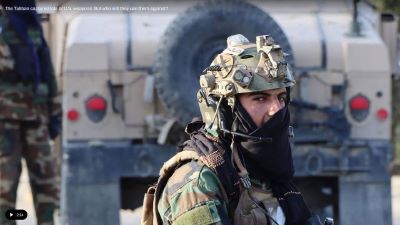
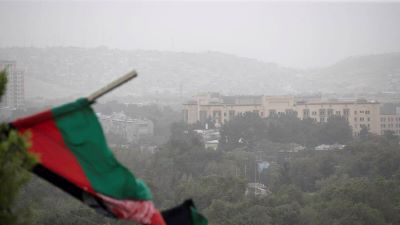
DOHA, Qatar – The Taliban on Monday seized Panjshir province, a restive mountain region that was the final holdout of resistance forces in the country, cementing the groups total control over Afghanistan a week after U.S. forces departed the country.
Taliban spokesman Zabihullah Mujahid said in a statement that the Islamist group had “completely conquered” the Panjshir Valley. “Our last efforts for establishing peace and security in the country have given results,” he said.
A senior official of the National Resistance Front of Afghanistan, who spoke on the condition of anonymity due to the sensitivity of the matter, confirmed that the Taliban had taken over. “Yes, Panjshir has fallen. Taliban took control of government offices. Taliban fighters entered into the governor’s house,” the person said.
The official added that Amrullah Saleh, a senior anti-Taliban leader who had served as vice president of the ousted government, had fled for Tajikistan.
But on Twitter, the NRF said its forces remained “in all strategic positions across the valley to continue the fight” and that the “Taliban’s claim of occupying Panjshir is false.”
And in a video recorded on Friday, Saleh said reports at the time that he had fled the country were “totally baseless,” although he added that the situation was “difficult.”
The Taliban’s victory Monday followed an extended period of heavy fighting between resistance guerrillas and Afghanistan’s new rulers. Resistance fighters set up a base in the Panjshir Valley days after the Taliban seized control of Kabul last month, determined to hold a valley that was never conquered by the Taliban in the 1990s nor by the Soviet Union in its nearly decade-long occupation in the 1980s.
On social media, Taliban officials shared a photo Monday that purported to show their fighters taking control of local administrative buildings. In a voice message posted on his Facebook page, Ahmad Massoud, the leader of the last pocket of resistance forces in Panjshir, called for a national uprising against the group.
Taliban assaults in recent days had killed “a record number of people and resistance forces,” including his own family members, he said. He accused the Taliban of using foreign fighters and said a country ruled by the group would be “isolated, in darkness, away from art.”
As he called on Afghans, both home and abroad, to oppose the Taliban, Massoud decried what he saw as efforts to repaint the Taliban’s public image.
“The Taliban has not changed in any way,” he said. “It has become even more brutal, radicalized, hateful, and fanatic.”
Certain members of the resistance continued to deny on Monday that the Taliban had occupied Panjshir. The NRF said in a Facebook post that “the people of Afghanistan should be assured that the resistance will continue until the freedom and justice is achieved by God’s help.”
Meanwhile, at a news conference in Kabul, Mujahid said that Afghan troops who had been trained by Western governments in the past two decades would be asked to rejoin the country’s security forces alongside Taliban fighters. Some Afghan soldiers are among those who fled to Panjshir after the Taliban seized Kabul last month.
“The forces that were trained by the previous government must rejoin,” he said. “In the upcoming system, all the forces that were previously trained and are professional will be reintegrated with our forces, because our country needs a strong army.”
Mujahid also said that Haibatullah Akhundzada, the hard-line cleric who leads the Taliban, “is alive (and) we will see him soon.” Akhundzada is expected to be named the country’s supreme leader.
Over the weekend, concerns over the Taliban’s treatment of women were again in the spotlight.
A policewoman was beaten and shot dead by Taliban militants in front of relatives at her home in central Ghowr province on Saturday, the BBC reported, citing eyewitnesses. The Taliban denied killing the woman – who, according to reports, was eight months pregnant – and said it was investigating the incident.
Separately, a Taliban spokesman told the Guardian that the group had detained four men who allegedly struck female protesters during a Saturday demonstration against the Taliban’s extreme interpretation of Islamic law, which sharply curtails women’s political rights.
As the Taliban swept to power last month, the group sought to convince skeptics that it wouldn’t return to the harsh rule it imposed when it last controlled the country, from 1996 to 2001. The latest developments add to recent reports of reprisal killings across the country. The array of human rights concerns could make it harder for the Taliban to convince world leaders to resume the flow of foreign aid that has largely been frozen since it took over Afghanistan.
Taliban officials met in Kabul on Sunday with the United Nations undersecretary general for humanitarian affairs, who promised to maintain assistance for the Afghan people, Taliban spokesman Suhail Shaheen said.
The head of the International Committee of the Red Cross also arrived in the country on Sunday to visit aid operations. In a video message, Peter Maurer said he would talk to authorities about ensuring that “neutral, impartial and independent humanitarian action” continues.
On Monday, a Taliban spokesman tweeted that Maurer met with officials in Kabul.
The U.N. has warned of an impending humanitarian crisis in Afghanistan, where foreign aid made up much of the previous Western-backed government’s budget.
On Monday, meanwhile, the State Department helped four U.S. citizens leave Afghanistan over ground, a senior State Department official said, marking the first overland evacuation it has facilitated since the U.S. military withdrew from Afghanistan last week. The Taliban was aware of the operation and did not impede their safe passage, said the official, who spoke on the condition of anonymity to discuss a sensitive mission. The four Americans were part of the group that Rep. Markwayne Mullin, R-Okla., had initially tried to evacuate from the country, said the official. Ground evacuations represent a rare option for leaving the country until they can resume at Kabul’s airport.
The departures happened just before Secretary of State Antony Blinken arrived in Qatar, which has become a transit point for more than 55,000 people fleeing Afghanistan and resettling in the United States and elsewhere. Top aides to Blinken said the trip is designed to express gratitude for the work U.S. and Qatari officials have done in the evacuation effort, but it also comes as the Biden administration faces an array of challenges related to Afghanistan. Shortly after arriving, Blinken joined Secretary of Defense Lloyd Austin for a dinner with Qatar’s Emir Sheikh Tamim Bin Hamad al-Thani.
In Mazar-e Sharif, airplanes with Americans and interpreters have been waiting on the ground for days amid conflicting reports that they are being held up either by the Taliban or awaiting State Department clearance for departure.
Rep. Michael McCaul, R-Texas, said on “Fox News Sunday” that the planes were waiting for clearance from the Taliban in what he described as “a hostage situation.” But Eric Montalvo, a former Marine Corps officer and attorney heading coordination for three of the charter planes in Mazar, told The Washington Post it is the U.S. State Department that must tell the Taliban that the flights are authorized to depart for Qatar.
A State Department spokeswoman said the department no longer has personnel on the ground after the U.S.-led evacuation mission ended last month, and it doesn’t control the airspace “whether over Afghanistan or elsewhere in the region.”
“Given these constraints, we also do not have a reliable means to confirm the basic details of charter flights, including who may be organizing them, the number of U.S. citizens and other priority groups onboard, the accuracy of the rest of the manifest, and where they plan to land, among many other issues,” the spokeswoman said.
The United States will, however “hold the Taliban to its pledge to let people freely depart Afghanistan,” she added.
Vietnam gets vaccine boost from Germany as Asean Covid cases increase
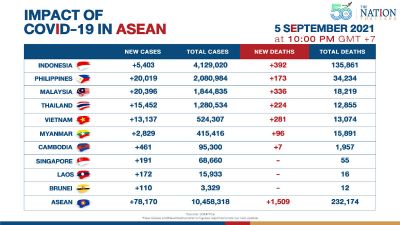
Southeast Asia reported fewer deaths despite a slight increase in Covid-19 cases on Sunday.
Asean countries logged 78,170 new cases, higher than Saturday’s 76,029. There were 1,509 deaths, down from Saturday’s 1,781.
The number of Covid-19 cases crossed 10.45 million, while the death toll rose to 232,174.
Vietnam’s foreign ministry announced that the German government on Friday had pledged to gift the country 2.5 million doses of AstraZeneca vaccine. Germany had earlier announced gifts of 75 ventilators, 15 medical monitors, and 20,000 oxygen meters for Vietnam, its strategic partner since October 2011. To date, Germany has been the biggest vaccine donor among EU member nations to Vietnam. Earlier, European nations including the UK, Poland, and the Czech Republic had supplied Covid vaccines to Vietnam.
Meanwhile, Laos confirmed 172 new cases on Sunday. Total number of cases stands at 15,933 with death toll at 16. Some 56 cases of community spread of Covid-19 were recorded in Laos, while 116 cases were imported. Authorities have increased disease control measures, which included a ban on social gathering to curb the climbing infection rate.
Israeli hospital separates head-connected baby twins in rare operation
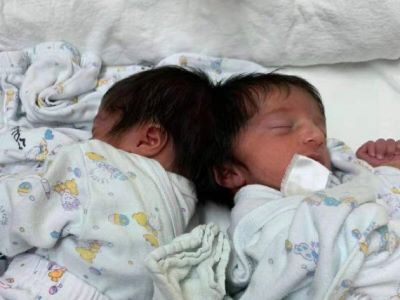
The Soroka Medical Center in southern Israel has successfully conducted a rare operation to separate a pair of one-year-old twins that were connected at their heads, the hospital said on Sunday.
The operation took place on Thursday and lasted 12 hours. It was performed by 50 medical staff members of the hospital, along with international experts, the hospital said.
The baby girls were born in August 2020, connected the back side of their heads. Over the past few months they have undergone extensive tests and have been under close medical supervision by the hospital, particularly the cardiac and respiratory function, prior to surgery, the hospital added.
The picture shows the medical staff during the seperation operation at Soroka Hospital.
At the surgery, the doctors separated the twins’ brains and blood vessels, and then recovered the skull, meninges and skin.
Mickey Gideon, director of the Pediatric Neurosurgery ward at Soroka said that “the rare operation was carried out perfectly,” adding that he expected the twins to “fully recover.”
The picture shows one of the baby girls after separated from her twin sister.
U.S. investigation into COVID-19 origins used as geopolitical weapon against China: media
The United States is using COVID-19 origins tracing as a weapon of “comprehensive warfare” and a way to “suppress the pace of Chinas development,” said participants of a workshop in Russia discussing Washingtons geopolitical motives behind its investigation into the pandemics origins.
he United States is using its investigation into the origins of COVID-19 as a political tool to pressure China and preserve hegemony, according to an article published recently on the portal Geopolitika.ru.
In a workshop that took place in the Russian city of Novosibirsk in August, experts from Germany, Austria, Turkey, Russia and Kazakhstan gathered to discuss Washington’s geopolitical motives behind its investigation into the pandemic’s origins, according to the article.
The participants concluded that the United States is using COVID-19 origins tracing as a weapon of “comprehensive warfare” and a way to “suppress the pace of China’s development.”
Washington fears losing its political hegemony and is therefore attempting to use the media as an instrument to wage disinformation campaigns regarding the origins of COVID-19 and issues related to Xinjiang.
With all social platforms controlled by more than a dozen companies in the United States, the situation is becoming rather dangerous with fake news spreading rapidly and uncontrollably.
“The western media have deliberately ignored the fact that the United States has set up a large number of biological laboratories around the world and some scandals about American biological experiments,” it said. “For example, the United States once had a virus leak in the Lugar center in Georgia.”
The article added that uncovering the origins of COVID-19 should not be a geopolitical issue and all countries should work together to resolve the matter.
Guinea military officials say they have detained the president and taken control of the country
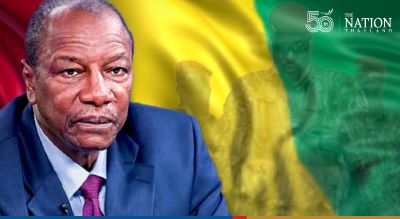
CONAKRY, Guinea – Soldiers have detained the president of Guinea, the head of the nations special forces said Sunday, adding another potential coup detat to a long history of military takeovers.
Col. Mamady Doumbouya said President Alpha Condé was in custody following hours of gunfire in Conakry, the capital of this West African nation, and warnings for people to go home.
“If you see the state of our roads, of our hospitals – it’s time for us to wake up,” Doumbouya said on state television.
With Guinea’s red, yellow and green flag draped on his shoulders, the colonel pledged to forge a transition government that would not harm the nation but “make love” to it.
Soldiers flooded the streets of Conakry, blocking key roads. Confusion abounded before Doumbouya released a video on social media, citing “the trampling of the rights of citizens” and “the disrespect of democratic principles” as motivations for the overthrow.
Condé, 83, took office 11 years ago in the country’s first democratic election since independence from France in 1958. He vowed to steer the nation of roughly 13 million out of a culture of corruption that had shaped decades of authoritarian rule while blunting development.
But Condé sparked deadly riots last fall after he sought a third term in what critics blasted as defiance of Guinea’s constitution. He argued that changes in the law under his tenure, engineered by his government, had reset the clock on his allowed number of terms.
On Sunday, photos and video circulating on WhatsApp showed the president flanked by men in military fatigues. One asked: “Excellency, have we touched a single hair of yours?” A silent Condé, wearing jeans and a tie-dyed dress shirt, did not respond and kept his gaze from the camera.
The president’s detention roused speculation that the army was angry after parliament moved to fatten the salaries of politicians last week while slashing the budget for security forces.
U.N. Secretary General António Guterres condemned “any takeover of the government by force of the gun.” In a tweet, Guterres called for “the immediate release of President Alpha Condé.”
Local media reported that several soldiers and the president’s bodyguards died in the clashes.
By midday, video footage from Conakry captured people cheering as trucks carrying troops rumbled down the streets. “Bravo!” some onlookers shouted. “Bravo! It’s done!”
Not everyone was joyful.
“It’s a disappointment, a feeling of failure,” said Mamady Kaba, president of the League for Rights and Democracy in Africa in the capital.
Despite Guinea’s immense natural riches, nearly half the population lives in poverty. The country boasts the world’s largest reserves of bauxite, the main source of aluminum for cars and beer cans and foil wrap.
Condé cut flashy deals with foreign companies to fashion Guinea into a top bauxite exporter. Critics say he has failed to share the wealth with the people and ruined land in the process. Rain turns roads across the countryside into sludge, Guineans say, and hospitals function in disrepair.
“We hope this will be a new start,” Kaba said. “We hope for institutional reform.”
It was unclear where the troops were holding Condé. His office made no statements, and government officials did not respond to requests for comment.
The tumult in Guinea comes about three months after military officials in neighboring Mali carried out a second coup d’etat in less than a year.
The Malian military official who ousted both presidents, Col. Assimi Goïta, had attended several U.S. military training events on American and West African soil.
Doumbouya, a former French Legionnaire who has led Guinea’s special forces since 2018, also participated in a U.S. training two years ago in Mauritania. He praised the “sharing experience” in a 2019 interview. (The United States leads an annual exercise in the region focused on fighting terrorism.)
Guinea’s military last grabbed power in 2008 after the death of President Lansana Conté, the country’s second leader in the post-colonial era – an army officer who’d led the country with an authoritarian fist since the mid-1980s.
Conté himself seized control in a coup backed by Guinea’s troops.
U.S. Embassy contractors, visa applicants among Afghans left behind after one of the largest airlifts in history
KABUL, Afghanistan – The day Afghanistans capital fell, a contractor who had worked at the U.S. Embassy for six years was dismissed from work early.
Embassy staff had collected his family’s information weeks before in preparation for a possible evacuation. But after he was told on Aug. 15 to leave the embassy’s grounds, “nobody called, nobody emailed.”
“Everyone knows where I worked, that I worked with the Americans,” said the contractor, who ran a shop at the embassy and who, like others in this report, spoke on the condition of anonymity out of fear of reprisals. He eventually fled to the home of a relative in a neighboring province. “I gave my mother my embassy badges and told her to put them in a box and bury it in the garden.”
Roughly 2,500 U.S. Embassy employees were among the 120,000 people the U.S. evacuated by air from Afghanistan, according to President Joe Biden. But the operation left “many of our longtime partners” behind, according to a State Department spokesperson. One person familiar with the matter said they included about 2,000 U.S. Embassy contractors and immediate family members, some of whom who had worked at the embassy for more than a decade. The State Department declined to comment on that number.
For those who were not evacuated, Undersecretary of State Victoria Nuland said at a recent news conference, “we’re looking at all possible options, but we’re also conveying to them that their safety and security is of paramount concern to us.”
Biden described the operation as an “extraordinary success,” but thousands of Afghans considered vulnerable and eligible for evacuation fell through the cracks. They include American University of Afghanistan students and graduates, applicants for Special Immigrant Visas and members of Afghanistan’s Special Forces who fought closely with the United States.
With the departure of U.S. forces from Afghanistan, many Afghans who felt threatened by the Taliban takeover now say they are in greater danger.
Among the tens of thousands who managed to reach the airport and get on planes out of the country were 5,500 Americans, thousands of citizens and diplomats of U.S. allies, and thousands of Afghans who worked for the United States as interpreters, translators or other roles, according to Biden.
Planning for the evacuation began weeks before Kabul fell to the Taliban in mid-August, but the effort began to stumble almost as soon as it started.
U.S. officials did not expect Afghan President Ashraf Ghani to flee the country so quickly and for Kabul’s security forces to collapse, leaving the civilian side of the airport unguarded.
Ghani’s departure as the Taliban entered Kabul on Aug. 15 is “really what threw a wrench into the whole thing,” said a person familiar with evacuation planning.
“We made every effort to know who we were dealing with and what the numbers were, making sure we had proper resources on the ground to try to assist them. But the whole situation kind of spiraled into chaos,” said the person, who spoke on the condition of anonymity because he was not authorized to speak to the media.
The airlift is now complete, Secretary of State Antony Blinken said, but other evacuation efforts are ongoing. “We’ve gotten many out, but many are still there,” he said. “We will keep working to help them. Our commitment to them has no deadline.”
When the last U.S. evacuation plane left Afghanistan, Azada said, she became a prisoner in her own home.
The 23-year-old had recently graduated from the American University of Afghanistan in Kabul, a distinction she fears has placed her name is on a Taliban “kill list.” Now, she’s too afraid to walk down the street.
Over the past two weeks she held out hope as her university repeatedly emailed advisories for an evacuation that never came.
The American University, funded largely with U.S. government money, attempted to evacuate thousands of students, faculty and graduates but was mostly unsuccessful. Afghans associated with the school are considered “at risk” and were eligible for U.S. evacuation flights, according to a person coordinating evacuation efforts in Kabul who spoke on the condition of anonymity to discuss the matter. A deadly 2016 Taliban attack on the institution killed 15.
But those connected to the university were not prioritized as “high risk,” meaning it was up to the school to navigate Taliban checkpoints without U.S. or NATO help and make it into the military side of the airport, the person said.
Azada received a message directing her to get to the airport. She waited for hours, she said, only to be turned back. The last message she received read simply: “The operation has been canceled. Wait at home; we are working on another plan.”
“I can’t just sit at home and wait for the Taliban to come impose their rules,” said Azada, who spoke on the condition she be identified by a nickname because of fears for her safety. “What is going to happen to us?”
Azada once led a life full of work and weekends with friends meeting up at Kabul’s trendy restaurants and cafes. Now she spends her days in her bedroom on her phone chatting with friends or reading.
“Most of the time we are just talking about how do we get out of here and save our lives,” she said of her Facebook and WhatsApp groups. “But we also share memories about how life was beautiful.” She spoke of the dorm room dance parties she threw with her girlfriends.
“Those days will never happen again,” she said, “but I’m really thankful we had them.”
Ian Bickford, president of the American University of Afghanistan, said efforts to relocate students, graduates and faculty continue. “It has becomes a more gradual and incremental effort, but we are in it for the long haul,” he said. “And we continue to appeal for U.S. support.”
Asked about the American University students, the State Department spokesman said he couldn’t “speak to specific cases … for privacy and other considerations.” He said the U.S. evacuation was aimed at addressing “the needs of those most at risk, including women and girls, journalists, members of religious and ethnic minorities, and others.”
On the day Kabul fell to the Taliban, an engineer who worked for the U.S. Army was scheduled to have his final interview at the U.S. Embassy for an expedited visa.
The interview was set for 10:45 a.m., but the embassy had begun dismissing staff an hour before, as news broke that the militants had reached the city’s gates.
The engineer, in the final stages of processing for a Special Immigrant Visa, should have been eligible for an evacuation flight. His family camped outside the airport for three nights, he said, sleeping in an open park littered with garbage. He managed to reach the airport gates twice but was turned away both times. Taliban leaders had barred Afghans who didn’t hold foreign passports or green cards from leaving the country.
“It felt like after all that time (the United States) just doesn’t care about us,” he said.
Neighbors warned him that local Taliban fighters were asking questions about who he worked for and whether he was still in Kabul. The inquiries were enough to scare him off the streets. But unable to leave his home, his family is running dangerously low on food. “For days all we have had is bread, tea and sugar,” he said.
“My children, they don’t understand,” he said. His son is 3; his daughter is 1. “But my wife is just crying: Why did you work with those people? Look how you brought us under threat!”
A State Department spokesman declined to comment on the engineer’s case, citing privacy. The spokesman said the evacuation prioritized U.S. citizens, legal permanent residents, Special Immigrant Visa applicants and other Afghans at risk.
“After 20 years of investment in Afghanistan, this was a very large pool of people,” the spokesman said. U.S. troops and others on the ground “did the best they could, working around-the-clock to evacuate as many people as possible,” despite “many constraints” including the threat of Islamic State attacks to the Kabul airport.
Moving forward, the spokesman said, “we will hold the Taliban to its pledge to let people freely depart Afghanistan.”
An Afghan Special Forces officer was on the list of people to evacuate but wasn’t able to get inside the military side of the airport. He said U.S. forces tried to extract him and a few hundred other Afghan commandos, but the logistics repeatedly fell apart.
“The Americans would call us and tell us to gather here. And then they would say, ‘No, that is the wrong place. Go to another location.’ And then they would say, ‘Come back tomorrow,’ ” he said.
“Of course I’m angry. We were on the front line for the United States in this war,” he said. “They told us you will be the best of the best in the Afghan army, and now look.”
When Kabul fell, the officer said, he did not want to flee. “I called my (foreign) sources and told them, if you support us, we can fight against the Taliban in Kabul. We have the training, we have the ability, we can be the resistance.”
But he said there was no response to his offers. As the Taliban tightened its grip on his neighborhood, he fled to a friend’s house and then, a few days later, to another home. The night the last U.S. evacuation plane took off, he and a friend went to watch the Taliban gunfire from the roof.
“He said to me: ‘Everything is finished. Now what?’ “
After his experience of the last two weeks, he said, he can’t imagine trusting the United States enough to partner with its military again.
The U.S. Embassy employee said the silence from his longtime employer is unnerving. “We are still waiting to see what they will do for us,” he said. “We don’t know, exactly.”
But while the withdrawal has left him “heartbroken,” he said, he remains proud of his former employment.
“It was not a mistake,” he said. “I will never say that. Even if the Taliban threaten to kill me, I wouldn’t. No one has helped me the way the Americans have.”
Azada has been consuming all the books in her home since the United States withdrew. Years ago, she was given a copy of “The Diary of Anne Frank.” The book had never interested her. But last week, she began reading it.
“I feel like it’s really relatable to my situation,” she said. “The girl was really strong. I admire how she adapted to a life that she didn’t deserve.”
Azada hasn’t finished the book, but she thinks she knows how it ends.


 The picture shows the medical staff during the seperation operation at Soroka Hospital.
 The picture shows one of the baby girls after separated from her twin sister.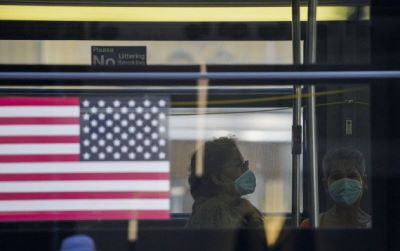
 แต่ไรมาสถานทูตจีนไม่ว่าที่ไหนๆ มักจะสงวนท่าทีไม่ออกปากต่อว่า ไม่บ่น ไม่เล่น และไม่ทำงานเชิงรุก แต่ตอนนี้มันเปลี่ยนไปแล้ว สถานทูตจีนในไทยก็เช่นกัน
 สงครามกลางเมืองในอัฟกานิสถาน ‘มีแนวโน้ม’ เกิดขึ้นได้ นายพลระดับสูงของสหรัฐชี้
