บริษัทที่ถูกขึ้นบัญชีดำครั้งล่าสุดนี้รวมถึงบริษัท หัวเว่ย ซึ่งถูกสหรัฐคว่ำบาตรอย่างหนักหน่วงในสมัยอดีตประธานาธิบดี โดนัลด์ ทรัมป์ บริษัทโทรคมนาคมรายใหญ่ของจีน 3 แห่ง ได้แก่ China Mobile Communications Group, China Unicomnและ China Telecommunications รวมทั้ง Semiconductor Manufacturing International ผู้ผลิตชิปรายใหญ่
NIH facility inaugurated today for the formulation, fill and finish of the CanSino-Bio vaccine. Dr Aamer Ikram and his team have done a great job! This is a milestone in the journey to achieve to self-reliance pic.twitter.com/pNeCTAC1RW— Faisal Sultan (@fslsltn) June 1, 2021
ในทวีตล่าสุดที่ทำพิษกับราคาของ Bitcoin มัสก์มีข้อความสั้นๆ เพียง #Bitcoin ตามด้วยอีโมจิของ Bitcoin และอีโมจิรูปหัวใจแตกสลาย และรูปภาพที่เป็นการอ้างอิงถึงเนื้อร้องของเพลง In The End ของวงร็อกชื่อดังอย่าง Linkin Park แต่เพียงเท่านั้ก็ทำราคาปั่นป่วนได้
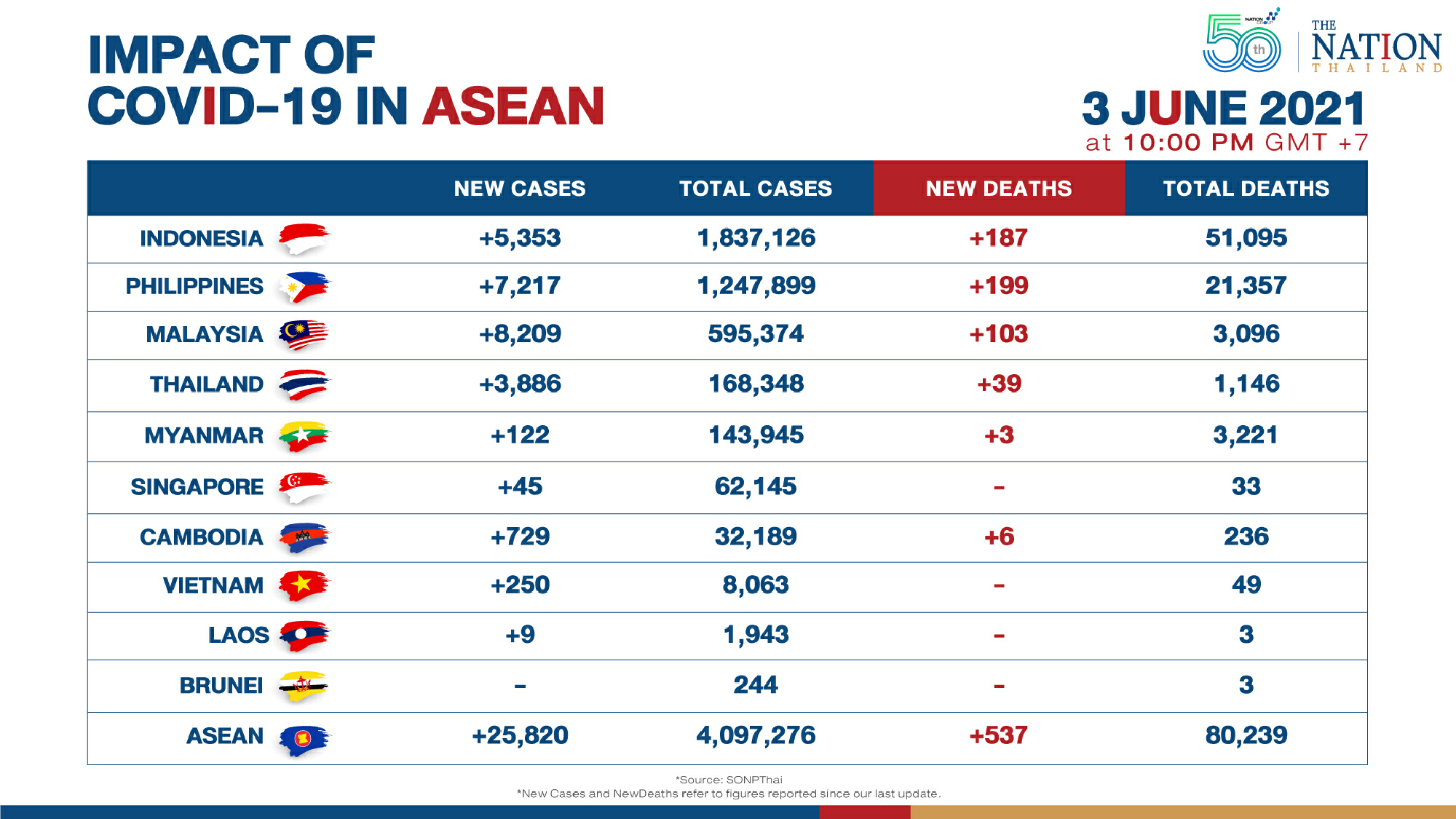
Southeast Asia saw the highest number of Covid-19-related deaths in over three weeks, as well as a rise in new cases on Thursday, according to collated data.
The region reported 25,820 new cases on Thursday, higher than Wednesday’s 22,747, while deaths rose to 537, up from the previous day’s 507.
The number of Covid-19 cases in Asean since the outbreak crossed 4.09 million, while total deaths climbed to 80,239.
Cambodia reported 729 new cases and six deaths on Thursday, bringing cumulative cases in the country to 32,189 and total fatalities to 236. Disease control measures have been announced in Phnom Penh to tackle increasing infections. Entertainment venues, fitness centres, museums and other places have been ordered to close, while public assembly of more than 15 people is prohibited.
Laos reported nine new cases on Thursday, taking cumulative cases in the country to 1,943 patients. So far, 1,654 people have been cured and discharged.
The Laotian Department of Health has ordered a halt on importing Covid-19 vaccine for sale in the country by private companies to avoid disparity in distribution. The department assured that the government was capable of procuring enough vaccine for the population.
U.S. details global coronavirus vaccine plan, with first 25 million doses headed to Asia, Latin America, Caribbean, Africa
Responding to criticism that the United States has hoarded lifesaving coronavirus vaccines, the Biden administration on Thursday announced a plan to share 25 million doses globally in what officials described as a down payment on tens of millions more doses to come.
Officials said they would share at least 80 million doses globally by month’s end – sending about three-quarters of the total through international public health organizations, while reserving the remaining quarter for direct donations to handpicked nations.
“We are sharing these doses not to secure favors or extract concessions. We are sharing these vaccines to save lives and to lead the world in bringing an end to the pandemic, with the power of our example and with our values,” President Joe Biden said in a statement.
The Biden administration has been under pressure to share doses from the nation’s vaccine stockpile, particularly as the pandemic recedes in the United States while continuing to surge abroad. More than half of Americans have received at least one shot of a coronavirus vaccine, according to The Washington Post’s tracker, compared with about 1 in 10 people globally. Scientists also warn that the virus’s global spread remains a threat, as mutations that emerge abroad can return to threaten Americans.
The announcement also comes a week ahead of Biden’s plan to attend a Group of Seven meeting in Britain, where leaders are expected to focus on steps to close the widening gap between countries with access to coronavirus vaccines and those without. For months, public health officials, the leaders of developing nations and foreign experts have warned of what they call “vaccine apartheid,” urging rich countries, particularly the United States, to do more to share surplus doses and boost total supply.
Under the White House approach, about 19 million of those initial 25 million doses would be shared with Covax, the World Health Organization-backed initiative to distribute vaccine doses around the globe. White House officials said they intend about 7 million doses of the Covax share to go to Asia, 6 million to Latin America and the Caribbean, and 5 million to Africa, working with global partners such as the Africa Centers for Disease Control and Prevention.
Meanwhile, the United States would directly share about 6 million doses with nations experiencing severe coronavirus outbreaks, including India, which has been hit hard by the virus in recent weeks.
A White House fact sheet lists more than 40 individual nations where Biden intends to share vaccines, a diverse group that includes allies such as Brazil and Taiwan, and also international aid priorities such as the West Bank and Gaza. While other nations have been less prescriptive when donating vaccines to global aid organizations – attaching no strings about where the doses go – public health leaders sidestepped questions about the United States’ earmarks, instead heralding the size of its contribution.
“This announcement allows us to quickly get more doses to countries in a strained global supply climate – meaning front line workers and at-risk populations will receive potentially lifesaving vaccinations and bringing us a step closer to ending the acute phase of the pandemic,” Seth Berkley, CEO of Gavi, the Vaccine Alliance, said in a statement.
The initial tranche of 25 million doses will include shots already authorized for the United States, produced by Pfizer-BioNTech, Moderna and Johnson & Johnson. The donations will not include tens of millions of doses developed by AstraZeneca, which are still undergoing a U.S. safety review.
“Importantly, we have secured enough vaccine supply for all Americans,” said Jeff Zients, the White House coronavirus coordinator, noting the Biden administration would ramp up efforts this month to get more Americans immunized. “We will continue to donate additional doses across the summer months as supply becomes available.”
Humanitarian groups such as Doctors Without Borders said the White House plan was insufficient given the urgent global need, although policy experts credited the White House for trying to navigate competing priorities.
“It’s an announcement that checks a lot of boxes for the United States: It demonstrates support for Covax, the multilateral approach to solving this crisis, and it responds to pleas from countries in regions who have not received many vaccines,” said Thomas Bollyky, a senior fellow at the Council on Foreign Relations and director of its Global Health Program.
“The issue is that it is a relatively small amount of vaccines spread over a lot of countries,” Bollyky added.
The inequities revealed by the pandemic have been felt on a global scale, with a small number of relatively rich nations securing a disproportionate share of near-term supply and leaving much of the world to fend for itself.
Since Biden’s announcement last month that he planned to distribute a share of the nation’s considerable vaccine surplus, global leaders have waited to see how that would be doled out. The framework announced Thursday shows the administration trying to signal support for multilateral efforts by sending 75 percent of doses through Covax, with Biden officials crediting global health organizations for their existing expertise in licensing and distributing vaccines.
White House officials also tried to distinguish the U.S. strategy from the vaccine diplomacy practiced by China and Russia, two countries that have sought to use their coronavirus vaccine stockpiles to bolster alliances and influence.
But the same officials acknowledged the value of hand-selecting some nations to receive shots, including neighbors such as Canada and Mexico.
Jake Sullivan, the national security adviser, singled out the decision to share 1 million Johnson & Johnson doses with South Korea, for instance, saying the goal was to protect American forces stationed there, as well as “the Korean troops . . . standing shoulder-to-shoulder with us in that country.”
“It is a unique case – and the kind of unique case for which we want to retain some flexibility,” Sullivan said.
Among the vaccine doses expected to be available soon are millions of Johnson & Johnson shots produced at Emergent BioSolutions in Baltimore. Federal officials shut down the plant in April and subjected its products to extra scrutiny after it was discovered that Johnson & Johnson vaccines had been contaminated with AstraZeneca vaccines being made in the same facility. Food and Drug Administration officials are nearing the conclusion of their review.
Looking ahead to the Group of Seven meetings, public health officials and advocates are set to press the Biden administration and the leaders of other wealthy nations for details on whether G-7 countries will follow the United States and support patent waivers for coronavirus vaccines, or take other steps to boost manufacturing around the world.
About two-thirds of Americans say the United States should take a major role in sharing vaccines abroad, according to a Kaiser Family Foundation poll released Thursday. The Biden administration has also faced bipartisan scrutiny on Capitol Hill for its lack of detailed plans to share vaccines, particularly as rivals such as China and Russia have provided them to dozens of countries.
Tom Hart, the acting CEO of the One Campaign, a global anti-poverty organization, said he was disappointed the United States had not yet donated tens of millions of doses developed by AstraZeneca since it is not using them. The company’s shots, which have received emergency authorization abroad, remain under review by U.S. officials.
“The administration will soon have hundreds of millions of surplus doses to donate,” Hart said in a statement. “Now is the time to make that clear and push other countries with surpluses to do the same.”
U.S. officials said they would make further donations to Covax, which is co-led by the World Health Organization, the Coalition for Epidemic Preparedness Innovations and Gavi. The organization aims to vaccinate 20% of participating countries by the end of the year – a relatively modest target that may not be met thanks to a supply crunch compounded by the crisis in India. To date, it has delivered just under 80 million doses to 129 countries.
Covax’s model of distributing doses based on population also has been criticized by some experts, including bioethicist Zeke Emanuel, who advised Biden’s coronavirus response during the presidential transition and has called for doses to be sent immediately to countries at greatest risk.
Published : June 04, 2021
By : The Washington Post · Dan Diamond, Emily Rauhala, Laurie McGinley
Russia-linked group behind JBS attack revels in audaciousness
They patronize hacking forums to recruit affiliates, advertise profit-sharing schemes and provide interviews on their techniques.
REvil, the Russian-linked hacker group the FBI said is responsible for the cyberattack on JBS SA, the largest meat producer in the world, has emerged as one of the most prolific — and public — ransomware groups in recent years.
The hackers, also known as Sodinokibi, have been at the forefront of the ransomware-as-a-service model of cyberattacks since the group first came to prominence as a security threat in 2019. In this model, hacker groups provide malware for others to use in an attack in exchange for a cut of the ransom payments. In order to recruit talent, REvil deposited $1 million in Bitcoin as a way to give potential affiliates peace of mind that they would get paid.
“Audaciousness is part of their persona,” said Allan Liska, a senior threat analyst at the cybersecurity firm Recorded Future Inc.
Ransomware has become a thorny problem for the Biden administration, particularly after an attack last month on Colonial Pipeline Co. squeezed fuel supplies along the East Coast. Other recent attacks have targeted the police department in Washington, D.C., a hospital network in California and now a major meat supplier.
Ransomware is a type of hack in which a victim’s computer files are encrypted, rendering them unusable until a ransom is paid. Some ransomware groups steal files too, providing another avenue for extortion. REvil maintains a page on the dark webpage, called the “Happy Blog,” where it leaks or auctions sensitive documents from victims as an extra incentive to pressure them to pay.
Since 2017, ransomware has come to dominate other financially motivated cyberattacks in volume and profitability, said Kelli Vanderlee, senior manager of analysis at Mandiant Threat Intelligence, part of FireEye Inc. While the attacks aren’t limited to a particular type of victim, available data suggests it disproportionately affects the manufacturing sector, Vanderlee said. “There are likely several contributing factors, including the perception that manufacturers may be more likely to pay to prevent monetary losses from production downtime,” she said.
REvil emerged from the former GandCrab group, a ransomware-as-a-service outfit that announced they were closing up shop in 2019, according to CrowdStrike Holdings Inc., which confirmed that REvil was behind the JBS attack. “We are getting a well-deserved retirement,” GandCrab wrote, according to the cybersecurity blog KrebsonSecurity. “We are living proof that you can do evil and get off scot-free.”
It’s not clear if the operators of GandCrab simply rebranded themselves with a new name, or if REvil’s operators bought — or stole — GandCrab’s code. Either way, by the time GandCrab signed off, REvil was already underway as a more exclusive ransomware program that was also known as “Sodin” or “Sodinokibi.”
In May 2019, a representative of the group, going by the nickname “Unknown,” sought out a small number of partners on hacking forums for a new ransomware-as-a-service program. “Five affiliates more can join the program and then we’ll go under the radar,” according to KrebsonSecurity. “Each affiliate is guaranteed USD 10,000. Your cut is 60% at the beginning and 70% after the first three payments are made. Five affiliates are guaranteed [USD] 50,000 in total. We have been working for several years, specifically five years in this field. We are interested in professionals.”
“They advertise sharing profits and provide infrastructure and ransomware, ransom negotiations and the distribution of funds,” said Jon DiMaggio, chief security strategist at Virginia-based Analyst1. “They handle all the Bitcoin transactions and things of that nature.”
Like many of the more established ransomware groups, REvil researches potential targets to ensure they have the means to pay, including determining if victims carry insurance against cyberattacks, he said. A REvil associate said in an interview that targeting firms with cyber-insurance was “one of the tastiest morsels.”
Recorded Future said it’s aware of at least 237 REvil victims since 2019.
REvil took credit for hacking the hardware supplier Quanta Computer Inc. earlier this year, and in the process published secret blueprints for new Apple Inc. devices. In 2020, REvil executed a ransomware attack against a law firm they claimed once represented some of Donald Trump’s television enterprises. In 2019, the group also attacked a group of Louisiana election clerks a week before Election Day.
REvil is so immersed in the ransomware domain that its members weigh in regularly on discussions about malware on hacker forums, according to DiMaggio. They also maintain direct relationships with other ransomware groups including DarkSide, the hackers accused of being behind the May attack on Colonial Pipeline, he said.
When DarkSide’s site went down after the Colonial attack, REvil alerted the hacking community about it, said DiMaggio, who has long studied Russian cybercriminal gangs. “They’re extremely involved. They’re the kid in class who always has to raise his hand. They’re very vocal in the community.”
DiMaggio and other analysts have said that Revil hackers communicate largely in Russian and steer clear of targets that use Cyrillic script — the system for languages of Eastern Europe and Slavic states. In the interview, REvil’s Unknown said the group avoided those countries because of geopolitics, laws and patriotism.
The arrangement also gives Russian President Vladimir Putin “plausible deniability” against accusations by the White House and others that Russia is involved in the attacks.
“The whole ransomware model fits into the tactics we’ve seen from Russia over the years,” DiMaggio said.
The appeal for hackers is potentially big profits with minimal risks. “As a child I scrounged through the trash heaps and smoked cigarette butts,” a person claiming to be REvil’s “Unknown” said in a March interview with Recorded Future. “I wore the same clothes for six months. In my young, in a communal apartment, I didn’t eat for two or even three days. Now I am a millionaire.”
Published : June 04, 2021
By : Syndication Washington Post, Bloomberg · Jamie Tarabay
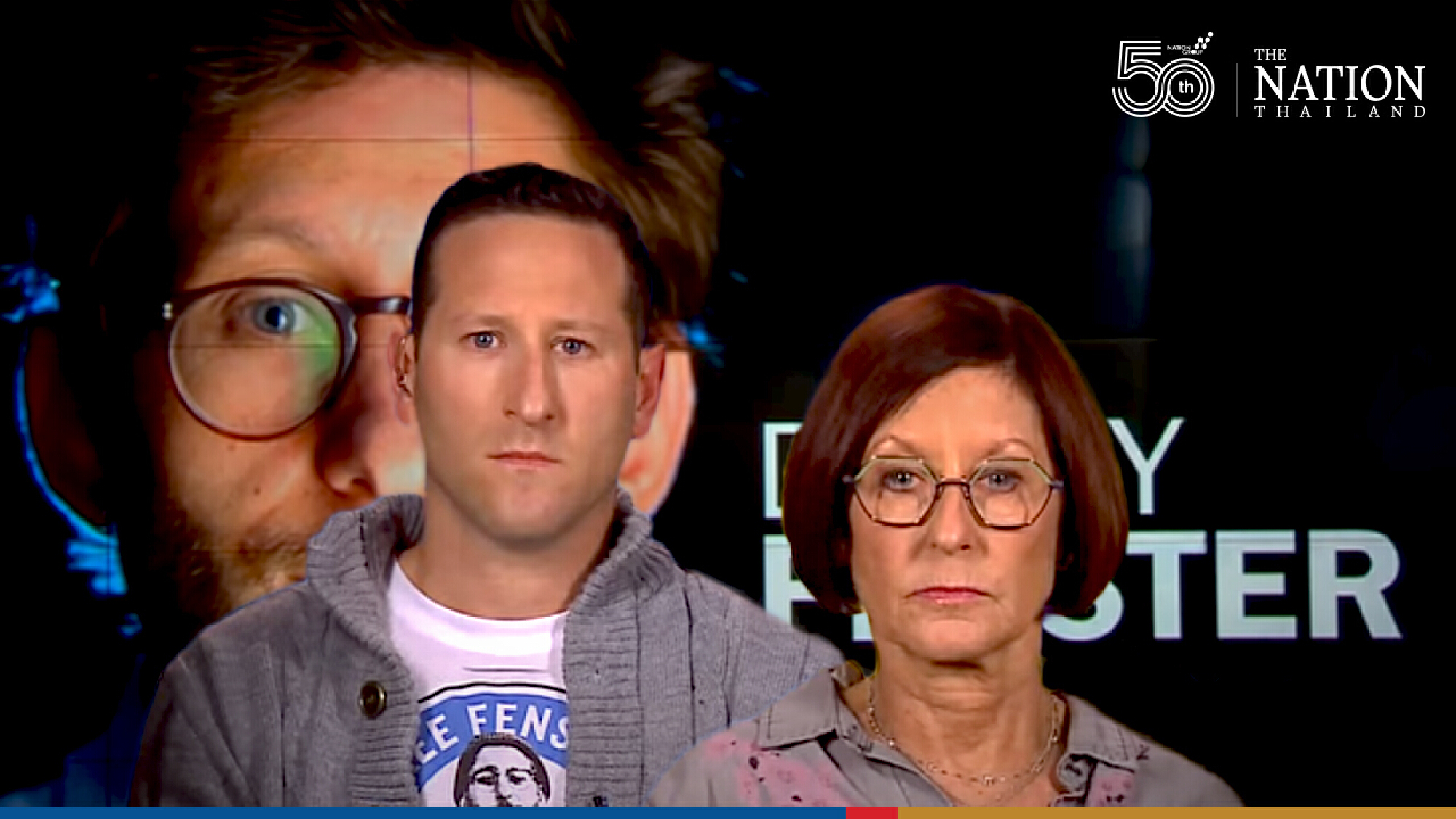
Family members, U.S. officials press Myanmar for release of detained journalist Danny Fenster
Early on the morning of May 24, Bryan Fenster woke up to a string of alarming text messages: His brother, Danny, had been detained at Myanmars Yangon International Airport while trying to fly home to Michigan, to surprise their parents with his first visit in three years.
“Iknew right away that this was going to be really bad,” Bryan recalled. His brother had been working as the managing editor for the news outlet Frontier Myanmar, and journalists were increasingly being targeted in the Southeast Asian nation, where the military junta seized power in a February coup. He steeled himself to call up their parents and deliver the news, and then sprung into action.
Eleven days later, the Fenster family still doesn’t know why Danny was arrested or what kind of condition he’s in. All they know is that he’s being held in Myanmar’s notorious Insein prison, which houses political prisoners and has a reputation for inhumane conditions. U.S. government officials have been pushing for the 37-year-old journalist’s release but say that the junta has denied all access to him.
“We’re not privy to everything that’s going on behind the scenes, but we are assured that people at the highest levels of the U.S. Embassy are working on this and it’s a priority for them,” Bryan Fenster said.
Danny Fenster is the fourth foreign journalist detained since the February coup, and the second American. Deputy Secretary of State Wendy Sherman said Wednesday that the junta’s actions constituted an “unacceptable attack on the freedom of expression.”
“We have pressed the military regime to release them both immediately and will continue to do so until they are allowed to return home safely to their families,” Sherman told reporters.
Last week, officials from the U.S. Embassy in Myanmar were able to conduct a virtual visit with Nathan Maung, a U.S. citizen and journalist who was detained earlier this year, Sherman added. “We have sought to visit Daniel but have thus far not been afforded access to him by regime officials,” she said.
Human rights groups estimate that Myanmar’s military government has arrested roughly 4,000 people since the February coup in an attempt to crack down on opposition. The junta publishes lists of “wanted” journalists who it claims are threatening “state stability,” and has detained dozens of native-born reporters.
Danny Fenster moved to Myanmar several years before the coup, during a period when the country was changing rapidly, in what many experts saw as a move toward a more open, democratic society. “He was excited to be there to see the momentum of it opening up, so we were excited for him,” his brother, Bryan, said.
As the military crackdown progressed, the Fensters became increasingly concerned about Danny’s safety. But they also knew that he had lived in the country long enough to know where he could and couldn’t safely go, Bryan said. And since he worked as an editor rather than a reporter, he wasn’t attending protests that could have put him at risk.
A native of the Detroit suburbs, Danny Fenster worked as a reporter for a daily newspaper in New Iberia, La., before moving to Myanmar. Both moves were motivated by a deep curiosity about the world and a desire to tell stories that often go unheard, his brother said.
“He cares tremendously about journalism as an art form, but also the responsibility that comes with it to make the world a better place,” Bryan Fenster said.
While Myanmar’s military government has offered no official explanation for Danny’s detention, his family assumes that he was targeted as part of a larger campaign to silence journalists. Frontier Myanmar, where he began working in August 2020, routinely publishes stories that cast a critical light on the junta and highlight potential human rights abuses that have taken place since the coup.
The Fenster family has been in frequent communication with elected officials, including Michigan Gov. Gretchen Whitmer, Congressman Andy Levin, D-Mich., and Sen. Gary Peters, D-Mich., who have been making calls to the State Department and U.S. Embassy on their behalf, Bryan Fenster said. Fearful that Danny’s plight may be forgotten if his name is no longer in the news, they’ve launched a petition and a website and are encouraging supporters to keep up the public pressure by contacting their representatives.
“We’re most concerned about his well being,” Bryan Fenster said. “We just want confirmation that he’s OK.”
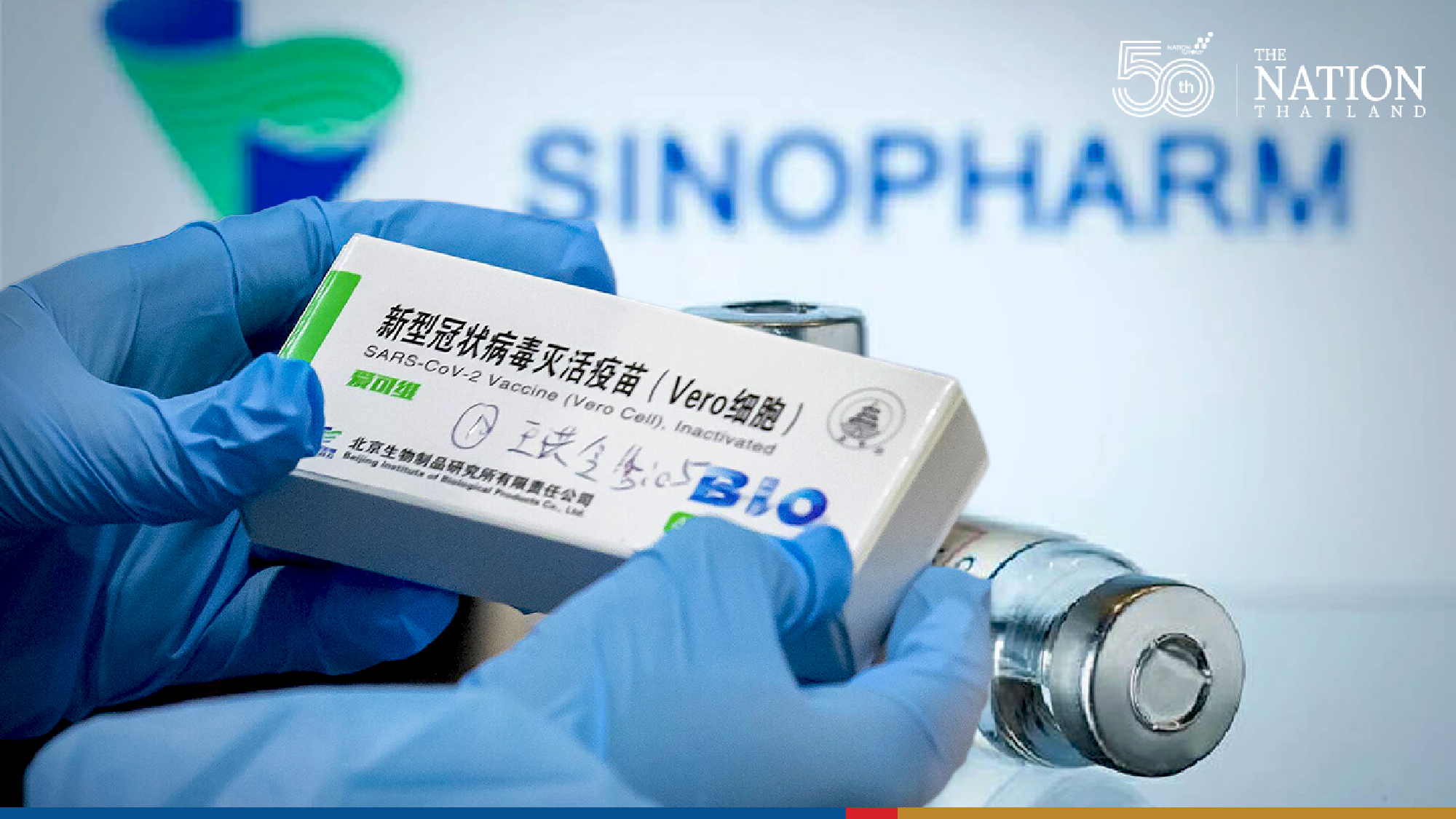
Chinas great vaccine hope, Sinopharm, sees reputation darkened amid covid spikes in countries using it
Last year, Bahrain became one of the first countries to throw support behind Chinas Sinopharm vaccine, granting it emergency use approval in December – a substantial boost for Beijings global ambitions for the vaccine, despite doubts on the part of some scientists over lack of public safety and efficacy data.
Now, the Persian Gulf country is the latest to raise doubts about the vaccine’s effectiveness.
Bahraini officials told news outlets this week that it would be offering Pfizer-BioNTech doses to certain high-risk individuals who have already received two Sinopharm jabs, suggesting that they no longer saw two doses of the Sinopharm vaccine as enough, in the face of a new wave of coronavirus infections.
The policy comes just weeks after the World Health Organization granted Sinopharm emergency use listing, making it the first Chinese-developed vaccine to receive the global health body’s stamp of approval.
The vaccine, developed by Sinopharm with the Beijing Institute of Biological Products, makes up a significant chunk of China’s own supply of vaccines for domestic use. Though slow to start, China’s vaccination drive is ramping up, with officials suggesting 80% of the country could be immunized by the end of the year.
In Bahrain, however, a vaccination drive that relied heavily on Sinopharm has so far produced at best mixed results and failed to curb new cases.
Almost 50% of the country has been fully vaccinated, according to The Washington Post’s tracking, but the country has seen its worst wave of cases yet in the past few weeks, and the government has implemented a two-week lockdown in a bid to tame the outbreak.
Some 1,936 new cases were reported on Thursday, according to the Bahrain News Agency, bringing the total cases in the country of 1.6 million to over 240,000, with over a thousand deaths.
Waleed Khalifa al-Manea, Bahrain’s undersecretary of health, told the Wall Street Journal in an article published Thursday that people fully vaccinated with Sinopharm who are over 50, with chronic illnesses or obese are being urged to get a booster of Pfizer-BioNTech six months after their last Sinopharm shot.
Bahrain and neighboring United Arab Emirates – which also relied heavily on Sinopharm for their rapid vaccine rollouts – had previously announced they would offer third-dose Sinopharm booster shots starting in mid-May, after studies showed that some of those vaccinated had not developed sufficient antibodies.
In Bahrain, residents can use an app to book their booster shots. Though they can choose either Sinopharm or Pfizer-BioNTech doses, those who meet certain risk groups would be advised to get the latter.
Sinopharm representatives did not respond to a request for comment.
The Gulf nation is not the only place where the rollout of Sinopharm doses has coincided with large waves of cases. In the Seychelles, Chile and Uruguay, all of whom have used Sinopharm in their mass vaccination efforts, cases have surged even as doses were given out.
A surge in cases in the Seychelles provided a “critical case to consider the effectiveness of some vaccines and what range we have to reach to meet herd immunity,” Yanzhong Huang, a senior fellow for global health at the Council on Foreign Relation, told The Washington Post at the time.
A WHO panel report last month found that the vaccine had a 79% efficacy rate in stopping symptomatic covid-19 in adults between 18 and 59, citing evidence from clinical trials in China, Bahrain, Egypt, Jordan and the United Arab Emirates.
While that efficacy was in the same range as that of a vaccine produced by AstraZeneca, it was considerably lower than that of the Pfizer-BioNTech and Moderna vaccines, which have reported efficacy of more than 90%.
Unlike those vaccines, which use new mRNA technology to train the bodies immune system using a snippet of virus code, Sinopharm’s uses an inactivated version of the virus to do the same – an older, though well-established, technology.
The WHO panel also cautioned that they had a “low level of confidence” in the vaccine’s efficacy in people 60 and older, and a “very low confidence” about potential side effects in that age group, due to a lack of data.
Despite the concern about Sinopharm’s effectiveness, experts say that the vaccine still works as intended in most cases and that it could play a significant role in shortages of vaccine doses around the world.
This week, millions of Sinopharm doses rolled off the production line in Beijing, intended to play a major role in the United Nations-backed vaccine sharing program Covax, amid persistent shortages. Sinopharm officials said Wednesday that they hope to distribute more than 1 billion doses outside of China in the second half of 2020.
Separately, the WHO granted emergency use listing to another Chinese vaccine, developed by Sinovac, this week, reporting that the vaccine prevented symptomatic disease in 51% of those vaccinated and prevented severe cases in 100% of the population.
However, officials said there was not enough data to estimate the Sinovac vaccine’s efficacy in those over 60.
Published : June 04, 2021
By : The Washington Post · Adam Taylor, Paul Schemm

 รัฐบาลไบเดนออกคำสั่งห้ามบริษัทอเมริกันทำธุรกรรมทางการค้ากับบริษัทจีน 59 แห่ง
 วัคซีนโควิด-19 ตัวแรกของปากีสถานที่ผลิตขึ้นเองในประเทศ
 นักลงทุนปวดหัว ทวีตเดียวของ อีลอน มัสก์ ทำพิษฉุดราคา Bitcoin ร่วงอีกแล้ว
 เหลือเวลาอีกเพียง 50 วันสำหรับโอลิมปิกโตเกียว 2020 ขณะที่แพทย์และอาสาสมัครถอนตัวนับหมื่นคน
 วัคซีนต้าน Covid-19 ล็อตแรก 25 ล้านโดสจากสหรัฐจะส่งมอบไปทั่วโลกก่อนเดือน ก.ค.นี้ ไทยได้ส่วนแบ่งด้วย