Cairo’s mummies get a new home and a grand procession on the way. #SootinClaimon.Com

#SootinClaimon.Com : ขอบคุณแหล่งข้อมูล : หนังสือพิมพ์ The Nation.

https://www.nationthailand.com/news/30404515

Cairo’s mummies get a new home and a grand procession on the way.

InternationalApr 04. 2021

By Sudarsan Raghavan
The Washington Post

CAIRO – It was a parade unlike any other this city has seen.

A procession of 22 ancient Egyptian royal mummies streamed Saturday from downtown Cairo, where revolutionaries rose up to topple autocrat Hosni Mubarak a decade ago, to a new museum three miles away that represents Egypt’s future as much as its past.

At 8 p.m., the mummies – 18 kings and four queens – left the famed ochre-hued Egyptian Museum near Tahrir Square, where they had rested for decades. They were each atop specially decorated gold-and-blue-hued vehicles, resembling a boat. Or perhaps the symbol of a winged sun, an ornament worn by Egypt’s ancient rulers and seen as providing protection. Each of the 22 vehicles was emblazoned with the name of the royals mummy it carried.

The multimillion-dollar affair – called the Pharaohs’ Golden Parade – had been promoted for months. Egyptian authorities are seeking to attract tourists, a key source of foreign currency, and alter the course of an economy battered by the coronavirus pandemic, Islamist attacks and political chaos in past years.

The highly choreographed ceremony was also a nationalist vehicle to highlight Egypt’s place in history. The nation’s authoritarian president, Abdel Fatah al-Sissi, who himself is often referred to as “a new pharaoh” for his ambitious projects and iron-fisted rule, presided over the ceremony.

In a Facebook post, Intisar al-Sissi, Egypt’s first lady, said Saturday’s event “expresses the greatness of the ancient civilization that provided humanity, and still does, with a unique and diverse legacy, contributing to its progress and prosperity.”

Most Egyptians saw the parade on television with the entire route and surrounding bridges and roads closed for security. With parts of the program prerecorded, viewers were treated to an orchestra and singer playing patriotic music and videos extolling many of the country’s famous temples, churches and mosques.

Sissi, along with senior officials and aides, watched the parade on a giant screen inside a hall of the National Museum of Egyptian Civilization, where the mummies would be displayed.

The ceremony sought to recreate the ancient existences of the royals. In the procession were horse-drawn chariots and hundreds of performers wearing the traditional attire worn by ancient Egyptians.

The vehicles circled around Tahrir Square, the epicenter of Egypt’s revolution, which is now centered with an ancient obelisk and statues of lions. Flood lights bore into the night sky as yellow and blue lights lit up the area.

The mummies carried in boxes filled with nitrogen and their vehicles were fitted with special shock-absorbers to protect their millennia-old remains. Nothing was taken to chance: even their route was freshly paved.

The mummies in the procession were lined up in chronological order. The oldest rulers came first, starting with Seqenenre Taa, the last king of the 17th Dynasty, who reigned in the 16th century B.C. The last was the 12th century B.C.. pharaoh Ramses IX.

In between were two of the most well-known of ancient Egypt’s rulers: Ramses II, widely seen as the greatest pharaoh of the New Kingdom period, and Queen Hatshepsut, who ruled at a time when women pharaohs were very rare. The temples of both rulers, in Luxor and Abu Simbel, are among the most visited.

At 8:30 p.m., after following a large motorcycle escort through the empty Cairo streets, the 22 vehicles stopped in front the National Museum of Egyptian Civilization in the capital’s Fustat enclave. Then, a 21-gun salute followed. Minutes later the parade entered the compound and Sissi walked out to greet the new arrivals.

They will be housed in the museum’s royal hall of mummies and will go on display by mid-month, said officials.

Amazon admits it was wrong to suggest its workforce never needs to pee in bottles on the job #SootinClaimon.Com

#SootinClaimon.Com : ขอบคุณแหล่งข้อมูล : หนังสือพิมพ์ The Nation.

https://www.nationthailand.com/news/30404502

Amazon admits it was wrong to suggest its workforce never needs to pee in bottles on the job

InternationalApr 04. 2021

Last week, in an unusually combative tweet-response to a congressman, Amazon insisted that its workers did not urinate in bottles.

“If that were true, nobody would work for us,” wrote the e-commerce giant that employs more than a million people worldwide. Disbelief, derision and fact-checking ensued as journalists weighed in with reported memos and contractor policies suggesting otherwise: “Documents show Amazon is aware drivers pee in bottles and even defecate en route,” the Intercept reported, citing workers who described intense pressure to hit their quotas.

Now Amazon says it was wrong.

“[We] know that drivers can and do have trouble finding restrooms because of traffic or sometimes rural routes, and this has been especially the case during Covid when many public restrooms have been closed,” the retail giant wrote in a Friday blog post, apologizing to Rep. Mark Pocan, D-Wis., for its “incorrect” response to him.

“This is a long-standing, industry-wide issue and is not specific to Amazon,” the company said, including links to various news stories. “Regardless of the fact that this is industry-wide, we would like to solve it. We don’t yet know how, but will look for solutions.”

The company’s mea culpa came as several thousand Amazon employees in an Alabama warehouse vote on whether to unionize – a local referendum with national implications as advocates see a spark for broader changes and as President Biden and Sen. Bernie Sanders, I-Vt., back workers’ right to organize. Amazon has fought unionization aggressively, fueling long-standing criticisms that it mistreats workers even as the retail giant touts its $15 minimum wage.

Pocan rebuffed Amazon’s apology on Saturday, tweeting that it is “not about me” but about Amazon’s workers “who you don’t treat with enough respect or dignity.”

“Start by acknowledging the inadequate working conditions you’ve created for ALL your workers, then fix that for everyone & finally, let them unionize without interference,” Pocan wrote.

Amazon did not immediately respond to a request for further comment Saturday. Amazonchief executive Jeff Bezos owns The Washington Post.

The Twitter-fight began on March 24 after Pocan tweeted a critical response to Amazon executive Dave Clark, who suggested his company shared common ground with their strident critic Sanders – while also taking a jab at Sanders and other progressive politicians’ struggle to pass national reforms such as a $15 minimum wage.

“I often say we are the Bernie Sanders of employers, but that’s not quite right because we actually deliver a progressive workplace,” Clark said.

Pocan, who bills himself as a “small business owner, union member, and lifelong advocate for progressive causes,” objected.

“Paying workers $15/hr doesn’t make you a “progressive workplace” when you union-bust & make workers urinate in water bottles,” he tweeted.

That drew an eye-catching and soon-to-go-viral response from Amazon News that began, “You don’t really believe the peeing in bottles thing, do you?”

On March 25, Amazon also tweeted a combative response to another high-profile critic, Sen. Elizabeth Warren, D-Mass., who had accused large companies such as Amazon of exploiting tax “loopholes.”

“You make the tax laws @SenWarren; we just follow them,” Amazon News wrote.

Online, people swiftly cited reporting that some people felt compelled to pee in bottles on the job. The Intercept’s Ken Klippenstein reported that Amazon’s tweet to Pocan raised eyebrows among staffers, too, with one security engineer suggesting the company’s account may have been hacked.

“These tweets are unnecessarily antagonistic (risking Amazon’s brand), and may be a result of unauthorized access by someone with access to the account’s credentials,” the engineer’s report read, according to the Intercept.

Nine days after its tweet to Pocan, Amazon backed off.

“This was an own-goal, we’re unhappy about it,” the company said in its blog post, using a soccer term for the unfortunate moment when someone scores on their own team.

That tweet “did not receive proper scrutiny,” the company said, and “did not contemplate our large driver population and instead wrongly focused only on our fulfillment centers.”

“A typical Amazon fulfillment center has dozens of restrooms, and employees are able to step away from their work station at any time,” the statement continued. “If any employee in a fulfillment center has a different experience, we encourage them to speak to their manager and we’ll work to fix it.”

Reporting over the years has said that both Amazon warehouse workers and contract drivers sometimes urinate in bottles to minimize their time off-task.

“I saw no effort on Amazon’s part to push delivery service providers to allow their drivers to use the restroom on a normal human basis, leading many, myself included, to urinate inside bottles for fear of slowing down our delivery rates,” former driver James Meyers recently told the Guardian, describing shifts that could stretch 14 hours.

Last fall, Amazon said it had 1,700 delivery-service partners in the United States, Canada, Germany, Spain and the United Kingdom. More than 400,000 drivers deliver goods for Amazon, all either self-employed or working for other companies even if they wear Amazon uniforms and drive trucks with its branding.

– – –

The Washington Post’s Hamza Shaban and Jay Greene contributed to this report.

Nearly 20 arrested in alleged plot against Jordan’s King Abdullah II #SootinClaimon.Com

#SootinClaimon.Com : ขอบคุณแหล่งข้อมูล : หนังสือพิมพ์ The Nation.

https://www.nationthailand.com/news/30404501

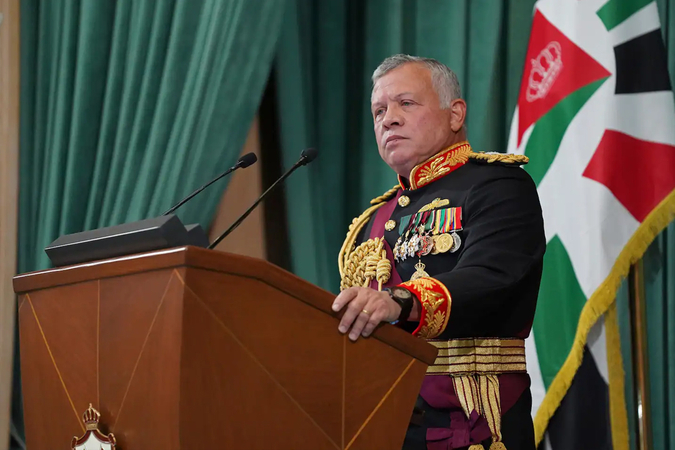
Nearly 20 arrested in alleged plot against Jordan’s King Abdullah II

InternationalApr 04. 2021

By Joby Warrick, Sarah Dadouch, Steve Hendrix
The Washington Post

Jordanian authorities on Saturday arrested as many as 20 people and sought to restrain the movement of a former crown prince amid what officials called a threat to the “security and stability” of a country long regarded as a vital U.S. ally in the Middle East.

Prince Hamzah bin Hussein, the eldest son of the late King Hussein and his American-born fourth wife, Queen Noor, was told to remain at his Amman palace amid an investigation into an alleged plot to unseat his older half brother, King Abdullah II, according to a senior Middle Eastern intelligence official briefed on the events.

The move followed the discovery of what officials described as a complex and far-reaching plot that included at least one other Jordanian royal as well as tribal leaders and members of the country’s political and security establishment. One official cited unspecified evidence of “foreign” backing for the plan.

Biden administration officials were briefed on the arrests, which come at a time of heightened economic and political tension in a country long regarded as a bulwark of stability and an essential partner in U.S.-led counterterrorism operations.

Additional arrests were expected, said the intelligence official, who, like others, spoke on the condition of anonymity, citing security sensitivities surrounding the law enforcement operation.

In a formal statement late Saturday, the Jordanian Armed Forces confirmed that multiple arrests had occurred and that Hamzah had been “asked to cease all movements or activities that could be employed to target Jordan’s security and stability.” The statement said that the former crown prince had not been arrested but that “comprehensive investigations” were underway.

In a video statement late Saturday, Hamzah denied wrongdoing and said the actions against him were an attempt to silence him for speaking out against corruption in Jordan. In the statement delivered to the BBC by his lawyer, he confirmed that he was “not allowed to go out, to communicate with people or to meet with them, because in the meetings that I had been present in – or on social media relating to visits that I had made – there had been criticism of the government or the king.”

“I am not the person responsible for the breakdown in governance, for the corruption, and for the incompetence that has been prevalent in our governing structure for the last 15 to 20 years, and has been getting worse by the year,” he said. Hamzah, whose relations with Abdullah have been strained since his title was stripped from him in 2004, has sparred with his half brother frequently over the years, though mostly in private.

In Washington, State Department spokesman Ned Price said U.S. officials were closely following the reports and were in touch with Jordanian officials. “King Abdullah is a key partner of the United States, and he has our full support,” Price said.

Hamzah served as Jordan’s crown prince for four years before the title was transferred to the current monarch’s eldest son, Hussein, in 2004. He has held multiple positions within the monarchy, including in the army, where he holds the rank of brigadier. He commands a loyal following in Amman and, with his trim mustache and checkered headdress, often styles himself after the late King Hussein, a revered figure in Jordan.

The prince was informed of the investigation by Jordanian military officers who arrived at his house with an escort of guards, as arrests were getting underway elsewhere, the intelligence official said. Hamzah was told to refrain from travel and from posting on social media, the intelligence official said.

It was unclear how close the alleged plotters were to carrying out the supposed plan, or what, exactly, was intended. The intelligence official described the plan as “well-organized” and said some of the plotters appeared to have “foreign ties,” though he did not elaborate on that point.

The arrests of other officials were reported by Jordanian news outlets. Among them was Sharif Hasan, who also is a member of the royal family, and Bassem Awadullah, a former senior official in Jordan’s Royal Hashemite Court. An investment banker and CEO of Tomoh Advisory, a consultant firm based in Dubai, Awadullah had also served as special Jordanian representative to the Saudi government, and held Jordanian and Saudi passports, the intelligence official said.

In Israel, where news of the possible coup plot emerged at the end of the Passover holiday, officials had no immediate comment. But Israel, which has had a peace treaty with Jordan since 1994, considers stability in Amman as vital to Israel’s national interest. The two share Israel’s longest border, and Israel looks to Jordan to provide a buffer against threats from Iran.

“If this turns out to have been a serious attempt, it would be of a great deal of concern,” said Chuck Freilich, a former Israeli deputy national security adviser. “Israel takes the stability of the Hashemite Kingdom extremely seriously. They are a close security relationship.”

Jordan has been hit hard economically by the coronavirus pandemic as well as by the fallout from massive waves of refugees from Syria, its northern neighbor. Abdullah has ruled the country since King Hussein’s death in 1999, and cultivated close ties with a succession of U.S. presidents, while also clashing at times with U.S. officials over Palestinian peace initiatives. In recent years, he sparred with Trump administration officials over plans that would essentially bypass the Palestinians in seeking to redraw the boundaries of a future Palestinian state.

Under the king, the resource-poor kingdom of 10 million has been a major partner in the U.S.-led campaign against the Islamic State and has assisted U.S. forces in security operations around the globe.

– – –

Warrick reported from Washington. Hendrix reported from Jerusalem. Dadouch reported from Beirut. The Washington Post’s Shira Rubin in Jerusalem and John Hudson in Washington contributed to this report.

This woman, 82, dresses to the nines each Sunday for virtual church. Her selfies have become legendary. #SootinClaimon.Com

#SootinClaimon.Com : ขอบคุณแหล่งข้อมูล : หนังสือพิมพ์ The Nation.

https://www.nationthailand.com/news/30404500

This woman, 82, dresses to the nines each Sunday for virtual church. Her selfies have become legendary.

InternationalApr 04. 2021

By Cathy Free
Special to The Washington Post

It’s been more than a year now that churchgoers have been watching virtual streaming Sunday services on their cellphones and computers during the pandemic. Many have made a habit of tuning in while wearing cozy sweatpants or pajamas.

Then there’s La Verne Ford Wimberly of Tulsa, Okla.

The 82-year-old retired educator decks herself out head to toe every Sunday, then – to the delight of fellow parishioners at Metropolitan Baptist Church – posts a selfie on Facebook after the service.

Since March 29, 2020, she has taken photos of herself from her living room in 53 different color-coordinated outfits – each one carefully selected from the burgeoning closets, jewelry boxes and neatly stacked hat boxes that have satisfied her love of making a grand entrance since she was a young schoolteacher in the 1960s.

She hasn’t decided what she’ll be wearing this Easter Sunday, but those who know Wimberly said the odds are good that she’ll make a big splash.

“She never skips a beat with the hats, the clothes and all that beautiful jewelry,” said Robin Watkins, 54, the church’s executive office assistant.

“If anyone is feeling downtrodden, they just look at her [Facebook] page and immediately feel uplifted,” she said. “Her heart is as beautiful as each outfit she has shared with us.”

Parishioners often call Wimberly “Doctor.” She has a PhD in education and the years she spent as a school principal and superintendent after she’d moved on from teaching, Watkins said.

She was already known at her church for the head-turning outfits she wore every Sunday, so when the pandemic hit last year and in-person services were canceled, Wimberly decided to up her game.

“In the 20 years I’ve been going to church there, I’ve always had my little routine that I learned from my mother as a girl,” she said. “I’d pick out a nice outfit and hat and lay it out the night before, so that I could be prepared and look presentable.”

When she learned last year that Metropolitan’s service would be streamed on March 29 due to the coronavirus threat, Wimberly said she couldn’t imagine wearing her bathrobe and slippers while tuning in from her living room, even if she was by herself.

“I thought, ‘Oh, my goodness, I can’t sit here looking slouchy in my robe,’ ” she said. “I didn’t want to sit around alone and feel sorry for myself, so I decided, ‘You know what? I’m going to dress up anyway.’ “

Wimberly got up early to style her hair and put on some lipstick, then she slipped into a favorite white dress trimmed with eyelet, a sheer white ruffled hat, matching shoes and a beaded turquoise and gold necklace.

After she posted the photo and a Bible scripture for her friends, she was inundated with positive responses, she said.

“For years, everyone had known to look for me in the last row, section two, dressed to the nines,” Wimberly said. “People always looked forward to seeing what I was wearing. So when I posted that photo, everyone told me it boosted their spirits.”

The following Sunday, she decided to do it again, this time selecting a bright blue ensemble with silver and white jewelry. And the week after that, on Easter Sunday, Wimberly chose a pink skirt and beaded sweater jacket, and a matching hat decorated with pink and yellow lilies.

She soon decided to write down what she wore each week on a calendar so that she wouldn’t commit the faux pas of wearing the same outfit twice.

“It’s safe to say that 50 is a good number for the hats,” she confessed. “But the clothes? I’d better not go there. Let’s just say I’m now refusing to look at any catalogues.”

When she was growing up, Wimberly said she cared more about climbing the tallest tree with the neighbor boys than trying on the latest frilly arrivals at fashion stores in downtown Tulsa.

It wasn’t until she became a teenager and noticed that one of her junior high teachers wore a different beautiful outfit to school each day that she gradually developed an appreciation for fashion, she said.

After she graduated from the University of Tulsa and was hired in 1963 as a first-grade teacher in Chicago, Wimberly said she decided to emulate that teacher’s example and dress up for the kids.

“They’d rub my arm and say, ‘Oh, Miss Ford [her maiden name], you look so pretty,’ ” she recalled. “Pretty soon, I had so many clothes that I started a rotation and color-coding system, so I could keep surprising the kids with my outfits.”

When she moved back to Tulsa and pursued a career as a principal and administrator, she decided to continue that tradition at work and at church, said Wimberly, who has lived on her own since her husband, James Oliver Wimberly, died in 2009.

She never anticipated that anyone outside her congregation would find out about her selfie Sundays, she said. But then, on March 22, a local television reporter who attends Wimberly’s church decided to do a story about her colorful outfits.

“I started hearing from people everywhere who said my photos made them smile,” said Wimberly. “The whole point was to inspire people and make them feel good, so I’m happy that’s working.”

Her pastor, Ray Owens, said he’s not at all surprised that Wimberly’s vogue outfits are a hit.

“Dr. Wimberly’s impressive hat collection is merely an outer expression of her inner wisdom, wit and grace,” he said. “We look forward to the day she again graces our church sanctuary with her impeccable style.”

Wimberly is hopeful that she’ll be back in her pew by late spring or early summer, she said.

Of course, she’ll then face a dilemma.

“What will I wear? That will be determined by the season and the weather,” said Wimberly. “Maybe something purple with black and white. You can’t go wrong there.”

Latest Capitol attack reignites debate over security in D.C.; family of suspect expresses sympathy for officer killed #SootinClaimon.Com

#SootinClaimon.Com : ขอบคุณแหล่งข้อมูล : หนังสือพิมพ์ The Nation.

https://www.nationthailand.com/news/30404499

Latest Capitol attack reignites debate over security in D.C.; family of suspect expresses sympathy for officer killed

InternationalApr 04. 2021Police officers and members of the National Guard protect the Capitol on Friday, April 2, 2021. Photo for The Washington Post by Amanda Andrade-RhoadesPolice officers and members of the National Guard protect the Capitol on Friday, April 2, 2021. Photo for The Washington Post by Amanda Andrade-Rhoades

By Katie Mettler, Amy B Wang, Emily Davies
The Washington Post

WASHINGTON – For residents of this city that has been under occupation for months, the arrival of spring brought a sense that life here might finally be getting lighter.

The weather had warmed, the cherry trees had blossomed and the fencing that had fortressed the District of Columbia’s power centers since the violent insurrection on Jan. 6 was beginning to fall away.

But on Friday afternoon, the dread came back after a man crashed his vehicle into two police officers outside the U.S. Capitol.

The attack that left one officer dead and the assailant fatally shot by police reignited the ongoing political debate over how to keep Congress safe nearly three months after the Capitol riots.

On Saturday, Senate Majority Leader Charles Schumer, D-N.Y., said the recent attack “has only added to the need to address security at the Capitol in a comprehensive way.”

“Senate Committees are already conducting bipartisan and extensive reviews to ensure the Capitol is as secure as possible while also remaining accessible to the public,” Schumer said. “We are fully committed to ensuring the Capitol is safe for visitors and all who work here.”

The same day, the family of the suspect, Noah Green, released a statement saying the young man was “not a terrorist by any means.” He had been studying for his master’s degree in business administration but had also suffered from “depression and potential mental illness.” After graduating college, the family statement said, “he began to experience hardships among his peers” that may have stemmed from repeated head trauma during his years playing football, including as a defensive back at Christopher Newport University.

Green was identified as the suspect by several people familiar with the investigation. Police have not yet officially released the assailant’s identity.

Green’s family said they are “very shocked and upset” by the attack and that they “feel great sympathy” for William Evans, an 18-year Capitol Police veteran who was killed, and the officer who was injured. They learned about what had happened through the news, the family said, and were “were just as taken aback as the rest of the nation from this horrific event.”

For Capitol Hill residents, the incident Friday afternoon forced a flood of familiar feelings back to the forefront.

Josh Martin, a 43-year-old lobbyist who has worked on and around the Hill for decades, said he was running errands in Virginia when his phone started buzzing with calls and texts from co-workers. He turned on the radio, checked Twitter for updates and began worrying for his wife and young daughter, who were at the family’s home just a few blocks from the Capitol near Stanton Park.

“What happened on January 6 was pretty scary,” Martin said.

Friday afternoon brought back the “same feeling,” he said. “Like, not again.”

Capitol Police were also mourning as tragedy struck the force yet again.

Evans is the second Capitol Police officer to die in the line of duty this year; Officer Brian D. Sicknick died of injuries he suffered fighting a riotous mob during the Jan. 6 insurrection at the Capitol. Four civilians died in that riot and two police officers who were there later died by suicide. Authorities and Evans’s family have not yet announced memorial or funeral plans. Sicknick was honored during a service at the Capitol.

On Saturday, Capitol Police said on Twitter that the department “is deeply grateful for the support we’ve received from around the world. We wish we could respond to each one of you. Please know your sympathy is appreciated beyond words.”

Miles of fencing went up months ago in response to homegrown threats to the seat of democracy.

There is bipartisan opposition to permanent fencing around the Capitol, though Democrats have been more measured in calling for it to be taken down, deferring to ongoing security reviews, while Republicans have seized on the fencing as evidence of Democratic overreaction. Residents of the usually quiet and idyllic neighborhoods near the Capitol have hoped that fencing and military Guardsmen will not become their permanent new normal.

House Speaker Nancy Pelosi, D-Calif., has maintained for weeks that she will support the recommendations of retired Lt. Gen. Russel Honoré, who led a task force to look at Capitol security after the insurrection. The task force’s report in March found numerous security “deficiencies” at the Capitol and called for an additional 854 Capitol Police positions, as well as increased screening and various types of fencing around the area.

After the attack Friday, Honoré reiterated that the Capitol remains a target around-the-clock.

“Any time of the day, 24/7, the Capitol could be attacked,” Honoré said on CNBC, “and it could be domestic, it could be foreign.”

The House is in the process of finalizing an approximately $2 billion security supplemental for equipment and personnel for the Capitol police, according to a senior Democratic aide, who spoke on the condition of anonymity to discuss private conversations.

Rep. Tim Ryan, D-Ohio, who chairs the subcommittee that oversees the Capitol Police, said Friday’s attack on the Capitol will renew conversations about the security needs. Ryan has been the rare member of Congress who has called for military fencing.

“From my vantage point, I just think we’ve got to be very careful as we move forward, that we can’t get too far ahead of ourselves without knowing that we have the ability to protect the Capitol,” Ryan said in a virtual press briefing Friday.

But Republicans, including top leadership, have criticized the security measures already in place.

Last month, Senate Minority Leader Mitch McConnell, R-Ky., said “there are no serious threats against the Capitol” and said Congress was “way overreacting to the current need.” He said the fencing – which at the time enclosed all congressional office buildings, the Library of Congress and the U.S. Supreme Court – reminded him of a war zone.

“I’m extremely uncomfortable with the fact that my constituents can’t come to the Capitol,” McConnell said.

Freshman Rep. Marjorie Taylor Greene, R-Ga., last month posed by a sign outside the Capitol that said, mockingly, “Welcome to FORT PELOSI” and tweeted that it was “time for this wall around the Capitol to come down!”

The location of the attack Friday, known as the North Barricade, is across the street from the Russell Senate Office Building and until recently had been hidden behind additional layers of fencing.

On Saturday morning, work crews were placing concrete barriers there along the inside of the fencing as visitors and residents walked the perimeter of the Capitol grounds.

“How close would we normally be able to get to the Capitol?” one young man asked his tour group.

Another woman whispered to a friend about the parishioners who had been celebrating Good Friday at St. Joseph’s, across the street from the Capitol, when chaos once again unfolded outside.

“I hope this isn’t the new normal, where all of this is blocked off and citizens or tourists can’t get in,” said Jackson Shuttleworth, 30, who had traveled to the District from Pittsburgh for a weekend getaway with his wife and baby. The appeal of the nation’s capital, he said, has always been its walkability and continuity.

Susan Haid, 65, paused on East Capitol Street between the Library of Congress and the U.S. Supreme Court to take a picture of the Capitol dome through thick, black fencing. It was the first time she had been in the District since last fall, before it was locked down.

“It’s really distressing,” she said. “It brings literal tears to my eyes to think we’re America and this is how we are now. And the family of the officer? There’s no words for that.”

“Another sad day for Washington,” Haid added. “It’s like spring juxtaposed with terror.”

The mood among Capitol Hill residents matched that of the dozens of National Guard members and law enforcement officers who had to resume their security posts after another targeted attack on their ranks. They mostly stood far back from the edge of the fencing, looking out at the passersby but not engaging.

But late Saturday morning, Bill Sutton, 68, and Sydnye Pettengill, 62, rode their bicycles up to the fence’s edge on First Street and climbed off. They had ridden into the city from Alexandria, picking up a bouquet of yellow and purple flowers on the way. They had been thinking about leaving a peaceful token there already, something that would hark back to the symbolism of the Vietnam War protester who slid a carnation into the barrel of a soldier’s rifle.

“And then yesterday happened,” Sutton said, “and it just added more profundity to the whole thing.”

So together, they lifted their own flowers above their heads and began weaving the stems into the fencing. And one of the officers walked up to greet them, helping from the other side

– – –

The Washington Post’s Paul Kane, Peter Hermann, Justin Jouvenal and Jennifer Jenkins contributed to this report.


Viral video of attack on Asian couple leads to 15-year-old’s arrest months later, police say #SootinClaimon.Com

#SootinClaimon.Com : ขอบคุณแหล่งข้อมูล : หนังสือพิมพ์ The Nation.

https://www.nationthailand.com/news/30404498

Viral video of attack on Asian couple leads to 15-year-old’s arrest months later, police say

InternationalApr 04. 2021

By Lateshia Beachum
The Washington Post

A 15-year-old male was taken into custody Friday for assaulting an Asian couple in Tacoma, Wash., inNovember, police said. The arrest comes amid a trend of attacks against Asian Americans and Pacific Islanders in recent months – some of them racially motivated and some deadly.

The unidentified teenagerwas arrested andcharged with second-degree assault, according to police, after a video of the incident surfaced online this week.

In the video that was shared widely on social media,several young people are gathered in a street. A young man in a red hoodie runs into one of the victims, who police later said was a 56-year-old male, and falls to the ground. The attacker gets up and approaches the male victim, who had backed away.

The video cuts to a different view of the incident a few moments later, and shows the male victim attempting to defend himself by kicking toward the attacker. The assailant then charges toward the couple and throws multiple punches at the man as his female companion clings to his arm and screams.

The attacker in the red hoodie runs away from the couple. Then the video cuts to the person behind the camera walking up to the male victim, saying “f—-d your whole life up.”

The unidentified male victim told KIRO-TV that he filed a complaint for the Nov. 19 attack the same day, but heard nothing from police. More than four months later, a family member identified the couple in the viral video of the incident when it was played on local news, according to CNN.

Wendy Haddow, a public information officer for the Tacoma police, told The Washington Post the department has only arrested one suspect so far, and “there is no known motive at this time.” She said in an email that it is “up to the prosecutor’s office if the additional charge of malicious harassment (hate crime) is added.”

Haddow said that police did not contact the victims until this week because there were no leads in the case. Police didn’t have any information about the attacker other than his height, race and age between 13 and 17.

She said the teen in custody is allegedly the one who threw the punches. He or one of his friends posted the video on social media, Haddow said.

The incident is part of a disturbing and growing trend of anti-Asian attacks since the start of the pandemic, according to research from Stop AAPI Hate, a nonprofit that runs the Stop AAPI Hate Reporting Center which tracks incidents of discrimination, hate and xenophobia against Asian Americans and Pacific Islanders in the United States.

More than 3,000 anti-Asian attacks happened between March 19, 2020 and Feb. 28 with the group estimating that the total is just a fraction of that real number of crimes against Asians that happen often at businesses and on public streets and sidewalks.

The male victim told KIRO-TV that he thinks he was attacked because he is Asian.

“I’m Asian, I’m older and I’m not that big,” he told the station.

The man said when they didn’t hear back from police, he and his family left Tacoma out of fear, the news outlet reported.

He told the station that four teens were involved in the attack, and that he initially thought they were playing around. Then the punching started.

“A fist came flying in, hit me right here,” he said, pointing to the right side of his face. “I started bleeding.”

He called the police right after the incident, he told KIRO,told them what happened and didn’t hear from them until the clip of his attack was posted on Snapchat. The silence from police left the man questioning the importance of his complaint to the authorities.

While the victim said his life has been changed from the attack, he also forgives the teen.

“I want him to be better,” he said. “I want him to know this is bad.”

สื่อนอกวิเคราะห์ ทำไมไทยไม่มีท่าทีแข็งกร้าวต่อรัฐประหารเมียนมา #SootinClaimon.Com

#SootinClaimon.Com : ขอบคุณแหล่งข้อมูล : หนังสือพิมพ์โพสต์ทูเดย์

https://www.posttoday.com/world/649589

วันที่ 03 เม.ย. 2564 เวลา 18:00 น.สื่อนอกวิเคราะห์ ทำไมไทยไม่มีท่าทีแข็งกร้าวต่อรัฐประหารเมียนมาบทวิเคราะห์ของสำนักข่าวรอยเตอร์สชี้ ไทยในฐานะเพื่อนบ้านของเมียนมาจะไม่มีท่าทีที่แข็งกร้าวต่อการทำรัฐประหารของมินอ่องหล่าย

สำนักข่าวรอยเตอร์สระบุว่า แม้ว่าทางการไทยจะใช้ถ้อยคำที่แข็งกร้าวขึ้นเล็กน้อยต่อการทำรัฐประหารในเมียนมาด้วยการเอ่ยปากว่า “กังวลเป็นอย่างยิ่ง” ต่อสถานการณ์ที่รุนแรงขึ้น แต่ความสัมพันธ์ระหว่างกองทัพที่แน่นแฟ้น และความกังวลว่าผู้อพยพจะทะลักข้ามพรมแดน ทำให้ไทยไม่น่าจะแสดงท่าทีได้มากกว่านี้

สถานการณ์นี้ทำให้ไทยไม่ได้เข้าร่วมกับบรรดาสมาชิกอาเซียนบางประเทศที่พยายามกดดันกองทัพเมียนมา แต่นั่นก็อาจทำให้ไทยอยู่ในตำแหน่งคนกลางได้

ปณิธาน วัฒนายากร รองศาสตราจารย์ด้านรัฐศาสตร์จากจุฬาลงกรณ์มหาวิทยาลัยเผยกับรอยเตอร์สว่า “การแสดงจุดยืนของไทยเป็นเรื่องยาก แต่ผมคิดว่ามีโอกาส เพราะเราเป็นพันธมิตรที่สำคัญ”

รอยเตอร์สระบุอีกว่า ความใกล้ชิดระหว่างกองทัพไทยและเมียนมาถูกตอกย้ำโดยคำพูดของมินอ่องหล่าย ผู้นำรัฐประหารเมียนมาที่ขอให้พลเอก ประยุทธ์ จันทร์โอชา “สนับสนุนประชาธิปไตย” หลังจากยึดอำนาจจากออกซานซูจีเพียงไม่กี่วัน

ขณะที่ตัวพลเอกประยุทธ์ที่ให้การสนับสนุนเองก็ยึดอำนาจด้วยการรัฐประหารเมื่อปี 2014 ขณะเป็นผู้บัญชาการทหารบก ก่อนจะขึ้นเป็นนายกรัฐมนตรีในปี 2019 และปฏิเสธข้อหล่าวหาของฝ่ายค้านที่บอกว่าเขาโกงการเลือกตั้งเช่นกัน

“สำหรับพวกเขา ความเป็นพี่น้องทางทหารเป็นเรื่องสำคัญมาก” ลลิตา หิงคานนท์ อาจารย์ภาควิชาประวัติศาสตร์ คณะสังคมศาสตร์ มหาวิทยาลัยเกษตรศาสตร์กล่าว และยังเผยอีกว่า “ดิฉันคิดว่าความรุนแรงที่เพิ่มขึ้นไม่สามารถเปลี่ยนใจให้รัฐบาลไทยรับผู้อพยพมากขึ้น…ดิฉันคิดว่าพวกเขาอยากเป็นเพื่อนกับเมียนมามากกว่า”

รอยเตอร์สระบุว่า ประเทศไทยมีส่วนได้ส่วนเสียในเมียนมามากกว่าเพื่อนบ้านอาเซียน เนื่องจากมีพรมแดนติดกันถึง 2,400 กิโลเมตร ซึ่งเป็นเพื่อนบ้านที่มีพรมแดนติดกับเมียนมายาวที่สุด

ตำแหน่งทางภูมิศาสตร์หและธรรมเนียมทางการทูตทำให้ไทยต้องระวัดระวังในการพูดถึงรัฐประหาร ไทยจึงใช้ถ้อยคำที่รุนแรงขึ้นเพียงเล็กน้อย และยังเบากว่าเพื่อนบ้านอาเซียนอย่างอินโดนีเซีย ฟิลิปปินส์ สิงคโปร์หลังจากชาวเมียนมาเสียชีวิตกว่า 500 รายจากการใช้กำลังปราบปรามของกองทัพ

ความเสี่ยงด้านพรมแดนเริ่มปรากฏขึ้นหลังจากผู้อพยพหลายพันคนหนีตายจากการโจมตีทางอากาศของกองทัพในรัฐกะเหรี่ยง เข้าไทย

แม้ว่าไทยจะถูกกดดันทางการทูตให้ยอมรับผู้อพยพเหล่านั้นหรือมีท่าทีที่แข็งกร้าวขึ้น แต่ลลิตา หิงคานนท์ มองว่า รัฐบาลพลเอกประยุทธ์จะไม่เคลื่อนไหวในเรื่องนี้ “รัฐบาลอาจทำอะไรบางอย่างเพื่อตอบสนองต่อแรงกดดันจากนานาชาติ รัฐบาลอาจทำอะไรเล็กๆ น้อยๆ เพื่อแสดงให้เห็นว่าไม่ได้เพิกเฉยต่อความกังวลของนานาชาติ แต่ก็เท่านั้น”

ขณะที่ความสัมพันธ์ทางการค้าระหว่างไทยกับเมียนมาก็แข็งแกร่งไม่แพ้กัน การเข้าไปลงทุนโดยนักธุรกิจไทยในเมียนมาเป็นรองเพียงจีนและสิงคโปร์เท่านั้น ด้านการค้าตามแนวชายแดนก็มีมูลค่าถึง 9,000 ล้านเหรียญสหรัฐในปี 2019 และธุรกิจหลายอย่างของไทยยังต้องพึ่งพาแรงงานเมียนมาซึ่งมีถึง 1.6 ล้านคน

และสำหรับเมียนมา ไทยมีความสำคัญมาก เนื่องจากเมียนมาส่งออกสินค้ามายังไทยเป็นสัดส่วนเกือบ 1 ใน 4 ในปี 2019 ซึ่งส่วนใหญ่เป็นก๊าซธรรมชาติ

ทว่า ปีติ ศรีแสงนาม จากศูนย์อาเซียนศึกษาแห่งจุฬาลงกรณ์มหาวิทยาลัยมองว่า ไทยจะไม่ใช้อำนาจทางเศรษฐกิจคว่ำบาตรทางการค้ากับเมียนมา

ปีติ ศรีแสงนาม แนะนำว่า ไทยอาจใช้วิธีทางการทูตในทางลับเพื่อโน้มน้าวให้กองทัพเมียนมายุติการใช้ความรุนแรงและหาช่องทางพูดคุยกับพลเมืองที่ถูกคุมขังหรือถูกตราหน้าว่าเป็นกบฏ

“ถ้าคุณมีเพื่อนคนหนึ่งที่รู้จักกันมานานมาก แล้ววันหนึ่งเขาสังหารคนอื่น มันก็ไม่ได้หายความว่าคุณจะเลิกเป็นเพื่อนกับเขา ถูกไหม คุณยังเป็นเพื่อนกันอยู่ แต่ทางที่ดีคือพูดคุยกับเขา บอกเขาว่าสิ่งที่เขาทำมันผิด” ปีติกล่าว

REUTERS/Erik De Castro

ทหารนอกเครื่องแบบรวบชาวบ้าน 5 คนที่คุยกับนักข่าว CNN #SootinClaimon.Com

#SootinClaimon.Com : ขอบคุณแหล่งข้อมูล : หนังสือพิมพ์โพสต์ทูเดย์

https://www.posttoday.com/world/649583

วันที่ 03 เม.ย. 2564 เวลา 16:00 น.ทหารนอกเครื่องแบบรวบชาวบ้าน 5 คนที่คุยกับนักข่าว CNNหลังจากนักข่าวของสำนักข่าว CNN ออกจากพื้นที่ เจ้าหน้าที่นอกเครื่องแบบก็กลับมาจับกุมชาวบ้านที่พูดคุยกับทางทีมงานทันที  

สำนักข่าว Myanmar Now รายงานว่า เมื่อวันศุกร์ที่ผ่านมา (2 เม.ย.) เจ้าหน้าที่นอกเครื่องแบบจับกุมตัวชาวเมียนมา 5 คนที่พูดคุยกับ คลาริสสา วอร์ด หัวหน้าผู้สื่อข่าวต่างประเทศของสำนักข่าว CNN ที่ลงพื้นที่รายงานข่าวในเมียนมาที่ตลาด Salminegone ในย่างกุ้ง

ผู้เห็นเหตุการณ์เผยกับ Myanmar Now ว่า หญิงสาว 2 รายถูกเจ้าหน้าที่นอกเครื่องแบบจักุมตัวไปราว 14.40 น. หลังจากพวกเธอพูดคุยสั้นๆ กับผู้สื่อข่าวของ CNN โดยทั้งคู่ตะโกนถามว่าพวกเธอถูกจับข้อหาอะไร และขอให้คนช่วย แต่ไม่มีใครกล้าเข้าไปเนื่องจากเจ้าหน้าที่ถือปืนขู่

ไม่กี่นาทีต่อมาก็มีผู้หญิงอีก 1 รายถูกเจ้าหน้าที่นอกเครื่องแบบควบคุมตัวไปหลังจากที่ทีมงานของ CNN เดินทางออกจากตลาด รวมถึงผู้หญิงอีก 2 รายที่ทำงานในตลาดซึ่งได้เข้าไปถ่ายภาพทีมงานผู้สื่อข่าวต่างชาติ

ทั้งนี้ คลาริสสา วอร์ด และทีมงานเดินทางมาถึงเมียนมาเมื่อวันพุธ โดยมีทหารและเจ้าหน้าที่เมียนมาตามประกบตลอดเวลาที่ลงพื้นที่ทำข่าว เช่นเดียวกับเมื่อวันศุกร์ที่ทางทีมงานพากันลงพื้นที่ตลาด Salminegone โดยระหว่างนั้นบรรดาพ่อค้าแม่ค้าและชาวบ้านต่างพากันเคาะหม้อและกระทะเพื่อแสดงให้ทีมงานของ CNN เห็นว่าพวกเขาไม่เอารัฐประหาร

สำนักข่าว The Irrawaddy รายงานว่า ชาวเมียนหลายคนยินดีกับการมาของวอร์ดด้วยความหวังว่าทีมงานจะตีแผ่เรื่องจริงที่เกิดขึ้นในเมียนมา รวมถึงจำนวนผู้คนที่ออกมาประท้วงกองทัพ และความรุนแรงที่กองทัพใช้ปราบปรามประชาชน

แต่หลังจากที่เห็นภาพกองทัพตามประกบทีมงานตลอดเวลา ชาวบ้านก็เริ่มกังวลว่าการควบคุมของกองทัพอาจทำให้ CNN ไม่ได้รับรู้เรื่องจริงที่เกิดขึ้นในเมียนมา

The Irrawaddy ตั้งข้อสังเกตว่าการมาของทีมข่าวต่างประเทศครั้งนี้อาจเป็นการจัดการของกองทัพเมียนมาเอง ไม่ใช่ คลาริสสา วอร์ด ขอเดินทางเข้าไป เนื่องจากกองทัพกำลังพยายามแสดงให้ชาวโลกรับรู้ว่าทุกอย่างในเมียนมาอยู่ภายใต้การควบคุม และสถานการณ์กลับสู่ภาวะปกติแล้ว ดังที่สถานีโทรทัศน์ของรัฐบาลรายงานซ้ำๆ ว่ามีการซื้อขายกันตามปกติในร้านรวงและตลาดท้องถิ่น ทั้งที่ร้านค้าและห้างสรรพสินค้าในตัวเมืองยังร้างผู้คน

Photo by STR / AFP

พังรอบสอง! ชี้รัฐประหารทำเศรษฐกิจเมียนมาทรุดทั้งระบบ #SootinClaimon.Com

#SootinClaimon.Com : ขอบคุณแหล่งข้อมูล : หนังสือพิมพ์โพสต์ทูเดย์

https://www.posttoday.com/world/649578

วันที่ 03 เม.ย. 2564 เวลา 13:00 น.พังรอบสอง! ชี้รัฐประหารทำเศรษฐกิจเมียนมาทรุดทั้งระบบ หลังจากเปิดประเทศ เมียนมาถูกมองว่ากำลังจะมีอนาคตที่สดใส แต่หลังจากการทำรัฐประหาร เศรษฐกิจของประเทศก็กลับไปสู่ภาวะเกือบหยุดนิ่งอีกครั้ง

Nikkei Asia รายงานว่า การปราบปรามผู้ประท้วงอย่างรุนแรงทำให้ชาวเมียนมาออกมาประท้วงยากขึ้น ผู้คนจึงหันมาประท้วงด้วยการทำอารยะขัดขืน (Civil Disobedience Movement) รวมทั้งการทำงานจากที่บ้าน

เหตุการณ์เหล่านี้ส่งผลให้กิจกรรมทางเศรษฐกิจของเมียนมาที่ได้รับผลกระทบจากมาตรการคว่ำบาตรของหลายประเทศอยู่แล้วลดลงอย่างเห็นได้ชัด  

ข้อมูลการเคลื่อนที่ของประชาชนจาก Google Maps พบว่าช่วงปลายเดือน มี.ค. การจราจรทางเท้า (foot traffic) ซึ่งใช้เป็นตัวชี้วัดจับจ่ายใช้สอยของชาวเมียนมาทั่วประเทศลดลงถึง 85% ในธุรกิจค้าปลีกและบริการ เมื่อเทียบกับช่วงก่อน Covid-19 ระบาด ขณะที่การเคลื่อนที่ของประชาชนในสถานที่ทำงานลดลง 80%  

เมื่อชาวเมียนมาออกมาใช้ชีวิตนอกบ้านลดลงย่อมส่งผลกระทบถึงพ่อค้าแม่ค้ารายเล็กรายน้อย พ่อค้าผลไม้วัย 63 ปีในเมืองย่างกุ้งซึ่งประกาศใช้กฎอัยการศึกเผยกับ Nikkei Asia ว่า “ปกติจะมีลูกค้าเยอะ แต่ช่วงนี้ไม่มีลูกค้าเลย ช่วงบ่ายๆ ก็ต้องปิดร้านแล้วเพราะไม่มีลูกค้า”

Nikkei Asia รายงานอีกว่า การนำเข้าส่งออกสินค้าก็ลดลงเช่นกัน ข้อมูลของทางการเมียนมาช่วงสัปดาห์ที่สองของเดือน มี.ค. พบว่า การส่งออกมีมูลค่า 252 ล้านเหรียญสหรัฐ ส่วนการนำเข้าอยู่ที่ 254 ล้านเหรียญสหรัฐ ซึ่งลดลงราว 30% เมื่อเทียบกับตัวเลขเฉลี่ยรายสัปดาห์ของเดือน ธ.ค. และ ม.ค. ส่วนหนึ่งมาจากการหยุดงานประท้วงของเจ้าหน้าที่ศุลกากรและธุรกิจที่เกี่ยวข้องกับการขนส่ง ทำให้มีตู้สินค้าติดค้างอยู่ที่ท่าเรือจำนวนมาก

บริษัทขนส่งตู้คอนเทนเนอร์ที่ใหญ่ที่สุดในโลก A.P. Moller Maersk ประกาศหยุดให้บริการชั่วคราวในเมียนมาตั้งแต่ต้นเดือน มี.ค. เพื่อความปลอดภัยทั้งชีวิตและร่างกายของพนักงาน

เช่นเดียวกับการไหลเข้าของเงินลงทุนซึ่งเป็นเส้นเลือดหล่อเลี้ยงเศรษฐกิจที่ได้รับผลพวงจากการรัฐประหารครั้งนี้ มูลค่าการซื้อขายหุ้นในตลาดหลักทรัพย์ย่างกุ้งร่วงลงถึง 85% เมื่อเทียบกับสัดาห์ก่อนเกิดรัฐประหาร และคาดว่ากิจกรรมต่างๆ ในตลาดหุ้นจะยังไม่กลับสู่ภาวะปกติจนกว่าความวุ่นวายทางการเมืองจะสงบลง

ขณะที่ธนาคารเอกชนปิดทำการสาขาตั้งแต่กลางเดือน ก.พ. แม้ว่าธนาคารกลางเมียนมาจะขู่ว่าจะลงโทษปรับหากยังไม่เปิดทำการก็ตาม เนื่องจากพนักงานพากันหยุดงานเข้าร่วมประท้วง จนไม่มีคนทำงาน

สถานการณ์นี้ส่งผลให้ลูกค้าไม่สามารถถอนเงินจำนวนมากหรือโอนเงินไปต่างประเทศ และแม้ว่าธนาคารหลายแห่งจะเริ่มนำเงินกลับไปเติมที่ตู้เอทีเอ็มเมื่อช่วงกลางเดือน มี.ค. แต่ยังมีการจำกัดวงเงิน โดยขณะนี้ธนาคารบางแห่งจำกัดไม่ให้ถอนเงินเกินวันละ 200,000 จั๊ต ทั้งที่ธนาคารกลางกำหนดไว้ที่ 500,000 จั๊ต

ผู้จัดการบริษัทก่อสร้างแห่งหนึ่งของญี่ปุ่นในเมียนมาเผยกับ Nikkei Asia ว่า “ไซต์งานก่อสร้างในท้องถิ่นขาดเงินสดจนไม่สามารถดำเนินงานต่อได้ เพราะไม่มีเงินจ่ายให้คนงาน”

Nikkei Asia ระบุว่า การทำรัฐประหารฉุดการเติบโตของเศรษฐกิจเมียนมาที่เพิ่งฟื้นตัวเมื่อช่วง 10 ปีก่อน หลังจากบาดเจ็บจากการถูกนานาชาติคว่ำบาตร

ขณะที่เมื่อเร็วๆ นี้ธนาคารโลกได้คาดการณ์ว่าเศรษฐกิจของเมียนมาจะหดตัวติดลบถึง 10% จากที่เคยประเมินไว้เมื่อนเดือน ต.ค.ว่าจะเติบโตถึง 5.9% ซึ่งเป็นหนึ่งในอัตราการขยายตัวที่แข็งแกร่งที่สุดในภูมิภาค

Photo by STR / AFP

คลองสุเอซจ่อเรียกเงินชดเชยกว่าพันล้านเหรียญ หลังเรือยักษ์ขวางนานเกือบสัปดาห์ #SootinClaimon.Com

#SootinClaimon.Com : ขอบคุณแหล่งข้อมูล : หนังสือพิมพ์โพสต์ทูเดย์

https://www.posttoday.com/world/649566

วันที่ 03 เม.ย. 2564 เวลา 10:19 น.คลองสุเอซจ่อเรียกเงินชดเชยกว่าพันล้านเหรียญ หลังเรือยักษ์ขวางนานเกือบสัปดาห์การเกยตื้นของเรือ Ever Given ทำให้มีเรือสินค้า 422 ลำติดแหง็กรอผ่านคลองสุเอซ

โอซามา เรบี ประธานองค์การคลองสุเอซ (SCA) ของอียิปต์ เปิดเผยว่าองค์การจะเรียกร้องเงินชดเชยมากกว่า 1,000 ล้านเหรียญสหรัฐ (ราว 31,200 ล้านบาท) สำหรับความสูญเสียที่เกิดจากกรณีเรือขนส่งตู้คอนเทนเนอร์ Ever Given  (เอเวอร์ กิฟเวน) เกยตื้นขวางคลองสุเอซ ส่งผลให้ต้องระงับการเดินเรือในคลองนาน 6 วัน

เงินชดเชยสำหรับความสูญเสียและความเสียหายจะมีมูลค่าสูงกว่า 1,000 ล้านเหรียญสหรัฐ (ราว 31,200 ล้านบาท) เรบีกล่าวกับสถานีโทรทัศน์ท้องถิ่น พร้อมเสริมว่า “นี่เป็นสิทธิของประเทศเรา และเราจะไม่ยอมปล่อยมันหลุดลอยไป”

เรบีอธิบายว่า เงินที่องค์การเรียกร้องนั้นไม่เพียงเป็นค่าชดเชยสำหรับความสูญเสียทางการเงินที่เกิดจากการระงับการเดินเรือในคลองสุเอซนาน 6 วัน แต่ยังรวมถึงค่าใช้จ่ายในการใช้เรือขุดและเรือลากจูง ตลอดจนความเสียหายทางกายภาพที่เกิดขึ้นระหว่างการกอบกู้เรือ

เรือ Ever Given ขนาด 224,000 ตัน แล่นชนฝั่งและปิดกั้นทางน้ำสายสำคัญตั้งแต่วันที่ 23 มี.ค. และกลับมาลอยได้ในอีก 6 วันต่อมา ด้วยความพยายามร่วมกันระหว่างองค์การฯ กับโบสกาลิส (Boskalis) บริษัทสัญชาติเนเธอร์แลนด์ และสมิท ซัลเวจ (Smit Salvage) ทีมรับมือเหตุฉุกเฉินที่ถูกว่าจ้างโดยเจ้าของเรือ Ever Given

การสัญจรในคลองสุเอซกลับมาเป็นปกติอีกครั้ง หลังการกอบกู้เรือ Ever Given ที่กินเวลานานหลายชั่วโมงเสร็จสิ้นลงช่วงเช้าวันจันทร์ (29 มี.ค.) จากนั้นเรือราว 422 ลำที่ติดค้างอยู่จึงเริ่มเดินทางผ่านคลองดังกล่าวได้

เรบีระบุว่า เมื่อนับถึงวันเสาร์ (27 มี.ค.) มีเรือมากสุด 422 ลำที่รอสัญจรผ่านทางน้ำแห่งนี้

ทั้งนี้ คลองสุเอซเป็นทางน้ำที่ขุดขึ้นเพื่อเชื่อมทะเลเมดิเตอร์เรเนียนกับทะเลแดง และกลายเป็นเส้นทางเดินเรือสินค้าทางทะเลสายสำคัญของโลก เนื่องจากเอื้อให้เรือเดินทางระหว่างยุโรปกับเอเชียใต้ได้โดยไม่ต้องอ้อมไปทางใต้ของทวีปแอฟริกา ช่วยย่นระยะทางทางทะเลระหว่างยุโรปกับอินเดียได้ประมาณ 7,000 กิโลเมตร โดยร้อยละ 12 ของปริมาณการค้าทั่วโลกล้วนต้องขนส่งสินค้าผ่านทางน้ำสายนี้

ที่มา : Xinhua