Those lacking broadband test Biden plan for rural internet rollout #SootinClaimon.Com

#SootinClaimon.Com : ขอบคุณแหล่งข้อมูล : หนังสือพิมพ์ The Nation.

https://www.nationthailand.com/news/30404467

Those lacking broadband test Biden plan for rural internet rollout

InternationalApr 03. 2021“What we do next has to be done right, otherwise we could be in a situation where those who are currently lacking service could, after more spending, continue to lack service,” Sen. Maria Cantwell says of the Biden administration’s $100 billion to extend broadband networks to all U.S. households, Cantwell is photographed on Capitol Hill in Washington, D.C., on Jan. 21, 2021. MUST CREDIT: Bloomberg photo by Stefani Reynolds

By Syndication Washington Post, Bloomberg · Todd Shields, Rebecca Kern

Federal maps show R. Clay Jackson’s beef cattle farm in rural Madison County, Va., is awash in broadband — a designation that likely rules it out of President Joe Biden’s push to connect all Americans to fast internet service.

But “the assessment is incorrect,” Jackson, owner of Senterfitt Farms and chairman of the Madison County Board of Supervisors, said in an interview. Local broadband is, in fact, sparse. “It puts us at a massive disadvantage as it pertains to applying.”

The Biden administration’s $2 trillion infrastructure plan includes $100 billion to extend broadband networks to all U.S. households. But officials relying on industry data produced inaccurate maps of internet deployment. As a result, the U.S. doesn’t know where to find everyone lacking service.

The Federal Communications Commission has long overstated how many people have broadband, creating a disconnect between data and reality. Now it’s a stumbling block for Biden’s effort to connect broadband have-nots — a cohort the White House puts at 30 million people, and others tally at 42 million or more.

“The biggest problem is false positives — places shown as having broadband when they don’t,” Michael Romano, senior vice president at NTCA – The Rural Broadband Association, said in an interview. “That frustrates financing and subsidies to places in need” because subsidy programs rule out places listed as already having service.

Private investment has helped launch U.S. cities and wealthy suburbs into a Netflix-binging, telecommuting lifestyle. Many rural areas with fewer potential customers have been left behind with poor connections, a shortcoming sharply felt as schools turned to online learning because of the coronavirus pandemic. The problem spans rich farmland, remote mountainous tracts, and isolated tribal lands — and perhaps most galling, areas just beyond suburbs that are but a short drive from modern networks.

Yet without accurate data and clear maps, officials are hard-pressed to discern precisely which areas are languishing.

“The best time to update our broadband maps would have been years ago. But the second-best time is right now,” FCC acting Chairwoman Jessica Rosenworcel said in an email. “It’s hard to manage a problem we can’t accurately measure.”

Rosenworcel, a Democrat selected by Biden in January, said the FCC would update maps “in an iterative way” to better target funding.

The FCC’s known that its maps were faulty for at least five years. Now, spurred by impatient lawmakers in Congress, it says it’s working at speed to develop a new, definitive catalogue of broadband service. An internal task force is gathering precise data from providers, and the agency has asked for consumers to send emails describing their access to broadband.

Still, the effort may not produce maps until early 2022, according to testimony at the FCC’s February meeting.

Misleading maps and difficulties coordinating among subsidy programs have raised concerns among lawmakers. They began considering broadband funding even before Biden’s announcement on Wednesday of the broader infrastructure plan.

“What we do next has to be done right, otherwise we could be in a situation where those who are currently lacking service could, after more spending, continue to lack service,” Sen. Maria Cantwell, D-Wash., chair of the Commerce Committee, said at a March 17 hearing. “We can’t afford to invest this money, and then still have communities without access.”

Some see another problem: that without sufficient data, federal funds may end up building networks in places that already have broadband suppliers.

Mississippi Sen. Roger Wicker, the top Republican on the Commerce panel, said updated maps are needed before more federal money is spent.

“The president’s broadband proposal opens the door for duplication and overbuilding,” he said in an email.

Cable providers worry public money will fund competitors.

“Too often Congress fails to erect guardrails to ensure public money is spent on communities that lack broadband,” Michael Powell, president of NCTA – The Internet & Television Association, whose members include Comcast Corp. and Charter Communications Inc., said in a blog post. “The result is all too predictable; money finds its way to more lucrative, already served markets, shortchanging unserved areas.”

The FCC has relied on industry-reported data for its maps. Companies that provide fixed broadband service — service delivered to a residence over a line, rather than wirelessly — report which of the 11 million census blocks they serve. If even one house is served, the entire block is considered to have broadband. Areas are considered served if companies say they could provide service within 7 to 10 days.

“This analysis likely overstates the coverage experienced by some consumers,” the FCC said in releasing its most recent annual report assessing the extent of broadband deployment.

The FCC “has grossly overestimated the number of connected Americans because of faulty data gathering,” Christopher Ali, an associate professor in media studies at the University of Virginia, told lawmakers. “We don’t know the exact number of un- and under-connected rural Americans.”

Only 63% of rural Americans report having a broadband connection, according to a 2019 study by the Pew Research Center, Ali said.

Their plight is a backhanded testament to more than a decade of U.S. federal intervention. From 2009 to 2017, the U.S. spent more than $47 billion on broadband subsidies, according to the Government Accountability Office.

Subsidy programs have continued apace since then. In addition, Congress in covid relief measures and other bills has directed more than $22 billion to broadband consumer subsidies and infrastructure, according to a summary prepared by New Street Research.

The FCC in 2017 calculated it would cost $80 billion to connect all U.S. households with fast fiber connections. The amount needed now is probably more, said Ali.

The spending boost proposed by Biden “will do some incredible good if it’s spent wisely,” Ali said. “It may indeed be what we need to ensure everyone in the country has access to ‘future proof’ broadband networks.”

In rural Madison County, about 90 miles southwest of Washington, D.C., most of the 13,000 residents make do with spotty cell service or balky satellite-delivered internet, said Jackson, the farmer and county official.

Apart from about 200 people who live close to the main north-south highway, internet connectivity “is exceedingly poor with very, very limited options,” Jackson said. “We’re just left out here trying to figure out what to do.”
U.S. economy added 916,000 jobs in March, as women reenter workforce and recovery gains steam #SootinClaimon.Com

#SootinClaimon.Com : ขอบคุณแหล่งข้อมูล : หนังสือพิมพ์ The Nation.

https://www.nationthailand.com/news/30404466

U.S. economy added 916,000 jobs in March, as women reenter workforce and recovery gains steam

InternationalApr 03. 2021

By The Washington Post · Eli Rosenberg

WASHINGTON – The U.S. economy added 916,000 jobs in March, as coronavirus vaccine distribution improved, Congress approved a $1.9 trillion stimulus package, and states across the country lifted restrictions on businesses.

The unemployment rate edged down to 6% last month from 6.2% in February, according to the monthly report from the Bureau of Labor Statistics.

The surge in hiring comes one year after the pandemic threw the U.S. economy into a tailspin, sending a signal that the recovery may have reached a turning point. It followed several sluggish months in the labor market as coronavirus cases surged and many employers paused rehiring amid concerns about efforts to control the pandemic.

Economists hailed the report as a welcome sign that the country may finally be climbing out of the steep hole of jobs lost during the last year, now at a fast enough rate to see a full recovery by some point next year.

“This is a wonderful report. Hopefully we have many more months like it ahead,” said Nick Bunker, the economic research director at Indeed, a jobs-listing service. “It’s fantastic to see the big bounce back in job gains.” At this rate, the labor market could see a full recovery by the middle of 2022, Bunker said.

The labor market lost 22 million jobs in March and April 2020. It recovered 12 million of those jobs over the next six months, but then the pace of rehiring slowed drastically as the virus began a Fall and Winter spike.

The new March data was the largest number of jobs added since August and the third-straight month of growth. The survey was taken the week of March 12th, the same week that the stimulus package passed by Democratic majorities in the House and Senate was signed into law by President Joe Biden.

It could offer clues about the trajectory of the labor market in 2021.

Women, for example, who had left the workforce in droves earlier in the pandemic, are returning to the workforce in large numbers as schools have reopened in-person learning.

But the country is far from in the clear.

Long-term unemployment, those out of work for more than six months, remains a vexing problem as many job-seekers who lost their job early in the pandemic are still out of work a year later. Studies have shown that people out of the labor market for more than six months often have a harder time landing new jobs, a trend that has proven very difficult to address in past recessions. And the personal toll grows too, as time out of work sprawls.

The number of people who have been unemployed for more than six months remains at 4.2 million – up by more than 3.1 million from before the pandemic. A whopping 43% of the unemployed have been out of work for more than six months, the BLS said.

Carter Young, 67, has been out of work since March, after being furloughed, then laid off from his job as a clerk at a resort near Sedona, Arizona. Young said he wishes he could retire, but needs the money to support his family. Even though he’s vaccinated, Young said he is still a hesitant to work in another job in retail where he’d have to interact face to face with people, until the virus is brought more under control.

“It’s sort of a catch 22,” he said. “Things are opening up, and we’ll see what happens in the state of Arizona. I’m a little nervous to going out to work with the public.”

And the threat of the coronavirus cases rising again also hangs over the economy, said Drew Matus, chief market strategist for MetLife Investment Management. Many of the jobs added in March were driven by companies reopening as pandemic restrictions were lifted, he said.

“People are concerned that some states are reopening too soon,” he said. “If states hadn’t reopened you probably wouldn’t have this number. So we’ll see what that means for covid later. It did provide a boost.”

In March, 492,000 women reentered the workforce as schools reopened for in-person learning, while 144,000 men left it, bringing the number of men and women who have left the workforce into roughly equal proportions,according to Labor Department data. It reverses the trend from last year, as more women than men left the workforce as the school year began in September.

In addition to women leaving leave their jobs because of schooling and child-care issues, many women were driven out of the workforce because of the disproportionate impact the pandemic had on female-dominated industries.

In February, about 56% of the people who had left the workforce over the last year were women. Now, women represent less than half of those displaced workers. If that trend continues, it could calm concerns that women wouldn’t return the workforce, slowing the pace of the economic recovery.

“It’s the beginning of the end of the she-cession,” said Diane Swonk, chief economist at Grant Thornton. “The minute schools reopened, and jobs were there, they came back.”

Still, more women have lost their jobs than men in the last year, Jasmine Tucker, director of research at the National Women’s Law Center pointed out.

“There’s strides heading in the right direction,” she said. “I think once we all get vaccinated and all the schools reopened, there’s going to be a surge of more of these folks coming back to the labor force.”

Janet Lieb, 62, is feeling more hopeful. The Iowa musician has been supporting herself with unemployment insurance since losing the bulk of her work performing in senior centers at the beginning of the pandemic.

But Lieb said her schedule is finally picking up again. She has performed a couple of times in recent weeks and expects to receive a lot more bookings in April and May.

“These poor folks sitting there, couldn’t see their families, had to stay really far apart from each other,” she said. “I knew when it did open up, I would be inundated. I started back and a lot of them are having me start in April and May, they’re so excited.”

President Biden hailed the report, noting that the $1.9 trillion stimulus package he signed into law last month had not fully kicked in. “Opportunity is coming and at long last, there’s hope for so many families. Credit for this progress belongs not to me, but the American people.”

But the stimulus programs are temporary, and the economy needs a long-term solution for job creation, Biden said, pointing to the more than $2 trillion infrastructure and jobs proposal the White House unveiled earlier this week. “The progress we’ve worked so hard to achieve can be reversed,” he said.

The March jobs report showed gains in industries that have been among the hardest-hit by the pandemic.

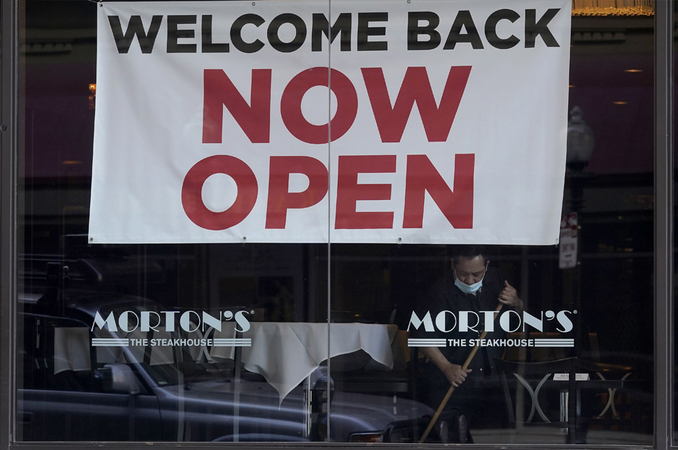
The leisure and hospitality sectors added 280,000 jobs last month, as coronavirus restrictions eased around the country. Most of that increase, about 176,000 jobs, came from hiring at restaurants, bars and other food service establishments. Arts, entertainment and recreation facilities gained 64,000 jobs, and hotels gained about 40,000.

The sector still remains about 3 million jobs short of where it was before the pandemic.

Elsewhere, employment rose 126,000 in public education at the state and local level, and 64,000 in private education. Construction added 110,000 jobs after reporting a disappointing decline in February.

Transportation and warehousing added 48,000 jobs, and retail added 23,000 jobs, driven bygrowth in clothing stores, motor vehicle and parts dealers, and furniture and home furnishing stores.

Despite the improvements, minorities, which have also suffered disproportionately during the pandemic, are still lagging behind. The unemployment rate for Blacks was relatively unchanged at 9.6% in March and edged down for Latinos to about 7.9%. For White people, it was 5.4%.

There is much work to be done before the economy returns to its pre-pandemic strength. There are still about 8.5 million fewer jobs now, compared to February 2020, and that doesn’t include the growth in the labor market that would have probably occurred over the last year under normal circumstances.

Taiwan’s worst train crash in decades leaves 51 dead, dozens injured #SootinClaimon.Com

#SootinClaimon.Com : ขอบคุณแหล่งข้อมูล : หนังสือพิมพ์ The Nation.

https://www.nationthailand.com/news/30404465

Taiwan’s worst train crash in decades leaves 51 dead, dozens injured

InternationalApr 03. 2021

By The Washington Post · Eva Dou, Alicia Chen, Pei Lin Wu

SEOUL – A train crash in Taiwan killed at least 51 people and injured dozens Friday, authorities said, in the deadliest railway accident in decades on the island.

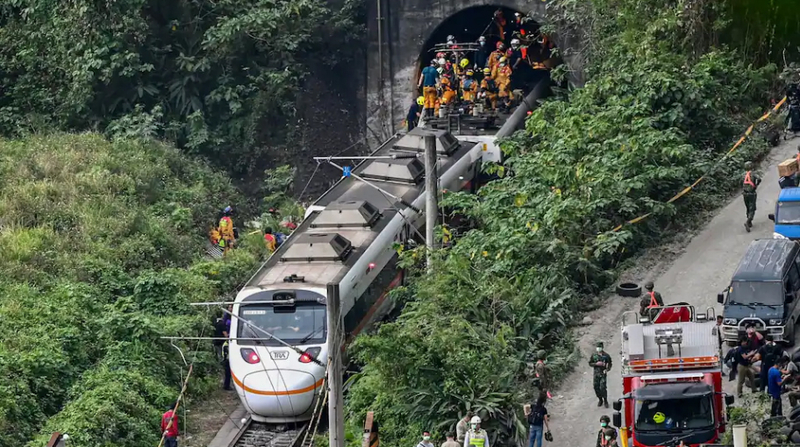
A construction truck that was improperly parked on a slope rolled down and collided with a passenger train on Friday morning, leaving it derailed in a tunnel on Taiwan’s east coast, according to Taiwan’s official Central News Agency (CNA).

Photos from the scene showed the train tilted inside the tunnel, with pieces of crushed metal surrounding it. Survivors climbed out of the train’s windows to escape.

The tragedy was heightened as Friday was the first day of the Tomb Sweeping Festival, an annual commemoration in Taiwan and some other parts of Asia of family members who have died. Many of Taiwan’s 24 million people were set to travel domestically over the long weekend.

The train had 374 seats but was carrying almost 500 people, with many passengers standing in the crowded cars, Taiwanese officials told local media outlets.

The accident has raised concerns about Taiwan’s transportation safety, after another deadly train crash three years earlier. In 2018, 18 people were killed and 215 injured when a train derailed in northeastern Taiwan.

On Friday, Taiwanese President Tsai Ing-wen ordered an investigation of the cause of the crash and a rapid effort to save the trapped and injured. The last two people trapped were rescued Friday afternoon.

“All relevant units are working all-out in the rescue mission,” she said in a statement posted on Facebook.

Taiwanese Premier Su Tseng-chang expressed his condolences to the passengers and their families, according to the official Radio Taiwan International.

Wei Yu-Ling, secretary general of the Taiwan Railway Union, said in an interview that she hoped Taiwan’s government would follow through with its call for a thorough investigation. In February, two railway maintenance workers were killed and another was seriously injured when they were hit by a train.

“Compared to the Taipei Metro and the Taiwan High Speed Rail in Taiwan, the Taiwan Railways Administration has a relatively high frequency of accidents,” Wei said.

Friday’s crash took place in Taiwan’s scenic Hualien county on the east coast, one of the island’s most popular areas for tourists. In 2019, before coronavirus pandemic shutdowns began, the nearby Taroko Gorge national park received 4.8 million visitors.

Trains are a popular choice for travel in the region, with the curving mountain roads making for difficult driving.

One taxi driver in the area, Yang Yi-chung, reported on Facebook that a bus had ferried some of the survivors back to Hualien Station. A shellshocked father and son, surnamed Huang, got into his cab, he said.

“Those in the carriages stuck in the tunnel, some broke the windows, some climbed on the roofs, some were covered in blood, some were looking for their relatives,” Yang recalled one of the passengers saying.

Taiwan’s National Fire Agency said Friday evening that 51 people died in the crash and 146 were injured.

The operator of the construction truck that caused the accident was taken to a police station for questioning, according to CNA.

British politicians vow to oppose use of covid passports #SootinClaimon.Com

#SootinClaimon.Com : ขอบคุณแหล่งข้อมูล : หนังสือพิมพ์ The Nation.

https://www.nationthailand.com/news/30404464

British politicians vow to oppose use of covid passports

InternationalApr 03. 2021A Covid-19 Vaccination Record Card at a vaccination centre in Cardiff, U.K. Photographer: Ben Birchall/PA Wire/BloombergA Covid-19 Vaccination Record Card at a vaccination centre in Cardiff, U.K. Photographer: Ben Birchall/PA Wire/Bloomberg

By Syndication Washington Post, Bloomberg · Alex Morales

British Prime Minister Boris Johnson risks triggering a major backlash among members of the ruling Conservative Party if his government opts to use so-called covid passports to help reopen the economy.

More than 70 members of Parliament from three parties, including 41 from Johnson’s Tories, pledged to oppose the use of vaccine certificates, calling them “divisive and discriminatory.” They include former Conservative Party leader Iain Duncan Smith, former Labour Party leader Jeremy Corbyn and Liberal Democrat Party leader Ed Davey.

“We oppose the divisive and discriminatory use of covid status certification to deny individuals access to general services, businesses or jobs,” the pledge reads, according to a statement Friday from civil liberties campaign group Big Brother Watch. The pledge came as it emerged the government is considering using covid certification as part of trials to reopen large scale events such as sports matches, concerts and conferences.

The opposition from across the political spectrum suggests the premier may struggle to get the measure through Parliament if he pursues it. The government is studying covid certification as a potential means to bolster confidence in returning to restaurants and entertainment venues while also helping to keep coronavirus cases under control.

The Telegraph late Thursday reported that the government is set to trial passports demonstrating a person’s covid status at sporting and cultural events within weeks. But a person familiar with the matter told Bloomberg that while such a policy is under consideration, no final decision has been taken, pending a review by the Cabinet Office over the feasibility of covid certification.

The person also said that events including soccer’s FA Cup Final, one of the cup semifinals, and the Snooker World Championships will take part in a pilot program in April and May to reopen large-scale events with less social distancing and larger crowds than currently permitted under covid rules. The Brit Awards for music are also under consideration, according to the person, who spoke anonymously about unannounced plans.

The pilot program forms part of the government’s road map for unlocking the economy, and will use “enhanced testing approaches,” according to the government plan published in February.

The Cabinet Office report on certification is due for publication by June 21, though Johnson’s office has indicated interim findings are likely April 5 — the same day the government is due to give an early indication on how foreign travel will reopen, something ministers have said won’t happen before May 17 at the earliest.

“There’s definitely going to be a world in which international travel will use vaccine passports,” Johnson told reporters Thursday during a trip to northeast England. He also said proof of someone’s covid status — whether it’s immunity from having had the disease or an inoculation, or a negative test — could be “useful” in re-opening the domestic economy.

“Those three things working together will be useful for us as we go forward,” he said.

Johnson’s comments contrast with those of Labour leader Keir Starmer, who told the Telegraph newspaper on Wednesday that using covid passports for everyday social activities goes against the British “instinct.”

As the vaccine is rolled out and deaths diminish, “there will be a British sense that we don’t actually want to go down this road,” he said.

Starmer said he would examine any proposals before deciding Labour’s stance. But if the 41 Tories signing Friday’s pledge joined with all opposition MPs to vote against any measures on covid certification, they’d have the numbers to defeat the government.

Labour Member of the House of Lords Shami Chakrabarti called domestic covid passports “an authoritarian step too far.” Influential rank-and-file Conservative Graham Brady said: “We should aim to return to normal life, not to put permanent restrictions in place.”

Biden administration reverses Trump decision, will provide $1 billion a month more in emergency food assistance #SootinClaimon.Com

#SootinClaimon.Com : ขอบคุณแหล่งข้อมูล : หนังสือพิมพ์ The Nation.

https://www.nationthailand.com/news/30404463

Biden administration reverses Trump decision, will provide $1 billion a month more in emergency food assistance

InternationalApr 03. 2021During the pandemic, 50 million Americans have become food insecure. Nationally, SNAP provides help to more than 42 million people each year. MUST CREDIT: Photo by Alyson Aliano for The Washington Post.During the pandemic, 50 million Americans have become food insecure. Nationally, SNAP provides help to more than 42 million people each year. MUST CREDIT: Photo by Alyson Aliano for The Washington Post.

By The Washington Post · Laura Reiley

The Biden administration has abandoned the Trump administration’s opposition to emergency nutrition assistance going to the lowest income households already at the maximum benefit levels.

In two lawsuits in Pennsylvania and California, plaintiffs argued that Trump’s agriculture secretary Sonny Perdue misinterpreted a section of the Families First Coronavirus Response Act in a way that denied millions of the neediest Americans access to emergency allotments of Supplemental Nutrition Assistance Program (SNAP), the program formerly called food stamps. In Pennsylvania, the suit alleged that the U.S. Department of Agriculture under Trump denied any emergency allotments to nearly 40% of the state’s SNAP households.

Biden’s agriculture secretary Tom Vilsack moved on Thursday for voluntary dismissal of the agency’s appeal in these cases, entering into a settlement that will provide $1 billion per month in additional food assistance to an estimated 25 million people in very low-income American households.

Starting this month, households that had not received at least $95 per month in increased benefits through emergency allotments during the pandemic – because they were already at or close to receiving the current maximum benefit – will now be eligible to receive additional benefits. Benefit levels will remain unchanged for households that have been receiving increased payments of at least $95 per month. States may need a few weeks to update their systems and get the additional benefits to participants, “but it should be smooth sailing from here on out,” said Stacy Dean, deputy undersecretary of the USDA.

“We’ve seen the food insecurity numbers through the Census Pulse data and knew we needed to do everything we could for the truly struggling low-income households,” Dean said.

Biden signed an executive order shortly after taking office in January ordering the agency to reconsider the emergency allotments. Later that month, Vilsack began to focus on the issue.

“The emergency SNAP increases authorized by Congress last year were not being distributed equitably, and the poorest households – who have the least ability to absorb the economic shocks brought about by COVID – received little to no emergency benefit increases,” Vilsack said in a statement on Thursday. “As part of President Biden’s commitment to deliver economic relief and ensure every family can afford to put food on the table, today’s actions will provide much-needed support for those who need it most.”

The Families First Coronavirus Response Act authorized emergency allotments to SNAP households to help address temporary food needs during the pandemic.

Under the Trump administration’s interpretation of the act, if a recipient was already receiving the maximum SNAP benefit, he or she was not eligible for the additional Families First act’s emergency benefit. But Judge John Milton Younge of the U.S. District Court for the Eastern District of Pennsylvania ruled in September that the administration was ignoring the intent of the law.

The USDA continued to resist, telling Pennsylvania officials they would not respond to their request for additional benefits and filing a motion for the court to clarify its order.

In October, Younge called out the Trump administration’s USDA for “egregious disobedience” that “flouts this court’s basic authority to preserve order and administer justice.”

USDA settled the Pennsylvania and California lawsuits Thursday afternoon.

Despite a promising rebound in the labor market last month, Vollinger said it is important to compare unemployment now to February 2020, before the pandemic took hold: “The ranks of long-term jobless is significant – they are now 40% of the officially unemployed. That is stunning, and the economic situation they are in is more dire.”

Food insecurity is just one of the problems they face, she says.

“This has been such a welcome development to people who have been frustrated by the lack of the prior administration using all the tools in the toolbox to address the scope of this crisis,” Vollinger said.

Since the start of the pandemic, USDA has issued about $29 billion in additional benefits, to bring all SNAP households up to the maximum benefit for their household size. Among households that received little to no benefit increase because of the Trump administration’s interpretation of the Families First act, about 40% have children, 20% include someone who is elderly and 15% include someone who is disabled.

“We recognize SNAP doesn’t just help boost and stabilize the economy, it has incredibly long-term benefits for health and well-being,” said Julie Morita, executive vice president of the Robert Wood Johnson Foundation, a philanthropy. “But it is my understanding that this [SNAP expansion] is temporary, until the end of the pandemic. We need to look hard at the program and ask if it was strong enough before the pandemic.”

Wreckage of long-lost WW II ship, sunken with its Native American skipper and half its crew, identified #SootinClaimon.Com

#SootinClaimon.Com : ขอบคุณแหล่งข้อมูล : หนังสือพิมพ์ The Nation.

https://www.nationthailand.com/news/30404462

Wreckage of long-lost WW II ship, sunken with its Native American skipper and half its crew, identified

InternationalApr 03. 2021Lt. Cmdr. Ernest E. Evans, left of center, speaks at the commissioning ceremonies on fantail of the USS Johnston on Oct. 27, 1943, in Seattle. MUST CREDIT: U.S. Naval History and Heritage CommandLt. Cmdr. Ernest E. Evans, left of center, speaks at the commissioning ceremonies on fantail of the USS Johnston on Oct. 27, 1943, in Seattle. MUST CREDIT: U.S. Naval History and Heritage Command

By The Washington Post · Michael E. Ruane

Near the end, the battered American destroyer USS Johnston was surrounded by Japanese warships closing in to finish her off. The Johnston was ablaze. Scores of sailors lay dead. And after three hours of heroic battle, only one of its guns could return fire.

At 9:45 a.m. on Oct. 25, 1944, the wounded skipper, Cmdr. Ernest Evans, gave the order to abandon ship, and 25 minutes later the Johnston sank off the Philippine island of Samar.

Evans and 185 members of the crew were lost, and he would become the first Native American in the Navy to receive the Medal of Honor.

On Thursday, the Navy and a team of undersea explorers announced that the wreck of the Johnston had been positively identified in 21,180 feet of water. Scattered wreckage had been found at the site in 2019 but could not be positively identified.

But late last month, a manned-submersible operated by Caladan Oceanic, a Dallas undersea exploration company, located the front two-thirds of the ship, sitting upright, along with the bridge, mid section and the identifying hull number, 557.

The submersible, piloted by former Navy Cmdr. Victor Vescovo, also saw two large gun turrets, twin torpedo racks, and multiple gun mounts.

“No human remains or clothing were seen at any point during the dives and nothing was taken from the wreck,” Caladan said in its announcement.

“The wreck of Johnston is a hallowed site,” said retired Rear Adm. Sam Cox, head of the Naval History and Heritage Command in Washington.

“It … serves as a sobering reminder for today’s Sailors: after all that’s asked of them in day-to-day service, they … may one day be asked for far more,” he said in the Navy’s announcement.

The Johnston was sunk during a huge naval battle in the Philippine Sea as the United States was liberating the island nation from the Japanese and advancing the bloody drive across the Pacific Theater that would end the war 10 months later.

In late October 1944, a powerful force of Japanese battleships and cruisers managed to catch the Navy off-guard and jump a U.S. fleet of small aircraft carriers off Samar.

The Johnston and other small destroyers assailed the Japanese force as the carriers fled, according to historian Ian W. Toll.

“She was nearer to the enemy than any other American warship and therefore came in for special attention from enemy gunners,” he wrote in his recent book, “Twilight of the Gods.”

Despite the barrage the destroyer charged away.

“I intend to go in harm’s way,” Evans had said when the Johnston was commissioned in 1943. “Anyone who doesn’t want to go along had better get off right now.”

Evans was from Pawnee, Okla. His mother was Cherokee and his father was half White and half Creek Indian. Despite the racism of the era, he was admitted to the Naval Academy and graduated in 1931. He was 36 at the time of the attack, and he had been the Johnston’s only skipper.

As the splashes from enemy shell hit nearby, he steered toward the enemy.

“I can see him now,” Bob Hagen, the ship’s gunnery officer recalled, according to Toll. “Short, barrel-chested, standing on the bridge with his hands on his hips, giving out with a running fire of orders in a bull voice.”

The nimble Johnston zigged and zagged, firing off torpedoes and shells, and ducking into smokescreens. But at 7:25 a.m. the monster Japanese battleship Yamato spotted the destroyer and landed three huge shells.

“It was like a puppy being smacked by a truck,” Hagen remembered.

Evans was knocked down. His shirt had been torn off. His hair was singed, and two of his fingers had been ripped off, Toll wrote. Evans got up, wrapped a handkerchief around his hand and resumed shouting orders.

An hour later, another Japanese battleship, the Kongo, loomed, and the Johnston let loose with its small guns, firing 40 shells. They did little damage. The destroyer escaped, but came upon a crippled American aircraft carrier being pummeled by a Japanese cruiser.

“Commander Evans then gave me the most courageous order I’ve ever heard,” Hagen recalled. “‘Commence firing on that cruiser … draw her fire on us and away from'” the carrier.

It was then that the enemy ships closed in and finished the Johnston off.

“Men were floating on the water’s surface or sinking beneath it,” a Japanese sailor reported. “Half-naked crew members jammed themselves into lifeboats and rowed away … We were close enough to see their unkempt beards and the tattoos on their arms.”

A Japanese gunner opened fire, but was ordered to stop. And as the Johnston went down, a Japanese officer was seen saluting from his ship, Toll wrote.

Of the Johnston’s crew of 327, only 141 survived, the Naval history command says on its website. About 50 “were killed by enemy action, 45 died on rafts from battle injuries and 92, including Evans, were alive in the water after Johnston sank, but were never heard from again.”

The suspected wreck site, the deepest shipwreck ever located, was first discovered in 2019 by the late Paul Allen’s vessel R/V Petrel, Caladan said in its statement. But most of the ship was deeper than the Petrel’s submersible could go.

The Caladan submersible has no depth limitation, the company said.

As the expedition ended, the project’s research vessel came to a stop, sounded its whistle, and a memorial wreath was placed on the ocean, the company said.

จีนส่งทหารเข้าชายแดนเมียนมาปกป้องท่อส่งน้ำมัน #SootinClaimon.Com

#SootinClaimon.Com : ขอบคุณแหล่งข้อมูล : หนังสือพิมพ์โพสต์ทูเดย์

https://www.posttoday.com/world/649492

วันที่ 02 เม.ย. 2564 เวลา 13:00 น.จีนส่งทหารเข้าชายแดนเมียนมาปกป้องท่อส่งน้ำมันแหล่งข่าวเผยทางการจีนส่งกองทัพลงพื้นที่ชายแดนเมียนมาคุ้มครองท่อส่งน้ำมัน

สำนักข่าว The Irrawaddy รายงานโดยอ้างแหล่งข่าวจากหลายแหล่งว่า ทางการจีนส่งกองทัพและรถบรรทุกลงพื้นที่ในเมืองเจี่ยเก้าซึ่งอยู่ตรงข้ามกับเมืองหมู่เจ้ในรัฐฉานของเมียนมา โดยเดินทางมาถึงเมื่อไม่กี่วันก่อน

แหล่งข่าวจากกองกำลังชนกลุ่มน้อยติดอาวุธหลายกลุ่มบอกว่าการเคลื่อนไหวของจีนครั้งนี้เป็นการส่งสัญญาณไปยังเมียนมา ขณะที่ TVBS News ในไต้หวันรายงานว่า กองทัพจีนเข้าไปประจำการเพื่อปกป้องท่อส่งน้ำมัน แต่ไม่ได้ระบุรายละเอียดเพิ่มเติม

ทั้งนี้ ท่อส่งน้ำมันยาว 800 กิโลเมตรทอดยาวจากรัฐยะไข่ในอ่าวเบงกอลผ่านเมืองมะเกวและมัณฑะเลย์และทางตอนเหนือของรัฐฉานเข้าสู่จีน

เมื่อต้นเดือน มี.ค.ที่ผ่านมา ทางการจีนขอให้กองทัพเมียนมาปกป้องท่อส่งก๊าซและน้ำมันของจีนหลังเกิดกระแสต่อต้านจีนในเมียนมาและมีการข่มขู่ว่าจะระเบิดท่อส่งน้ำมัน

REUTERS/Damir Sagolj

ครอบครัว-เพื่อนร่วมชาติไว้อาลัยทุกชีวิตที่สละเพื่อประชาธิปไตยเมียนมา (ภาพชุด) #SootinClaimon.Com

#SootinClaimon.Com : ขอบคุณแหล่งข้อมูล : หนังสือพิมพ์โพสต์ทูเดย์

https://www.posttoday.com/world/649438

วันที่ 02 เม.ย. 2564 เวลา 10:30 น.ครอบครัว-เพื่อนร่วมชาติไว้อาลัยทุกชีวิตที่สละเพื่อประชาธิปไตยเมียนมา (ภาพชุด)(คำเตือน : มีภาพที่อาจสร้างความสะเทือนใจ)

นับตั้งแต่กองทัพเมียนมาทำรัฐประหารเมื่อวันที่ 1 ก.พ.ที่ผ่านมา มีการใช้กำลังปราบปรามผู้ชุมนุมประท้วงต้อต้านรัฐบาลทหารอย่างรุนแรงจนมีผู้เสียชีวิตแล้วเกือบ 600 ราย ส่วนใหญ่เป็นเยาวชน

ญาติของ Khine Zar Twal ซึ่งเสียชีวิตเมื่อวันที่ 28 มี.ค. จูบที่หน้าผากของเธอระหว่างการจัดพิธีศพในกรุงย่างกุ้งเมื่อวันที่ 30 มี.ค. Photo by STR / AFP
ญาติๆ พากันชูสามนิ้วเพื่อไว้อาลัยให้กับ Saw Lwin Moe ที่เสียชีวิตเมื่อวันที่ 29 มี.ค. Photo by STR / AFP
ชาวบ้านรวมตัวกันแสดงความไว้อาลัยแก่ผู้ประท้วง 3 รายที่เสียชีวิตจากการสลายการชุมนุมของกองทัพในเมืองโมนยวา ภูมิภาคสะกาย ด้วยการชูสามนิ้ว Photo by Handout / FACEBOOK / AFP
หนึ่งในญาติของผู้เสียชีวิตในเมืองโมนยวา ภูมิภาคสะกาย Photo by Handout / FACEBOOK / AFP

หน่วยงานยูเอ็นขออาเซียนไม่ผลักดันผู้ลี้ภัยกลับเมียนมา #SootinClaimon.Com

#SootinClaimon.Com : ขอบคุณแหล่งข้อมูล : หนังสือพิมพ์โพสต์ทูเดย์

https://www.posttoday.com/world/649461

วันที่ 02 เม.ย. 2564 เวลา 09:30 น.หน่วยงานยูเอ็นขออาเซียนไม่ผลักดันผู้ลี้ภัยกลับเมียนมาหน่วยงานสหประชาชาติขอให้เพื่อนบ้านอาเซียนอย่าผลักดันผู้ลี้ภัยเมียนมากลับประเทศ  

สำนักงานเพื่อสิทธิมนุษยชนแห่งสหประชาชาติ (OHCHR) ประจำภูมิภาคเอเชียตะวันออกเฉียงใต้ และสำนักงานข้าหลวงใหญ่ผู้ลี้ภัยแห่งสหประชาชาติ (UNHCR) ออกแถลงการณ์เรียกร้องให้ประเทศเพื่อนบ้านของเมียนมาระงับการส่งผู้ลี้ภัยชาวเมียนมากลับประเทศ และให้ความคุ้มครองคนเหล่านี้  

แถลงการณ์ยังเรียกร้องให้ทุกประเทศค้นหาและช่วยเหลือผู้ลี้ภัยชาวเมียนมา และไม่ขัดขวางหรือผลักดันกลุ่มคนเหล่านี้ที่หนีเข้ามาจากทั้งเส้นทางบกหรือทางน้ำ 

จิลเลียน ทริกส์ ผู้ช่วยข้าหลวงใหญ่ผู้ลี้ภัยแห่งสหประชาชาติเผยว่า จำเป็นอย่างยิ่งที่ทุกคนที่ข้ามพรมแดนไปขอลี้ภัยในประเทศอื่นจะต้องได้รับการอนุมัติ เด็ก ผู้หญิง ผู้ชายที่หนีตายต้องได้รับการคุ้มครอง พวกเขาไม่สมควรถูกส่งกลับไปยังที่ที่ชีวิตและเสรีภาพของพวกเขาตกอยู่ในอันตราย หลักการไม่ส่งกลับเป็นหลักการพื้นฐานของกฎหมายระหว่างประเทศและบังคับใช้กับทุกประเทศ  

ทริกส์ยังกล่าวอีกว่า ในขณะที่สถานการณ์ในเมียนมารุนแรงขึ้น ทุกประเทศในอาเซียนควรดำเนินการให้ความช่วยเหลือด้านมนุษยธรรมคุ้มครองชีวิตของชาวเมียนมาที่จำเป็นต้องหลบหนีต่อไปตามที่เคยปฏิบัติมา  

ส่วน ซินเธีย เวลิโก ผู้แทนประจำภูมิภาคเอเชียตะวันออกเฉียงใต้ สำนักงานเพื่อสิทธิมนุษยชนแห่งสหประชาชาติ ณ กรุงเทพมหานคร กล่าวว่า ไม่ควรมีใครต้องเสี่ยงถูกส่งกลับไปยังเมียนมา ในเมื่อชีวิต ความปลอดภัย และสิทธิมนุษยชนขั้นพื้นฐานของพวกเขากำลังถูกคุกคาม และกล่าวว่า ถึงเวลาแล้วที่พวกเราทุกคนจะยืนเคียงข้างชาวเมียนมา  

นอกจากนี้ ยังเรียกร้องให้ทุกประเทศในอาเซียนยุติการส่งตัวแรงงานชาวเมียนมาที่ไม่มีหนังสือรับรอง หรืออยู่ในสถานะผู้เข้าเมืองแบบไม่ปกติกลับเมียนมา และให้สถานะทางกฎหมายแก่คนเหล่านี้ในขณะที่เมียนมายังเผชิญวิกฤต

Photo by Handout / various sources / AFP

EU to chair meeting of world powers and Iran on U.S. rejoining nuclear deal #SootinClaimon.Com

#SootinClaimon.Com : ขอบคุณแหล่งข้อมูล : หนังสือพิมพ์ The Nation.

https://www.nationthailand.com/news/30404423

EU to chair meeting of world powers and Iran on U.S. rejoining nuclear deal

InternationalApr 02. 2021

By The Washington Post · Karen DeYoung

World powers will hold a virtual meeting with Iran on Friday to discuss “the prospect of a possible return of the United States” to the Iran nuclear deal, the European Union said.

The six countries still party to the deal since the United States withdrew nearly three years ago – Britain, France, Germany, Russia, China and Iran – will attend the EU-chaired meeting, according to a statement by the European body.

The Biden administration welcomed what it called a “positive step,” signaling a possible breakthrough in the months-long stalemate between the United States and Iran over the conditions for a U.S. return to the agreement.

“We have been clear for weeks now that we are ready to pursue a return to compliance with our JCPOA commitments, consistent with Iran also doing the same,” State Department spokesman Ned Price told reporters. The agreement is officially known as the Joint Comprehensive Plan of Action.

“We took note of the Europeans’ announcement today as a positive step, especially if it moves the ball forward,” he said.

President Donald Trump withdrew from the 2015 accord, which he consistently criticized as a “bad deal.” He reimposed harsh economic sanctions on Iran that had been lifted as part of the agreement, and added more than a thousand new measures. In response, Iran eventually began enriching uranium to levels that the deal had prohibited.

The United States charged, and Iran denied, that its goal was to construct a nuclear weapon.

President Joe Biden campaigned on a promise to rejoin the accord, saying that it had successfully constrained Iran’s nuclear ambitions. The administration now estimates that Iran’s “breakout time” – the amount of time needed to produce enough fissile material for one nuclear device – has been reduced from more than a year, under the agreement, to only a few months.

But attempts earlier this year to negotiate a U.S. return to the accord repeatedly faltered as the United States and Iran each insisted the other take the first steps. The administration said it would lift Trump-imposed sanctions if Iran returned to compliance with limits on uranium enrichment and full international monitoring. Iran, noting that it was the United States that quit the accord, said it would return to the terms of the deal once the sanctions were removed.

The Iranians also have said they had no interest in Biden-proposed “follow-on” talks about Iran’s ballistic missile program, proxy wars in the region and alleged terrorism sponsorship.

Both the United States and Iran have to deal with domestic political pressures for and against agreement. Iran is gearing up for elections in June that will center in large part on the nuclear deal.

Iran rejected an EU proposal in late February to gather the original parties to the agreement – including the United States – saying that it first wanted a clear-cut agenda.

Since then, the administration has made clear that it would participate in “indirect” talks, through the Europeans. Britain, France and Germany, which maintain embassies in Tehran, have served as conduits as the two sides proposed sequential, simultaneous steps to bring them into mutual compliance.

“Working closely with our [European] partners as well as Moscow and Beijing, we are determined to find a diplomatic solution that allows Iran to resume respect for its nuclear commitments and the United States to return to the agreement as swiftly as possible. We are engaged in ongoing discussions with Washington and Tehran in that regard,” French Foreign Ministry spokeswoman Agnes von der Muhll said Thursday.