เอ็ด มิลส์ (Ed Mills) นักวิเคราะห์ของ Raymond James Financial Inc. เขียนในบันทึกที่ตีพิมพ์เมื่อวันศุกร์ว่า ทางบริษัทเตรียมพร้อมรับกับคำสั่งประธานาธิบดีเพิ่มเติมที่อาจเป็นคำสั่งที่แข็งกร้าวจนยากที่จะแก้ไขได้
By The Washington Post · Anna-Catherine Brigida, Anthony Faiola · WORLD, SCIENCE-ENVIRONMENT, THE-AMERICAS
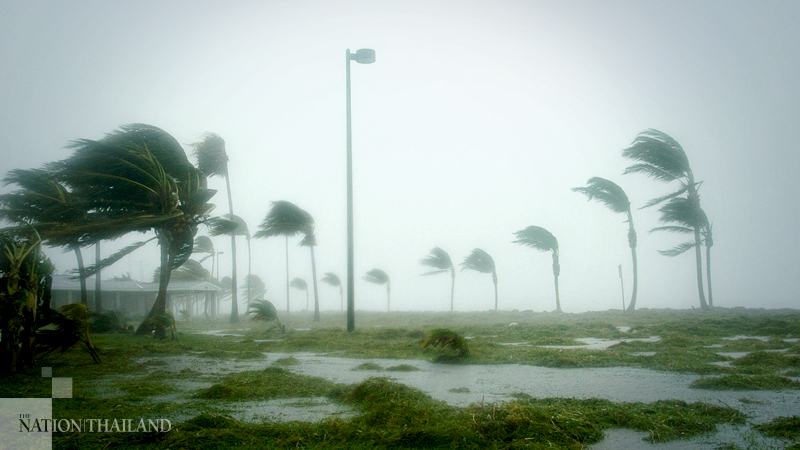
MANAGUA – Hurricane Iota, the strongest storm ever recorded in the Atlantic this late in the year, slammed into the Nicaraguan coast late Monday, bringing catastrophic winds and pounding rains to a swath of Central America still reeling from the destructive force of Hurricane Eta nearly two weeks earlier.
Also the most powerful storm of the extraordinarily active 2020 hurricane season, Iota made landfall at 10:40 p.m. EDT in the town of Haulover, before plowing into fishing and farming towns in northeastern Nicaragua. The storm slightly weakened from a Category 5 to an extremely intense Category 4 as it came ashore, with sustained winds of 155 mph.
Iota came ashore only 15 miles south of where Eta made landfall earlier this month, on Nov. 3.
In Puerto Cabezas, about 30 miles north from center of the storm, eyewitnesses said strong winds were bending coconut palms and lower lying areas had started to flood by late Monday afternoon, leading more residents to scramble toward overcrowded and undersupplied shelters in a poverty-stricken corner of the country. Parts of the port town of 50,000 had already lost power.
“The winds, the rain, are very strong, I can hear the sound of the sea surrounding us,” said Shira Downs, Puerto Cabezas resident and director of a woman’s rights organization, “This is going to be worse that Eta, and this is just the beginning. I just hope God has mercy on us.”
Jose Coleman, an indigenous activist in Puerto Cabezas, said winds had blown the wood siding off a neighborhood house, leaving it partially collapsed. His brother, Presly Coleman, said by Monday morning it was already too dangerous to leave the house.
“It’s very strong,” Presly Coleman said. “The winds are whipping.”
Thousands of people in the storm’s path had already evacuated from Eta, and were still sheltering inland when Iota hit. But thousands of others, many of them impoverished Indigenous and Afro-Nicaraguans, remained on the ground and in Iota’s path, with hardest-hit areas forecast to receive up to 30 inches of rain.
The hurricanes hit the region at the time when it is already roiling not only from the aftermath of Eta, but from the socioeconomic consequences of the coronavirus pandemic, which is spiking poverty and food insecurity in the region.
Nicaraguan authorities estimated 80,000 families will be affected by Iota, both in coastal communities where the hurricane will hit directly and in other parts of the country that could experience flooding and deadly landslides.
The government has prepared nearly 1,300 shelters, according Nicaragua’s National System for the Prevention, Mitigation and Attention of Disasters (SINAPRED).
Some residents in areas previously hit by Eta told Nicaraguan media they didn’t want to evacuate their homes now because they feared looting if they abandoned them.
Vittoria Peñalba, director of sustainability for the aid group World Vision in Nicaragua, said 50,000 coastal dwellers had been evacuated over the weekend and on Monday, a process hampered by roads left washed out and bridges pulverized in Eta’s wake.
In Nicaragua, a troubled Central American nation of 6.5 million where the authoritarian government of Daniel Ortega has come under fire for poor handling of the coronavirus pandemic, concern centered heavily on the destructive force of Iota in northeastern towns of Puerto Cabezas, Waspam, and, further south, Prinzapolka. There was overcrowding in shelters lacking in food, mattresses and personal protective equipment.
“The houses on the coast are mostly made from wood, they are of very fragile construction, so people are going to schools, shelters, anywhere they can be protected from the wind and rain,” Peñalba said. “But there are too many people in each shelter. The government is trying its best, but there’s too many people.”
Before making landfall, Iota pummeled the small Colombian islands of San Andrés and Providencia, located east of the Nicaraguan coast. Early Monday, communications went down on Providencia, a tropical island between Jamaica and Costa Rica with a population just over 5,000, according to Colombian news outlets. Colombian President Iván Duque said later Monday that regular communications had also been lost with San Andrés, population 80,000, leaving the government to rely on links via satellite phone.
The Colombian outlet Semana TV showed video footage of San Andres, with power lines downed on flooded roads and corrugated iron roofs blown off homes.
“This is a big challenge our country is facing,” said Duque said in televised comments. “As soon as the circumstances allows us to get there, we will do that with all our capacity.”
On the Colombian islands, Twitter became the main source of communication with media outlets and government institutions posting videos of the most affected areas. The Colombian Navy tweeted footage of a 67-year-old Italian sailor found adrift off the coast of San Andres.
“Thank you to the Colombian Navy,” says the man in the video, whose name was not disclosed.
The National Hurricane Center in Miami showed Iota losing strength into Tuesday while tracking toward more densely population centers in Honduras, where devastating mudslides from Eta have already left more than 100 dead.
Maite Matheu, Honduras director for the charity Care, said storm conditions had already begun hitting parts of that country. Concern centered on an estimated 100,000 people who were fleeing their homes, including in forced evacuations imposed on Monday by the government.
“The problem is the shelters are already full because of the Eta.
Matheu said groups were particularly fearful about the impact in the capital of Tegucigalpa, with high concentrations of people living in areas prone to flooding, and in the northern city of San Pedro Sula, where storm refugees from Eta were already living precariously on the streets.
“There have not really been preparations for everyone to go to shelters,” she said. “An emergency is coming.”
By The Washington Post · Missy Ryan, Ellen Nakashima, Dan Lamothe, John Hudson, Karen DeYoung · NATIONAL, WORLD, NATIONAL-SECURITY, MIDDLE-EAST
WASHINGTON – The Trump administration is planning to move ahead with a significant reduction of U.S. forces in Afghanistan before President Donald Trump leaves office in January, taking steps toward delivering on his long-delayed campaign promise to bring home troops from insurgent wars.
According to officials familiar with the discussions, the White House is preparing to announce as soon as this week plans to roughly halve the number of U.S. troops, from around 5,000 to 2,500, by the time President-elect Joe Biden assumes office on Jan. 20.
The administration is also expected to announce a more modest troop reduction in Iraq, bringing the military force there from about 3,000 to 2,500 troops, another step that would advance the goal Trump has espoused since before he was elected to wind down the wars launched in the wake of the Sept. 11 attacks and refocus resources at home.
But the reductions may not bring an end to America’s long-running wars, as militant groups continue to evolve and fracture. The proposed cuts also have an uncertain meaning less than 70 days before Biden takes office and launches a process to scrutinize his predecessor’s decisions.
The Trump administration’s decision to make a major reduction in Afghanistan, where violence has surged as Afghan negotiators engage in halting peace talks, in particular could bring to a head tensions that have intensified between some at the Pentagon and White House during a chaotic transition period.
Officials cautioned that the plans from the White House, where foreign policy zigzags have been common, could change. Some aides are proposing a Trump speech later in the week to announce the planned cut from Afghanistan, which was first reported by CNN.
The discussions come as the president continues to falsely assert victory in the Nov. 3 election. Trump, who fired his defense secretary and elevated loyalists at the Pentagon last week, has also blocked agencies from working with Biden’s transition team.
Days before being dismissed, Pentagon chief Mark Esper sent Trump a classified memo that cautioned that conditions were not adequate to make additional troop cuts in Afghanistan, citing the possibility of undermining peace talks and a variety of other factors. His assessment was based on input from senior military leaders.
As part of a deal struck between U.S. and Taliban negotiators in February, the United States promised to withdraw all troops from Afghanistan by May 2021 if the militants meet certain terms of the agreement, including a break with al-Qaida and progress toward a peace deal.
But military leaders have repeatedly said that timeline is predicated on the Taliban fulfilling its commitments and the security situation, which has deteriorated sharply in recent months, and indicated their support for forgoing further troop reductions until conditions allow.
The expected withdrawal announcement is in keeping with an earlier statement by national security adviser Robert O’Brien, who last month got into a public spat with Gen. Mark Milley, chairman of the Joint Chiefs of Staff, about the course ahead in Afghanistan. At the time, Milley said that O’Brien’s assertion that the troop level would be cut to 2,500 by January was “speculation.”
The apparent divide over a possible eleventh-hour cut, which officials have said was among the reasons Esper was fired, raises the possibility of greater Pentagon-White House friction in the final weeks of Trump’s presidency. O’Brien has told other officials that Milley isn’t listening to the president on Afghanistan.
Spokesmen for Milley and for Christopher Miller, the former Green Beret and counterterrorism expert who Trump tapped to replace Esper, did not immediately provide a comment.
In a message to Defense Department employees on Monday, Miller cited as among his top priorities to “bring the current war to an end in a responsible manner that guarantees the security of our citizens.”
A senior defense official said the reduction to 2,500, if finalized, was in line with earlier plans to incrementally bring the troop level down ahead of the May 2021 withdrawal deadline, but would simply accelerate the interim move to 2,500 by a month.
In a podcast recorded on Thursday, before news about the White House plans emerged, U.S. Central Command head Gen. Kenneth “Frank” McKenzie Jr. said the United States would take a conditions-based approach to further troop reductions. He appeared to suggest the Taliban had not made good on denying al-Qaida a safe haven in Afghanistan. “We need to see action here,” he said.
“The sheer volume of Taliban-initiated attacks against the people of Afghanistan are not indicative of an organization that is serious about peace,” McKenzie added.
A significant withdrawal would inject an element of unpredictability into ongoing peace negotiations between the Afghan government and Taliban negotiators.
If Taliban leaders “can see they can win on the battlefield, then they don’t need to make concessions at the negotiating table,” said Carter Malkasian, a former Pentagon official who took part in some of the talks U.S. officials have conducted with Taliban leaders in recent years.
The planned move in Iraq would make a modest reduction to a force installed in 2014 after Islamic State forces took over most of the country. Since then, U.S. forces have helped train and support local troops as they battled extremists. In recent years, they have focused on seeking to prevent a militant comeback.
Reports about an imminent announcement prompted warnings from senior Republicans on Capitol Hill. In an impassioned speech Monday, Senate Majority Leader Mitch McConnell, R-Ky., implored the president not to end U.S. military operations in Afghanistan, saying it would be an embarrassment “reminiscent of the humiliating American departure from Saigon in 1975.”
McConnell, avoiding direct criticism of Trump, encouraged the president to preserve the “limited, but important role” of those who remain. “Leaving the field in Afghanistan to the Taliban and ISIS would be broadcast around the world as a symbol of U.S. defeat and humiliation,” he said.
For months, Republicans who have long defended maintaining the presence of U.S. forces in conflicts have struggled to reconcile that with their political instinct to defer to Trump.
Sen. Lindsey Graham, R-S.C., once the GOP’s most ardent advocate for keeping forces stationed in Afghanistan, told reporters Monday that he had been “for the idea of coming down” and simply appreciated that the number left in place would not be “zero.”
“2,500 may be the residential force that protects us from a collapse,” he said, adding that he wanted “to hear more about it” from Trump.
Some Pentagon officials, however, expressed confidence that the United States would be able to maintain an effective counterterrorism operation with a force of 2,500.
One senior defense official, who spoke on the condition of anonymity to discuss internal deliberations, said the move would not “put any undue risk on U.S. forces or on our ability to support Afghan national security forces in their efforts against the Taliban. . . . Most importantly, it does not degrade our ability to conduct counterterrorism operations.”
A lean American force would be focused on extremist groups and, possibly, continue air support for Afghan troops, who remain heavily reliant on foreign air power. Army Gen. Austin “Scott” Miller, the top U.S. commander in Afghanistan, has been preparing his units for deeper cuts for more than a year.
A model for the future mission might be found in Syria, where a modest U.S. force consisting mainly of Special Operations troops has provided intelligence, reconnaissance and airstrikes for local forces on the ground. Support and air cover is provided from nearby countries.
A big U.S. cut could also impact the 38 NATO and partner countries that have fielded troops alongside the United States for more than a decade. They are reliant on U.S. air, medical and logistical support and would likely draw down as well.
In telephone calls last week to NATO Secretary General Jens Stoltenberg and defense ministers of those with the largest number of troops, the new acting defense secretary assured them there would be no change in policy and “no surprises.” But senior officials in several governments said they had come to understand that no Trump administration policy was finalized until the president announced it, and sometimes even not then.
Trump’s plans have been only marginally coordinated, if at all, with his negotiating envoy to the Afghans, Zalmay Khalilzad, and with the Afghan government.
While Trump has battled many of his top aides in his pursuit of a withdrawal, Secretary of State Mike Pompeo has come to accept the president’s wishes to end the costly conflict, said senior U.S. officials familiar with his actions.
Pompeo fought to increase the U.S. military footprint in the country at the outset of the Trump administration, but as the president has grown weary of the conflict, Pompeo shifted his position to supporting a “conditions-based” withdrawal. As Trump appears poised to accelerate the withdrawal despite missing key benchmarks, he is not expected to face significant resistance from Pompeo, officials said.
“At the end of the day, Pompeo appreciates that this is the commander-in-chief’s prerogative and it’s an issue that the president campaigned on,” a senior U.S. official said.
Biden has not commented directly on the U.S.-Taliban agreement or the intra-Afghan negotiations. His policy, stated throughout the campaign, is somewhat similar to Trump’s – ending U.S. “forever wars,” and leaving a residual counterterrorism force in Afghanistan to fight al-Qaida and a growing Islamic State movement.
Biden pressures Trump to cooperate, citing risk of additional coronavirus deaths if handoff is delayed
InternationalNov 17. 2020President-elect Joe Biden makes an appearance in Delaware on Monday. Biden said he is focusing on staffing the White House and forming his Cabinet. MUST CREDIT: Washington Post photo by Salwan Georges
By The Washington Post · Matt Viser · NATIONAL, HEALTH, POLITICS
President-elect Joe Biden on Monday ratcheted up pressure on the Trump administration to engage in a transition of power, mincing no words on the dire consequences if his incoming team faces further delays in working with federal agencies.
“More people may die if we don’t coordinate,” Biden said during a news conference in Wilmington, Del., following remarks on the economic impact of the coronavirus in which he warned of a “very dark winter” where “things are going to get much tougher before they get easier.”
He also pointed out the absurdity that Sen. Kamala Harris, D-Calif., the vice president-elect, still has access to classified intelligence briefings because she is a member of the Senate Intelligence Committee. But Biden himself is not able to get those briefings because Trump’s administration has yet to acknowledge that Biden won the election.
Biden generally refrained, however, from threatening Trump – “I am hopeful that the president will be mildly more enlightened before we get to Jan. 20,” he said at one point – and he said that the lack of cooperation so far was not yet significantly affecting his ability to build a team and chart a path.
“I find this more embarrassing for the country than debilitating for my ability to get started,” he said.
Biden’s attempt to increase pressure on Trump to behave like previous presidents came on a day the man in the White House began with a declarative, if false, tweet: “I won the Election.”
Trump went on to criticize the Georgia recount being conducted by Republican officials; praise OAN, a competitor to Fox News, which angered him with a correct projection of Biden’s win in Arizona; suggest a challenge to Ohio’s Republican governor, Mike DeWine, after he referred to Biden as the “president-elect”; and vent about Democrats and the news media.
Trump’s White House, meanwhile, has instructed senior government leaders to block any cooperation with Biden’s transition team.
Without entree into the workings and plans of the current administration, Biden said he would focus on meeting with business and labor leaders, staffing the White House and forming his Cabinet.
Two sources on Monday confirmed that Rep. Cedric Richmond, D-La., one of Biden’s earliest backers, plans to join the administration. Richmond, a national co-chair for Biden’s campaign, was one of Biden’s most prominent African American supporters, frequently defending him and campaigning for him dating back to the early days of the Democratic primary.
It was not immediately clear what role Richmond would play, although some Biden allies saw him as a potential senior adviser in the White House.
Richmond did not immediately respond to a request for comment. His plans were first reported by Bloomberg News and confirmed by two sources who spoke on the condition of anonymity to address internal conversations.
Biden also said Monday that Trump’s lack of cooperation had not stopped foreign leaders from calling to congratulate him.
“They’re calling with some degree of enthusiasm – everyone from the Holy Father to prime ministers across the globe,” Biden said. “So we’re moving along knowing what the outcome will be.”
Biden officials see their most crucial disadvantage as being unable to plan for the distribution of a coronavirus vaccine, which would need to be closely coordinated with current Trump administration officials and civil servants who work in important government departments such as Health and Human Services and Defense.
“A vaccine is important. It’s of little use until you’re vaccinated. So how do we get over 300 million Americans vaccinated?” Biden said. “What’s the game plan? It’s a huge, huge, huge undertaking to get it done.”
Ideally, while some work may be underway within the Trump administration to plan for the distribution of a vaccine, Biden officials would be clued in so that their transition to running the program would be seamless. Similar coordinated handoffs have marked previous changes of power.
“If we have to wait until Jan. 20 to start that planning, it puts us behind – over a month, month and a half,” Biden said. “And so it’s important that it be done, that there is cooperation. Now. Now, or as rapidly as we can get that done.”
Top Biden advisers this week are hoping to meet with drug companies, including Pfizer and Moderna, which are developing some of the vaccines, but those meetings would take place outside of government channels and may not include details on government-run distribution. Ron Klain, Biden’s newly named chief of staff, said Sunday on NBC’s “Meet the Press” that the conversations would begin this week.
“But I think in some ways the bigger issue – I’ve been saying this since April – the bigger issue will be the mechanics of manufacture and distribution, getting this vaccine out,” said Klain, who coordinated the Obama administration’s response to the Ebola virus in 2014 and 2015. “And that really lies with folks at the Health and Human Services Department. We need to be talking to them as quickly as possible. . . . It’s a giant logistical project.”
In the 10 days since Biden was declared the winner of the election – and the two weeks since voting ceased – Trump has created a standoff in place of a transition. The transition is unable to fully proceed until the head of the General Services Administration, the low-profile agency the normally handles real estate issues for the sprawling federal government, makes an official ruling. In past elections, that decision has been noncontroversial and typically decided in the hours after the results are clear and called by news networks.
In this case, the administrator – Emily Murphy, a Trump political appointee who has been in the post for nearly four years – is refusing to sign the paperwork while her boss continues to falsely claim that he won the election.
Without it, Biden officials are unable to formally meet with Trump administration officials. They also cannot gain access to thick briefing books prepared for them that detail the inner workings of various agencies.
Biden’s advisers had laid the groundwork for a lawsuit, thinking that they would have standing to argue that Murphy lacked the authority to ascertain the results and make an independent judgment when she is taking instructions from someone who has a stake in the election results.
Biden’s transition team had prepared for the possibility of a lawsuit even before the election, based on Trump’s earlier refusals to commit to a peaceful transition of power.
But over the past week, they have attempted to publicly avoid a drawn-out court fight, with Biden himself last week saying, “I don’t see the need for legal action, quite frankly.” Privately, however, some top Biden advisers say it is still an option they could pursue, while holding out hope that pressure will force a Trump reversal.
Asked Monday what his message was to those who discount the election results, Biden responded: “My message is – I will work with you. I understand a lot of your reluctance because of the way the president operates.”
Biden said he has been communicating with some Republicans and will be contacting others.
“If it has to wait until Jan. 20 to actually become operational, that’s a shame,” he said. “But maybe that’s the only way to get it done.”
Several Senate Republicans – almost all of whom are still unwilling to declare Biden the winner of the election – late last week began calling for Biden to gain access to classified briefings.
Those briefings have not happened, but Biden’s advisers saw the Republican calls as a promising sign.
“The good news here is my colleague is still on the Intelligence Committee,” Biden said, referring to Harris, who joined him on Monday. “So she gets the intelligence briefings. I don’t anymore.”
White House national security adviser Robert O’Brien on Monday seemed to break with other top Trump administration officials in saying that Biden appeared to have won the election and that he planned to help in a transition.
“If the Biden-Harris ticket is determined to be the winner, and obviously things look that way now, we’ll have a very professional transition from the National Security Council. There’s no question about it,” O’Brien said at the Global Security Forum, an annual forum that was held virtually because of the pandemic.
Former first lady Michelle Obama on Monday wrote a lengthy post on Instagram, recalling the personally painful process of transitioning to Trump’s White House, but saying that doing so reflected respect for the election results.
“This isn’t a game,” Obama wrote in a post accompanied by a photo of her and President Obama leaving Washington after Trump was sworn in. “So I want to urge all Americans, especially our nation’s leaders, regardless of party, to honor the electoral process and do your part to encourage a smooth transition of power, just as sitting presidents have done throughout our history.”
Pressure has increased on Murphy, meantime, with MoveOn delivering a petition to the GSA on Monday with more than 268,000 signatures calling on her to declare Biden the winner and authorizing the transition.
Murphy recently sent a message inquiring about possible employment opportunities next year, according to an ABC News report, in an apparent acknowledgment that she will be working elsewhere in 2021.
A spokeswoman for Murphy did not respond to requests for comment on Monday.
Rep. Don Beyer, D-Va., who led the Obama administration’s transition at the Commerce Department in 2008, called the job search “an act of gross political hypocrisy” and at “the worst possible time to refuse to honor one of our country’s most sacred democratic norms.”
“Administrator Murphy knows who won the election, and her job search confirms it,” Beyer said. “While she is prioritizing her own future and helping Donald Trump weaken our democracy, Americans are dying by the thousands in a pandemic that is raging out of control. Murphy must put the country first and allow the transition to move forward.”
By The Washington Post · Adam Taylor · NATIONAL, WORLD, HEALTH, HEALTH-NEWS
The world welcomed with relief biotechnology firm Moderna’s Monday announcement that initial results suggested its coronavirus vaccine candidate was nearly 95% effective at preventing the illness. Markets soared on the promising news.
But experts at the World Health Organization in Geneva weighed the hopes against a long slog they still see ahead.
“Last week we had 60,000 deaths,” said Edward Kelly, director of WHO’s work on service delivery and safety, during a news briefing. “We had 4 million new cases. We will have more of those weeks before the vaccine is out there.”
Public health officials have long warned that the development of an effective vaccine would be the beginning of a struggle just as steep: an effort to vaccinate the world.
“It’s not vaccines that save people, it’s vaccinations that will actually save people,” Kelly said.
Katherine O’Brien, director of the WHO’s immunization department, said the discovery of a highly-effective vaccine was like building a base camp on Mount Everest. “The climb to the peak is really about delivering the vaccines,” she said.
The caution at the world’s top public health body was not directed toward the achievements of Moderna and other vaccine developers, but at creating a realistic understanding of the enormous task of immunization. Supply and delivery will pose high hurdles, among others, even if a vaccine is highly effective, according to public health experts.
At least one vaccine could be available to the public within months: Moderna’s announcement came a week after U.S. pharmaceutical giant Pfizer and its German partner BioNTech announced that their own experimental coronavirus vaccine was more than 90 percent effective. But the WHO warned the world to expect a steep climb toward recovery nonetheless.
“A vaccine on its own will not end the pandemic,” WHO director general Tedros Adhanom Ghebreyesus said at a meeting of the organizations ‘s executive board on Monday. Experts said that measures including social distancing and testing will need to continue for quite some time.
Soumya Swaminathan, the WHO’s chief scientist, said the Moderna announcement was “quite encouraging,” but that only additional months of testing could ensure that the vaccine was safe in the longer term for all communities.
O’Brien said that both Pfizer and Moderna’s candidates are likely to require two doses to be effective, which could complicate delivery in many parts of the world. She noted that the two most promising vaccine candidates so far required cold storage, though Moderna could be kept at warmer temperatures for longer.
The WHO is particularly concerned about vaccines that could prove hard for poorer countries to administer or store. It is spearheading a plan called Covid-19 Vaccines Global Access Facility, or Covax, which aims to develop and equitably distribute $2 billion in doses of a vaccine by the end of next year. But researchers warn that wealth countries have already bought up many potential doses, and could force poor countries to the back of the line.
Some experts who study vaccine supply chains saw reason for optimism after Moderna’s announcement on Monday. Pfizer’s experimental vaccine requires ultracold storage conditions of around negative 70 degrees Celsius to ensure it remains effective.
Moderna’s vaccine can be kept refrigerator temperatures for a month and frozen for up to six months, the company said on Monday. Michael Head, senior research fellow in global health at the University of Southampton, said that meant Moderna’s candidate likely be better suited for poorer nations.
Johnson, in self-quarantine, says he’s ‘bursting with antibodies’
InternationalNov 17. 2020British Prime Minister Boris Johnson
By The Washington Post · Karla Adam, William Booth · WORLD, HEALTH, EUROPE, HEALTH-NEWS
LONDON – British Prime Minister Boris Johnson boasted that he was “fit as a butcher’s dog” and “bursting with antibodies” as he began two weeks of self-quarantine after having close contact with a lawmaker who contracted the coronavirus.
Johnson was infected with the virus in March and struggled to breathe in an intensive care unit for three days.
His staff did not say on Monday whether he had been tested this time, but cases of coronavirus reinfection have been incredibly rare. His quarantine appears to be more about modeling to the nation that it’s important to abide by public health directives, which apply even to those who have had the virus.
In a video posted on social media, Johnson urged others to “follow the rules,” as he was doing after being contacted by the National Health Service’s test-and-trace system Sunday afternoon.
More than 80% of Britons are not obeying self-isolation requirements after learning they have been infected or had contact with someone who tested positive, according to a study by King’s College London.
Perhaps, too, Johnson was making a show of rule-following because he can’t afford to lose more public trust. Faith in his government declined precipitously when it came out that his adviser, Dominic Cummings, had flouted restrictions on nonessential travel in March and drove to his family’s country home after he and his wife were infected with the virus.
The prime minister’s exposure to the virus this time came during a breakfast meeting with six Conservative lawmakers at 10 Downing Street on Thursday. One of attendees, Lee Anderson, lost his sense of smell on Friday and tested positive over the weekend.
Anderson posted a picture on Facebook of himself and Johnson standing slightly apart – but certainly not the advised six feet – and without face masks.
All of the people at the breakfast, including two staff members, are reported to be quarantining.
Johnson will quarantine with his household – his fiancee and their baby son – in their flat at 11 Downing Street, and the prime minister will travel to his office in 10 Downing Street via the back garden, so he will not have to be in contact with any staff members.
Johnson on Monday said that he felt great, and that since he previously had the disease he was “bursting with antibodies,” but that he would self-quarantine for two weeks as “we got to interrupt the spread of the disease.”
He added that he would continue to govern by video conference.
“Plenty more to say via Zoom, of course, and other means of electronic communication,” he said.
It is unclear how much of his schedule will change.
His official spokesman, who is not named because of traditional protocol, said Johnson may address the House of Commons on Wednesday for the weekly session known as Prime Minister’s Questions. But he could also easily send a substitute.
Johnson’s quarantine comes at a rugged moment. Two weeks into a national lockdown – which has shuttered businesses but not schools – the virus is still roaring throughout Britain, with nearly 25,000 daily infections, 168 deaths and 1,922 patients newly hospitalized on Sunday. The country’s death toll since the start of the pandemic is at 52,026, the highest in Europe.
It’s also crunchtime for Brexit negotiations. Britain has yet to secure a post-Brexit trade deal with the European Union, even though its transition period will expire at the end of the year.
Simon Coveney, Ireland’s foreign affairs minister, told RTE on Monday that the talks are “not in a good place.” He said a “very, very wide gap” remains between the two sides’ positions on fishing rights and government subsidies.
Meanwhile, Johnson’s government has been consumed by infighting. Last week, power struggles led to the dramatic departure of Cummings, Johnson’s pugnacious chief aide and mastermind behind the successful Brexit campaign.
Two weeks of self-quarantine, political commentators suggested, might get in the way of Johnson’s effort to “reset” his agenda.
Matt Hancock, Britain’s health minister, told Sky News on Monday that the prime minister was “well” and “absolutely full of beans.”
Commentators took the reports with a pinch of salt, noting that when Johnson was ill in the spring, his office continually said he was in “good spirits,” even as he was being rushed to the hospital and then ICU.
Johnson has previously said that he thinks his weight made him more susceptible to the virus. He has since dropped pounds, going for early morning jogs with his dog, Dilyn.

 สำนักข่าว Axios เผยว่าทรัมป์วางแผนการ “กำราบ” จีนขั้นสุดท้ายเพื่อผูกมัดไบเดนให้แบกรับภาระด้านนโยบายการต่างประเทศ
 เกาหลีเหนือบุกยูทูปและทวิตเตอร์ เผยแพร่โฆษณาชวนเชื่อเพื่อเข้าถึงประชาคมโลก
 สีจิ้นผิงแสดงให้เห็นอีกครั้งว่าใครคือผู้กุมชะตากรรมทางการเมืองและเศรษฐกิจตัวจริง
 บริษัทผลิตวัคซีนโมเดอร์นาประกาศวัคซีนมีประสิทธิภาพป้องกันโควิดมากที่สุดในตลาดขณะนี้
 นักโบราณคดีค้นพบหลักฐานจากหลายประเทศที่ระบุว่าโลกอาจเคยมียานบินมาเป็นพันปีแล้ว


 President-elect Joe Biden makes an appearance in Delaware on Monday. Biden said he is focusing on staffing the White House and forming his Cabinet. MUST CREDIT: Washington Post photo by Salwan Georges

 British Prime Minister Boris Johnson

