Laos once considered the letter ‘R’ a Western interloper; the internet helped bring it back #ศาสตร์เกษตรดินปุ๋ย

#ศาสตร์เกษตรดินปุ๋ย : ขอบคุณแหล่งข้อมูล : หนังสือพิมพ์ The Nation

https://www.nationthailand.com/news/30380859?utm_source=category&utm_medium=internal_referral

Laos once considered the letter ‘R’ a Western interloper; the internet helped bring it back

Jan 21. 2020
By Special To The Washington Post · Saqib Rahim

SAVANNAKHET, Laos – Listen closely in Laos and you can hear a linguistic renaissance. It sounds a lot like the letter “R.”

Forty-five years ago, Laos’s communist government officially dropped the “R” sound from the Lao alphabet, calling it a symbol of foreign influence.

But the widening reach of the internet in one of Southeast Asia’s most insular nations has helped the once-scorned R filter back in small – but growing – ways.

It’s on the Lao-language sign for the new Crowne Plaza hotel in the Laotian capital, Vientiane. And at the KindyRoo day care in an upscale part of town. It’s reappeared in some Lao-language grammar books to pronounce words such as “radar,” where the “R” sound in Lao is rendered as “raw” or “roh” with a slight roll.

And it’s how 32-year-old Ladda Bella can pronounce the “R” in “Harry Potter” with ease.

Bella streamed movies on HBO for hour after hour in 2003. All her friends had moved away to school while Bella stayed behind to run the family photo shop – learning English from movies between customers.

“I still remember, my first movie was ‘Harry Potter.’ I kept watching the same movie every day, sometimes like two times a day,” said Bella, who has since opened her own shop selling beauty products and fresh-pressed juice in Savannakhet, a former French colonial outpost 220 miles southeast of Vientiane.

“I kept doing like that for two years,” she added, “and suddenly I realized, ‘Whoa! I can speak English!’ ”

That includes the ability to knock out a well-crafted R.

For her parents generation, that was a nearly forgotten sound.

Communist revolutionaries known at the Pathet Lao took power in 1975, vowing to expunge foreign influences and reassert Lao identity, right down to its national language.

No one is more associated with the latter effort than Phoumi Vongvichit, Laos’ former president and one of its revolutionary forefathers. He was educated in the French-language curriculum established by colonial France.

But in 1967, he came up with a simplified Lao grammar with two goals: improving literacy among the rural poor; and reclaiming the Lao language.

“Laos has gone back and forth as a colonized state of various foreign nations for many centuries,” he wrote, according to a translation. “Whichever country has colonized us, that country has brought its language to be used here and mixed with Lao, causing Lao to lose its original former content, bit by bit.”

Phoumi had a special hostility for the Lao “R.” The letter dated back centuries, arriving via Buddhist monks from South Asia. But, as Phoumi observed, everyday Lao people didn’t say it. They substituted another sound or dropped it entirely. That made “R” out of step with the communists’ populist sensibilities. It was cut from the alphabet in 1975.

Nick Enfield, a linguistics professor at the University of Sydney, paraphrased the rationale behind Phoumi’s linguistic purge: “We don’t want to burden people with learning fancy etymological spellings. We want to make it a direct reflection of the language that everyday people speak.”

For decades it vanished from practically all writing and speech, except in Buddhist monasteries and among intellectuals. To this day, the words “France” and “America” are officially pronounced “Falang” and “Amaylika.”

But now – among Laos’s web surfers and its small middle class – the sound means an outward look and a touch of sophistication.

Sandwiched between powerful neighbors in China, Thailand and Vietnam, Laos has long held a reputation as somewhat reclusive. While its neighbors have welcomed foreign capital, Laos has been more reluctant. While those nations are mobbed with tourists, Laos isn’t. The government estimates internet penetration surged last decade – to about 40 percent.

Laos also has burst forth as one of the fastest-growing economies in Southeast Asia. Gross domestic product growth averaged 7.7 percent in the last decade, according to the World Bank. Foreign investment, especially hydropower and mining, has surged as China, Japan, South Korea and others jockey for influence.

With foreign capital has come a greater taste for foreign cultures and goods. Children get a taste of English via YouTube. Among Laos’s youth-heavy population – 60 percent are under 35 – the more affluent consume South Korean pop music, Japanese fashion and American video games.

The airwaves are buffeted with Thai-language TV, which uses the “R” sound.

For some “R” has even taken on an air of cultivation, a nod to the Lao language’s pre-communist linguistic roots and the glamorous world beyond, as in “Prada” and “Rolex.”

In response, some Phoumi loyalists fear that Laos is, once again, at risk of letting foreign languages corrupt its own.

“Lao is developing a middle class now and they wish to reconnect to the past as they develop into the future,” Garry Davis, a linguistics professor at the University of Wisconsin at Milwaukee, said by email. “There is a certain snob appeal that goes with using ‘R’ these days.”

As Douangdeuane Bounyavong, a prominent writer and publisher in Vientiane, put it: “Language never dies.”

China sees surge of cases of new virus #ศาสตร์เกษตรดินปุ๋ย

#ศาสตร์เกษตรดินปุ๋ย : ขอบคุณแหล่งข้อมูล : หนังสือพิมพ์ The Nation

https://www.nationthailand.com/news/30380856?utm_source=category&utm_medium=internal_referral

China sees surge of cases of new virus

Jan 21. 2020
By The Washington Post · Anna Fifield · WORLD, HEALTH

BEIJING – The Spring Festival in China is always a logistical exercise of mind-blowing proportions: hundreds of millions of people traveling via planes, trains, buses and taxis to return to their hometowns to ring in the new lunar year with their families.

It is the biggest human migration on the planet. And that’s without mentioning the bursting bags of gifts, clothing, food and liquor that travel with them.

But this year, authorities are having to deal with a new and potentially deadly challenge: the spread of a mysterious, pneumonialike virus that is confounding diagnosis and treatment, and sparking concerns across the country and beyond.

Officials have confirmed 218 cases, and although they are centered in Wuhan, there are infections from Beijing in the north to Guangdong in the south. Three people have died, the most recent on Saturday, and eight people are in critical condition. Authorities do not know what the virus is, beyond saying that it is a type known as a coronavirus.

The surge in infections – about 150 confirmed since Saturday – has some experts increasingly convinced that, contrary to initial indications, it can be passed from person to person.

“The fact that there have been (so many) new cases indicates that there is human-to-human transmission,” said Guan Yi, an virologist at Hong Kong University who was instrumental in identifying the severe acute respiratory syndrome (SARS), another coronavirus, in 2003.

“The number of new cases has increased suddenly. We should not play word games anymore about whether it’s human-to-human transmission,” he told Caixin, a local news outlet.

Li Gang, director and chief physician of the Wuhan Center for Disease Control and Prevention, said the possibility of human-to-human transmission could not be ruled out. “With the implementation of various prevention and control measures, the epidemic is preventable and controllable,” he told reporters Sunday.

The timing of the outbreak could hardly be worse. China’s Ministry of Transport expects an astonishing 3 billion trips to be taken in the 40 days that surround Lunar New Year’s Day, which falls on Saturday.

The Spring Festival, signaling the dawn of a new lunar year – Saturday marks the beginning of the Year of the Rat, according to the Chinese zodiac – is the most important holiday on the Chinese calendar. It is a period when migrant workers of all stripes, from those who labor in factories to upwardly mobile professionals in big cities, return to their hometowns. It is often the only time each year that families can gather together.

This flood of humanity even has a special name in Chinese: “Chunyun,” from the characters for spring and movement.

China’s multitudinous trains are packed literally to the rafters during this odyssey. People lie under the seats in sleeper cars and crouch in the hallways or in the vestibules between train cars. It’s not unheard of for people, even adults, to contort themselves into the overhead luggage racks. Those who are not so lucky might find themselves standing for a 12-hour journey home.

Despite the crush, the atmosphere on the trains is convivial and filled with the aroma of instant noodles. Almost everyone is excited to be going home and eager to share their snacks and their bottles of baijiu liquor with one another, although some try not to drink a drop of anything to avoid having to go to the bathroom and potentially lose their few inches of real estate.

But as China becomes wealthier, and as more young professionals dread the idea of going home to be harangued about still being single, many people opt out of the spring movement by going abroad. Southeast Asia is a popular destination because it’s close, warm and cheap.

As a result, authorities in neighboring countries are also on high alert.

Cases of the mystery coronavirus have now been confirmed in Thailand and Japan, and on Monday, a woman was quarantined after thermal detectors at South Korea’s main airport, Incheon, singled her out. Health authorities in Taiwan, Hong Kong, Singapore and Vietnam are also monitoring suspected cases.

Three international airports in the United States – Los Angeles, San Francisco and New York’s John F. Kennedy – have started screening passengers on flights from China.

The virus appears to have started in a market that sold wild snakes, marmots, frogs and hedgehogs.

At the end of last month, a cluster of pneumonia cases were reported in Wuhan, a city of 11 million people that straddles the Yangtze River in central China. The cases were traced to the west wing of the Huanan seafood market, where wild and exotic animals were on sale for consumption.

State media reports described the market as “filthy and messy,” and it has been closed down and disinfected.

The market is less than a mile from the Hankou train station, one of Wuhan’s biggest transportation hubs. About 100,000 passengers pass through the station each day.

In the first 10 days of the Spring Festival travel period, there had been more than 4 million trips through Wuhan by air, railway and highway, according to local media, and some 81 million journeys on the city’s public transportation network.

It was only Friday, after two deaths, that authorities in Wuhan started to check passengers’ body temperature at airports and railway and bus stations. The local authorities have also launched a “patriotic health campaign,” with major bus, train and subway stations being disinfected.

“I am quite worried,” said Zhou, a business owner in Wuhan, noting that stores had run out of masks. She declined to provide her full name. “What if it spreads very quickly? I hope it can be brought under control soon.”

Still, the mystery virus is spreading.

There are now five confirmed cases in the capital. The Beijing Health Commission said it has stocked enough antibiotics and asked 89 public hospitals to provide outpatient treatment for fever to cope with a possible “flu outbreak” during the holidays.

Five people who had visited Wuhan and were experiencing respiratory problems have also been hospitalized in four cities across Zhejiang, outside Shanghai, and a 56-year-old woman who traveled from Wuhan to Shanghai on Jan. 12 was confirmed Monday as having the virus.

In the south, 14 people in Guangdong province, which sits on the border with Hong Kong, have also been diagnosed with the virus, although the severity of the infections was not disclosed.

Guangdong was the epicenter for the SARS epidemic in 2002 and 2003. More than 8,000 people were infected and 774 died, and the virus spread to 37 countries before being contained.

China’s ruling Communist Party was widely condemned for trying to cover up the outbreak and stifle news reports, contributing to its spread. In this case, health authorities in Wuhan have been posting updates every night, although often after midnight.

Nevertheless, researchers at Imperial College London estimate that the real number of infections is much higher than Chinese authorities have disclosed. They said that there had been at least 1,723 cases by Jan. 12, before the latest spike, but perhaps as many as 4,500.

Neil M. Ferguson, an epidemiologist at Imperial College, said that it was not clear whether these were new cases or just new confirmations, as Chinese health authorities began conducting a new kind of test on Jan. 16.

“If they are all new cases, that would suggest that there is some human-to-human transmission,” he said.

Chinese authorities are stepping up efforts to contain the virus, telling citizens to wear masks and try to reduce group activities as much as possible over the Spring Festival.

“Take precautions against transmitting contagious diseases such as the flu, even at get-togethers with family and friends,” the Beijing Health Commission said in a notice.

Those with symptoms such as fever and coughing are advised to wear face masks, avoid going to work or participating in group activities. “If you are obligated to attend, please stay at least one meter away from the next individual,” the notice said.

In Shanghai and Zhejiang, the health authorities have allocated more staff in triage and fever clinics in hospitals and have set up new emergency procedures for dealing with suspected cases.

White House urges swift Senate acquittal of Trump in ‘rigged’ impeachment #ศาสตร์เกษตรดินปุ๋ย

#ศาสตร์เกษตรดินปุ๋ย : ขอบคุณแหล่งข้อมูล : หนังสือพิมพ์ The Nation

https://www.nationthailand.com/news/30380855?utm_source=category&utm_medium=internal_referral

White House urges swift Senate acquittal of Trump in ‘rigged’ impeachment

Jan 21. 2020
Havard law professor emeritus Alan Dershowitz spoke Jan. 19 about his role on the president's legal team after Trump picked him, personally.

Havard law professor emeritus Alan Dershowitz spoke Jan. 19 about his role on the president’s legal team after Trump picked him, personally.
By The Washington Post · Seung Min Kim, Karoun Demirjian 

The White House argued in a legal brief filed Monday that the two articles of impeachment against President Donald Trump are “structurally deficient,” decrying a “rigged process” and urging senators to “immediately” acquit the president of the charges that will be formally presented at his trial that starts in earnest this week.

The legal team, led by White House counsel Pat Cipollone, wrote that Trump “did absolutely nothing wrong” as it accused the House Democrats who impeached the president of attempting to overturn the results of the 2016 election and “to interfere in the 2020 election.”

“The only threat to the Constitution that House Democrats have brought to light is their own degradation of the impeachment process and trampling of the separation of powers,” Trump’s lawyers wrote in the 171-page legal brief filed Monday. “Their fixation on damaging the President has trivialized the momentous act of impeachment, debased the standards of impeachable conduct, and perverted the power of impeachment by turning it into a partisan, election-year political tool.”

The administration lays out two main points as it seeks a quick acquittal for Trump: that the articles of impeachment are “deficient” because they don’t involve any violations of law, and that the House’s charge of obstruction of Congress will damage the constitutional separation of powers.

House Democrats – in a separate filing that was also due Monday – disputed the White House’s argument, asserting that abusing the powers of his presidency was an impeachable offense and that Trump was the “Framers’ worst nightmare come to life.”

But the White House’s legal brief submitted to the Senate – offering the first detailed glimpse into its defense against the two impeachment charges – was adamant that Trump did nothing wrong, deploying a legalese version of the scorched-earth rhetoric commonly deployed in the president’s Twitter feed.

“This was not a search for the truth,” said a person working with the president’s legal team, who spoke with reporters on condition of anonymity ahead of the brief’s filing on Monday. The White House believes that “this entire impeachment charade really has been illegitimate from the start.”

In its own, 111-page brief filed Saturday, the House’s seven impeachment managers laid out the case against Trump they will present to senators later this week, arguing that the president’s conduct posed a national security threat and that he obstructed congressional efforts to obtain testimony and documents about his dealings toward Ukraine.

The House’s legal brief reiterated many of the findings and arguments that Democrats have laid out for months: that Trump withheld nearly $400 million in military aid for Ukraine and a coveted White House meeting with its leader, Volodymyr Zelensky, to pressure the country into conducting investigations into former vice president Joe Biden and his son Hunter.

The president’s lawyers argued in their filing, however, that House Democrats had no evidence to back up their accusation that Trump conditioned the aid and the White House visit on an investigation into a political rival.

The attorneys also defended Trump’s conduct, saying a July 25 call between Trump and Zelensky that is at the heart of the House’s impeachment case was “perfectly appropriate” and that the Ukrainian leader has not indicated any impropriety with the conversation.

The lawyers pointed to a rough transcript released of the call as proof that Trump did not seek a quid pro quo in his request for the probe of the Bidens and of a debunked theory alleging Ukrainian interference in the 2016 election.

In the call, Trump told Zelensky that “I would like you to do us a favor, though, because our country has been through a lot and Ukraine knows a lot about it.” Those favors do not involve Trump’s personal interests, argued the White House lawyers, who added: “The President cannot be removed from office because House Democrats deliberately misconstrue one of his commonly used phrases.”

That transcript of the call, Trump’s lawyers also said, shows that the president was speaking about issues of burden-sharing among European nations as well as corruption – two foreign policy issues that not only were in his purview as commander in chief but reflected his “long-standing concerns” about foreign aid.

The lawyers said it would have been “appropriate” and “entirely proper” for Trump to ask Zelensky about those issues, including about Hunter Biden, who served on the board of Burisma, Ukraine’s largest private gas company, whose owner came under scrutiny by Ukrainian prosecutors for possible abuse of power and unlawful enrichment. Biden was not accused of any wrongdoing.

In response to the White House’s argument that there was no underlying crime, Democrats are likely to cite an opinion issued after Trump’s impeachment from the Government Accountability Office that the administration’s withholding of aid was a violation of law. Trump’s legal team is expected to argue that senators must focus solely on the information relied upon by the House in its Dec. 18 vote to impeach the president.

As for the obstruction of Congress charge, the president’s legal team called it “frivolous and dangerous” because Trump had the right to assert certain executive branch privileges.

“Accepting that unprecedented approach (from Democrats) would fundamentally damage the separation of powers by making the House itself the sole judge of its authority,” the lawyers wrote in the brief. “It would permit Congress to threaten every President with impeachment merely for protecting the prerogatives of the Presidency.”

The filing came as the House’s designated impeachment managers conducted final preparations ahead of the trial proceedings that will begin Tuesday.

Earlier on Monday, the seven Democratic managers walked in procession, with their staff following behind, from the office of House Speaker Nancy Pelosi, D-Calif., to the Senate chamber a few minutes after 11 a.m. Reporters were not allowed to view the walk-through, as the doors to the third-floor galleries above the Senate chamber were locked, and aides said the lawmakers would not discuss the visit.

Upon leaving, the managers slipped into a Rules Committee room near Senate Minority Leader Charles E. Schumer’s, D-N.Y., office. The area appears to be their workspace for the duration of the trial, and was outfitted with two long tables – along which there are several computers set up – as well as a large elevated television screen. House Judiciary Committee Chairman Jerrold Nadler, D-N.Y., was not present for the managers’ meeting or the walk-through, though several of his staff were there.

2 dead, 5 injured after shooter fired ‘indiscriminately’ inside San Antonio club, police say #ศาสตร์เกษตรดินปุ๋ย

#ศาสตร์เกษตรดินปุ๋ย : ขอบคุณแหล่งข้อมูล : หนังสือพิมพ์ The Nation

https://www.nationthailand.com/news/30380853?utm_source=category&utm_medium=internal_referral

2 dead, 5 injured after shooter fired ‘indiscriminately’ inside San Antonio club, police say

Jan 21. 2020
By The Washington Post · Michael Brice-Saddler 

Two people were killed and five were wounded late Sunday when an assailant began shooting “indiscriminately” inside a club in San Antonio, according to police.

San Antonio Police Chief William McManus told reporters that someone opened fire about 9 p.m. during a performance at Ventura, a music venue and bar in the River Walk, just north of downtown.

McManus said police are searching for a suspect after someone began shooting during an altercation inside the bar. One of the deceased victims, later identified by police as Robert Martinez, was 21 years old, McManus said. Another victim, identified as 25-year-old Alejandro Robles, died on the way to a hospital, he said.

Five others were wounded and hospitalized Sunday night, and police said Monday that they are expected to survive.

“It’s nothing more complicated than an argument that occurred inside the club with at least one person pulling out a firearm,” McManus said. “I’m told the individuals shot were patrons.”

McManus said he could not confirm what the argument was about.

“We’re working on that,” he added. “I’m confident we will identify the individual and have that person in custody sooner (rather) than later.”

The shooting took place just hours before an unrelated shooting outside a bar in Kansas City, Missouri, bar, which left two dead and 15 wounded. Police said that assailant, who was killed, opened fire on a line of people waiting outside the bar.

On Sunday morning, two police officers in Honolulu were fatally shot near the base of a volcanic crater. A fire was started and quickly spread, destroying five homes.

A neighbor told the Associated Press that a woman who had filed four days earlier to evict the alleged gunman left in an ambulance with stab wounds.

The officers who were killed were identified as Tiffany Enriquez, who was with the Honolulu police force for seven years, and Kaulike Kalama, who was on the force for nine years, Honolulu Police Chief Susan Ballard said at a news conference Sunday.

Police in Honolulu think the gunman, believed to be Jaroslav “Jerry” Hanel, died in the fire.

Thousands of gun rights activists descend on Virginia’s capital #ศาสตร์เกษตรดินปุ๋ย

#ศาสตร์เกษตรดินปุ๋ย : ขอบคุณแหล่งข้อมูล : หนังสือพิมพ์ The Nation

https://www.nationthailand.com/news/30380852?utm_source=category&utm_medium=internal_referral

Thousands of gun rights activists descend on Virginia’s capital

Jan 21. 2020
Brandon Lewis, of Bergen, New York, carries a .50-caliber Barrett M82A1 rifle at a pro-gun rally in Richmond, Virginia, on Jan. 20, 2020. MUST CREDIT: Photo for The Washington Post by Julia Rendleman

Brandon Lewis, of Bergen, New York, carries a .50-caliber Barrett M82A1 rifle at a pro-gun rally in Richmond, Virginia, on Jan. 20, 2020. MUST CREDIT: Photo for The Washington Post by Julia Rendleman
By The Washington Post · Hannah Natanson, Gregory S. Schneider, Laura Vozzella, Michael E. Miller, Patricia Sullivan

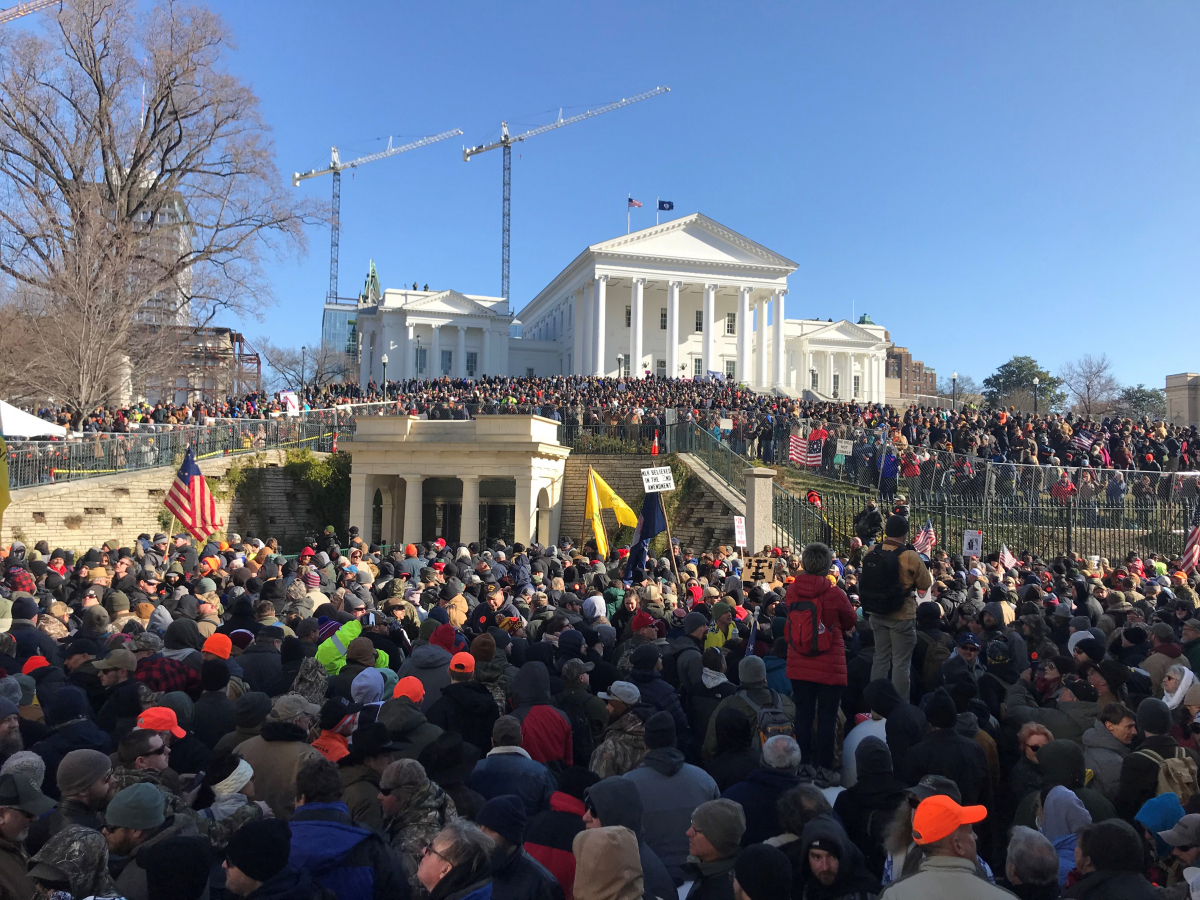
RICHMOND, Va. – Thousands of gun rights supporters across the state and country gathered Monday in Richmond for a rally in opposition to gun-control laws being advanced by the General Assembly’s new Democratic majority.

Gov. Ralph Northam, a Democrat, ordered a state of emergency and banned guns from Capitol Square days before the rally after threats of potential violence. Those willing to shed their weapons gathered to hear a series of pro-gun speakers inside a designated area.

The crowd at the gun rights rally in Richmond, Virginia, on Jan. 20, 2020. MUST CREDIT: Photo for The Washington Post by Julia Rendleman

The crowd at the gun rights rally in Richmond, Virginia, on Jan. 20, 2020. MUST CREDIT: Photo for The Washington Post by Julia Rendleman

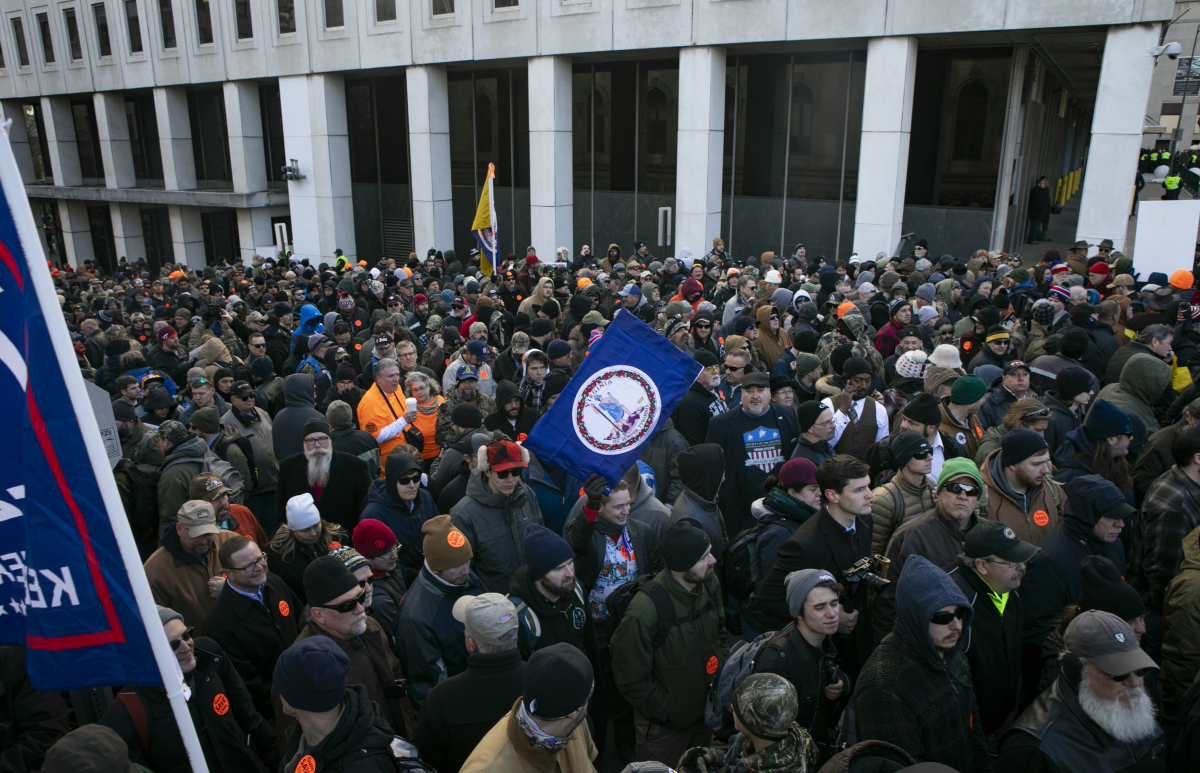
Others carrying weapons crowded in the streets outside the Capitol complex. In some areas, the sea of gun-toting, camouflage-wearing humanity was so thick people could not move.

Flags bristled from the throng – American flags, “Don’t Tread on Me” flags, militia flags. Squadrons of militias formed lines and executed marches, then sat along the curb and warmed their hands and rested their weapons.

Thousands line the streets before the official kickoff of the gun-rights rally in Richmond, Va., on Jan. 20, 2020. MUST CREDIT: Photo for The Washington Post by Julia Rendleman

Thousands line the streets before the official kickoff of the gun-rights rally in Richmond, Va., on Jan. 20, 2020. MUST CREDIT: Photo for The Washington Post by Julia Rendleman

As the crowds grew on Richmond’s streets and the lines coming through the screening for Capitol Square slowed, police said they were pleased the morning had remained relatively uneventful.

Virginia State Police 1st Sgt. James White noted a small number of incidents at the metal detectors. For much of the morning, rallygoers entering through 17 separate gates – many of them clad in metal buckles, boot grommets and heavy zippers – had quietly shed the problematic clothes as officers passed handheld detectors over their bodies.

Anna-Marie Lewis puts a "Guns Save Lives" sticker on her husband's rifle during the gun advocates rally in Richmond, Virginia, on Jan. 20, 2020. MUST CREDIT: Photo for The Washington Post by Julia Rendleman

Anna-Marie Lewis puts a “Guns Save Lives” sticker on her husband’s rifle during the gun advocates rally in Richmond, Virginia, on Jan. 20, 2020. MUST CREDIT: Photo for The Washington Post by Julia Rendleman

“Ninety-nine point nine percent of the people are peaceful,” White said.

Still, White kept a worried eye on the area just outside the fenced-in screening posts, where other protesters – many clad in camouflage and balaclavas – toted weapons, chanted, paraded and cheered for their cause.

The rally featured roughly a dozen slated speakers, including politicians, conservative pundits and well-known gun rights activists.

Dick Heller, whose landmark lawsuit a decade ago toppled the District of Columbia’s gun ban, kicked things off by referencing the gun sanctuary movement in Virginia, which seeks to declare cities and counties “Second Amendment sanctuaries” that will not enforce any gun-control measures passed by the Democratic-controlled General Assembly.

“The right of the people to keep and bear arms shall not be infringed!” Heller shouted, as the crowd chanted the text of the Second Amendment right along with him.

Soon afterward, state Del. John McGuire, R-Goochland, stepped up to address the protesters. He wasted no time in invoking President Donald Trump, who has been an outspoken supporter of the gun rights rally.

Over the weekend, Trump tweeted a warning that Democrats in Virginia – whose General Assembly recently flipped to blue for the first time in a generation – wanted to “take your guns away.”

“Let me hear it if you are sick and tired of Republicans who do not support Donald Trump,” McGuire said, prompting a long and raucous cheer.

In the crowd, Chris Anders of Loudoun County, Virginia, gathered signatures for a petition demanding the recall of the governor. “People are tired of someone trying to roll over them,” Anders said of Northam.

Northam has said he will limit handgun purchases to one per month, forbid military-style weapons and silencers and pass a “red flag” law that would permit authorities to temporarily take away weapons from anyone deemed a threat.

His promises carry significant weight after Democrats won majorities in both the House of Delegates and the state Senate for the first time in a generation. In response, more than 110 counties, cities and towns across Virginia have passed some type of resolution in support of gun rights.

To many gun rights advocates, the Monday’s rally is a key, high-profile opportunity to publicly voice defiance.

Erich Pratt, senior vice president of Gun Owners of America, charged Northam with acting against the Constitution when he barred guns from the rally. Northam’s ban was swiftly challenged in court, but ultimately upheld by the Virginia Supreme Court.

“Democrats in the state are demonstrating . . . unadulterated power without authority,” Pratt said. “No one listening to my voice should never, ever vote for the party of gun control!”

Able Cunningham, 23, made the 14-hour drive from north-central Arkansas. “I’m not a gun nut,” said Cunningham, who manufactures equipment for Bad Boy Mowers.

The prospect of stricter gun laws coming to Virginia under the General Assembly’s new Democratic majority seemed especially galling to him because of the state’s history, he said, of standing up to oppression in the Revolutionary and Civil wars.

“I’m not taking sides with the Confederates or anything. I’m not that twisted,” Cunningham added.

Some in the crowd said that their guns were not just for show, but also in case they needed to defend themselves. One rallygoer turned to a friend and suggested sticking to “the outskirts . . . in case something goes wrong.”

The gun in Brandon Lewis’ hands was enormous: a .50-caliber Barrett M82A1 rifle, more commonly seen on battlefields than in downtown Richmond. Lewis – who drove down from Bergen, New York, where he owns a shooting range – showed up dressed in a helmet and bulletproof vest, one of scores of protesters who opted to attend the rally heavily armed.

“This sends a strong visual message,” Lewis said, patting his rifle. “The government is not above us. They are us.”

Passersby stopped at the sight of Lewis’s weapon, asked for selfies and told him it was a “helluva gun.”

Elsewhere in the crowd, Justin Burns, 19, and his friend Spencer George, 30, flaunted their own arsenals: Both had strapped assault-style rifles across their chests, with bullets visible in the clips. Spanning the men’s bulletproof vests were more ammo clips.

The duo, both welders, had driven 10 hours to attend the rally. They brought the rifles, Burns said, in case anything goes wrong.

“All it takes is one person to make a bad decision and fire off a round for things to go sideways,” Burns said.

Clutching his AR-15-style rifle, George said it felt “awesome” to see so many gun-toting gun rights activists gathered in one place. The sea of weaponry, he said, made him feel less alone.

After the speeches wrapped up, rallygoers began marching along the streets of downtown Richmond – including Joe Evans, who hoisted a sign bearing black and red Chinese characters. Evans’ poster stood out amid a flood of Trump paraphernalia and “Don’t Tread On Me” signs.

One place in Richmond remained quiet and calm during the rally: inside the Capitol building, where senators and delegates came to caucus and then start floor sessions at noon.

Prince Harry makes first public comments on decision to step back from royal duties #ศาสตร์เกษตรดินปุ๋ย

#ศาสตร์เกษตรดินปุ๋ย : ขอบคุณแหล่งข้อมูล : หนังสือพิมพ์ The Nation

https://www.nationthailand.com/news/30380843?utm_source=category&utm_medium=internal_referral

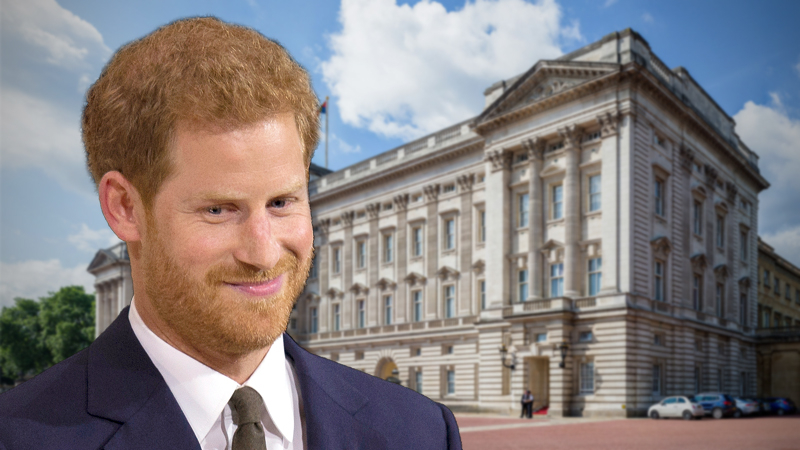
Prince Harry makes first public comments on decision to step back from royal duties

Jan 20. 2020
By The Washington Post · William Booth

LONDON – In a quiet, heartfelt speech Sunday night, before a small audience at a charity he founded, Britain’s Prince Harry said he and his wife, Meghan, were “taking a leap of faith” in stepping away from their duties as senior royals, but added, “There really was no other option.”

The 35-year-old Duke of Sussex said that he was “born into this life” and that “once Meghan and I were married, we were excited, we were hopeful and we were here to serve.”

But he said that was not possible – and acknowledged that his decision was made with “great sadness.”

Harry did not say exactly why the couple decided to step back from royal duties and split their time between Canada and Britain.

But he gave a hint, saying that they hope that in the future they will be able to live “a more peaceful life.”

He also called the news media “a powerful force” that needs to be countered.

Harry made the remarks during a short speech to supporters of Sentebale, a charity that he – along with Prince Seeiso of Lesotho in southern Africa – created in 2006 to honor his late mother, Princess Diana, and to support those affected by HIV and AIDS.

The speech, given at a private event, was posted by Harry and Meghan’s SussexRoyal Instagram account.

The prince told the audience members that he imagined that they had heard about the couple over the past few weeks.

He began, “So, I want you to hear the truth from me, as much as I can share – not as a prince, or a duke, but as Harry, the same person that many of you have watched grow up over the last 35 years – but with a clearer perspective.”

He added, “The U.K. is my home and a place that I love. That will never change.”

He thanked his friends for welcoming Meghan “with open arms as you saw me find the love and happiness that I had hoped for all my life.”

He said his wife “upholds the same values as I do.”

Harry said, “Once Meghan and I were married, we were excited, we were hopeful and we were here to serve. For those reasons, it brings me great sadness that it has come to this.

“The decision that I have made for my wife and I to step back is not one I made lightly. It was so many months of talks after so many years of challenges. And I know I haven’t always got it right, but as far as this goes, there really was no other option.”

He added that “we’re not walking away.”

“Our hope was to continue serving the Queen, the Commonwealth and my military associations, but without public funding,” he said. “Unfortunately, that wasn’t possible.”

Last week, Queen Elizabeth II announced that she and her royal family were “entirely supportive of Harry and Meghan’s desire to create a new life” and that she had agreed to a “period of transition” during which her grandson and his wife would split their time between Canada and Britain.

Meghan, 38, a former actress who was raised in Los Angeles, did not attend the speech Sunday. She is in the Vancouver area with the couple’s 8-month-old son, Archie.

On Saturday, the palace said the couple will no longer be known as “royal highnesses,” forgoing use of their top titles.

Harry and Meghan also signaled that they will seek to repay millions of dollars spent on renovating their mansion and will no longer take public money for performing royal duties.

“I’ve accepted this, knowing that it doesn’t change who I am or how committed I am,” Harry said Sunday night. “But I hope that helps you understand what it had come to, that I would step my family back from all I have ever known, to take a step forward into what I hope can be a more peaceful life.”

Speaking of Princess Diana’s death in a car crash in a Paris tunnel in 1997, Harry said, “When I lost my mum 23 years ago, you took me under your wing. You’ve looked out for me for so long, but the media is a powerful force, and my hope is one day our collective support for each other can be more powerful because this is so much bigger than just us.”

The prince pledged to continue to support “the causes, charities and military communities that are so important to me.”

He closed by saying, “We are taking a leap of faith. Thank you for giving me the courage to take this next step.”

Two Honolulu police officers fatally shot, officials say #ศาสตร์เกษตรดินปุ๋ย

#ศาสตร์เกษตรดินปุ๋ย : ขอบคุณแหล่งข้อมูล : หนังสือพิมพ์ The Nation

https://www.nationthailand.com/news/30380813?utm_source=category&utm_medium=internal_referral

Two Honolulu police officers fatally shot, officials say

Jan 20. 2020
By HAWAII-SHOOTING/The Washington Post · Marisa Iati 

Two Honolulu police officers were fatally shot on Sunday morning near the base of Diamond Head State Monument, and the home where the shooting occurred as well as several others nearby went up in flames, officials said.

A man allegedly stabbed his landlord about 9:30 a.m., shot the responding officers and then set fire to the home on Hibiscus Drive, Hawaii News Now and the Honolulu Star-Advertiser reported.

Homeowner Lois Cain was trying to evict the man, Jaroslav Hanel, according to the Associated Press. A neighbor, Dolores Sandvold, told the Associated Press that she saw Cain being loaded into an ambulance. Her condition was unknown on Sunday.

The blaze spread to at least four other homes and at least one police car, according to Hawaii News Now and the Star-Advertiser. Police are not searching for Hanel, who is believed to have died in the fire, the newspapers reported.

Jonathan Burge, a lawyer who has represented Hanel in several disputes with neighbors, told the AP that he did not consider Hanel violent but that “he’s kind of a quirky guy and had problems.” Hanel thought that the government was listening in on his phone, Burge said. Burge told the AP that Hanel did handyman work at Cain’s house in exchange for living there rent-free but that they had a disagreement when Hanel’s dog died and Cain would not let him get another one.

City Council member Kymberly Marcos Pine, D, said she was praying for the families of the officers who were killed and “all who were injured during the Diamond Head incident today.”

“It is terribly upsetting to see the recent increase in crime and we grieve with HPD and other first-responders who put their lives on the line to keep us safe,” Pine said in a statement.

Diamond Head, a volcanic crater, is a popular major tourist destination for visitors to the iconic neighborhood of Waikiki. The Honolulu Zoo and Waikiki Beach are also near the location of the shooting.

A woman in the neighborhood posted Facebook Live videos showing smoke rising from a home and a SWAT team member crouching behind a wall next to her.

Popping noises were heard in the background.

“I was walking my dogs, and now we’re down under siege,” she said. “This has never happened before here.”

The Bureau of Alcohol, Tobacco, Firearms and Explosives said some of its agents responded to the shooting scene.

Honolulu Mayor Kirk Caldwell, D, shared his condolences with the families of the officers who were shot and the police department.

“This is an unprecedented tragedy for not only the City and County of Honolulu but the entire state of Hawai’i,” he said in a statement.

Gov. David Ige, D, said that all of Hawaii mourns the officers.

“As we express our condolences to their families, friends and colleagues, let us also come together to help and support those who have been forever changed by this tragedy,” he said in a statement.

The deceased officers’ identities have not been released.

Trump’s China deal was pitched as boon for working class, but he celebrated with Wall Street titans #ศาสตร์เกษตรดินปุ๋ย

#ศาสตร์เกษตรดินปุ๋ย : ขอบคุณแหล่งข้อมูล : หนังสือพิมพ์ The Nation

https://www.nationthailand.com/news/30380812?utm_source=category&utm_medium=internal_referral

Trump’s China deal was pitched as boon for working class, but he celebrated with Wall Street titans

Jan 20. 2020
Vice President Mike Pence, left, Treasury Secretary Steven Mnuchin and President Trump confer before signing a trade agreement with China on Jan. 15. MUST CREDIT: Washington Post photo by Jabin Botsford

Vice President Mike Pence, left, Treasury Secretary Steven Mnuchin and President Trump confer before signing a trade agreement with China on Jan. 15. MUST CREDIT: Washington Post photo by Jabin Botsford
By The Washington Post · David J. Lynch

WASHINGTON – Standing against a backdrop of Chinese and American flags, President Donald Trump welcomed by name a roster of corporate executives and Wall Street bankers to the signing of his landmark trade deal with Beijing.

Looking out over the friendly East Room crowd, the president spied a woman in a red power suit.

“Mary Erdoes, JPMorgan Chase,” Trump said. “They just announced earnings, and they were incredible. . . . Will you say, ‘Thank you, Mr. President’ at least? Huh? I made a lot of bankers look very good.”

The exchange may have been just good-natured ribbing. But it illustrated how a president who once railed against financial industry greed and vowed to remake the Republican Party as a “workers’ party” has prioritized corporate America’s desires.

Trump’s high-profile China deal celebration included billionaire Stephen Schwarzman, a private equity investor; Sheldon Adelson, whose company owns casinos in the Chinese territory of Macao; and Hank Greenberg, the former head of American International Group.

Numerous representatives of companies such as Honeywell and Boeing that have outsourced jobs to China in recent years joined them, but no representatives of organized labor attended.

“There is precious little in this deal that addresses China’s long-standing denial of basic labor rights,” said Richard Trumka, the president of the AFL-CIO. “It is another big giveaway to Wall Street and Big Pharma and prioritizes new protections for companies that move to China, creating even more incentives for outsourcing.”

U.S. officials deny the deal will encourage the migration of additional American jobs to China, a phenomenon Trump has credited with motivating him to run for office. They say hard-won protections for U.S. trade secrets will make it harder for Chinese companies to steal job-creating innovations and lead to greater gains for workers at home.

Labor’s place on the sidelines of the China negotiations stood in sharp contrast to the influential role it played throughout the development of a new North American trade deal.

Robert Lighthizer, the president’s chief negotiator, consulted with labor representatives from the start of talks aimed at the U.S.-Mexico-Canada Agreement. A native of an industrial port town in East Ohio, Lighthizer drew praise from Democrats and union officials for designing that agreement to steer more manufacturing work to the United States.

Unlike his Republican predecessors, the veteran trade lawyer did not cozy up to industry groups during the North America talks, instead labeling them “special interests.” Lighthizer set as a goal the development of a new bipartisan trade coalition that would unite Democratic unions with Trump’s Republican populists.

Lighthizer wrote into USMCA requirements for Mexico to improve its treatment of workers, including by guaranteeing the right to collective bargaining. Over time, that could help narrow the yawning gap between Mexican and U.S. wages, which encouraged decades of outsourcing.

The accord, a replacement for the 1994 NAFTA deal that unions have blamed for the loss of millions of factory jobs, devotes an entire chapter to labor issues.

The word “labor” does not appear a single time in the 86-page China agreement.

Labor’s influence in USMCA and its impotence in the China talks reflect cold political calculation. In USMCA’s case, which changed U.S. law and thus required congressional approval, the administration needed labor support to get Democratic votes in the House. The China deal did not require a vote in Congress.

“That’s why labor was in the room; they had leverage,” said Robert Scott, an economist with the Economic Policy Institute. “Labor had no leverage on this [China] deal. None.”

It also would have been far more difficult to impose political terms upon China, the world’s second-largest economy and a military power of growing stature. Securing new rights for Chinese workers would have political ramifications that China’s authoritarian president, Xi Jinping, would be certain to refuse.

The “phase one” China deal does include a Chinese commitment to refrain from manipulating the value of its currency to gain a trade advantage. Union officials have long blamed an undervalued yuan for making Chinese products less expensive than U.S. alternatives, though in recent years the Chinese government has sought to keep its currency from falling.

The deal also requires China to buy $200 billion in extra U.S. goods above 2017 levels, which should benefit manufacturers, energy companies, services providers and farmers.

Trump already has begun touting the China deal on the campaign trail. One week before the East Room ceremony, he labeled it a “big beautiful monster” at a raucous reelection rally in Toledo, Ohio, advising farmers: “Go buy larger tractors.”

Workers have benefited from the economy’s continued expansion under the president. Unemployment is near a half-century low at 3.5%, jobs are plentiful, and wages are rising, particularly for lower-income workers.

Yet labor’s share of the economic pie remains depressed. Workers’ salaries and benefits account for 77.9% of corporate income, according to the latest figures from the Bureau of Economic Analysis. That has improved by 1.5 percentage points under Trump, continuing a gradual rebound that began in 2014.

But workers have regained over the past five years less than half of what they lost since early 2000. Trump’s potential Democratic rivals in the November election, meanwhile, are engaged in a fierce debate about income inequality and the outsized influence of the nation’s wealthiest individuals.

If the China deal left labor almost empty-handed, Wall Street cashed in.

Helping steer the talks along with Lighthizer was Treasury Secretary Steven Mnuchin, a former Goldman Sachs partner, who remains close to the financial industry. And among Trump’s trusted outside confidants on China is Schwarzman, chief executive of the Blackstone Group, a private equity firm.

One of the agreement’s seven chapters details the ways in which China must open its financial services market to U.S. institutions.

The deal contains detailed provisions governing treatment of banks, credit-rating agencies, electronic payment providers such as Visa and Mastercard, insurers, and securities firms. (The Visa and Mastercard chief executives attended the White House signing ceremony and were publicly thanked by Trump).

While China has often discussed plans to loosen restrictions on foreign financial institutions, it has never before committed to specific short-term deadlines.

“So the banks are going to be doing great,” Trump said shortly before signing the agreement.

By April 1 – little more than 10 weeks from now – Chinese officials must allow foreign companies to take majority stakes in fund management companies, insurers, futures traders and other securities firms. That fulfills a long-sought goal for Wall Street.

“It allows us to do in China what we do everywhere else in the world,” Jamie Dimon, JPMorgan’s CEO, told reporters last week. “China will grow, and we’ll grow with them.”

Christopher Nixon Cox, former President Richard Nixon’s grandson, is among those eyeing potential opportunities.

“China has been talking about opening up financial services for years. It’s now happening,” said Cox, global strategist for Brightsphere Investment Group of Boston.

Prying open the Chinese market is just the latest good news for Wall Street under the Trump administration. Like other industries, big banks have profited from the president’s corporate tax cut and deregulation.

Last year, the Federal Reserve eased the annual stress tests that the big banks are required to take to show they can survive a financial crisis. Regulators also made less onerous the “living wills” banks must develop to show how they would be wound down if necessary.

“This administration has delivered historic levels of deregulation to the financial industry, and there’s more on the way,” said Dennis Kelleher, president of Better Markets, a nonpartisan watchdog group.

The Federal Reserve and four other financial regulators in October proposed loosening the rules governing financial swaps between affiliates of the same financial parent. The revision was proposed by officials appointed by Trump and opposed by at least one holdover from the Obama administration, Fed Governor Lael Brainard.

If approved, the shift would free up $40 billion in capital held in reserve that the banks could instead put to work in profitable activities, according to Kelleher.

Last week’s East Room signing ceremony came one day after JPMorgan, the nation’s largest bank, had reported annual profits of more than $36 billion, 50 percent higher than in 2016.

On Wednesday, Trump joked with Erdoes, the head of JPMorgan’s asset and wealth management division whom American Banker once called “the most powerful woman in finance.” The president said he looked forward to seeing Dimon the next day.

Since Trump took office, the bank’s share price has easily outperformed the broader stock market.

Putting the financial industry at the center of his remaking of China trade policy was not what candidate Trump promised.

At a June 2016 campaign stop in Monessen, Pennsylvania, Trump said globalization had made “the financial elite” wealthy while ruining the lives of American workers. Standing in front of a towering mound of recycled aluminum, Trump vowed to defend the country’s “amazing workers” and bring back lost factory jobs.

His attack that day on “global finance” was consistent with his promise to raise taxes on hedge fund managers, whom he accused of “getting away with murder.”

Nearly four years later in the East Room, Trump still paid homage to American workers and the hard-hit middle-class. But many of the negotiating achievements he boasted of – such as new intellectual property protections – were of greater benefit to the corporate executives seated in front of him.

“Unlike those who came before me, I kept my promise,” the president declared. “I actually think I more than kept my promise.”

Agriculture Ministry seeks Cabinet nod for Bt8.9-billion grass roots development plan #ศาสตร์เกษตรดินปุ๋ย

#ศาสตร์เกษตรดินปุ๋ย : ขอบคุณแหล่งข้อมูล : หนังสือพิมพ์ The Nation

https://www.nationthailand.com/news/30380867?utm_source=category&utm_medium=internal_referral

Agriculture Ministry seeks Cabinet nod for Bt8.9-billion grass roots development plan

Jan 21. 2020
By THE NATION

The Agriculture and Cooperatives Ministry has prepared a grass roots economic development and promotion campaign, which will be presented to the Cabinet on Tuesday for approval under the fiscal year 2021 budget.

Agriculture and Cooperatives Minister Chalermchai Sri-on said on Monday (January 20) that “the campaign expects to use a budget of Bt8.9 billion to drive 114 projects in accordance with the government’s strategy to promote the grass roots economy”, he said.

“The Ministry of Agriculture will be the central agency while the projects will be co-supervised by ministries of Commerce, Natural Resources and Environment, Interior, Public Health, Education, Industry, the Office of Prime Minister, National Farmers Council and Thailand Institute of Scientific and Technological Research.”

The budget request for fiscal year 2021 is Bt5.9 billion higher than in the previous fiscal year, added Chalermchai.

The minister said the grass roots economic development and promotion campaign aims to increase farmers’ income by at least six per cent per year and reduce income disparity among Thai people. “The target groups of this campaign include farmers, community enterprises and local manufacturers in 7,255 subdistricts nationwide,” he added.

“The campaign will focus on providing lands to farmers and low-income earners so that they can support their families and stop trespassing on forest areas,” said Chalermchai. “This can be achieved through a variety of methods such as land reforms for agricultural use, community title deeds, land banks and land cooperatives.”

Furthermore, the campaign will promote the establishment of suitable cooperatives and/or farmer associations to promote the manufacture of products from local materials. “This will be done along with the use of efficient sales and marketing systems to push the products to wider audiences, especially via online channels,” Chalermchai added. “This campaign will be another mechanism to help improve the quality of life of farmers and low-income earners as well as promote cooperation between government agencies instead of working separately as in the past.”

Land encroachment case filed against deputy minister Kanokwan #ศาสตร์เกษตรดินปุ๋ย

#ศาสตร์เกษตรดินปุ๋ย : ขอบคุณแหล่งข้อมูล : หนังสือพิมพ์ The Nation

https://www.nationthailand.com/news/30380864?utm_source=category&utm_medium=internal_referral

Land encroachment case filed against deputy minister Kanokwan

Jan 21. 2020
By THE NATION

A case has been filed on Tuesday (January 21) against Deputy Minister of Education Kanokwan Wilawan for allegedly encroaching on forest land.

Colonel Phongphet Ketsupta, commander of division 4 reconciliation and reformation centre of the Internal Security Operations Command (Isoc), filed the case at Muang Prachin Buri Police Station. He said investigations showed the deputy minister was allegedly in violation of Section 19 of the National Parks, Wildlife and Plant Conservation Act BE 2562.

“Isoc, the Ministry of National Parks and Department of Lands Department on Monday [January 20] investigated the land in question in Nernhom subdistrict, in the Muang district of Prachinburi province,” said Phongphet. “We found that the land, measuring 15 rai 2 ngarn 44 square wah, encroaches on the Khao Yai National Park’s land of 12 rai 1 ngarn 92 square wah.”

“We have also found tracks of excavators paving the path up the mountain, which seems like an effort to create a trekking route for tourists leading to scenic points on the mountains, indicating the land was being prepared for business purposes. Part of the paved route also encroaches on a public canal,” Phongphet added.

On January 17, the officers of Isoc’s division 4 had investigated a land adjacent to Kanokwan’s land, which has an area of 70 rai, and found that it encroaches on 11 rai 3 ngarn and 93 square wah of forest land. The land belongs to Kanokwan’s father, Soonthorn. This makes the total area of alleged encroachment of Khao Yai National Park land by the Wilawan family at around 24 rai.

“There are many other pieces of personal land that are encroaching on Khao Yai National Park land, and I will investigate them all from Prachin Buri to Nakhon Ratchasima provinces,” added Phongphet.