Waymo’s long-term commitment to safety drivers in autonomous cars #ศาสตร์เกษตรดินปุ๋ย

#ศาสตร์เกษตรดินปุ๋ย : ขอบคุณแหล่งข้อมูล : หนังสือพิมพ์ The Nation

https://www.nationthailand.com/auto/30380769?utm_source=category&utm_medium=internal_referral

Waymo’s long-term commitment to safety drivers in autonomous cars

Jan 19. 2020
A Waymo Chrysler Pacifica autonomous vehicle in Chandler, Ariz., on July 30, 2018. MUSTS CREDIT: Bloomberg photo by Caitlin O'Hara.

A Waymo Chrysler Pacifica autonomous vehicle in Chandler, Ariz., on July 30, 2018. MUSTS CREDIT: Bloomberg photo by Caitlin O’Hara.
By Syndication Washington Post, Bloomberg · Ira Boudway, Joshua Brustein 

Alphabet Inc.’s Waymo took a big step forward last fall when it began ferrying riders around the Phoenix area in robotaxis without human safety drivers. Humans have been behind the wheel for almost all of the 20 million miles of testing the company says it’s completed on public roads.

The driverless rides in Arizona don’t mean the end for Waymo’s human operators. Last summer, the company quietly finalized a multiyear contract with Transdev North America, which provides bus drivers, streetcar conductors and other transportation workers to airports and cities. The partnership is an acknowledgement that Waymo will be relying on test drivers for many years to come.

“For the foreseeable future, as we expand and are driving in some of these new areas, it’s critical that we have vehicle operators,” said Rocky Garff, Waymo’s head of operations. “They’re part of the equation that gets us to fully self-driving.”

Rather than supply Waymo with contractors for its driving operations, the deal provides test-driving as a service-a subtle but key distinction. Transdev replaces a handful of staffing companies that have subcontracted drivers to Waymo. Under those previous arrangements, drivers could work for only two years at a time with six-month breaks between stints-a rule meant to shield Waymo from claims that it was their employer.

The partnership puts more legal space between the drivers and Waymo, allowing them to stay on indefinitely, as employees of Transdev. The value of the deal in its first year is in the tens of millions of dollars, and could eventually reach nine figures, according to someone with direct knowledge who asked not to be named discussing private business details.

For the new contract, Waymo required bidders to guarantee they’d hire drivers as full-time employees and to articulate a strategy for career development, according to a person familiar with the process. “We’re working on having a much clearer career path for these operators,” Garff said.

Before Transdev, the goal for many safety drivers was to get hired as a Waymo employee, also known as a “white badge,” before the clock ran out. “Everyone’s dream is to become a full-time employee through Waymo,” said Morgan, a 26-year-old driver who was provided by the company for an interview and who asked to be identified by only his first name. Morgan started driving for Waymo in the summer of 2018 through Adecco USA, a staffing company that supplies about 70,000 temporary workers to hospitals, warehouses, factories and call centers. Until the Transdev deal, Adecco served as Waymo’s chief source of drivers.

Morgan said he’s glad for the change to Transdev. As he approached his one-year anniversary, he’d begun looking for other work. “I was definitely excited because I was kind of getting to that not-quite-panic point,” he said. He also said that Adecco oversold the possibility of getting hired by Waymo. “I remember in my interview, they were like, ‘Three people just got hired on full time,’ but they didn’t mention the size of the fleet, the positions they got hired for and what kind of experience they had.” Adecco, in an emailed statement, said this does not square with its policies and procedures. “We are very clear that our roles at Waymo are temporary, not temp-to-hire positions,” the statement said.

Two former drivers who worked under Adecco told Bloomberg they’d also held out hope of direct employment at Waymo. (The drivers spoke under condition of anonymity for fear of hurting future job prospects.) But staff positions were scarce and the competition fierce. The promotion process, according to the former drivers, was opaque. Adecco managers were formally in charge of performance reviews but were rarely around. “I don’t think I even went to an Adecco office ever, except to turn in my badge and equipment,” said one of the drivers. “It was all Waymo all the time.”

“Feedback from our associate base has been largely positive, and our employee care teams are entirely dedicated to addressing their questions, input or concerns,” Adecco said in its statement.

Transdev’s record as an employer isn’t without its own controversies. It’s faced multiple strikes in recent years from unions representing workers in public transportation services it operates in the U.S., including a weeklong strike in Phoenix in 2015, where talks stalled over salary, the company’s approach to benefits and its bathroom break policy. Transdev also faces several open National Labor Relations Board complaints about working conditions.

In a statement provided by Waymo, Transdev North America Chief Executive Officer Yann Leriche said the partnership would create a “high functioning operating environment focused on safety, quality, employee engagement and a positive customer experience.” A Transdev spokesperson declined to answer additional questions.

Veena Dubal, a law professor at the University of California at Hastings who specializes in gig work and the tech industry, said technology companies want to directly employ as few people as possible in part to avoid liability, a consideration that’s particularly germane in a field such as autonomous vehicles, where there’s inherent physical risk. If a self-driving car with a test pilot is involved in an accident, Dubal said, Waymo could argue it hired Transdev specifically for its expertise in test-driving. “They could just employ everyone, protect them and say, ‘This is the cost of doing business in the autonomous-driving world,’ ” she said. Waymo declined to comment on whether liability concerns were a factor in retaining Transdev.

Despite their complaints about Adecco, the drivers who were interviewed said Waymo test-pilot gigs aren’t bad. “Not only do I get to drive around in a cool car all day,” said Morgan, “I’m doing something that I think is going to change the future. And it’s going to hopefully make roads safer for not only myself, but hopefully for my kids and for everybody else’s kids.”

Under Adecco, pay started at about $20 per hour. Most time was spent as a passenger, being driven around the sunny Phoenix suburbs. “I was telling my friends it was the greatest scam I had ever uncovered,” said one former driver. “It was an awful lot of money for an awful little bit of work.”

The greatest difficulty of the job, according to multiple former drivers, is staying alert through the dull, repetitive hours of cruising. One took breaks to do jumping jacks, rolled down the windows and turned up the radio to combat drowsiness. “You really go into podcasts,” said another. Still, the driver said, not everyone stayed alert all the time. “We even had people eat full meals behind the wheel, which is not safe.”

Drivers are keenly aware of the contradiction at the heart of their jobs. “The whole goal is to work to eliminate your own position, which is a really weird thing to come in every day thinking,” said one former driver.

Withholding the white badge is one of many ways Waymo reminds its drivers that it’s looking forward to the day when they’re no longer around. Both drivers and riders are instructed to keep interactions minimal. “It was a very awkward experience,” said a former driver. “They’re instructed not to talk to you. They’re supposed to treat it like it’s a completely unmanned vehicle.”

“You could say hi,” said another. “And then you would be quiet to try to simulate an actual self-driving car.”

Retail turmoil hits Times Square with tenants looking for exit #ศาสตร์เกษตรดินปุ๋ย

#ศาสตร์เกษตรดินปุ๋ย : ขอบคุณแหล่งข้อมูล : หนังสือพิมพ์ The Nation

https://www.nationthailand.com/business/30380772?utm_source=category&utm_medium=internal_referral

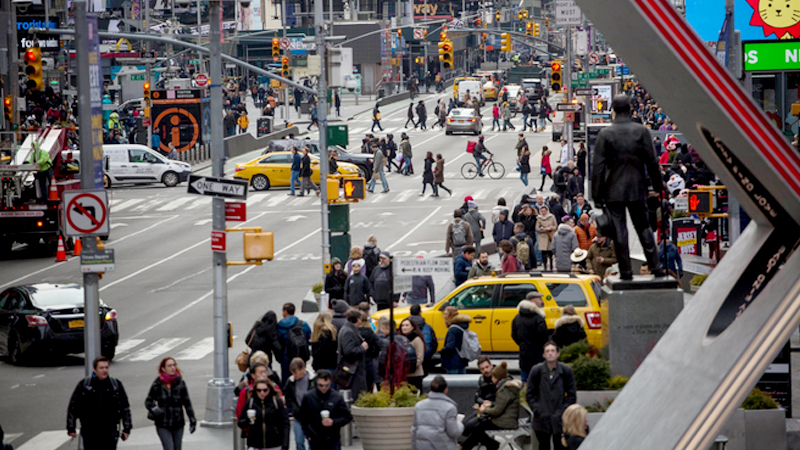
Retail turmoil hits Times Square with tenants looking for exit

Jan 19. 2020
Pedestrians walk though Times Square in New York on Feb. 22, 2019. MUST CREDIT: Bloomberg photo by Michael Nagle,

Pedestrians walk though Times Square in New York on Feb. 22, 2019. MUST CREDIT: Bloomberg photo by Michael Nagle,
By Syndication Washington Post,  Bloomberg · Natalie Wong, Jordyn Holman · BUSINESS, RETAIL

Struggling retailers are souring on Times Square. Gap and Cover Girl are among merchants looking to leave stores in the district, where companies have historically been willing to swap high rent payments for daily exposure to hundreds of thousands of tourists and commuters.

But as shopping moves online and bricks-and-mortar spaces shrink, real estate brokers are on the hunt for new tenants to occupy a pair of adjacent flagship stores at 1530 and 1532 Broadway – one for Gap and one for its discount brand Old Navy.

There’s also space available at 30 Times Square, where beauty giant Coty Inc. opened its first-ever Cover Girl store a little more than a year ago, according to people with knowledge of the matter. Those come on top of a four-story flagship at 1551 Broadway that American Eagle Outfitters Inc. may depart.

“Some retail is just antiquated,” said Brett Herschenfeld, who oversees the retail unit of SL Green Realty Corp. It “hasn’t evolved with the times and they either fix it to the meet the consumer segment or they’re closing stores.”

While Times Square hasn’t been hit as hard as other neighborhoods by mushrooming vacancies, asking rents have slipped and some of the district’s largest merchants, including Toys “R” Us, have shuttered stores in recent years. Others are evaluating whether their outsized spaces are the best way to generate sales while giving shoppers the experiences they flock to the area for.

“The most successful approach to Times Square will be to think outside of the large box,” said Phil Granof, chief marketing officer of NewStore, operator of a mobile e-commerce platform that works with physical stores. “Breaking it down into smaller pieces, there might be more value there.”

San Francisco-based Gap Inc. has roughly 80,000 square feet at the two locations in Times Square, with leases that run through 2032, according to marketing materials seen by Bloomberg. Coty has about 10,000 square feet across five floors that is being marketed for sublease through 2021.

A representative for Coty declined to comment.

The buildings all come with massive digital billboards. But in an era when advertising has shifted to social media, companies are questioning the cost of pushing their wares in Times Square.

“The value that brands will pay for the exposure in Times Square on a permanent basis is under some pressure,” said Michael Hirschfeld, a retail broker at Jones Lang LaSalle Inc. “A lot of mass-market types of consumer brands are now reaching you directly on your phones or Instagram.”

Gap Inc., on the hunt for a permanent chief executive officer after Art Peck was fired in November, is closing stores as it struggles to revitalize a label that has fallen out of step with shoppers. Old Navy has been a bright spot for the company, but that brand has also faced challenges in recent quarters, including increased competition from other discount chains.

While Times Square may be losing its luster for some companies, there’s still plenty of interest in the area from current and prospective tenants – and that shows how powerful it remains for retailers, according to Steven Soutendijk, a broker at Cushman & Wakefield.

“It’s not just about marketing and branding anymore,” he said. “It’s about the footfall and the shoppers that are there.”

Gains from SCB Life sale pump up SCB profits #ศาสตร์เกษตรดินปุ๋ย

#ศาสตร์เกษตรดินปุ๋ย : ขอบคุณแหล่งข้อมูล : หนังสือพิมพ์ The Nation

https://www.nationthailand.com/business/30380757?utm_source=category&utm_medium=internal_referral

Gains from SCB Life sale pump up SCB profits

Jan 18. 2020
Arthid Nanthawithaya

Arthid Nanthawithaya
By THE NATION

Siam Commercial Bank and its subsidiaries reported pre-provision operating profit (PPOP) of Bt95.6 billion last year, up 30 per cent year on year (YoY).

This strong PPOP growth over 2018 was primarily driven by the recognition of extraordinary gains from the sale of SCB Life. Nevertheless, the bank also set aside higher provisions in 2019, resulting in the annual net profit (based on unaudited consolidated financial statements) of Bt40.4 billion. The bank also announced a special dividend of Bt0.75 per share to be paid out in mid-February.

Net interest income grew at 3 per cent (YoY) to Bt99.4 billion. Despite falling interest rates in 2019 and a slight decline in the overall portfolio size, the bank was able to sustain this growth momentum by rebalancing its loan portfolio towards higher margin products.

Non-interest income surged 59 per cent (YoY) to Bt66.7 billion mainly due to large investment gains from sale of SCB Life recorded in late September. Excluding this one-off item, non-interest income would have returned to its growth trajectory of 2 per cent (YoY) with improved recurring income and a new income stream from the bancassurance partnership that commenced in the fourth quarter.

Operating expenses grew at 9 per cent (YoY) to Bt70.5 billion mainly because of one-time personnel expenses to comply with the new labour law and transformation-related expenses. With the strong top-line growth of 20 per cent (YoY), cost-to-income ratio declined to 42.5 per cent.

The Non-performing loan (NPL) ratio rose to 3.41 per cent at the end of December 2019 from below 3 per cent in the first half of 2019. This deterioration reflected a challenging business environment as economic headwinds intensified in the second half of 2019 coupled with the bank’s prudent loan classification policy.

Given the current trend on asset quality as well as economic uncertainty, the bank has set aside total loan loss provisions of Bt36.2 billion for 2019. At the end of December 2019, NPL coverage was maintained at 134 per cent.

The bank’s capital adequacy ratio remained strong at 18.1 per cent. Therefore, following the sale of SCB Life shares, the board has approved a special dividend payment of Bt0.75 per share. The final dividend for 2019 will be reviewed and approved at the annual general meeting in April.

Arthid Nanthawithaya, chairman of the executive committee and CEO, said: “Given the current economic uncertainties the bank has proceeded with caution, especially in the area of loan growth, by focusing on high quality segments. With the expectation of moderate loan growth for the banking sector, the bank will continue to rebalance its loan portfolio towards higher-margin businesses with an emphasis on digital lending and wealth management, as well as improving efficiency and expense management. In addition, the bank is leveraging new capabilities from the transformation effort and working closely with various partners and leading fintech companies to build new business models that will enhance the bank’s long-term competitiveness.”

Twitter’s top lawyer is final word on blocking tweets-even Donald Trump’s #ศาสตร์เกษตรดินปุ๋ย

#ศาสตร์เกษตรดินปุ๋ย : ขอบคุณแหล่งข้อมูล : หนังสือพิมพ์ The Nation

https://www.nationthailand.com/business/30380771?utm_source=category&utm_medium=internal_referral

Twitter’s top lawyer is final word on blocking tweets-even Donald Trump’s

Jan 19. 2020
Vijaya Gadde, chief legal officer of Twitter., listens during the Wall Street Journal Tech Live global technology conference in Laguna Beach, Calif., on Oct. 21, 2019. MUST CREDIT: Bloomberg photo by Martina Albertazzi.

Vijaya Gadde, chief legal officer of Twitter., listens during the Wall Street Journal Tech Live global technology conference in Laguna Beach, Calif., on Oct. 21, 2019. MUST CREDIT: Bloomberg photo by Martina Albertazzi.
By Syndication Washington Post, Bloomberg · Kurt Wagner · BUSINESS, COURTSLAW, MEDIA 

Whenever somebody on Twitter takes issue with the network’s rules or content policies, they almost always resort to the same strategy: They send a tweet to @jack.

A quick scan of Chief Executive Officer Jack Dorsey’s mentions show just how often he’s called upon to lay down the law for the service he helped create. But what users don’t know is that they’re imploring the wrong Twitter executive. While Dorsey is the company’s public face, and the final word on all things product and strategy, the taxing job of creating and enforcing Twitter’s rules don’t actually land on the CEO’s shoulders. Instead, that falls to Twitter’s top lawyer, Vijaya Gadde.

The Twitter logo on an Apple laptop. MUST CREDIT: Bloomberg photo by Gabby Jones.

As Twitter’s head of legal and policy issues, Gadde has one of the most difficult jobs in technology: Her teams write and enforce the rules for hundreds of millions of internet users. If people break the rules, the offending tweets can be removed, users can be suspended, or in extreme cases booted off Twitter altogether. Dorsey may have to answer for Twitter’s decisions, but he’s taken a hands-off approach to creating and enforcing its content policies.

“He rarely weighs in on an individual enforcement decision,” Gadde said in a recent interview. “I can’t even think of a time. I usually go to him and say, ‘this is what’s going to happen.'”

That leaves Gadde, 45, as the end of the line when it comes to account enforcement — a delicate position in a world where Twitter’s rules are both an affront to free speech and an invitation to racists and bigots, depending on who’s tweeting at you. “No matter what we do we’ve been accused of bias,” Gadde said. “Leaving content up, taking content down — that’s become pretty much background noise.”

Like most corporate lawyers, Gadde generally operates in the background herself, though her influence has helped shape Twitter for most of the past decade. A graduate of Cornell University and New York University Law School, Gadde spent almost a decade at a Bay Area-based law firm working with tech startups before she joined the social-media company in 2011. Her eight-plus years at Twitter are about equal to the amount of time Dorsey has worked there over the years.

But as Twitter’s role in global politics has increased, so has Gadde’s visibility. She was in the Oval Office when Dorsey met with President Donald Trump last year, and joined the CEO when he met Indian Prime Minister Narendra Modi in November 2018. When Dorsey posted a photo with the Dalai Lama from that trip, Gadde stood between the two men, holding the Dalai Lama’s hand. InStyle just put her on “The Badass 50,” an annual list of women changing the world. “Vijaya defines the word,” tweeted Twitter Chief Marketing Officer Leslie Berland.

When Gadde first joined Twitter, the internet was a different place. At the time, a lot of politicians were just getting familiar with the platform. Trump primarily used his Twitter to share announcements about his TV appearances (though this would quickly change). The official presidential account, @POTUS, wouldn’t even come into existence until 2015, under then-President Barack Obama.

When Gadde took over as general counsel in 2013, the social-media service had an “everything goes” mentality. A year prior, one of Twitter’s product managers in the U.K. famously said that Twitter viewed itself as “the free speech wing of the free speech party,” a label later repeated by then-CEO Dick Costolo. The company simply “let the tweets flow,” said one former employee.

That freedom is part of what drew Gadde to Twitter in the first place. An immigrant from India, Gadde moved to the U.S. as a child and grew up in east Texas, where her dad worked as a chemical engineer on oil refineries in the Gulf of Mexico, before moving to New Jersey in middle school. “I was the only Indian child most of my education until I went to college,” she says now. “You feel voiceless. And I think that that’s kind of what drew me to Twitter — this platform that gives you a voice, and gives you a community and gives you power.”

Twitter’s commitment to giving everyone a voice, though, has also come with a general reluctance to take it away. Twitter’s decisions in recent years to ban certain users, including conspiracy theorist Alex Jones and far-right media troll Milo Yiannopoulos, were news in part because Twitter’s decisions to act were so uncharacteristic. Gadde acknowledges the change, saying that the company has come to realize in recent years the responsibility it has to protect the safety of its users, including when they’re not using the product. “I would say that the company has shifted its approach dramatically [since I started],” she said.

Perhaps no user presents a bigger quagmire for Gadde and her team than Trump, the platform’s most famous user, whose tweets often push the boundaries of Twitter’s rules. The president’s habit of blasting messages to his 70.9 million followers has taken on a new vigor thanks to a looming impeachment trial and re-election bid. Following the U.S. drone strike in early January that killed a top Iranian general, Trump threatened Iran with military force in a number of tweets, including the targeting of cultural sites. That prompted many observers, including some former Twitter employees, to ask why he hadn’t been suspended — a cycle that has played out several times following other Trump tirades.

Last month, Trump attacked his Democratic rivals, blasted Congress over impeachment proceedings, and even mocked teenage climate activist Greta Thunberg from his @realDonaldTrump Twitter account. According to a USA Today analysis, his tweets contain more negative language than ever. The study looked at whether Trump tweeted words with positive or negative connotations, and found he “is posting fewer tweets with words that convey joy, anticipation and trust, and more that convey anger.” Trump sent or retweeted more than 1,050 messages in December, according to Hootsuite — more than any other month since taking office.

“The way he uses social media is a reflection of just how unusual a candidate, and now a president, Trump is. A big part of that is that he breaks all the rules,” said Patrick Egan, a professor of politics and public policy at New York University. “Something that a lot of people really like about him is that he says the kind of things he’s not supposed to say, and of course that’s exactly the kind of thing that can get you into trouble on social media.”

Inside Twitter, Trump’s tweets are a frequent topic of conversation among employees, and Gadde’s authority also means that she has the unique job of punishing the world’s most famous tweeter — should it ever come to that. “My team has the responsibility to do that with every single individual who uses Twitter, whether it’s the president of a country or it’s an activist or it’s somebody we don’t know,” she said. “I honestly do my best to treat everyone with that same degree of respect.”

Twitter has so far decided that Trump hasn’t crossed any lines, but the company is prepared for such a scenario. While it’s unlikely that Twitter would ever suspend a well-known politician – the company also has a newsworthiness policy, which means it’s less likely to take action on tweets from elected officials — it’s devised another penalty for world leaders: A warning screen unveiled last summer that hides a tweet from public view and limits its distribution, but still allows people to view the tweet with the click of a button. It’s a way to publicly acknowledge that a politician has violated Twitter’s rules while admitting what they said is too newsworthy to be taken down. “It’s preserving a record of what is said in the public interest,” Gadde explained.

The process is designed like this: A content moderator, who may be a third-party contractor, reviews a tweet that has been flagged and determines whether it violates Twitter’s rules. If they decide that it does, moderators can usually enforce punishment at this stage, but Twitter requires a second layer of review for offenders who are considered public figures — in this case, a verified politician with more than 100,000 followers, Gadde said.

The tweet is then sent to Twitter’s trust and safety team, and if they also agree that the post violates the rules, Twitter convenes a special group of employees from across the company to review it. This group, about a half-dozen people from various teams, is meant to bring in a diverse set of perspectives, Gadde explained. That panel then makes a recommendation to Del Harvey, Twitter’s head of trust and safety, and her boss, Gadde, for a final decision.

Barring some kind of emergency, using the label will ultimately be Gadde’s call. “Vijaya has a young kid still, so she’s very used to being woken up any hour, which is helpful,” Harvey joked to a group of reporters last summer.

Gadde won’t go so far as to say the new warning label was created with Trump in mind — “We try to think of these things globally and not just about the United States,” she said — but added that even though the screen, referred to internally as the Public Interest Interstitial, hasn’t been used since its debut last June, it will eventually make an appearance. Gadde said Twitter has used the newsworthiness policy a “handful” of times in the past as justification for leaving offending tweets up. But the company didn’t have the warning label back then, so the general public didn’t know anything had even been discussed behind the scenes, she said. “We know it happens, and that it will happen.”

Twitter actually pointed to this policy in September 2017 when answering questions about the decision to leave up a tweet from Trump that appeared to threaten North Korea with nuclear war. Twitter also has a policy against threats of violence. A White House spokesman, Steven Groves, declined to answer questions about Trump’s use of Twitter.

Historically, Twitter’s rules around free speech have been so lax that a number of celebrities and journalists, including singer Lizzo, actress Millie Bobby Brown and New York Times writer Maggie Haberman, have stepped away from the service — at least temporarily — with many citing bullying and harassment. Sen. Kamala Harris, a former Democratic candidate for president, thought Twitter’s enforcement weak enough that she implored the company to suspend Trump in a letter in October, saying he uses his account to obstruct justice and intimidate people, including the whistle-blower whose report ultimately led to his impeachment. Twitter responded that Trump’s tweets didn’t break the rules.

The newsworthiness exemption gives Twitter a lot of wiggle room when it comes to removing high-profile tweets, but Gadde said the point of the warning label, and the company’s attempt to explain it, are part of a broader effort to be more transparent about how and why the company makes decisions — something she admits hasn’t always been clear. As Twitter has grown, so has the company’s understanding that it can’t simply sit by and let people tweet whatever they want, Gadde said. It’s one of the many ways her job has evolved over the years.

“We’re trying to do so much more of our work in public,” she said. “I want people to trust this platform.”

Lagarde’s year of listening may see ECB get earful on prices #ศาสตร์เกษตรดินปุ๋ย

#ศาสตร์เกษตรดินปุ๋ย : ขอบคุณแหล่งข้อมูล : หนังสือพิมพ์ The Nation

https://www.nationthailand.com/business/30380768?utm_source=category&utm_medium=internal_referral

Lagarde’s year of listening may see ECB get earful on prices

Jan 19. 2020
Christine Lagarde, president of the European Central Bank (ECB), pauses during the central bank's rate decision news conference in Frankfurt, Germany, on Dec. 12, 2019. MUST CREDIT: Bloomberg photo by Alex Kraus.

Christine Lagarde, president of the European Central Bank (ECB), pauses during the central bank’s rate decision news conference in Frankfurt, Germany, on Dec. 12, 2019. MUST CREDIT: Bloomberg photo by Alex Kraus.
By Syndication Washington Post, Bloomberg · Craig Stirling, Catherine Bosley 

If European Central Bank officials use their review of monetary policy this year as a chance to connect with ordinary people, they need to be ready for some plain truths.

At the heart of the assessment, likely to be announced on Jan. 23, is how price stability should be defined and targeted. But ask citizens how they feel about inflation and they’re likely to come up with wildly varying answers. In fact, as the Federal Reserve found in its own recent consultation, many may be less convinced than central bankers that prices are rising too slowly.

While President Christine Lagarde says she wants to hear diverse views, it’s not yet clear how much that will involve people outside of economic and banking circles, nor how seriously policymakers will take the opinions submitted. If they did want consumers’ perceptions to influence how the review reshapes monetary policy, that could conceivably put the institution on a different path from the ultra-accommodative stance it has adopted for years.

“It’s definitely going to add to the knowledge the ECB has about the inflation process, and the ways inflation affects different groups in society,” said Florian Hense, an economist at Berenberg in London. “How much that is actually going to affect the overhaul or the result of that overhaul is a bit difficult to say.”

Lagarde, who wants to agree on the review at next week’s policy meeting, insisted last month that it will tap more than “the usual suspects.”

“It will also include consulting with Members of Parliament and I’ve committed to that with the European Parliament. It will reach out to the academic community, of course. It will reach out to civil society representatives, and it will aim at not just preaching the gospel that we think we master, but also listening.”

One example she might follow is that of the Fed, which held “community listening sessions” last year in places including San Francisco and Atlanta. The “Fed Listens” initiative heard how officials’ desire for higher prices wasn’t shared by lower-income workers, who fret about their living costs.

Such an exercise would appeal to Bank of France Governor Francois Villeroy de Galhau, who insisted last week that what consumers and businesses think, particularly on inflation, is crucial for the review’s credibility. “They are the ones that ultimately set prices and wages,” he said.

The approach has its problems though. A Bundesbank study published in December found “large differences” between German households on inflation perceptions depending on factors such as earnings, education, home ownership, job type and recent experience of price trends.

Housing is a key area of contention. It is significantly underweighted in the European Union’s official inflation measure because of the challenge of collecting data, yet it’s also a major expense for many individuals. Property values and rents have tended to outstrip inflation in recent years. Data on Thursday showed annual prices of homes in the euro region rose 4.1% in the third quarter — roughly four times the pace of consumer inflation at the time.

Households not only tend to predict more inflation than investors, they also overestimate it. In July, former ECB Executive Board member Benoit Coeure cited a survey of citizens who believed annual price increases were near 9% in the 14 years through 2018, when the figure was actually 1.6%.

Coeure still noted that consumers are good at identifying shifts in inflation, and that their expectations can be “a better proxy” of company pricing decisions than financial markets. Under former ECB President Mario Draghi, policy makers tended to emphasize indicators of future inflation generated by investor bets, such as five-year, five-year forwards.

“The mood has changed, also because the policy space is reduced,” said Marco Valli, an economist at UniCredit in Milan. “There’s more inclination to look at different types of inflation expectations — especially households.”

Lagarde’s strategy rethink is also an opportunity to better explain what the ECB is trying to achieve. Villeroy argues that if people can’t understand its goals, the effectiveness of its policies is blunted.

“They are less convinced than economists of the need to boost price growth from 1% to 2%,” he told an audience in Paris. “I believe the economic analyses and theories; but I also believe that they only have a real-world impact if they are perceived, accepted and assimilated by common sense and public opinion.”

Building a coherent view from a mass of public opinions is likely to be challenging, but it might be worth a try. At a time when many people in richer countries are furious at negative interest rates and quantitative easing, increasing the emphasis on their views could ultimately push the ECB to find more palatable ways to support the economy.

In any case, addressing erroneous perceptions of the ECB, as Villeroy suggests, will likely require more outreach. Lagarde has acknowledged as much, saying that bringing the central bank closer to citizens in an age of populism is a priority.

“It is important to me that our focus on connecting with the people we serve continues and grows stronger,” she told lawmakers in December. “Communication is a two-way street.”

Election year brings feeling of hope at Women’s March #ศาสตร์เกษตรดินปุ๋ย

#ศาสตร์เกษตรดินปุ๋ย : ขอบคุณแหล่งข้อมูล : หนังสือพิมพ์ The Nation

https://www.nationthailand.com/news/30380784?utm_source=category&utm_medium=internal_referral

Election year brings feeling of hope at Women’s March

Jan 19. 2020
Participants gather at Freedom Plaza for a rally before the Women's March. Along with equality, the event focused on environmental protection, international conflict and transgender rights. MUST CREDIT: Washington Post photo by Salwan Georges

Participants gather at Freedom Plaza for a rally before the Women’s March. Along with equality, the event focused on environmental protection, international conflict and transgender rights. MUST CREDIT: Washington Post photo by Salwan Georges
By The Washington Post · Marissa J. Lang, Samantha Schmidt · NATIONAL, POLITICS 

WASHINGTON – Freezing rain fell in cold, heavy drops as the Women’s March began its trek toward the White House on Saturday to confront the president where he lives.

“I can’t feel my toes anymore,” one woman said as she jumped up and down.

“My fingers are numb,” a college student told her friends, extending her hand toward them.

But they kept going – down the steps, into the street, past the Washington Monument and, eventually, into Lafayette Square across from the White House – along with thousands of others who gathered for the fourth annual Women’s March on Washington.

Women's March participants gather at Freedom Plaza during the fourth annual Women's March. Days before the holiday honoring his father, Martin Luther King III spoke, along with his wife, Arndrea. MUST CREDIT: Washington Post photo by Salwan Georges

Women’s March participants gather at Freedom Plaza during the fourth annual Women’s March. Days before the holiday honoring his father, Martin Luther King III spoke, along with his wife, Arndrea. MUST CREDIT: Washington Post photo by Salwan Georges

Women across the country sent a final rebuke to President Donald Trump before the 2020 presidential election. Though organizers have for weeks tried to put three main issues at the center of the march – climate change, immigration and reproductive rights – Saturday’s protest remained very much about the man in the White House.

But many women said this year’s march took on a new tone. Instead of feeling angry, fearful or devastated by Trump’s ascent to the presidency, demonstrators said they felt something new: hope.

“I remember being at the first Women’s March and I started crying while we were chanting,” said Emily Anderson, 24, a District of Columbia resident who brought her dog, Yogi. “But today feels really different. It’s more hopeful. I think that tells you a lot about how far we’ve come.”

The Women’s March burst into the national consciousness in 2017, when it inspired millions to take to the streets in Washington and across the globe. On Saturday, the annual feminist demonstration drew thousands to the nation’s capital, as well as to hundreds of cities around the country, including New York, Los Angeles and Denver in demonstrations that organizers said was the beginning of the group’s 2020 efforts.

More than 70 buses from states such as Alabama, Nebraska and Pennsylvania brought activists to the rally, Women’s March officials said. Many said the upcoming election compelled them to come to Washington this year by to the upcoming election.

“This is the last Women’s March we’re going to need because Trump is going to be gone by this time next year,” said Joann Edmunds, 69, a Roanoke, Virginia, resident who attended the march with three friends. “Once he’s out of office, there won’t be the same need for it.”

Despite organizers insisting Saturday’s rally would feature neither speakers nor a stage, the march kicked off with both.

As flakes of snow began to fall and temperatures hovered near 30 degrees, Martin Luther King III took the stage to introduce his wife, humanitarian and activist Arndrea Waters King. She reminded the crowd that 2020 marks 100 years since women earned the right to vote. And this weekend is one that also honors the legacy of her late father-in-law and civil rights leader, the Rev. Martin Luther King Jr.

“Remembering is not enough,” she said. “We must see this march as a time of rededication and renewal. . . . This can be the decade that ushers in new freedom.”

Throngs carried signs that read “Ratify the ERA now” or “See you at the voting booth,” while others held up images of House Speaker Nancy Pelosi, D-Calif., Supreme Court Justice Ruth Bader Ginsburg and teenage climate activist Greta Thunberg.

The right to vote was top of mind for many in the crowd who honored the centennial anniversary of women’s suffrage with signs, suffragist costumes and sashes.

“It’s been 100 years and we’re still fighting – we don’t have equal rights,” said Nancy Railey, 59, of Garrett County, Maryland, who dressed as a suffragist for the occasion and carried a sign that read “Another 100 years?”

A pair of sisters, Paula Beaty, 55, and Elizabeth Beaty, 61, of Arizona and North Carolina, respectively, said they spent two hours Friday standing in front of the White House in suffragist regalia as men shouted questions at them.

“They asked us why we were out there and said things like ‘women here have it better than anywhere else in the world, be grateful,’ ” Elizabeth Beaty said. “It made me think how the women who fought for the right to vote stood out there for two years – we did it for two hours and that was tough.”

Waves of women from Virginia cheered lawmakers’ vote earlier in the week to ratify the Equal Rights Amendment.

“It’s really cool to be able to come here and say, ‘Look, we’re making progress; we got this done,’ ” said Theresa Quitto-Dickerson, 37, who attended the march with her wife of 16 years, Gin-I Dickerson, 43. The couple, from Loudoun County (Virginia), helped to lobby for the ERA.

Other issues, including environmental protection, international conflict and transgender rights, were on display at rallies around the country.

In New York, pink hats dotted Columbus Circle as marchers carried signs with pro-woman and anti-Trump slogans.

The demonstrations, though smaller in some cities than in previous years, brought together longtime marchers and new demonstrators, including student activists who said the upcoming election inspired them to participate.

Linda Salzer, 56, of Cambridge, New York, traveled more than two hours to New York City to participate.

“The movement that started in 2017 got me riled up,” she said, adding that she had since joined the League of Women Voters and other women’s activist groups.

In Los Angeles, thousands of women demonstrated at Pershing Square and Grand Park. Organizers, who coined the theme “Women Rising,” for years have sought to separate themselves from the national Women’s March organization, but collaborated on Saturday.

Hundreds of participants carried wire hangers wrapped in pink paper with the #noban hashtag on one side and “Warning: this is a surgical instrument” on the other.

Graphic designer Robin McCarthy said she felt motivated to design the hangers after antiabortion “heartbeat bills” were passed around the country. She and two friends brought thousands to hand to demonstrators.

“They’re an awful but visceral reminder,” she said, “and that’s what we want.”

At rallies in the District and New York, small groups of antiabortion activists lined the march route and shouted at demonstrators. Protesters blocked them with their signs and chanted, “My body, my choice.”

Activists said one of the march’s most powerful moments came outside the White House, as Chilean feminist collective Las Tesis led a performance of “Un violador en tu camino” (“A rapist in your path”), a feminist protest anthem that excoriates patriarchal rule, rape culture and violence against women.

Chanting in English and Spanish, the women pumped their fists and tapped their feet as they moved to the beat of drums. Many wore blindfolds, a symbol used by feminist movements around the globe.

“I just yelled at the top of my lungs in front of the White House,” shouted Yara Travieso, 33. “In Spanish!”

Trump, however, wasn’t in Washington to hear the protesters. The president departed Friday for his Florida resort, Mar-a-Lago, where he spent the weekend.

Protesters marched past Freedom Plaza, their scheduled dispersal point, and toward the Trump International Hotel, where the group broke into another round of the feminist chant.

Though the group had thinned, an all-female drum line at the front of the march kept those present dancing through the street.

The decision to have drummers – instead of celebrities or board members – lead the march was one of several changes made to rebuild relationships with disaffected activists.

Some Jewish women remained weary of the organization because of delays in removing former board members accused of anti-Semitism. But others said they felt compelled to give the group another chance.

Outside the Trump International Hotel, marchers broke into song and dance, beating drums and clapping hands to the beat of the Chilean protest chant. The rain had lifted, and the snow had stopped.

As police cars blocked traffic, the group said in unison: “It’s the cops, it’s the judges, it’s the system, it’s the president.”

The crowd bust into cheers, women pointing at Trump’s gold-plated name as they shouted together, “The rapist is you.”

Britain’s Prince Harry and Meghan to surrender their ‘royal highness’ titles #ศาสตร์เกษตรดินปุ๋ย

#ศาสตร์เกษตรดินปุ๋ย : ขอบคุณแหล่งข้อมูล : หนังสือพิมพ์ The Nation

https://www.nationthailand.com/news/30380781?utm_source=category&utm_medium=internal_referral

Britain’s Prince Harry and Meghan to surrender their ‘royal highness’ titles

Jan 19. 2020
File Photo of  Prince Harry and his American wife Meghan/ Getty Images

File Photo of Prince Harry and his American wife Meghan/ Getty Images
By The Washington Post · William Booth, Karla Adam

LONDON – Prince Harry and his American wife Meghan will no longer be known as “royal highnesses,” surrendering their top titles in another break with their lives as servants of the crown, a palace statement said Saturday.

They will also repay millions spent on renovating their mansion, as the couple step back from their royal duties and begin to split their time between Britain and Canada.

The announcement of a new deal for Harry and Meghan both giveth and taketh away.

The couple win their freedom from a palace-centric life of duty serving the queen as “senior working royals,” which they found suffocating – especially the intense, often harsh media coverage.

But in exchange, they give up the “HRH.”

This means that Harry and Meghan’s titles will be pruned back. Harry’s official title was “His Royal Highness The Duke of Sussex” and Meghan’s was “Her Royal Highness The Duchess of Sussex.” The statement confirms that they have lost the “HRH” part.

When Princess Diana and Sarah, the Duchess of York, divorced their royal husbands, they, too, lost their royal highness titles.

It seemed clear that Harry and Meghan wanted to keep at least some part of their titles – and hardly surprising given that they use “SussexRoyal” on their Instagram, website, and are reportedly trying to register that as part of a global trademark.

On their new website, SussexRoyal.com, Harry and Meghan included a question-and-answer on titles in the “funding” section of their site.

They ask: “Do any other members of the Royal Family hold a title and earn an income?” and answer: “yes, there is precedent for this structure and applies to other current members of the Royal Family who support the monarch and also have full time jobs external to their commitment to the monarchy.”

They may have been referring to people like Harry’s cousin Beatrice, or “Her Royal Highness Princess Beatrice of York,” who works in finance.

Harry and Meghan announced they will repay $3 million in British taxpayer funds that was used to refurbish their home near Windsor Castle, a five-bedroom, former fixer-upper known as “Frogmore Cottage.”

Polls have shown that the majority of Britons are in favor of the couple giving up their life as full-time royals, but they did not want the taxpayer picking up the tab.

They will also give up the salaries they received to perform as senior working royals.

The loss of top titles was expected.

Harry will continue on as prince and the couple will still be known as the Duke and Duchess of Sussex, titles awarded to the couple by the queen on the occasion of their wedding.

Plenty of questions remain unanswered, including what Harry and Meghan’s immigration, work and tax status will be in Britain and Canada. It is also unknown where they will live in Canada and who will pay for their security.

Buckingham Palace said it does not comment on the details of security arrangements. “There are well established independent processes to determine the need for publicly-funded security,” it said in a statement.

Megan returned to the Vancouver area, where the couple spent the Christmas and New Year holidays. She is with the couple’s 8-month-old baby, Archie. Harry is expected to rejoin them shortly. The British media reported that the couple expect to spend the majority of their time in North America.

In a statement, the queen said, “I am pleased that together we have found a constructive and supportive way forward for my grandson and his family. Harry, Meghan and Archie will always be much loved members of my family.”

Elizabeth II continued: “I recognize the challenges they have experienced as a result of intense scrutiny over the last two years and support their wish for a more independent life.”

The queen reached out to her grandson’s wife, thanking the couple for “all their dedicated work,” and adding, “I am particularly proud of how Meghan has so quickly become one of the family.”

In a parallel statement, Buckingham Palace announced: “The Duke and Duchess of Sussex are grateful to Her Majesty and the Royal Family for their ongoing support as they embark on the next chapter of their lives.”

This new arrangement means “they understand that they are required to step back from Royal duties, including official military appointments. They will no longer receive public funds for Royal duties,” the statement added.

Harry, who did two tours in Afghanistan, also has several military titles he will now be relinquishing, including Captain General of the Royal Marines, an appointment handed over by his grandfather the Duke of Edinburgh.

The changes will go into effect in spring this year, the palace said.

The palace said, “With The Queen’s blessing, the Sussexes will continue to maintain their private patronages and associations. While they can no longer formally represent The Queen, the Sussexes have made clear that everything they do will continue to uphold the values of Her Majesty.”

The couple may not mind that their titles are slimmed down. They opted not to give their son, Archie Harrison Mountbatten-Windsor, a courtesy title. He wasn’t entitled to be a prince, but he could have been Earl of Dumbarton.

And Meghan has revealed she likes to shorten names. In a documentary aired last fall she said that she simply calls her husband “H.”

Hunger strikes tend to work only when governments fear the consequences. Mustafa Kassem’s death in Egypt is a grim example. #ศาสตร์เกษตรดินปุ๋ย

#ศาสตร์เกษตรดินปุ๋ย : ขอบคุณแหล่งข้อมูล : หนังสือพิมพ์ The Nation

https://www.nationthailand.com/news/30380777?utm_source=category&utm_medium=internal_referral

Hunger strikes tend to work only when governments fear the consequences. Mustafa Kassem’s death in Egypt is a grim example.

Jan 19. 2020
By The Washington Post · Siobhán O’Grady 

Hunger strikes tend to work only when governments fear the consequences. Mustafa Kassem’s death in Egypt is a grim example. Around five years ago, Mohamed Soltan emerged from the arrivals gate at Washington’s Dulles International Airport to a crowd of cheering family and friends. They ran to embrace him. He lifted himself out of his wheelchair and knelt to kiss the ground.

For the past two years, Soltan, a U.S. citizen, had been held in Egypt on charges that he had backed an Islamist protest. He was sentenced to life in prison, and for several hundred days, he had staged a hunger strike in a bid to secure his freedom – ultimately losing more than 100 pounds.

In prison, he met Mustafa Kassem, a fellow Egyptian American who had been swept up in mass arrests while visiting family in Cairo. But when Soltan was freed, Kassem was not released alongside him. On Monday, after Kassem staged his own hunger strike that lasted more than a year, the New York taxi driver and father of two young children died in Egypt of apparent heart failure.

Kassem was held for five years in pretrial detention and then sentenced in 2018 to 15 years behind bars on charges that he took part in protests against the Egyptian government.

“It’s very devastating, and honestly it was tragic for me,” said Soltan, who after his release founded an advocacy group for other prisoners in Egypt. “It was a call I’ve been dreading for a couple of years now.”

Egyptian prisons hold tens of thousands of political prisoners. At least six U.S. citizens and two U.S. permanent residents are in Egyptian detention.

Some 300 prisoners are believed to be on hunger strikes, and how long they can survive depends largely on their willpower, fasting methods and body type.

During Soltan’s hunger strike, he only drank water with some vitamins and electrolytes, he said in a phone call this week. Even after he went in and out of a coma and suffered a pulmonary embolism, he continued the strike, only supplementing milk and yogurt products toward the end of his detention.

“They first take away your freedom, then they try to take your dignity and your willpower,” Soltan said, referring to prison authorities. “The idea of the hunger strike is to reverse that process, use whatever is left out of your willpower, ability to eat or not eat, to regain your dignity and hopefully regain your freedom.”

Hunger strikes have long been used as a form of political and personal protest. In apartheid-era South Africa, hundreds of black prisoners staged hunger strikes to call for their release. Mohandas Gandhi famously staged lengthy hunger strikes to protest British rule over India. Palestinians held in Israeli prisons have gone on hunger strikes to demand better living conditions – in 2017, more than 1,000 went on strike at once. Many men held in the U.S. detention facility at Guantánamo Bay refused food, which led to controversy over whether U.S. authorities were justified in force feeding them.

Soltan said that before beginning his strike in Egypt, he drew inspiration in part from the persistence of Irish hunger strikers.

A century ago, Terence MacSwiney, a member of Parliament and lord mayor of Cork, staged a hunger strike to demand his release from prison after he was sentenced to two years on sedition charges. Ireland was under British control at the time, and British authorities feared MacSwiney’s death could boost the Irish cause for independence. Still, they refused to release him, and MacSwiney died 74 days later.

“There was astonishment at the time that somebody could last for that long because there wasn’t much awareness of how the human body could deal with hunger striking,” said Diarmaid Ferriter, a history professor at University College Dublin. “It captured international attention because it was a powerful image of the Irish republic against the British Empire. It generated enormous emotion.”

Decades later, during the violent period of unrest in Northern Ireland known as the Troubles, hunger strikers drew inspiration from earlier strikers such as MacSwiney, and some managed to achieve their demands. Dolours and Marian Price, sisters who were arrested for their involvement in bombings in London, staged hunger strikes and fought back against their force-feeders. They were ultimately transferred from prison in London back to Northern Ireland.

Others succumbed to starvation. Bobby Sands, an Irish Republican, was elected to Parliament while leading a group of prisoners on a hunger strike. He died after 66 days.

The strikes drew attention to the Irish Republicans’ political cause. But British authorities proved that even the threat of an elected member of Parliament dying wasn’t enough to force their capitulation.

Still, Ferriter said, “for some people internationally, the Irish have provided some kind of illustration of what might be achieved by a successful hunger strike.”

But in Egypt, Soltan said, he fears hunger strikers have little leverage compared with that of some more successful movements.

“I can’t imagine what . . . the 300 hunger striking and 60,000 political prisoners went to sleep feeling when they found out that Mustafa died,” Soltan said.

If an American with powerful government officials advocating on his behalf can die in Egyptian custody, he said, it does not bode well for other prisoners.

China’s birth rate is its lowest in decades. Other countries are facing the same trend. #ศาสตร์เกษตรดินปุ๋ย

#ศาสตร์เกษตรดินปุ๋ย : ขอบคุณแหล่งข้อมูล : หนังสือพิมพ์ The Nation

https://www.nationthailand.com/news/30380775?utm_source=category&utm_medium=internal_referral

China’s birth rate is its lowest in decades. Other countries are facing the same trend.

Jan 19. 2020
File Photo

File Photo
By The Washington Post · Miriam Berger, Rick Noack

China was long notorious for its one-child policy. After it took effect in the late 1970s, population growth began to slow – which was the point. The country’s leaders wanted to ensure that economic growth would outstrip demographic growth, however steep the price. Particularly stark was the decline in female babies, as some families prioritized keeping males instead.

The original policy did allow for some exceptions, and in 2015, China relented somewhat, shifting to a two-child rule.

But as the latest figures from China’s National Bureau of Statistics show, the change has not produced more babies. The country’s birthrate in 2019 was the lowest in the seven decades since the founding of the People’s Republic of China.

China is not alone. Many other countries, including Cuba, Germany, Hungary and Japan, face declining birthrates. Each of these five countries, though, is taking a different approach to the challenges this trend poses.

CHINA

China’s birthrate has been falling for years, and in 2019 it hit 10.48 per thousand, the lowest since 1949, according to China’s National Bureau of Statistics. Despite the low number of new babies, the country’s overall population grew, because of a simultaneous decline in death rates.

Still, China’s government is worried and looking to slow the trend it intentionally set in motion. The country’s share of aging people is growing fast, while the number of young people, the core of the workforce, continues to decline.

The problem, experts say, is that just because people can legally have another child now does not mean they will. A host of calculations goes into the decision to procreate, including affordability. There have not, for example, been additional overhauls of child-care and paternity-leave policies to make a second child more feasible.

CUBA

Birthrates in much of Latin America are declining – but Cuba stands out. The country’s low birth and fertility rates, coupled with steady emigration, means the population has long been shrinking. At the same time, Cuba has the oldest population in Latin America, putting further pressure on working-age people.

“Developed countries have low infant mortality, birth and fertility rates, but their populations don’t drop, because they receive immigrants,” Antonio Aja Díaz, with the Center for Demographic Studies at the University of Havana, told the Miami Herald. “But that’s not the case of Cuba.”

Part of the problem is that for years the government pushed political opponents – and anyone seeking a different kind of life – to emigrate. For now, Cuba’s demographic factors do not appear to be changing.

GERMANY

Germany and China both have declining birthrates coupled with population growth, but for very different reasons.

While birthrates in Germany are steadily low, the country’s overall population size has continued to grow because of the recent influx of more than 1 million migrants and asylum seekers. These new demographics have also been a boost for Europe’s largest economy: Without this new generation, Germany would have been beset by an aging workforce and not enough people to maintain it.

Germany’s population reached a record 83.2 million in 2019, though the rate of growth was the lowest since 2012. The country has also been reducing its openness to new migrants, in a possible harbinger of changes to come.

HUNGARY

In the face of population decline, Hungary’s government has decided that fertility clinics could be the answer.

Prime Minister Viktor Orban is a staunch nationalist vehemently opposed to immigration. So he is turning to government-run fertility clinics, one of a number of top-down policies he has instituted aimed at reversing Hungary’s falling birthrate and labor shortages without having to let anyone new, and not ethnically Hungarian, into the country.

In December, Orban’s government announced the purchase of six private clinics with in vitro fertilization as a specialty. Facing a matter of “national strategic importance,” the government said it was taking control of the IVF facilities and exempting them from anti-competition restrictions. As of 2020, the state now offers free fertility-treatment drugs in these clinics. Orban has also established tax benefits and loans beneficial for families in his effort to kick-start more reproduction.

JAPAN

Reproduction in Japan was never state-controlled as in China, but birthrates have been on a steady decline. While many economically developed countries are facing similar drops, the numbers in Japan are stark: The population is expected to decline from 127 million in 2018 to 88 million by 2065. Every year, 500 schools close because there are not enough students to fill them. Japan needs more babies or an influx of new people to keep the economy growing.

Yet discussions around population rates in Japan continue to skirt a politically charged word: “immigration.” In 2018, Prime Minister Shinzo Abe’s government proposed a controversial (by Japan’s standards) proposal to bring in hundreds of thousands of foreign workers. The bill sparked outrage among some lawmakers, who decried it as a back door to starting an immigration process.

This strategy also faced criticism among those who favored a more open approach to immigration.

“The problem is that Japan’s unwillingness to acknowledge that it is accepting immigrants means no government funds are allocated for integration efforts, and there is no law against hate speech or discrimination against foreigners,” The Washington Post’s Simon Denyer reported.

Women’s March protests set for Saturday as organizers pledge it’s only the beginning #ศาสตร์เกษตรดินปุ๋ย

#ศาสตร์เกษตรดินปุ๋ย : ขอบคุณแหล่งข้อมูล : หนังสือพิมพ์ The Nation

https://www.nationthailand.com/news/30380774?utm_source=category&utm_medium=internal_referral

Women’s March protests set for Saturday as organizers pledge it’s only the beginning

Jan 19. 2020
File Photo

File Photo
By The Washington Post · Marissa J. Lang 

On the eve of the Women’s March on Washington, standing Friday in the spot where thousands of women are expected to gather, organizers and activists said Saturday’s protest is the beginning of what they hope to accomplish in 2020.

It begins with marching and, they hope, ends with President Donald Trump being voted out of office.

“Trump and his administration are bent on silencing us. If it were up to him, there would be no Women’s March,” said Rachel O’Leary Carmona, chief operating officer of the national Women’s March organization. “This year’s march is more crucial than ever. . . . We won’t allow anyone to divide us or keep us from being the women who make Trump a one-term president.”

The protest, one of hundreds planned Saturday nationwide, is expected to be the smallest Women’s March since the organization burst into the national consciousness in 2017 and inspired millions to take to the streets in Washington and across the globe.

National Park Service estimates indicate the group is expecting between 3,000 and 10,000 attendees in Washington. O’Leary Carmona said the group received 26,000 virtual RSVPs through its website.

More than 70 buses from states like Alabama, Nebraska and Pennsylvania were expected to bring activists to the rally, officials said.

But as of Friday afternoon, fewer than 6,000 people had indicated on Facebook they planned to attend. Weather – a cold and nasty mix of rain and sleet – also could depress turnout.

Washington’s chapter of Black Lives Matter, which is planning events around the Martin Luther King Jr. holiday, asked its supporters to boycott Saturday’s march due to an ongoing conflict with the Women’s March organization. Experts who study protest movements said burnout, fatigue and disillusionment threaten to keep many at home.

The event is scheduled to begin at 10 a.m. in Freedom Plaza with a short rally at 11 a.m., featuring a video of the organization’s newly minted board members reading the articles of impeachment against Trump that will take center stage in a Senate trial next week.

Protesters will march around the Ellipse and up 17th Street NW toward the White House, where they will sing, chant and dance to the song, “Un violador en tu camino,” a protest anthem penned by Chilean feminist collective Las Tesis.

But Trump won’t hear them. The president departed Friday for his Florida resort, Mar-a-Lago, where he will spend the weekend.

Saturday’s march is the culmination of a week of activities meant to foster a stronger grass-roots movement and support local organizers around the country working on three main issues the Women’s March will focus on this year: climate change, immigration and reproductive rights.

By moving the event’s focus to issues, rather than putting on a show featuring celebrities and politicians, officials hope to rebuild relationships with disaffected activists and groups that in recent years have cut ties with the organization.

Jewish women – weary of an organization that for nearly two years refused to remove former board members accused of aligning themselves with the anti-Semitic Nation of Islam and longtime leader Louis Farrakhan – have shown little interest in returning to the fold, religious leaders have said.

Issues of financial mismanagement and a reputation for being unwilling to aid local groups also have followed the group for years.

O’Leary Carmona pointed to the group’s effort to engage Washington-based artists and organizations this year as proof of change. The organization gave grants to three groups, including Reclaim Rent Control, an organization that aims to broaden renter protections in the District.

But Black Lives Matter D.C. condemned the group this week. Organizers said it failed to make good on promises of inclusion and were critical of march organizers for scheduling the event on the holiday weekend.

“D.C. is more than Congress and the White House. It is more than the DOJ and the National Mall,” Black Lives Matter D.C. wrote in a statement. “For large mobilizations that come into the District, this means holding the reality as D.C. as both the nation’s capital, the center of empire, a necessary place for national protests, and home to real life human beings with important local issues.”

O’Leary Carmona said Friday that the Women’s March has “tried to do better” but failed to meet Black Lives Matters’s needs.

“We’ve been interested in having – and we still are interested in having – a working relationship with them,” she said. “We fell short this year.”

D.C. police will close streets around the White House, the Ellipse and Lafayette Square beginning about 9:30 a.m. Saturday until roughly 4 p.m., officials said.

Roads inside the perimeter of 14th to 18th streets and I Street and Constitution Avenue in Northwest Washington will be closed to vehicles. The closures down 17th Street NW and 15th Street NW will extend to Independence Avenue SW and Madison Drive NW, respectively.

Parking access will be suspended in that area and along Pennsylvania Avenue NW, from the White House to 12th Street, on 13th Street NW between Pennsylvania Avenue and E Street, and on E Street NW between 14th and 13th streets.

The march will begin its procession toward the White House about 11:30 a.m., according to the group’s Park Service permit.

In cities around the country, women in pink hats will assemble under the Women’s March banner for various kinds of activism.

In Los Angeles, organizers expect thousands of women to demonstrate around Pershing Square, where a large rally will feature boldfaced names and activists. The group, which coined the theme “Women Rising,” has for years sought to separate itself from the national organization.

In New York, where two competing rallies have butted heads in years past, organizers have choreographed a symbolic coming together of the two protests, one of which will take place in Columbus Circle and the other in Foley Square. The rallies are being put on by the Women’s March NYC chapter and an unaffiliated group called Women’s March Alliance.