How to survive falling through ice #ศาสตร์เกษตรดินปุ๋ย

#ศาสตร์เกษตรดินปุ๋ย : ขอบคุณแหล่งข้อมูล : หนังสือพิมพ์ The Nation

https://www.nationthailand.com/lifestyle/30381060?utm_source=category&utm_medium=internal_referral

How to survive falling through ice

Jan 26. 2020
From slowing your breath to kicking your feet until your body is horizontal, here's what to do if you fall through ice.
Photo by: The Washington Post — The Washington Post

From slowing your breath to kicking your feet until your body is horizontal, here’s what to do if you fall through ice. Photo by: The Washington Post — The Washington Post
By  The Washington Post · Katie Shepherd · NATIONAL, FEATURES, SPORTS

Similar tragedies shocked neighboring New Jersey suburbs on Wednesday as thin layers of ice on ponds cracked beneath the feet of two teenage boys.

Yousef Khela, 13, slid into frigid water near a public library in East Brunswick around 5 p.m. Just two hours later and 20 miles away, David Tillberg, 14, dropped through the ice in a local park in Carteret.

Neither boy survived the plunge.

“Our small community is saddened and shocked over this tragedy,” Carteret Mayor Dan Reiman said in a statement on Facebook after Tillberg was pronounced dead early Thursday at a hospital.

The neighboring township’s police chief gave a stern warning about the dangers of walking on ice.

“No ice is safe ice. If you see ice on a lake, it’s not safe,” said East Brunswick Police Chief Frank LoSacco, according to WABC. “Don’t go out on any ice unless it’s an ice-skating rink.”

Every year, children and even some old enough to know better venture onto thin ice, despite warnings to stay away. And in many northern states, where ponds and lakes freeze over every winter, going onto the inches-thick slabs of ice is a common, if risky, recreational pastime. People fish, skate and drive snowmobiles on thick, clear ice.

So what should you do if you fall through ice?

“First, try not to panic,” Minnesota state officials advise in a guide to surviving an accidental icy plunge. “This may be easier said than done, unless you have worked out a survival plan in advance.”

1. Stay calm.

Don’t let the shock of falling into the ice-cold water take over. This may be the hardest part of saving yourself.

“Suddenly you find yourself immersed in water so cold it literally takes your breath away,” according to the guide. “And the pain is incredible!”

But you need a clear mind to rescue yourself from the water. You have about 10 minutes before your body gets too cold to pull itself out.

2. Let your winter clothes act as a buoy.

Keep your winter clothes on. Although you might think a heavy coat or snowsuit will immediately soak up freezing water and sink, they can actually hold warm air that will help you float.

“Heavy clothes won’t drag you down,” Minnesota state officials said.

3. Turn back toward the direction you came from and use the solid ice to pull yourself out of the water.

The ice is probably thicker and stronger where it previously held you up. You’ll need solid ice to support your weight as you pull yourself out of the water.

“If your clothes have trapped a lot of water, you may have to lift yourself partially out of the water on your elbows to let the water drain before starting forward,” according to the Minnesota DNR website.

Reach out and place your arms flat on the ice, and begin to squirm back onto the surface of the ice.

“Two words: kick, and pull,” Gordon Giesbrecht, a professor at the University of Manitoba who studies hypothermia and is known as “Professor Popsicle,” told ABC News. “Put your arms on the ice, and just kick your legs, and just try to pull yourself along the ice.”

Ice picks can help a lot. Fishermen and snowmobile drivers often carry them in case ice breaks. Screwdrivers or even nails driven into pieces of wood as a homemade method can also be used to grip the slippery surface and claw your way back onto the ice, Minnesota officials said.

4. Stay horizontal on the ice. Don’t stand up too soon.

When you manage to wiggle your way onto the ice, keep lying down. If you stand up, you might cause the ice to crack again.

“Roll away from the hole to keep your weight spread out,” the Minnesota guide advises.

5. Warm up, quickly and carefully.

Once you’re back on solid ground, the danger is not quite over.

Get somewhere warm, where you can change into dry clothes, as quickly as you can. The water in your clothes will start to freeze immediately, but you should have time before your body begins to lose more heat than it can create.

“It’s going to take at least half an hour [in freezing water] before you became hypothermic,” Giesbrecht told ABC News.

You should also seek medical help once you’re out of the water. Your body can go into shock from the rapid temperature changes, according to the Minnesota guide. Cold blood from your hands and feet can rush into your heart.

“The shock of the chilled blood may cause ventricular fibrillation leading to a heart attack and death,” according to the guide.

Teen Kunlavut’s exit ends Thai hopes in Thailand Masters #ศาสตร์เกษตรดินปุ๋ย

#ศาสตร์เกษตรดินปุ๋ย : ขอบคุณแหล่งข้อมูล : หนังสือพิมพ์ The Nation

https://www.nationthailand.com/sport/30381055?utm_source=category&utm_medium=internal_referral

Teen Kunlavut’s exit ends Thai hopes in Thailand Masters

Jan 26. 2020
Kunlavut Vitidsarn (Photo by Wanchai Kraisornkhajit)

Kunlavut Vitidsarn (Photo by Wanchai Kraisornkhajit)
By Lerpong Amsa-ngiam
THE NATION

The last local hope in the Princess Sirivannavari Thailand Masters came to a disappointing end as Thai teen Kunlavut Vitidsarn perished in the semi-finals at Hua Mark Indoor Stadium on Saturday (January 25).

Kenta Nishimoto reacts after winning a point.

The Thai was no match for the agility and attacking game of Asian Games bronze medallist and world No 16 Kenta Nishimoto of Japan, losing 21-18 21-13 in just 47 minutes.

“I neither stuck to the game plan nor played to my standard,” said the 18-year-old Thai in a post-match interview. “I really wanted to win and put myself under pressure. It took a toll on me,” added the three-time world junior champion.

The teenage prodigy will next play in Spain and Germany. He is in no rush for quick success in his first year on the senior tour.

“My goal is to win one match at a time. Of course, I want to win a tournament but I still have to improve on my speed, fitness and game,” he added.

Nishimoto will next play Ng Ka Long Angus of Hong Kong who beat Shi Yu Qi of China 21-18 21-19.

Akane Yamaguchi

On the women’s side, world No 3 Akane Yamaguchi of Japan staved off a couple of match points in the second game to beat three-time world champion Carolina Marin of Spain 14-21 23-21 21-18.

Cheered by a handful of highly supportive Japanese fans, the agile Akane put up a great fight to escape from defeat in the second game. She is in her first final since winning the Japan Open in July last year. She will line up a final showdown against third-seeded An Se Young of South Korea who eliminated former finalist Aya Ohori of Japan 21-17 21-14.

Pavit goes on birdie blitz to take slim lead #ศาสตร์เกษตรดินปุ๋ย

#ศาสตร์เกษตรดินปุ๋ย : ขอบคุณแหล่งข้อมูล : หนังสือพิมพ์ The Nation

https://www.nationthailand.com/sport/30381052?utm_source=category&utm_medium=internal_referral

Pavit goes on birdie blitz to take slim lead

Jan 25. 2020
By THE NATION

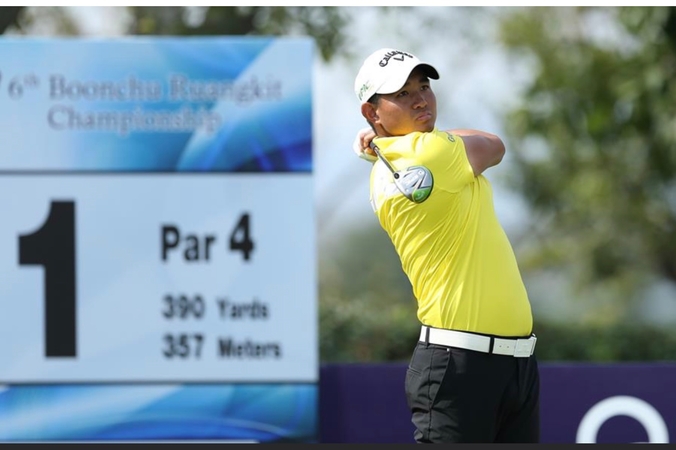
Nakhon Ratchasima – Pavit Tangkamolprasert became the third golfer to top the Boonchu Ruangkit Championship leaderboard after the Thai posted a third round eight-under-par 63 for a two-shot advantage on Saturday.

Pavit shot to the summit from his tied-eighth position after bumping in nine birdies for a third round total of 19-under-par 194 to overtake overnight leader John Catlin.

Thailand’s Sadom Kaewkanjana will keep Pavit firmly on his heels after he ended the penultimate round with a 70 to sit tied-second along with American Catlin, who finished with even par 71.

Local season campaigner Thongchai Jaidee is only three shots off Pavit in fourth after managing a 68, while the trio of Arnond Vongvanij, Andreas Gronkvist and Panuphol Pittayarat trails the leader five shots away in tied-fifth.

Pavit is aware how competitive the final round is set to play out on Sunday, but is confident he will thrive under pressure.

“I will go out to play aggressively. My confidence is high, and I am someone who likes the pressure to perform well. You have to shoot low on this course if you want to win.

“My round today (Saturday) was good. I have been driving the well this week and my iron hitting has been good. It’s all about putting well,” said Pavit.

The Bangkok-born started with a birdie, and did not let a bogey on the second hole affect him as he fired home four consecutive birdies from the third hole.

Pavit finished the front nine with six birdies, and went on to notch another three for the slender lead.

If the 30-year-old manages to hold on to his advantage, he will follow in the tradition of becoming yet another Thai name to etch his name on the Boonchu Ruangkit Championship.

Phiphatphong Naewsuk, Danthai Boonma, Namchok Tantipokhakul and Itthipat Buranatanyarat have all triumphed in the past.

Catlin still believes he has an opportunity to change that if he can play well on Sunday.

The American fumbled with a triple bogey on the fourth hole which took some momentum off his game.

“It was unfortunate the ball hit a tree and bounced off into a cluster of tress. Other than that it was okay. There is plenty of chances to make birdies (on Sunday), I just got to keep doing what I’m doing,” said Catlin.

Leading third round scores

194 – Pavit Tangkamolprasert 69-62-63 (THA)

196 – Sadom Kaewkanjana 65-61-70 (THA), John Catlin 63-62-71 (USA)

197 – Thongchai Jaidee 68-61-68 (THA)

199 – Arnond Vongvanij 67-67-65 (THA), Andreas Gronkvist 68-64-67 (SWE), Panuphol Pittayarat 62-67-70 (THA)

200 – Tirawat Kaewsiribandit 67-65-68 (THA)

201 – Attaphon Sriboonkaew 66-69-66 (THA), Jaturon Duangphaichoom 70-63-68 (THA), Prayad Marksaeng 64-67-70 (THA), Pattaraphol Khanthacha 63-68-70 (THA), Malcolm Kokocinski 62-67-72 (SWE), Suradit Yongcharoenchai 60-66-75 (THA)

A $46 billion bad-loan mirage hints at flaw in U.S. bank rule #ศาสตร์เกษตรดินปุ๋ย

#ศาสตร์เกษตรดินปุ๋ย : ขอบคุณแหล่งข้อมูล : หนังสือพิมพ์ The Nation

https://www.nationthailand.com/business/30381061?utm_source=category&utm_medium=internal_referral

A $46 billion bad-loan mirage hints at flaw in U.S. bank rule

Jan 25. 2020
By Syndication Washington Post, Bloomberg · Yalman Onaran 

An early warning system for bad bank loans is taking effect this year. Beware false alarms.

U.S. banks are starting to book provisions for potential loan losses under a new system regulators devised eight years ago to avoid the kind of catastrophic surprise that caught the industry and regulators off guard during the financial crisis. The idea is to force banks to boost reserves based on models that factor in the economy, rather than wait for loan payments to stop.

But mighty swings in estimated loan losses in recent years show how the system also has the potential to raise concerns prematurely or to even send mixed signals. When the rule, known in the industry as CECL, was initially written in 2012, regulators and analysts estimated the provision increase for the four largest U.S. banks would be $56 billion. Last week, banks said it’s a mere $10 billion.

That $46 billion gap at JPMorgan Chase, Bank of America, Citigroup and Wells Fargo . shows how economic shifts and the lenders’ assumptions can have a significant impact on estimates — a level of discretion that could allow executives to delay higher reserves or set off a surge in provisions if they are too conservative heading into the next economic slump. It’s also possible assumptions will diverge among firms, leading to confusion.

“We expect higher volatility in provisions under the new rule,” Maria Mazilu, an accounting analyst at Moody’s Investors Service, said in an interview. “We will only find out how good the models at predicting losses are in the next downturn though.”

The rule was prompted by widespread criticism of global banks for being too slow to recognize potential loan losses heading into the 2008 crisis. It’s meant to alert shareholders earlier to any brewing trouble by essentially amplifying expected loan losses based on the stages of the economic cycle.

When it was first proposed, the U.S. was still climbing out of the worst recession since the Great Depression, and projections were grim. Banks have reshaped their lending books over the years. And today, after a long run of economic growth, few in finance are expecting a downturn soon, leaving reserves far lower. Yet all that could change anew when the economy starts heading south.

The old rule allowed less discretion: Banks set aside provisions when borrowers stopped making payments. The new rule requires lenders to model losses from the day a loan is made. Because that standard gives so much more discretion to banks’ internal models, it will decrease comparability among peers, Moody’s has warned.

But if the rule works as envisioned, big banks will head into the next bout of turmoil with larger loan-loss reserves — a buffer in addition to their underlying capital, which has also been increased by post-crisis regulations.

Bank regulators gave firms up to four years to absorb the initial impact on their capital from the accounting rule change. But regulators stopped short of reducing capital requirements to balance out the jump in reserves. That means when reserves do rise further on the risk of a downturn, big banks would need to replenish capital eroded by the hit to earnings.

“If you’re not overcapitalized, then CECL’s impact on reserves will be higher capital,” said Warren Kornfeld, an analyst at Moody’s covering consumer finance companies. “Reserves will go up by x, but capital won’t be allowed to go down by x.”

JPMorgan, Bank of America and Citigroup noted while posting earnings last week that initial implementation will reduce their capital by about 0.2 percentage points.

Wells Fargo lowered its loan-loss provisions because the new rule allowed the bank to write up the value of some collateral backing soured loans. The company didn’t say how much positive impact the reduction would have on its capital.

Smaller banks also have expressed concern about the volatility CECL may cause. And because they lack resources to handle projections internally, some have noted the risk of relying on models and economic forecasts from third parties, such as Moody’s. Community banks and credit unions were given a reprieve last year when their deadline for compliance was extended to 2023. But mid-size banks like Wintrust Financial Corp., Illinois’s biggest publicly traded bank, weren’t included.

“CECL is going to be all over the board on this,” that bank’s chief executive officer, Ed Wehmer, said on his company’s earnings call this week. “And if the guy at Moody’s has a bad day or a hangover or his hemorrhoids act up, he could take the banking business down because everybody’s basically using Moody’s baseline as their basis for this.”

Will Davos save the world, or put it out of its misery? #ศาสตร์เกษตรดินปุ๋ย

#ศาสตร์เกษตรดินปุ๋ย : ขอบคุณแหล่งข้อมูล : หนังสือพิมพ์ The Nation

https://www.nationthailand.com/business/30381063?utm_source=category&utm_medium=internal_referral

Will Davos save the world, or put it out of its misery?

Jan 26. 2020
Dan Zak is a reporter for The Washington Post. He writes a wide range of news stories, narratives and profiles from local, national and foreign assignments, from the Academy Awards to Fallujah, Iraq. He joined The Post in 2005.

Dan Zak is a reporter for The Washington Post. He writes a wide range of news stories, narratives and profiles from local, national and foreign assignments, from the Academy Awards to Fallujah, Iraq. He joined The Post in 2005.
By The Washington Post · Dan Zak · FEATURES 

DAVOS, Switzerland – When this hot planet finally begins to evict us en masse, the global elites might seek refuge up here in the Alps, in the highest town in Europe – if only out of habit.

They’re here at this time every year, to negotiate and network and divide up the exciting business of solving the world’s problems. This week was the 50th meeting of the World Economic Forum. The themes were cohesion and sustainability, though humanity seems capable of neither right now. See the mega-fires in Australia. See the situation with Iran, whose foreign minister scrapped his attendance here at the last minute. See the United Kingdom leaving the European Union, or Prince Harry leaving the United Kingdom. See the world leaders and billionaires park their jets in Zurich and then float into Davos on helicopters to watch the leader of the free world make misleading boasts about the U.S. economy as the Senate tries him back home on an abuse-of-power charge.

In Davos, the trials are both incredibly broad and exquisitely niche. “ACT ON CLIMATE,” someone has written in big letters, in the snow, near the helicopter landing zone. In the center of town, lupine packs of black Benzes prowl the jammed streets looking for fossil fuel executives and hedge fund managers to scoop up. Cryptocurrency traders shatter their wrists slipping on black ice after too many glasses of $5,000-a-bottle wine. A sketchy guesthouse rents single bedrooms with communal bathrooms for $1,000 a night despite online reviews like this one, translated from a Polish guest: There is a terrible chaos.

There is a terrible chaos elsewhere, yes, but not here at Davos. Here the chaos is orderly, policed and profitable. Here the chaos is shoehorned into sessions on “escaping the liquidity trap” and “the global impact of a tech cold war.” The chaos is blurred by flutes of Cristal at parties thrown by corporations and entire nation-states, who plaster the town with garish pleas for investment (Canada: Everyone else is investing in us; why aren’t you?). Poverty, disease, climate change, artificial intelligence – in Davos, these are not obstacles but opportunities for collaboration among 3,000 invited diplomats, corporate swashbucklers, academics, “thought leaders” and “changemakers.”

Why are we all here? It’s a practical question that can turn metaphorical in the rarefied air. Davos is an impossible summit. It’s a place where guests can attend a session on resilience at a mountain base camp, preceded by Yo-Yo Ma himself playing Bach’s Suite No. 3 in C Major. At its worst, it is not merely an example but a celebration of luxury, hierarchy, exclusivity. But it’s also a place where people gather to talk in idealistic terms about the future of the species – presidents and CEOs and royal highnesses, who can move massive amounts of capital (intellectual and otherwise). If the key to our collective fate cannot be found here . . .

But hold that thought, because now comes Greta Thunberg, the teenage climate activist, to suggest that being here matters not at all.

“I’ve been warned that telling people to panic about the climate crisis is a very dangerous thing to do,” Thunberg announced to 200 attendees Tuesday, referring to her comments in Davos last year. “But don’t worry, it’s fine. Trust me, I’ve done this before, and I can assure you: It doesn’t lead to anything.”

Then again, try telling that to Anthony Scaramucci, who felt like a small fish at his first Davos 13 years ago but made deals here, built his company’s management portfolio into $11.5 billion, did an extremely brief but very eventful turn as White House communications director and now hosts one of the week’s most popular parties. At his yearly “wine forum,” there is jollity, not panic, and 100-point Spanish Riojas, not trillions of flecks of ocean-bound plastic.

“I would say that in the last 50 years, collectively, we’re having a frat party with the environment,” Scaramucci said over a quadruple espresso Thursday. “Now Greta and her children and my grandchildren and great-grandchildren are going to be living in the frat house on Sunday morning after we destroyed the place on Saturday night. And so the problem is: When you are an impermanent person on Earth and you’re enjoying the frat party, it’s very hard for you to stop the frat party.”

– – –

At the start of the week, in a bar at the InterContinental hotel, billionaire Marc Benioff and the musician will.i.am brought down mallets on a cask of Japanese whiskey, poured themselves a shot and toasted the guests at Time magazine’s kickoff party.

“Thank you for making me feel like family here on this mountain,” will.i.am said from the stage. “It’s a brand new decade, y’all. This decade is going to define the rest of freaking humanity.”

That’s the consensus here among the elites: This is it! We were made for this moment! And the way that humanity survives itself while maintaining the world order – and adapting to the “fourth industrial revolution” – is through something called “stakeholder capitalism,” which is an academic way of saying “capitalism that doesn’t grind people into chuck, and suck the planet dry, but still makes us lots of money.”

The forum has set itself the ambitious goal of improving the state of the world.

If Davos is a microcosm of stakeholder capitalism, then the rest of the world can look forward to cigarette giant Philip Morris transforming a storefront on every Main Street into a swanky lounge where Sheryl Crow performs near signage advising customers to “UNSMOKE YOUR MIND,” which is probably what a million cancer patients wish they could do to their lungs.

On a WhatsApp group of Davos denizens, one man reviewed the Philip Morris lounge thusly: “Upbeat music. Hot attendants. Cocktails. It’s a nice change from sustainability and gender pay gap etc etc.”

The et cetera et cetera – the serious discussions about the outside world – is happening in the World Economic Forum’s official gathering place, a congress center fortified like a castle, where actors like Big Tobacco are banned. There you can bump into both German Chancellor Angela Merkel and the 15-year-old chief water commissioner for the Anishinabek Nation of Canada. There you can drink celery juice from the health bar while watching a digital map the size of a one-bedroom apartment that depicts the incidence of child slave labor around the world. There you can watch foreign ministers puzzle over the future of NATO, and a 25-year-old blind YouTuber from Los Angeles talk about how to understand disability.

In keeping with the forum’s hard pivot toward the climate crisis, the carpets were made from used fishing nets and the paint on the walls was made from seaweed. The forum is heavily promoting a global effort to plant 1 trillion trees by 2030 and has asked its business participants to commit to net-zero carbon emissions by 2050.

“Banks and pension funds with CEOs attending Davos are collectively financially exposed to fossil fuel companies to the tune of $1.4 trillion,” Greenpeace reported this week.

Old habits, you know.

Outside the et cetera et cetera, Davos becomes a four-day funhouse for media outlets and corporations, consisting of a hierarchy of badges and titles, where the currency is the perception of importance and even millionaires grovel for invites to private suppers in chalets. (George Soros is a perennial host.) The great-granddaughter of J. Paul Getty is Instagramming from a mountaintop hot tub. The great-grandson of Sigmund Freud is throwing parties at the town golf club. Magician David Blaine keeps appearing everywhere. Russia, like other countries, has rented out a whole building for its own junket; last summer, two Russians who claimed to be plumbers supposedly tried to install surveillance equipment around town. This week, Davos was wallpapered with ads from the Saudi government that encourage investment and tout the foundation of its crown prince, who would like the focus on youth leaders rather than his kingdom’s execution of journalists and dissidents.

“This whole event is sort of a dictator’s bazaar,” mused activist-investor Bill Browder, known as Putin’s Enemy No. 1, over a dinner of rosti Wednesday. (Says a managing director of the forum: “Our message is clear: Institutions, rule of law and good governance underpin the world’s most successful economies.”)

Down the street in this world of stakeholder capitalism, a neon sign by Deutsche Bank asks, almost mockingly: “Is growth an illusion?” Nearby, Russian oligarchs mingle at a lounge named “Caspian Week,” which sounds like a tourism bureau for Azerbaijan but is actually a small energy conference co-sponsored by a Swiss oil company.

Don’t tell Greta, who walks around Davos with a police entourage the size of a world leader’s. But she is a world leader, isn’t she? Her name is on everyone’s lips here. On the opening day of the meeting, she was in the 10th row of the congress hall to listen to President Donald Trump, who addressed the 17-year-old obliquely.

“To embrace the possibilities of tomorrow, we must reject the perennial prophets of doom and their predictions of the apocalypse,” said Trump, who is derided by much of the Davos crowd for his nativist anti-intellectualism but tolerated for his anti-tax philosophy.

Before introducing Trump and thanking him for his leadership, Klaus Schwab, the founder of the World Economic Forum, praised the “transformational power” in the auditorium.

“If you aggregate our goodwill and action,” Schwab told attendees in his German baritone, “we can say to the next generation: ‘You can rely on us.’ ”

That morning, a small army of activists from that generation had blockaded the road into Davos, choking off Uber’s black-car service and sending a ripple of inconvenience through the town.

– – –

“This era is over.”

Robert Julius Blokker, 32, had just marched 13 miles to Klosters, one town over from Davos.

“Millionairism is done.”

He was sitting on a sleeping pad in an auditorium crawling with activists, who were on their way to tell the World Economic Forum that 50 years was enough.

Davos “is not some fun classy getaway cool thing to do if you’re a CEO,” said Blokker, who is from the Netherlands. “This is a besieged fortress of the last people building walls against reality, thinking that they’re still in charge of a world they lost control of a long time ago. And it’s very troubling that we might see how far they’re willing to go to uphold the illusion.”

If Davos is an illusion, it’s a good one. In 1971, Schwab chose the town, a former health resort for tuberculosis patients, to host a “a workshop of the elite” from the business world, as the first invitation described it. What used to be a yearly salon of nerdy men in wool sweaters and tweed jackets became, over a half century, a kind of shadow United Nations that attracts a dizzying panoply of fascinating, impressive people with a genuine desire to better the world. Davos is the place where the heads of East and West Germany first met for negotiations, and where Nelson Mandela and Frederik Willem de Klerk first appeared together abroad.

Not merely a frat party, but also a college.

Fifty years on, amid trade wars and a retaliation against globalism, the forum and its annual meeting are needed more than ever, says Tony Fratto, who has attended Davos as both a U.S. Treasury Department official and partner at a private communications firm.

“Yes, it’s expensive and they’re spending money and having parties and you can hear the jewelry jangling,” Fratto says. “But it is people who are committed to trying to elevate standards of living and expand rights and opportunities for people.”

During the lifetime of the forum, says author and political scientist Ian Bremmer, globalism created incredible wealth, buoyed life expectancy, broadened access to education, lifted droves out of poverty.

“But environmental catastrophe is the bad side of it, and, inside the advanced industrial democracies, we have failed our people,” says Bremmer, who was first invited to Davos more than a decade ago as part of program for young global leaders. “Inequality has grown and grown and grown. I think the globalist ideology and Davos have become synonymous with the system being rigged.”

This is a besieged fortress of the last people building walls against reality.

On Wednesday, a Wall Street Journal party on the promenade was blasting the Talking Heads’ “Once in a Lifetime” into the frozen starry night, and it felt exactly right.

And you may ask yourself, “Well – how did I get here?”

The answer to that question is Klaus Schwab, the great convener, the first and only sovereign of the World Economic Forum. He is regarded as a visionary, a genius, an enlightened being, a narcissist, a cult leader, a wannabe Nobel laureate. Depending on whom you talk to, his creation is viewed as a magnificent achievement that has nurtured the world, or a brilliant boondoggle that prizes chat above action and revenue above the public good. A few high-ranking former employees contacted for this story would not comment on the record because they fear his power. Civil-society groups have charged the forum with exerting undemocratic, pro-business influence over the United Nations.

Angela Merkel, however, keeps coming back for the et cetera et cetera. This was her 12th Davos.

“This is something unique that was created here in the Swiss mountains,” Merkel said in her keynote speech Thursday. “The forum has set itself the ambitious goal of improving the state of the world. . . . I think if you look back five decades, you can tell that the world has indeed gotten better.”

Schwab was not available for comment on short notice – it was, after all, the busiest week of his year – but his personality shines through a self-congratulating coffee table book about the forum that was distributed to attendees.

“It is my deep personal conviction that we must move towards a society which is no longer based on production and consumption,” Schwab says in a Q&A in the book. The World Economic Forum “aims to be a pioneer in this new social order based on ideals rather than on material values.”

Capitalism is all about materials, though, and they swirled around the congress center: mutual funds, cloud technology, petroleum, cannabis, consultancy, cryptocurrency.

There’s a feeling one gets here, as an outsider here: that there is a system, or a game, and that these people have figured out how to play it. The hive of social activity is the Belvedere hotel, which was transformed this week into a labyrinth of branded cocktail hours and candlelit dinners in private rooms.

A quote from a senior consultant at Deloitte welcomes people into this realm: “Profit and purpose can exist in harmony.”

If you pass the guards with submachine guns, scan your badge on a blinking kiosk and shuffle through security, you find yourself in front of four portals, each leading to a different ecosystem labeled with the acronyms of big sponsors: PwC, Citi, WSJ, KPMG. It’s “Alice’s Adventures in Wonderland,” but with business cards instead of playing cards and a lucrative contract as the white rabbit.

And you may ask yourself, “How do I work this?”

Maybe the key to the future can be found in Davos.

Maybe the only people who can get to it are the ones who arrived with keys of their own.

– – –

What is Davos good for? Whom is it good for? Is it good for someone like Scaramucci, with his ingratiating self-awareness? Is Davos good for someone like the Prince of Wales, who loaned his fusty imprimatur to a hip-sounding “Sustainable Markets Initiative”? Is it good for Ivanka Trump, who met with the prime minister of Pakistan and co-hosted a breakfast with American CEOs? Is it good for will.i.am, who appeared with primatologist Jane Goodall on a panel titled “Leadership in the Fourth Industrial Revolution,” or is it good for Jane Goodall, who appeared on the panel with will.i.am?

Is Davos good for the rest of us, who may indirectly benefit from the forum’s focus on strengthening cybersecurity in global aviation?

On Wednesday, the forum launched “Reskilling Revolution” (yet another initiative) to “provide one billion people with better education, skills and jobs by 2030.”

A billion jobs.

A trillion trees.

Sounds wonderful. (Sounds too good to be true.)

If you want to pursue a united front, probably the only place on Earth where that could even be moved from fantasy into a reality is Davos.

Maybe Davos is good for someone like Micah White, who protested the World Economic Forum in New York in 2002, when he was 20 years old, and helped start the Occupy movement in 2011. On Tuesday, White was walking the sunny promenade of Davos as a guest. He wore a navy suit and carried a backpack branded with the logo of the World Economic Forum, which has been recruiting more activists, women and young people into its fold.

Accepting the invitation could be “reputational suicide,” White says, but he views climate change as a threat that requires immediate collaboration between activists and elites, not a time-consuming political revolution where one tries to overthrow the other.

“If you want to pursue a united front, probably the only place on Earth where that could even be moved from fantasy into a reality is Davos,” says White, seated in Facebook’s hub after a private meeting with industry leaders. “That’s not my fault. We have 10 years [to act on climate], and we have to work with what exists right now.”

You can see Davos as everything that’s wrong with the world, or you can see it as an opportunity to save the world. Sometimes you can see both at the same time.

On the edge of town, by the ski slopes, an activist for the homeless camped in a tent in 20-degree weather as forum attendees paid thousands of dollars a night for lodging. During the day, Andrew Funk hoped to educate them whenever they stepped out of their inner sanctum. On Thursday, he spotted and approached Jimmy Wales, the co-founder of Wikipedia, and came away believing that Wales might join him for a frigid camp-out at next year’s Davos.

“Three thousand euros ends homelessness for one person through our program,” says Funk, who lives in Barcelona and runs an organization called Homeless Entrepreneur. “Every night a person stays in Davos could end homelessness for one to three people.”

It was something real and true to think about, whenever confronted by absurdity here. Like the lone bagpiper flown in from Scotland to blow his instrument for 2 1/2 hours outside a whiskey bar, which was set up by an asset manager from Edinburgh with a portfolio worth $700 billion. The bagpiper wore a kilt, so his knees were bare. His undercarriage was well acquainted with the Swiss winter. He stood behind a large, branded frame that said, “This is #MyDavos,” to encourage selfies and Instagrams.

There on the promenade, a company had turned a man into a product.

How much longer does he have to do this?

“Counting the minutes,” he said. Then he kept blowing into the frigid night.

Davos elite want to plant 1 trillion tress to help the planet, but many still fight a carbon tax #ศาสตร์เกษตรดินปุ๋ย

#ศาสตร์เกษตรดินปุ๋ย : ขอบคุณแหล่งข้อมูล : หนังสือพิมพ์ The Nation

https://www.nationthailand.com/business/30381042?utm_source=category&utm_medium=internal_referral

Davos elite want to plant 1 trillion tress to help the planet, but many still fight a carbon tax

Jan 25. 2020
Photo Credit:  World Economic Forum / Mattias Nutt

Photo Credit: World Economic Forum / Mattias Nutt
By The Washington Post · Heather Long 

DAVOS, Switzerland – Leaders of the world’s most powerful companies sent one clear message this week as they gathered in this ski chalet town for the World Economic Forum: They care about the environment — to a point.

With the Australian bushfires raging and teenage activist Greta Thunberg proclaiming “our house is still on fire,” business leaders were eager to talk about how they are eliminating plastic water bottles at their headquarters, installing solar panels on their homes and corporate buildings and planting a lot of trees.

Nearly everyone attending the Davos events committed to join the new “1 trillion tree” initiative to plant an abundance of trees by 2030. Even President Trump signed on despite his insistence that “prophets of doom” about climate change are wrong.

But conversations grew tense when someone brought up putting a price on carbon.

“If you want to put a tax on people, go ahead and put a carbon tax. That is a tax on hard-working people,” said U.S. Treasury Secretary Steven Mnuchin on a panel Friday. He argued a tax was unnecessary, because technology would almost certainly bring down clean energy costs.

Economists across the political spectrum overwhelmingly say the best way to tackle climate change is to enact a carbon tax or “cap and trade” system, where there’s a limit on carbon emissions and companies that go past the limit must purchase credits.

But at the World Economic Forum, the idea is still a somewhat dicey subject, at least among CEOs and government leaders from certain parts of the world.

“I was in a few discussions where we talked about the price of carbon. That’s definitely something there is no agreement on,” said Douglas Peterson, chief executive of financial firm S&P Global, in an interview on the sidelines of the forum.

Few chief executives are brave enough to publicly say they are against a carbon tax. They are fearful of the 17-year-old Thunberg and her allies calling them out on Twitter or in speeches.

At Davos, the heads of large companies gather behind closed doors for an International Business Council meeting. Brian Moynihan, head of Bank of America, put forward a framework companies could use to assess their carbon footprint and environmental risk, according to two attendees who spoke on the condition of anonymity. There was no formal vote on it, but one attendee estimated at least a third of the room looked annoyed and unconvinced.

The hesitancy among some corporate leaders to do a real assessment of carbon risk is indicative of how far there is to go to see wide-scale mitigation, advocates say. Environmental activists blasted Davos attendees for paying lip service to caring about environment but not actually doing much.

Banks and pension funds that attend Davos are “collectively financially exposed to fossil fuel companies to the tune of $1.4 trillion,” Greenpeace reported.

“We got the feeling WEF [the World Economic Forum] was locked in a bubble of positivity,” said Loukina Tille, an 18-year-old climate activist in Switzerland, as she protested outside the conference center in Davos on Friday with Thunberg and others.

Mnuchin’s dismissal of a carbon tax did not sit well with European leaders. Numerous European officials from Britain’s Prince Charles to European Commission President Ursula von der Leyen took to the Davos stage to endorse putting a price on carbon.

“Do we want to go down in history as the people who did nothing to bring the world back from the brink?” Prince Charles said.

The European Union has committed to becoming carbon neutral by 2050 and already has a cap and trade system in place.

Von der Leyen threatened to impose a border tax — similar to Trump’s tariffs — on goods coming into Europe that don’t come from a country with a price on carbon. The tax “would hit importers from countries that do not respect international climate goals,” she said.

Canada started a tax of $20 per ton of carbon dioxide last year that is gradually set to rise. Other countries are moving even more aggressively. Finland is aiming to be carbon neutral by 2035.

“It would be very effective if we had a global carbon price,” Finnish Prime Minister Sanna Marin said in an interview with The Washington Post. “We don’t have the luxury of time. We need to act now. That’s a fact.”

Some companies like Microsoft and Verizon are already planning ahead, based on a price of carbon they have calculated internally. A number of chief executives told The Washington Post that they think it’s inevitable there will be a carbon tax or cap and trade system in most major markets, if not globally, in the coming years.

An incentive price is needed “to move behavior,” said Verizon chief executive Hans Vestberg, a native of Sweden, in an interview. Verizon has committed to becoming carbon neutral by 2035.

Axel Weber, the chairman of UBS bank, put it this way: “Whatever that price is, it will increase over time” and he encouraged companies to start planning for it.

Markets wrap: Stocks post biggest drop since October on virus #ศาสตร์เกษตรดินปุ๋ย

#ศาสตร์เกษตรดินปุ๋ย : ขอบคุณแหล่งข้อมูล : หนังสือพิมพ์ The Nation

https://www.nationthailand.com/business/30381040?utm_source=category&utm_medium=internal_referral

Markets wrap: Stocks post biggest drop since October on virus

Jan 25. 2020
By Syndication Washington Post, Bloomberg · Brendan Walsh, Vildana Hajric

The spread of a deadly respiratory virus rattled global markets, sending U.S. stocks lower and fueling demand for havens in government bonds and gold. Oil fell for a fourth day on concern the outbreak will dent economic growth.

The S&P 500 index posted its biggest drop since October amid reports that U.S. officials had confirmed two more cases of the illness, which originated in China and has also spread to several countries in Asia and to Europe. Benchmark Treasury yields fell to a three-month low, while the dollar advanced for a second day.

Investors are exercising caution with stocks close to all-time highs, cognizant of the chance the respiratory virus migrates across the world and develops into a more devastating pandemic like the SARS illness that emerged 17 years ago. Officials in China boosted travel restrictions to cover 40 million people to contain the virus’s spread.

“Investors can’t help but be unnerved by constant headlines of new cases all over the world,” said Alec Young, managing director of global markets research at FTSE Russell. “To make matters worse, the market will be closed when we get the next update on the virus’ spread over the weekend. As such, this is quickly turning into a sell first, ask questions later environment.”

In company news, United Airlines Holdings Inc. and American Airlines Group Inc. each slid more than 3% on concern the virus will limit demand for air travel and tourism. Financial shares also sank, with Citigroup Inc. down almost 2% as UBS warned the sector could be hurt by less credit-card spending and a decline in cross-border payments.

Health shares were among the worst performers Friday on growing speculation that upcoming elections in the U.S. may prompt lawmakers to take action on the increasing cost of medicines in the U.S. Intel Corp. was a rare bright spot after giving a bullish revenue forecast.

Elsewhere, the pound slipped for a second day versus the dollar, giving back some of its rally from earlier in the week.

These are the main moves in markets:

– – –

– The S&P 500 index fell 0.9% at the close of trading in New York; it lost 1% for the week.

– The Stoxx Europe 600 index added 0.9%.

– The MSCI AC Asia Pacific index fell 0.1%.

– – –

– The Bloomberg Dollar Spot index gained 0.1%.

– The British pound declined 0.4% to $1.3076.

– The euro fell 0.3% to $1.1027.

– The Japanese yen rose 0.2% to 109.29 per dollar.

– – –

– The yield on 10-year Treasuries fell five basis points 1.69%.

– Britain’s 10-year yield dipped three basis points to 0.56%.

– Germany’s 10-year yield fell three basis points to -0.34%.

– – –

– West Texas Intermediate crude declined 2.2% to $54.39 a barrel.

– Gold rose 0.5% to $1,571.30 an ounce.

– – –

With assistance from Bloomberg’s Cecile Gutscher, Adam Haigh and Brian Chappatta.

Global LNG poised for terrible year as supply floods market #ศาสตร์เกษตรดินปุ๋ย

#ศาสตร์เกษตรดินปุ๋ย : ขอบคุณแหล่งข้อมูล : หนังสือพิมพ์ The Nation

https://www.nationthailand.com/business/30381039?utm_source=category&utm_medium=internal_referral

Global LNG poised for terrible year as supply floods market

Jan 25. 2020
By Syndication Washinton Post, Bloomberg · Stephen Stapczynski, Anna Shiryaevskaya, Naureen S. Malik

Liquefied natural gas prices are poised to test record lows this year thanks to an onslaught of new supply and warmer winter temperatures curbing consumption.

The startup of new export projects from Australia to the U.S. has flooded the market, while brimming stockpiles in Europe and an expected slowdown in Chinese demand have dumped cold water on consumption prospects. LNG for spot delivery to North Asia is on track to hit an all-time low this summer, while gas prices in Europe and the U.S. are trading at the weakest seasonal levels since 1999.

“The outlook for natural gas over the next year or so isn’t great,” said Marco Dunand, chief executive officer of trading house Mercuria Energy Group Ltd. “There’s a surplus already in the U.S. and Europe. And the mild winter in Asia means another surplus is building up there,” he said in an interview. Mercuria jumped into LNG trading last year with hires from EDF Trading Ltd.

This is what the rock-bottom prices mean for the industry:

– American Halt

U.S. gas exports have surged amid the nation’s shale boom, but plummeting prices may now throttle back shipments or encourage sustained maintenance while firms weather the storm. Producers and companies with off-take agreements may decide not to load cargoes because prices are too low to earn a profit after accounting for shipping costs.

“The global oversupply of LNG has been building and building and building,” said Ron Ozer, founder of gas-focused hedge fund Statar Capital LLC in New York. “The gas market can’t stomach the oversupply and warm weather, and it’s getting both.”

With cargoes from the Gulf of Mexico currently priced around $2.65 per million Btu, cash margins are positive only because of weak U.S. benchmark prices, according to Robert Sims, an analyst at Wood Mackenzie Ltd. There’s a chance that production could be reduced if the spread between benchmark Henry Hub and U.S. Gulf LNG narrows 25 cents, he said.

Torbjorn Tornqvist, chief executive officer of Gunvor Group Ltd., the biggest independent LNG trader, sees the market about 50 cents away from shut downs.

“We can see even lower prices in the next few months,” Tornqvist said in an interview this week in Davos. “The supply and demand balance doesn’t look good.”

U.S. cargoes are seen least profitable in Asia in April, and in Europe in July, Anna Borisova, analyst at BloombergNEF in London, said.

– Contract Scrutiny

Buyers may demand revisions to long-term supply contracts, such as better pricing or the removal of restrictions on reselling cargoes. Japan’s Osaka Gas Co. has already taken action, moving an Exxon Mobil Corp.-led LNG joint-venture to arbitration in a bid to get lower rates.

Qatar, one of the world’s biggest suppliers and traditionally the strictest when it comes to pricing, may be showing some flexibility. The supplier has started offering more competitive price links, with the lowest seen to Korea Gas at 10.8% the price of oil, according to FGE, an energy consultant. That compares to 2008, when Qatar signed contracts with Chinese firms in the 16% range.

– Investment Delays

After four years of belt-tightening, the amount of investments last year in new production capacity set a record. Companies including Qatar Petroleum, Novatek PJSC and Venture Global LNG Inc. sanctioned new plants from the U.S. to Russia.

But the current wave of additional supply and persistent weak global prices is challenging new projects seeking final investment decisions, according to Morgan Stanley. The bank reduced its outlook for the number of projects reaching FID and revised lower its new supply outlook for the middle of the decade. The low price environment will also likely force Qatar to stagger or postpone its planned 64% capacity expansion, currently scheduled by 2027, according to FGE.

– Profit Pain

Weak prices mean more pain for global energy majors including Total SA and Eni SpA, who have seen profits from gas-related businesses dwindle. Some European utilities — who face mounting criticism for their use of fossil fuels — may decide to follow peers that are ditching LNG altogether. Denmark’s Orsted A/S cited loss-making LNG operations for its decision to sell the business to Glencore Plc at the end of last year, while Spain’s Iberdrola SA completed its exit this month.

– The Sunnier Side

Royal Dutch Shell Plc, the biggest trader of the fuel, has been able to stave off losses on LNG through contracts linked to oil, while leveraging the weak spot market. Most long-term LNG contracts are linked to the price of crude, which puts them about twice as expensive as prompt cargoes sourced on the spot market.

The world’s biggest importers of LNG, Japan’s Jera Co. and Korea Gas Corp., will benefit from lower prices and may be encouraged to shift more of their procurement to the spot market. Jera gets about 20% on spot or via short-term contracts, which run four years of less. That compares with an average of 32% across global LNG trade. Korea Gas bought about one-quarter of its imports on a spot basis in 2018. Still, the firms’ upside is limited as they will source most of the remainder through oil-linked contracts.

India’s transition toward gas may get a boost, as the nation’s price-sensitive buyers are poised to pick up more cargoes from the spot market, Morgan Stanley analysts said in a Jan. 16 note. Beneficiaries of the transition are gas aggregators like Gail India Ltd and Petronet LNG Ltd and city gas distributors, according to the bank.

_ _ _

With assistance from Bloomberg’s Javier Blas.

Spain nears life without coal sooner than anyone thought #ศาสตร์เกษตรดินปุ๋ย

#ศาสตร์เกษตรดินปุ๋ย : ขอบคุณแหล่งข้อมูล : หนังสือพิมพ์ The Nation

https://www.nationthailand.com/news/30381064?utm_source=category&utm_medium=internal_referral

Spain nears life without coal sooner than anyone thought

Jan 26. 2020
Ignacio Galan, chairman and chief executive officer of IberdrolaA, speaks during a panel session at a Bloomberg event on day two of the World Economic Forum (WEF) in Davos, Switzerland, on Jan. 22, 2020. MUST CREDIT: Bloomberg photo by Jason Alden.

Ignacio Galan, chairman and chief executive officer of IberdrolaA, speaks during a panel session at a Bloomberg event on day two of the World Economic Forum (WEF) in Davos, Switzerland, on Jan. 22, 2020. MUST CREDIT: Bloomberg photo by Jason Alden.
By Syndication Washington Post, Bloomberg · Akshat Rathi, Jeremy Hodges

From Galicia in the north to Andalucia in the south – Spain’s old coal plants are running out of steam.

The Iberian nation last year cut use of the dirtiest fossil fuel faster than anyone else in western Europe as renewable energy and cleaner natural gas take over. The combustible rock, which has kept the region humming through world wars and economic boom times, is increasingly out of favor with lawmakers and executives under pressure to do more to stop global warming.

“We are in a hurry, we have to move fast, everybody has to move fast,” Iberdrola Chief Executive Officer Ignacio Galan said on Tuesday at the World Economic Forum in Davos. The Spanish utility plans to permanently shut its two remaining coal-fired power stations this year, replacing them with new wind and solar capacity.

Coal’s share in the nation’s electricity fell to a four-decade low of less than 5% from 14% a year earlier, according to the nation’s grid operator Red Electrica. The sharp drop is yet another sign how the unprecedented surge in renewable power output coupled with the lowest seasonal gas prices in a decade have upended traditional energy economics.

Spain was anticipating exiting the fuel by the end of the decade, while the U.K. will shut all its plants by 2025. Germany last week struck a deal with its biggest power producers.

“The fall in coal generation means Spain could phase out the fuel much faster than the government ever imagined,” said Dave Jones, an analyst at non-profit group Sandbag in London.

The nation burned as much as 70% less coal in 2019 than a year earlier, while the level in Germany fell 28%, according to data from S&P Global Platts.

The Spanish government made a start by shutting all coal-mining operations last year after striking a deal with unions to invest 250 million euros ($277.7 million) in impacted regions to enable a smoother transition to a green economy. That allowed a tax on burning natural gas at power plants to be abolished. It had been introduced to prop up the ailing mining industry.

Output is poised to fall further this year as both Iberdrola and Naturgy Energy Group plan to retire their plants this year. Energias de Portugal and Viesgo Holdco will shut their units by the middle of the decade. That would leave Endesa, the biggest producer of power from coal, as the only remaining operator after 2025. The company said that from 2022, its last operating plant will run for less than 10% of its theoretical maximum hours in any given year.

If the utilities stick to earlier statements, then Spain could be entirely without coal as early as 2027.

The prevailing market and political forces working against coal mean that Spanish plants faced a projected loss of 992 million euros in 2019, according to a report from Carbon Tracker, a think tank focusing on the energy transition.

The nation’s lead in exiting coal is helped by having some of the best renewable resources in Europe, which, coupled with subsidies, has stimulated more power capacity than needed to keep the lights on.

“Spain is the most oversupplied electricity market in Europe,” said Jones. “So it has the capacity to shut coal power plants and not wait for new capacity to come online.”

Preliminary analysis from the group showed that the fuel’s share of Europe’s electricity mix fell by 23% in 2019 from a year earlier and is set to decline further in 2020.

Spain’s new coalition government plans to pass a climate law, proposed more than a year ago, saying that all electricity needs to come from renewables by 2050. It also includes plan to reach 74% by 2030. Spain generated 38% of its electricity from green sources last year.

For Jahn Olsen, a London-based analyst at BloombergNEF, coal is unlikely to ever bounce back after the jump in carbon emission costs in Europe over the past couple of years.

“The rationale to keep running coal power plants in Spain just isn’t there,” he said. “These plants are losing money right now, and they will continue to lose money in the coming years.”

China’s Xi steps in as deadly virus spreads to four continents #ศาสตร์เกษตรดินปุ๋ย

#ศาสตร์เกษตรดินปุ๋ย : ขอบคุณแหล่งข้อมูล : หนังสือพิมพ์ The Nation

https://www.nationthailand.com/news/30381057?utm_source=category&utm_medium=internal_referral

China’s Xi steps in as deadly virus spreads to four continents

Jan 25. 2020
By Syndication Washington Post, Bloomberg · Mark Schoifet, Blake Schmidt 

Chinese President Xi Jinping stepped in to order faster response to a fast-spreading novel coronavirus, with authorities deploying military doctors and locking down more cities to contain an outbreak that’s now on four continents.

Teams from Beijing will be sent to severely-affected areas to push local governments to “comprehensively strengthen front-line prevention and containment,” according to a statement released Saturday after a meeting of the Communist Party’s top leadership chaired by Xi. Reports have emerged of hospitals at the center of the outbreak struggling to cope with growing numbers of sick people.

Criticism of the government’s handling of the crisis on Chinese social media has centered on the initial response by authorities in Wuhan, the epicenter of the virus, and Xi has warned that officials who withhold information will be punished. He said a group will be set up to oversee the response to the epidemic, and it will report directly to China’s seven most powerful leaders.

President Donald Trump, who is negotiating a trade agreement with China, on Friday praised its efforts to control the outbreak and thanked Xi. The U.S. plans to close its consulate in Wuhan temporarily and evacuate some Americans in a charter flight on Sunday, Dow Jones reported Saturday. Diplomats and medical personnel will also be on the flight, it said, citing a source it didn’t identify.

China’s National Health Commission said Saturday that there are 1,287 confirmed cases, including 444 new ones, and that 41 people have died. It reported 237 severe cases. New cases were reported in the Asia Pacific region.

The People’s Liberation Army sent 450 medical personnel, including those who’ve had experience in fighting viral pandemics, to Wuhan to help out at local hospitals, according to the Xinhua News Agency. Health centers in Wuhan are struggling to treat hundreds of sick people, with many turned away from hospitals crammed with patients lying in packed corridors, the South China Morning Post reported.

The dramatic rise in the death count in China signals that the virus isn’t yet under control despite aggressive steps by authorities there to limit movement for millions of people who live in cities near the center of the outbreak. The restrictions come during the Lunar New Year, the country’s biggest celebration during which billions of trips are typically taken for vacation and visiting of family.

While movement from Wuhan, the epicenter of the outbreak, and nearby areas has been limited, thousands of people left the region for other points before the bans took effect. In the U.S., two cases have been confirmed in people who returned from China. Europe’s first cases were identified in France, while Australia, Malaysia, Pakistan and Nepal also reported infections.

Scientists around the globe have been working to understand the virus better, how contagious it is and where it comes from. First detected in Wuhan last month, it has sparked fears that the disease could rival SARS, the pandemic that claimed almost 800 lives 17 years ago.

– – –

Australia reported four confirmed cases in the states of New South Wales and Victoria. Three had traveled to China, while one was a Wuhan man who flew into Melbourne on Jan. 19. The cases in Malaysia were a woman and her two grandchildren – Chinese nationals from Wuhan – who had traveled there from Singapore. They are related to a 66-year-old man and and his son who had tested positive for the virus in Singapore.

Hong Kong raised its response against the coronavirus to the highest “emergency” level and canceled the city’s largest marathon which would have involved 70,000 in early February.

In China, a doctor suspected of having the coronavirus died Saturday in Hubei, according to local media. It’s not immediately clear whether the 62-year-old specialist was working on the front lines to treat the illness.

Beyond the restricted areas near Wuhan, major closures took place across the country amid the health fears. Public events to mark the new year were canceled. Shanghai Disneyland announced that it was closing indefinitely, and cinema chains canceled movie screenings.

France’s Health Ministry confirmed three cases of the coronavirus late Friday, the first reported infections in Europe. In the U.S., two cases have been reported and health authorities are monitoring more than 60 people for potential infection. U.S. lawmakers said health authorities are expected to confirm a third case, following a closed-door briefing between lawmakers in Washington and federal health officials.

“We are expecting more cases in the U.S. and we are likely going to see some cases among close contacts of travelers and human-to-human transmission,” said Nancy Messonnier, director of the CDC’s National Center for Immunization and Respiratory Diseases.

The virus is believed to have emerged last month in a seafood and wildlife market in Wuhan, spreading from infected animals to humans, and police have raided wildlife markets across eastern China. It has an incubation period of about two weeks before infected people start to show symptoms, which resemble a cold or flu, the CDC said.

The CDC said it’s working to get tests for the virus out to states so they can more quickly identify cases. Currently, samples have to be sent to the CDC for analysis.

“This situation is rapidly evolving. Information is coming in hour by hour, day by day,” Messonnier said.