
2021 could be a huge year for space. Here’s what’s to come from NASA, Elon Musk, Richard Branson and Jeff Bezos. #SootinClaimon.Com

#SootinClaimon.Com : ขอบคุณแหล่งข้อมูล : หนังสือพิมพ์ The Nation.

2021 could be a huge year for space. Here’s what’s to come from NASA, Elon Musk, Richard Branson and Jeff Bezos.

Dec 31. 2020SpaceX founder Elon Musk celebrates after the historic first launch of astronauts aboard a SpaceX craft in May. MUST CREDIT: Washington Post photo by Jonathan NewtonSpaceX founder Elon Musk celebrates after the historic first launch of astronauts aboard a SpaceX craft in May. MUST CREDIT: Washington Post photo by Jonathan Newton

By The Washington Post · Christian Davenport

We all know that 2020 was a no-good, horrible, fearful, tumultuous year that will be remembered for the coronavirus pandemic and the polarizing election. But for space enthusiasts, it was actually quite a good year, providing bits of promising news amid the bleak headlines of disease, economic hardship and protests.

SpaceX launched astronauts to the International Space Station twice. NASA launched a rover to Mars and snagged a sample from an asteroid 200 million miles away.

2021 has potential for even more good news. Here’s just some of what could happen in the new year.
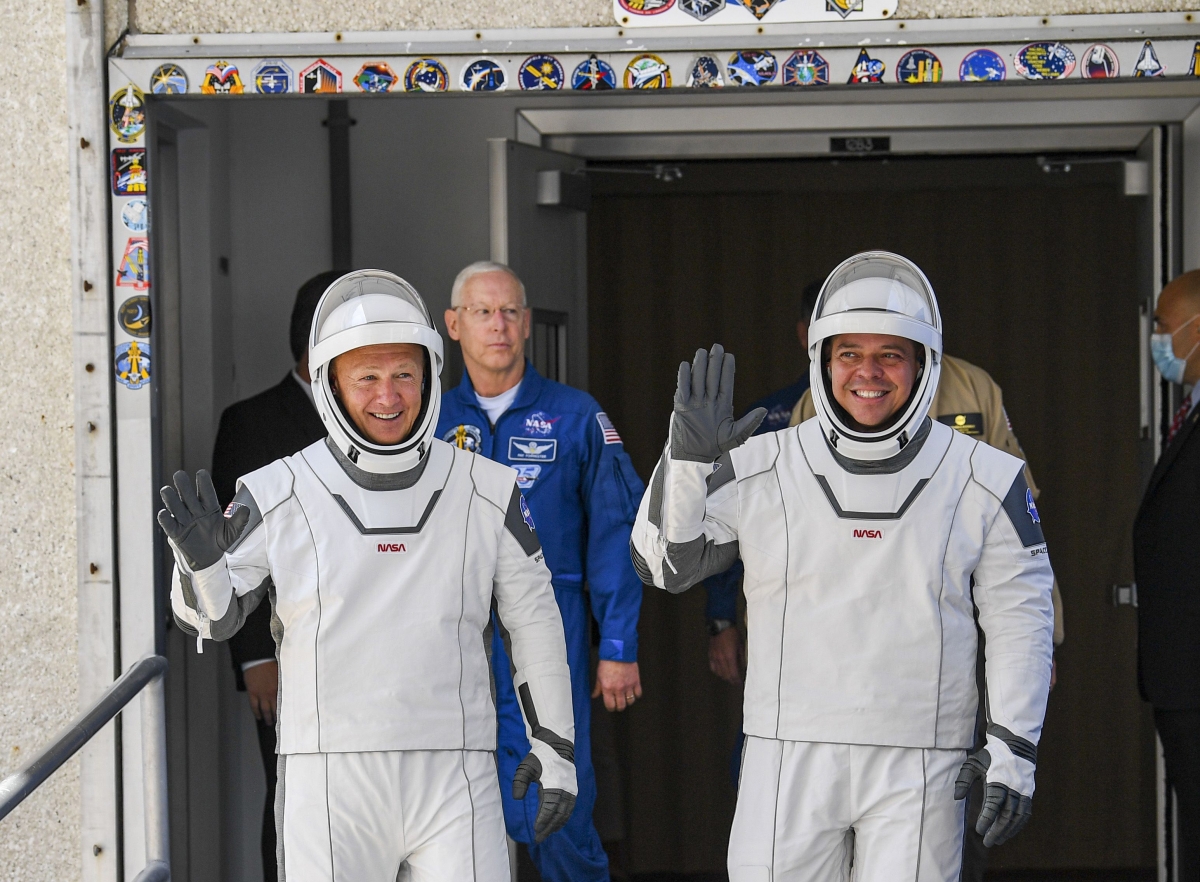
Astronauts Doug Hurley, left, and Bob Behnken on their way to their May flight to the International Space Station. SpaceX is expected to launch NASA astronauts to space twice in 2021. MUST CREDIT: Washington Post photo by Jonathan Newton

Astronauts Doug Hurley, left, and Bob Behnken on their way to their May flight to the International Space Station. SpaceX is expected to launch NASA astronauts to space twice in 2021. MUST CREDIT: Washington Post photo by Jonathan Newton

– SpaceX

After two successful flights carrying astronauts to the International Space Station, SpaceX is set to do it again this year. Crew-2, its second fully operational mission, is scheduled to launch a quartet of astronauts from the Kennedy Space Center in Florida in the spring. Then, in the fall, the company is set to launch Crew-3.

Not since the space shuttle has NASA had routine flights to the space station from U.S. soil. If all goes well, SpaceX will become the shuttle’s successor, filling a major gap in America’s spaceflight program in a coming-of-age moment for what was once a spunky start-up.

Late in the year, SpaceX also is planning to fly a mission for Axiom Space, a Houston-based company that has purchased a trip to the International Space Station for a crew of four. Michael López-Alegría, a former NASA astronaut who now works for Axiom, would accompany three private citizens for the mission, among them Eytan Stibbe, an Israeli former fighter pilot. Axiom is expected to announce the other two tourists sometime in the future.

Flying humans on its Falcon 9 rocket and Dragon spacecraft is only part of what’s on tap for SpaceX. The company continues to test its Starship spacecraft, a next-generation vehicle that looks like a flying grain silo but, Musk hopes, will one day fly people to Mars.

NASA hopes it will be successful. The space agency is investing $135 million in Starship as part of its attempt to return astronauts to the moon. Musk, whose timelines are usually wildly ambitious, has said he hopes the spacecraft will be able to achieve orbit in 2021.

The company is also pressing ahead with another outrageously difficult project – a plan to flood Earth orbit with thousands of satellites that would beam Internet signals to ground stations, connecting rural areas to broadband.

In 2020, SpaceX took some major strides toward that goal and has already launched more than 16 batches of the satellites, allowing it to begin a pilot program. More are scheduled to be hoisted in 2021, marking SpaceX’s transformation from a purely rocket company to an Internet service provider after being awarded $886 million from the Federal Communications Commission for the endeavor.
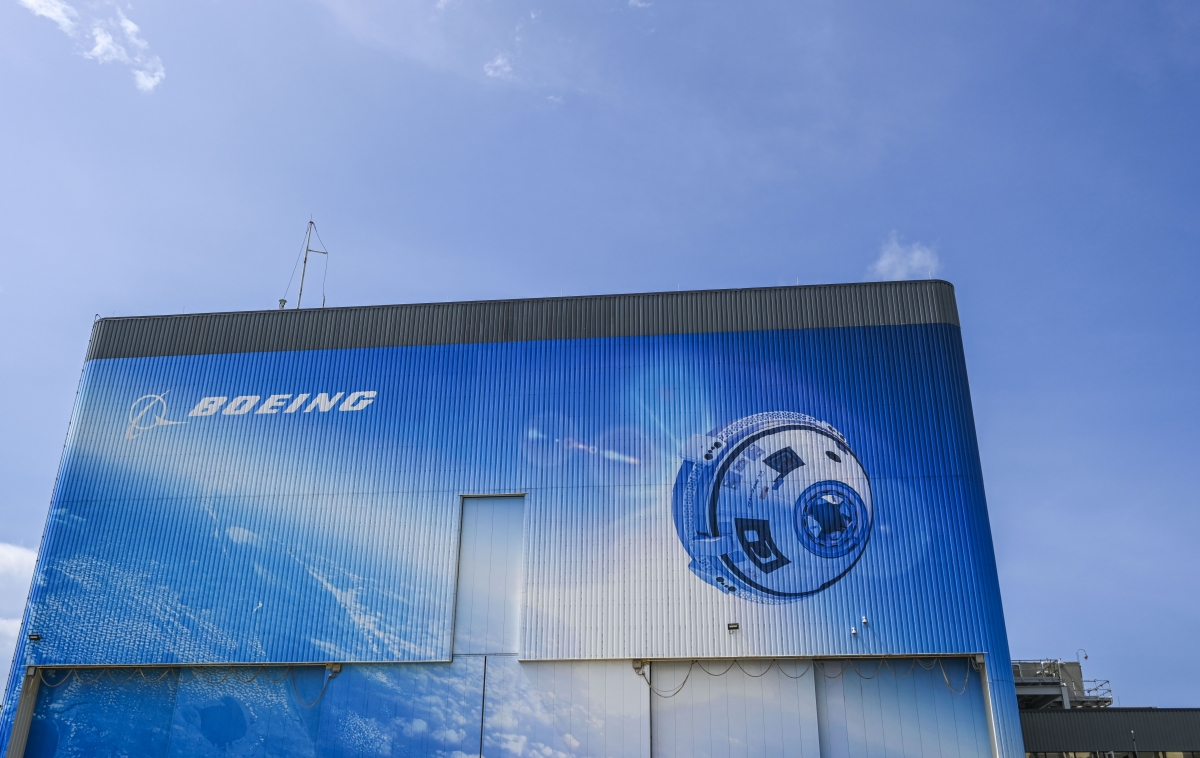
The Boeing factory at Kennedy Space Center. MUST CREDIT: Washington Post photo by Jonathan Newton

The Boeing factory at Kennedy Space Center. MUST CREDIT: Washington Post photo by Jonathan Newton

– Boeing

Boeing spent much of 2020 working to fix the software on its Starliner spacecraft, which ran into trouble as soon as it reached space during an uncrewed test flight at the end of 2019.

It’s now working to redo the test mission – no astronauts on board – at the end of March.

Given its past problems, Boeing’s upcoming test flight has to be successful. The company holds a contract from NASA to fly its astronauts to the space station. But before the space agency will allow its astronauts on Boeing’s spacecraft, the company has to prove it can fly safely on its own. Another failure will do more damage to a company reeling from a string of failures, including the two fatal crashes of its 737 Max airplane that killed 346 people.

Boeing is well aware of this, which is why it’s been proceeding so deliberately. The mission patch for the flight, known as Orbital Flight Test-2 (OFT-2) has a special touch – the image of a fingerprint.

“It represents those who are in the factory each day building the spacecraft as well as those who have had a hand in designing, testing, coding and training so we can get OFT-2 right,” the company said in a statement. “At a macro level, the thumbprint represents how deeply personal this mission is to Boeing, as human spaceflight has been and always will be a part of our company’s DNA.”

If all goes well, the company would move to the next step – flying a test mission with three NASA astronauts that could come by the end of the year.

– Artemis

The hallmark of the Trump administration’s space policy has been a return to the moon for the first time since the astronauts of Apollo 17 landed there in 1972. The White House directed NASA to speed up the timeline for a lunar landing to 2024, from 2028, and NASA Administrator Jim Bridenstine, a former member of Congress, lobbied his former colleagues hard for funding for the program, which has been dubbed Artemis.

Though Congress has approved $850 million for next year for the spacecraft that would land astronauts on the lunar surface, it’s well short of the $3.3 billion NASA said it needed to meet the 2024 deadline.

It’s not clear what the incoming Biden administration will do with the program. Most Democrats in the space community say new officials will keep the program but put it on a more realistic timeline.

The schedule will be driven by engineering and technology as much as politics, though. As of now, NASA’s Space Launch System rocket is supposed to launch the Orion spacecraft without astronauts on board by the end of 2021, in what would be the first flight of the Artemis program. If all goes well, Orion would orbit the moon, testing its systems before coming home.

It’s not clear, though, that the rocket will be ready. For years, it has suffered delay after delay, with billions of dollars in cost overruns. Government watchdogs have criticized Boeing, the prime contractor, for poor performance and NASA for lax oversight.

When it does fly, the SLS is certain to be a sight. The rocket would be the most powerful ever, with four RS-25 engines used by the space shuttle and two side solid rocket motor boosters taller than the Statue of Liberty. NASA and Boeing say they are getting close to flying, but the rocket still needs to pass the final parts of the testing campaign known as the “green run,” which would culminate with the firing of its engines while clamped down to the launchpad.

But given the problems, past and present, it’s far from certain that 2021 will be the year it finally takes off.

– Richard Branson

He’s crossed the Atlantic and the Pacific in hot-air balloons, once almost dying off the coast of Ireland, another time crashing in the Canadian Arctic instead of Southern California, the intended destination. He broke the record for the fastest time crossing the Atlantic in a boat and once got stranded in Algeria during an attempt to circle the globe in a balloon.

In 2021, at age 70, Richard Branson may face his most daunting adventure yet: a trip to the edge of space in his suborbital spaceplane. It’s been his quest since he founded Virgin Galactic in 2004, and after delays and setbacks the company is tantalizingly close to flying paying passengers.

Its sporty spaceplane has made it to space twice, once with a pair of pilots, then again with an additional crew member. In December, the company aborted a test flight after its onboard computer that monitors the rocket engines lost connection.

Virgin Galactic now says it will repeat that test flight, then fly another, and then it will finally be Branson’s turn. If all goes well, Virgin Galactic would then turn its attention to flying the hundreds of people who have paid as much as $250,000 for a trip to space.

Branson has another venture that may reach a significant milestone in 2021. In January, Virgin Orbit, its rocket company, is planning another test flight of its LauncherOne rocket after a failed test a few months ago when the main engine shut down prematurely.

Like Virgin Galactic’s spaceship, the rocket is tethered to a mother ship, in this case a 747, that takes it to an altitude of some 40,000 feet. There, the rocket is released, fires its engine and zooms through the atmosphere.

VirginOrbit is one of a host of small rocket companies that could reach orbit in 2021. Relativity Space, which 3-D prints its rockets, is planning a launch, as is Astra, which nearly missed orbit from its launch site in Alaska. Rocket Lab, which launches out of New Zealand, is planning a flight from its pad on Wallops Island, on Virginia’s Eastern Shore, as well.

– Jeff Bezos

Bezos was 5 years old when he watched Neil Armstrong and Buzz Aldrin walk on the moon in what he has said was a “seminal moment” for him, touching off a lifelong passion for space. He has said Blue Origin, his space company, is “the most important work I’m doing.” 2021 could be a breakout year for the company, which was founded 20 years ago.

Blue Origin is planning its first flight with humans on board its New Shepard spacecraft in the coming year. Like Virgin Galactic’s SpaceShipTwo, it’s designed to travel to the edge of space and back – not to orbit. But unlike Virgin, it has not yet opened up sales or announced ticket prices.

It also hopes to fly for the first time in 2021 its New Glenn rocket, a massive vehicle powered by seven BE-4 engines. Earlier this year, NASA announced that the rocket would be eligible to bid for launch contracts, a vote of confidence for the company.

The BE-4 would also power the new rocket being designed by the United Launch Alliance, a joint venture of Boeing and Lockheed Martin. Vulcan Centaur, as it is called, is scheduled to fly toward the end of the year, Tory Bruno, ULA’s chief executive, told reporters recently.

That mission would be a historic one, carrying a robotic spacecraft manufactured by Astrobotic, a Pittsburgh company, to land on the moon as part of a NASA program. If successful, it would be the first spacecraft launched from U.S. soil to land on the moon since the Apollo era.

– Mars and beyond

On Feb. 18, NASA once again will try to pull off the daring feat of landing a spacecraft on Mars, when the Perseverance rover is set to touch down.

The rover would explore the Jezero crater near the Mars equator where a lake once existed. That is the ideal place to search for signs of ancient microbial life, scientists say. The rover will collect rocks and soil samples that would one day be returned to Earth.

NASA has also included a drone helicopter called Ingenuity on the mission, in a test of whether it can fly in the thin Martian atmosphere, 99 percent less dense than Earth’s.

“The Wright Brothers showed that powered flight in Earth’s atmosphere was possible, using an experimental aircraft,” said Håvard Grip, Ingenuity’s chief pilot at NASA’s Jet Propulsion Laboratory in Southern California. “With Ingenuity, we’re trying to do the same for Mars.”

Finally, NASA’s James Webb telescope is scheduled to launch in October after years of struggles and cost overruns that pushed the program’s price tag to nearly $10 billion.

Once in space, the telescope would be able to look back in time to see the oldest light in the universe, the formation of galaxies and planets beyond our solar system.

“Webb is the world’s most complex space observatory and our top science priority, and we’ve worked hard to keep progress moving during the pandemic,” Thomas Zurbuchen, associate administrator for NASA’s Science Mission Directorate, said this year.

Airline crew to undergo more frequent PCR tests and self-isolate after 2 SIA crew members down with Covid-19 #SootinClaimon.Com

#SootinClaimon.Com : ขอบคุณแหล่งข้อมูล : หนังสือพิมพ์ The Nation.

Airline crew to undergo more frequent PCR tests and self-isolate after 2 SIA crew members down with Covid-19

Dec 31. 2020CAAS in consultation with MOH, will further tighten the measures for air crew of Singapore carriers with immediate effect. ST PHOTO: JASON QUAHCAAS in consultation with MOH, will further tighten the measures for air crew of Singapore carriers with immediate effect. ST PHOTO: JASON QUAH

By Timothy Goh
The Straits Times/ANN

SINGAPORE – Crew members of Singapore carriers will have to undergo stricter Covid-19 control measures with immediate effect following the news of a Singapore Airlines (SIA) cabin crew member and an SIA pilot testing positive for the coronavirus.

Announcing this on Wednesday night (Dec 30), the Civil Aviation Authority of Singapore (CAAS) said it was tightening measures to ensure the safety and well-being of air crew and to safeguard public health in Singapore.

“Air crew face considerable risks in the course of their duties. They do so because it is critical for Singapore to maintain air connectivity. Many essential supplies, such as vaccines, can only be delivered by air. Singaporeans overseas and other essential travellers need to be able to travel to and from Singapore,” said CAAS in a statement.

The first case, a cabin crew member, tested positive on Dec 27. He had last flown to New York on SQ24 on Dec 12, and returned to Singapore on Dec 16 aboard SQ23.

He was asymptomatic at the time and was tested on Dec 23 and 25 under the testing protocol for Singapore carriers’ air crew when they return from overseas. Both tests were inconclusive but an additional test on Dec 27 returned positive.

CAAS said its preliminary investigation showed that the man had adhered to the mandated in-flight and layover measures, including wearing a mask, minimising contact with passengers and locals, and staying in his hotel room.

During the layover in New York, he interacted with the immigration officer and hotel check-in staff and collected his meal from a hotel staff who delivered it to his room.

All crew members and 16 passengers who were seated in the section of the aircraft cabin served by him have tested negative.

The second case, a pilot, tested positive on Dec 29. He had last flown to London on SQ322 on Dec 19 and returned to Singapore on Dec 22.

He was tested on Dec 23 and received a negative result on Dec 25. But on Dec 26, he developed a fever and went to a clinic for a polymerase chain reaction (PCR) test on Dec 27, which returned positive on Dec 29.

CAAS said its preliminary investigation showed that the pilot had adhered to the same mandated in-flight and layover measures as the first case. He also had no contact with passengers on board the flight.

During the layover in London, he interacted with the immigration officer and hotel check-in staff and also collected his meal from a hotel staff who delivered it to his room.

CAAS said that after consulting with the Ministry of Health, it will now require air crew on layover to further minimise their contact with locals.

For example, food delivered through room service should be left outside the room at the door instead of being handed over.

Those who lay over in high-risk destinations will be required to undergo a PCR tests on arrival and on the third and seventh day following their return to Singapore.

Crew members will be required to self-isolate until they receive a negative result from their seventh-day PCR test.

In addition, crew travelling to and from South Africa will have to don full personal protective equipment (PPE), including N95 masks, face shields, protective gowns and gloves.

Foreign investors pump over $28.5 billion into Vietnam in 2020 #SootinClaimon.Com

#SootinClaimon.Com : ขอบคุณแหล่งข้อมูล : หนังสือพิมพ์ The Nation.

Foreign investors pump over $28.5 billion into Vietnam in 2020

Dec 31. 2020Rolled steel being manufactured at the Japan-invested JFE Shoji Steel Hải Phòng Company in the northern port city of Hải Phòng. — VNA/VNS Photo Danh LamRolled steel being manufactured at the Japan-invested JFE Shoji Steel Hải Phòng Company in the northern port city of Hải Phòng. — VNA/VNS Photo Danh Lam

By Viet Nam News/ANN

HÀ NỘI — Foreign direct investment (FDI) registered in Việt Nam hit US$28.53 billion in 2020, a year-on-year decline of 25 per cent due to the significant impact of the COVID-19 pandemic, a report from the General Statistics Office (GSO) revealed.

About 2,523 new projects were licensed with capital totaling $14.6 billion, down 35 per cent in the number of projects and 12.5 per cent in registered capital.

Meanwhile, 1,140 operating projects were allowed to raise their investment capital by $6.4 billion, up 10.6 per cent year-on-year. Foreign businesses also invested $7.5 billion during the year through capital contributions and share purchases, representing a yearly reduction of 51.7 per cent.

From January to December, FDI disbursement also experienced a slight decline of 2 per cent to nearly $20 billion.

In 2020, foreign companies invested in 19 sectors in Việt Nam. Of which, processing and manufacturing lured the lion’s share of FDI with $13.6 billion, accounting for 47.7 per cent of the total capital. Power production and distribution came next with more than $5.1 billion or 18 per cent. Real estate and wholesale sectors were the runners-up with $4.2 billion and $1.6 billion, respectively.

However, the Ministry of Planning and Investment (MPI), said many foreign-invested enterprises in the country have gradually recovered and maintained business and production activities. More importantly, many others showed their strong interest in investing in Việt Nam.

Statistics from the MPI showed that nearly 300 international companies were seeking investment opportunities in Việt Nam or expanding their operations in the country. Of them, over 60 firms had made initial steps in investing or expanding presence in the Southeast Asian nation.

As of December 20, Việt Nam was home to 33,070 valid foreign-invested projects with a total registered capital of $384 billion and 60.4 per cent of the sum ($231.86 billion) was disbursed.

South Korea was the country’s largest source of FDI with over $70.6 billion or 18.4 per cent of the total capital. Japan ranked second with $60.3 billion or 15.7 per cent, following by Singapore, Taiwan and Hong Kong.

According to the GSO, Vietnamese companies also poured $590 million into overseas projects in 2020, up 16 per cent compared to 2019. Of the sum, $318 million came from 119 new projects while the remainder of $272 million from 33 operational projects which registered to increase their investment capital. — VNS

[Japan] Even New Year’s traditions forced to adapt to pandemic #SootinClaimon.Com

#SootinClaimon.Com : ขอบคุณแหล่งข้อมูล : หนังสือพิมพ์ The Nation.

[Japan] Even New Year’s traditions forced to adapt to pandemic

Dec 31. 2020A sales assistant shows a sample of an osechi set of traditional New Year’s delicacies at the Matsuya Ginza department store in Chuo Ward, Tokyo, on Dec. 18. Almost all sets have been sold out. (The Yomiuri Shimbun)A sales assistant shows a sample of an osechi set of traditional New Year’s delicacies at the Matsuya Ginza department store in Chuo Ward, Tokyo, on Dec. 18. Almost all sets have been sold out. (The Yomiuri Shimbun)

By Ayaka Higuchi
Yomiuri Shimbun/ANN

As with almost every aspect of life, people are adapting how they spend the year-end and New Year holidays to the COVID-19 pandemic.

While trips to hometowns or holiday destinations are out, the propensity to stay at home this year has sales of deluxe sets of New Year delicacies selling well.

And New Year’s cards are once again back in vogue as a means of sending well-wishes to friends and family who the senders won’t be seeing anytime soon.

■ Opting for luxury

Sho Koizumi, the sales manager for New Year’s “osechi” sets of delicacies at Matsuya Ginza department store in Chuo Ward, Tokyo, couldn’t hide his surprise. “We get many inquiries, but we have nothing left to sell,” said Koizumi, 34. “It’s never been like this.”

The department store started taking preorders for 197 different types of osechi sets back in October. The reservations started flooding in immediately, at a rate three times more than average. By Dec. 24, almost everything was sold out.

Most notable were deluxe sets priced at ¥60,000, as well as individual boxes that make it unnecessary to share from a communal dish, and gift sets that can be sent anywhere in the country.

“In place of heading to their hometowns or taking a trip, I suppose there are many people who are opting for some luxury in their osechi sets,” Koizumi said.

■ Change of values

With many people putting off returning to their hometown, New Year’s cards are under the spotlight. Alpha Print Service Co., a printing company in Taito Ward, Tokyo, received 1.5 times more orders this year for printing New Year’s cards.

Designs and phrases related to the coronavirus are popular and were used for 70% of the orders. These include illustrations of Amabie, a yokai spirit, and Akabeko, the lucky cow of Fukushima Prefecture, both of which are traditionally believed to fend off disease.

“For those who unable go home even during the Bon holiday period [in summer], not sending New Year’s cards as well would be a shame,” said Tsutomu Miyashita, 50, the company’s president. “Since the virus has reduced chances for people to get together, people are rethinking the value of New Year’s cards.”

To reduce the risk of infection, more are looking into cashless “otoshidama,” the New Year’s money gift for children. A survey by Financial Academy, conducted in November on 300 men and women with children, found that 51% approved of giving otoshidama in a cashless form such as through smartphone payment, up from 38% from the previous year.

There are negative views of going cashless, such as that it deprives children of actually feeling the value of money, Shoko Fukuda, 38, who was in charge of the survey, suggests there are ways to make it work.

“Maybe coming up with some good ideas to get children to appreciate money, such as by adding a message to the otoshidama,” she said.

■ No late-night shrine visits

Moves to stagger the period for New Year visits to shrines and temples are spreading as well.

Meiji Jingu shrine in Shibuya Ward, Tokyo, normally draws 3 million people over the first three days of January. This year, however, the shrine will bar worshipers from coming throughout the night to ring in the new year. It will close its gate at 4 p.m. on New Year’s Eve and reopen at 6 a.m. on New Year’s Day. The shrine has also called for visitors to consider delaying their visits and coming later in the month.

East Japan Railway Co. has announced it will not be running trains through the night on Dec. 31 and the early hours of Jan. 1 as before. The same goes for all the Tokyo Metro subway trains.

Dazaifu Tenmangu shrine in Fukuoka Prefecture has decided to extend sales of its New Year’s lucky charms, such as hamaya arrows and figurines based on the Chinese zodiac, through the end of March. Such sales usually end on the Lunar New Year’s day in February.

The Naritasan Shinshoji temple in Chiba Prefecture will provide live camera feeds from the main approach and two other locations starting Dec. 31 so that visitors can check online how crowded it is.

“While taking into consideration their sincere intentions of coming to worship, we want visitors to keep in mind to avoid crowding,” a temple official said.

S. Korea’s consumer prices grow less than 1% for 3rd month in Dec. #SootinClaimon.Com

#SootinClaimon.Com : ขอบคุณแหล่งข้อมูล : หนังสือพิมพ์ The Nation.

S. Korea’s consumer prices grow less than 1% for 3rd month in Dec.

Dec 31. 2020This file photo, taken Dec. 12, 2020, shows people shopping for groceries at a traditional market in western Seoul. (Yonhap)This file photo, taken Dec. 12, 2020, shows people shopping for groceries at a traditional market in western Seoul. (Yonhap)

By The Korea Herald/ANN

South Korea’s consumer prices grew less than 1 percent for the third straight month in December, data showed Thursday, indicating low inflationary pressure in Asia’s fourth-largest economy amid the new coronavirus outbreak.

For the whole year, the annual inflation rose by less than 1 percent for the second consecutive year for the first time due largely to the fallout of the pandemic.

The consumer price index rose 0.5 percent on-year in December, slowing from a 0.6 percent on-year gain the previous month, according to the data by Statistics Korea.

It marked the third consecutive month that the on-year growth rate of the consumer inflation stayed in the zero range.

Compared with a month earlier, the country’s consumer inflation rose 0.2 percent last month, following a 0.1 percent on-month fall in November.

In 2020, the consumer prices grew 0.5 percent on-year, marking the second straight year of the inflation growing less than 1 percent. In 2019, the consumer price index rose 0.4 percent.

Core inflation, which excluded volatile food and oil prices, grew 0.4 percent in 2020, the lowest since a 0.2 percent fall in 1999.

The country’s inflationary pressure has remained low this year due mainly to a decline in low oil prices and the fallout from the new coronavirus outbreak.

“The annual inflation remained low due to the continued impact of the COVID-19 pandemic and the government’s policy support,” Ahn Hyung-jun, a senior Statistics Korea official, said at a press briefing.

This year, prices of agricultural products shot up due to lingering impacts of typhoons and the rainy season in the summer, with prices of agricultural, livestock and fisheries products jumping 6.7 percent.

But inflationary pressure stabilized as low oil prices drove down prices of petroleum products and stricter social distancing limited a rise in service prices, according to the statistics agency.

Prices of public services also declined due to free high school education and one-off subsidies for mobile phone bills.

Prices of petroleum products declined 7.3 percent this year, while prices for paying personal services, including dining out and recreation, rose 1.2 percent, the lowest growth in eight years. Prices for using public services fell 1.9 percent.

Subdued inflation is expected to give South Korea’s central bank more room to keep an accommodative monetary stance.

The Bank of Korea (BOK) froze its policy rate at a record low of 0.5 percent in November amid heightened economic uncertainties over the COVID-19 pandemic. The bank aims to keep inflation at 2 percent over the medium term.

The BOK revised up its 2020 forecast for inflation to 0.5 percent from its previous estimate of 0.4 percent, citing an economic recovery and a pickup in oil prices. The bank expects next year’s inflation to grow 1 percent.

“Next year, the growth rate of consumer prices is expected to pick up, due to a mild recovery of domestic demand and eased downward prices from the government’s policy supports,” the finance ministry said in a statement.

“But the development of virus cases and oil price movements will serve as major factors that will affect next year’s inflation,” it noted. (Yonhap)

New variant from UK found in Shanghai #SootinClaimon.Com

#SootinClaimon.Com : ขอบคุณแหล่งข้อมูล : หนังสือพิมพ์ The Nation.

New variant from UK found in Shanghai

Dec 31. 2020Workers in protective suits are seen at a makeshift nucleic acid testing site inside a parking lot of Shanghai Pudong International Airport, after new cases of COVID-19 in Shanghai, on Nov 22, 2020. [Photo/Agencies]Workers in protective suits are seen at a makeshift nucleic acid testing site inside a parking lot of Shanghai Pudong International Airport, after new cases of COVID-19 in Shanghai, on Nov 22, 2020. [Photo/Agencies]

By WANG XIAODONG
China Daily/ANN

The Chinese mainland has reported its first COVID-19 case caused by the new, significantly more infectious variant of the novel coronavirus that is found in the recent outbreak in the United Kingdom, according to research published on Wednesday.

A report on the research was published online by the China CDC Weekly, an academic platform set up by the Chinese Center for Disease Control and Prevention.

The variant poses a great potential threat to epidemic prevention and control in China.

The mild case, a 23-year-old female student who recently returned to Shanghai from the UK by airplane, tested positive for the novel coronavirus on Dec 14, and was sent to a hospital in Shanghai that night for isolation, according to the report.

An epidemiological investigation revealed that the patient had a negative COVID-19 test result on Dec 12, two days before her flight to China. She described running in a park without wearing a mask and taking off her mask to eat and drink while waiting to board the plane, which may be when she was infected, it said.

The patient’s sample was genetically sequenced on Dec 24, and the result showed that the strain was different from the previous Shanghai strain detected in November, suggesting a different route of transmission. Further studies confirmed the strain was the same as the variant that has been spreading since late October in the UK, the report said.

To minimize risks of the new virus strain spreading, authorities in Shanghai have taken a number of measures, including intensified tracing of close contacts of the patient. Comprehensive disinfection has been applied to specific venues associated with the patient, it said.

With the COVID-19 epidemic effectively under control in China, importing of the virus remains a major risk for epidemic control and prevention in the country. China has taken strict measures to prevent importation of the virus via inbound travelers and goods over the past few months.

Gulf paying Bt8.9bn to increase Intuch stake #SootinClaimon.Com

#SootinClaimon.Com : ขอบคุณแหล่งข้อมูล : หนังสือพิมพ์ The Nation.

Gulf paying Bt8.9bn to increase Intuch stake

CorporateDec 31. 2020

By The Nation

Gulf Energy Development informed the Stock Exchange of Thailand on Wednesday that the company’s board of directors had approved a Bt8.92 billion budget to boost its Intouch Holdings (Intuch) shareholding by up to 5 per cent.

The move by Thailand’s top private power producer is part of an expansion that also saw Gulf take a 40 per cent stake in PTT Natural Gas Co at a cost of Bt2.7 billion earlier this month.

Gulf executive director and CFO Yupapin Wangviwat said that as of December 28, Gulf held 14.39 per cent of Intuch shares, up 4.39 per cent from the 10 per cent it held previously.

“We have confidence that this investment will generate returns to the company in the long term,” she said.

An analyst at Asia Plus Securities said Gulf’s additional investment in Intuch will help increase the company’s revenue by around Bt324.1 million to Bt1.1 billion annually, at earning-per-share of Bt2.3.

“The company has maintained the fundamental value of Gulf shares at Bt38.5 per share, while the share price is likely to increase,” said the analyst, advising investors to buy Gulf shares.

Thai central bank worried at larger economic impact after virus surge #SootinClaimon.Com

#SootinClaimon.Com : ขอบคุณแหล่งข้อมูล : หนังสือพิมพ์ The Nation.

Thai central bank worried at larger economic impact after virus surge

EconDec 31. 2020Chayawadee Chai-Anant, senior director of the BOT’s economic and policy departmentChayawadee Chai-Anant, senior director of the BOT’s economic and policy department

By The Nation

The Bank of Thailand (BOT) has listed three concerns for economic recovery now that Thailand and other countries have been hit by a new surge of Covid-19 cases.

The fresh outbreak may disrupt the recovery more than calculated in the central bank’s December 20 assessment, Chayawadee Chai-Anant, senior director of the BOT’s economic and policy department, warned on Wednesday.

The central bank is watching closely to see whether the government can contain the outbreak, she said.

The second concern is that Thai exports may be hit hard by fresh lockdown restrictions imposed abroad, she warned.

The third concern is the Thai labour market. The job market’s recovery remains very fragile, with unemployment still high and compensation payments not dropping, she pointed out.

Jobless workers in the social security system accounted for 7.8 per cent of total unemployment in November, compared to 8.1 per cent in October. Those receiving compensation payments accounted for 4.7 per cent, little change from 4.9 per cent in the month before. Those working less than 20 hours per week both in farm and non-farm sectors dropped slightly to 2.2 million last month from 2.5 million in October. The weak labour market indicates the economic recovery does not have a broad base, said Chayawadee.

Partial economic recovery in November was driven by government stimulus while contraction of exports decelerated to 2.3 per cent. The baht appreciated sharply in November after Joe Biden won the US presidential election and vaccine development advanced – good news that fuelled capital inflows into Thai stock and bond markets. The baht’s appreciation decelerated in December as the US dollar rebound, she added.

2020: the year youth rose up in Thailand #SootinClaimon.Com

#SootinClaimon.Com : ขอบคุณแหล่งข้อมูล : หนังสือพิมพ์ The Nation.

2020: the year youth rose up in Thailand

PoliticsDec 31. 2020Panusaya “Rung” Sithijirawattanakul attempts to lead protesters camped at Sanam Luang to the Palace Office nearby, to petition for monarchy reform, on the morning of September 20.Panusaya “Rung” Sithijirawattanakul attempts to lead protesters camped at Sanam Luang to the Palace Office nearby, to petition for monarchy reform, on the morning of September 20.

By The Nation

Thailand witnessed its first youth-led uprising against establishment elites for more than a generation in 2020.

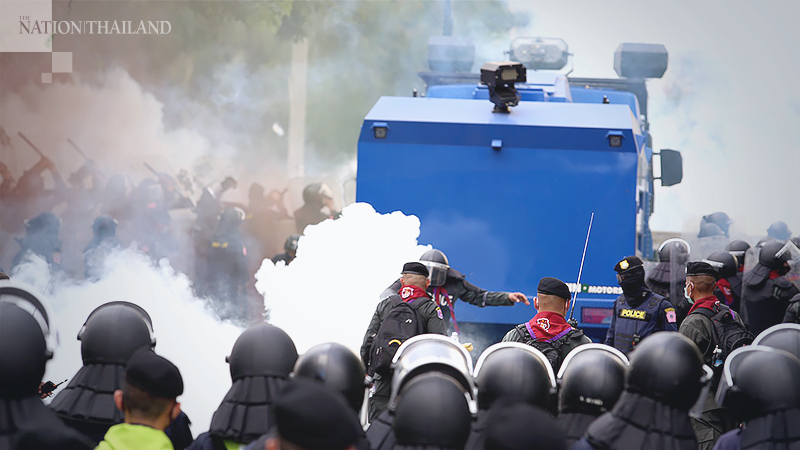
 Police fire water cannon laced with tear gas solution at protesters gathered at Siam Square in Bangkok’s downtown business district on October 16.

Police fire water cannon laced with tear gas solution at protesters gathered at Siam Square in Bangkok’s downtown business district on October 16.

It began when the Constitutional Court handed down a controversial ruling to disband the Future Forward Party in February.

The political situation had been relatively calm since the military coup in 2014. But early this year, the tide turned against the military-backed government and key institutions that were deemed to be siding with dictatorship. 

 Pro-democracy demonstrators throng Kasetsart Intersection in Bangkok on October 19.

Pro-democracy demonstrators throng Kasetsart Intersection in Bangkok on October 19.

Future Forward had commanded 81 seats in Parliament after monopolising the youth vote to come third in last year’s election. 

When it was banned, flash mobs sprang up in universities and schools as the younger generation rebelled against those in power.

The pro-democracy protesters took a break during the Covid-19 lockdown, before returning to the streets in July. The protests snowballed, gathering support from wider society as more and more Thais vented frustration at what they perceived as extended junta rule.

The turning point was a rally at Democracy Monument in early August, when human rights lawyer Anon Nampa, 36, called for reform of the monarchy. His action shattered a long-held taboo against public debate of the royal institution, which is guarded by a lese majeste law that carries a penalty of up to 15 years in jail. 

Later the same month, Thammasat University student Panusaya “Rung” Sithijirawattanakul, 22, stepped onto a protest stage and issued a 10-point manifesto for monarchy reform aimed at making the institution more transparent and accountable to the people.

The pro-democracy protesters took the name Khana Ratsadon, (People’s Movement) and made three demands: PM Prayut Chan-o-cha must step down, the junta-drafted Constitution must be rewritten, and the monarchy must be reformed.

Protesters clash with police who used water cannon and tear gas to disperse them during a rally for charter change outside Parliament on November 17.

Protesters clash with police who used water cannon and tear gas to disperse them during a rally for charter change outside Parliament on November 17.

The government responded with water cannon, teargas and serious legal charges against demonstrators. On October 14, protesters marched to Government House and camped there overnight to mark the anniversary of the 1973 uprising that ousted a military dictatorship. Early the following morning, the government imposed a severe state of emergency in Bangkok and arrested protest leaders.

On October 26, Khana Ratsadon took their protest to the international stage, marching to the German Embassy in Bangkok to ask its government to investigate whether His Majesty the King was ruling Thailand from German soil. (The German foreign ministry said later that no evidence was found to support the allegation.)

In November, with no sign of an end to pre-democracy protests, PM Prayut announced that “all laws” would be deployed against protesters. Police promptly resumed enforcing the lese majeste law (Section 112) against protesters after a two-year hiatus. Some 37 protesters, including a 16-year-old, have now been summoned to hear lese majeste charges, according to Thai Lawyers for Human Rights. The move drew condemnation from the United Nations High Commission for Human Rights, which called for all charges to be dropped against the peaceful protesters and urged the Thai government to amend Section 112. Protesters took a break from street rallies, but their push to abolish Section 112 saw campaign posters mushroom across Bangkok. They also reminded people of suspected enforced disappearances of Thai political activists since the 2014 coup, by hanging mock corpses at public venues. 

Protest leaders vowed to keep up the pressure on the government and elites next year, announcing they would intensify their political activities in 2021.

A Trump-touted covid therapy awaits proof to back up his boasts #SootinClaimon.Com

#SootinClaimon.Com : ขอบคุณแหล่งข้อมูล : หนังสือพิมพ์ The Nation.

A Trump-touted covid therapy awaits proof to back up his boasts

InternationalDec 31. 2020Stephen Hahn, commissioner of food and drugs at the U.S. Food and Drug Administration (FDA), center, speaks during a news conference in the James S. Brady Press Briefing Room at the White House in Washington on Aug. 23, 2020. MUST CREDIT: Bloomberg photo by Stefani Reynolds.Stephen Hahn, commissioner of food and drugs at the U.S. Food and Drug Administration (FDA), center, speaks during a news conference in the James S. Brady Press Briefing Room at the White House in Washington on Aug. 23, 2020. MUST CREDIT: Bloomberg photo by Stefani Reynolds.

By Syndication Washington Post, Bloomberg · Anna Edney

One day before the Republican National Convention kicked off, President Donald Donald Trump and top drug regulator Stephen Hahn held a White House press conference to tout emergency authorization of a promising covid-19 treatment.

Convalescent plasma, a soup of immune factors derived from the blood of recovered covid-19 patients, had shown “an incredible rate of success” and would “save countless lives,” Trump said Aug 23. Yet more than four months later and with more than 330,000 U.S. coronavirus deaths reported since the pandemic began, the jury is still out how much the treatment benefits patients, if at all.

It wasn’t the first or last time that Trump was to promote a therapy for covid-19 based on skimpy data. His faith in since-discredited hydroxychloroquine is well known, and he proclaimed Regeneron Pharmaceuticals Inc.’s antibody cocktail a wonder drug after receiving it to treat his infection in October. Now, as vaccines developed to slow the pandemic begin their roll-out, the saga of convalescent plasma highlights the lack of effective treatments for the killer virus.

As the pandemic consumed thousands of lives around the world, the FDA authorized the use of promising drugs with only early evidence to go on. From Gilead Sciences’s remdesivir to antibody treatments like Regeneron’s, drugs for covid-19 that were cleared to great fanfare have failed to gain backing from top scientists and infectious disease groups.

Convalescent plasma is supported by one of the fuzzier datasets, and just days after Trump’s August victory lap, Food and Drug Administration Commissioner Hahn began walking back remarks that exaggerated its effectiveness. National Institutes of Health advisers who compile covid-19 treatment guidelines said in September that there wasn’t enough evidence convalescent plasma works to recommend its use against the virus.

Data continues to support the FDA’s emergency authorization, Stephanie Caccomo, a spokeswoman, said in an email. The agency in September posted evidence that it said backs the use of convalescent plasma.

While one trial cited by the agency indicated a significant help to patients, others “tended to indicate a modest benefit.” The FDA acknowledged that the studies were less rigorous scientifically than it normally requires to prove efficacy.

The White House didn’t respond to a request for comment.

More than 100,000 people in the U.S. have already been treated with convalescent plasma. That includes a nationwide Mayo Clinic program that infused more than 90,000 people before the FDA’s emergency authorization.

Clinical trials that were supposed to clear up any doubts about the treatment were expected to read out in September or October, just a month or two after the FDA cleared it for emergency use. Those data have yet to appear, but the raging U.S. outbreak should soon serve to enroll more patients in those studies.

Still, the effect is likely to be much more modest than Trump or Hahn originally claimed, experts said.

“It became evident in most people, even when it works, it’s not a Lazarus thing,” said Christopher Austin, director of the NIH’s National Center on Advancing Translational Sciences. “The effect was going to be smaller.”

The center is leading or involved in key clinical trials that will finally offer insight into convalescent plasma’s efficacy more than 100 years after it began being deployed during pandemics. The rationale behind the treatment is that the antibodies people develop after enduring a disease will help newly diagnosed patients recover.

“We do not know whether it works” against covid-19, Austin said. “We all want to know the answer. I want to know the answer more than anybody. We have an obligation to future patients.”

Trials could produce critical data in January or February, Austin said, at least for a potential subset of people who respond to the therapy. Patients who receive convalescent plasma with a high level of antibodies early in their disease course appear to fare better. But whether certain age, race or gender groups are more likely to respond is still unknown.

Andrea Troxel, director of the Division of Biostatistics at New York University School of Medicine, is hoping to soon have answers as well. Troxel is the principal investigator of an effort to combine data from eight trials of convalescent plasma around the world. Among them is an NIH-sponsored trial at NYU Langone Health as well as studies in India, Spain, Belgium, and other countries.

Austin and Troxel are keeping in close touch with the FDA, which could possibly narrow its emergency authorization for the therapy based on what the studies reveal.

When the FDA cleared convalescent plasma over the summer, some researchers were concerned wider use would stymie enrollment in clinical trials. Troxel said this hasn’t been the case for the most part because the Infectious Diseases Society of America advised doctors against using convalescent plasma outside of clinical trials until a benefit was seen.

It’s part of a familiar pattern for covid-19 drugs touted by Trump. For example, the government has distributed hundreds of thousands of antibody therapies from Regeneron and Eli Lilly & Co. to hospitals around the country, but uptake has been minimal. Only 5% to 20% of the antibody treatments were being used, Moncef Slaoui, chief scientific adviser to the Operation Warp Speed drug and vaccine accelerator, said earlier this month.

Like convalescent plasma, antibody therapies are hoped to work best when used early to prevent high-risk patients from worsening. They must be infused typically in a hospital setting, which can be a tough sell for people who don’t feel very ill.

The antibody therapies are basically synthetic versions of convalescent plasma that are more complex and expensive to make. If convalescent plasma does work for some people, Austin said, the relative ease of getting it to patients could make it valuable.

“If you’re a rural hospital in Africa, you can give convalescent plasma,” he said. “You don’t need a supply chain, storage or a pharmacy. Heaven knows we need things like that, and we have areas like that in this country too.”

And drugs with even a potentially modest benefit can be helpful against the virus “both in terms of hospitalization and what we’re learning about its long-term effects,” said Megan Ranney, an emergency physician and associate professor at Brown University. The danger lies in over-promising, she said.

“There is no magic pill that you can take and suddenly avoid all the horrible effects of covid,” Ranney said. Implying otherwise is “dangerous because it gives people a false sense of assurance.”