Nearly 90 percent of the adults in Britain have had their first dose of a vaccine and more than 76 percent of adults have received both doses, the latest figures showed.
Meanwhile, British holidaymakers will benefit from cheaper travel testing packages, with the price of some tests to fall by a fifth from Saturday.
Another 29,520 people in Britain have tested positive for COVID-19, bringing the total number of coronavirus cases in the country to 6,241,011, according to official figures released Saturday.
ADVERTISEMENTx
The country also reported another 93 coronavirus-related deaths. The total number of coronavirus-related deaths in Britain now stands at 130,894. These figures only include the deaths of people who died within 28 days of their first positive test.
England lifted almost all its remaining COVID-19 restrictions on July 19. Nearly 90 percent of the adults in Britain have had their first dose of a vaccine and more than 76 percent of adults have received both doses, the latest figures showed.
Meanwhile, British holidaymakers will benefit from cheaper travel testing packages, with the price of some tests to fall by a fifth from Saturday.
The cost of NHS (National Health Service) Test and Trace tests for international arrivals will now be reduced from 88 pounds (around 122 US dollars) to 68 pounds (around 94 US dollars) for green or fully vaccinated amber arrivals, and from 170 pounds (236 US dollars) to 136 pounds (189 US dollars) for two tests for amber arrivals who are not fully vaccinated, according to the Department of Health and Social Care.
Children play with water in a fountain near Tower of London in London, Britain, on Aug. 13, 2021.
This is the second time pricing of NHS tests has been reduced, following a review in May.
People dine in the outdoor dining area of a restaurant in London, Britain, on Aug. 13, 2021.
“I am pleased to announce that with immediate effect we’re slashing the price of day 2 and 8 tests from NHS Test and Trace by a fifth – this will benefit people right across the UK. And I look forward to reviewing initial advice from the Competition and Markets Authority over the coming days,” said Britain’s Health Secretary Sajid Javid in a statement.
To bring life back to normal, countries such as Britain, China, Germany, Russia and the United States have been racing against time to roll out coronavirus vaccines.
People walk past the Houses of Parliament in London, Britain, Aug. 9, 2021.
Wildfires rage in several countries as heatwave hits Southern Europe
Greece has been one of the badly affected countries, with more than 100,000 hectares of forestry and farmland burned in less than two weeks, according to the European Forest Fire Information System.
Southern Europe is on fire as sizzling temperatures sweep across the region, causing raging wildfires in several countries.
Experts have linked wildfires to record-high temperatures. Europe is in the midst of its worst heatwave in a decade due to the heat dome which is a high-pressure bubble that traps heat within a certain area.
ADVERTISEMENTx
Temperatures in Siracuse, Italy, reached 48.8 degrees Celsius on Wednesday. The World Meteorological Organization said that it would be investigating the validity of this temperature report. If verified, it would become the highest temperature ever recorded in Europe.
Greece has been one of the badly affected countries, with more than 100,000 hectares of forestry and farmland burned in less than two weeks, according to the European Forest Fire Information System (EFFIS).
The Greek government said there have been nearly 600 fires since the beginning of August.
The fires broke out as Greece was roasted by the most intense and protracted heatwave in around 30 years, with temperatures in many parts of the country reaching 42 to 45 degrees Celsius.
Photo taken on July 26, 2021 shows a burned area in Oristano, Sardinia, Italy.
Greek Prime Minister Kyriakos Mitsotakis said on Thursday that the country came across the biggest ecological disaster of the last few decades, as multiple blazes erupted across the country powered by the extended heatwave recently.
“We managed to save thousands of people, but we lost forest land and properties,” Mitsotakis said during a press conference.
“The climate crisis is here, and everything needs to change, from the orientation of the economy and the national energy policy to the state’s operation and the behavior of each citizen in relation to the environment,” he said.
Asked about the cause of the fires, Mitsotakis said it was “certain that all the fires did not break out by accident.” Several people have been arrested over the past few days on suspicion of attempting to start fires, including some who are accused of doing so deliberately.
In Spain, record high prices for electricity have been registered in the country almost every day since Monday, coinciding with a heatwave which has seen temperatures rise to around 40 degrees Celsius in the capital of Madrid and several major cities.
On Thursday, dozens of firefighters backed by four water-dropping aircraft were battling a blaze in the northeastern province of Tarragona. The fire has destroyed some 40 hectares of protected forest, local officials said.
Two smaller fires were also burning in the northern wine-producing region of La Rioja and the northeastern province of Zaragoza.
A firefighter battles against a wildfire at Varybobi, Acharnes, Greece, on Aug. 3, 2021.
In Albania, the country’s Defense Ministry said on Friday that there have been six active fires across the country, but the situation is under control.
In Malta, the southern European island country was also hit by a strong heatwave, with temperatures in some places reaching 43 degrees Celsius.
According to the country’s Civil Protection Department, Malta recorded 513 grass or rubbish fires between June 1 and Aug. 10.
Photo taken on Aug. 12, 2021 shows burned bushes after a wildfire caused by high temperature in Siggiewi, Malta.
LatAm leaders express solidarity with Haiti following devastating earthquake
Haitian authorities have confirmed that the earthquake, which originated about 12 km from the southern town of Saint Louis du Sud, has killed 304 people and wounded 1,800 others.
Several Latin American country leaders on Saturday expressed their solidarity with the people of Haiti after a devastating earthquake there has left at least 304 people dead and more than 1,800 others wounded.
ADVERTISEMENTx
The Argentinean government expressed its “deep regret” for the human and material losses caused by the earthquake and expressed its “willingness to collaborate” with the Caribbean island country.
Venezuelan Foreign Minister Jorge Arreaza said on Twitter that his government will provide “logistical support and necessary supplies” to help the Haitian people.
Peruvian President Pedro Castillo said on Twitter, “I express my total solidarity with the people of Haiti after the devastating earthquake that occurred today. As a government in the region, we will be attentive in providing support to the nation in order to advance in unity and fraternal integration.”
Uruguay and Costa Rica also expressed their willingness to help the Haitian people.
Bolivian President Luis Arce on Twitter expressed the Bolivian people’s condolences “for the victims and wishes of recovery for the injured,” saying, “We are with you, Haitian brothers.”
The Brazilian government expressed firm commitment to providing humanitarian aid to Haiti, adding that no members of the Brazilian community in the quake-hit country were affected by the earthquake.
Mexican President Andres Manuel Lopez Obrador voiced his condolences to the people of Haiti and said that his government “is already preparing immediate aid through the National Coordination of Civil Protection and the Ministry of Foreign Relations, the Secretariat of the Navy, and the Ministry of National Defense.”
Haitian authorities have confirmed that the earthquake, which originated about 12 km from the southern town of Saint Louis du Sud, has killed 304 people and wounded 1,800 others.
Haitian Prime Minister Ariel Henry went to the department of Grand’Anse to see the damage and said that his government has mobilized resources to help victims.
7.2-magnitude earthquake in Haiti leaves 304 people dead
A 7.2-magnitude earthquake in Haiti has killed 304 people, wounded more than 1,800 others and caused a landslide, which has blocked a national highway, Haitian authorities said Saturday.
National Highway 7, which connects the southern cities of Les Cayes and Jeremie, has been blocked by the landslide, said the country’s Civil Protection Directorate.
ADVERTISEMENTx
“An operation is being carried out to restore traffic circulation,” said the agency, praising efforts by rescue teams and residents to pull a large number of people from the rubble of collapsed buildings.
Haitian Prime Minister Ariel Henry went to the department of Grand’Anse to see the damage and said that his government has mobilized resources to help victims.
The earthquake originated about 12 km from the southern town of Saint Louis du Sud.
Photo taken with a mobile device shows members of the Cuban Medical Brigade helping an injured person after an earthquake in Jeremie, Haiti, Aug. 14, 2021.
Photo taken with a mobile device shows members of the Cuban Medical Brigade helping injured people after an earthquake in Jeremie, Haiti, Aug. 14, 2021.
Photo taken with a mobile device shows members of the Cuban Medical Brigade helping an injured person after an earthquake in Jeremie, Haiti, Aug. 14, 2021.
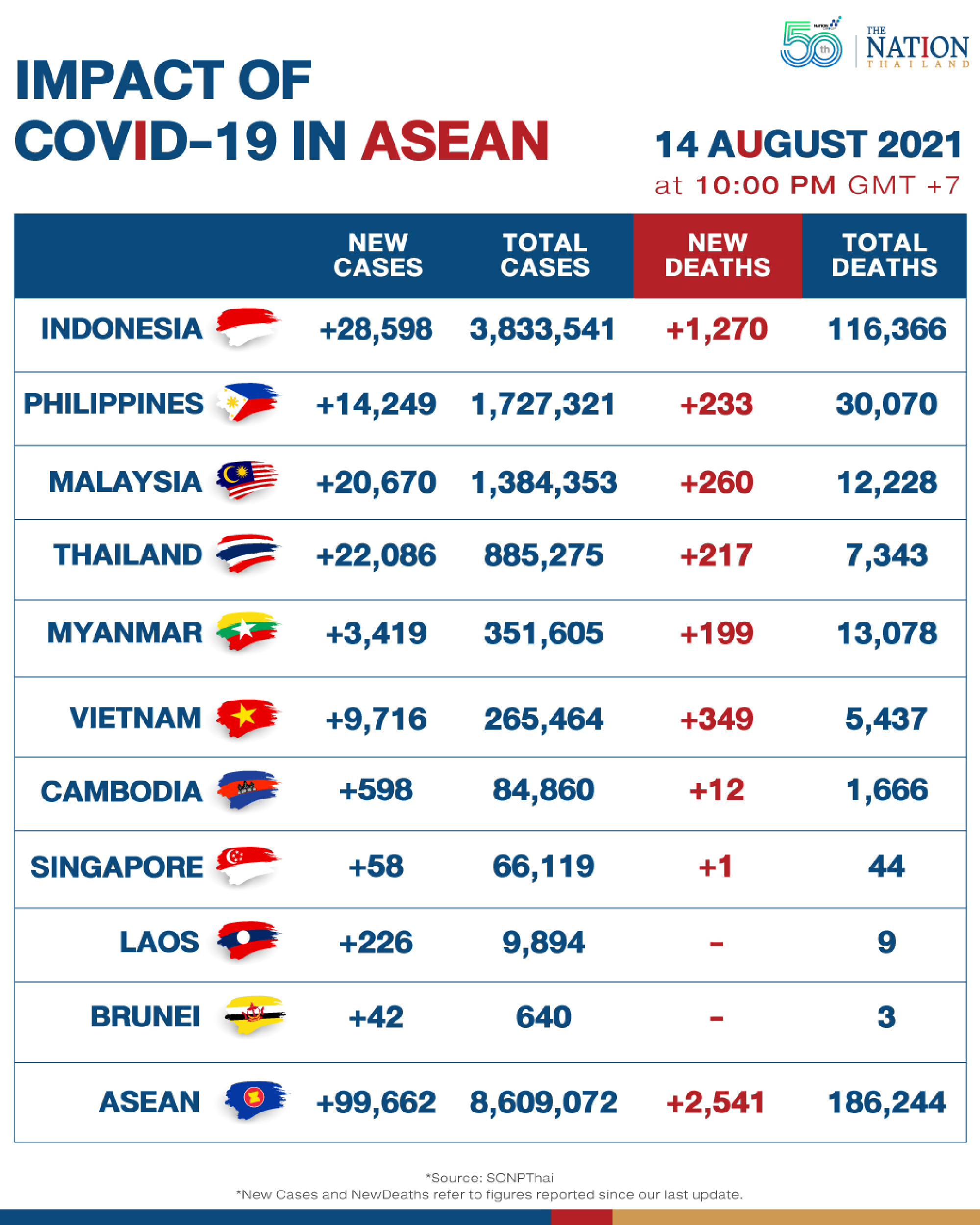
Southeast Asia reported 99,662 new Covid-19 cases and 2,541 deaths on Saturday, collated data showed.
The numbers in Asean countries were lower than 102,319 and 2,699 respectively on Friday.
The Hanoi Medical University will on Sunday start the first phase of clinical trials of Covid-19 vaccine ARCT-154, an mRNA vaccine developed by US company Arcturus Therapeutics Inc, which transferred the technology to a company in Vietnam.
According to the ministry, ARCT-154 is a self-amplifying mRNA vaccine designed to act against coronavirus variants, including the delta.
The clinical trials will be carried out in three phases with the participation of 21,000 volunteers, including 100 in phase one, 300 in phase two and 20,600 in phase three.
ADVERTISEMENTx
Cambodia on Saturday announced that another 65 cases of the coronavirus delta variant were detected in Cambodia from August 11-13, reaching 22 of the Kingdom’s 25 capital and provinces and bringing the total to 494.
Among the latest 65 cases were 36 community transmissions, 17 migrant workers, four airline passengers, four medical workers and four civil servants.
Biden administration scrambled as its orderly withdrawal from Afghanistan unraveled
WASHINGTON – By the middle of the week, as cities across Afghanistan were falling like dominoes to the Taliban and U.S. diplomats appeared increasingly at risk, President Joe Bidens plan for an orderly end to the United States longest war was quickly falling apart.
On Wednesday evening, Biden convened his top advisers to assess the ominous turn of events. One by one, in the cramped Situation Room in the White House basement, national security adviser Jake Sullivan, Defense Secretary Lloyd Austin and Secretary of State Antony Blinken outlined the administration’s options for ensuring the security of U.S. personnel. Biden asked them to return with recommendations.
When the aides reconvened early the next morning, things had gotten worse. The Taliban was taking control of more and more of Afghanistan’s 34 provincial capitals, most of them seized without a major fight, and the militants were bearing down on Kabul, the national capital. After being briefed by Sullivan and Austin, Biden gave the order to activate a plan deploying troops to secure the Kabul airport and create an evacuation route for Americans on the ground.
ADVERTISEMENTx
Blinken called Kabul, where the U.S. Embassy’s top diplomat was already presiding over packing and document destruction, and told him most embassy personnel would move to the airport. At U.S. Central Command in Tampa, military leaders ordered intensified airstrikes on militants driving toward Kabul, hoping to slow their advance as U.S. personnel and their allies scrambled to get out.
The urgency bordering on panic laid bare how the president’s strategy for ending the 20-year U.S. military effort – leaving Afghan forces to hold off the Taliban for months as negotiators redoubled efforts to hammer out a peace deal – has undergone a rapid dismantling.
The lightening collapse is rooted in misplaced assumptions – including a failure to account for how the U.S. departure would catalyze a crisis of confidence in Afghan leaders and security forcers, enabling the Taliban blitz – from the moment Biden announced the withdrawal this spring. It is equally the product of two decades of miscalculations about transforming Afghanistan and overly optimistic assessments of progress that have plagued the war from its start.
After receiving a video briefing from aides while at Camp David on Saturday, Biden issued a statement defending the administration’s response, saying an endless U.S. presence in another country’s civil conflict was unacceptable.
“One more year, or five more years, of U.S. military presence would not have made a difference if the Afghan military cannot or will not hold its own country,” he said.
ADVERTISEMENT
Laurel Miller, who served as a top official for Afghanistan during the Obama and Trump administrations, said a swift Taliban takeover was among the scenarios that analysts in and outside of government had warned could occur after a U.S. withdrawal, even though few expected it to happen so fast.
“My takeaway is that they priced this into the decision,” she said of the Biden administration. “It’s regrettable, but it was priced in as a tolerable outcome.”
The disintegration of the hoped-for withdrawal scenario has left the administration racing to protect U.S. diplomats and struggling to respond to criticism from Republicans and advocates alike. It has also deepened questions about how Biden will reconcile his realpolitik, including the abandonment of women and human rights defenders, with promises to restore core values to U.S. foreign policy.
This account of how the Biden administration has grappled in recent weeks with the unraveling of its Afghanistan plans is based on interviews with more than a dozen current and former officials, some of whom spoke on the condition of anonymity to describe internal deliberations.
Officials say the administration, despite a decision to send 4,000 troops back to Afghanistan to help evacuate embassy staffers and Afghan allies, is not contemplating a reversal of its withdrawal decision, as some former military leaders have advocated, or an extension of the Aug. 31 deadline for ending air support to Afghan forces.
ADVERTISEMENT
For some critics, including those with deep experience in Afghanistan, the situation is not only disheartening but also offers a troubling message as the Biden administration seeks to turn around the United States’ global image after four years of erratic foreign policy under President Donald Trump.
“If Trump undermined the confidence of the world, Biden’s actions, pulling out and leaving a mess in Afghanistan, may simply be chapter two in undercutting fundamental assumptions about America,” said Ronald Neumann, a former U.S. ambassador to Afghanistan who serves as the president of the American Academy of Diplomacy.
– – –
The administration’s decision to withdraw, announced in April, was guided by Biden’s conviction, dating back more than a decade, that the military mission in Afghanistan had little chance of success. The former senator initially supported the wars in Afghanistan and Iraq, but by the time he became Barack Obama’s vice president in 2009, he saw the Afghanistan project as futile.
After trillions of dollars and more than 2,000 U.S. combat deaths, as well as the deaths of tens of thousands of Afghan civilians, Biden thought the United States had little chance of transforming a largely tribal, undeveloped nation. For all their differences, Biden’s instincts coincided with those of Trump, whose desire to withdraw was repeatedly deflected by his top security aides.
As a candidate in early 2020, Biden was asked whether the United States had a responsibility to Afghan women and girls in light of a possible Taliban takeover. “No, I don’t!” Biden said. “Do I bear responsibility? Zero responsibility.”
“The idea of us being able to use our armed forces to solve every single internal problem that exists in the world is just not within our capacity,” he continued. “The question is, is America’s vital self-interest at stake or the self-interest of one of our allies at stake?”
As the war approached its 20th anniversary, the public seemed to agree. A recent poll by the Chicago Council on Global Affairs shows that 70 percent of Americans back withdrawing from Afghanistan, though support is stronger among Democrats than Republicans.
Months before Biden unveiled his withdrawal decision, Gen. Austin “Scott” Miller, then the top commander of U.S. and NATO forces in Afghanistan, warned that a rapid government collapse was not just possible but was the most likely result of a quick exit, according to one person familiar with his analysis.
In weeks of intensive deliberations in Washington, Austin and Gen. Mark. A. Milley, the chairman of the Joint Chiefs of Staff, privately advised Biden against a full withdrawal, officials said.
“It came down to where the assessment they were receiving from the military in Afghanistan did not support the preferred policy decision that the administration and certainly the State Department wished to pursue,” one of the officials said. “The bottom line was that DOD was not the loudest voice in the room when it came to stating their candid assessment of likely outcomes.”
But a senior U.S. official involved in White House deliberations defended the process and the Pentagon’s part in it.
“First of all, the military voice was heard,” the official said. “It was heard, it was loud, it was clear, and it was in writing and verbally, and it was unambiguous.”
The official said that no senior U.S. leader predicted that a collapse of the Afghan state could come in August. Generals did warn, however, that they were concerned that a collapse could occur before the end of the year, two officials said.
Once the decision was made, Pentagon leaders, especially cautious after years of civil-military strains under Trump, pivoted to executing Biden’s plan. Concerned about the safety of military personnel, commanders felt the need to quickly pull out the remaining 2,500 U.S. troops, four officials said.
In justifying the decision, Biden’s aides argued that the president’s hands were tied by Trump’s February 202 agreement with the Taliban, which committed the United States to withdrawing in 2021. If Washington reneged, they argued, the Taliban would resume attacks on American troops.
By July, as the Taliban intensified its march across rural Afghanistan and captured successive district centers, U.S. officials expected that local forces would block the militants from seizing provincial capitals, whose survival was seen as a key indicator of Afghan government strength, according to people familiar with Biden administration deliberations.
When the Taliban began taking some of the country’s more lightly defended provincial capitals in early August, officials recalculated to assume that Afghan forces, bolstered by two decades of foreign training and support, would prevent the Taliban from commandeering the country’s more strategic cities.
But when the fighters rolled into the northern city of Kunduz the following week, making it the first major provincial capital to fall, U.S. officials realized that their scenarios were illusory.
“Kunduz was a wake-up call,” one military official said.
The Pentagon swung into action with plans it had rehearsed months before, just in case, said one senior defense official. Austin also instituted a daily synchronization meeting with senior defense officials on the crisis and spoke separately numerous times per day with the top officer overseeing the region, Marine Corps Gen. Kenneth “Frank” McKenzie, and the senior officer on the ground, Rear Adm. Peter Vasely.
The negotiated capitulations illustrated the extent to which the U.S. withdrawal had set in motion a crisis of confidence among local political and military leaders that, in some cases, led to an unwillingness to fight.
“What we’re seeing is a tsunami of individual decisions to abandon the Afghan government, and all of those individual decisions have added up to a collapse,” Laurel Miller said.
One intelligence official said some provincial Afghan officials probably cut deals with the Taliban weeks ago. Current and former officials have resisted claims that intelligence agencies failed to forecast the government’s potential quick fall. Privately, some have expressed dismay at Biden’s withdrawal decision, made, they said, despite numerous warnings of a likely unraveling of government forces.
As conditions worsened, officials briefly debated keeping Bagram air base, the country’s most significant military airfield, open longer than initially planned to facilitate airstrikes in support of Afghan forces, four officials said. It was ultimately decided to shut the base down as planned in early July.
Eventually, the military revised its intelligence assessment of Kabul’s fate. Although it had said the city might fall as soon as six months after the withdrawal of troops was complete, it updated that to say it could come within 90 days. That was quickly revised to say it could come even sooner, perhaps within weeks.
– – –
At the State Department, where many diplomats had worked on Afghanistan or served in Kabul, the mood in the past few days has been grim as televisions in the background displayed images of Taliban triumphs. One official described the emotions as “wrenching.”
Senior officials canvassed the department for volunteers to serve on several crisis task forces, including one dedicated to processing asylum applications and another to support embassy operations in Kabul.
Weeks earlier, Biden had authorized the pre-positioning in the region of thousands of troops who could go into Afghanistan, and he began receiving daily battlefield assessments and updates on contingency planning for the evacuation.
At the same time, the president approved the provision of close air support through the end of August and the sustainment of contractors at Kabul’s airport to keep the Afghan air force flying.
In early August, even before the major Taliban push began, the White House convened a tabletop exercise on the planning for an emergency exit. At the embassy in Kabul, the Emergency Action Committee had taken evacuation plans off the shelf and was refining them, virtually on a day-to-day basis, officials said.
Senior U.S. officials continued to hold talks with Taliban representatives in Doha, the Qatari capital, where on-and-off peace consultations have taken place for several months. They warned Taliban representatives that a violent takeover and the imposition of the harsh rule that had characterized the militants’ government in the late 1990s would not be accepted by the United States or the global community. They said the group would again be international pariahs if it did not halt its offensive.
U.S. envoy Zalmay Khalilzad and other diplomats repeated that messagein a massive gathering in recent days in Doha, where representatives from neighboring countries, as well as China and Russia met with Taliban and Afghan government negotiators. On Thursday evening, the countries released a communique reiterating those warnings and called for an end to violence and a political settlement.
By Friday morning, however, the entire exercise seemed irrelevant in light of what was happening on the ground.
Abdullah Abdullah, the Afghan government’s chief negotiator, returned to Kabul to try to convince President Ashraf Ghani that it was over and that he needed to fashion some kind of deal to offer the militants that would preserve at least the possibility of non-Taliban participation in a new or transition government.
As the Taliban continued to draw nearer to Kabul, Khalilzad told the militants it was not in their interest to seize the capital immediately. Thousands of U.S. troops were already landing there and would fight if they had to, Khalilzad warned, according to people familiar with the discussions. If the militants would delay the move on Kabul, he told them, they would be in a much better position to achieve their fundamental goals.
The Biden administration, however, has less and less ability to shape events as the Taliban grip grows stronger.
Carter Malkasian, who served as a senior Pentagon adviser and has written several books on Afghanistan, said that the United States can really focus only on blunting the Taliban’s momentum.
“We can try slow them down from crashing right into Kabul, and try to use our remaining leverage to prevent atrocities,” he said.
Published : August 15, 2021
By : The Washington Post · Missy Ryan, Karen DeYoung, Dan Lamothe, Anne Gearan
At least 304 dead in Haiti in wake of 7.2-magnitude earthquake
PORT AU PRINCE, Haiti – A massive 7.2-magnitude earthquake struck Haiti on Saturday morning, killing hundreds of people and shaking buildings from the neighboring Dominican Republic to Jamaica and Cuba, as the international community confronted the prospect of a major escalation in the humanitarian crisis already facing one of the hemispheres most deeply troubled nations.
Saturday’s quake was stronger, though centered farther from the capital, than the devastating 2010 temblor that killed more than 220,000, prompting foreign governments and aid agencies to prepare for large numbers of dead, wounded and homeless. Officials and witnesses reported heavy damage and fatalities dozens of miles from the epicenter, 7.2 miles northeast of Saint-Louis du Sud, where the quake struck at 8:29 a.m. Haiti’s civil protection office reported at least 304 people had died – with most in the hardest hit southern and western areas – with hundreds more missing and 1,800 wounded. The death toll is expected to rise amid reports that some neighborhoods had been razed.
Government officials, relief agencies and representatives from the United Nations are still assessing the damage, including via reconnaissance flights over the southern and western parts of the country, as a wave of aftershocks continued to hit Haiti. But the sheer force of the temblor and a climbing death toll suggest a devastating new tragedy in the Western Hemisphere’s poorest nation, which has lurched from crisis to crisis for years.
The disaster struck about a month after the assassination of the president, leaving a hobbled interim government in charge of a country so wracked by gang violence and a collapsing rule of law that observers have dubbed it the Somalia of the Caribbean.
Now, 11 years after the devastating 2010 earthquake, Haitians are again dealing with crushed bodies, collapsed buildings and overwhelmed hospitals.
“The needs are enormous,” Prime Minister Ariel Henry told the Associated Press, adding that he would wait to request international assistance until damage had been assessed. “We must take care of the injured and fractured, but also provide food, aid, temporary shelter and psychological support.”
ADVERTISEMENTx
At least 304 dead in Haiti in wake of 7.2-magnitude earthquake
At least three urban areas in the southern region – Jeremie, Les Cayes and Baradères – sustained major damage, with fears of even broader damage in villages and towns closer to the epicenter. Although high call traffic had jammed lines earlier in the day, cellular phone infrastructure in the area remained operational.
Ralph Simon, a radio station owner in Jeremie, a city of 30,000 in southwest Haiti, said many homes and buildings had been leveled or damaged, including a church. He said he saw two corpses in the rubble of a church. “The impact of this is huge,” he said. “I was still in bed with my children and my wife. My wife had a heart attack, and I had to save her life . . . There’s damage to houses. People are crying.”
Images on social media and witnesses portrayed scenes of devastation from collapsed structures, with officials saying residents were pouring into ill-equipped hospitals, bringing the injured in cars and beds of pickup trucks. Neighbors aided rescue workers, trying to lift rubble and knock down walls to reach people.
Preliminary disaster modeling from the U.S. Geological Survey (USGS) predicted hundreds of millions of dollars in damage and thousands of fatalities.
ADVERTISEMENT
Silvera Guillaume, civil protection coordinator in the coastal city of Les Cayes, said the community’s resources are being overwhelmed.
“It’s a dire situation, people died. There are people right now under the rubble,” Guillaume said. “We deployed first responders to go and remove rubble, but we do not have enough first responders.”
Améthyste Arcélius, administrator of Immaculate Conception Hospital – the largest in Les Cayes – said that its facilities cannot cope with the wounded and that it is in “desperate” need of personnel and medicines.
“There are lots of victims,” Arcélius said. “The hospital needs emergency drugs, health professionals of all categories. Lots of people are coming. The hospital is flooded with victims. We are issuing a call for help.”
At 8:29 a.m., Jabin Phontus, a 23-year-old agronomy student, said he felt his family home in Les Cayes begin to quake.
ADVERTISEMENT
“I could see the walls breaking, it was scary,” he said by phone. “I took my sister and ran.”
His mother and brother also escaped their five-room home as it crumbled, leaving them scraped by falling debris.
“The house is partially destroyed, some walls are still up, but we can’t sleep inside,” he said. “We don’t know where to go now.We are seeking shelter. A lot of houses in the neighborhood are destroyed.”
As he spoke, he said a group of people near him were “trying to break down a wall to get to someone inside” a house.
In Baradères, closer to the epicenter, former mayor Pascal Calixte said that some neighborhoods were “90 percent” destroyed.
“Everybody is panicked,” Calixte said. “There is a lot of damage. The church is destroyed. Today is market day. But we had landslides and rocks killed some people who were coming to sell their things. In some areas, 90% of the houses were destroyed.”
Among the fatalities was Jean Gabriel Fortuné, an influential politician and former mayor of Les Cayes. He and least one other person died when the hotel he owned and lived in, Le Manguier, caved in, according to Duples Plymouth, a communications aide for Fortuné.
Foreign governments have begun to respond to the crisis. The White House said President Joe Biden had been briefed on the situation and had authorized an immediate response, naming U.S. Agency for International Development Administrator Samantha Power as the senior U.S. official to coordinate the effort.
Haiti became an center for charities and nongovernmental organizations in the aftermath of the 2010 earthquake. But many organizations have left, particularly in recent years as the country has descended into violence. Those remaining are scrambling to respond.
Christy Delafield, spokesperson for the charity Mercy Corps, said the group is moving to mobilize a team to the area, but relief workers face logistical challenges. The main road to the area runs through gang-filled territories just south of Port-au-Prince, leaving aid groups to focus on access by air.
But the regional airport in Les Cayes is a rural airstrip with limited capacity and is already overwhelmed.
“We saw a similar situation with Hurricane Dorian” that struck the Bahamas in 2019, Delafield said. “There isn’t a lot of capacity in that area to handle assistance.”
Muhamed Bizimana, assistant country director for Care Haiti, said his organization was also facing logistical challenges, and was having to rely on “local staff” for assessments in the hardest-hit areas, given the risks of traveling over land through gang-controlled regions south of Port-au-Prince.
“We’re exploring maritime transport,” he said.
Shelters for untold numbers of those experiencing homelessness – especially in denser urban areas in the south and west – remain an immediate priority, he said.
But longer term, the quake has the potential to worsen a hunger crisis in the country. He said he had received reports of crops in the south destroyed by landslides in the aftermath of the earthquake.
“This has not been a good year for Haiti,” Bizimana said. “It’s one crisis after another.”
In a statement, Leila Bourahla, Haiti’s country director of Save the Children, said its staff on the ground saw “horrific devastation.”
“Dozens of collapsed houses, numerous injured people and fatalities,” Bourahla said. “While it will take days to assess the full scale of the damage, it is clear that this is a massive humanitarian emergency.”
The reported magnitude from the USGS was greater than the catastrophic 7.0-magnitude earthquake that hit seven miles west of Port-au-Prince in 2010, which resulted in more than 220,000 casualties. The quake on Saturday struck farther away from the densely populated capital. But USGS noted that people in the most heavily-hit areas largely reside in poorly constructed dwellings that are vulnerable to earthquake shaking.
The earthquake is set to deepen a humanitarian crisis in a country battling hunger, poverty and violence that never fully recovered from the 2010 quake. After the devastation of Hurricane Matthew in 2016, 1.4 million Haitians required humanitarian assistance.
U.N. agencies report 46% of the population is already experiencing acute or severe food insecurity – among the highest in the world. Aid agencies face massive hurdles to transport aid south of the capital, given the open gang warfare on National Road 2 – the nation’s major western and southern artery.
Until last month, Haiti was one of a small number of countries in the world that had yet to roll out a coronavirus vaccination campaign – and the only country in the Americas. Meanwhile, coronavirus cases have surged as thousands fleeing violence have packed into overcrowded shelters around the capital.
Haiti also entered a new period of political instability in the aftermath of the assassination of President Jovenel Moïse in July.
Jose Luis Fernandez, the United Nations Food and Agriculture Organization representative in Haiti, said southern portions of the country were already facing “severe and acute” food shortages.
The earthquake “will worsen the food insecurity situation in the country, especially in areas of the south. There are pictures of many roads and bridges that have been destroyed. This is going to disrupt the flow of food.”
Haiti reeled from the quake even as the nation looked to the east with trepidation, with Tropical Storm Grace bearing down on the island nation. The storm, with maximum sustained winds of 45 mph, was poised to arrive sometime Monday, running a risk of heavy rainfall.
Published : August 15, 2021
By : The Washington Post · Widlore Merancourt, Anthony Faiola
Chulalongkorn University invents device to detect Covid-19 from sweat
A researcher at Chulalongkorn University is working on a portable sweat test for Covid detection.
After the success of “Covid-19 sniffing dogs”, that uses dogs to sniff and screen for asymptomatic people infected with Covid-19, Assistant Professor Dr Chadin Kulsing from the Department of Chemistry, at the university’s Faculty of Science, revealed that he is working on the latest innovation.
A study of the sample found that people infected with Covid-19 had some chemicals that were very distinct and different from the others. He has developed a prototype tool for detecting odours that are likely to come from aromatic substances produced by certain bacteria in the sweat of the coronavirus patients. This is the first time that Covid-19 has been tested for these chemicals.
The examination uses a cotton swab, held in the patient’s armpit for about 15 minutes. The sweat-absorbent cotton swab is then placed in a glass. The glass vials are UV sterilised before they are measured by the instrument. At this stage, the operator takes the appropriate amount of the sample tube and pressurises it into the probe to verify the results.
Tests on 2,000 people found 95 per cent sensitivity and 98 per cent specificity. However, he suggested that If the odour detector shows positive, the examinee should go for an RT-PCR test to confirm the exact result.
Currently, the portable Covid sweat odour tester is still in research and development, but it has been tested. Chulalongkorn University is cooperating with the Department of Disease Control and government agencies to screen for infected people in various communities.
Barca show there is life without Messi, while Atletico, Real Madrid both win in Spain
FC Barcelona started their La Liga season with a 4-2 win over Real Sociedad on Sunday, showing there is life without Lionel Messi.
FC Barcelona showed there is life without Messi as they kicked off their season with a 4-2 win at home to Real Sociedad on Sunday.
Martin Braithwaite scored twice for Barca after Gerard Pique had put them ahead with a header from a free-kick, and with Memphis Depay involved in two of Barca’s goals, Sergio Busquets, Pedri and Frenkie de Jong impressive in midfield and Eric Garcia confident in defense, the home side looked to be cruising.
ADVERTISEMENTx
Two goals in the 81st and 83rd minute from debutant Julen Lobete, who was making his debut for Real Sociedad, and Mikel Oyarzabal gave Real Sociedad a lifeline, but Sergi Roberto popped up at the far post to assure the points for Barca after a pass from Braithwaite.
Angel Correa scored twice to get Atletico Madrid’s title defense off to a winning start with a 2-1 win on their difficult visit to Celta Vigo.
Atletico showed their typical defensive toughness and Correa, who scored the goal that won the title for the club at the end of last season, opened the scoring in the first half.
ADVERTISEMENT
Celta equalized from the penalty spot after Marcos Llorente handled in the Atletico area, but Correa was sharp once again to net the decisive goal after a pass from Koke.
Aspas had a great chance to equalize but incredibly put the ball wide in the closing minutes after taking the ball past Atletico keeper Jan Oblak.
Thanks to a brace from new Argentine recruit Erik Lamela, Sevilla beat Rayo Vallecano 3-0 late on Sunday night. Moroccan international Youssef En-Nesyri scored a first-half penalty for the home side.
Real Madrid got off to a winning start with two goals from Karim Benzema, a header from defender Nacho Fernandez and a late goal from Vinicius Jr giving them a 4-1 win away to Alaves on Saturday night.
Benzema and Luka Modric were the star performers for Real Madrid, while both Gareth Bale and Eden Hazard were in Carlo Ancelotti’s starting 11.
ADVERTISEMENT
Saturday’s three other games all ended in draws with Wu Lei playing 63 minutes as Espanyol returning to LaLiga with a 0-0 draw away to Osasuna.
Mallorca also returned to La Liga with a point as they drew 1-1 at home to Betis with an own goal from Mallorca keeper Manolo Reina after Juanmi’s shot salvaging a point for Betis after Brian Olivan had put Mallorca ahead.
There was late drama in Cadiz as a goal in the sixth minute of injury time from Alfonso Espino rescued a point for the home side after they had been outplayed by Levante for most of the game and led through Jose Luis Morales’ 50th top-flight goal.
On Friday night, Carlos Soler got Valencia and new boss Pepe Bordalas off to a winning start with a 1-0 win at home to Bordalas’ former club Getafe.
Valencia had defender Hugo Guillamon sent off in the second minute of the game, but Soler’s first-half penalty was enough to give them a win in a bad-tempered match.
Villarreal play Granada and Elche face Athletic Club on Monday night.
Borussia Dortmund opened their German Bundesliga campaign with a 5-2 victory over Eintracht Frankfurt thanks to Erling Haalands brace.
Erling Haaland provided a brace in Borussia Dortmund’s 5-2 victory over uninspired Eintracht Frankfurt in the first round of Bundesliga on Saturday.
The “BVB” dominated the proceedings from the starting whistle and kept Frankfurt’s defence busy. It took the hosts, however, some time to produce clear-cut opportunities.
ADVERTISEMENTx
With 23 minutes gone, Dortmund broke the deadlock with great assistance of Haaland, whose square pass allowed Marco Reus to mark his 100th Bundesliga goal.
Even though Frankfurt lacked in penetration, the visitors leveled the scores out of the blue in the 27th minute when Dortmund defender Felix Passlack cleared the ball into the wrong goal.
Marco Rose’s men remained unimpressed and restored their one goal lead moments later through Thorgan Hazard, who had all time and space in the box to beat Frankfurt goalkeeper Kevin Trapp.
Frankfurt couldn’t put up resistance whereas Dortmund continued powerful to make it 3-1 after Haaland shrugged off a defender before sending the ball past hapless Trapp in the 34th minute.
Dortmund thought they had made it four but the video assistant referee disallowed Reus’ second goal of the night five minutes before the break.
Marco Reus (R) of Dortmund vies with Danny da Costa of Frankfurt during their German Bundesliga match in Dortmund, Germany, Aug. 14, 2021.
After the restart, the “Eagles” took over as Rafael Santos Borre came close twice. The striker’s header on target got defused by Dortmund keeper Gregor Kobel before Borre pulled over the goal from promising position in the 55th minute.
Just when Frankfurt was on fire, it was Dortmund who made it 4-1 as Giovanni Reyna benefitted on a loose ball and poke home from five meters at the hour mark.
The “BVB” wasn’t done with the scoring and killed the game with 70 minutes played when Reus sent Haaland, who finished the job with only Trapp to beat.
Frankfurt reduced the arrears against the flow on the game as Jens Petter Hauge tapped home a flicked corner from very close with four minutes remaining.
“A good performance by my team. It was about that we wanted to start well and that’s what we did,” Dortmund head coach Marco Rose said.
“Today we have to recognize that we had no chance. We made too many mistakes,” Frankfurt head coach Oliver Glasner said.
On Sunday, Mainz host Leipzig while Cologne take on Hertha Berlin to conclude the first round in Bundesliga.
Giovanni Reyna (L) of Dortmund vies with Hasebe Makoto of Frankfurt during a German Bundesliga match in Dortmund, Germany, Aug. 14, 2021.

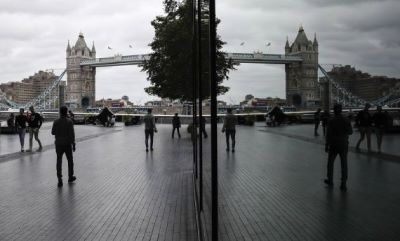
 Children play with water in a fountain near Tower of London in London, Britain, on Aug. 13, 2021.
 People dine in the outdoor dining area of a restaurant in London, Britain, on Aug. 13, 2021.
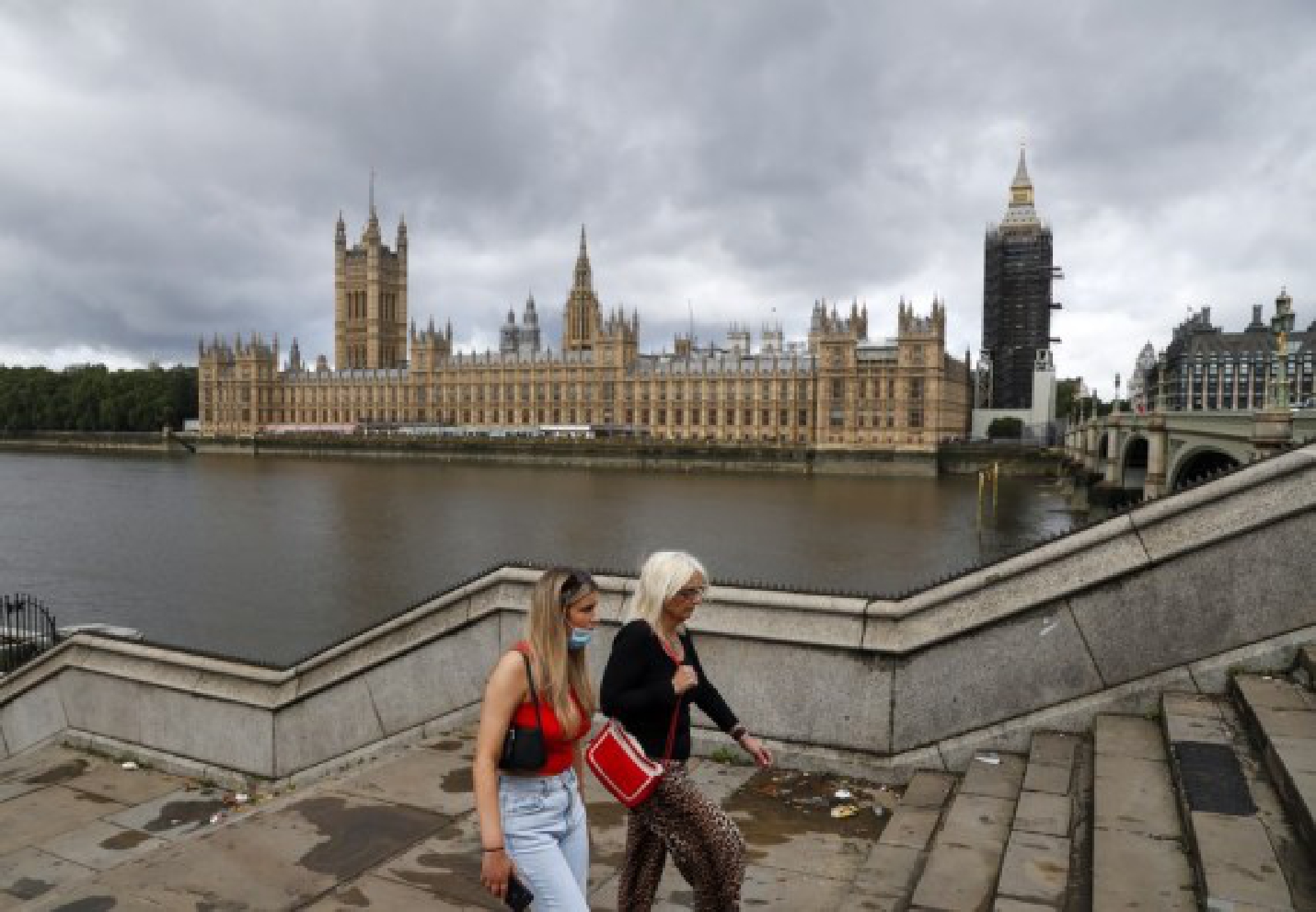 People walk past the Houses of Parliament in London, Britain, Aug. 9, 2021.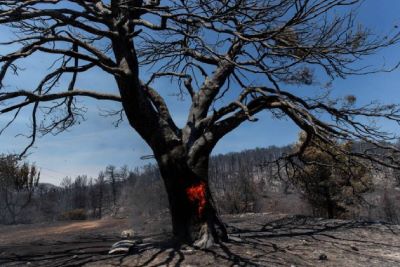
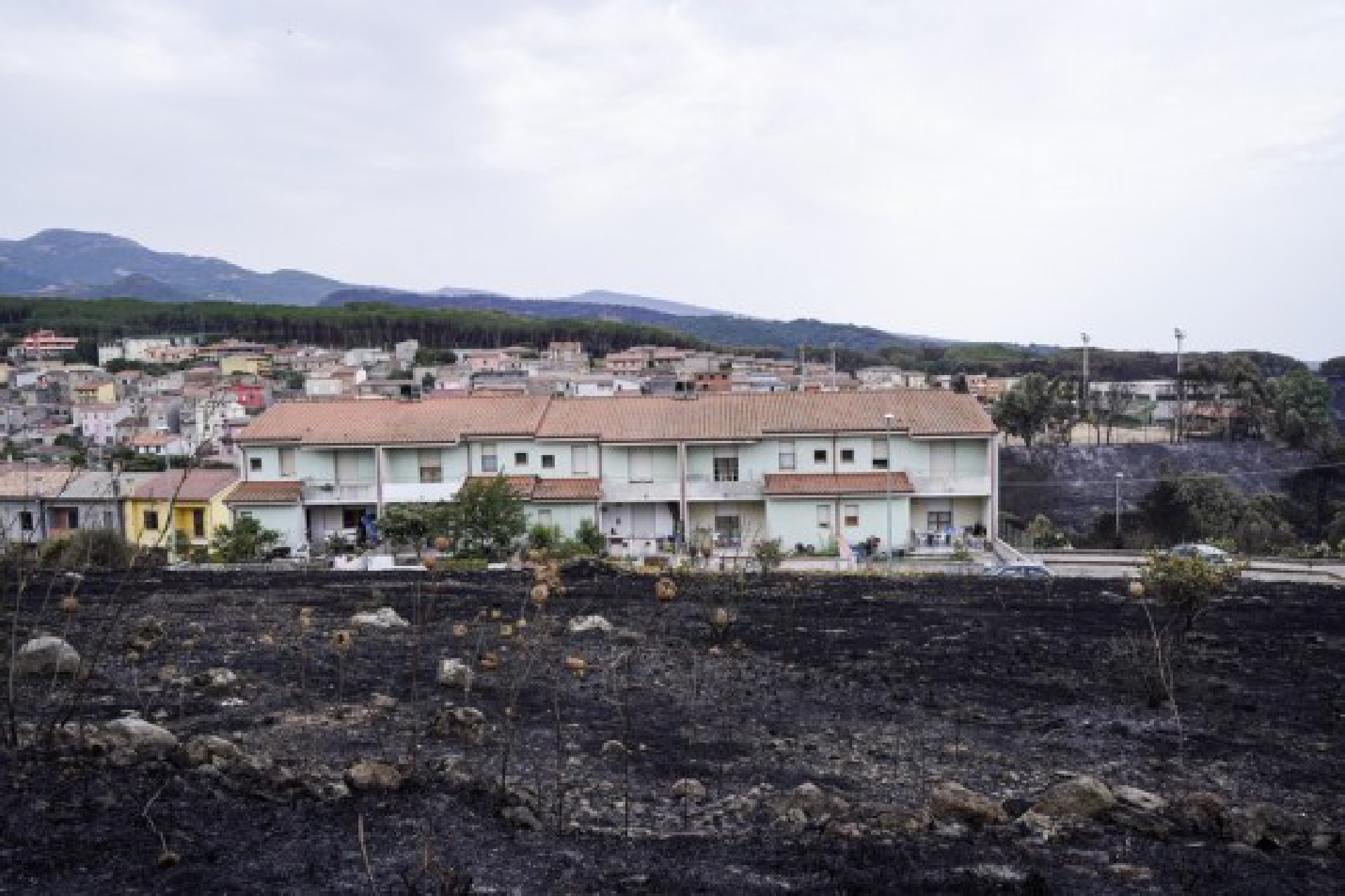 Photo taken on July 26, 2021 shows a burned area in Oristano, Sardinia, Italy.
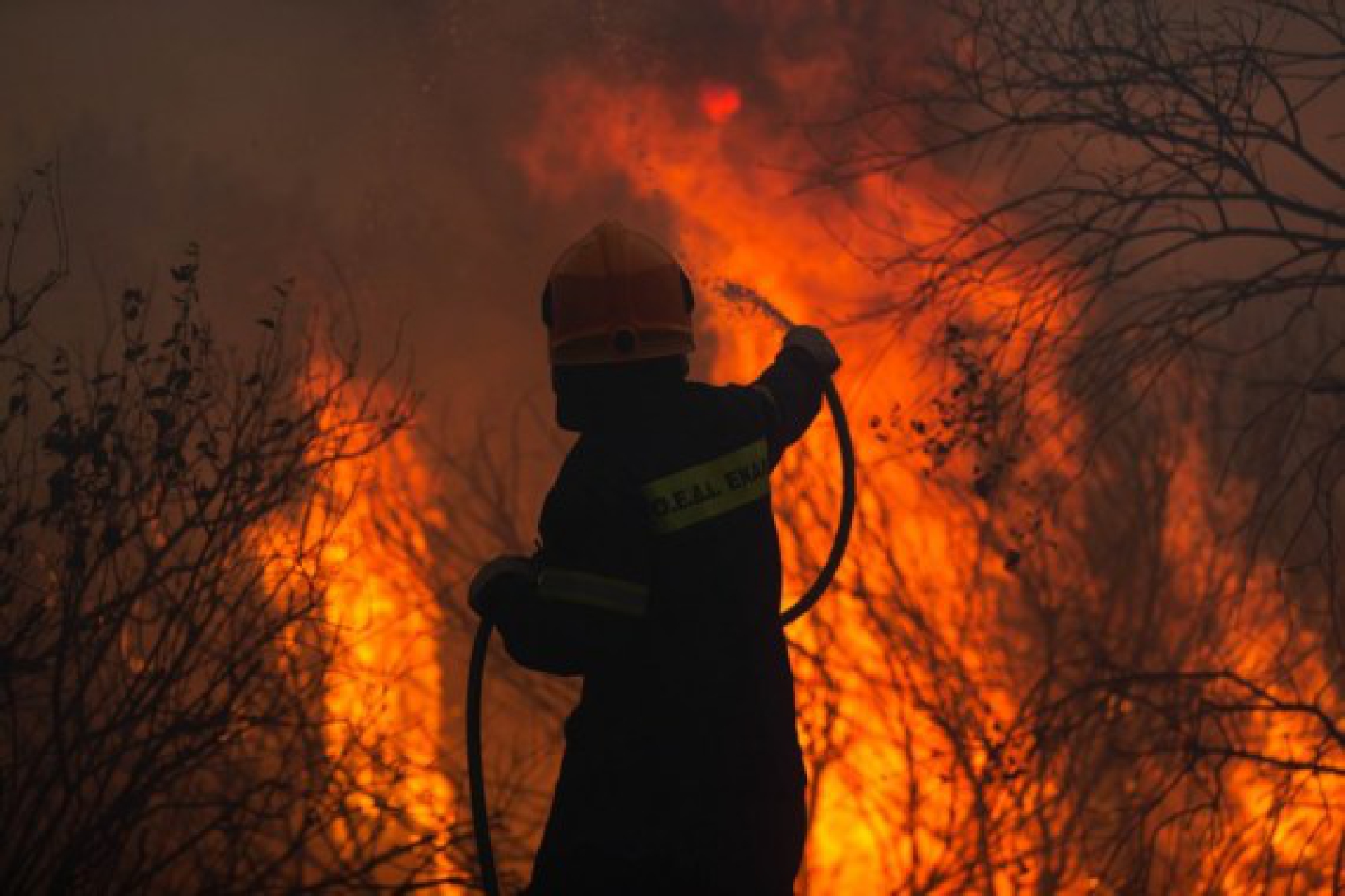 A firefighter battles against a wildfire at Varybobi, Acharnes, Greece, on Aug. 3, 2021.
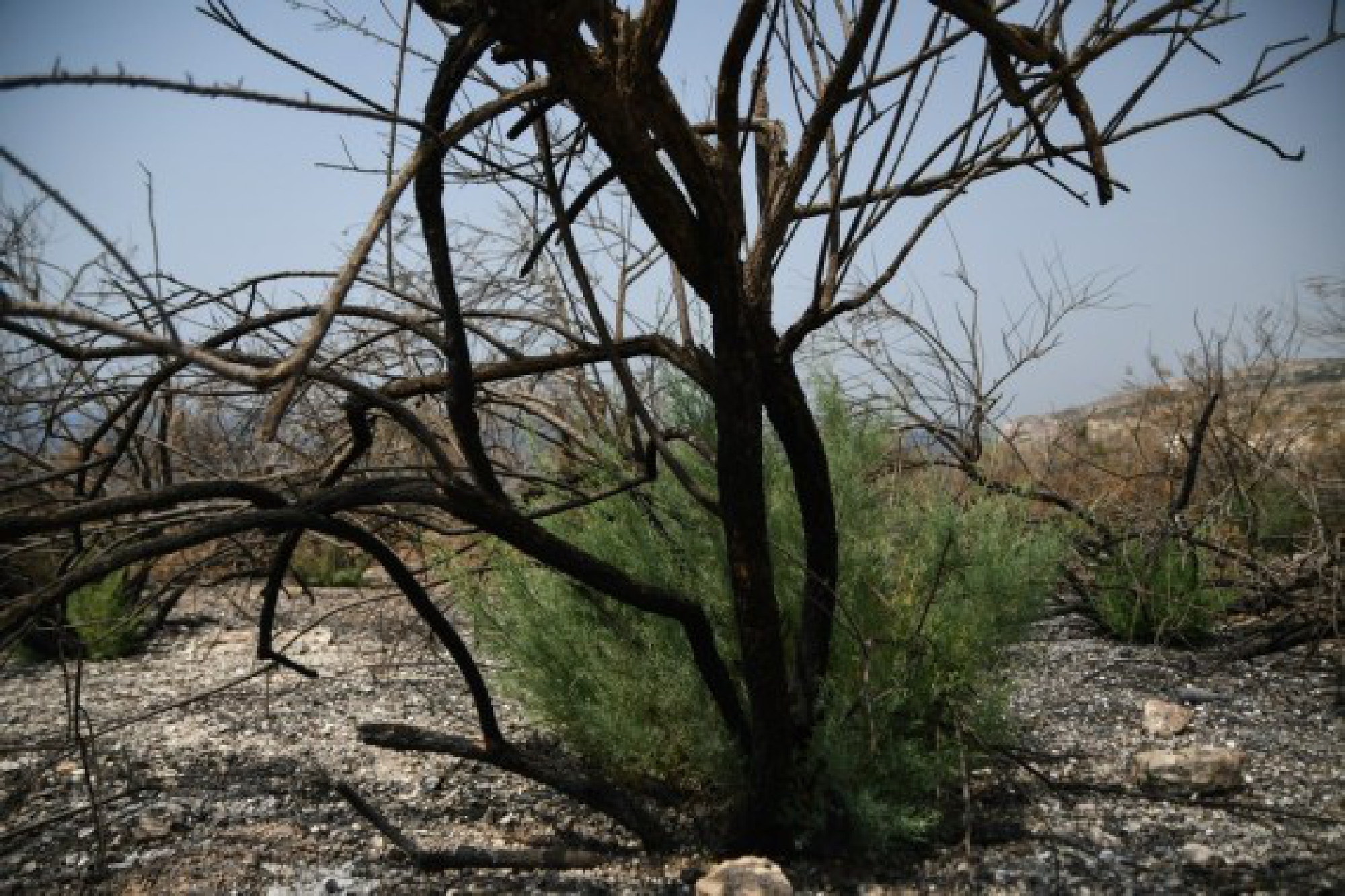 Photo taken on Aug. 12, 2021 shows burned bushes after a wildfire caused by high temperature in Siggiewi, Malta.
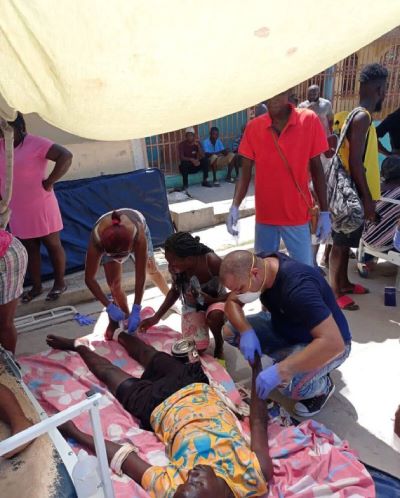
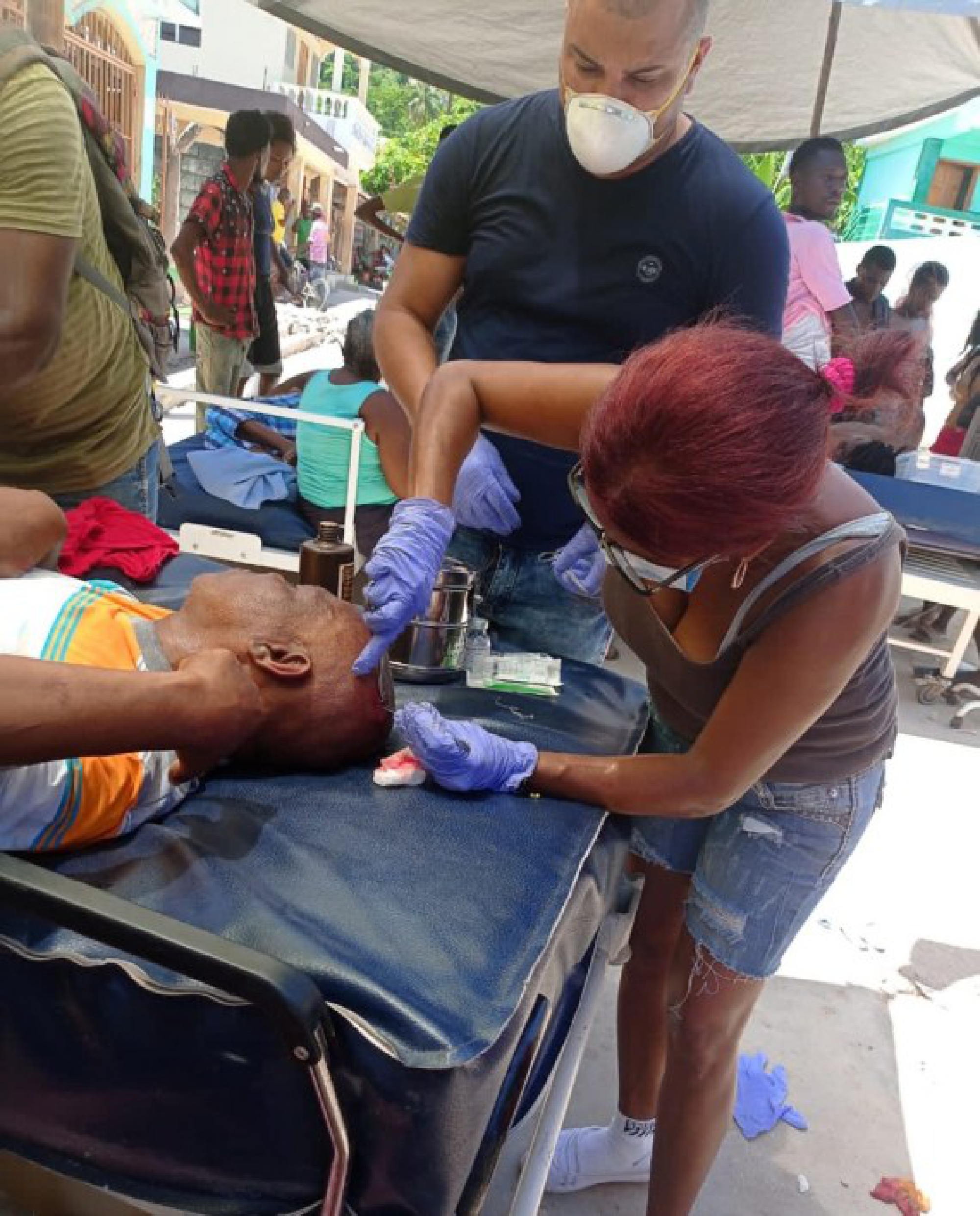 Photo taken with a mobile device shows members of the Cuban Medical Brigade helping an injured person after an earthquake in Jeremie, Haiti, Aug. 14, 2021.
 Photo taken with a mobile device shows members of the Cuban Medical Brigade helping injured people after an earthquake in Jeremie, Haiti, Aug. 14, 2021.
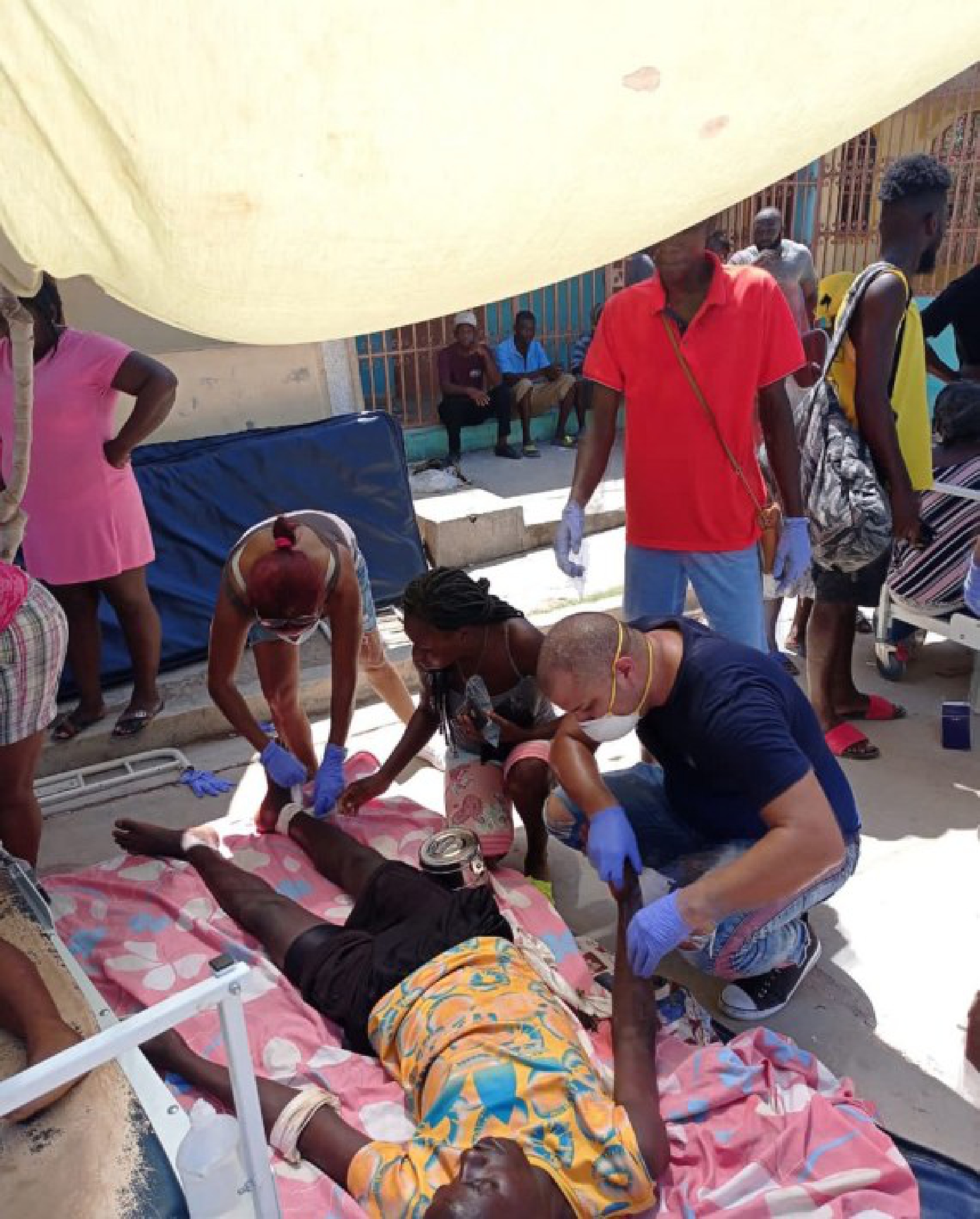 Photo taken with a mobile device shows members of the Cuban Medical Brigade helping an injured person after an earthquake in Jeremie, Haiti, Aug. 14, 2021.
 Asean reports close to 100,000 new Covid cases

 At least 304 dead in Haiti in wake of 7.2-magnitude earthquake





 Marco Reus (R) of Dortmund vies with Danny da Costa of Frankfurt during their German Bundesliga match in Dortmund, Germany, Aug. 14, 2021.
 Giovanni Reyna (L) of Dortmund vies with Hasebe Makoto of Frankfurt during a German Bundesliga match in Dortmund, Germany, Aug. 14, 2021.
 SootinClaimon.Com